Upgrade to Pro — share decks privately, control downloads, hide ads and more …

LEGO Geometry Tutorial

Sponsored · Your Podcast. Everywhere. Effortlessly. Share. Educate. Inspire. Entertain. You do you. We'll handle the rest. →
Avatar for Arno Knobbe Arno Knobbe
September 22, 2026

LEGO Geometry Tutorial

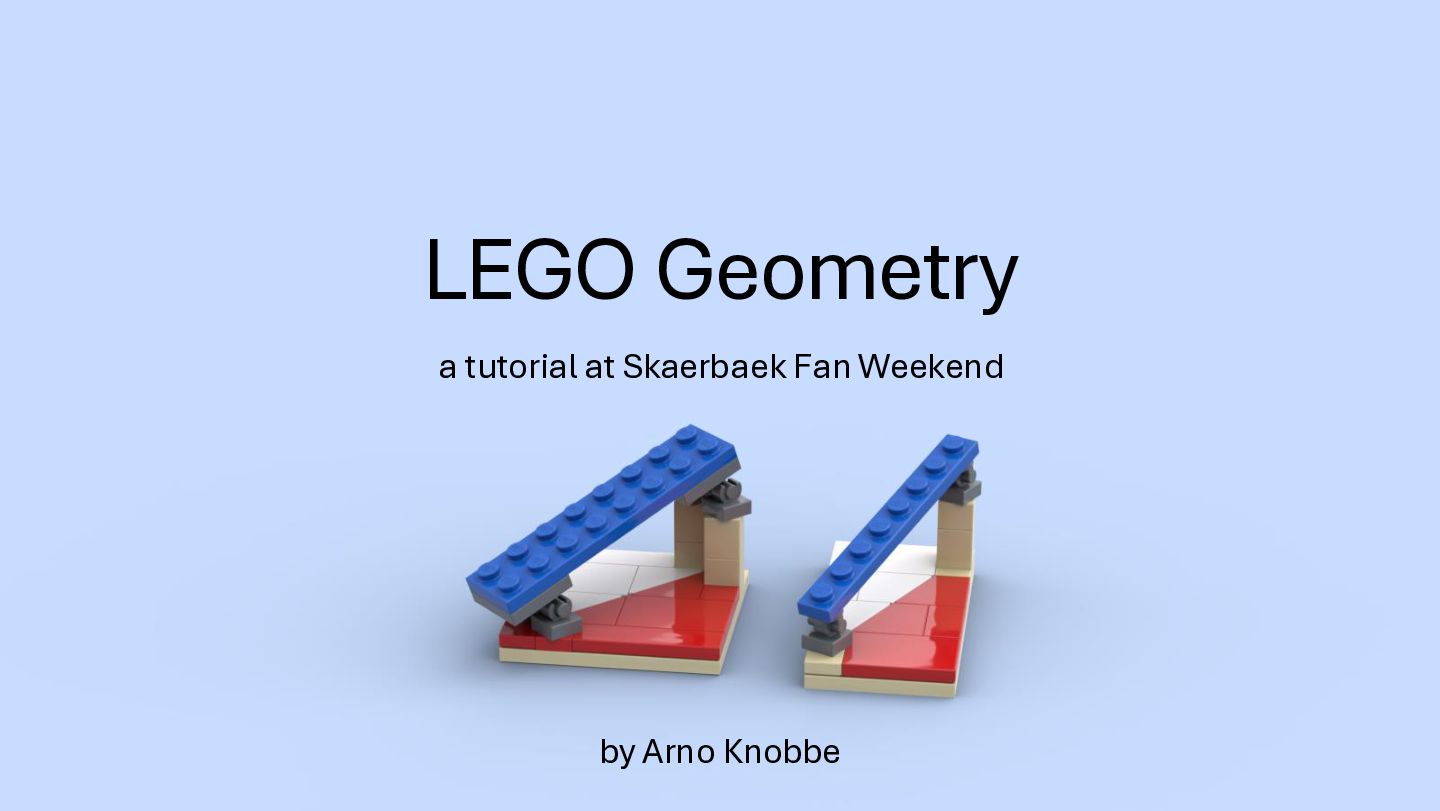
These slides were produced for my LEGO geometry tutorial at Skaerbaek Fan Weekend in 2026. Feel free to benefit from the contents. Please credit and cite me at https://www.instagram.com/legoarno/

The last slides provide a preview of my upcoming book The Art and Science of LEGO, by Arno Knobbe, to appear in 2027

Avatar for Arno Knobbe

Arno Knobbe

September 22, 2026

Other Decks in Education

Transcript

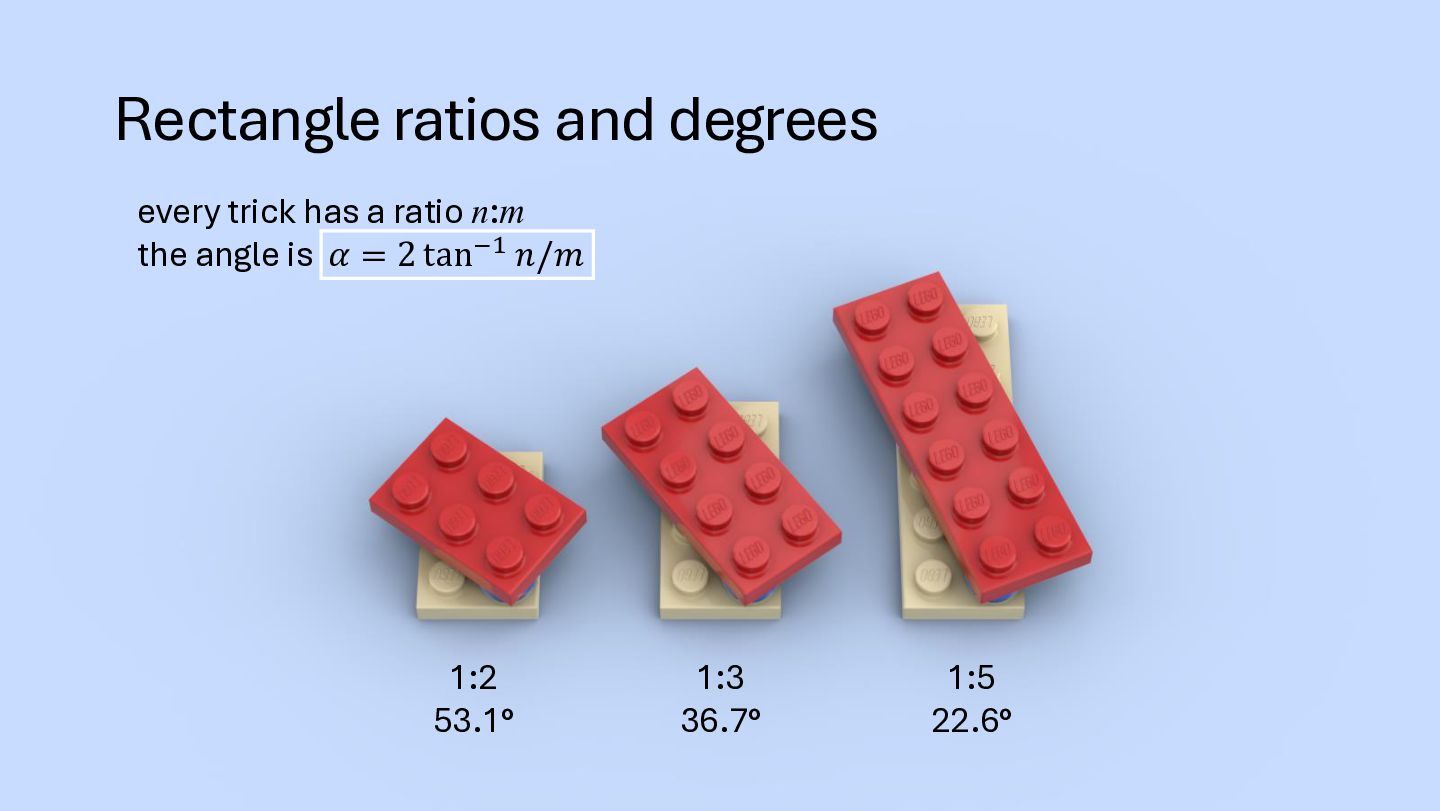
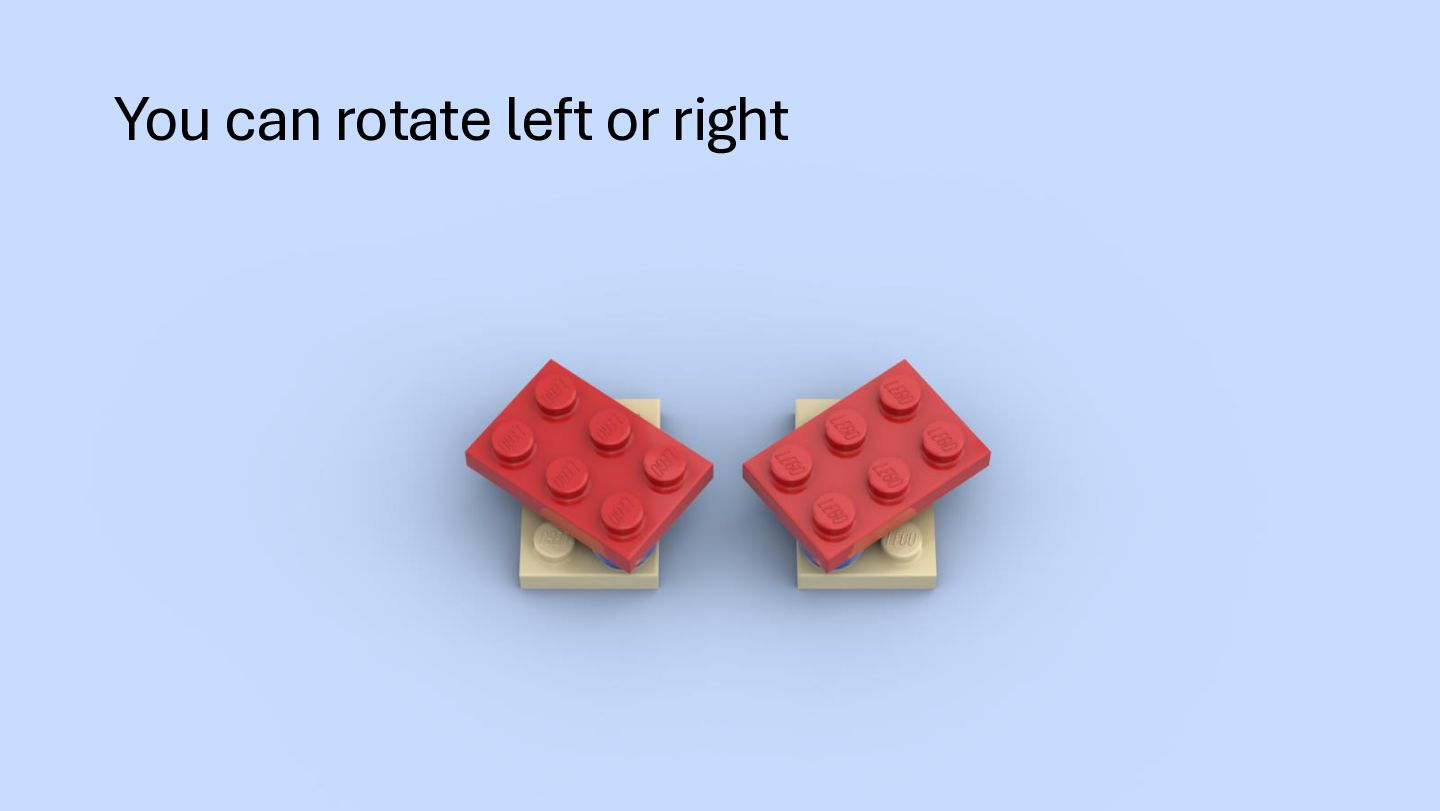
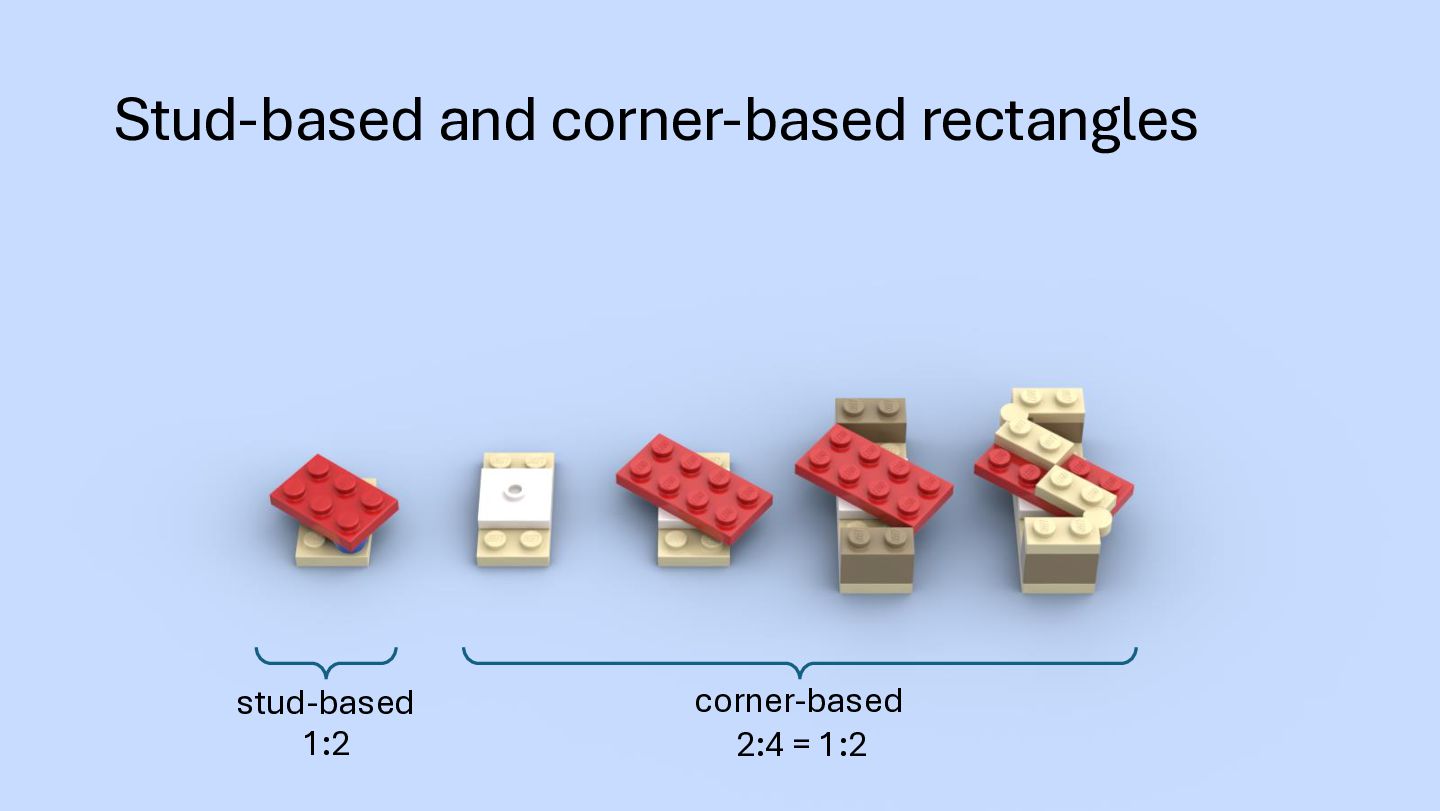
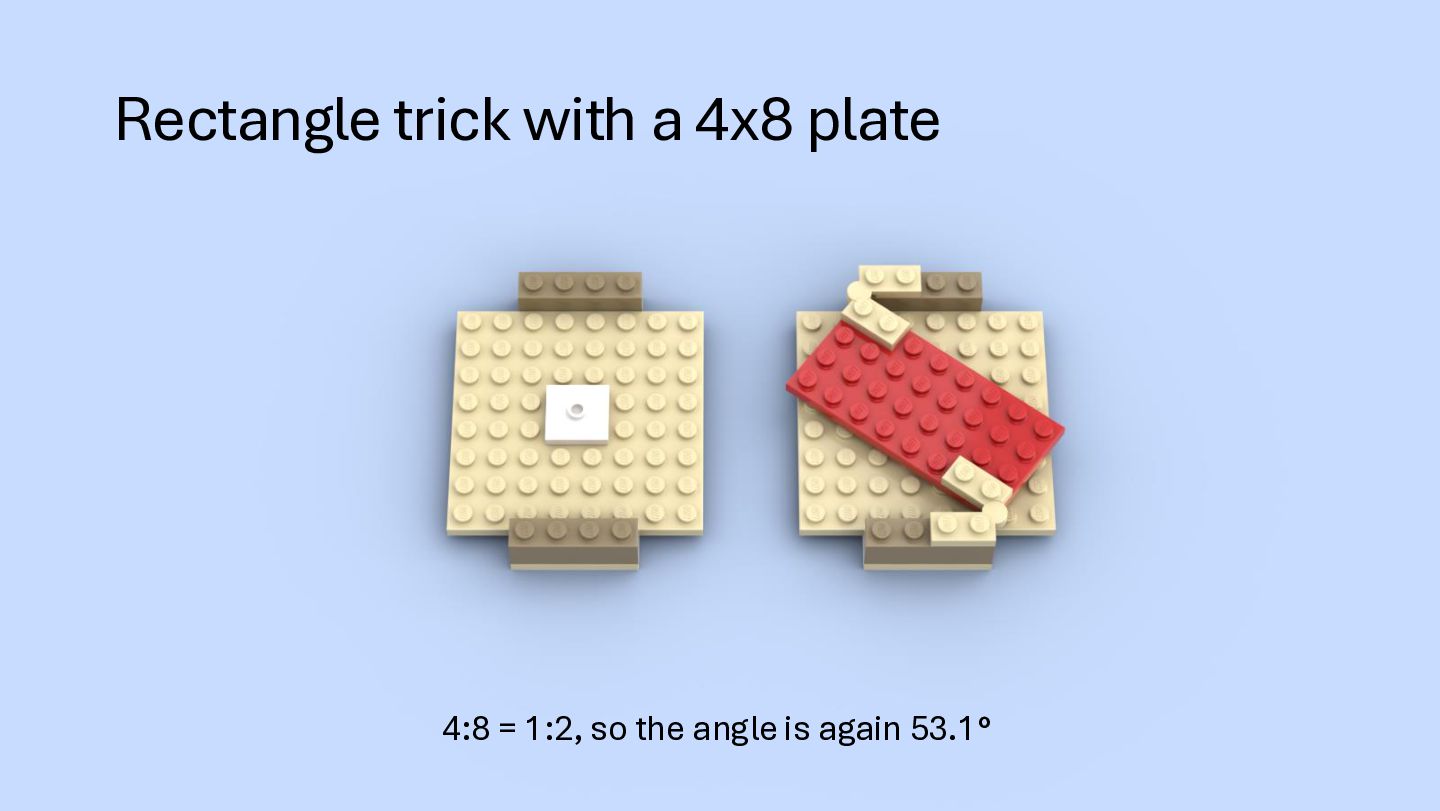
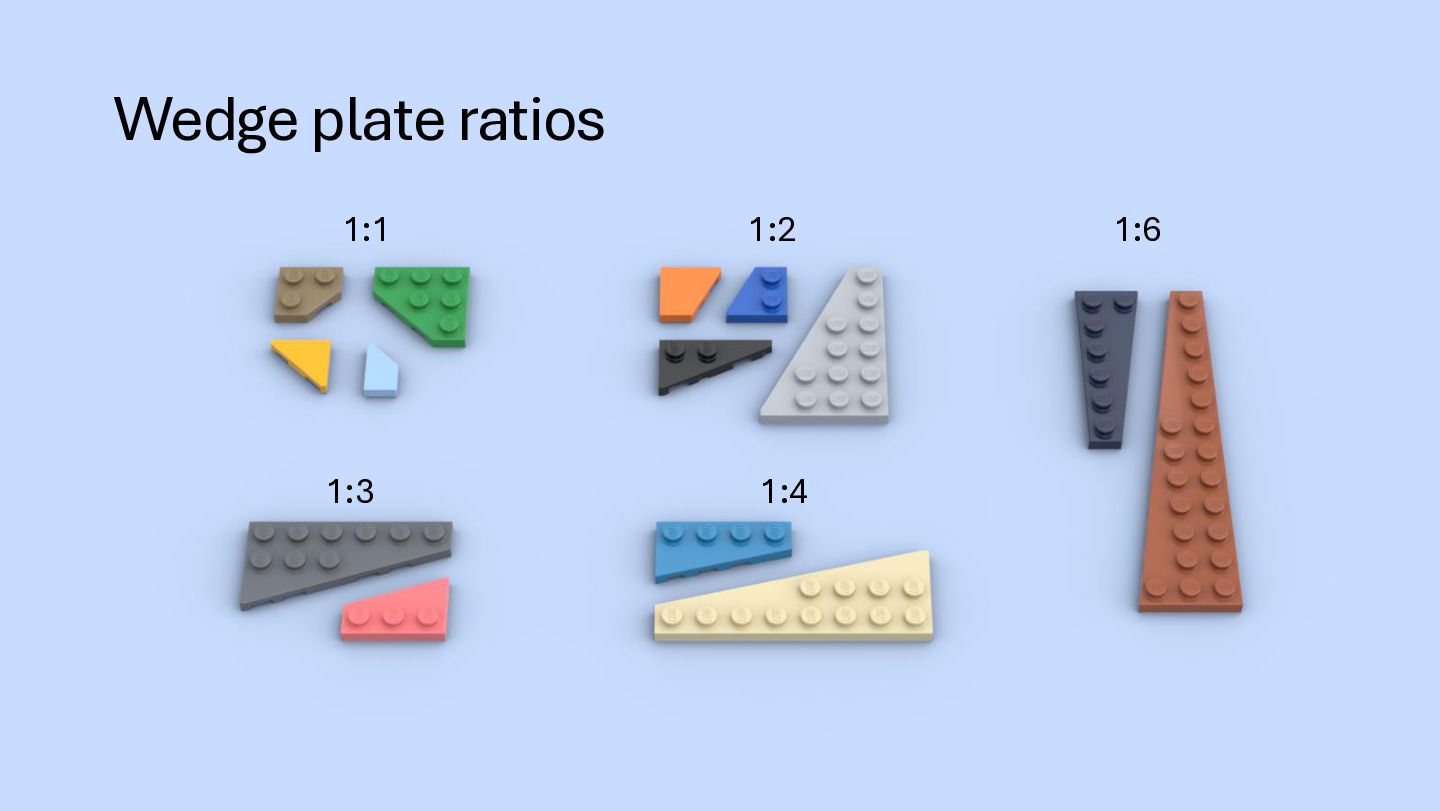
  1. Rectangle ratios and degrees every trick has a ratio n:m

    the angle is 𝛼 = 2 tan−1 𝑛/𝑚 1:2 53.1° 1:3 36.7° 1:5 22.6°
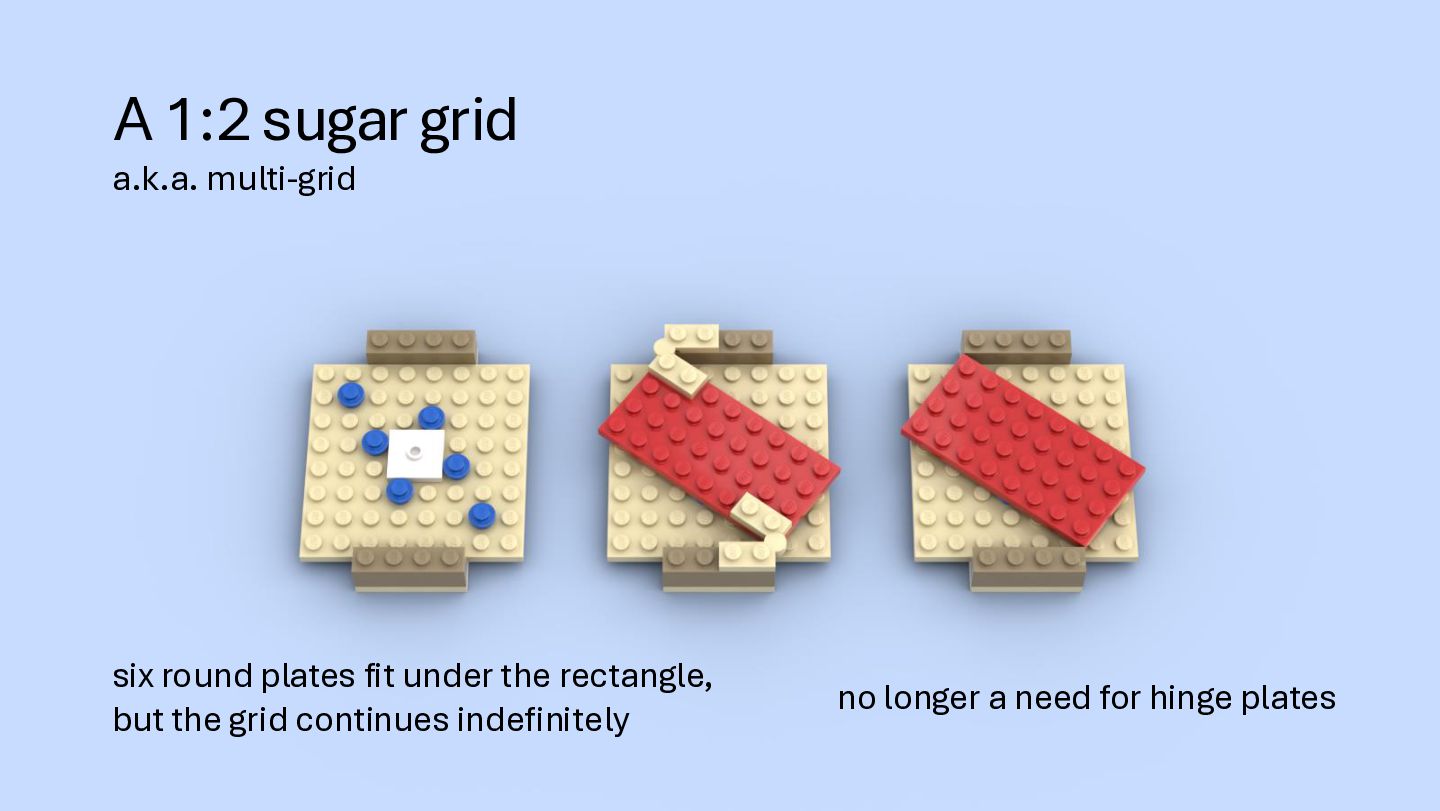
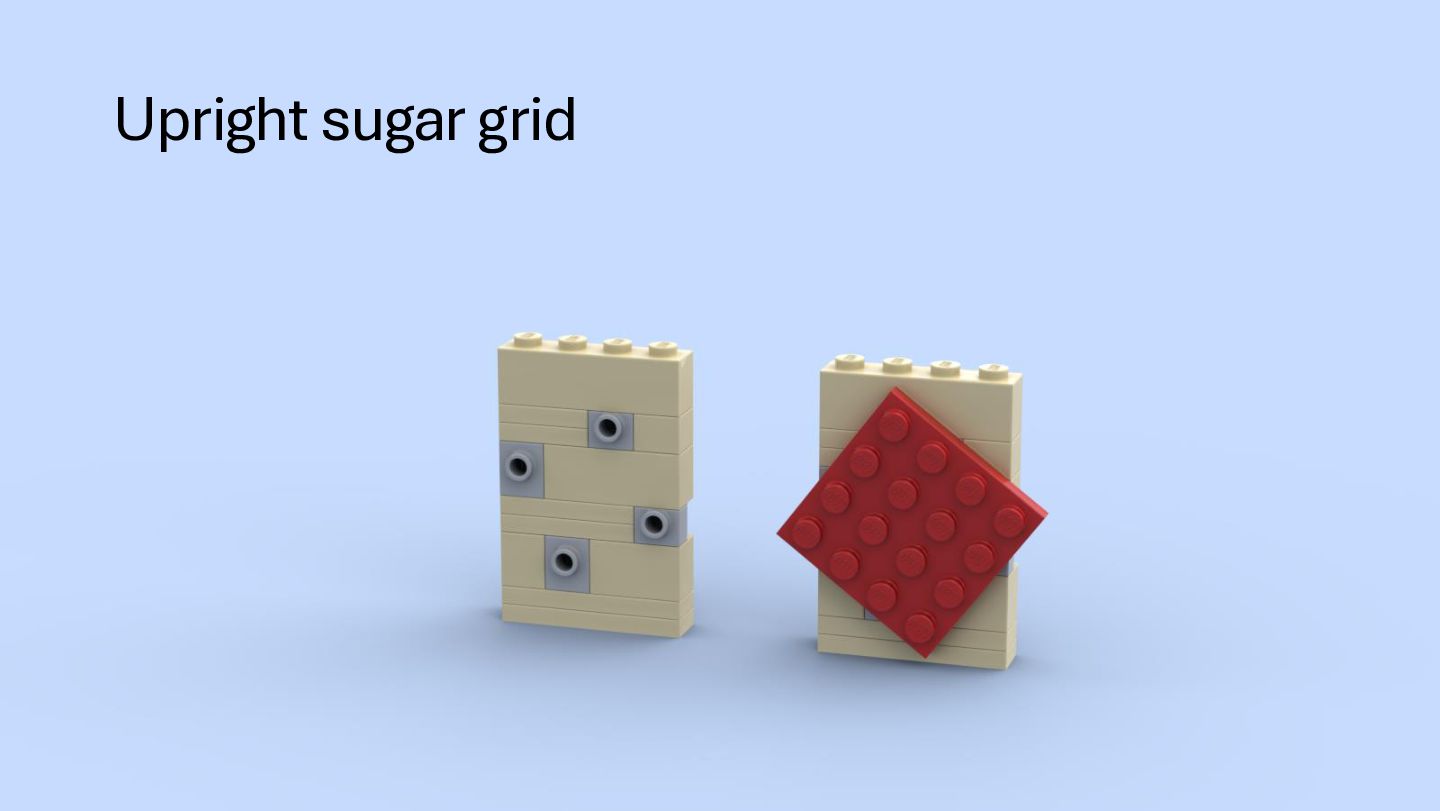
  2. A 1:2 sugar grid a.k.a. multi-grid six round plates fit

    under the rectangle, but the grid continues indefinitely no longer a need for hinge plates
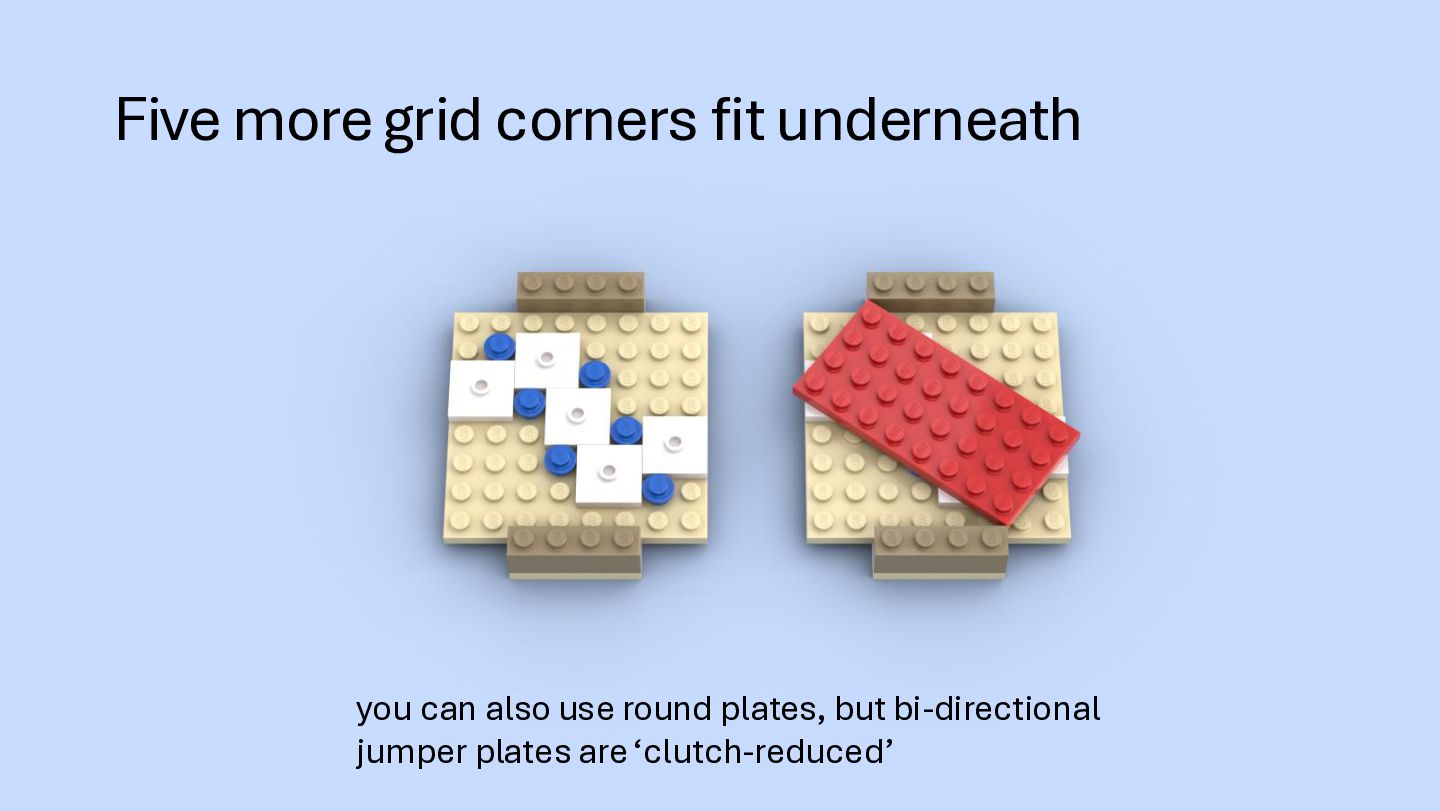
  3. Five more grid corners fit underneath you can also use

    round plates, but bi-directional jumper plates are ‘clutch-reduced’
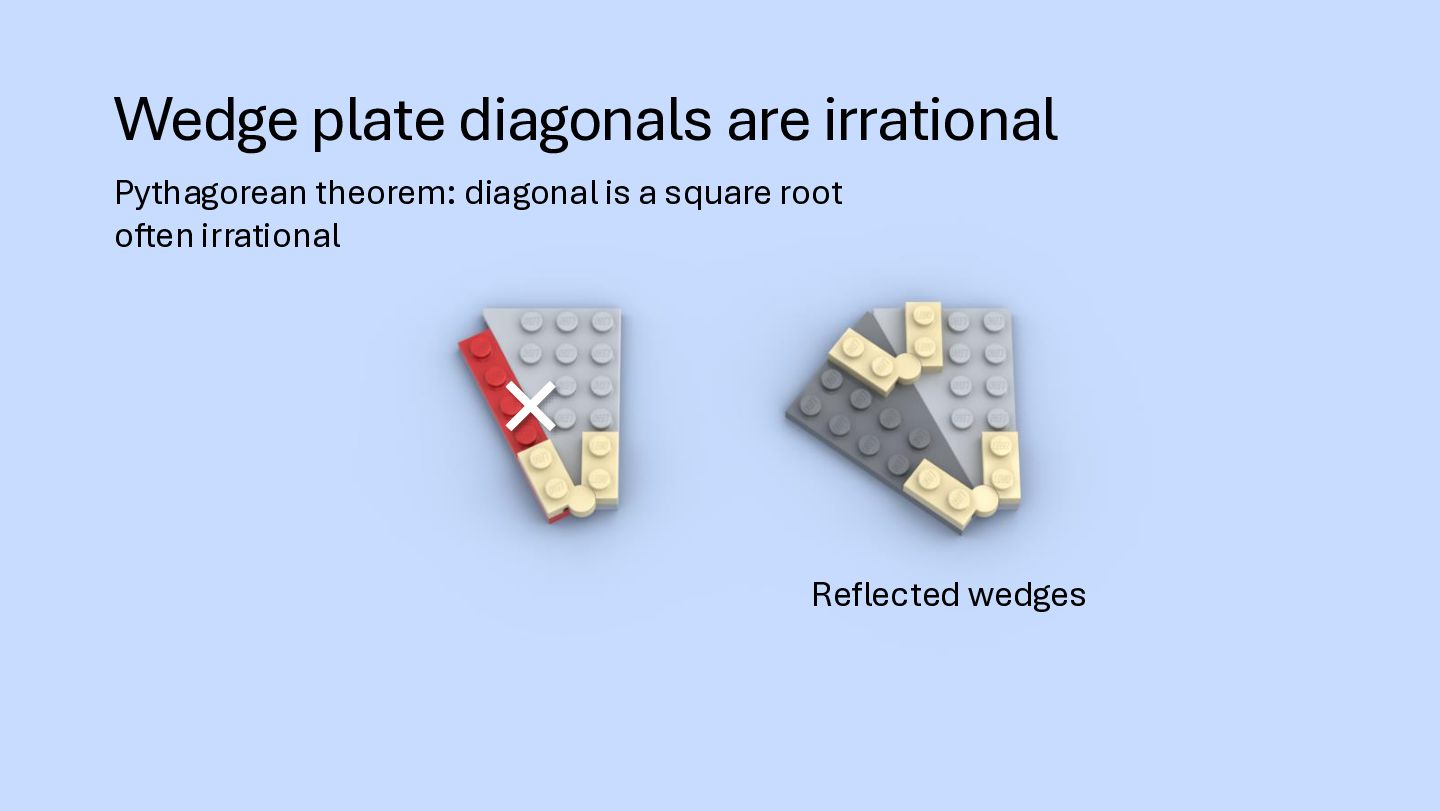
  4. Wedge plate diagonals are irrational Pythagorean theorem: diagonal is a

    square root often irrational Reflected wedges
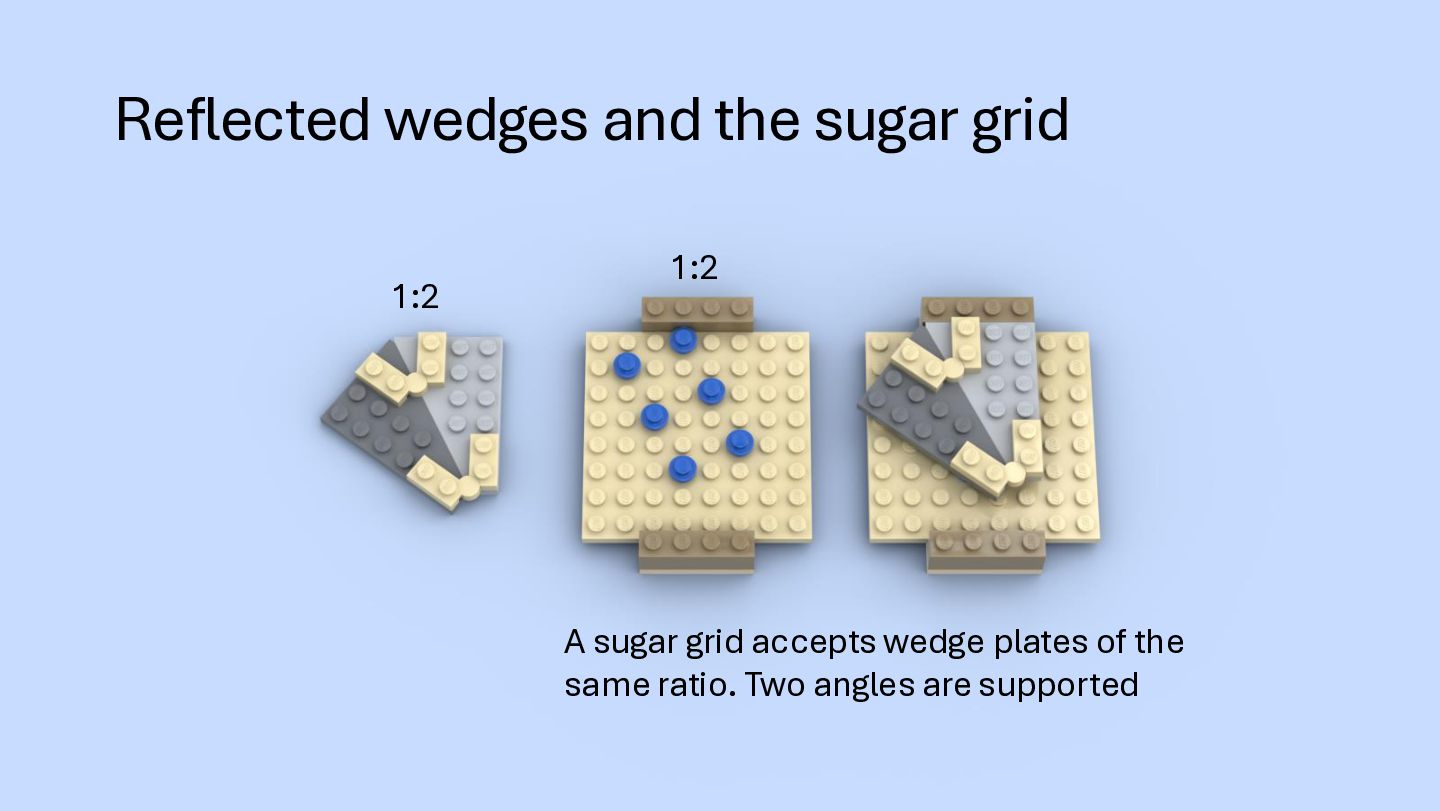
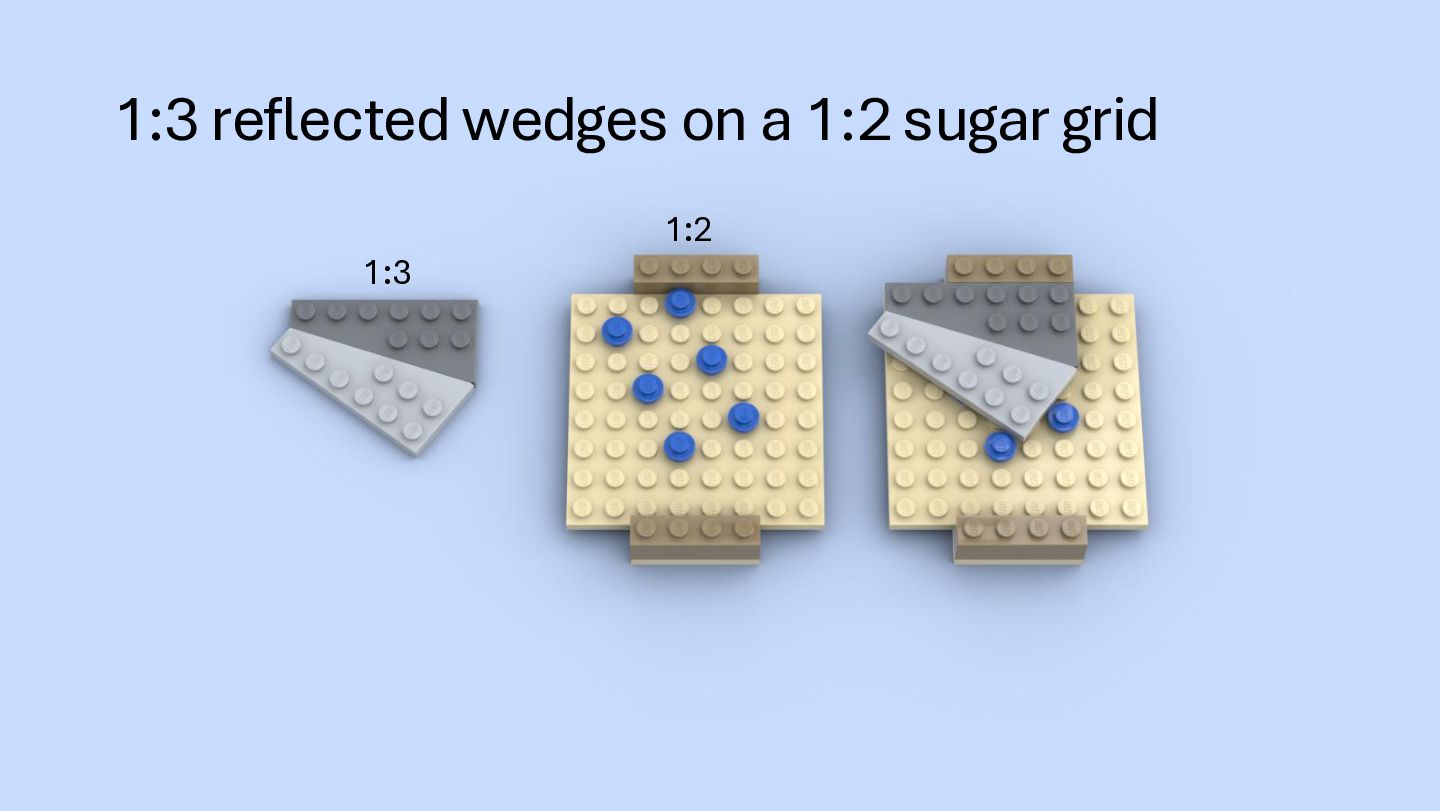
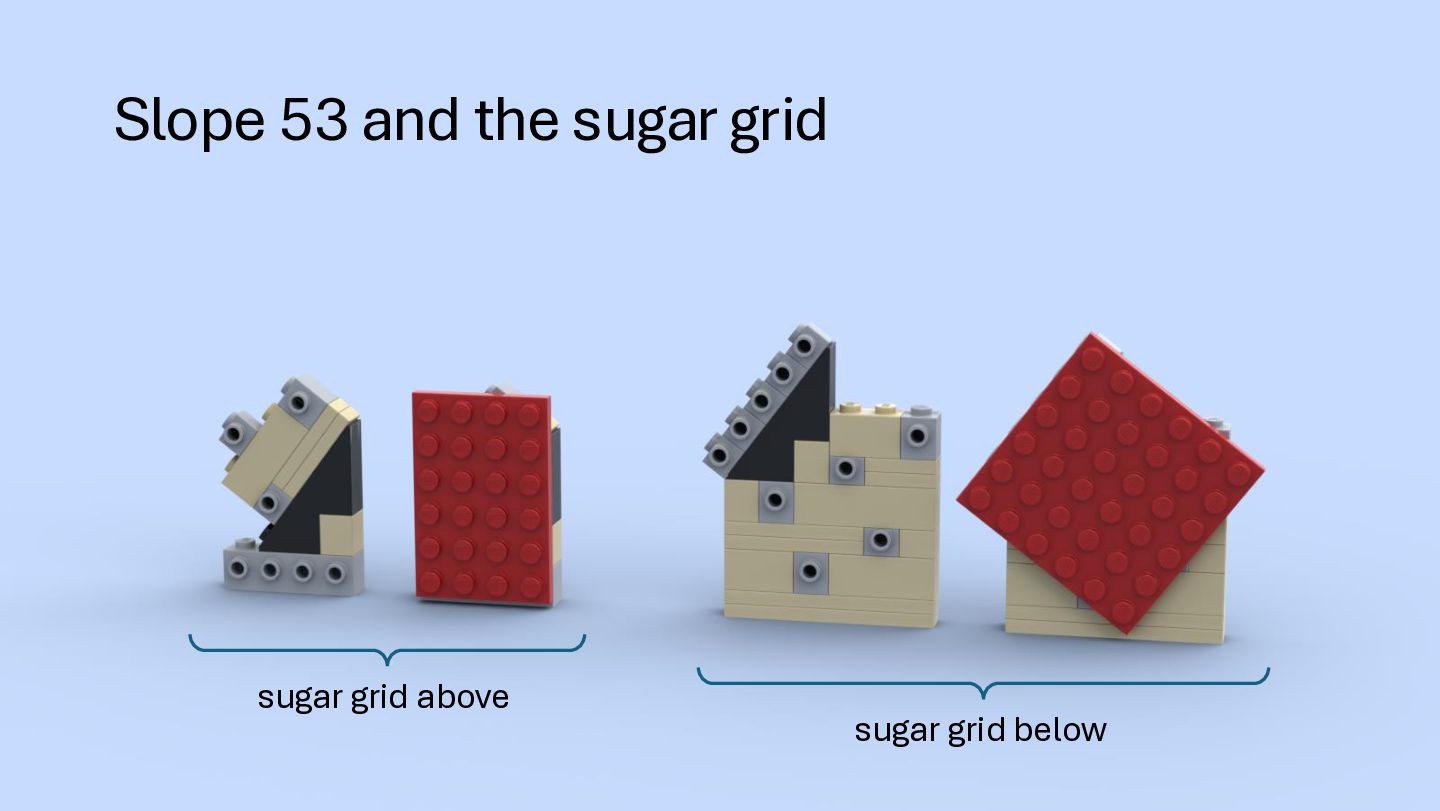
  5. Reflected wedges and the sugar grid 1:2 1:2 A sugar

    grid accepts wedge plates of the same ratio. Two angles are supported
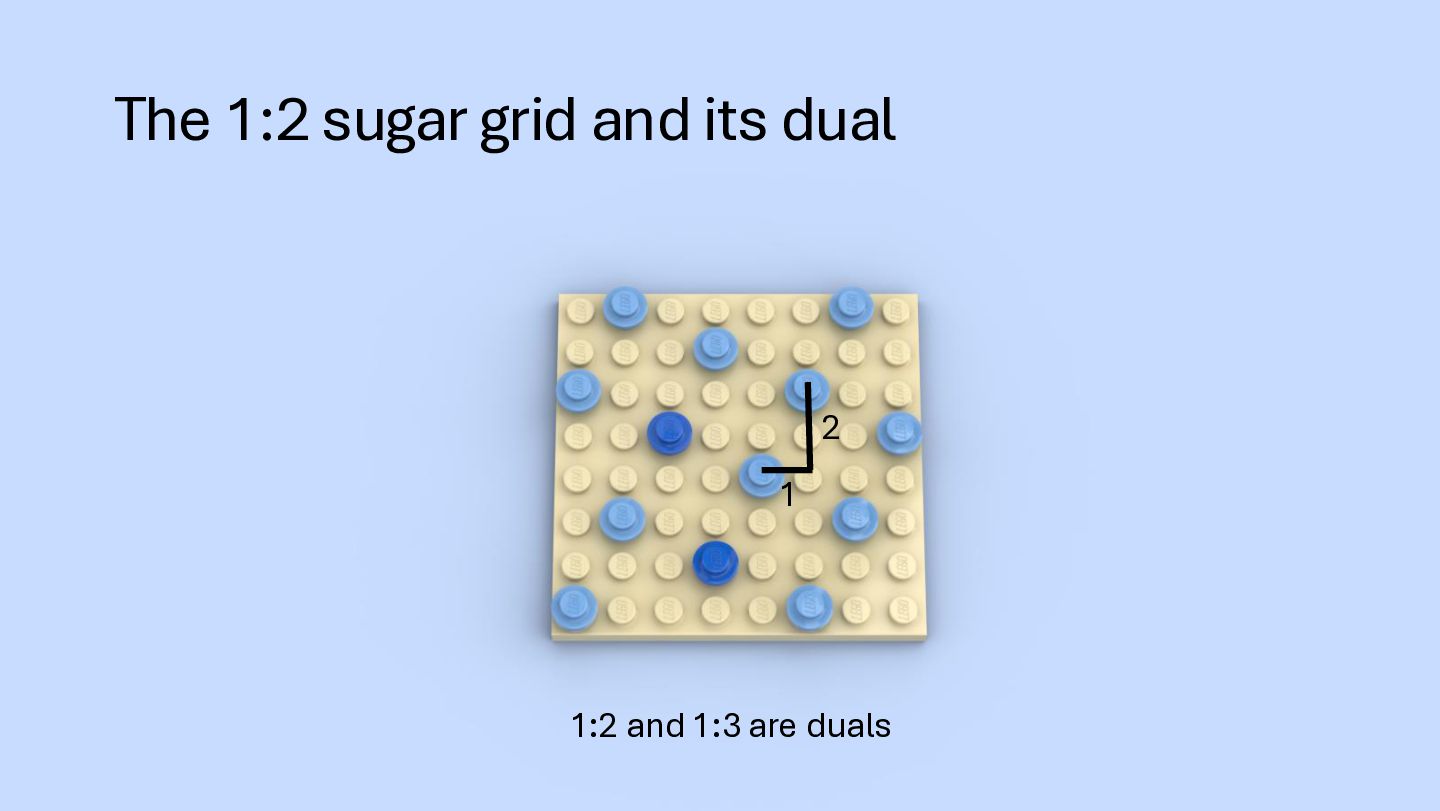
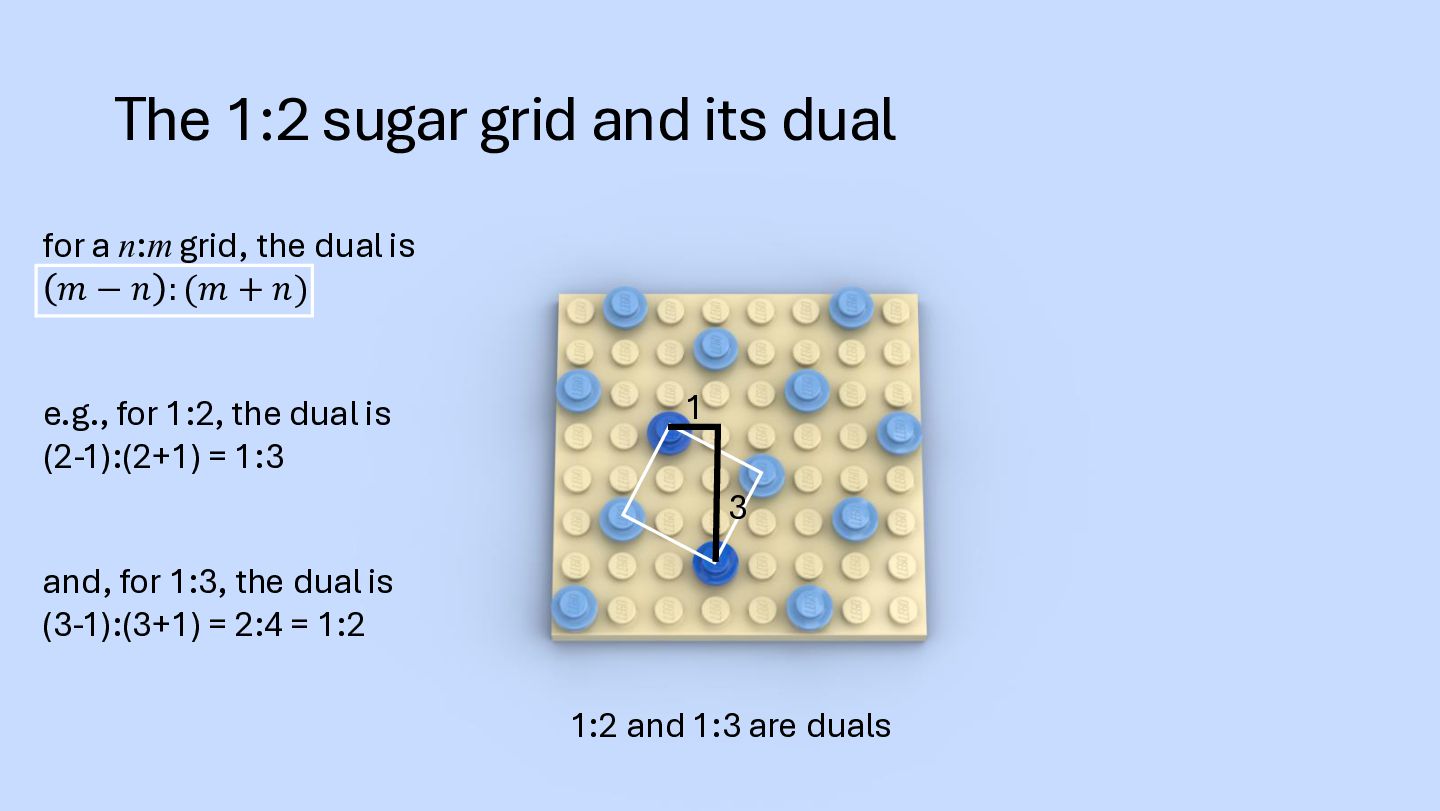
  6. The 1:2 sugar grid and its dual for a n:m

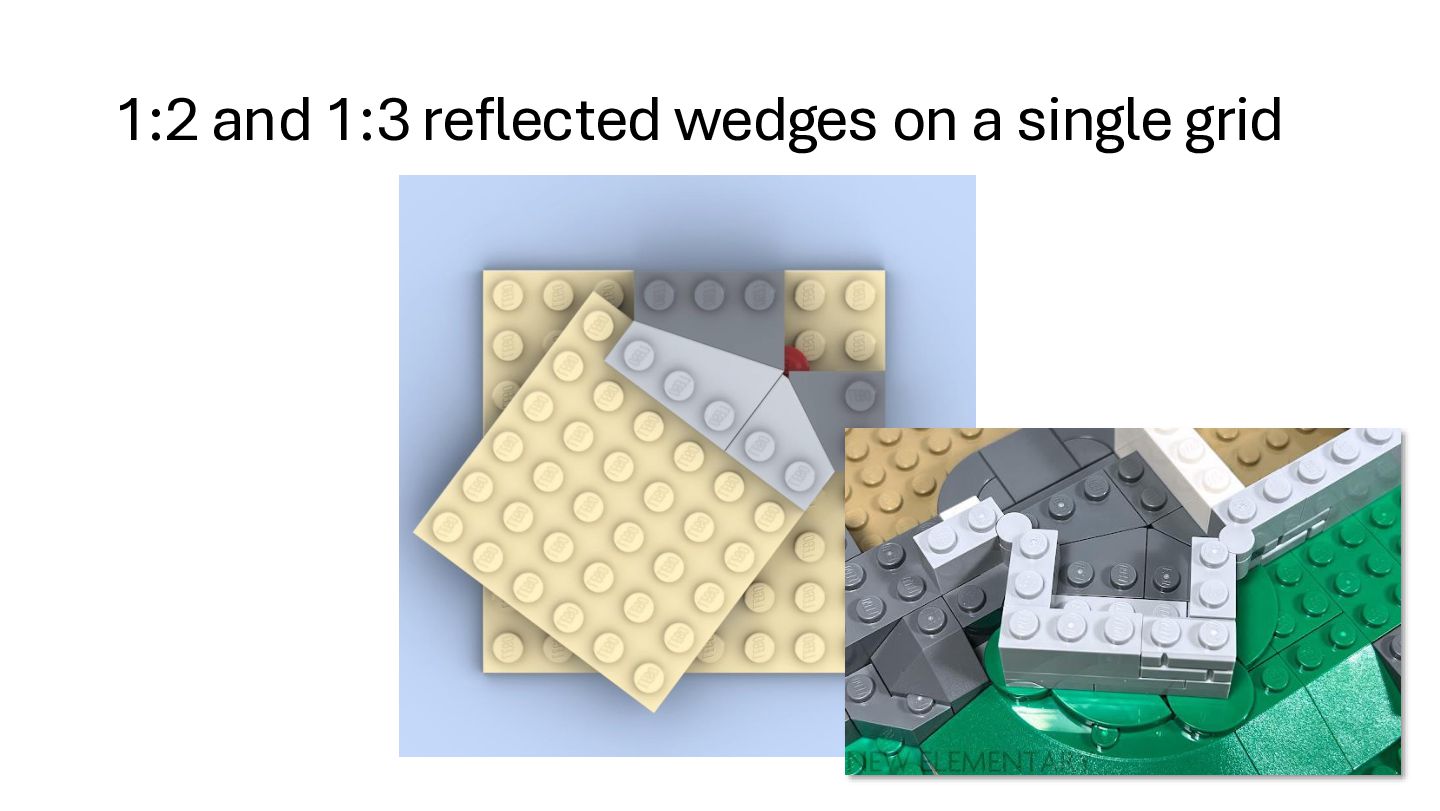
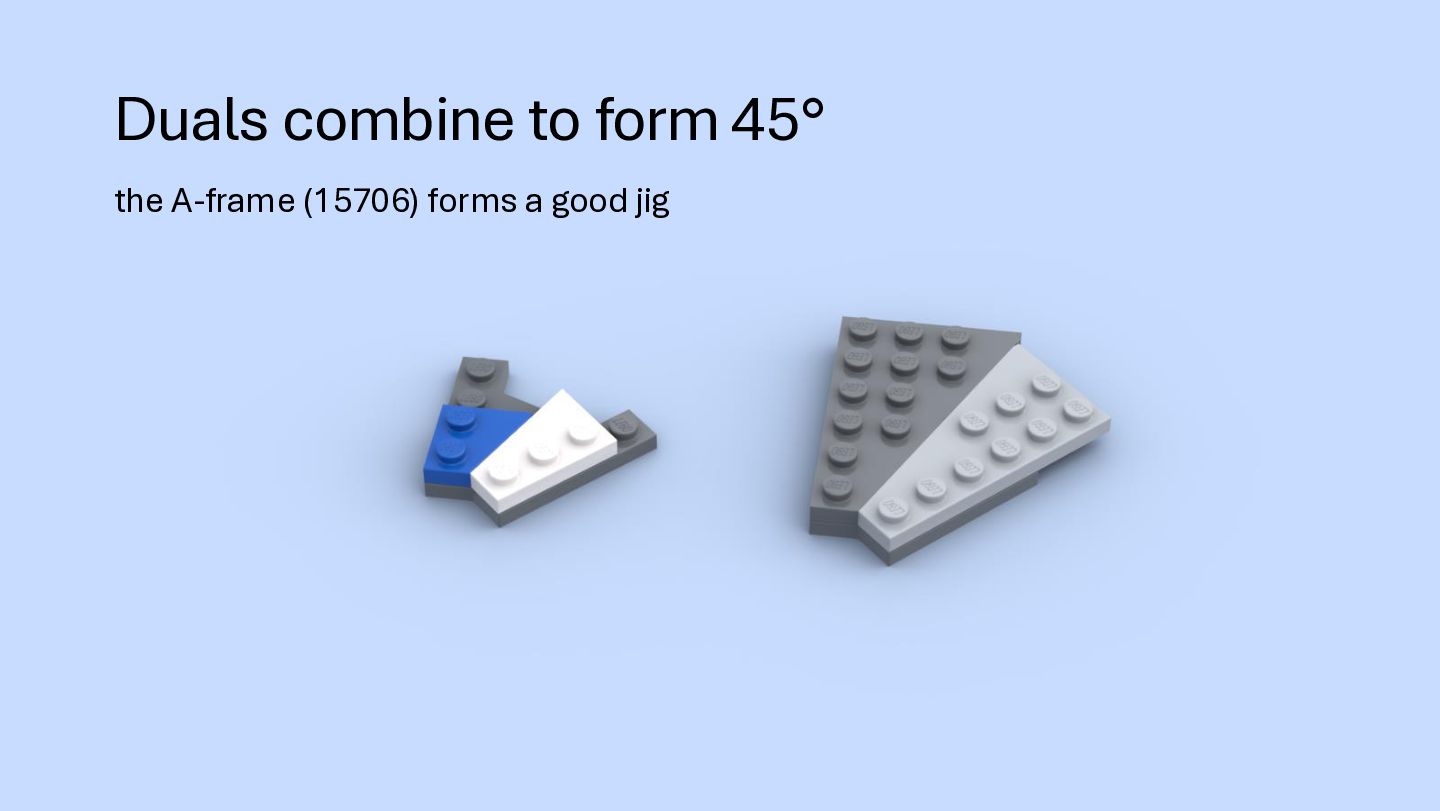
    grid, the dual is 𝑚 − 𝑛 : (𝑚 + 𝑛) e.g., for 1:2, the dual is (2-1):(2+1) = 1:3 1 3 and, for 1:3, the dual is (3-1):(3+1) = 2:4 = 1:2 1:2 and 1:3 are duals
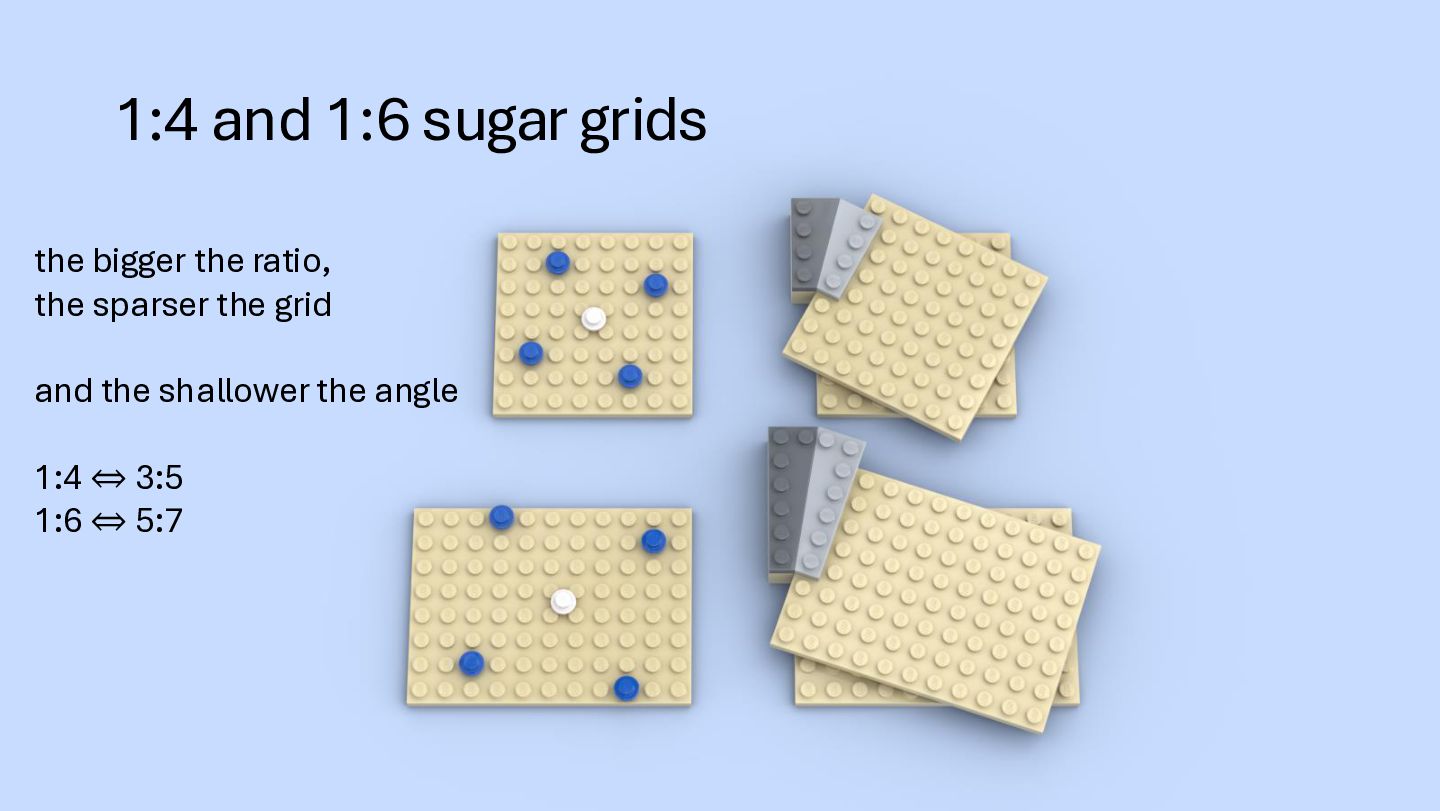
  7. 1:4 and 1:6 sugar grids the bigger the ratio, the

    sparser the grid and the shallower the angle 1:4 ⇔ 3:5 1:6 ⇔ 5:7
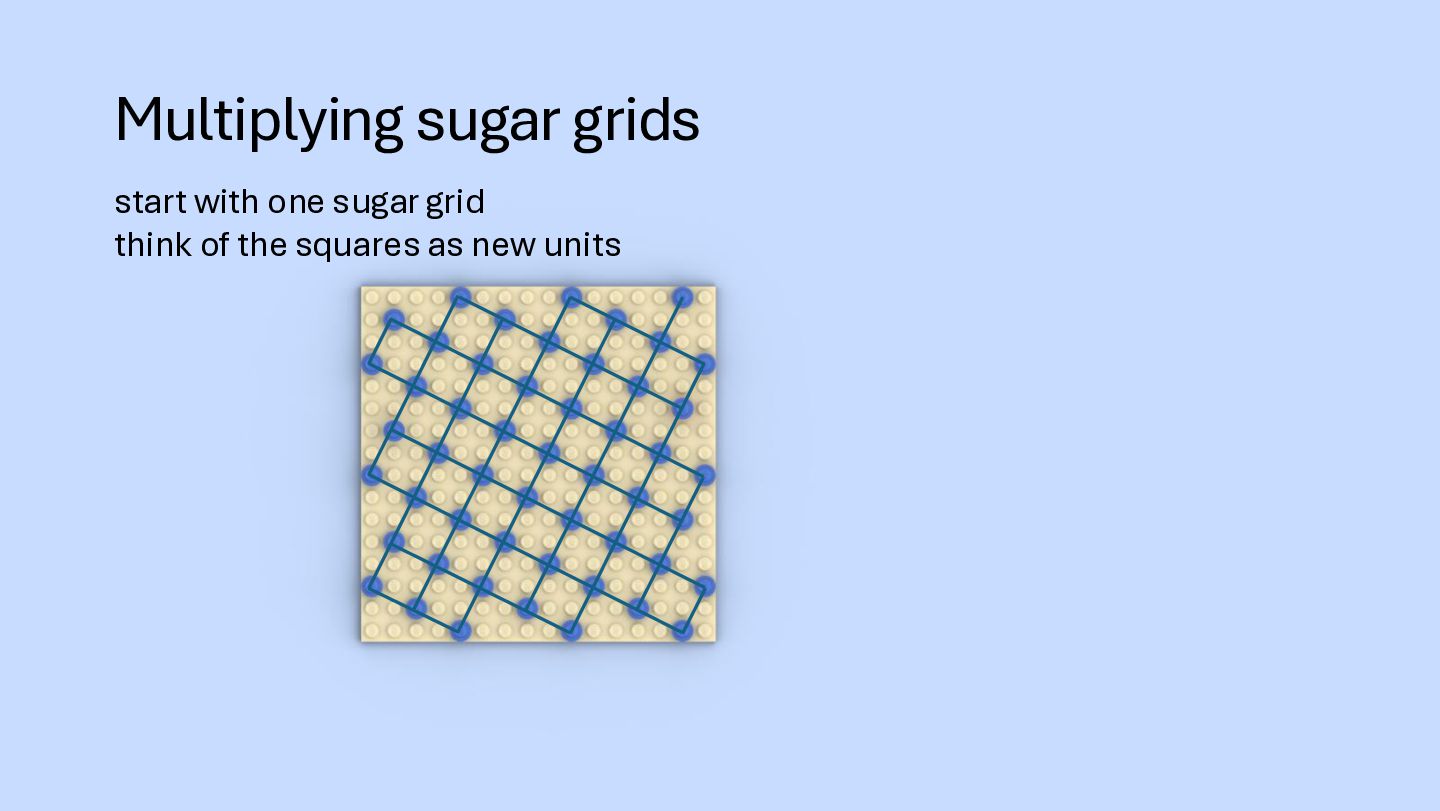
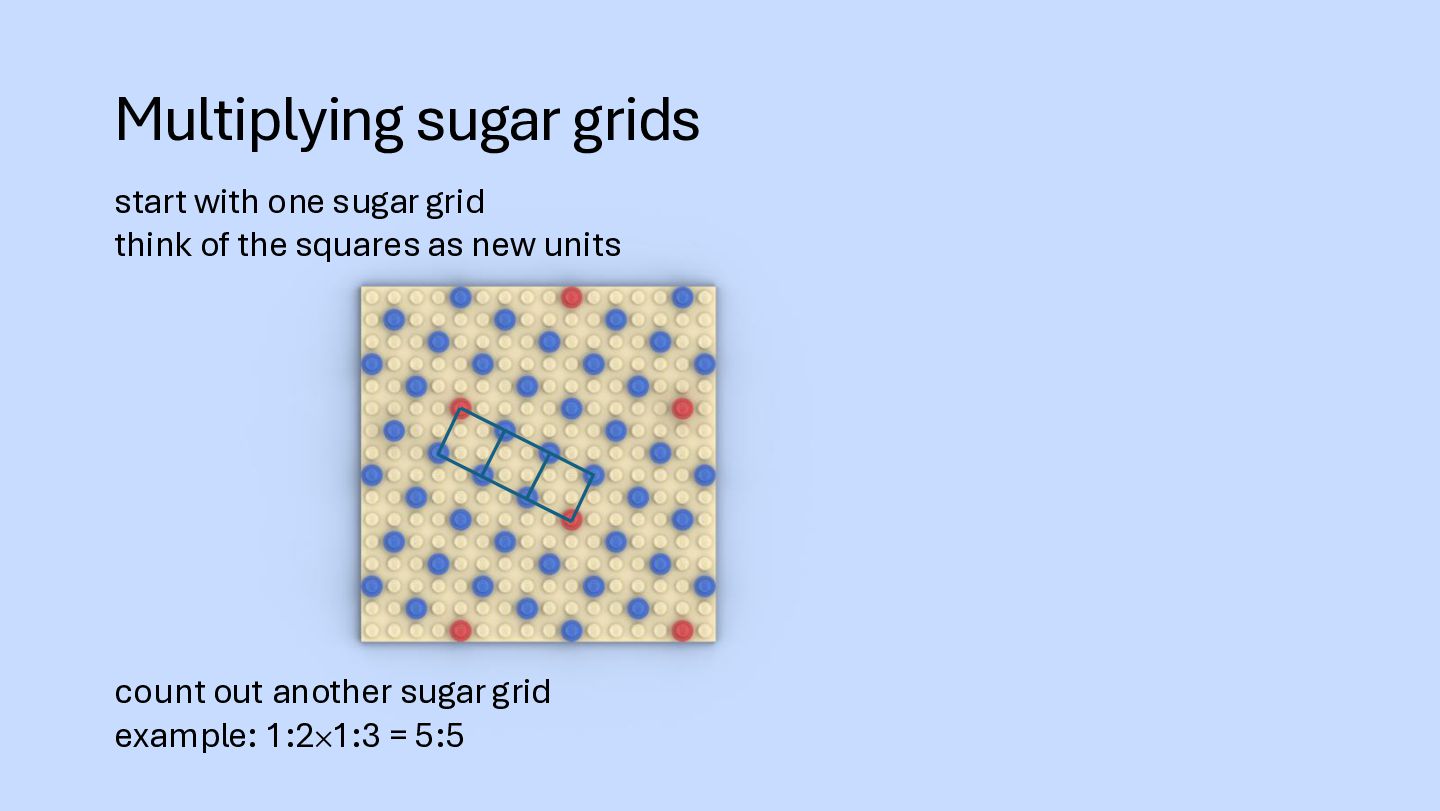
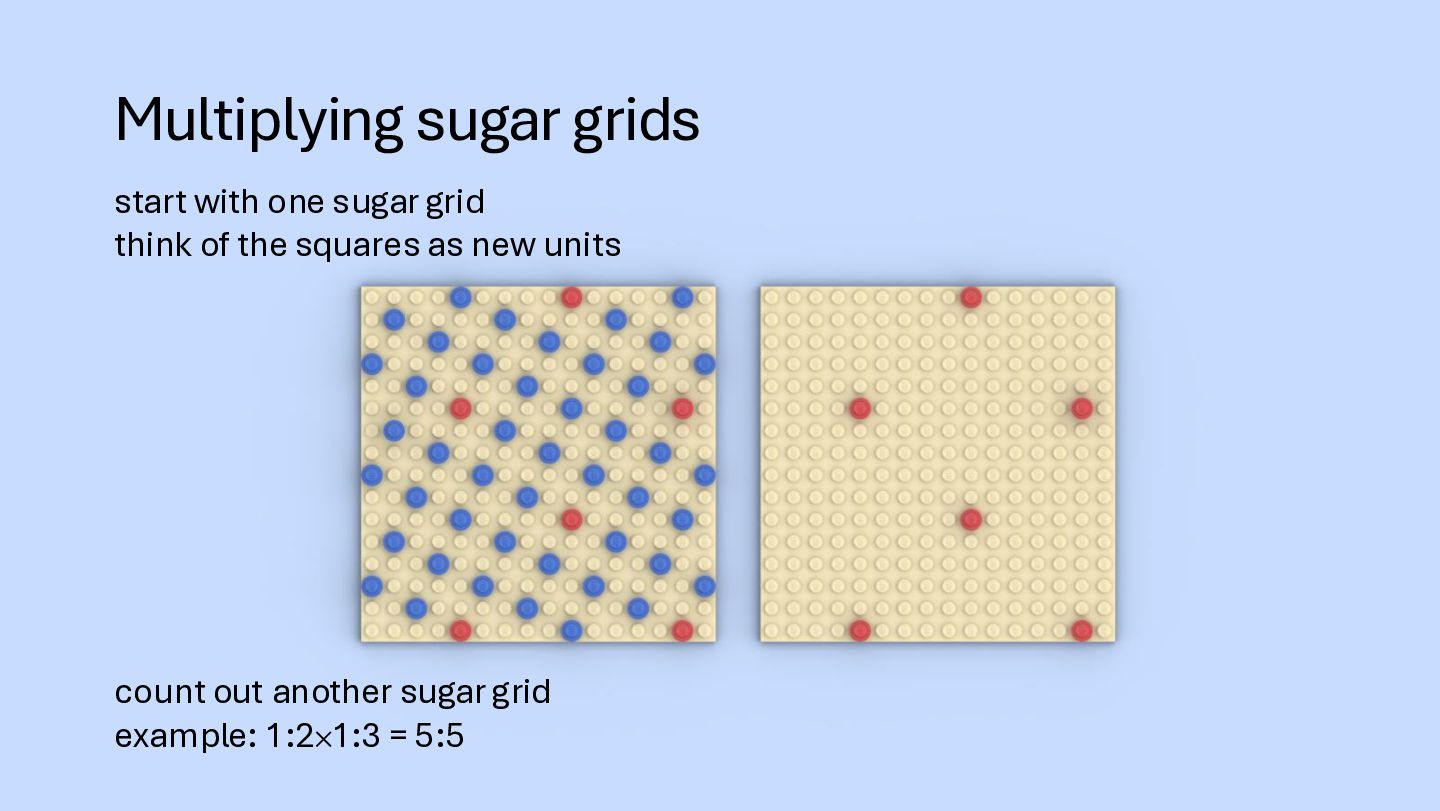
  8. Multiplying sugar grids start with one sugar grid think of

    the squares as new units count out another sugar grid example: 1:2⨉1:3 = 5:5
  9. Multiplying sugar grids start with one sugar grid think of

    the squares as new units count out another sugar grid example: 1:2⨉1:3 = 5:5
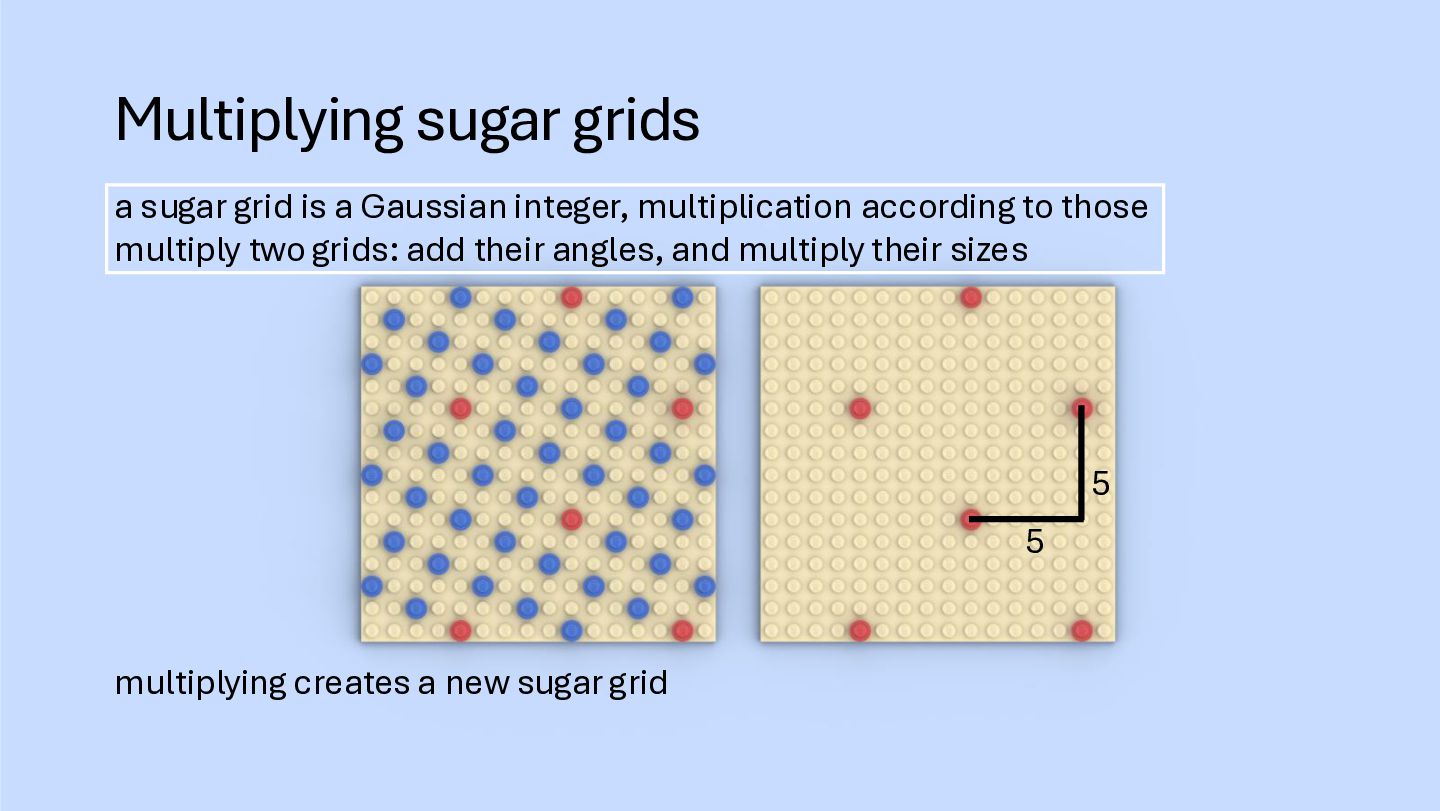
  10. Multiplying sugar grids a sugar grid is a Gaussian integer,

    multiplication according to those multiply two grids: add their angles, and multiply their sizes 5 5 multiplying creates a new sugar grid
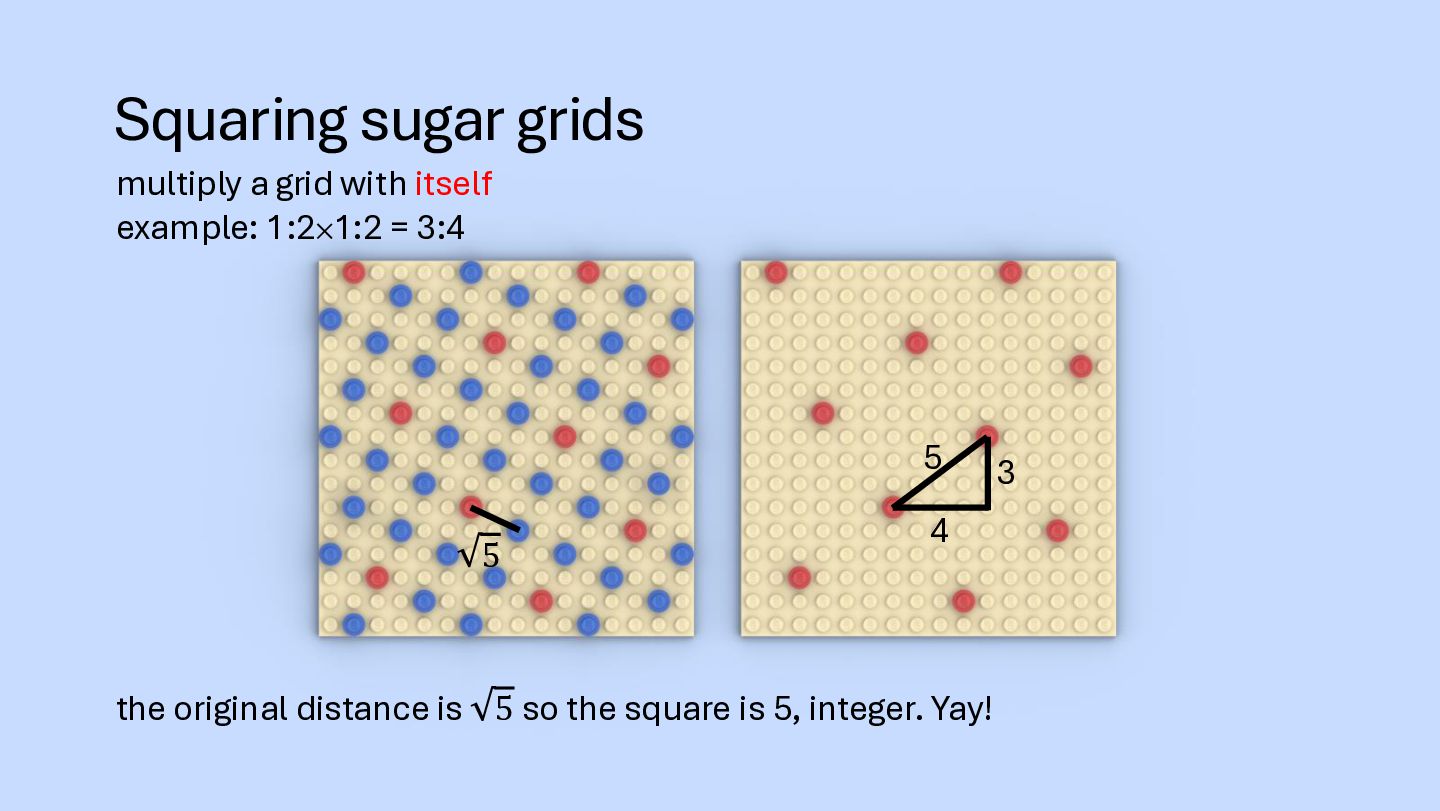
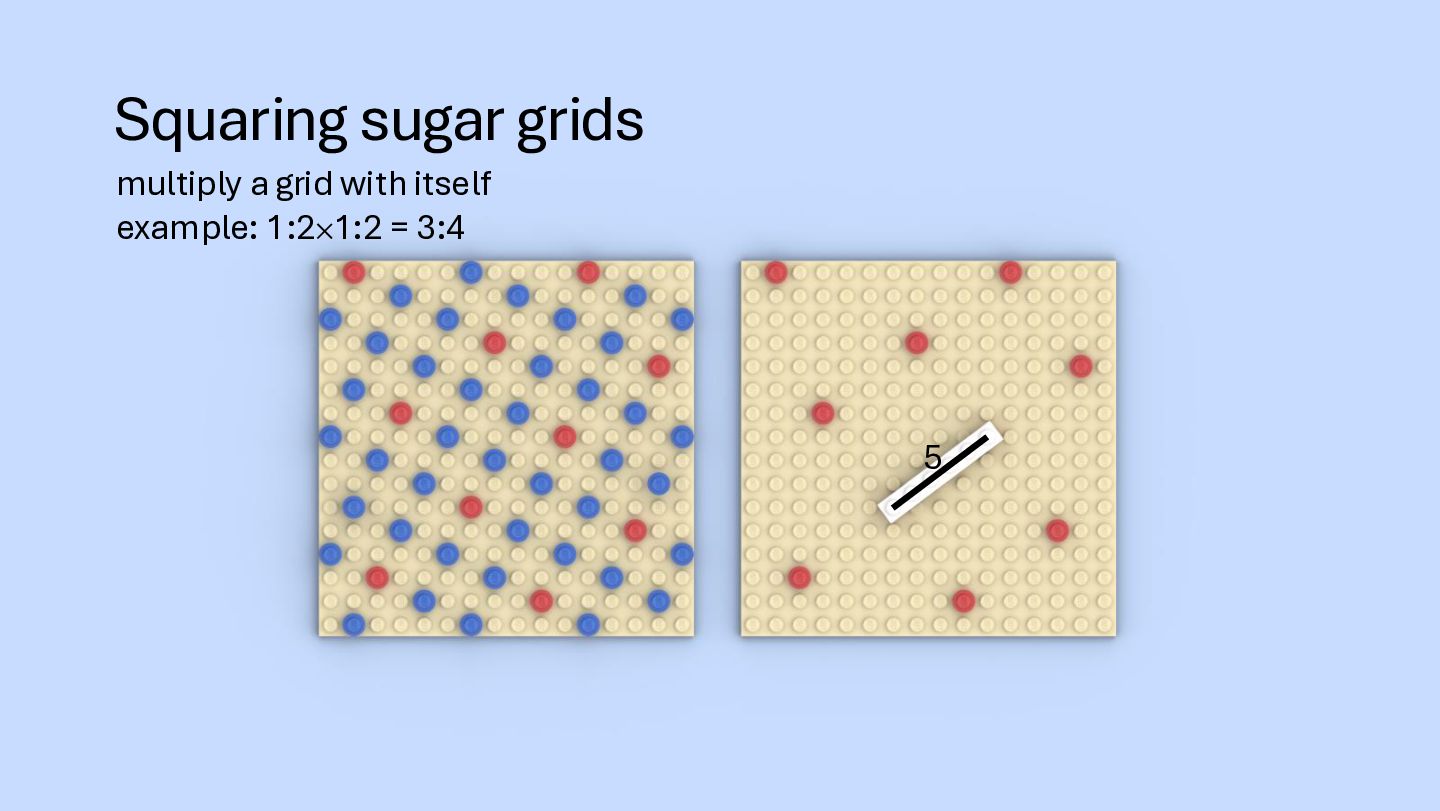
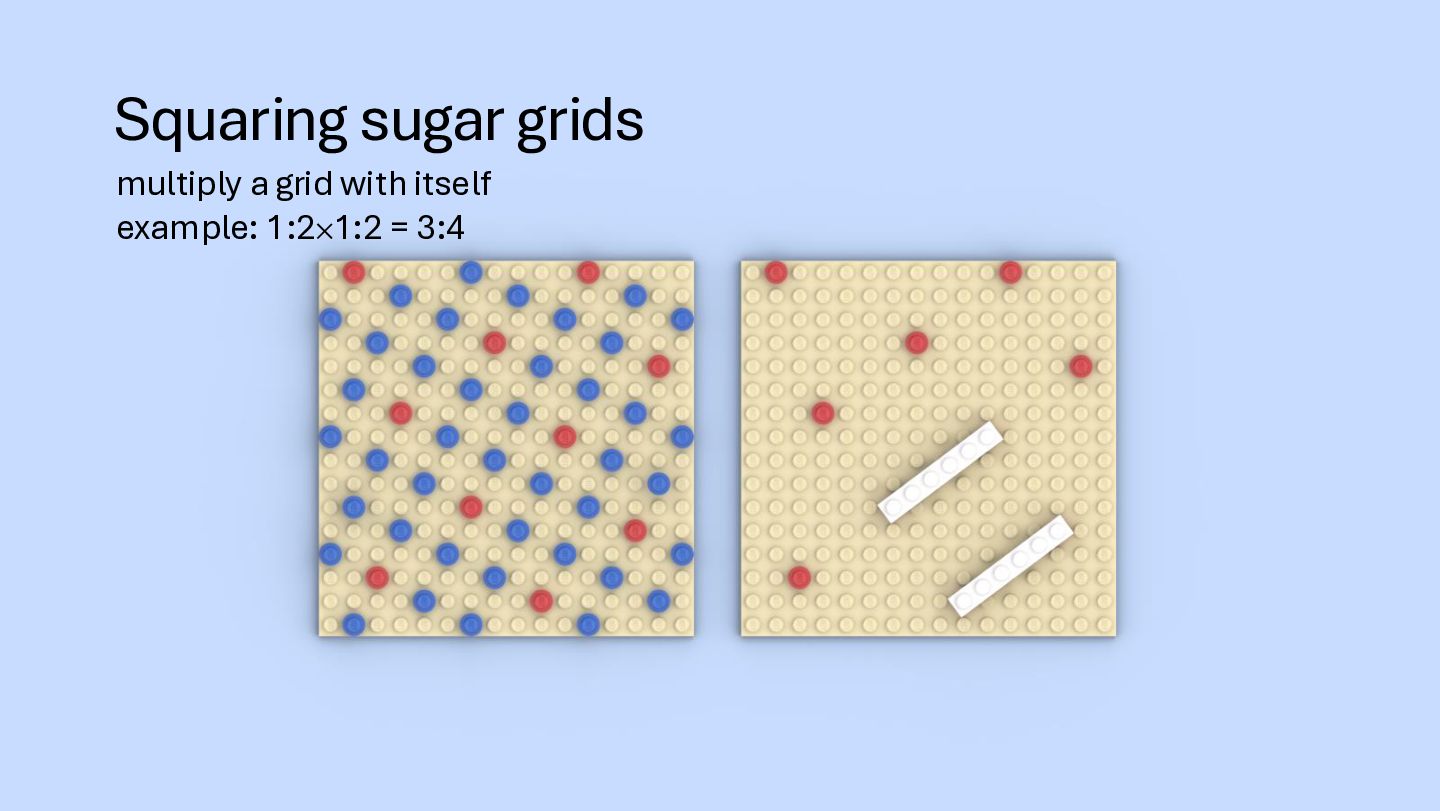
  11. Squaring sugar grids multiply a grid with itself example: 1:2⨉1:2

    = 3:4 5 5 4 the original distance is 5 so the square is 5, integer. Yay! 3
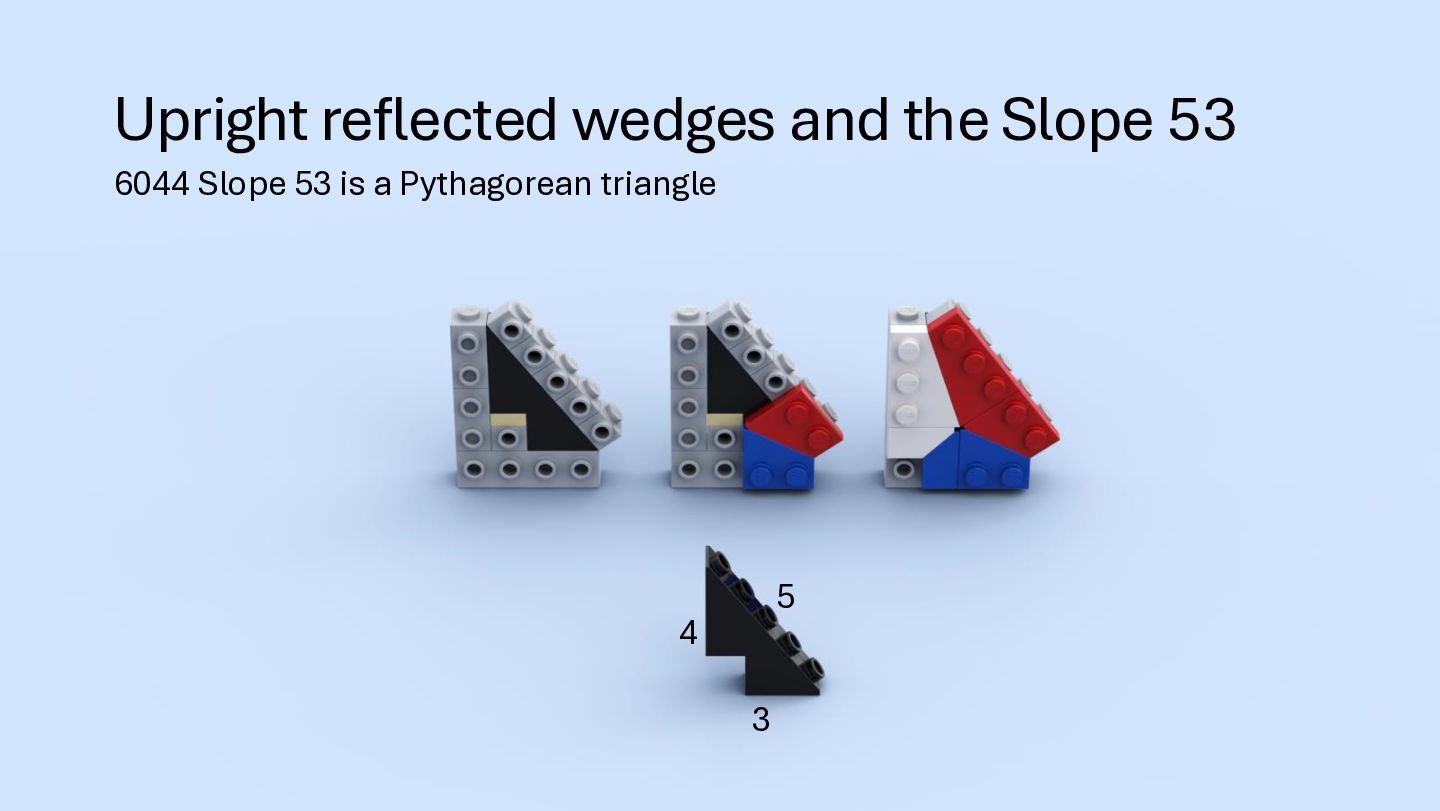
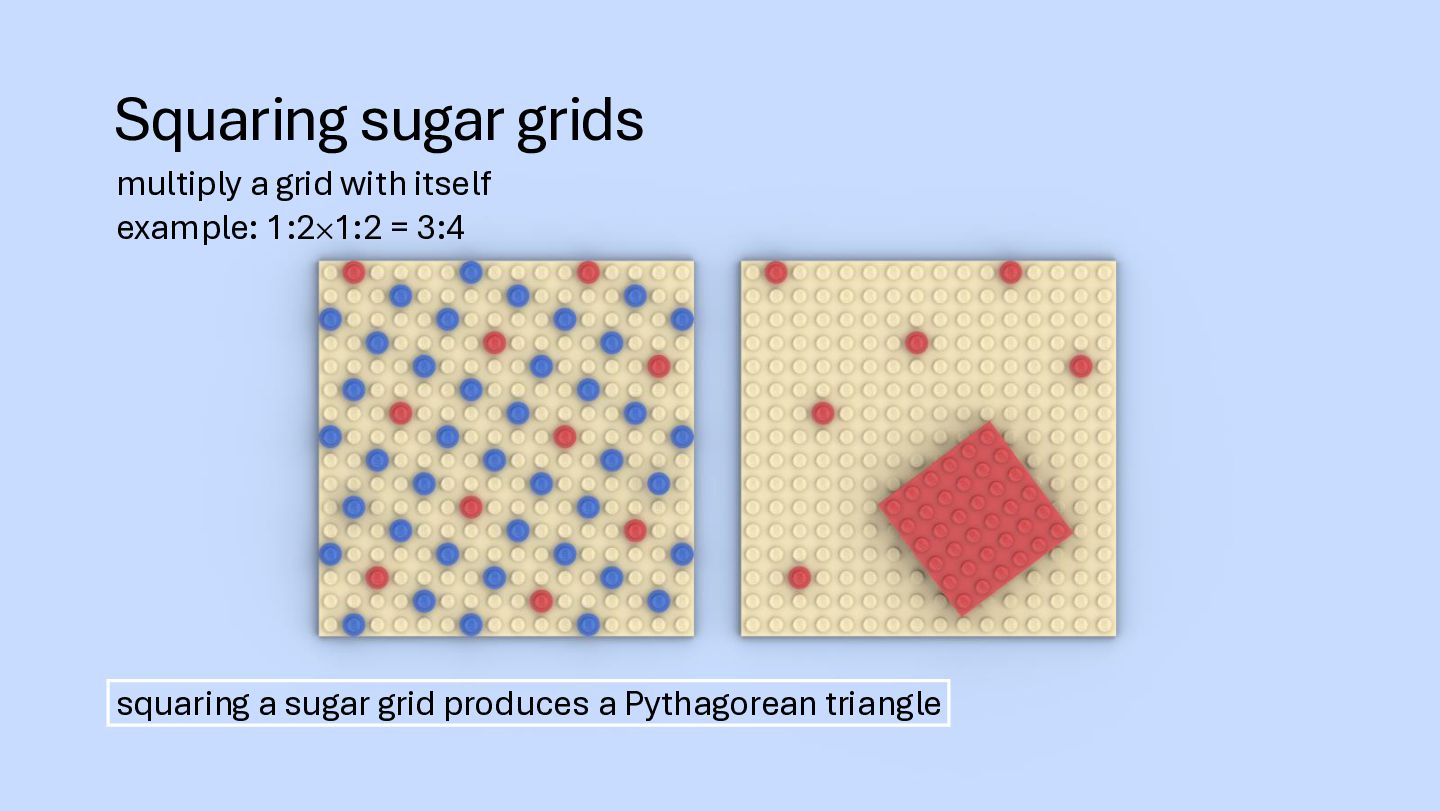
  12. Squaring sugar grids multiply a grid with itself example: 1:2⨉1:2

    = 3:4 squaring a sugar grid produces a Pythagorean triangle
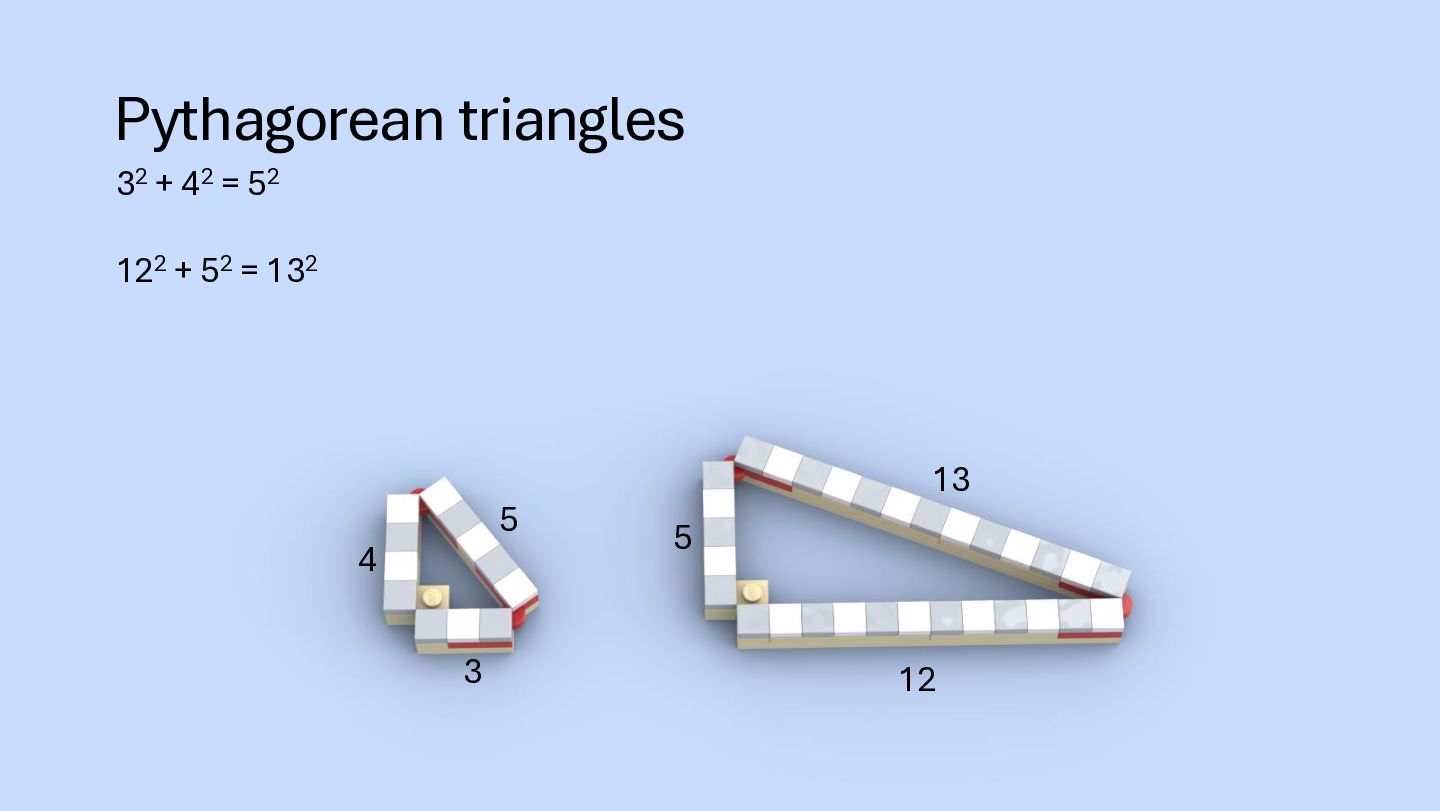
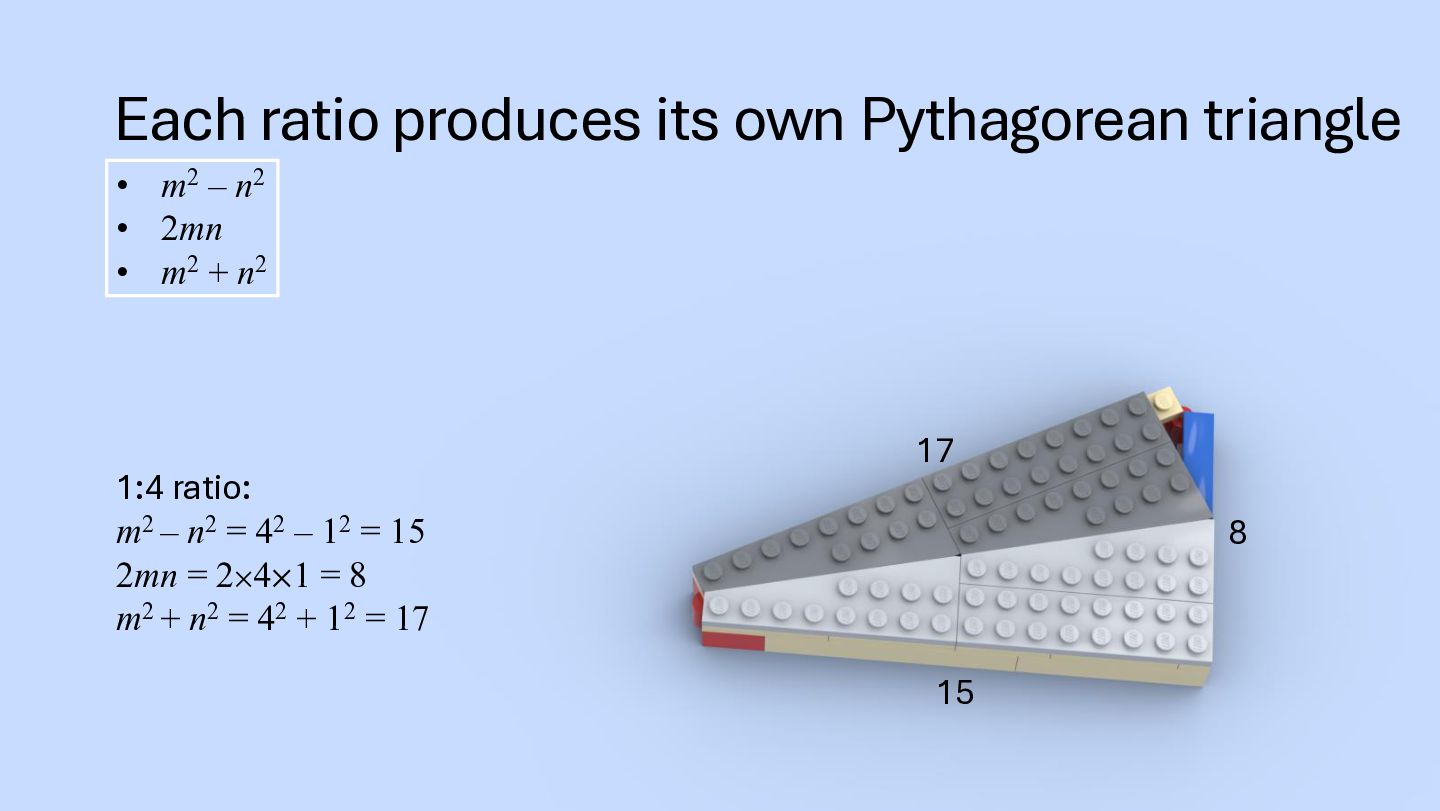
  13. Each ratio produces its own Pythagorean triangle • m2 –

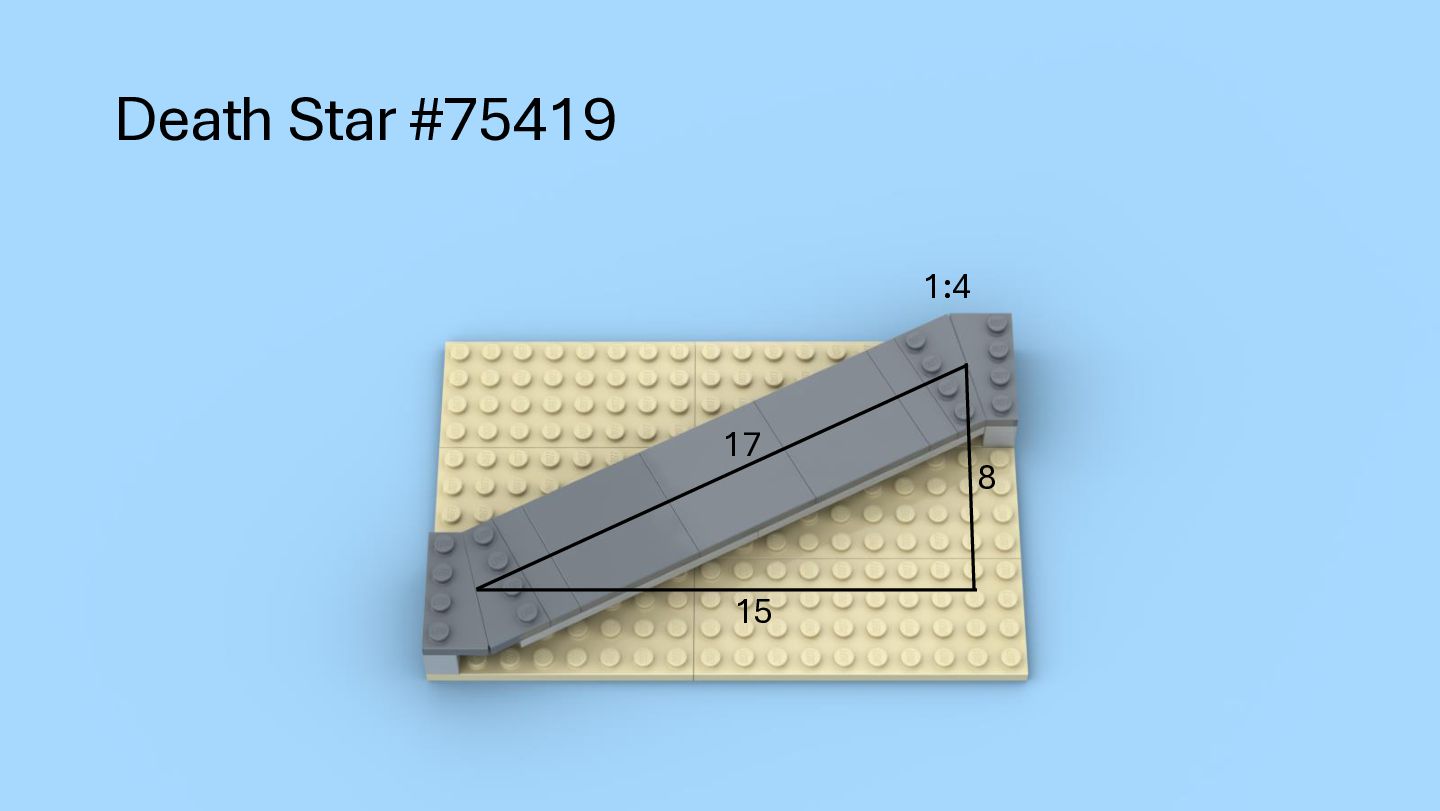
    n2 • 2mn • m2 + n2 1:4 ratio: m2 – n2 = 42 – 12 = 15 2mn = 2⨉4⨉1 = 8 m2 + n2 = 42 + 12 = 17 17 8 15
  14. Ratios and Pythagorean triples n m ratio dual 2⍺ ⍺

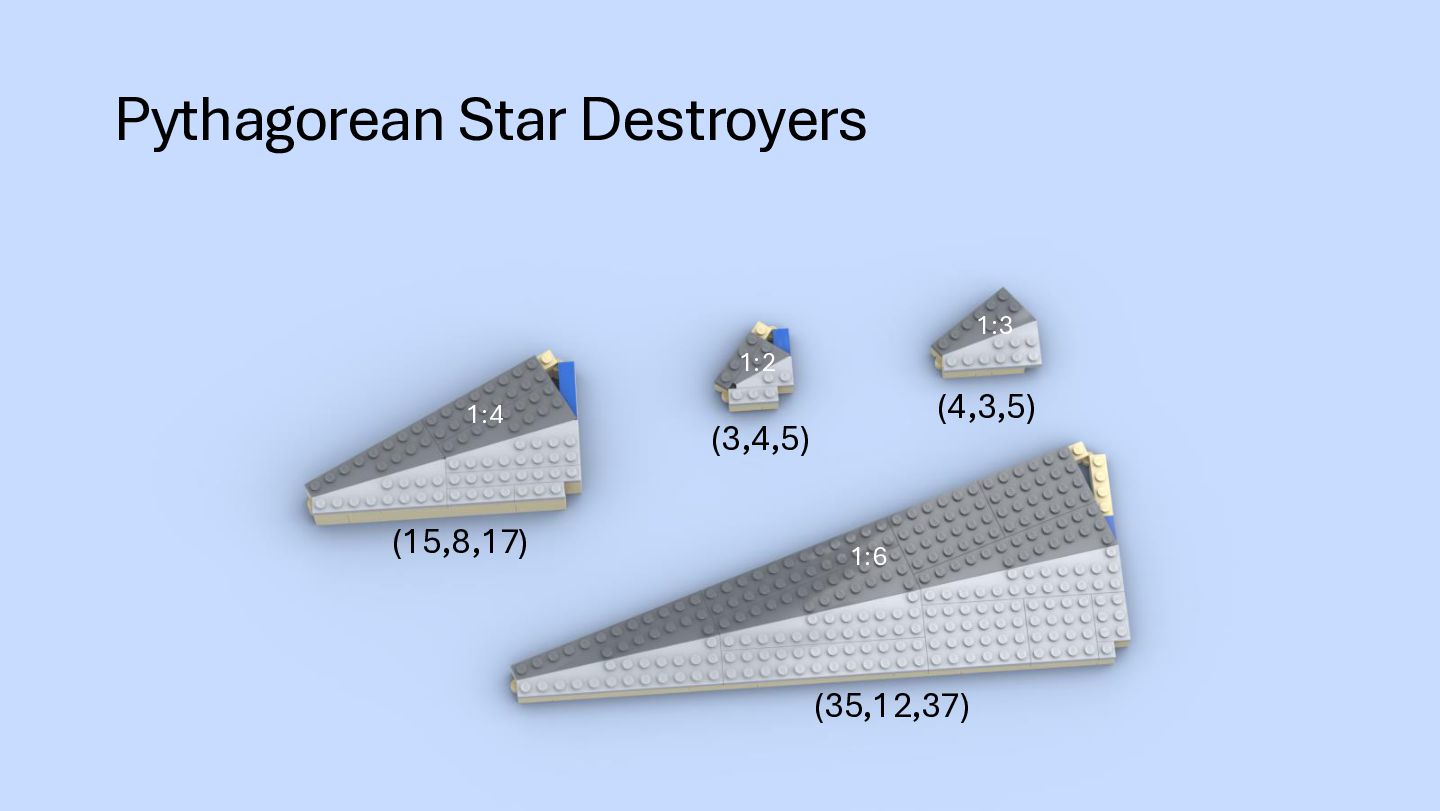
    triple 1 1 1:1 0:1 45 90 1 2 1:2 1:3 26.6 53.1 (3, 4, 5) 1 4 1:4 3:5 14.0 28.1 (15, 8, 17) 1 6 1:6 5:7 9.5 18.9 (35, 12, 37) 1 12 1:12 11:13 4.8 9.5 (143, 24, 145) 2 3 2:3 1:5 33.7 67.4 (5, 12, 13) 3 4 3:4 1:7 36.9 73.7 (7, 24, 25) 2 5 2:5 3:7 21.8 43.6 (21, 20, 29) 4 5 4:5 1:9 38.7 77.3 (9, 40, 41)
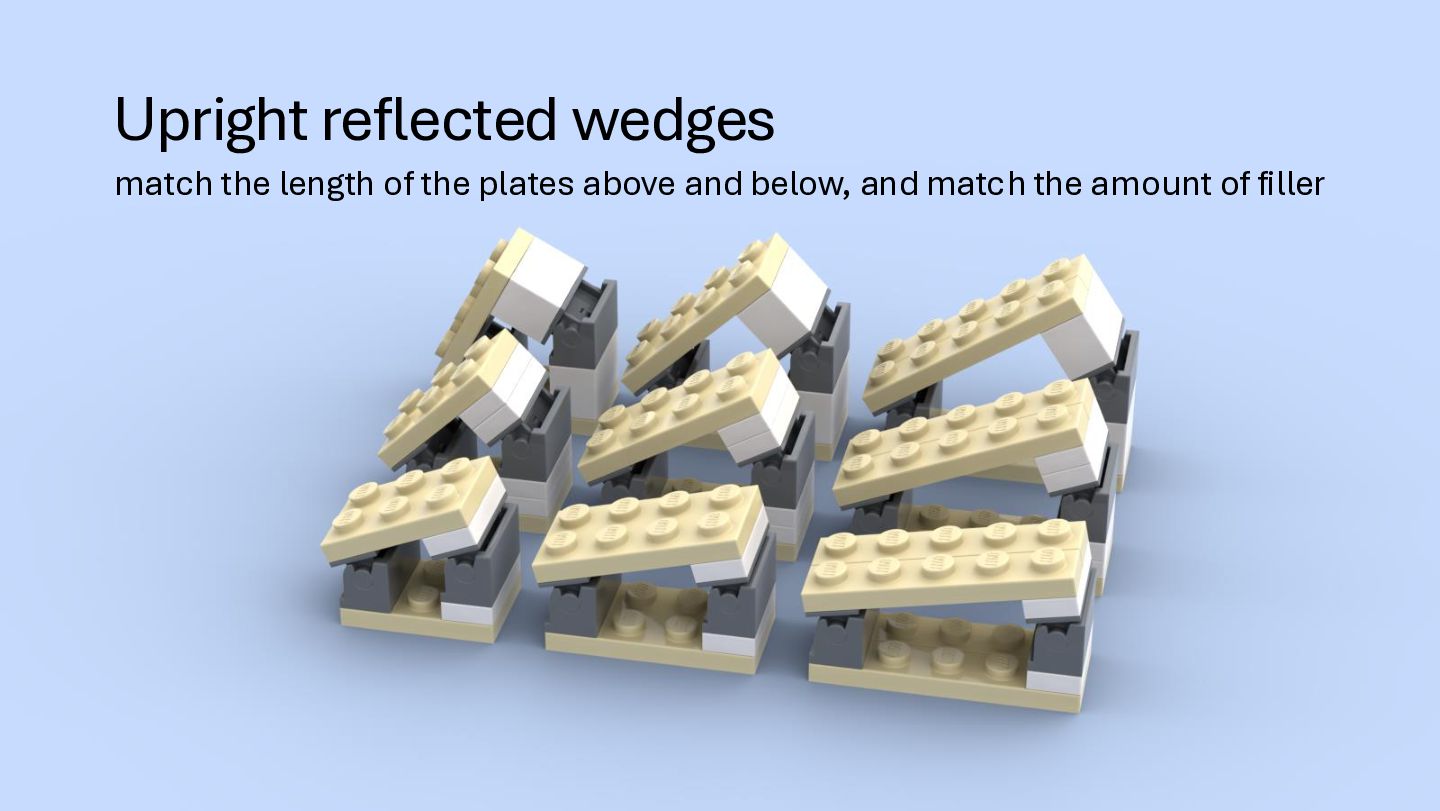
  15. Upright reflected wedges match the length of the plates above

    and below, and match the amount of filler
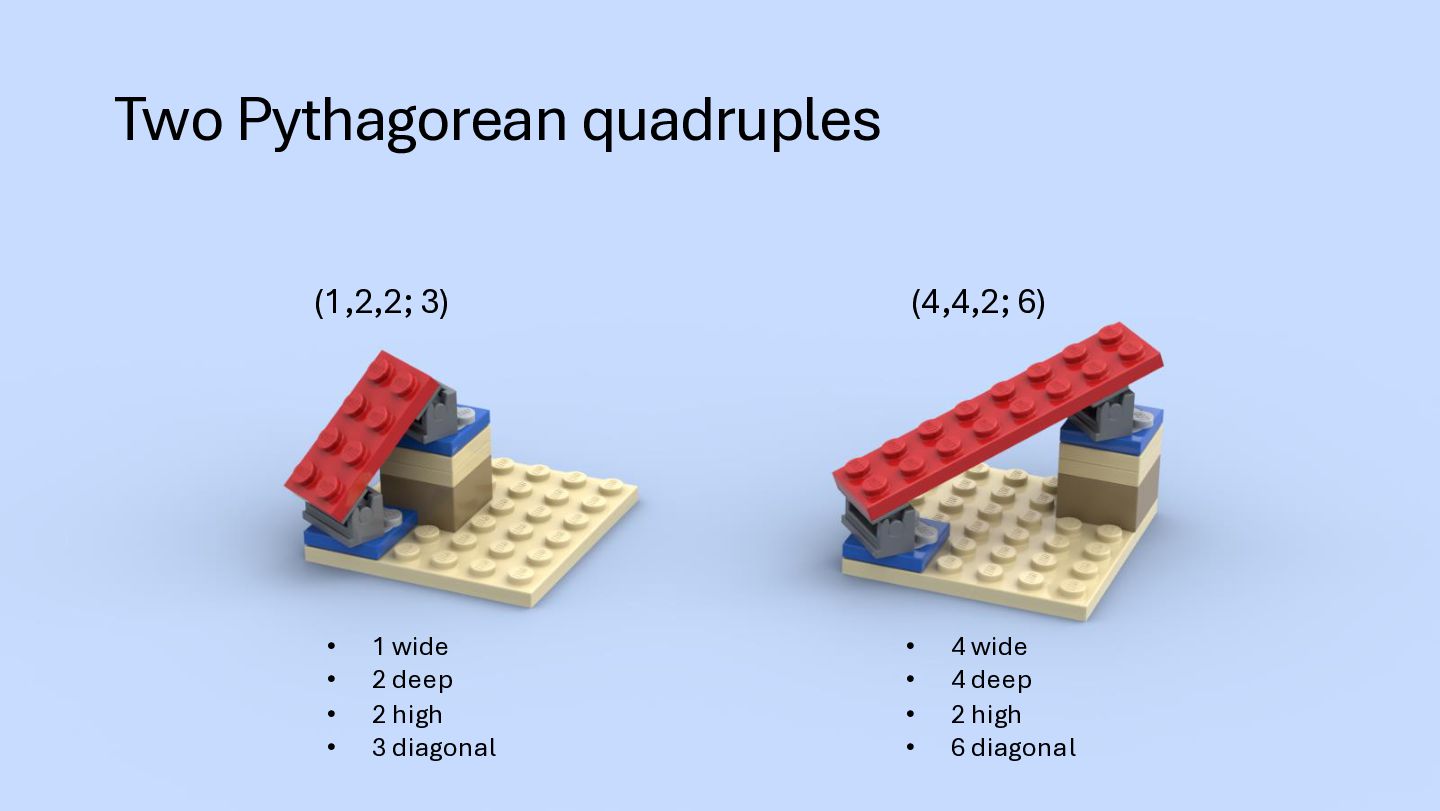
  16. Two Pythagorean quadruples (1,2,2; 3) • • • • 1

    wide 2 deep 2 high 3 diagonal (4,4,2; 6) • • • • 4 wide 4 deep 2 high 6 diagonal