affects all ethnic groups • 14-20/100,000 children per year • Males > Females 1.2-1.8:1 • 90% of HSP cases occur in children, usually between 3 and 10 years of age • Usually severe and chronic complications if seen in adults • Unusual in summer months • Many HSP cases follow documented URTI
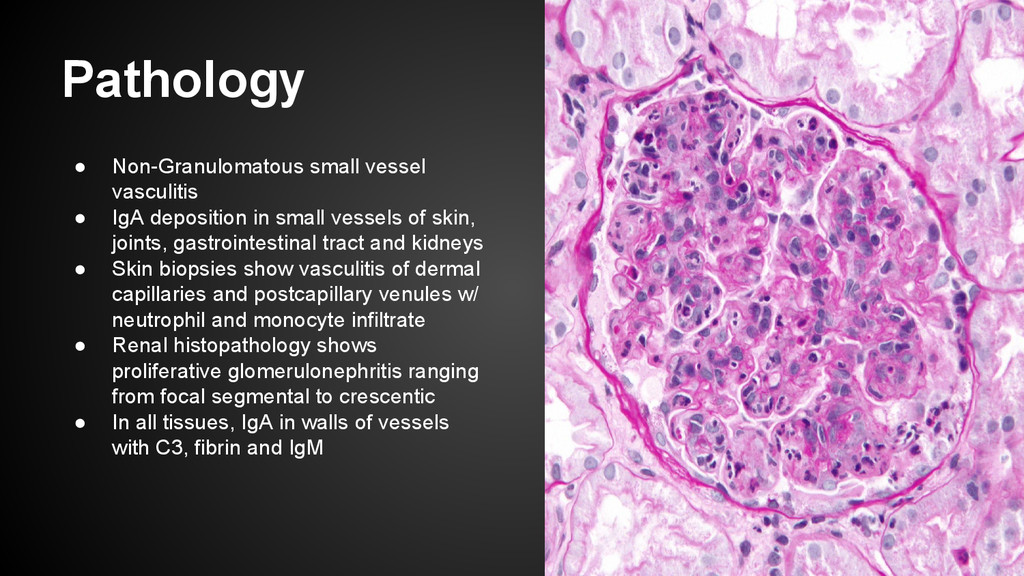
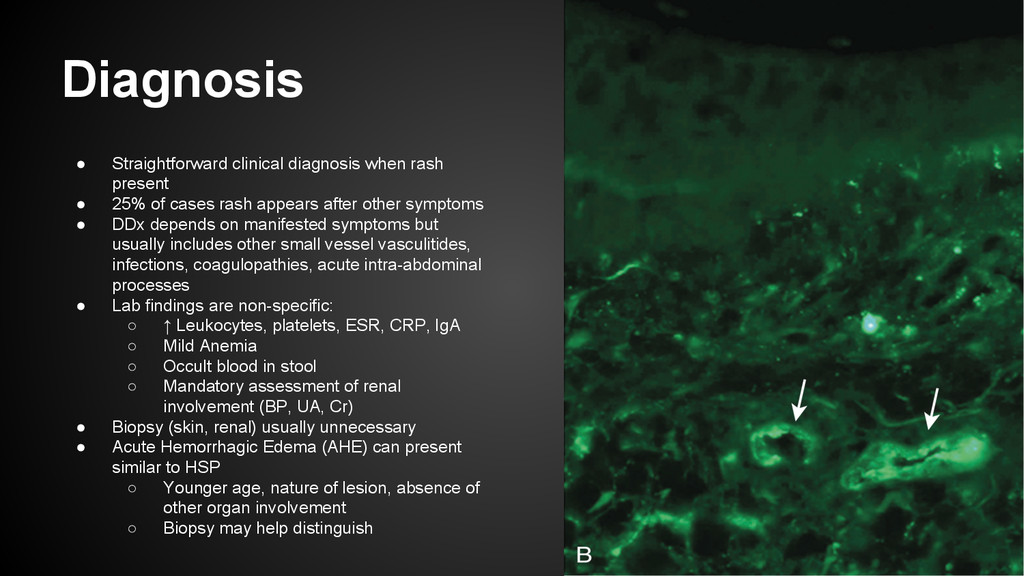
small vessels of skin, joints, gastrointestinal tract and kidneys • Skin biopsies show vasculitis of dermal capillaries and postcapillary venules w/ neutrophil and monocyte infiltrate • Renal histopathology shows proliferative glomerulonephritis ranging from focal segmental to crescentic • In all tissues, IgA in walls of vessels with C3, fibrin and IgM
frequency of preceding URTI including Group A Streptococcus • IgA 1 deposition suggests mediated by immune complexes • Occasionally clusters in families, suggesting genetic component ◦ HLA-B34 and HLA- DRB1*01 alleles have been linked to HSP nephritis
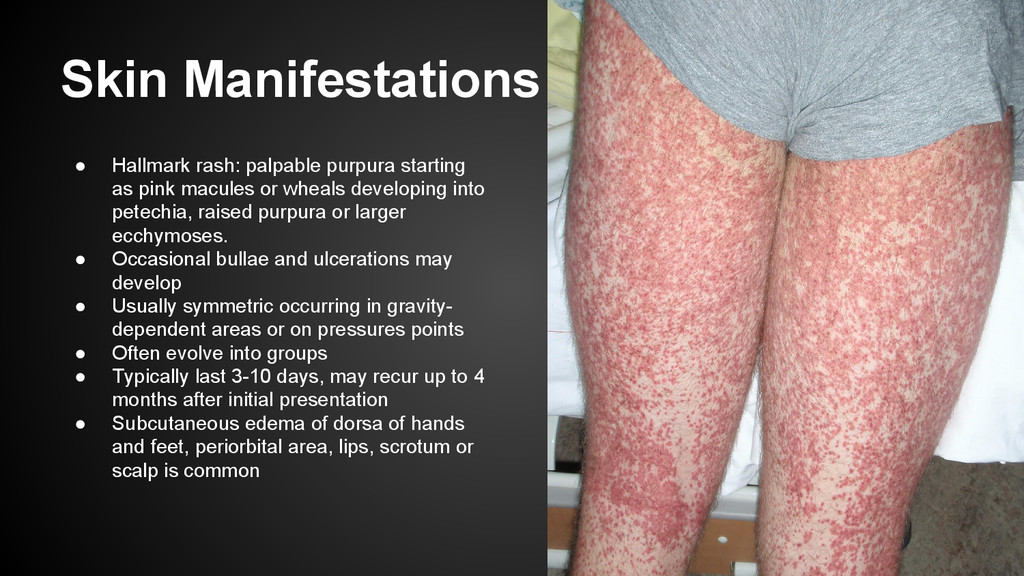
macules or wheals developing into petechia, raised purpura or larger ecchymoses. • Occasional bullae and ulcerations may develop • Usually symmetric occurring in gravity- dependent areas or on pressures points • Often evolve into groups • Typically last 3-10 days, may recur up to 4 months after initial presentation • Subcutaneous edema of dorsa of hands and feet, periorbital area, lips, scrotum or scalp is common
of children ◦ Predilection for lower extremities, does not lead to deformities ◦ Resolves within 2 weeks but can recur • Gastrointestinal: manifests in 80% of children ◦ Abdominal pain, diarrhea, vomiting, paralytic ileus, melena, intussusception and mesenteric ischemia or perforation. • Renal: manifests in 50% of children ◦ Hematuria, proteinuria, hypertension, nephritis, nephrotic syndrome, ARF/CRF ◦ Progression to ESRD uncommon in children (1-2%) • Neurologic: Due to hypertension or CNS vasculitis ◦ Intracerebral hemorrhage, seizures, headaches, behavior changes • Other: Much less common ◦ Orchitis, carditis, inflammatory eye disease, testicular torsion, pulmonary hemorrhage
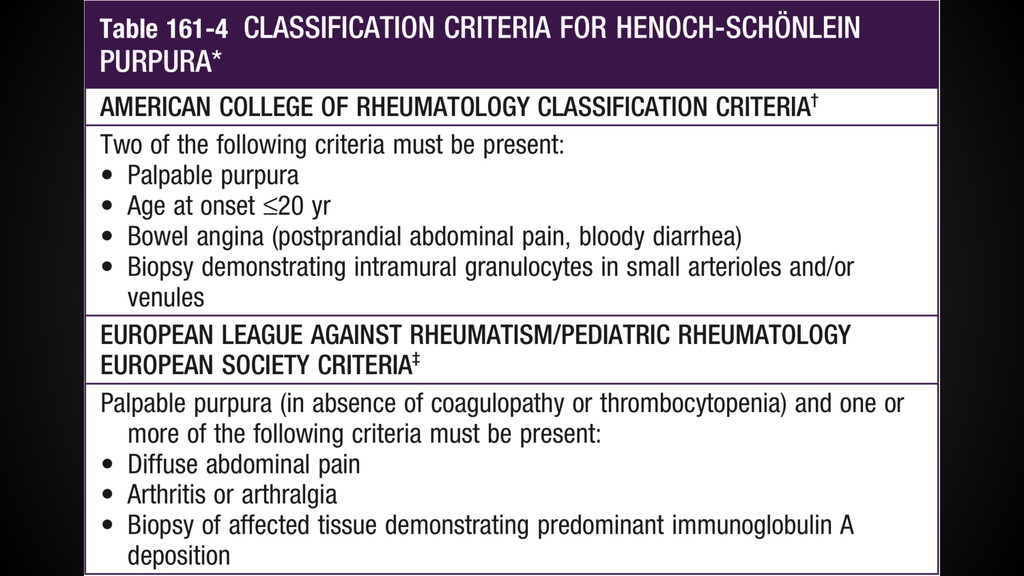
of cases rash appears after other symptoms • DDx depends on manifested symptoms but usually includes other small vessel vasculitides, infections, coagulopathies, acute intra-abdominal processes • Lab findings are non-specific: ◦ ↑ Leukocytes, platelets, ESR, CRP, IgA ◦ Mild Anemia ◦ Occult blood in stool ◦ Mandatory assessment of renal involvement (BP, UA, Cr) • Biopsy (skin, renal) usually unnecessary • Acute Hemorrhagic Edema (AHE) can present similar to HSP ◦ Younger age, nature of lesion, absence of other organ involvement ◦ Biopsy may help distinguish
• Steroids if significant GI involvement or life-threatening manifestations • 1 mg/kg/day for 1-2 weeks of Prednisone reduces pain (joint and abdominal) but does not alter progression of disease • Plasma exchange in severe disease (little data) • Azathioprine, Cyclophosphamide, mycophenolate mofetil in severe renal disease
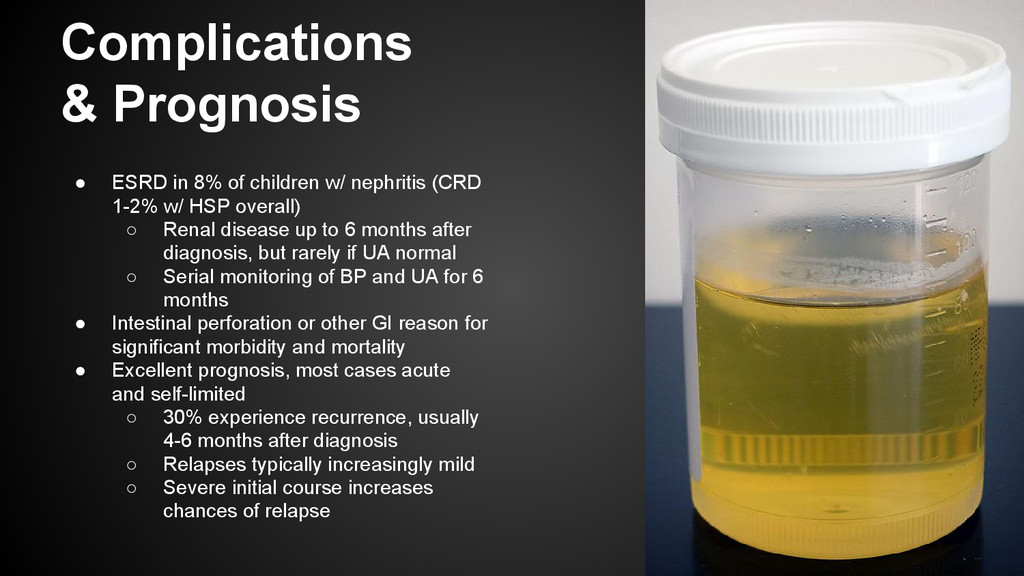
nephritis (CRD 1-2% w/ HSP overall) ◦ Renal disease up to 6 months after diagnosis, but rarely if UA normal ◦ Serial monitoring of BP and UA for 6 months • Intestinal perforation or other GI reason for significant morbidity and mortality • Excellent prognosis, most cases acute and self-limited ◦ 30% experience recurrence, usually 4-6 months after diagnosis ◦ Relapses typically increasingly mild ◦ Severe initial course increases chances of relapse


 georgegermanos
 cbtlibrary
 hiola
 uranoken
 matleenalaakso
 drpoonamkc
 terazawa
 spring_aki
 signer
 dragon2
 bvr7352
 juanmartin2026
 inesmontani
 yeseniaperezcruz
 katiecoart
 gr2m
 rkendrick25
 tmiket
 codingconduct
 keathley
 axbom
 joshbly