Source: "Moving Beyond Basic Conversion Tracking - Engineering Signals for Sustainable Marketing Advantage" / Superweek 2026 | Date: September 2025 and February 2026 Definition The process of intentionally designing the conversion data sent to advertising platforms so they can optimize for actual business goals like profit, revenue, or customer lifetime value (CLV). Key Notions • Intentional design of conversion data • Alignment with actual business goals • Optimization for Profit, Revenue, or CLV
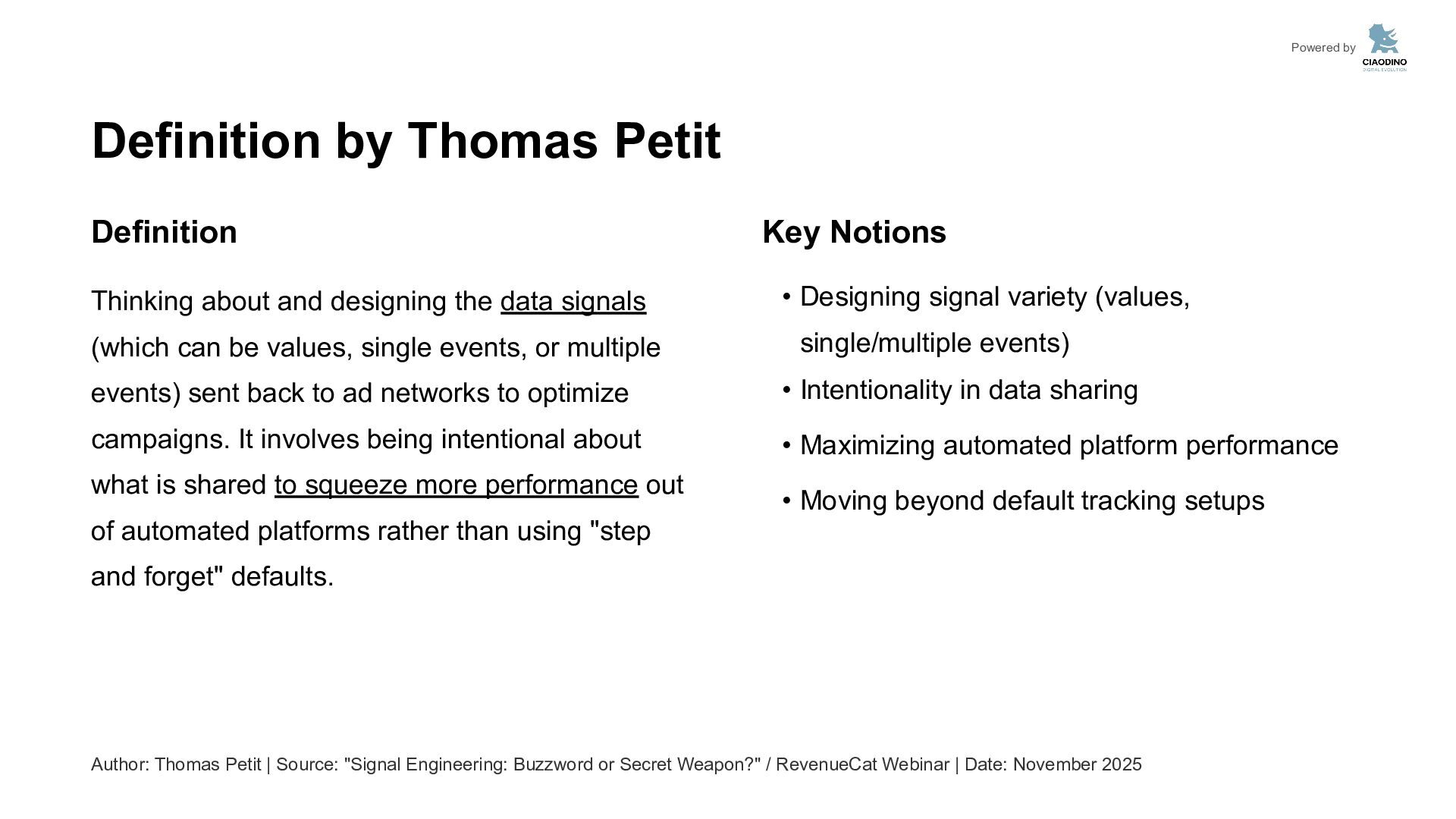
Source: "Signal Engineering: Buzzword or Secret Weapon?" / RevenueCat Webinar | Date: November 2025 Definition Thinking about and designing the data signals (which can be values, single events, or multiple events) sent back to ad networks to optimize campaigns. It involves being intentional about what is shared to squeeze more performance out of automated platforms rather than using "step and forget" defaults. Key Notions • Designing signal variety (values, single/multiple events) • Intentionality in data sharing • Maximizing automated platform performance • Moving beyond default tracking setups
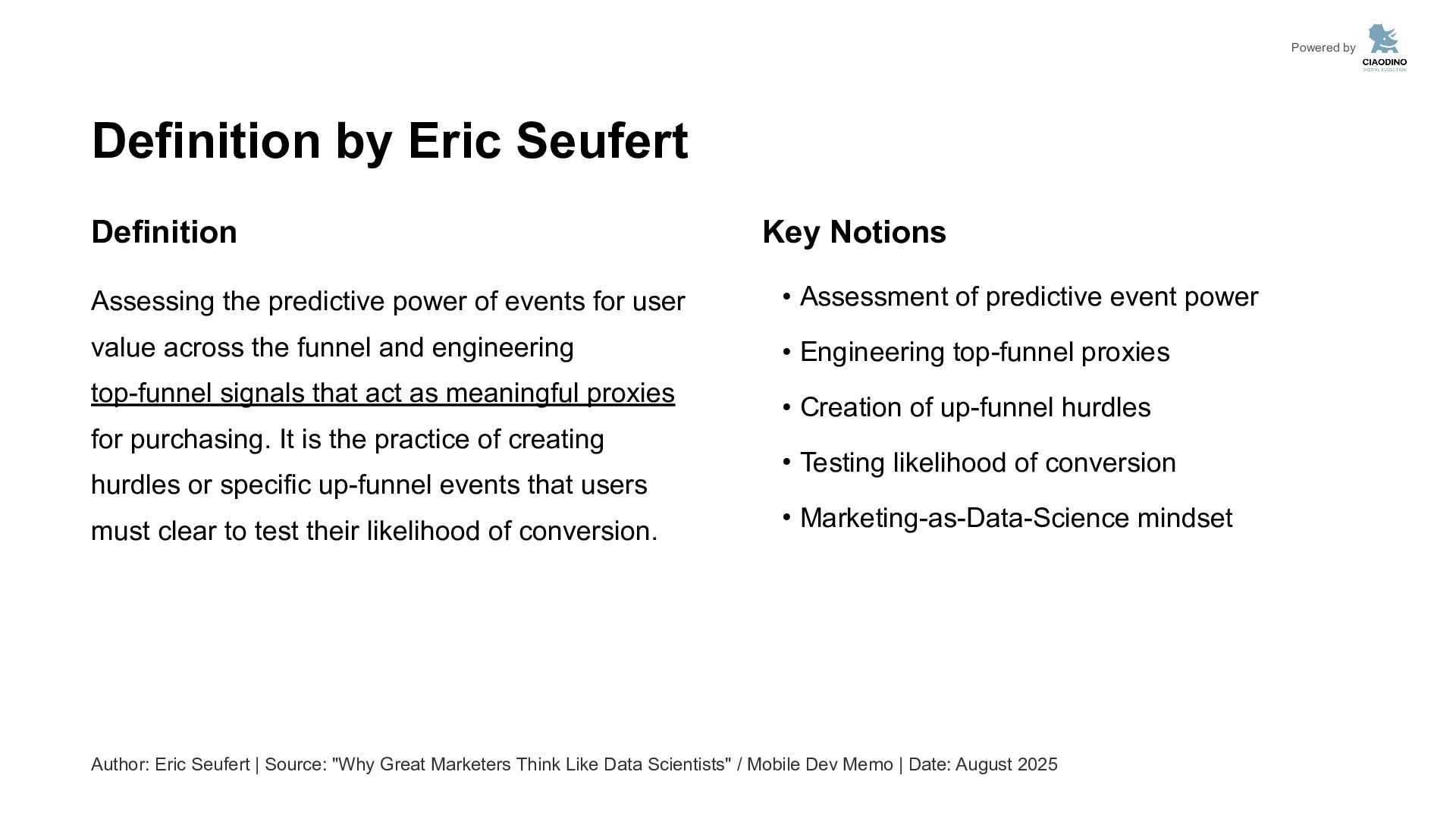
Source: "Why Great Marketers Think Like Data Scientists" / Mobile Dev Memo | Date: August 2025 Definition Assessing the predictive power of events for user value across the funnel and engineering top-funnel signals that act as meaningful proxies for purchasing. It is the practice of creating hurdles or specific up-funnel events that users must clear to test their likelihood of conversion. Key Notions • Assessment of predictive event power • Engineering top-funnel proxies • Creation of up-funnel hurdles • Testing likelihood of conversion • Marketing-as-Data-Science mindset
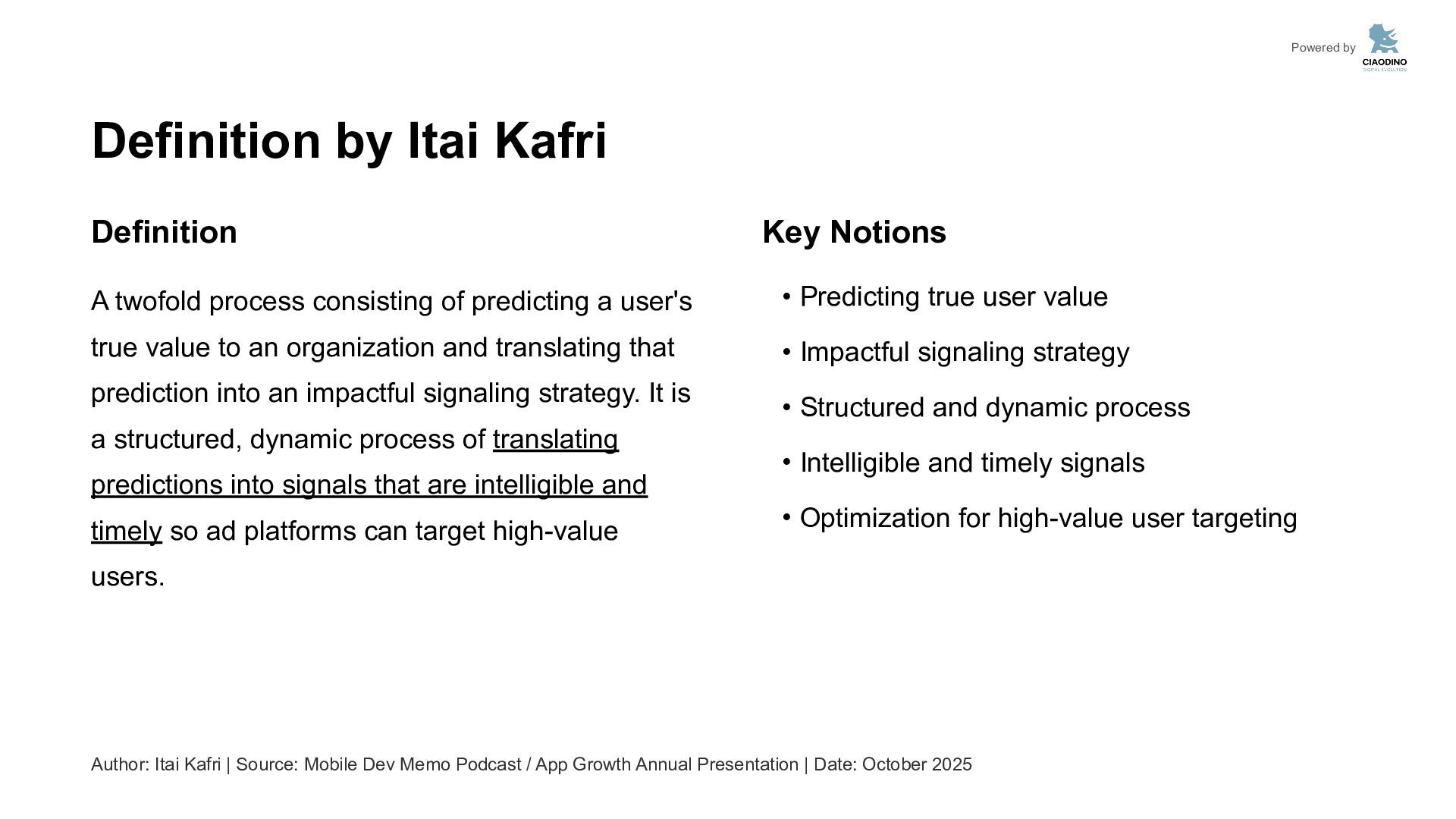
Source: Mobile Dev Memo Podcast / App Growth Annual Presentation | Date: October 2025 Definition A twofold process consisting of predicting a user's true value to an organization and translating that prediction into an impactful signaling strategy. It is a structured, dynamic process of translating predictions into signals that are intelligible and timely so ad platforms can target high-value users. Key Notions • Predicting true user value • Impactful signaling strategy • Structured and dynamic process • Intelligible and timely signals • Optimization for high-value user targeting
like Meta and Google are increasingly automated • Manual levers for bidding and targeting are disappearing • Marketers must "feed the machine" with high-quality data • Forces automation to work in the advertiser's favor
focus on clicks or installs (poor proxies) • Signal engineering bridges the gap to true business outcomes • Direct algorithms to optimize for revenue and profit • Prioritize long-term Customer Lifetime Value (CLV)
limited 7-day conversion windows, in some cases • Actual user value often takes months to materialize • Predict future value early (Day 0 signals) • Enables immediate algorithmic action on future value
as meaningful proxies • Identify net-new high-value users beyond existing buyers • Scale campaigns by widening the targeting funnel • Breaks restriction of targeting only known purchasers
by mixing SDK and MMP sources • Ensure data is clean, unified, and actionable • Allow platforms to learn efficiently from high-fidelity inputs • Stop algorithmic confusion caused by broken data
Streams When signals sent to ad platforms are inaccurate or fragmented. Fixing and understanding current signals is the top priority before further optimization. "Black Box" Automated Environments In platforms like Meta (Advantage+) or Google (PMax) where targeting is automated. Signal engineering becomes the only lever to influence the algorithm's logic.
Paid Subscriptions When apps optimize for "trial starts," which can be a poor indicator of value. Engineering helps optimize for long-term subscribers instead. Long or Complex Conversion Funnels In cases where it takes 60–75 days for a user to convert. Early predictive signals provide the algorithm with immediate data to act upon.
User Value (CLV) When a small percentage of users generate most revenue. Necessary to identify and target "whale" segments or inconsistent value tiers. Low Conversion Quality on Specific Networks If conversion rates crash on specific networks compared to others. Signal engineering filters out reasons why trials fail to convert on those channels.
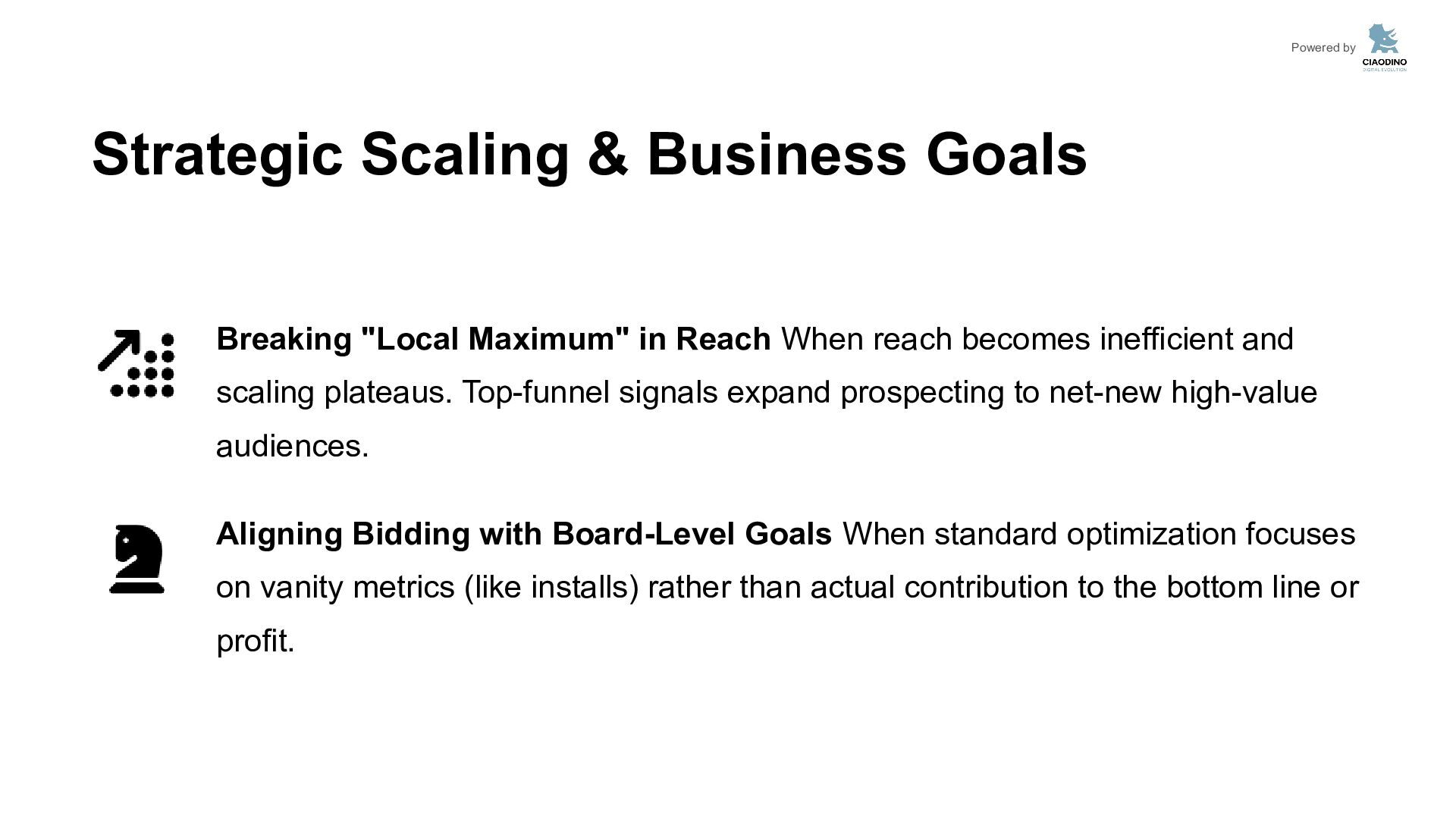
in Reach When reach becomes inefficient and scaling plateaus. Top-funnel signals expand prospecting to net-new high-value audiences. Aligning Bidding with Board-Level Goals When standard optimization focuses on vanity metrics (like installs) rather than actual contribution to the bottom line or profit.
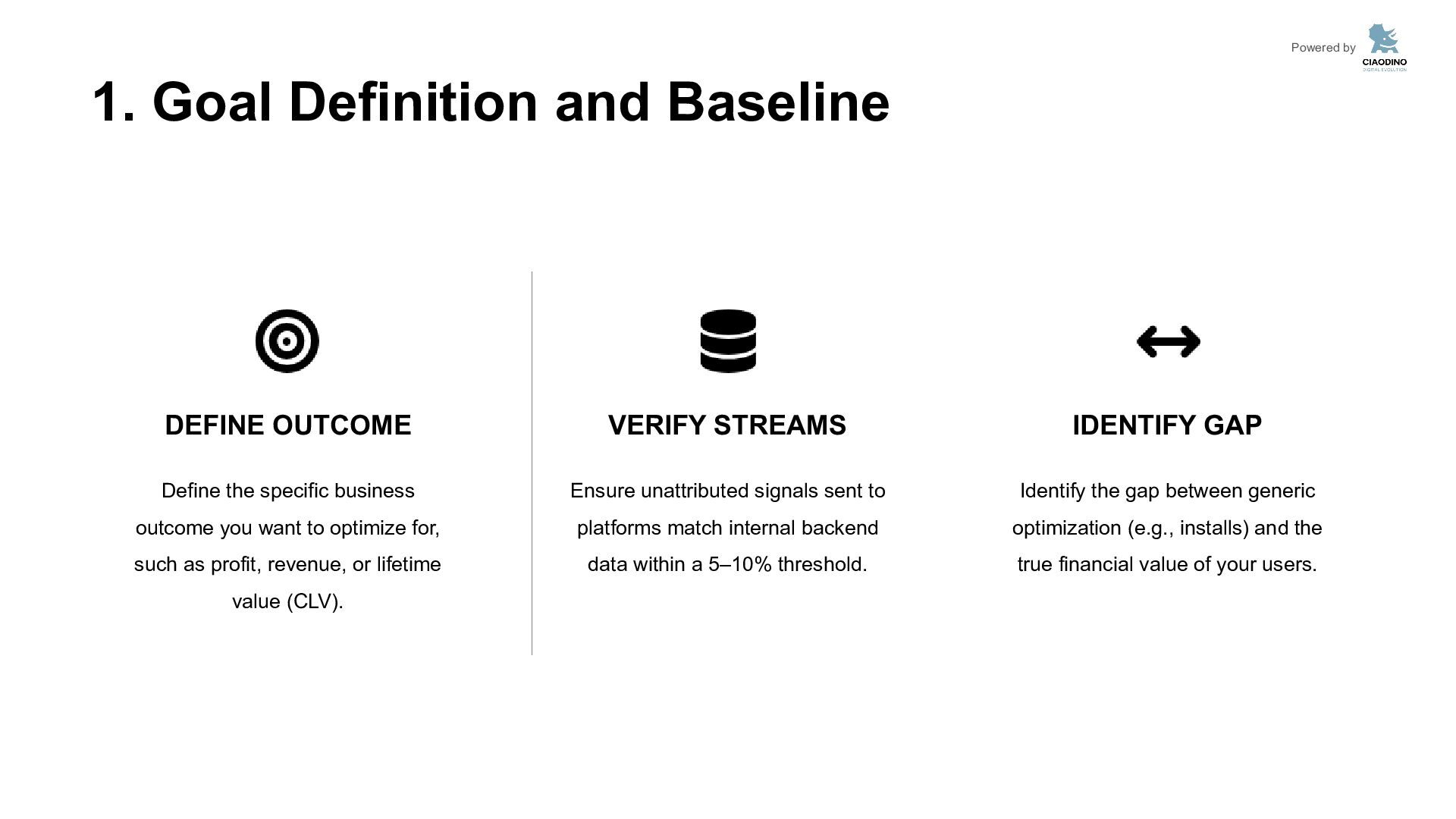
the specific business outcome you want to optimize for, such as profit, revenue, or lifetime value (CLV). VERIFY STREAMS Ensure unattributed signals sent to platforms match internal backend data within a 5–10% threshold. IDENTIFY GAP Identify the gap between generic optimization (e.g., installs) and the true financial value of your users.
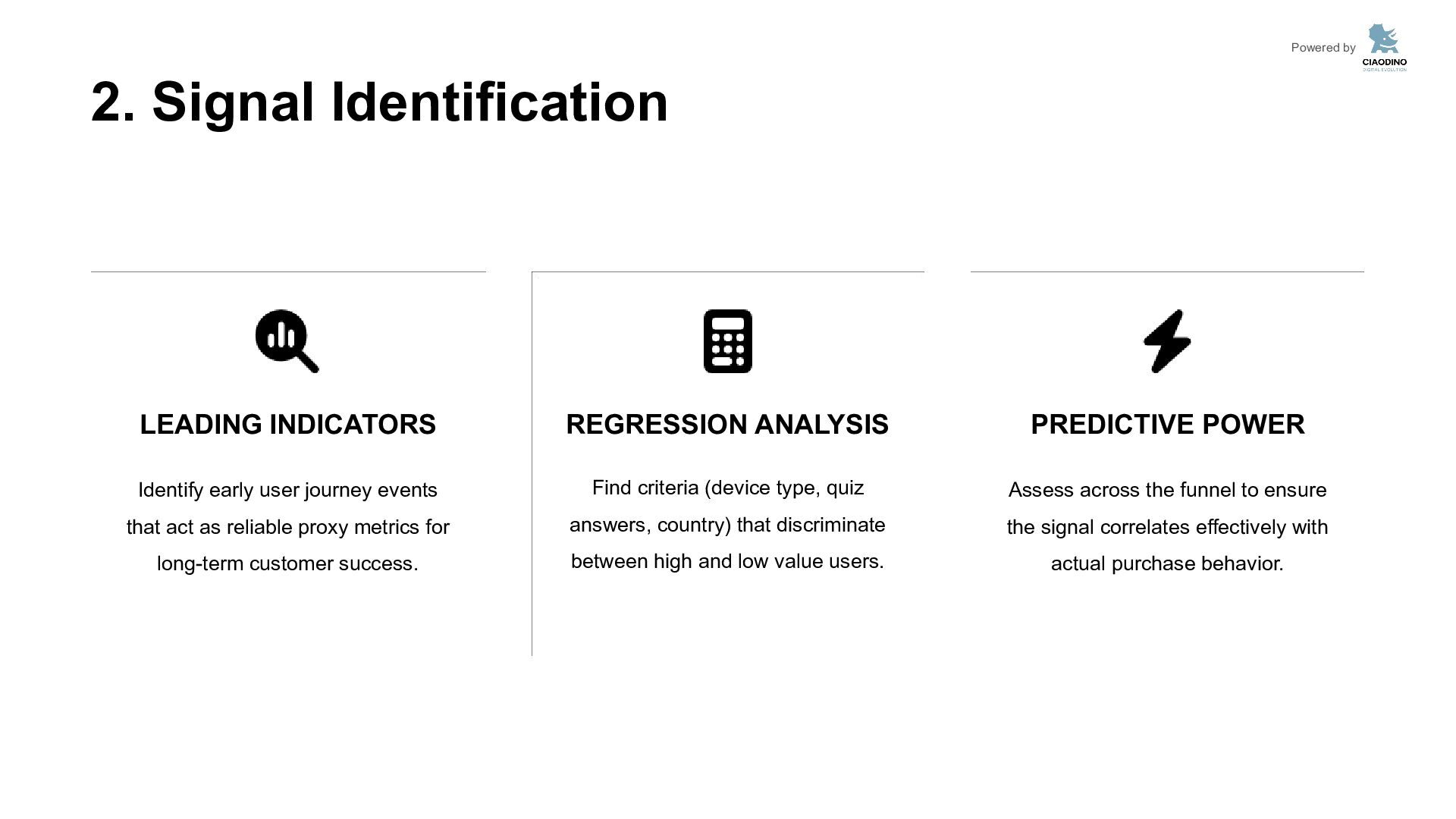
journey events that act as reliable proxy metrics for long-term customer success. REGRESSION ANALYSIS Find criteria (device type, quiz answers, country) that discriminate between high and low value users. PREDICTIVE POWER Assess across the funnel to ensure the signal correlates effectively with actual purchase behavior.
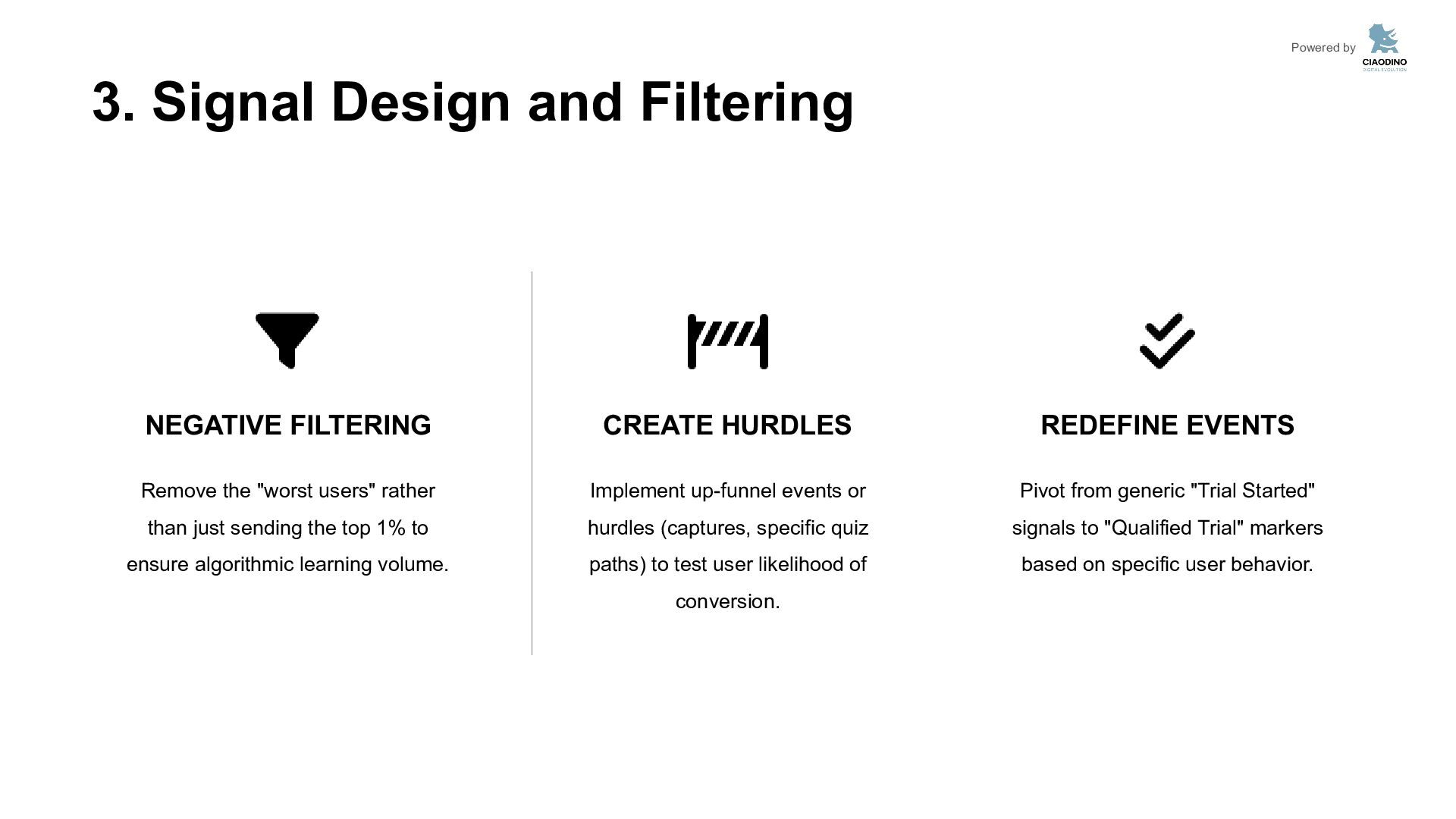
the "worst users" rather than just sending the top 1% to ensure algorithmic learning volume. CREATE HURDLES Implement up-funnel events or hurdles (captures, specific quiz paths) to test user likelihood of conversion. REDEFINE EVENTS Pivot from generic "Trial Started" signals to "Qualified Trial" markers based on specific user behavior.
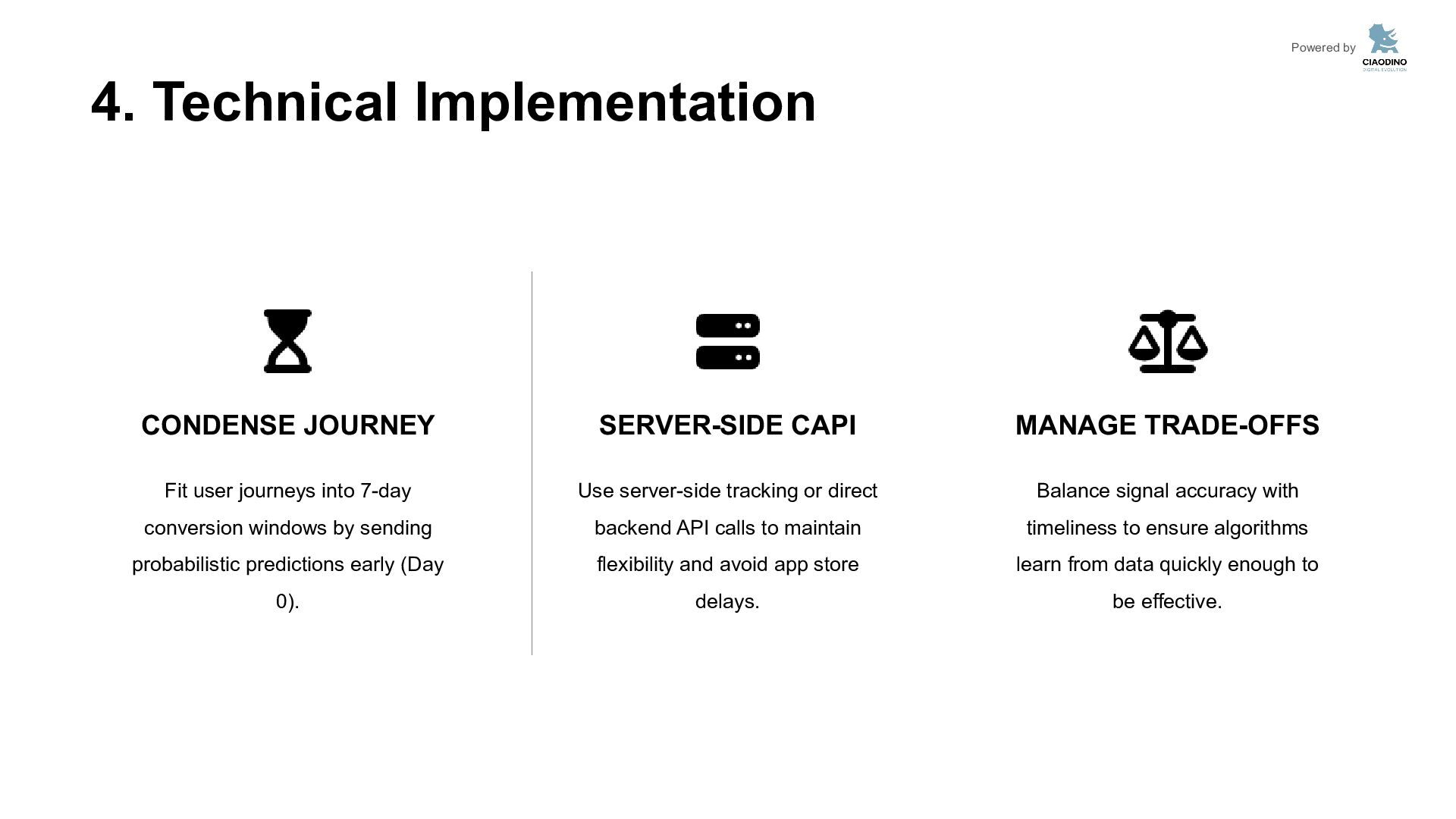
into 7-day conversion windows by sending probabilistic predictions early (Day 0). SERVER-SIDE CAPI Use server-side tracking or direct backend API calls to maintain flexibility and avoid app store delays. MANAGE TRADE-OFFS Balance signal accuracy with timeliness to ensure algorithms learn from data quickly enough to be effective.
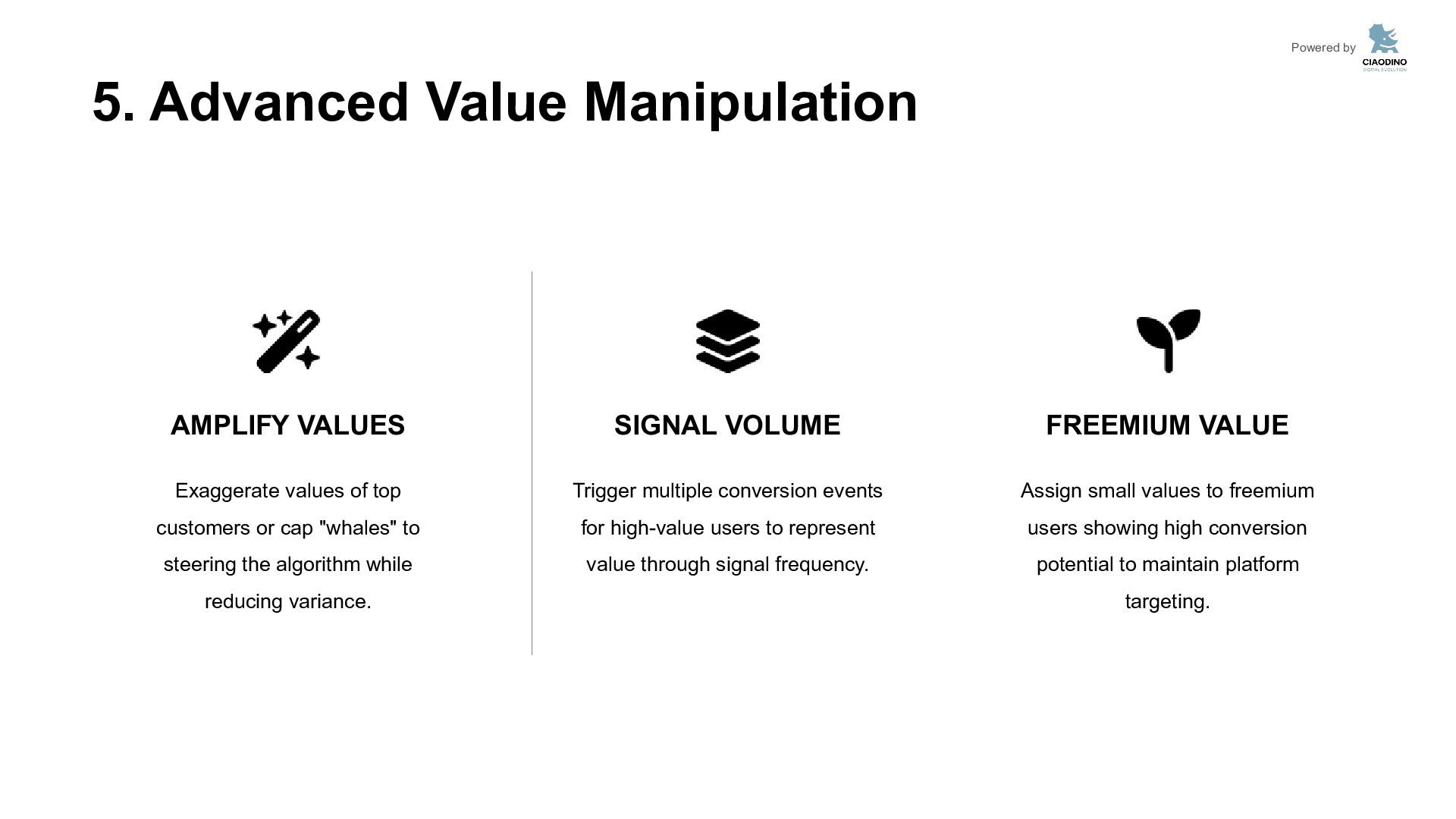
of top customers or cap "whales" to steering the algorithm while reducing variance. SIGNAL VOLUME Trigger multiple conversion events for high-value users to represent value through signal frequency. FREEMIUM VALUE Assign small values to freemium users showing high conversion potential to maintain platform targeting.
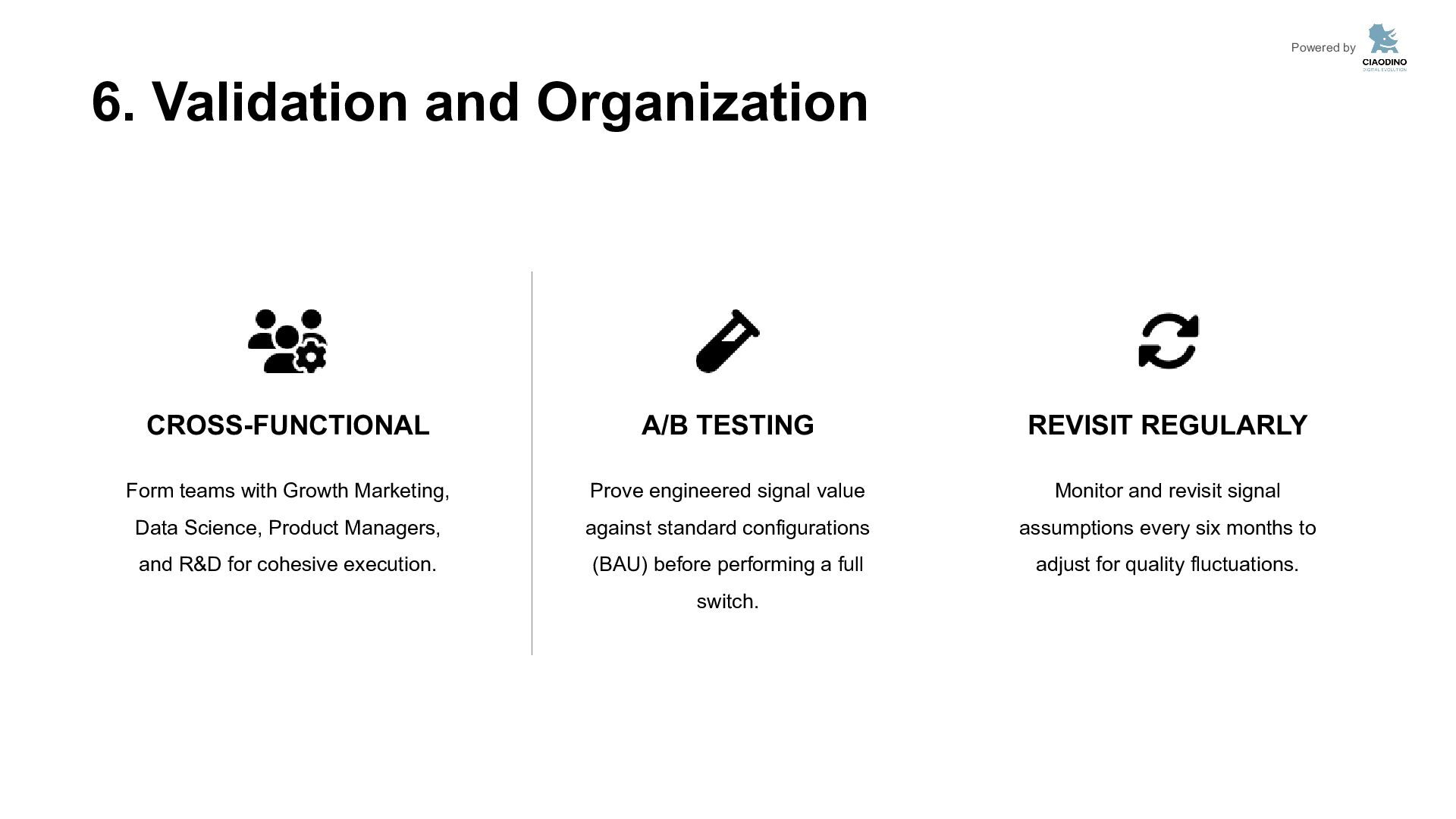
Growth Marketing, Data Science, Product Managers, and R&D for cohesive execution. A/B TESTING Prove engineered signal value against standard configurations (BAU) before performing a full switch. REVISIT REGULARLY Monitor and revisit signal assumptions every six months to adjust for quality fluctuations.
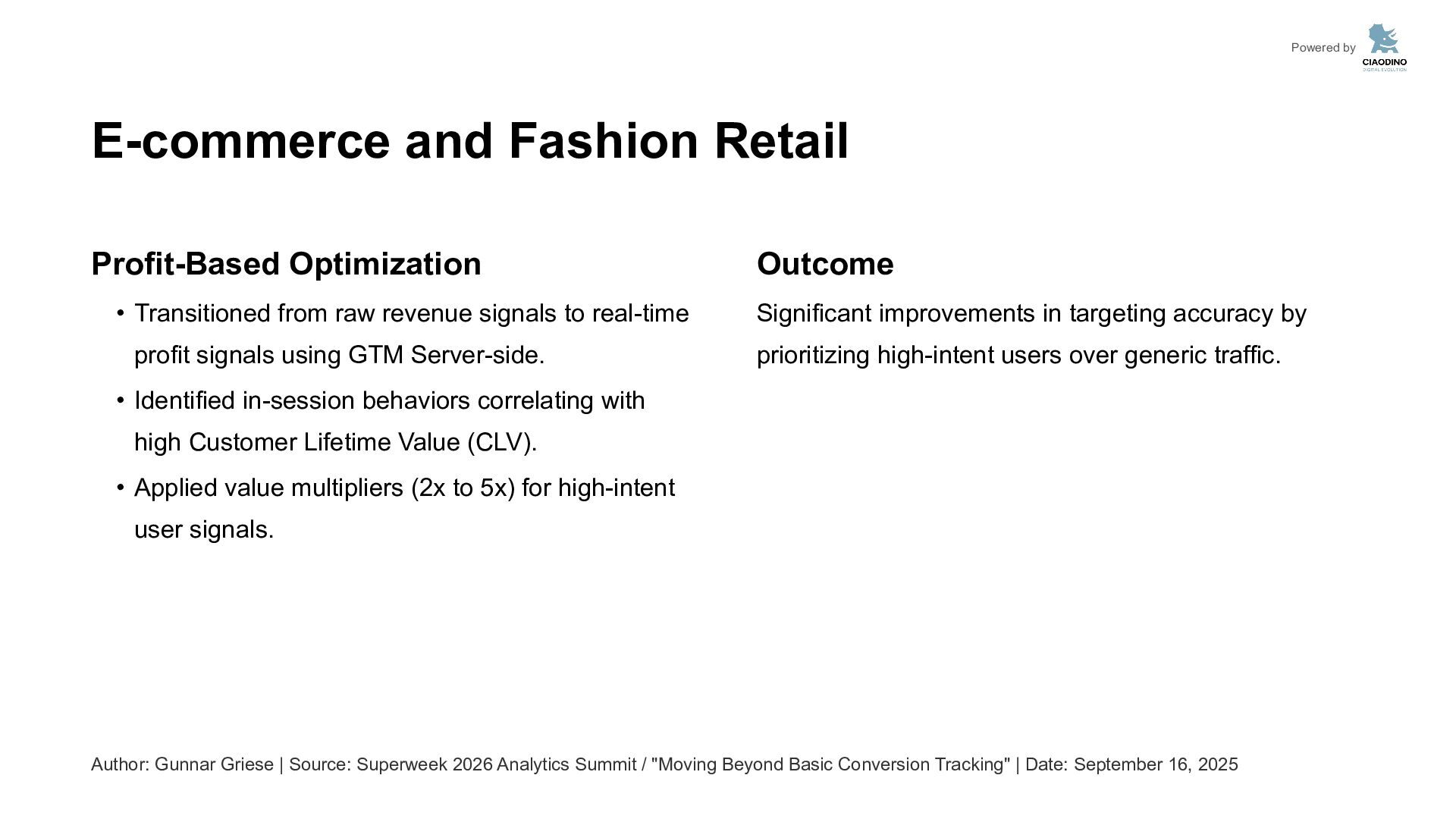
Source: Superweek 2026 Analytics Summit / "Moving Beyond Basic Conversion Tracking" | Date: September 16, 2025 Profit-Based Optimization Outcome Significant improvements in targeting accuracy by prioritizing high-intent users over generic traffic. • Transitioned from raw revenue signals to real-time profit signals using GTM Server-side. • Identified in-session behaviors correlating with high Customer Lifetime Value (CLV). • Applied value multipliers (2x to 5x) for high-intent user signals.
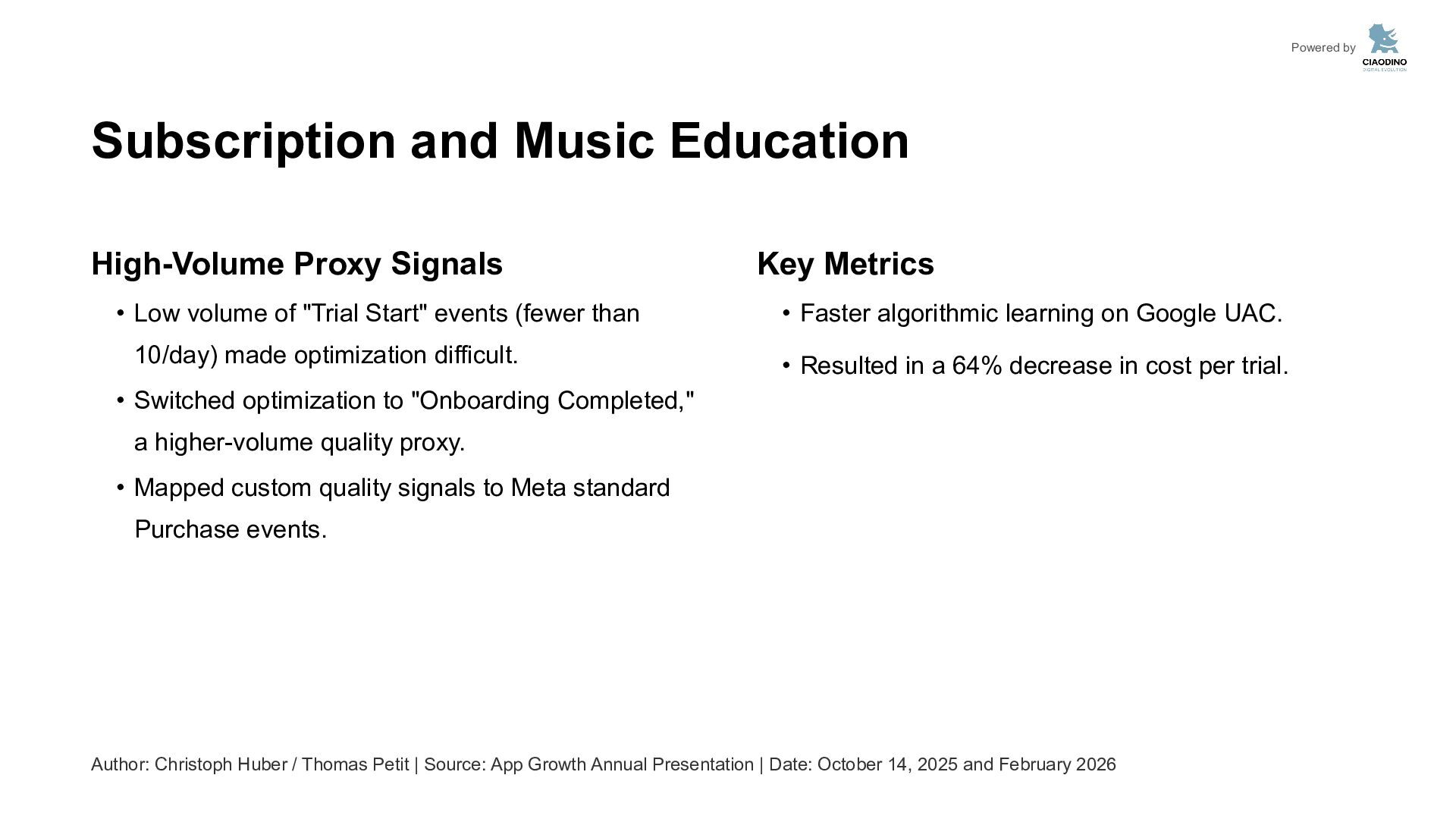
Thomas Petit | Source: App Growth Annual Presentation | Date: October 14, 2025 and February 2026 High-Volume Proxy Signals Key Metrics • Low volume of "Trial Start" events (fewer than 10/day) made optimization difficult. • Switched optimization to "Onboarding Completed," a higher-volume quality proxy. • Mapped custom quality signals to Meta standard Purchase events. • Faster algorithmic learning on Google UAC. • Resulted in a 64% decrease in cost per trial.
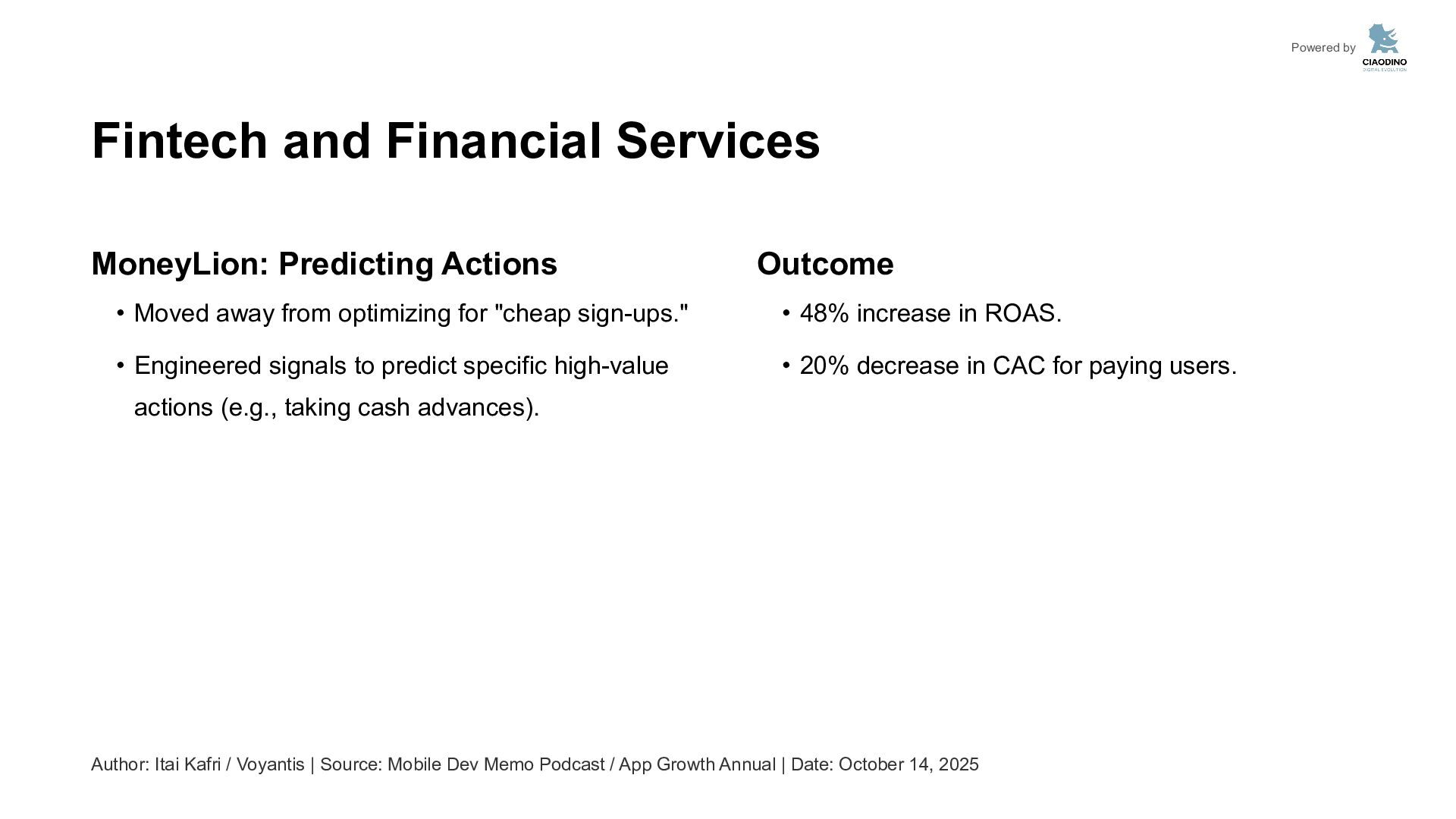
Voyantis | Source: Mobile Dev Memo Podcast / App Growth Annual | Date: October 14, 2025 MoneyLion: Predicting Actions Outcome • Moved away from optimizing for "cheap sign-ups." • Engineered signals to predict specific high-value actions (e.g., taking cash advances). • 48% increase in ROAS. • 20% decrease in CAC for paying users.
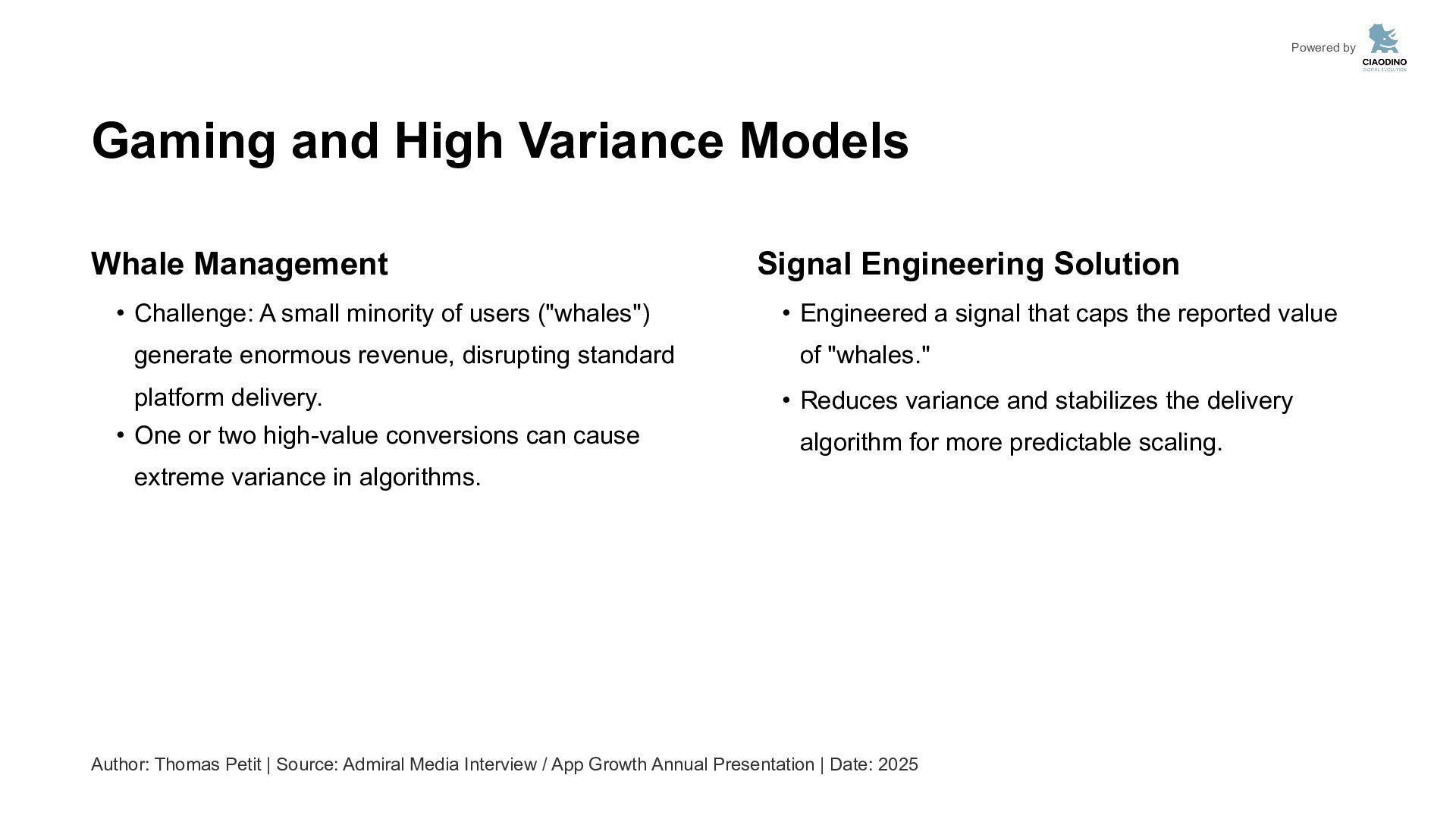
| Source: Admiral Media Interview / App Growth Annual Presentation | Date: 2025 Whale Management Signal Engineering Solution • Challenge: A small minority of users ("whales") generate enormous revenue, disrupting standard platform delivery. • One or two high-value conversions can cause extreme variance in algorithms. • Engineered a signal that caps the reported value of "whales." • Reduces variance and stabilizes the delivery algorithm for more predictable scaling.
in Signal Engineering • Condensing Timeframes: Moving future value into the 7-day conversion window. • Proxy Optimization: Identifying onboarding actions that correlate with long-term retention. • Profit-First: Shifting focus from revenue to true bottom-line profitability. • Variance Control: Capping extreme values to maintain algorithmic stability.


 giancampo
 whitworthseo
.png) samanyougarg
samanyougarg
 novasell
 clarasoteras
.jpg) cargoodrich
cargoodrich
 portentint
 gurzu
gurzu
 frankvandijk
 aleyda
 dawnieando
 lisapaasche
 palkan
 eitanlees
 nonsquared
 techseoconnect
 chriscoyier
 katarinadahlin
 baasie
 holman
 mayatellez
 inesmontani
 smashingmag