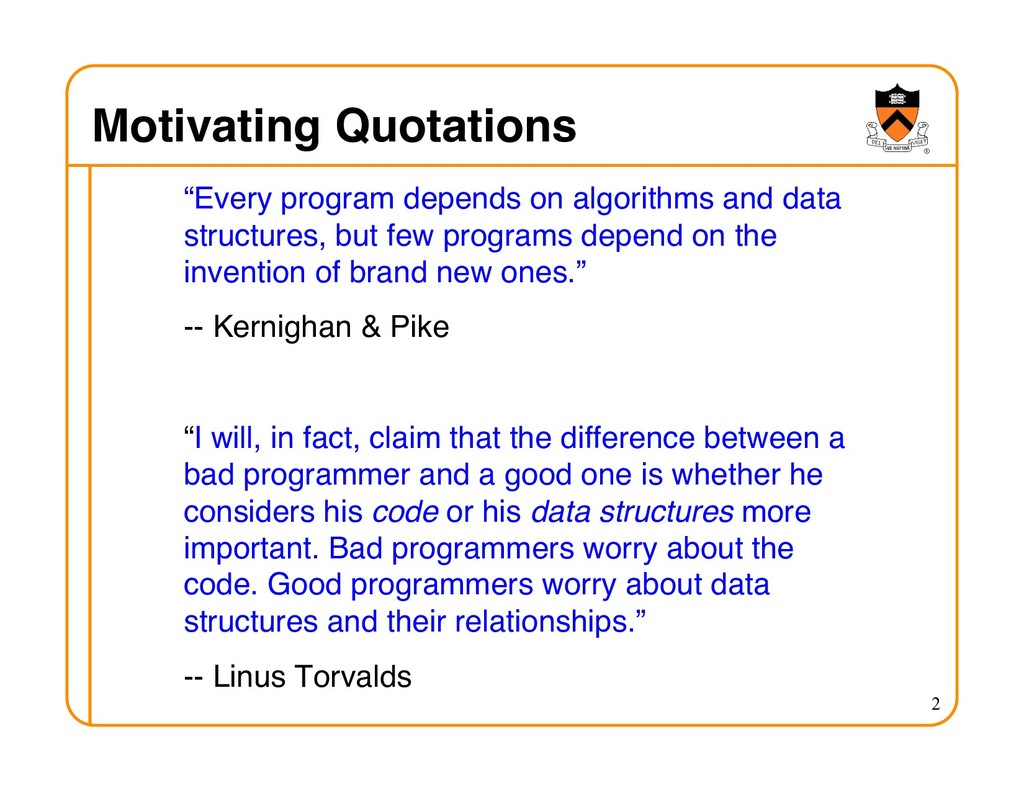
structures, but few programs depend on the invention of brand new ones.”! -- Kernighan & Pike! “I will, in fact, claim that the difference between a bad programmer and a good one is whether he considers his code or his data structures more important. Bad programmers worry about the code. Good programmers worry about data structures and their relationships.”! -- Linus Torvalds!
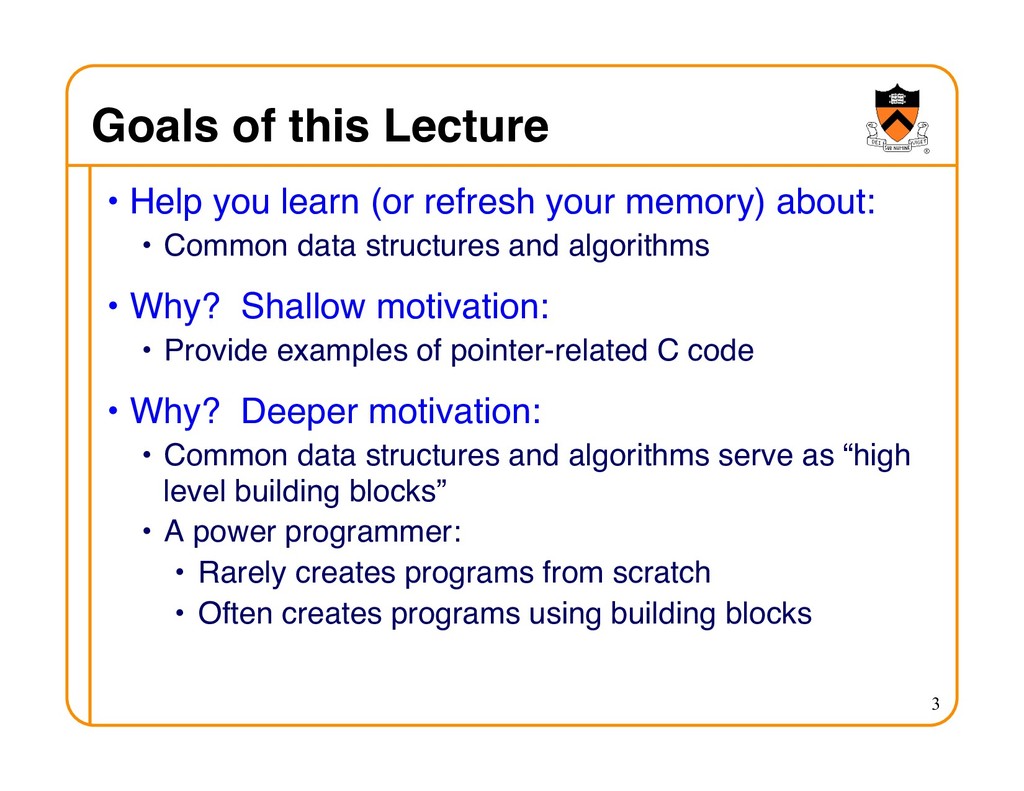
your memory) about:! • Common data structures and algorithms! • Why? Shallow motivation:! • Provide examples of pointer-related C code! • Why? Deeper motivation:! • Common data structures and algorithms serve as “high level building blocks”! • A power programmer:! • Rarely creates programs from scratch! • Often creates programs using building blocks!
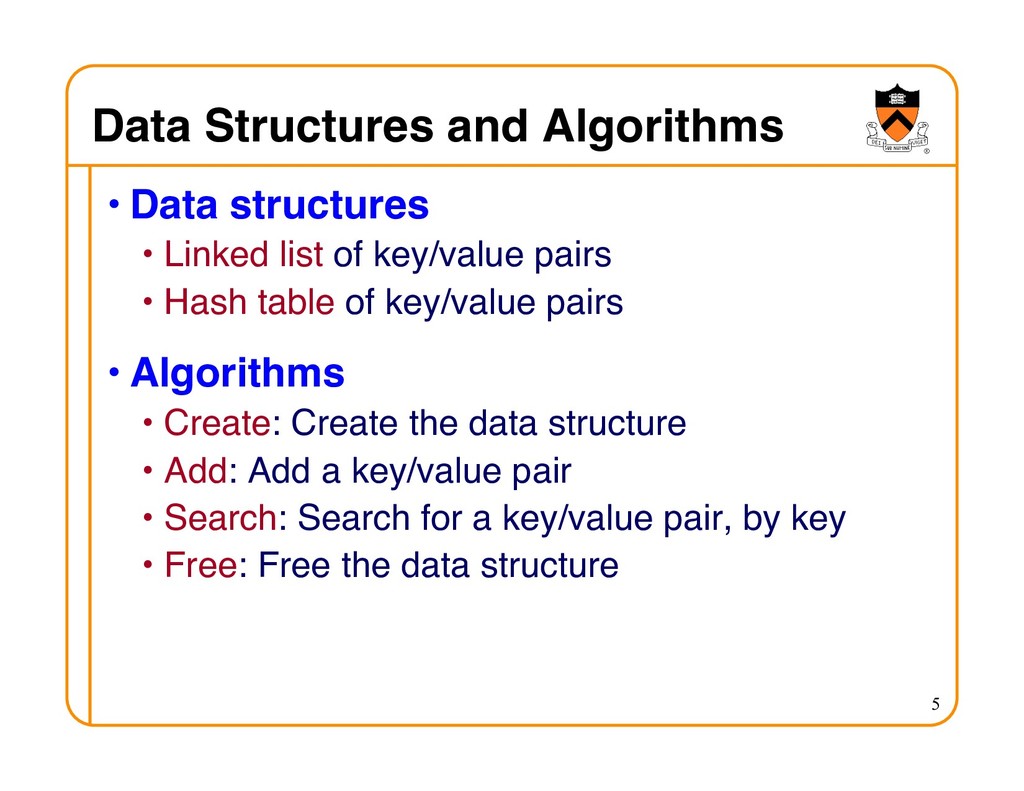
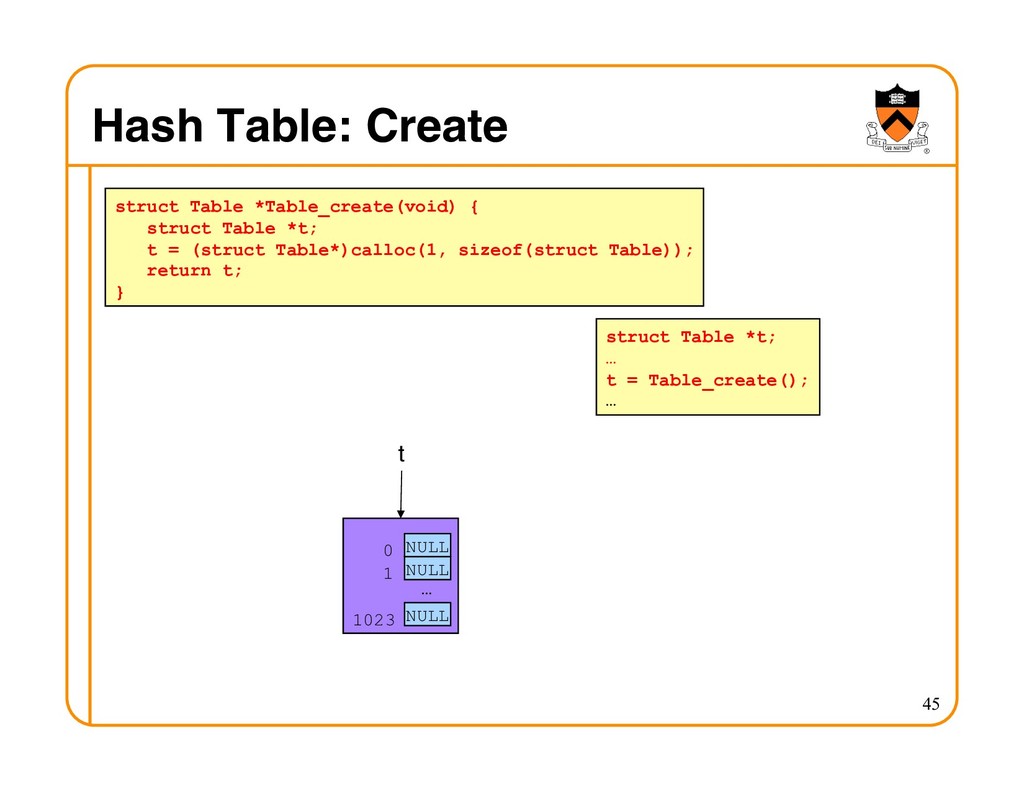
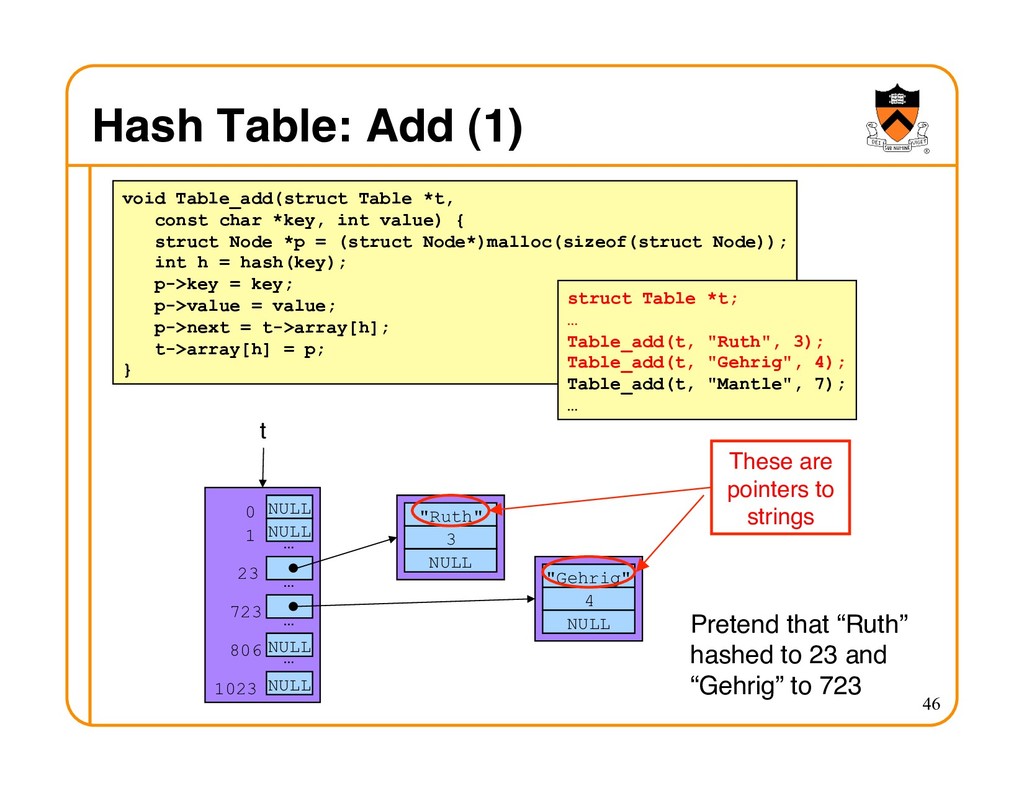
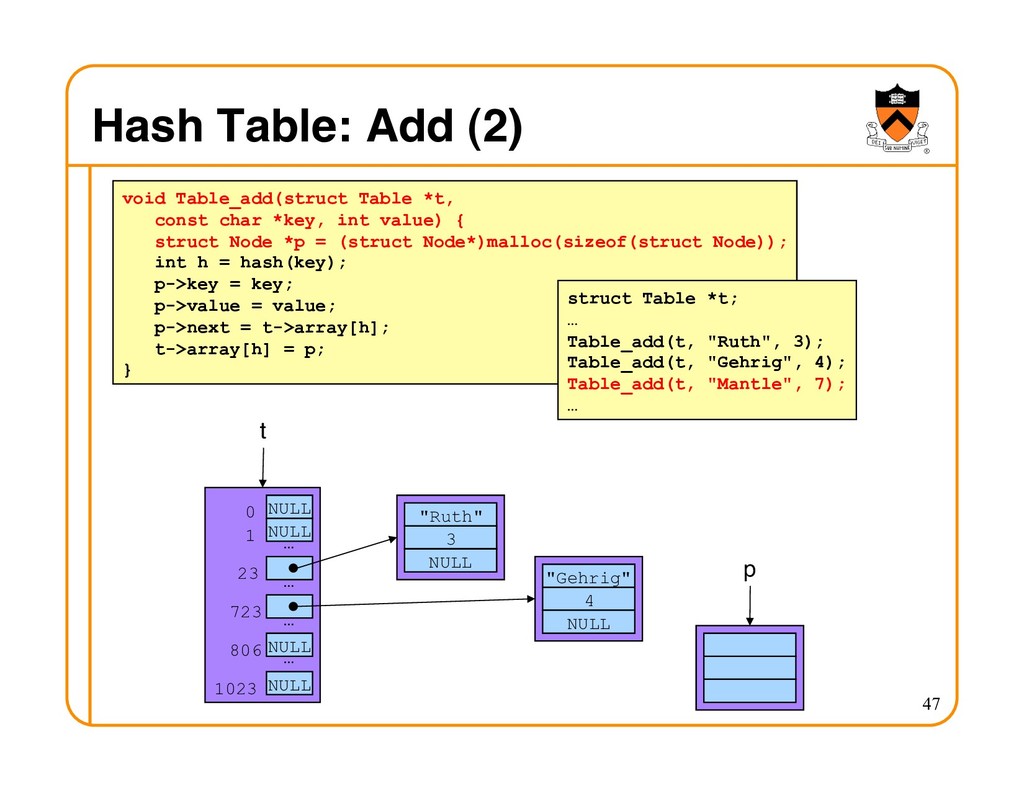
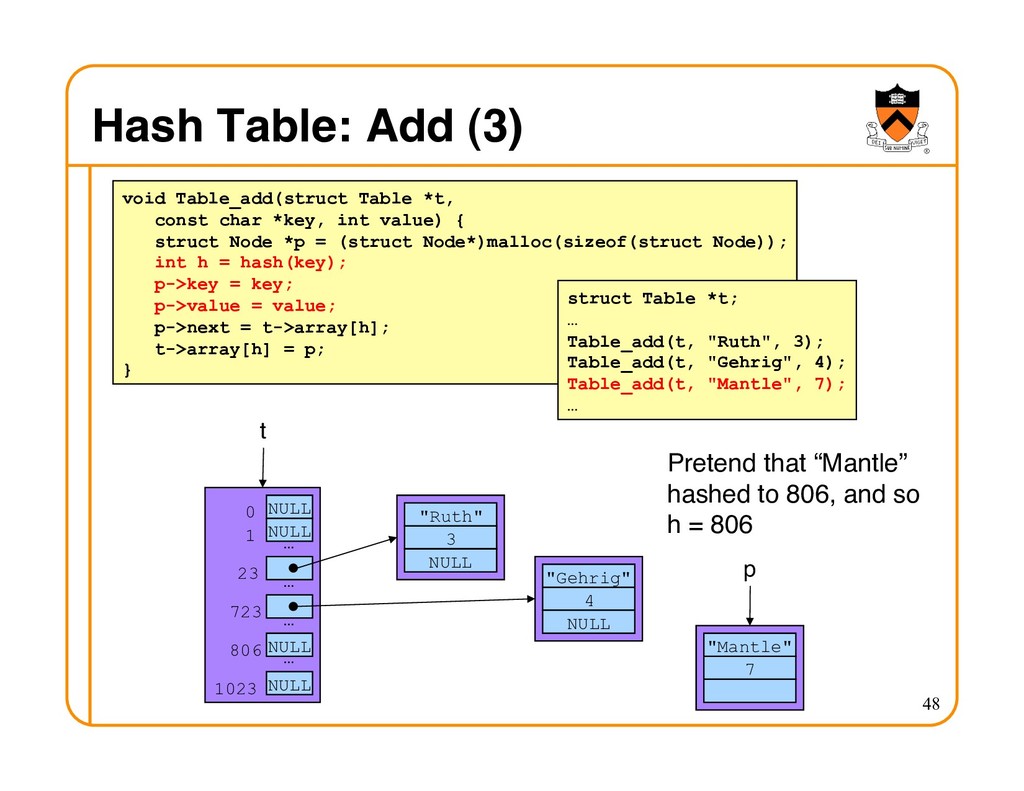
key/value pairs! • Hash table of key/value pairs! • Algorithms! • Create: Create the data structure! • Add: Add a key/value pair! • Search: Search for a key/value pair, by key! • Free: Free the data structure!
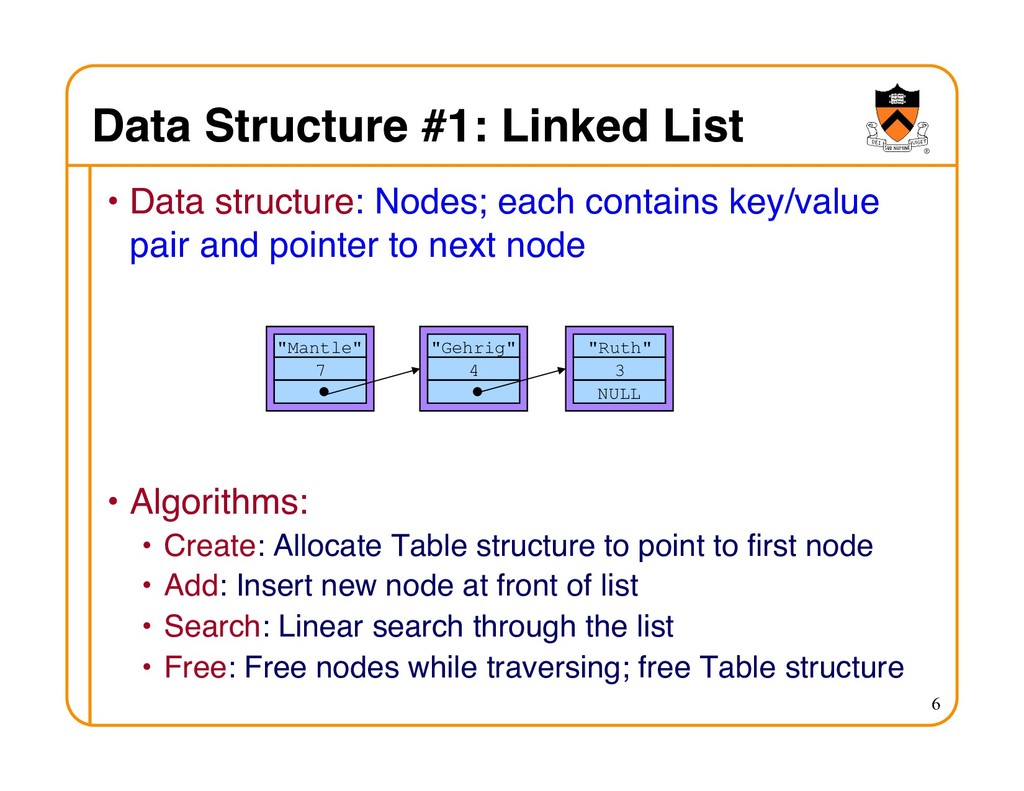
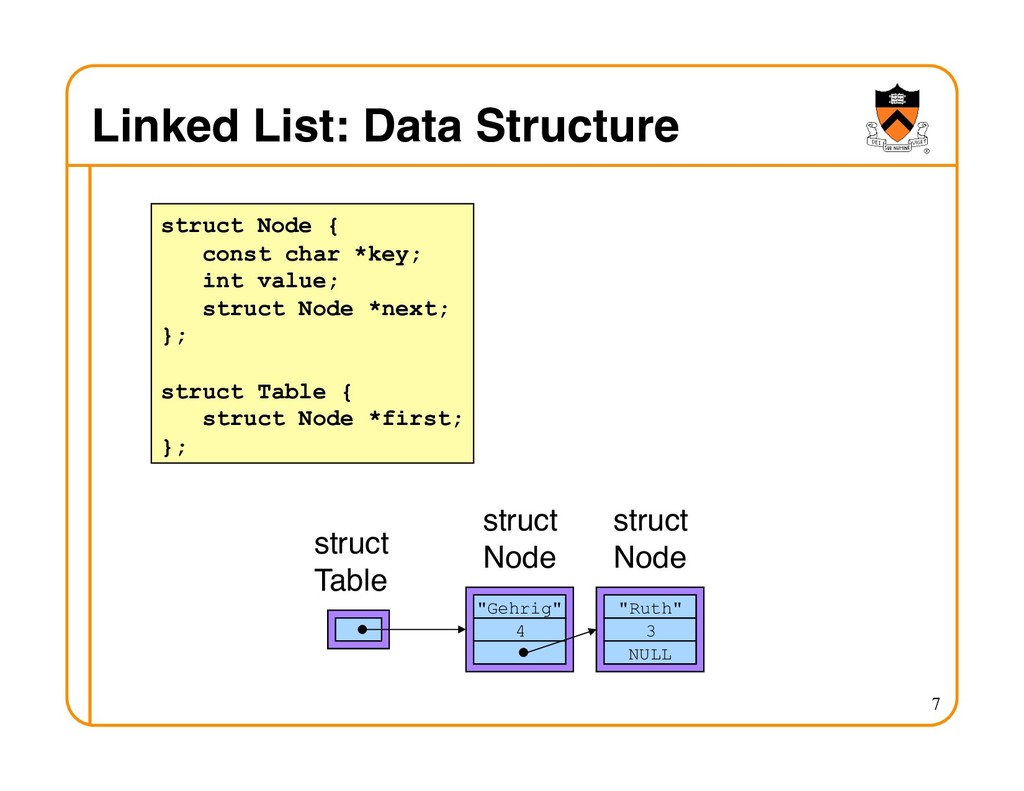
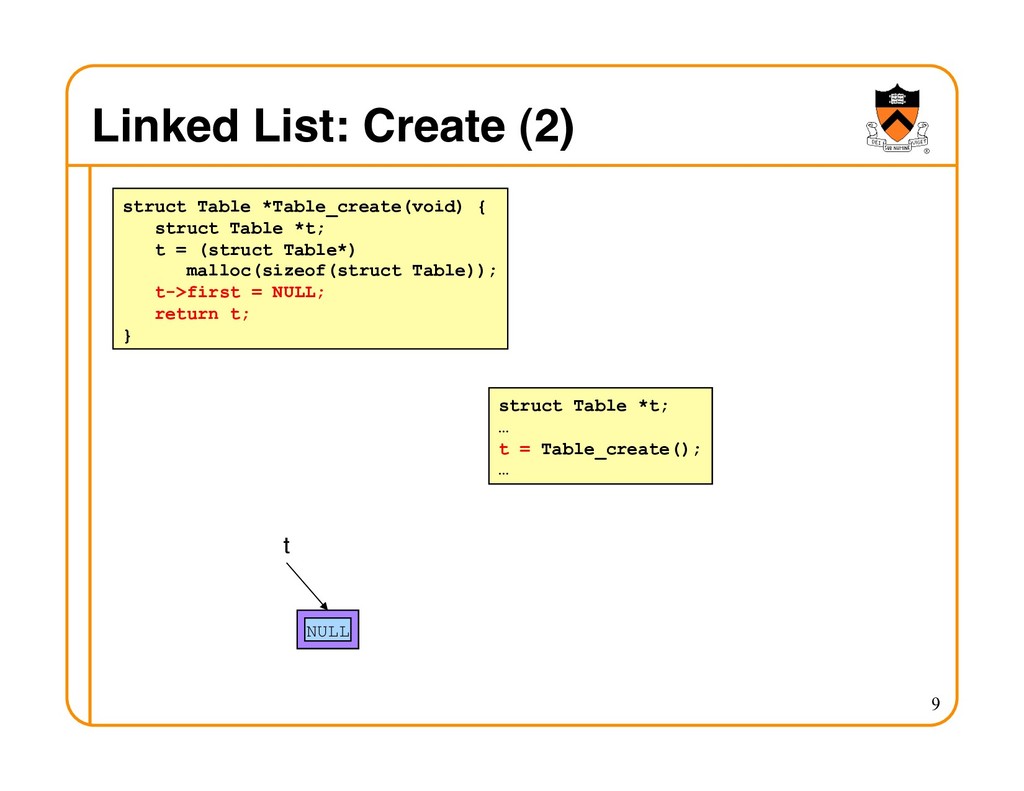
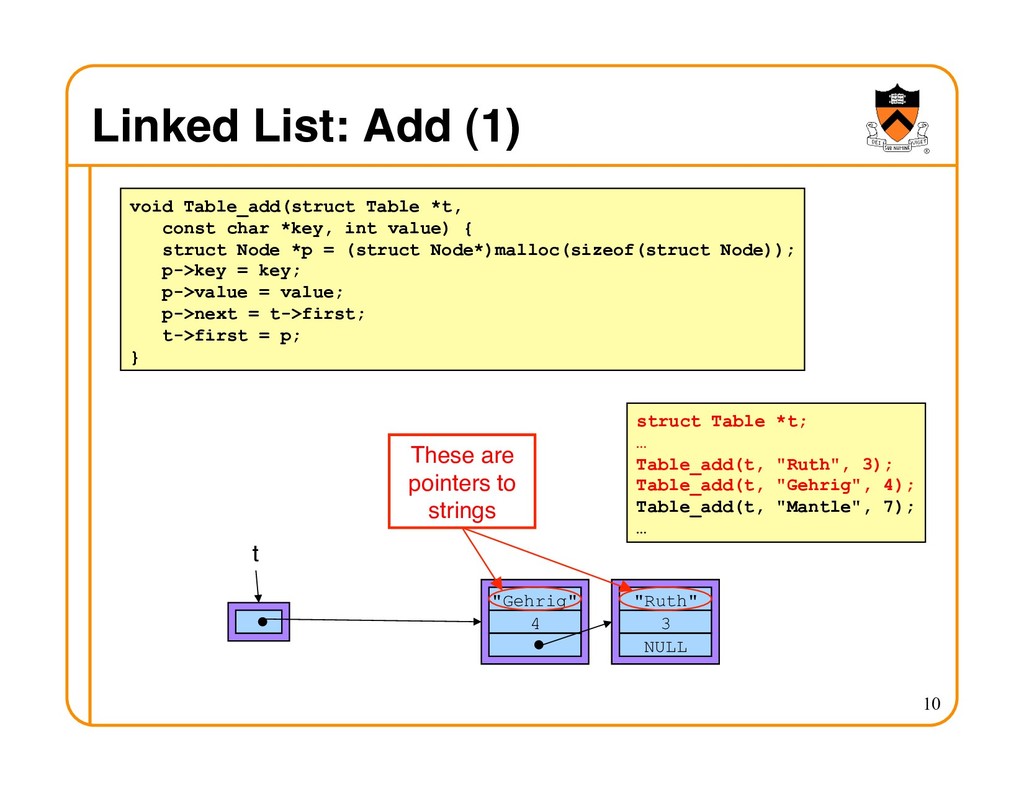
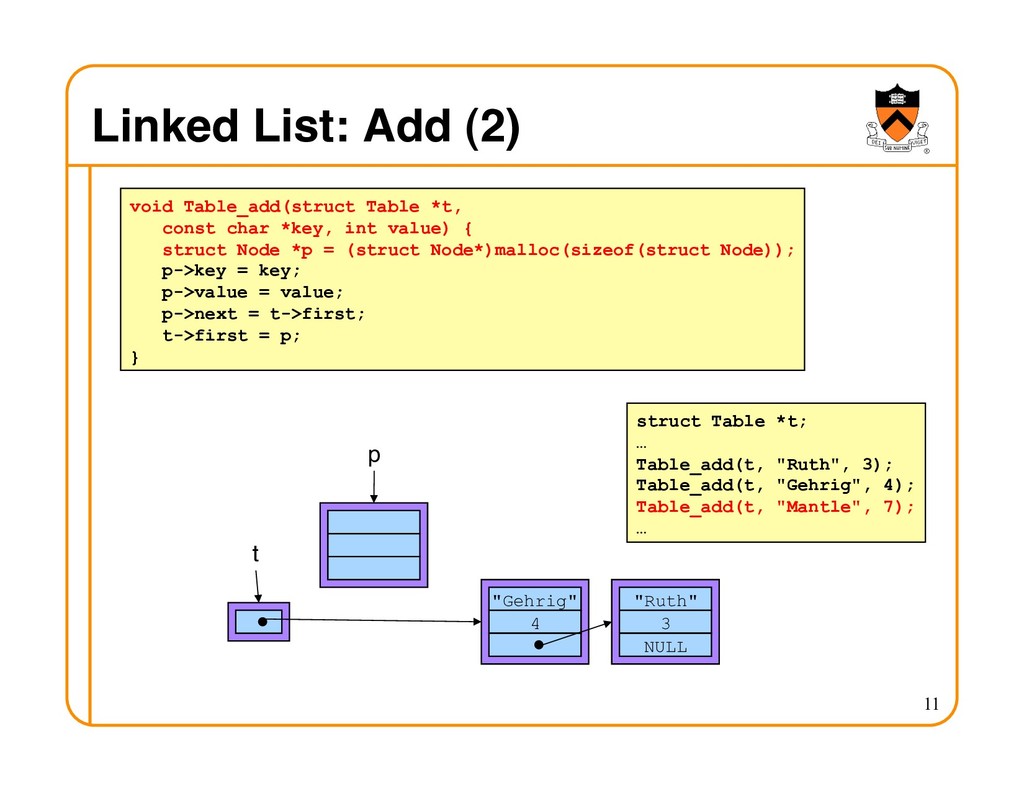
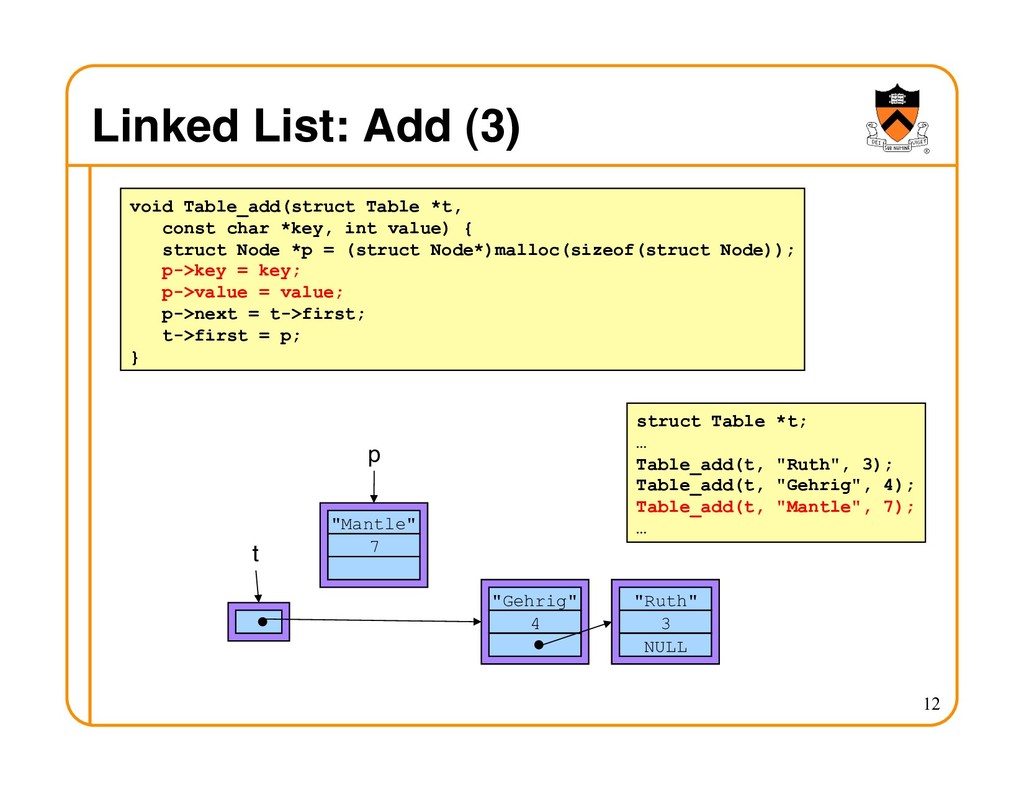
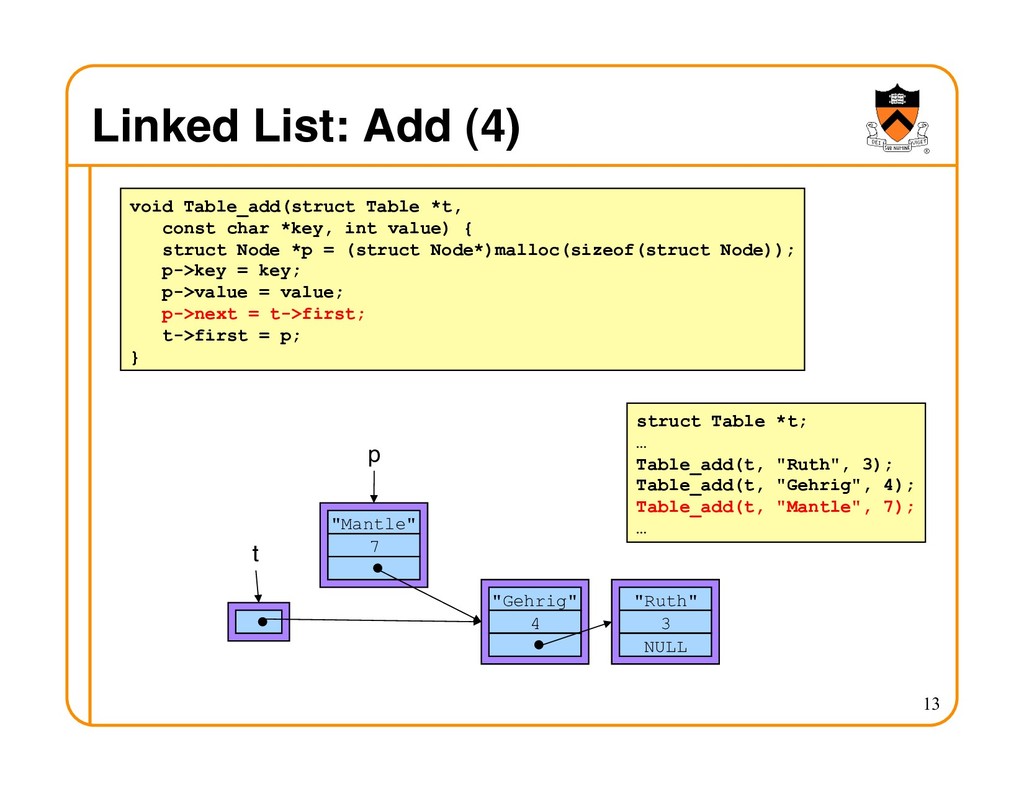
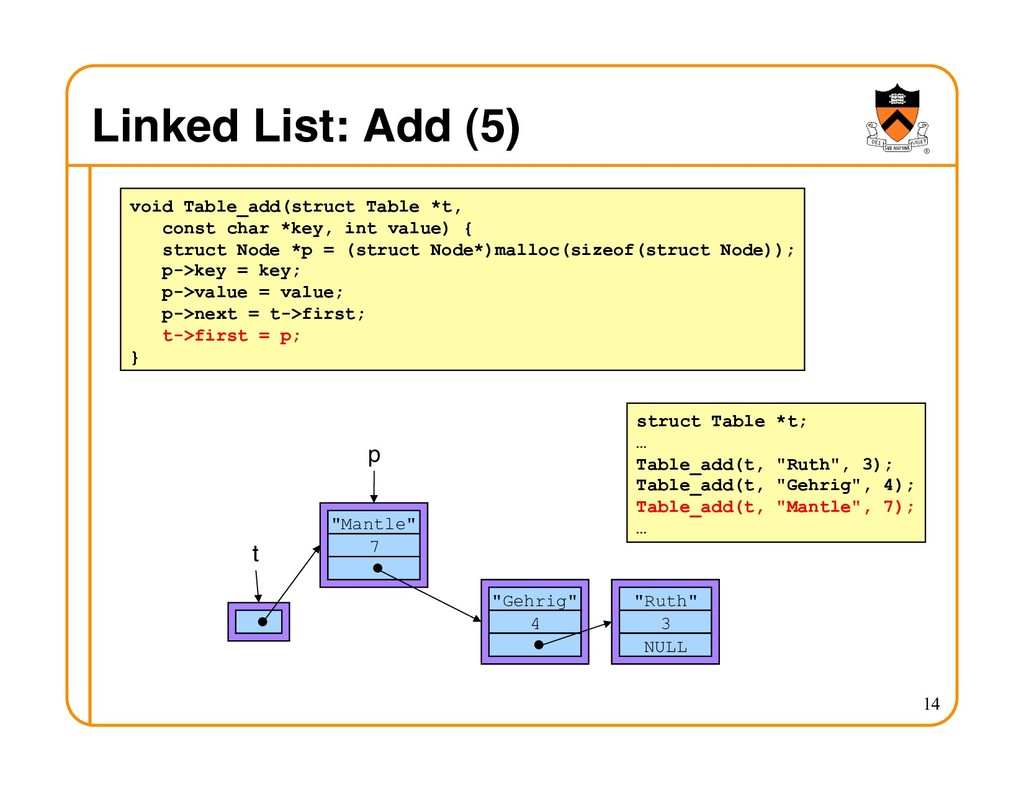
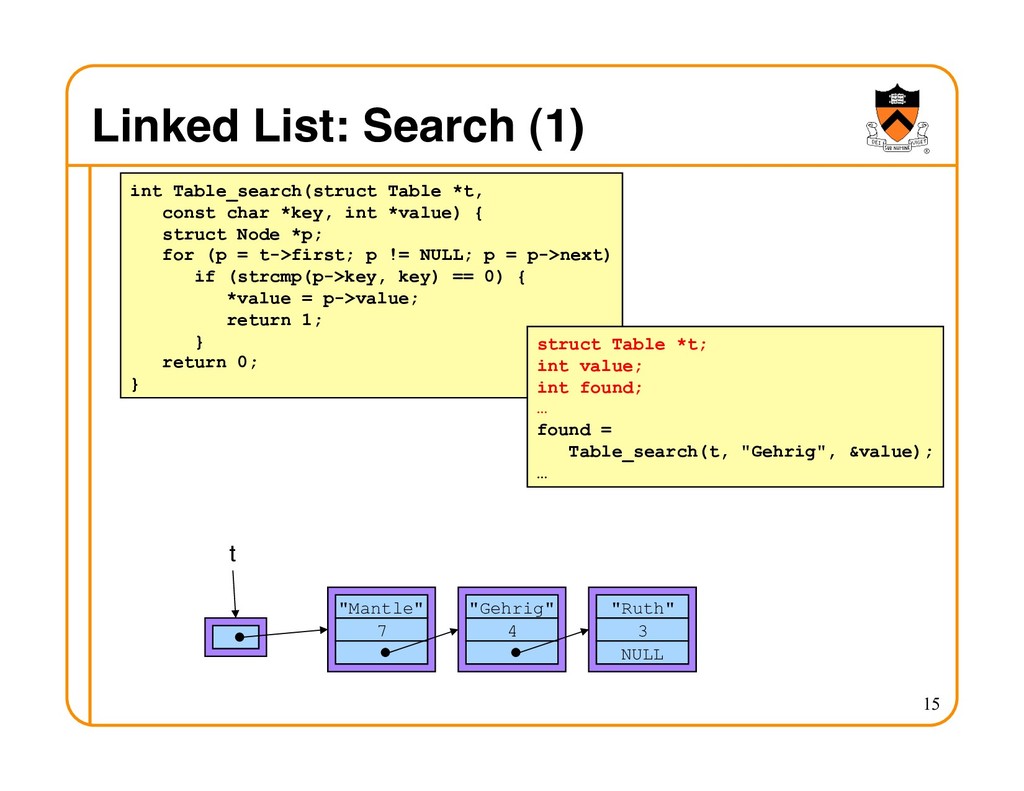
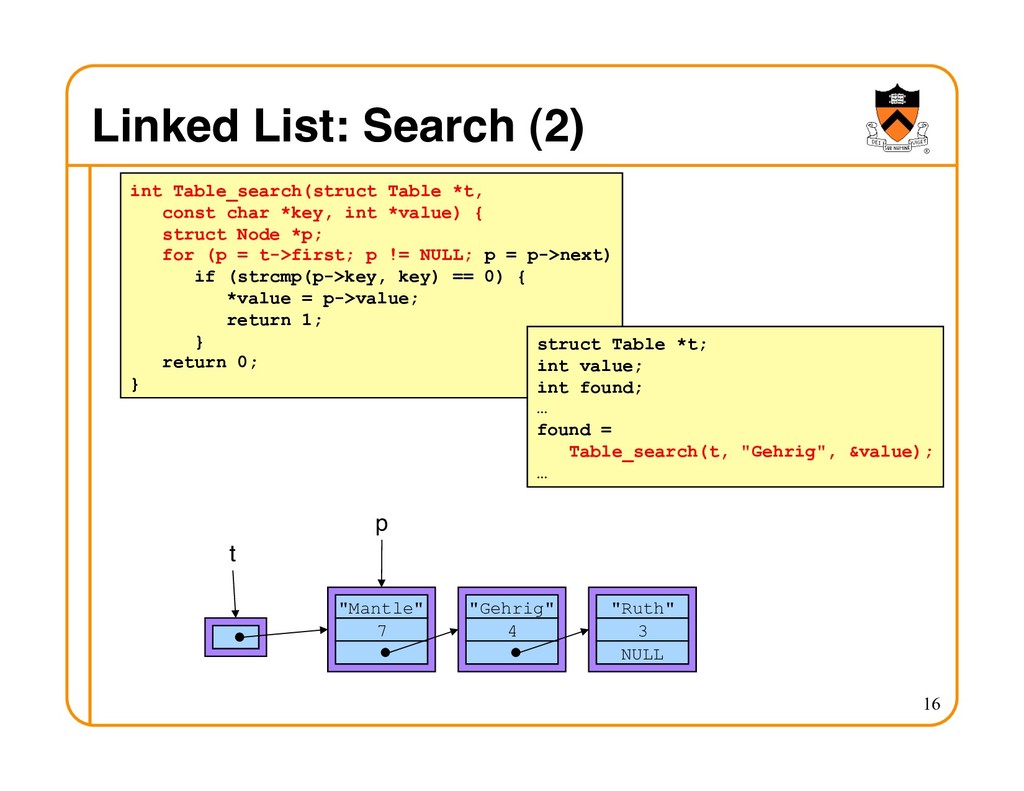
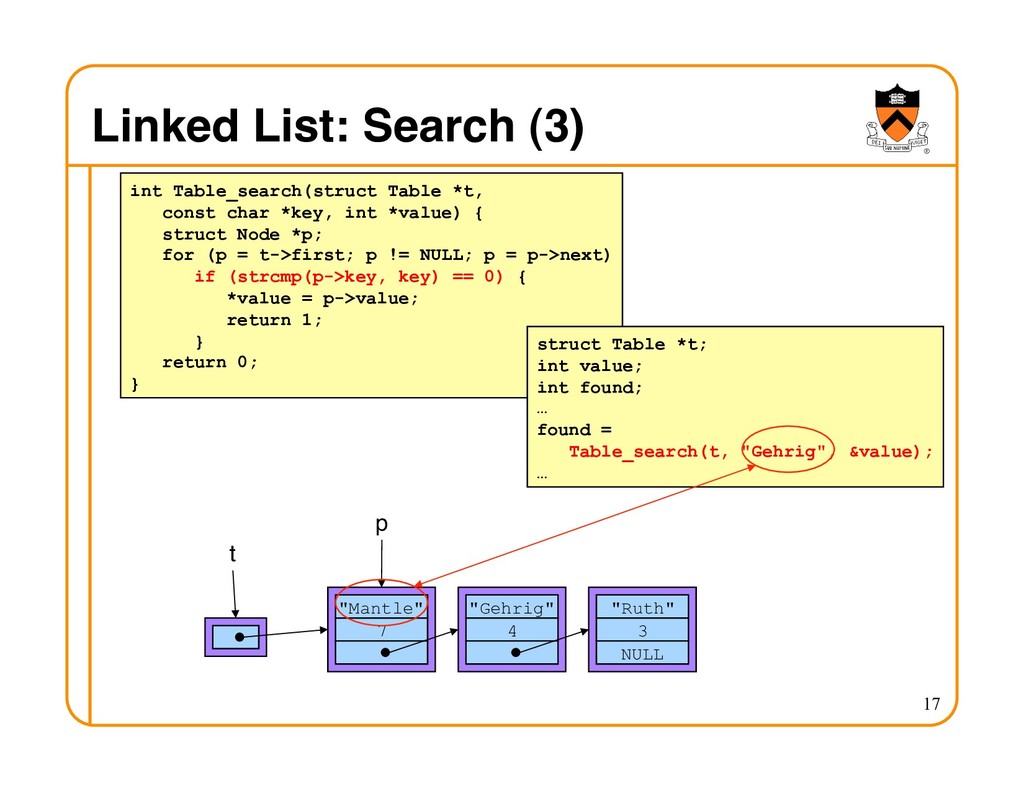
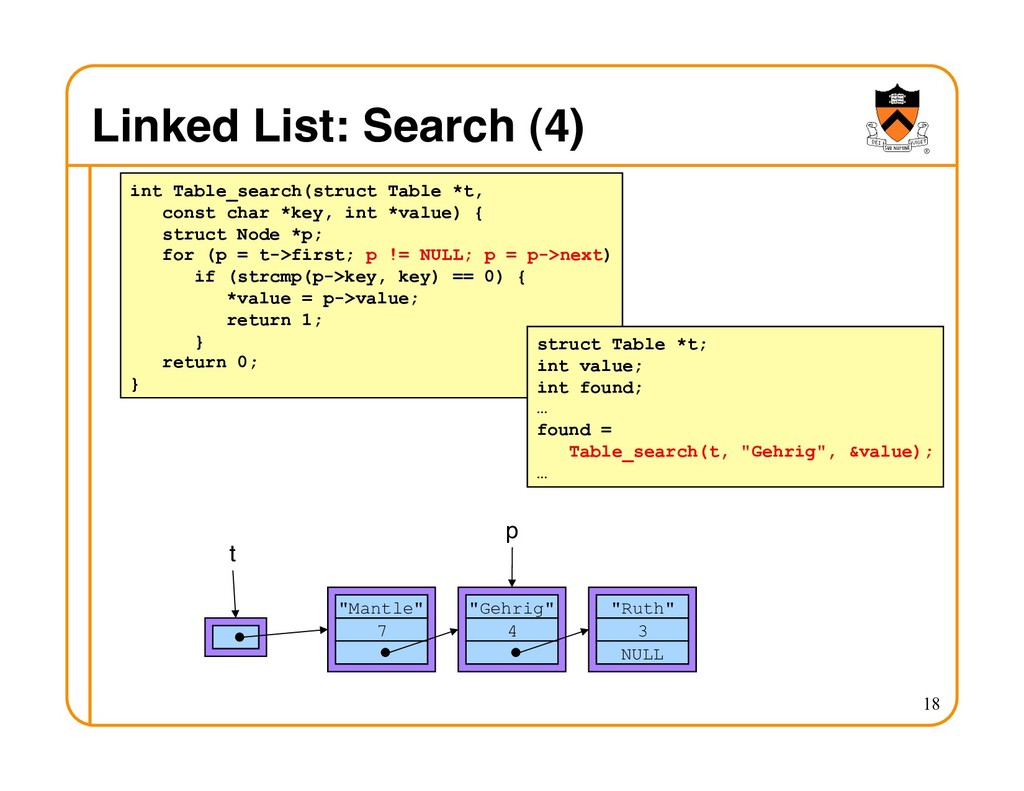
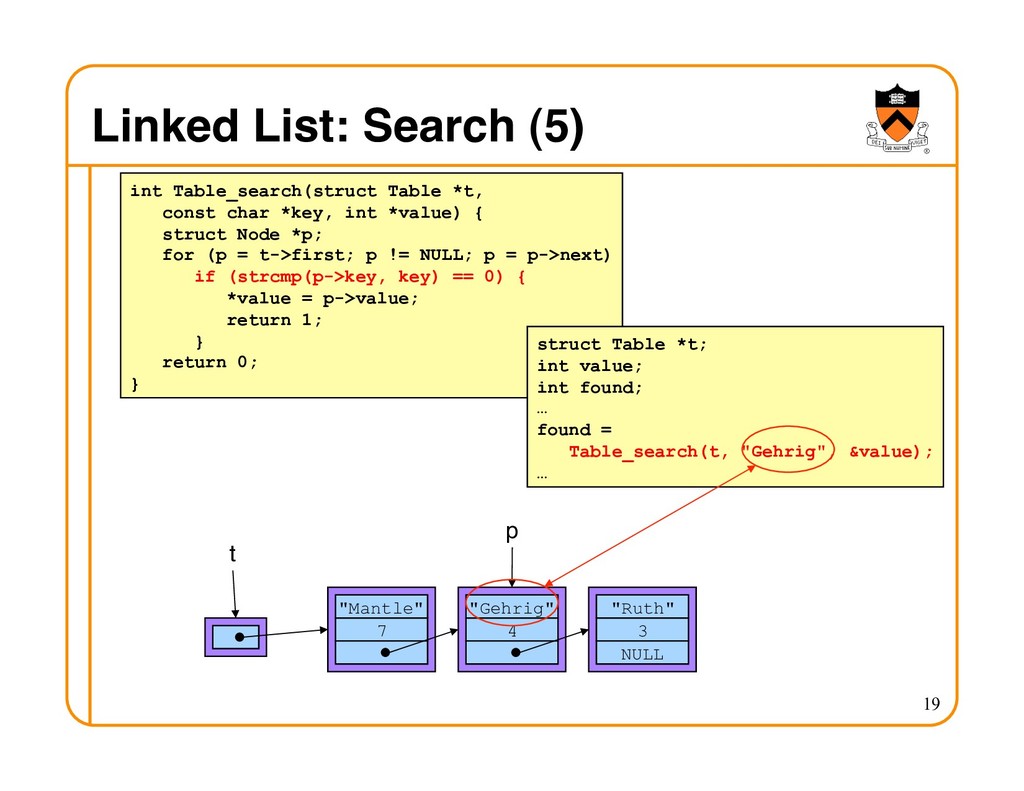
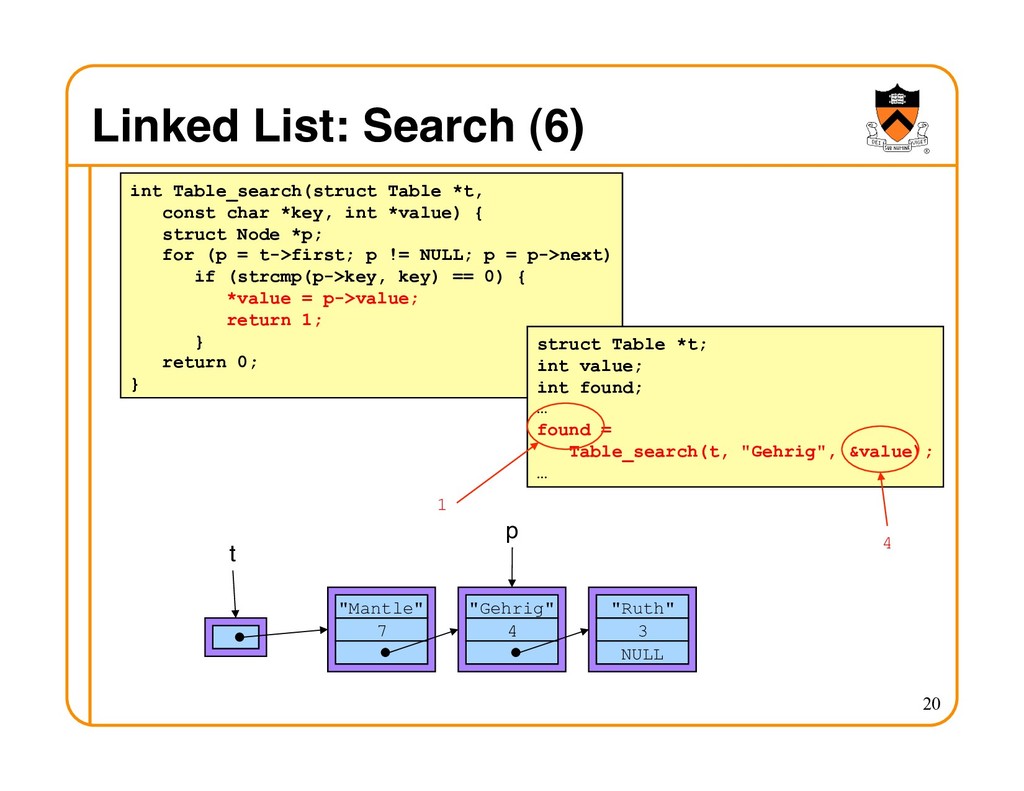
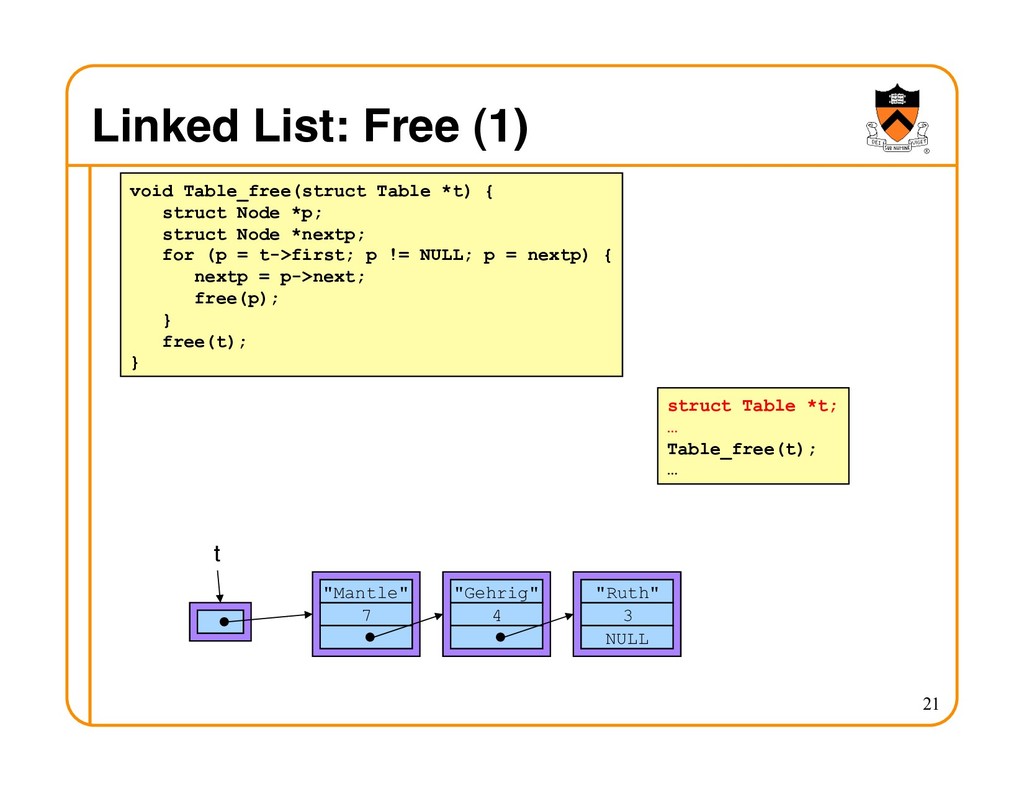
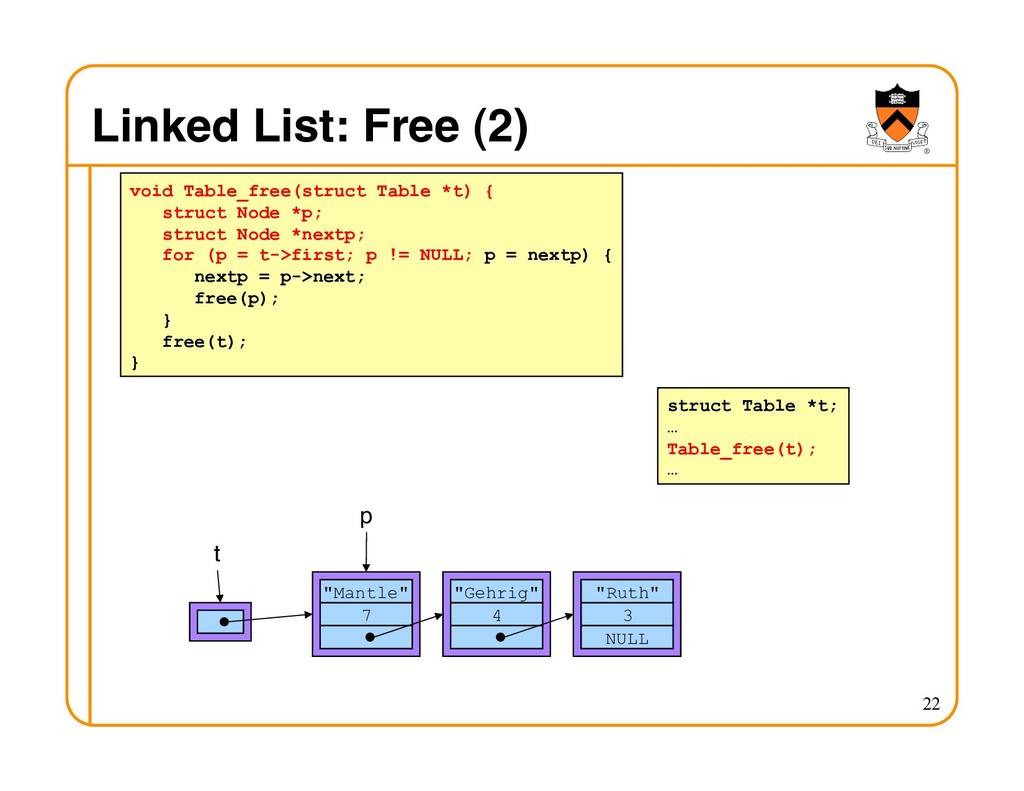
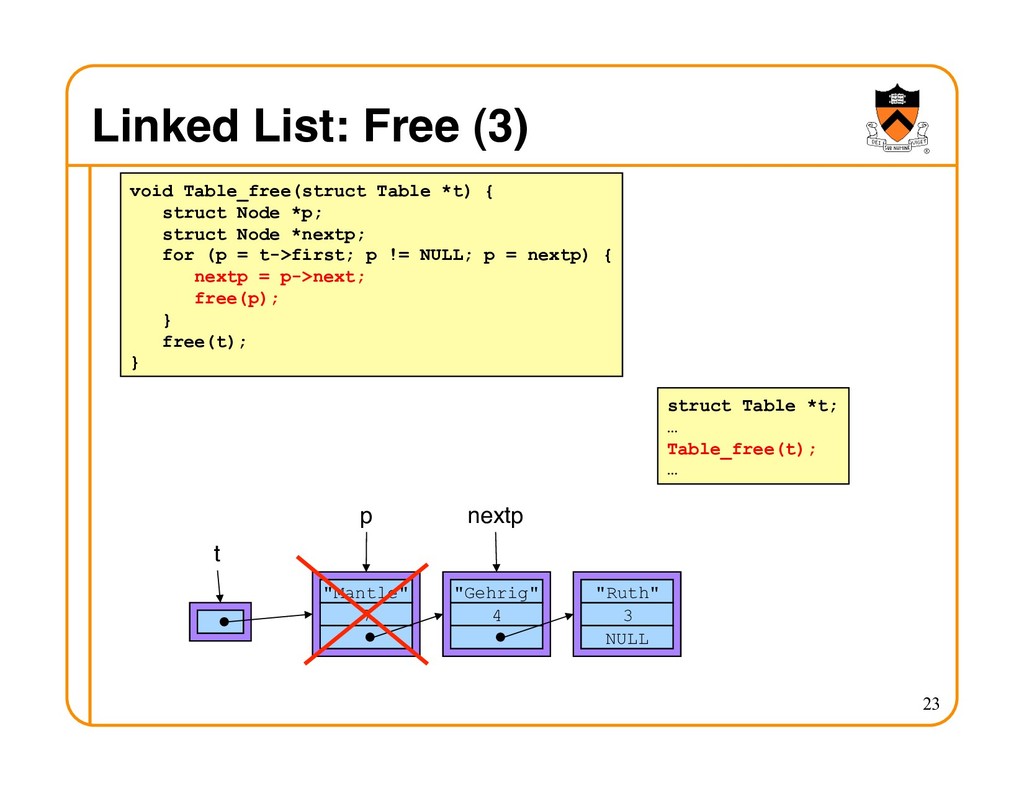
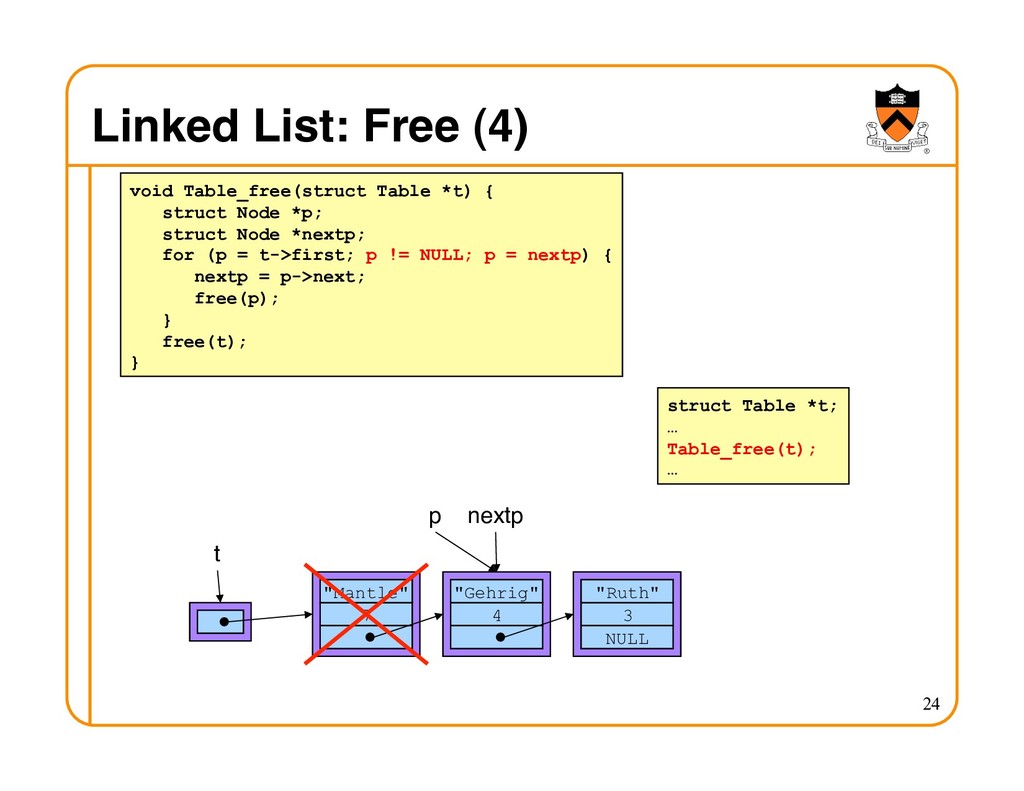
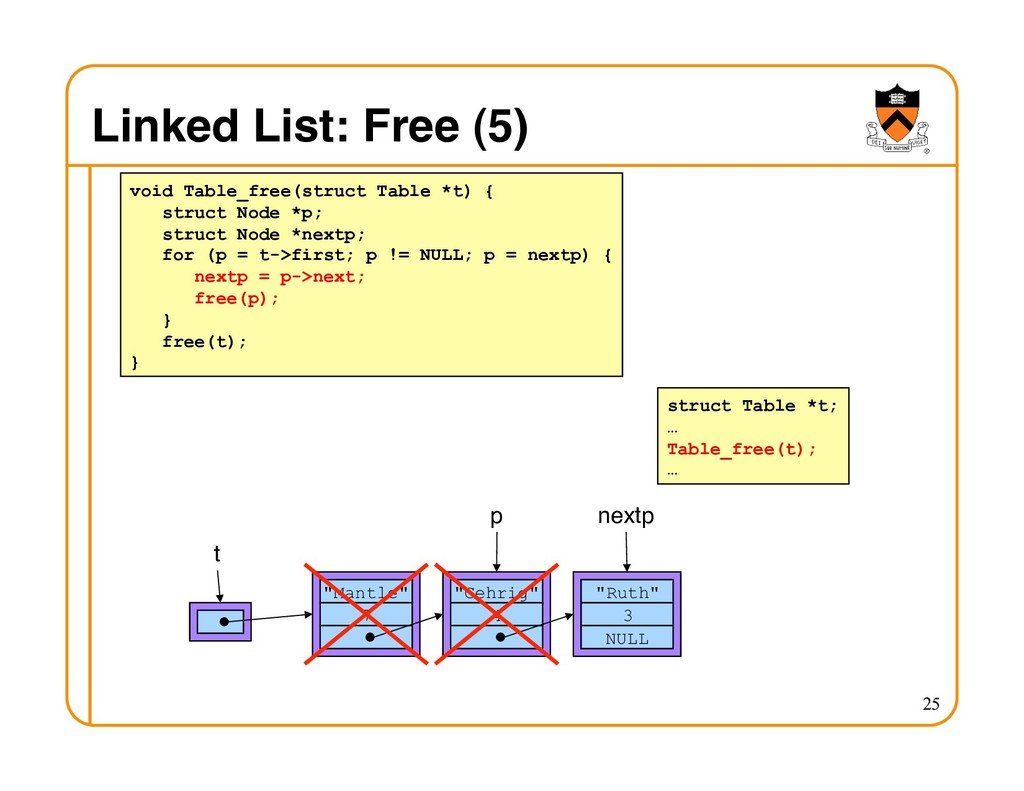
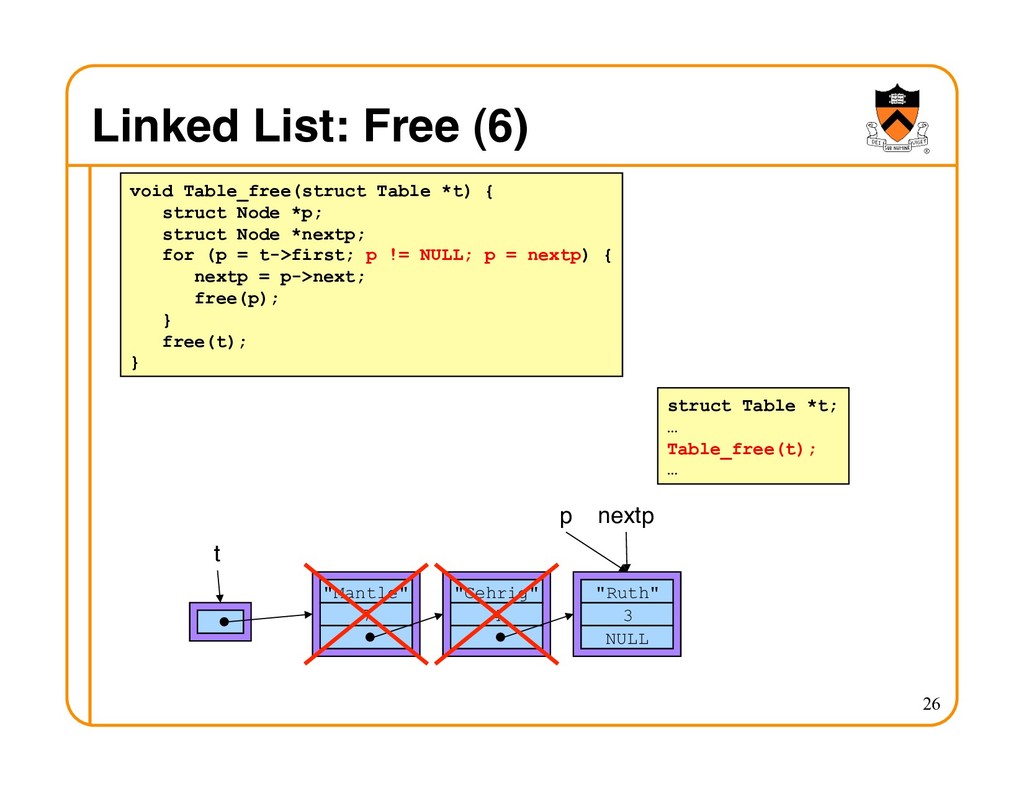
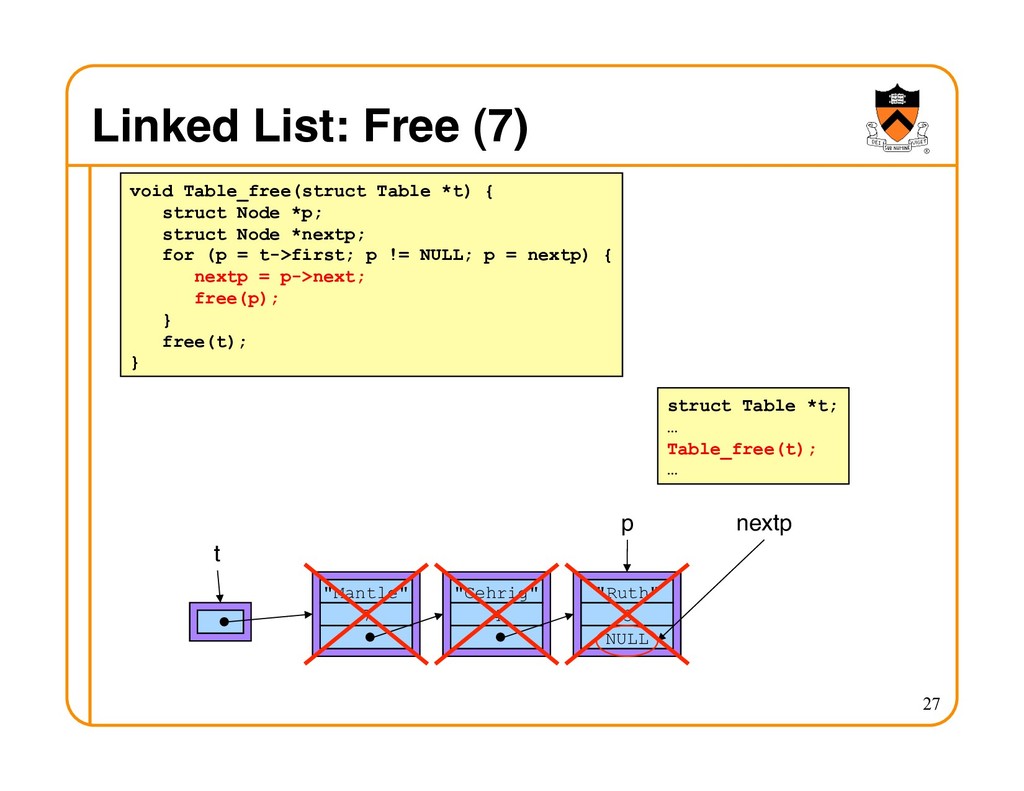
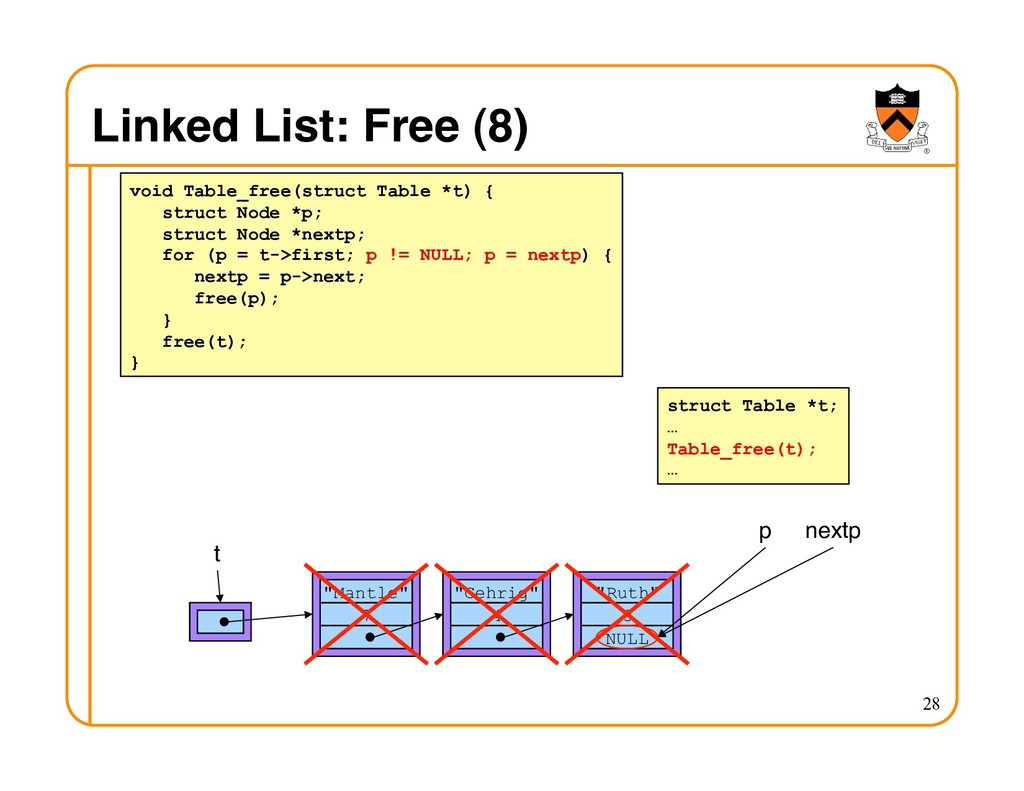
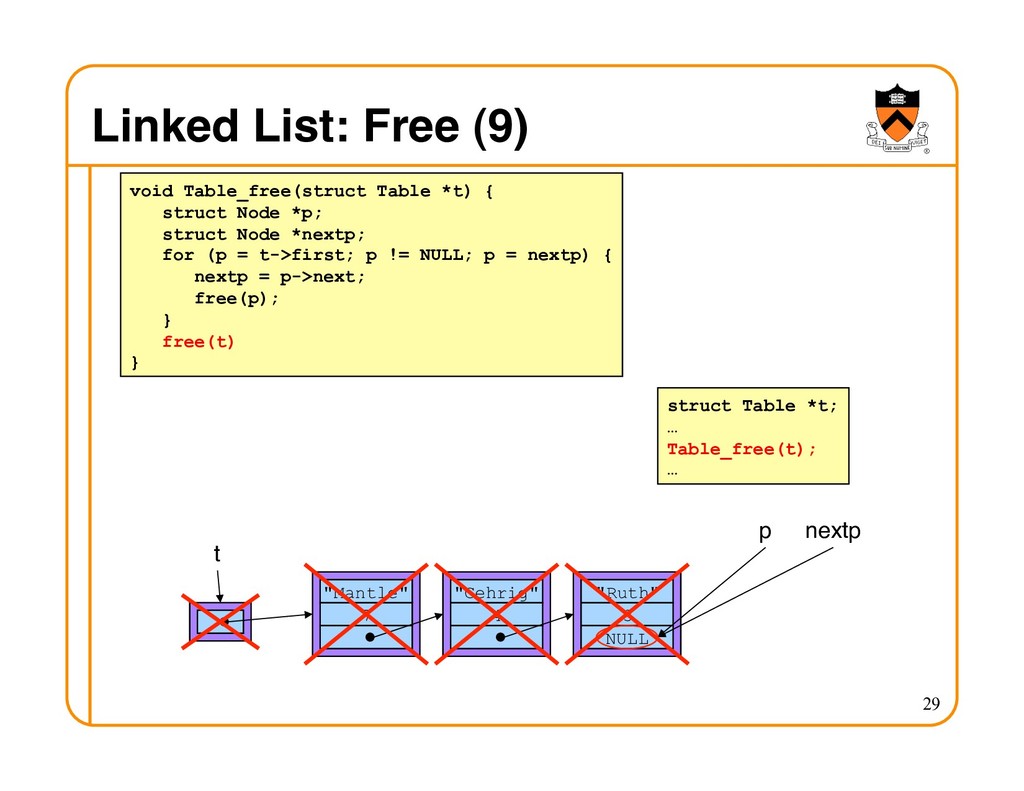
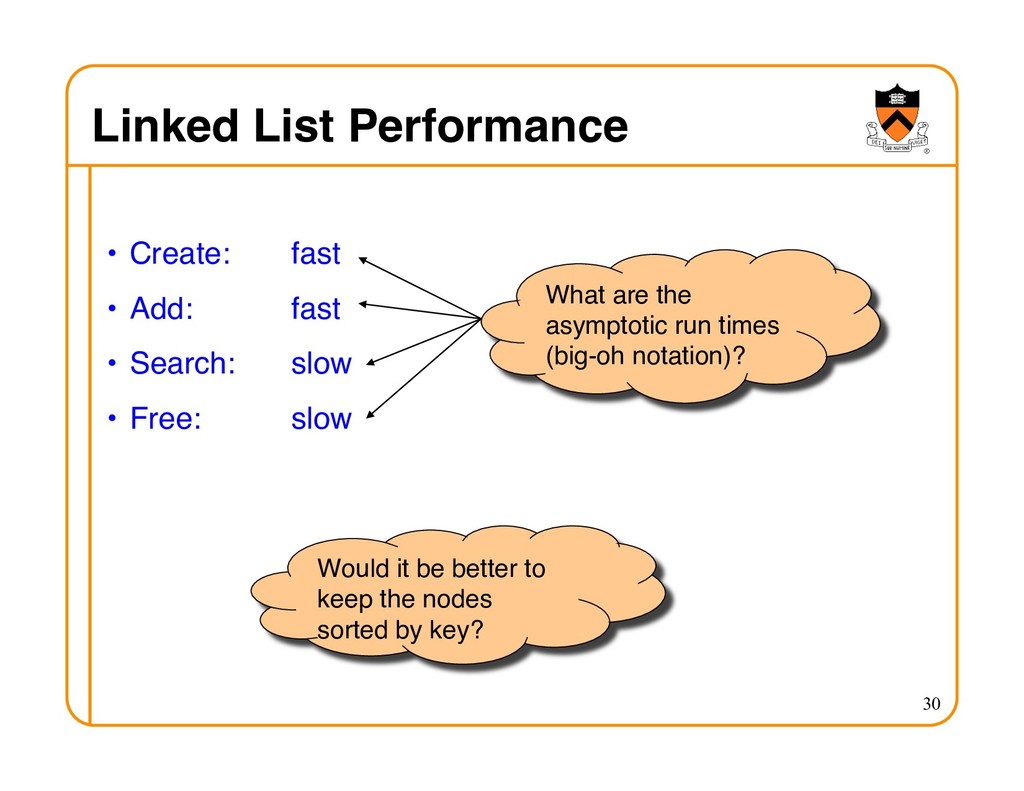
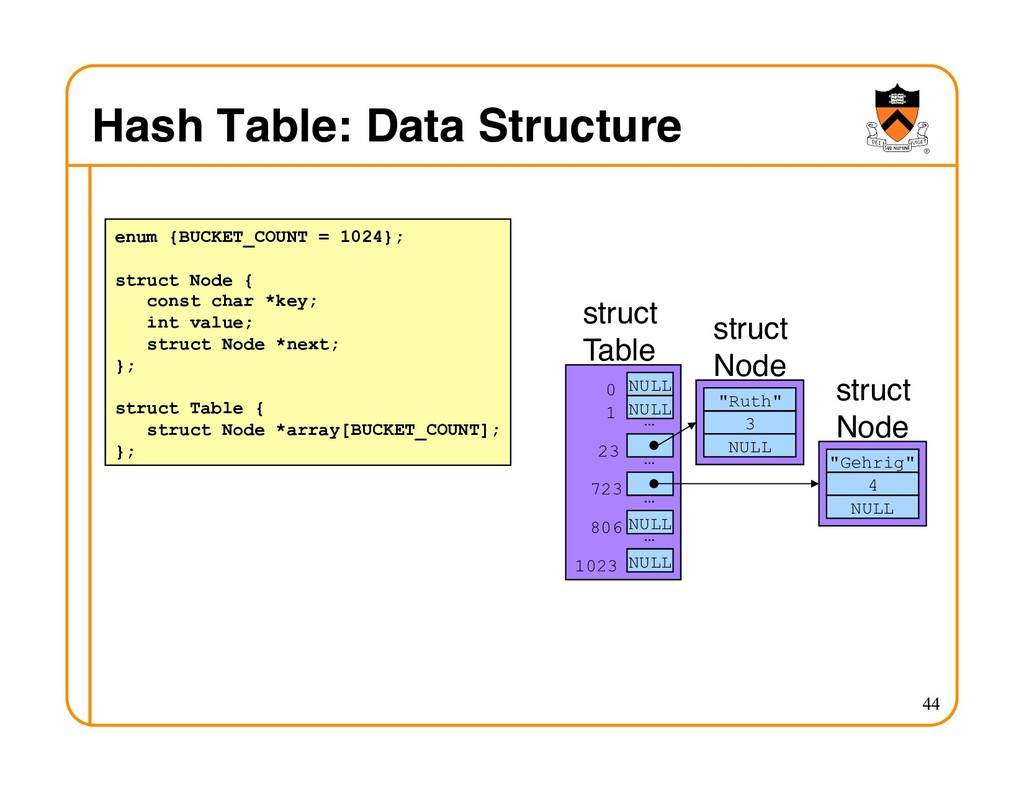
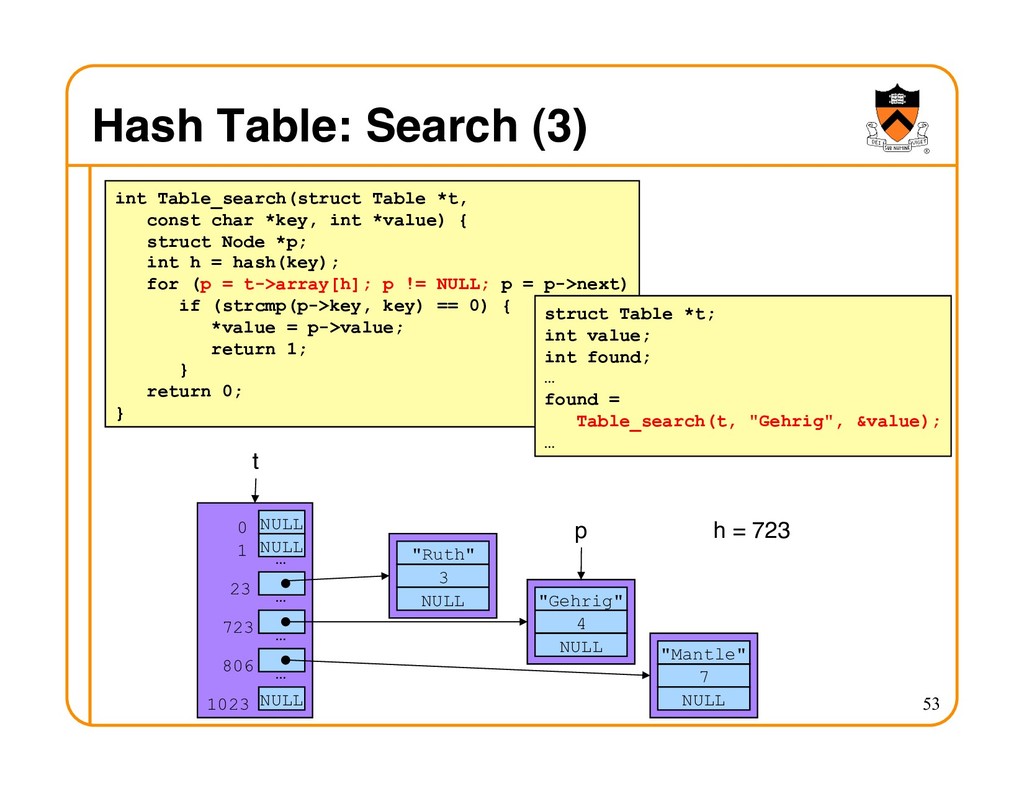
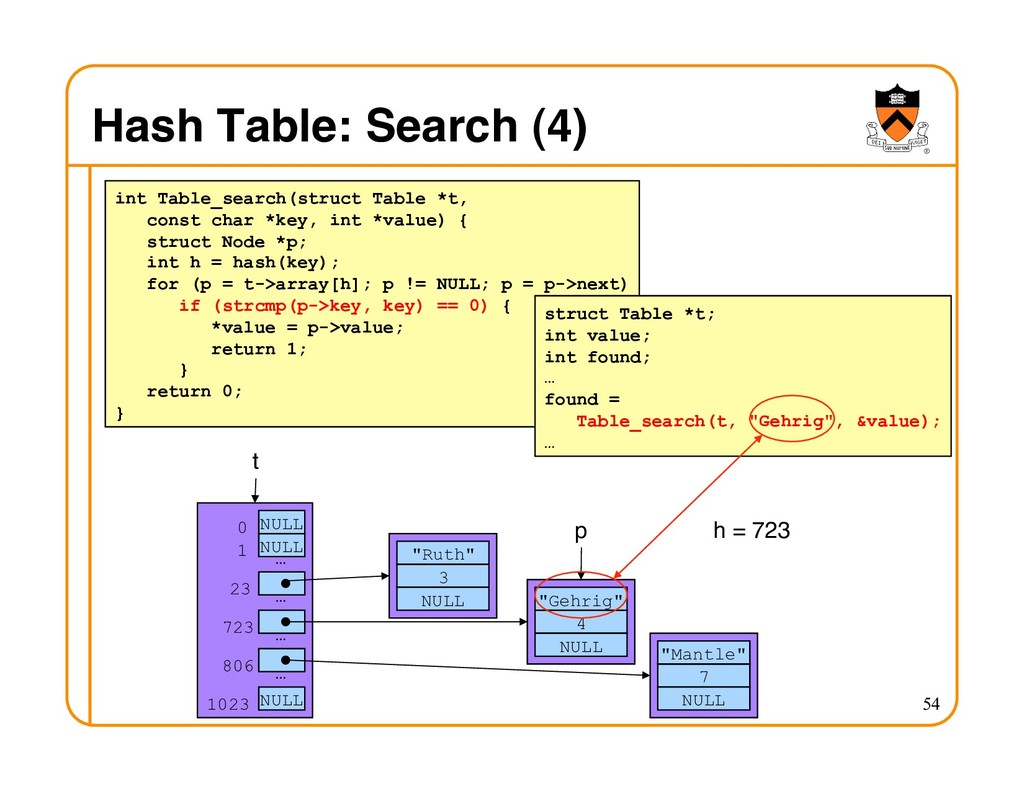
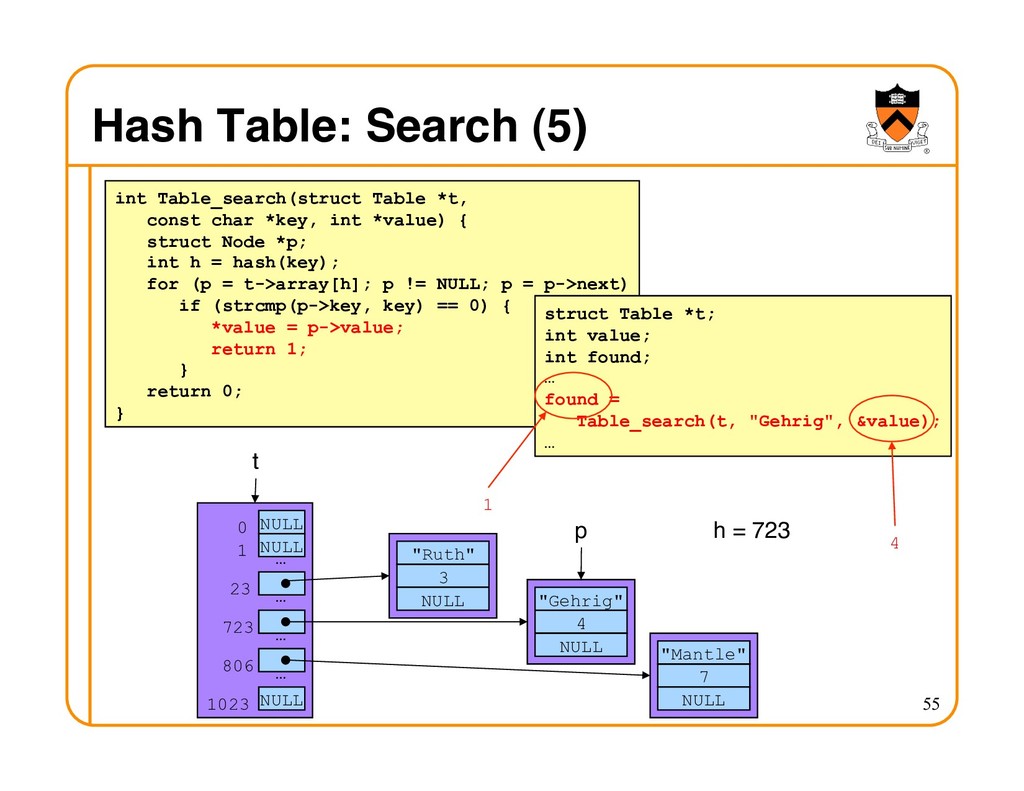
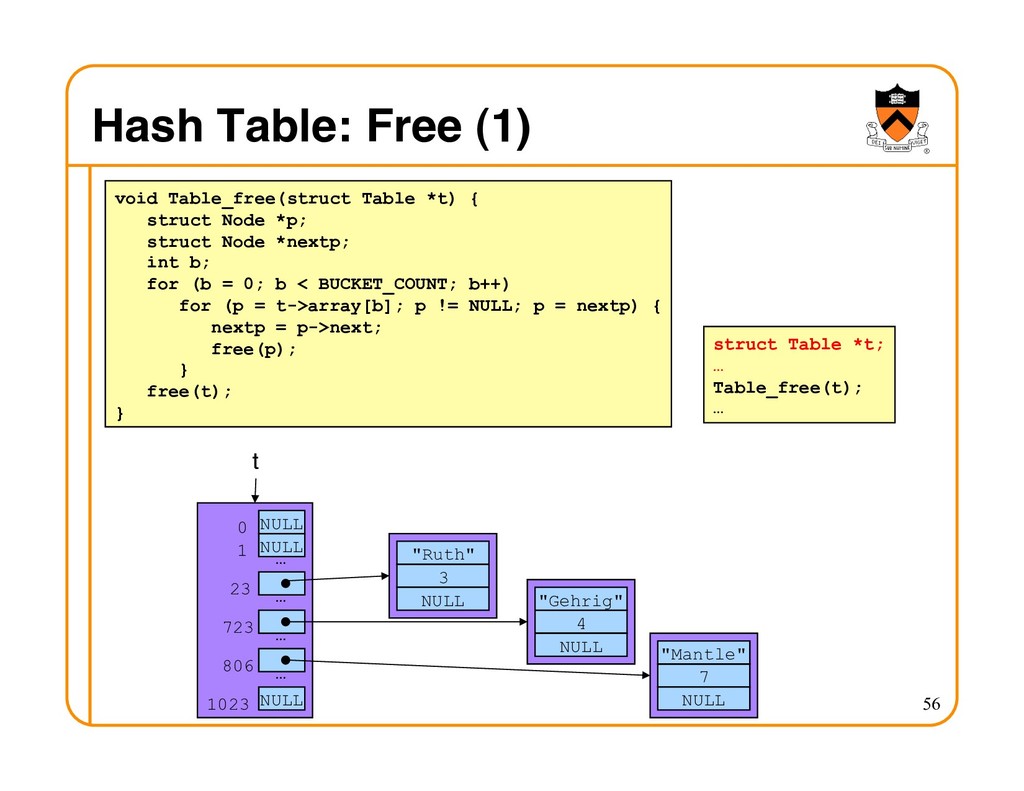
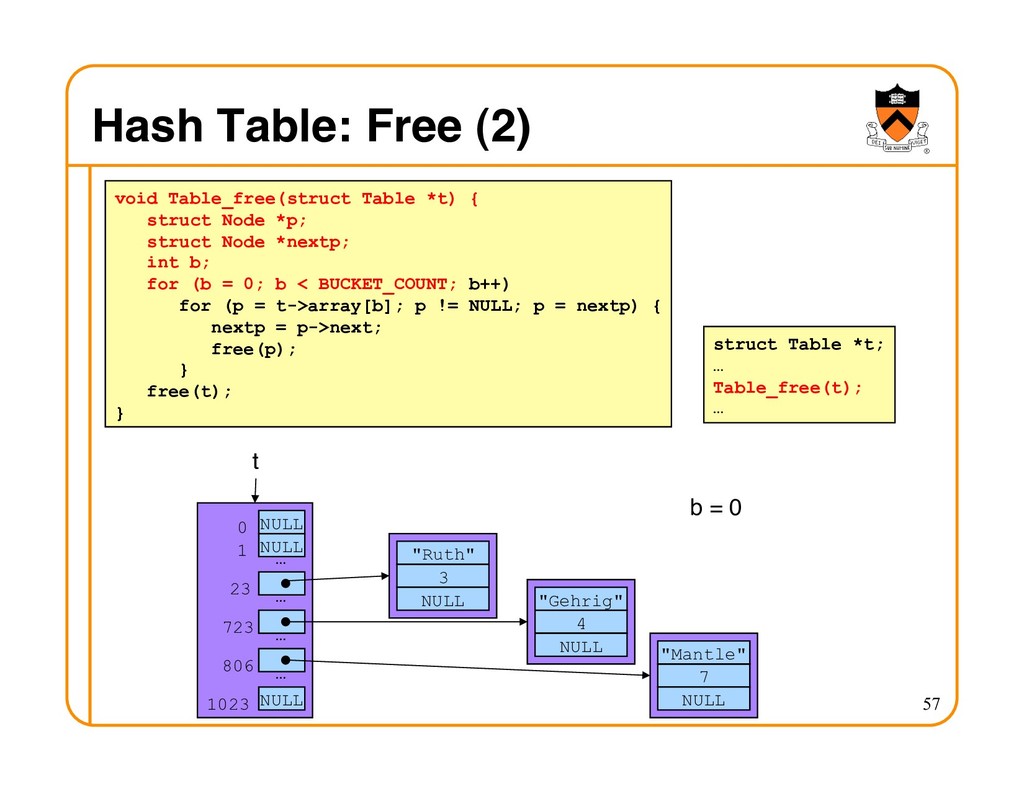
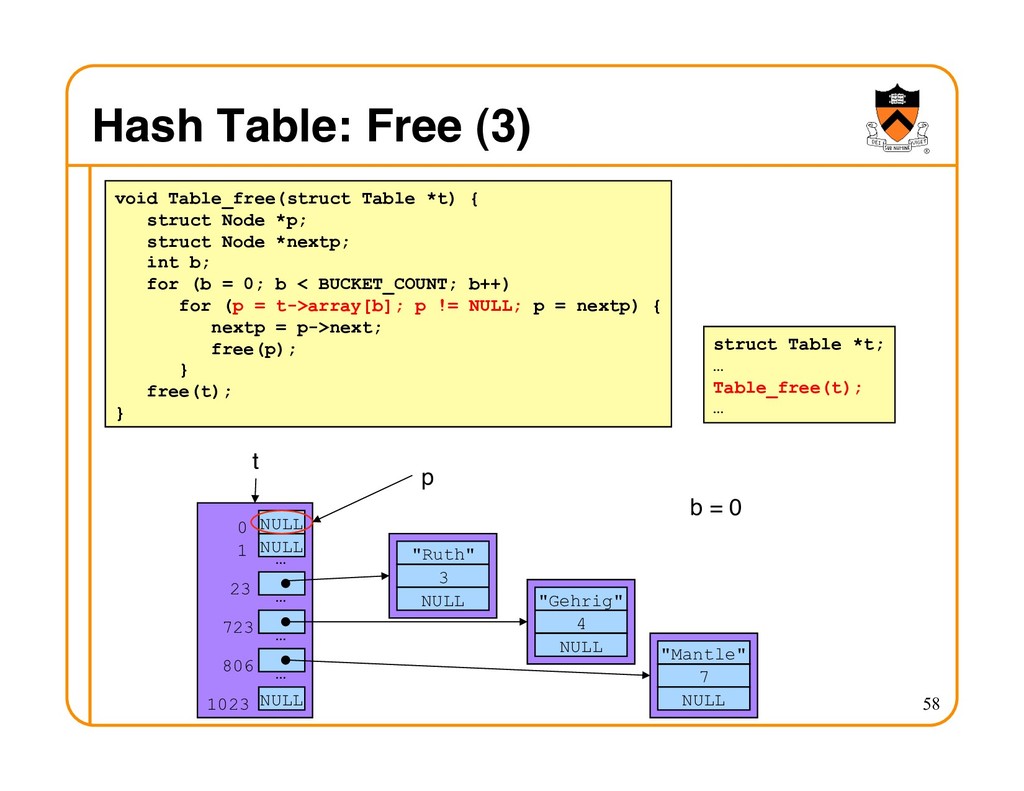
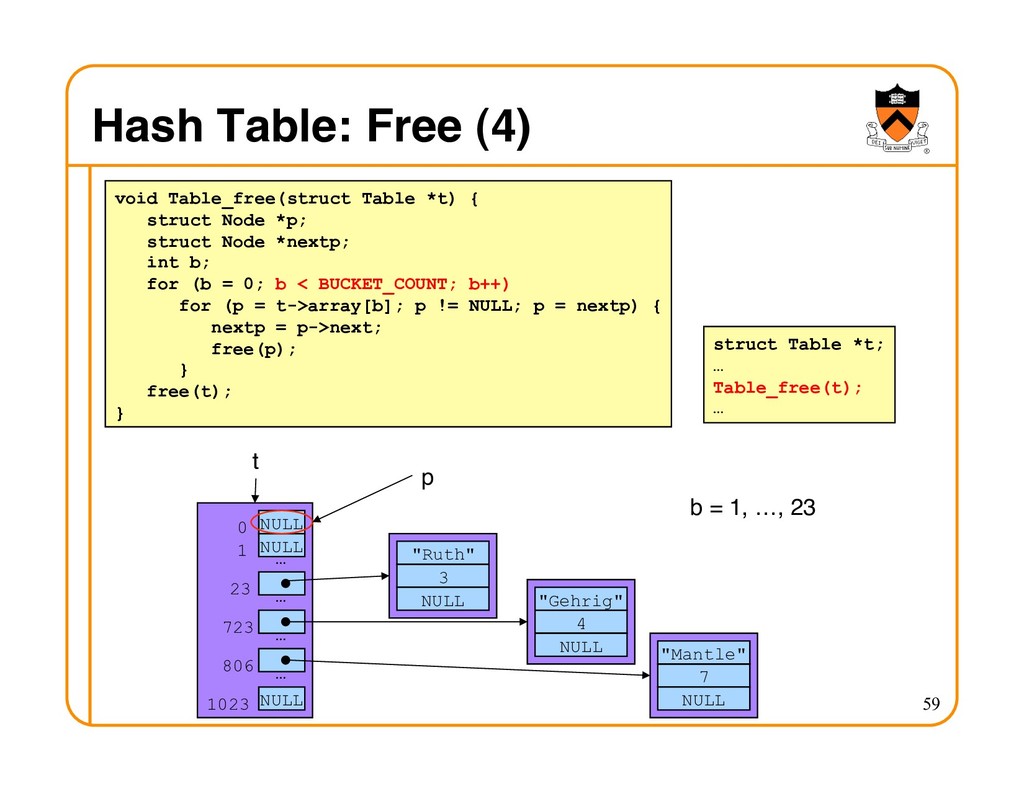
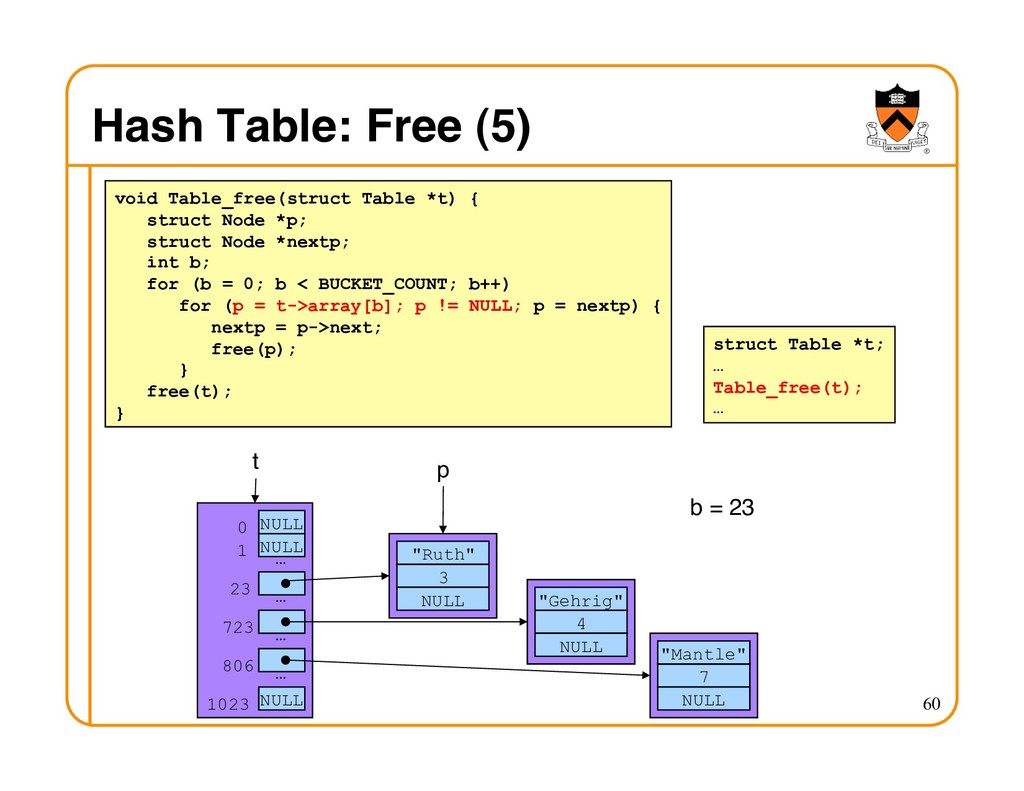
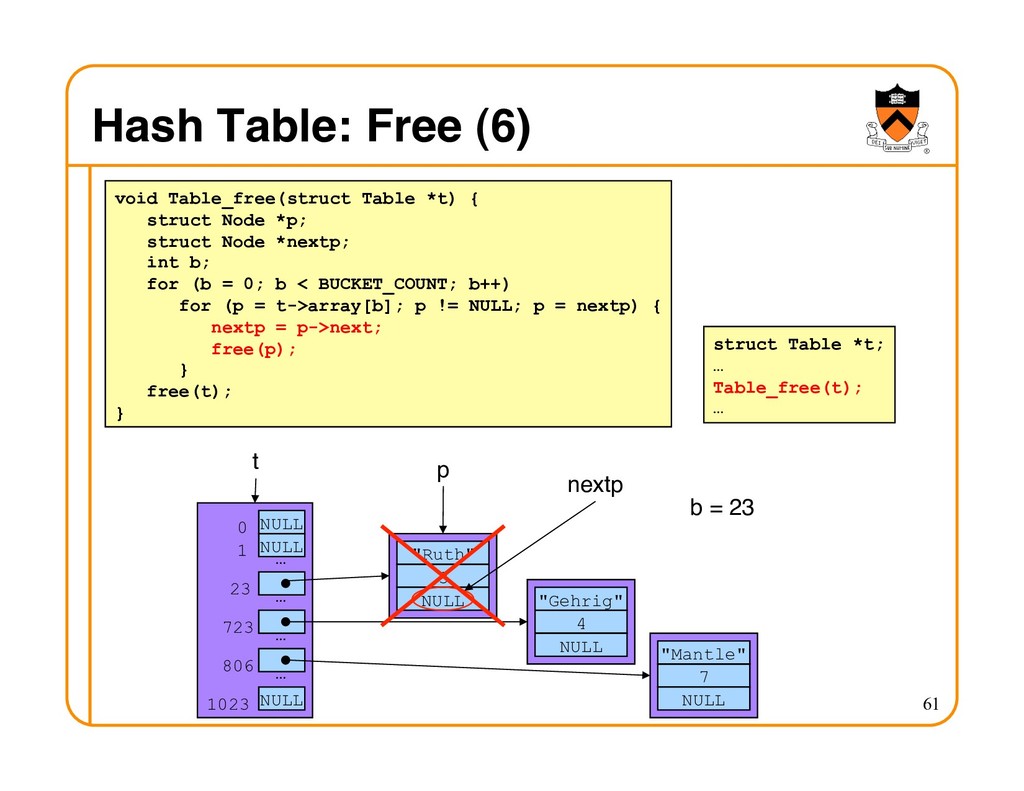
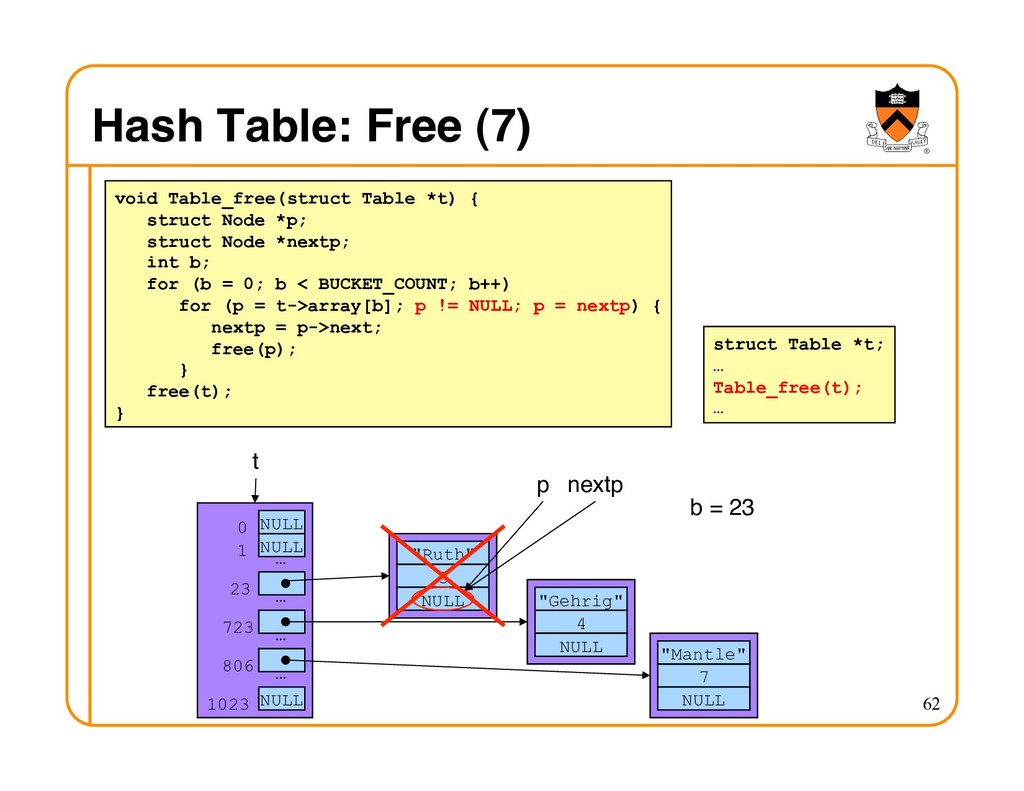
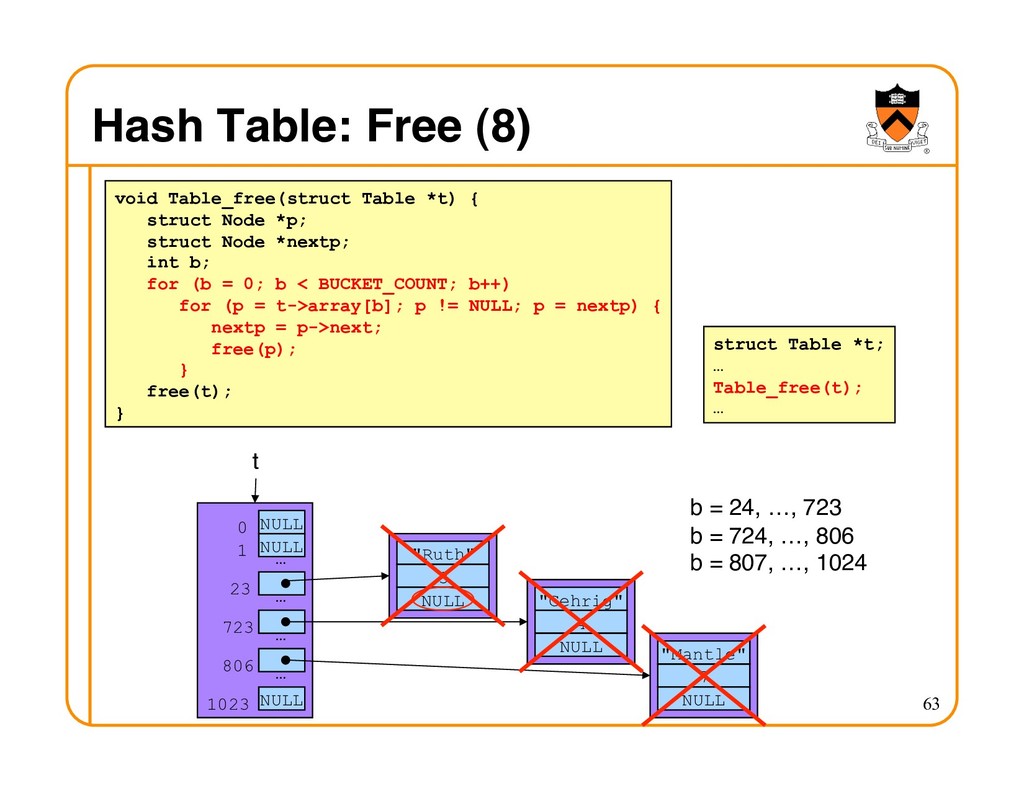
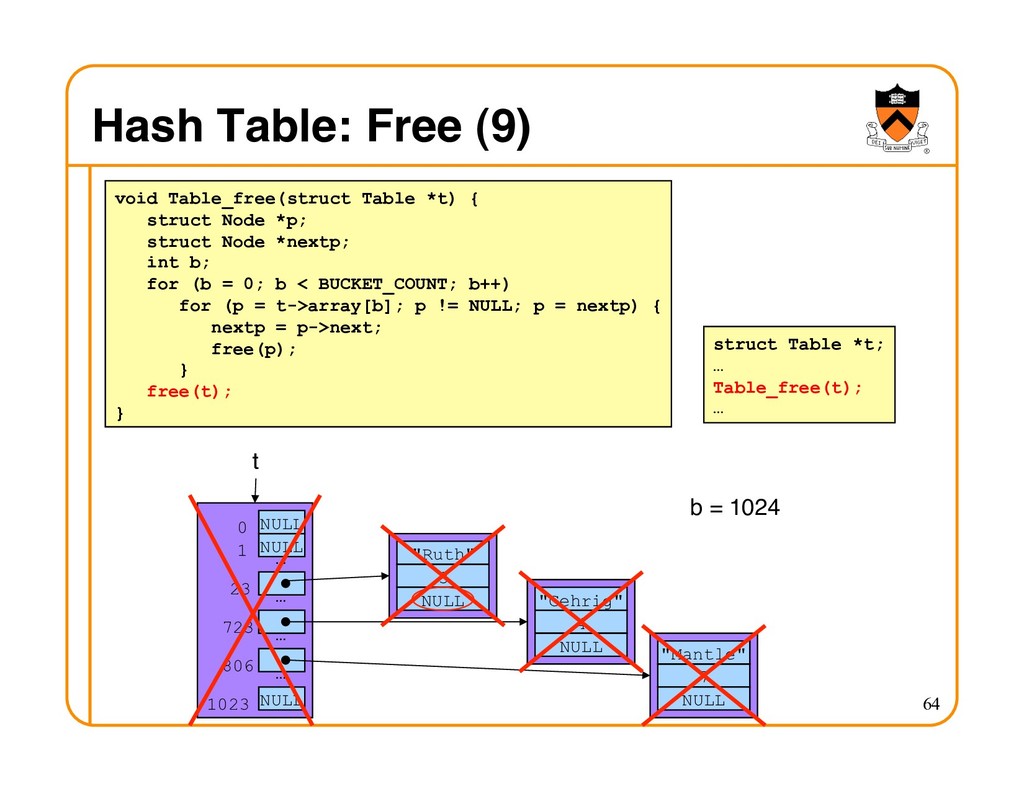
contains key/value pair and pointer to next node! • Algorithms:! • Create: Allocate Table structure to point to first node! • Add: Insert new node at front of list! • Search: Linear search through the list! • Free: Free nodes while traversing; free Table structure! 4 "Gehrig" 3 "Ruth" NULL 7 "Mantle"
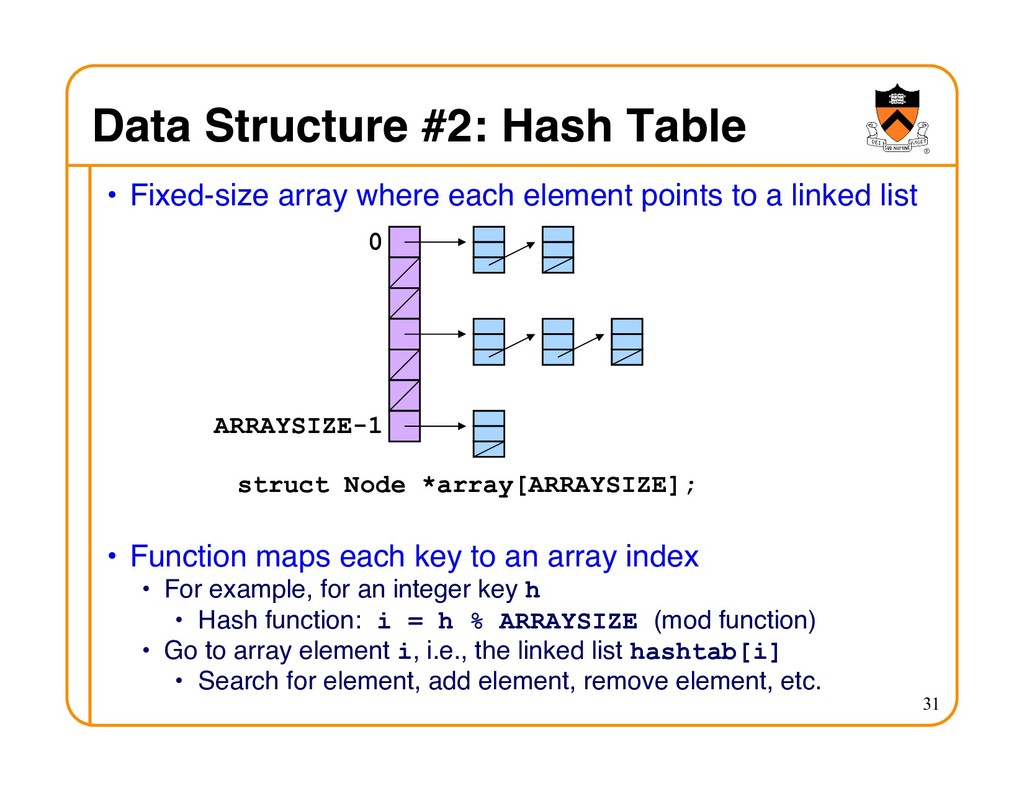
each element points to a linked list! • Function maps each key to an array index ! • For example, for an integer key h • Hash function: i = h % ARRAYSIZE (mod function)! • Go to array element i, i.e., the linked list hashtab[i] • Search for element, add element, remove element, etc.! 0 ARRAYSIZE-1 struct Node *array[ARRAYSIZE];
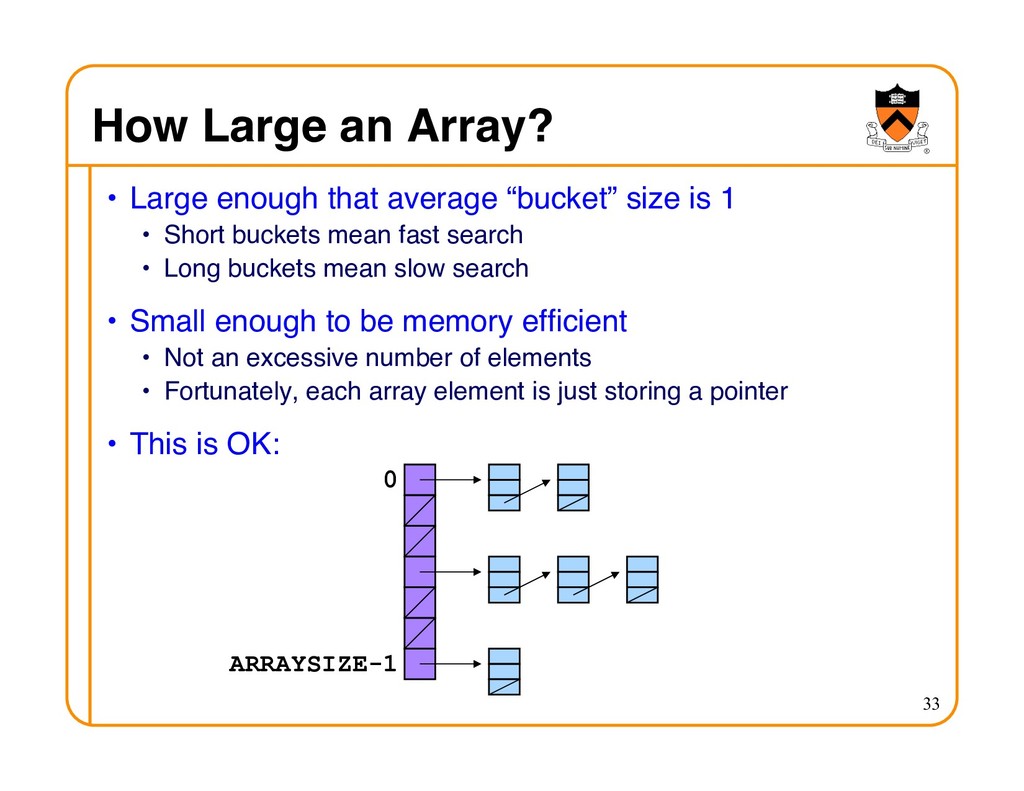
“bucket” size is 1! • Short buckets mean fast search! • Long buckets mean slow search! • Small enough to be memory efficient! • Not an excessive number of elements! • Fortunately, each array element is just storing a pointer! • This is OK:! 0 ARRAYSIZE-1
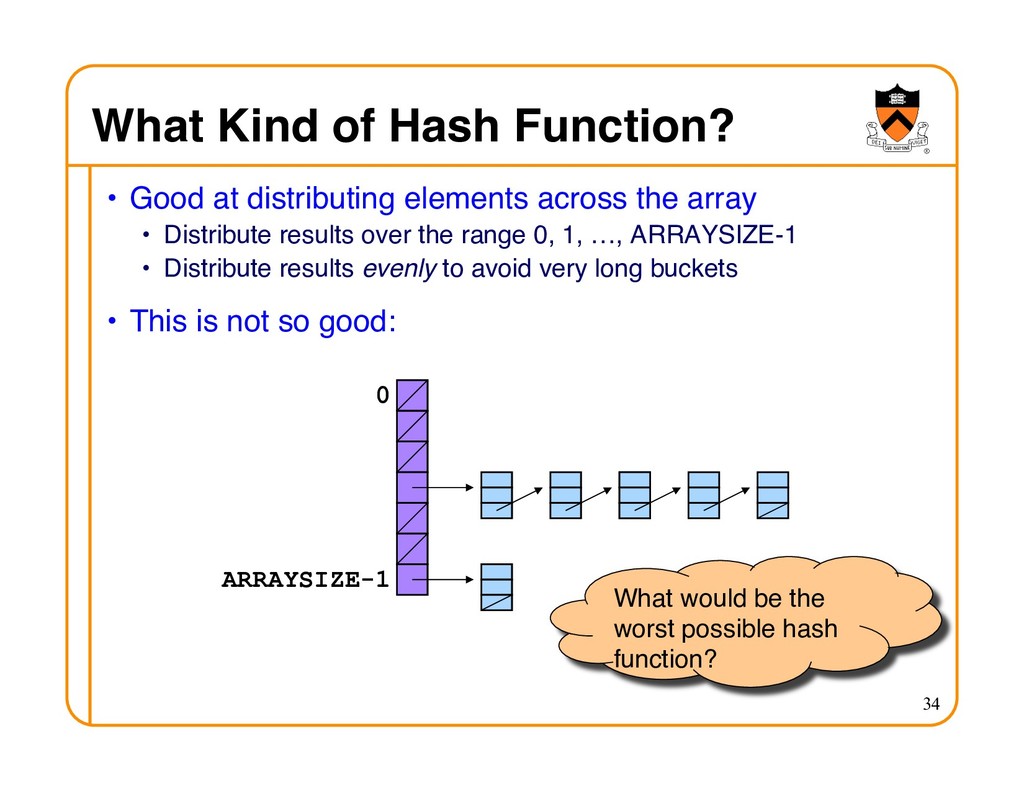
elements across the array! • Distribute results over the range 0, 1, …, ARRAYSIZE-1! • Distribute results evenly to avoid very long buckets! • This is not so good:! 0 ARRAYSIZE-1 What would be the worst possible hash function?!
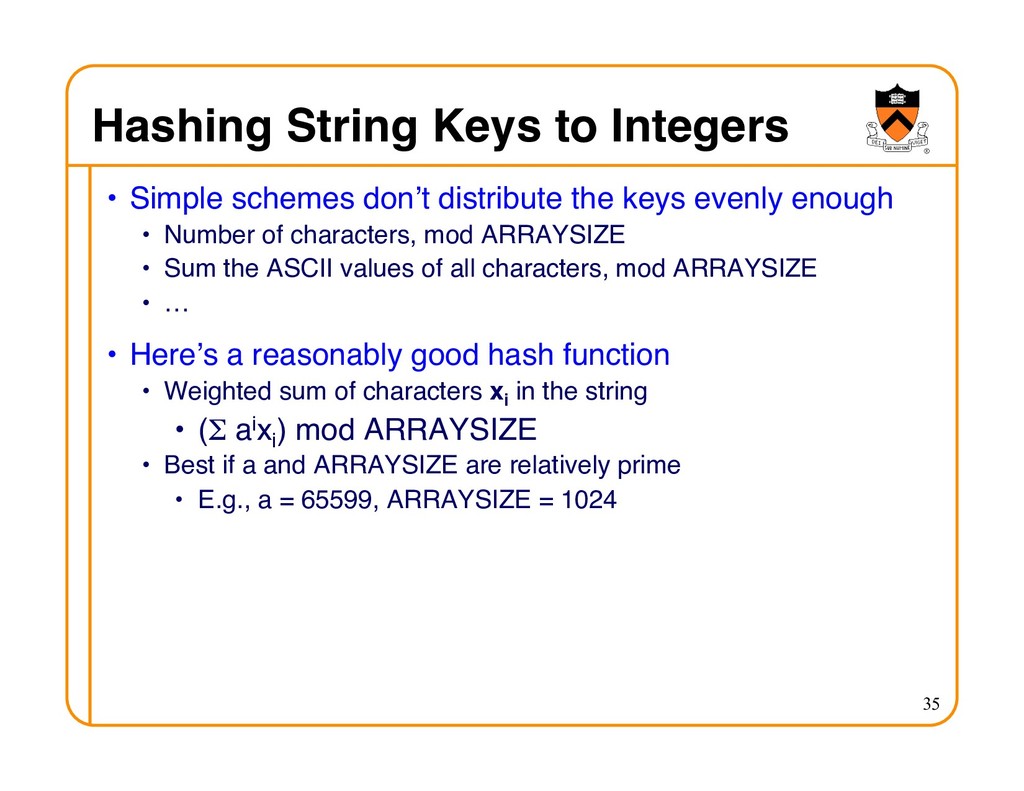
distribute the keys evenly enough! • Number of characters, mod ARRAYSIZE! • Sum the ASCII values of all characters, mod ARRAYSIZE! • …! • Hereʼs a reasonably good hash function! • Weighted sum of characters xi in the string! • (Σ aixi ) mod ARRAYSIZE! • Best if a and ARRAYSIZE are relatively prime! • E.g., a = 65599, ARRAYSIZE = 1024!
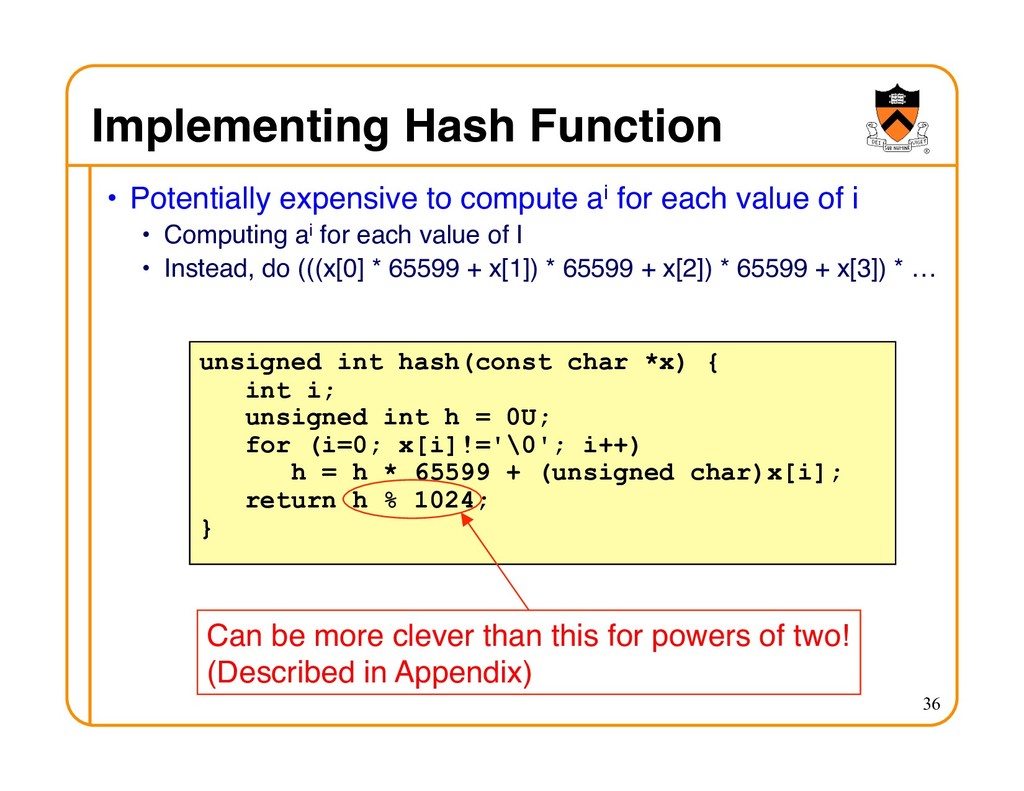
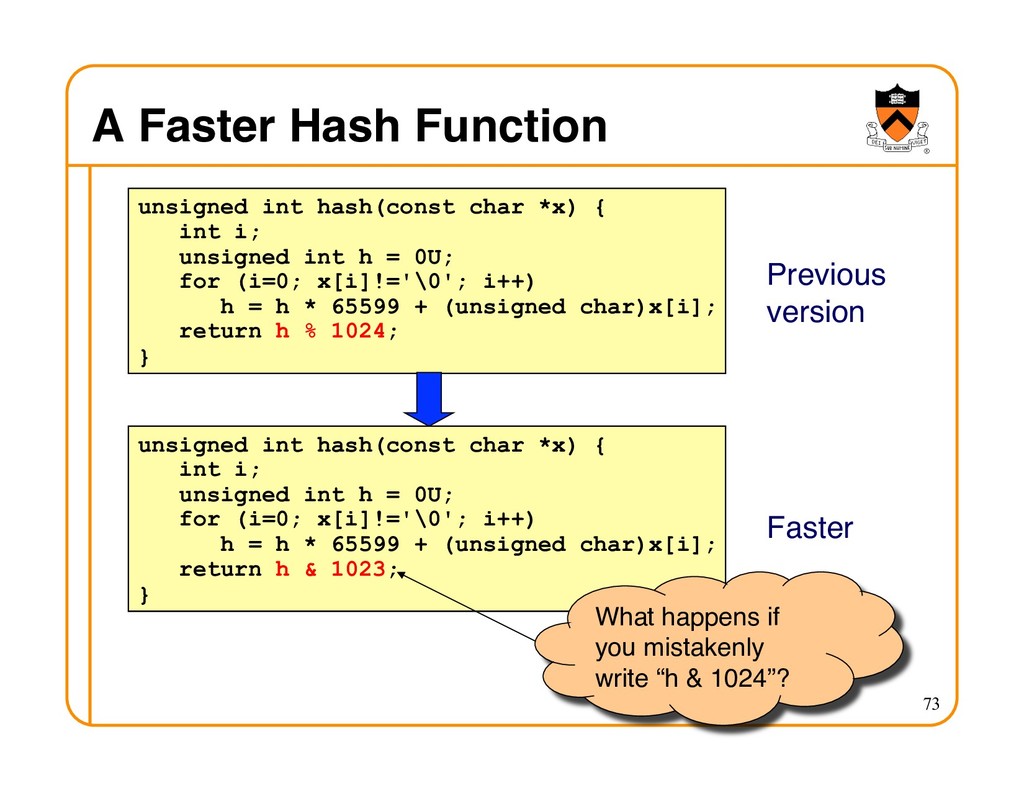
for each value of i! • Computing ai for each value of I! • Instead, do (((x[0] * 65599 + x[1]) * 65599 + x[2]) * 65599 + x[3]) * …! unsigned int hash(const char *x) { int i; unsigned int h = 0U; for (i=0; x[i]!='\0'; i++) h = h * 65599 + (unsigned char)x[i]; return h % 1024; } Can be more clever than this for powers of two!! (Described in Appendix)!
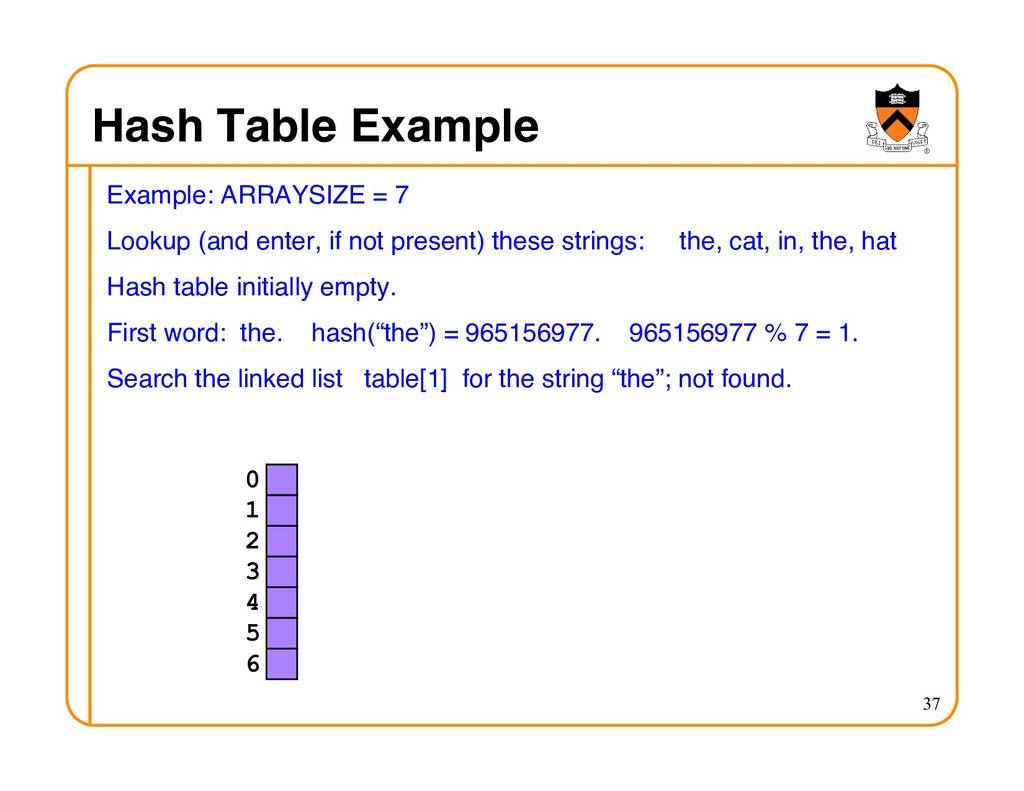
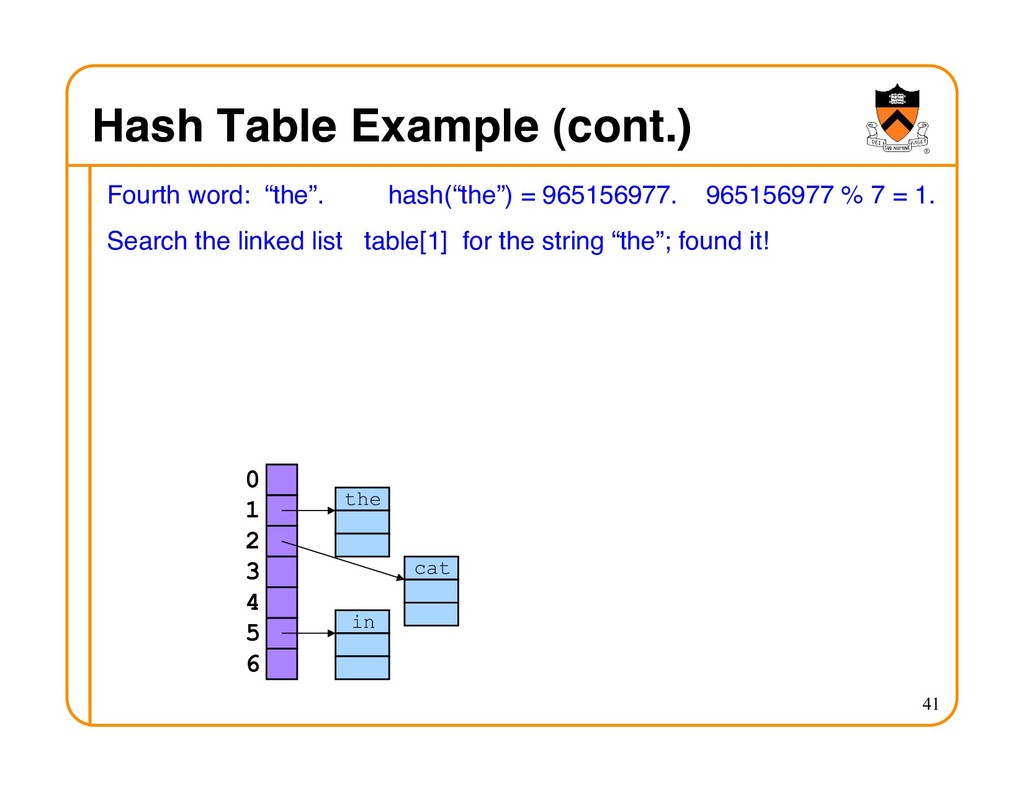
enter, if not present) these strings: the, cat, in, the, hat! Hash table initially empty.! First word: the. hash(“the”) = 965156977. 965156977 % 7 = 1.! Search the linked list table[1] for the string “the”; not found.! 0 1 2 3 4 5 6
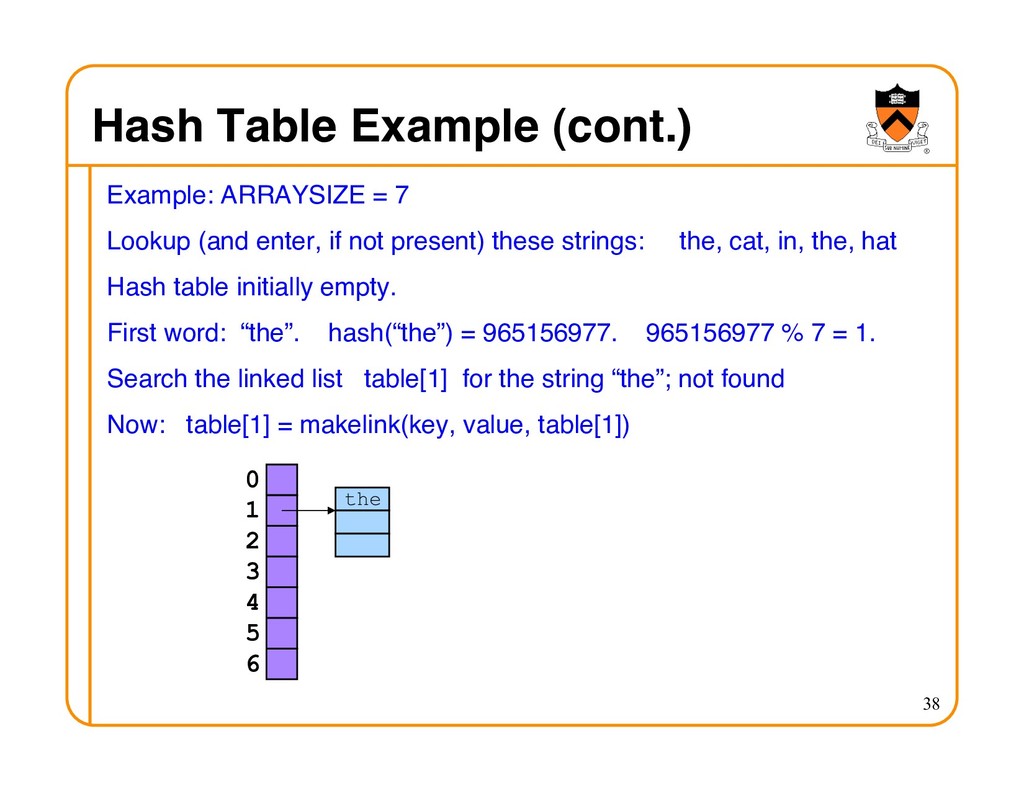
(and enter, if not present) these strings: the, cat, in, the, hat! Hash table initially empty.! First word: “the”. hash(“the”) = 965156977. 965156977 % 7 = 1.! Search the linked list table[1] for the string “the”; not found! Now: table[1] = makelink(key, value, table[1])! 0 1 2 3 4 5 6 the
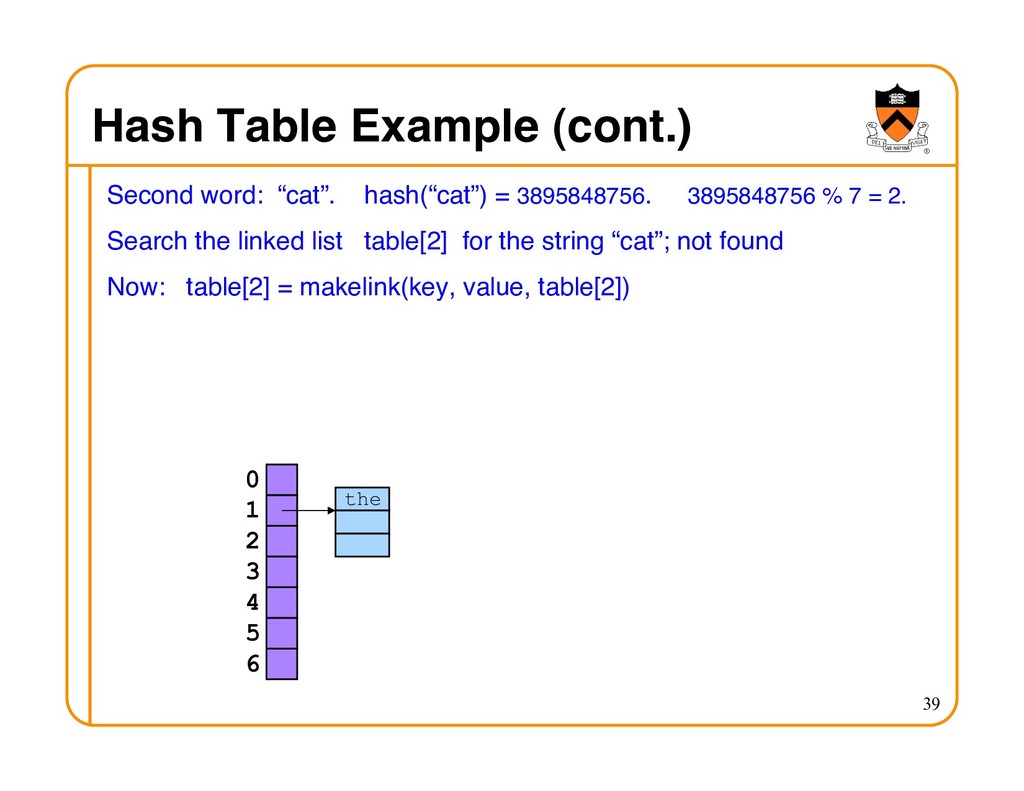
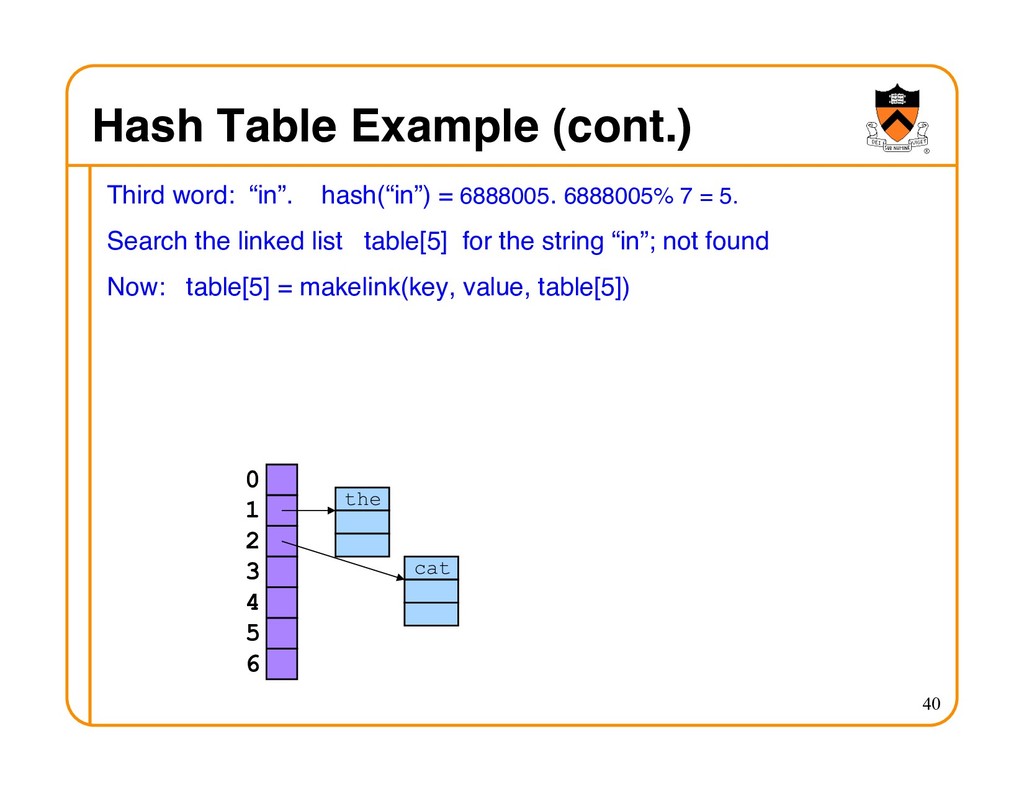
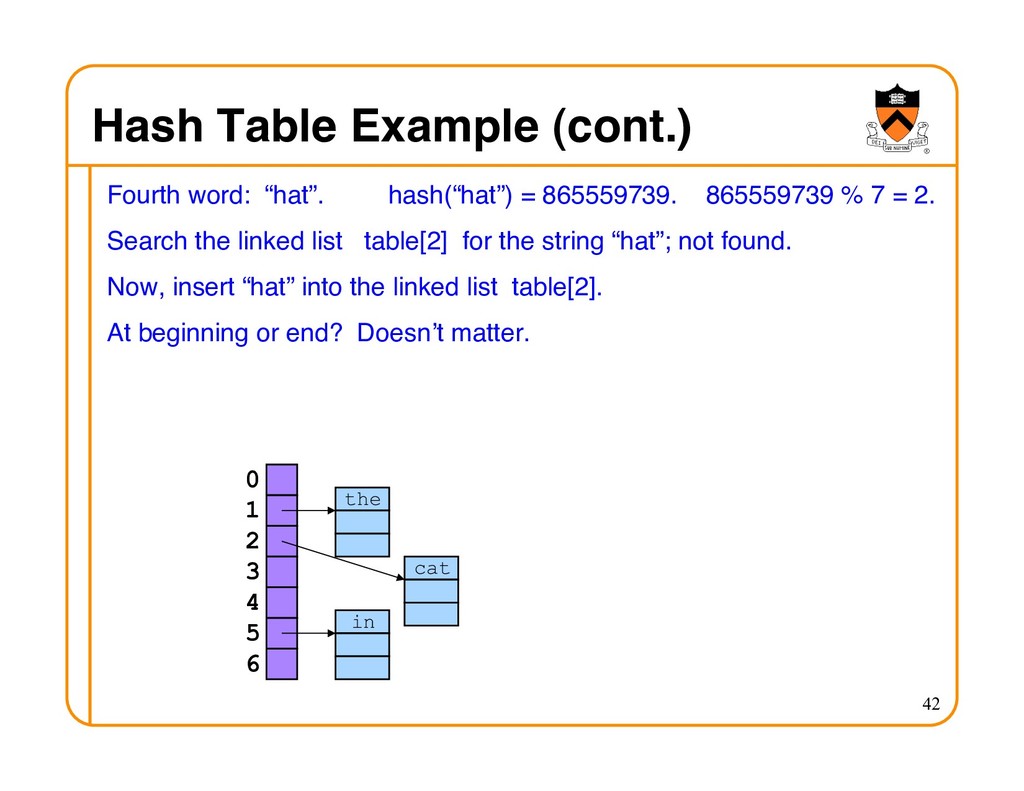
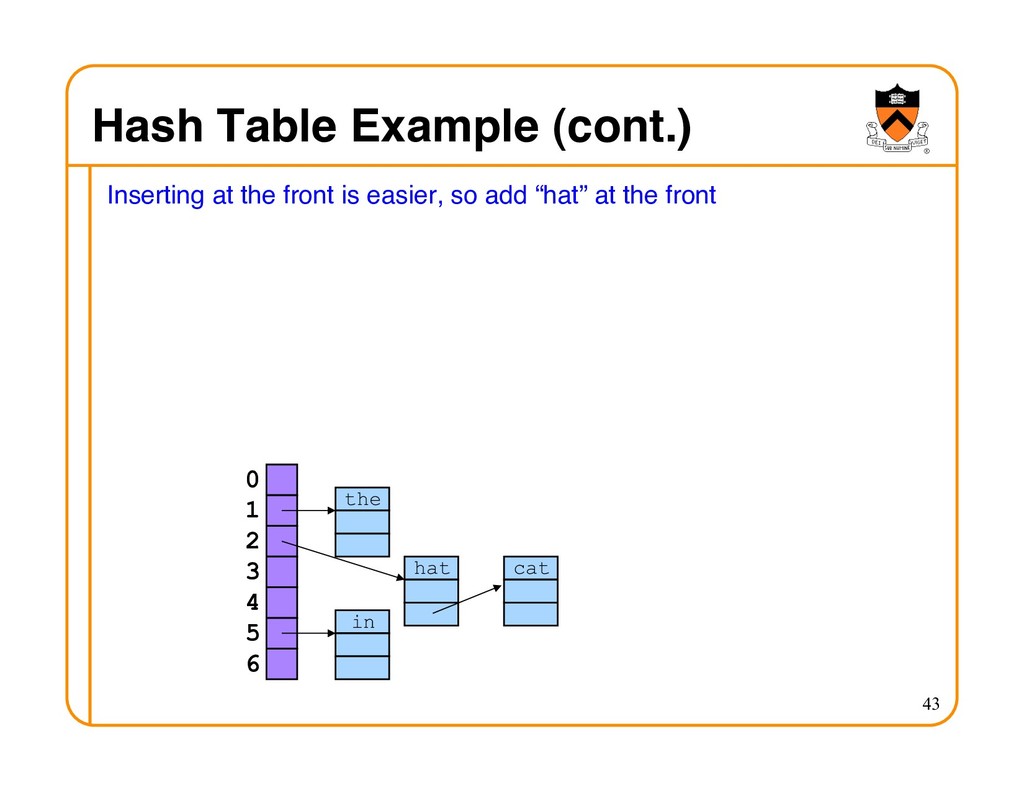
865559739. 865559739 % 7 = 2.! Search the linked list table[2] for the string “hat”; not found.! Now, insert “hat” into the linked list table[2]. ! At beginning or end? Doesnʼt matter.! 0 1 2 3 4 5 6 the cat in
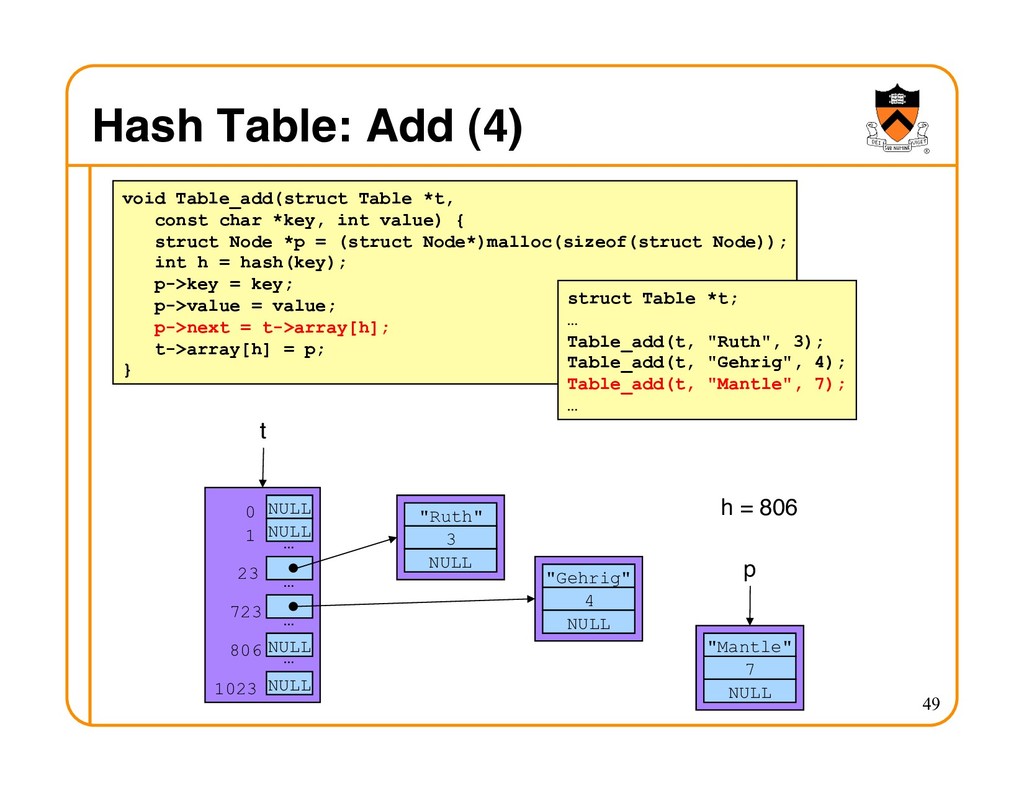
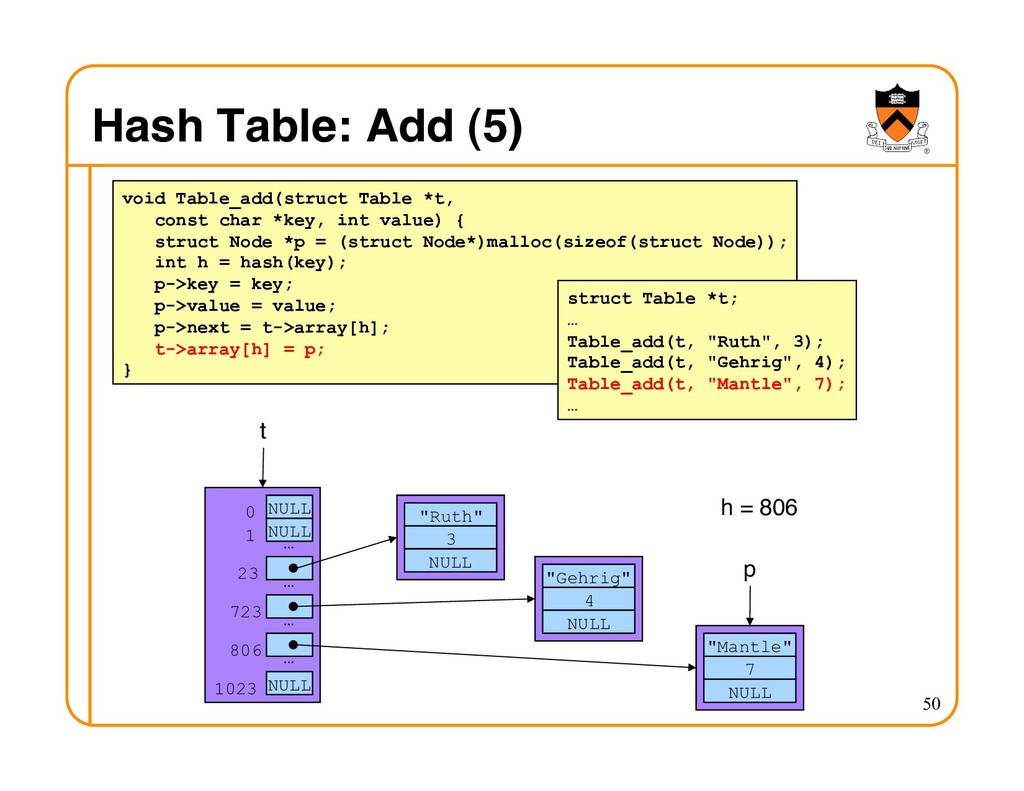
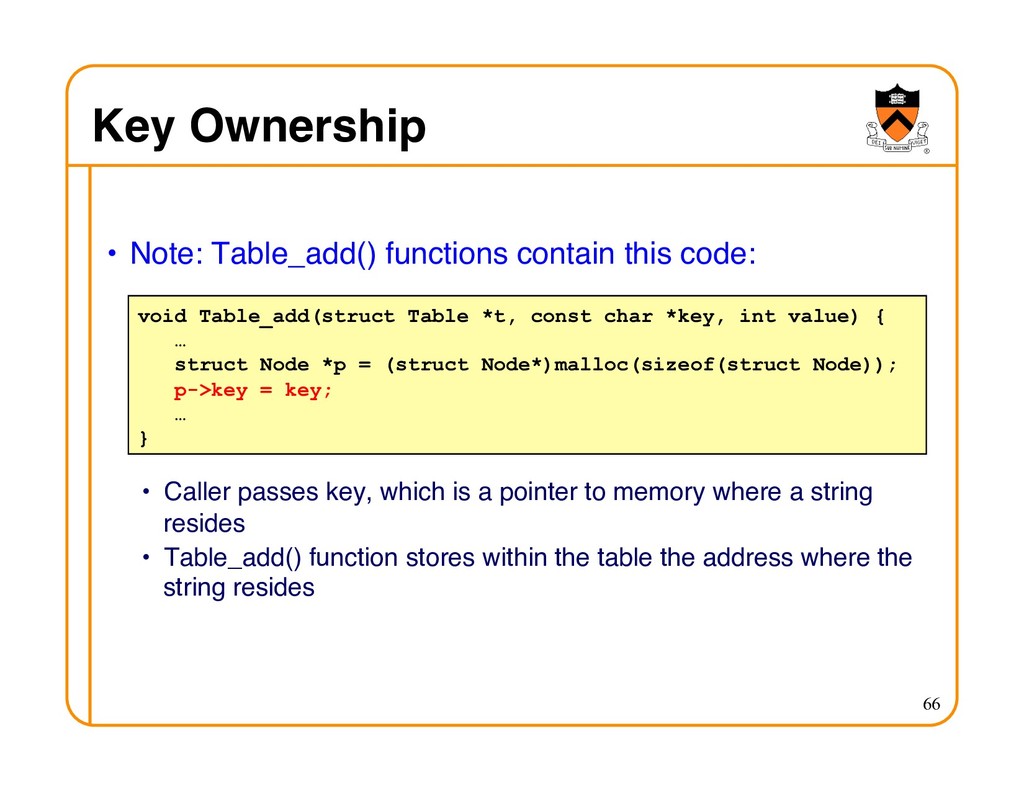
• Caller passes key, which is a pointer to memory where a string resides! • Table_add() function stores within the table the address where the string resides! void Table_add(struct Table *t, const char *key, int value) { … struct Node *p = (struct Node*)malloc(sizeof(struct Node)); p->key = key; … }
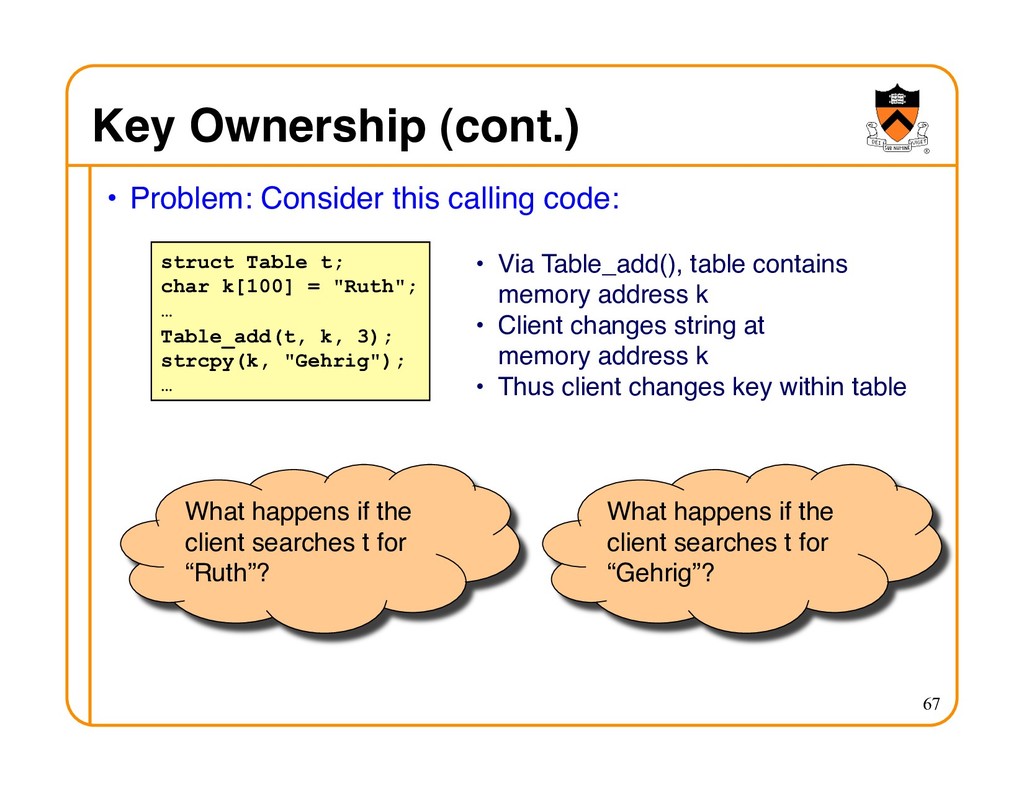
struct Table t; char k[100] = "Ruth"; … Table_add(t, k, 3); strcpy(k, "Gehrig"); … • Via Table_add(), table contains memory address k! • Client changes string at memory address k! • Thus client changes key within table! What happens if the client searches t for “Ruth”?! What happens if the client searches t for “Gehrig”?!
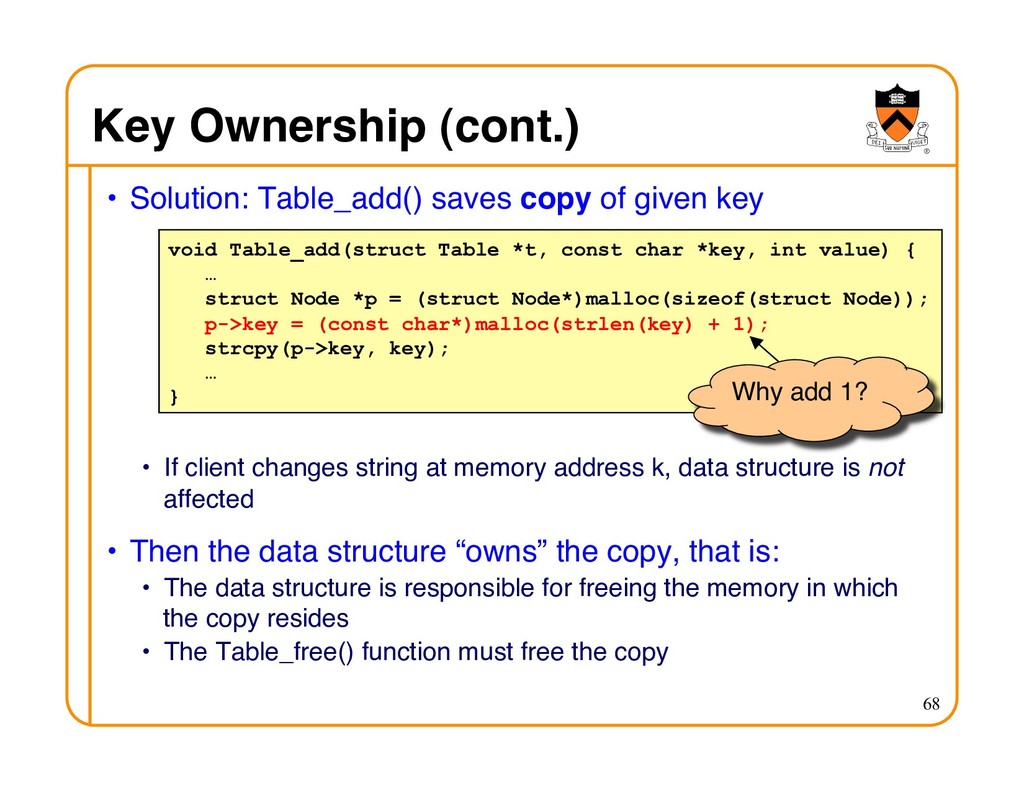
given key! • If client changes string at memory address k, data structure is not affected! • Then the data structure “owns” the copy, that is:! • The data structure is responsible for freeing the memory in which the copy resides! • The Table_free() function must free the copy! void Table_add(struct Table *t, const char *key, int value) { … struct Node *p = (struct Node*)malloc(sizeof(struct Node)); p->key = (const char*)malloc(strlen(key) + 1); strcpy(p->key, key); … } Why add 1?!
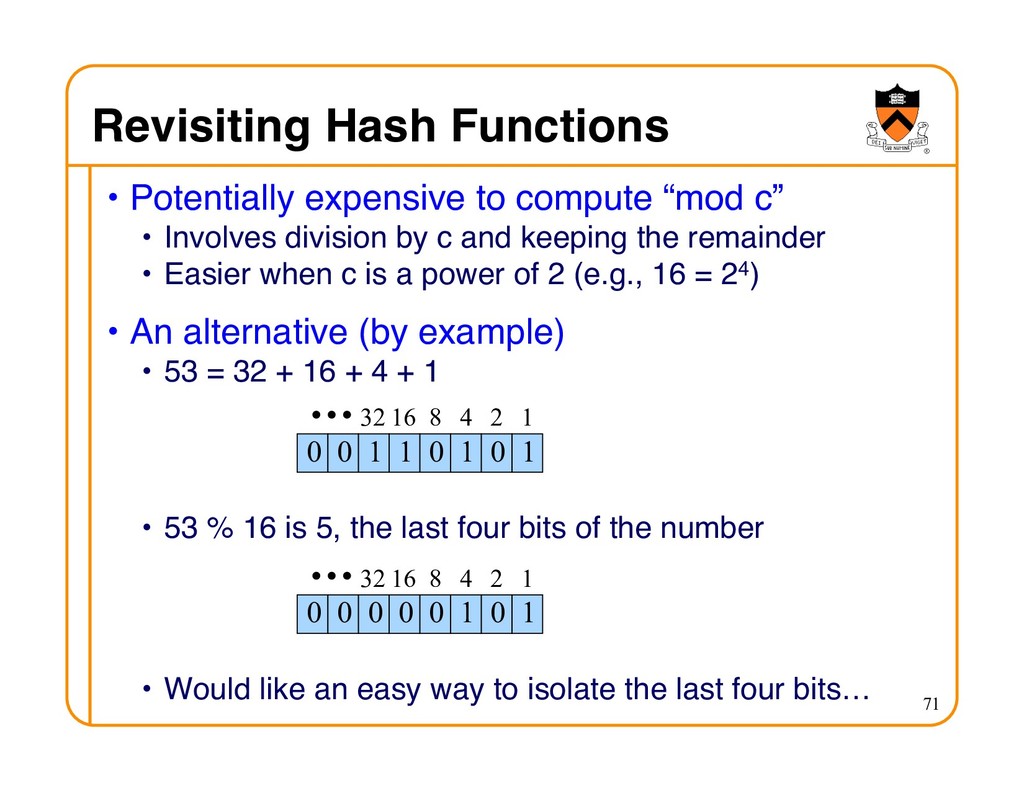
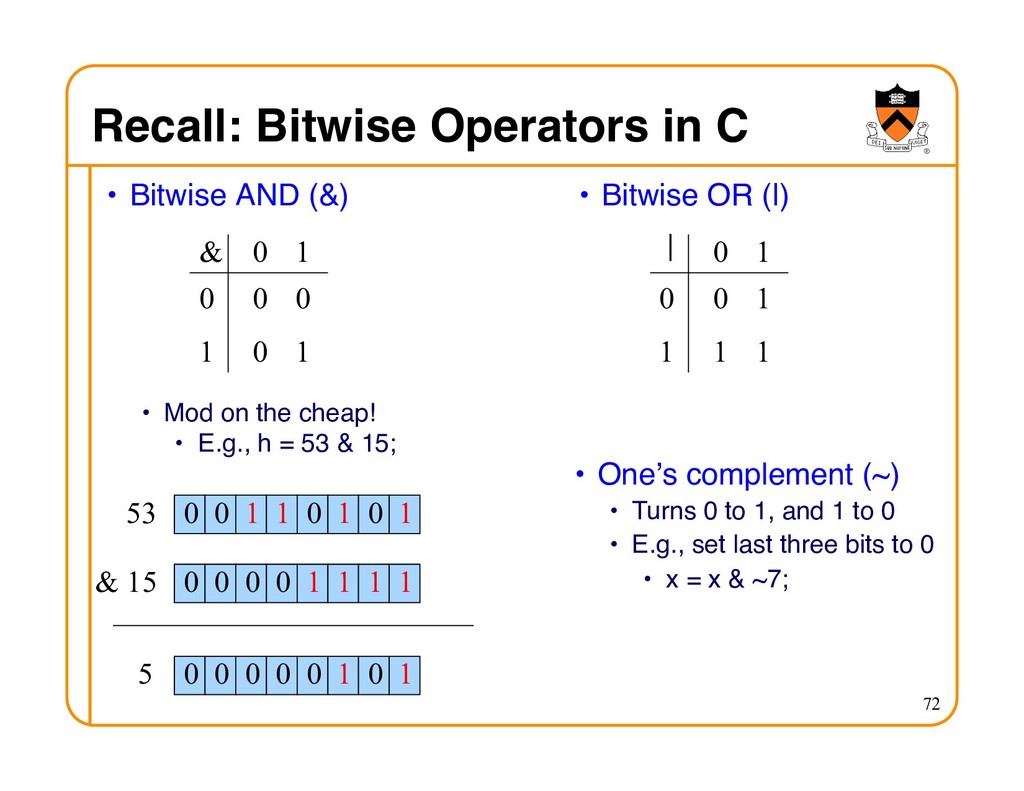
• Involves division by c and keeping the remainder! • Easier when c is a power of 2 (e.g., 16 = 24)! • An alternative (by example)! • 53 = 32 + 16 + 4 + 1! • 53 % 16 is 5, the last four bits of the number! • Would like an easy way to isolate the last four bits… ! 0 0 1 1 0 1 0 1 1 2 4 8 16 32 0 0 0 0 0 1 0 1 1 2 4 8 16 32
{ int i; unsigned int h = 0U; for (i=0; x[i]!='\0'; i++) h = h * 65599 + (unsigned char)x[i]; return h % 1024; } unsigned int hash(const char *x) { int i; unsigned int h = 0U; for (i=0; x[i]!='\0'; i++) h = h * 65599 + (unsigned char)x[i]; return h & 1023; } Faster! Previous! version! What happens if you mistakenly write “h & 1024”?!
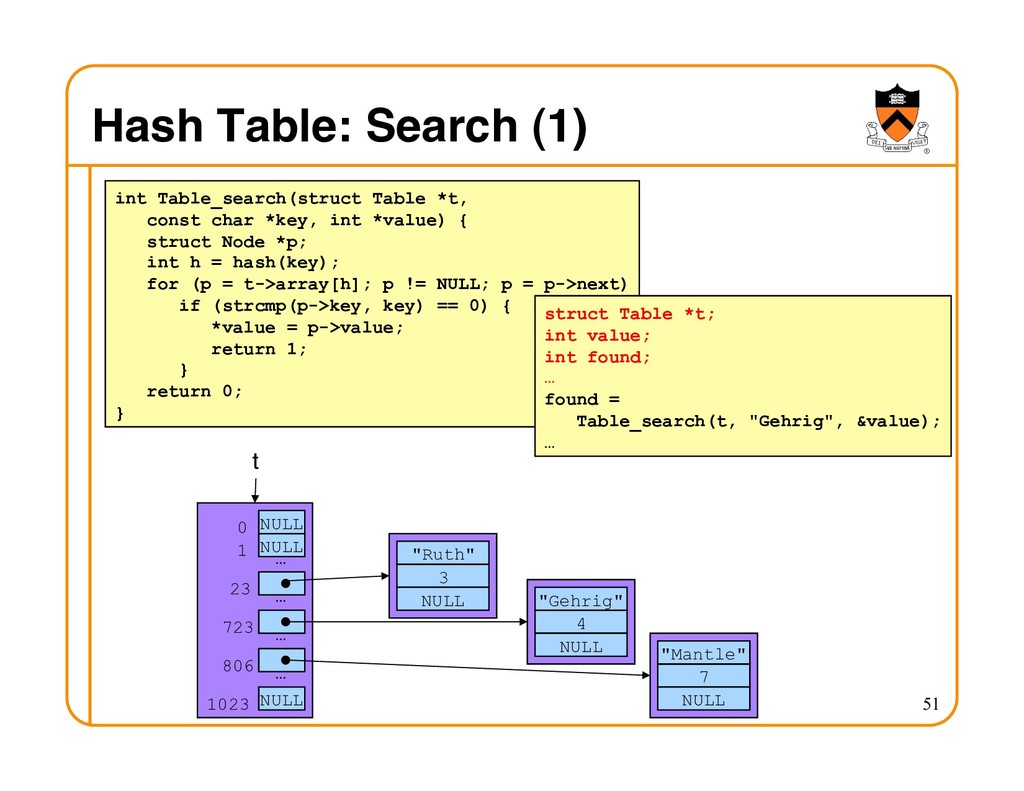
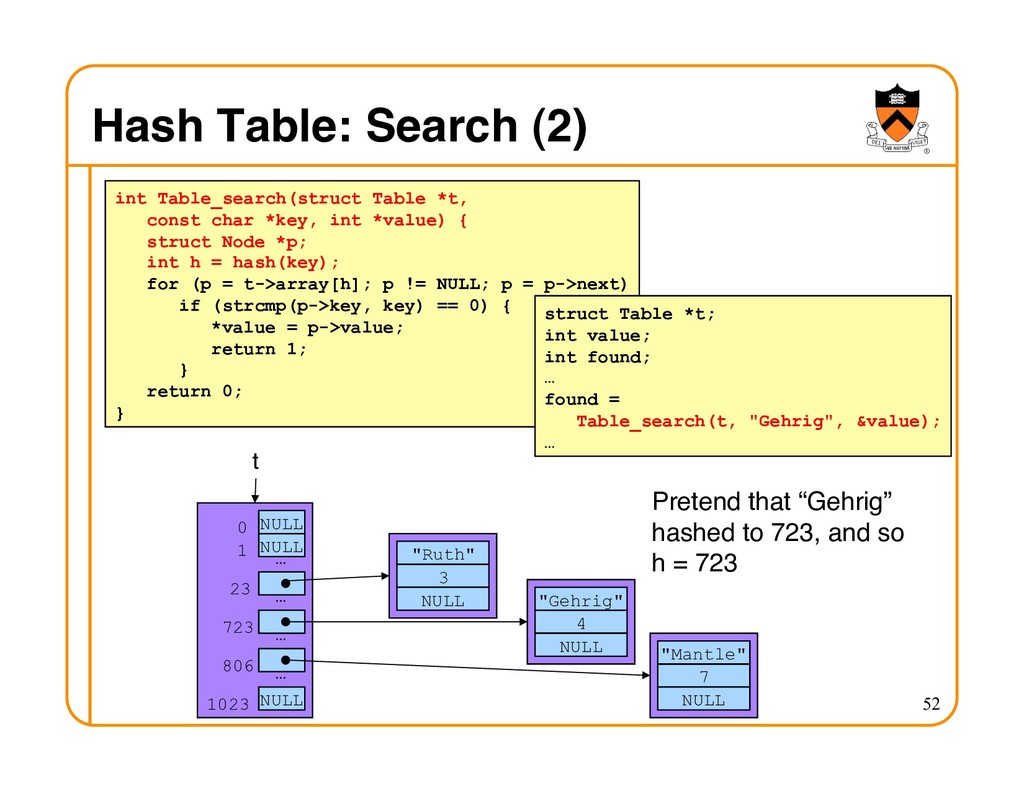
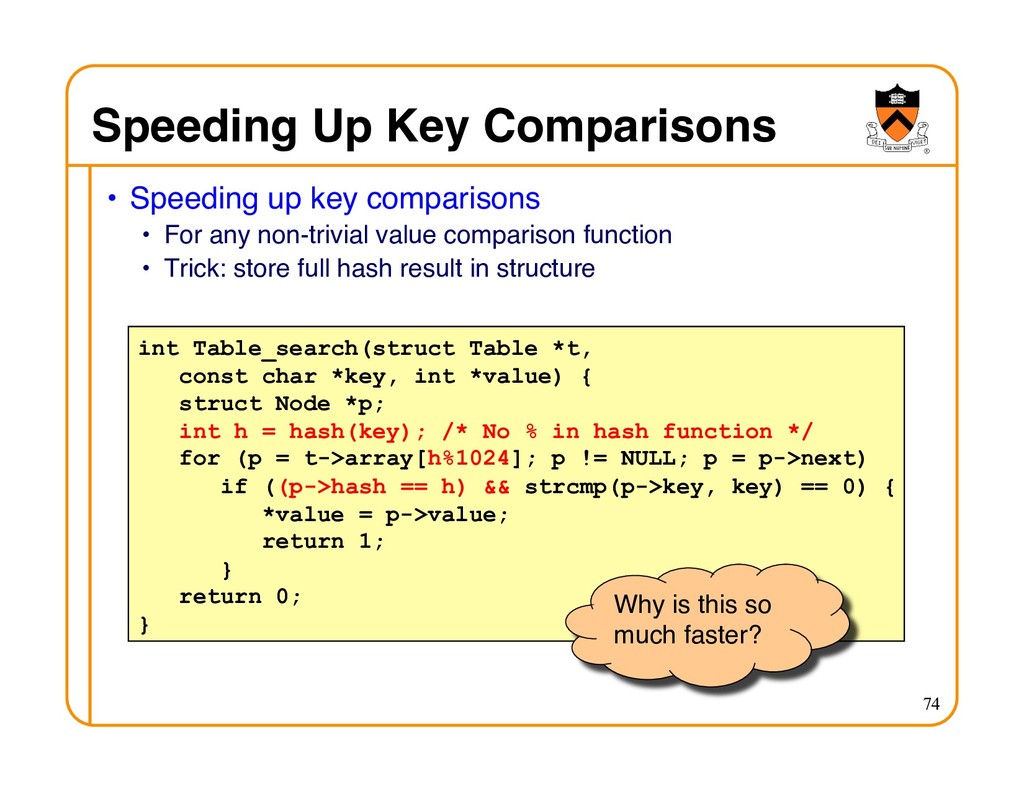
• For any non-trivial value comparison function! • Trick: store full hash result in structure! int Table_search(struct Table *t, const char *key, int *value) { struct Node *p; int h = hash(key); /* No % in hash function */ for (p = t->array[h%1024]; p != NULL; p = p->next) if ((p->hash == h) && strcmp(p->key, key) == 0) { *value = p->value; return 1; } return 0; } Why is this so much faster?!


 ryu1013
 yukiny
 akihisaikeda
 optim
 florets1
 suneo3476
 lynnswap
 taiseiue
 tomokon
 koic
 kishida
 htkym
 elsirapls
 dugsong
 takai
 katarinadahlin
 panda_program
 cargoodrich
 baasie
 bluesmoon
 hannesfritz
 techseoconnect
 raygrieselhuber
 reverentgeek