Upgrade to Pro — share decks privately, control downloads, hide ads and more …

Polyominoes: an Exploration in Problem Solving ...

Polyominoes: an Exploration in Problem Solving (with Python)

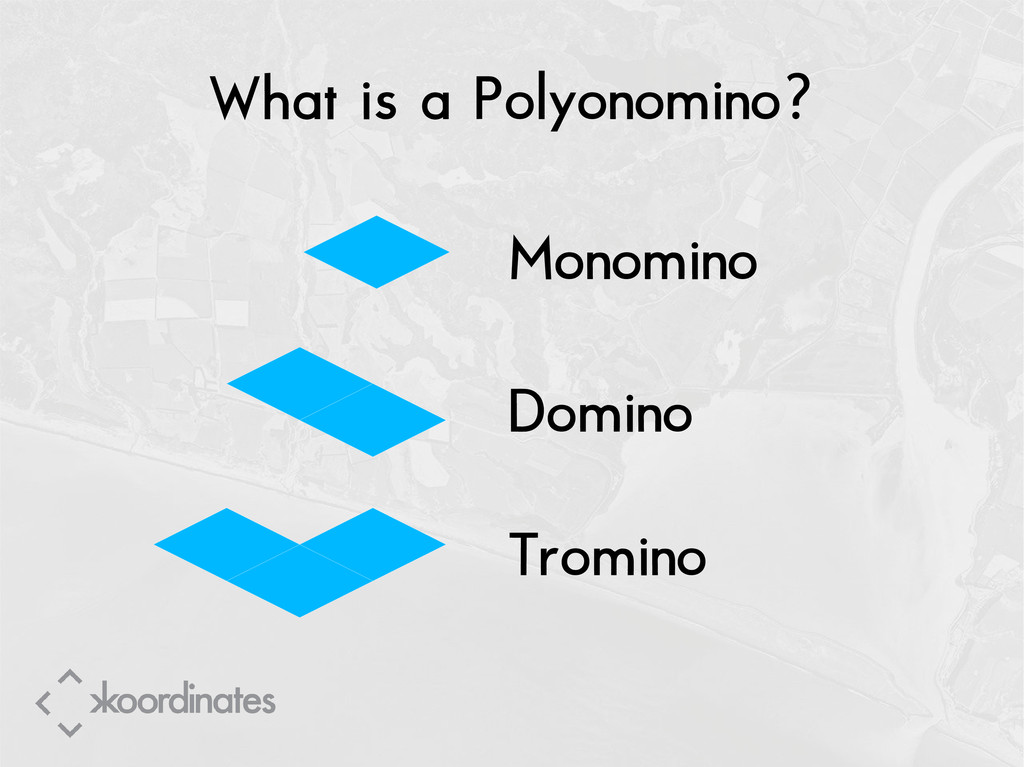
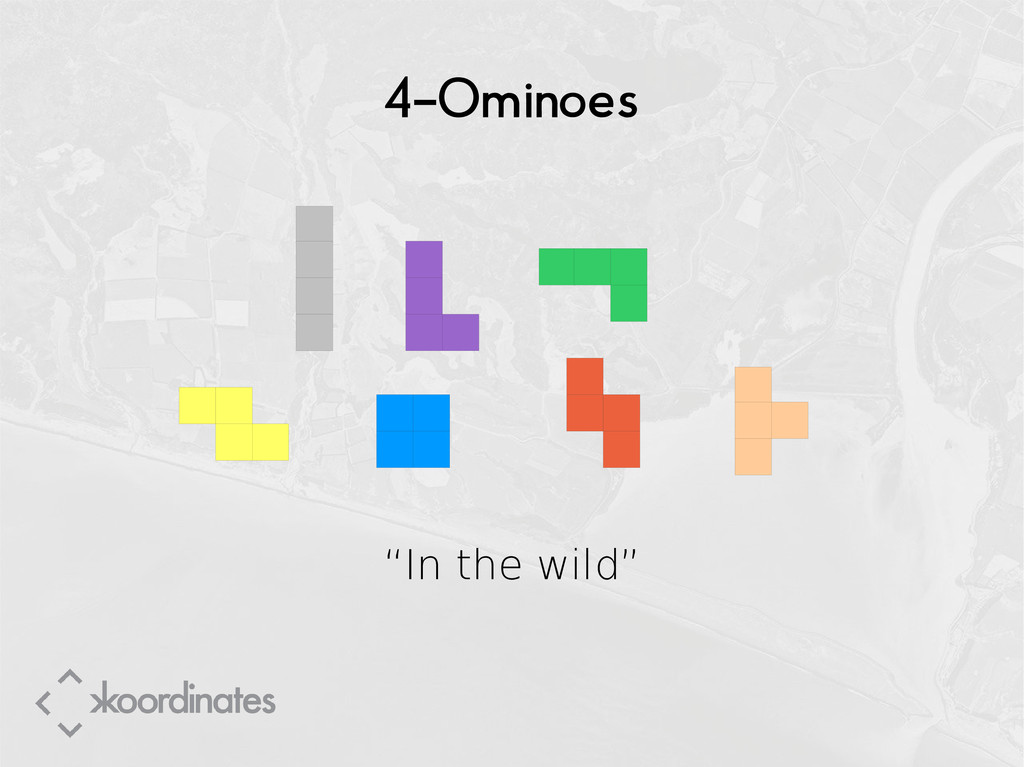
A "Polyomino" is a geometric figure of adjacent squares. But just how many "n" polyominoes are there?

Avatar for Hamish Campbell

Hamish Campbell

September 07, 2013

Other Decks in Programming

Transcript

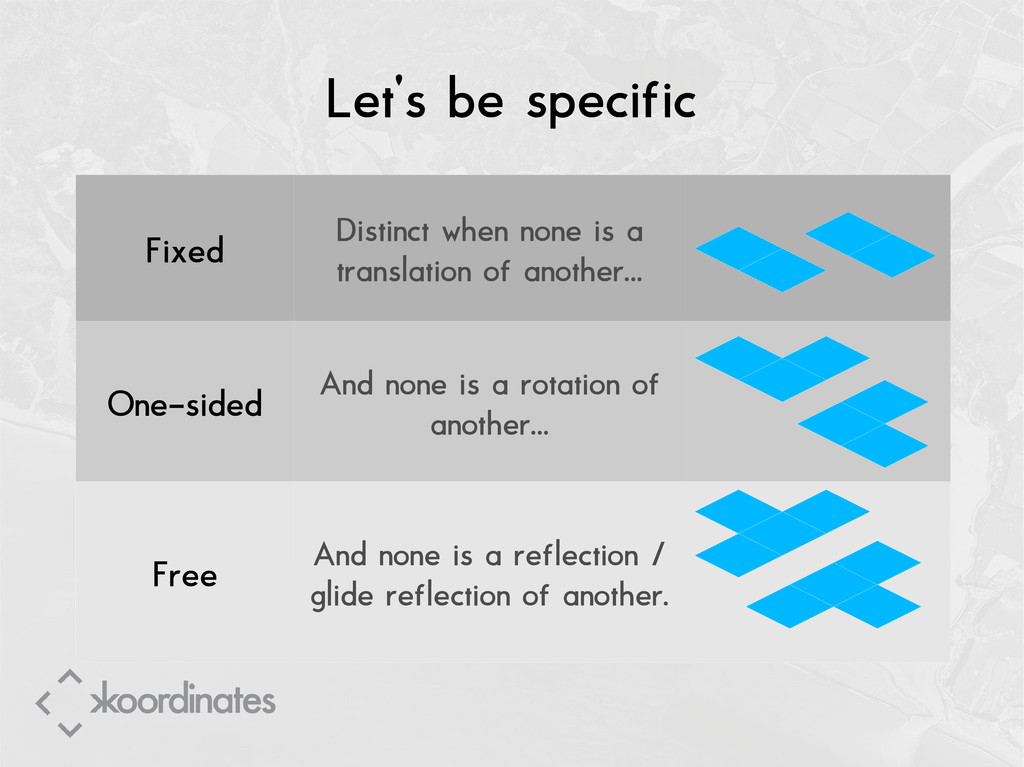
  1. Let's be specific Fixed Distinct when none is a translation

    of another... One-sided And none is a rotation of another... Free And none is a reflection / glide reflection of another.
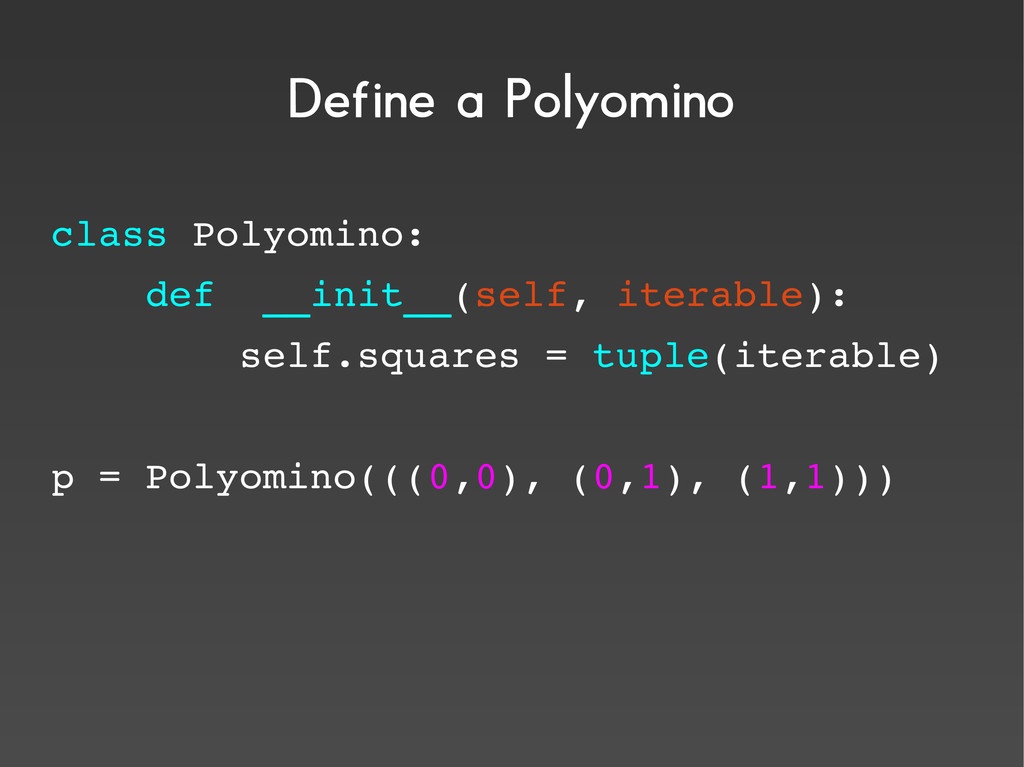
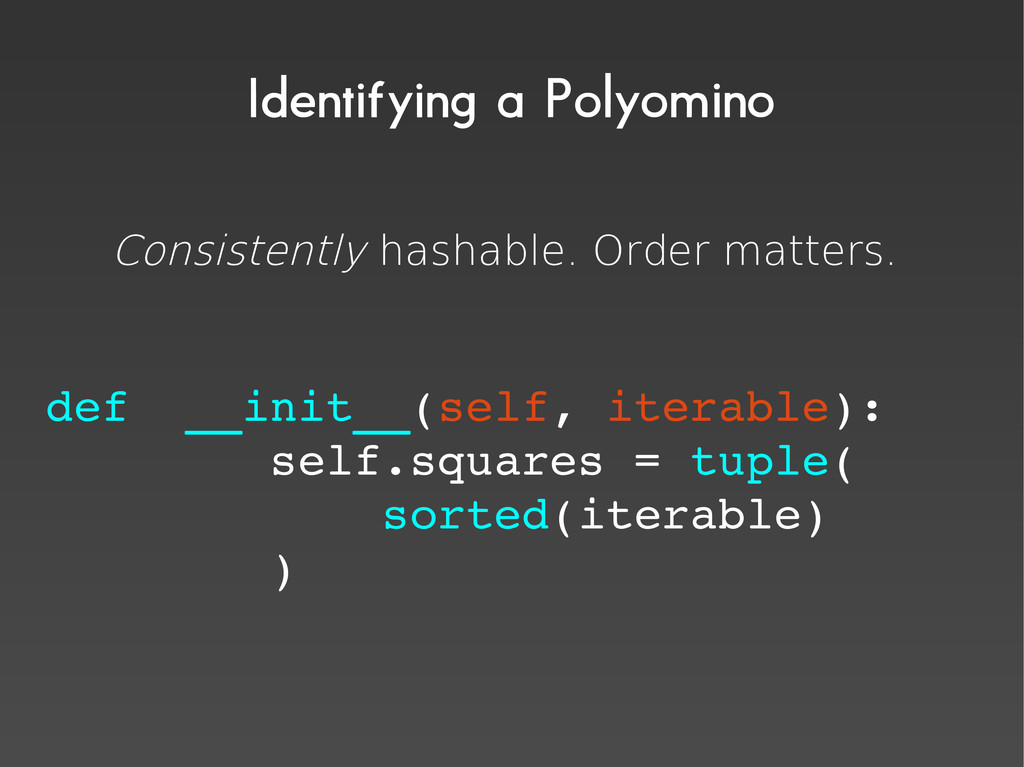
  2. Define a Polyomino class Polyomino: def __init__(self, iterable): self.squares =

    tuple(iterable) p = Polyomino(((0,0), (0,1), (1,1)))
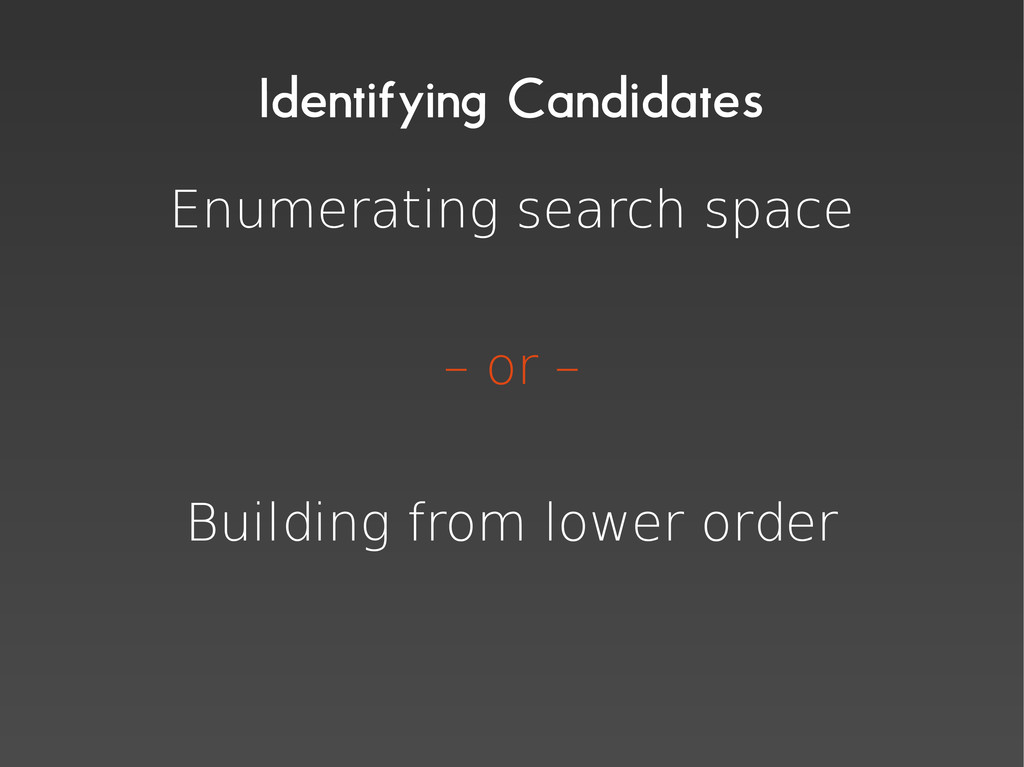
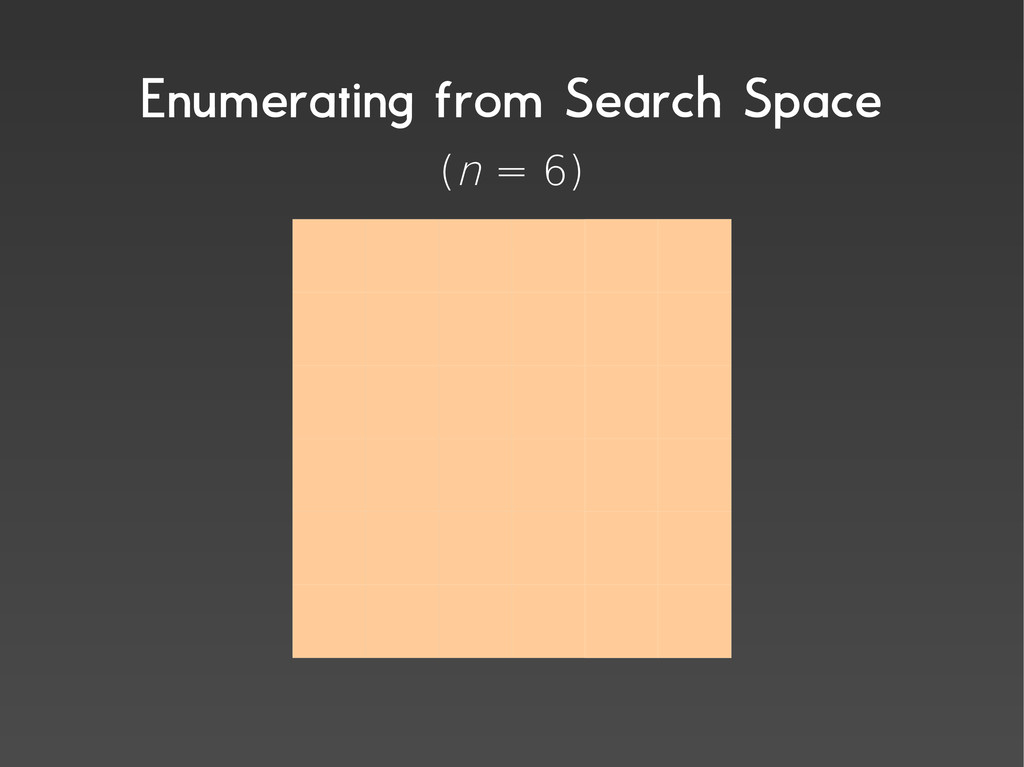
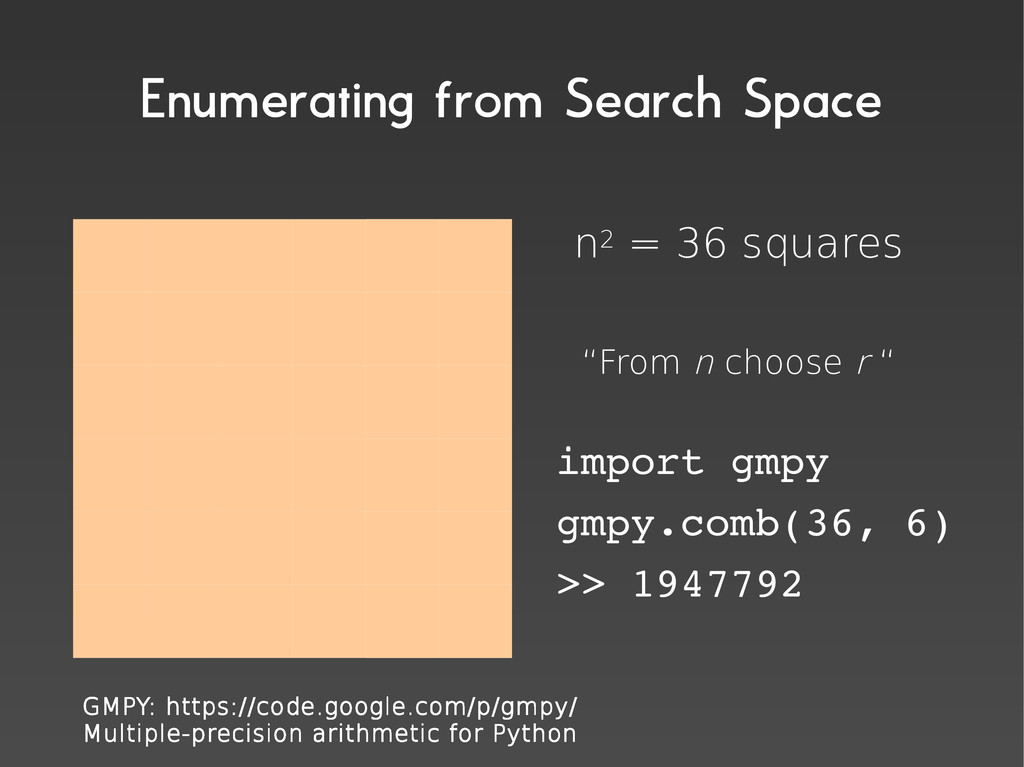
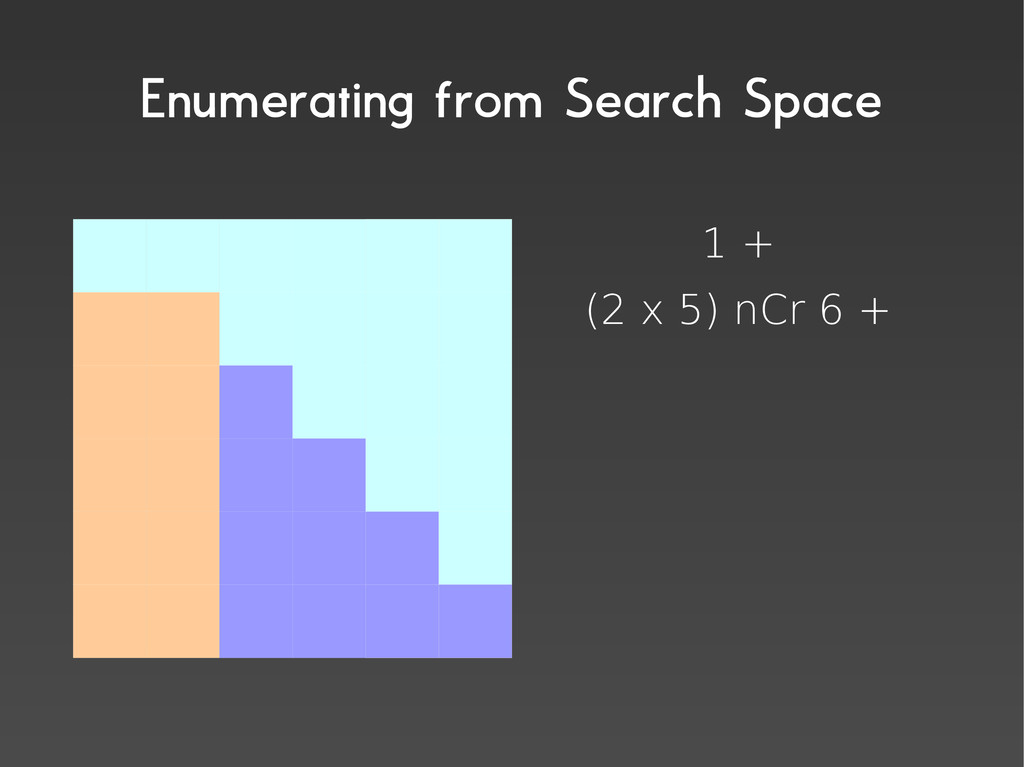
  3. Enumerating from Search Space n2 = 36 squares “From n

    choose r “ import gmpy gmpy.comb(36, 6) >> 1947792 GMPY: https://code.google.com/p/gmpy/ Multiple-precision arithmetic for Python
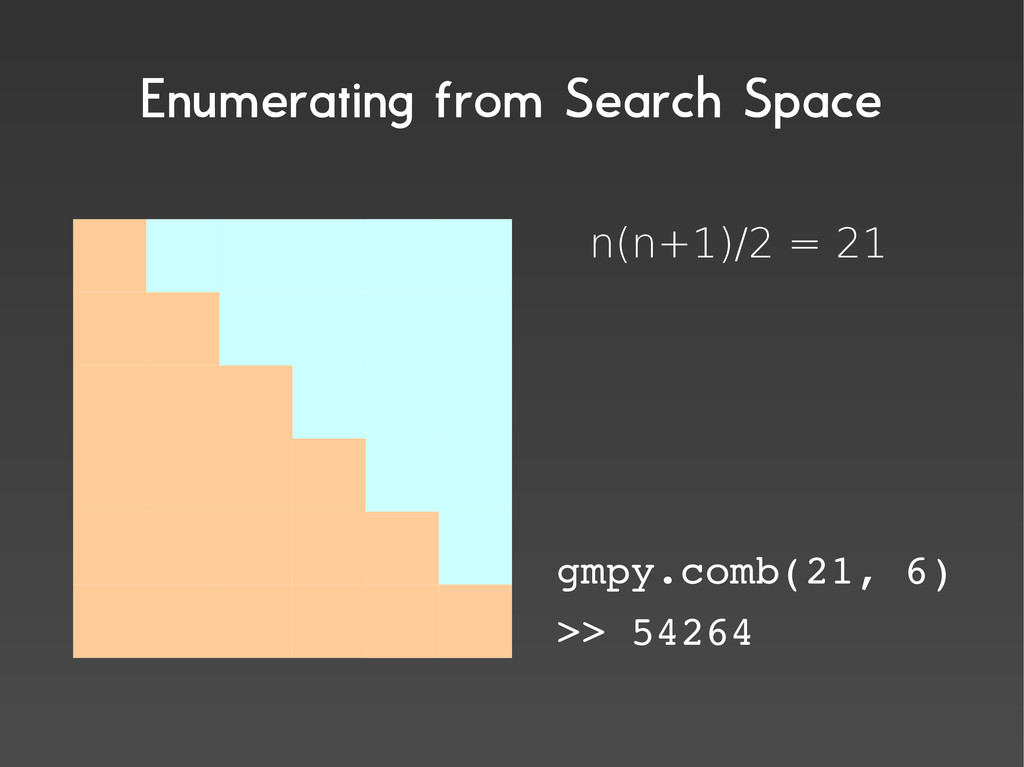
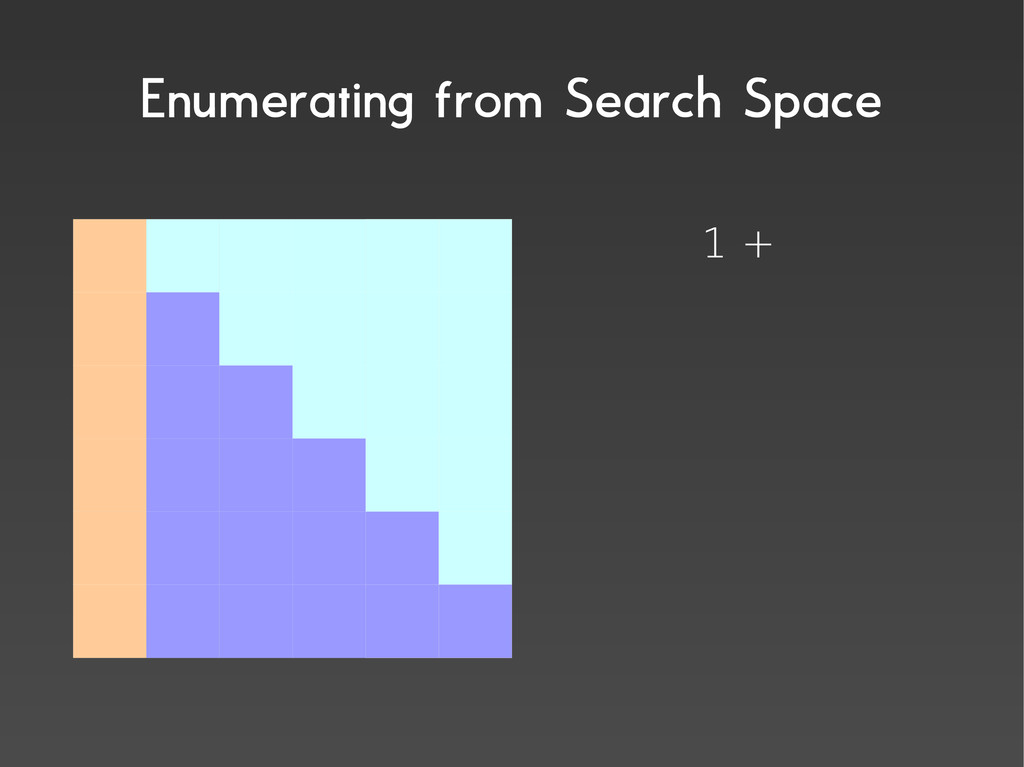
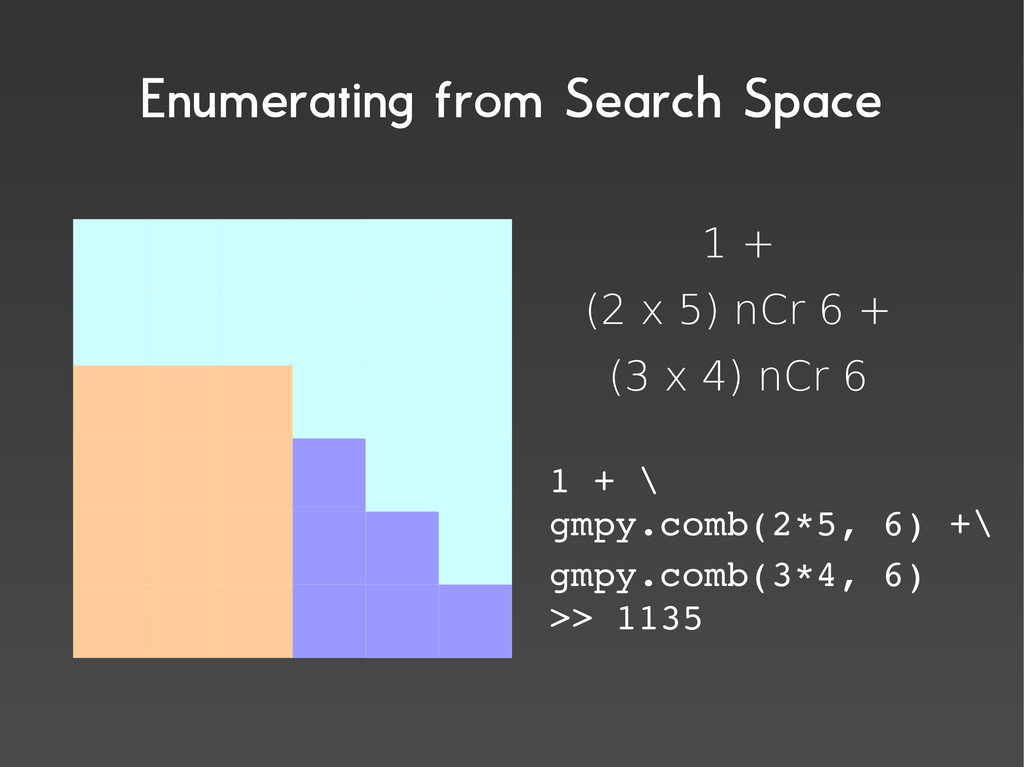
  4. Enumerating from Search Space 1 + (2 x 5) nCr

    6 + (3 x 4) nCr 6 1 + \ gmpy.comb(2*5, 6) +\ gmpy.comb(3*4, 6) >> 1135
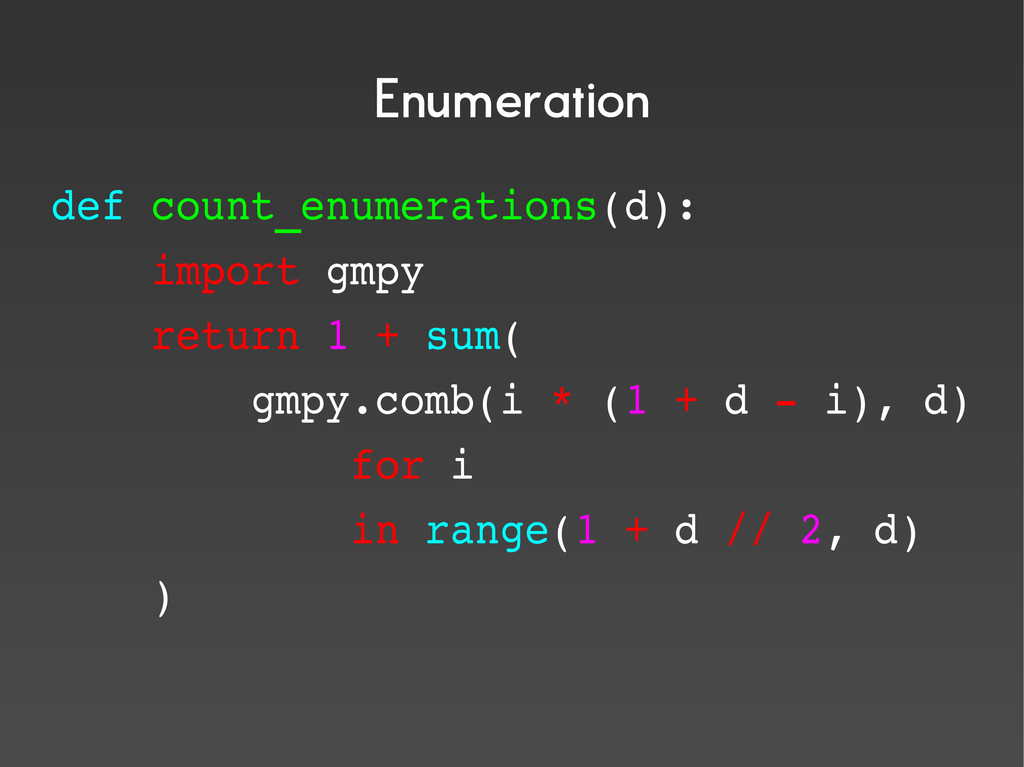
  5. Enumeration def count_enumerations(d): import gmpy return 1 + sum( gmpy.comb(i

    * (1 + d ­ i), d) for i in range(1 + d // 2, d) )
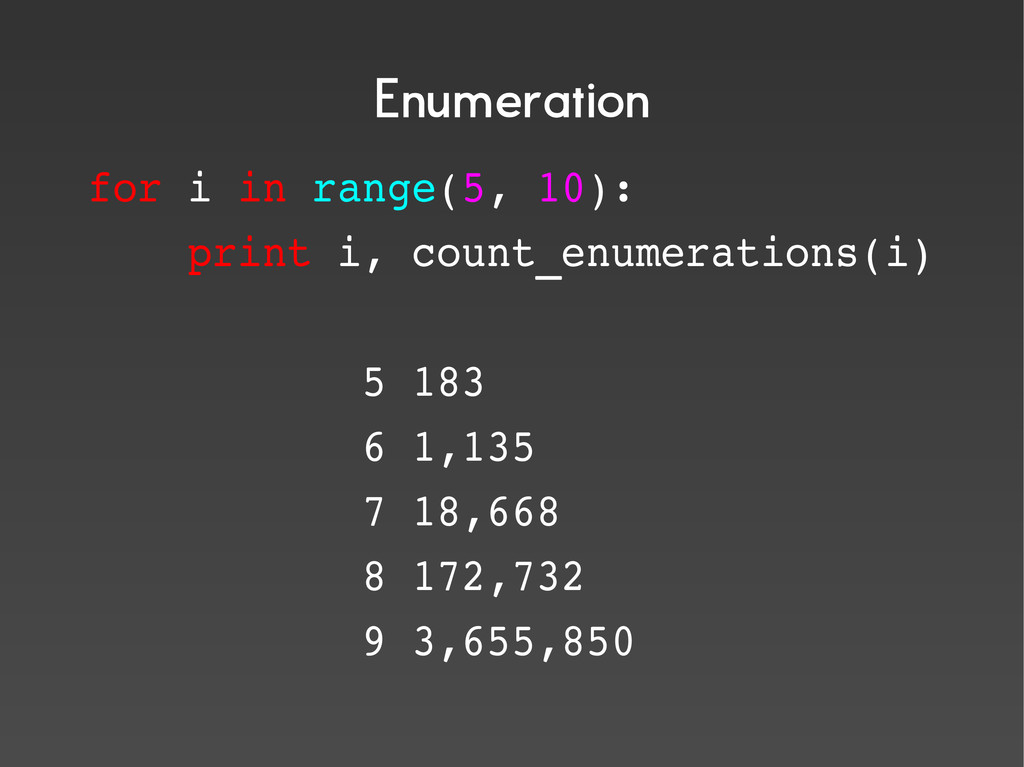
  6. Enumeration for i in range(5, 10): print i, count_enumerations(i) 5

    183 6 1,135 7 18,668 8 172,732 9 3,655,850
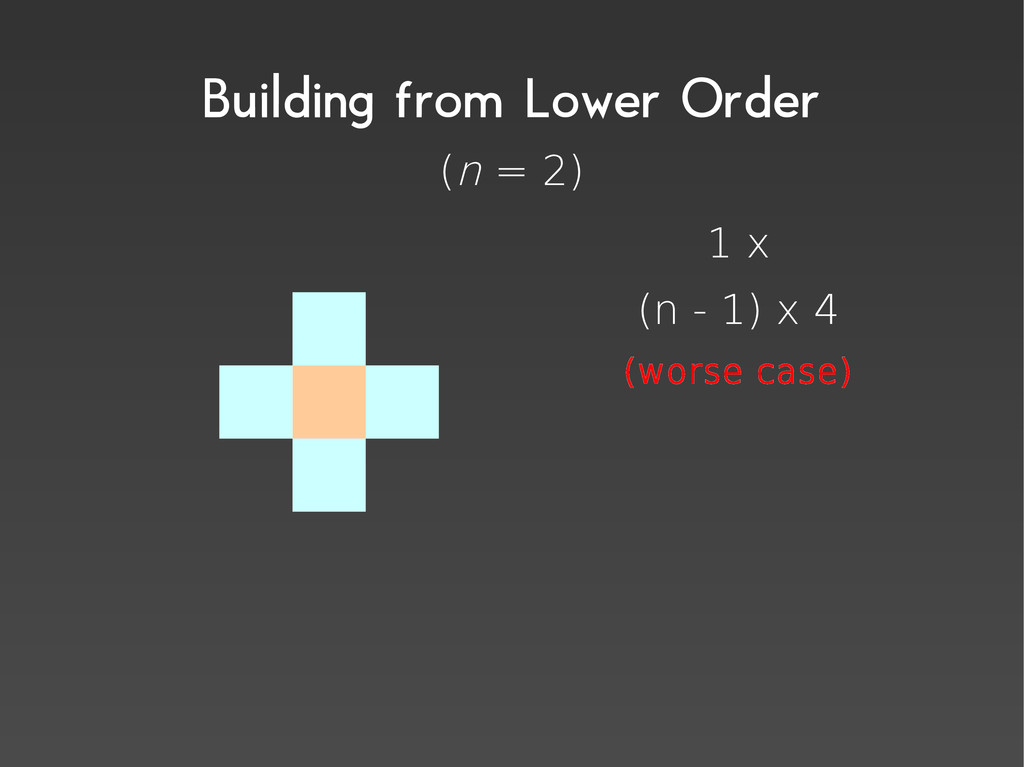
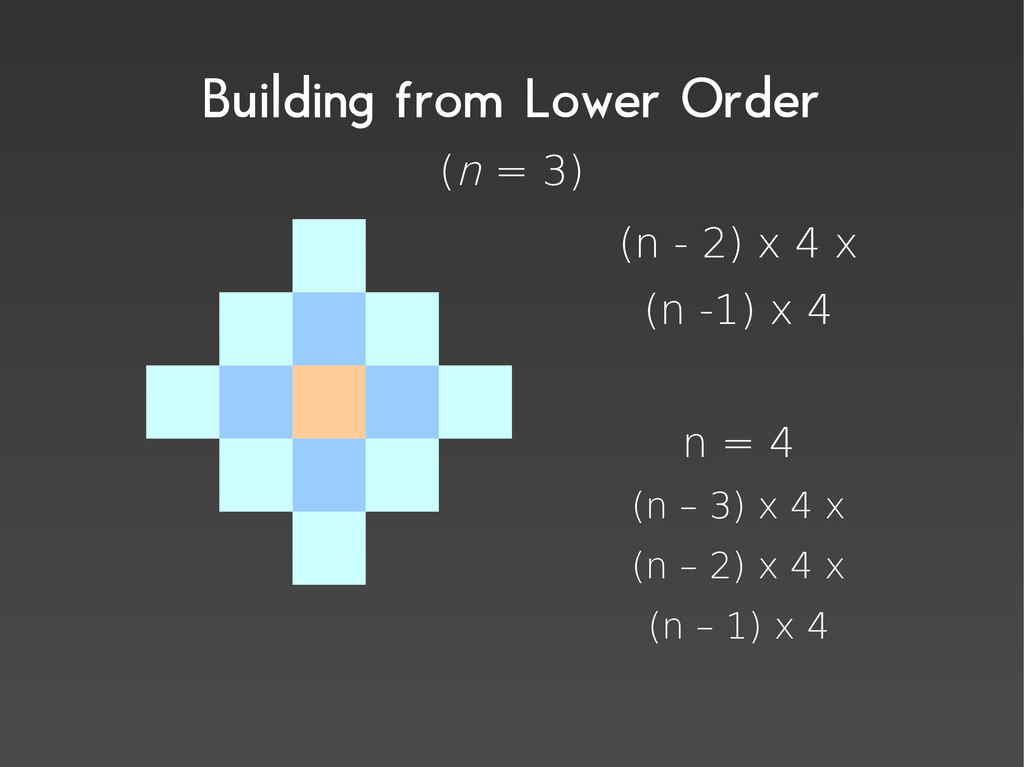
  7. Building from Lower Order (n = 3) (n - 2)

    x 4 x (n -1) x 4 n = 4 (n – 3) x 4 x (n – 2) x 4 x (n – 1) x 4
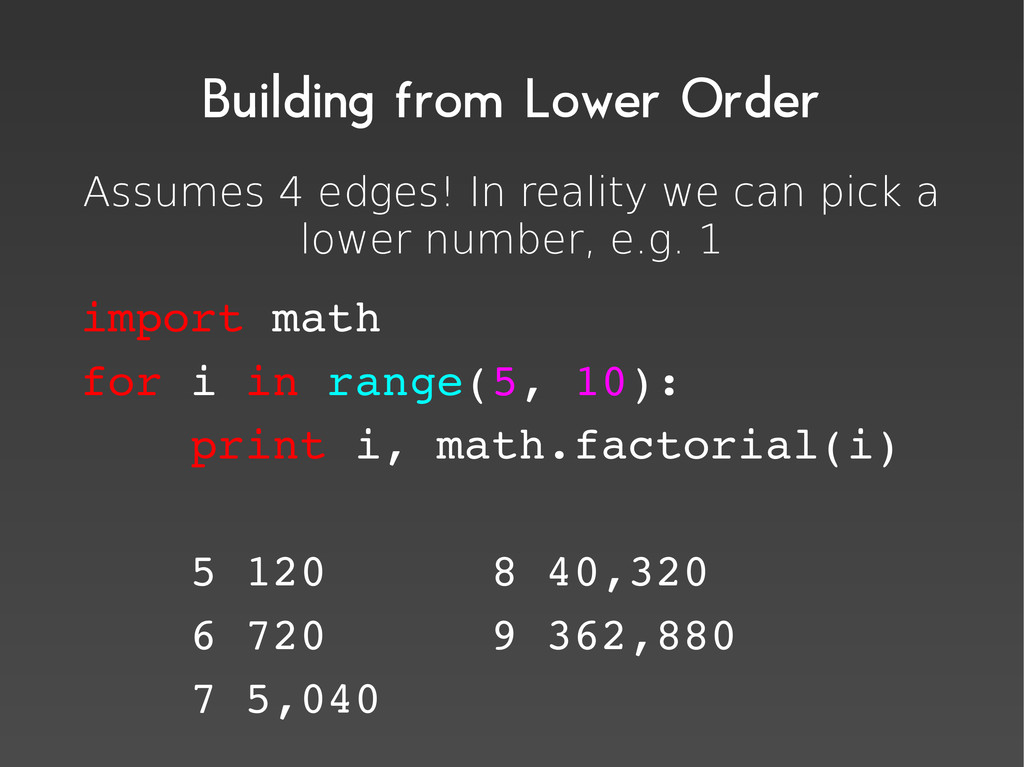
  8. Building from Lower Order Assumes 4 edges! In reality we

    can pick a lower number, e.g. 1 import math for i in range(5, 10): print i, math.factorial(i) 5 120 8 40,320 6 720 9 362,880 7 5,040
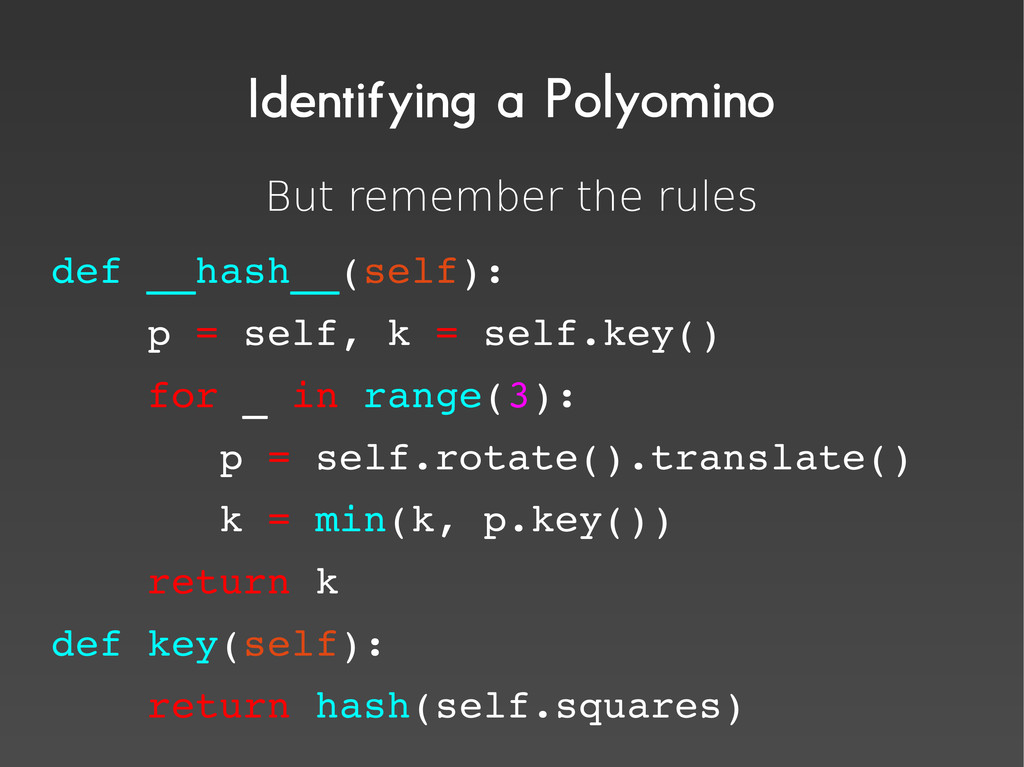
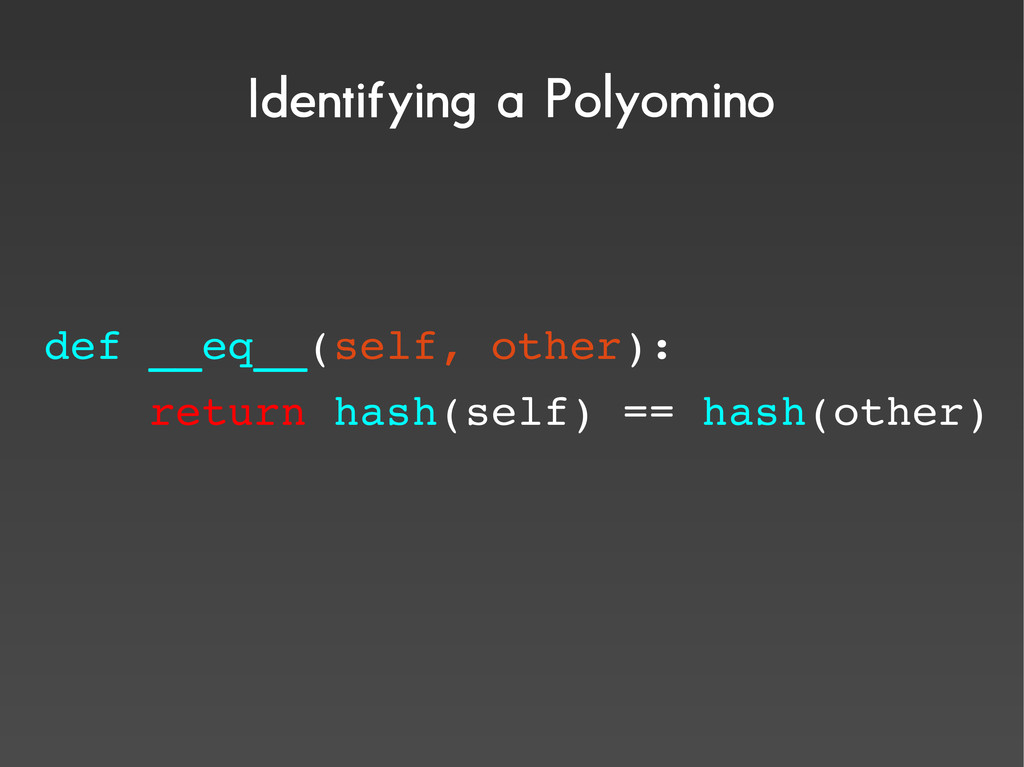
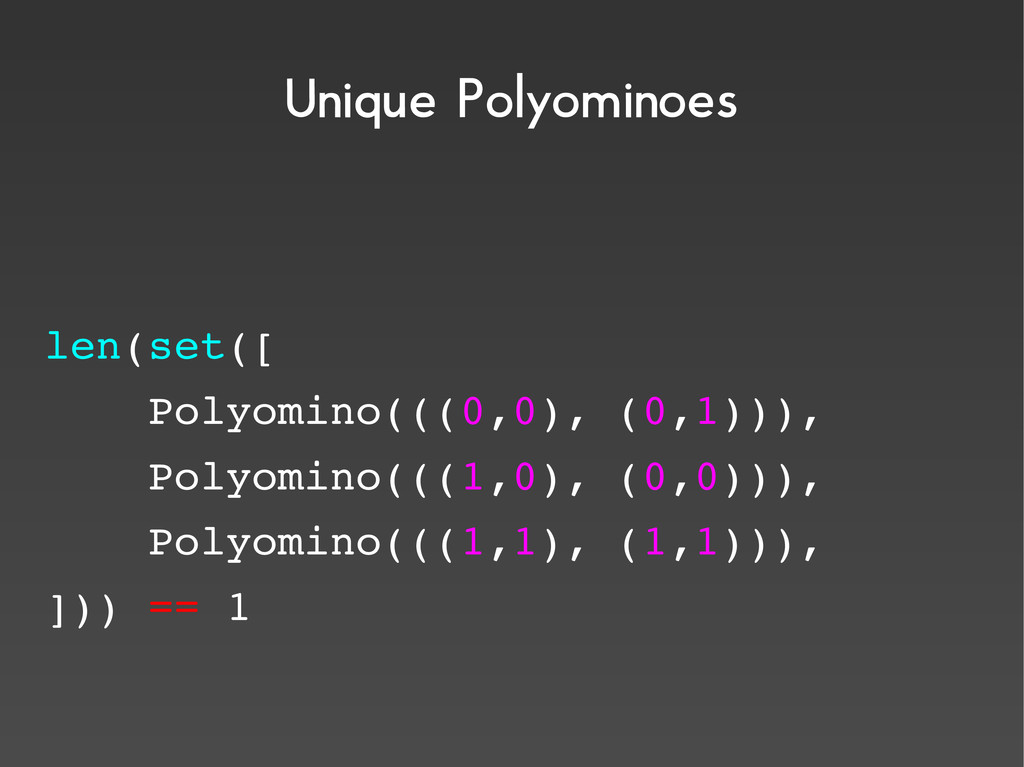
  9. Identifying a Polyomino But remember the rules def __hash__(self): p

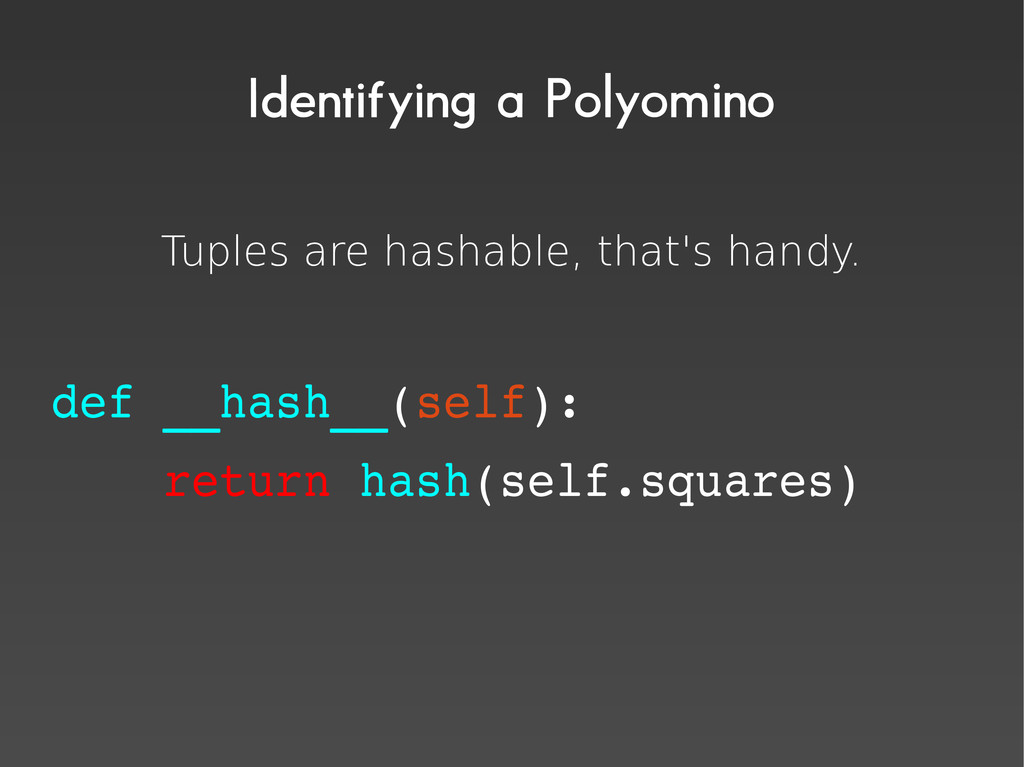
    = self, k = self.key() for _ in range(3): p = self.rotate().translate() k = min(k, p.key()) return k def key(self): return hash(self.squares)
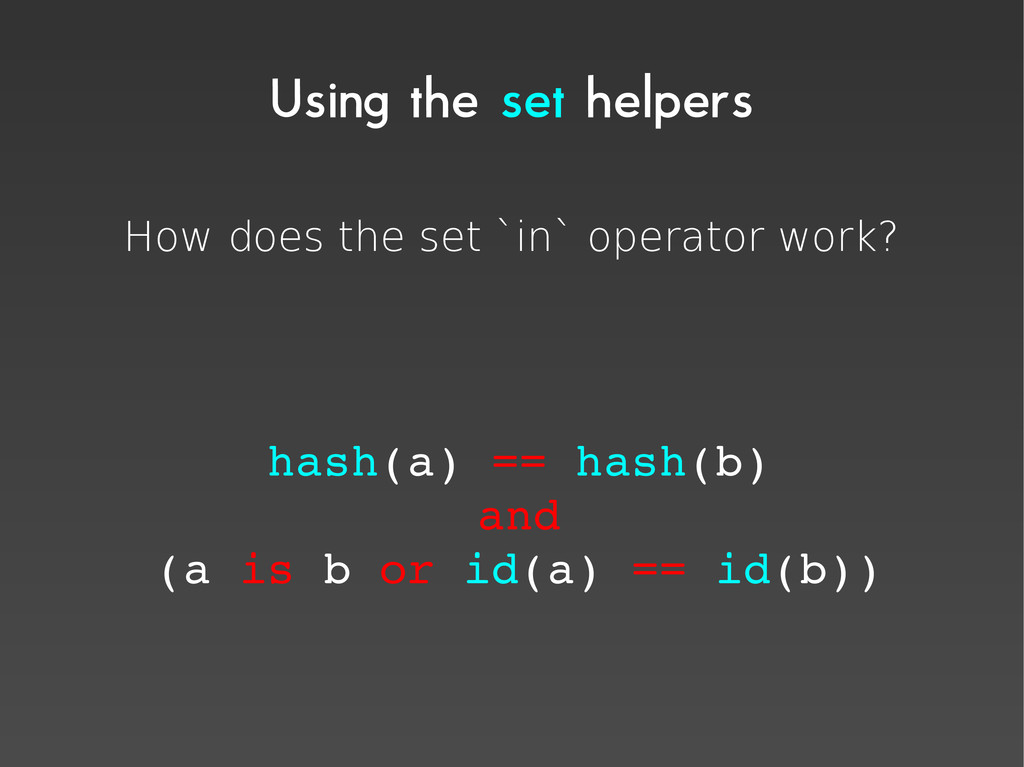
  10. Using the set helpers How does the set `in` operator

    work? hash(a) == hash(b) and (a is b or id(a) == id(b))