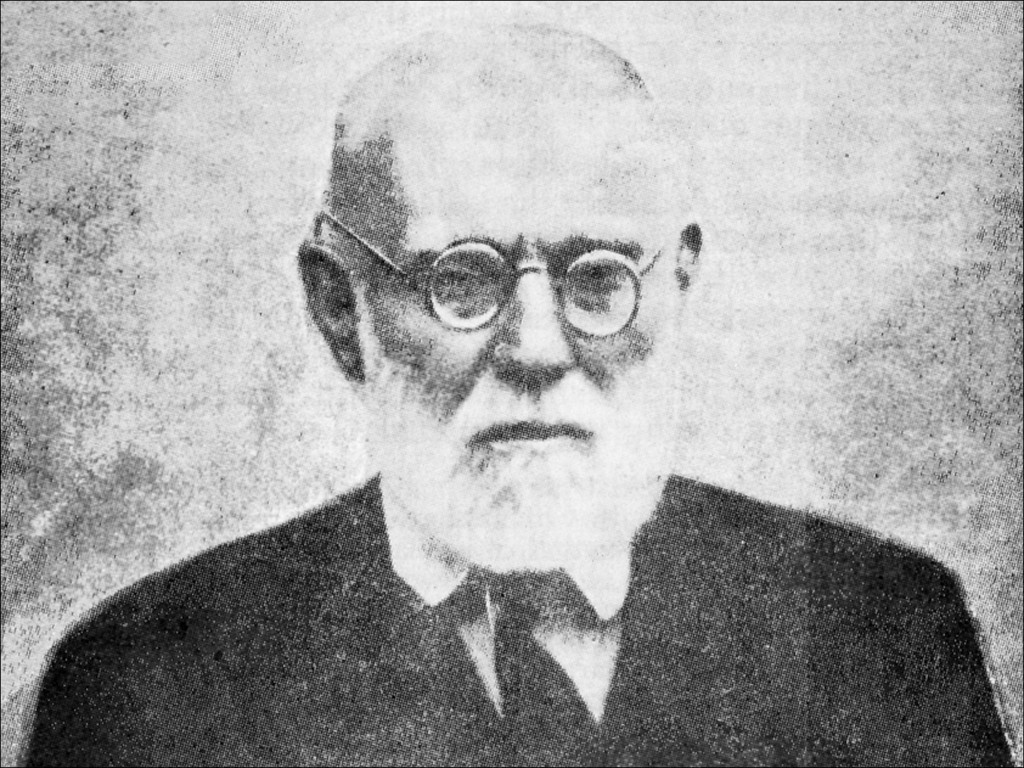
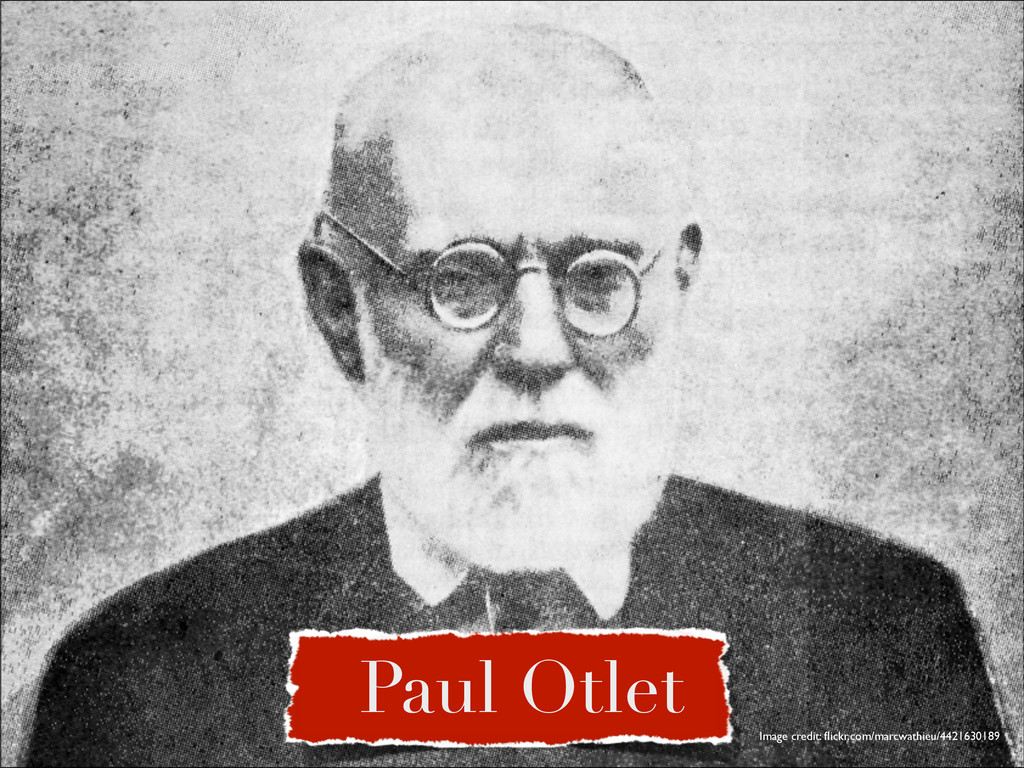
Pursue your dream--and never accept a proven solution! This is ... Paul Otlet
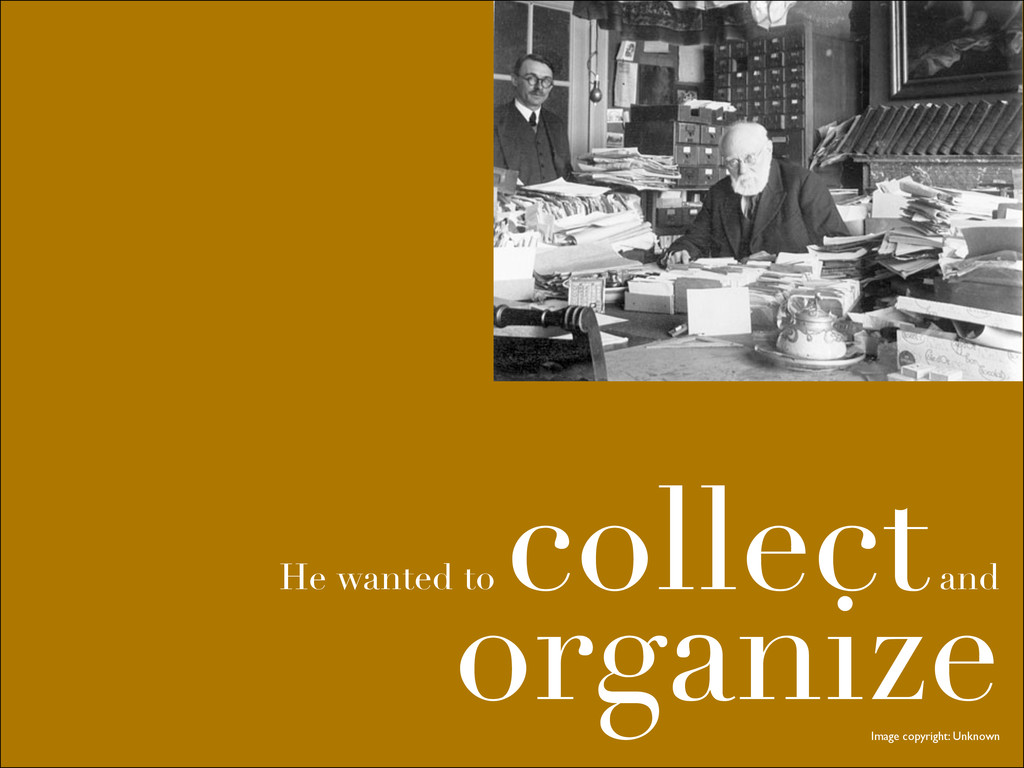
Paul Otlet—pronounced /ɒtˈleɪ/—is one of several people who has been considered the father of Information modern Science; a field he himself called ‘documentation.’
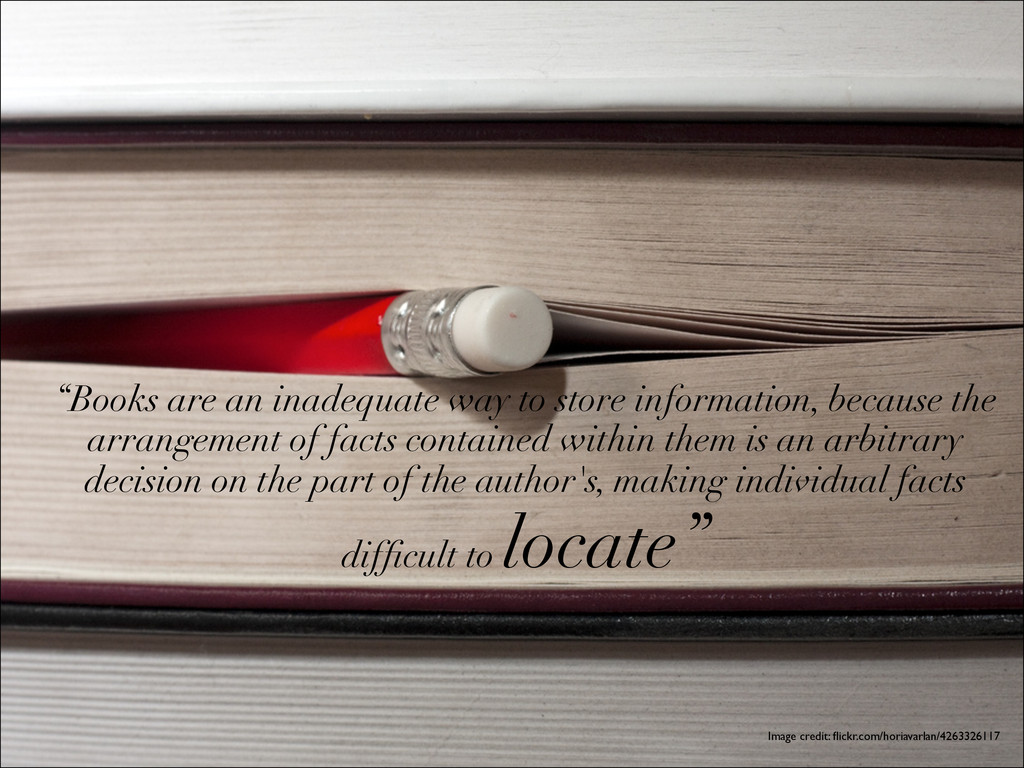
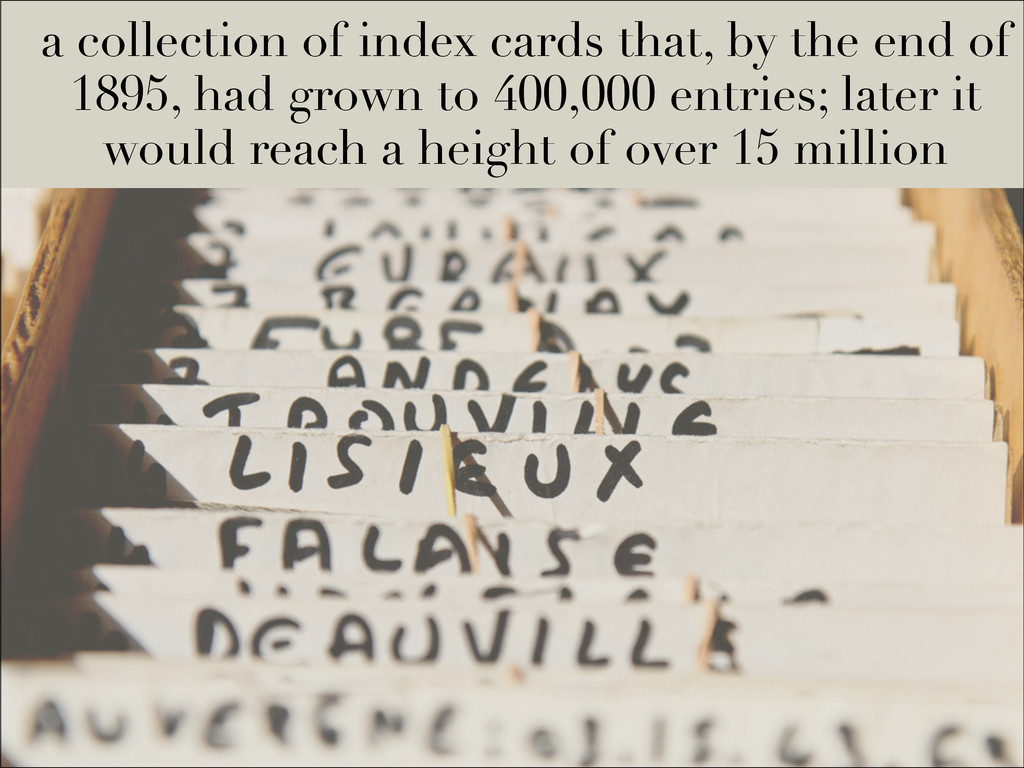
arrangement of facts contained within them is an arbitrary decision on the part of the author's, making individual facts difficult to locate” Image credit: flickr.com/horiavarlan/4263326117
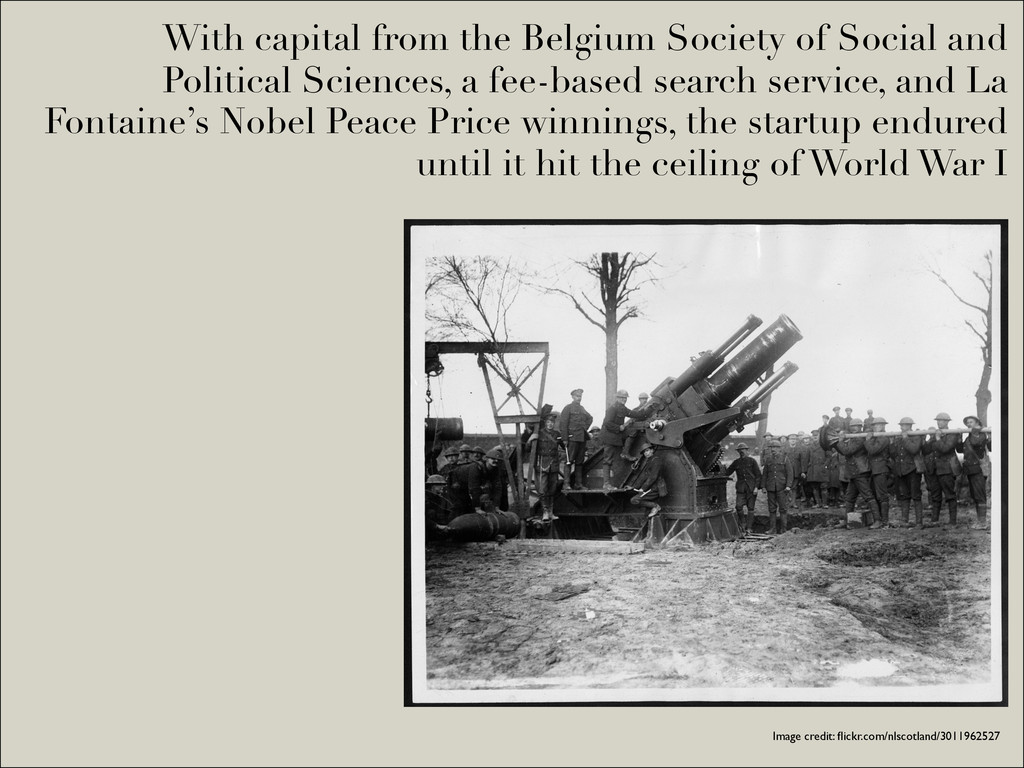
Sciences, a fee-based search service, and La Fontaine’s Nobel Peace Price winnings, the startup endured until it hit the ceiling of World War I Image credit: flickr.com/nlscotland/3011962527
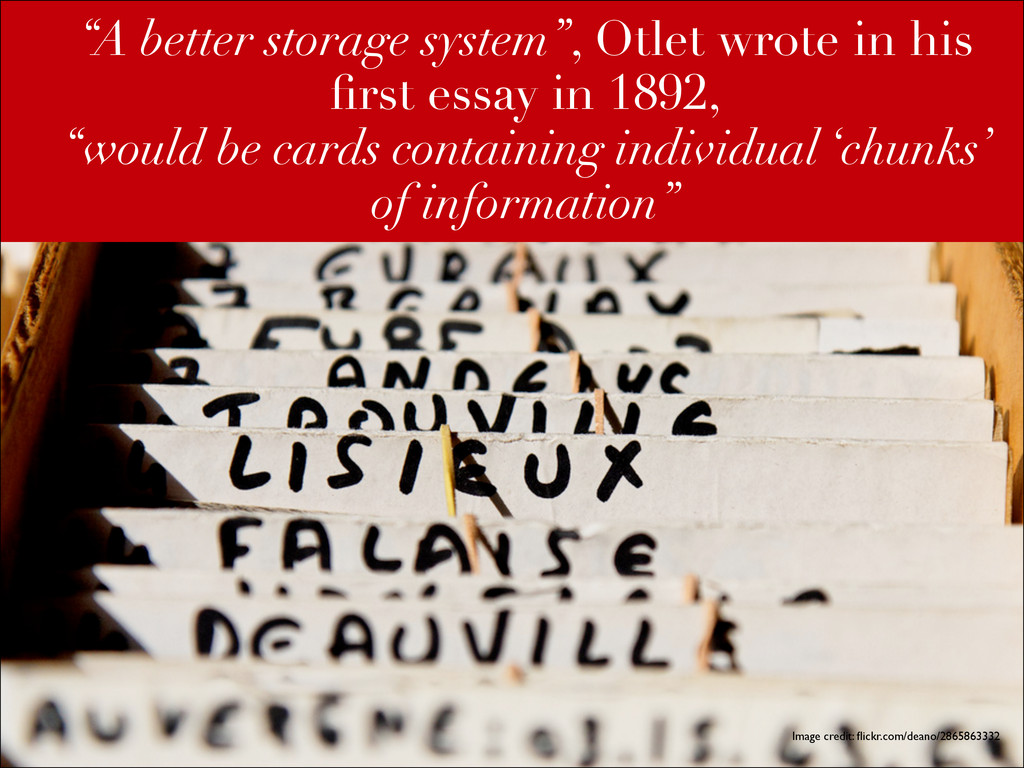
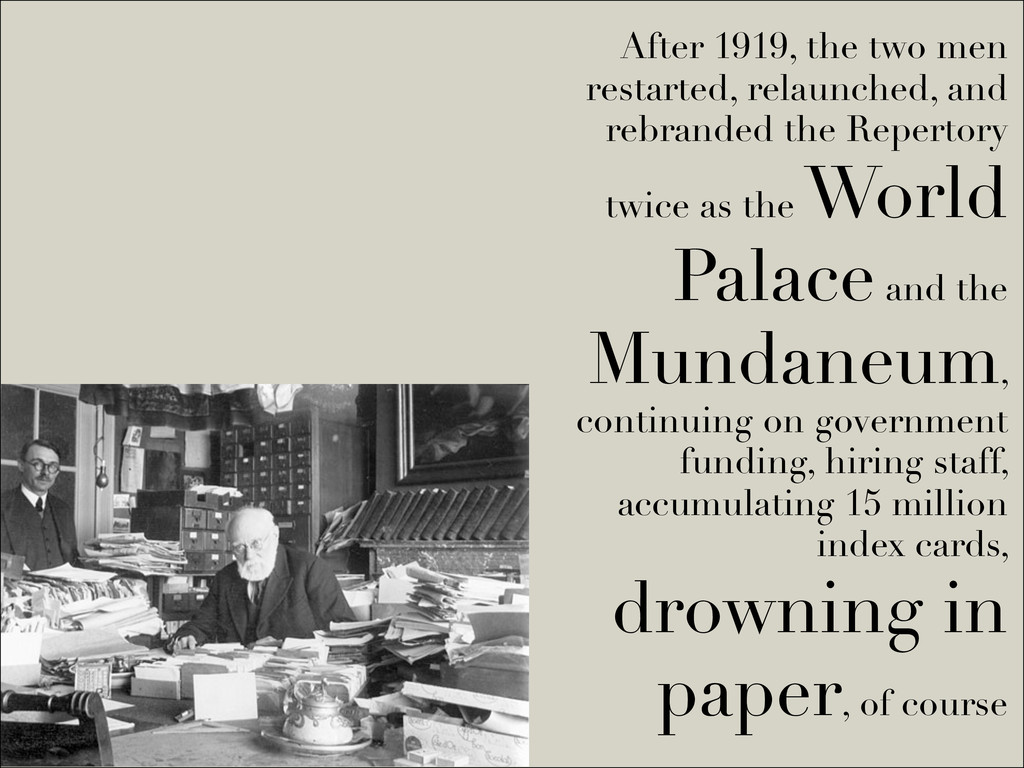
Repertory twice as the World Palace and the Mundaneum, continuing on government funding, hiring staff, accumulating 15 million index cards, drowning in paper, of course


 teamlab
 syuchimu
 occhi
occhi
 masakiokuda
 daidaidai
 prog893
 onk
onk
 y0hgi
y0hgi
 sh_fk2
 tomokusaba
 satomasahiro2005
 takahashim
 carmenintech
 akosma
 rmw
rmw
 reverentgeek
 coloredviolet
 jnunemaker
 tammyeverts
 pwiseman
 nikkihalliwell
 62gerente
 destraynor
 aleyda