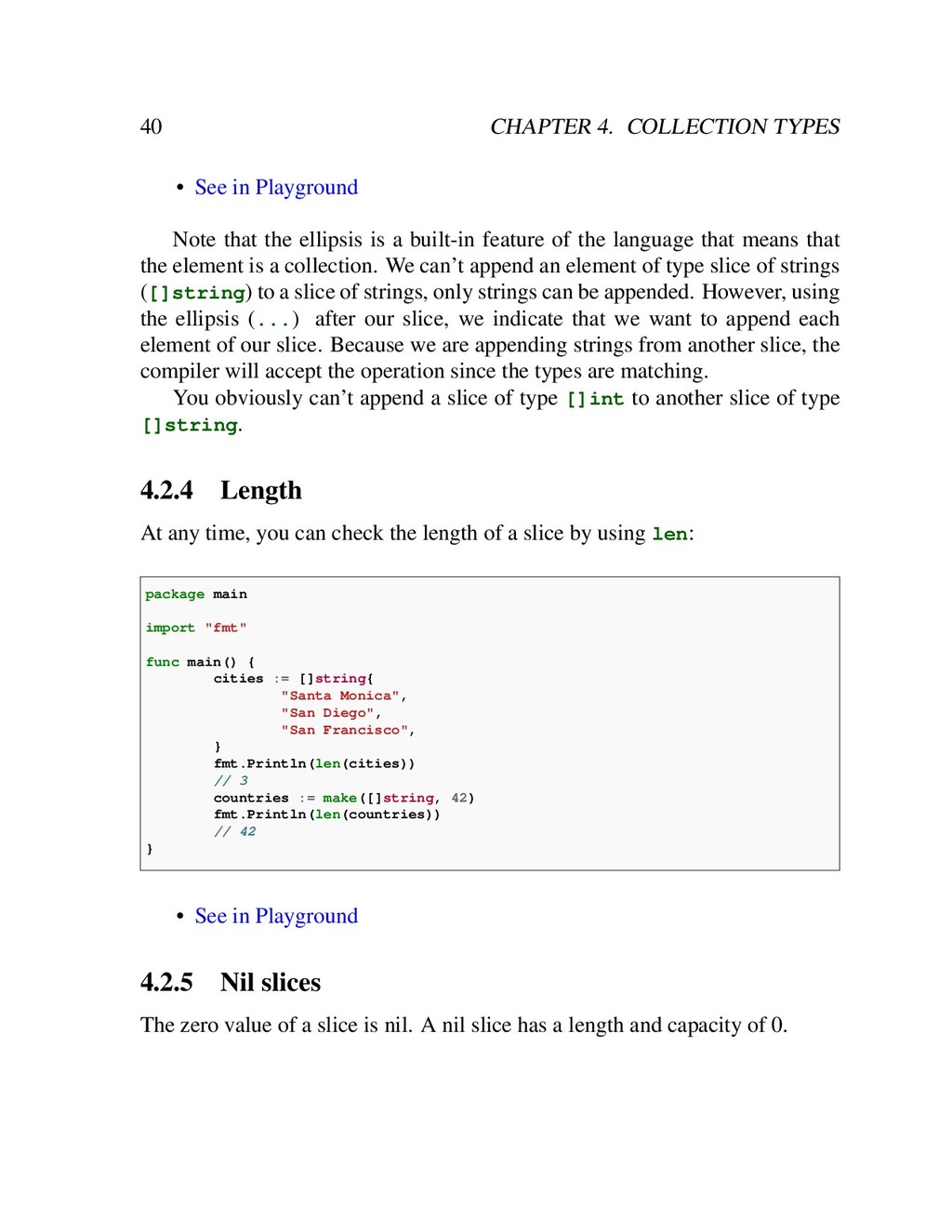
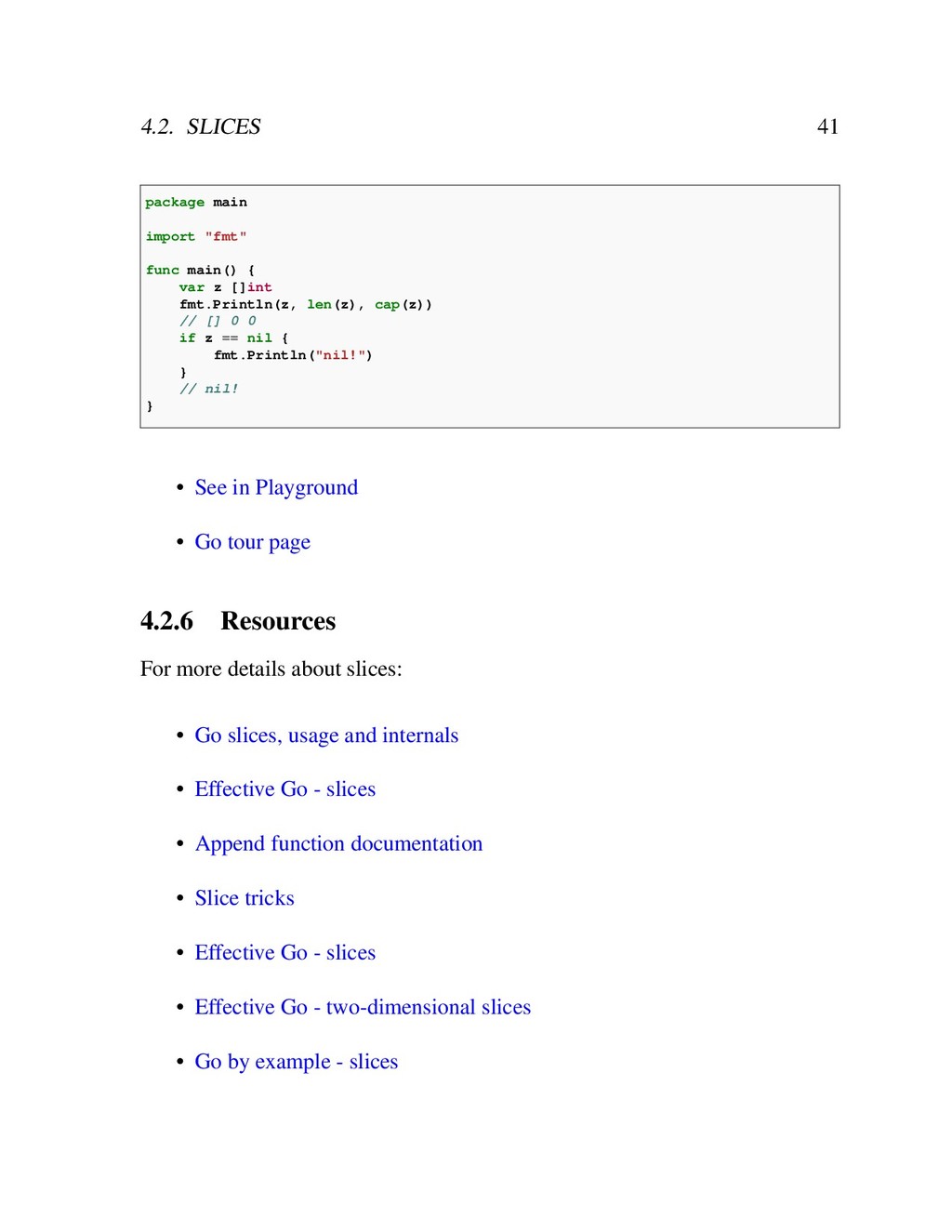
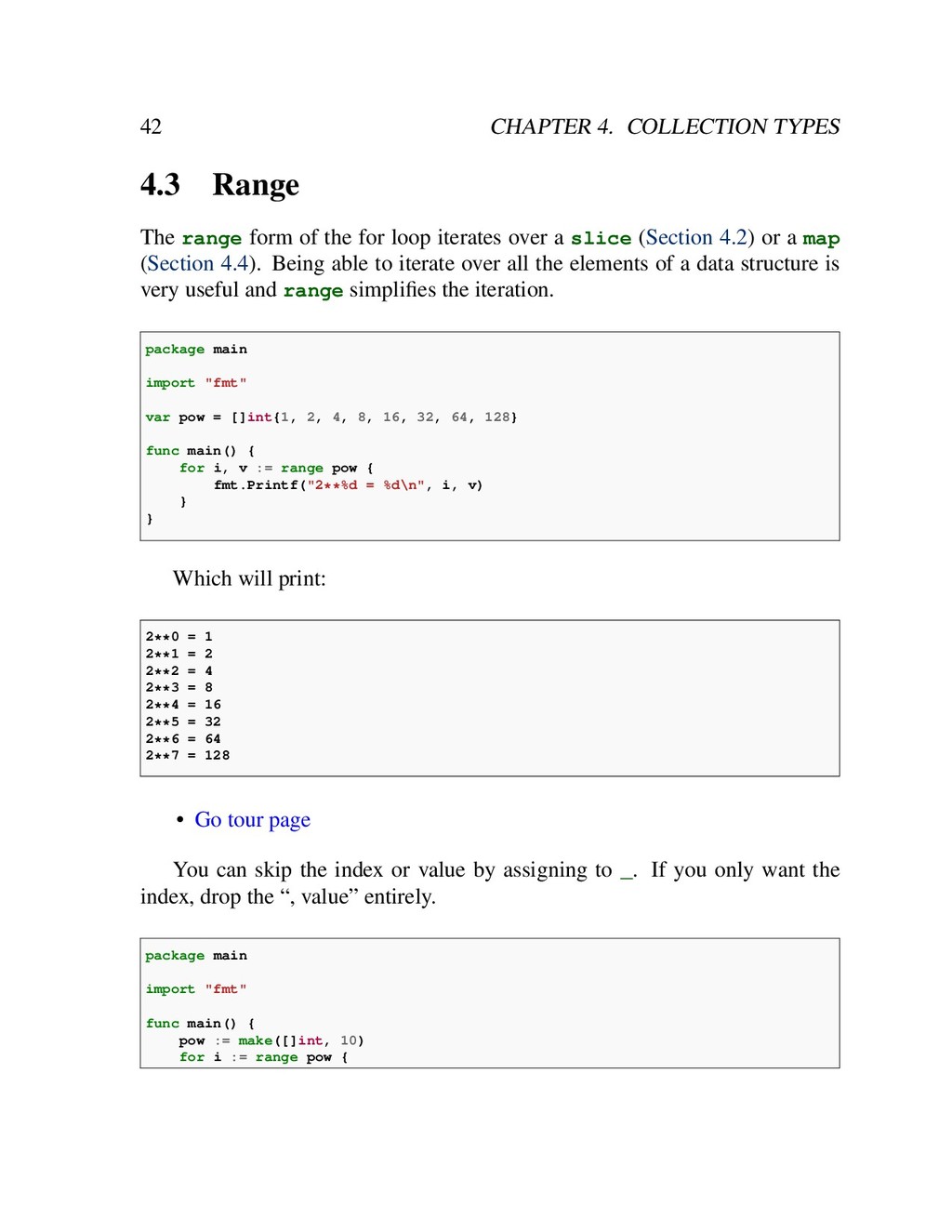
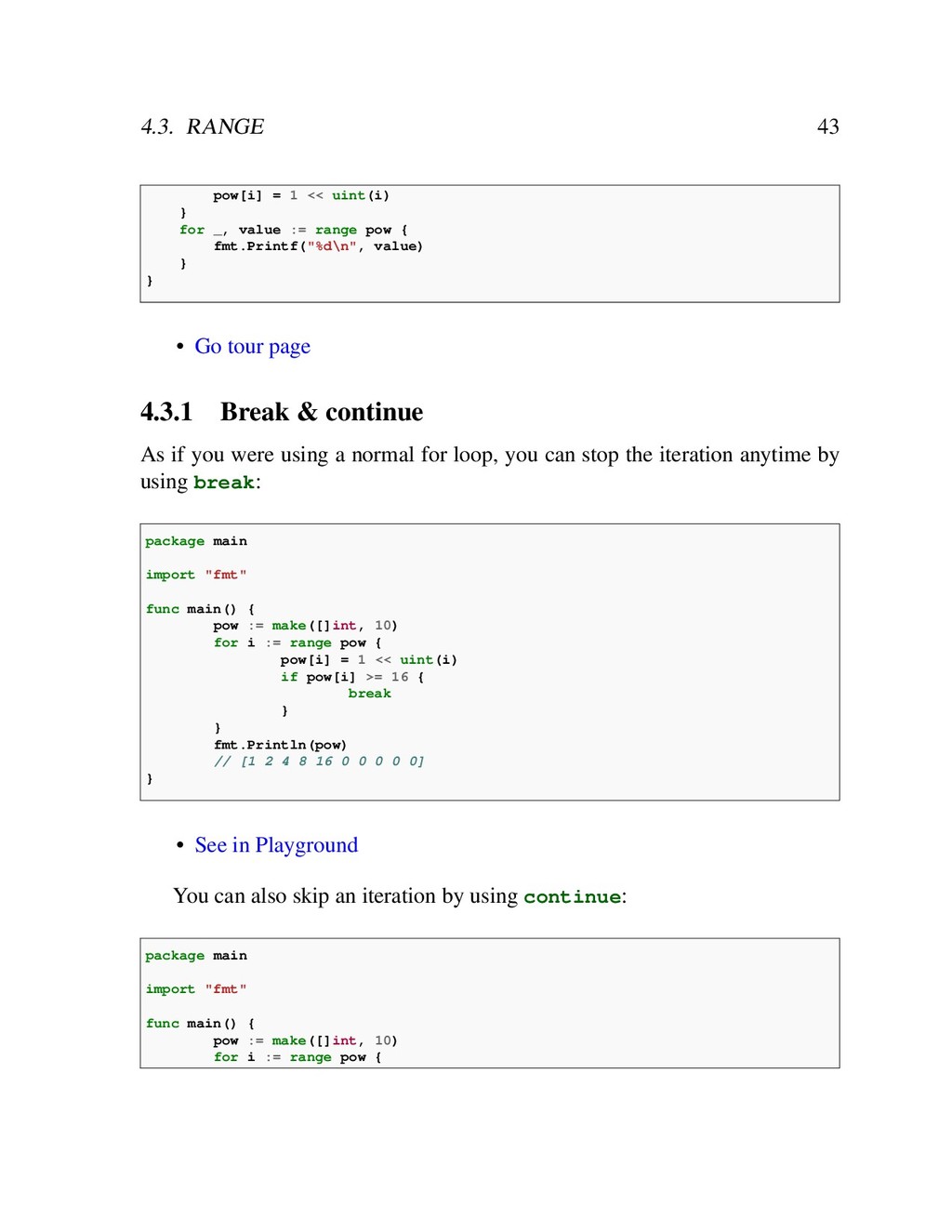
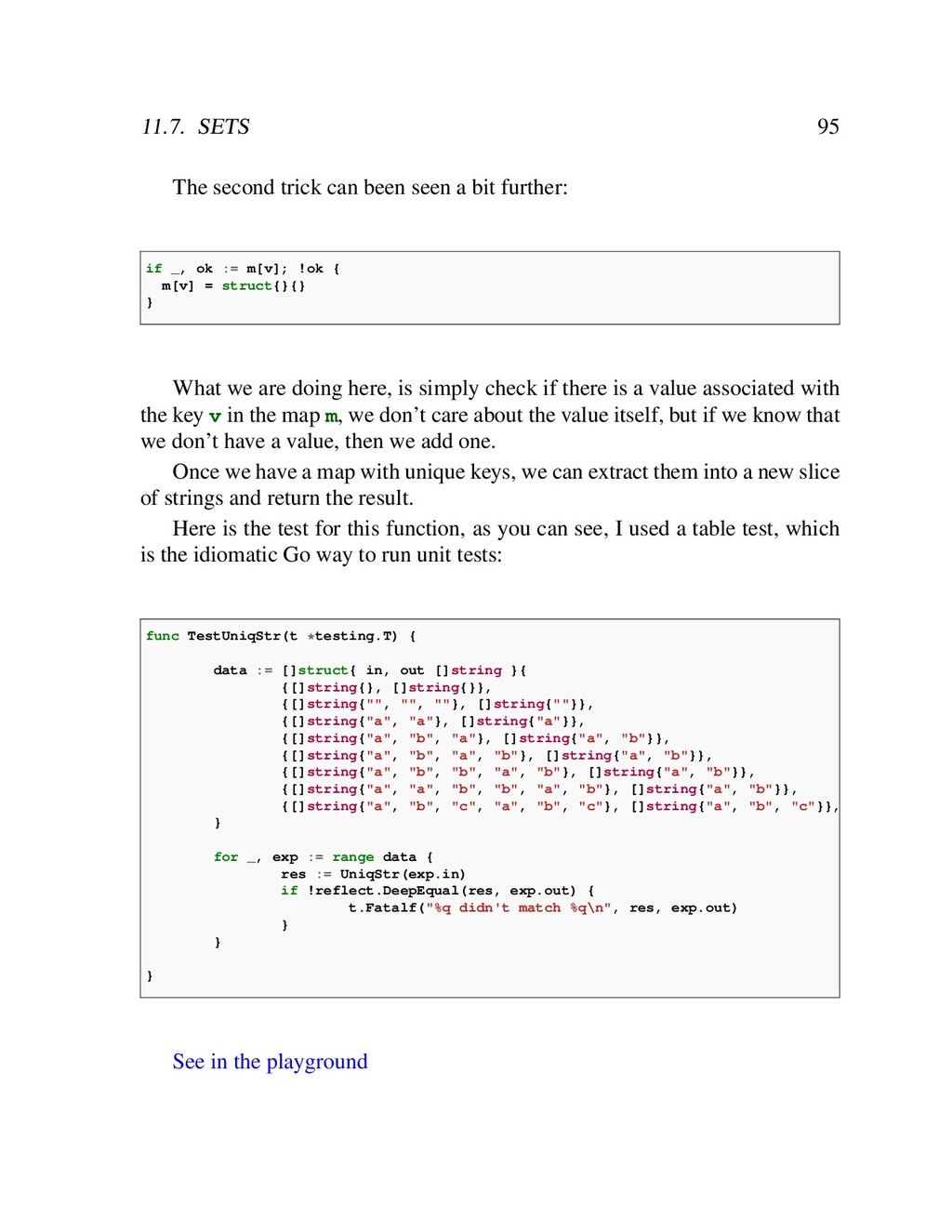
bit further: if _, ok := m[v]; !ok { m[v] = struct{}{} } What we are doing here, is simply check if there is a value associated with the key v in the map m, we don’t care about the value itself, but if we know that we don’t have a value, then we add one. Once we have a map with unique keys, we can extract them into a new slice of strings and return the result. Here is the test for this function, as you can see, I used a table test, which is the idiomatic Go way to run unit tests: func TestUniqStr(t *testing.T) { data := []struct{ in, out []string }{ {[]string{}, []string{}}, {[]string{"", "", ""}, []string{""}}, {[]string{"a", "a"}, []string{"a"}}, {[]string{"a", "b", "a"}, []string{"a", "b"}}, {[]string{"a", "b", "a", "b"}, []string{"a", "b"}}, {[]string{"a", "b", "b", "a", "b"}, []string{"a", "b"}}, {[]string{"a", "a", "b", "b", "a", "b"}, []string{"a", "b"}}, {[]string{"a", "b", "c", "a", "b", "c"}, []string{"a", "b", "c"}}, } for _, exp := range data { res := UniqStr(exp.in) if !reflect.DeepEqual(res, exp.out) { t.Fatalf("%q didn't match %q\n", res, exp.out) } } } See in the playground


 sorah
 lef237
 suneo3476
 gonta
 sylph01
 marcoroth
 kmars0605
 yasaichi
 n_takehata
 iwiwi
 tomokon
 tmikov2023
 maggiecrowley
 addyosmani
 smashingmag
 jct
 rasagy
 rocio
 axbom
 aleyda
 kastner
 sabderemane
 panda_program
 auna