Share
Embed
Rhadamanthys and the 40 thieves - the nuts, bolts, and lineage of a multimodular stealer
Presented at Insomni'Hack: https://www.insomnihack.ch/talks-2024/#KCNGHJ
hasherezade
April 26, 2024
Transcript
85 slides
-
Rhadamanthys & the 40 thieves The nuts, bolts and lineage
of the multimodular stealer -
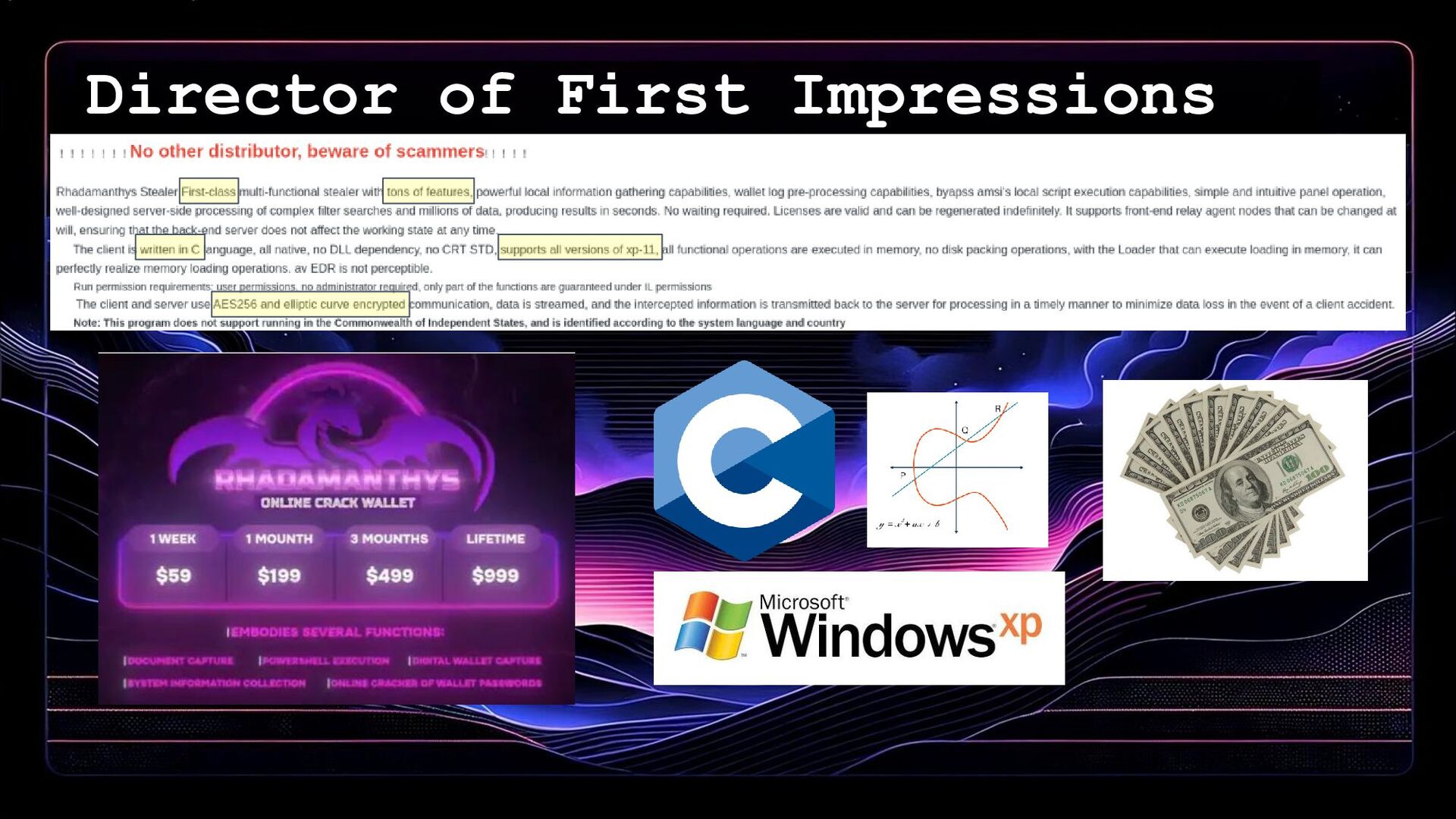
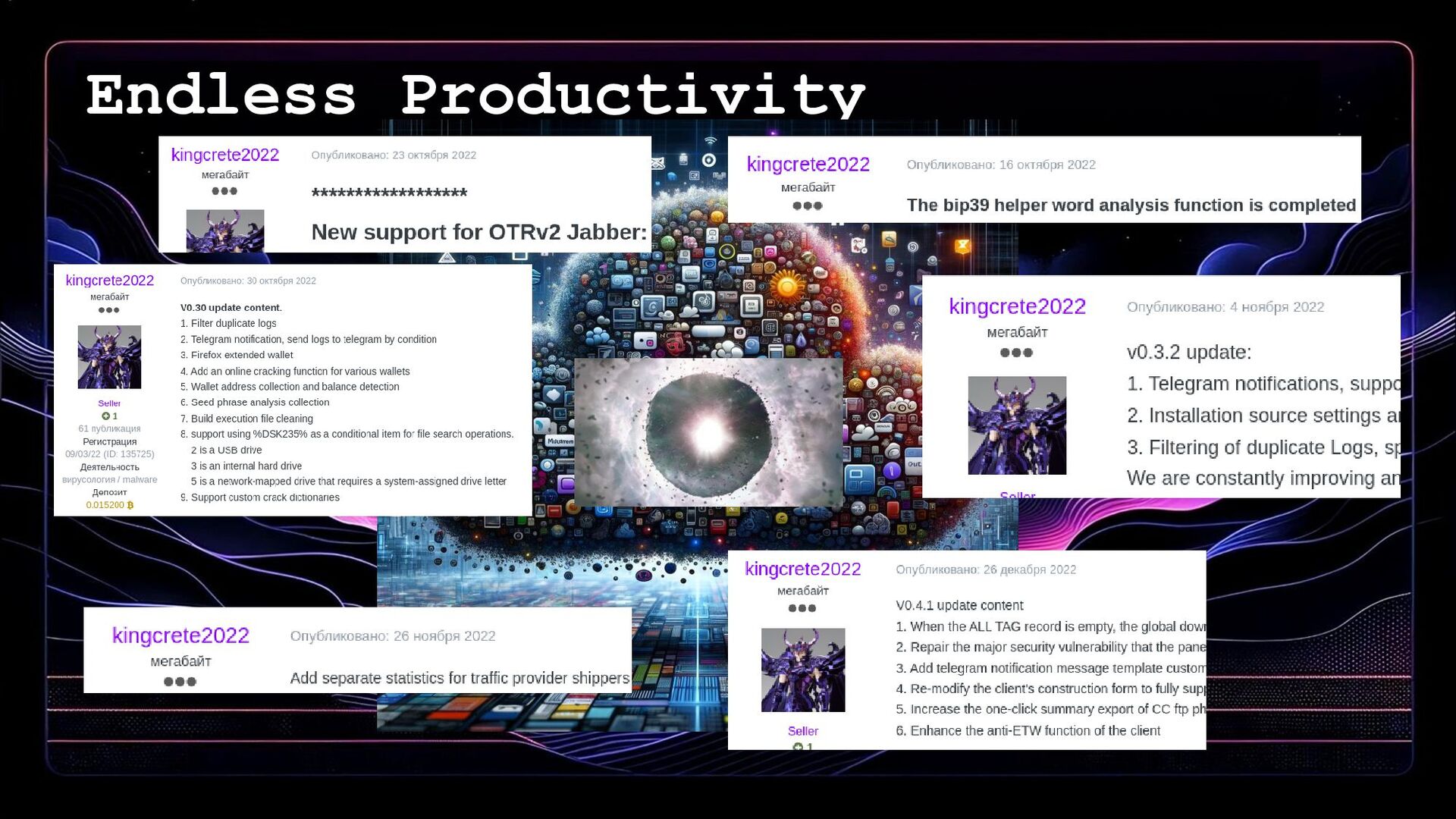
What’s this talk about • Rhadamanthys stealer • a complex
malware that appeared in 2022 • containing a large set of modules • interesting internal design -
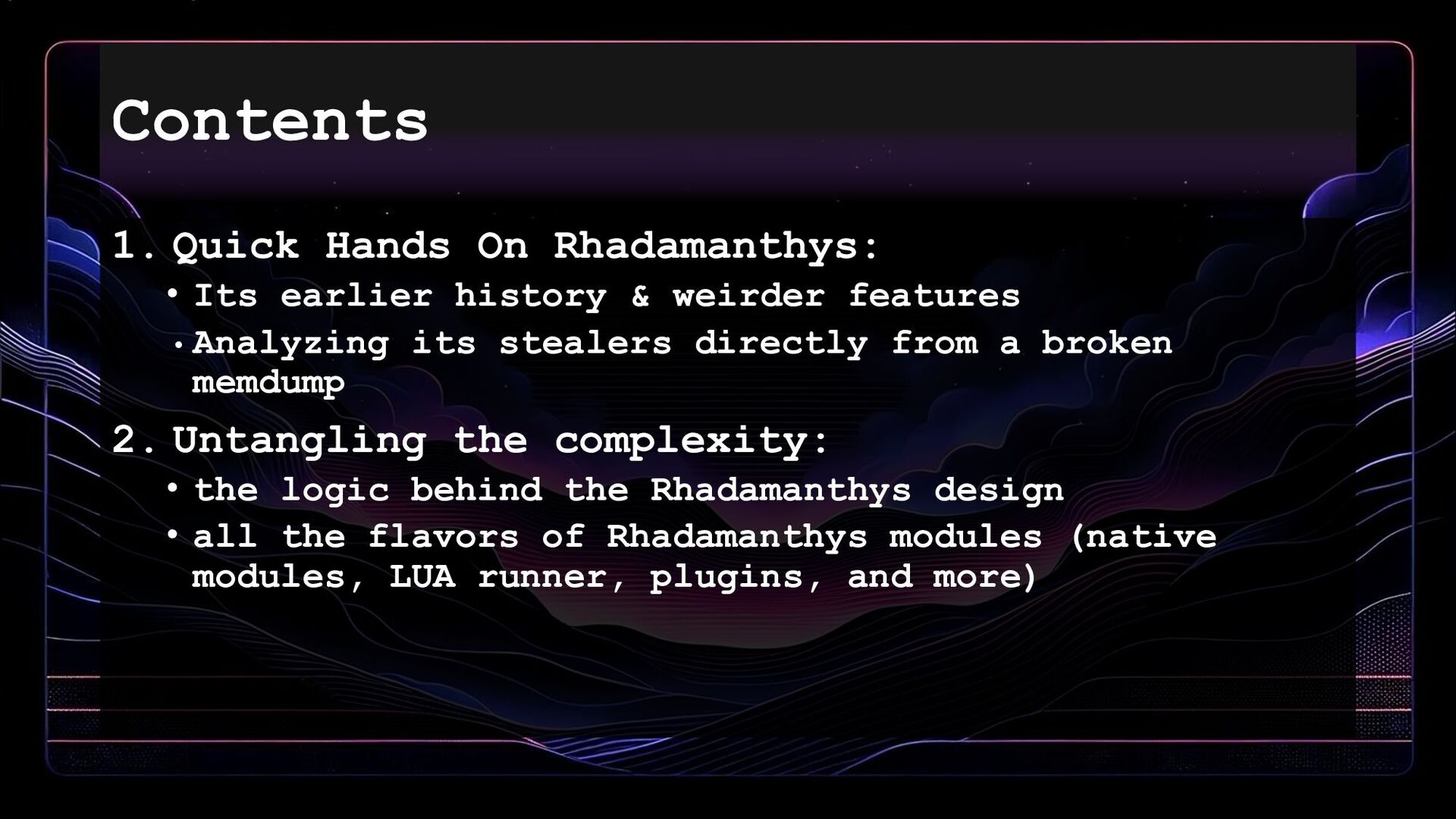
Contents 1. Quick Hands On Rhadamanthys: • Its earlier history
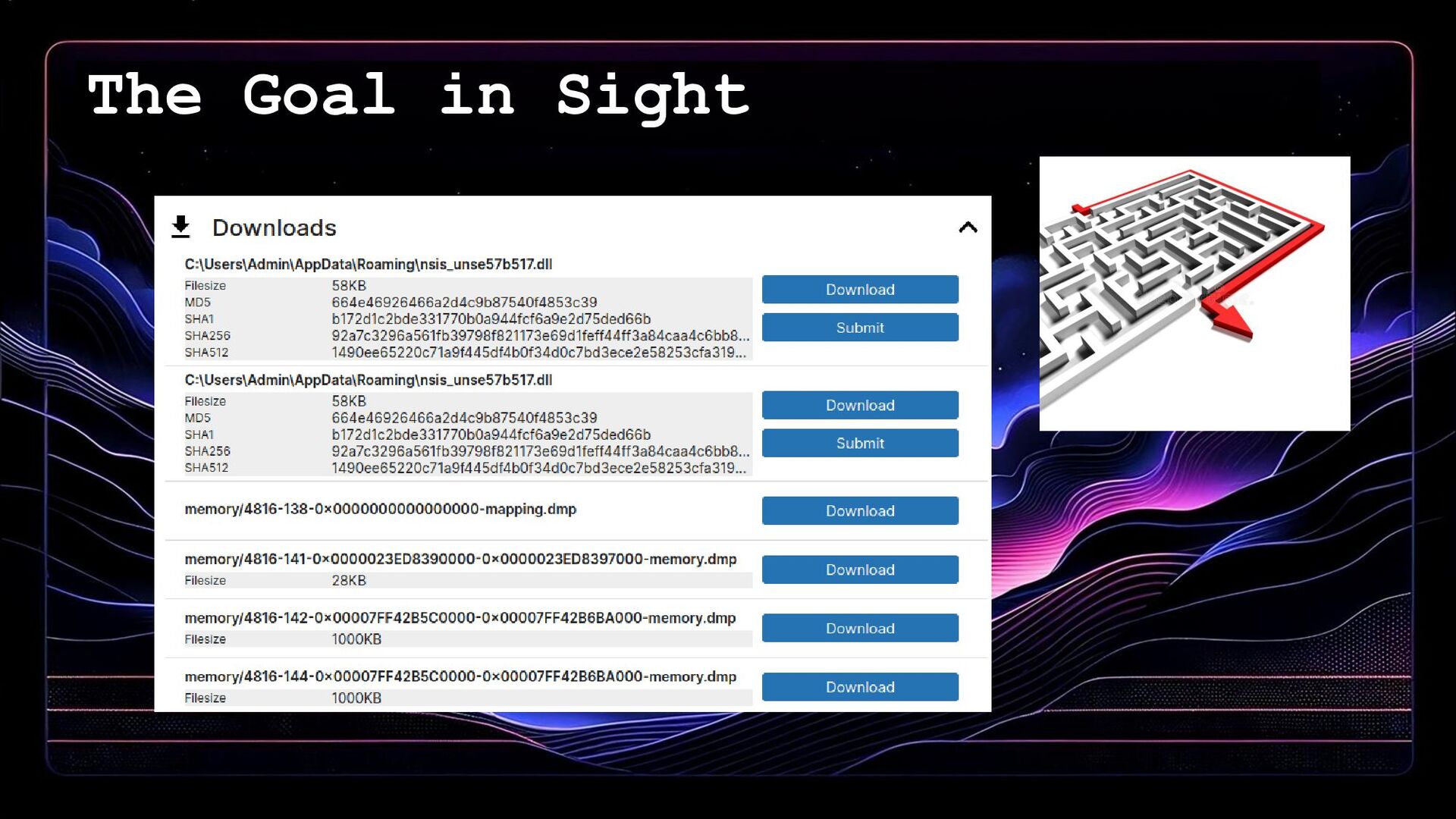
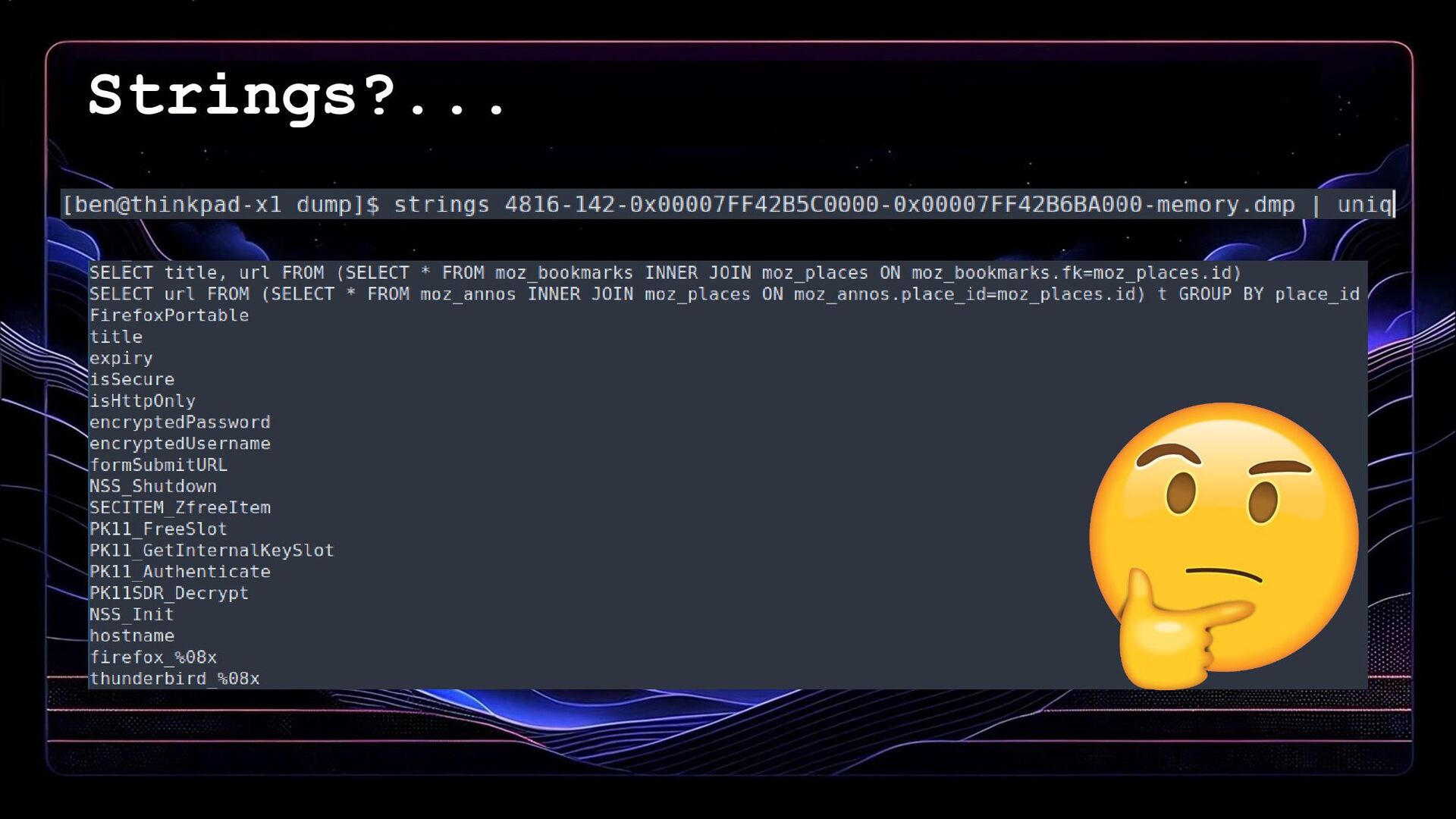
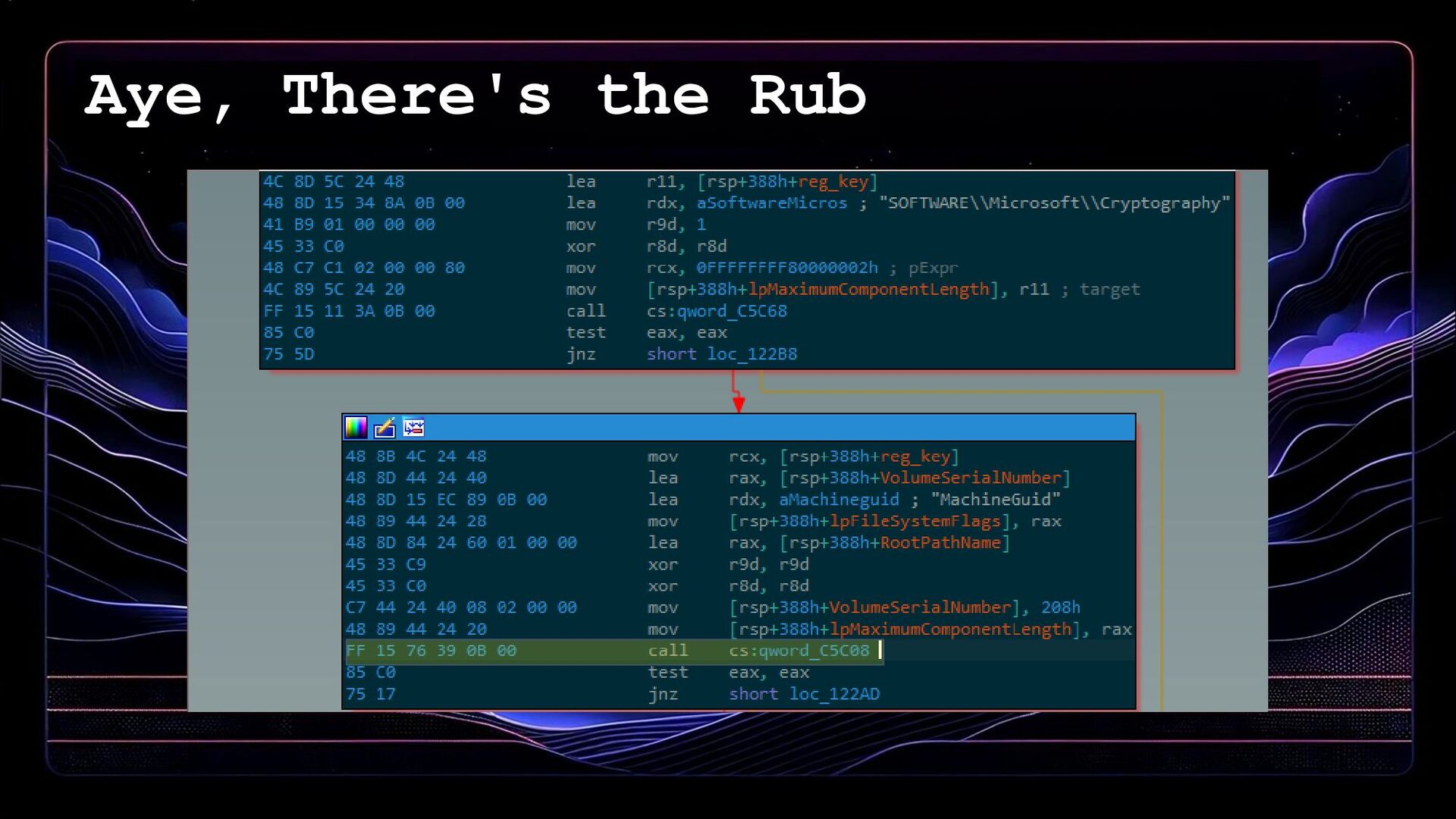
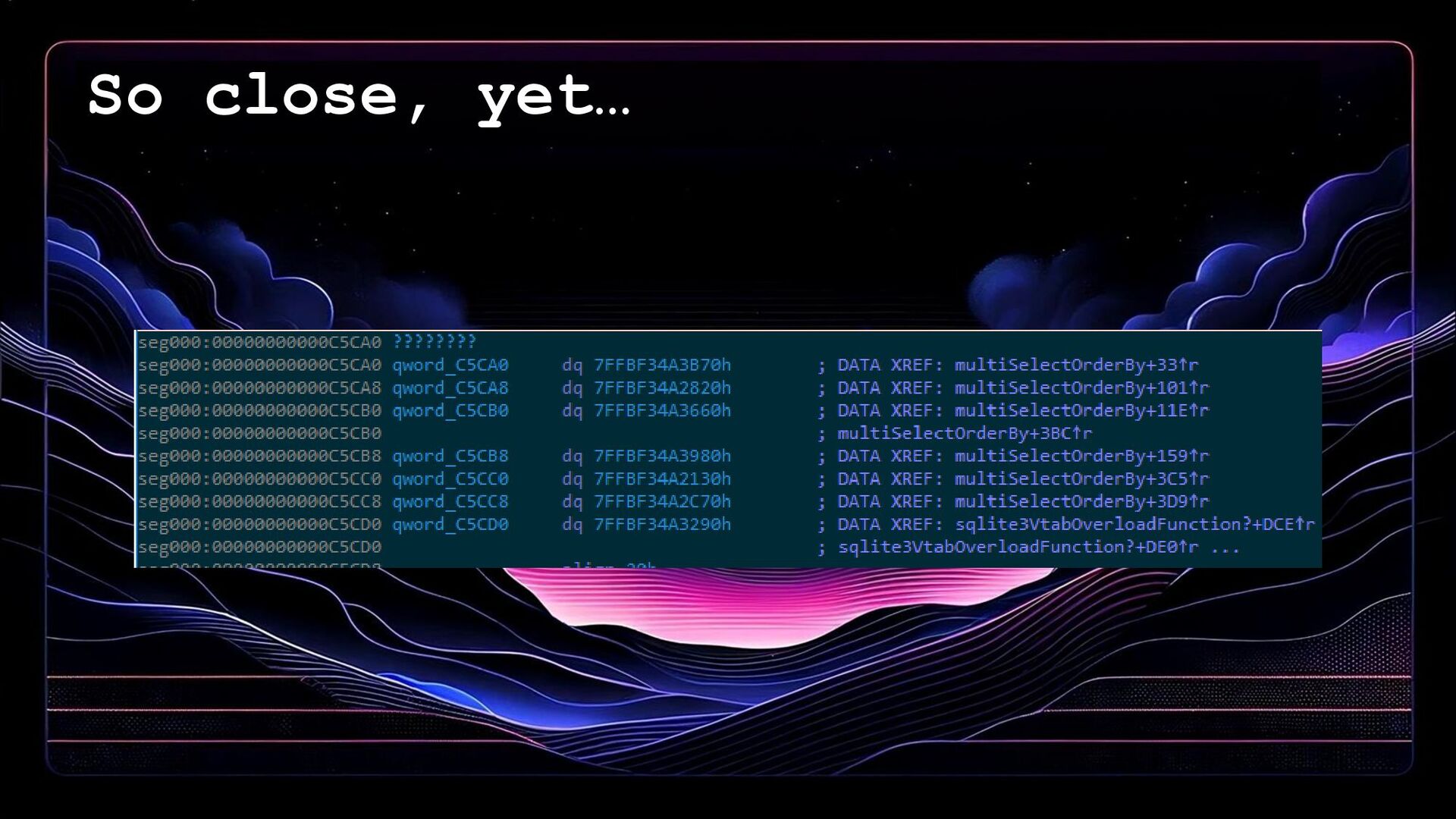
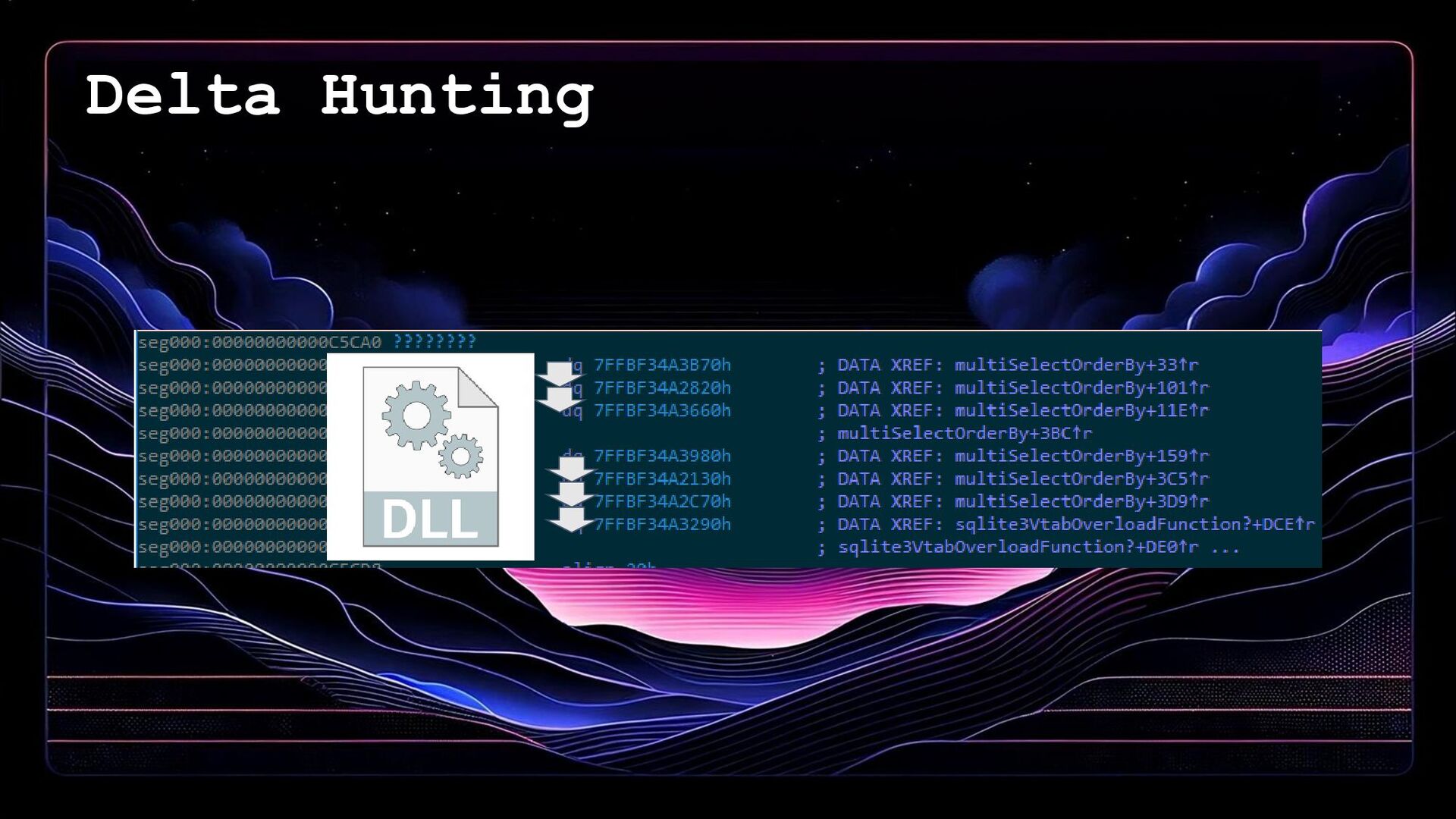
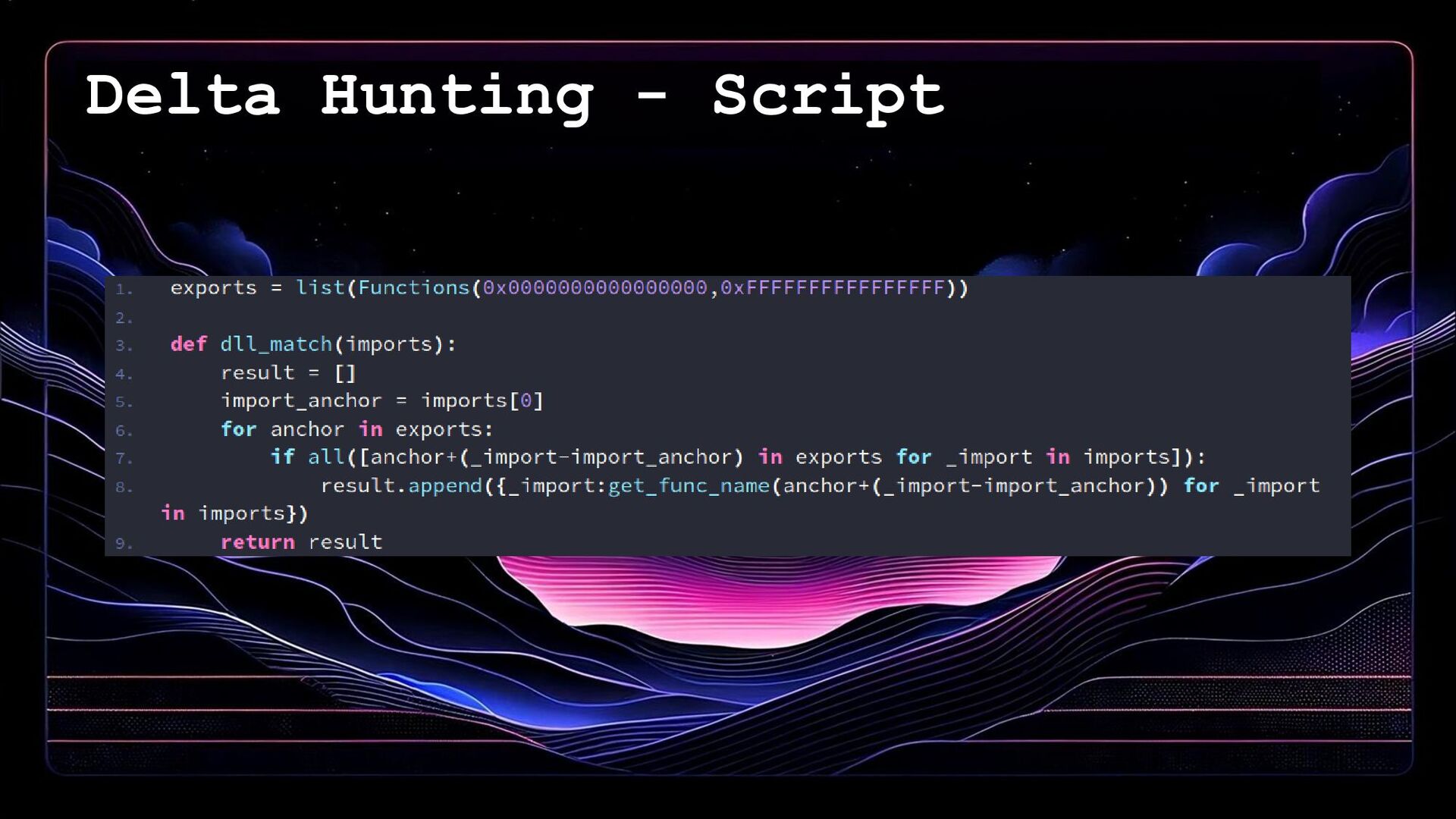
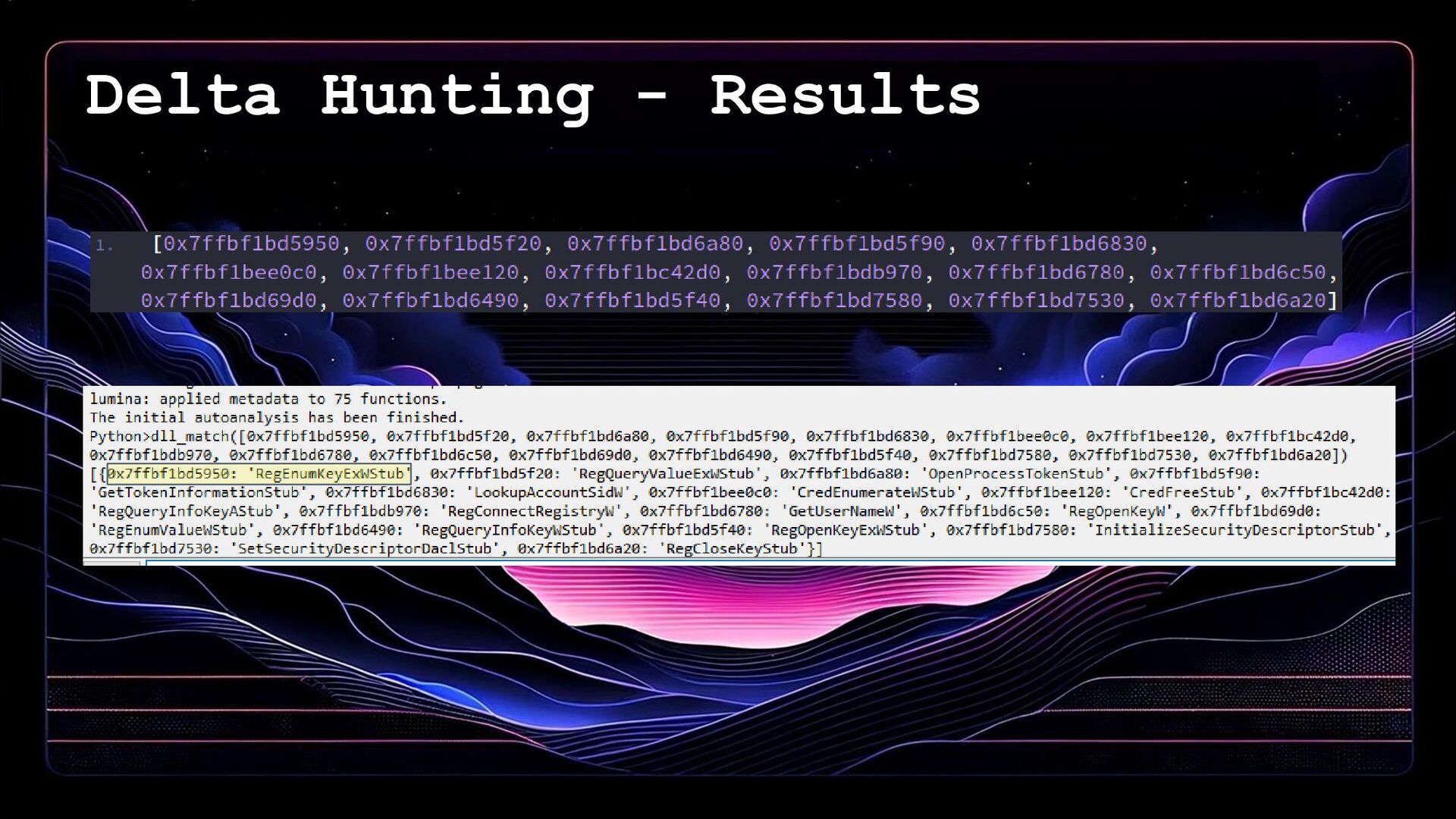
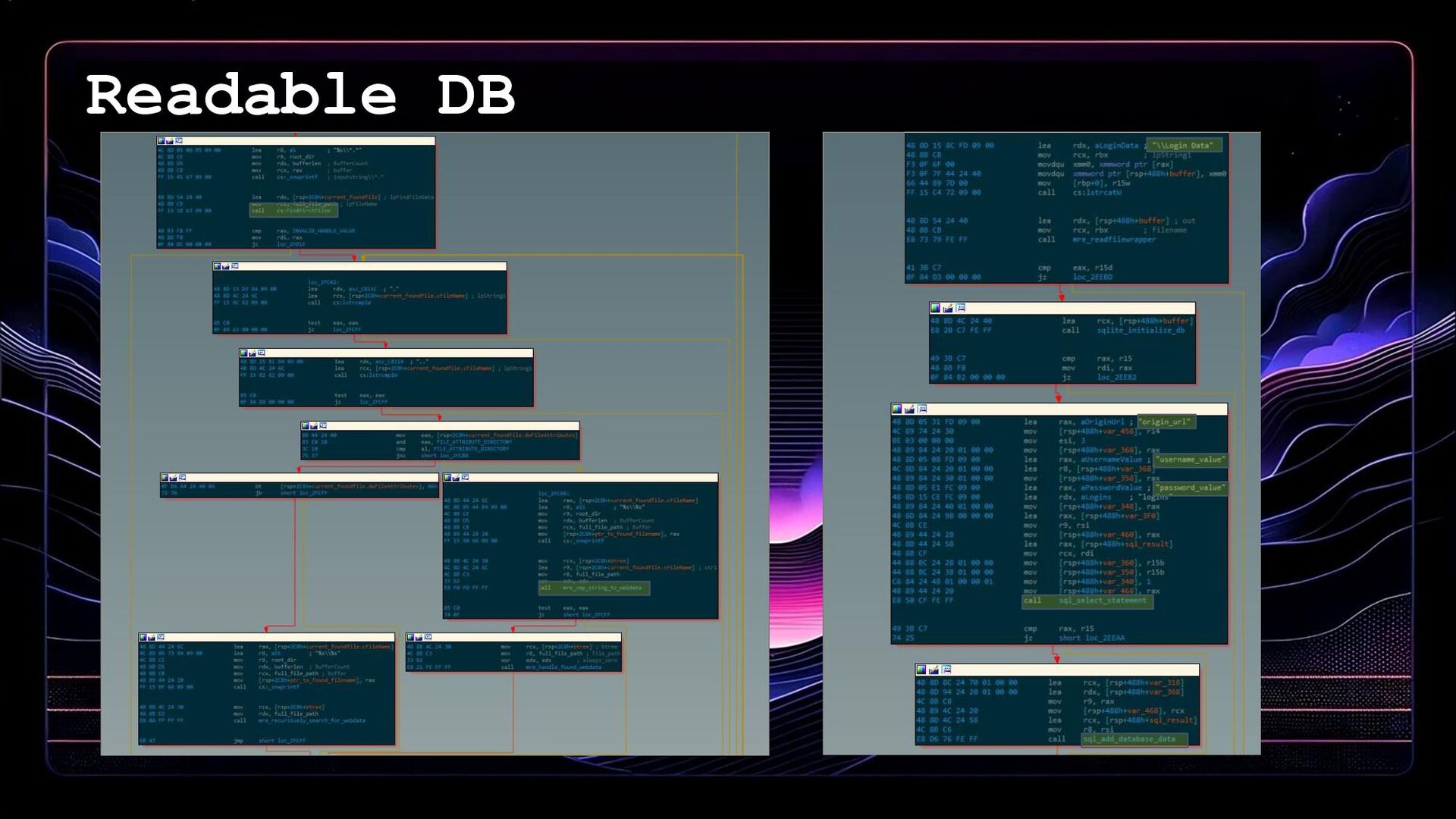
& weirder features • Analyzing its stealers directly from a broken memdump 2. Untangling the complexity: • the logic behind the Rhadamanthys design • all the flavors of Rhadamanthys modules (native modules, LUA runner, plugins, and more) -
F U N C T I O N A L
I T Y -
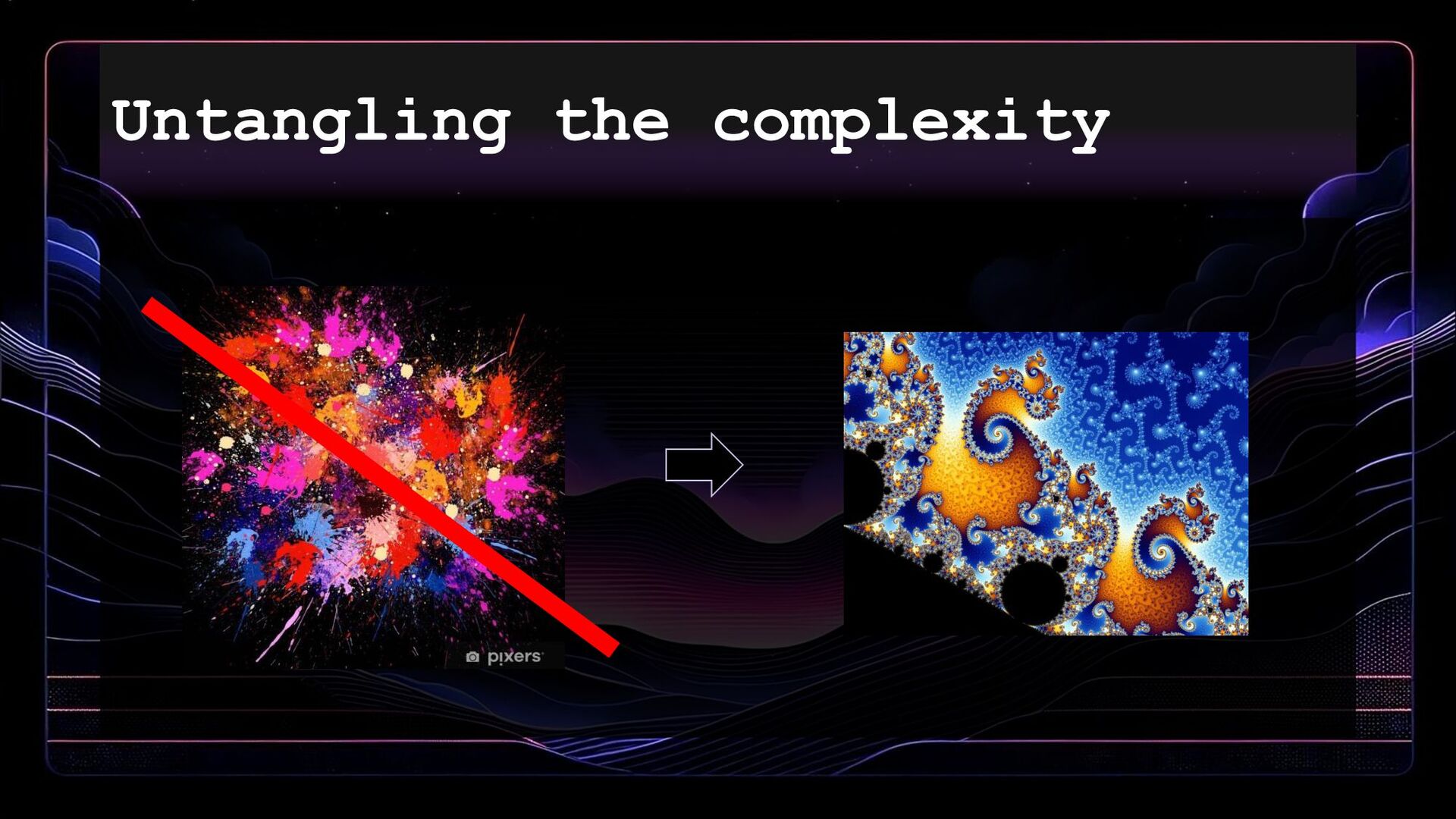
Untangling the complexity • Rhadamanthys consists of modules • The
core malicious modules will be downloaded only after the environment was checked • Only the first component is a PE: all the vital functionality is implemented in form of “shellcodes” -
Untangling the complexity • Rhadamanthys consists of modules • It
is organized in the way that the real malicious modules will be downloaded only after the environment is checked • Only the first component is a PE: all the vital functionality is implemented in form of shellcodes – well, not really. It uses custom formats, with a structure analogous to PE, yet completely reworked by the author to not resemble it -
The custom formats • It is a form of obfuscation,
which: • Is meant to mislead tools used for automated dumping (no artifacts that resemble PE can be found in memory – only code) • Makes the life of the analyst harder: unpacking and understanding of the important components require some reconstructive work • Components cannot be parsed by typical analysis tools -
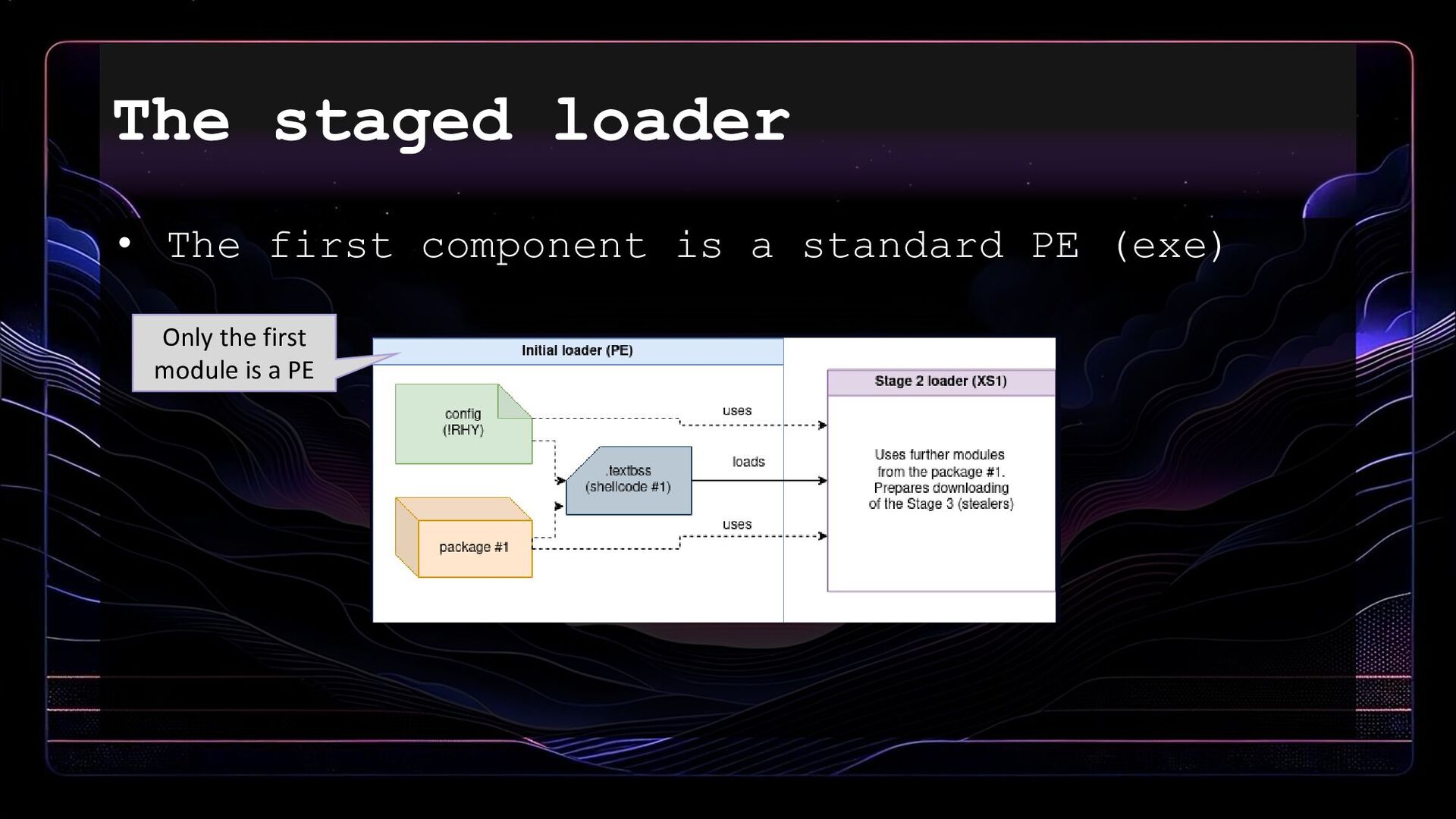
The staged loader • The first component is a standard
PE (exe) Only the first module is a PE -
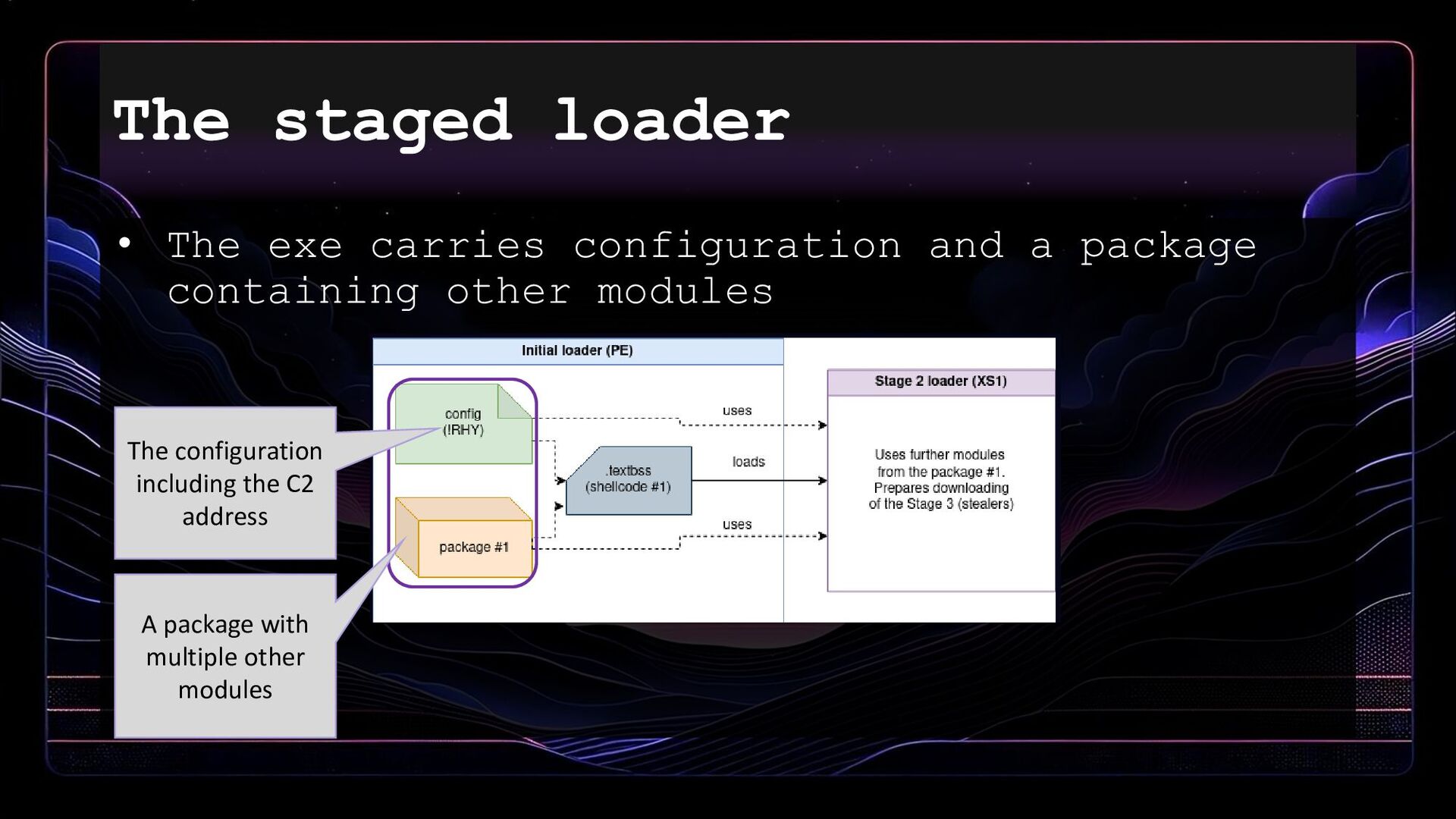
The staged loader • The exe carries configuration and a
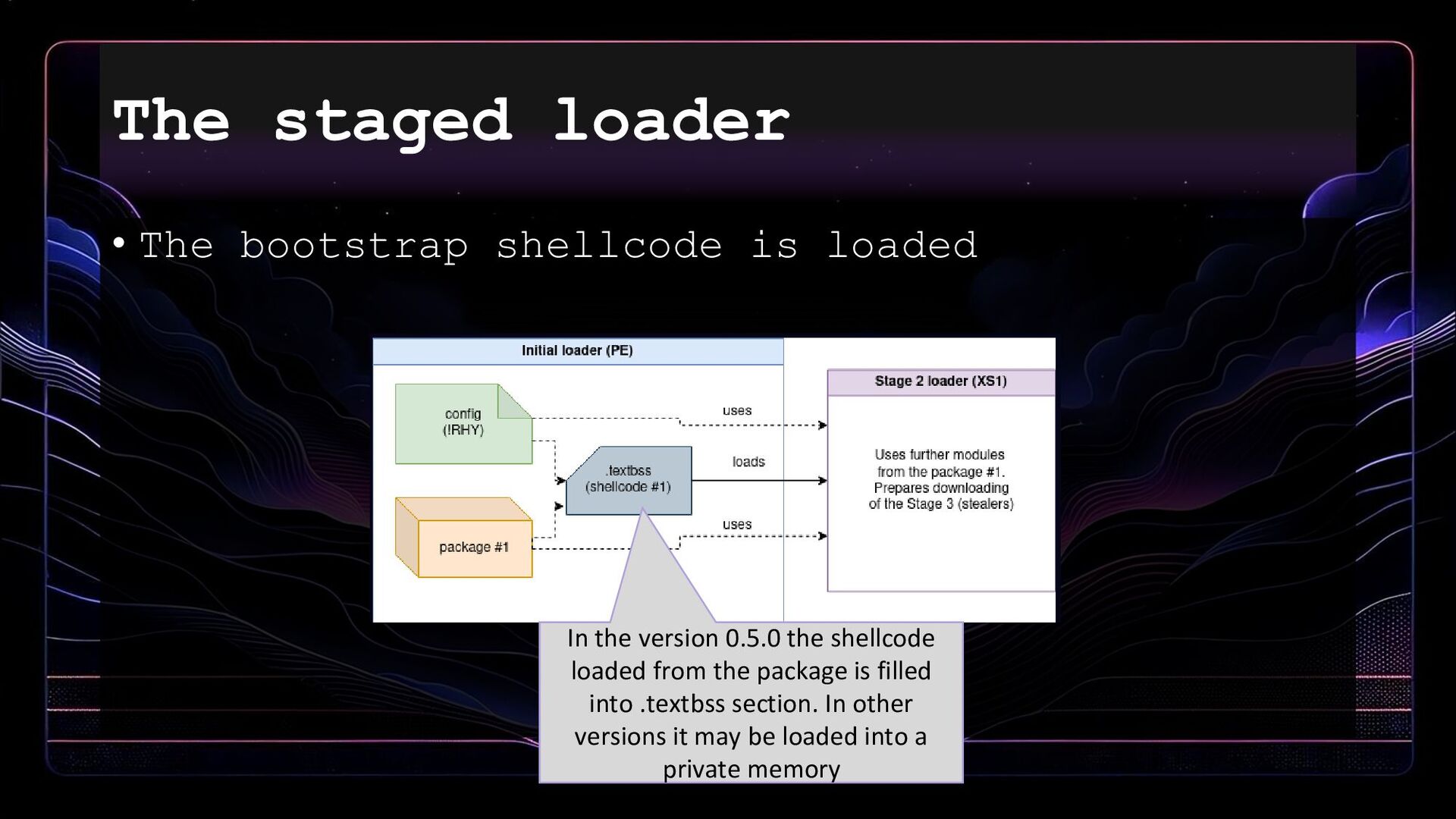
package containing other modules The configuration including the C2 address A package with multiple other modules -
The staged loader • The bootstrap shellcode is loaded In
the version 0.5.0 the shellcode loaded from the package is filled into .textbss section. In other versions it may be loaded into a private memory -
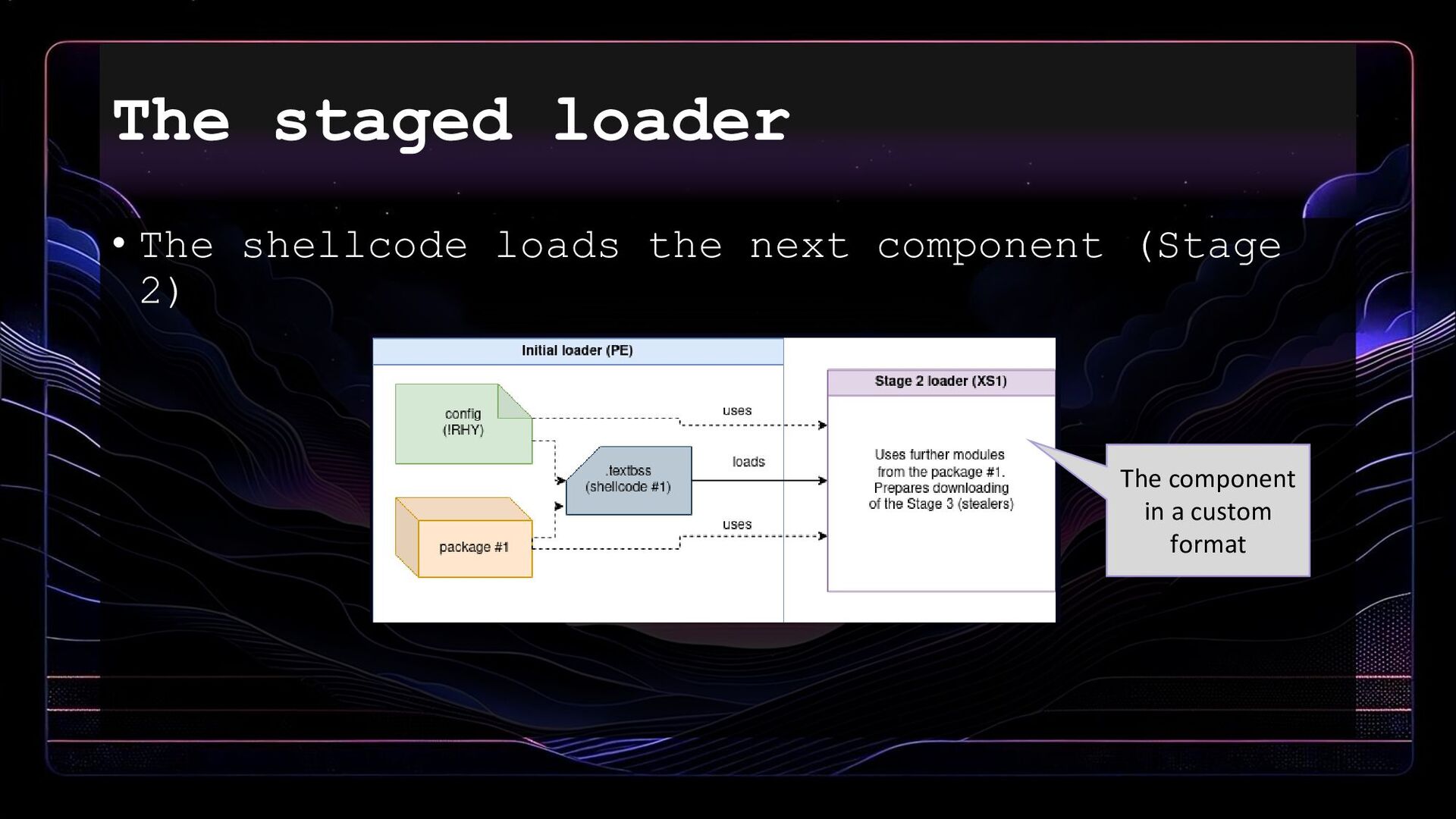
The staged loader • The shellcode loads the next component
(Stage 2) The component in a custom format -
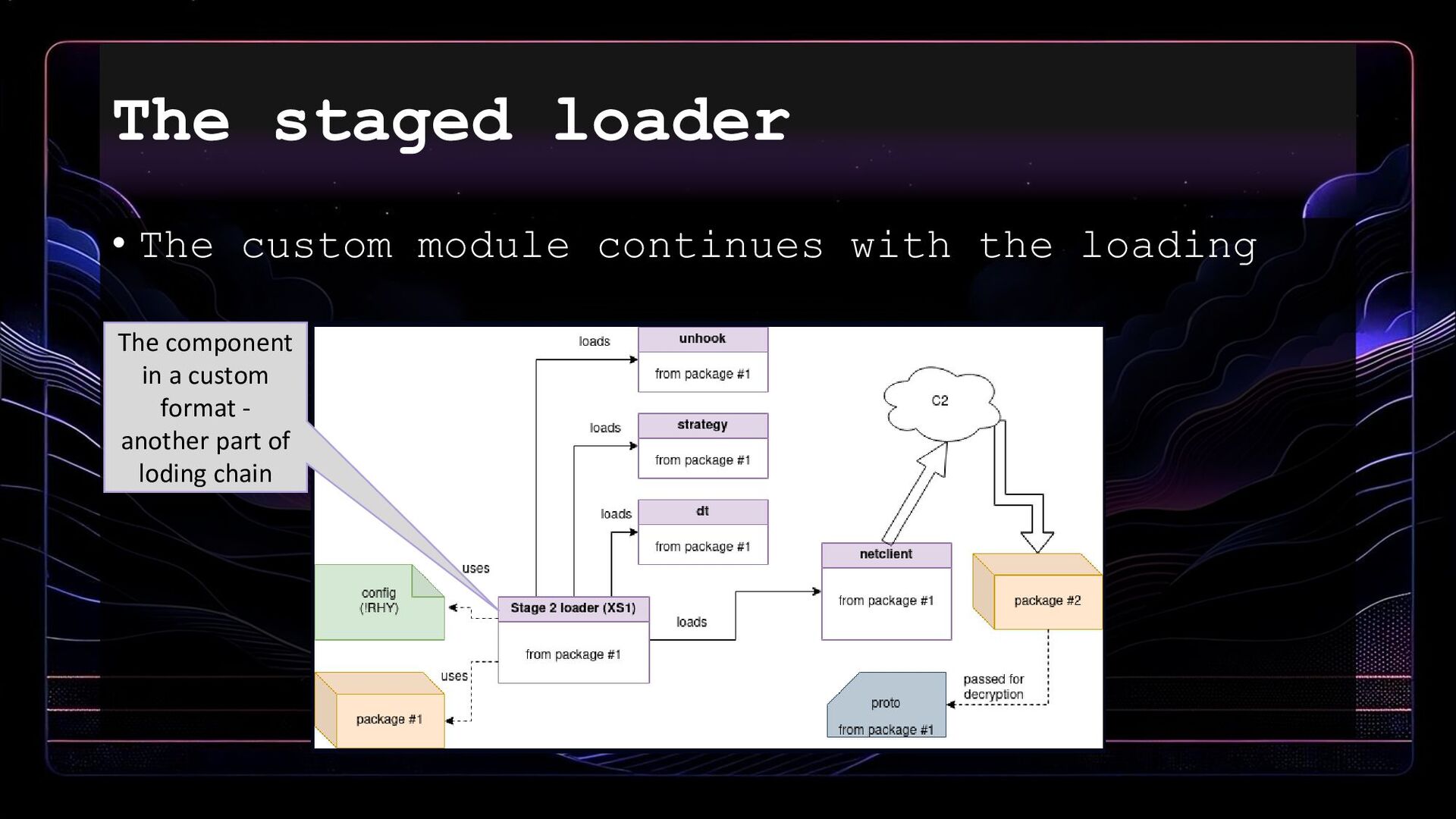
The staged loader • The custom module continues with the
loading The component in a custom format - another part of loding chain -
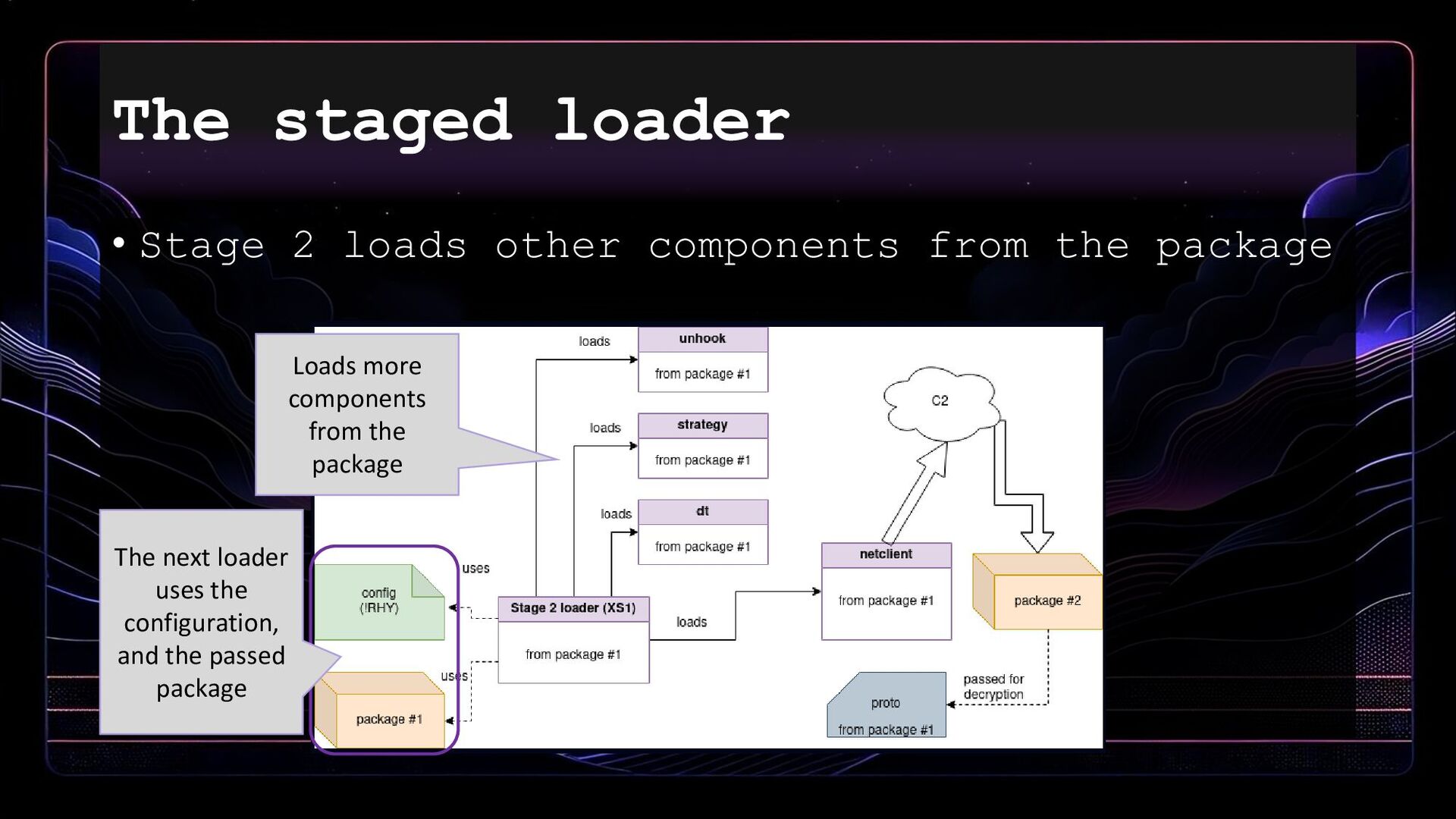
The staged loader • Stage 2 loads other components from
the package The next loader uses the configuration, and the passed package Loads more components from the package -
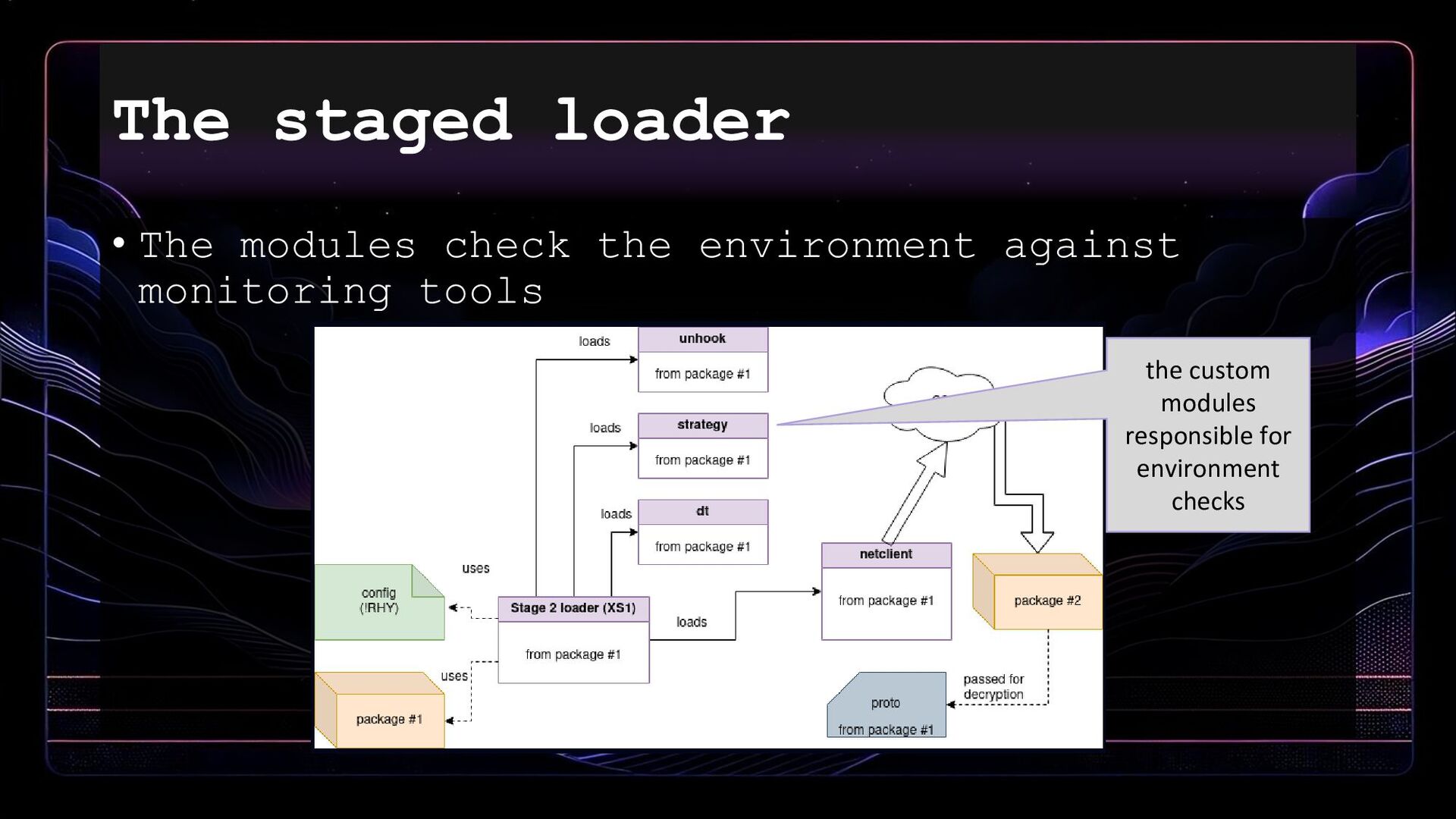
The staged loader • The modules check the environment against
monitoring tools the custom modules responsible for environment checks -
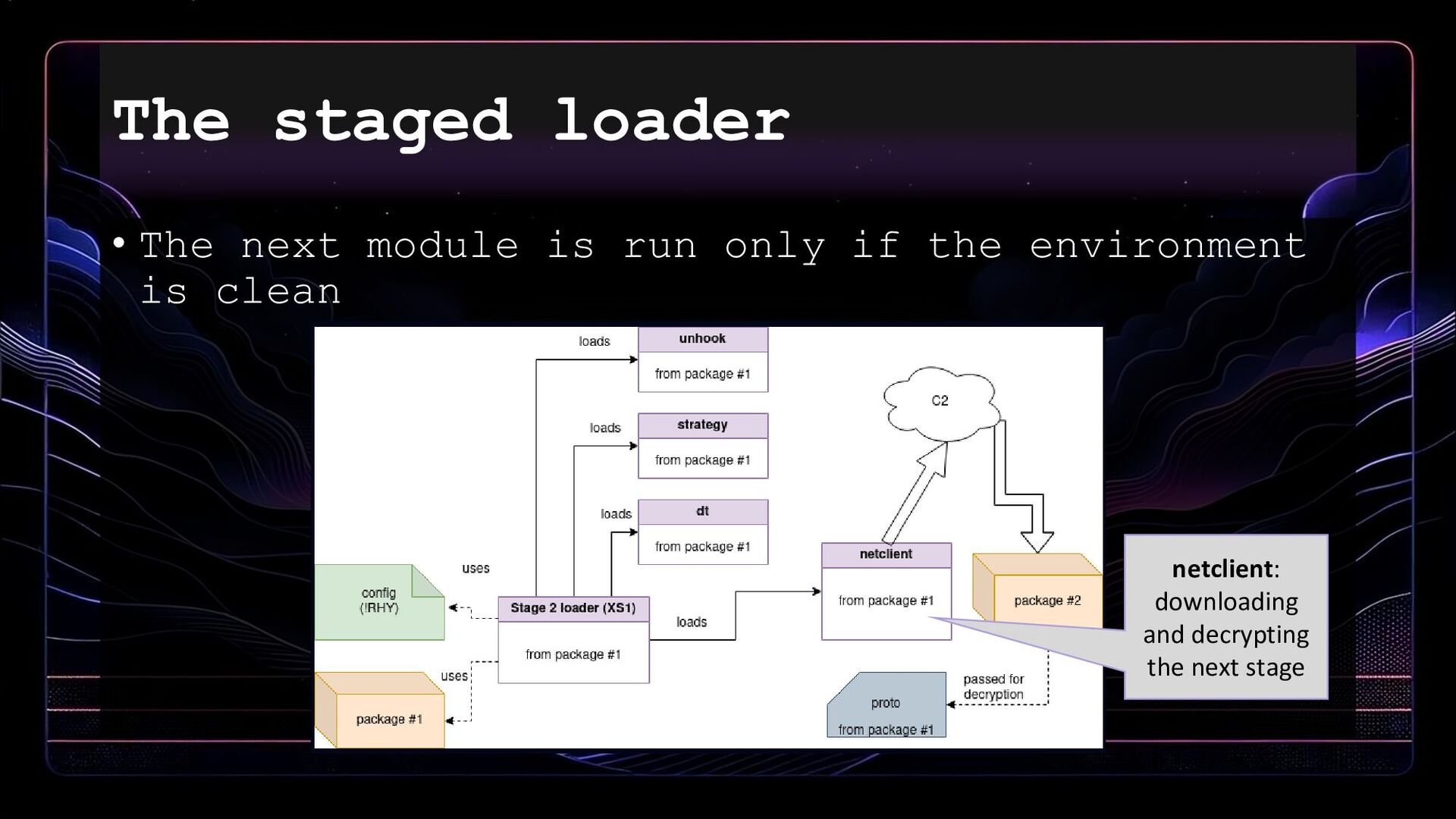
The staged loader • The next module is run only
if the environment is clean netclient: downloading and decrypting the next stage -
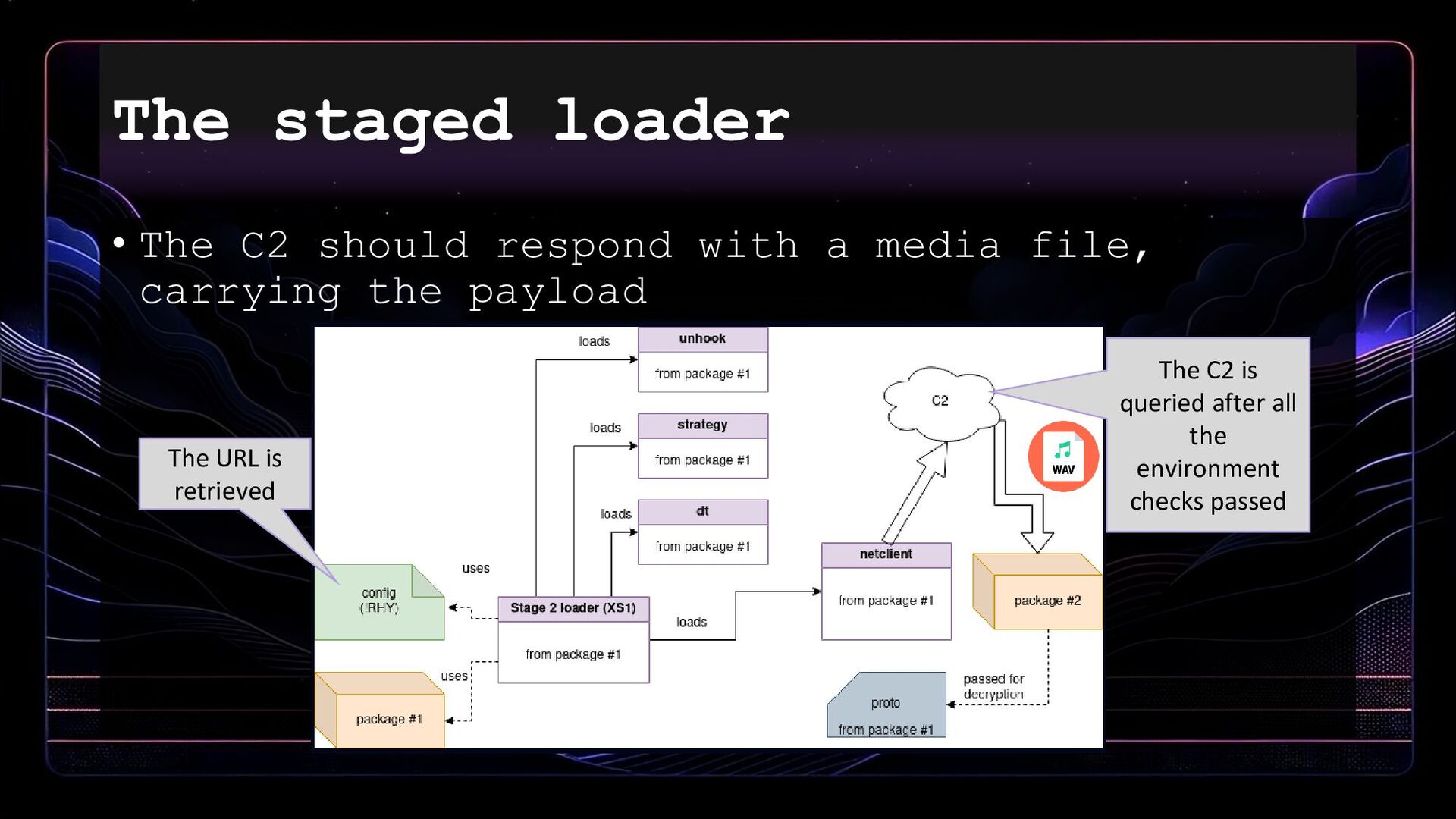
The staged loader • The C2 should respond with a
media file, carrying the payload The C2 is queried after all the environment checks passed The URL is retrieved -
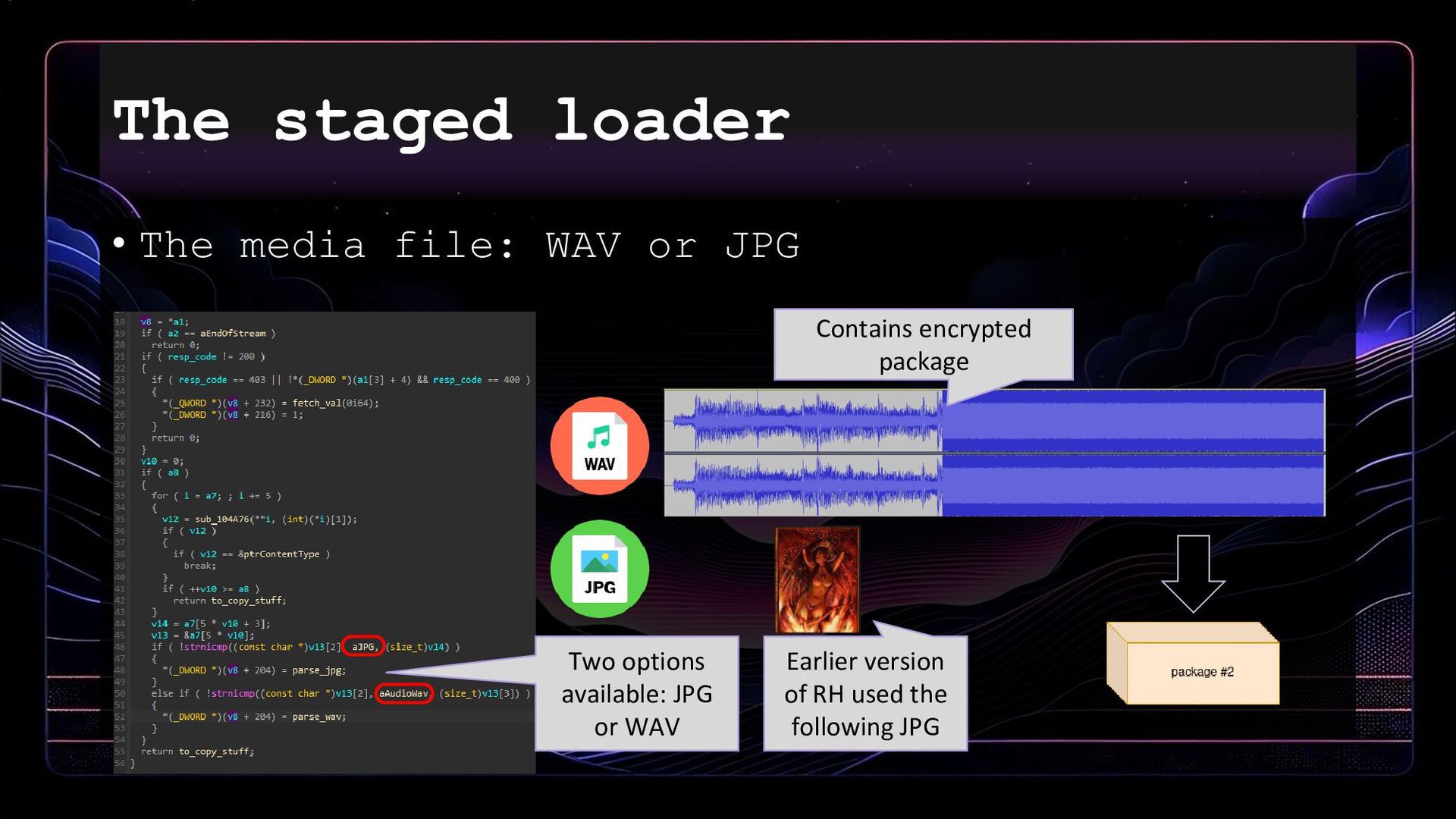
The staged loader • The media file: WAV or JPG
Two options available: JPG or WAV Contains encrypted package Earlier version of RH used the following JPG -
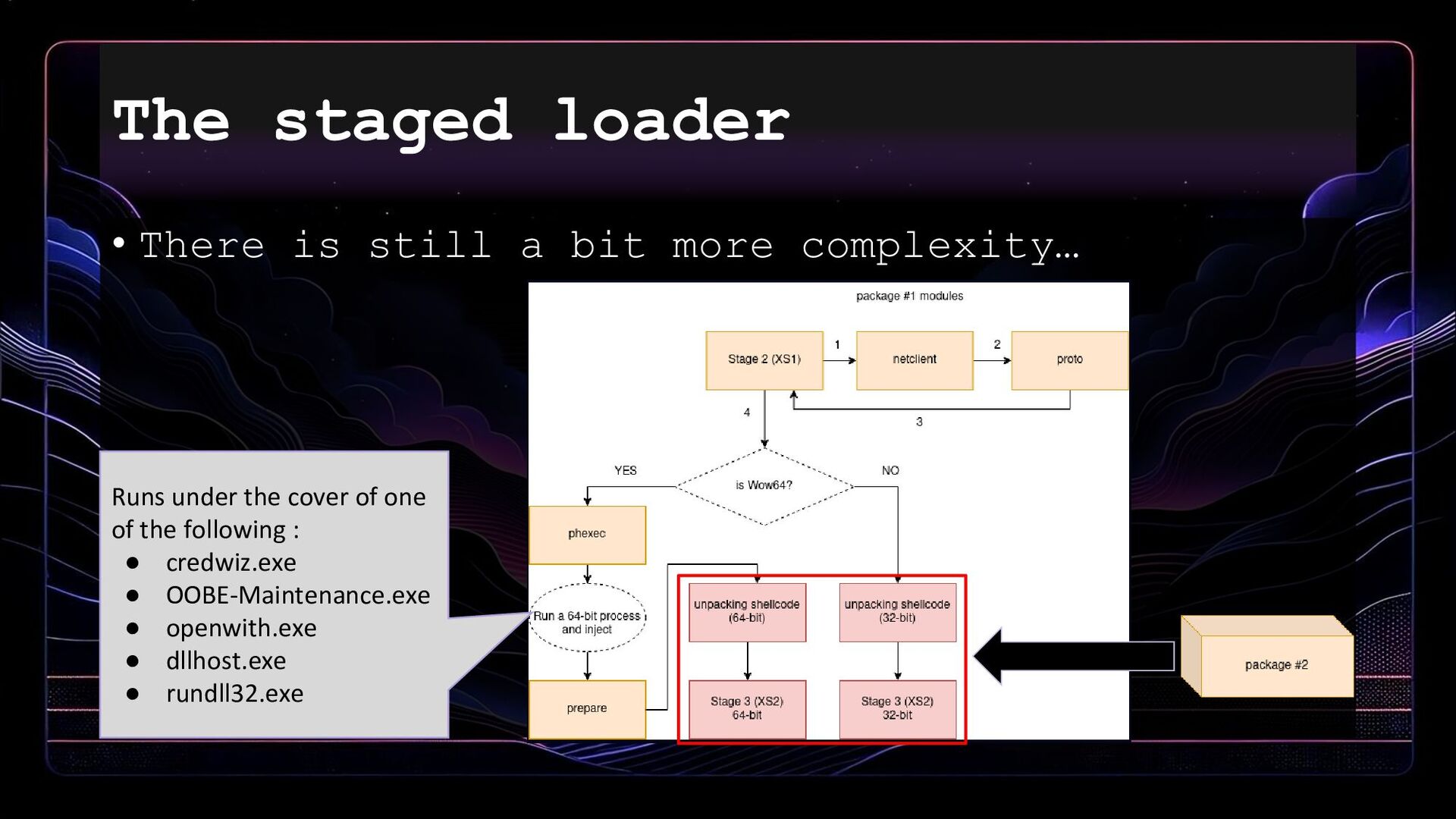
The staged loader • There is still a bit more
complexity… Runs under the cover of one of the following : • credwiz.exe • OOBE-Maintenance.exe • openwith.exe • dllhost.exe • rundll32.exe -
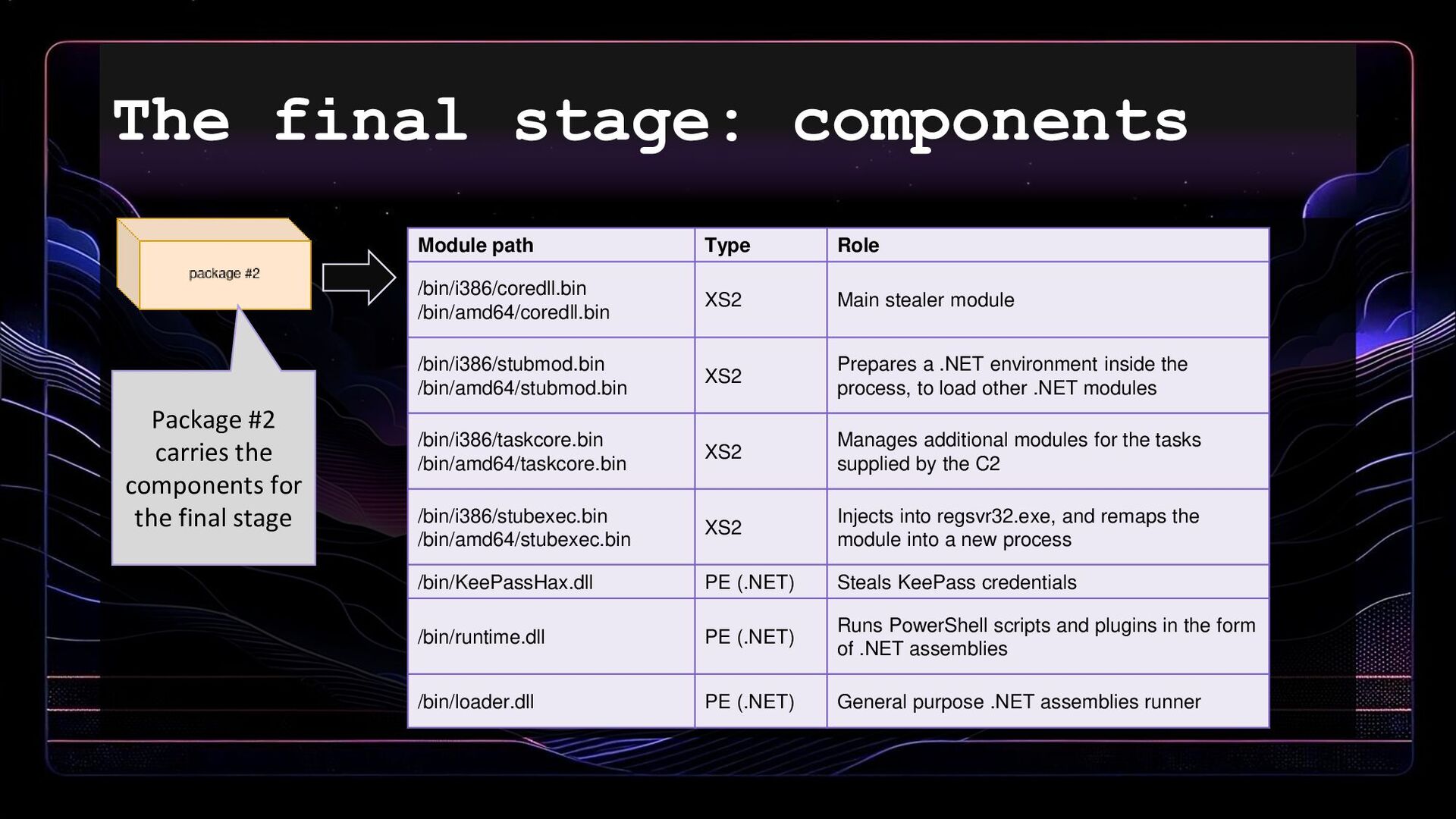
The final stage: components Module path Type Role /bin/i386/coredll.bin /bin/amd64/coredll.bin
XS2 Main stealer module /bin/i386/stubmod.bin /bin/amd64/stubmod.bin XS2 Prepares a .NET environment inside the process, to load other .NET modules /bin/i386/taskcore.bin /bin/amd64/taskcore.bin XS2 Manages additional modules for the tasks supplied by the C2 /bin/i386/stubexec.bin /bin/amd64/stubexec.bin XS2 Injects into regsvr32.exe, and remaps the module into a new process /bin/KeePassHax.dll PE (.NET) Steals KeePass credentials /bin/runtime.dll PE (.NET) Runs PowerShell scripts and plugins in the form of .NET assemblies /bin/loader.dll PE (.NET) General purpose .NET assemblies runner Package #2 carries the components for the final stage -
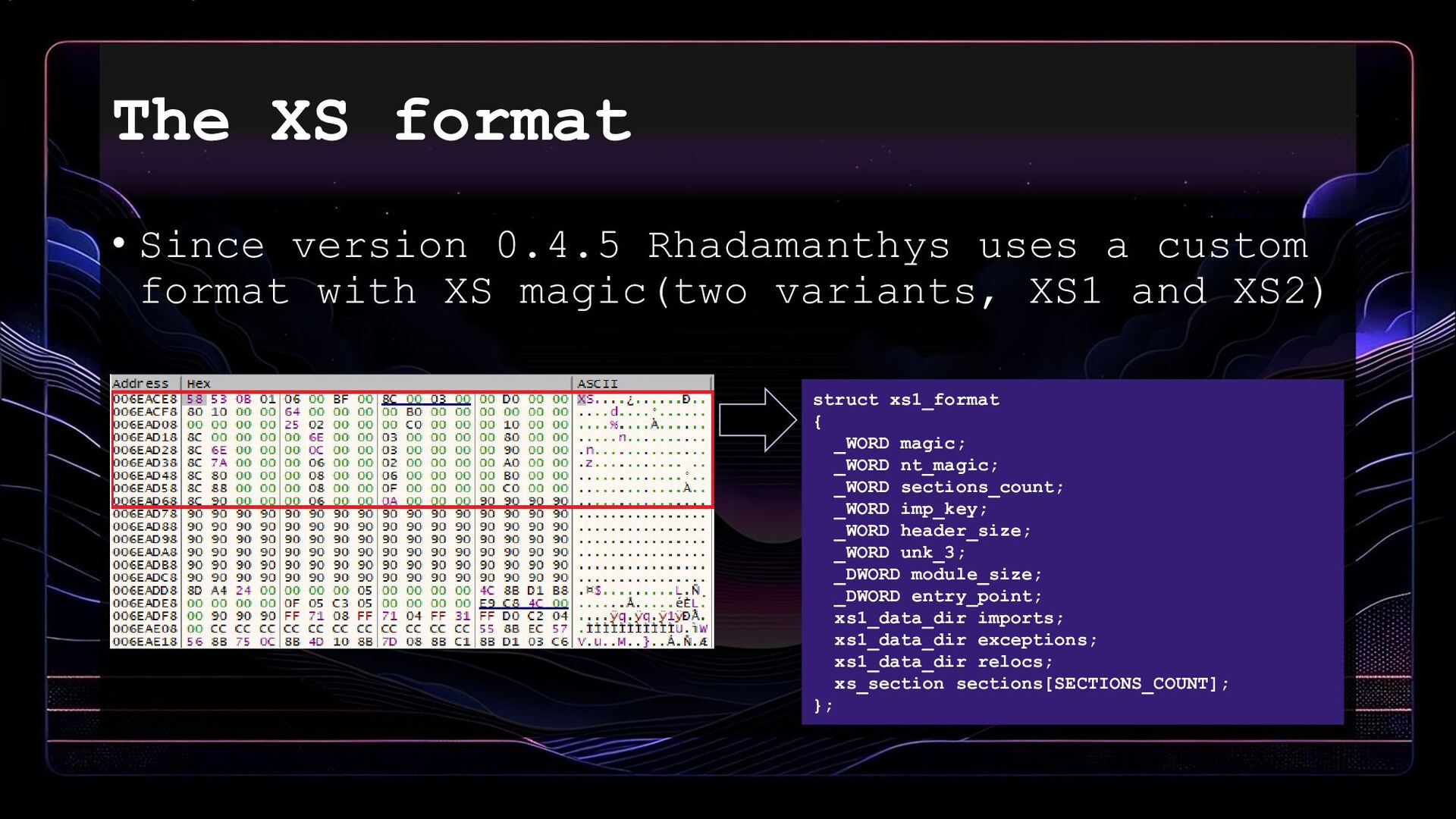
The XS format • Since version 0.4.5 Rhadamanthys uses a
custom format with XS magic(two variants, XS1 and XS2) struct xs1_format { _WORD magic; _WORD nt_magic; _WORD sections_count; _WORD imp_key; _WORD header_size; _WORD unk_3; _DWORD module_size; _DWORD entry_point; xs1_data_dir imports; xs1_data_dir exceptions; xs1_data_dir relocs; xs_section sections[SECTIONS_COUNT]; }; -
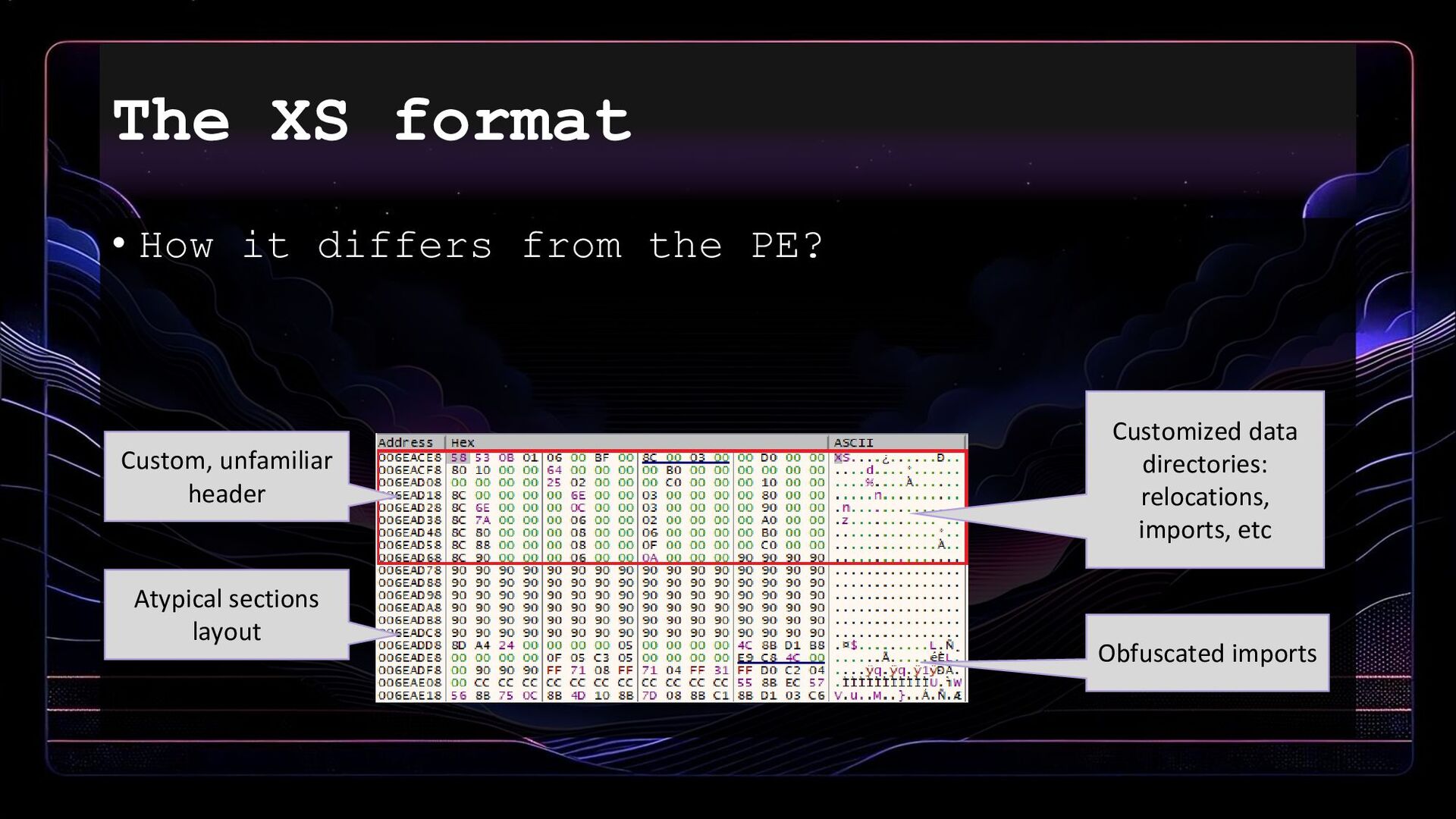
The XS format • How it differs from the PE?
Custom, unfamiliar header Atypical sections layout Customized data directories: relocations, imports, etc Obfuscated imports -
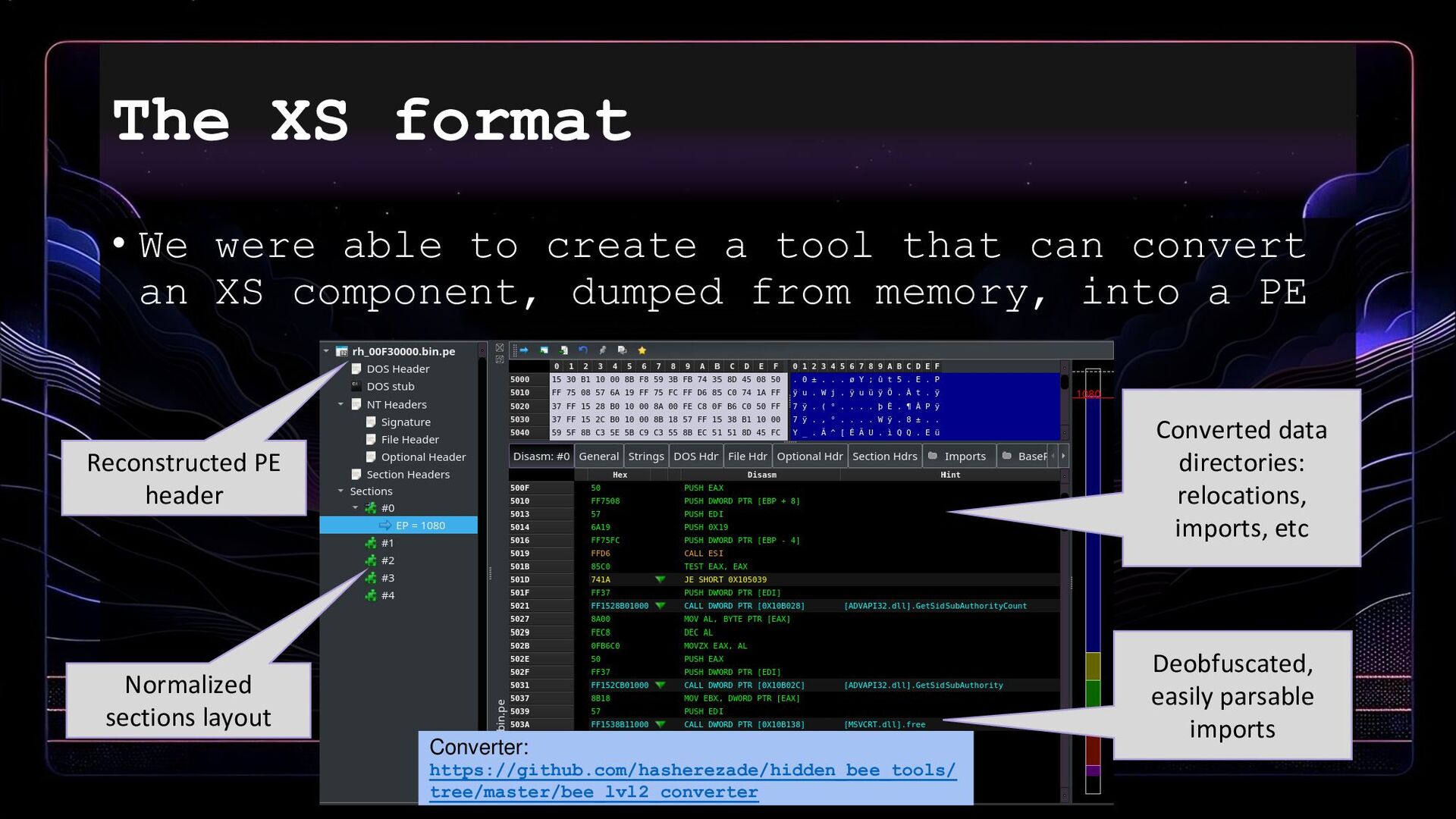
The XS format • We were able to create a
tool that can convert an XS component, dumped from memory, into a PE Reconstructed PE header Normalized sections layout Converted data directories: relocations, imports, etc Deobfuscated, easily parsable imports Converter: https://github.com/hasherezade/hidden_bee_tools/ tree/master/bee_lvl2_converter -
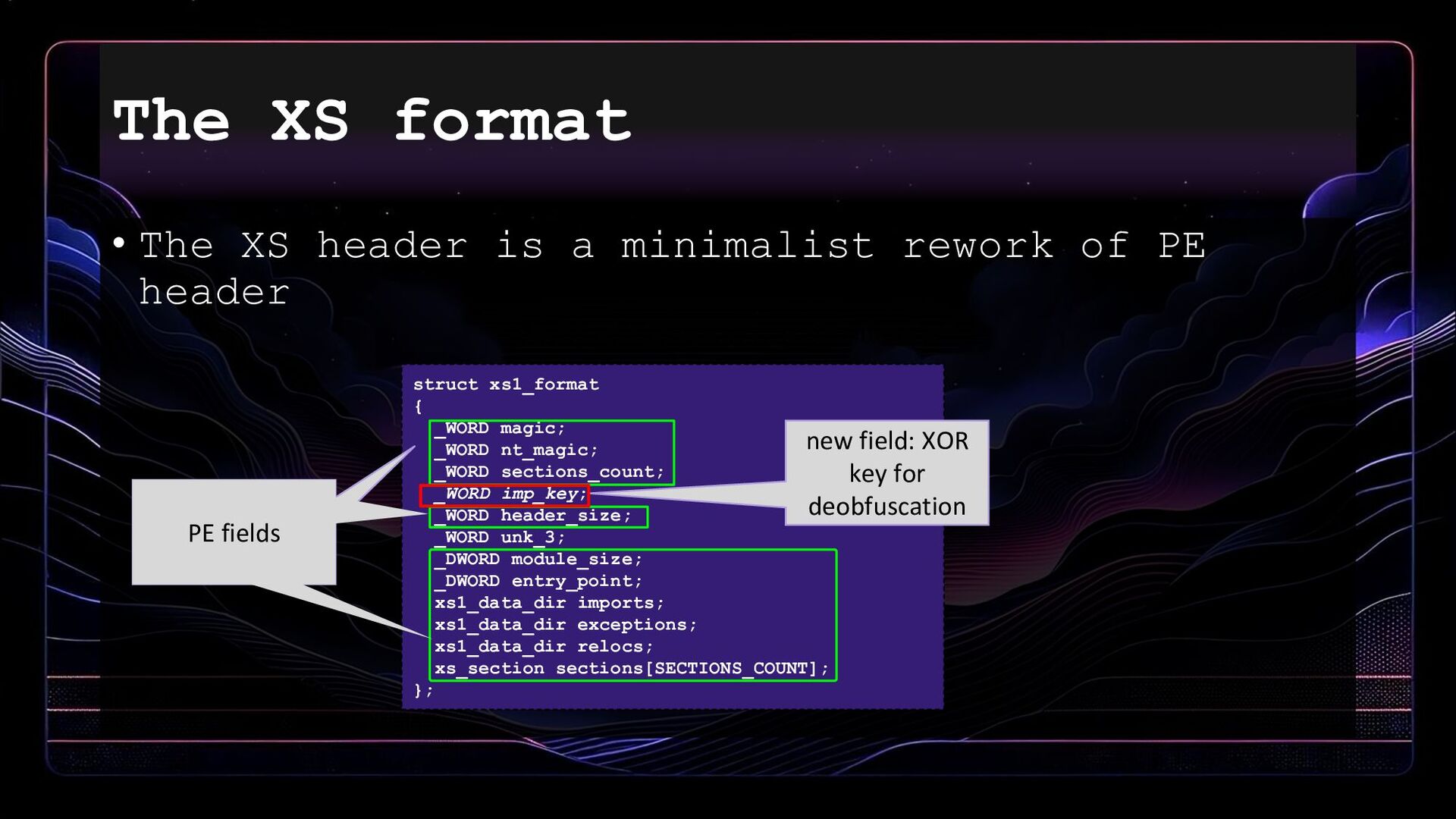
The XS format • The XS header is a minimalist
rework of PE header Deobfuscated, easily parsable imports struct xs1_format { _WORD magic; _WORD nt_magic; _WORD sections_count; _WORD imp_key; _WORD header_size; _WORD unk_3; _DWORD module_size; _DWORD entry_point; xs1_data_dir imports; xs1_data_dir exceptions; xs1_data_dir relocs; xs_section sections[SECTIONS_COUNT]; }; new field: XOR key for deobfuscation PE fields PE fields PE fields -
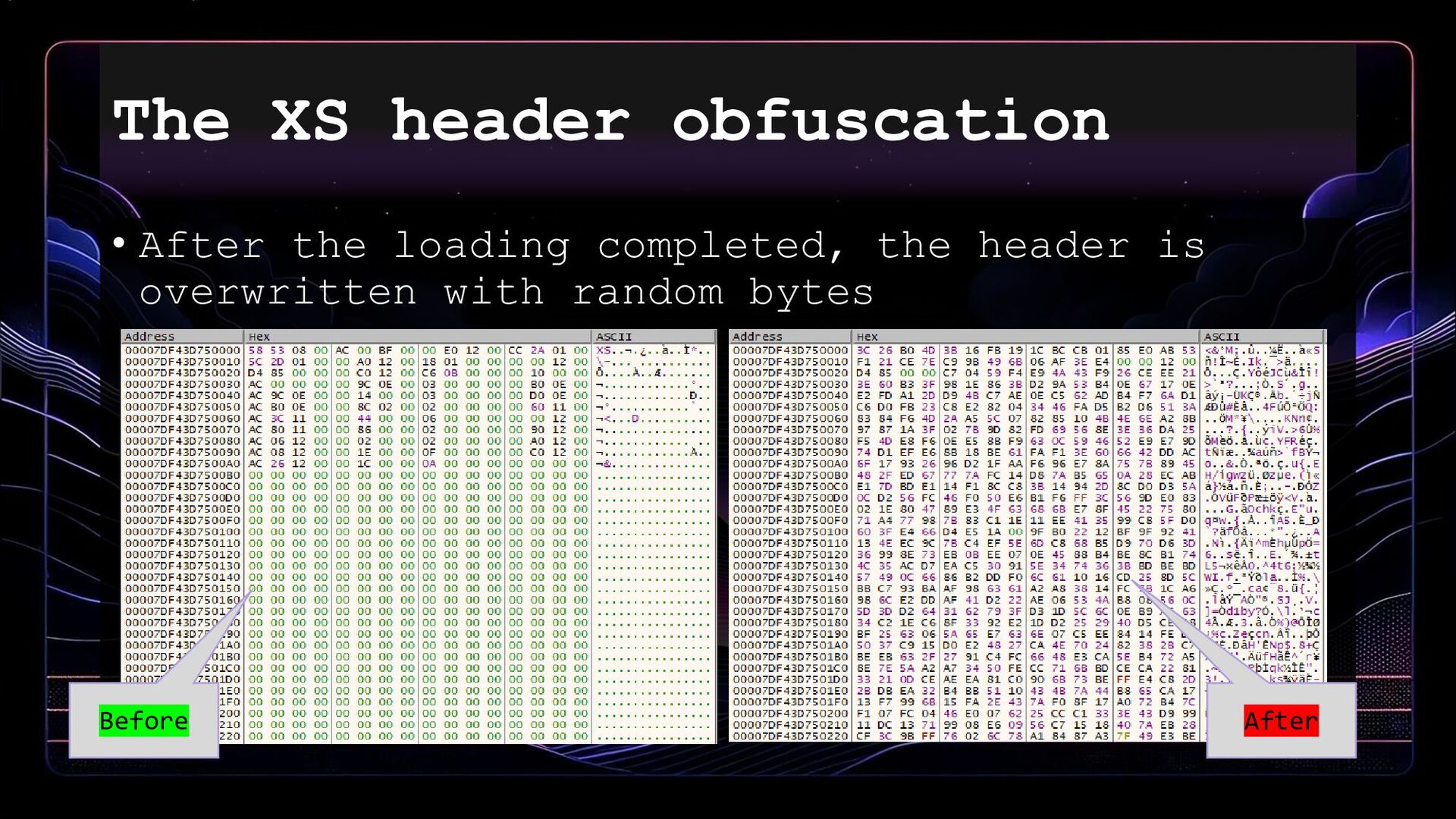
The XS header obfuscation • After the loading completed, the
header is overwritten with random bytes Before After -
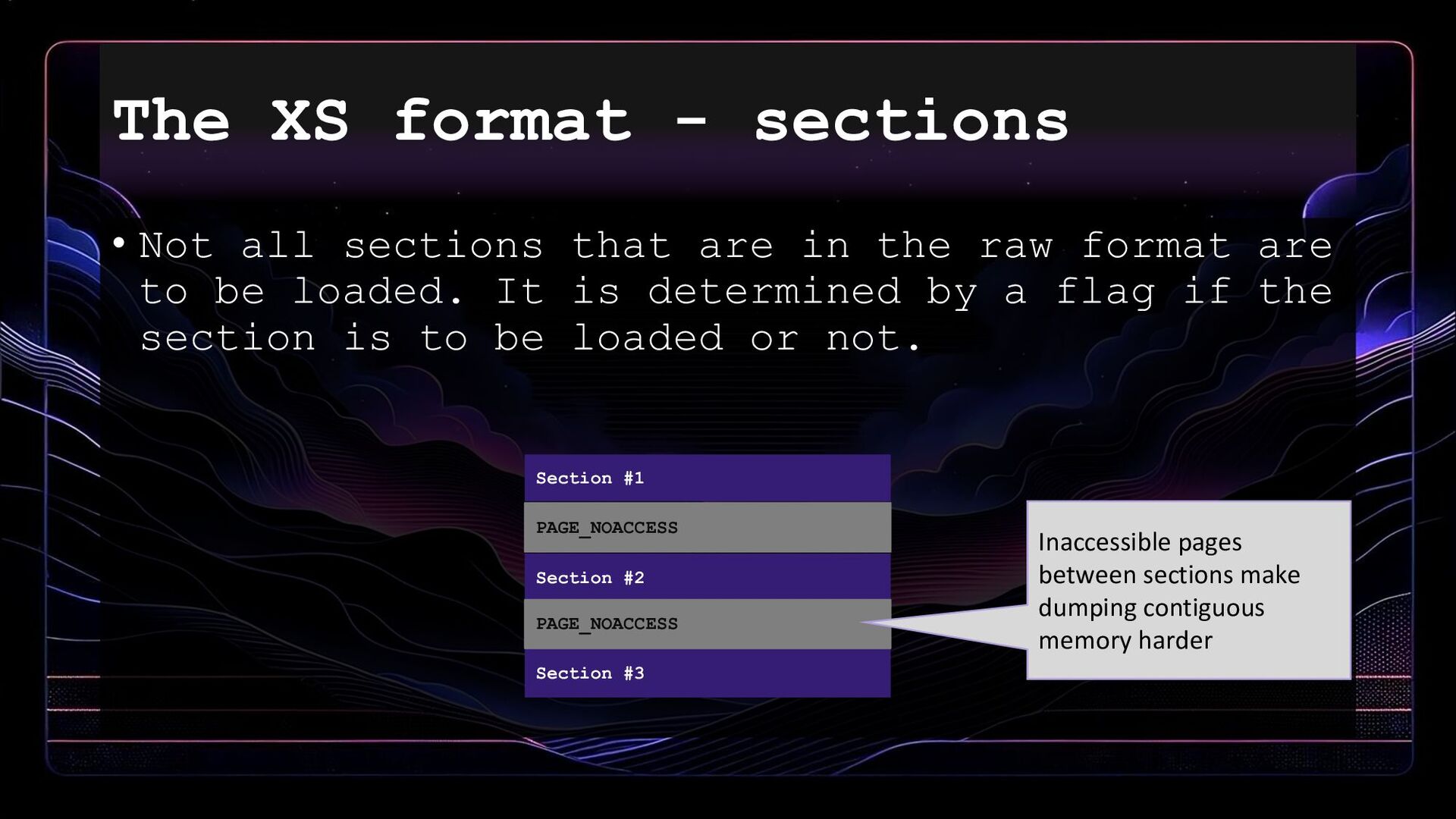
The XS format - sections • Not all sections that
are in the raw format are to be loaded. It is determined by a flag if the section is to be loaded or not. Section #1 Section #2 PAGE_NOACCESS Section #3 PAGE_NOACCESS Inaccessible pages between sections make dumping contiguous memory harder -
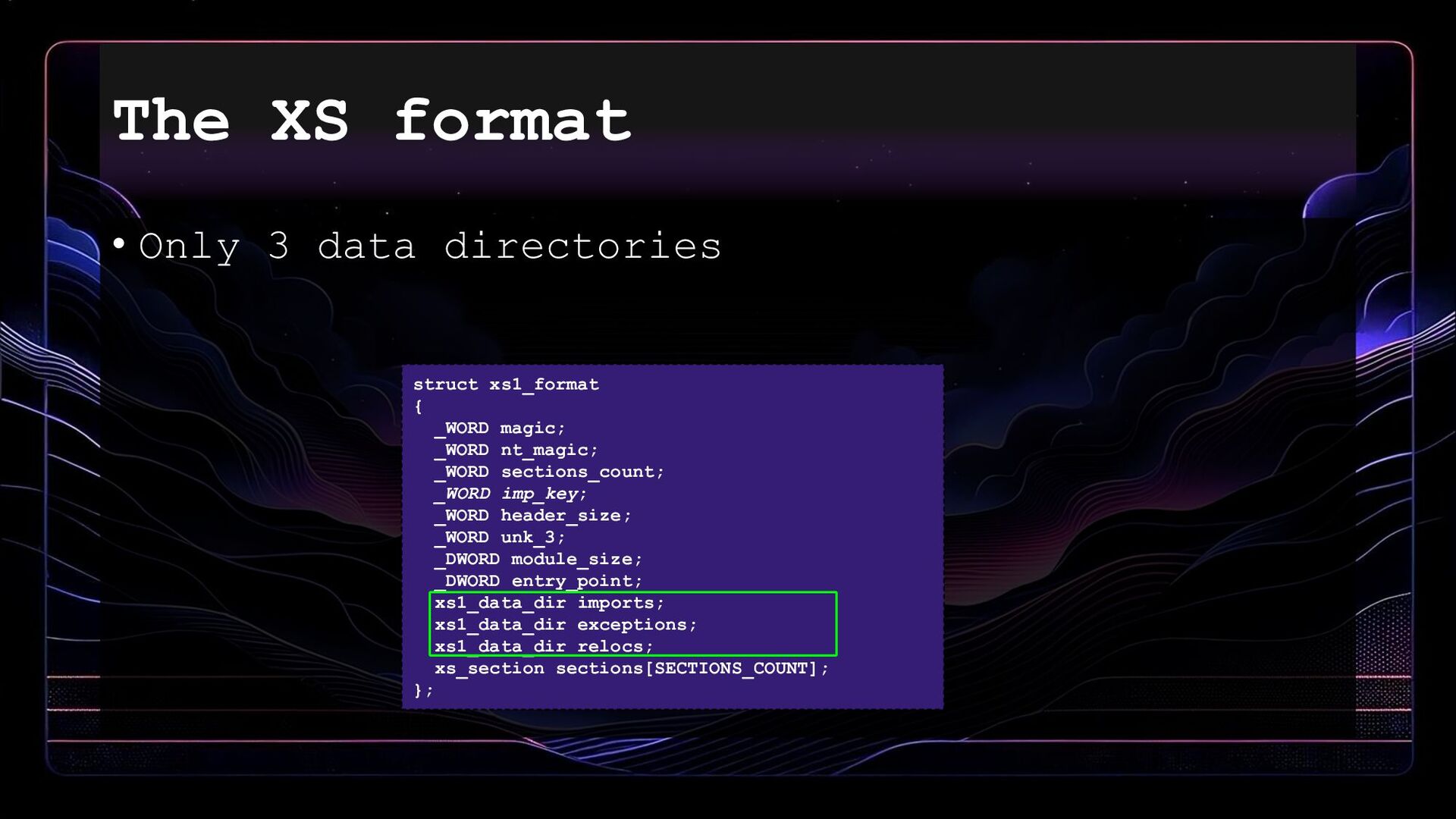
The XS format • Only 3 data directories Deobfuscated, easily
parsable imports struct xs1_format { _WORD magic; _WORD nt_magic; _WORD sections_count; _WORD imp_key; _WORD header_size; _WORD unk_3; _DWORD module_size; _DWORD entry_point; xs1_data_dir imports; xs1_data_dir exceptions; xs1_data_dir relocs; xs_section sections[SECTIONS_COUNT]; }; -
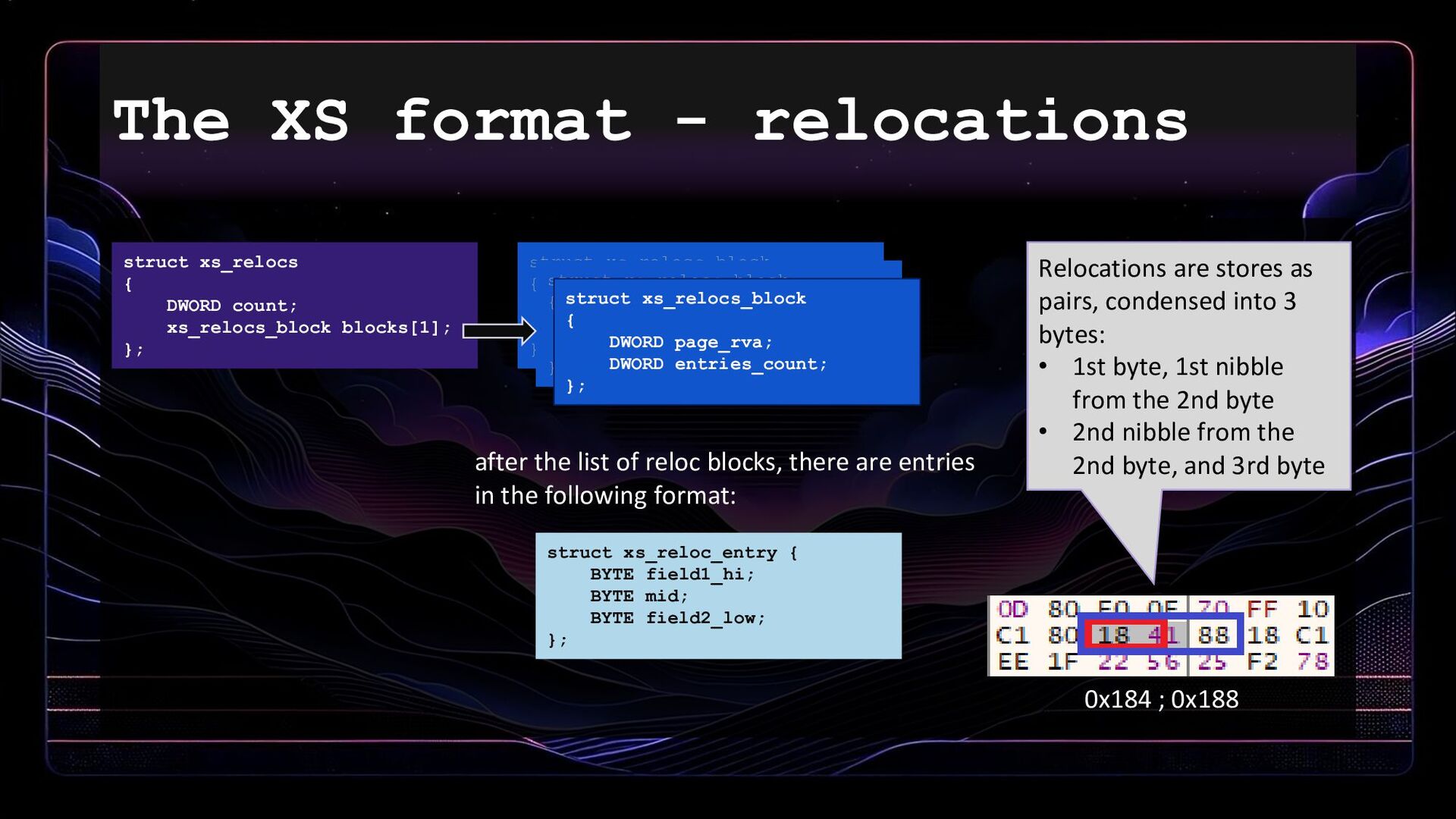
The XS format - relocations struct xs_relocs { DWORD count;
xs_relocs_block blocks[1]; }; struct xs_relocs_block { DWORD page_rva; DWORD entries_count; }; struct xs_relocs_block { DWORD page_rva; DWORD entries_count; }; struct xs_relocs_block { DWORD page_rva; DWORD entries_count; }; struct xs_reloc_entry { BYTE field1_hi; BYTE mid; BYTE field2_low; }; after the list of reloc blocks, there are entries in the following format: Relocations are stores as pairs, condensed into 3 bytes: • 1st byte, 1st nibble from the 2nd byte • 2nd nibble from the 2nd byte, and 3rd byte 0x184 ; 0x188 -
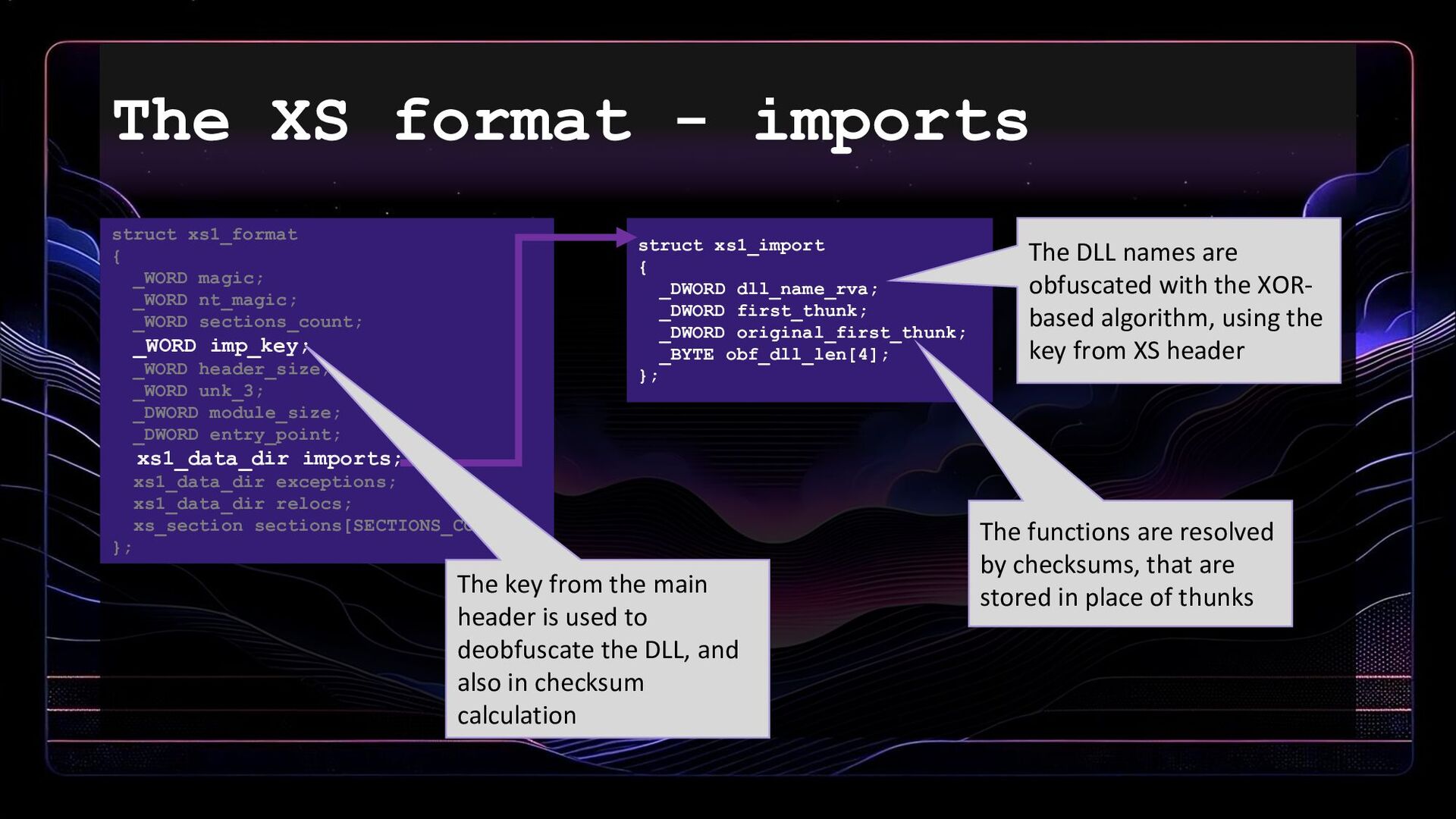
The XS format - imports struct xs1_import { _DWORD dll_name_rva;
_DWORD first_thunk; _DWORD original_first_thunk; _BYTE obf_dll_len[4]; }; struct xs1_format { _WORD magic; _WORD nt_magic; _WORD sections_count; _WORD imp_key; _WORD header_size; _WORD unk_3; _DWORD module_size; _DWORD entry_point; xs1_data_dir imports; xs1_data_dir exceptions; xs1_data_dir relocs; xs_section sections[SECTIONS_COUNT]; }; The functions are resolved by checksums, that are stored in place of thunks The DLL names are obfuscated with the XOR- based algorithm, using the key from XS header The key from the main header is used to deobfuscate the DLL, and also in checksum calculation -
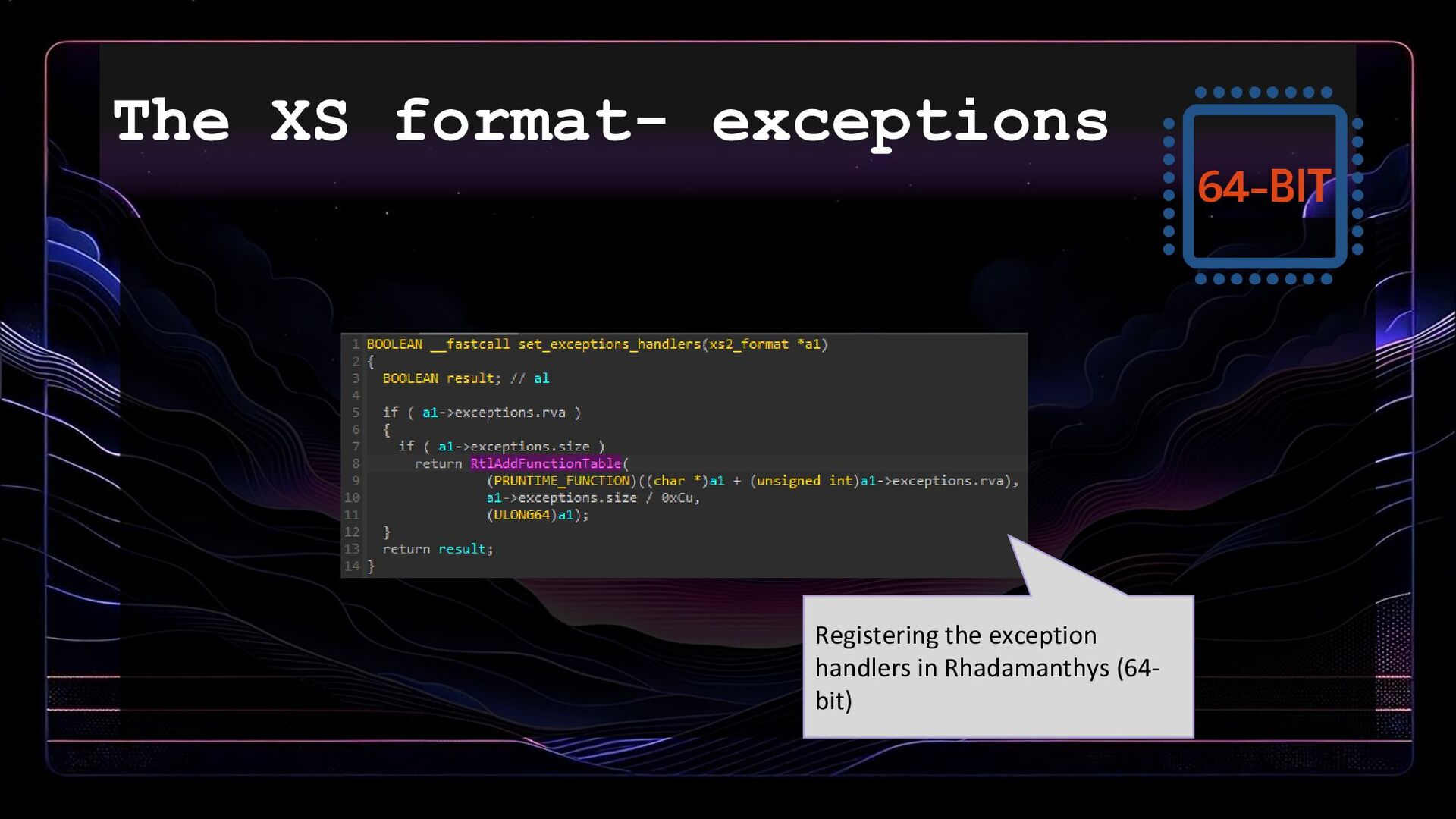
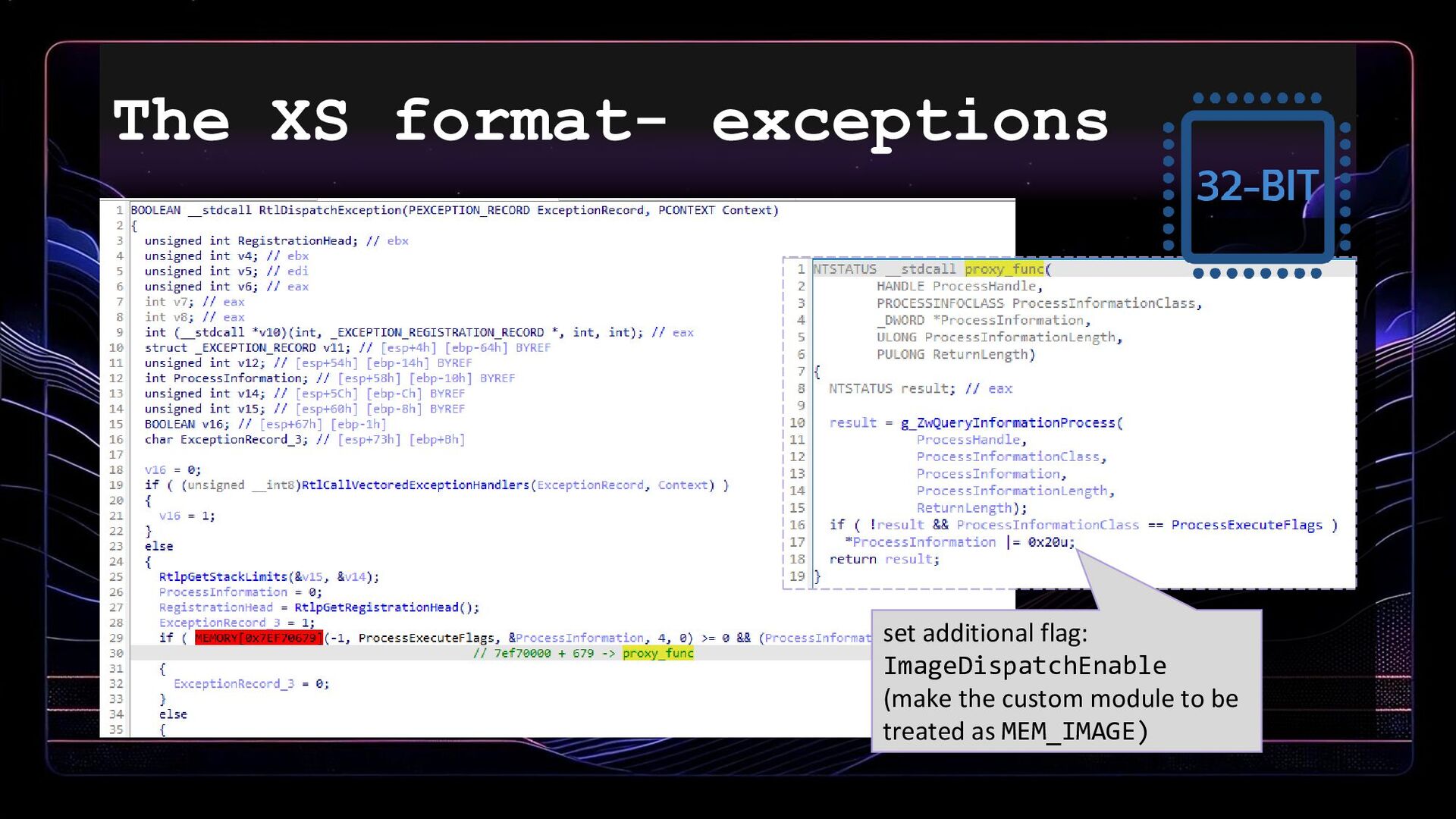
The XS format- exceptions set additional flag: ImageDispatchEnable (make the
custom module to be treated as MEM_IMAGE) -
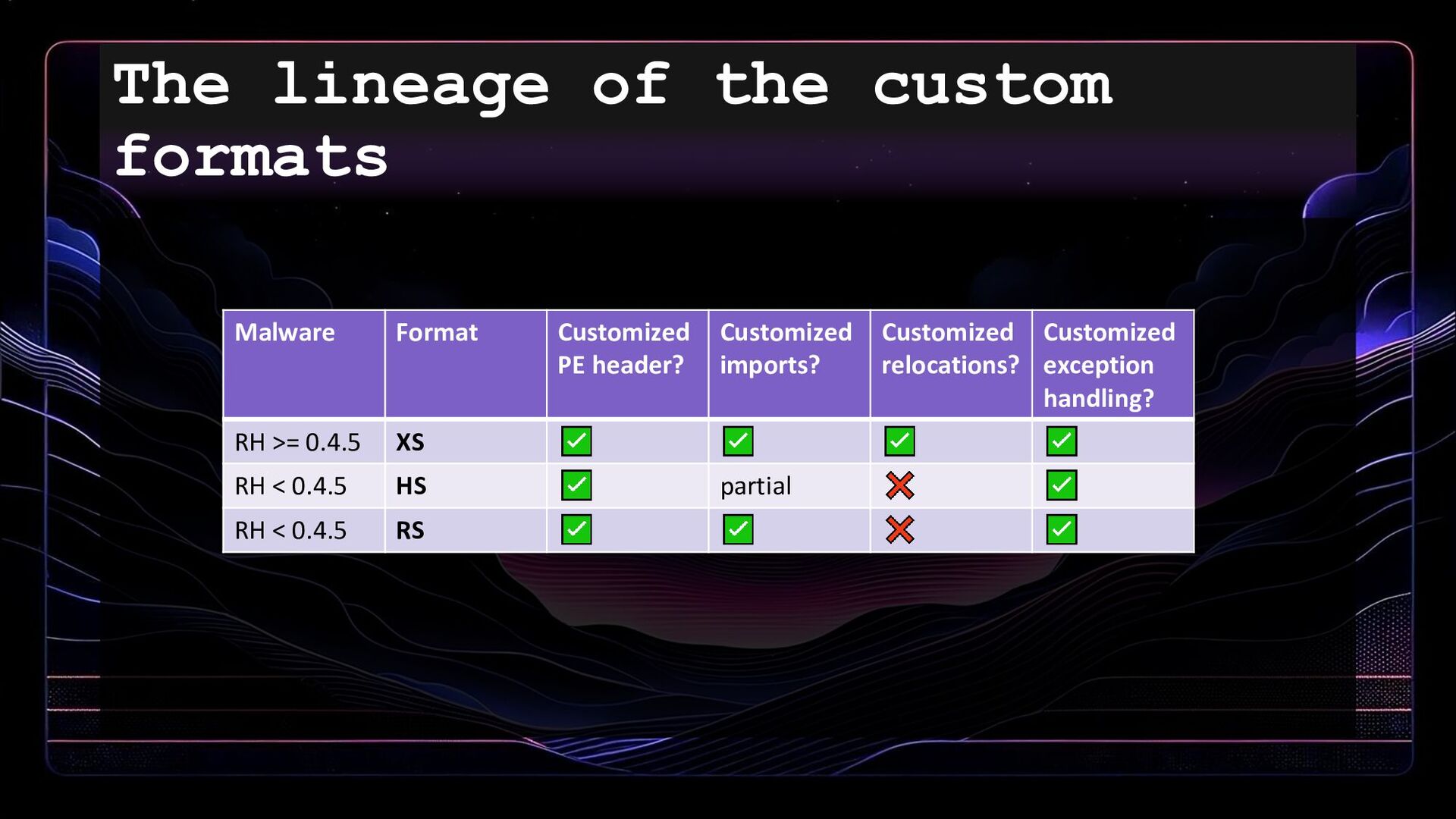
The lineage of the custom formats Malware Format Customized PE
header? Customized imports? Customized relocations? Customized exception handling? RH >= 0.4.5 XS RH < 0.4.5 HS partial RH < 0.4.5 RS -
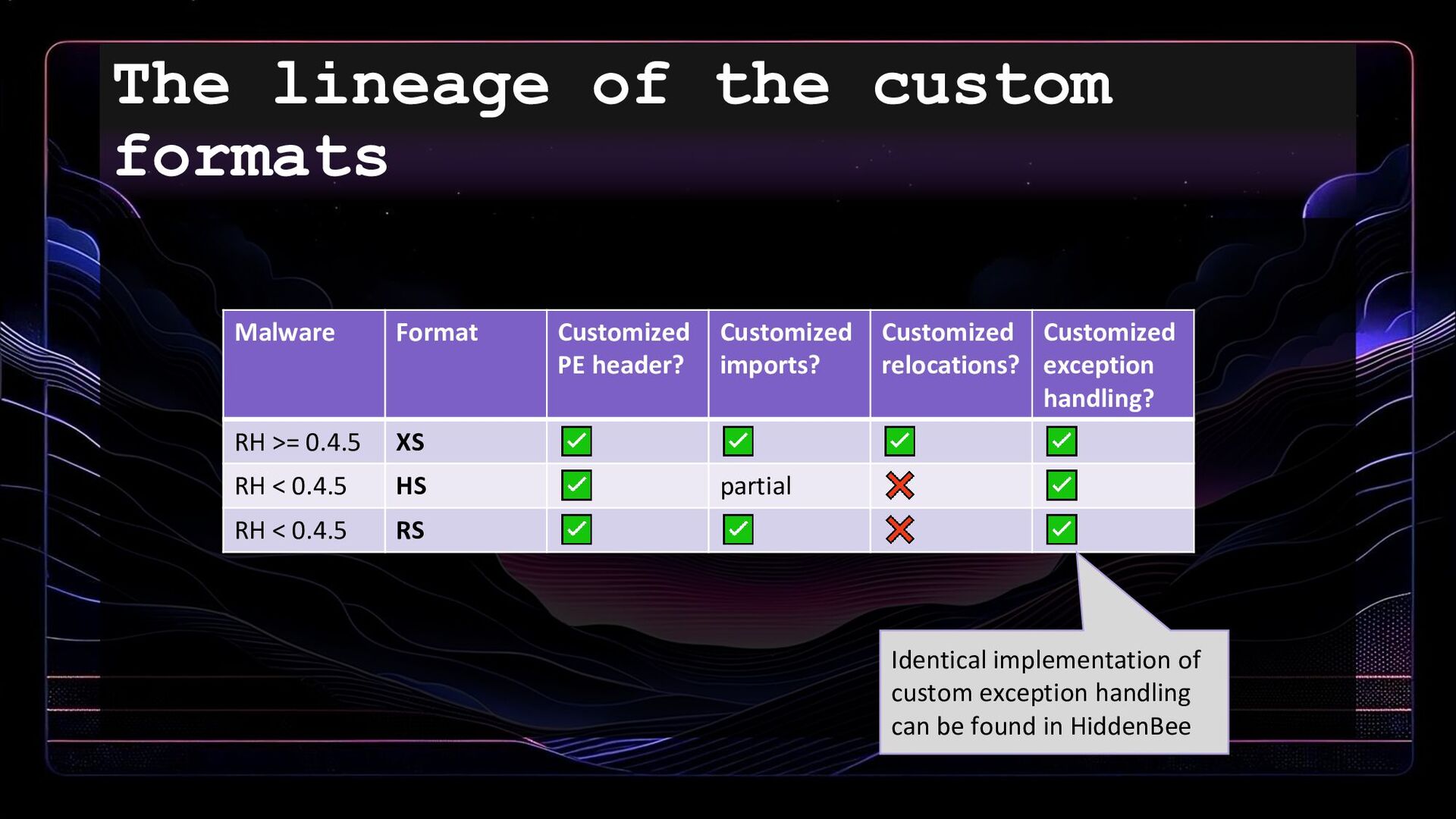
The lineage of the custom formats Malware Format Customized PE
header? Customized imports? Customized relocations? Customized exception handling? RH >= 0.4.5 XS RH < 0.4.5 HS partial RH < 0.4.5 RS Identical implementation of custom exception handling can be found in HiddenBee -
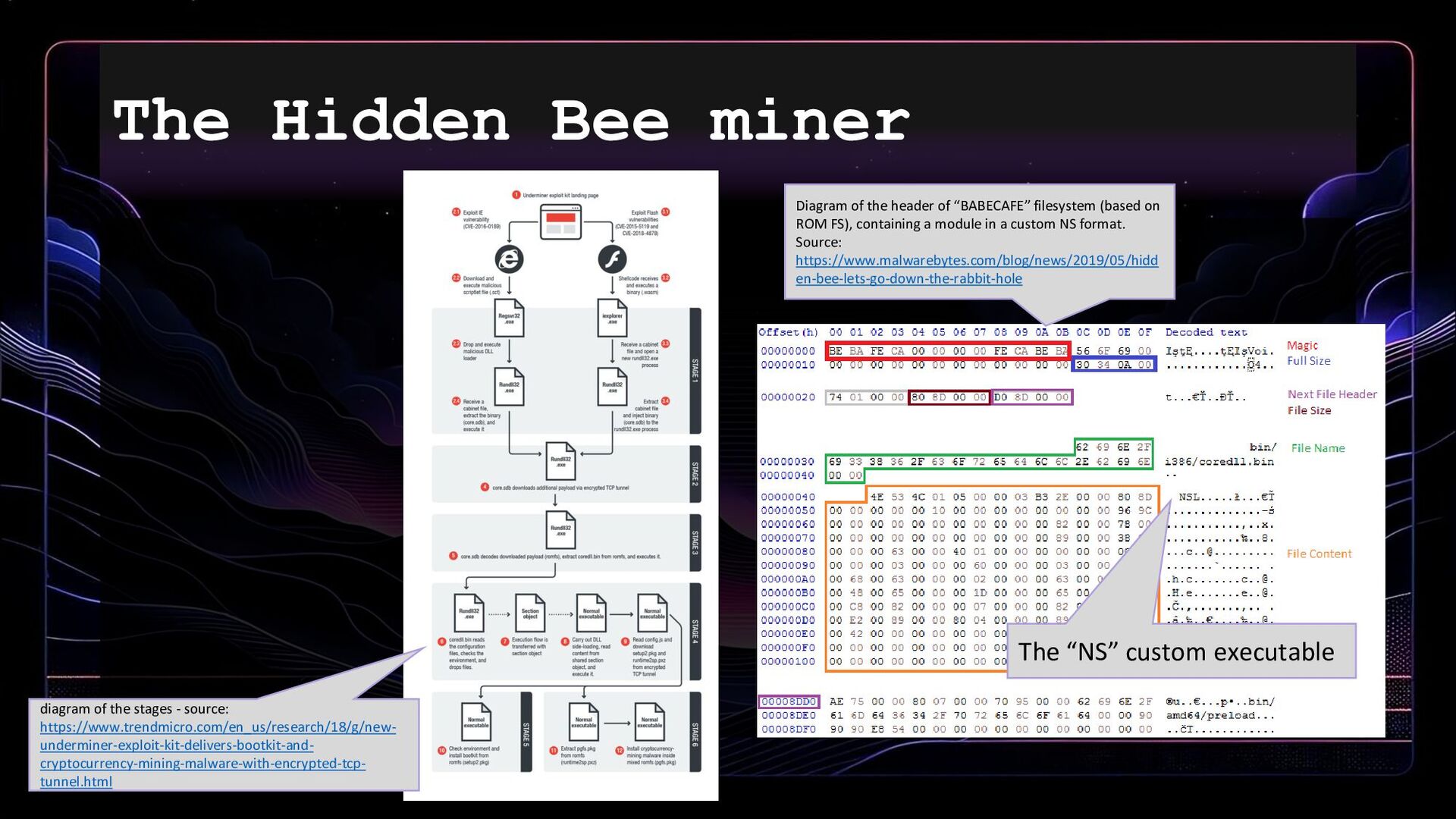
The Hidden Bee miner diagram of the stages - source:
https://www.trendmicro.com/en_us/research/18/g/new- underminer-exploit-kit-delivers-bootkit-and- cryptocurrency-mining-malware-with-encrypted-tcp- tunnel.html Diagram of the header of “BABECAFE” filesystem (based on ROM FS), containing a module in a custom NS format. Source: https://www.malwarebytes.com/blog/news/2019/05/hidd en-bee-lets-go-down-the-rabbit-hole The “NS” custom executable -
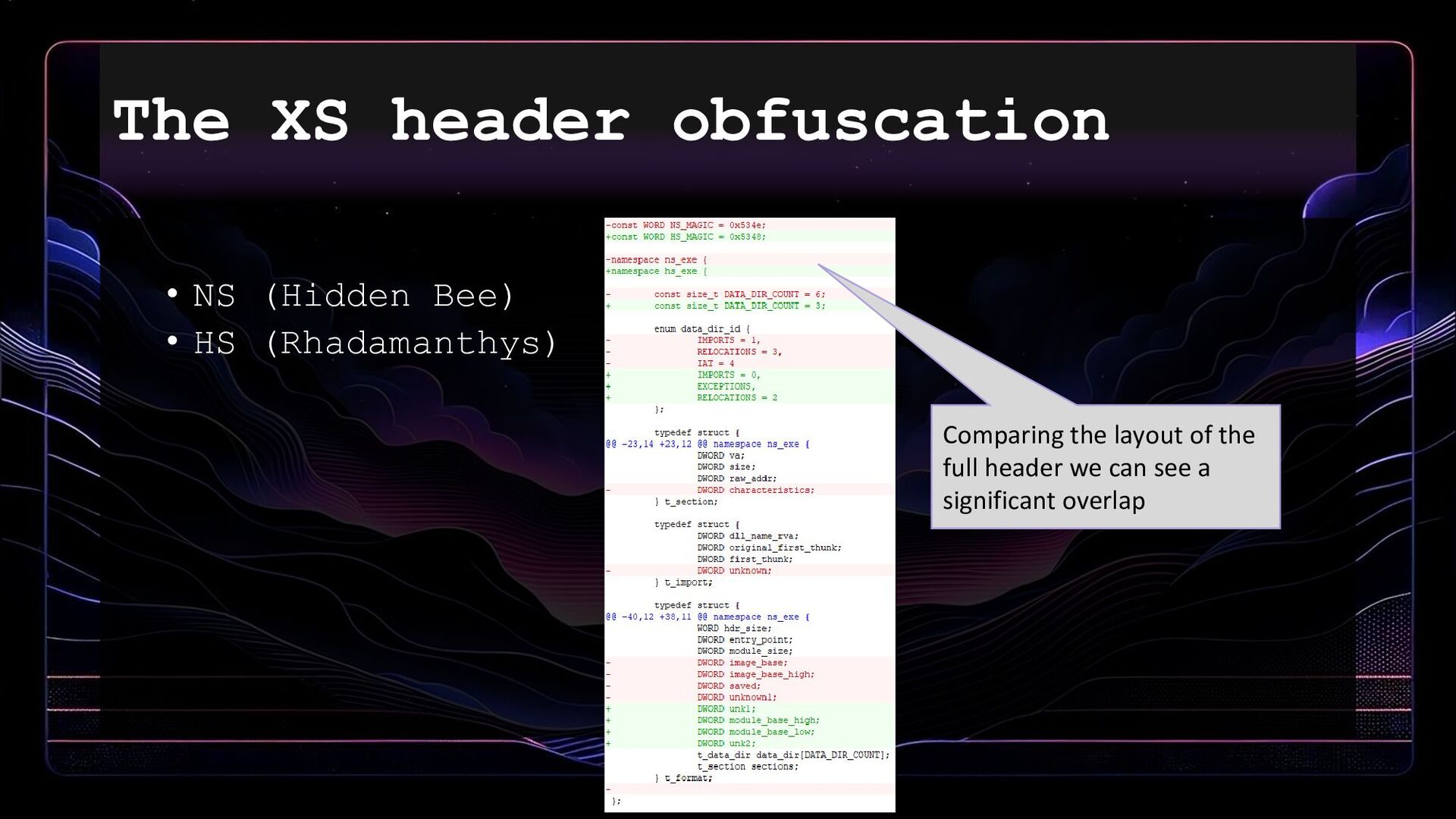
The XS header obfuscation • NS (Hidden Bee) • HS
(Rhadamanthys) Comparing the layout of the full header we can see a significant overlap -
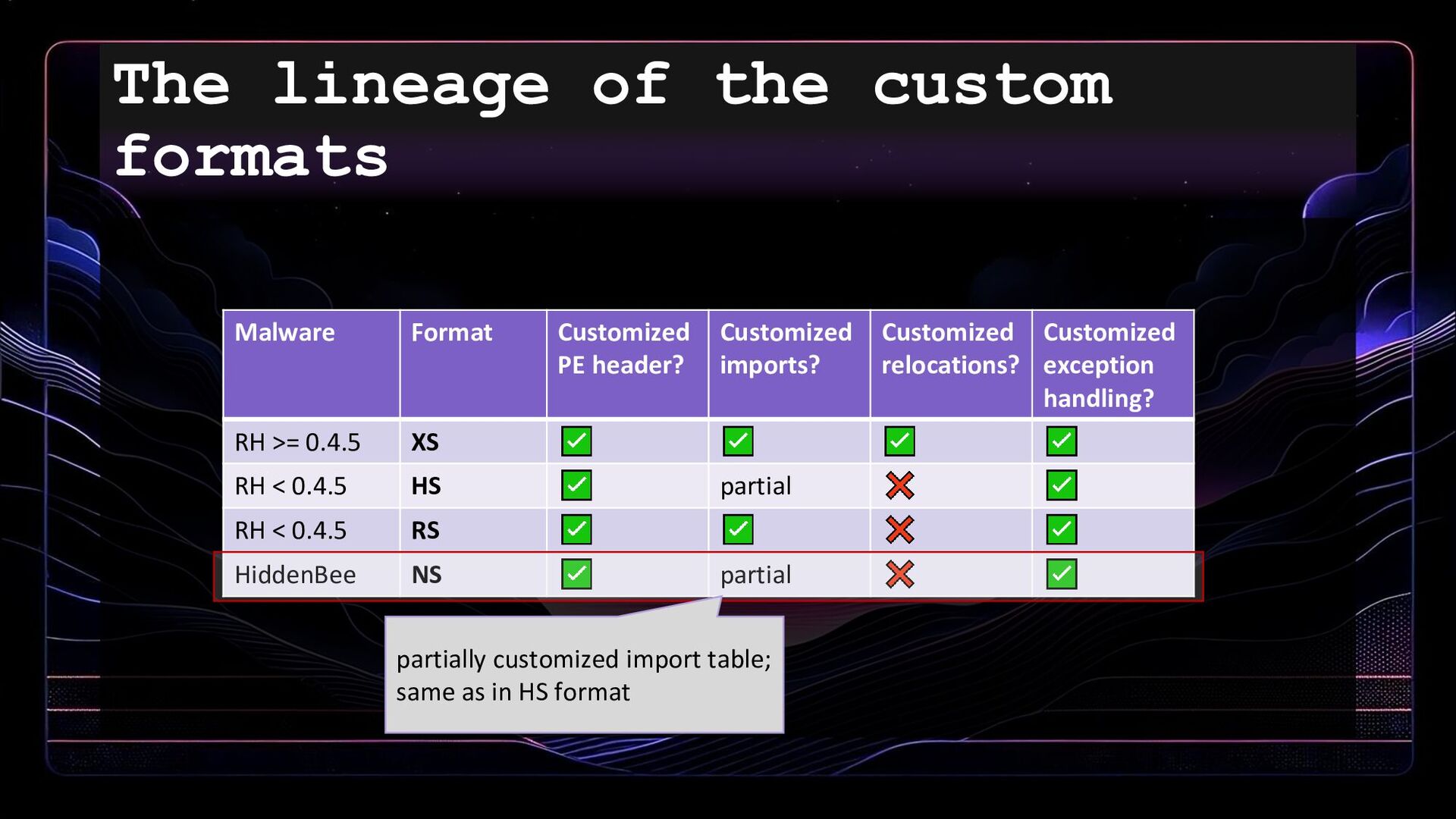
The lineage of the custom formats Malware Format Customized PE
header? Customized imports? Customized relocations? Customized exception handling? RH >= 0.4.5 XS RH < 0.4.5 HS partial RH < 0.4.5 RS HiddenBee NS partial partially customized import table; same as in HS format -
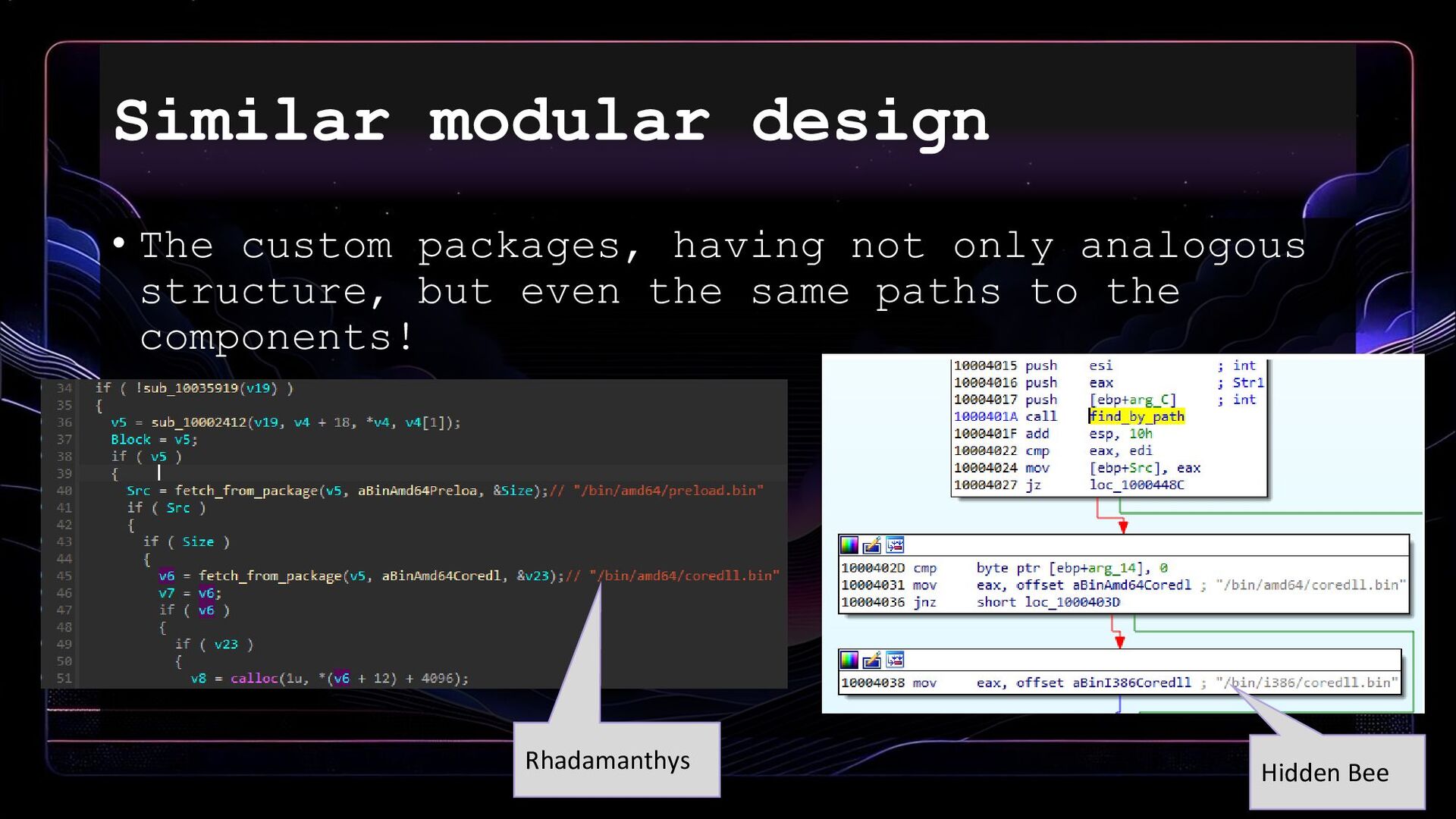
Similar modular design • The custom packages, having not only
analogous structure, but even the same paths to the components! Rhadamanthys Hidden Bee -
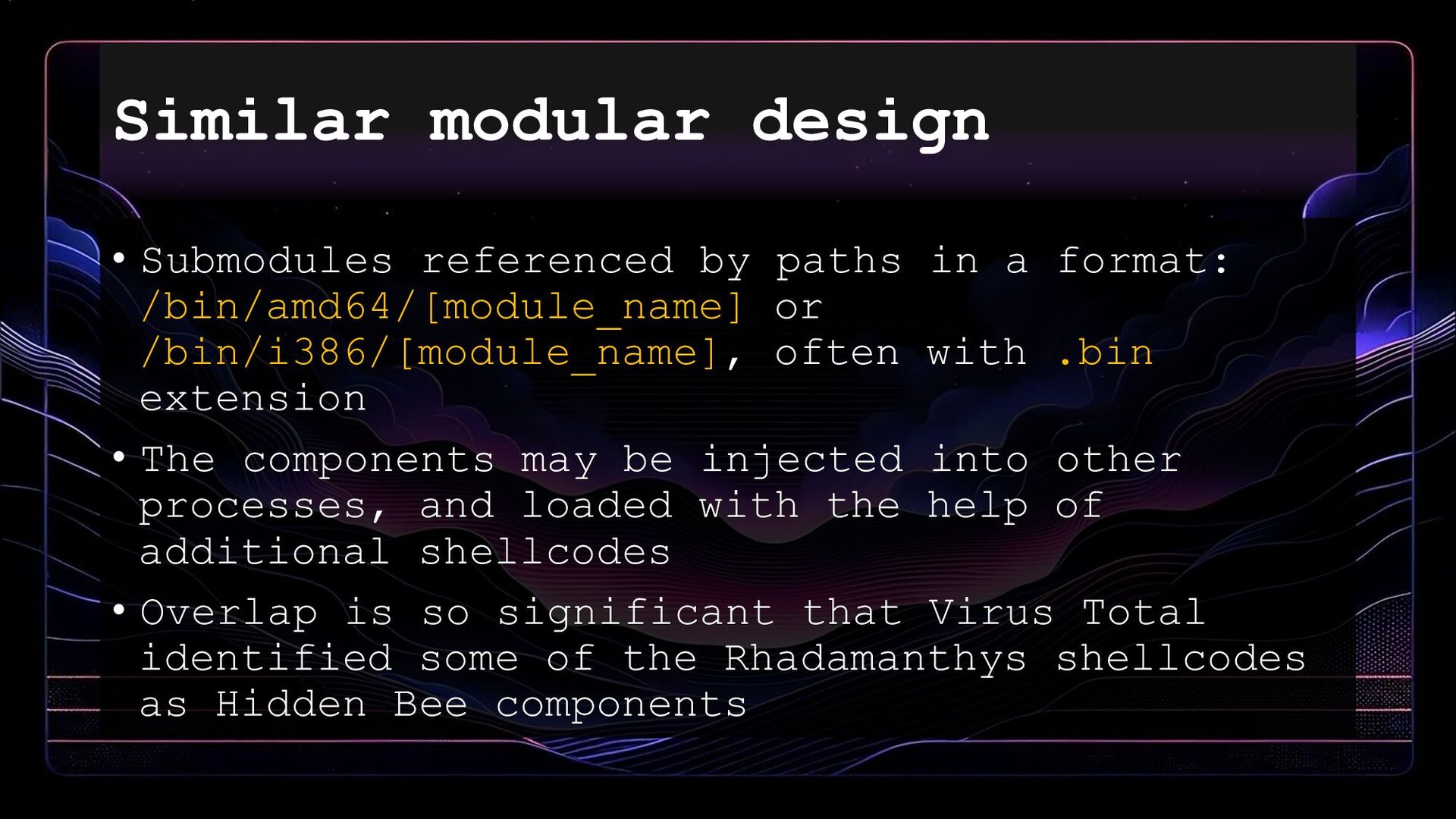
Similar modular design • Submodules referenced by paths in a
format: /bin/amd64/[module_name] or /bin/i386/[module_name], often with .bin extension • The components may be injected into other processes, and loaded with the help of additional shellcodes • Overlap is so significant that Virus Total identified some of the Rhadamanthys shellcodes as Hidden Bee components -
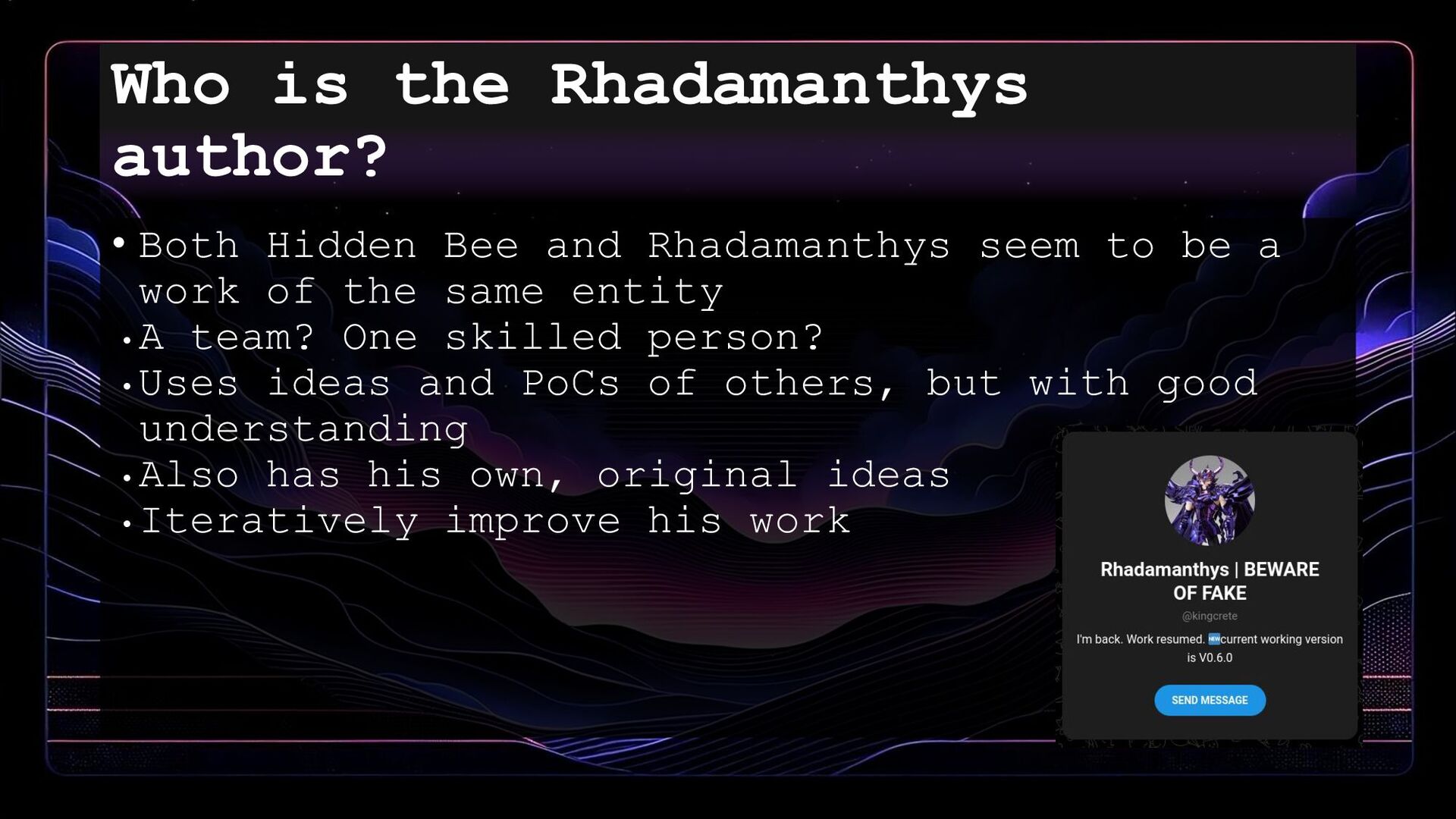
Who is the Rhadamanthys author? • Both Hidden Bee and
Rhadamanthys seem to be a work of the same entity •A team? One skilled person? •Uses ideas and PoCs of others, but with good understanding •Also has his own, original ideas •Iteratively improve his work -
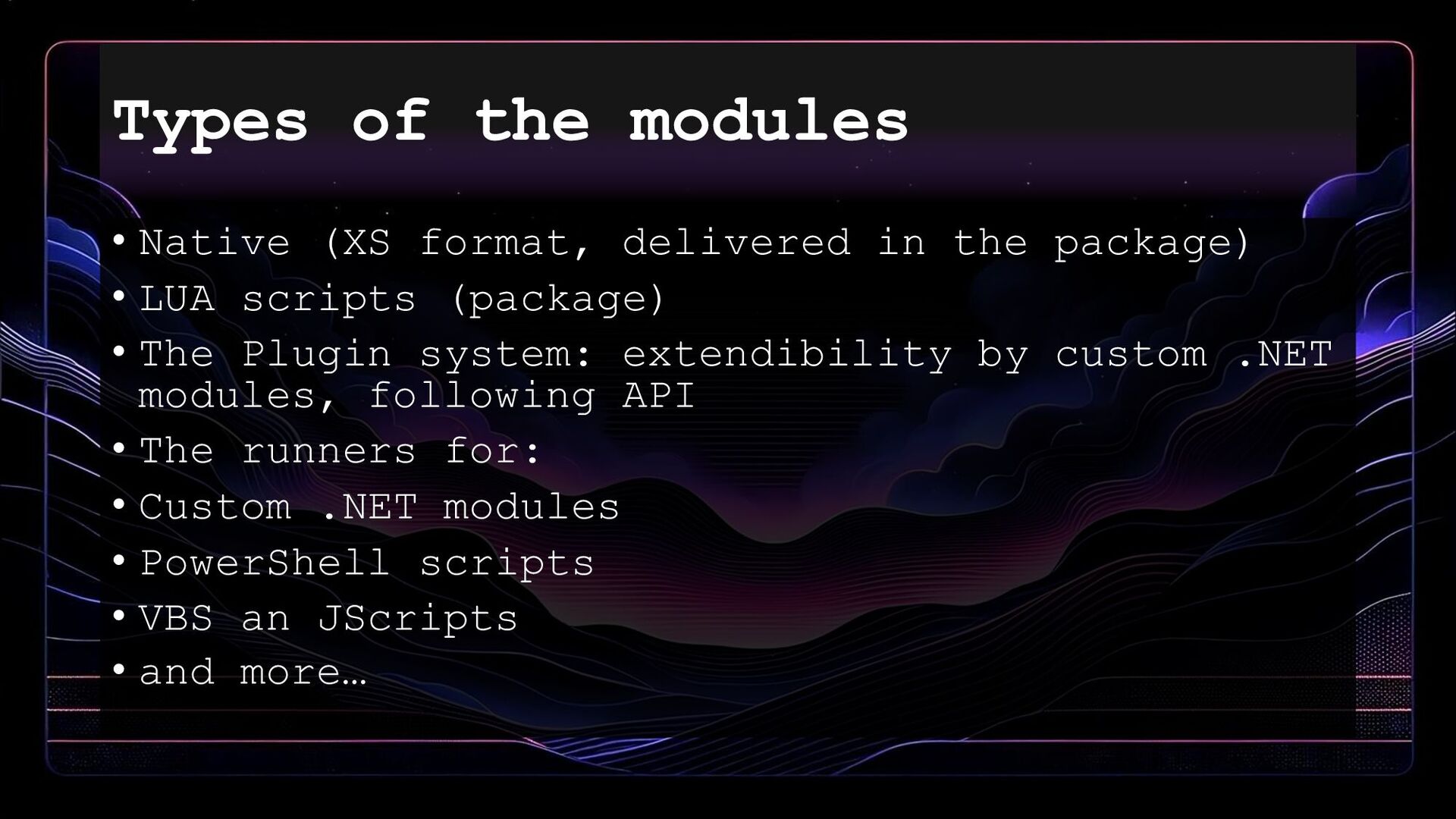
Types of the modules • Native (XS format, delivered in
the package) • LUA scripts (package) • The Plugin system: extendibility by custom .NET modules, following API • The runners for: • Custom .NET modules • PowerShell scripts • VBS an JScripts • and more… -
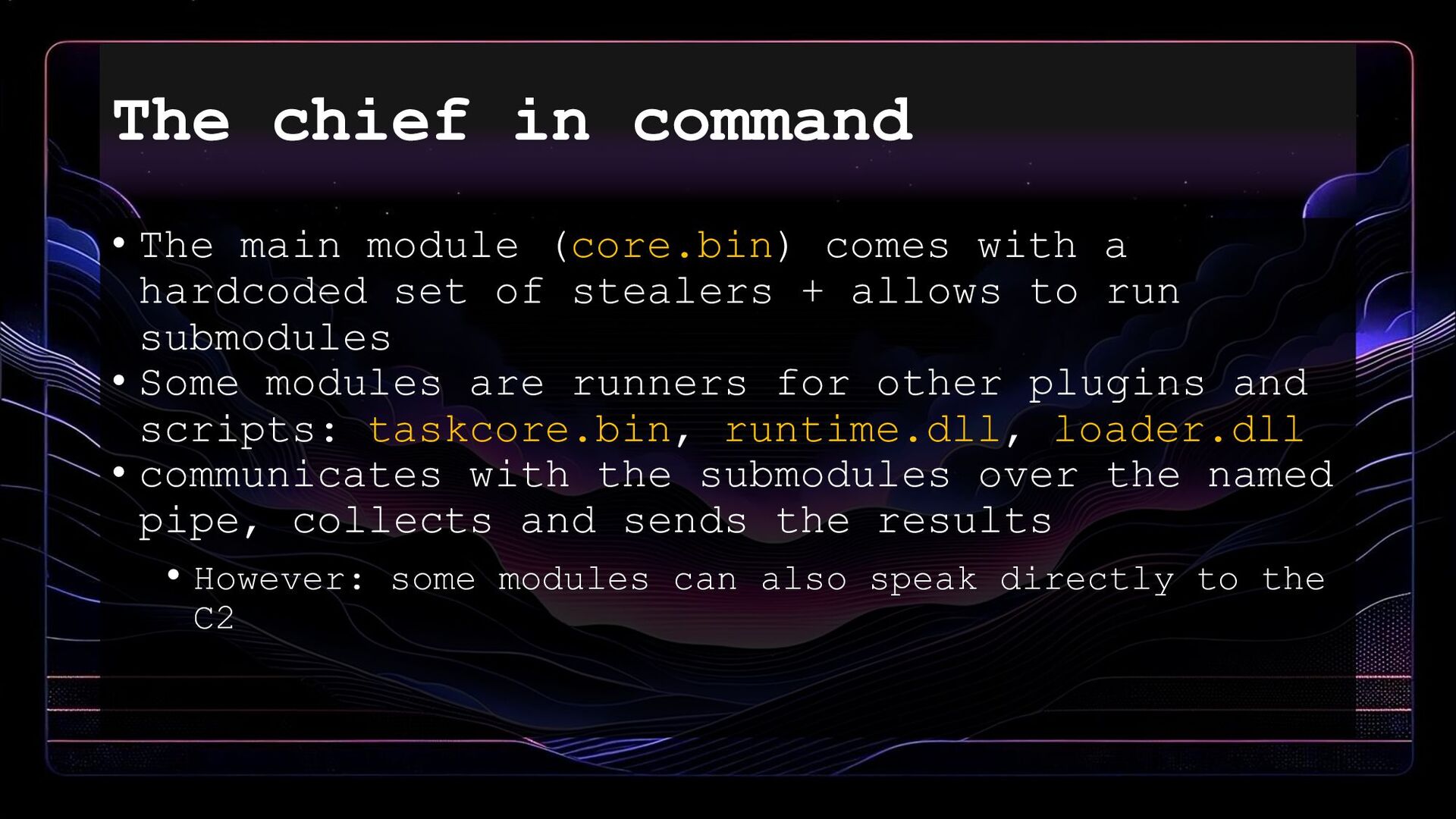
The chief in command • The main module (core.bin) comes
with a hardcoded set of stealers + allows to run submodules • Some modules are runners for other plugins and scripts: taskcore.bin, runtime.dll, loader.dll • communicates with the submodules over the named pipe, collects and sends the results • However: some modules can also speak directly to the C2 -
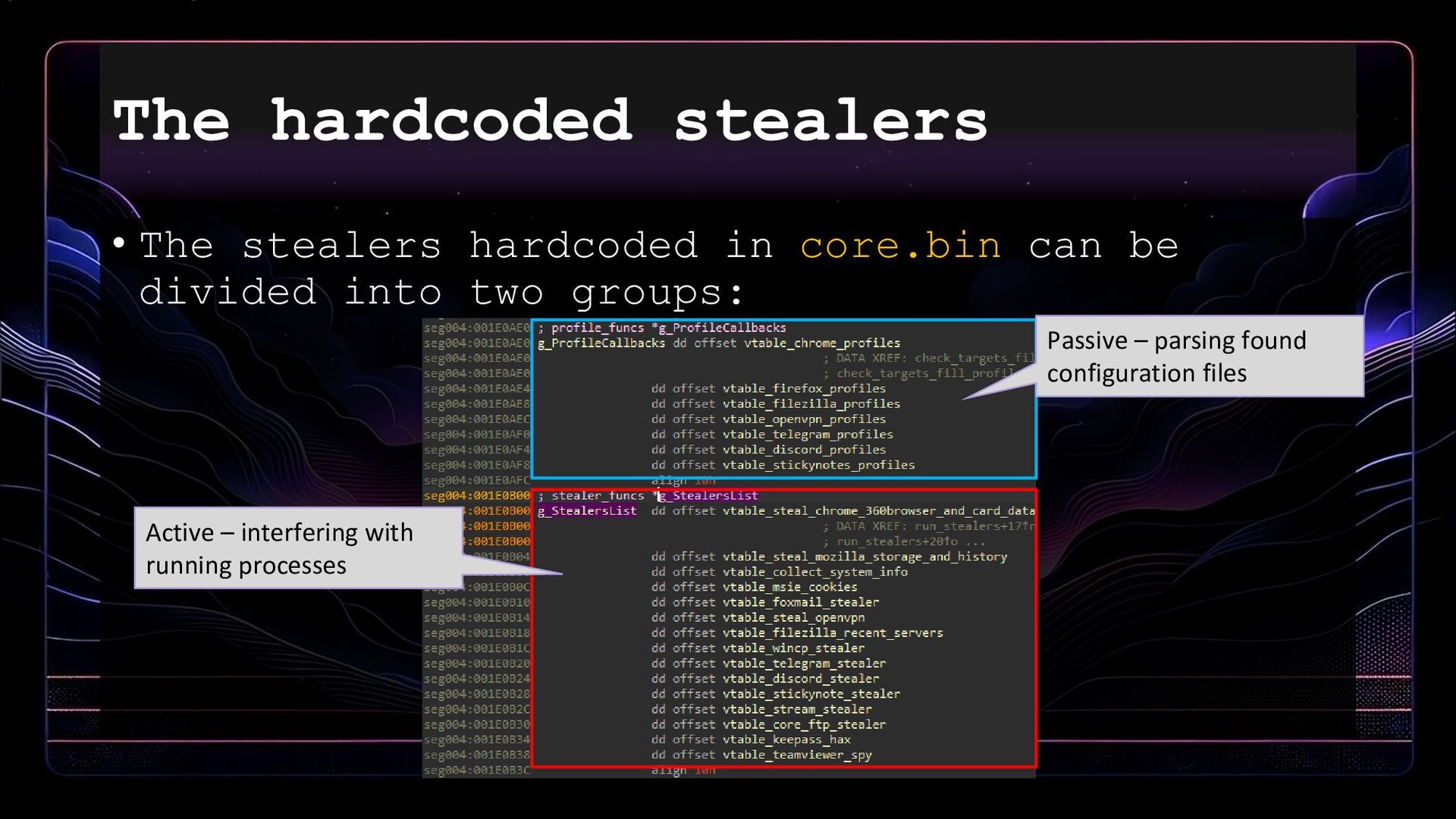
The hardcoded stealers • The stealers hardcoded in core.bin can
be divided into two groups: Passive – parsing found configuration files Active – interfering with running processes -
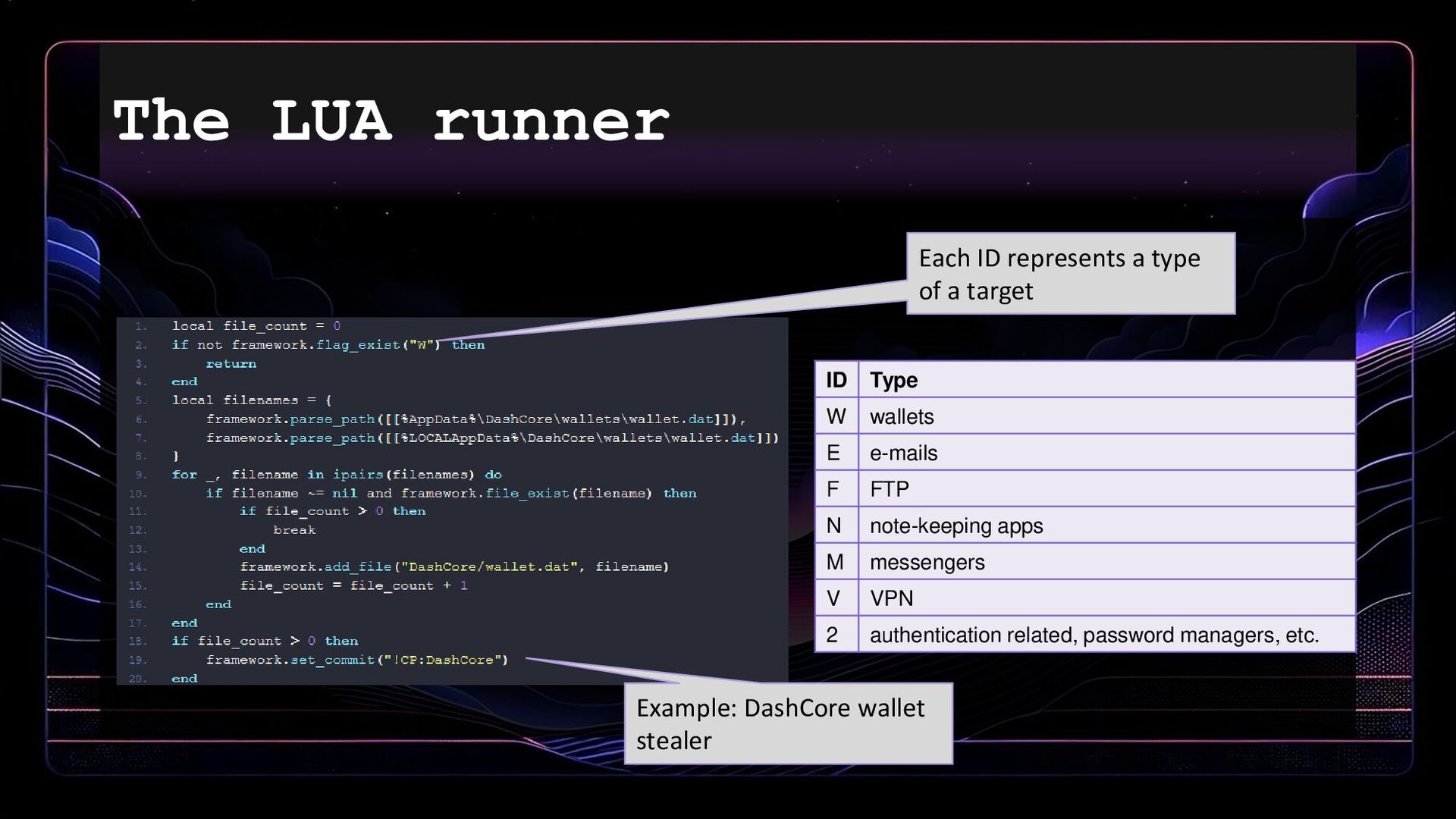
The LUA runner ID Type W wallets E e-mails F
FTP N note-keeping apps M messengers V VPN 2 authentication related, password managers, etc. Example: DashCore wallet stealer Each ID represents a type of a target -
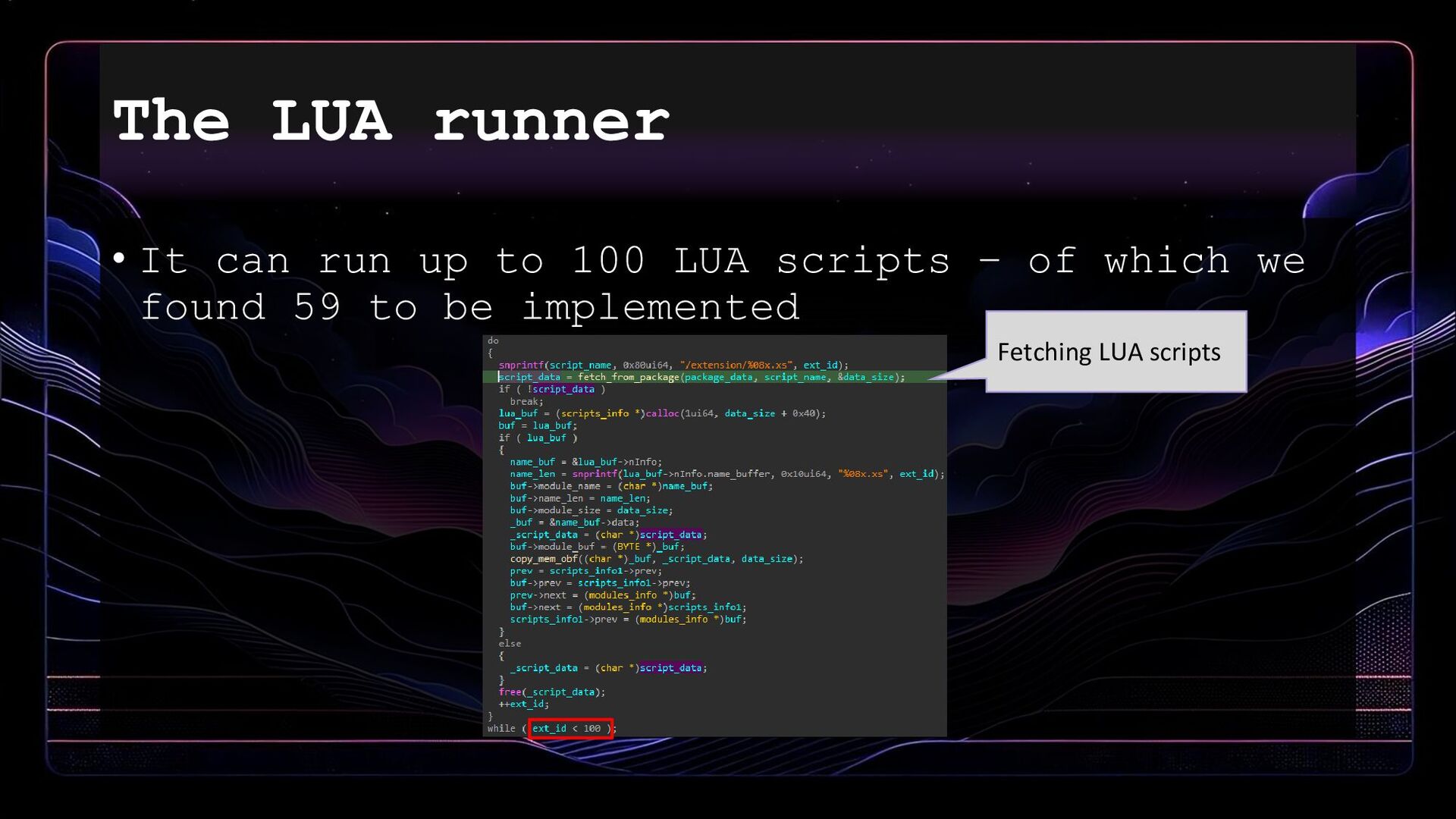
The LUA runner • It can run up to 100
LUA scripts – of which we found 59 to be implemented Fetching LUA scripts -
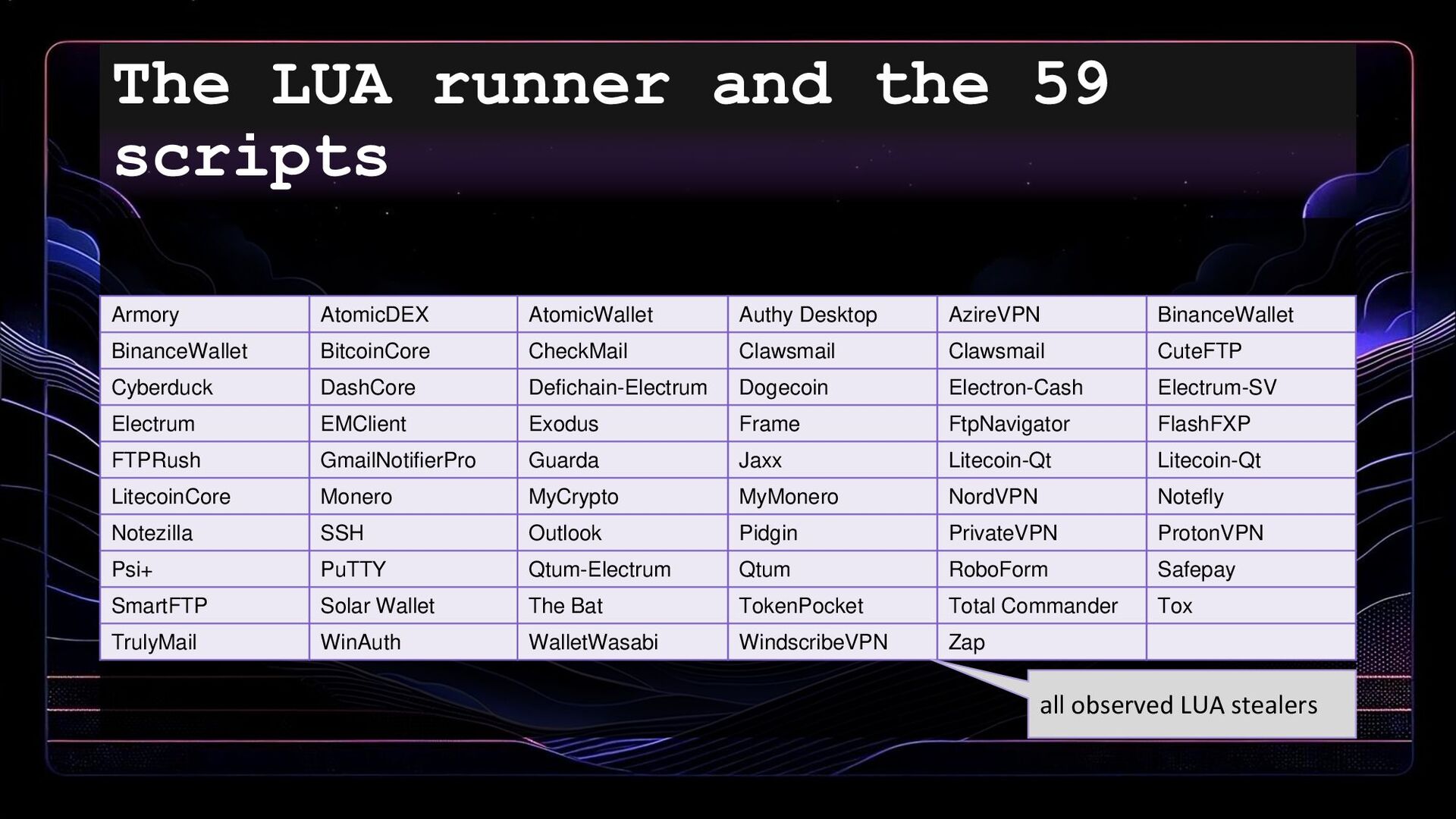
The LUA runner and the 59 scripts Armory AtomicDEX AtomicWallet
Authy Desktop AzireVPN BinanceWallet BinanceWallet BitcoinCore CheckMail Clawsmail Clawsmail CuteFTP Cyberduck DashCore Defichain-Electrum Dogecoin Electron-Cash Electrum-SV Electrum EMClient Exodus Frame FtpNavigator FlashFXP FTPRush GmailNotifierPro Guarda Jaxx Litecoin-Qt Litecoin-Qt LitecoinCore Monero MyCrypto MyMonero NordVPN Notefly Notezilla SSH Outlook Pidgin PrivateVPN ProtonVPN Psi+ PuTTY Qtum-Electrum Qtum RoboForm Safepay SmartFTP Solar Wallet The Bat TokenPocket Total Commander Tox TrulyMail WinAuth WalletWasabi WindscribeVPN Zap all observed LUA stealers -
.NET and PowerShell support • Although the core components are
native code, Rhadamanthys puts a lot of emphasis on .NET and PowerShell • There are few different components that allow to run .NET and PowerShell plugins -
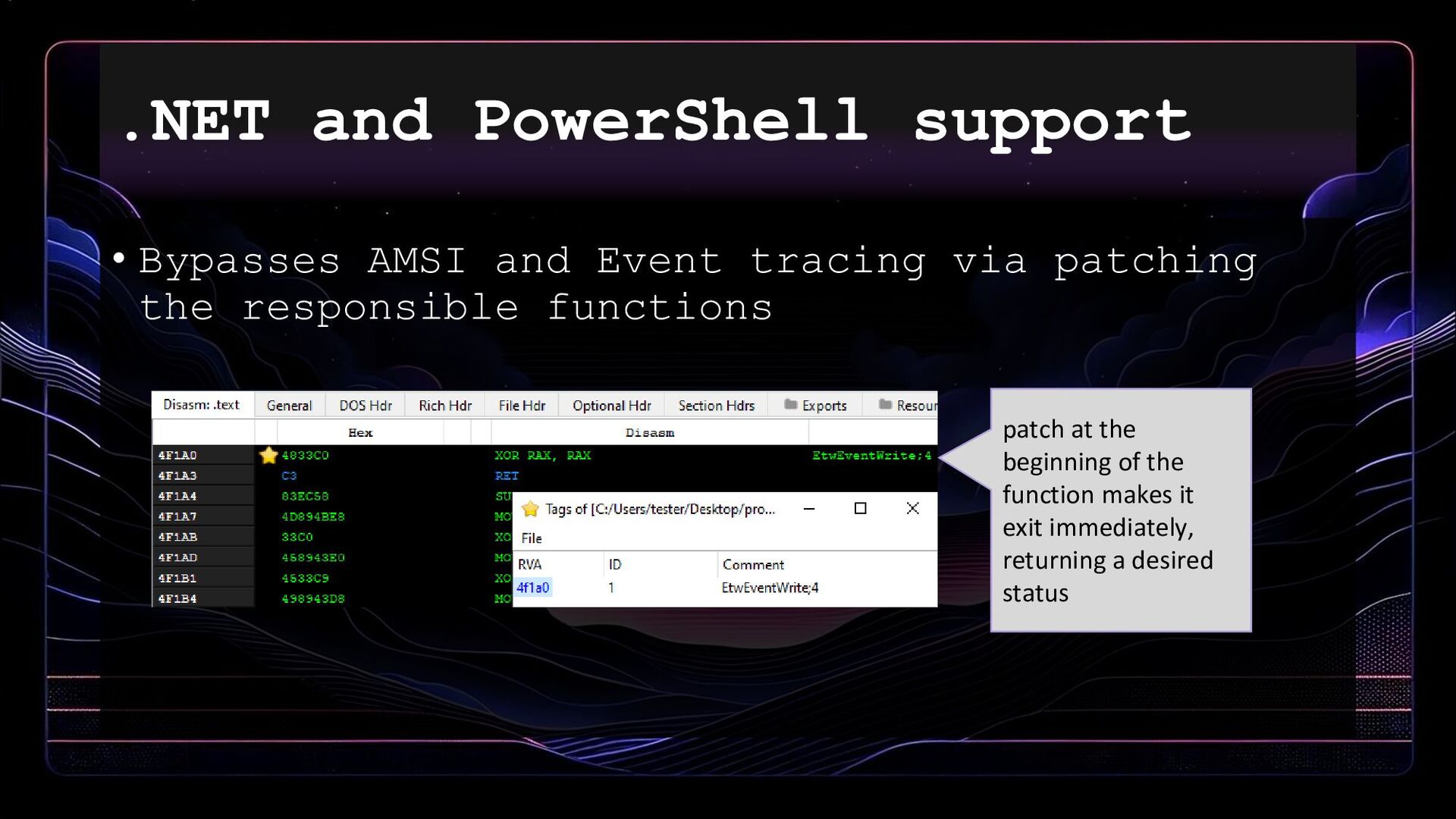
.NET and PowerShell support • Bypasses AMSI and Event tracing
via patching the responsible functions patch at the beginning of the function makes it exit immediately, returning a desired status -
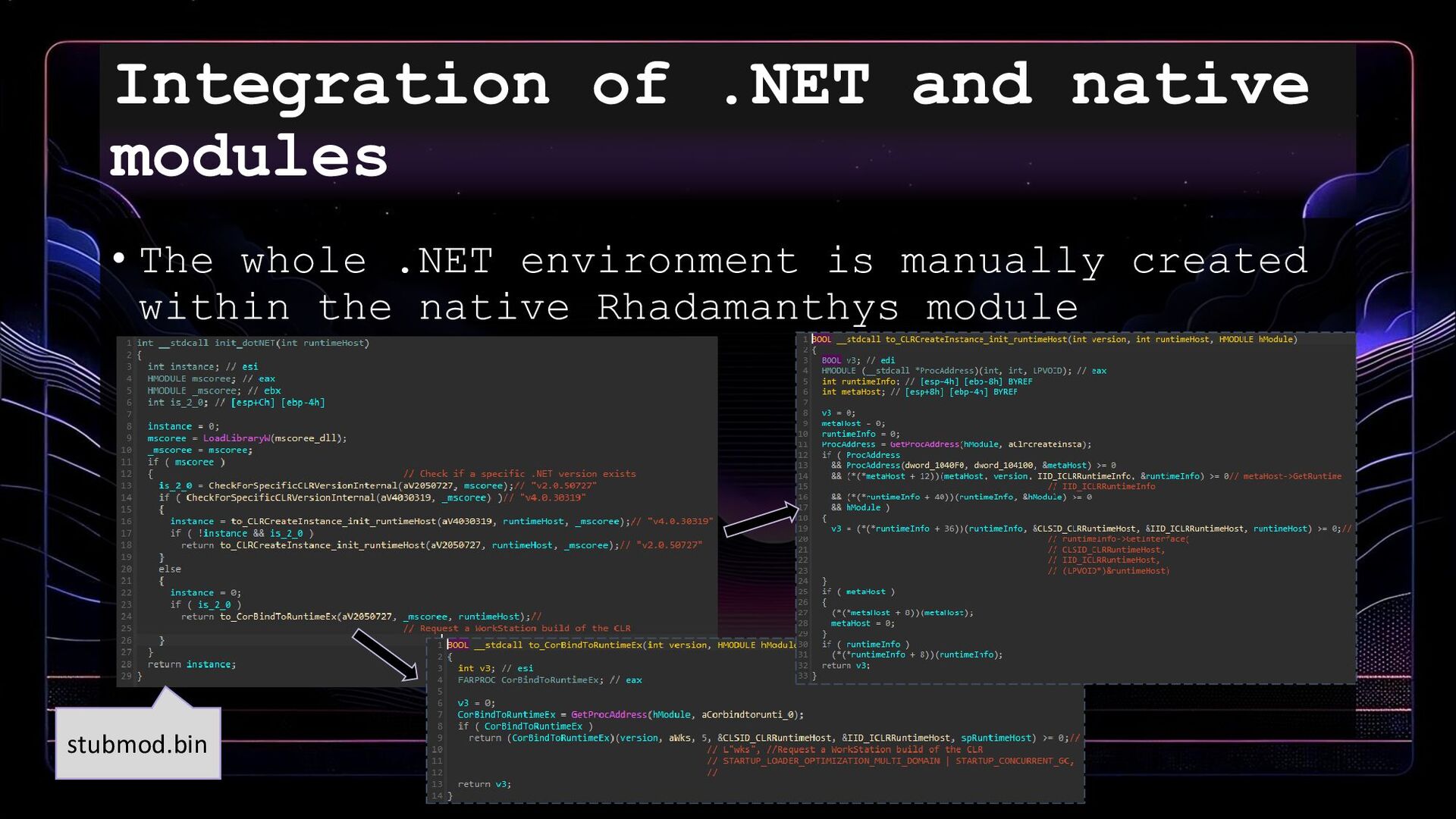
Integration of .NET and native modules • The whole .NET
environment is manually created within the native Rhadamanthys module stubmod.bin -
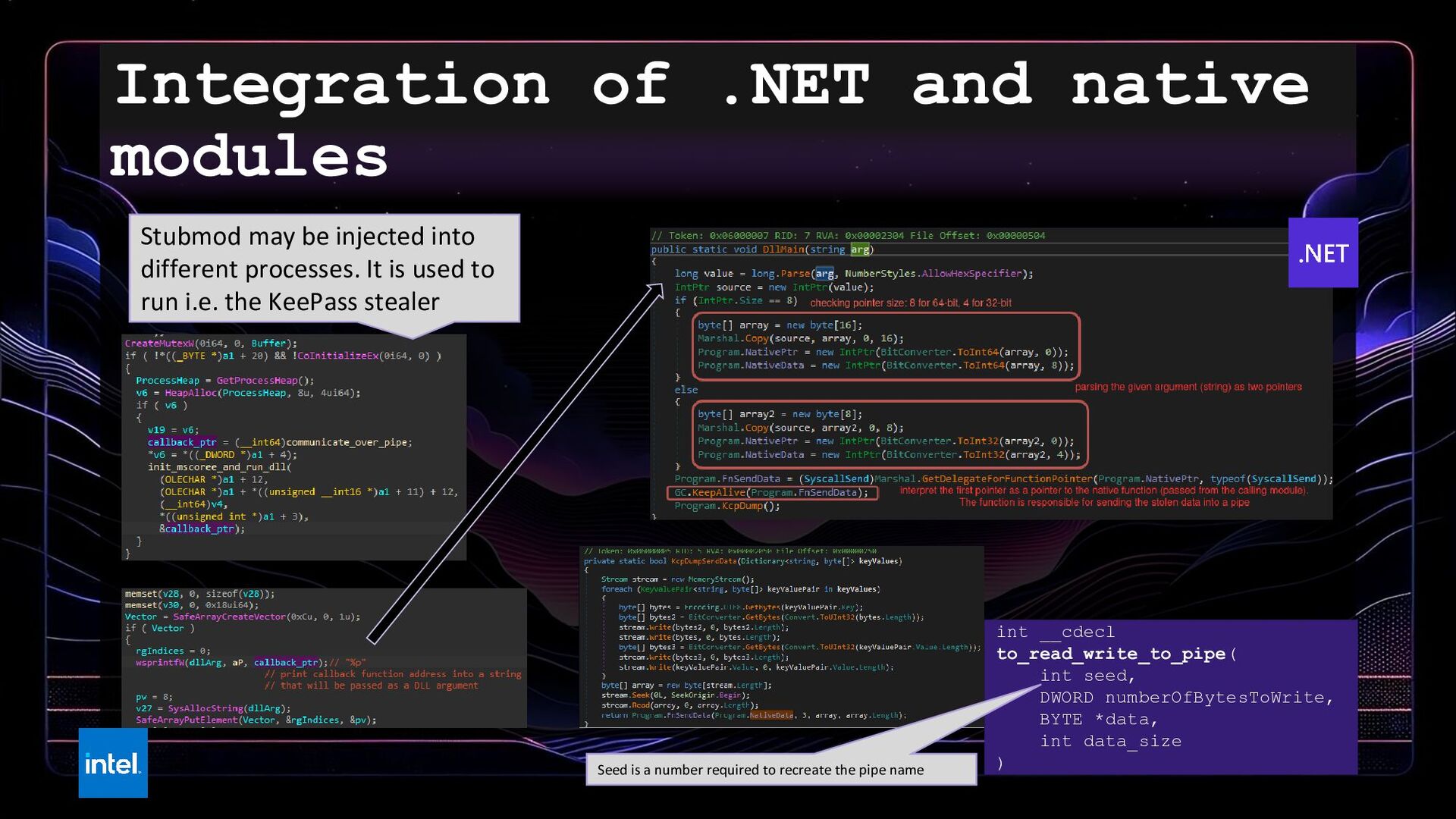
Integration of .NET and native modules Stubmod may be injected
into different processes. It is used to run i.e. the KeePass stealer int __cdecl to_read_write_to_pipe( int seed, DWORD numberOfBytesToWrite, BYTE *data, int data_size ) Seed is a number required to recreate the pipe name -
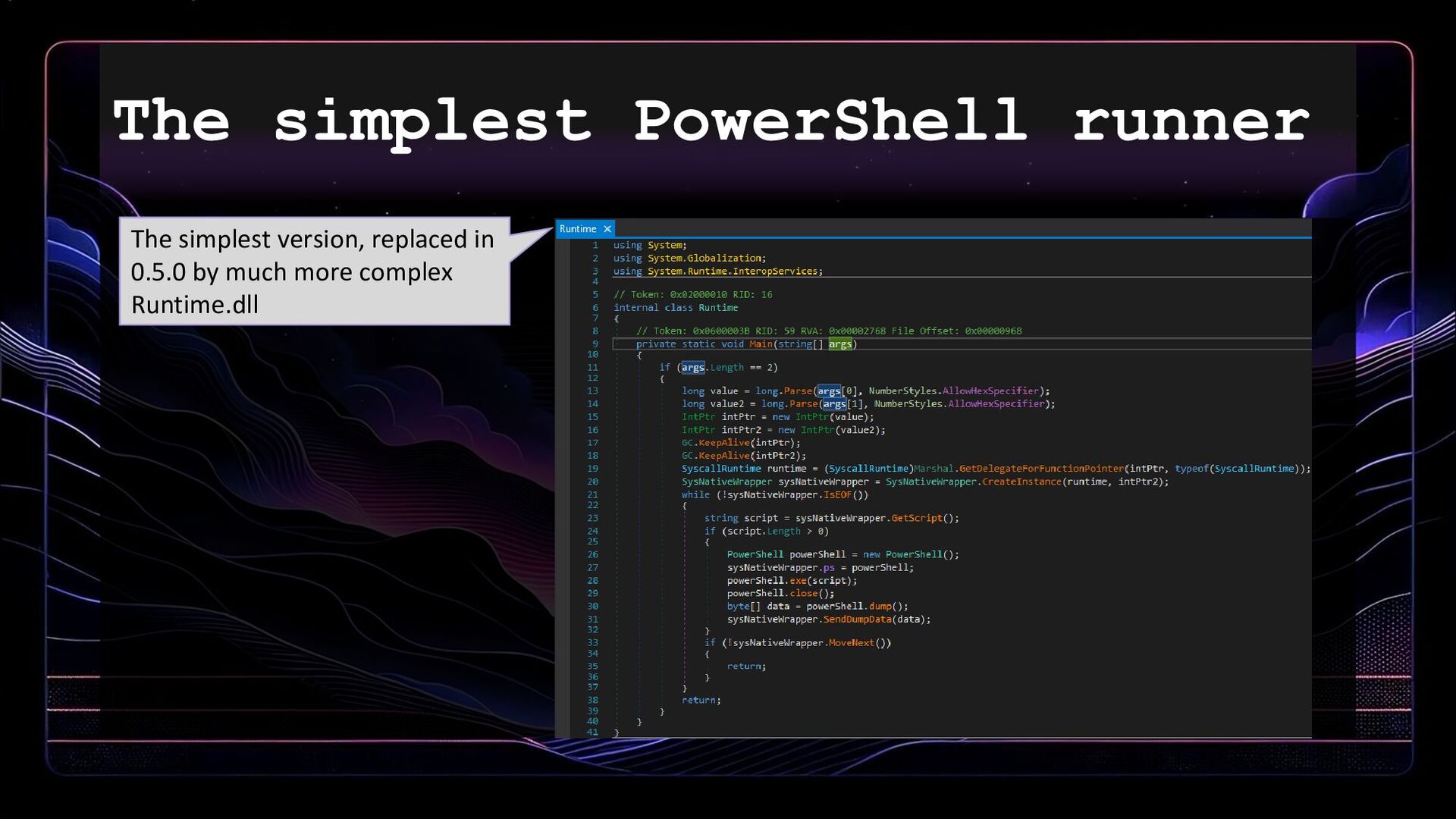
The simplest PowerShell runner The simplest version, replaced in 0.5.0
by much more complex Runtime.dll -
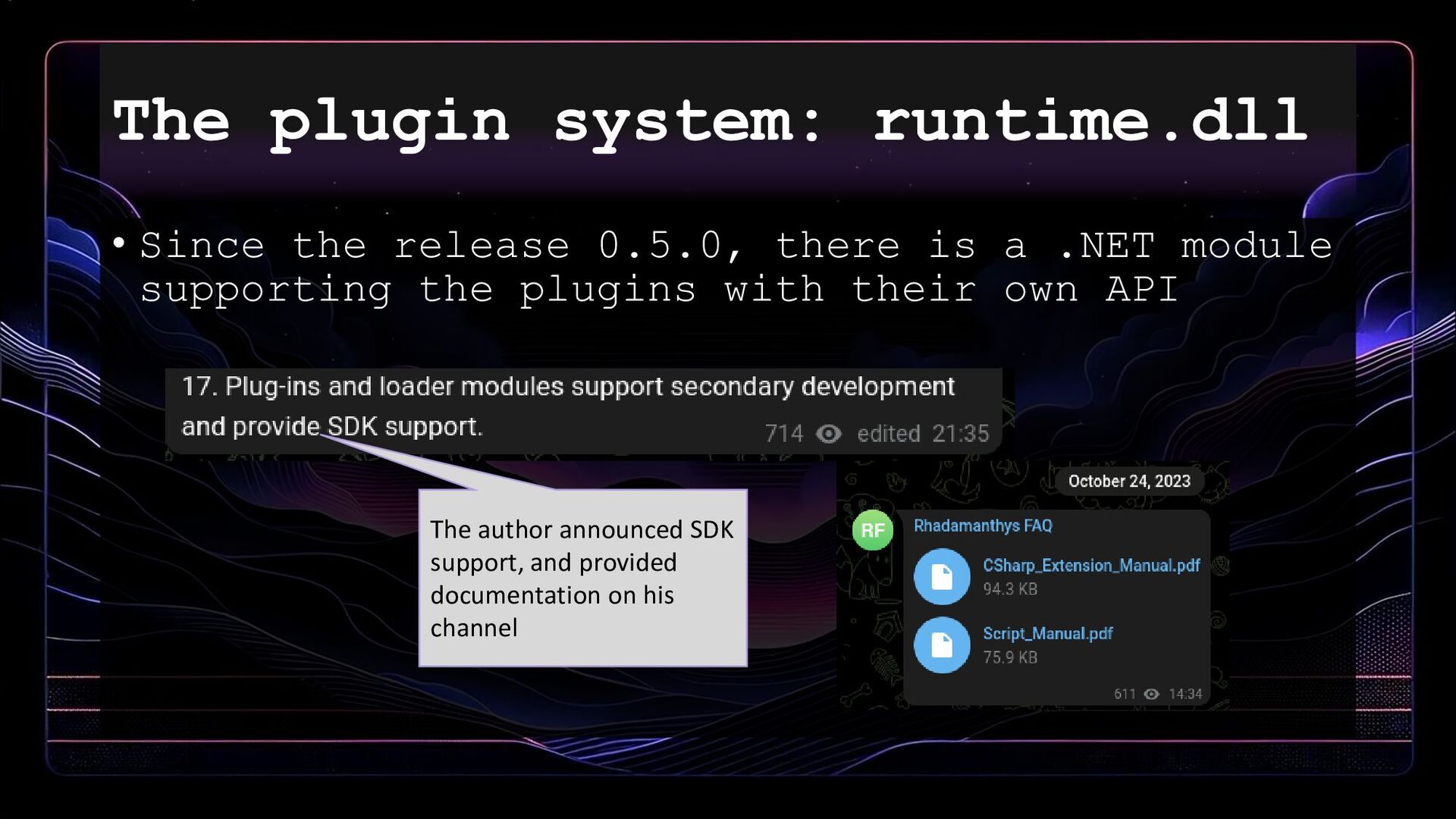
The plugin system: runtime.dll • Since the release 0.5.0, there
is a .NET module supporting the plugins with their own API The author announced SDK support, and provided documentation on his channel -
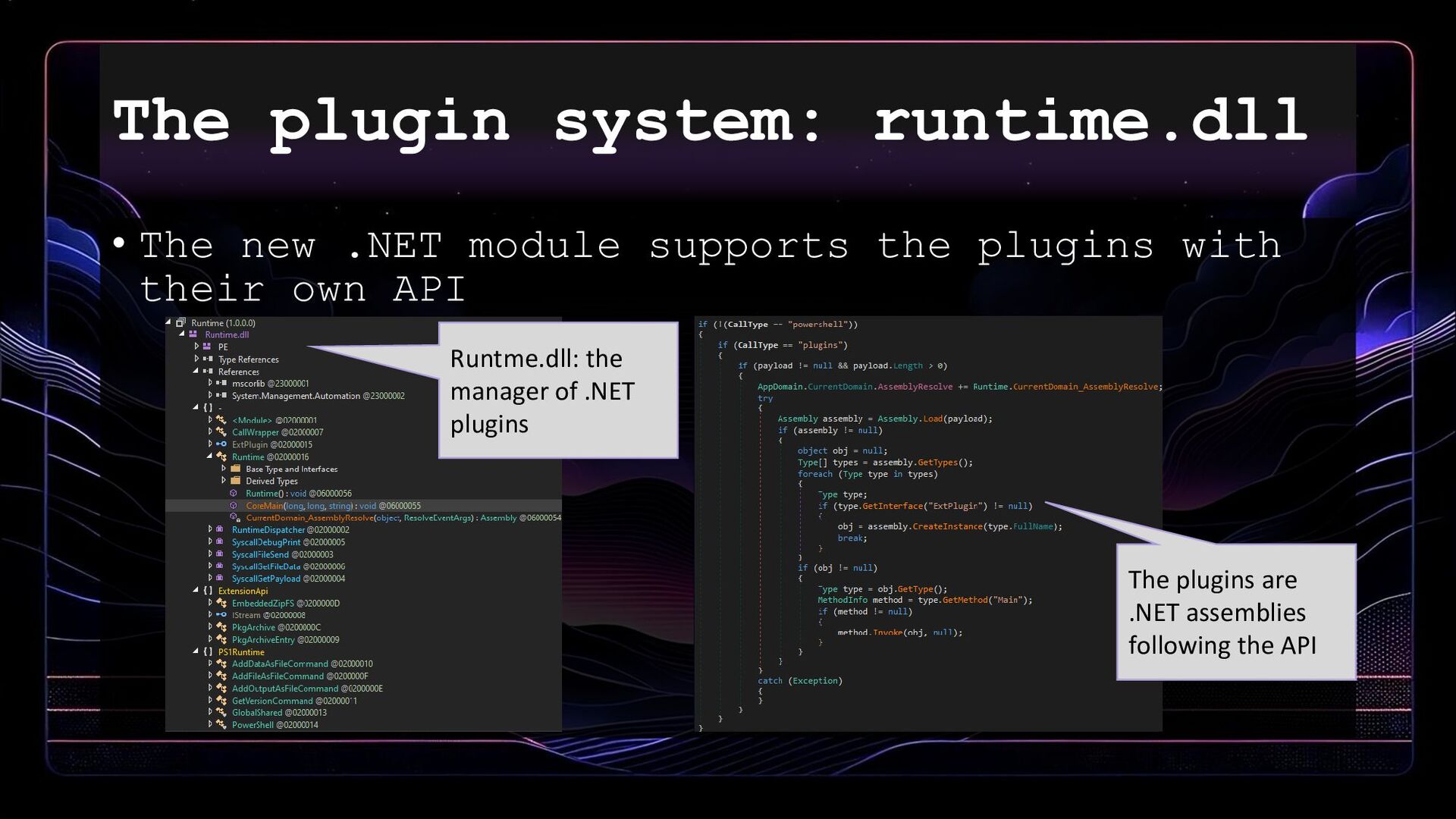
The plugin system: runtime.dll • The new .NET module supports
the plugins with their own API The plugins are .NET assemblies following the API Runtme.dll: the manager of .NET plugins -
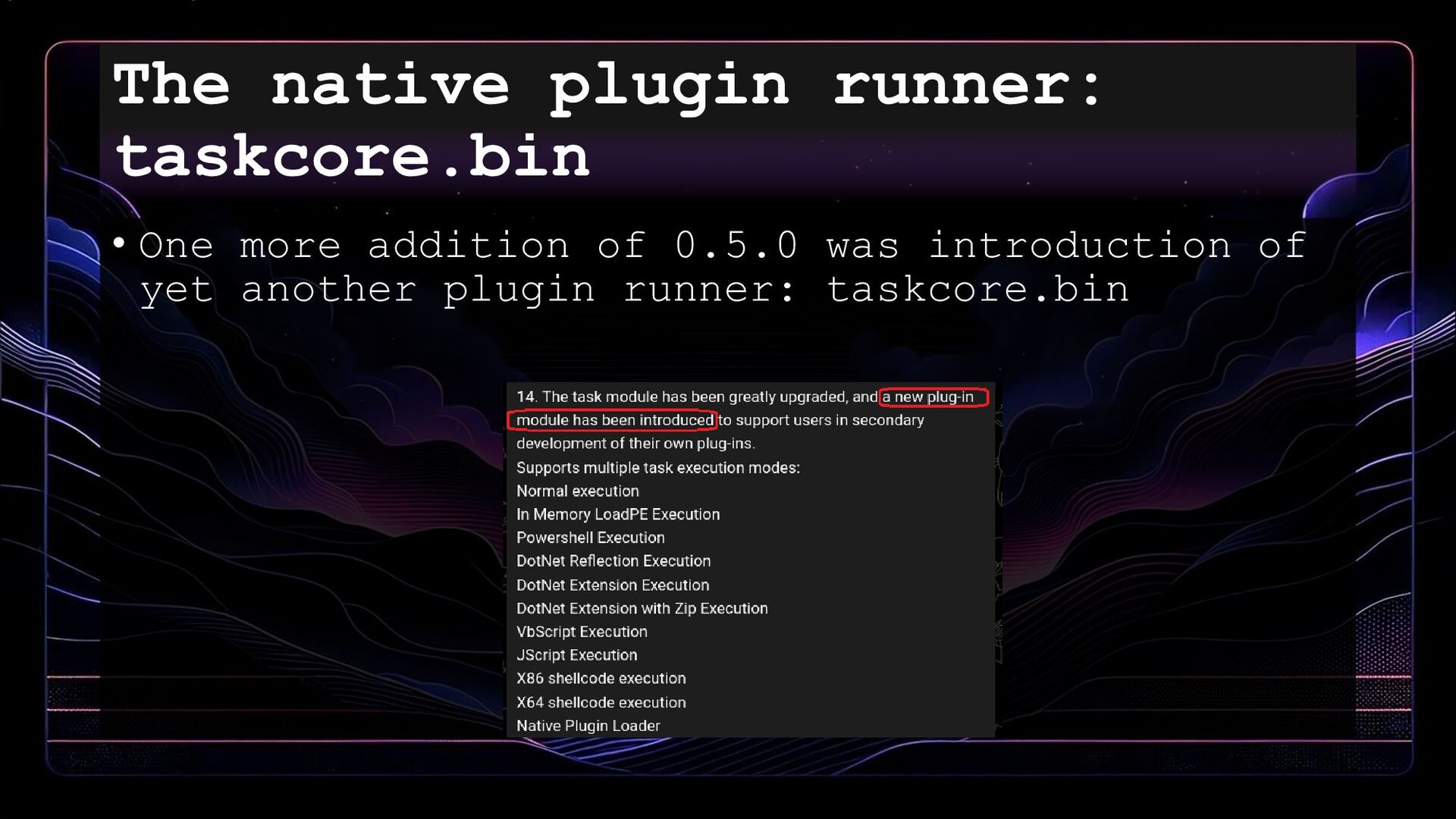
The native plugin runner: taskcore.bin • One more addition of
0.5.0 was introduction of yet another plugin runner: taskcore.bin -
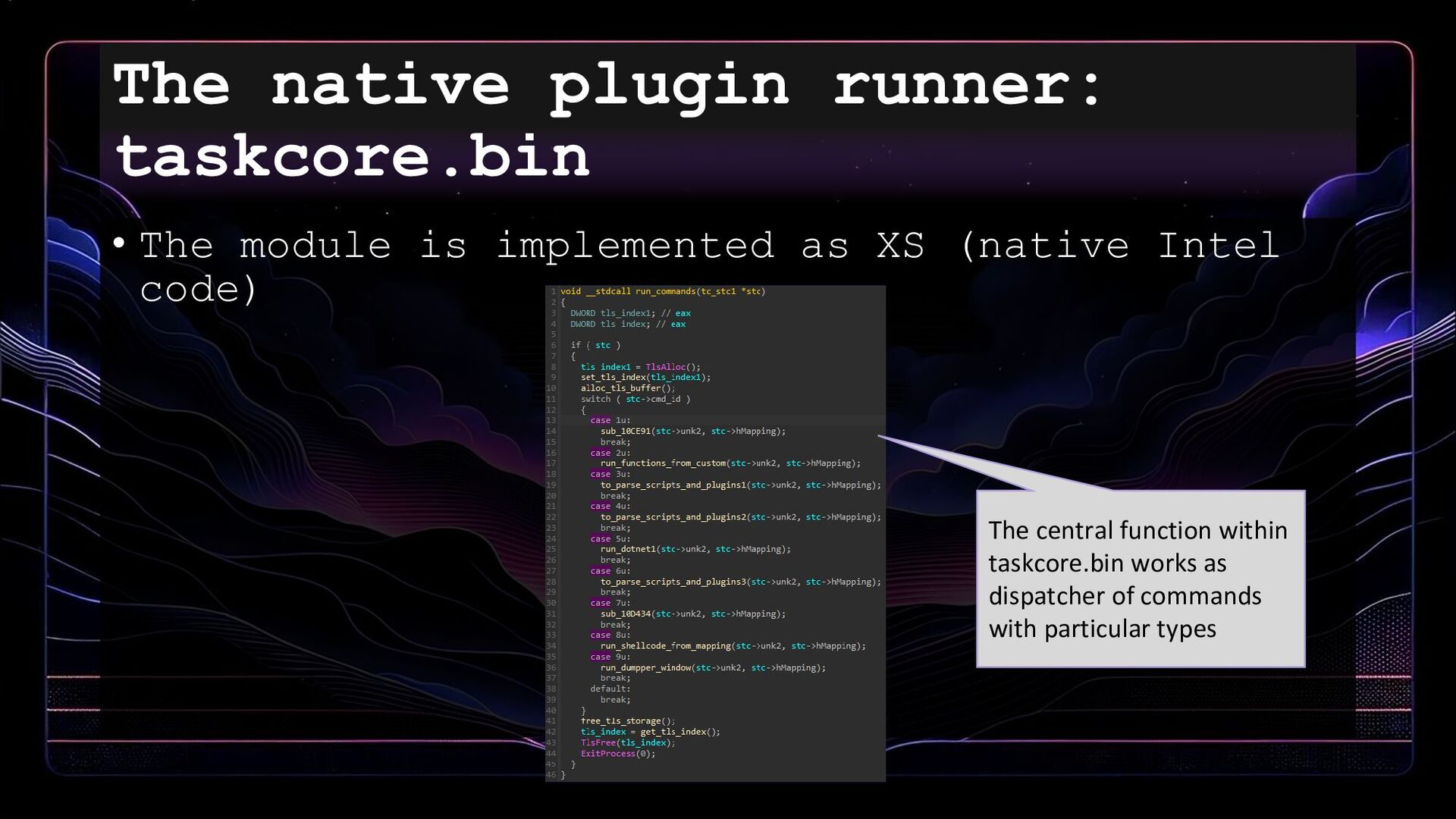
The native plugin runner: taskcore.bin • The module is implemented
as XS (native Intel code) The central function within taskcore.bin works as dispatcher of commands with particular types -
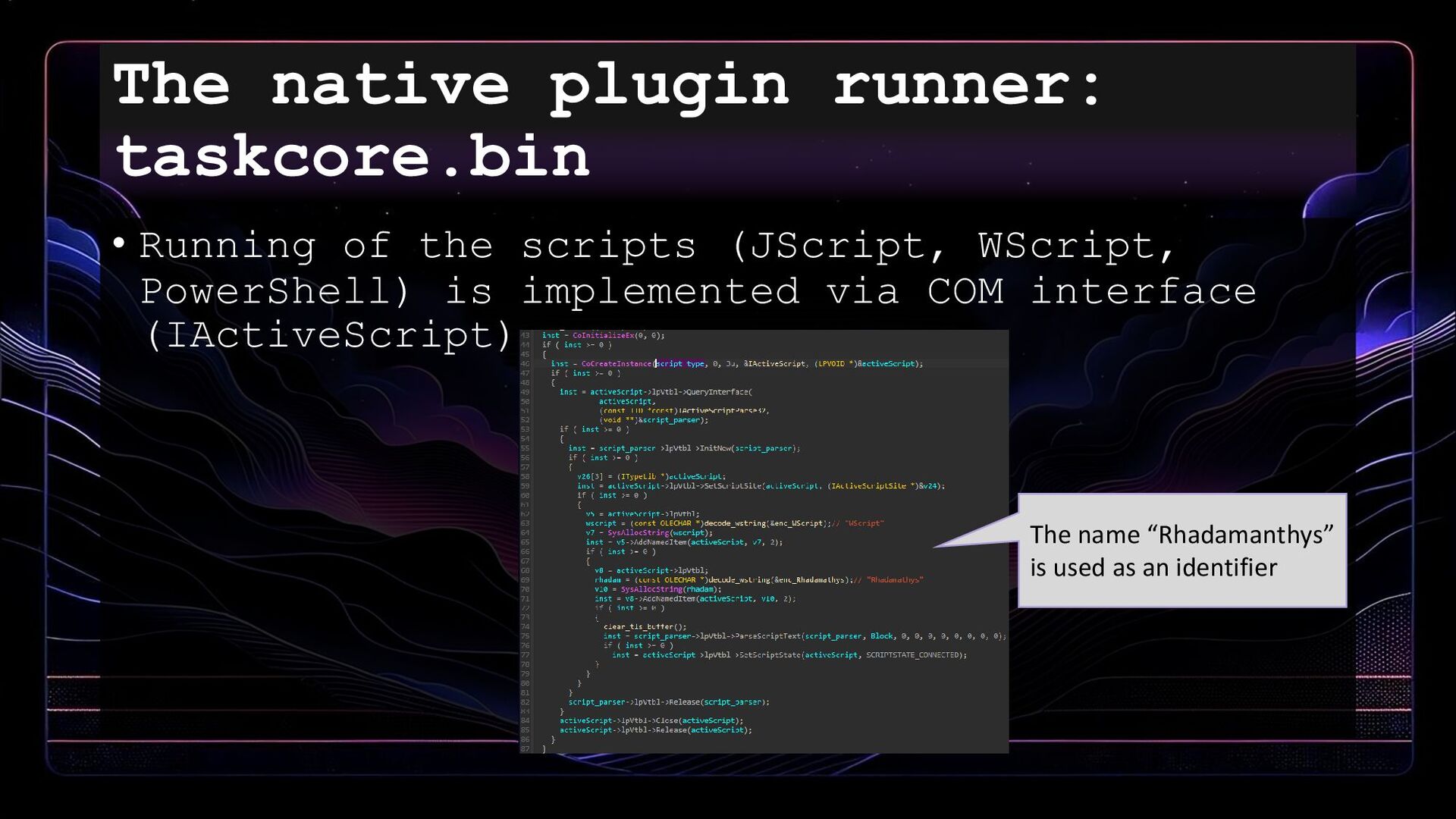
The native plugin runner: taskcore.bin • Running of the scripts
(JScript, WScript, PowerShell) is implemented via COM interface (IActiveScript) The name “Rhadamanthys” is used as an identifier -
Conclusions • Rhadamanthys is complex, and keeps evolving - we
still didn’t cover it fully • Understanding the design helps reaching out parts that interest us the most •It’s easy to get lost in details: try to start with some concrete questions to answer -
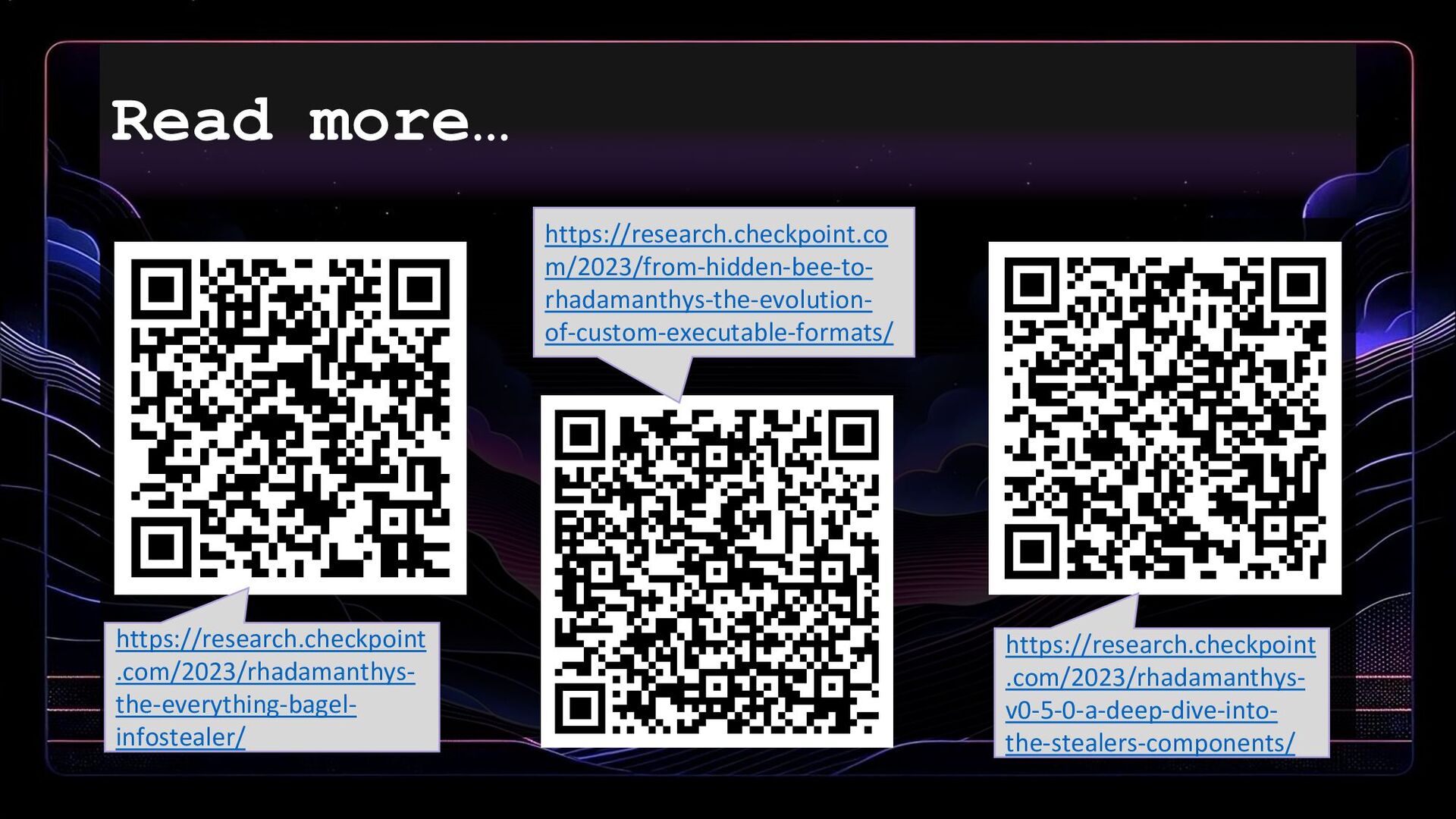
Read more… https://research.checkpoint .com/2023/rhadamanthys- v0-5-0-a-deep-dive-into- the-stealers-components/ https://research.checkpoint.co m/2023/from-hidden-bee-to- rhadamanthys-the-evolution- of-custom-executable-formats/
https://research.checkpoint .com/2023/rhadamanthys- the-everything-bagel- infostealer/