Upgrade to Pro — share decks privately, control downloads, hide ads and more …

Radon Mitigation System Maintenance: A Homeowne...

Sponsored · Your Podcast. Everywhere. Effortlessly. Share. Educate. Inspire. Entertain. You do you. We'll handle the rest. →
Avatar for Hugh Wolf Hugh Wolf
September 29, 2026
0

Radon Mitigation System Maintenance: A Homeowner's Guide

Learn how to keep your radon mitigation system working year after year. This guide covers a 60-second monthly check, how to read your manometer gauge, seasonal tips for Omaha weather, when to retest, and the warning signs that mean it's time to call a certified professional. Presented by Omaha Radon Pros, serving Omaha, NE and surrounding areas.

Avatar for Hugh Wolf

Hugh Wolf

September 29, 2026

Transcript

  1. OMAHA RADON PROS Radon Mitigation System Maintenance A Homeowner's Guide

    to keeping your system working for years 402-275-4425 | omaharadonpros.com
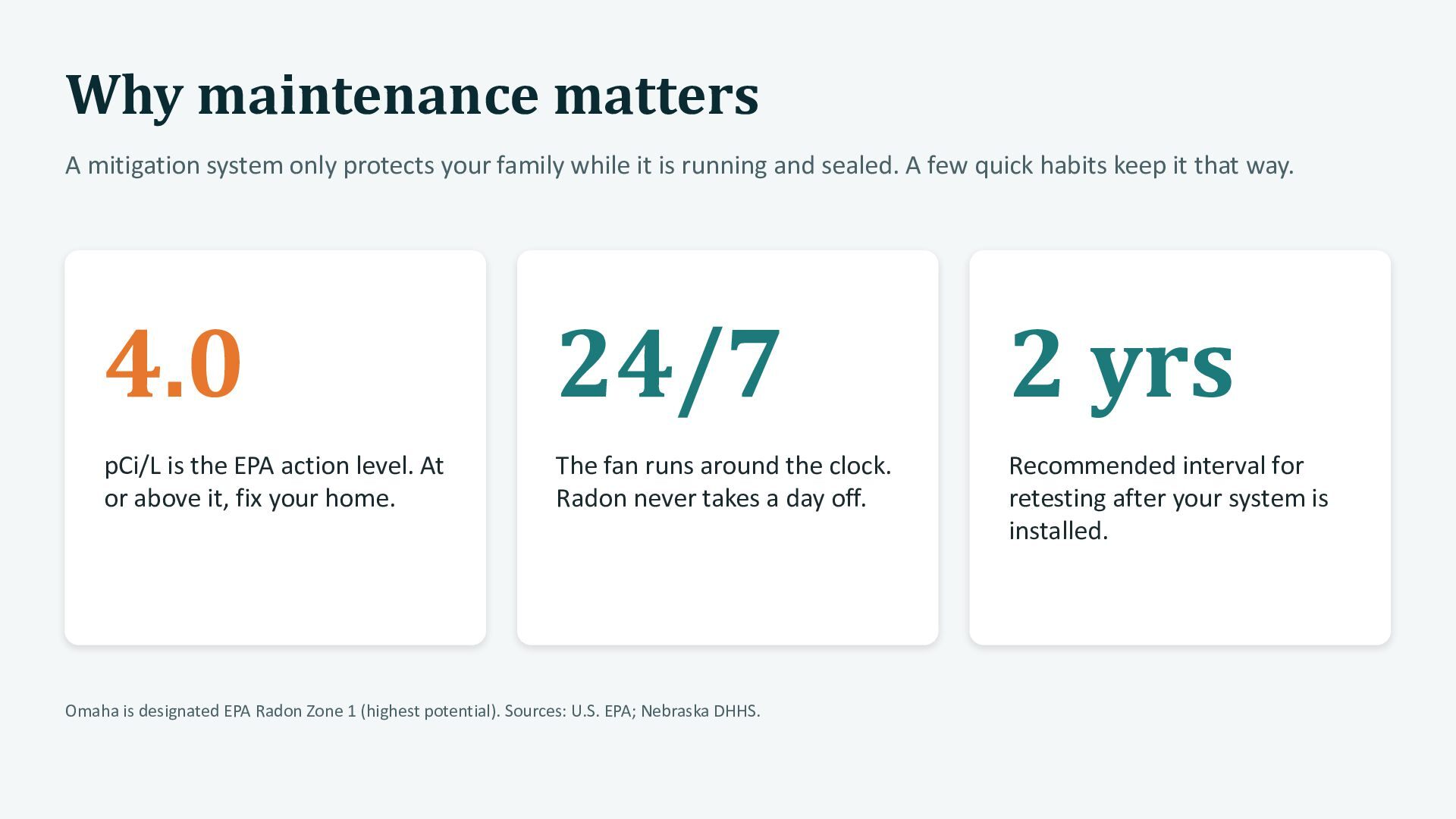
  2. Why maintenance matters A mitigation system only protects your family

    while it is running and sealed. A few quick habits keep it that way. 4.0 24/7 2 yrs pCi/L is the EPA action level. At or above it, fix your home. The fan runs around the clock. Radon never takes a day off. Recommended interval for retesting after your system is installed. Omaha is designated EPA Radon Zone 1 (highest potential). Sources: U.S. EPA; Nebraska DHHS.
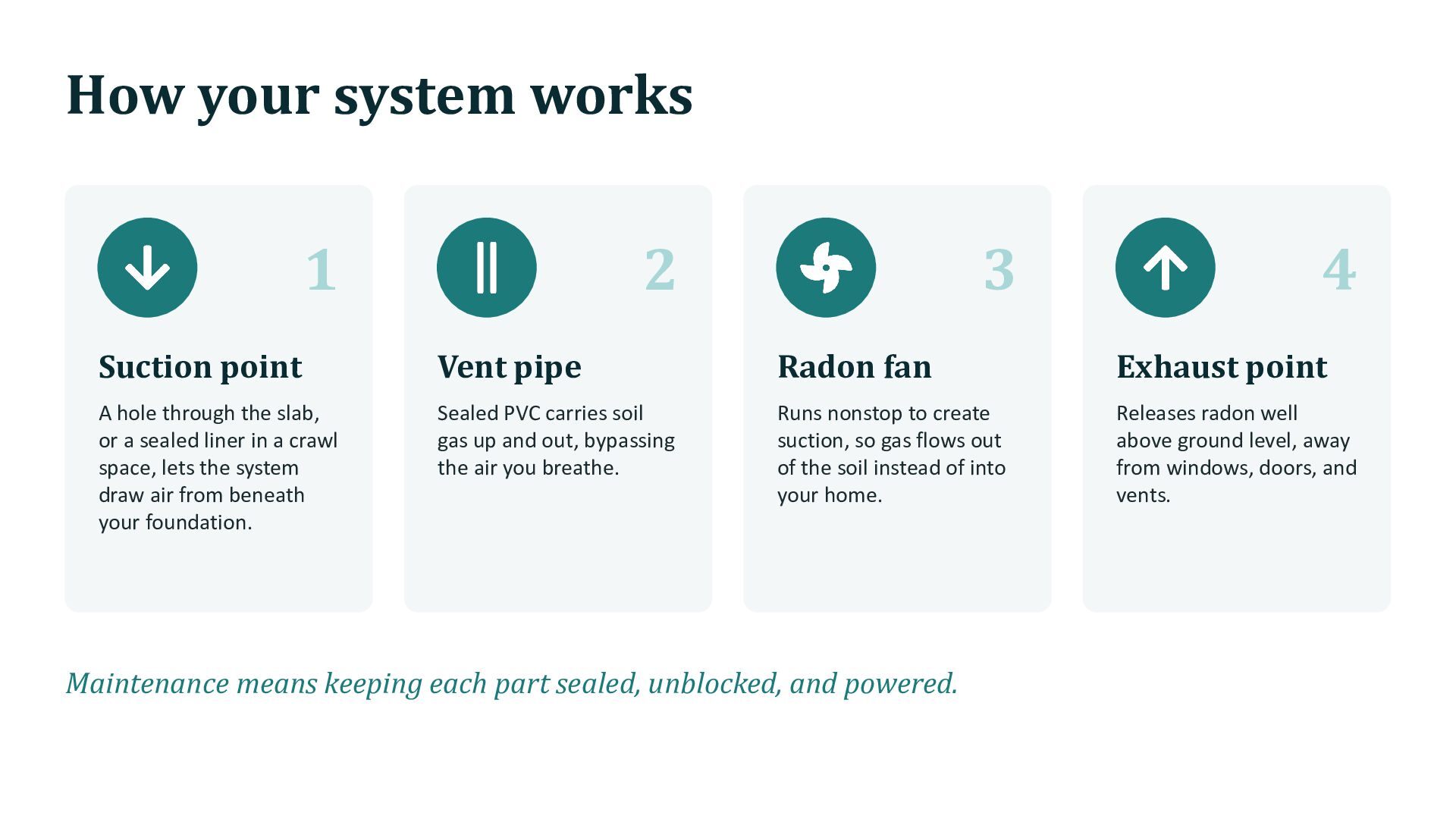
  3. How your system works 1 2 3 4 Suction point

    Vent pipe Radon fan Exhaust point A hole through the slab, or a sealed liner in a crawl space, lets the system draw air from beneath your foundation. Sealed PVC carries soil gas up and out, bypassing the air you breathe. Runs nonstop to create suction, so gas flows out of the soil instead of into your home. Releases radon well above ground level, away from windows, doors, and vents. Maintenance means keeping each part sealed, unblocked, and powered.
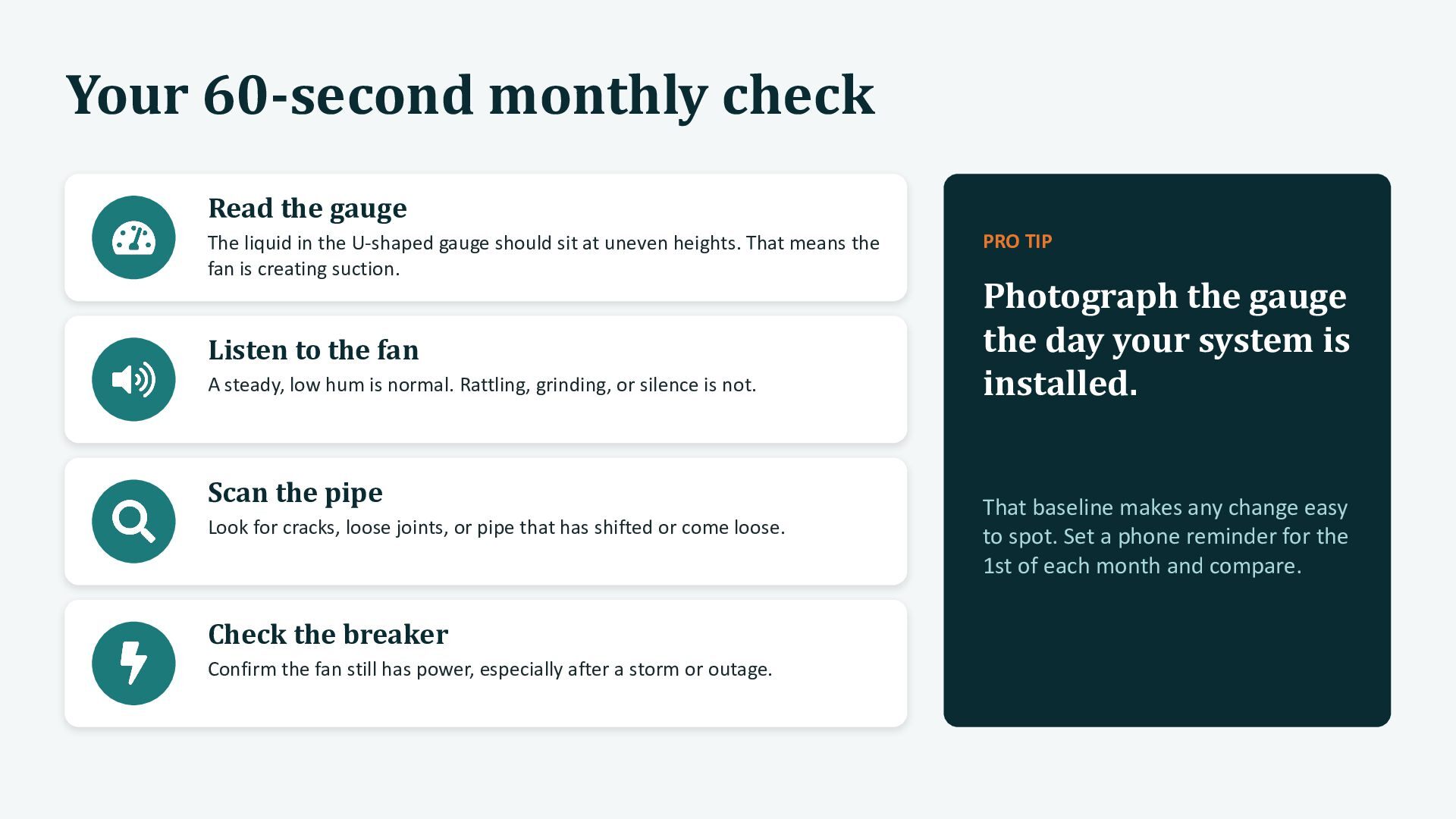
  4. Your 60-second monthly check Read the gauge The liquid in

    the U-shaped gauge should sit at uneven heights. That means the fan is creating suction. Listen to the fan A steady, low hum is normal. Rattling, grinding, or silence is not. Scan the pipe Look for cracks, loose joints, or pipe that has shifted or come loose. Check the breaker Confirm the fan still has power, especially after a storm or outage. PRO TIP Photograph the gauge the day your system is installed. That baseline makes any change easy to spot. Set a phone reminder for the 1st of each month and compare.
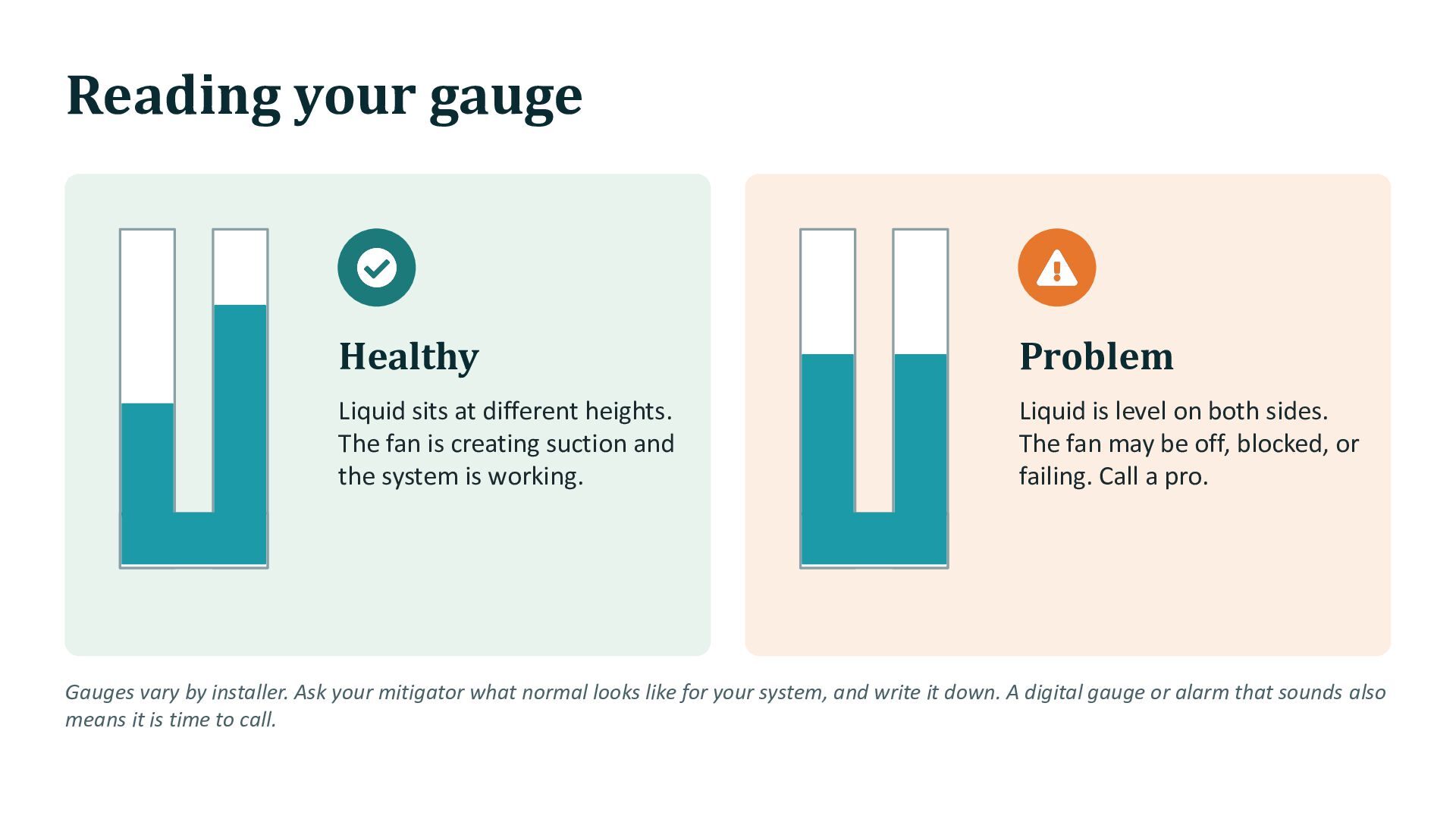
  5. Reading your gauge Healthy Problem Liquid sits at different heights.

    The fan is creating suction and the system is working. Liquid is level on both sides. The fan may be off, blocked, or failing. Call a pro. Gauges vary by installer. Ask your mitigator what normal looks like for your system, and write it down. A digital gauge or alarm that sounds also means it is time to call.
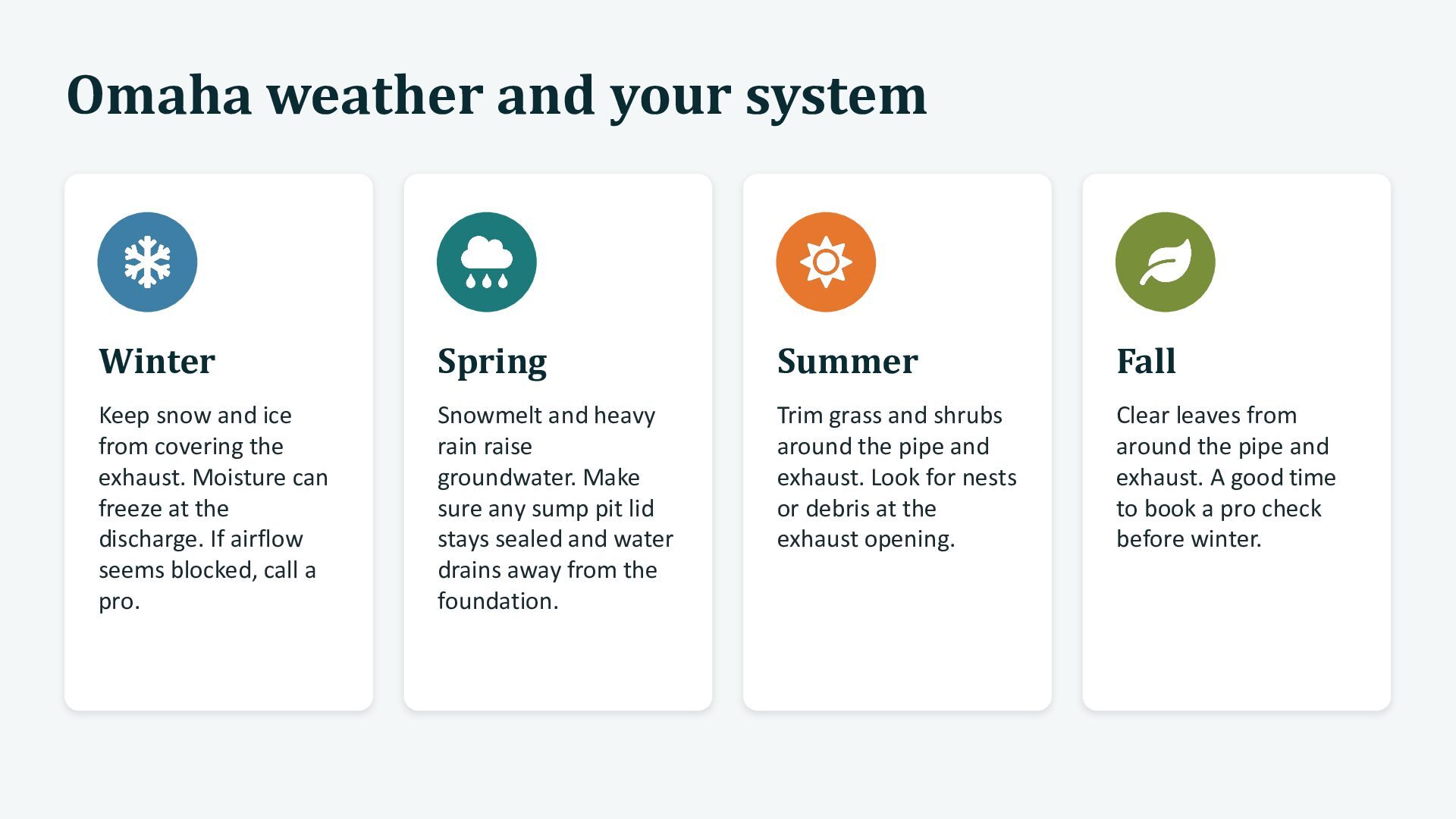
  6. Omaha weather and your system Winter Spring Summer Fall Keep

    snow and ice from covering the exhaust. Moisture can freeze at the discharge. If airflow seems blocked, call a pro. Snowmelt and heavy rain raise groundwater. Make sure any sump pit lid stays sealed and water drains away from the foundation. Trim grass and shrubs around the pipe and exhaust. Look for nests or debris at the exhaust opening. Clear leaves from around the pipe and exhaust. A good time to book a pro check before winter.
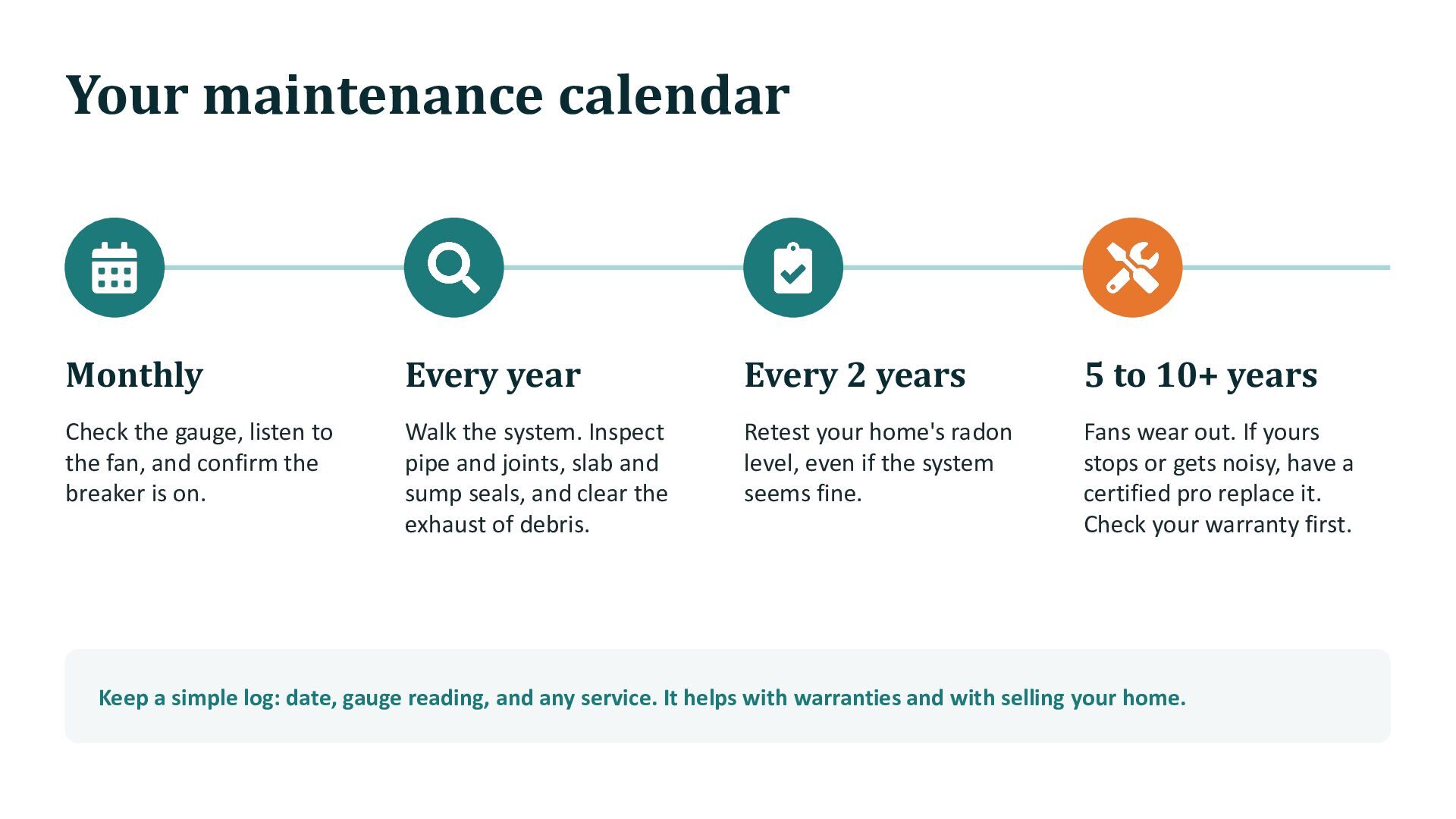
  7. Your maintenance calendar Monthly Every year Every 2 years 5

    to 10+ years Check the gauge, listen to the fan, and confirm the breaker is on. Walk the system. Inspect pipe and joints, slab and sump seals, and clear the exhaust of debris. Retest your home's radon level, even if the system seems fine. Fans wear out. If yours stops or gets noisy, have a certified pro replace it. Check your warranty first. Keep a simple log: date, gauge reading, and any service. It helps with warranties and with selling your home.
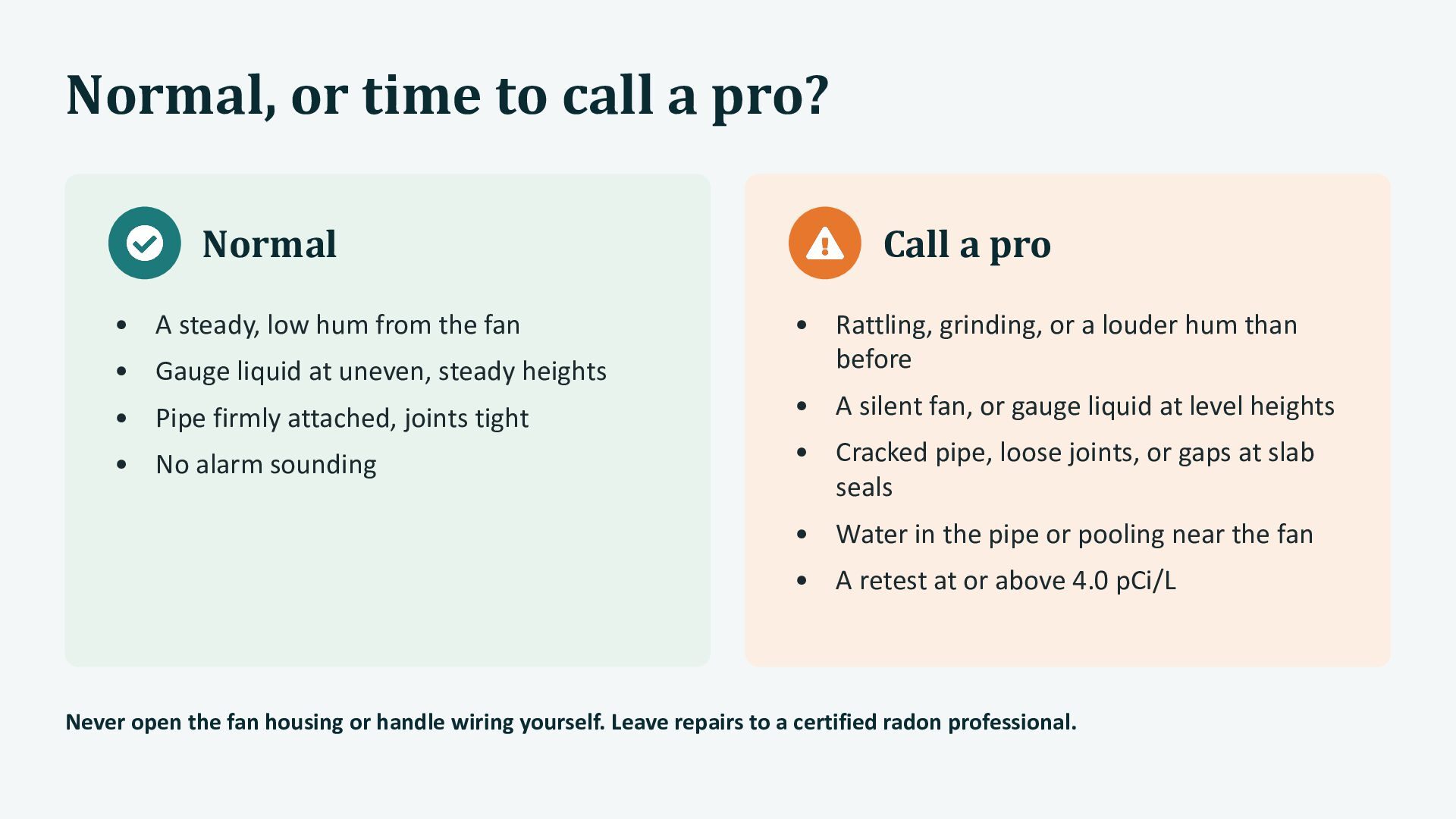
  8. Normal, or time to call a pro? Normal • A

    steady, low hum from the fan Call a pro • Gauge liquid at uneven, steady heights • Rattling, grinding, or a louder hum than before • Pipe firmly attached, joints tight • A silent fan, or gauge liquid at level heights • No alarm sounding • Cracked pipe, loose joints, or gaps at slab seals • Water in the pipe or pooling near the fan • A retest at or above 4.0 pCi/L Never open the fan housing or handle wiring yourself. Leave repairs to a certified radon professional.
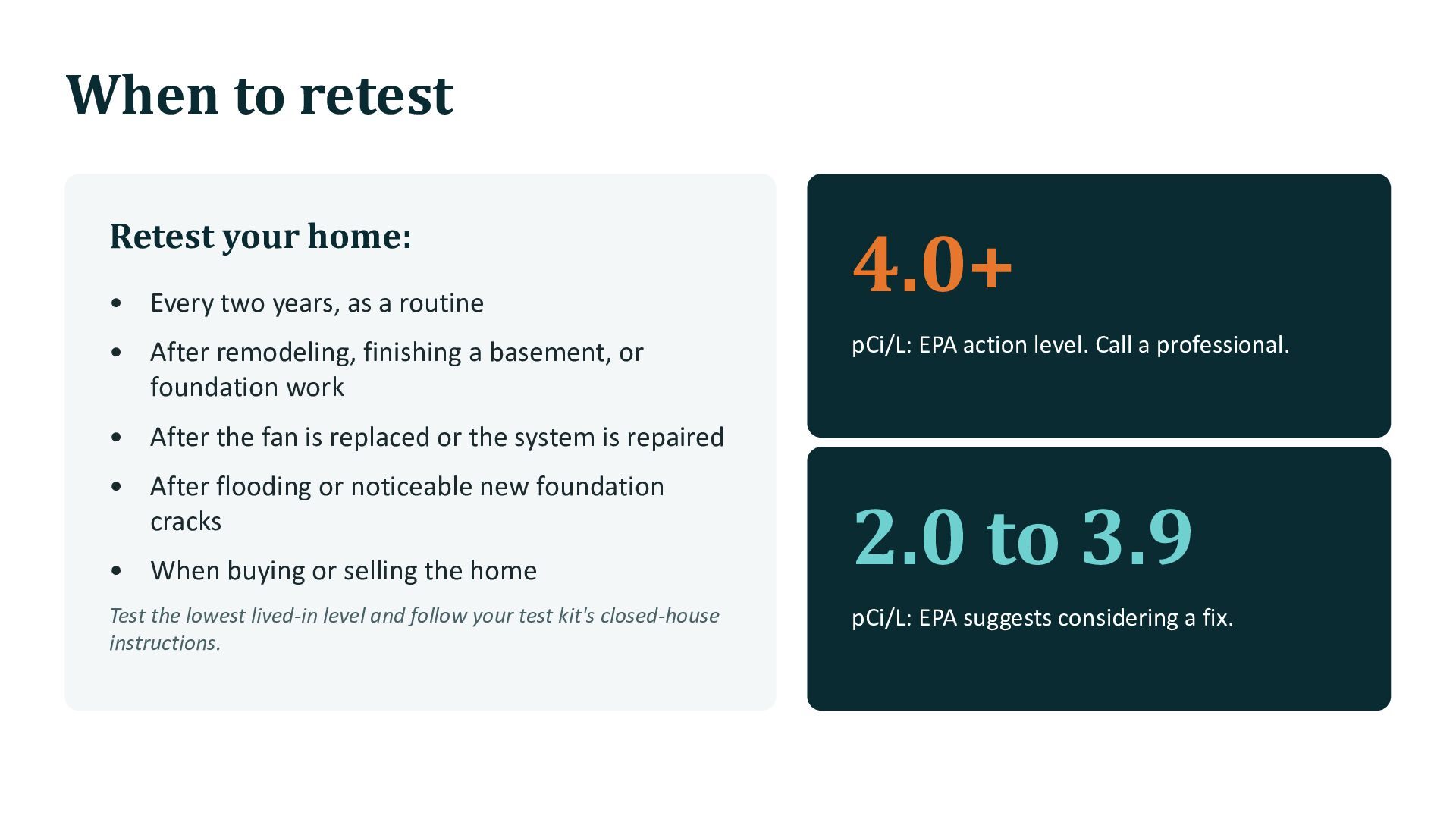
  9. When to retest Retest your home: • Every two years,

    as a routine • After remodeling, finishing a basement, or foundation work 4.0+ pCi/L: EPA action level. Call a professional. • After the fan is replaced or the system is repaired • After flooding or noticeable new foundation cracks • When buying or selling the home Test the lowest lived-in level and follow your test kit's closed-house instructions. 2.0 to 3.9 pCi/L: EPA suggests considering a fix.
  10. Protect your family's air, every day. 534 N 72nd St,

    Omaha, NE 68114 Mon to Fri 7am to 7pm Sat and Sun 9am to 5pm Questions about your system, or time for a retest? NRPP member | BBB A rating 402-275-4425 https://www.omaharadonpros.com/