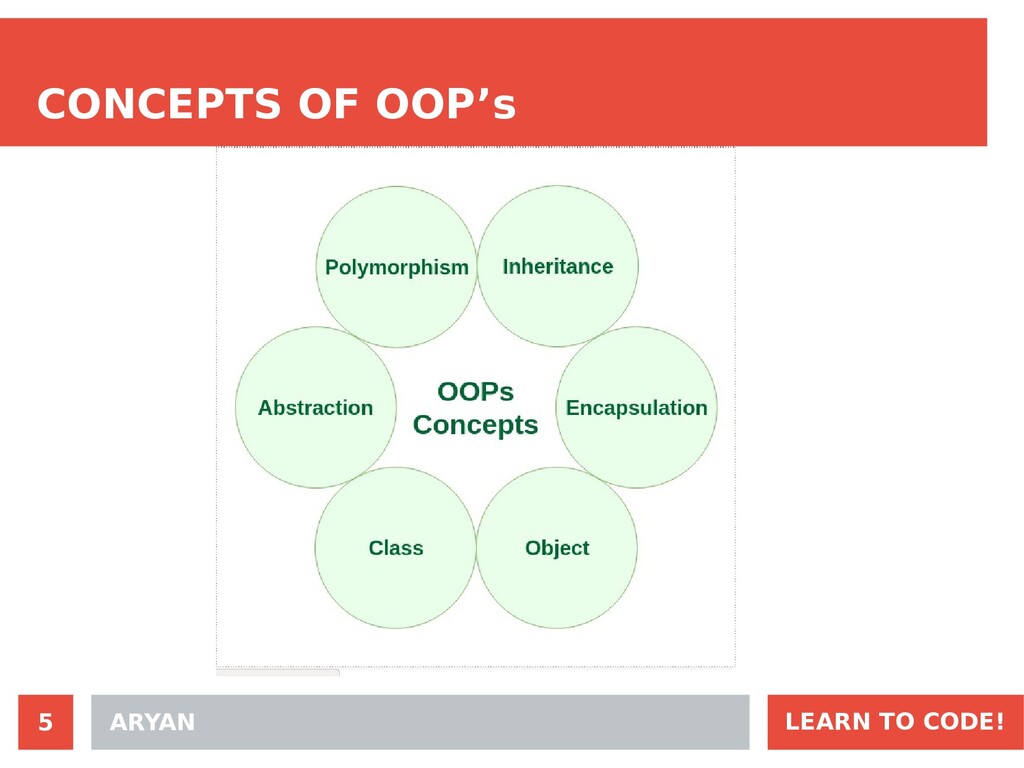
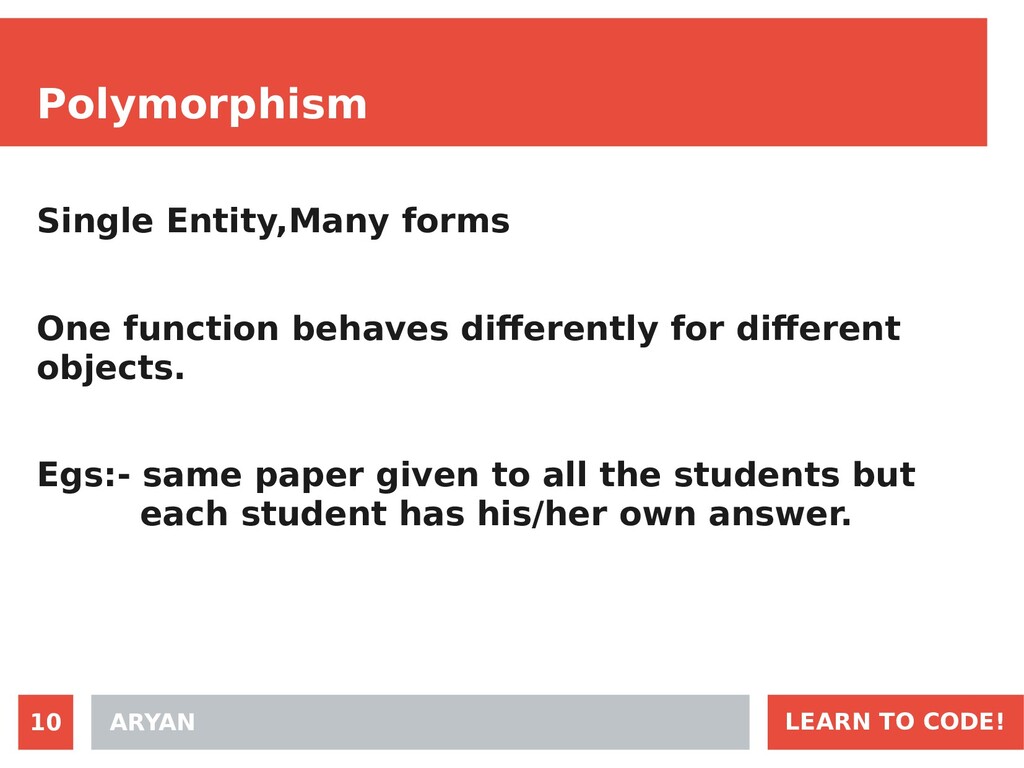
It refers to the languages that uses objects in programming. A programme has multiple objects and run them in a set object procedure,Objects interact with each other to achieve a given task. Objects for now can be termed as entities that contain data and certains actions to be performed on it. Popular OOP’s languages are CLASS based that means objects are a copy of class.
Like for egs DOG. We can say DOG as a class with 4 legs,1 mouth,2 ears and 2 eyes These are its data members. While if a dog have to walk it is a function and it will perform the function on data . Now this is can be termed as the layout of dog. An object(Labrador) would be the real entity to work on and would be the copy of class.
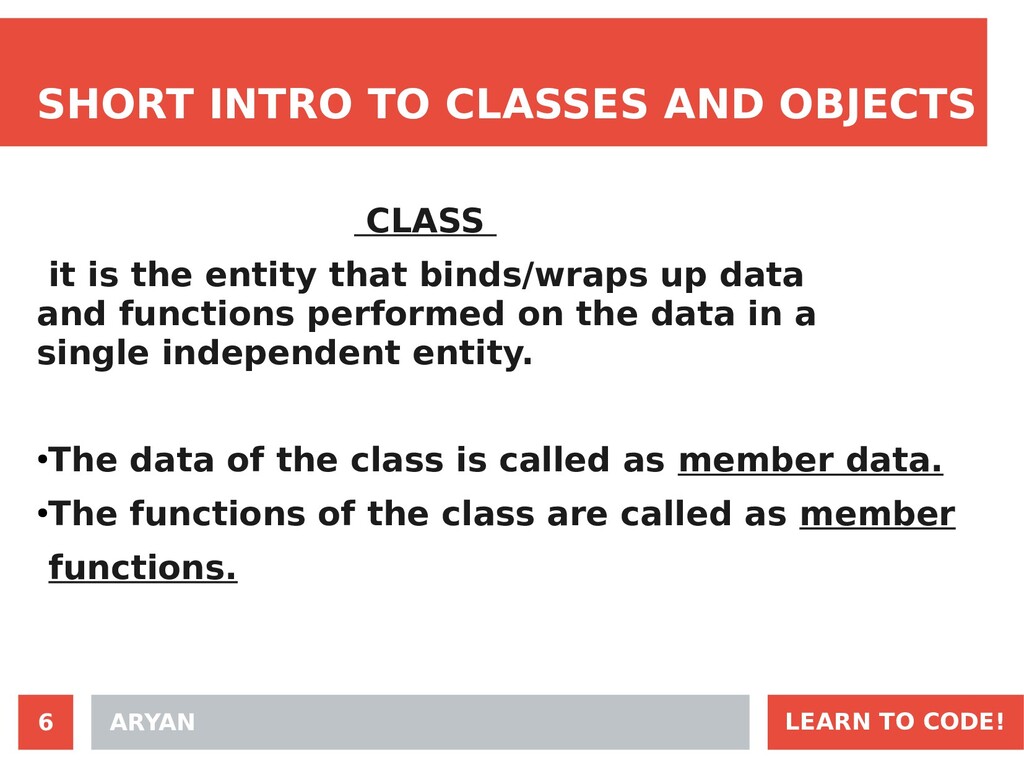
OBJECTS CLASS it is the entity that binds/wraps up data and functions performed on the data in a single independent entity. • The data of the class is called as member data. • The functions of the class are called as member functions.
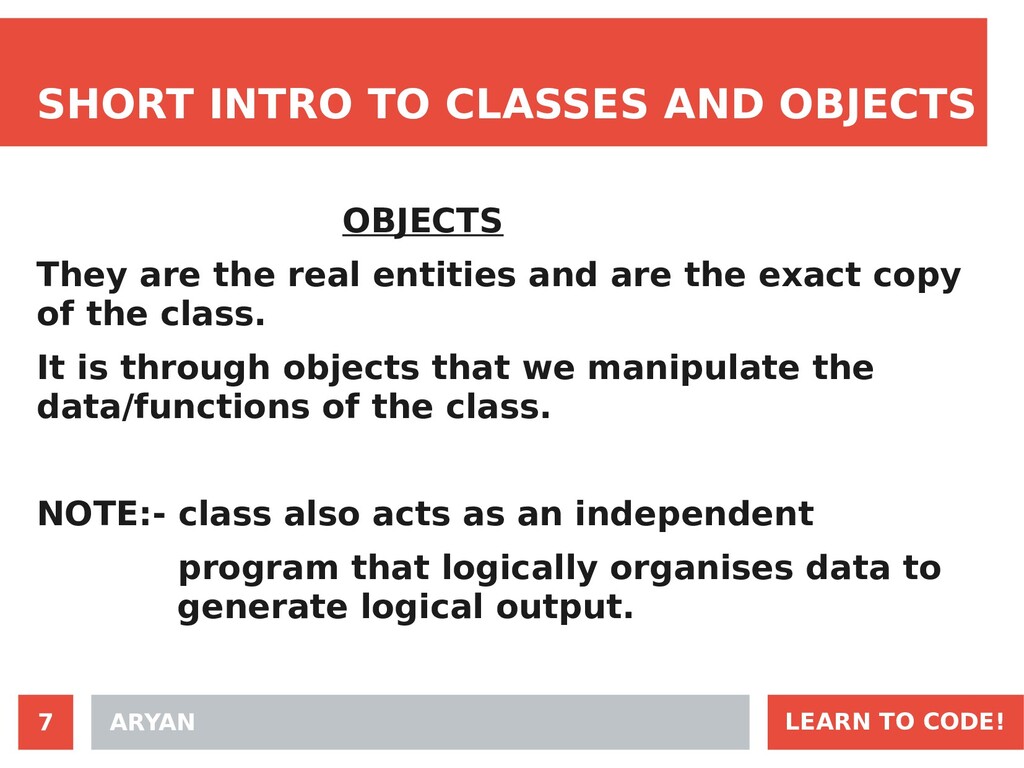
OBJECTS OBJECTS They are the real entities and are the exact copy of the class. It is through objects that we manipulate the data/functions of the class. NOTE:- class also acts as an independent program that logically organises data to generate logical output.
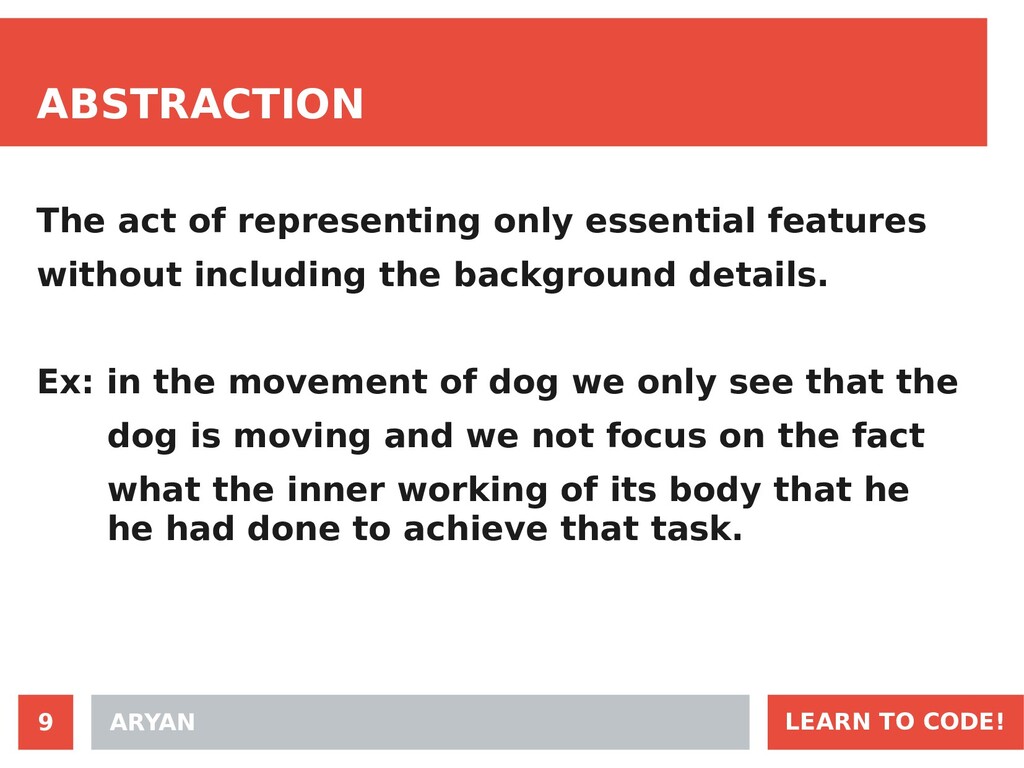
only essential features without including the background details. Ex: in the movement of dog we only see that the dog is moving and we not focus on the fact what the inner working of its body that he he had done to achieve that task.
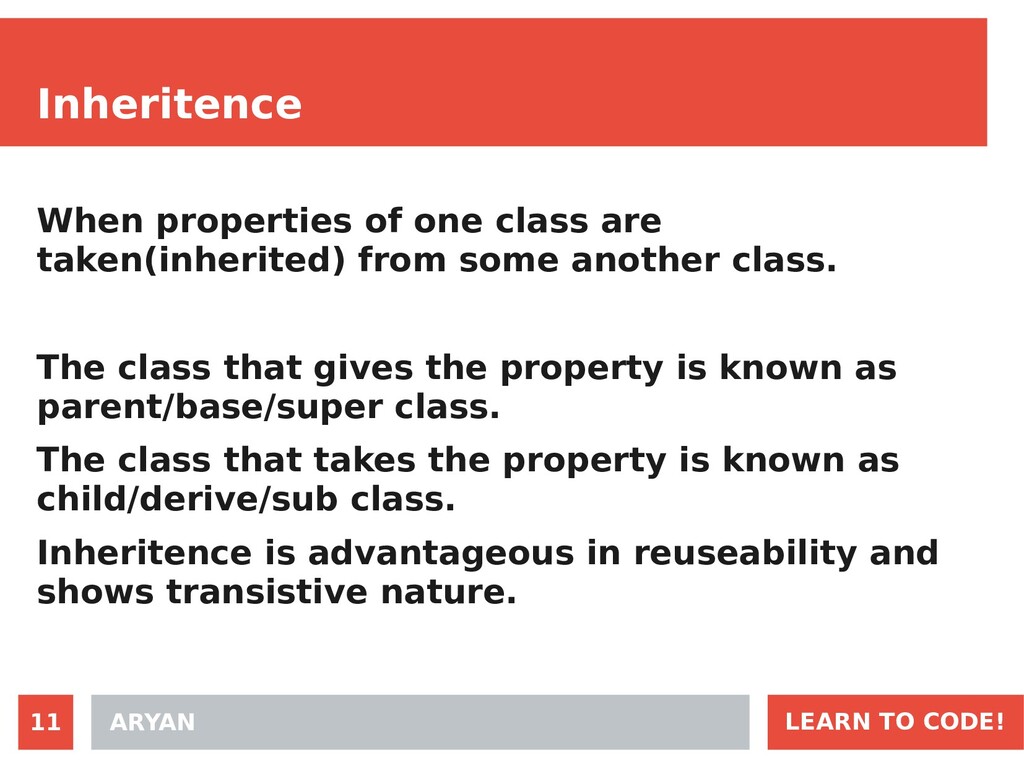
class are taken(inherited) from some another class. The class that gives the property is known as parent/base/super class. The class that takes the property is known as child/derive/sub class. Inheritence is advantageous in reuseability and shows transistive nature.
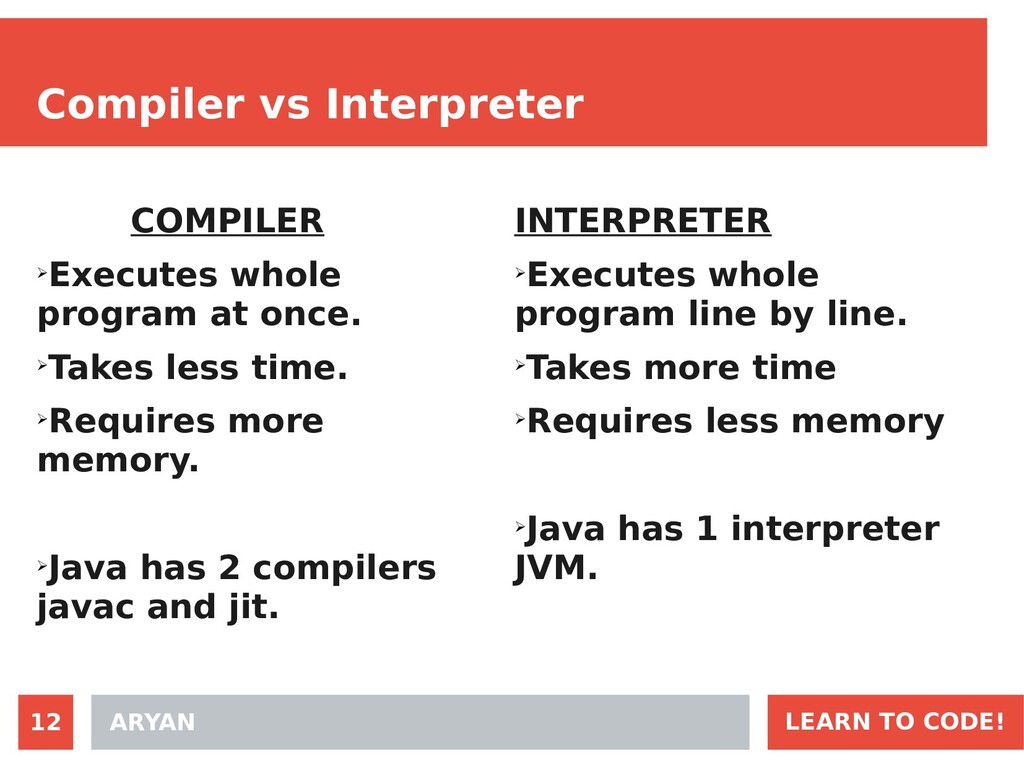
Executes whole program at once. ➢ Takes less time. ➢ Requires more memory. ➢ Java has 2 compilers javac and jit. INTERPRETER ➢ Executes whole program line by line. ➢ Takes more time ➢ Requires less memory ➢ Java has 1 interpreter JVM.
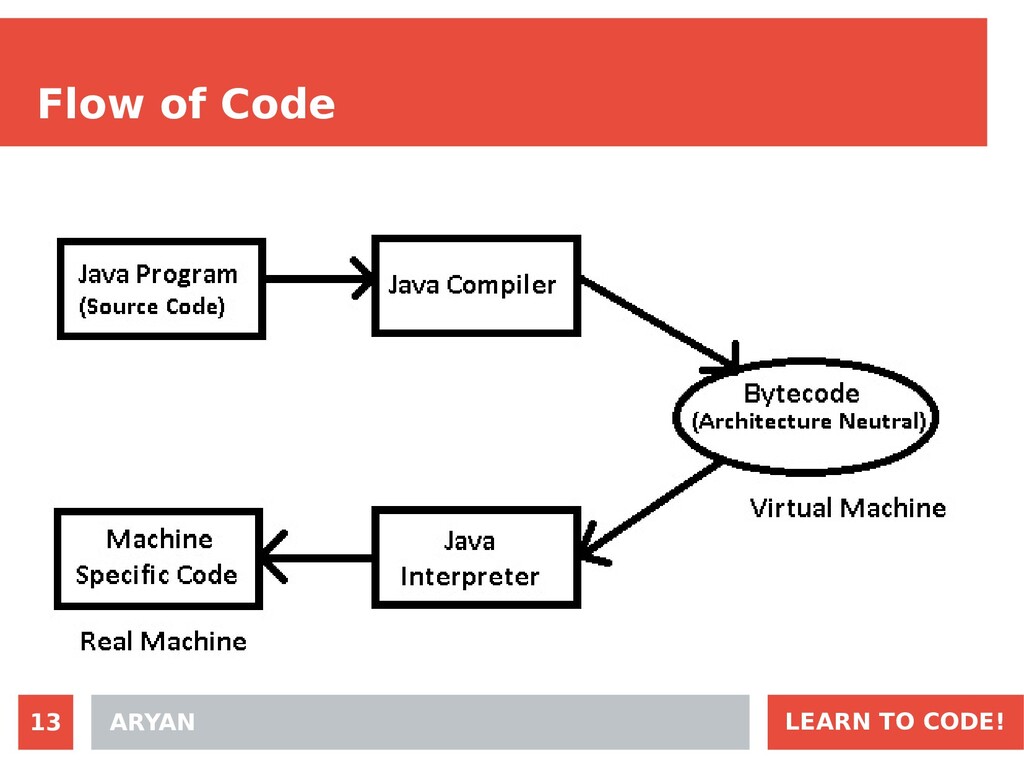
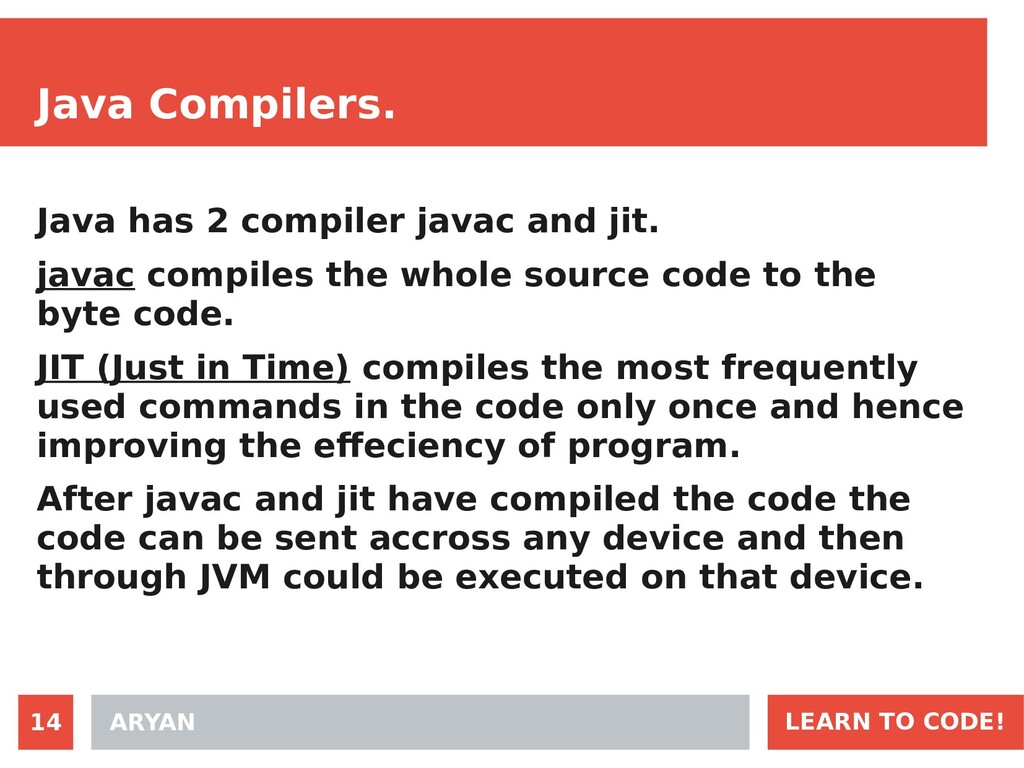
compiler javac and jit. javac compiles the whole source code to the byte code. JIT (Just in Time) compiles the most frequently used commands in the code only once and hence improving the effeciency of program. After javac and jit have compiled the code the code can be sent accross any device and then through JVM could be executed on that device.
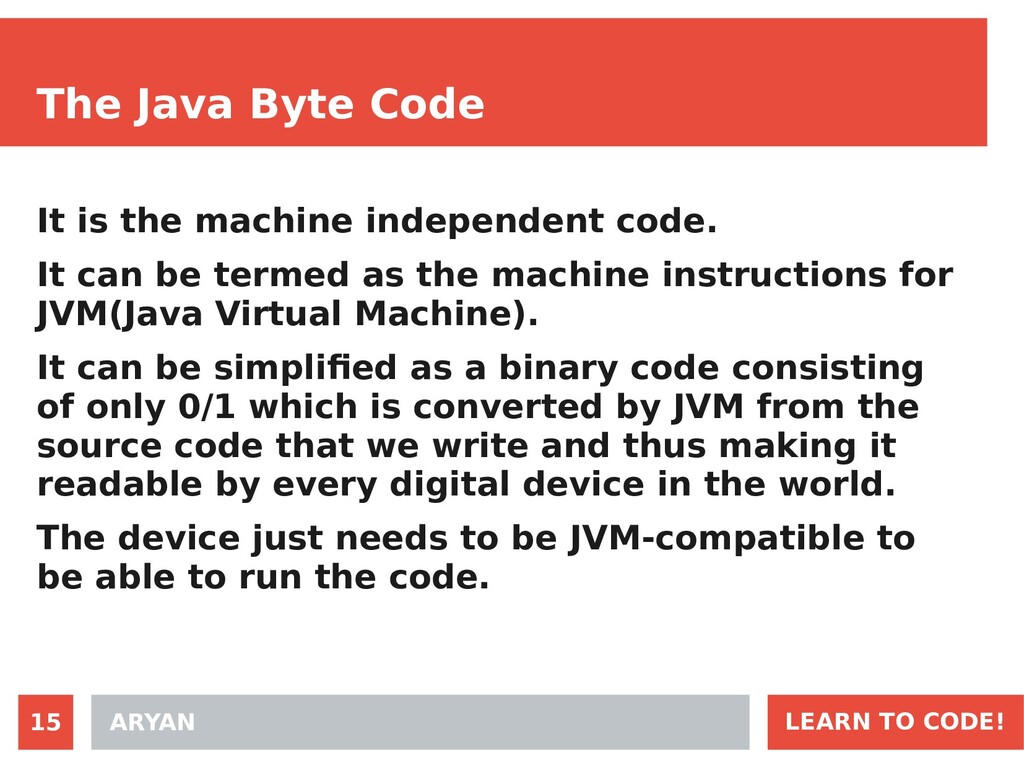
is the machine independent code. It can be termed as the machine instructions for JVM(Java Virtual Machine). It can be simplified as a binary code consisting of only 0/1 which is converted by JVM from the source code that we write and thus making it readable by every digital device in the world. The device just needs to be JVM-compatible to be able to run the code.
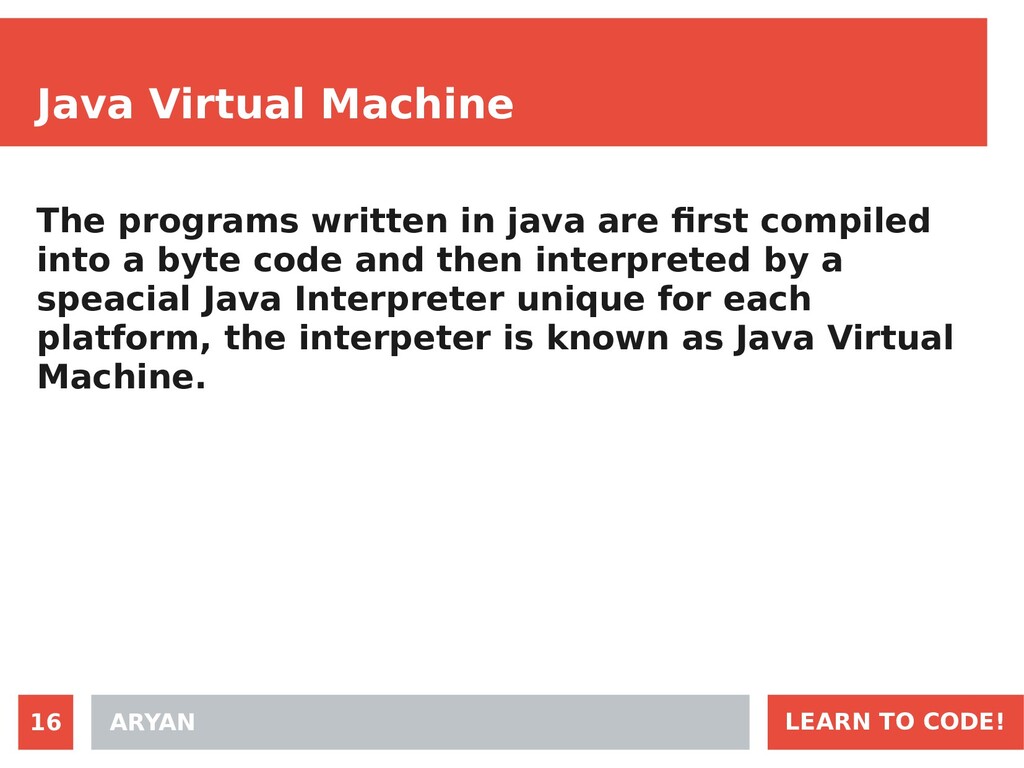
written in java are first compiled into a byte code and then interpreted by a speacial Java Interpreter unique for each platform, the interpeter is known as Java Virtual Machine.
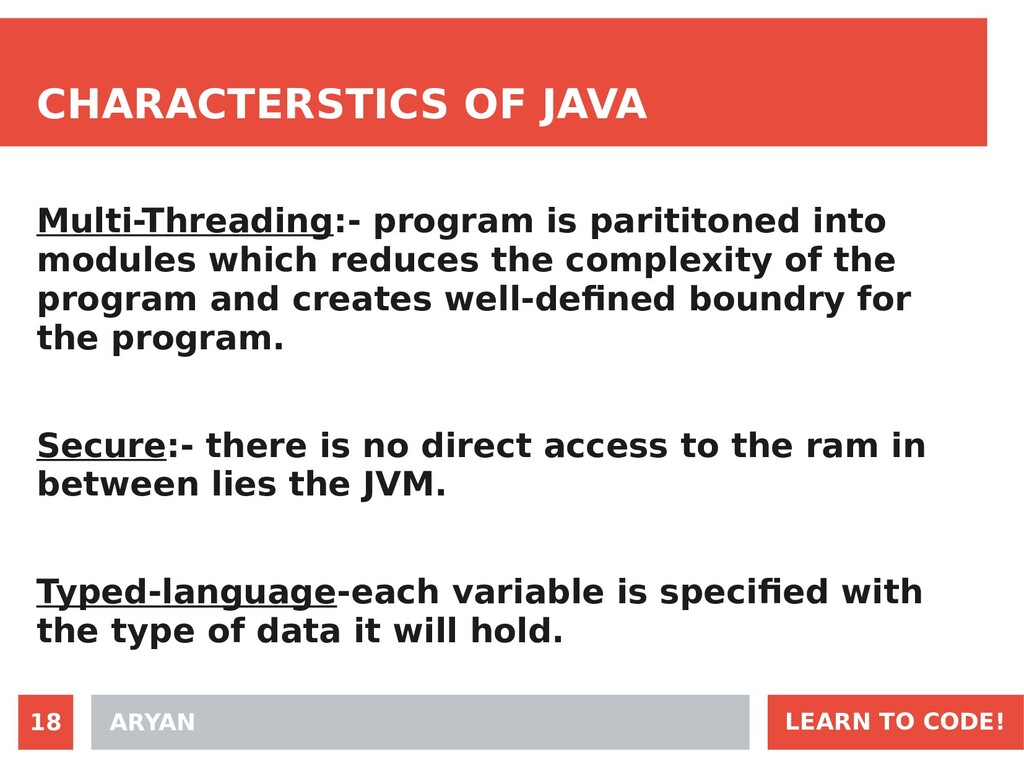
is parititoned into modules which reduces the complexity of the program and creates well-defined boundry for the program. Secure:- there is no direct access to the ram in between lies the JVM. Typed-language-each variable is specified with the type of data it will hold.
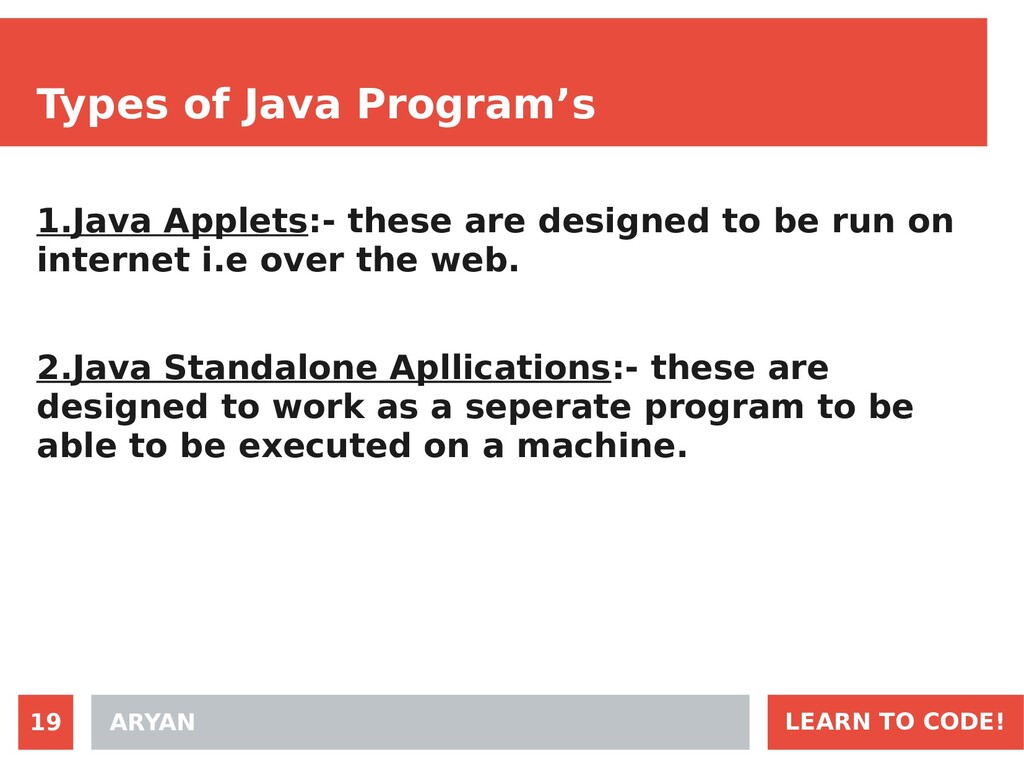
Applets:- these are designed to be run on internet i.e over the web. 2.Java Standalone Apllications:- these are designed to work as a seperate program to be able to be executed on a machine.
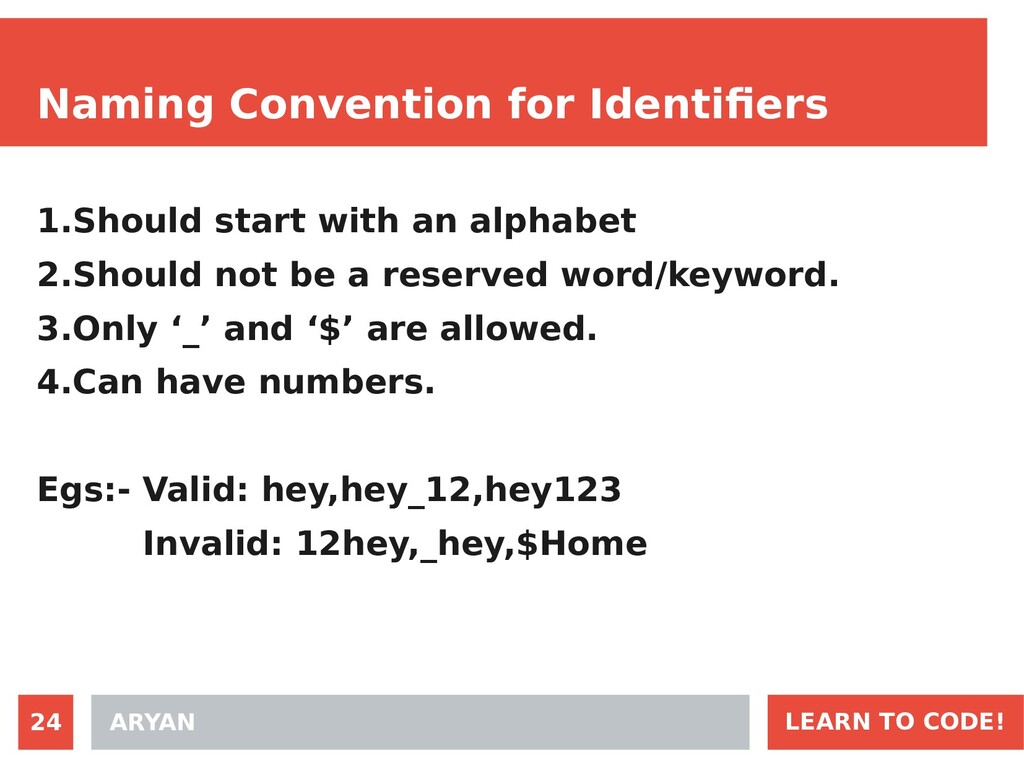
start with an alphabet 2.Should not be a reserved word/keyword. 3.Only ‘_’ and ‘$’ are allowed. 4.Can have numbers. Egs:- Valid: hey,hey_12,hey123 Invalid: 12hey,_hey,$Home
The type of value a variable will hold is known as data type. ->are the means to identify the type of data and associated operations of handling it. They are of 2 types:- 1.Primitive Data Types 2.Non-Primitive Data Types
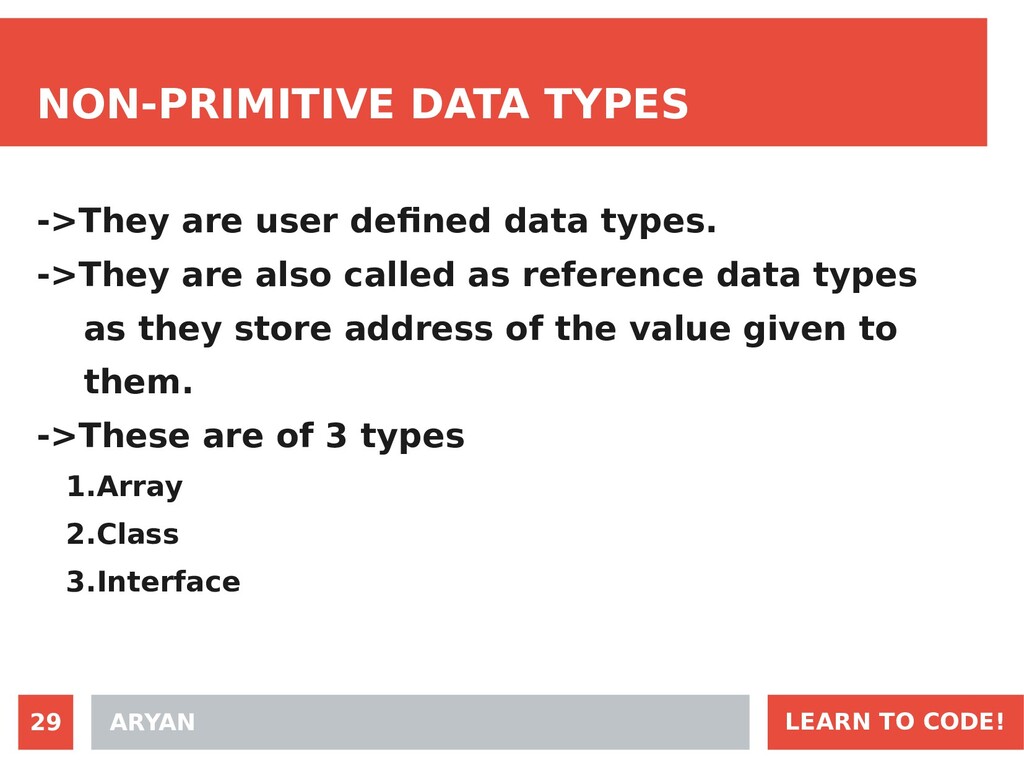
user defined data types. ->They are also called as reference data types as they store address of the value given to them. ->These are of 3 types 1.Array 2.Class 3.Interface
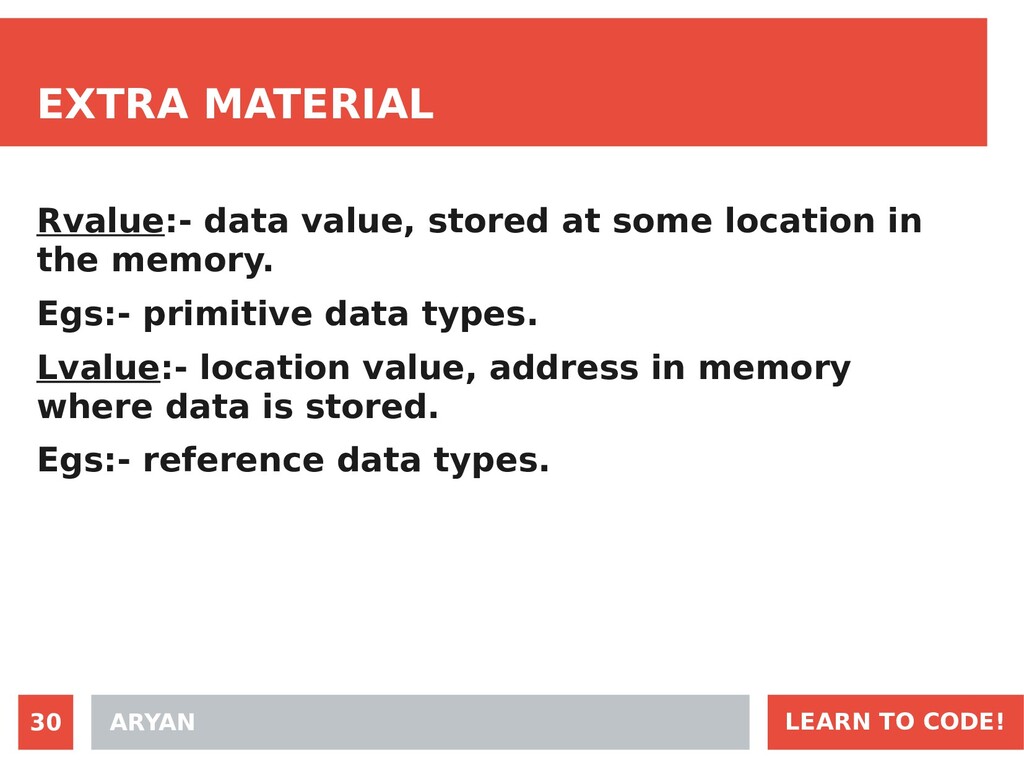
stored at some location in the memory. Egs:- primitive data types. Lvalue:- location value, address in memory where data is stored. Egs:- reference data types.
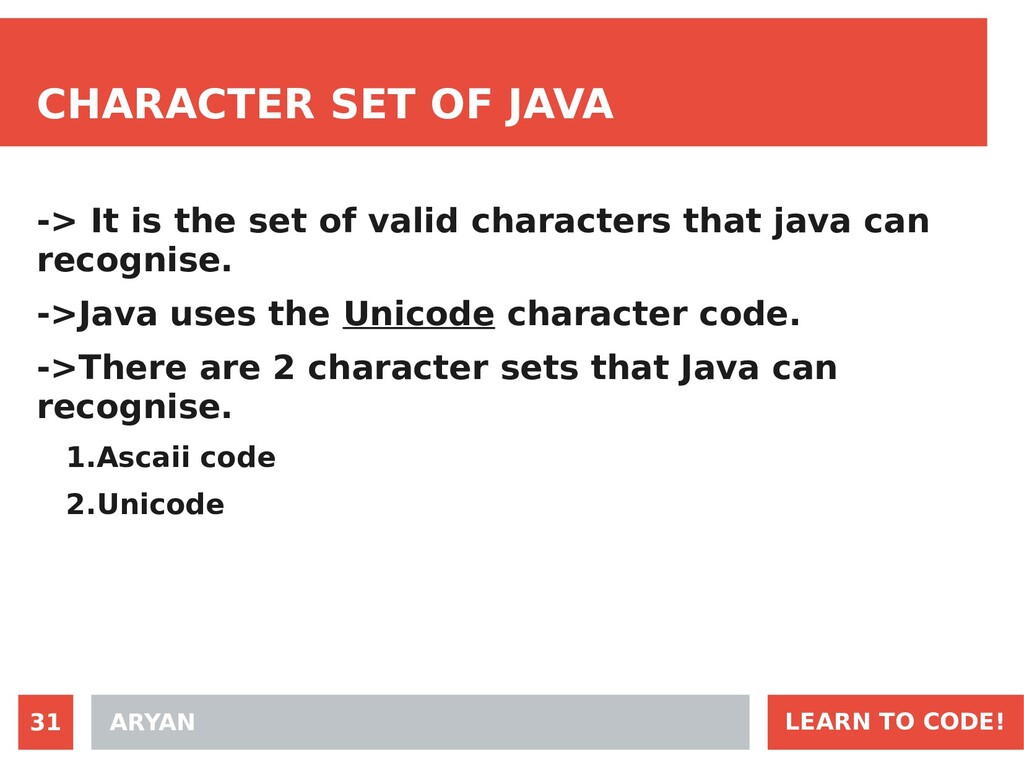
It is the set of valid characters that java can recognise. ->Java uses the Unicode character code. ->There are 2 character sets that Java can recognise. 1.Ascaii code 2.Unicode
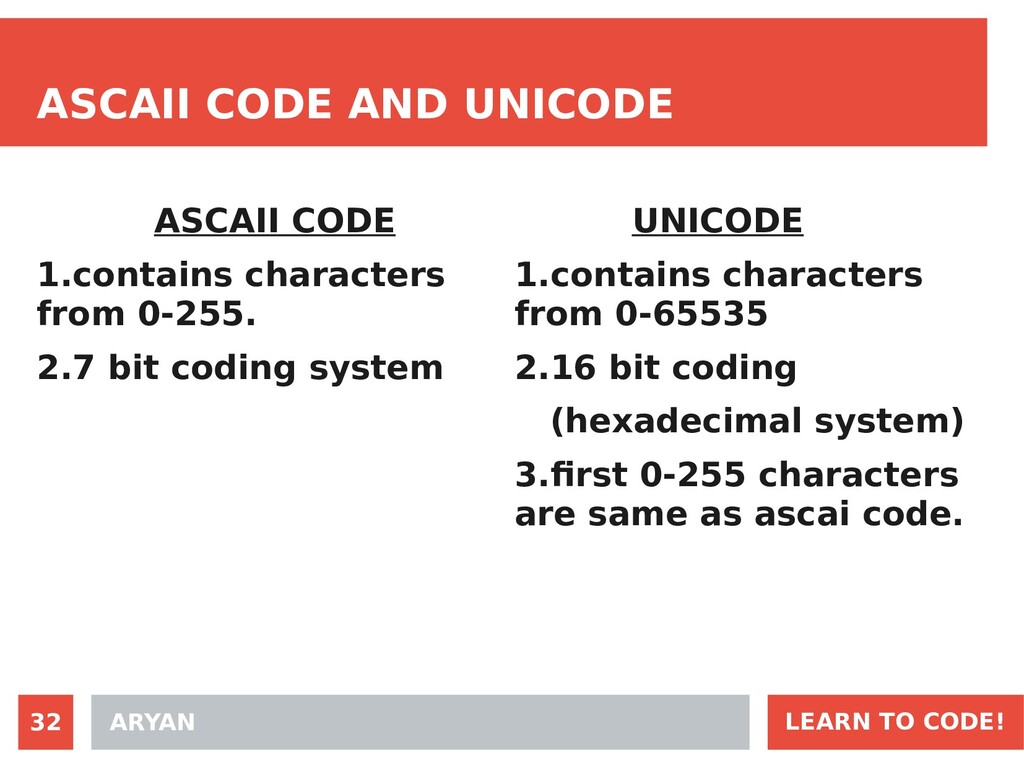
CODE 1.contains characters from 0-255. 2.7 bit coding system UNICODE 1.contains characters from 0-65535 2.16 bit coding (hexadecimal system) 3.first 0-255 characters are same as ascai code.


 y0hgi
y0hgi
 ivargrimstad
 gonta
gonta
 colorful12
 lynnswap
 guaca
guaca
 oniak3ibm
 lef237
 htkym
htkym
 mofurune
 akase244
 seike460
 inesmontani
 kimpetersen
 aleyda
 aki_iinuma
 jmmastey
 sonatard
 sarafernandez
 palkan
 kevinliebholz
 shlominoach
.png) helenjbeal
helenjbeal
 mclloyd