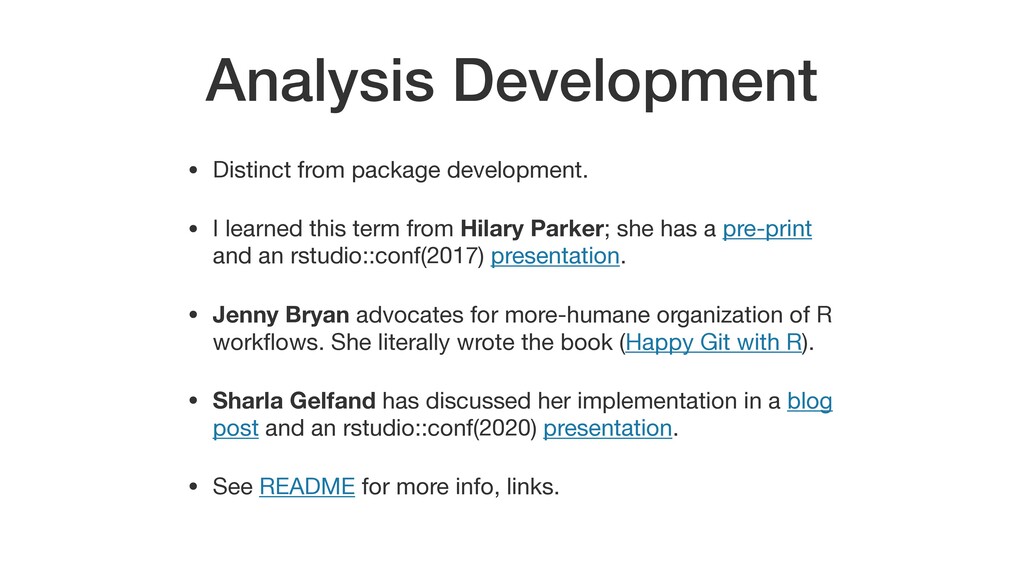
this term from Hilary Parker; she has a pre-print and an rstudio::conf(2017) presentation. • Jenny Bryan advocates for more-humane organization of R workflows. She literally wrote the book (Happy Git with R). • Sharla Gelfand has discussed her implementation in a blog post and an rstudio::conf(2020) presentation. • See README for more info, links.
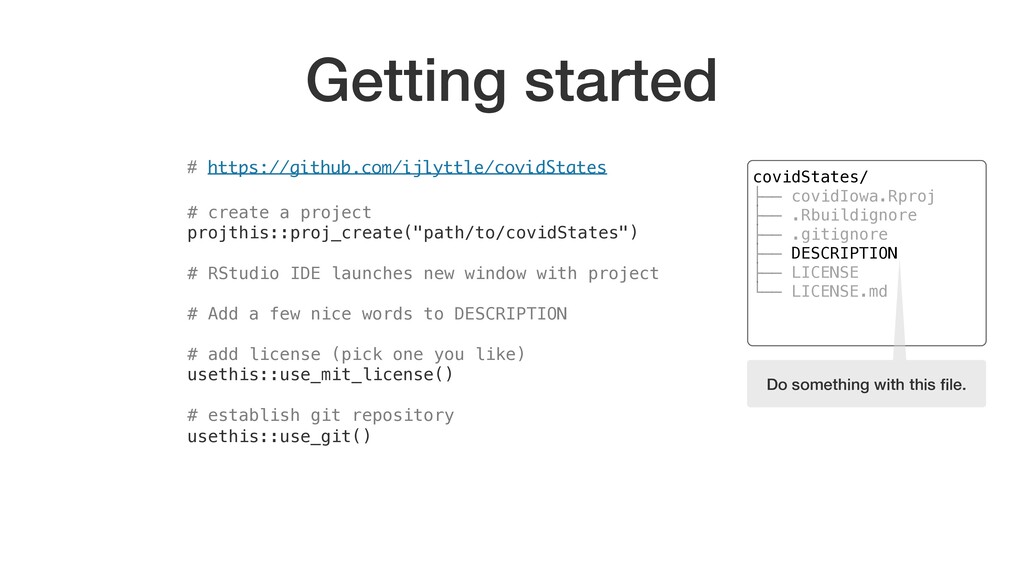
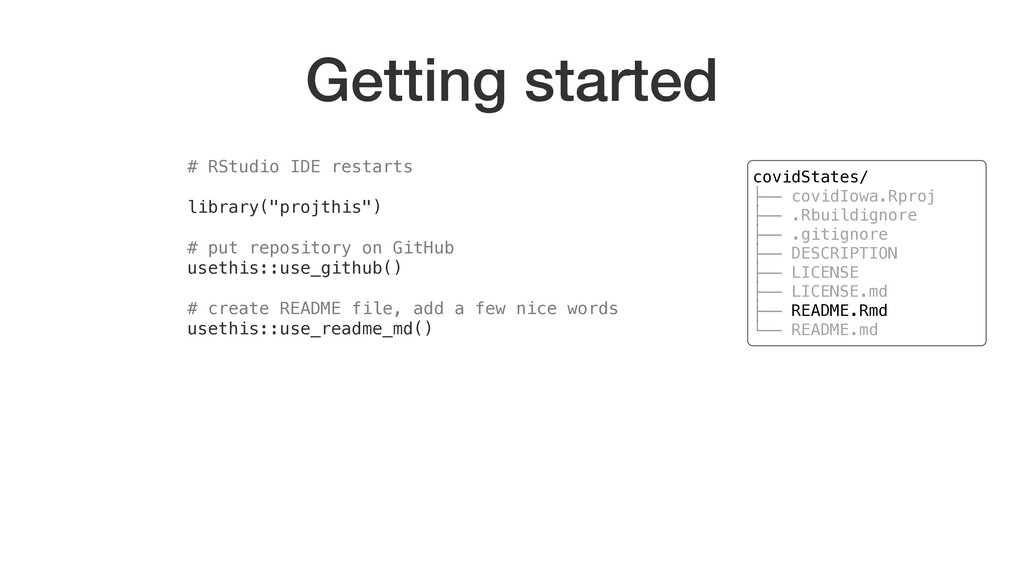
LICENSE └── LICENSE.md Getting started # https://github.com/ijlyttle/covidStates # create a project projthis::proj_create("path/to/covidStates") # RStudio IDE launches new window with project # Add a few nice words to DESCRIPTION # add license (pick one you like) usethis::use_mit_license() # establish git repository usethis::use_git() Do something with this file.
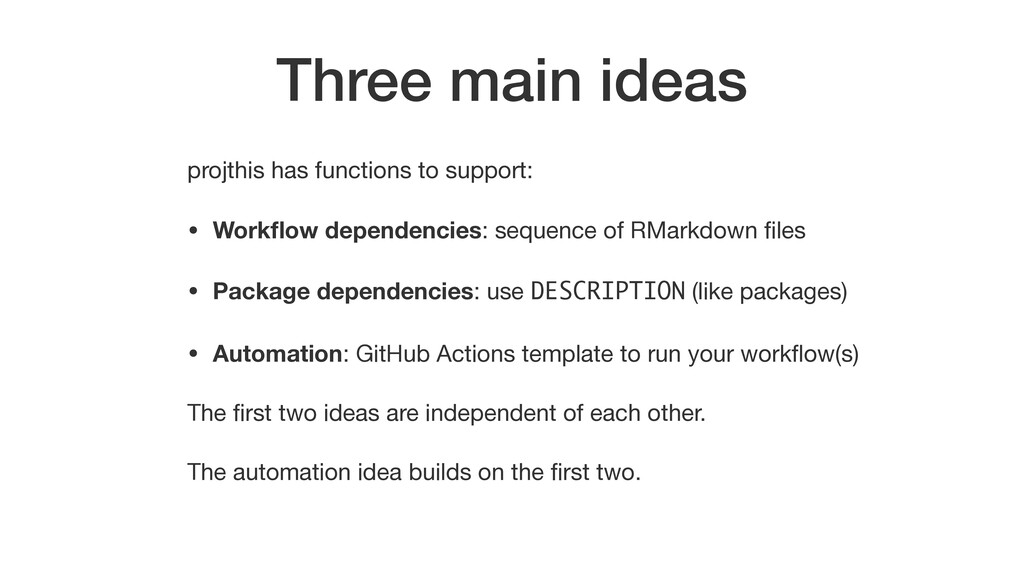
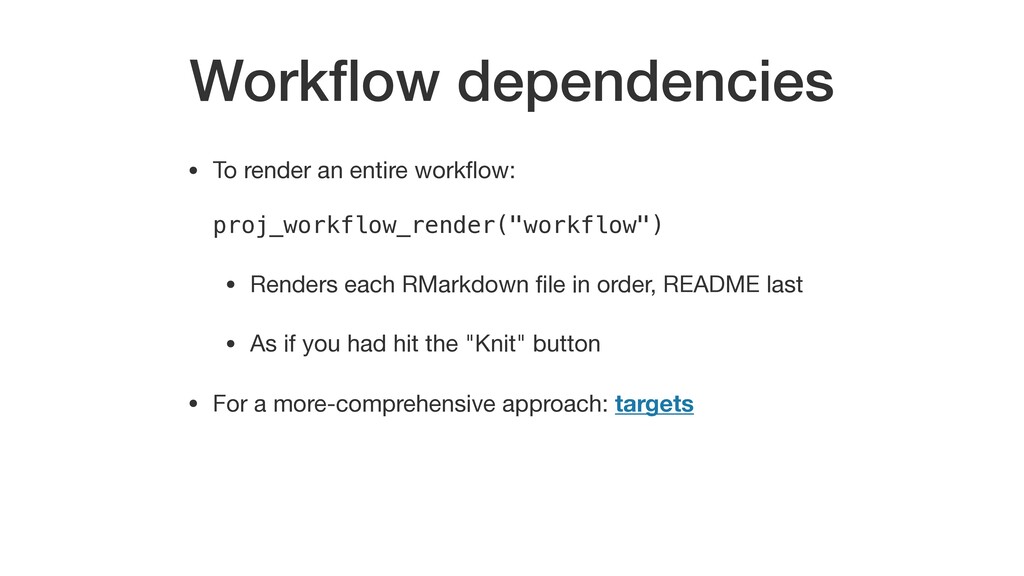
dependencies: sequence of RMarkdown files • Package dependencies: use DESCRIPTION (like packages) • Automation: GitHub Actions template to run your workflow(s) The first two ideas are independent of each other. The automation idea builds on the first two.
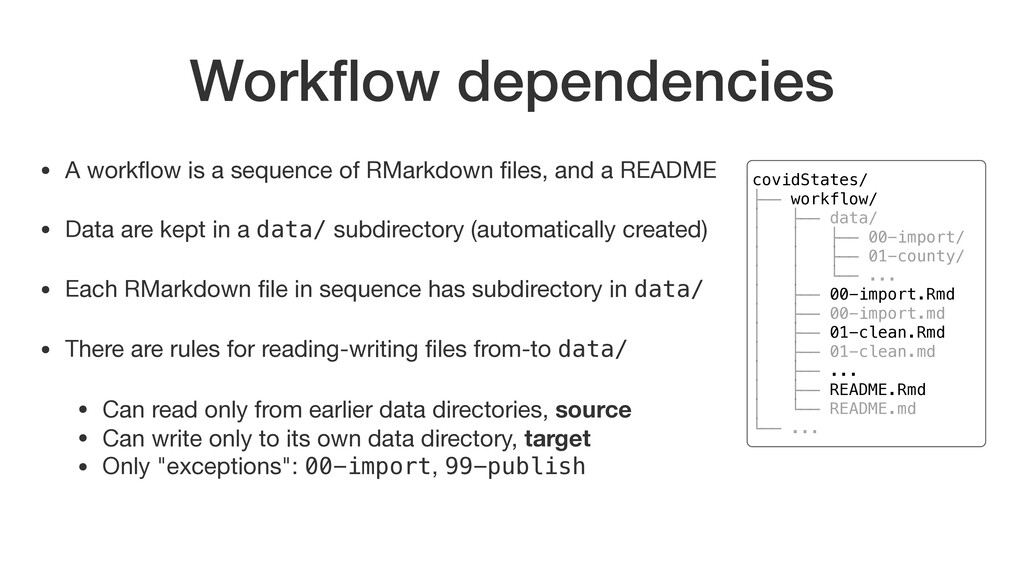
files, and a README • Data are kept in a data/ subdirectory (automatically created) • Each RMarkdown file in sequence has subdirectory in data/ • There are rules for reading-writing files from-to data/ • Can read only from earlier data directories, source • Can write only to its own data directory, target • Only "exceptions": 00-import, 99-publish covidStates/ ├── workflow/ │ ├── data/ │ │ ├── 00-import/ │ │ ├── 01-county/ │ │ └── ... │ ├── 00-import.Rmd │ ├── 00-import.md │ ├── 01-clean.Rmd │ ├── 01-clean.md │ ├── ... │ ├── README.Rmd │ └── README.md └── ...
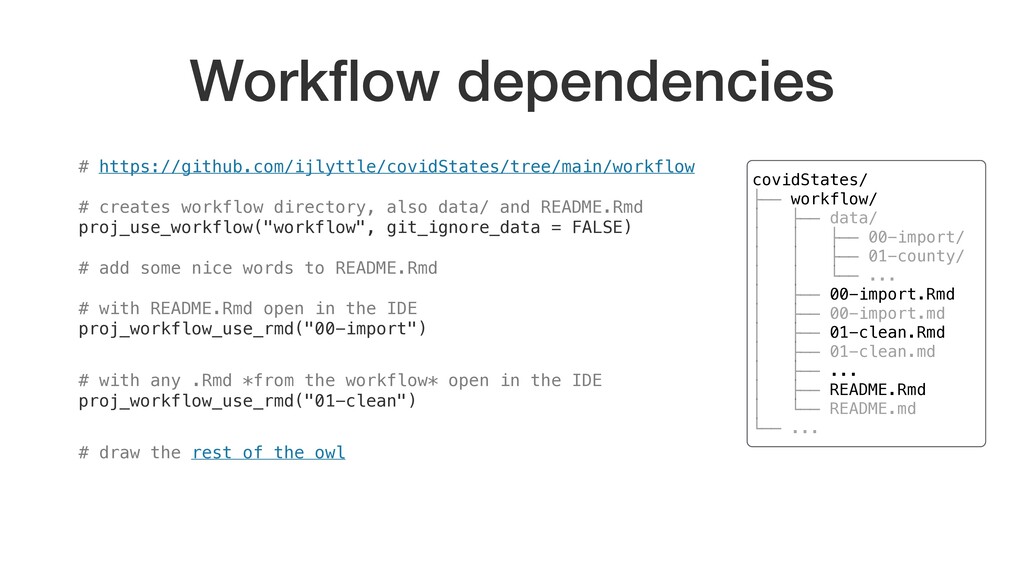
data/ and README.Rmd proj_use_workflow("workflow", git_ignore_data = FALSE) # add some nice words to README.Rmd # with README.Rmd open in the IDE proj_workflow_use_rmd("00-import") # with any .Rmd *from the workflow* open in the IDE proj_workflow_use_rmd("01-clean") # draw the rest of the owl covidStates/ ├── workflow/ │ ├── data/ │ │ ├── 00-import/ │ │ ├── 01-county/ │ │ └── ... │ ├── 00-import.Rmd │ ├── 00-import.md │ ├── 01-clean.Rmd │ ├── 01-clean.md │ ├── ... │ ├── README.Rmd │ └── README.md └── ...
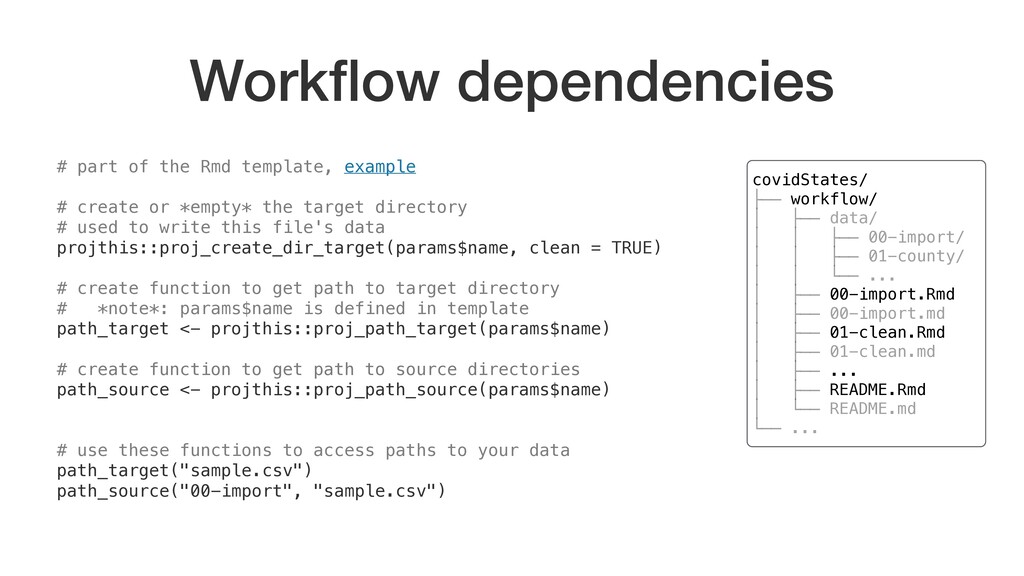
# create or *empty* the target directory # used to write this file's data projthis::proj_create_dir_target(params$name, clean = TRUE) # create function to get path to target directory # *note*: params$name is defined in template path_target <- projthis::proj_path_target(params$name) # create function to get path to source directories path_source <- projthis::proj_path_source(params$name) # use these functions to access paths to your data path_target("sample.csv") path_source("00-import", "sample.csv") covidStates/ ├── workflow/ │ ├── data/ │ │ ├── 00-import/ │ │ ├── 01-county/ │ │ └── ... │ ├── 00-import.Rmd │ ├── 00-import.md │ ├── 01-clean.Rmd │ ├── 01-clean.md │ ├── ... │ ├── README.Rmd │ └── README.md └── ...
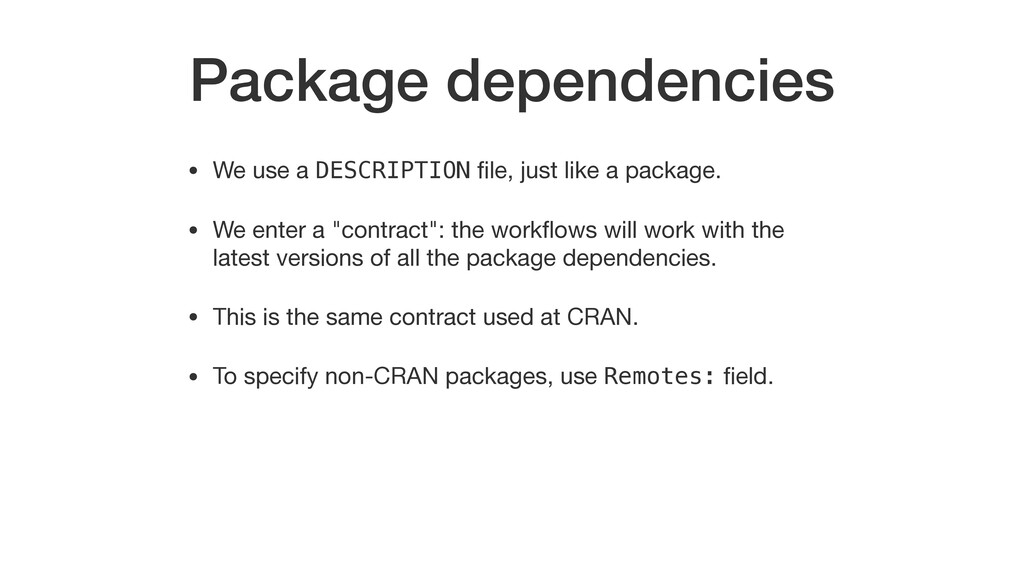
a package. • We enter a "contract": the workflows will work with the latest versions of all the package dependencies. • This is the same contract used at CRAN. • To specify non-CRAN packages, use Remotes: field.
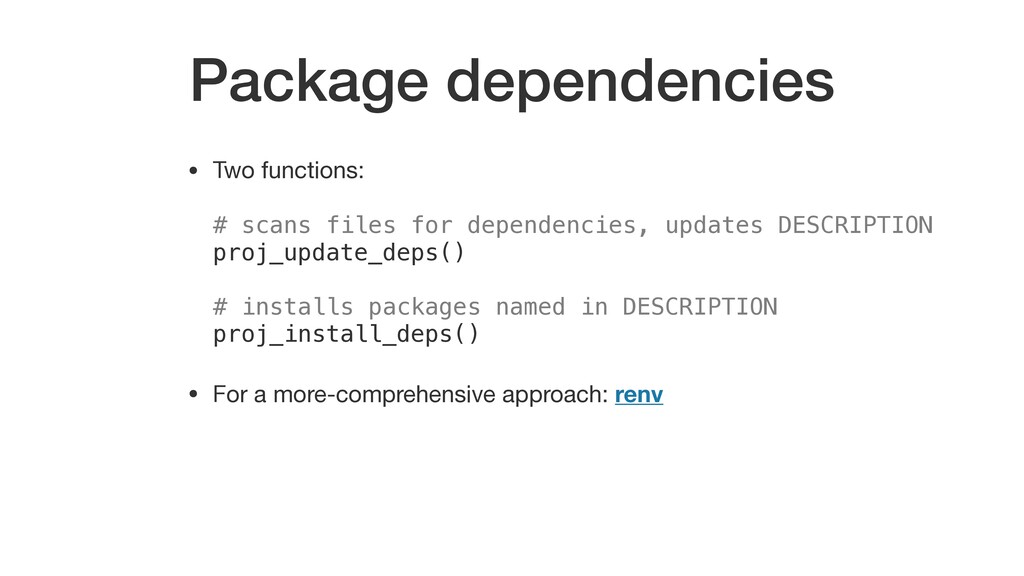
dependencies, updates DESCRIPTION proj_update_deps() # installs packages named in DESCRIPTION proj_install_deps() • For a more-comprehensive approach: renv
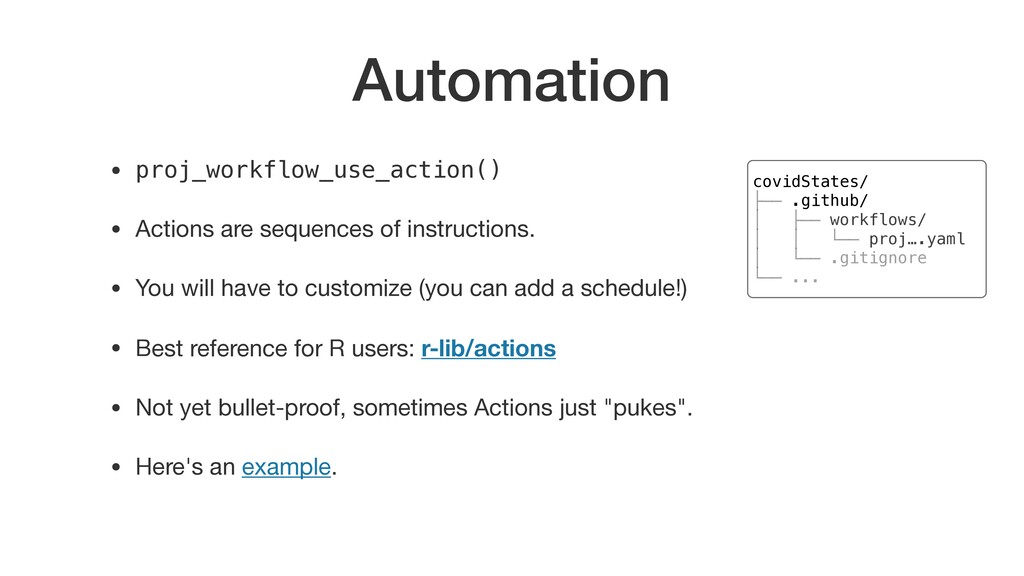
You will have to customize (you can add a schedule!) • Best reference for R users: r-lib/actions • Not yet bullet-proof, sometimes Actions just "pukes". • Here's an example. covidStates/ ├── .github/ │ ├── workflows/ │ │ └── proj….yaml │ └── .gitignore └── ...
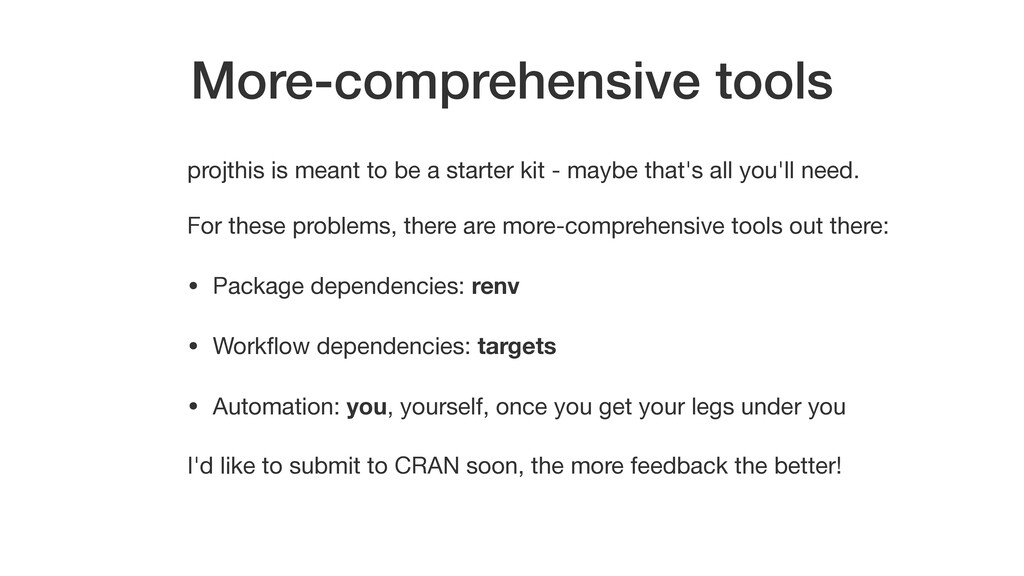
- maybe that's all you'll need. For these problems, there are more-comprehensive tools out there: • Package dependencies: renv • Workflow dependencies: targets • Automation: you, yourself, once you get your legs under you I'd like to submit to CRAN soon, the more feedback the better!


 ijlyttle
 bkeepers
 tonyrice
 csswizardry
 ammeep
 popppiees
 cassininazir
 livdayseo
 mclloyd
 vanstee
 greggifford
 jnunemaker
 addyosmani