Upgrade to Pro — share decks privately, control downloads, hide ads and more …

online therapy massachusetts

Sponsored · Your Podcast. Everywhere. Effortlessly. Share. Educate. Inspire. Entertain. You do you. We'll handle the rest. →

online therapy massachusetts

online therapy massachusetts

Avatar for intensegrooming

intensegrooming

August 31, 2026

Other Decks in Business

Transcript

  1. Online Therapy in Massachusetts: A Simple Guide to Getting Mental

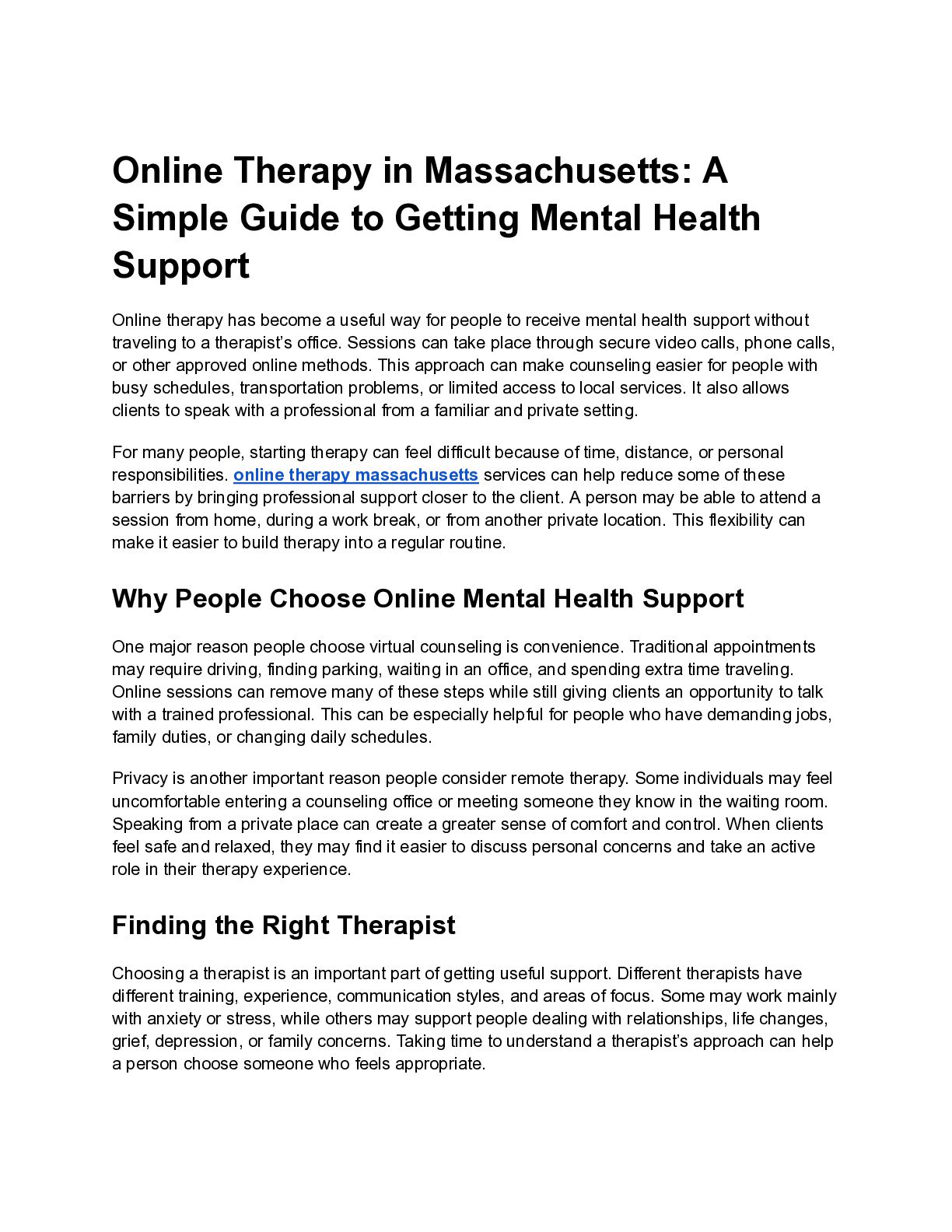
    Health Support Online therapy has become a useful way for people to receive mental health support without traveling to a therapist’s office. Sessions can take place through secure video calls, phone calls, or other approved online methods. This approach can make counseling easier for people with busy schedules, transportation problems, or limited access to local services. It also allows clients to speak with a professional from a familiar and private setting. For many people, starting therapy can feel difficult because of time, distance, or personal responsibilities. online therapy massachusetts services can help reduce some of these barriers by bringing professional support closer to the client. A person may be able to attend a session from home, during a work break, or from another private location. This flexibility can make it easier to build therapy into a regular routine. Why People Choose Online Mental Health Support One major reason people choose virtual counseling is convenience. Traditional appointments may require driving, finding parking, waiting in an office, and spending extra time traveling. Online sessions can remove many of these steps while still giving clients an opportunity to talk with a trained professional. This can be especially helpful for people who have demanding jobs, family duties, or changing daily schedules. Privacy is another important reason people consider remote therapy. Some individuals may feel uncomfortable entering a counseling office or meeting someone they know in the waiting room. Speaking from a private place can create a greater sense of comfort and control. When clients feel safe and relaxed, they may find it easier to discuss personal concerns and take an active role in their therapy experience. Finding the Right Therapist Choosing a therapist is an important part of getting useful support. Different therapists have different training, experience, communication styles, and areas of focus. Some may work mainly with anxiety or stress, while others may support people dealing with relationships, life changes, grief, depression, or family concerns. Taking time to understand a therapist’s approach can help a person choose someone who feels appropriate.
  2. A strong connection between therapist and client can make therapy

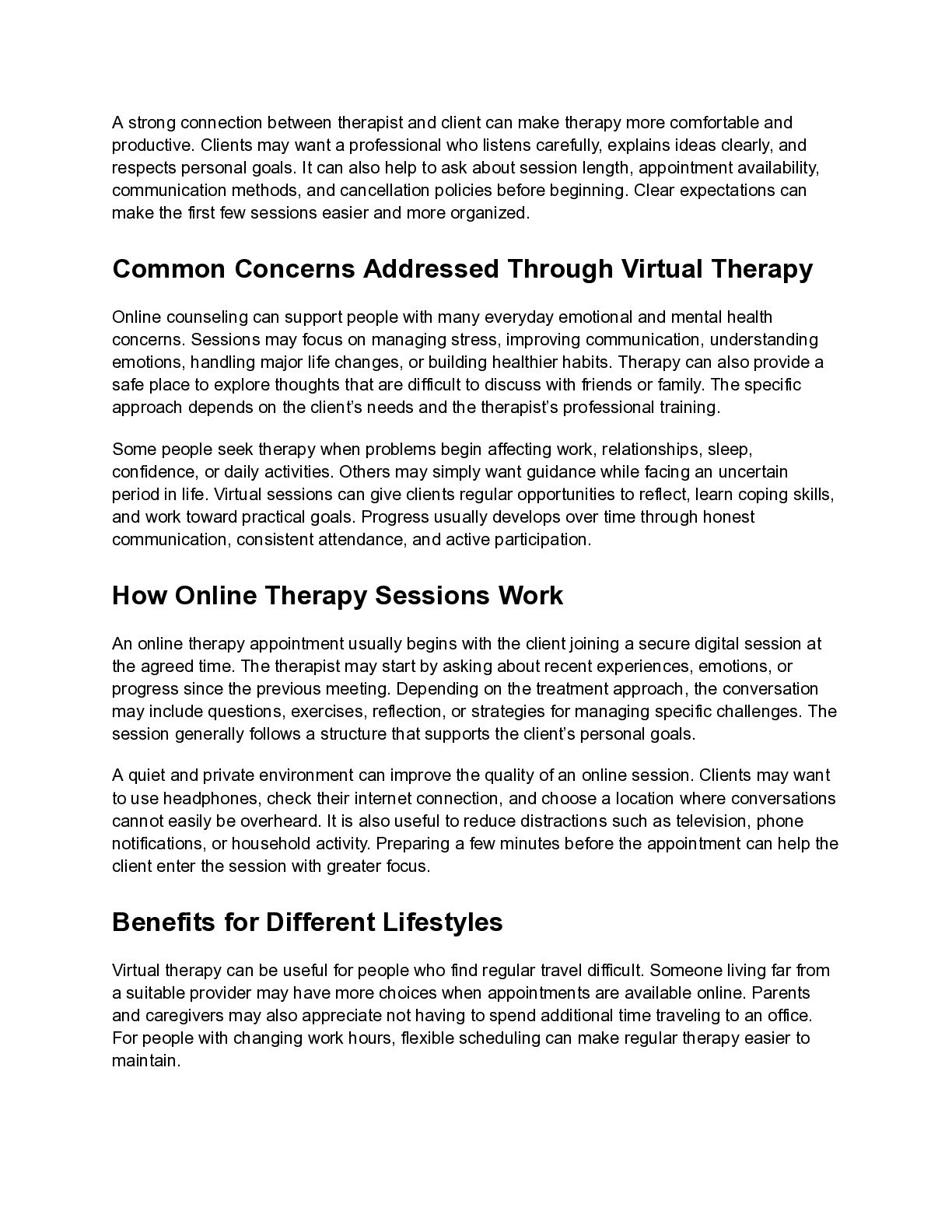
    more comfortable and productive. Clients may want a professional who listens carefully, explains ideas clearly, and respects personal goals. It can also help to ask about session length, appointment availability, communication methods, and cancellation policies before beginning. Clear expectations can make the first few sessions easier and more organized. Common Concerns Addressed Through Virtual Therapy Online counseling can support people with many everyday emotional and mental health concerns. Sessions may focus on managing stress, improving communication, understanding emotions, handling major life changes, or building healthier habits. Therapy can also provide a safe place to explore thoughts that are difficult to discuss with friends or family. The specific approach depends on the client’s needs and the therapist’s professional training. Some people seek therapy when problems begin affecting work, relationships, sleep, confidence, or daily activities. Others may simply want guidance while facing an uncertain period in life. Virtual sessions can give clients regular opportunities to reflect, learn coping skills, and work toward practical goals. Progress usually develops over time through honest communication, consistent attendance, and active participation. How Online Therapy Sessions Work An online therapy appointment usually begins with the client joining a secure digital session at the agreed time. The therapist may start by asking about recent experiences, emotions, or progress since the previous meeting. Depending on the treatment approach, the conversation may include questions, exercises, reflection, or strategies for managing specific challenges. The session generally follows a structure that supports the client’s personal goals. A quiet and private environment can improve the quality of an online session. Clients may want to use headphones, check their internet connection, and choose a location where conversations cannot easily be overheard. It is also useful to reduce distractions such as television, phone notifications, or household activity. Preparing a few minutes before the appointment can help the client enter the session with greater focus. Benefits for Different Lifestyles Virtual therapy can be useful for people who find regular travel difficult. Someone living far from a suitable provider may have more choices when appointments are available online. Parents and caregivers may also appreciate not having to spend additional time traveling to an office. For people with changing work hours, flexible scheduling can make regular therapy easier to maintain.
  3. Students, professionals, and older adults may also find remote counseling

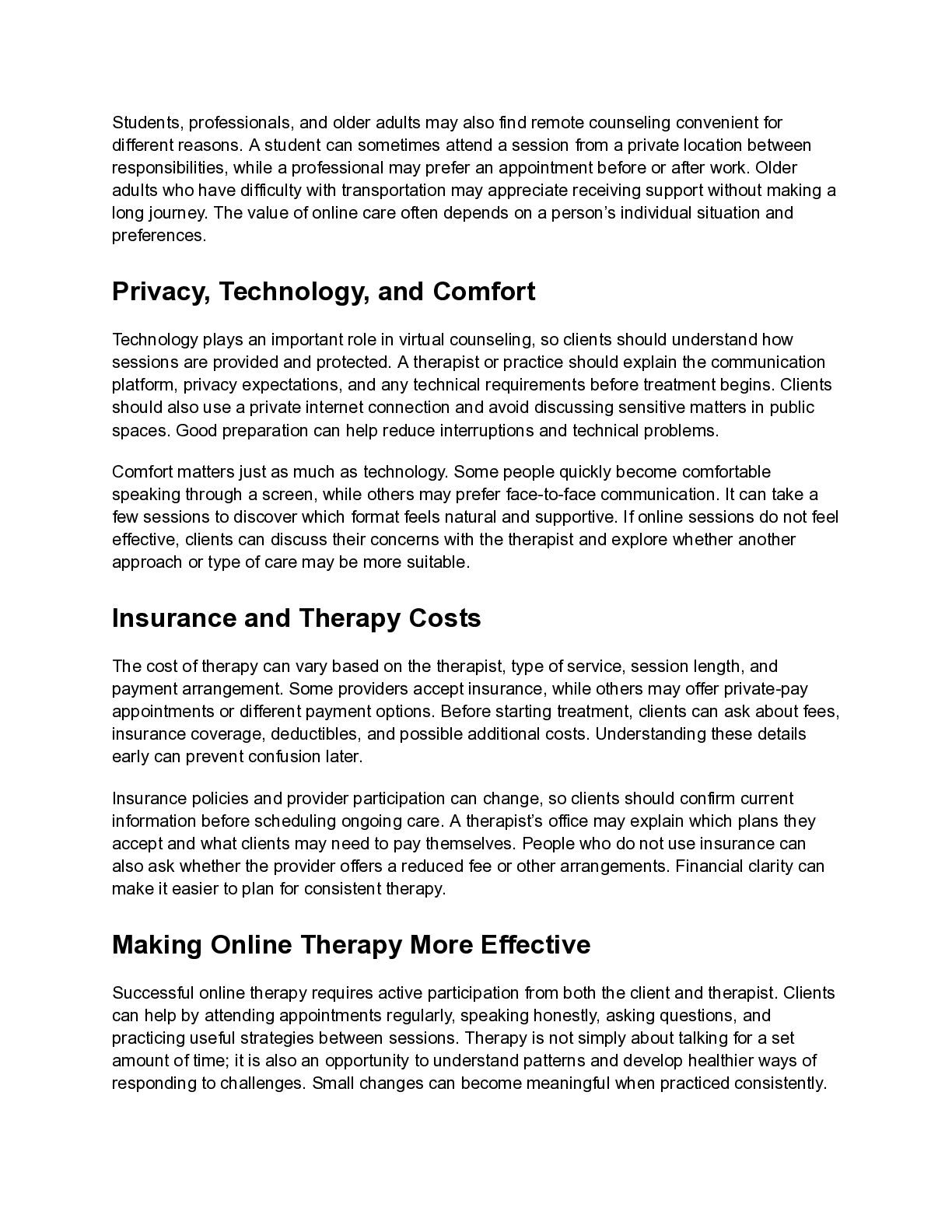
    convenient for different reasons. A student can sometimes attend a session from a private location between responsibilities, while a professional may prefer an appointment before or after work. Older adults who have difficulty with transportation may appreciate receiving support without making a long journey. The value of online care often depends on a person’s individual situation and preferences. Privacy, Technology, and Comfort Technology plays an important role in virtual counseling, so clients should understand how sessions are provided and protected. A therapist or practice should explain the communication platform, privacy expectations, and any technical requirements before treatment begins. Clients should also use a private internet connection and avoid discussing sensitive matters in public spaces. Good preparation can help reduce interruptions and technical problems. Comfort matters just as much as technology. Some people quickly become comfortable speaking through a screen, while others may prefer face-to-face communication. It can take a few sessions to discover which format feels natural and supportive. If online sessions do not feel effective, clients can discuss their concerns with the therapist and explore whether another approach or type of care may be more suitable. Insurance and Therapy Costs The cost of therapy can vary based on the therapist, type of service, session length, and payment arrangement. Some providers accept insurance, while others may offer private-pay appointments or different payment options. Before starting treatment, clients can ask about fees, insurance coverage, deductibles, and possible additional costs. Understanding these details early can prevent confusion later. Insurance policies and provider participation can change, so clients should confirm current information before scheduling ongoing care. A therapist’s office may explain which plans they accept and what clients may need to pay themselves. People who do not use insurance can also ask whether the provider offers a reduced fee or other arrangements. Financial clarity can make it easier to plan for consistent therapy. Making Online Therapy More Effective Successful online therapy requires active participation from both the client and therapist. Clients can help by attending appointments regularly, speaking honestly, asking questions, and practicing useful strategies between sessions. Therapy is not simply about talking for a set amount of time; it is also an opportunity to understand patterns and develop healthier ways of responding to challenges. Small changes can become meaningful when practiced consistently.
  4. It is also important for clients to communicate when something

    is not working. A person may need a different pace, clearer explanations, another type of exercise, or a change in session structure. A good therapist should be open to respectful feedback and willing to discuss the client’s concerns. With the right professional relationship, online therapy massachusetts can become a convenient part of a person’s broader effort to improve emotional well-being and manage everyday challenges.