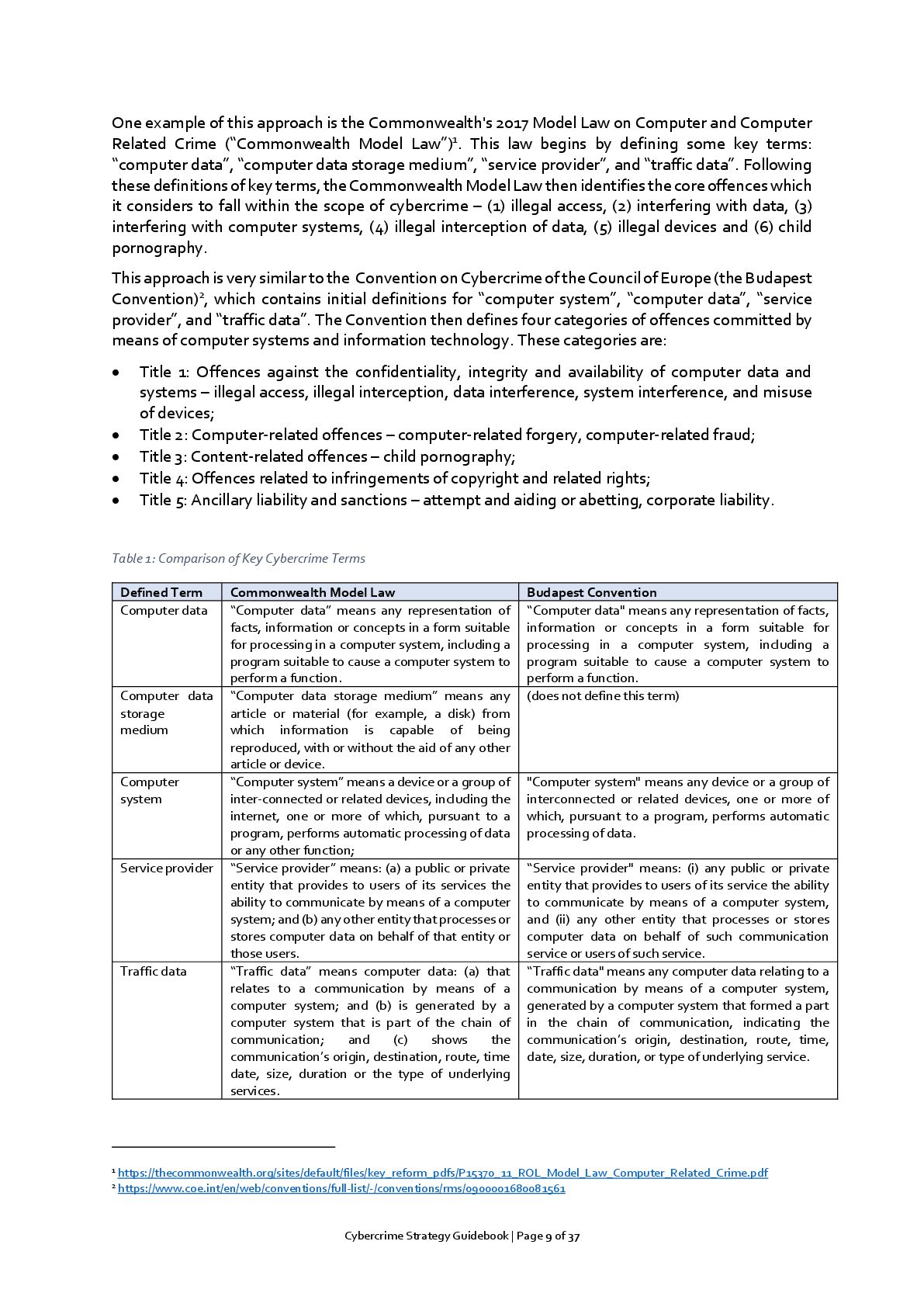
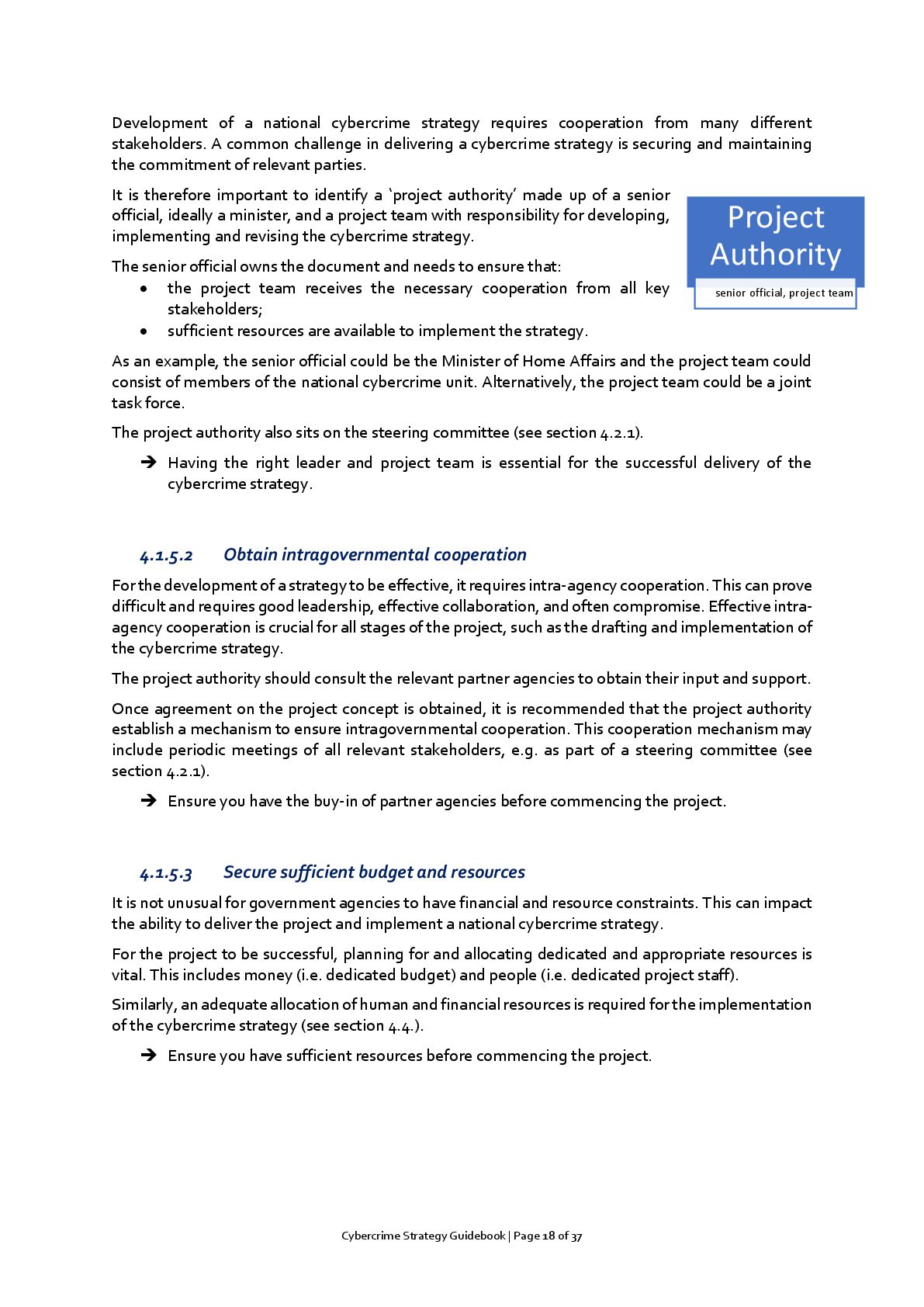
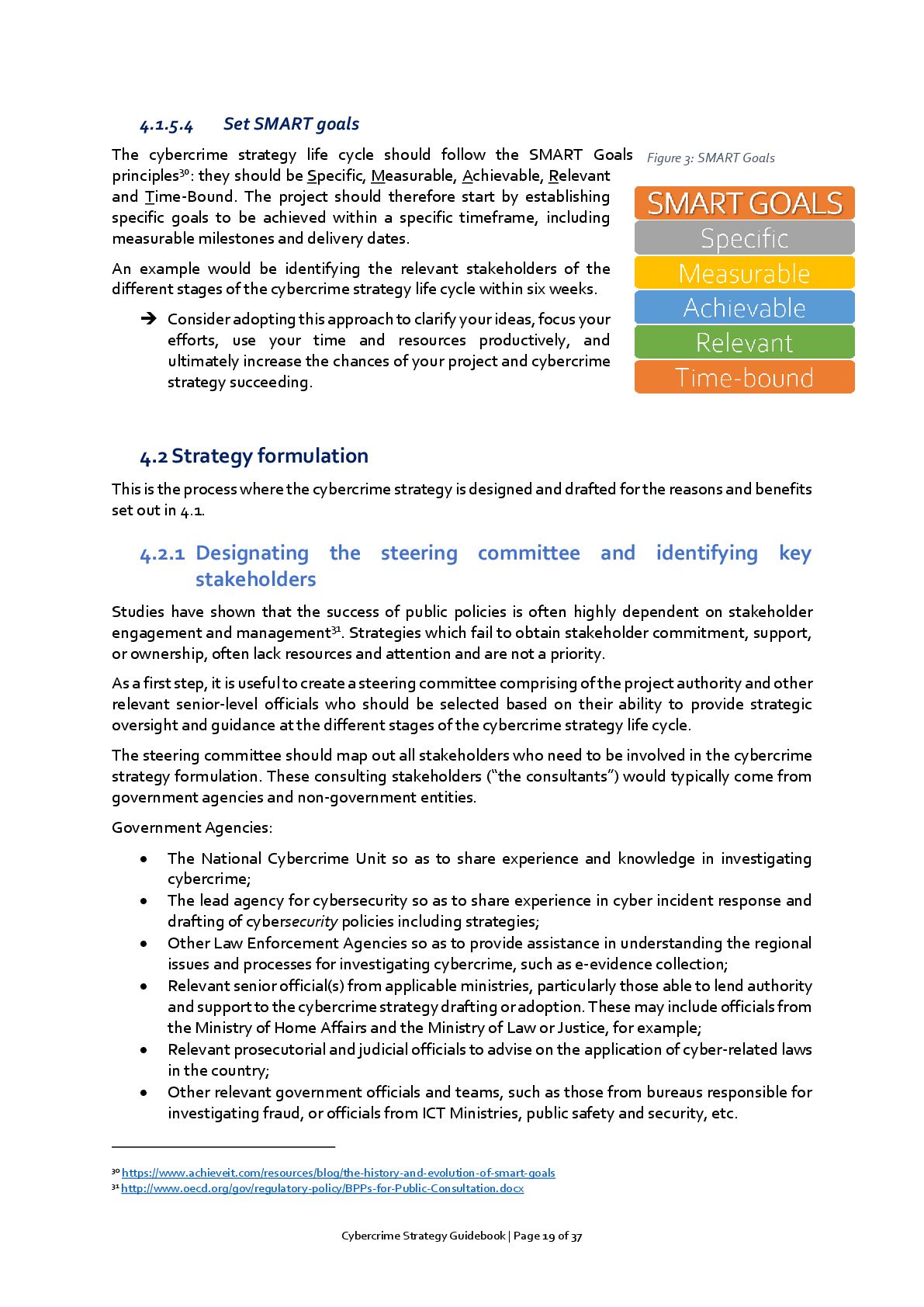
of this approach is the Commonwealth's 2017 Model Law on Computer and Computer Related Crime (“Commonwealth Model Law”)1. This law begins by defining some key terms: “computer data”, “computer data storage medium”, “service provider”, and “traffic data”. Following these definitions of key terms, the Commonwealth Model Law then identifies the core offences which it considers to fall within the scope of cybercrime – (1) illegal access, (2) interfering with data, (3) interfering with computer systems, (4) illegal interception of data, (5) illegal devices and (6) child pornography. This approach is very similar to the Convention on Cybercrime of the Council of Europe (the Budapest Convention)2, which contains initial definitions for “computer system”, “computer data”, “service provider”, and “traffic data”. The Convention then defines four categories of offences committed by means of computer systems and information technology. These categories are: Title 1: Offences against the confidentiality, integrity and availability of computer data and systems – illegal access, illegal interception, data interference, system interference, and misuse of devices; Title 2: Computer-related offences – computer-related forgery, computer-related fraud; Title 3: Content-related offences – child pornography; Title 4: Offences related to infringements of copyright and related rights; Title 5: Ancillary liability and sanctions – attempt and aiding or abetting, corporate liability. Table 1: Comparison of Key Cybercrime Terms Defined Term Commonwealth Model Law Budapest Convention Computer data “Computer data” means any representation of facts, information or concepts in a form suitable for processing in a computer system, including a program suitable to cause a computer system to perform a function. “Computer data" means any representation of facts, information or concepts in a form suitable for processing in a computer system, including a program suitable to cause a computer system to perform a function. Computer data storage medium “Computer data storage medium” means any article or material (for example, a disk) from which information is capable of being reproduced, with or without the aid of any other article or device. (does not define this term) Computer system “Computer system” means a device or a group of inter-connected or related devices, including the internet, one or more of which, pursuant to a program, performs automatic processing of data or any other function; "Computer system" means any device or a group of interconnected or related devices, one or more of which, pursuant to a program, performs automatic processing of data. Service provider “Service provider” means: (a) a public or private entity that provides to users of its services the ability to communicate by means of a computer system; and (b) any other entity that processes or stores computer data on behalf of that entity or those users. “Service provider" means: (i) any public or private entity that provides to users of its service the ability to communicate by means of a computer system, and (ii) any other entity that processes or stores computer data on behalf of such communication service or users of such service. Traffic data “Traffic data” means computer data: (a) that relates to a communication by means of a computer system; and (b) is generated by a computer system that is part of the chain of communication; and (c) shows the communication’s origin, destination, route, time date, size, duration or the type of underlying services. “Traffic data" means any computer data relating to a communication by means of a computer system, generated by a computer system that formed a part in the chain of communication, indicating the communication’s origin, destination, route, time, date, size, duration, or type of underlying service. 1 https://thecommonwealth.org/sites/default/files/key_reform_pdfs/P15370_11_ROL_Model_Law_Computer_Related_Crime.pdf 2 https://www.coe.int/en/web/conventions/full-list/-/conventions/rms/0900001680081561


 persolserverworks
 camiha
 takahashim
 willnet
 kentarofujii
 shumei_ito
 kizawa2020
 terapyon
 endonanana
 teamlab
 hiracky16
 akitoshiga
 thekraken
 chrislema
 rakko
 inesmontani
 techseoconnect
 kimpetersen
 bkeepers
 akademiya2063
 malarkey
 jlugia
 ryanjones