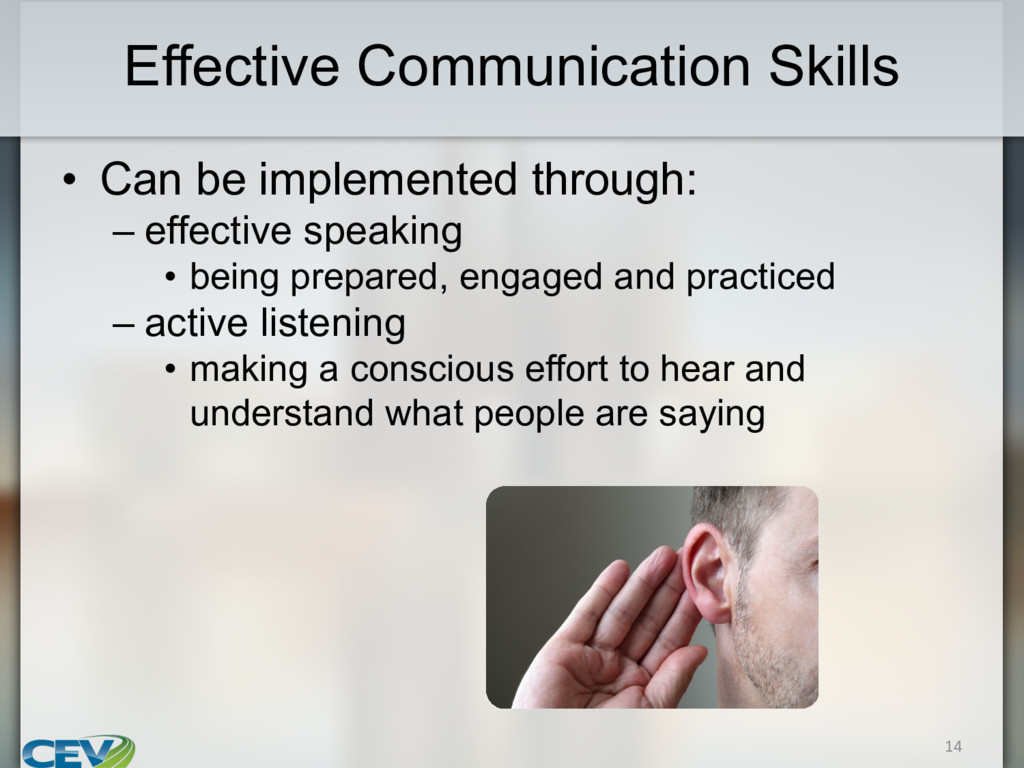
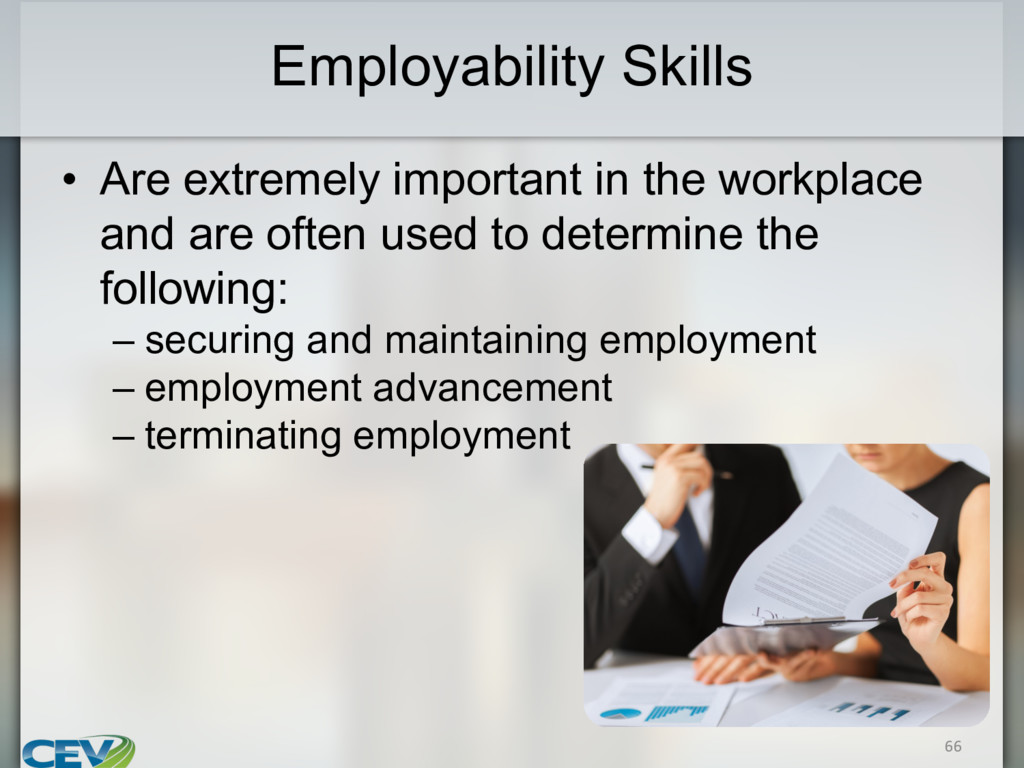
in any job market or workplace, examples include: – attendance – on-time arrival – meeting deadlines – working toward personal and team goals – ethical use of technology 4
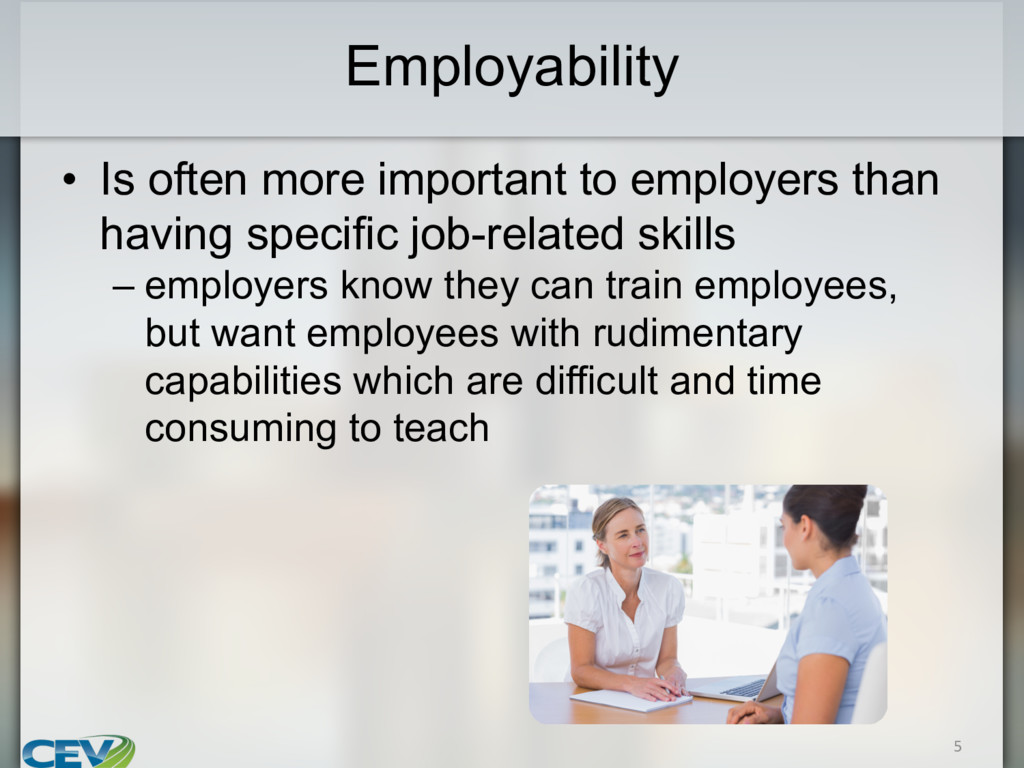
specific job-related skills – employers know they can train employees, but want employees with rudimentary capabilities which are difficult and time consuming to teach 5
gain employment and participate effectively in the workplace • Can be developed in many ways including school activities, interactions within the community, working with others, hobbies and sports • Are important skills which will continue to develop throughout a career • Are also known as transferrable skills 6
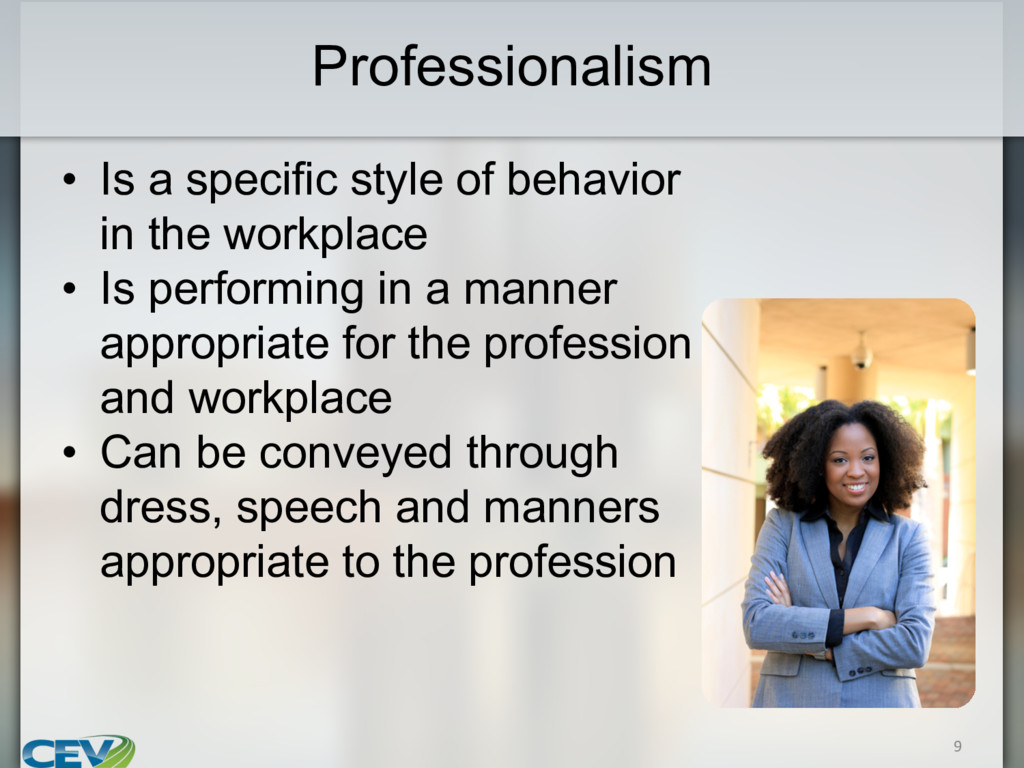
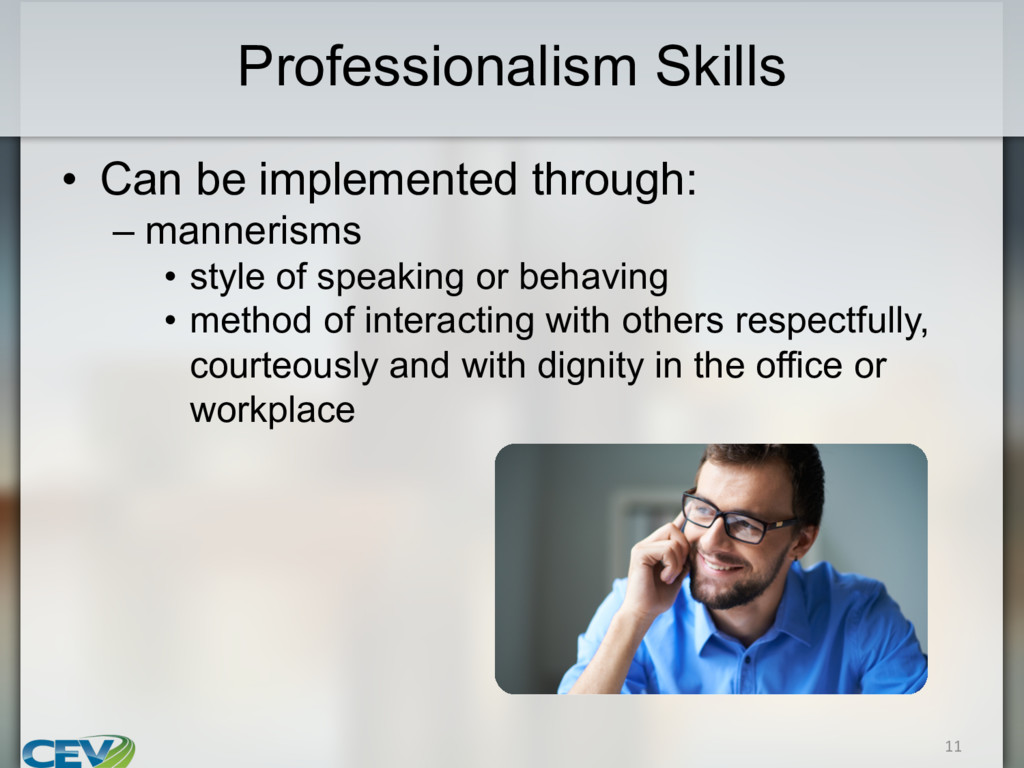
workplace • Is performing in a manner appropriate for the profession and workplace • Can be conveyed through dress, speech and manners appropriate to the profession 9
grooming appropriately • creates a first impression • proper grooming and appearance demonstrates respect and shows an individual is taking the job seriously – speech • proper speech can show an individual as mature, intelligent, confident and professional 10
and participates actively in group conversations presenting herself with integrity • John wears shorts and ball caps to work, speaks with sarcasm and does not take his job seriously Which of the two is acting with more professionalism? 12
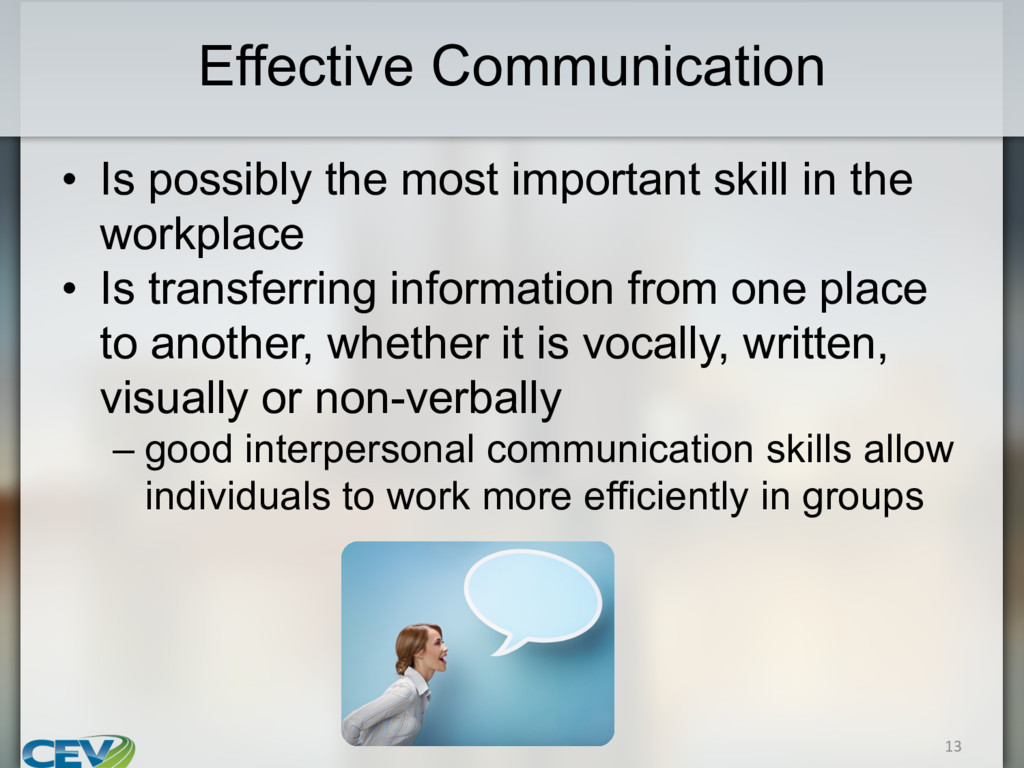
the workplace • Is transferring information from one place to another, whether it is vocally, written, visually or non-verbally – good interpersonal communication skills allow individuals to work more efficiently in groups 13
• using correct grammar, punctuation and spelling • includes items such as memos, reports, e- mails and faxes – non-verbal communication • using body language, eye contact and facial expressions to show interest in the conversation • making non-verbal communication agree with verbal communication 15
body language to show she is interested in the conversation • John does not seem to pay attention to the speaker and never proofreads his memos, e-mails or business letters for correct grammar, punctuation and spelling Which of the two have better communication skills? 16
include the following employee practices: – regular attendance – wearing proper attire – providing a clean and safe environment – taking pride in work – flexibility – taking initiative 18
demonstrating positive and productive work habits by performing assigned tasks efficiently – reliability and dependability • arriving at work on-time and successfully completing the tasks assigned – dedication • striving to ensure a quality performance, such as putting in extra hours beyond what is expected 19
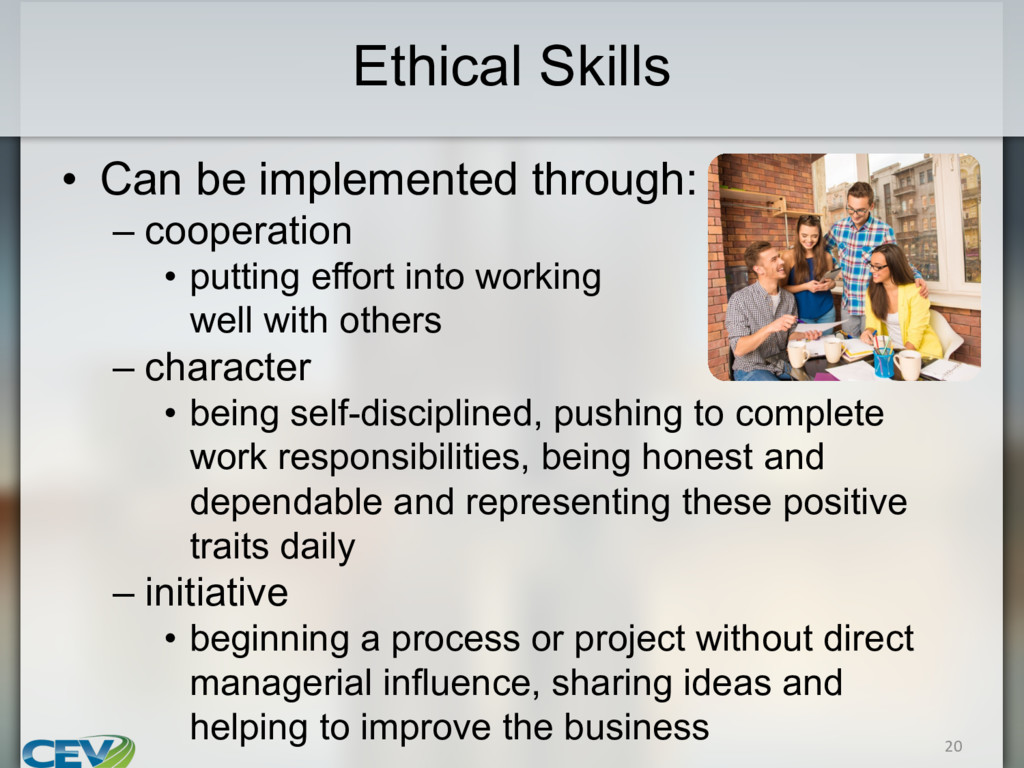
putting effort into working well with others – character • being self-disciplined, pushing to complete work responsibilities, being honest and dependable and representing these positive traits daily – initiative • beginning a process or project without direct managerial influence, sharing ideas and helping to improve the business 20
colleagues and exhibits a positive attitude and is willing to help out others • John uses unfair behavior towards employees, abuses cell phone and Internet usage and calls in sick when he is not sick Which employee practices more ethical behavior? 22
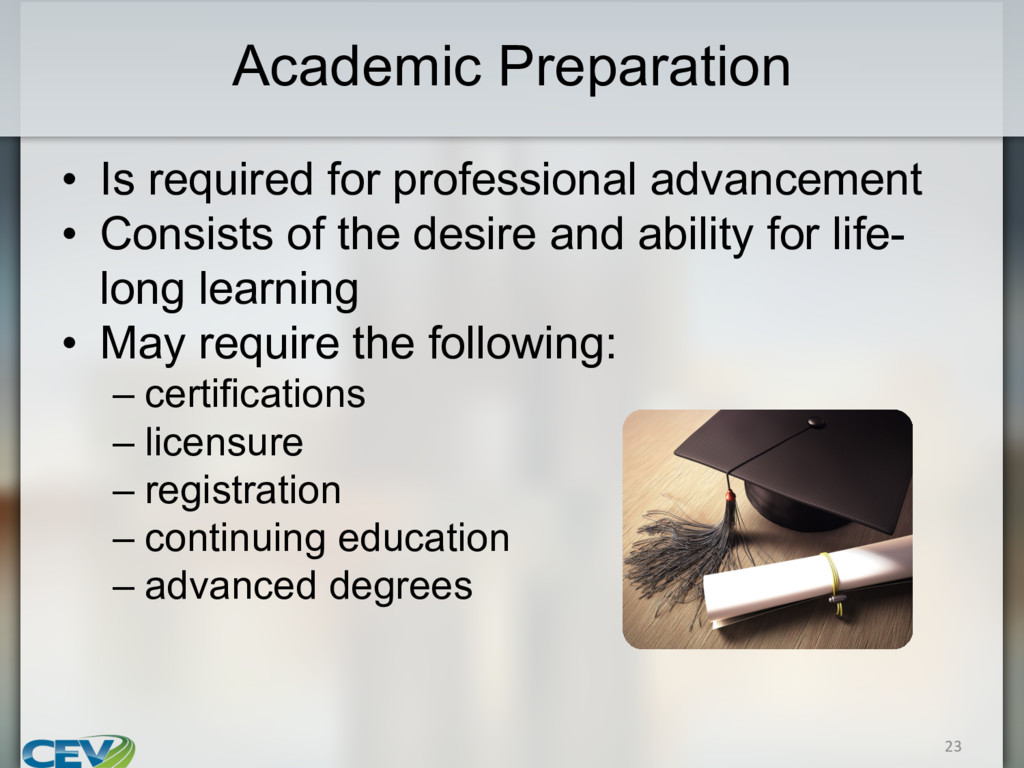
of the desire and ability for life- long learning • May require the following: – certifications – licensure – registration – continuing education – advanced degrees 23
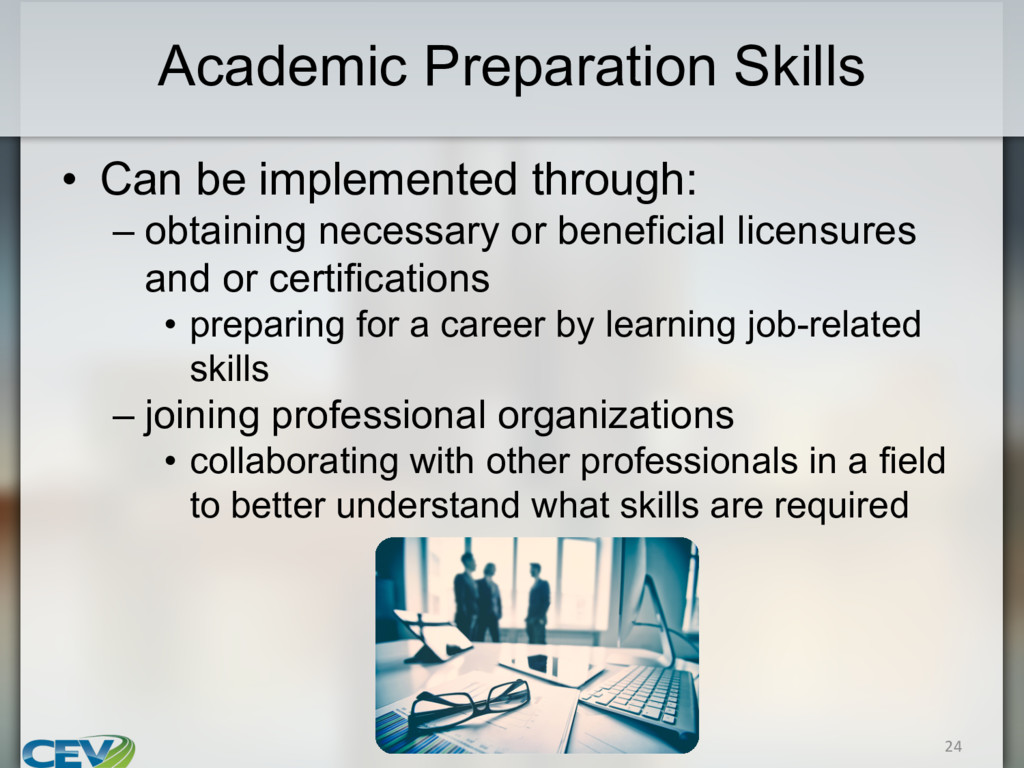
necessary or beneficial licensures and or certifications • preparing for a career by learning job-related skills – joining professional organizations • collaborating with other professionals in a field to better understand what skills are required 24
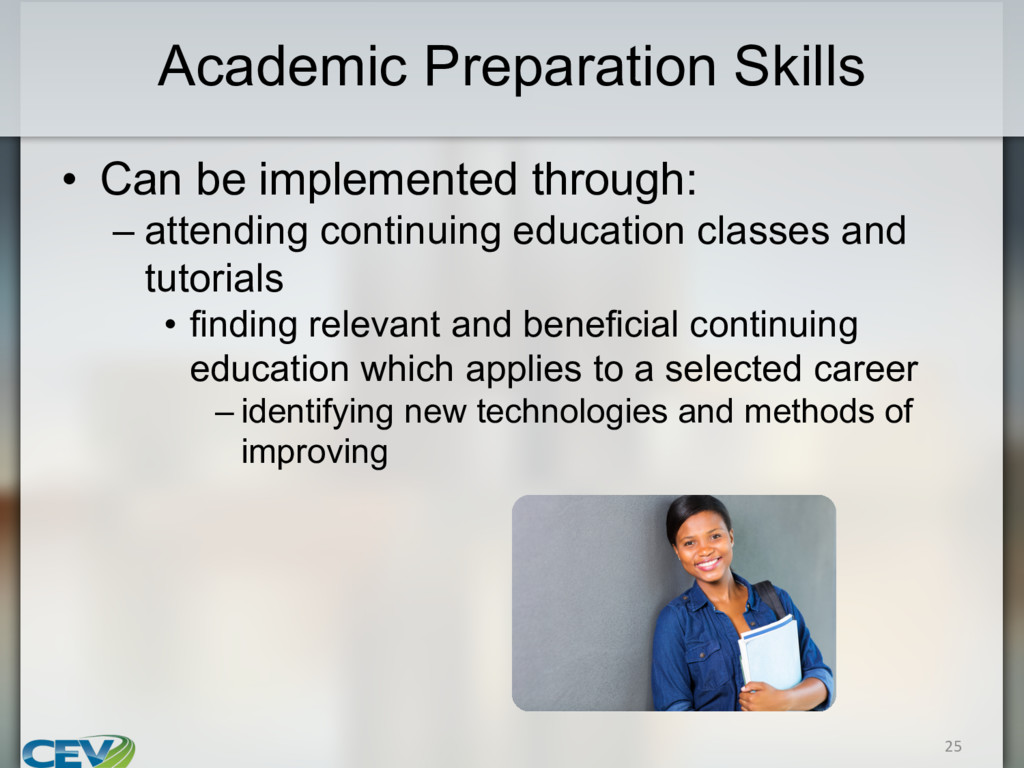
continuing education classes and tutorials • finding relevant and beneficial continuing education which applies to a selected career – identifying new technologies and methods of improving 25
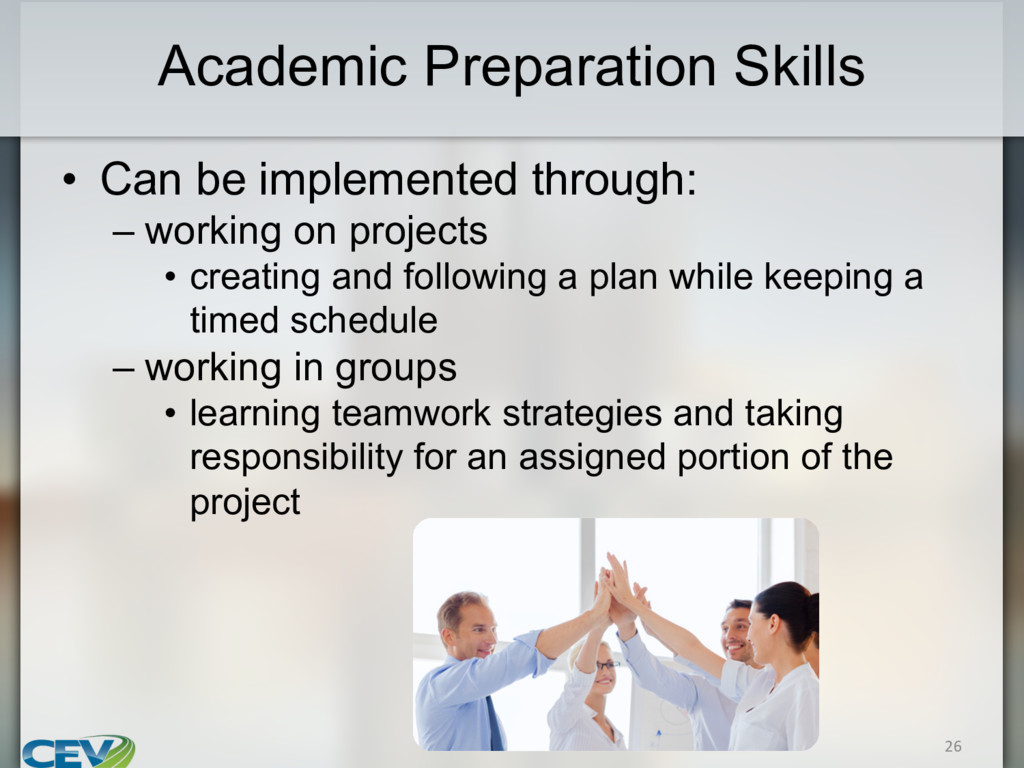
on projects • creating and following a plan while keeping a timed schedule – working in groups • learning teamwork strategies and taking responsibility for an assigned portion of the project 26
receives a publication detailing new advancements in her field and attends continuing education courses occasionally • John is the last to learn of changes related to his profession and company Who is utilizing academic preparation skills? 27
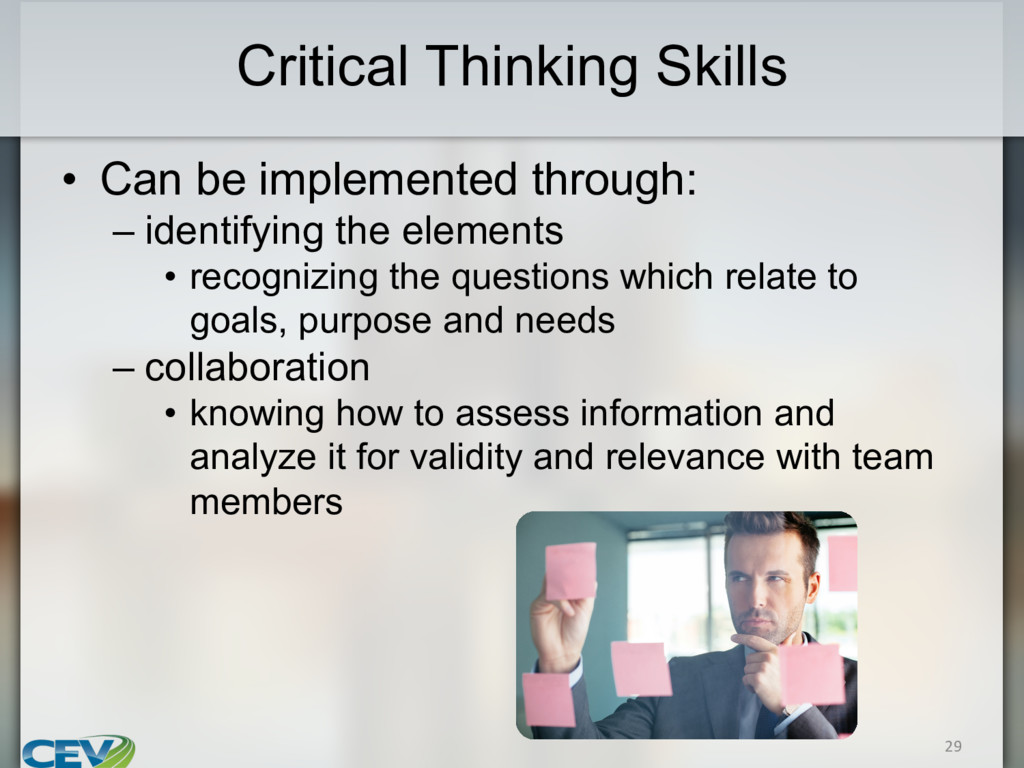
the elements • recognizing the questions which relate to goals, purpose and needs – collaboration • knowing how to assess information and analyze it for validity and relevance with team members 29
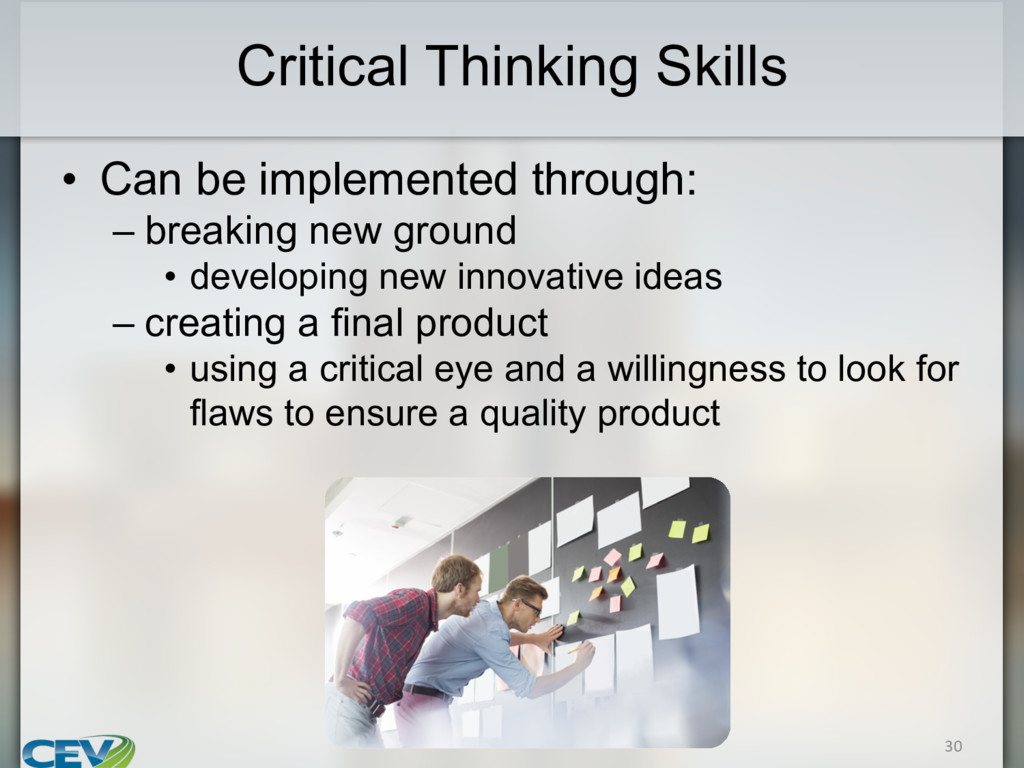
new ground • developing new innovative ideas – creating a final product • using a critical eye and a willingness to look for flaws to ensure a quality product 30
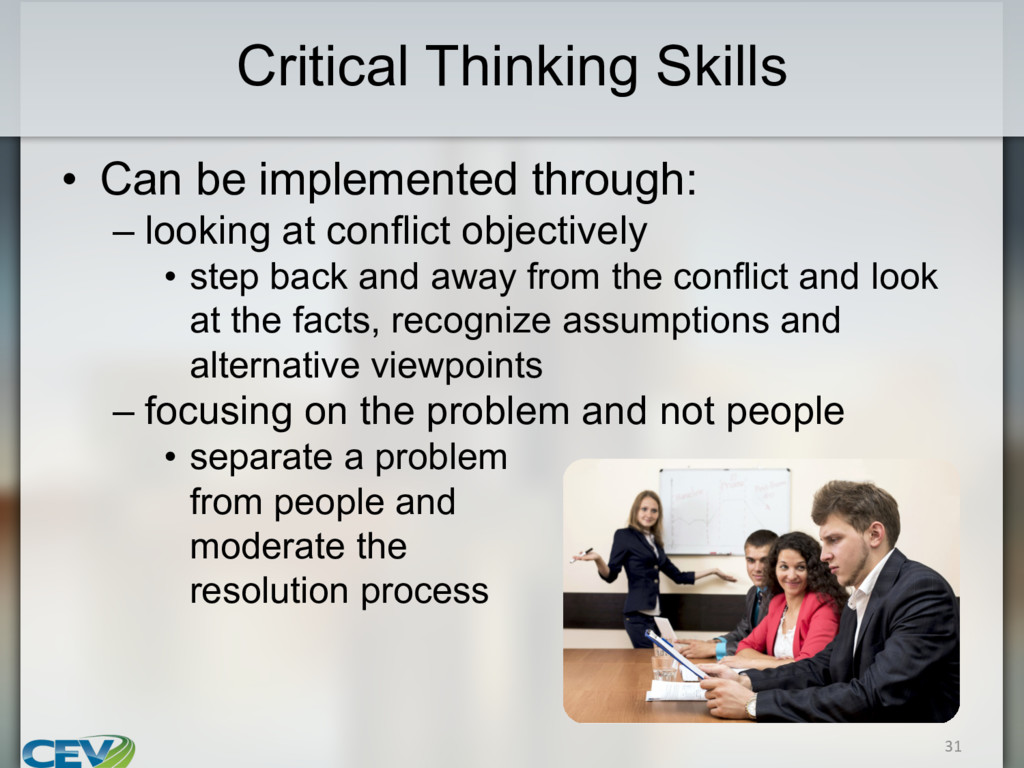
at conflict objectively • step back and away from the conflict and look at the facts, recognize assumptions and alternative viewpoints – focusing on the problem and not people • separate a problem from people and moderate the resolution process 31
seeks information as well as precision in information and is open-minded to new ideas • John does not take the entire situation into account, uses the first thought which comes to mind and searches for short-term solutions Which of the two is using beneficial critical thinking skills? 32
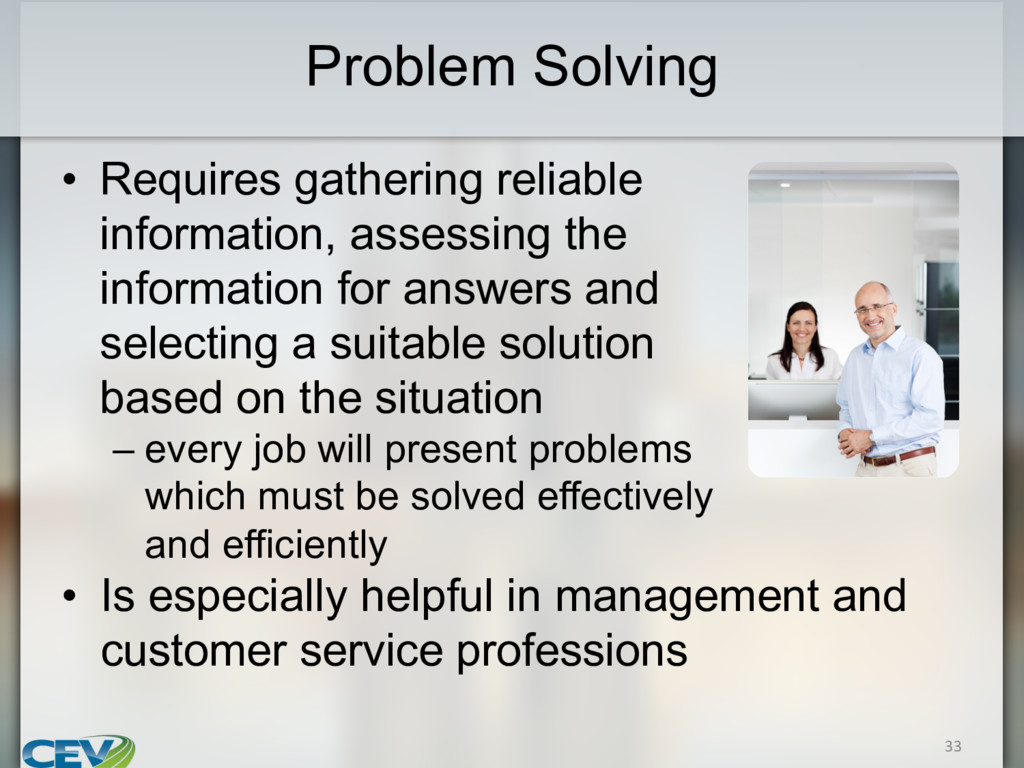
for answers and selecting a suitable solution based on the situation – every job will present problems which must be solved effectively and efficiently • Is especially helpful in management and customer service professions 33
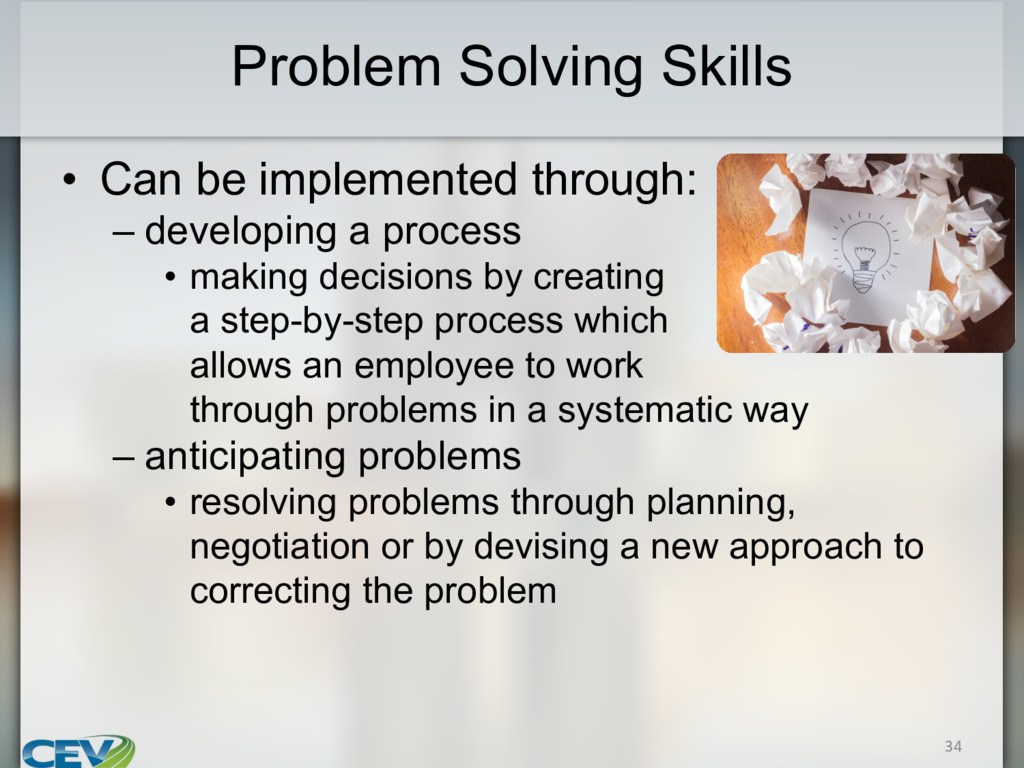
a process • making decisions by creating a step-by-step process which allows an employee to work through problems in a systematic way – anticipating problems • resolving problems through planning, negotiation or by devising a new approach to correcting the problem 34
• coming up with as many solutions as possible – trial and error • trying out all of the possible solutions and ruling out those which do not work – experience • using solutions which have worked in the past 35
plan to solve a problem and brings about a positive result • John panics and gives up when presented with a problem Who is the better problem solver? 36
allows tasks to be completed quickly and accurately, allowing a company to take on more work and generate more revenue • Can lead to positive working relationships, improved working environments and a decrease in stress both at home and in the workplace 37
knowing how to assess information and analyze it for validity and relevance with team members – conflict resolution • setting aside personal emotions and finding an answer which benefits each position allowing a fair decisions which benefits the company as a whole 38
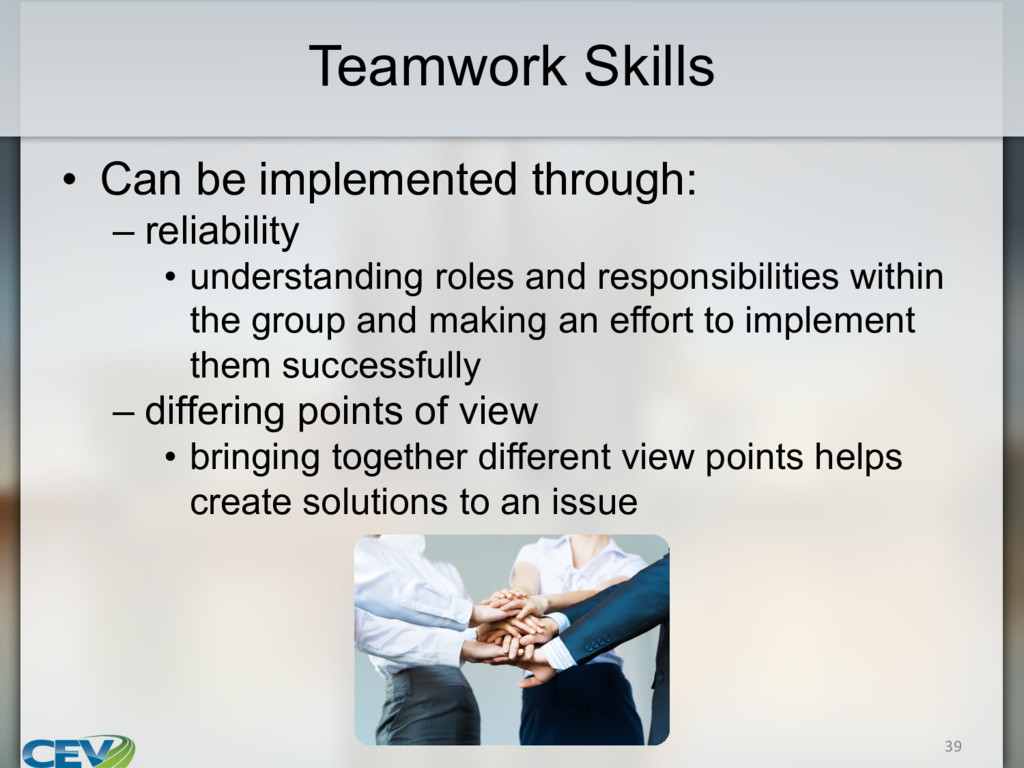
understanding roles and responsibilities within the group and making an effort to implement them successfully – differing points of view • bringing together different view points helps create solutions to an issue 39
clearly explaining her ideas to the group and listening carefully to the ideas of others • John sits back in a group, lets others make the decisions and does not speak up if he has an opinion Which of the two is demonstrating positive teamwork? 40
a better result for an organization • Is having a strong sense of self • Is understanding the qualities which make other people want to follow and recognizing how to adjust those qualities when conditions require it 41
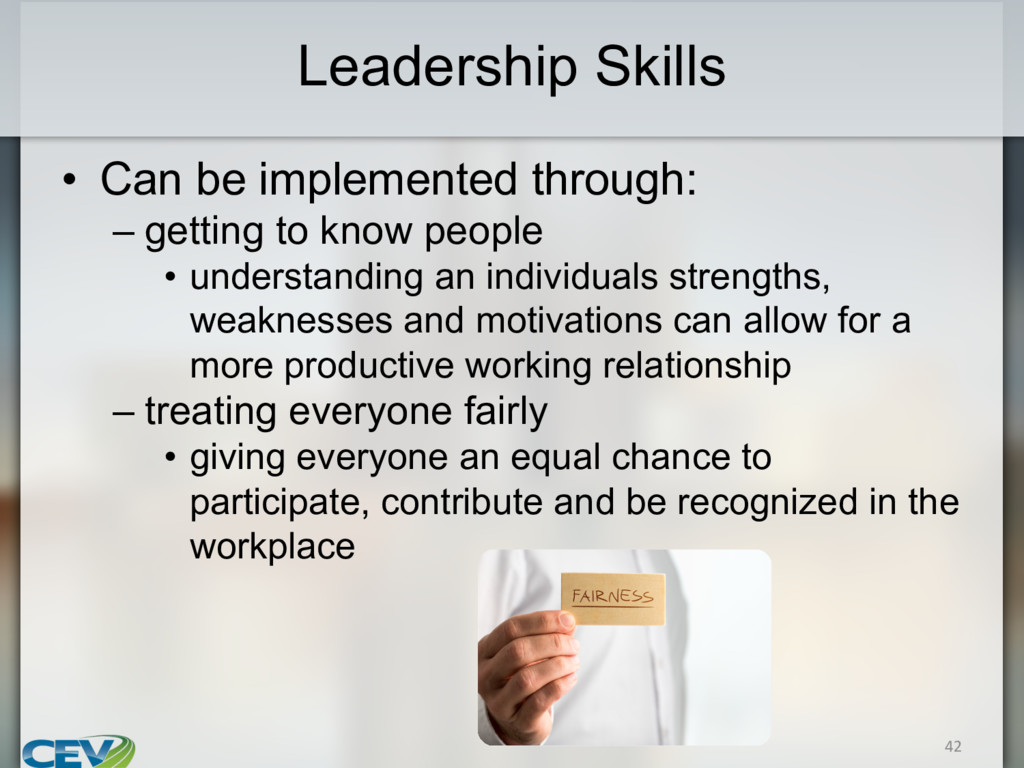
know people • understanding an individuals strengths, weaknesses and motivations can allow for a more productive working relationship – treating everyone fairly • giving everyone an equal chance to participate, contribute and be recognized in the workplace 42
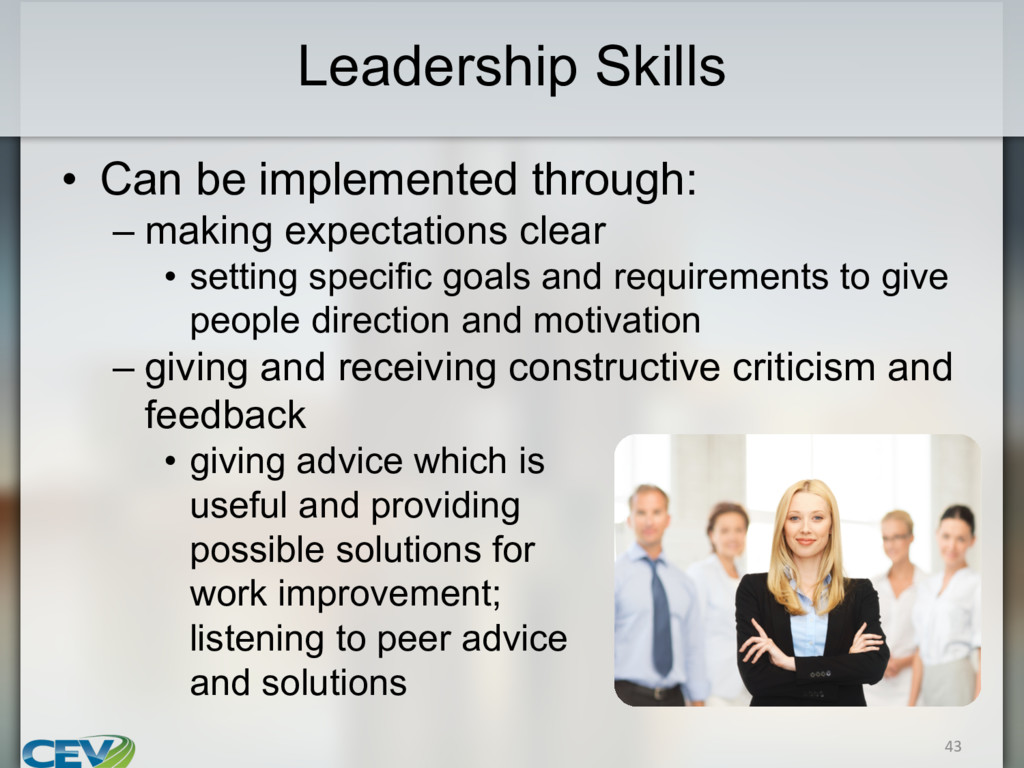
clear • setting specific goals and requirements to give people direction and motivation – giving and receiving constructive criticism and feedback • giving advice which is useful and providing possible solutions for work improvement; listening to peer advice and solutions 43
others while facilitating success, she encourages individuals to get on board and upholds herself to a high standard to lead by example • John on the other hand, has a lack of energy, is pessimistic and lacks interpersonal skills Who is the better leader? 44
control over the amount of time spent on specific activities to effectively accomplish goals in a timely manner • Includes punctuality, which is defined as the ability to complete tasks and fulfill obligations in a timely manner 45 Fun Fact: Punctuality is also referred to as being “on time.”
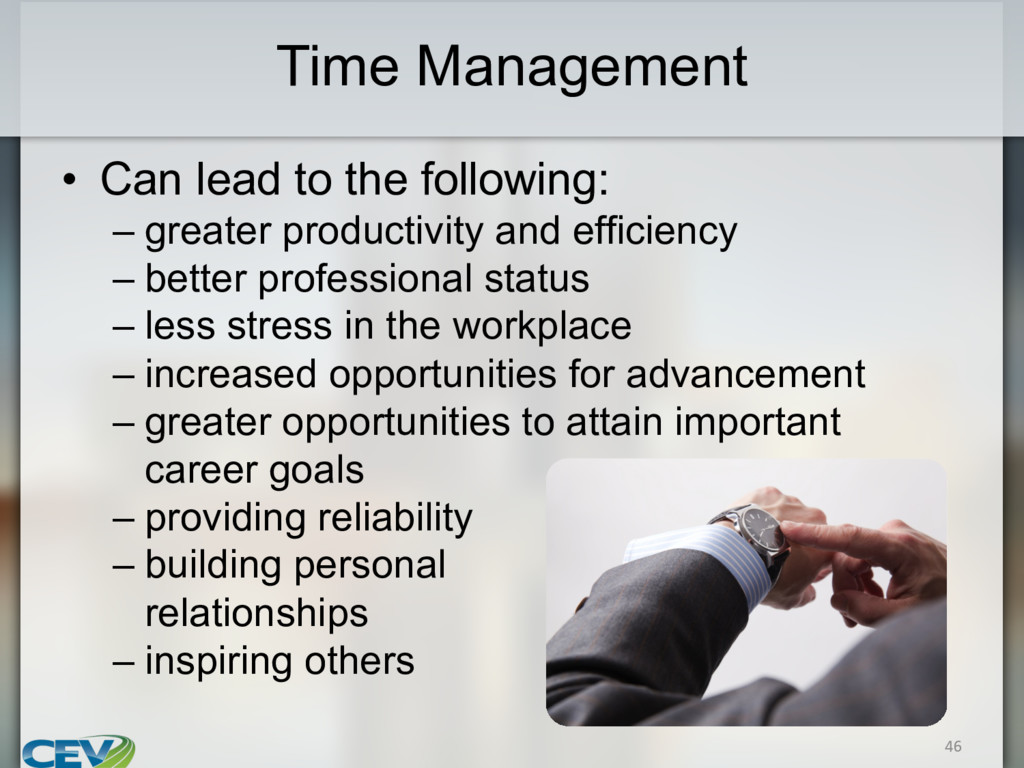
productivity and efficiency – better professional status – less stress in the workplace – increased opportunities for advancement – greater opportunities to attain important career goals – providing reliability – building personal relationships – inspiring others 46
• deciding what tasks are urgent or important and completing those items first – setting goals • ability to designate short-term goals such as deadlines and long-term goals such as growth within the company and strive to complete each – avoiding procrastination • ability to schedule tasks within the correct time frame and understanding the task must be completed on time 47
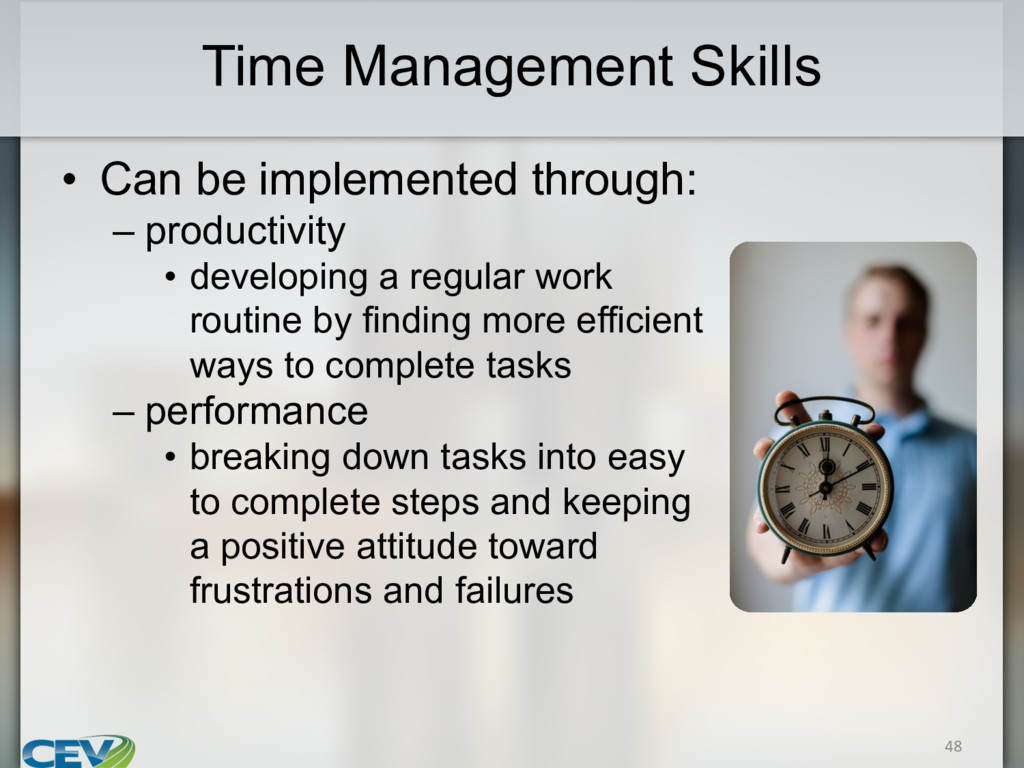
• developing a regular work routine by finding more efficient ways to complete tasks – performance • breaking down tasks into easy to complete steps and keeping a positive attitude toward frustrations and failures 48
the highest priority, sets aside time for planning and scheduling and finishes projects within the deadline • John procrastinates, misses deadlines and allows other people to pick up his slack Who is best utilizing time management strategies? 50
and has brought about a revolution in the business world • Allows businesses to expand quickly and efficiently, examples include: – video conferencing – social networks – virtual office technology • May allow businesses to target a wider customer base and increase profits 51
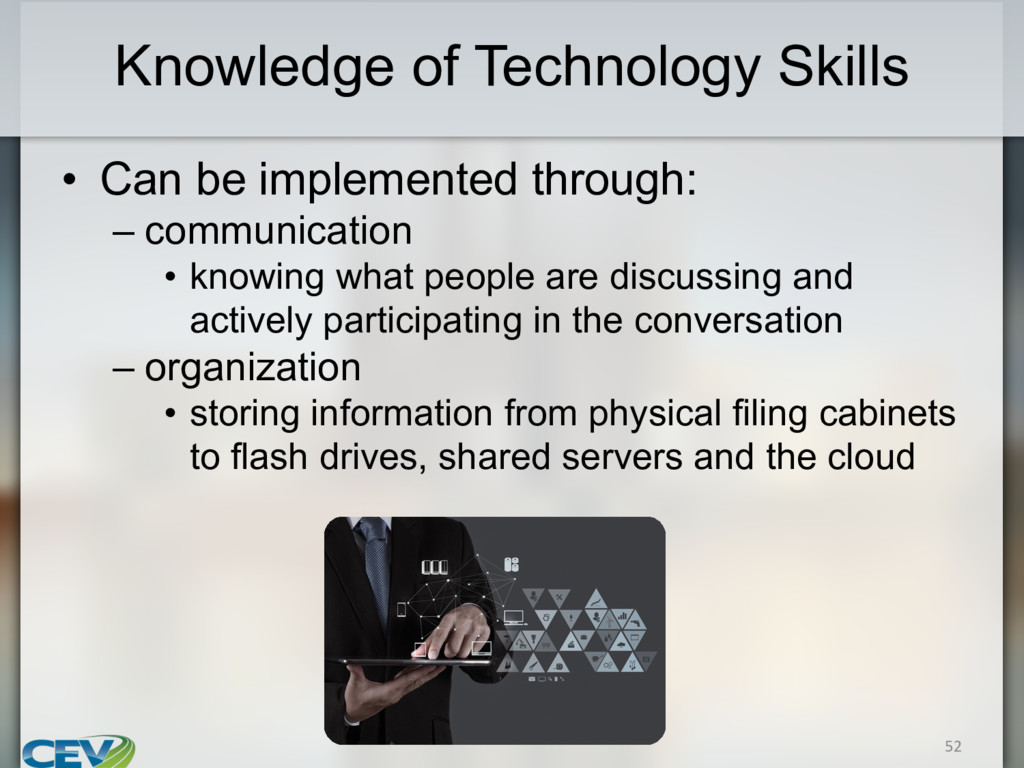
communication • knowing what people are discussing and actively participating in the conversation – organization • storing information from physical filing cabinets to flash drives, shared servers and the cloud 52
relevance • an individual is more likely to gain employment in today’s job market with technological knowledge – efficiency • saving time by using office technology to speed up the work flow process – willingness to learn • learning new technology and methods without having to be asked 53
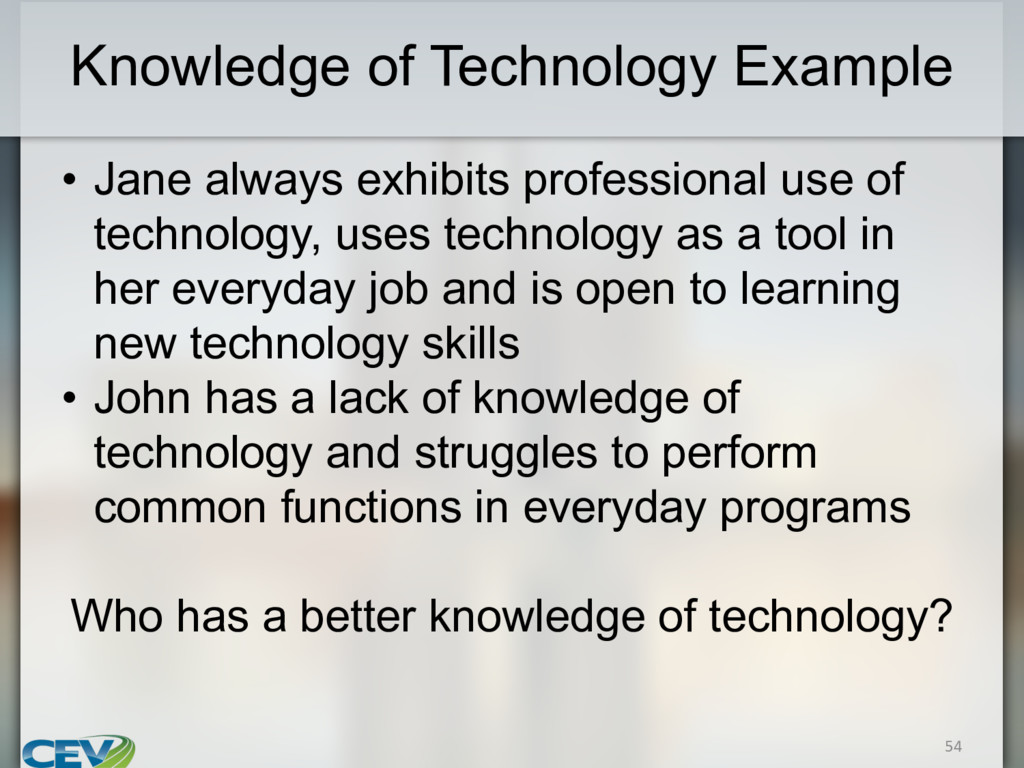
of technology, uses technology as a tool in her everyday job and is open to learning new technology skills • John has a lack of knowledge of technology and struggles to perform common functions in everyday programs Who has a better knowledge of technology? 54
stress which benefits an individuals personal and professional life • Can result in the following: – greater productivity in the workplace – improved mental and physical health – greater success in life 55
• recognizing what causes stress and developing ways to reduce it both mentally and physically – utilization • managing workloads and productivity by using available in-house and outside resources 56
• reacting in a manner which maintains a positive attitude – flexibility • easily making changes to better meet business needs – separation • setting boundaries and establishing routines to be able to separate home and work stress 57
she has decided to try walking for one hour every day to help alleviate her stress • John does not create a balanced schedule, prioritize his tasks or take care of himself physically Who is displaying good stress management practices? 58
work productivity, responsibilities and their lifestyle outside of work, such as family life • Includes: – creating downtime • making a point to schedule time with family and friends during the week – exercising • making time for exercise, it will reduce stress, improve health and create more energy for the day 59
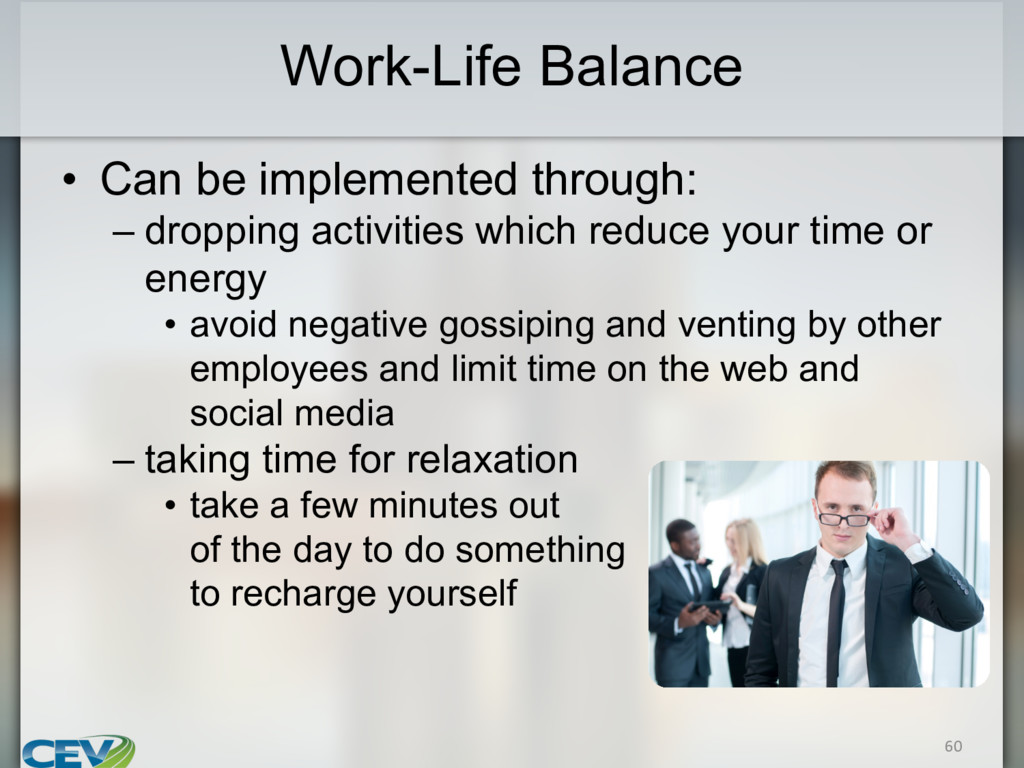
which reduce your time or energy • avoid negative gossiping and venting by other employees and limit time on the web and social media – taking time for relaxation • take a few minutes out of the day to do something to recharge yourself 60
morning with other employees gossiping about others and complaining about their work • Jennifer takes a few minutes out of her day to recharge and often exercises during her lunch break Who is displaying better work-life balance practices? 61
day through consistent behavior, resulting in increased productivity • Include: – taking more breaks • after several long hours of work, take a moment to refresh by going for a walk or grabbing lunch or a snack – using the morning to focus • start the day by ignoring e-mails and getting in a good breakfast, meditating or working out to fuel for a productive day 62
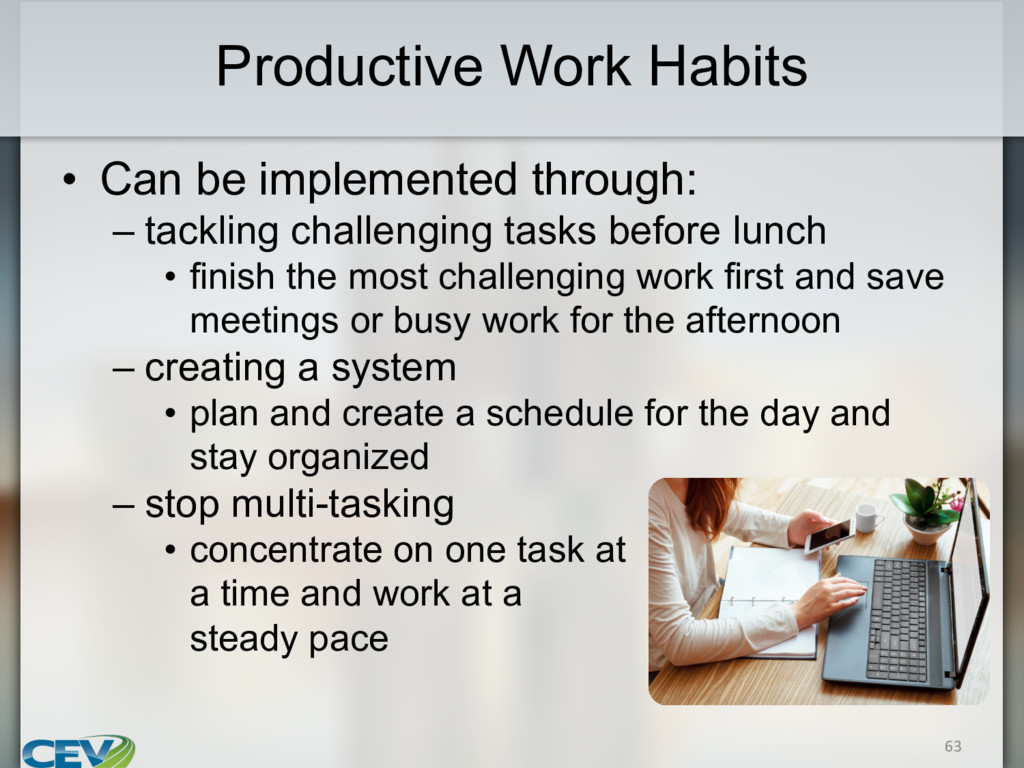
challenging tasks before lunch • finish the most challenging work first and save meetings or busy work for the afternoon – creating a system • plan and create a schedule for the day and stay organized – stop multi-tasking • concentrate on one task at a time and work at a steady pace 63
a positive attitude • create goals, provide a strong work ethic, value good attendance and punctuality and realize the importance of rest and relaxation 64
projects and forgets to take breaks during the day • Smith tackles his challenging work in the morning and concentrates on one task at a time Who is displaying productive work habit practices? 65
will secure, maintain and keep a job • Requires employees to practice effective employability skills and includes the following tips: – work hard • stay productive and use time wisely – be on time • do not show up late, take long lunches, over use sick time or leave early 67
be a team player • work well with others and do not gossip about other employees – do not complain • stay positive and appreciate your current job – offer to help • volunteer time for new projects and take on more responsibility – keep your thoughts to yourself • do not discuss issues about your job to the world 68
to work and is always complaining about the work he has to complete • Christi volunteers her time to work on a new project and shows up to work on time every day Which of the employees has more job security? 69
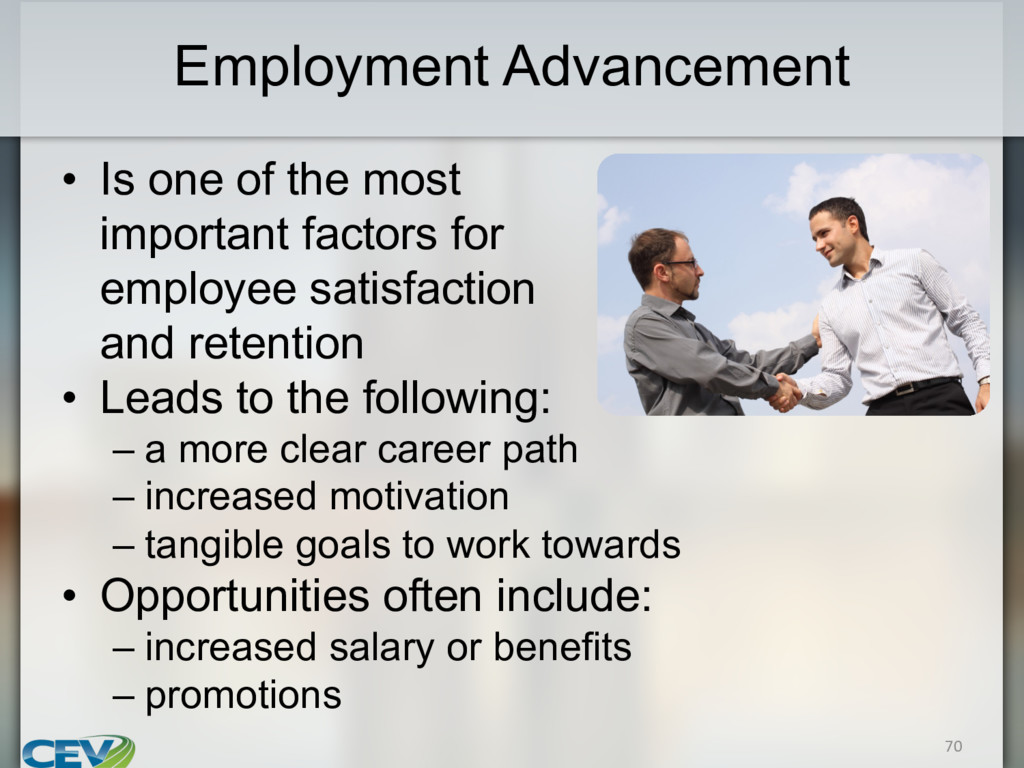
for employee satisfaction and retention • Leads to the following: – a more clear career path – increased motivation – tangible goals to work towards • Opportunities often include: – increased salary or benefits – promotions 70
and perform the following: – talking to your boss – asking for more work – volunteering – working on interpersonal skills – being innovative – finding a mentor – selling yourself – keep learning – expanding your network – building your reputation 71
her career goals and often asks for more work • Gary has not spoken to his boss about his career goals and does not ask for extra work Who is more likely to advance in their career? 72
company and is referred to as “quitting a job” • Is often required by employees due to the following workplace problems: – overworked – no recognition or rewards for good work – poor relationships and interpersonal skills in the workplace – employers dishonoring commitments – employers hiring and promoting the wrong people – employers failing to engage creativity 73
– notify the boss • schedule a meeting and notify the boss in person – give plenty of notice • give at least two weeks or more in order to make the transition process easier – prepare emotions • contain feelings of regret, anger, frustration or sadness and do not feel obligated to explain the reason for leaving 74
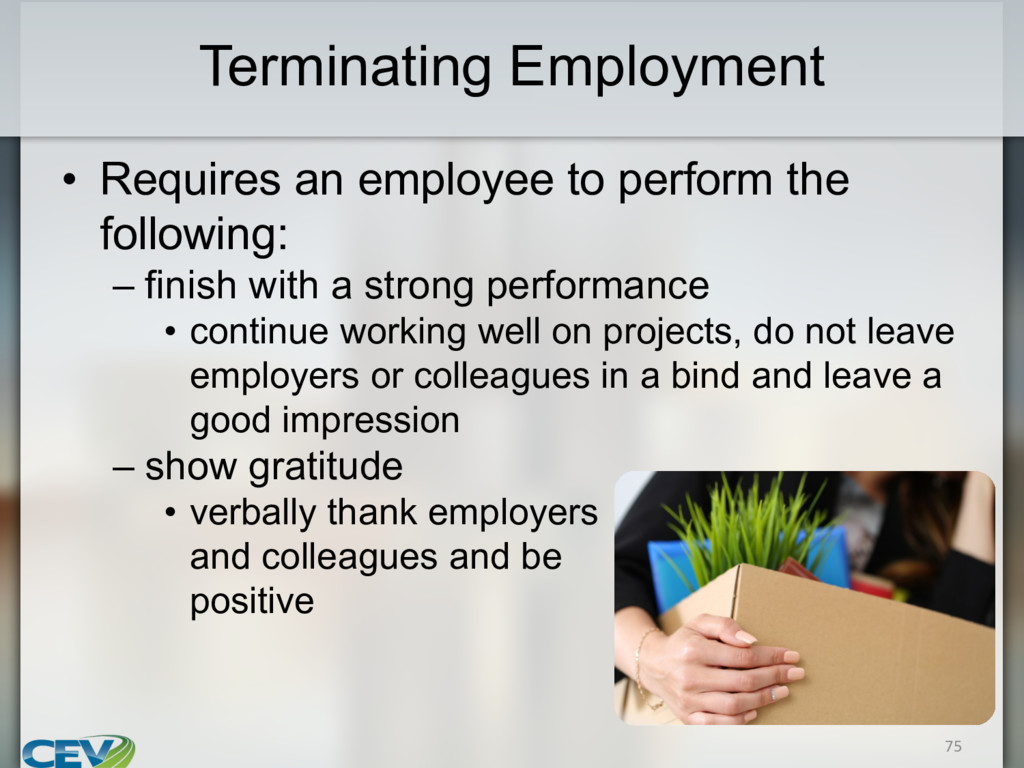
– finish with a strong performance • continue working well on projects, do not leave employers or colleagues in a bind and leave a good impression – show gratitude • verbally thank employers and colleagues and be positive 75
with his current job. He quits unexpectedly without any notice. • Allison has accepted a position at a new company and schedules a meeting with her current boss to give her two weeks notice. Who has terminated their employment more successfully? 76
Tools The Toolkit http://www.midtools.com/fulltoolkit.htm 2014 • Employee Motivation Skills www.employee-motivation- skills.com 2013 • Employability Skills from Framework to Practice http://www.nssc.natese.gov.au/_data_assets_pdf_file/0010/69 454/employability_skills_from_frameowrk_to_practices.pdf 2006 • Top 10 Employability Skills http://www.exeter.ac.uk/ambassadors/HESTEM/resources/Ge neral/STEMNET%20Employability%20skills%20guide.pdf • Employability Skills – Skills You Need for a Job www.skillsyouneed.com/general/employability-skills.html 2014 77


 camel_404
 signer
 arnoknobbe
 yatabe
 matleenalaakso
 rashwhitman
 juanmartin2026
 bvr7352
 hiragahh
 cbtlibrary
 kekekenta
 michaelherold
 reverentgeek
 lara
 maggiecrowley
 aleyda
 letsgokoyo
 eileencodes
 morganepeng
 paigeccino
 greggifford
 cassininazir