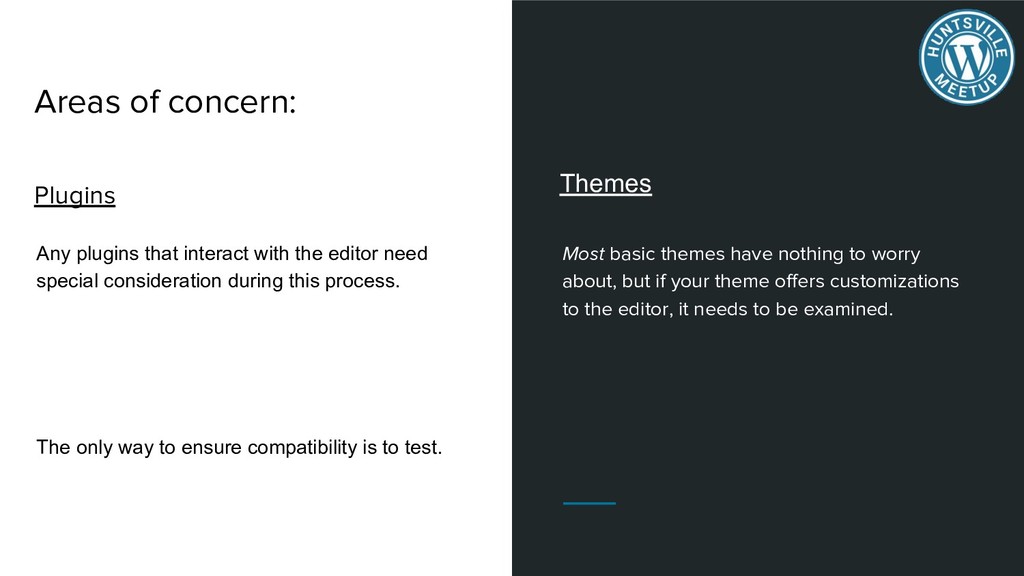
if your theme offers customizations to the editor, it needs to be examined. Any plugins that interact with the editor need special consideration during this process. The only way to ensure compatibility is to test. Themes Areas of concern:
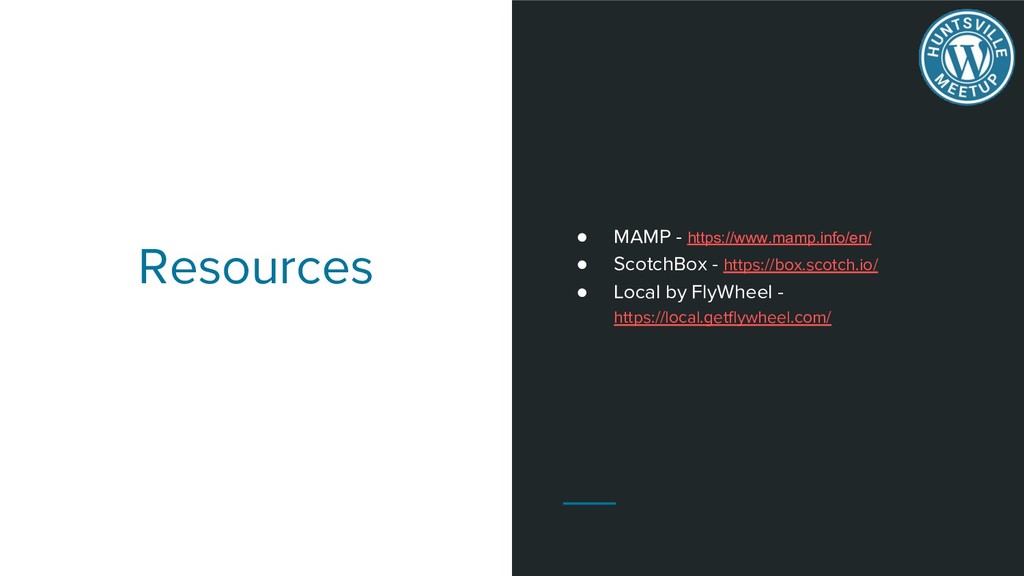
ScotchBox ◦ Local by FlyWheel • Check with your host to see what options are available. • Managed hosting may provide you with one-click options. Local Set it up!
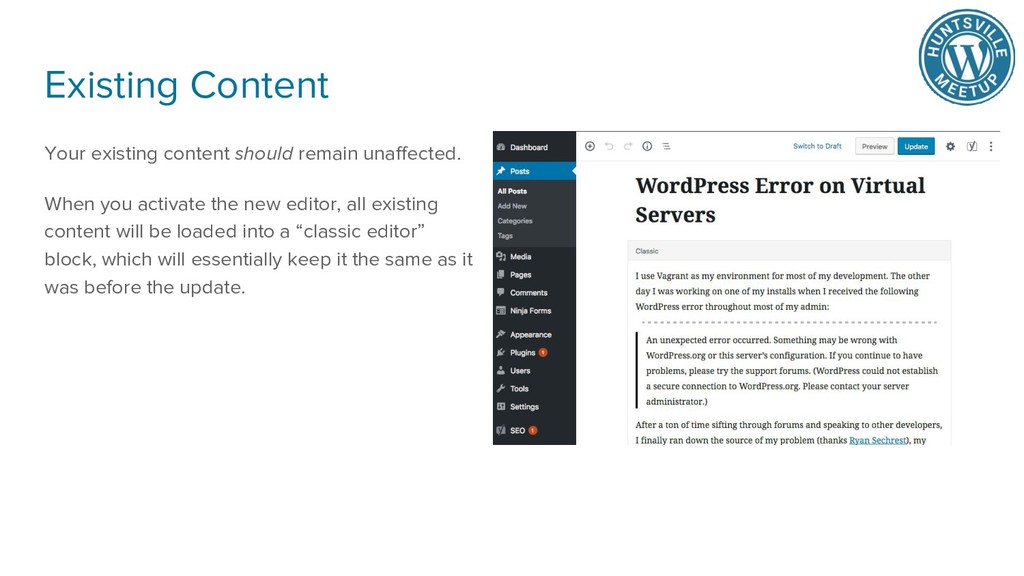
activate the new editor, all existing content will be loaded into a “classic editor” block, which will essentially keep it the same as it was before the update.
whether it interacts with the editor. Once all editor-related plugins have been identified, test them in the new editor (keep in mind some functionality may have been moved to new or existing blocks). Update all plugins that have updates available. Most plugins have recently released updates for compatibility with the new editor. Audit
• Find a new plugin that has similar functionality and is compatible with the new editor. • If the functionality isn’t crucial, you could consider moving on without it. Note: If the plugin is necessary for functionality that lives in pre-5.0 posts, you may need to consider keeping it active in order to keep those posts in tact.
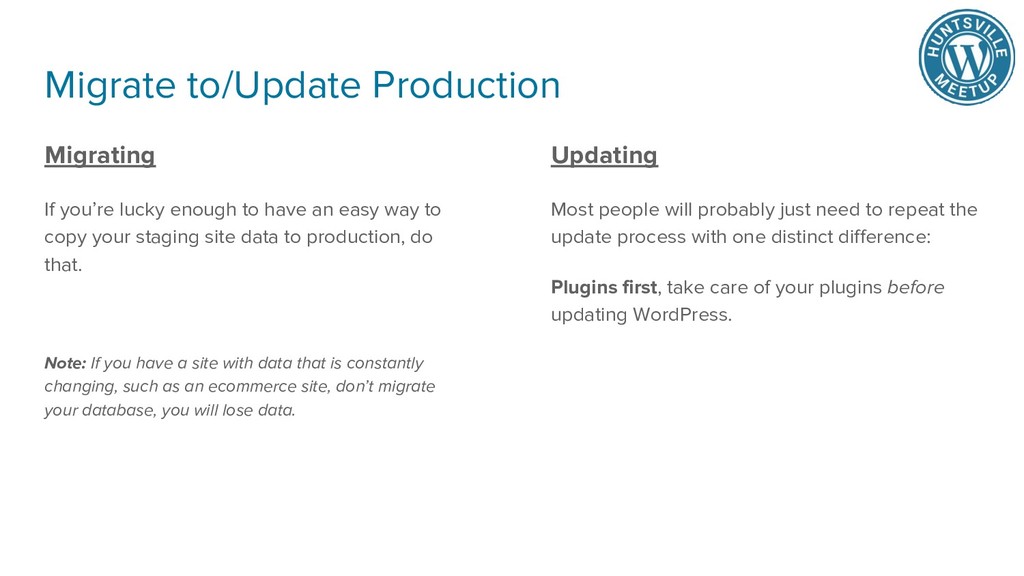
an easy way to copy your staging site data to production, do that. Note: If you have a site with data that is constantly changing, such as an ecommerce site, don’t migrate your database, you will lose data. Updating Most people will probably just need to repeat the update process with one distinct difference: Plugins first, take care of your plugins before updating WordPress.


 jacobmc
 dada4386
 sagochiko
 sony
sony
 hacobu
 foursue
 elmodev09
 raybugg
 kentapapa
 ymotongpoo
 yama3133
 nikkei_engineer_recruiting
 yayoi_dd
 szymonslowik
 rasagy
 bkeepers
 ivargrimstad
 tanoku
 rkendrick25
 tmiket
 emna__ayadi
 maggiecrowley
 lara
lara
 konakalab
 pauljervisheath