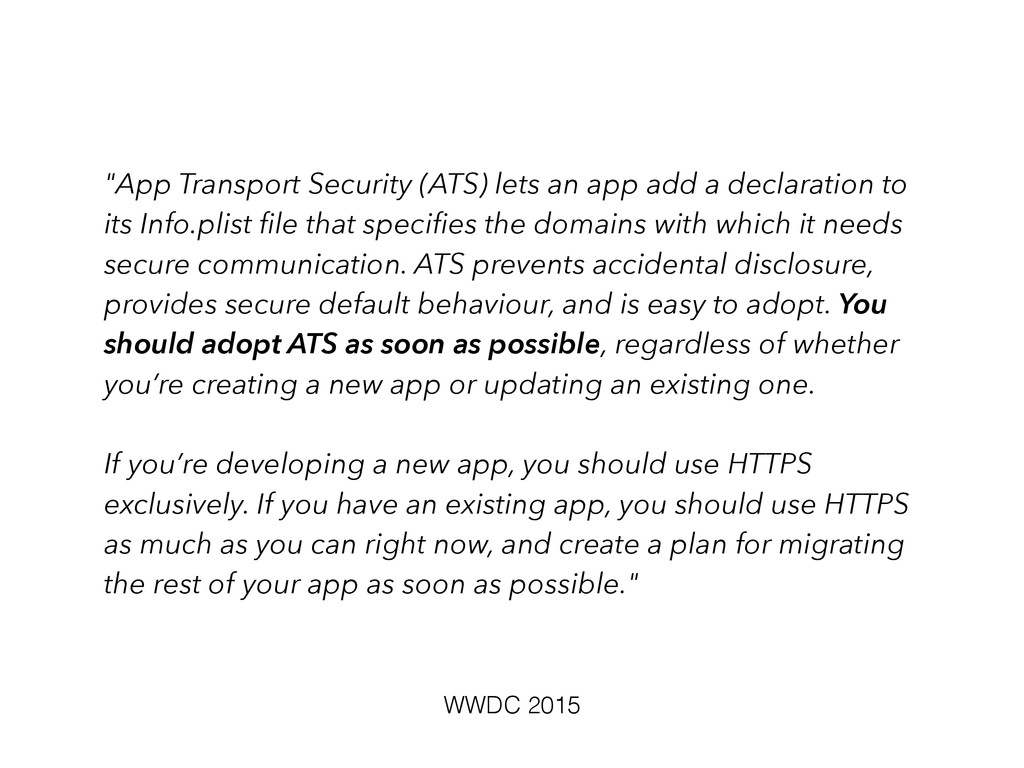
a declaration to its Info.plist file that specifies the domains with which it needs secure communication. ATS prevents accidental disclosure, provides secure default behaviour, and is easy to adopt. You should adopt ATS as soon as possible, regardless of whether you’re creating a new app or updating an existing one. If you’re developing a new app, you should use HTTPS exclusively. If you have an existing app, you should use HTTPS as much as you can right now, and create a plan for migrating the rest of your app as soon as possible."
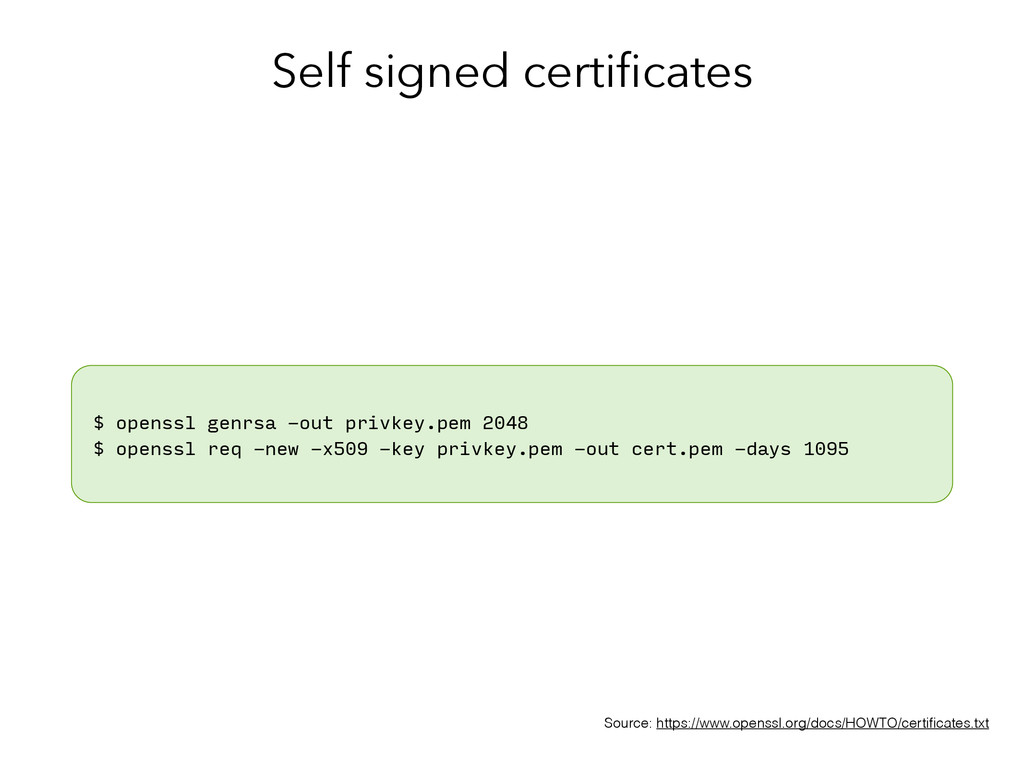
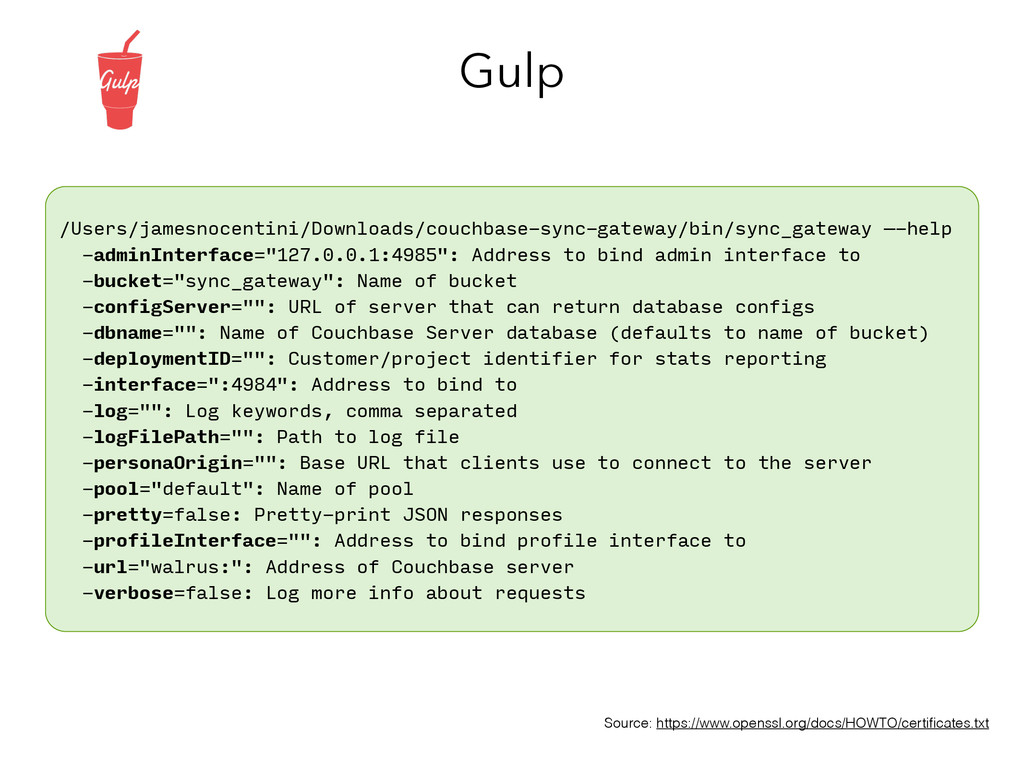
-bucket="sync_gateway": Name of bucket -configServer="": URL of server that can return database configs -dbname="": Name of Couchbase Server database (defaults to name of bucket) -deploymentID="": Customer/project identifier for stats reporting -interface=":4984": Address to bind to -log="": Log keywords, comma separated -logFilePath="": Path to log file -personaOrigin="": Base URL that clients use to connect to the server -pool="default": Name of pool -pretty=false: Pretty-print JSON responses -profileInterface="": Address to bind profile interface to -url="walrus:": Address of Couchbase server -verbose=false: Log more info about requests Source: https://www.openssl.org/docs/HOWTO/certificates.txt
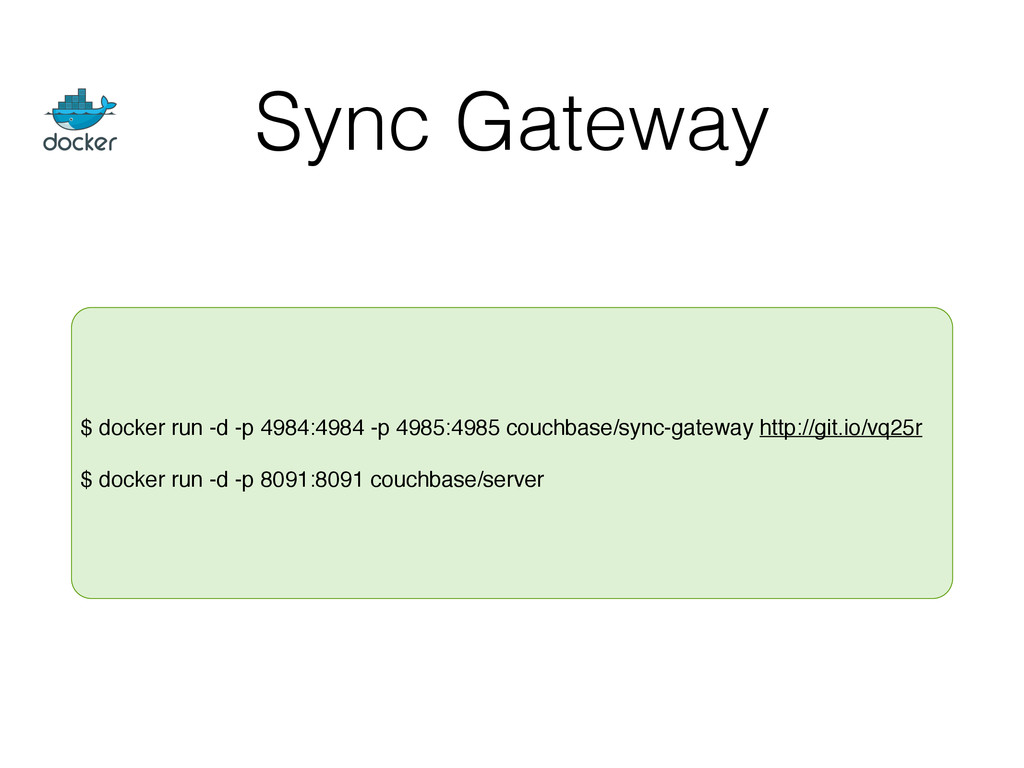
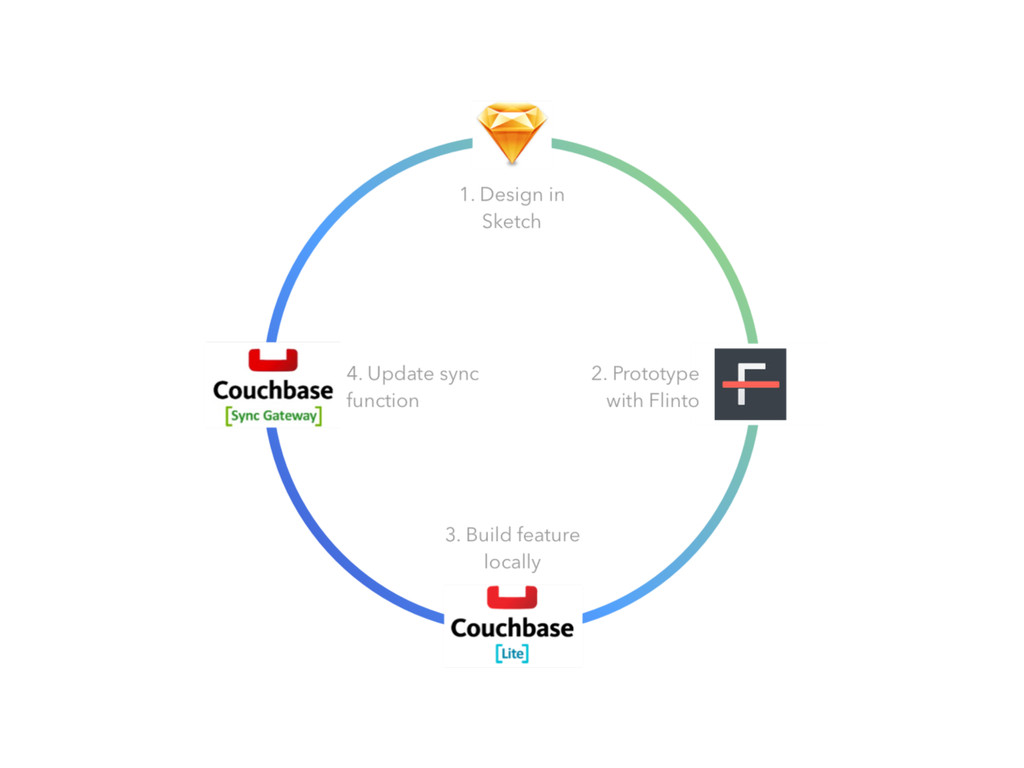
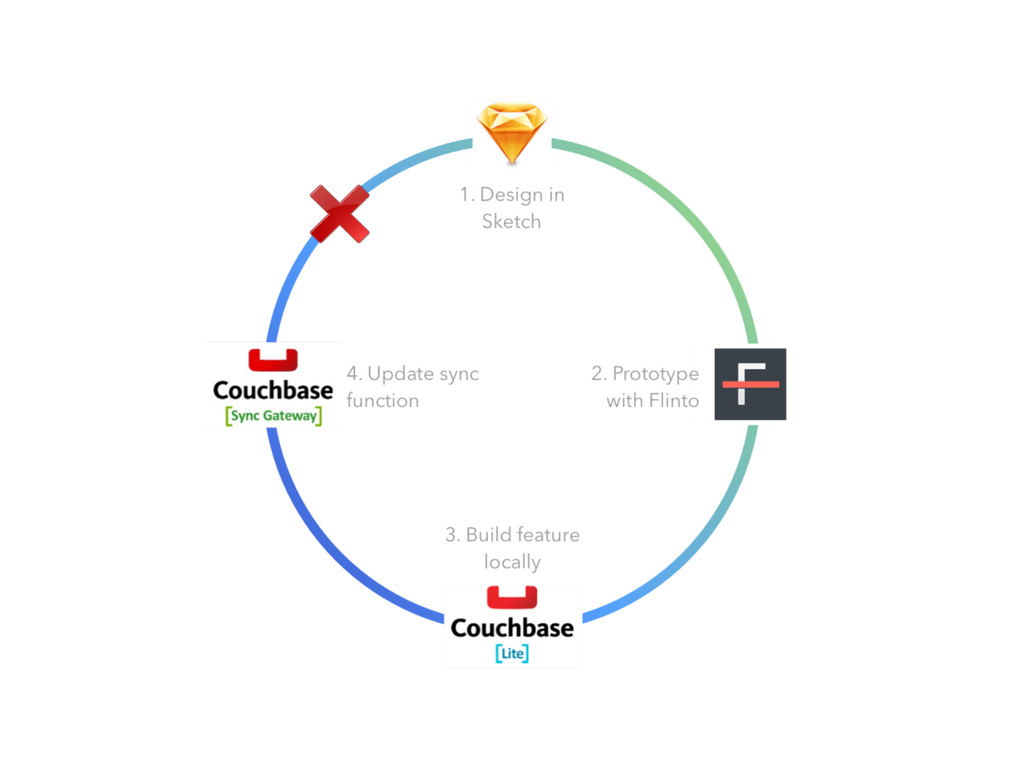
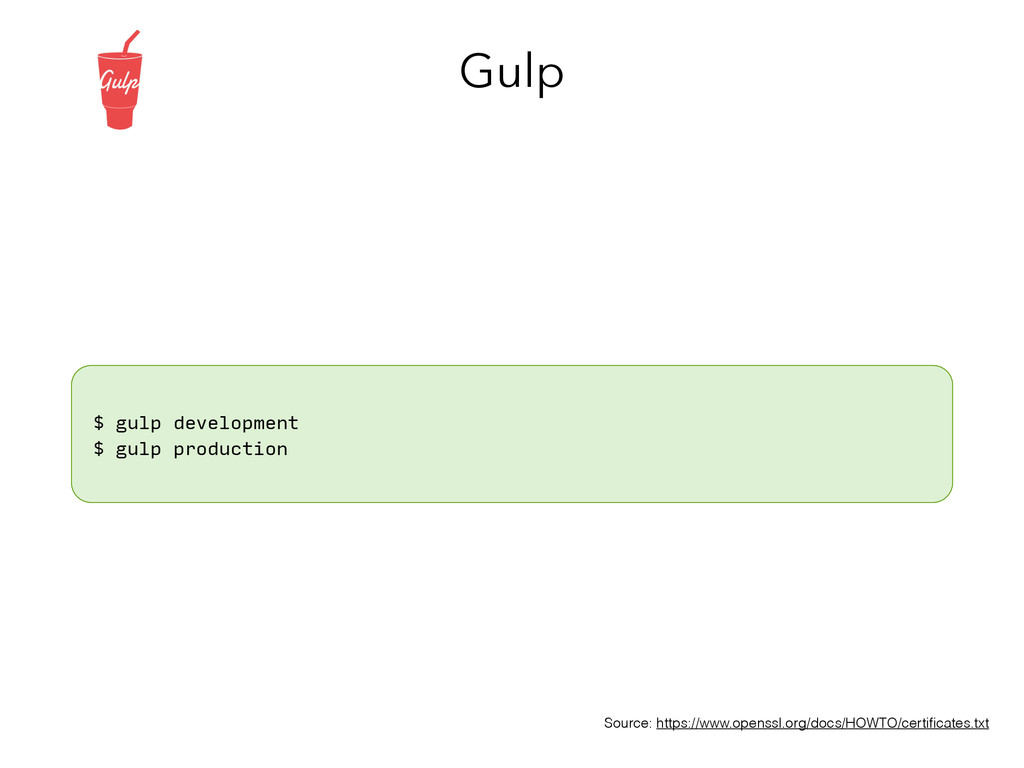
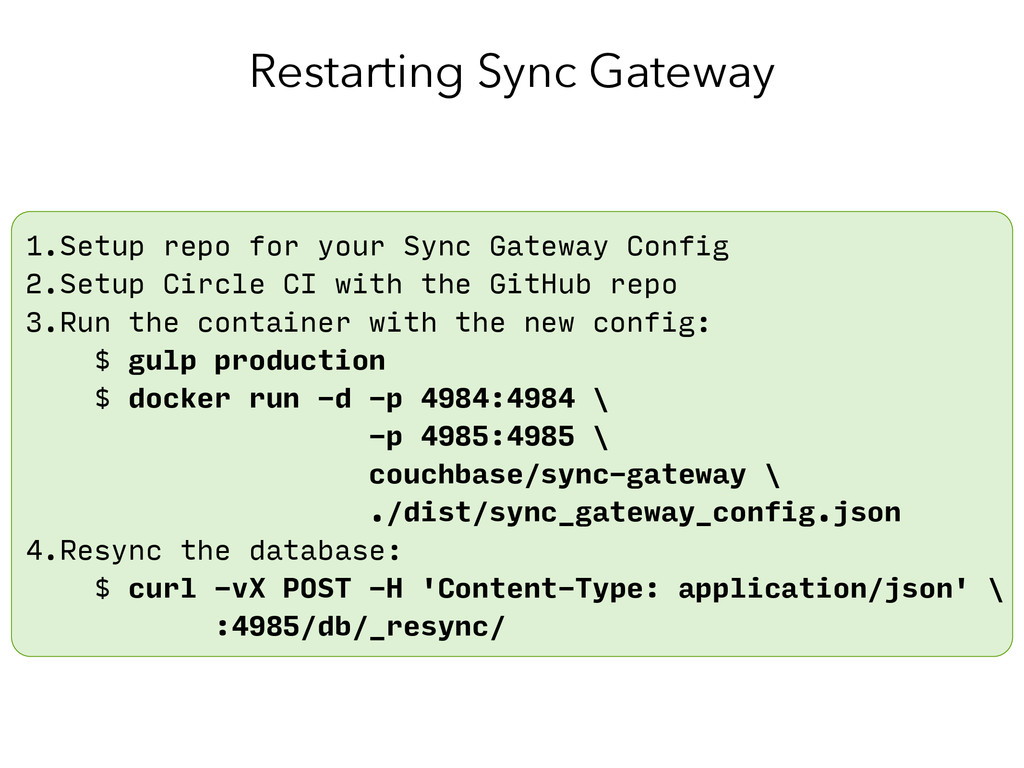
2.Setup Circle CI with the GitHub repo 3.Run the container with the new config: $ gulp production $ docker run -d -p 4984:4984 \ -p 4985:4985 \ couchbase/sync-gateway \ ./dist/sync_gateway_config.json 4.Resync the database: $ curl -vX POST -H 'Content-Type: application/json' \ :4985/db/_resync/


 jamiltz
 htkym
 sylph01
 yuta_onishi_97
 rollbear
 artoy
 dske104
 y0hgi
 irinanazarova
 jame2408
 kishida
 satoshi256kbyte
 iwiwi
 retrage
 baasie
 sarafernandez
 emna__ayadi
 helenjbeal
 jmmastey
 reverentgeek
 aleyda
 tenderlove
 tessaabrams
 katiecoart