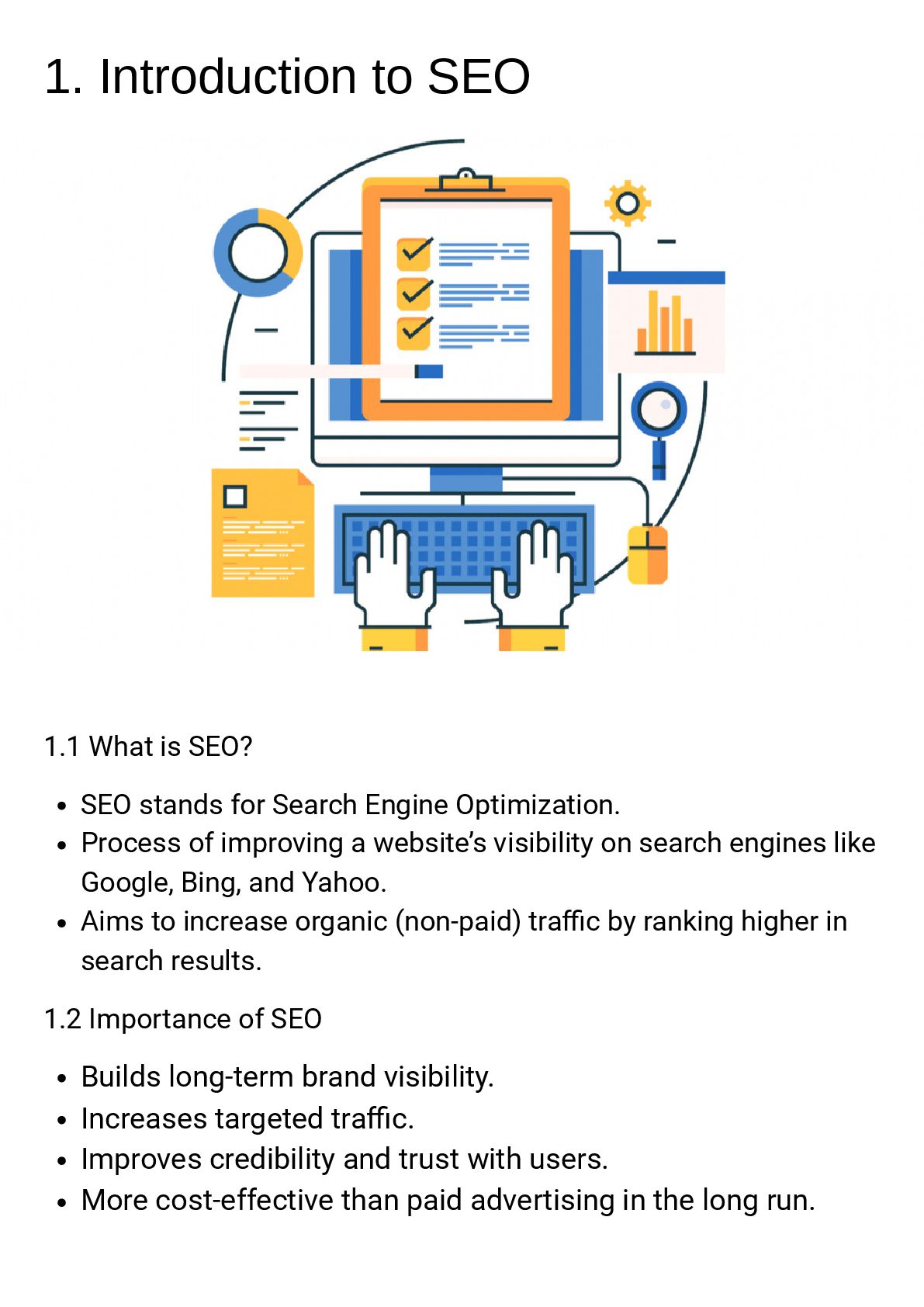
for Search Engine Optimization. Process of improving a website’s visibility on search engines like Google, Bing, and Yahoo. Aims to increase organic (non-paid) traffic by ranking higher in search results. 1.2 Importance of SEO Builds long-term brand visibility. Increases targeted traffic. Improves credibility and trust with users. More cost-effective than paid advertising in the long run.
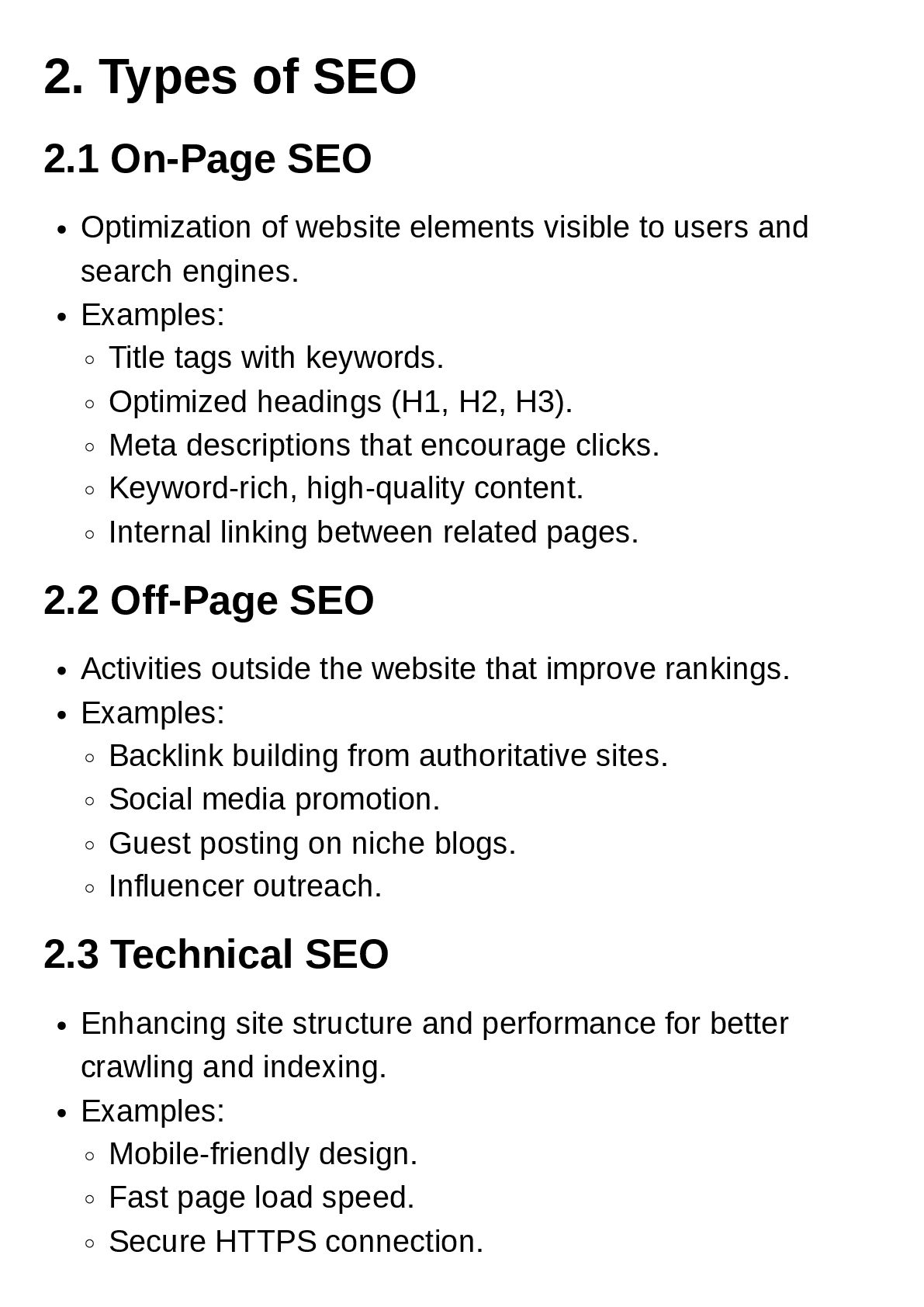
elements visible to users and search engines. Examples: Title tags with keywords. Optimized headings (H1, H2, H3). Meta descriptions that encourage clicks. Keyword-rich, high-quality content. Internal linking between related pages. 2.2 Off-Page SEO Activities outside the website that improve rankings. Examples: Backlink building from authoritative sites. Social media promotion. Guest posting on niche blogs. Influencer outreach. 2.3 Technical SEO Enhancing site structure and performance for better crawling and indexing. Examples: Mobile-friendly design. Fast page load speed. Secure HTTPS connection.
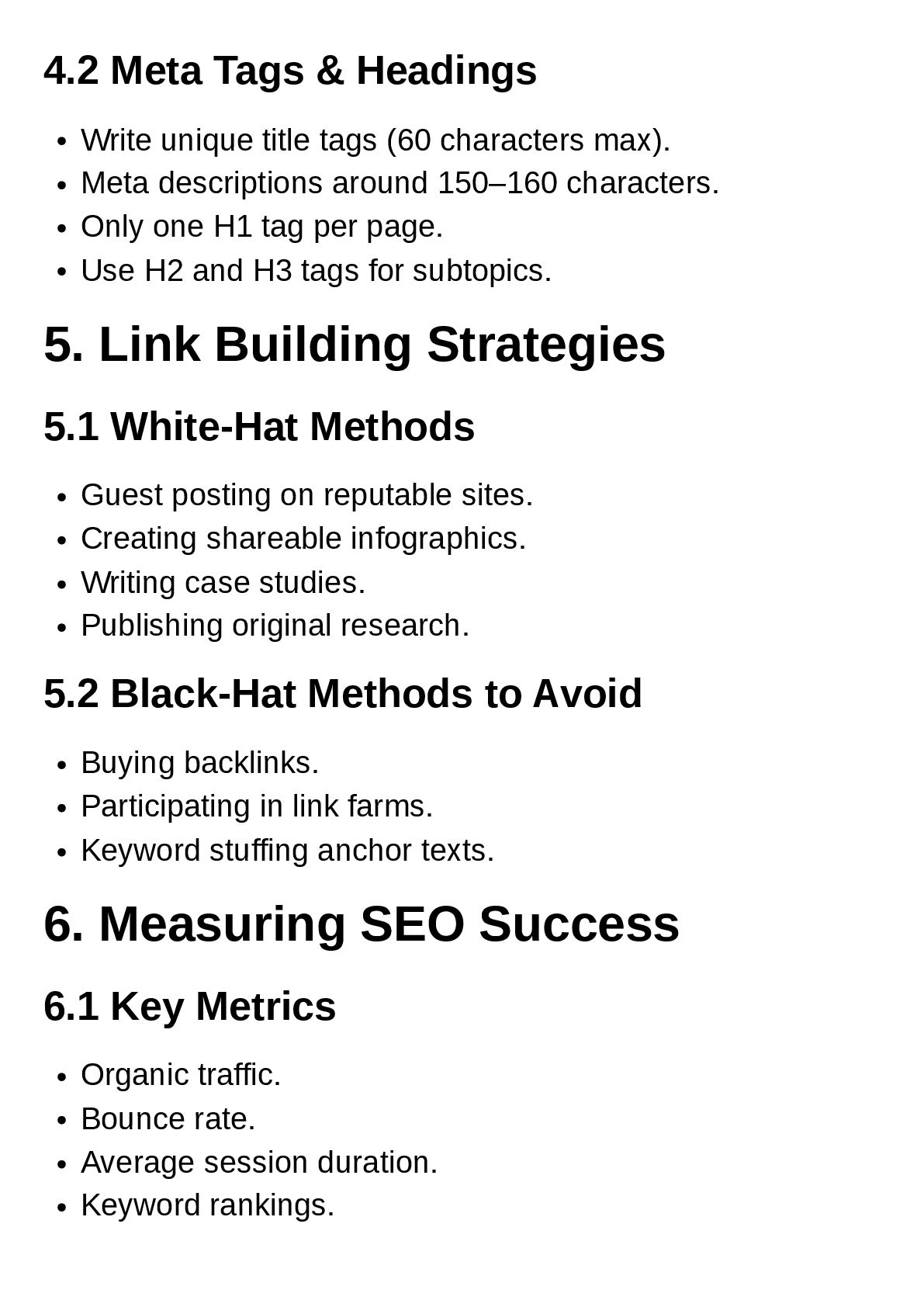
characters max). Meta descriptions around 150–160 characters. Only one H1 tag per page. Use H2 and H3 tags for subtopics. 5. Link Building Strategies 5.1 White-Hat Methods Guest posting on reputable sites. Creating shareable infographics. Writing case studies. Publishing original research. 5.2 Black-Hat Methods to Avoid Buying backlinks. Participating in link farms. Keyword stuffing anchor texts. 6. Measuring SEO Success 6.1 Key Metrics Organic traffic. Bounce rate. Average session duration. Keyword rankings.


 schroneko
 sabderemane
 bkeepers
 uxyall
 kastner
 tammyeverts
 helenjbeal
 palkan
 skoyamalab
 takai
 tenderlove
 bryan