Upgrade to Pro — share decks privately, control downloads, hide ads and more …

7 Responsible Pet Care Tips

Sponsored · Your Podcast. Everywhere. Effortlessly. Share. Educate. Inspire. Entertain. You do you. We'll handle the rest.
Avatar for Jessica Violette Jessica Violette
October 15, 2024
5

7 Responsible Pet Care Tips

At ZIWI, everything we do has to respect nature. Instead of harsh processing, we use innovative methods inspired by nature. We pioneered the world’s first gentle air-drying technology, which preserves the nutritional value of our raw and pure ingredients. And now, we’ve created another new innovation: Z-MicroSteam, which creates a delicious light texture pets love.

Avatar for Jessica Violette

Jessica Violette

October 15, 2024
Tweet

Transcript

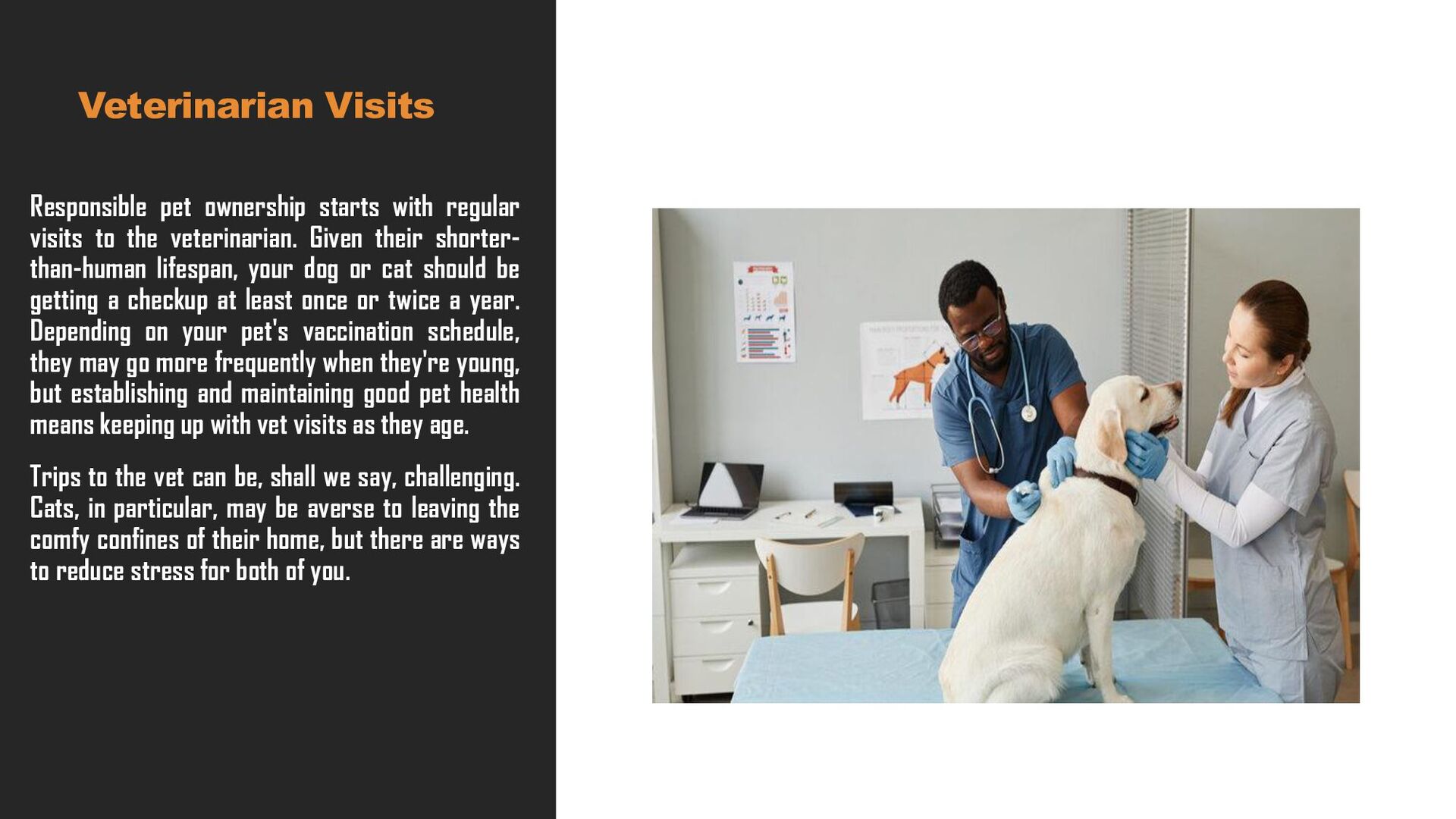
  1. Veterinarian Visits Responsible pet ownership starts with regular visits to

    the veterinarian. Given their shorter- than-human lifespan, your dog or cat should be getting a checkup at least once or twice a year. Depending on your pet's vaccination schedule, they may go more frequently when they're young, but establishing and maintaining good pet health means keeping up with vet visits as they age. Trips to the vet can be, shall we say, challenging. Cats, in particular, may be averse to leaving the comfy confines of their home, but there are ways to reduce stress for both of you.
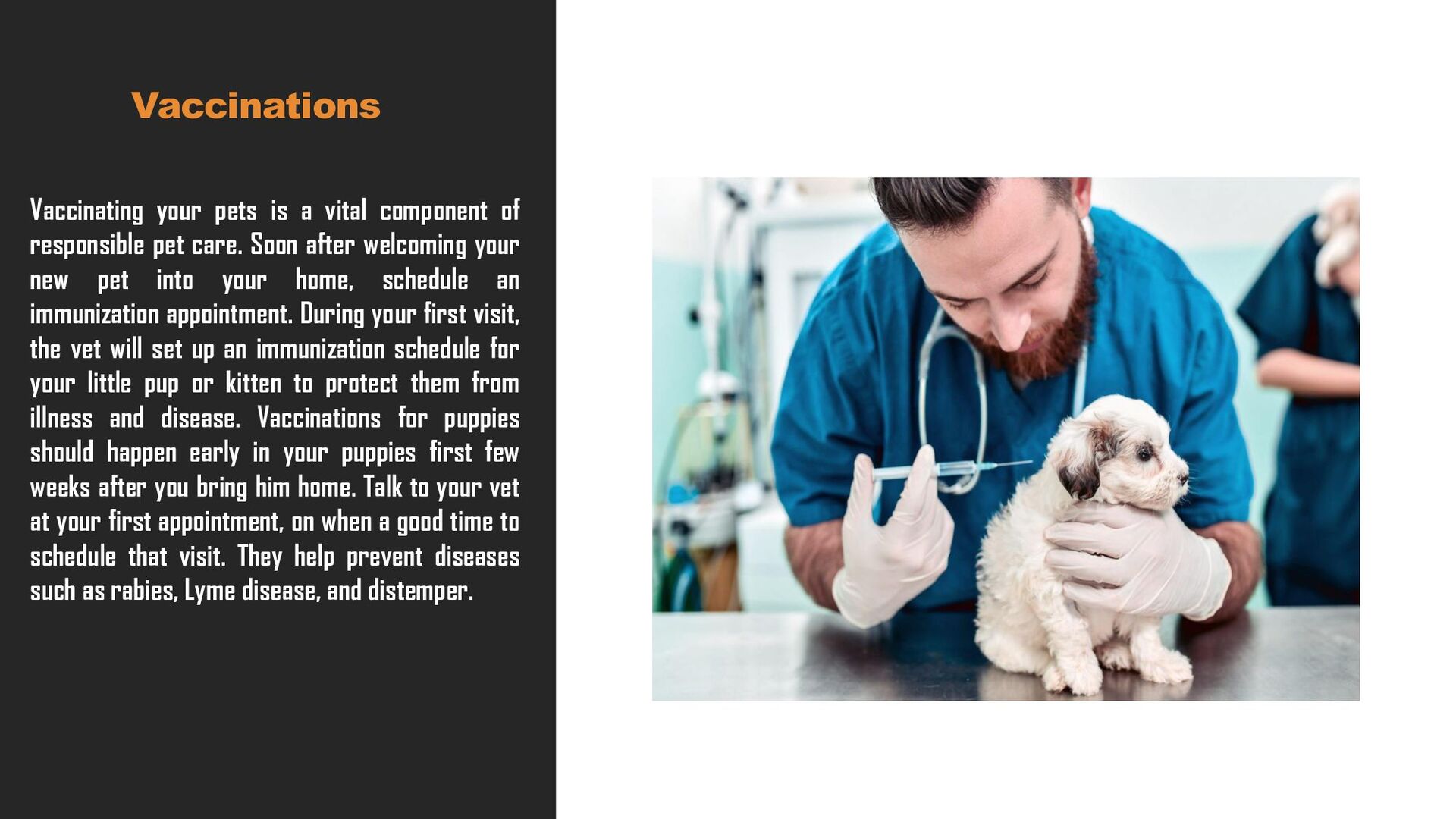
  2. Vaccinations Vaccinating your pets is a vital component of responsible

    pet care. Soon after welcoming your new pet into your home, schedule an immunization appointment. During your first visit, the vet will set up an immunization schedule for your little pup or kitten to protect them from illness and disease. Vaccinations for puppies should happen early in your puppies first few weeks after you bring him home. Talk to your vet at your first appointment, on when a good time to schedule that visit. They help prevent diseases such as rabies, Lyme disease, and distemper.
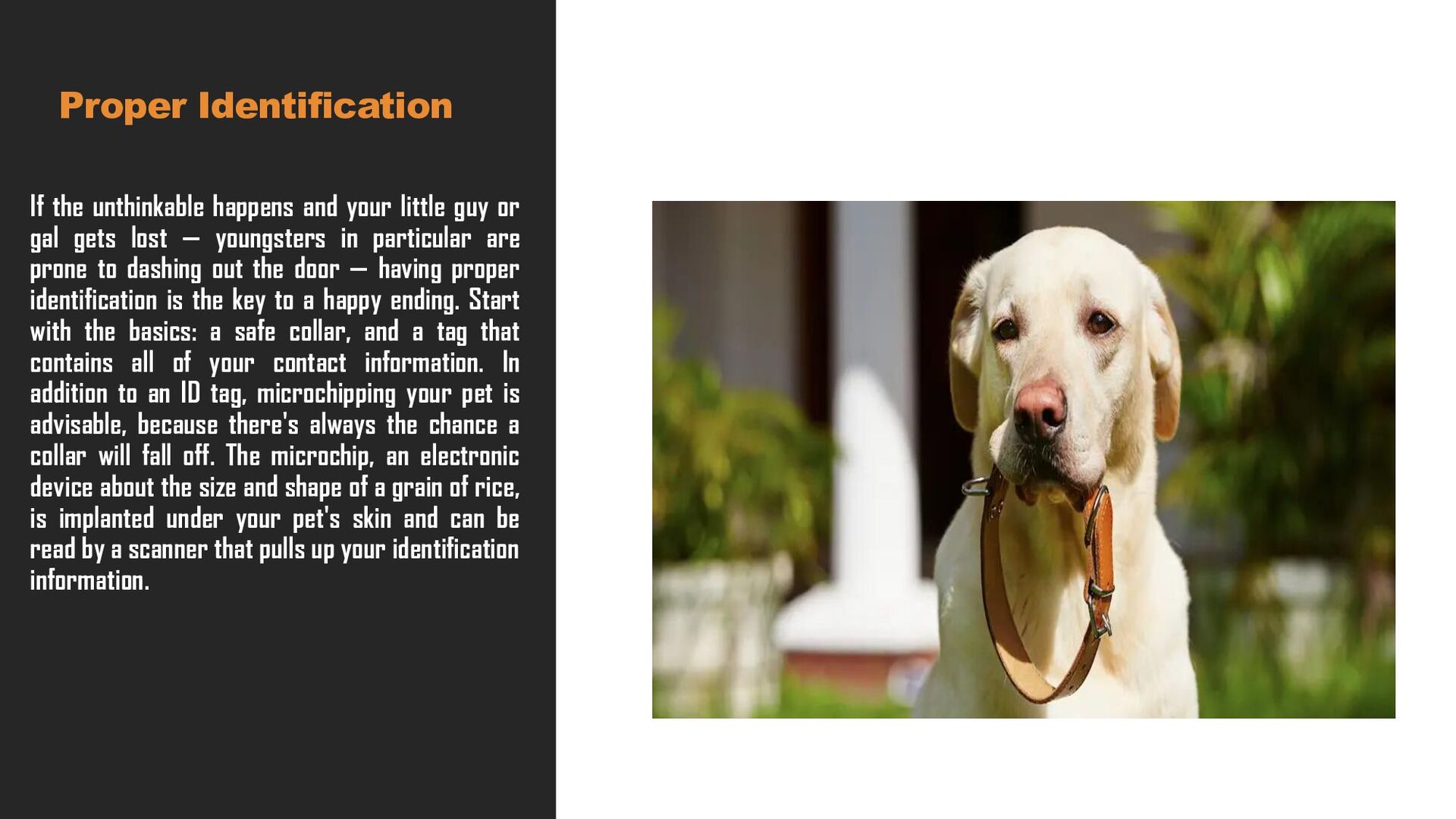
  3. Proper Identification If the unthinkable happens and your little guy

    or gal gets lost — youngsters in particular are prone to dashing out the door — having proper identification is the key to a happy ending. Start with the basics: a safe collar, and a tag that contains all of your contact information. In addition to an ID tag, microchipping your pet is advisable, because there's always the chance a collar will fall off. The microchip, an electronic device about the size and shape of a grain of rice, is implanted under your pet's skin and can be read by a scanner that pulls up your identification information.
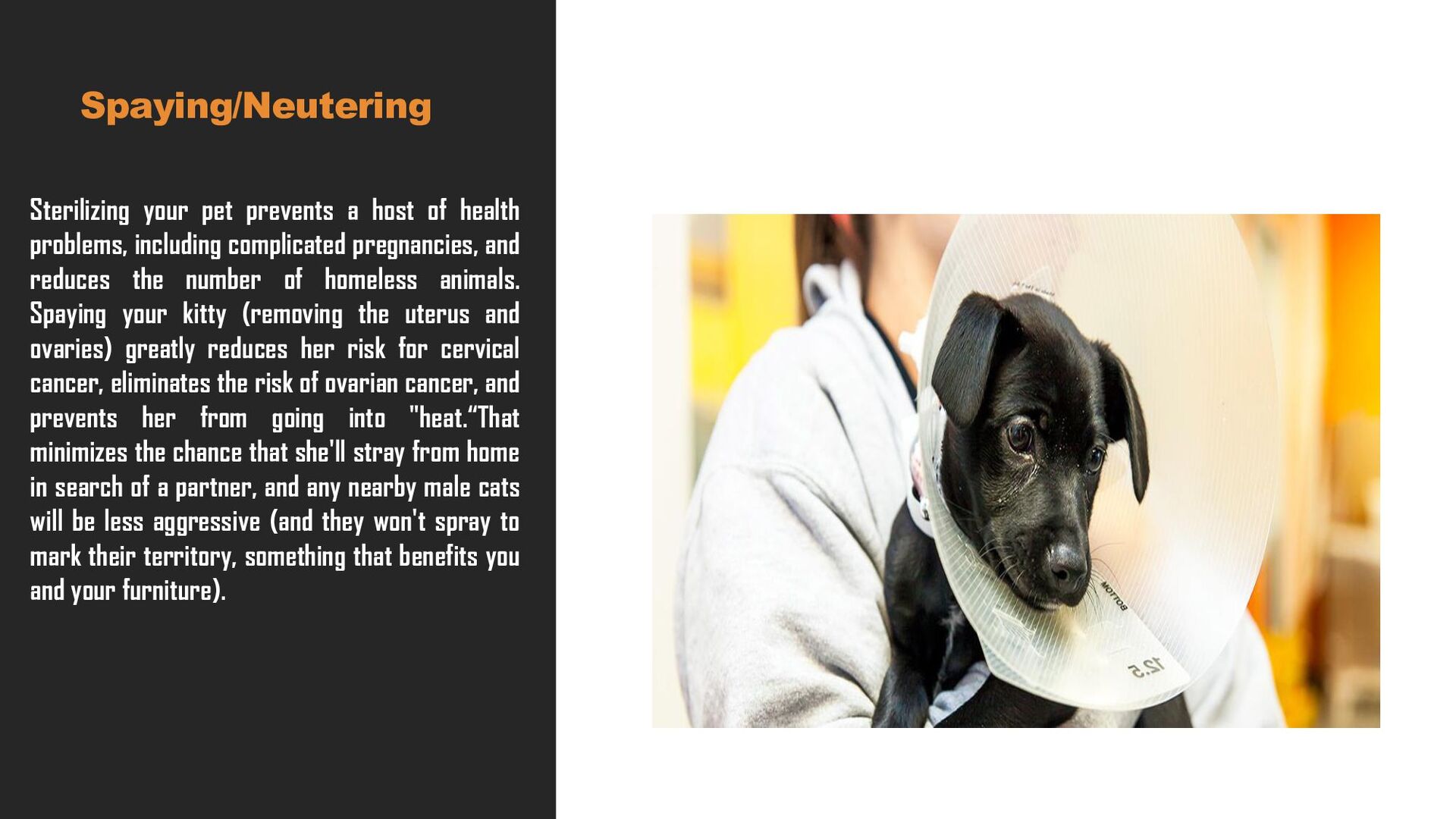
  4. Spaying/Neutering Sterilizing your pet prevents a host of health problems,

    including complicated pregnancies, and reduces the number of homeless animals. Spaying your kitty (removing the uterus and ovaries) greatly reduces her risk for cervical cancer, eliminates the risk of ovarian cancer, and prevents her from going into "heat.“That minimizes the chance that she'll stray from home in search of a partner, and any nearby male cats will be less aggressive (and they won't spray to mark their territory, something that benefits you and your furniture).
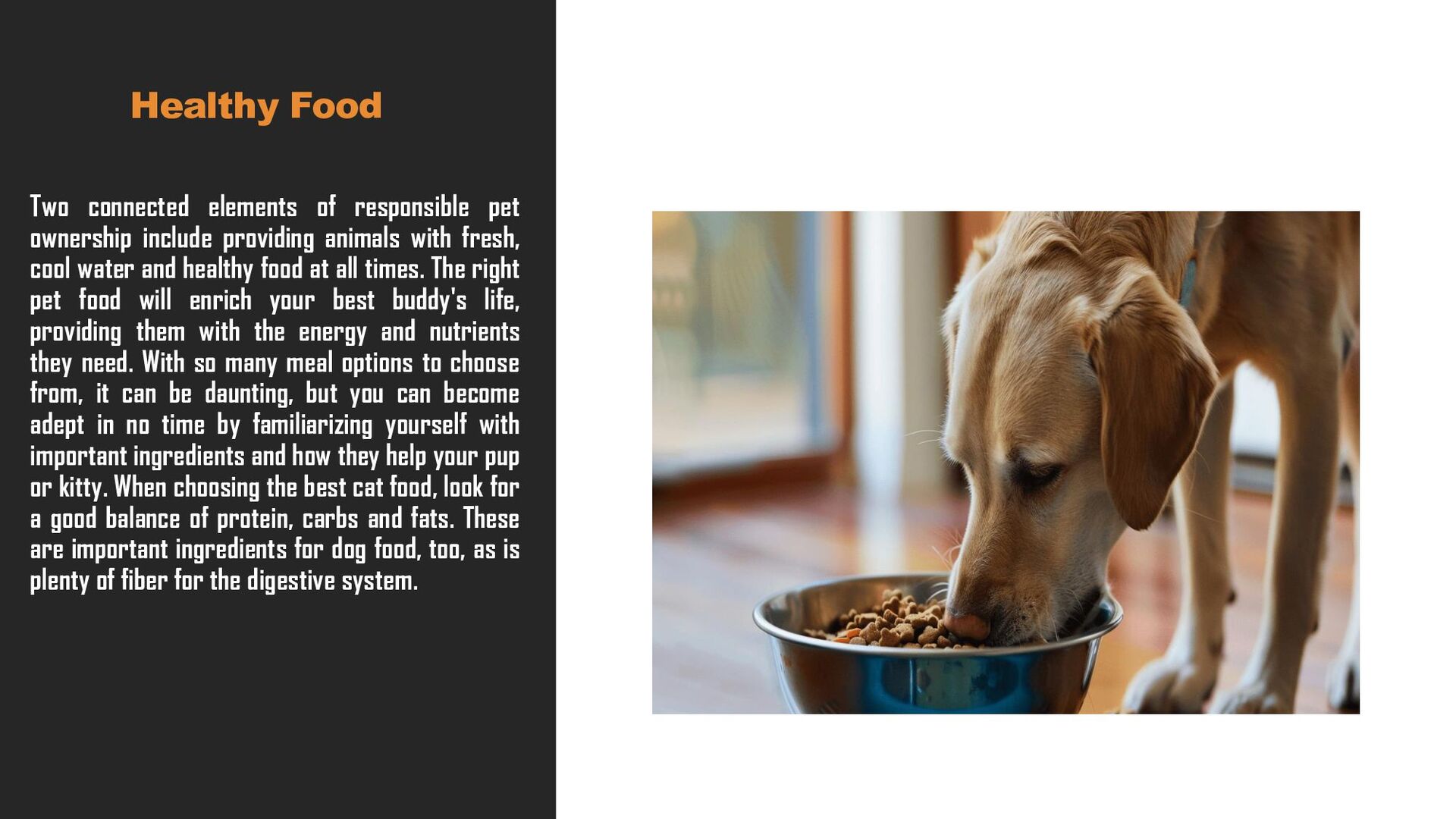
  5. Healthy Food Two connected elements of responsible pet ownership include

    providing animals with fresh, cool water and healthy food at all times. The right pet food will enrich your best buddy's life, providing them with the energy and nutrients they need. With so many meal options to choose from, it can be daunting, but you can become adept in no time by familiarizing yourself with important ingredients and how they help your pup or kitty. When choosing the best cat food, look for a good balance of protein, carbs and fats. These are important ingredients for dog food, too, as is plenty of fiber for the digestive system.
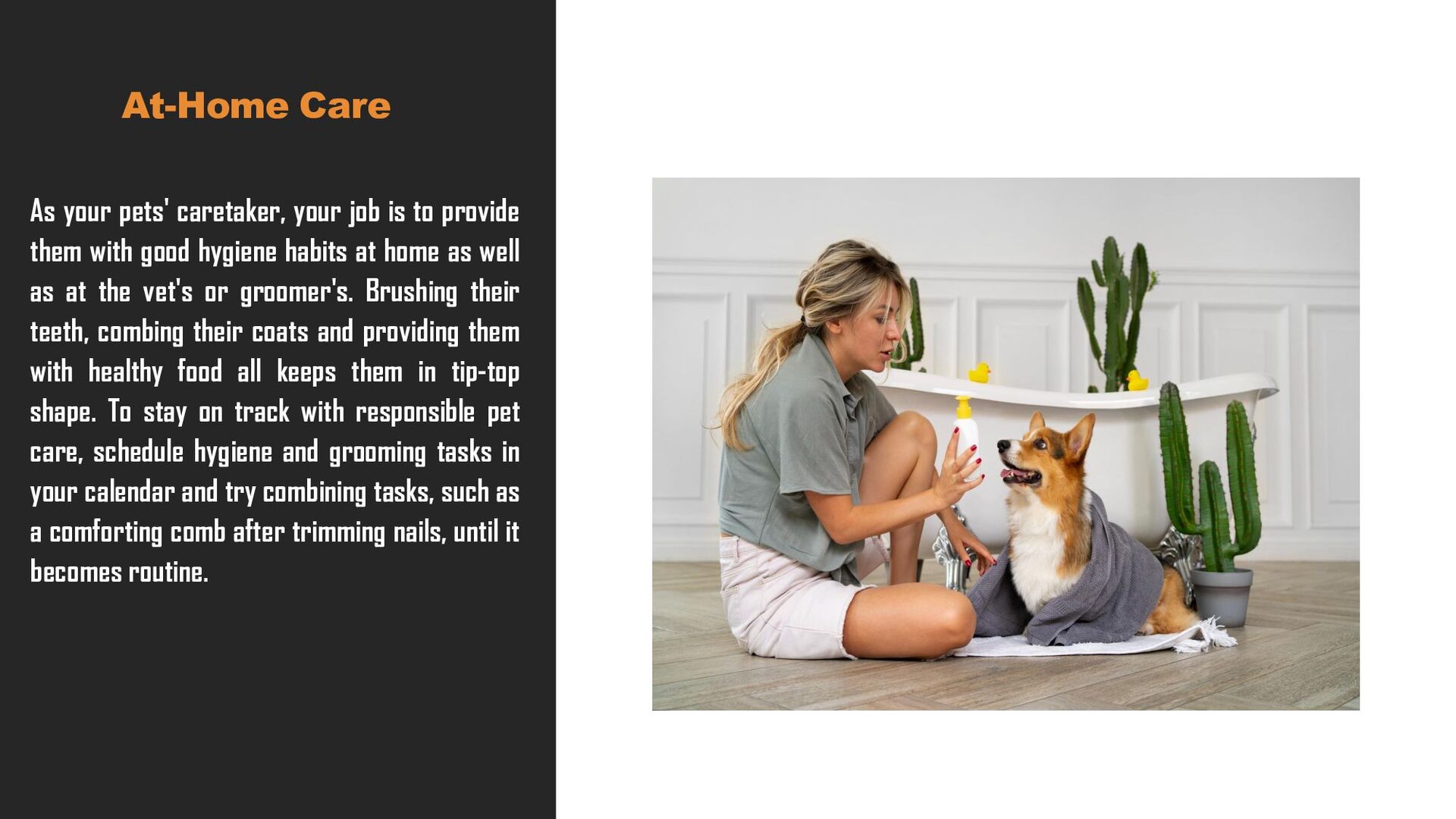
  6. At-Home Care As your pets' caretaker, your job is to

    provide them with good hygiene habits at home as well as at the vet's or groomer's. Brushing their teeth, combing their coats and providing them with healthy food all keeps them in tip-top shape. To stay on track with responsible pet care, schedule hygiene and grooming tasks in your calendar and try combining tasks, such as a comforting comb after trimming nails, until it becomes routine.
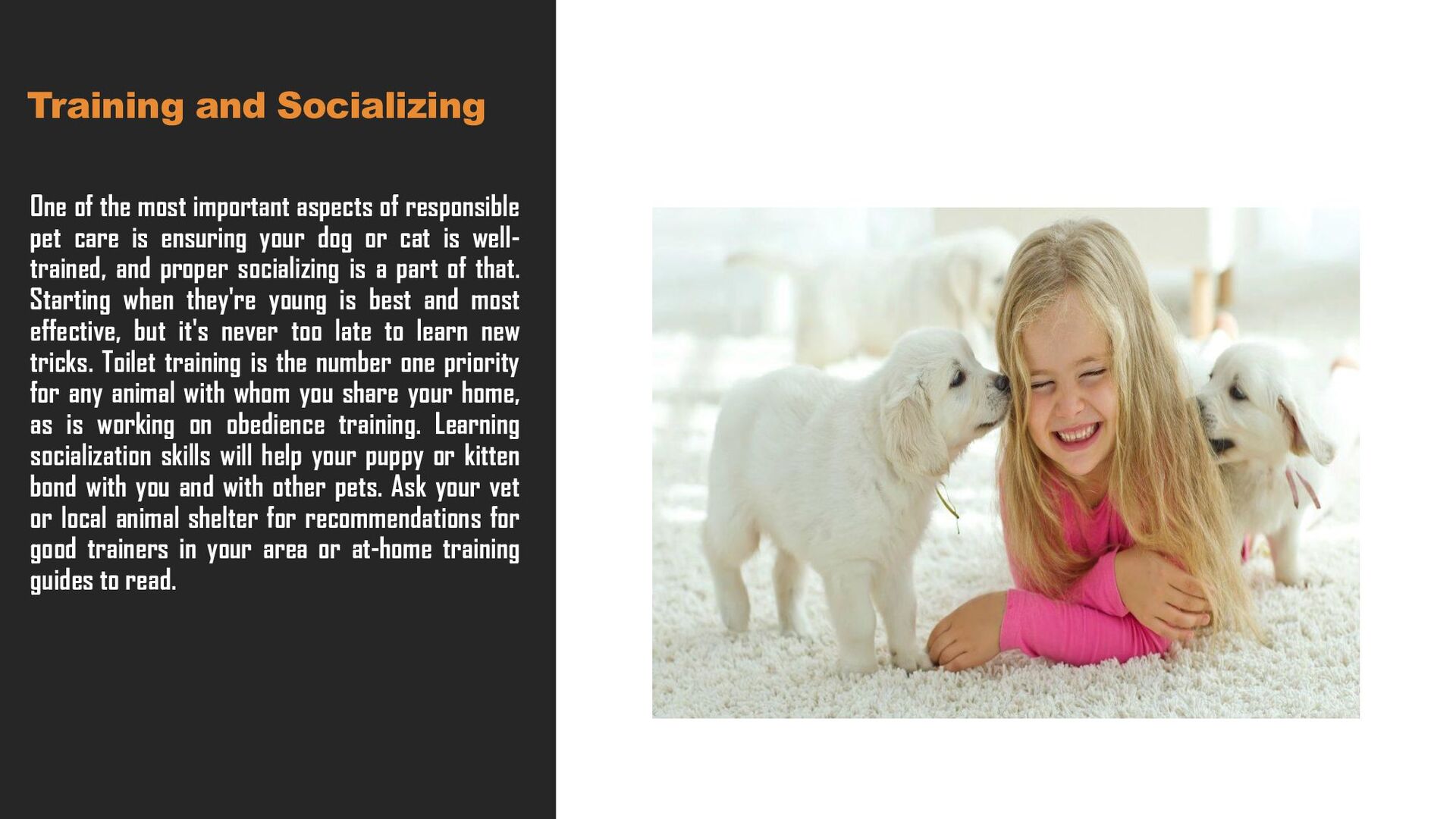
  7. Training and Socializing One of the most important aspects of

    responsible pet care is ensuring your dog or cat is well- trained, and proper socializing is a part of that. Starting when they're young is best and most effective, but it's never too late to learn new tricks. Toilet training is the number one priority for any animal with whom you share your home, as is working on obedience training. Learning socialization skills will help your puppy or kitten bond with you and with other pets. Ask your vet or local animal shelter for recommendations for good trainers in your area or at-home training guides to read.