Upgrade to Pro — share decks privately, control downloads, hide ads and more …

Why Django?

Sponsored · SiteGround - Reliable hosting with speed, security, and support you can count on.

Why Django?

Django is a mature and stable web app framework with more than 10 years of development. We will do a walkthrough of its history and its features.

This deck was presented at the first Dublin Django UG meetup.

https://github.com/jorgebg/talks/tree/master/why-django

Avatar for Jorge Barata

Jorge Barata

October 27, 2016

More Decks by Jorge Barata

Other Decks in Technology

Transcript

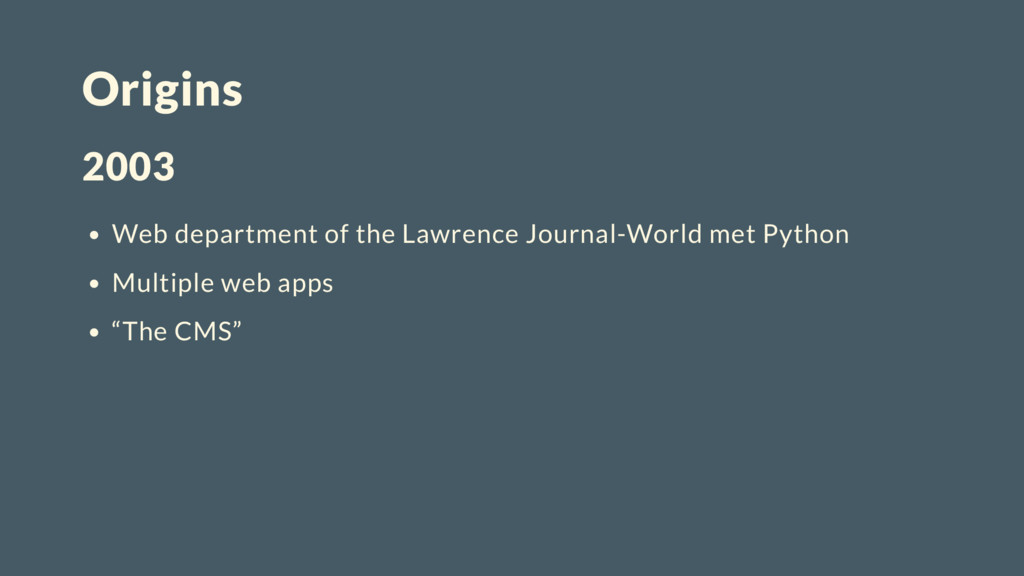
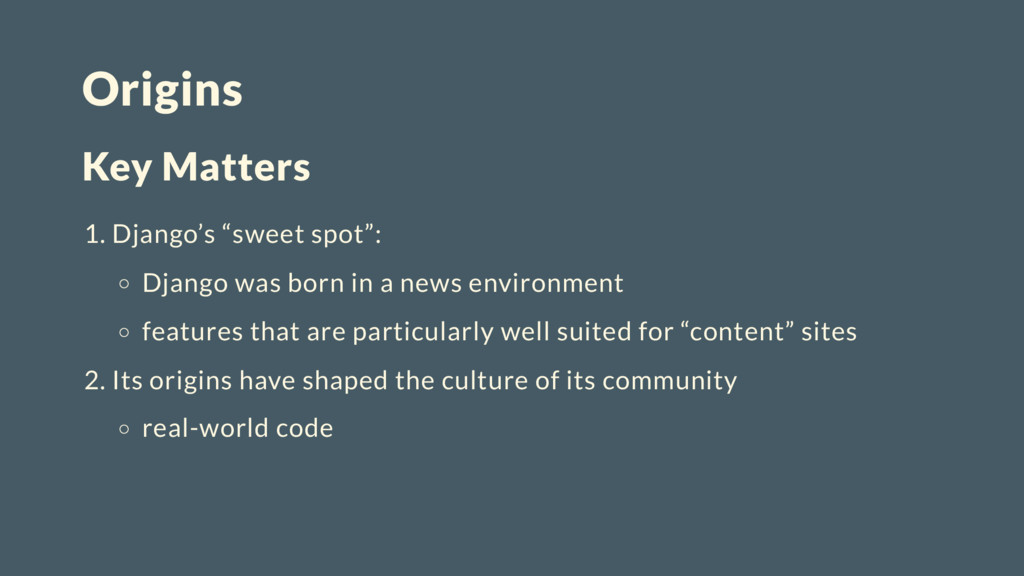
  1. Origins Key Matters 1. Django’s “sweet spot”: Django was born

    in a news environment features that are particularly well suited for “content” sites 2. Its origins have shaped the culture of its community real-world code
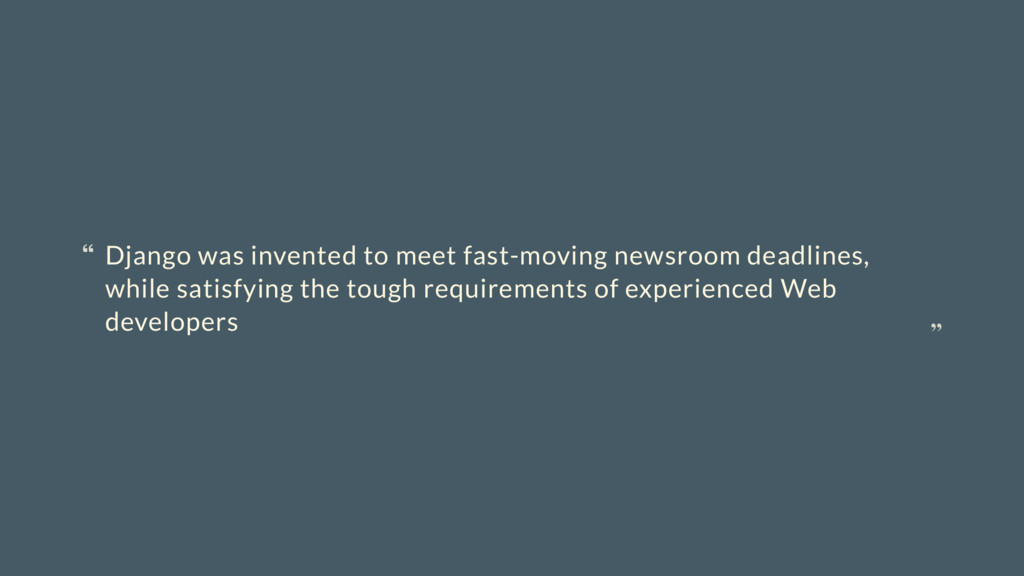
  2. Django was invented to meet fast-moving newsroom deadlines, while satisfying

    the tough requirements of experienced Web developers “ “
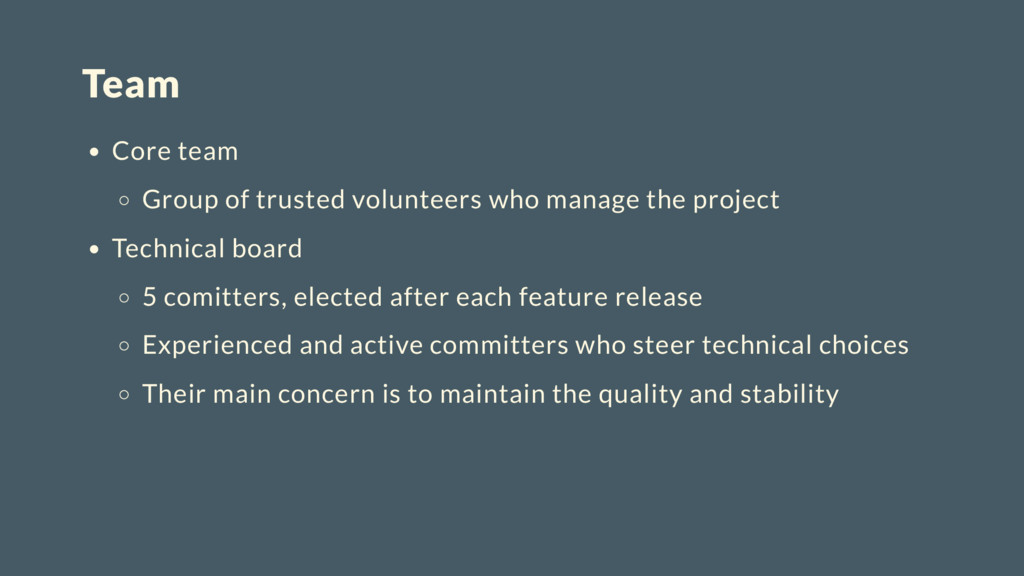
  3. Team Core team Group of trusted volunteers who manage the

    project Technical board 5 comitters, elected after each feature release Experienced and active committers who steer technical choices Their main concern is to maintain the quality and stability
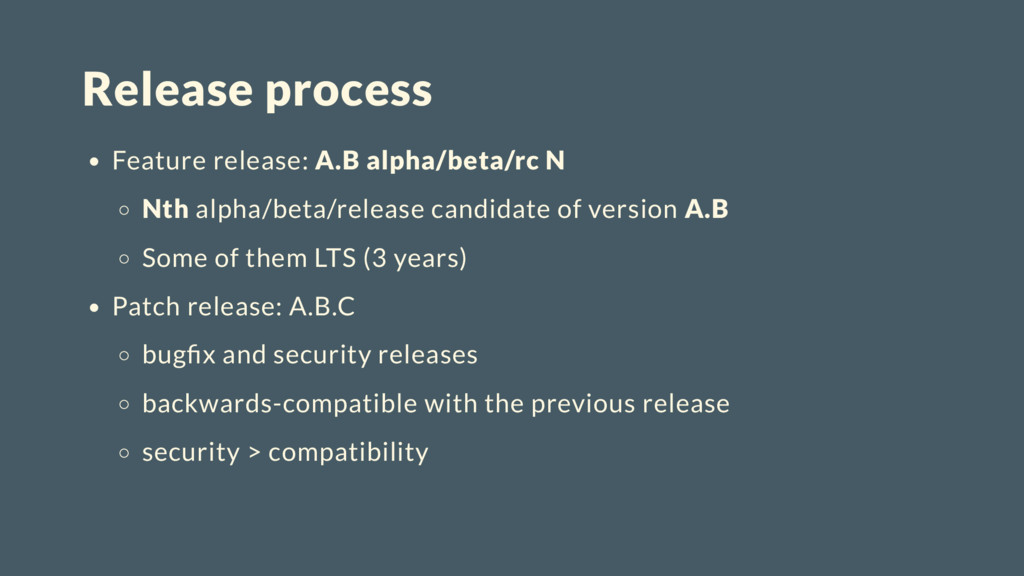
  4. Release process Feature release: A.B alpha/beta/rc N Nth alpha/beta/release candidate

    of version A.B Some of them LTS (3 years) Patch release: A.B.C bug x and security releases backwards-compatible with the previous release security > compatibility
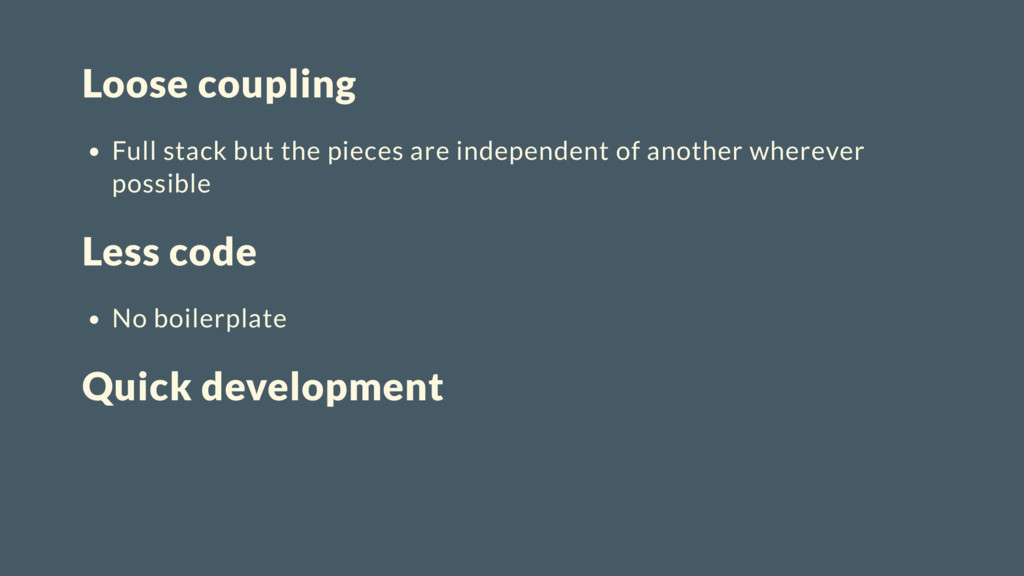
  5. Loose coupling Full stack but the pieces are independent of

    another wherever possible Less code No boilerplate Quick development
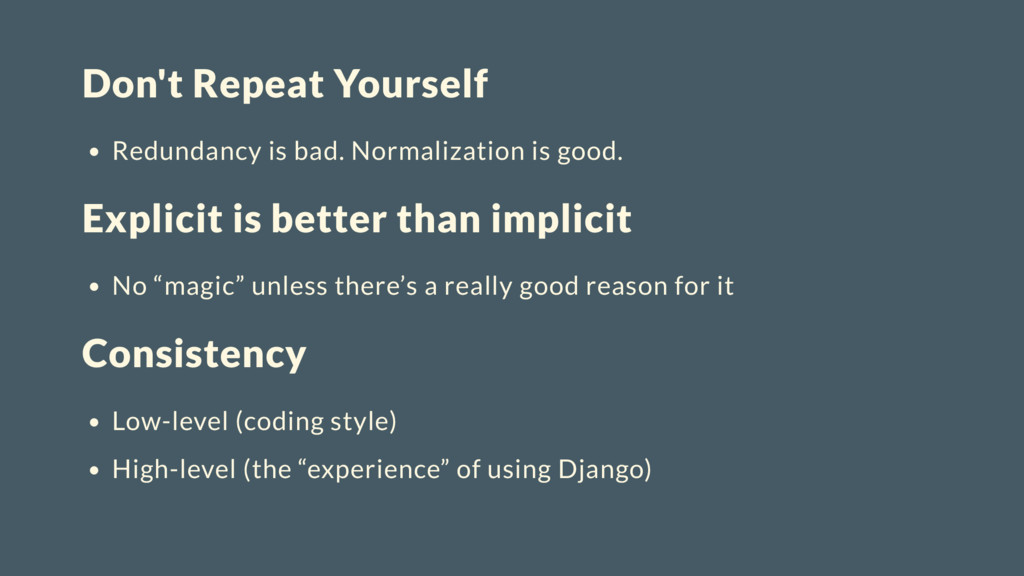
  6. Don't Repeat Yourself Redundancy is bad. Normalization is good. Explicit

    is better than implicit No “magic” unless there’s a really good reason for it Consistency Low-level (coding style) High-level (the “experience” of using Django)
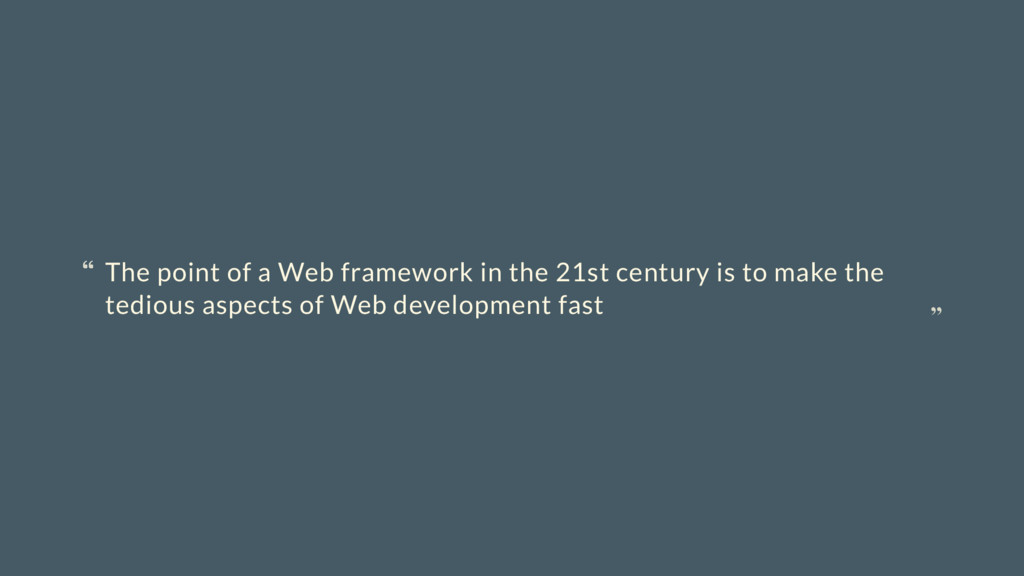
  7. The point of a Web framework in the 21st century

    is to make the tedious aspects of Web development fast “ “
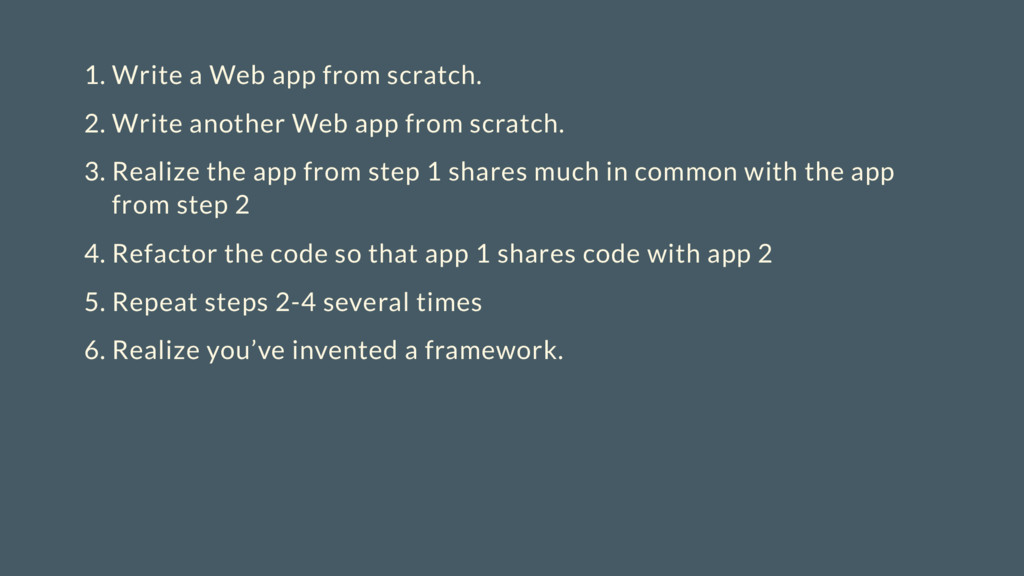
  8. 1. Write a Web app from scratch. 2. Write another

    Web app from scratch. 3. Realize the app from step 1 shares much in common with the app from step 2 4. Refactor the code so that app 1 shares code with app 2 5. Repeat steps 2-4 several times 6. Realize you’ve invented a framework.
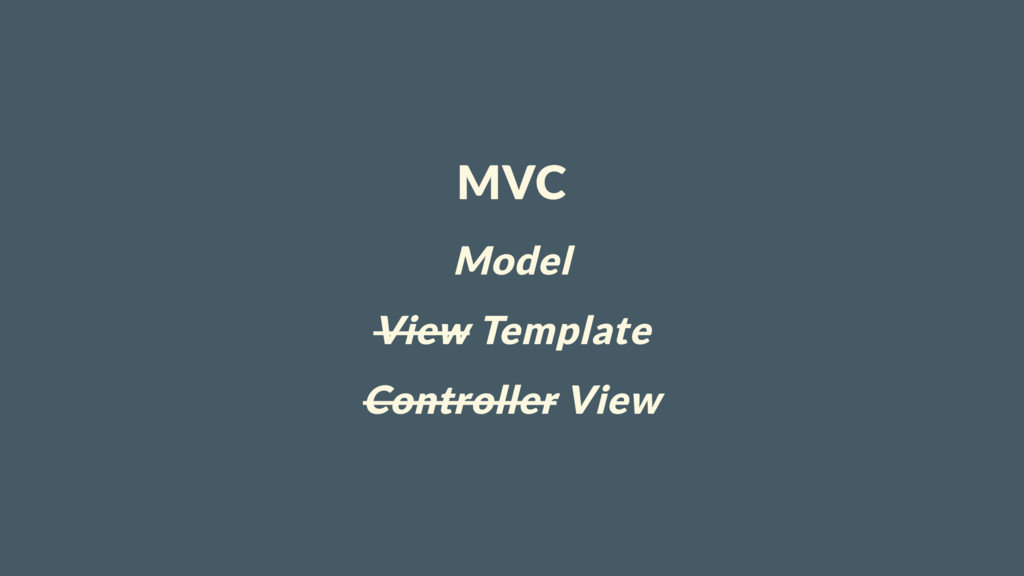
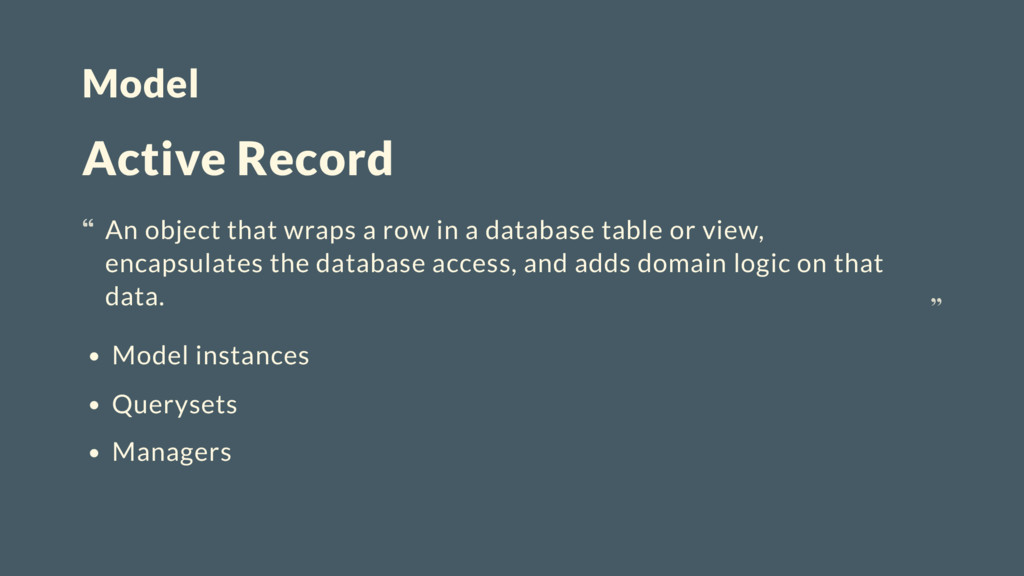
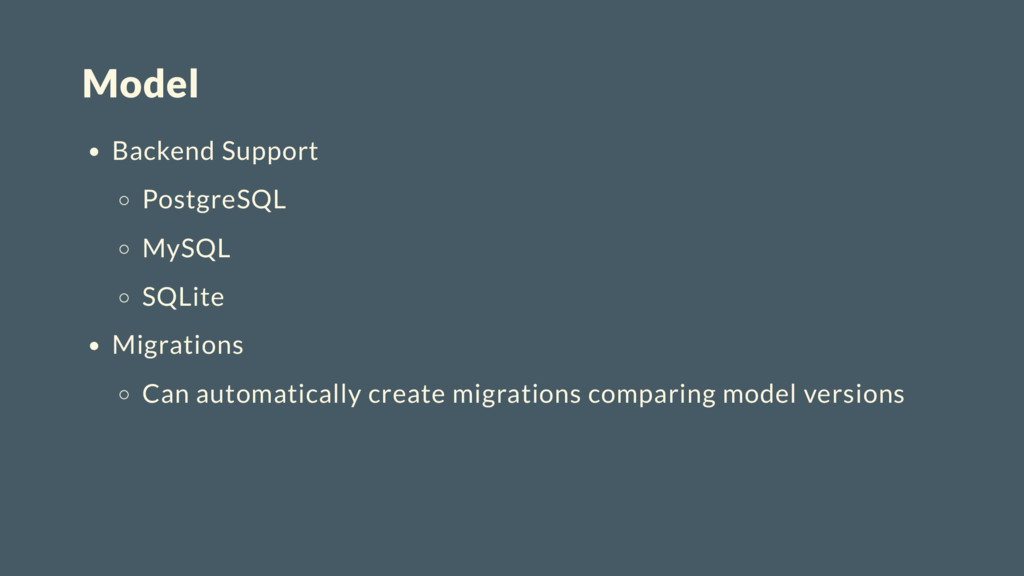
  9. Model Active Record Model instances Querysets Managers An object that

    wraps a row in a database table or view, encapsulates the database access, and adds domain logic on that data. “ “
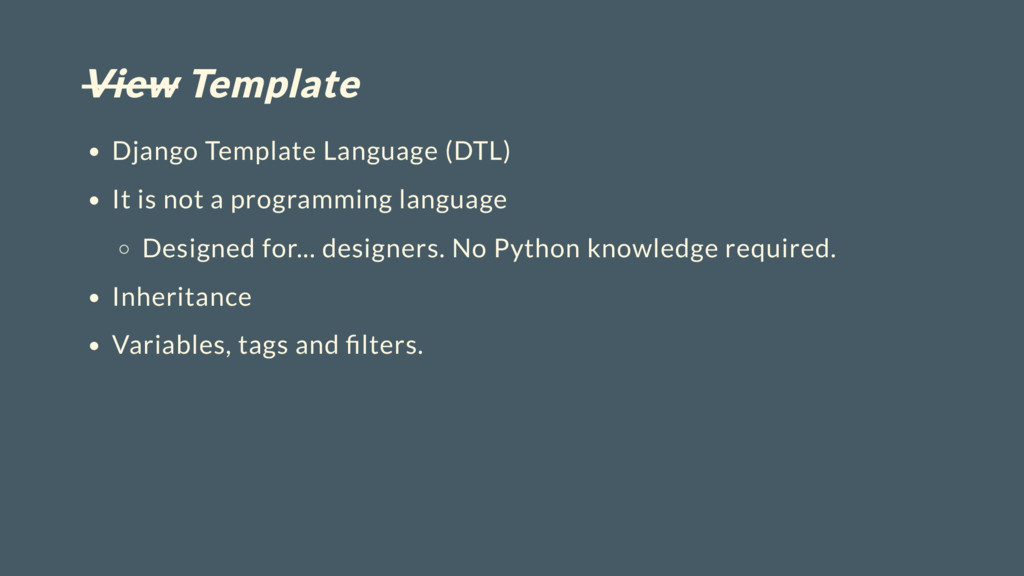
  10. View Template Django Template Language (DTL) It is not a

    programming language Designed for... designers. No Python knowledge required. Inheritance Variables, tags and lters.
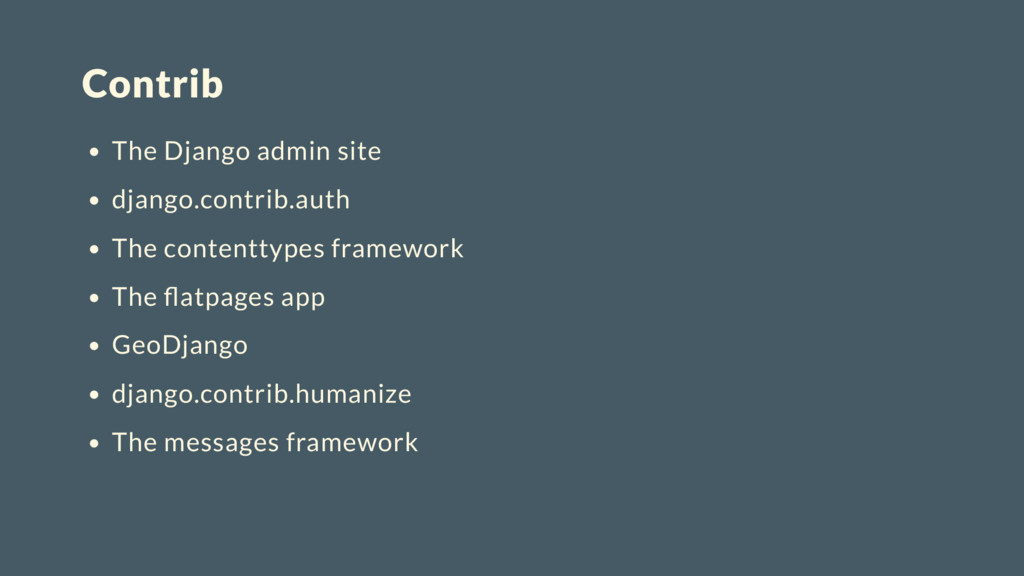
  11. Contrib The Django admin site django.contrib.auth The contenttypes framework The

    atpages app GeoDjango django.contrib.humanize The messages framework
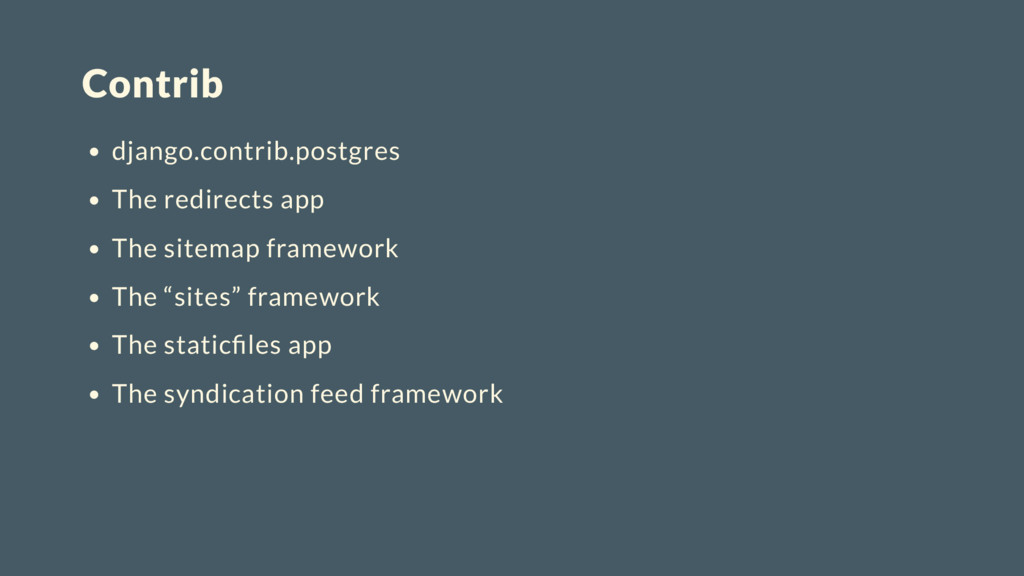
  12. Contrib django.contrib.postgres The redirects app The sitemap framework The “sites”

    framework The static les app The syndication feed framework
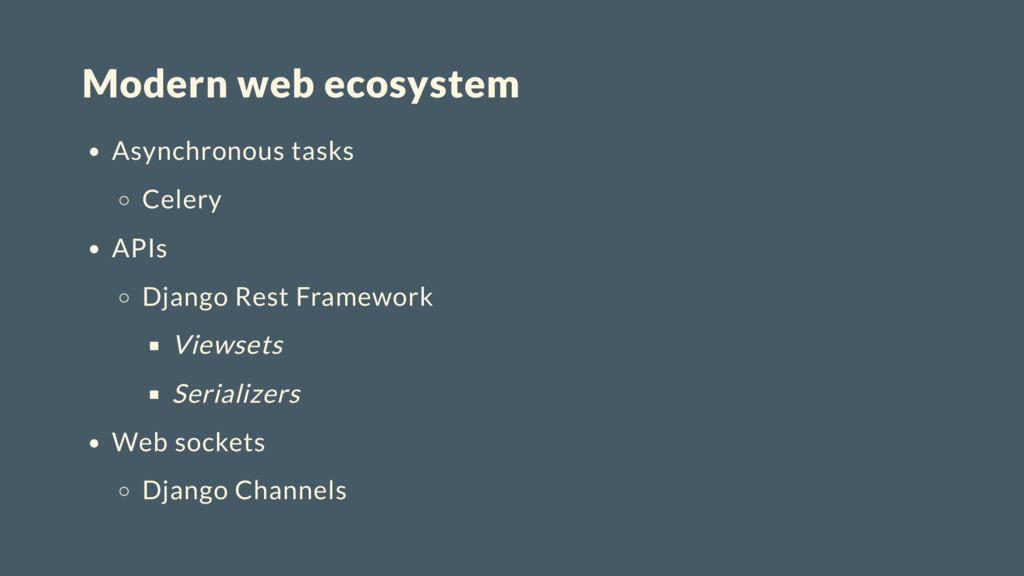
  13. Modern web ecosystem Asynchronous tasks Celery APIs Django Rest Framework

    Viewsets Serializers Web sockets Django Channels
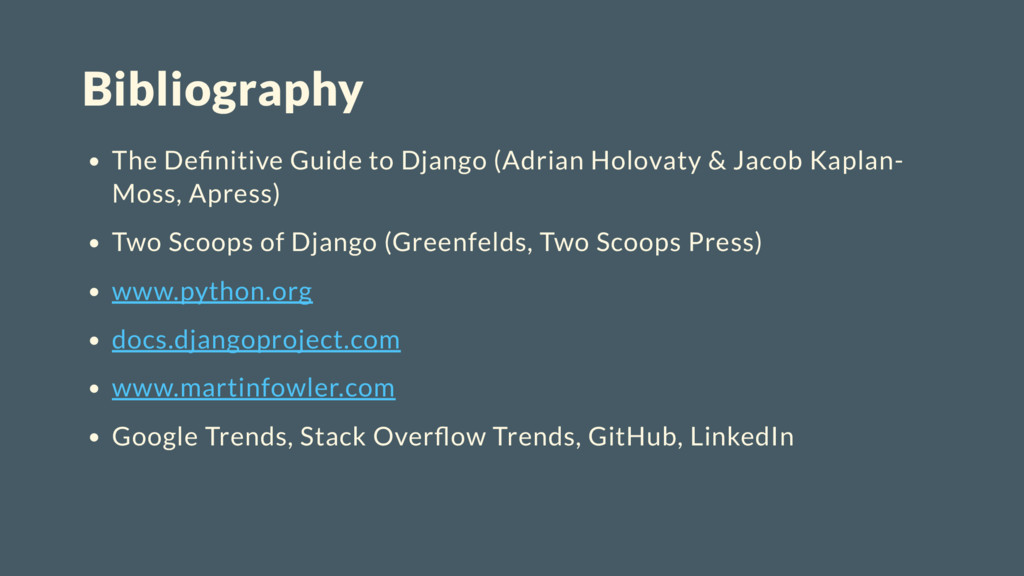
  14. Bibliography The De nitive Guide to Django (Adrian Holovaty &

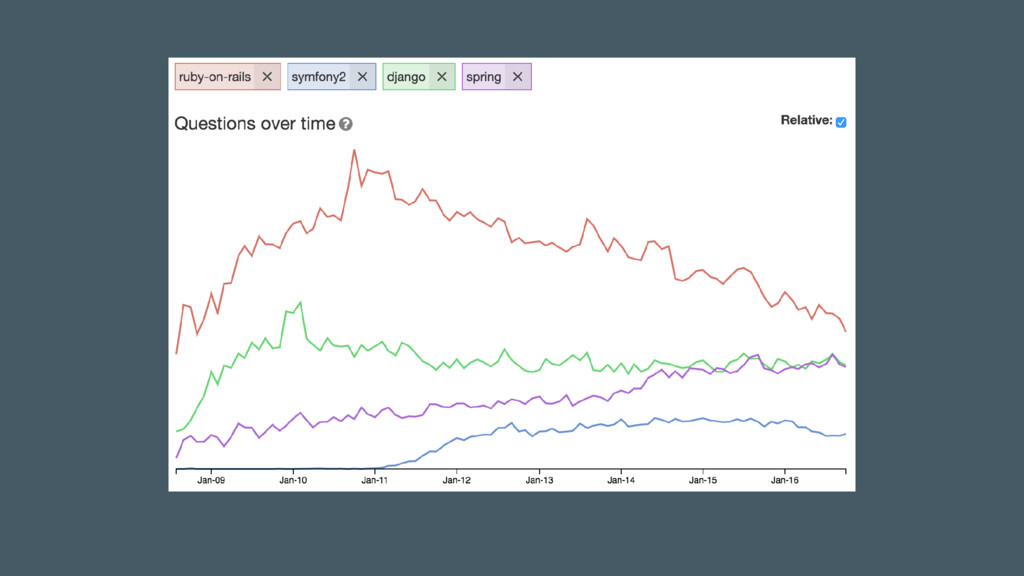
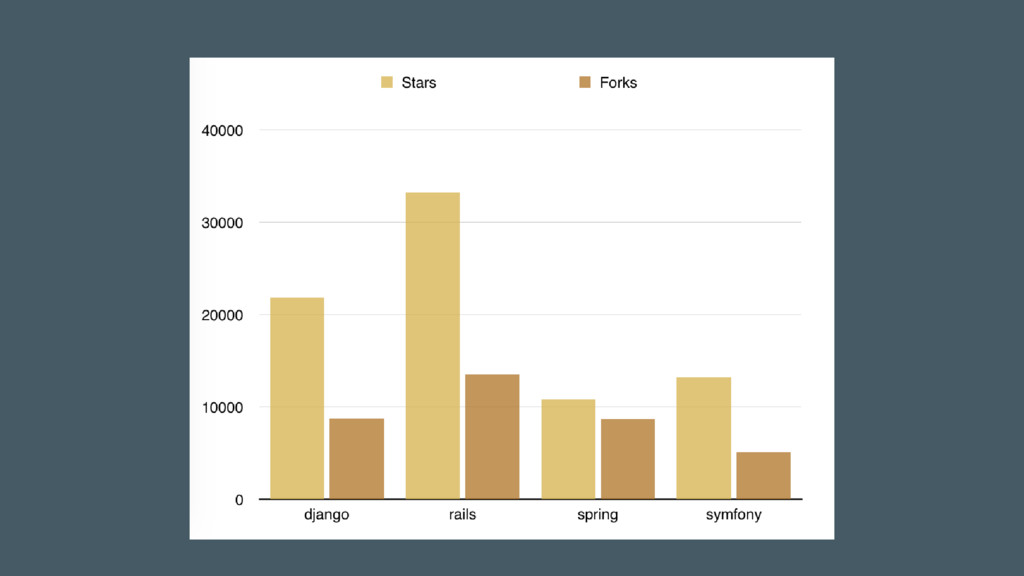
    Jacob Kaplan- Moss, Apress) Two Scoops of Django (Greenfelds, Two Scoops Press) www.python.org docs.djangoproject.com www.martinfowler.com Google Trends, Stack Over ow Trends, GitHub, LinkedIn
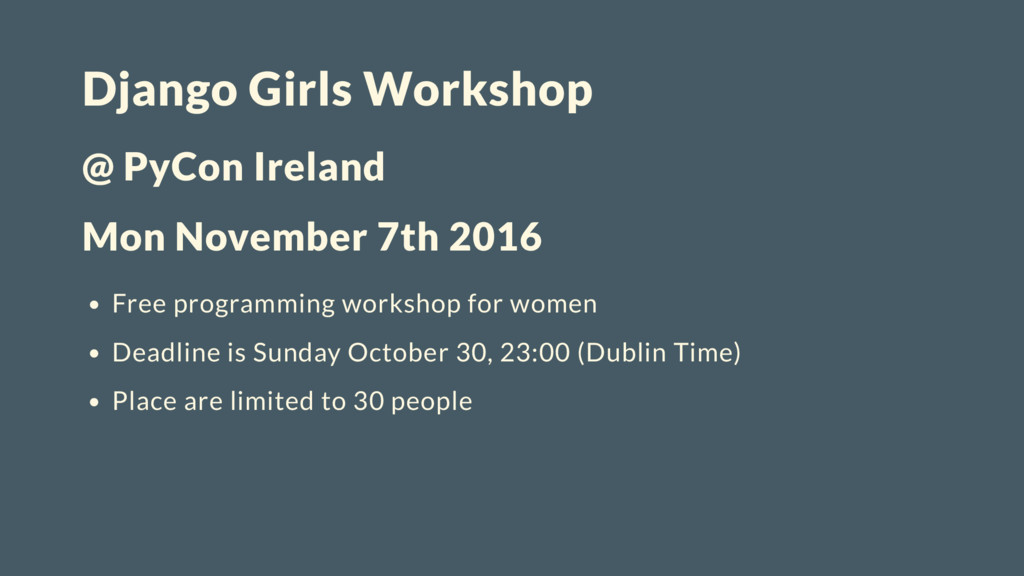
  15. Django Girls Workshop @ PyCon Ireland Mon November 7th 2016

    Free programming workshop for women Deadline is Sunday October 30, 23:00 (Dublin Time) Place are limited to 30 people