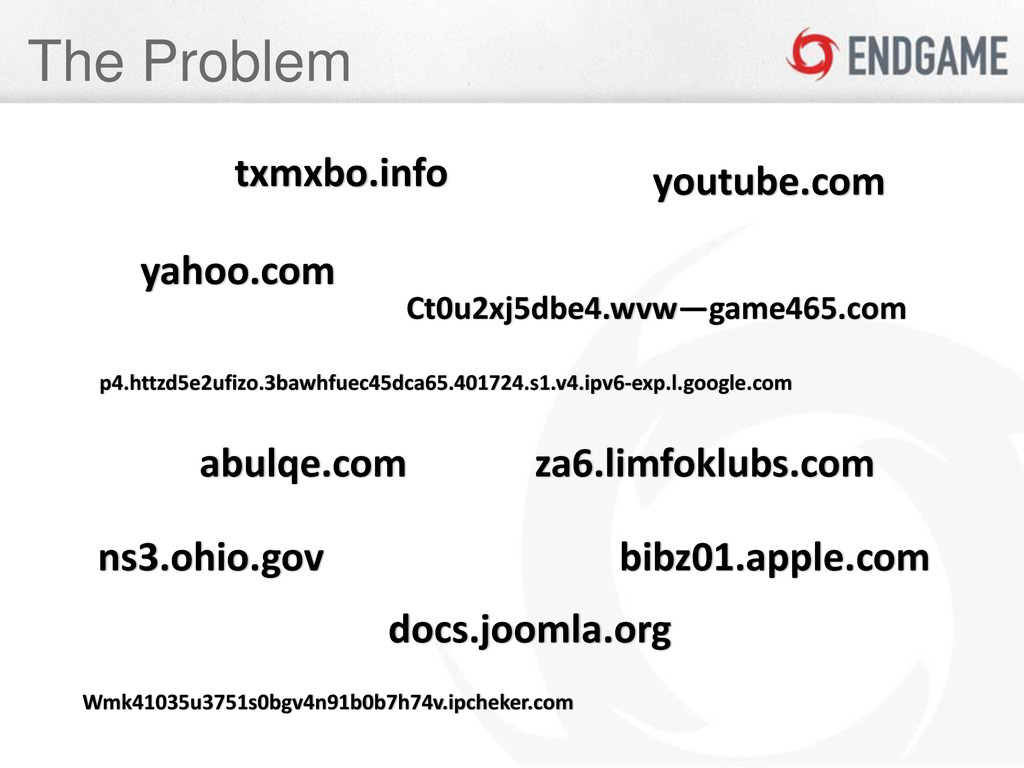
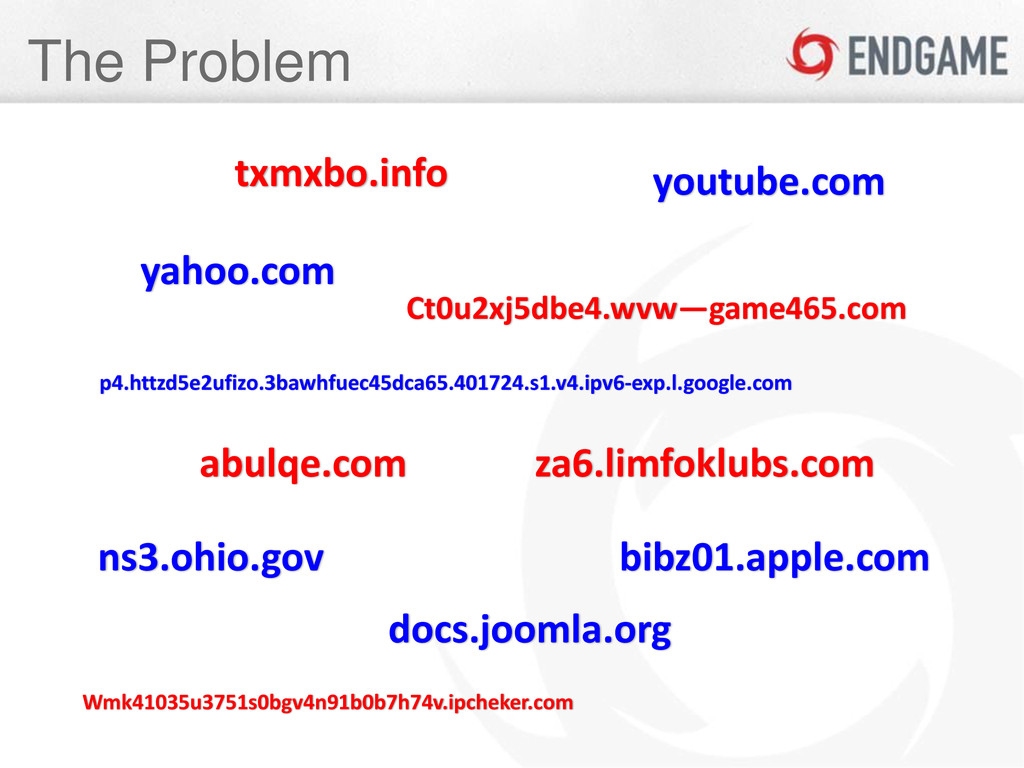
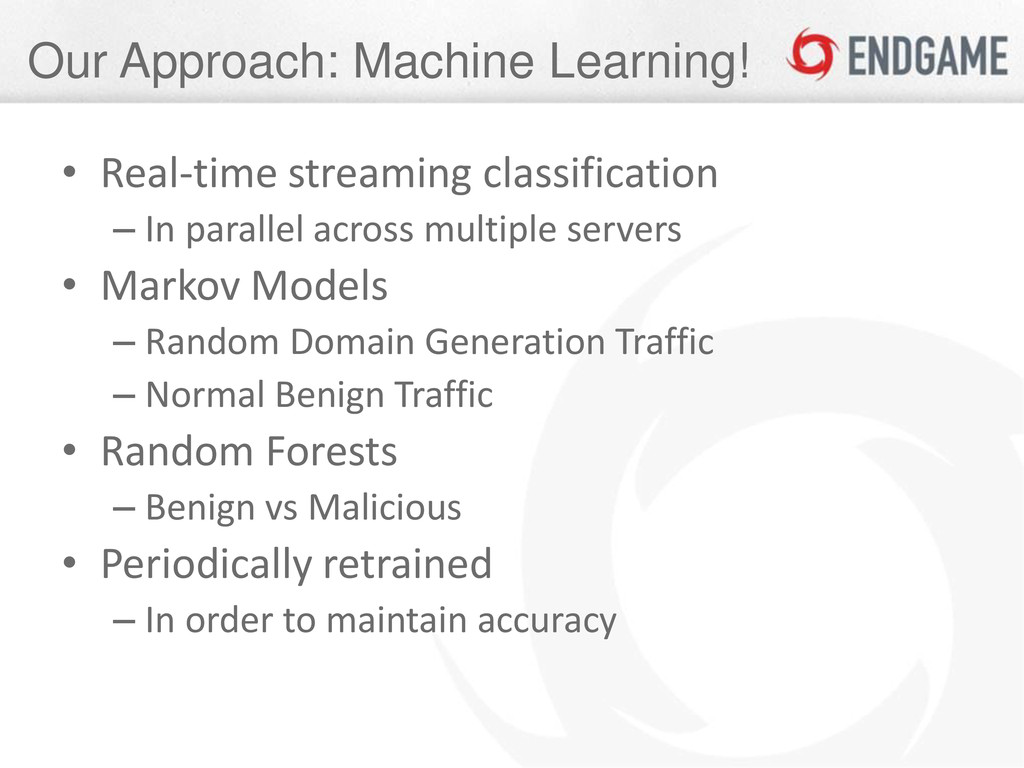
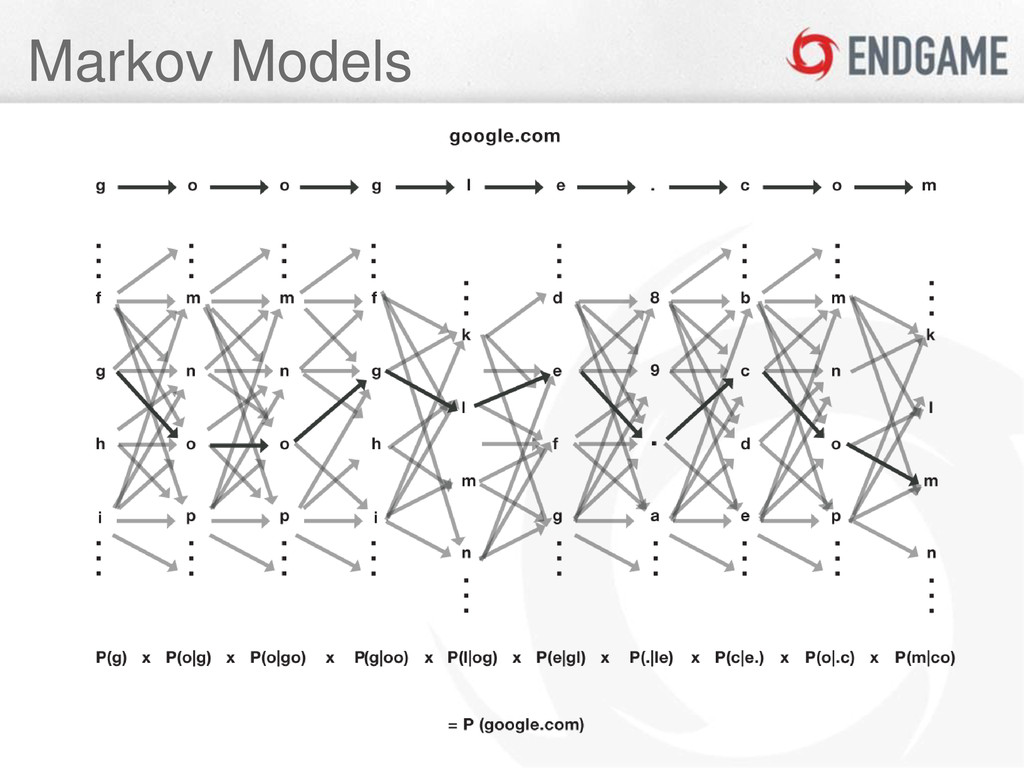
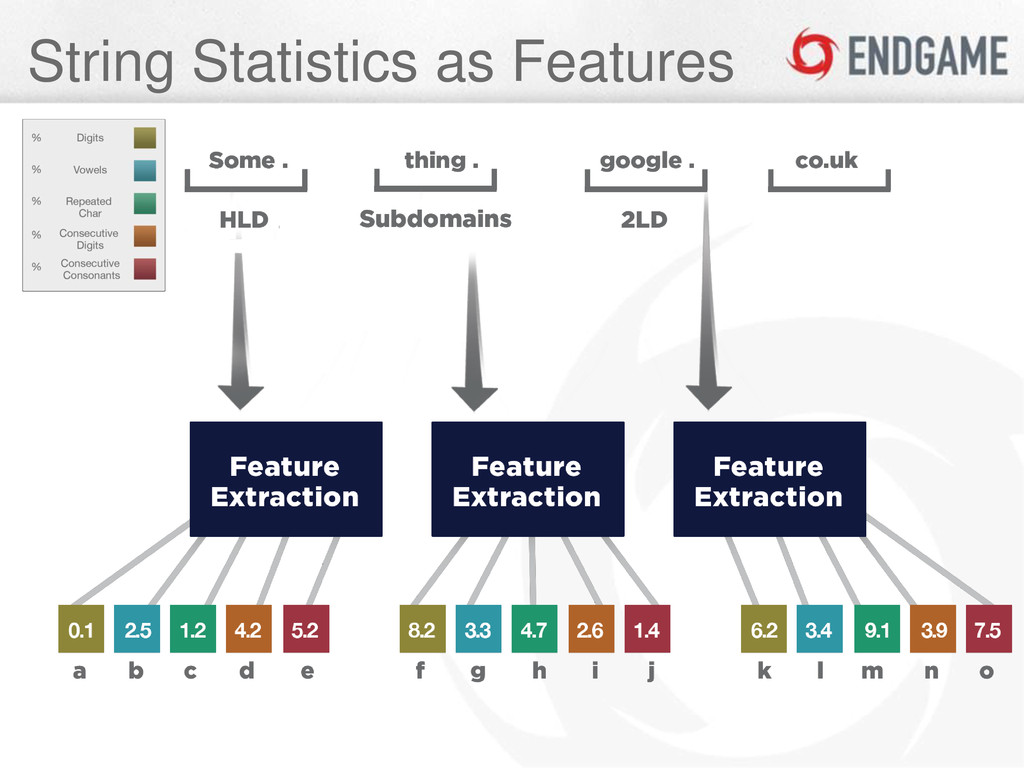
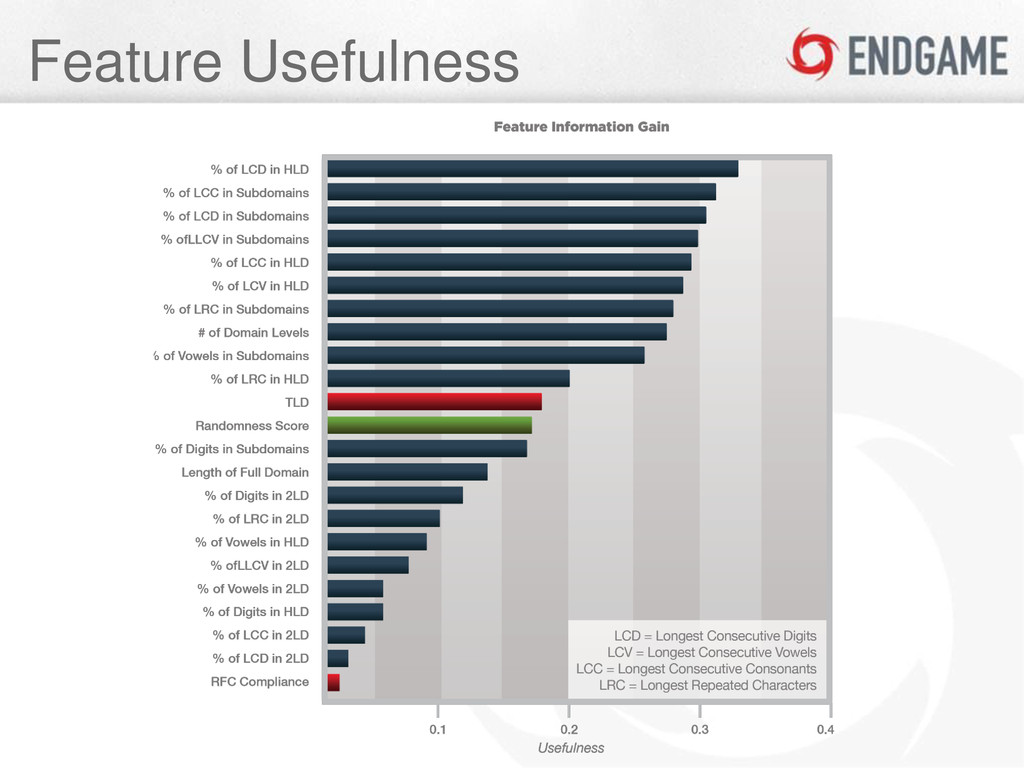
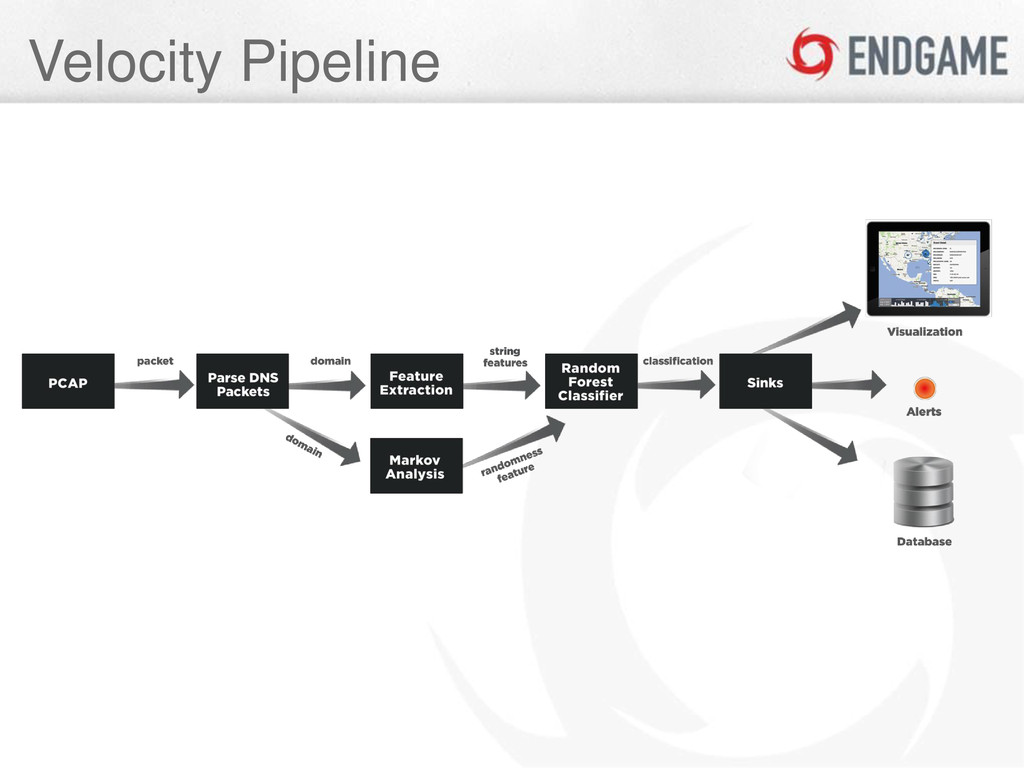
• Markov Models – Random Domain Generation Traffic – Normal Benign Traffic • Random Forests – Benign vs Malicious • Periodically retrained – In order to maintain accuracy Our Approach: Machine Learning!
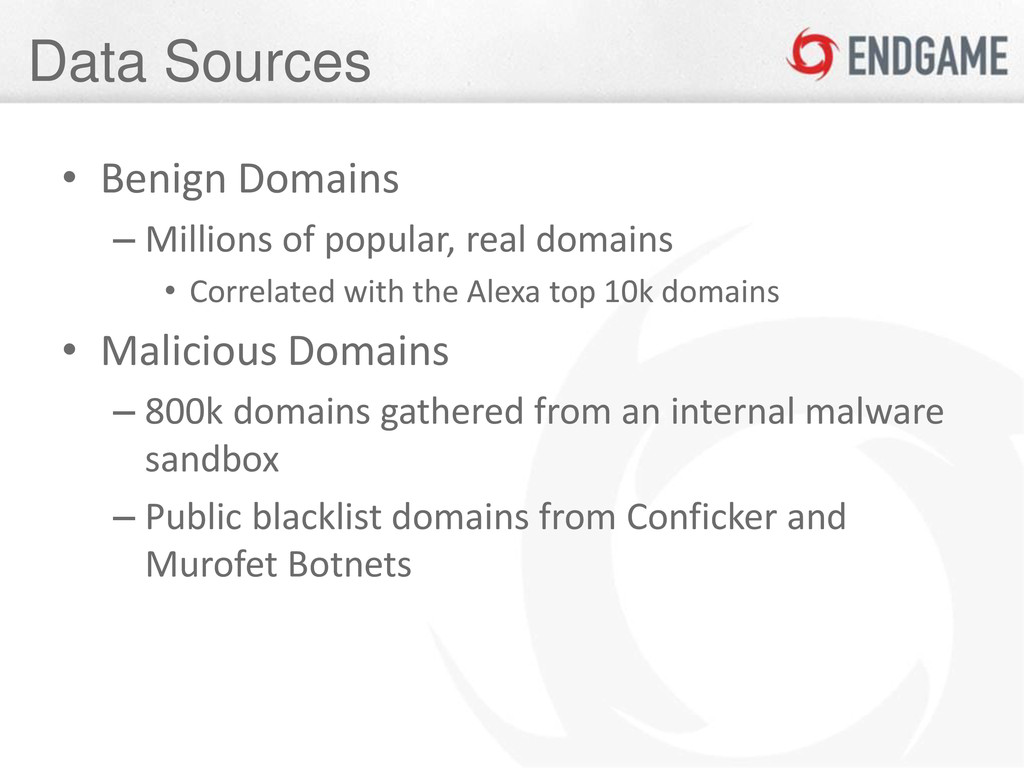
Correlated with the Alexa top 10k domains • Malicious Domains – 800k domains gathered from an internal malware sandbox – Public blacklist domains from Conficker and Murofet Botnets Data Sources
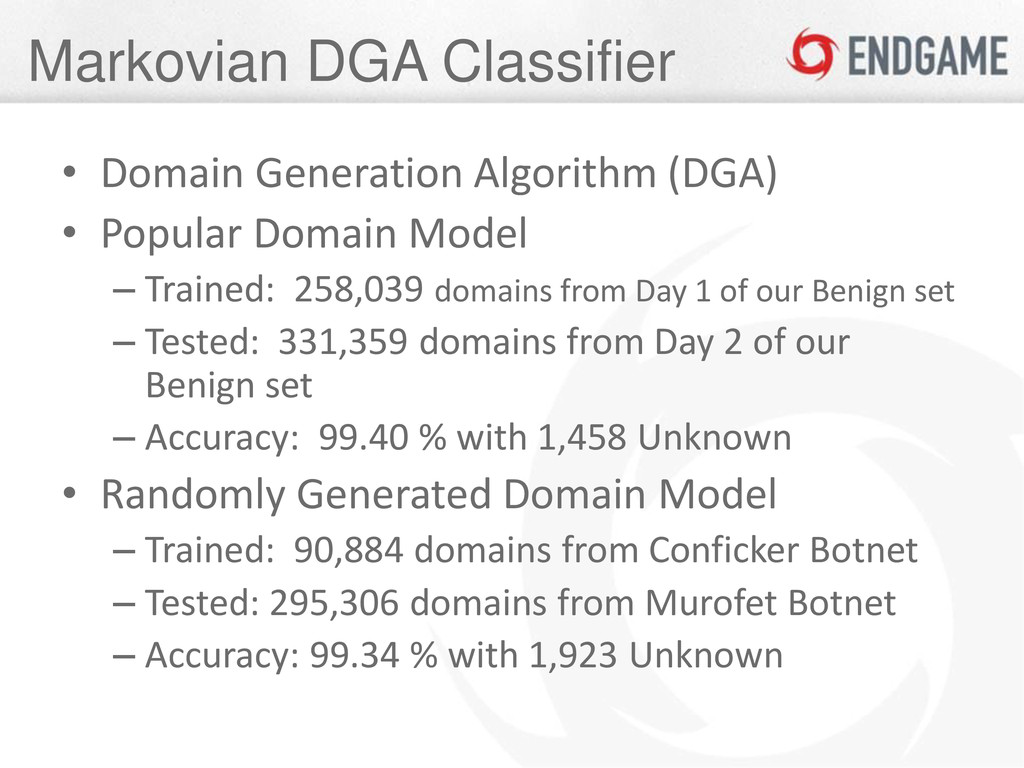
Trained: 258,039 domains from Day 1 of our Benign set – Tested: 331,359 domains from Day 2 of our Benign set – Accuracy: 99.40 % with 1,458 Unknown • Randomly Generated Domain Model – Trained: 90,884 domains from Conficker Botnet – Tested: 295,306 domains from Murofet Botnet – Accuracy: 99.34 % with 1,923 Unknown Markovian DGA Classifier
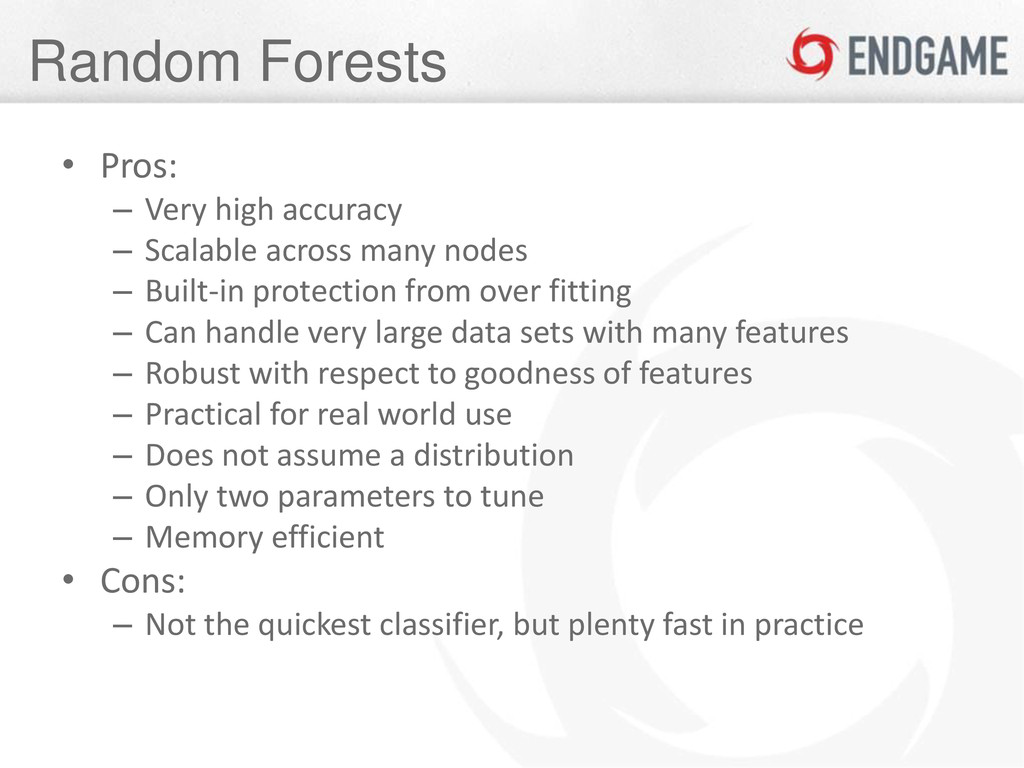
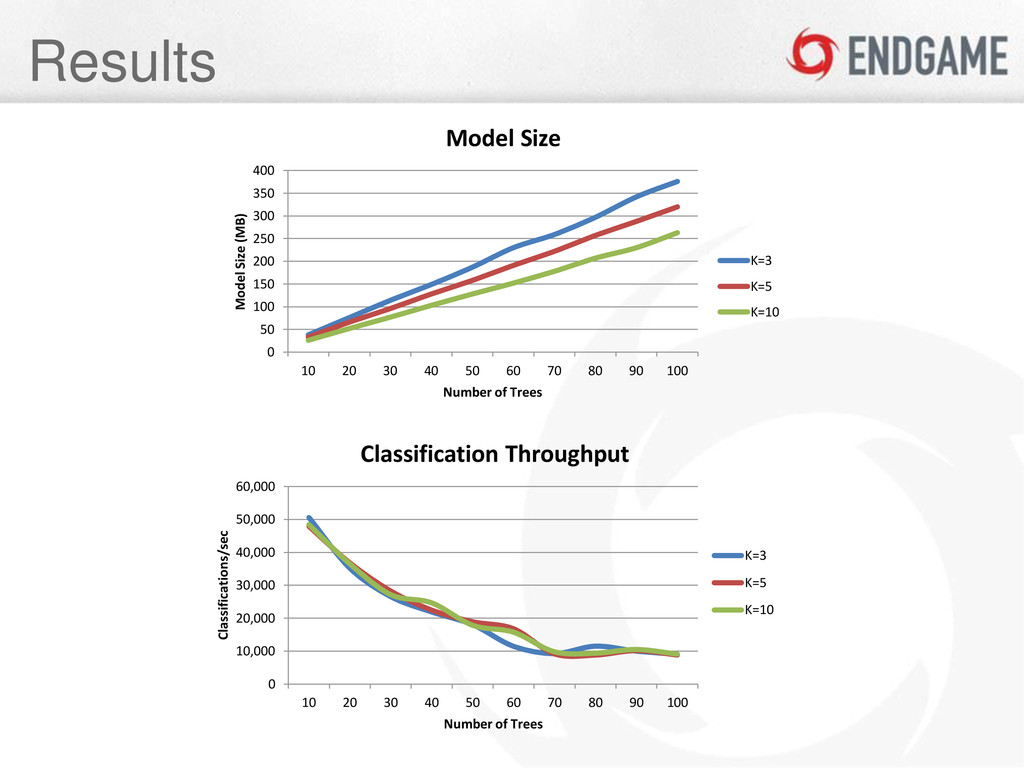
nodes – Built-in protection from over fitting – Can handle very large data sets with many features – Robust with respect to goodness of features – Practical for real world use – Does not assume a distribution – Only two parameters to tune – Memory efficient • Cons: – Not the quickest classifier, but plenty fast in practice Random Forests
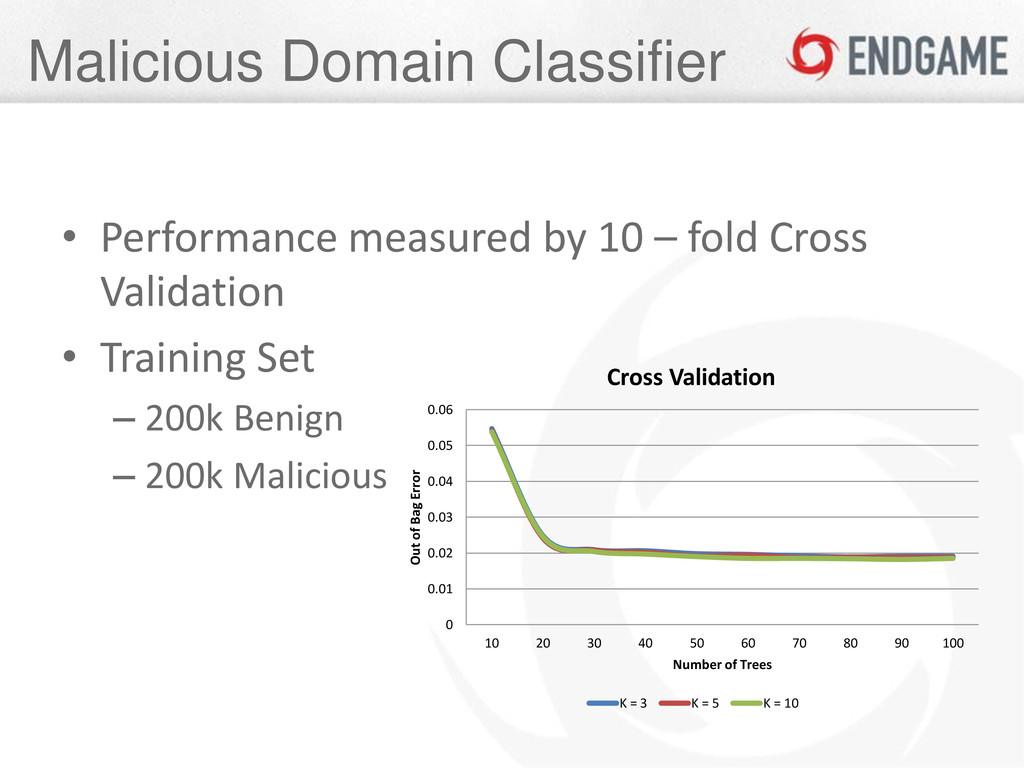
Training Set – 200k Benign – 200k Malicious Malicious Domain Classifier 0 0.01 0.02 0.03 0.04 0.05 0.06 10 20 30 40 50 60 70 80 90 100 Out of Bag Error Number of Trees Cross Validation K = 3 K = 5 K = 10
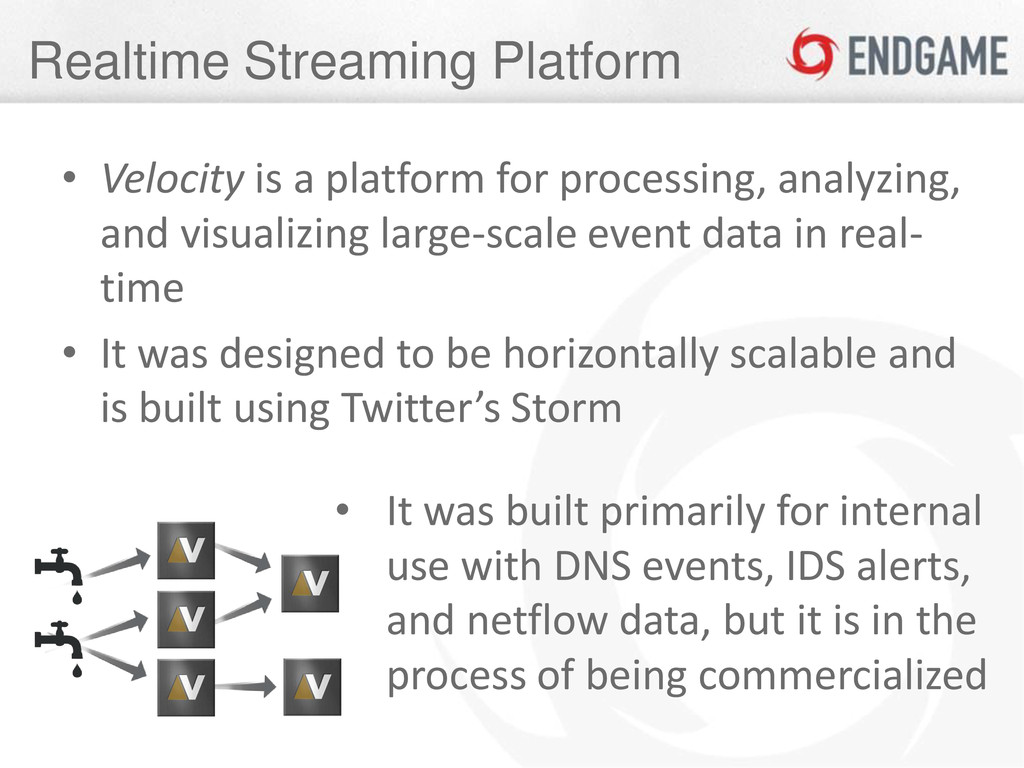
large-scale event data in real- time • It was designed to be horizontally scalable and is built using Twitter’s Storm • It was built primarily for internal use with DNS events, IDS alerts, and netflow data, but it is in the process of being commercialized Realtime Streaming Platform
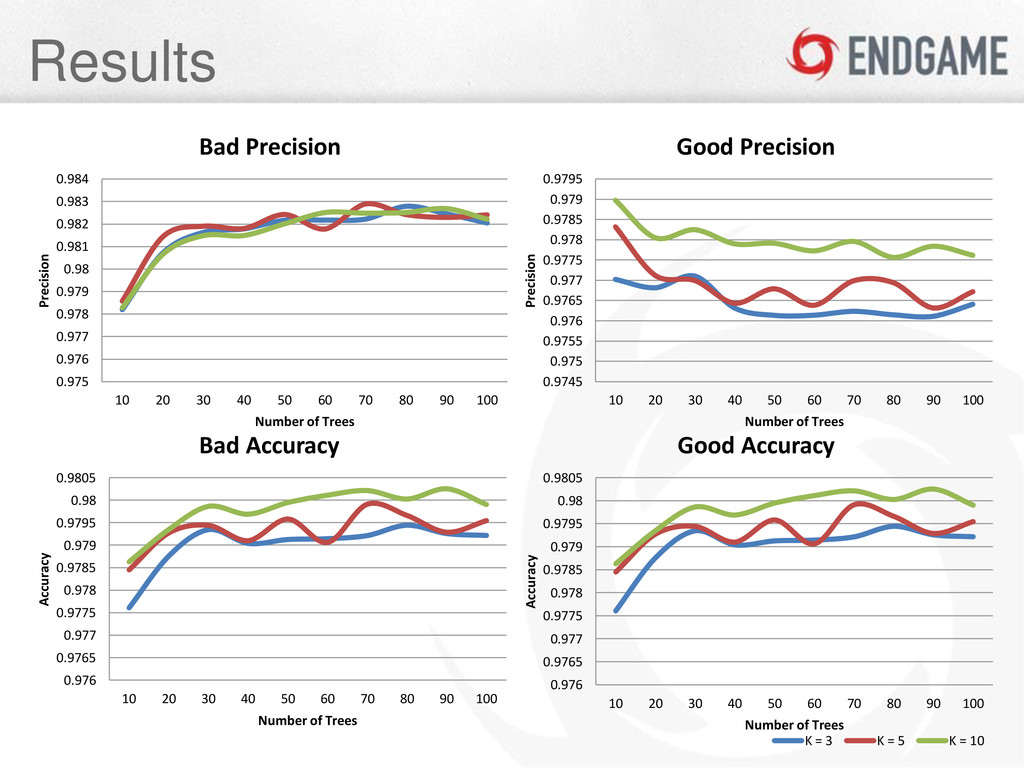
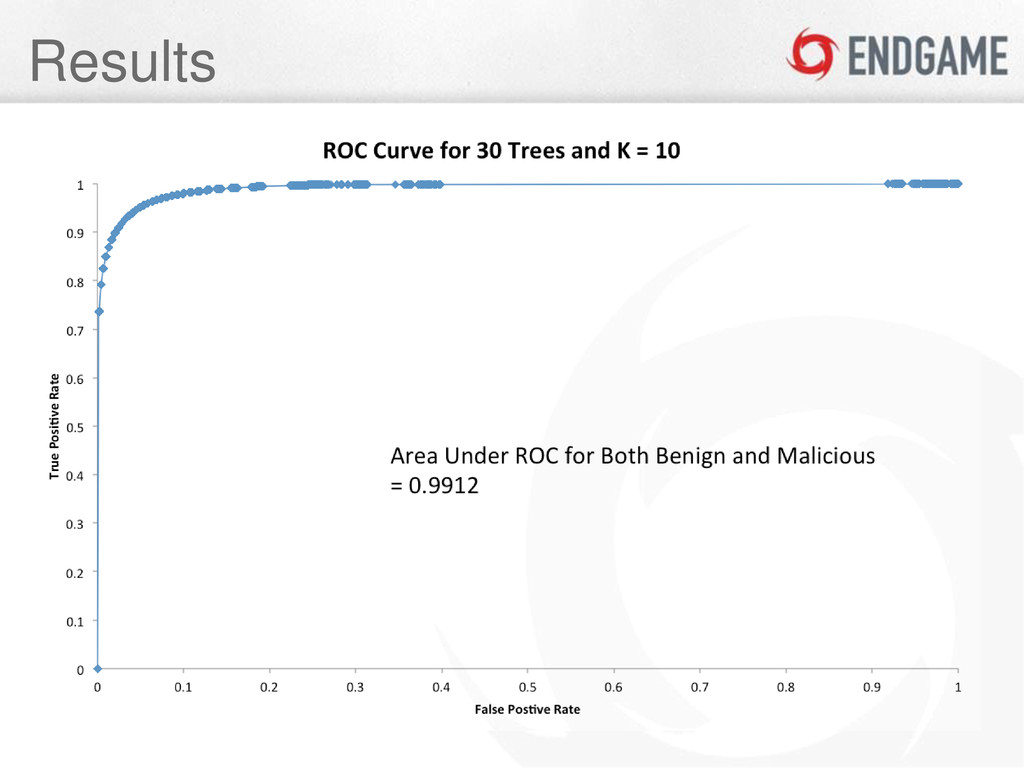
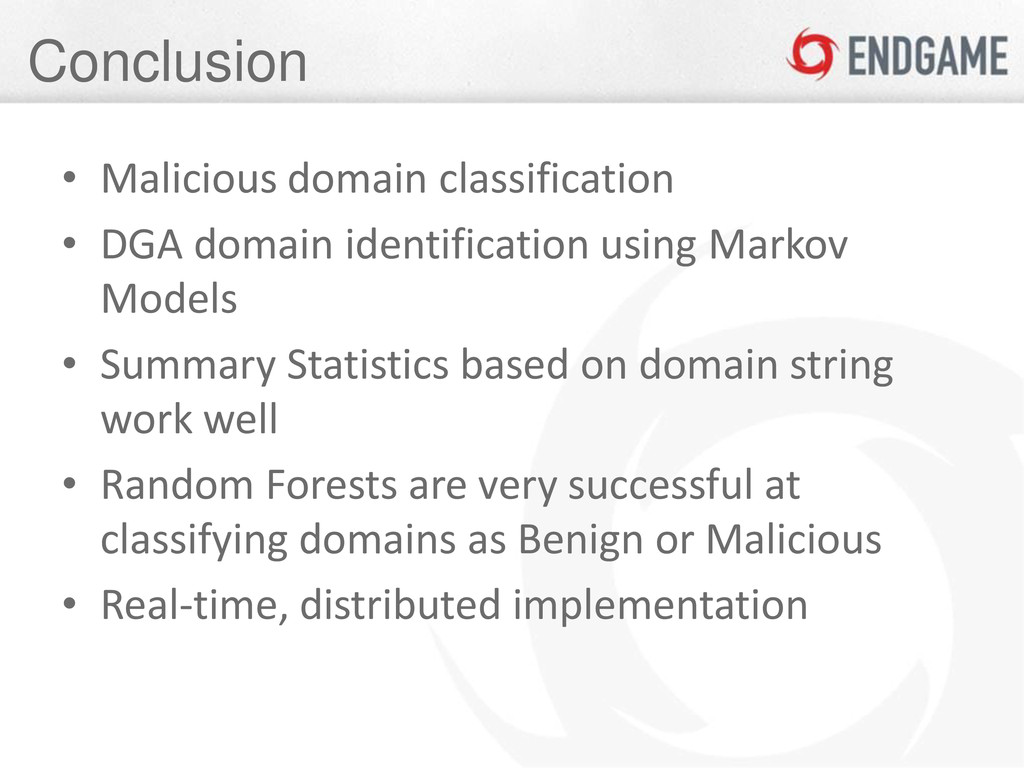
Models • Summary Statistics based on domain string work well • Random Forests are very successful at classifying domains as Benign or Malicious • Real-time, distributed implementation Conclusion
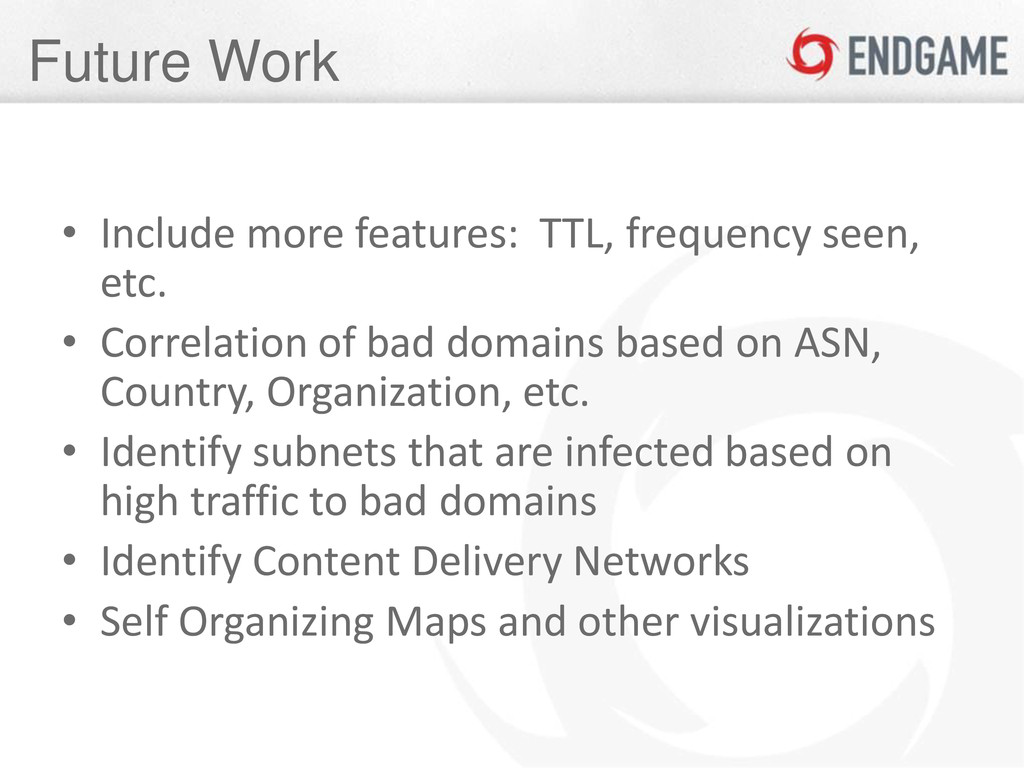
of bad domains based on ASN, Country, Organization, etc. • Identify subnets that are infected based on high traffic to bad domains • Identify Content Delivery Networks • Self Organizing Maps and other visualizations Future Work

 SiteGround - Reliable hosting with speed, security, and support you can count on.


 jt6211
 akihisaikeda
 minodriven
 teyamagu
 yutobara
 o0h
 ichirokano2
 nao_randd
 panda728
 akit37
 y0hgi
 yasaichi
 optim
 honzajavorek
 irinanazarova
 addyosmani
 keithpitt
 rasmusluckow
 morganepeng
 lara
 panda_program
 techseoconnect
 427marketing
 jmmastey
 iamctodd