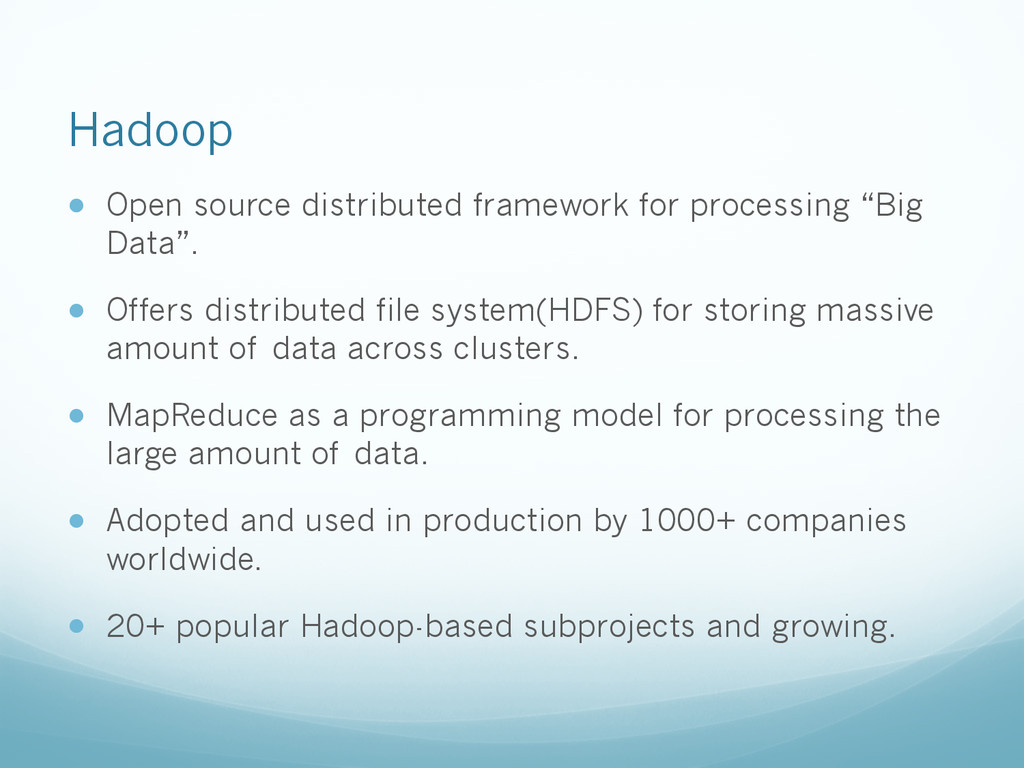
• Offers distributed file system(HDFS) for storing massive amount of data across clusters. • MapReduce as a programming model for processing the large amount of data. • Adopted and used in production by 1000+ companies worldwide. • 20+ popular Hadoop-based subprojects and growing.
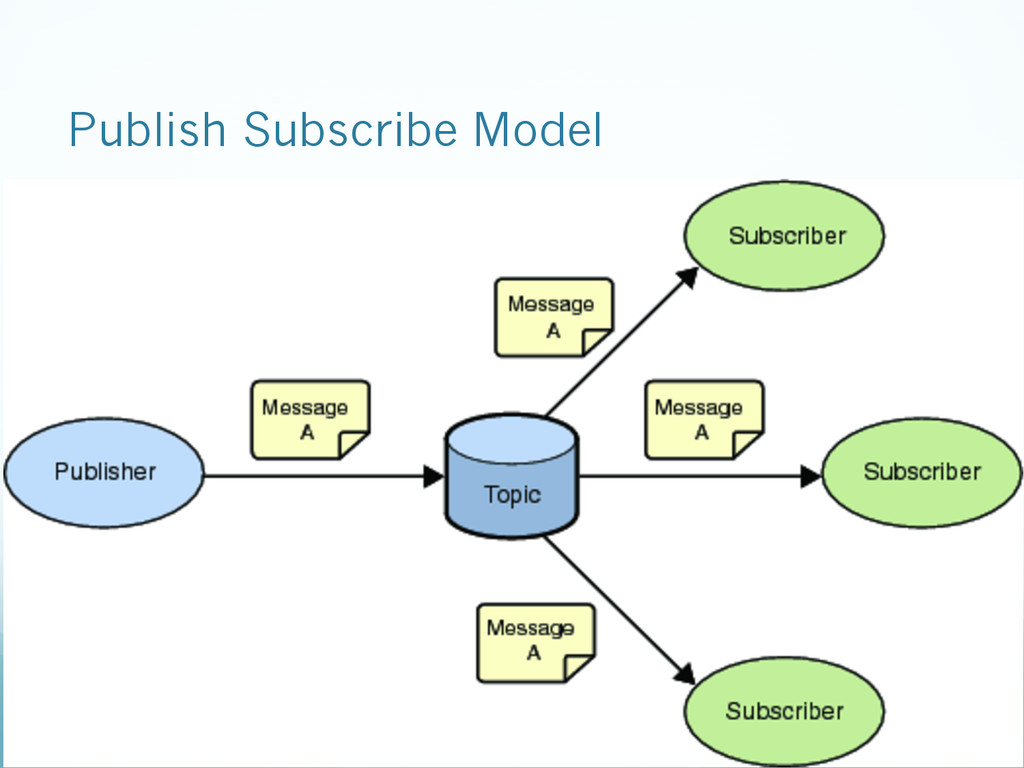
could notify interested clients about major HDFS events (like file creation, deletion, etc), MapReduce job end notification. • [HDFS-2760] talks about adding a PubSub system on HDFS for sending notification messages to clients subscribed to specific services. • [HDFS-7821] talks about an event notification system which – • Provide periodic updates to subscribed users • Provide the capability to let users specify 'interesting events'. • Provide a 'customizable' and 'configurable' interface such that user-defined parameters can also be 'subscribed' by the user.
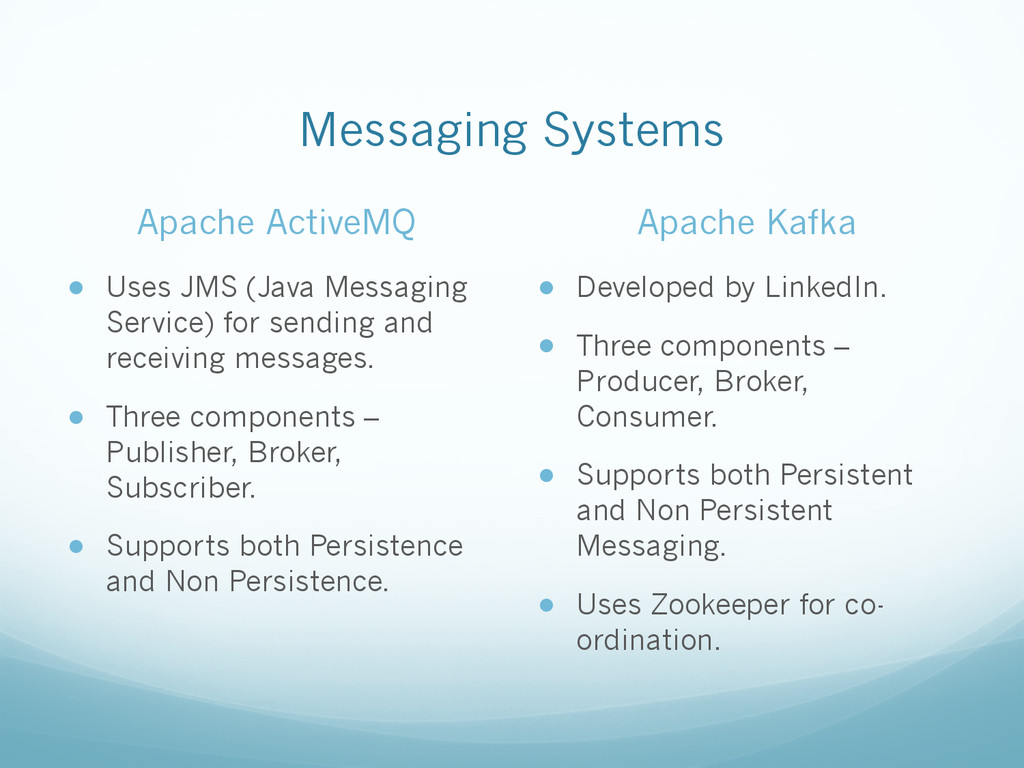
for sending and receiving messages. • Three components – Publisher, Broker, Subscriber. • Supports both Persistence and Non Persistence. Apache Kafka • Developed by LinkedIn. • Three components – Producer, Broker, Consumer. • Supports both Persistent and Non Persistent Messaging. • Uses Zookeeper for co- ordination.
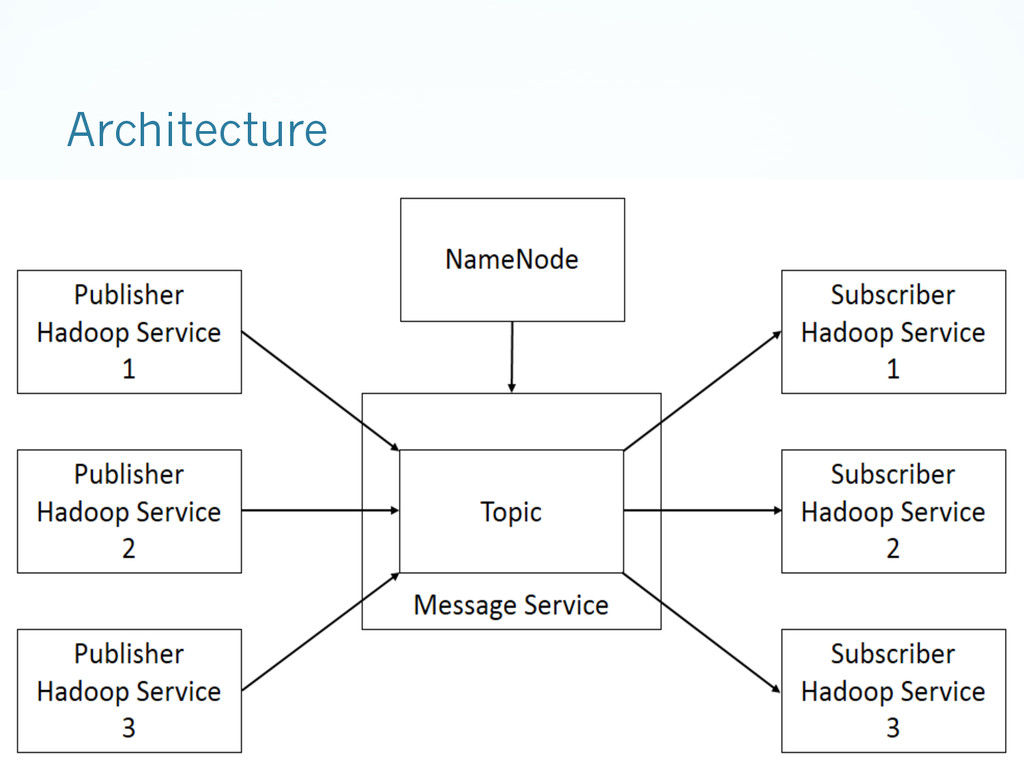
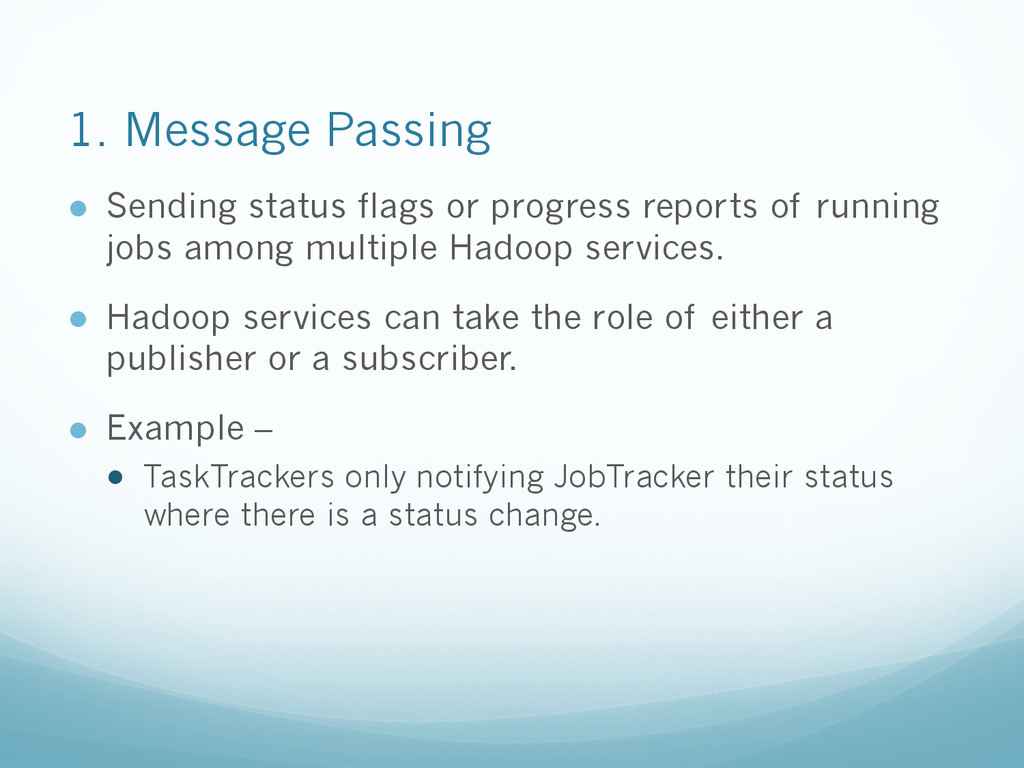
of running jobs among multiple Hadoop services. • Hadoop services can take the role of either a publisher or a subscriber. • Example – • TaskTrackers only notifying JobTracker their status where there is a status change.
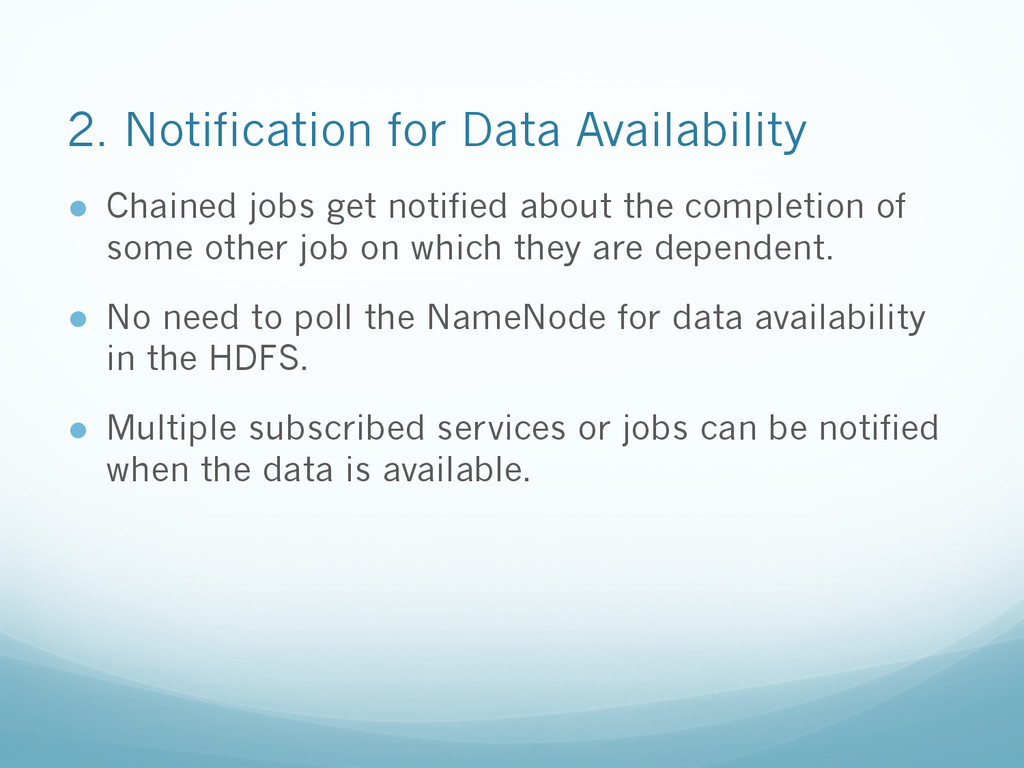
about the completion of some other job on which they are dependent. • No need to poll the NameNode for data availability in the HDFS. • Multiple subscribed services or jobs can be notified when the data is available.
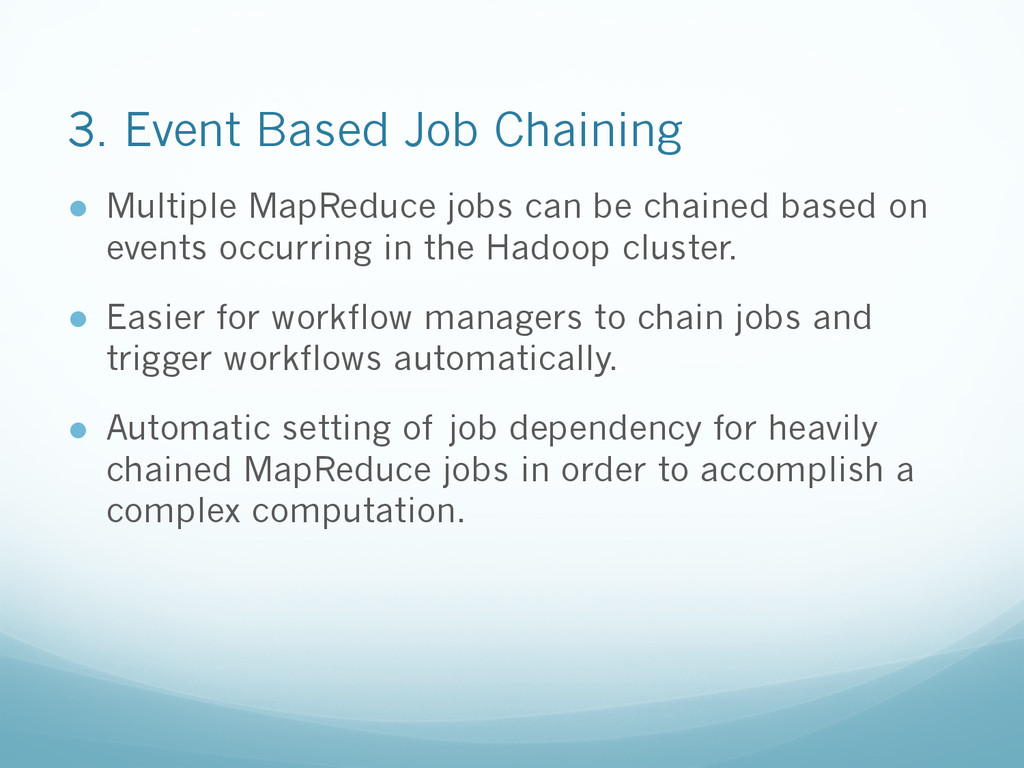
be chained based on events occurring in the Hadoop cluster. • Easier for workflow managers to chain jobs and trigger workflows automatically. • Automatic setting of job dependency for heavily chained MapReduce jobs in order to accomplish a complex computation.
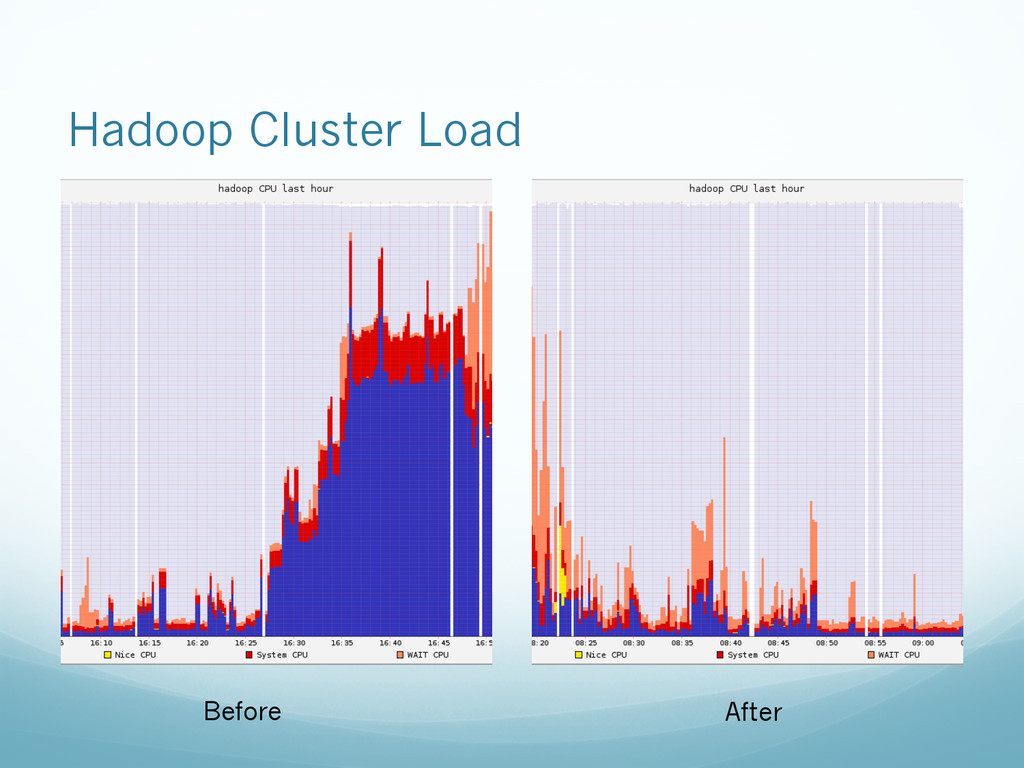
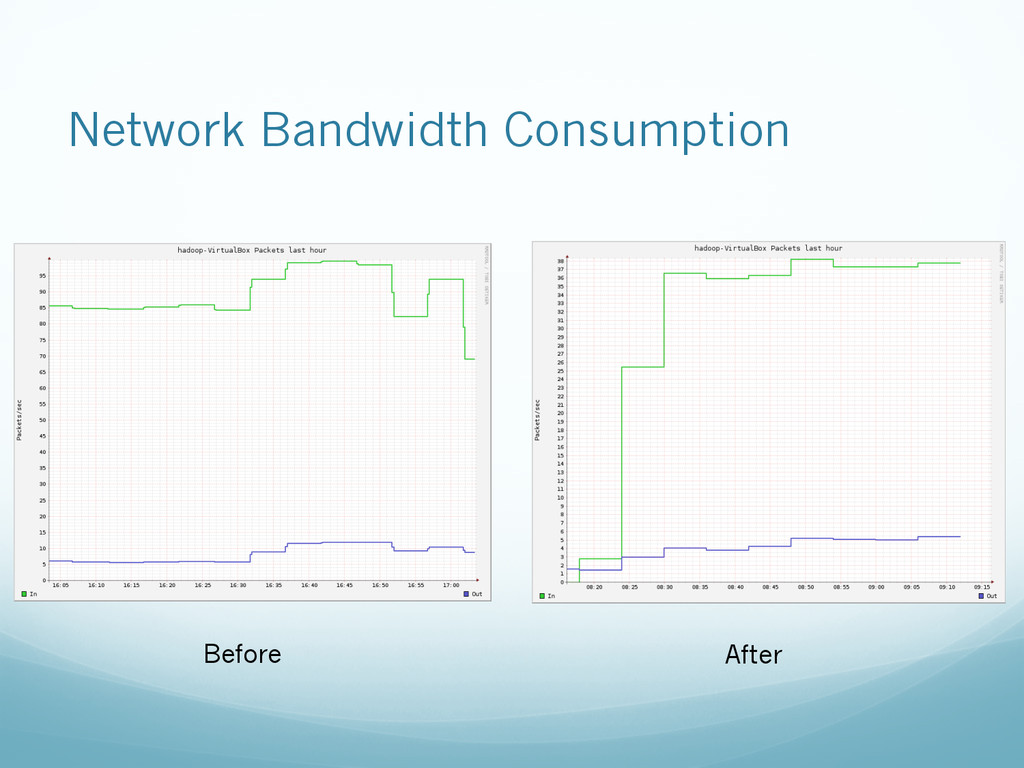
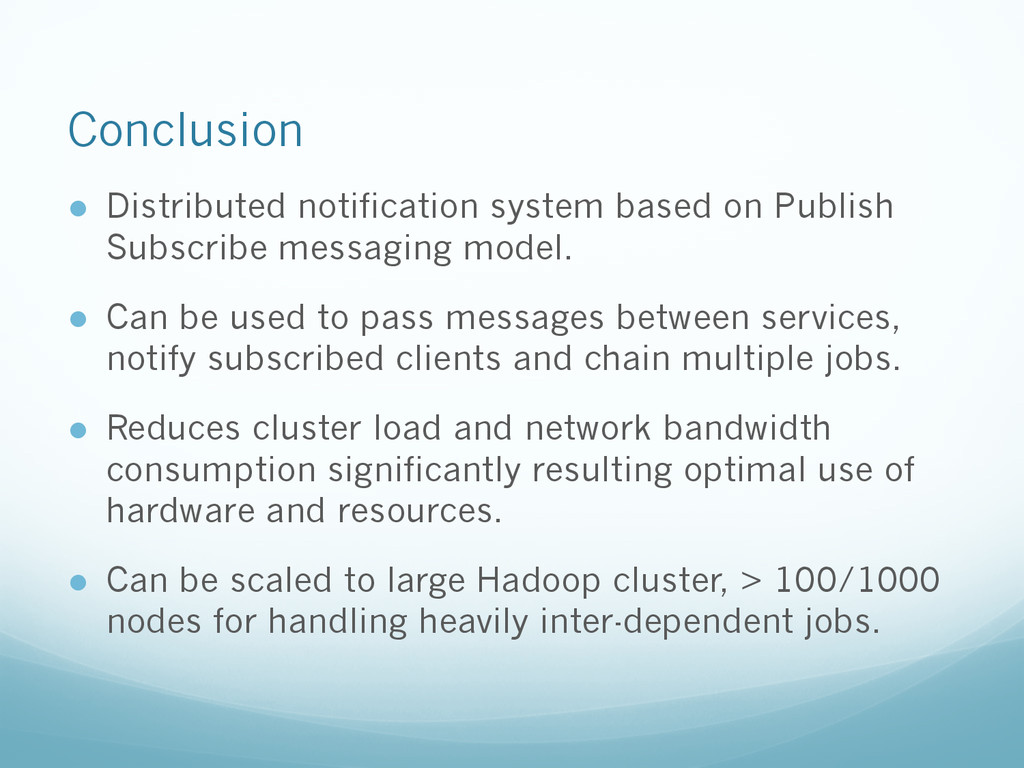
model. • Can be used to pass messages between services, notify subscribed clients and chain multiple jobs. • Reduces cluster load and network bandwidth consumption significantly resulting optimal use of hardware and resources. • Can be scaled to large Hadoop cluster, > 100/1000 nodes for handling heavily inter-dependent jobs.


 jyotiska
 recsyslab
 yukinobaba
 corochann
 institutdelelevage
 wataruuuuu
 tomonom
 tkng
tkng
 stktu
stktu
 shunk031
 kogoro
 junkurihara
 ept
ept
 caitiem20
 jacobian
 axbom
axbom
 michaelherold
 jonoalderson
 cassininazir
 kevinliebholz
 reverentgeek
 rkaga
rkaga
 portentint
 badams
 codingconduct
![Distributed Notification System • [HDFS-1742] talks about a system that](https://files.speakerdeck.com/presentations/8d382248122c4fce8f56333ebd2e295c/slide_2.jpg)