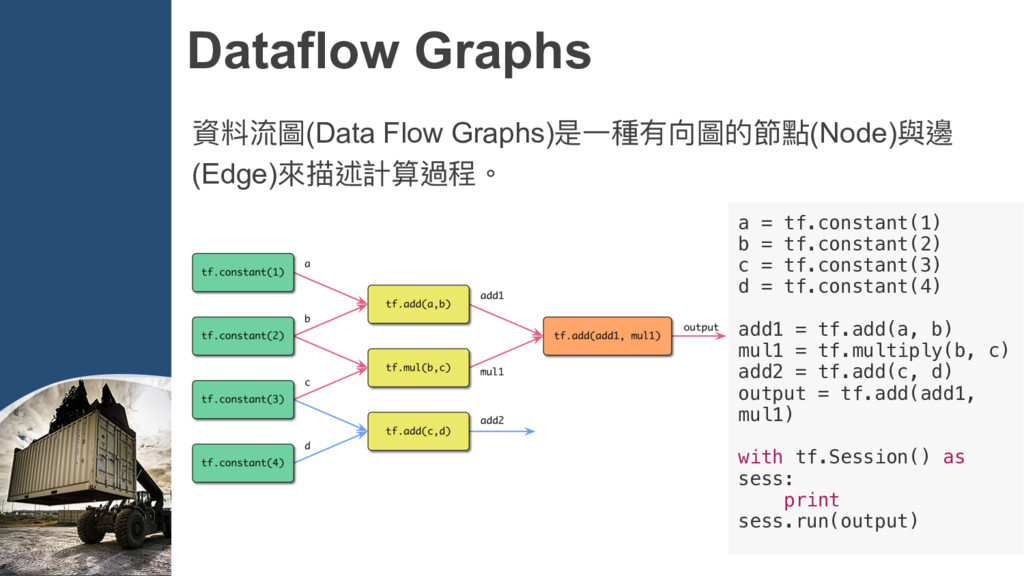
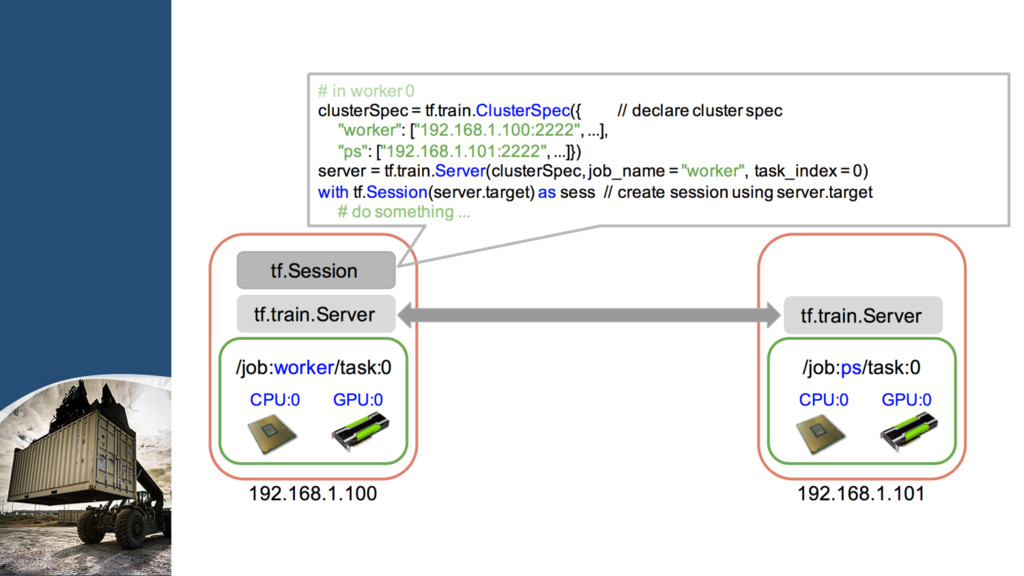
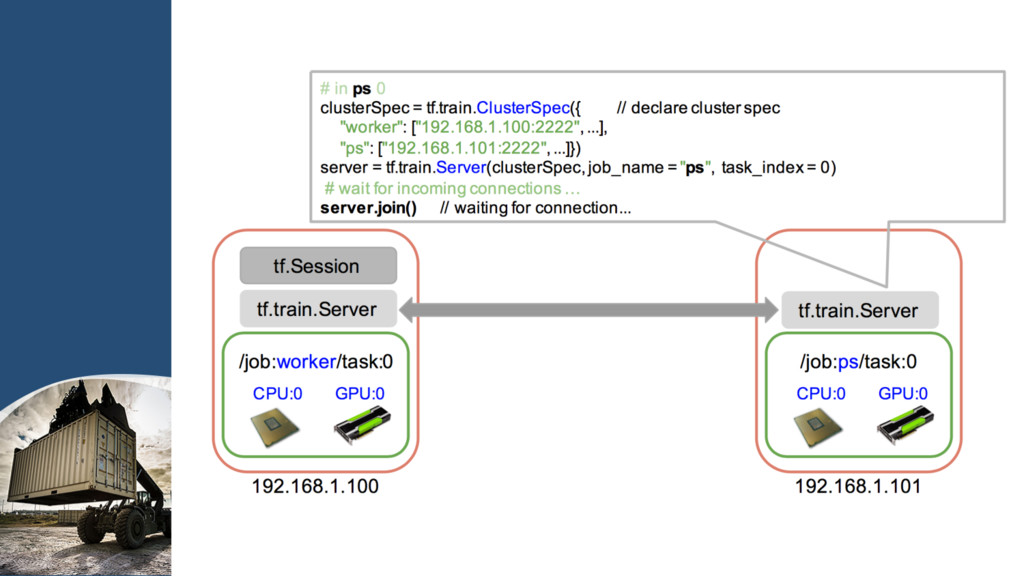
= tf.constant(2) c = tf.constant(3) d = tf.constant(4) add1 = tf.add(a, b) mul1 = tf.multiply(b, c) add2 = tf.add(c, d) output = tf.add(add1, mul1) with tf.Session() as sess: print sess.run(output)
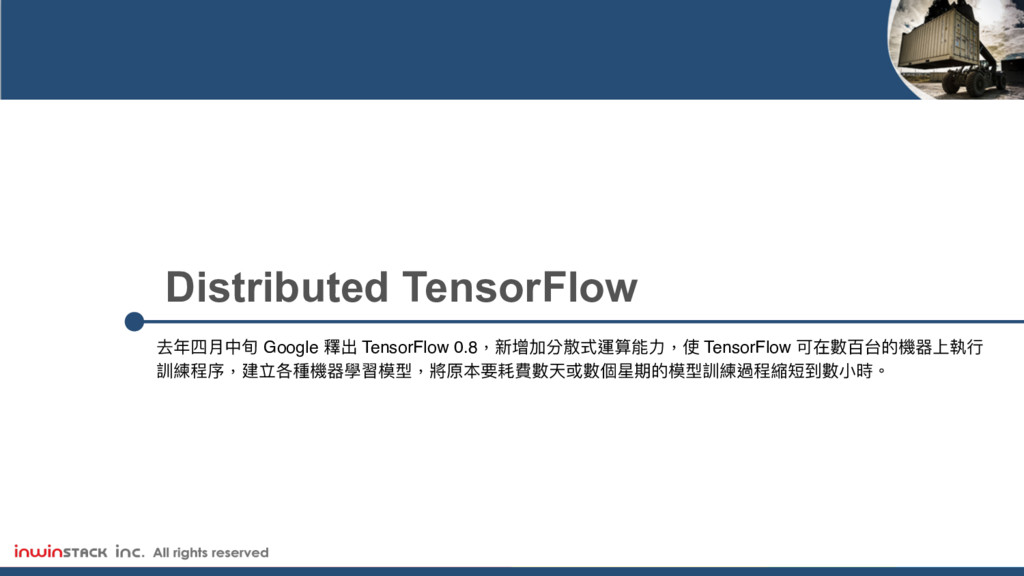
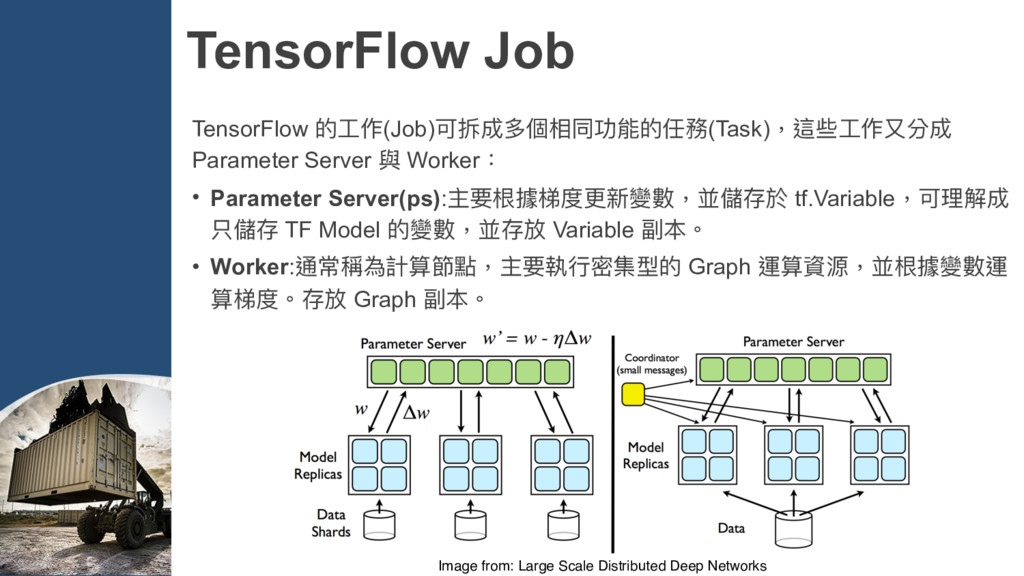
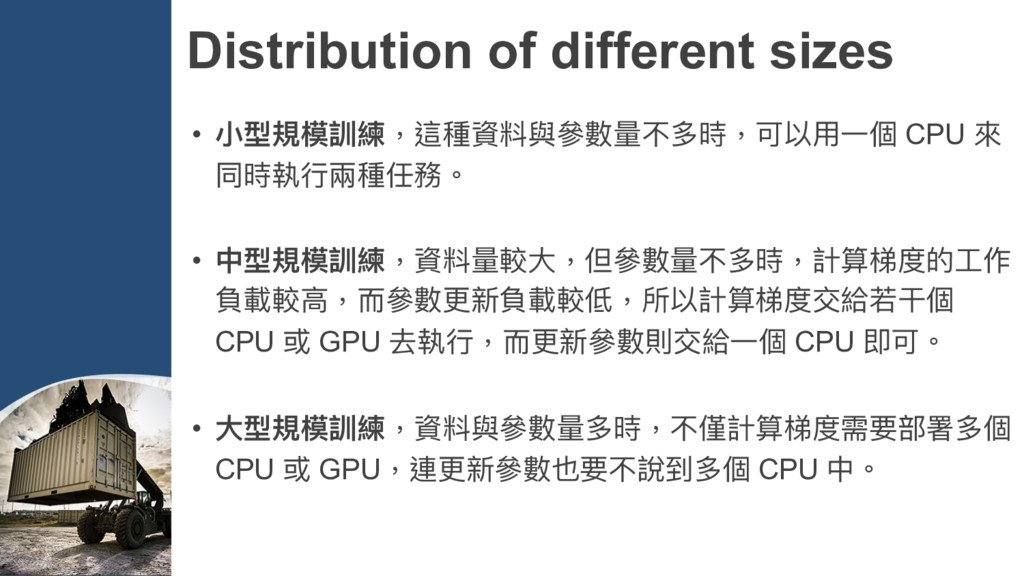
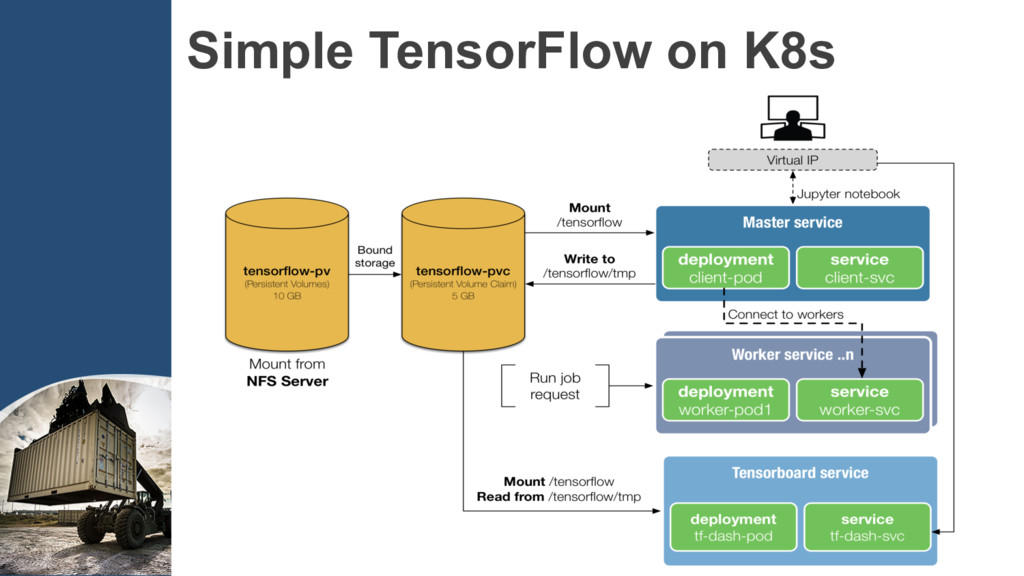
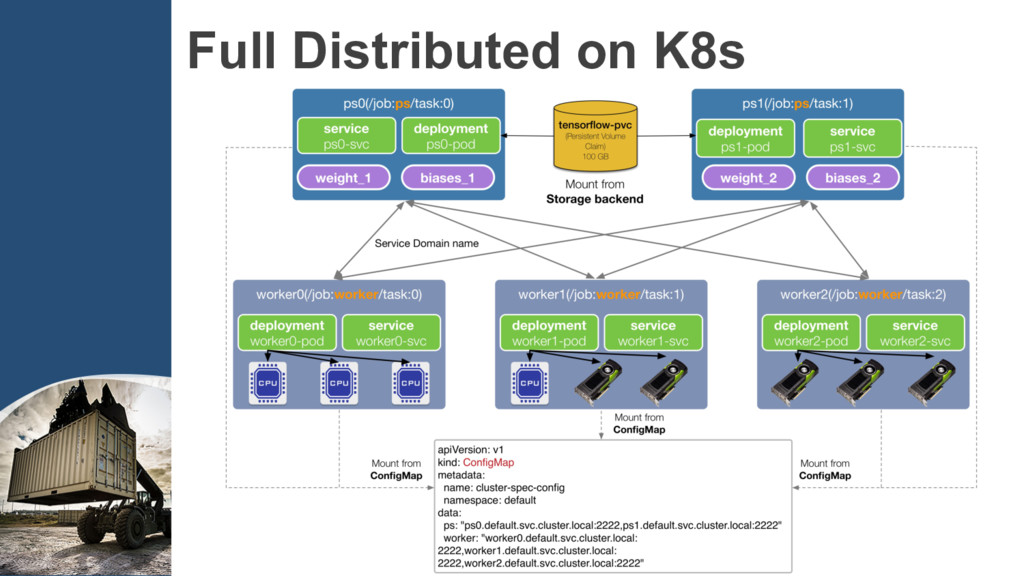
中型規模訓練,資料量量較⼤大,但參參數量量不多時,計算梯度的⼯工作 負載較⾼高,⽽而參參數更更新負載較低,所以計算梯度交給若若⼲干個 CPU 或 GPU 去執⾏行行,⽽而更更新參參數則交給⼀一個 CPU 即可。 • ⼤大型規模訓練,資料與參參數量量多時,不僅計算梯度需要部署多個 CPU 或 GPU,連更更新參參數也要不說到多個 CPU 中。
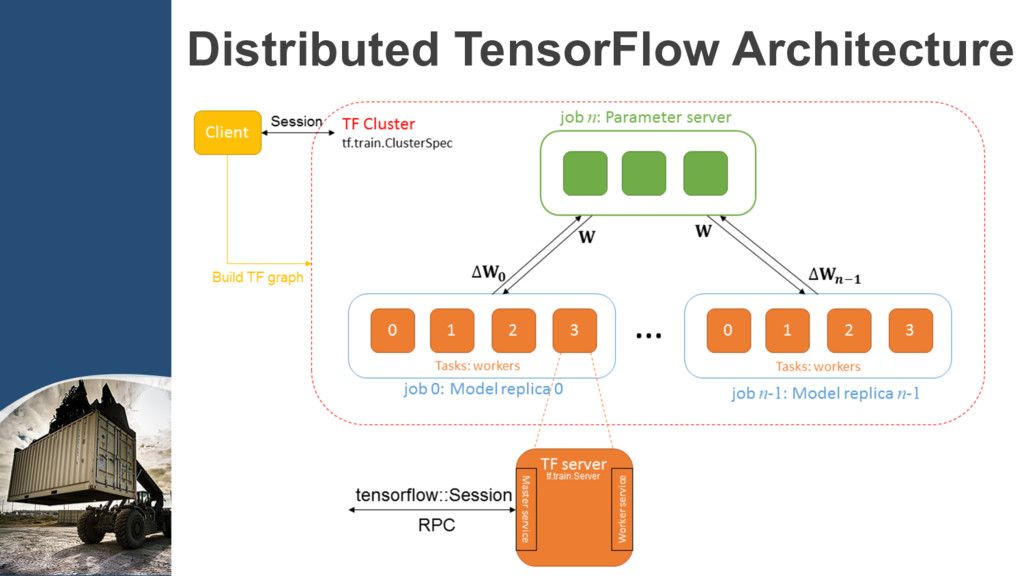
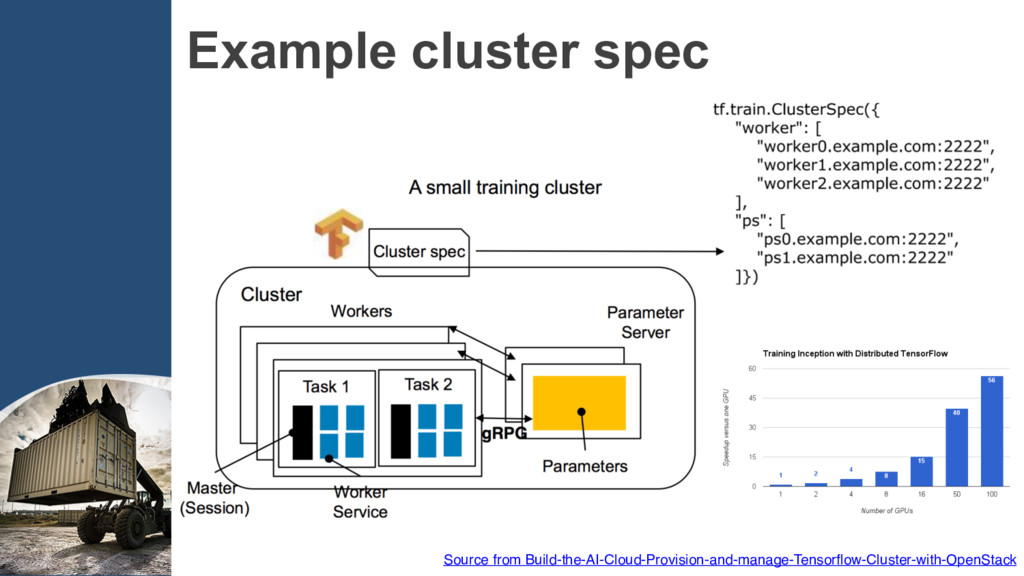
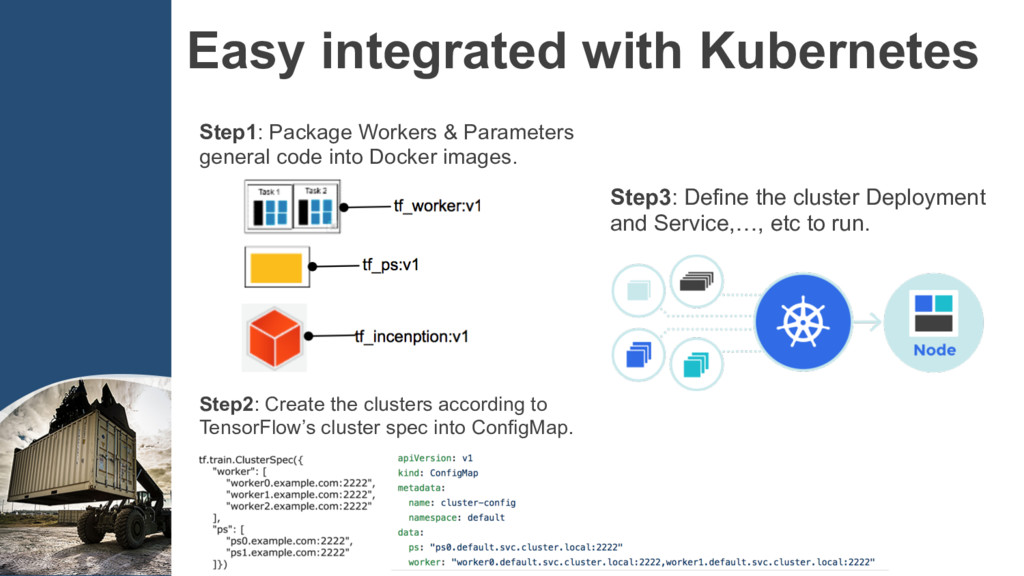
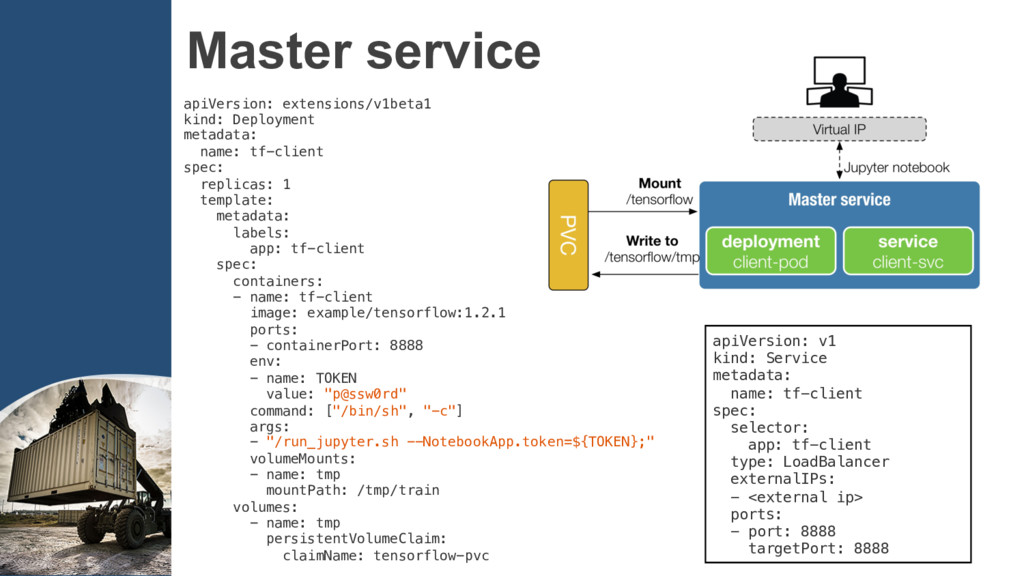
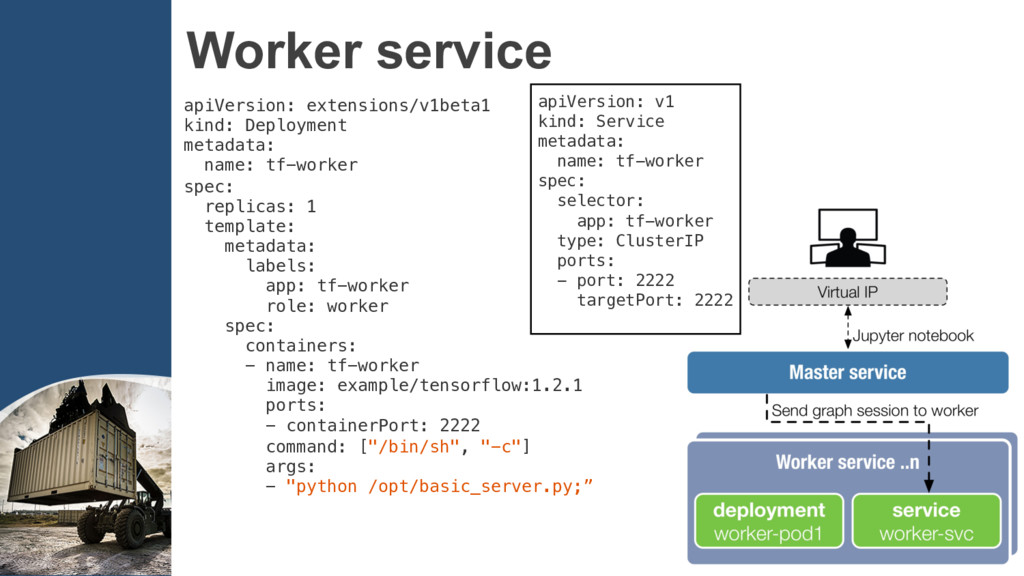
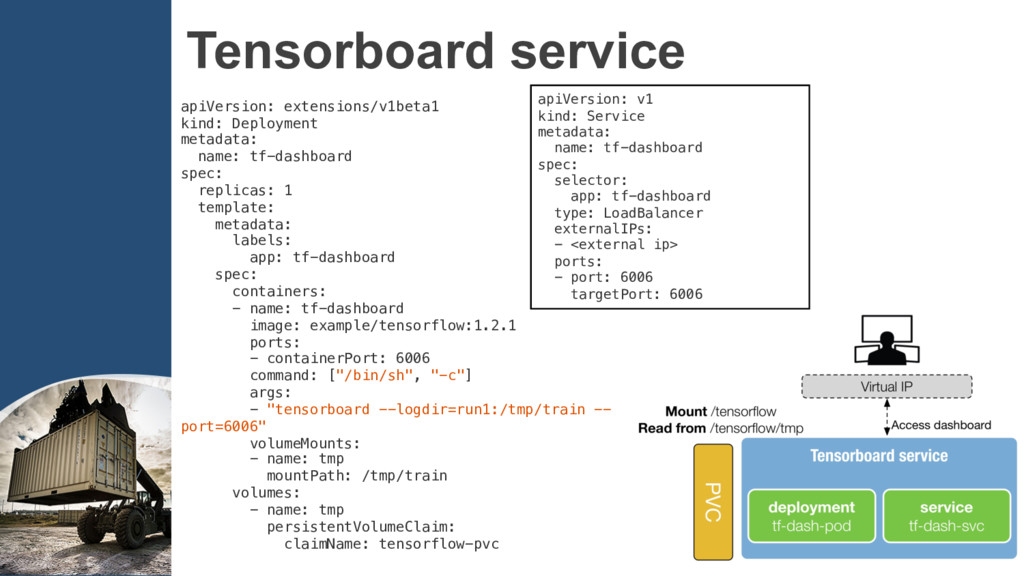
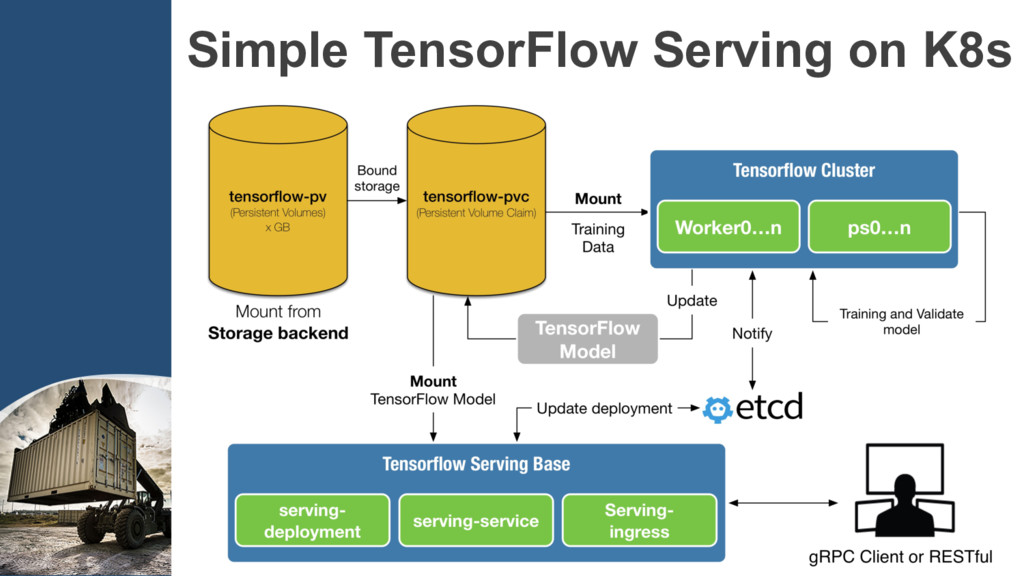
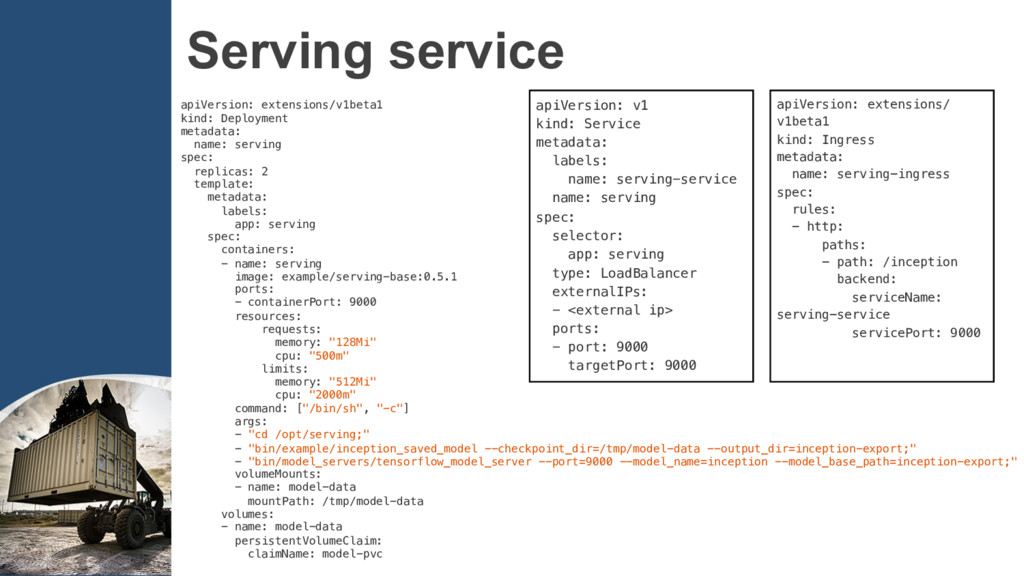
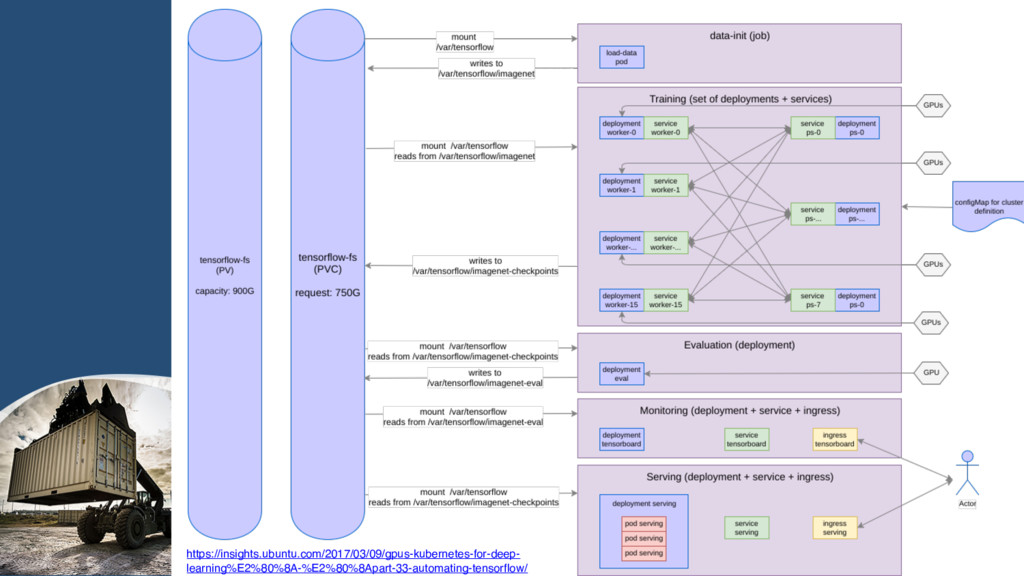
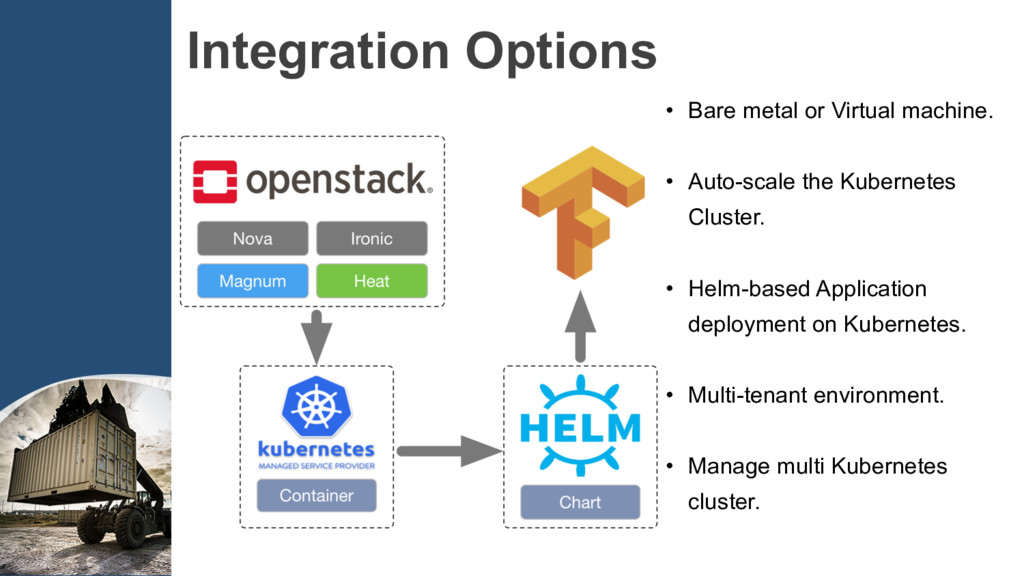
code into Docker images. Step2: Create the clusters according to TensorFlow’s cluster spec into ConfigMap. Step3: Define the cluster Deployment and Service,…, etc to run.

 SiteGround - Reliable hosting with speed, security, and support you can count on.


 kairen
 kentapapa
 genda
genda
 yuuuuuuu168
 puhitaku
 satoshi7
 pfn
pfn
 kash1064
 koukihosaka
 ymotongpoo
 teamlab
 sh_fk2
 kenichiodo
 sachag
 khoart
 akademiya2063
 bethany
 akosma
 bcantrill
 rocio
rocio
 jonoalderson
 tammyeverts
 reverentgeek
 hannesfritz
 baasie