Upgrade to Pro — share decks privately, control downloads, hide ads and more …

Data science application in art & music industry

Avatar for KandariSrishti KandariSrishti
September 27, 2024
17

Data science application in art & music industry

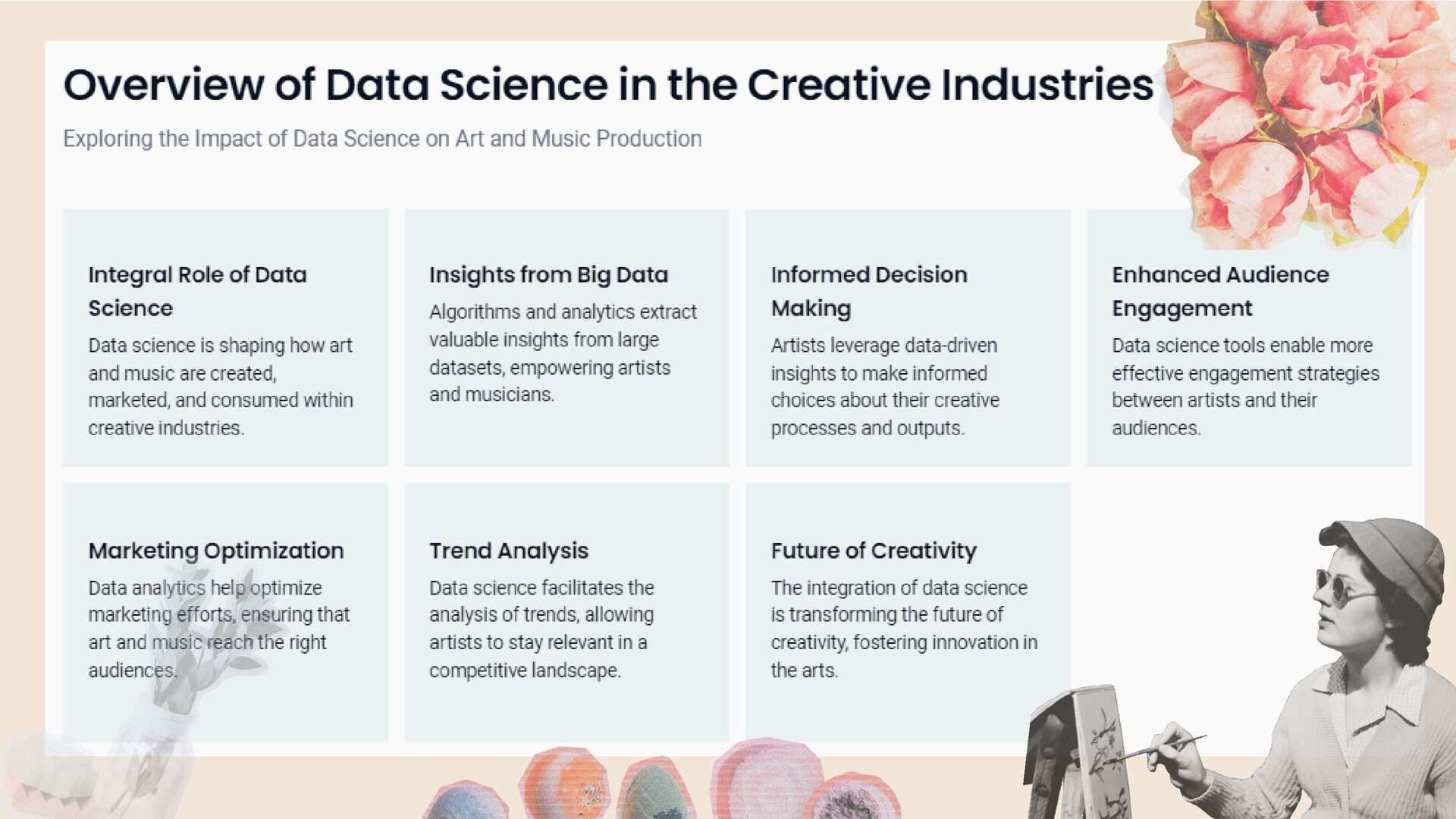
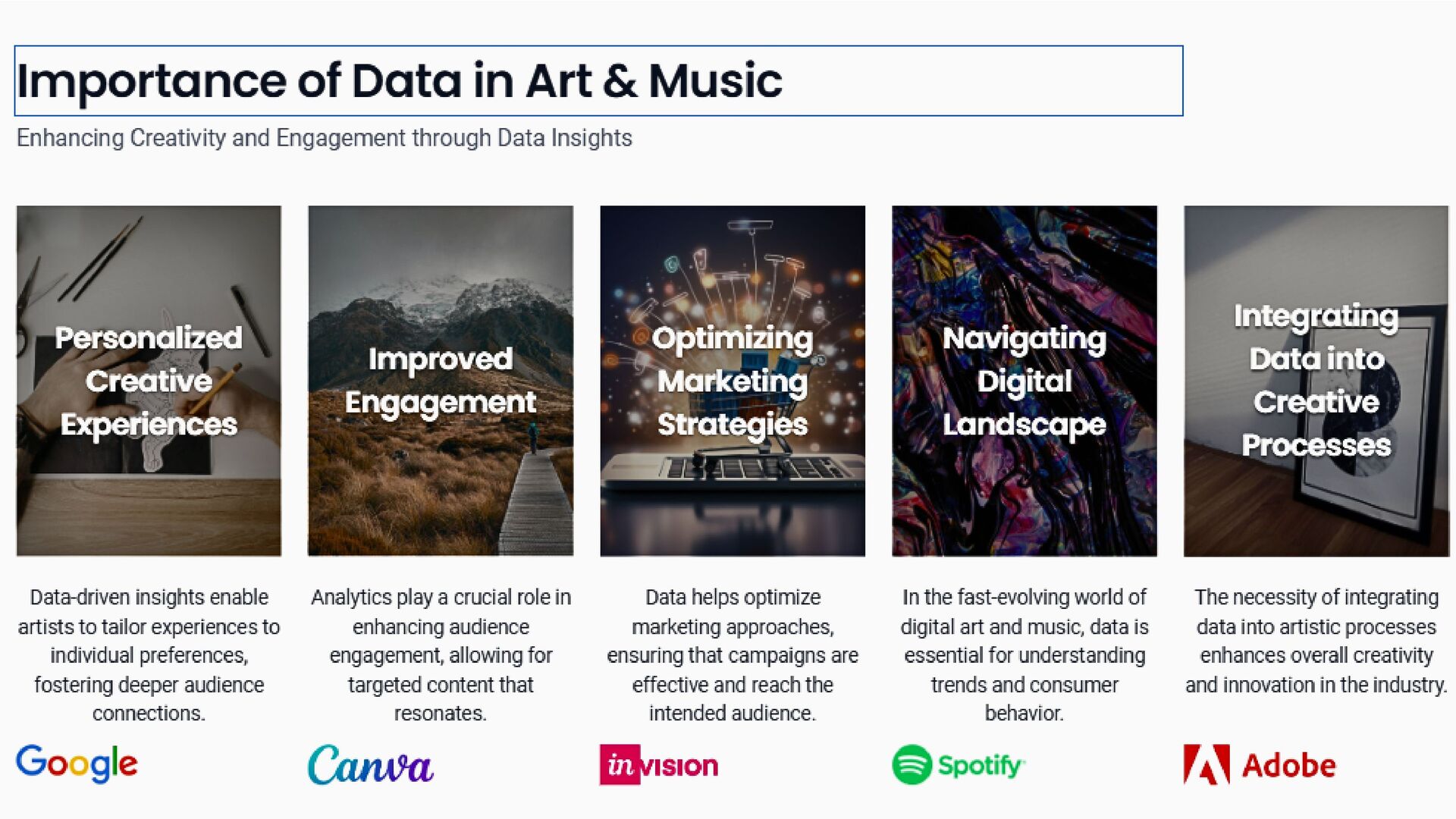
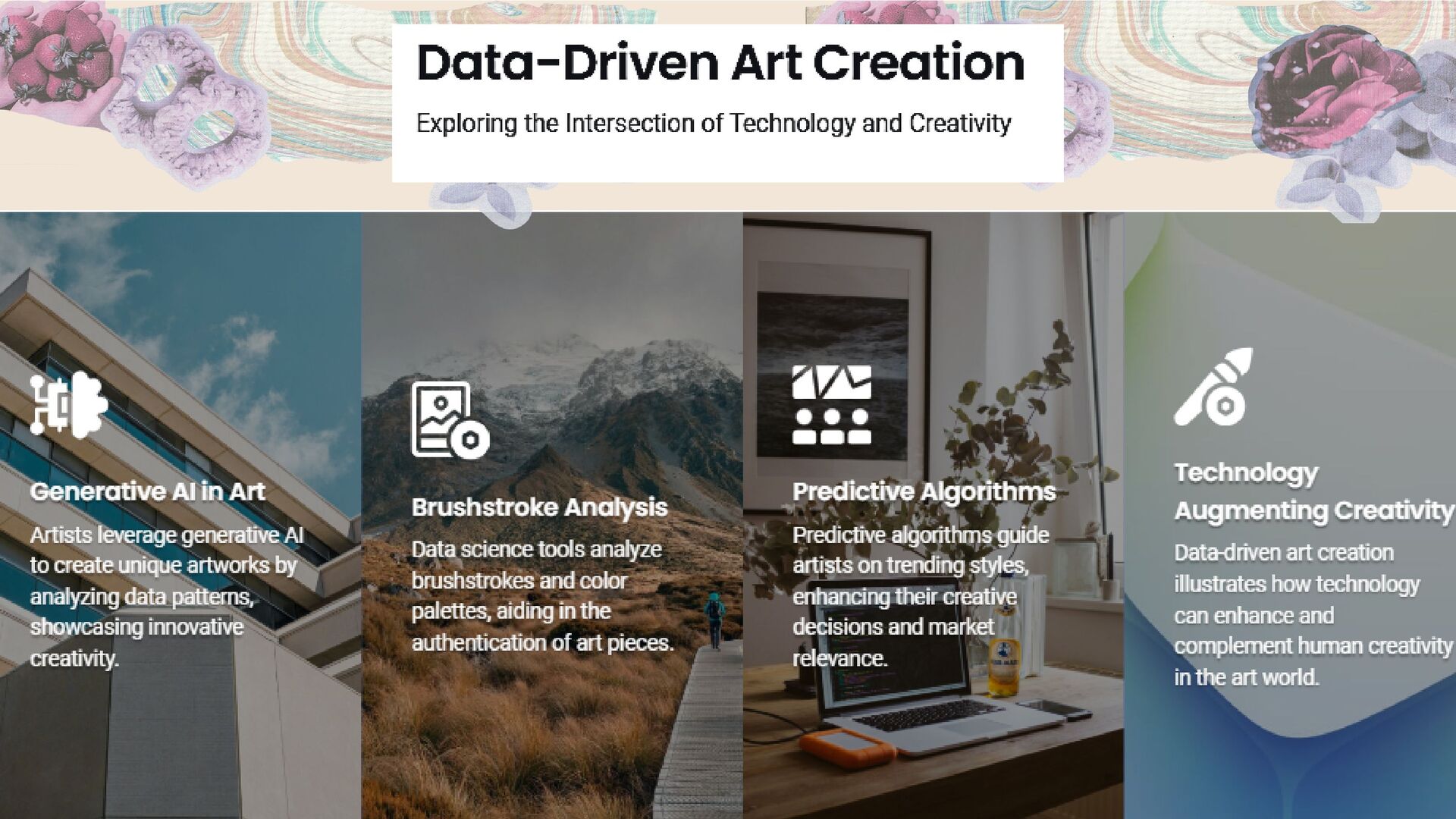
Hello! This presentation explores how data science is revolutionizing the art and music sectors. From analyzing audience preferences to optimizing marketing strategies, data-driven insights are enhancing creativity and engagement. We’ll look at real-world applications, innovative tools, and the future of this intersection between technology and artistry. Let’s dive in!

Avatar for KandariSrishti

KandariSrishti

September 27, 2024

Transcript

  1. Visitor Demographics: Analyzing data on age, gender, and location helps

    curators understand who is attending, allowing for tailored programming and marketing strategies. Behavior Tracking: Data collected from sensors or mobile apps can track visitor movements, time spent at exhibits, and popular pathways, informing future layouts and design. Engagement Measurement: By analyzing social media interactions, surveys, and feedback, institutions can gauge audience engagement levels and identify which exhibits resonate most. Predictive Analytics: Data science can forecast attendance patterns based on historical data, helping in resource allocation and event planning. Personalization: Using data to create personalized experiences, such as targeted recommendations for exhibits based on past visits or interests, can enhance visitor satisfaction. Visitor Segmentation: Segmenting audiences based on behavior and preferences allows for more effective marketing and tailored programming for different groups. Longitudinal Studies: Tracking changes in audience behavior and preferences over time helps institutions adapt to evolving trends and interests.
  2. Comprehensive Documentation: Data science helps in creating detailed digital records

    for each piece of art or music, including provenance, historical context, and attribution. Automated Data Entry: Machine learning algorithms can assist in automating the cataloging process by extracting relevant information from various sources, such as exhibition catalogs, auction records, and academic publications. Enhanced Searchability: Implementing advanced search algorithms and natural language processing allows users to easily search and retrieve specific items based on various criteria, including artist, style, period, or theme. Interlinking Collections: Data science enables the integration of collections across institutions, linking related works and providing a more comprehensive understanding of art and music history. Data Visualization: Visualizing trends in collections, such as changes in styles over time or the evolution of musical genres, can offer insights into historical movements and cultural shifts. Digital Cataloging and Metadata Management