How Remote Asset Management Reduces Costs and Improves Efficiency
By leveraging advanced technologies such as IoT (Internet of Things), AI-driven analytics, and cloud-based platforms, businesses can now monitor, control, and optimize their assets from anywhere in the world.
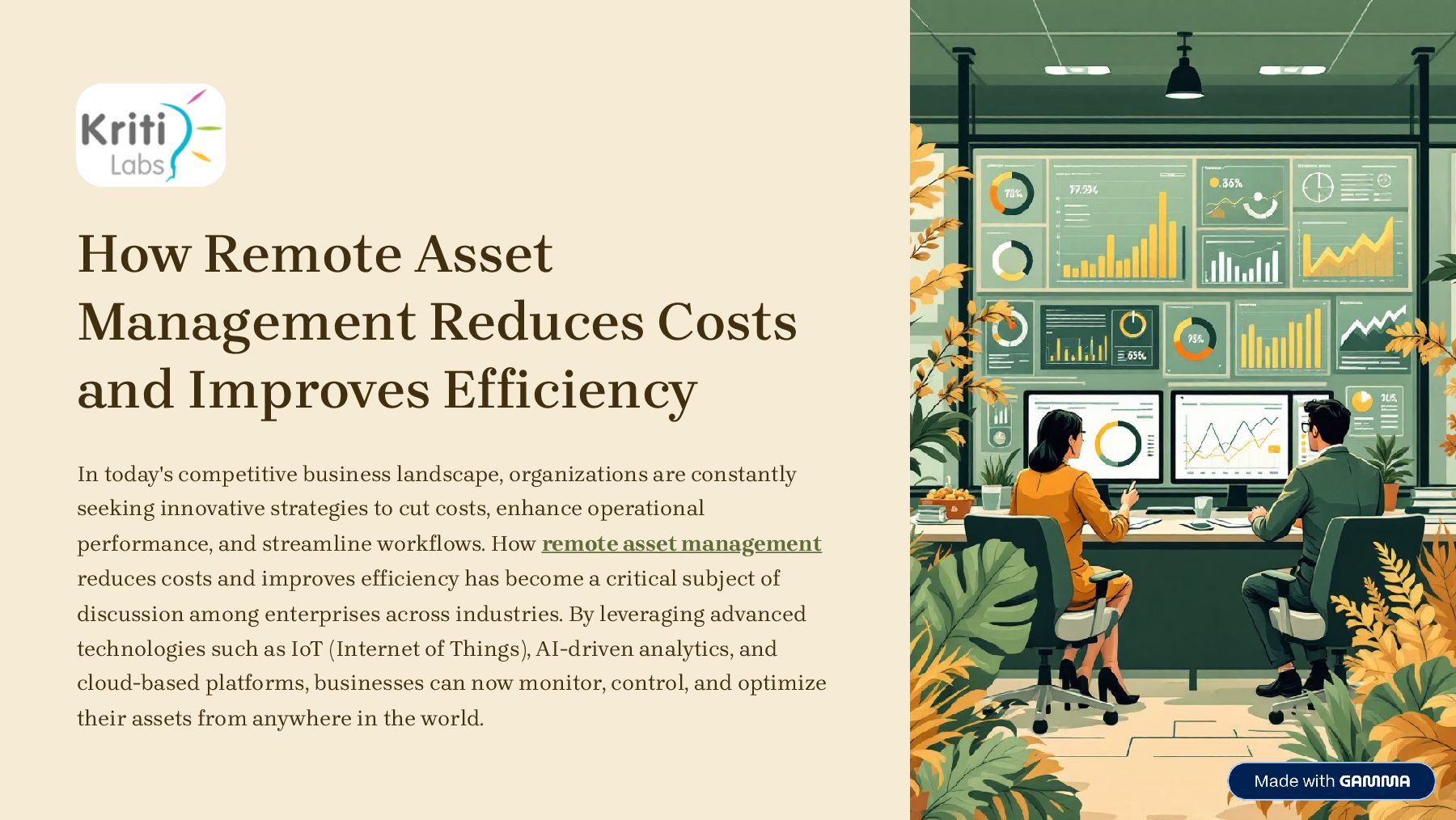
today's competitive business landscape, organizations are constantly seeking innovative strategies to cut costs, enhance operational performance, and streamline workflows. How remote asset management reduces costs and improves efficiency has become a critical subject of discussion among enterprises across industries. By leveraging advanced technologies such as IoT (Internet of Things), AI-driven analytics, and cloud-based platforms, businesses can now monitor, control, and optimize their assets from anywhere in the world.
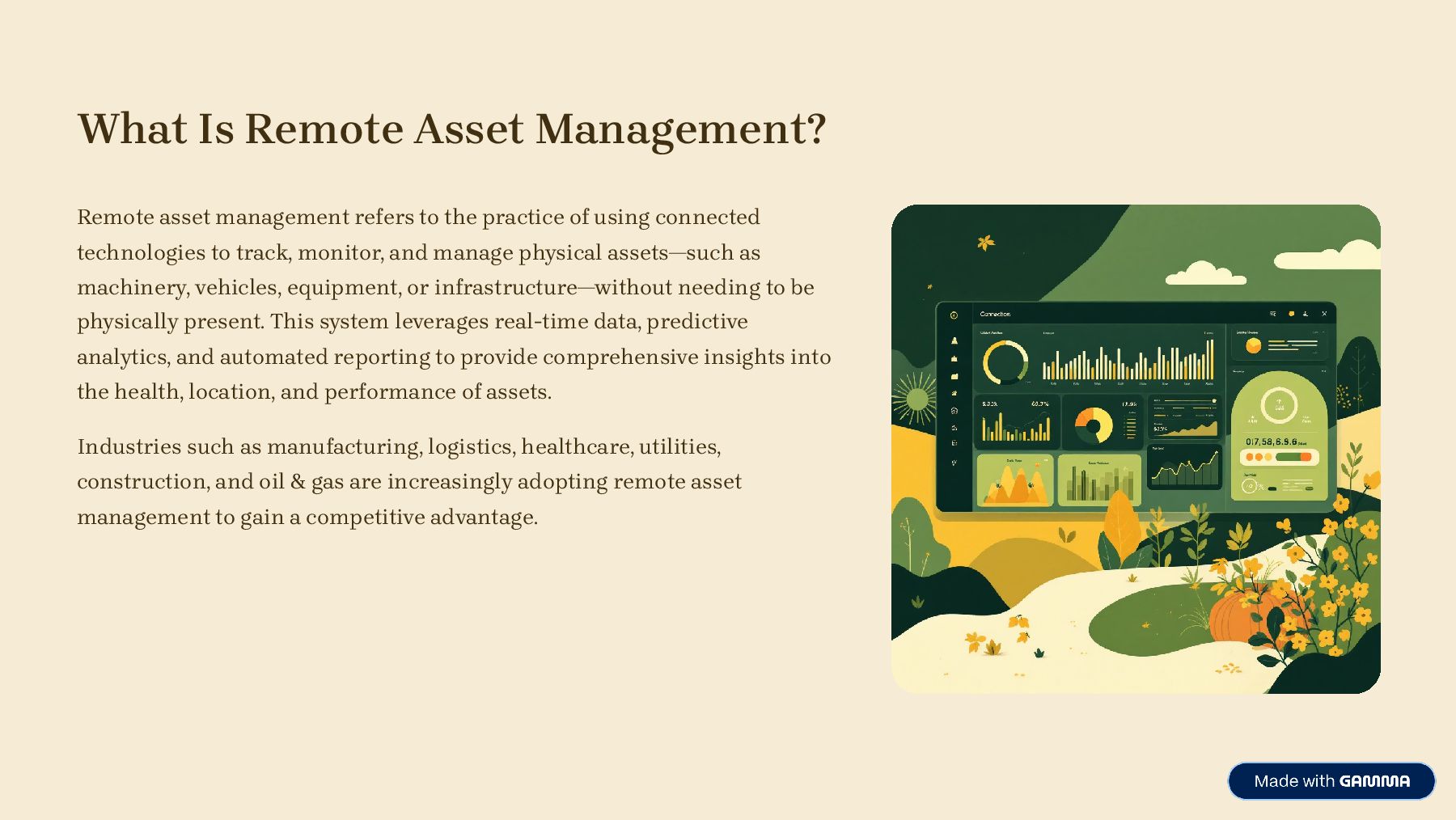
the practice of using connected technologies to track, monitor, and manage physical assets4such as machinery, vehicles, equipment, or infrastructure4without needing to be physically present. This system leverages real-time data, predictive analytics, and automated reporting to provide comprehensive insights into the health, location, and performance of assets. Industries such as manufacturing, logistics, healthcare, utilities, construction, and oil & gas are increasingly adopting remote asset management to gain a competitive advantage.
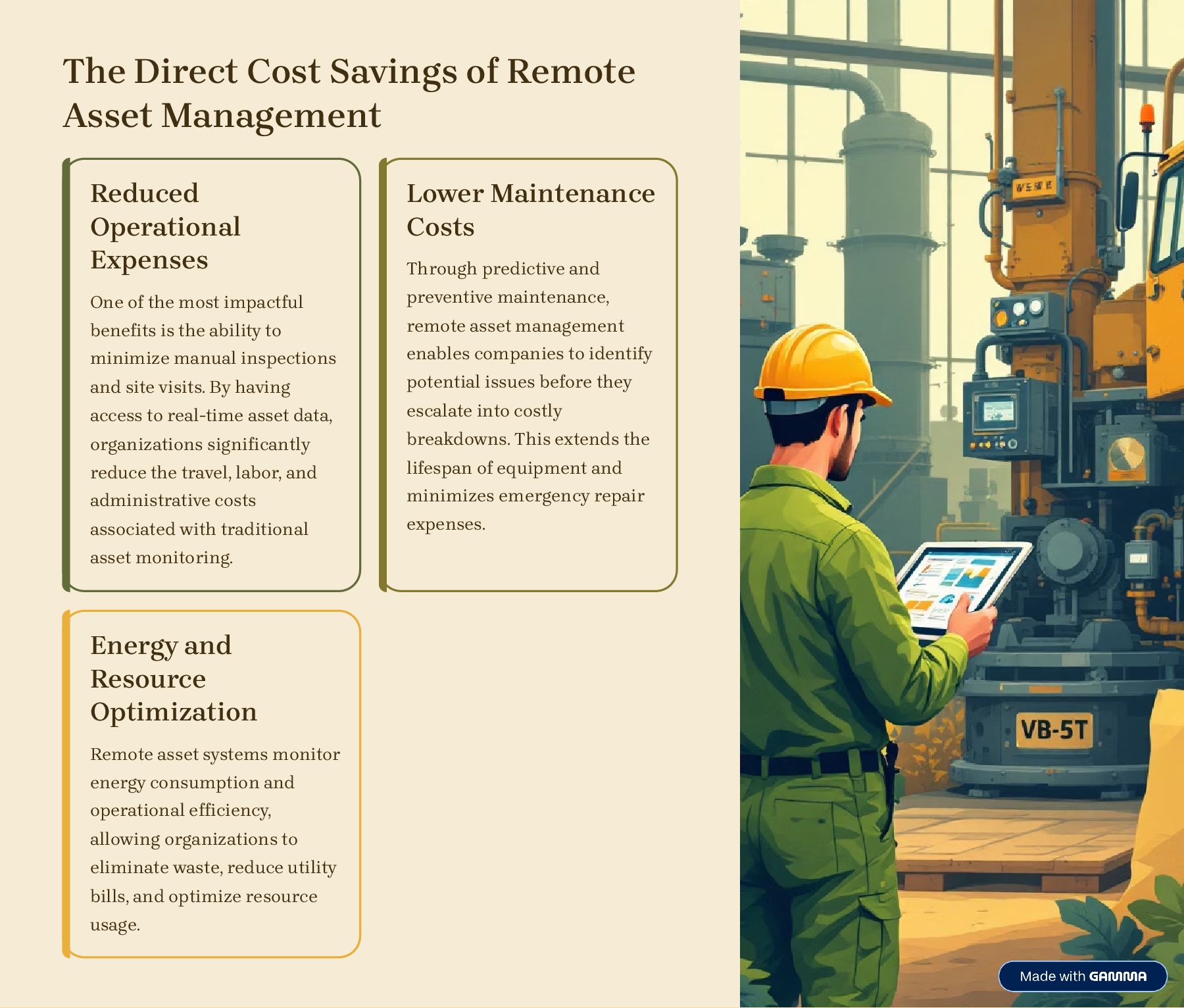
Expenses One of the most impactful benefits is the ability to minimize manual inspections and site visits. By having access to real-time asset data, organizations significantly reduce the travel, labor, and administrative costs associated with traditional asset monitoring. Lower Maintenance Costs Through predictive and preventive maintenance, remote asset management enables companies to identify potential issues before they escalate into costly breakdowns. This extends the lifespan of equipment and minimizes emergency repair expenses. Energy and Resource Optimization Remote asset systems monitor energy consumption and operational efficiency, allowing organizations to eliminate waste, reduce utility bills, and optimize resource usage.
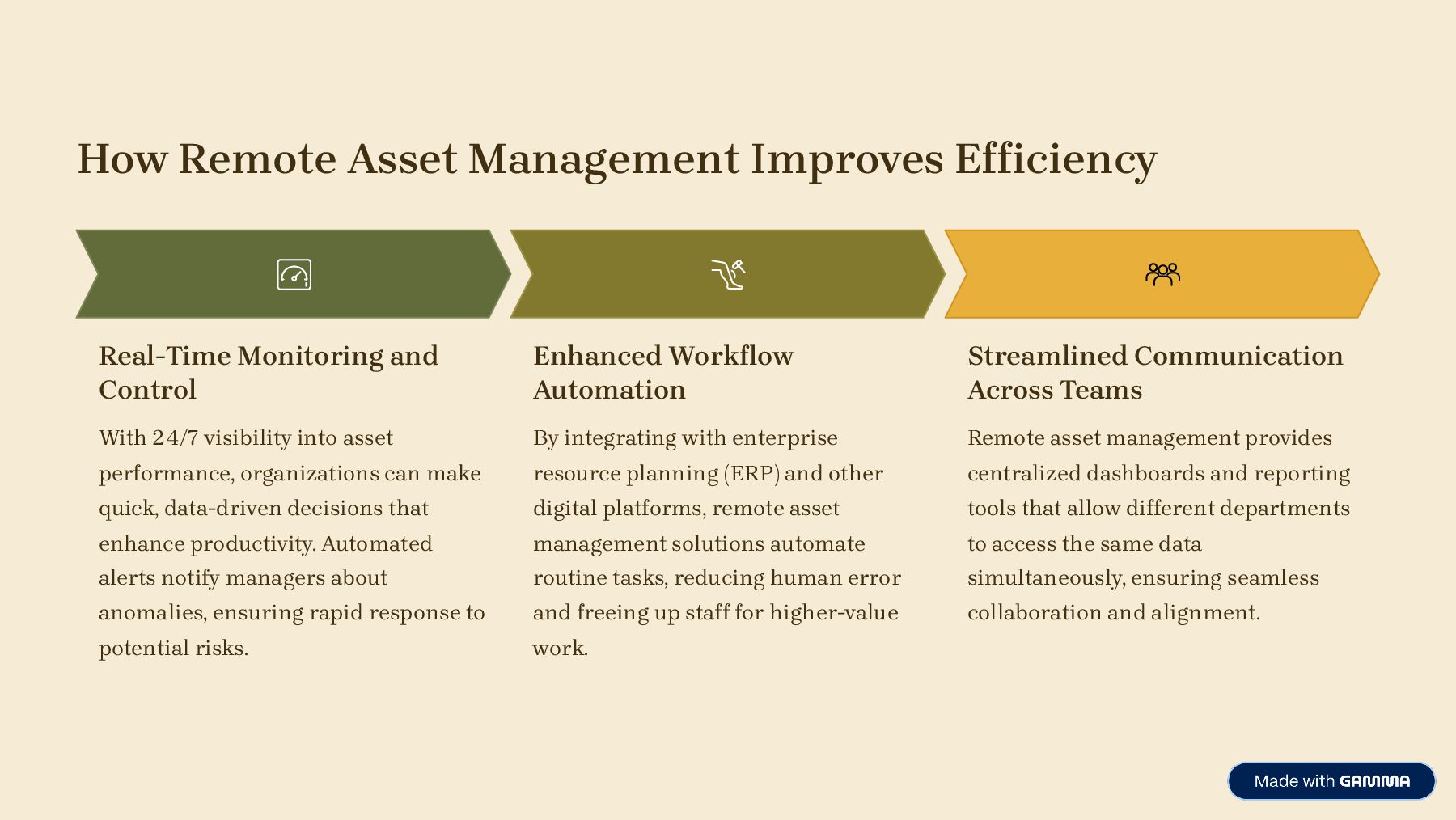
With 24/7 visibility into asset performance, organizations can make quick, data-driven decisions that enhance productivity. Automated alerts notify managers about anomalies, ensuring rapid response to potential risks. Enhanced Workflow Automation By integrating with enterprise resource planning (ERP) and other digital platforms, remote asset management solutions automate routine tasks, reducing human error and freeing up staff for higher-value work. Streamlined Communication Across Teams Remote asset management provides centralized dashboards and reporting tools that allow different departments to access the same data simultaneously, ensuring seamless collaboration and alignment.
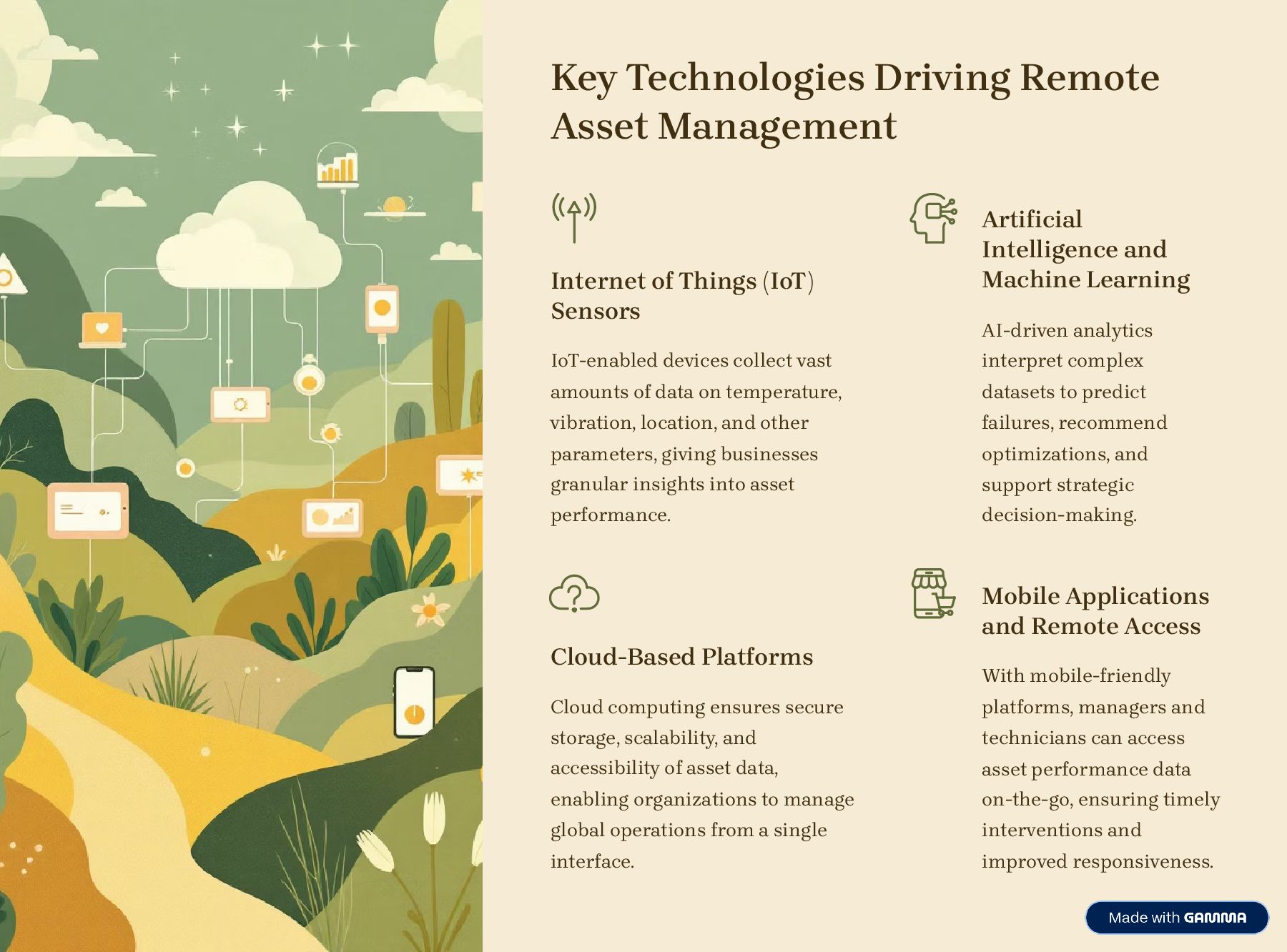
Sensors IoT-enabled devices collect vast amounts of data on temperature, vibration, location, and other parameters, giving businesses granular insights into asset performance. Cloud-Based Platforms Cloud computing ensures secure storage, scalability, and accessibility of asset data, enabling organizations to manage global operations from a single interface. Artificial Intelligence and Machine Learning AI-driven analytics interpret complex datasets to predict failures, recommend optimizations, and support strategic decision-making. Mobile Applications and Remote Access With mobile-friendly platforms, managers and technicians can access asset performance data on-the-go, ensuring timely interventions and improved responsiveness.
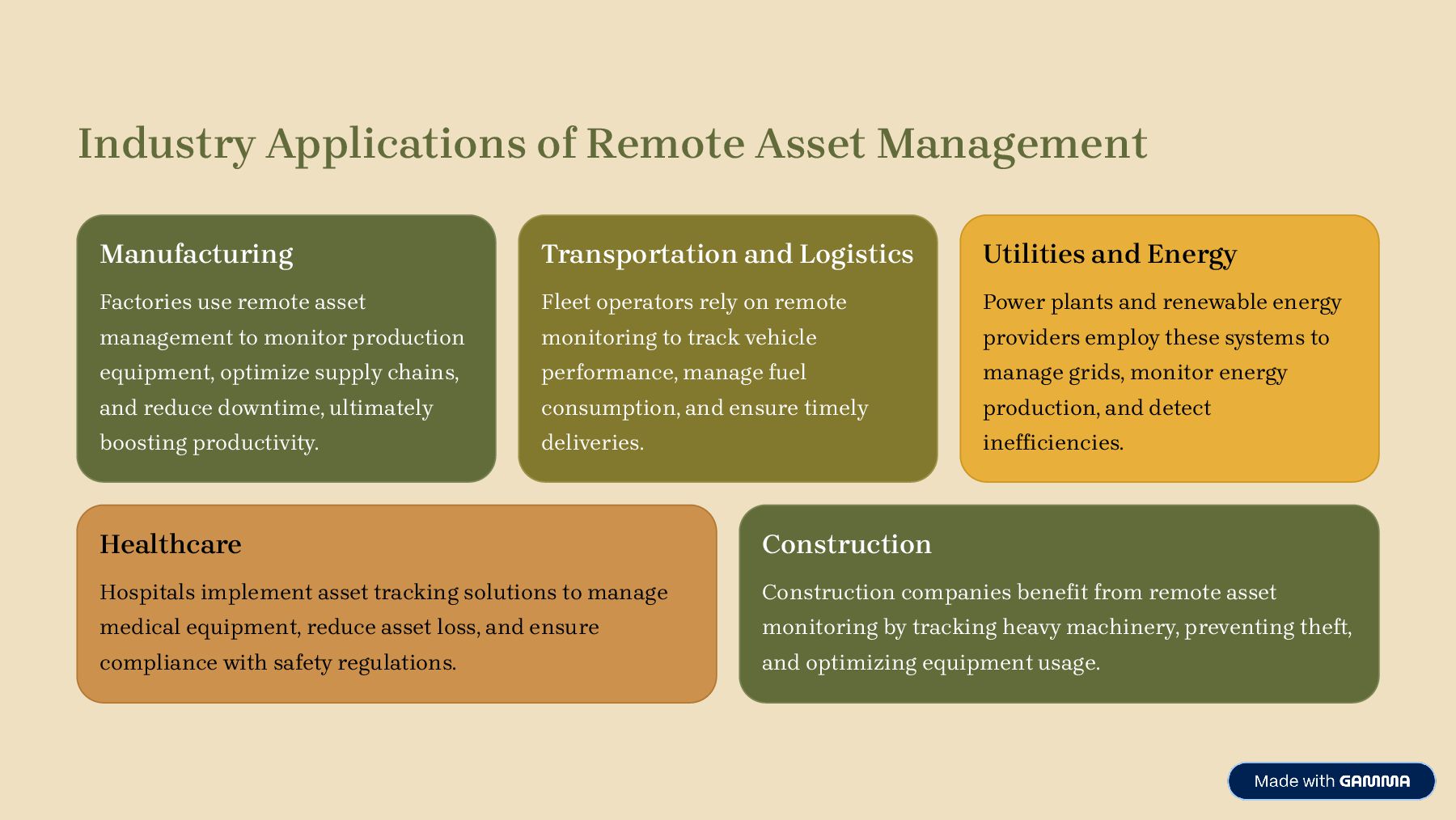
asset management to monitor production equipment, optimize supply chains, and reduce downtime, ultimately boosting productivity. Transportation and Logistics Fleet operators rely on remote monitoring to track vehicle performance, manage fuel consumption, and ensure timely deliveries. Utilities and Energy Power plants and renewable energy providers employ these systems to manage grids, monitor energy production, and detect inefficiencies. Healthcare Hospitals implement asset tracking solutions to manage medical equipment, reduce asset loss, and ensure compliance with safety regulations. Construction Construction companies benefit from remote asset monitoring by tracking heavy machinery, preventing theft, and optimizing equipment usage.
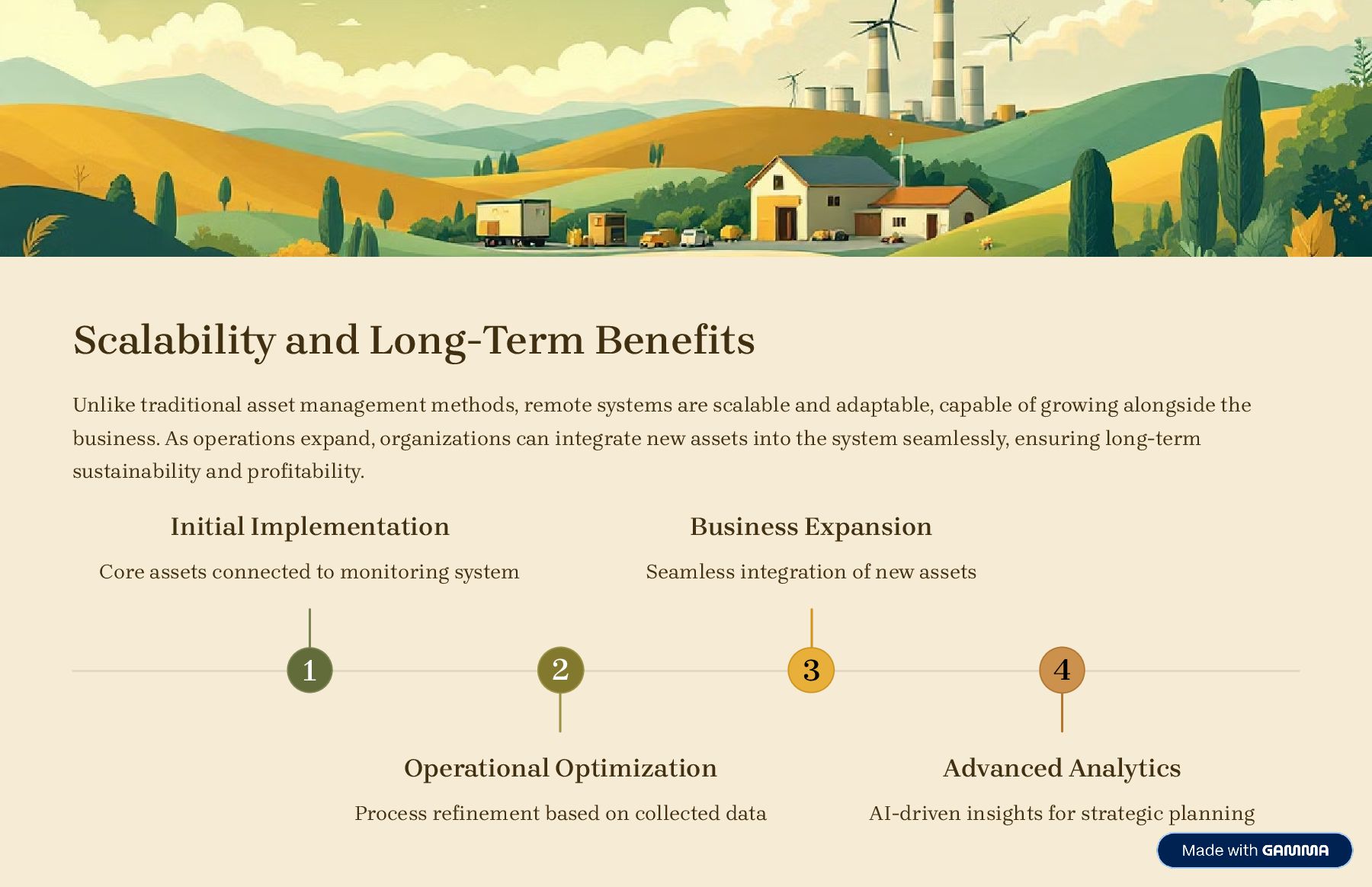
systems are scalable and adaptable, capable of growing alongside the business. As operations expand, organizations can integrate new assets into the system seamlessly, ensuring long-term sustainability and profitability. 1 Initial Implementation Core assets connected to monitoring system 2 Operational Optimization Process refinement based on collected data 3 Business Expansion Seamless integration of new assets 4 Advanced Analytics AI-driven insights for strategic planning
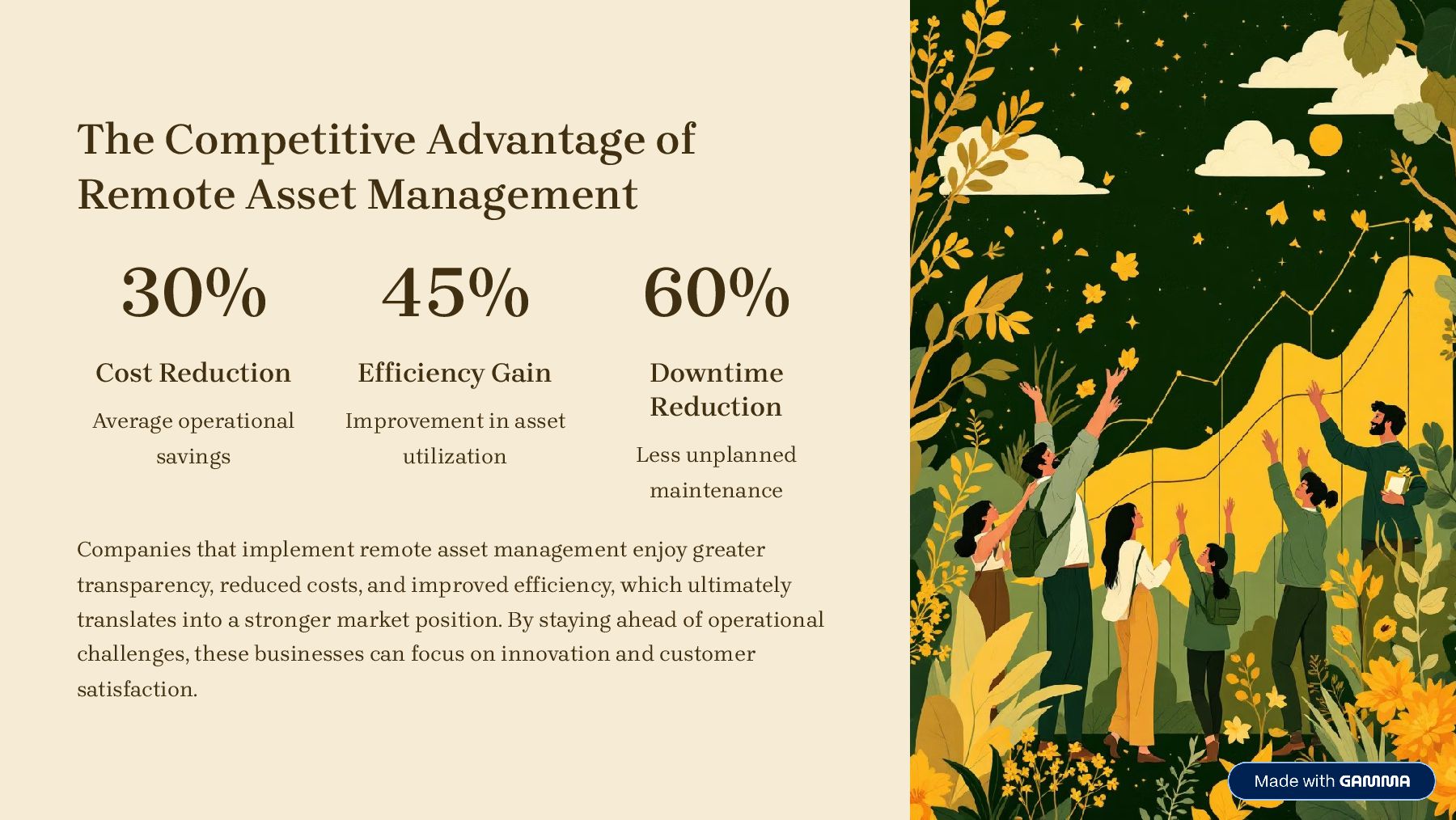
Average operational savings 45% Efficiency Gain Improvement in asset utilization 60% Downtime Reduction Less unplanned maintenance Companies that implement remote asset management enjoy greater transparency, reduced costs, and improved efficiency, which ultimately translates into a stronger market position. By staying ahead of operational challenges, these businesses can focus on innovation and customer satisfaction.
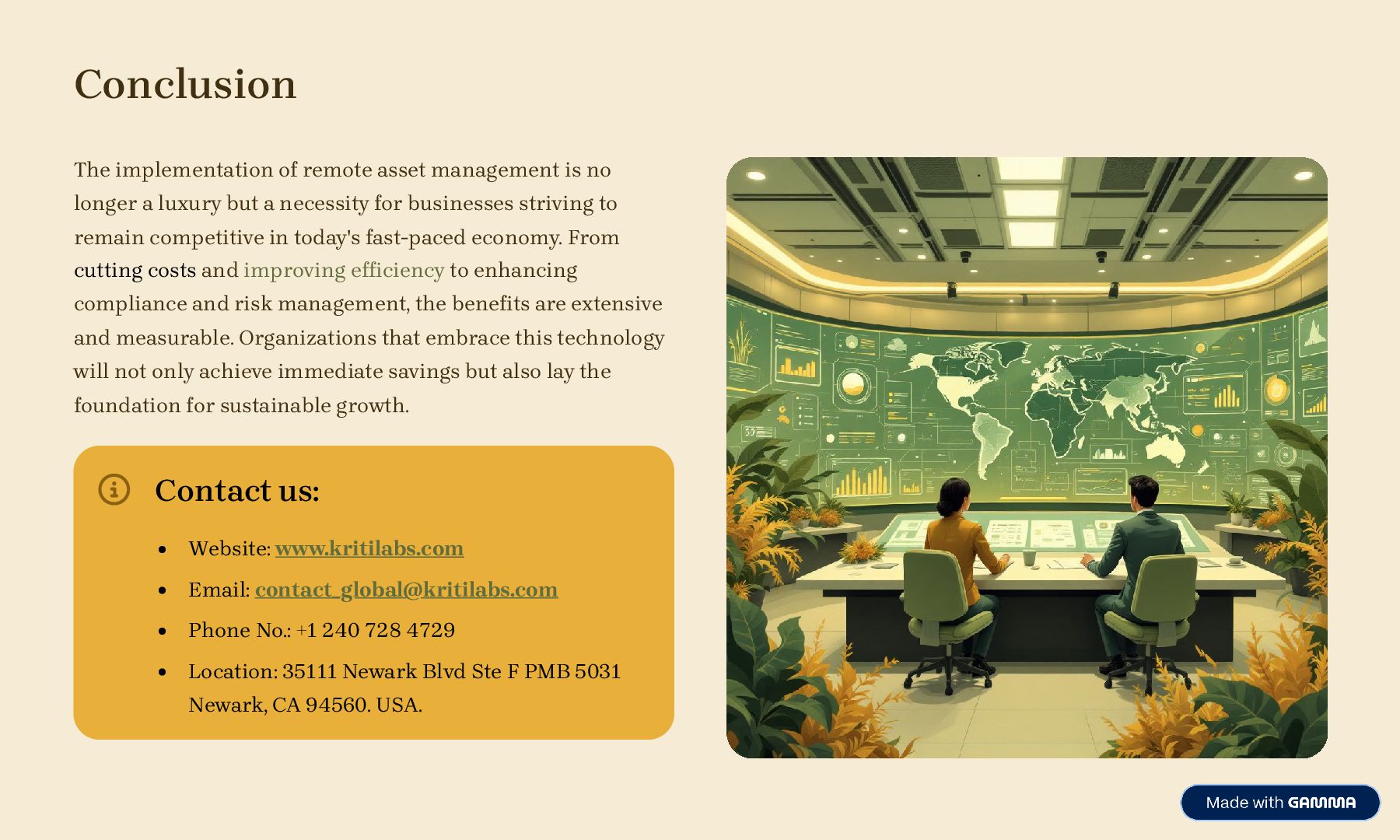
a luxury but a necessity for businesses striving to remain competitive in today's fast-paced economy. From cutting costs and improving efficiency to enhancing compliance and risk management, the benefits are extensive and measurable. Organizations that embrace this technology will not only achieve immediate savings but also lay the foundation for sustainable growth. Contact us: Website: www.kritilabs.com Email: [email protected] Phone No.: +1 240 728 4729 Location: 35111 Newark Blvd Ste F PMB 5031 Newark, CA 94560. USA.

.jpg)

.jpg)
.jpg) kirtilabs
kirtilabs
 glaforge
 takahashim
 carta_engineering
 yazm
yazm
 bitkey
 keeg
keeg
 jyouryuusui
 puhitaku
 tsukina_7mochi
 gogutan
 shumei_ito
 kairim0
 cassininazir
 mraible
 addyosmani
 watany
 tammyeverts
 mlcsv
mlcsv
 ryanjones
 michaelherold
 oripsolob
 aleyda