Upgrade to Pro — share decks privately, control downloads, hide ads and more …

Kam Kasravi

Kam Kasravi

Gearpump Materializer presented at ReactiveSummit 2016 Austin, Texas

Avatar for Kam Kasravi

Kam Kasravi

October 06, 2016

Other Decks in Technology

Transcript

  1. Technical Presentation • Familiarity with akka-streams flow and graph DSL’s

    • Familiarity with big data and real time streaming platforms • Familiarity with scala • Effort between the akka-streams and Gearpump teams started late last year • Resulted in a number of pull requests into akka-streams to enable different materializers • Close to completion with good support of the akka-streams DSL (all GraphStages) • Fairly seamless to switch between local and distributed
  2. Who am I? • Committer on Apache Gearpump (incubating) -

    http://gearpump.apache.org • Architect on Trusted Analytics Platform (TAP) - http://trustedanalytics.org • Lead or Architect across many companies, industries - NYSE, eBay, PayPal, Yahoo, ... Title Goes Here There are many variations of passages of lorem ipsum available, but the majority suffered alteration some form.
  3. What is Apache Gearpump? • Accepted into Apache incubator last

    March • Similar to Apache Beam and Apache Flink (real-time message delivery) • Heavily leverages the actor model and akka (more so than others) • Unique features like dynamic DAG • Excellent runtime visualization tooling of cluster and application DAGs • One of the best big data performance profiles (both throughput, latency)
  4. Agenda • Why? ◦ Why integrate akka-streams into a big

    data platform? • Big Data platform evolving features ◦ Functionality big data platforms are embracing • Prerequisites needed for any Big Data platform ◦ Minimal features a big data platform must have • Big data platform integration challenges ◦ What concepts do not map well within big data platforms? • Object models: akka-streams, Gearpump • Materialization ◦ ActorMaterializer - materializing the module tree ◦ GearpumpMaterializer - rewriting the module tree
  5. Why? • Akka-streams has limitations inherent within a single JVM

    ◦ Throughput and latency are key big data features that require scaling beyond single JVM’s • Akka-streams DSL is a superset of other big data platform DSLs ◦ Has a logical plan (declarative) that can be transformed to an execution plan (runtime) • Akka-streams programming paradigm is declarative, composable, extensible*, stackable* and reusable* * Provides a level of extensibility and functionality beyond most big data platform DSLs
  6. Extensible • Extend GraphStage • Extend Source, Sink, Flow or

    BidiFlow • All derive from Graph * Provides a level of extensibility and functionality beyond most big data platform DSLs
  7. Stackable • Another term for nestable or recursive. Reference to

    Kleisli (theoretical). • Source, Sink, Flow or BidiFlow may contain their own topologies * Provides a level of extensibility and functionality beyond most big data platform DSLs
  8. Reusable • Graph topologies can be attached anywhere (any Graph)

    • Recent akka-streams feature is dynamic attachment via hubs • Hubs will take advantage of Gearpump dynamic DAG within the GearpumpMaterializer * Provides a level of extensibility and functionality beyond most big data platform DSLs
  9. Big Data platform evolving features (1) • Big data platforms

    are moving to consolidate disparate API’s ◦ Too many APIs: Concord, Flink, Heron, Pulsar, Spark, Storm, Samza ◦ Common DSL is also an approach being taken by Apache Beam ◦ Analogy to SQL - common grammar that different platforms execute
  10. Big Data platform evolving features (2) • Big data platforms

    will increasingly require dynamic pipelines that are compositional and reusable • Examples include: ◦ Machine learning ◦ IoT sensors
  11. Big Data platform evolving features (3) • Machine learning use

    cases ◦ Replace or update scoring models ◦ Model Ensembles ▪ concept drift ▪ data drift
  12. Big Data platform evolving features (4) • IoT use cases

    ◦ Bring new sensors on line with no interruption ◦ Change or update configuration parameters at remote sensors
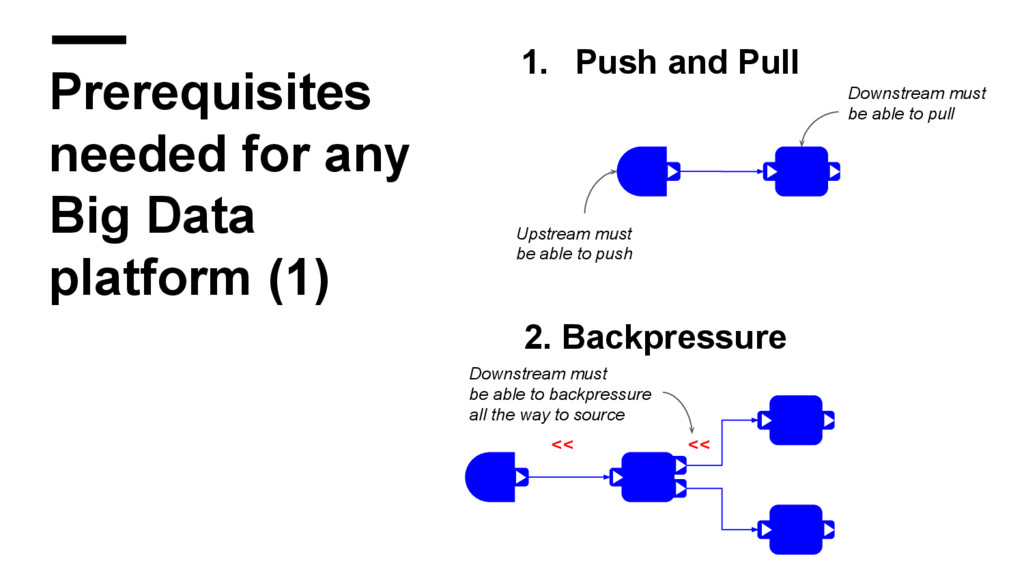
  13. Prerequisites needed for any Big Data platform (1) Downstream must

    be able to pull Upstream must be able to push 1. Push and Pull Downstream must be able to backpressure all the way to source 2. Backpressure << <<
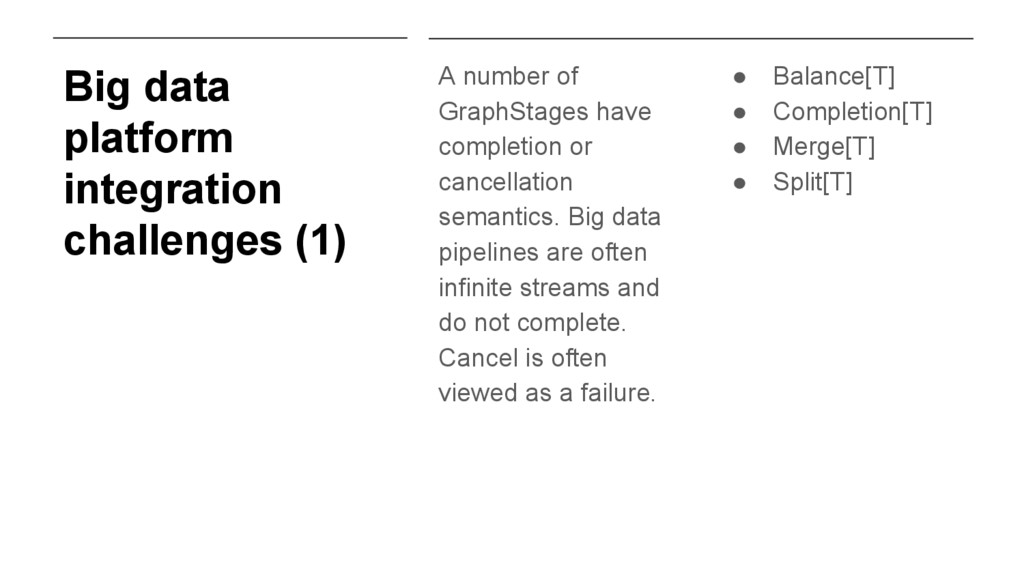
  14. Big data platform integration challenges (1) A number of GraphStages

    have completion or cancellation semantics. Big data pipelines are often infinite streams and do not complete. Cancel is often viewed as a failure. • Balance[T] • Completion[T] • Merge[T] • Split[T]
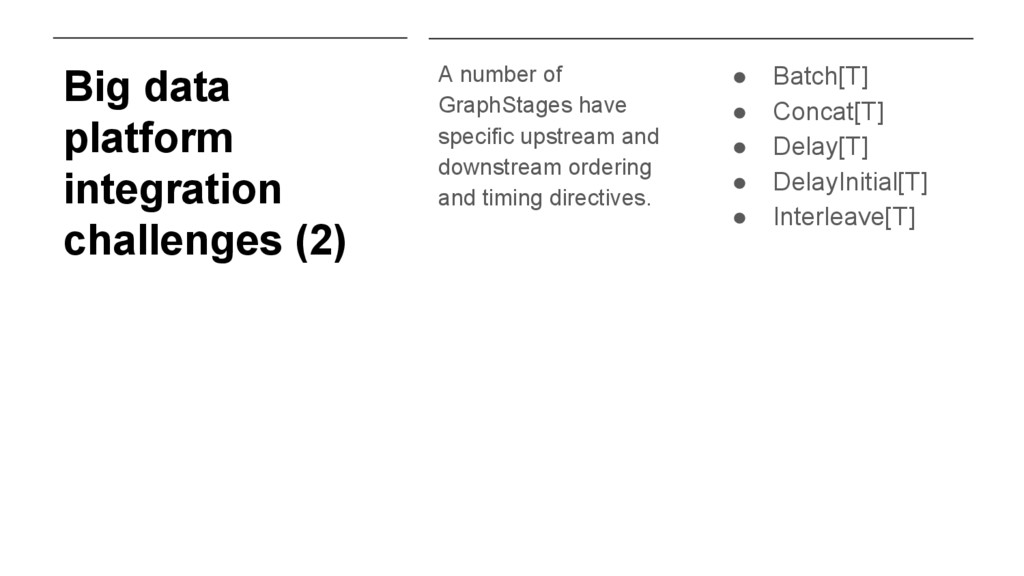
  15. Big data platform integration challenges (2) A number of GraphStages

    have specific upstream and downstream ordering and timing directives. • Batch[T] • Concat[T] • Delay[T] • DelayInitial[T] • Interleave[T]
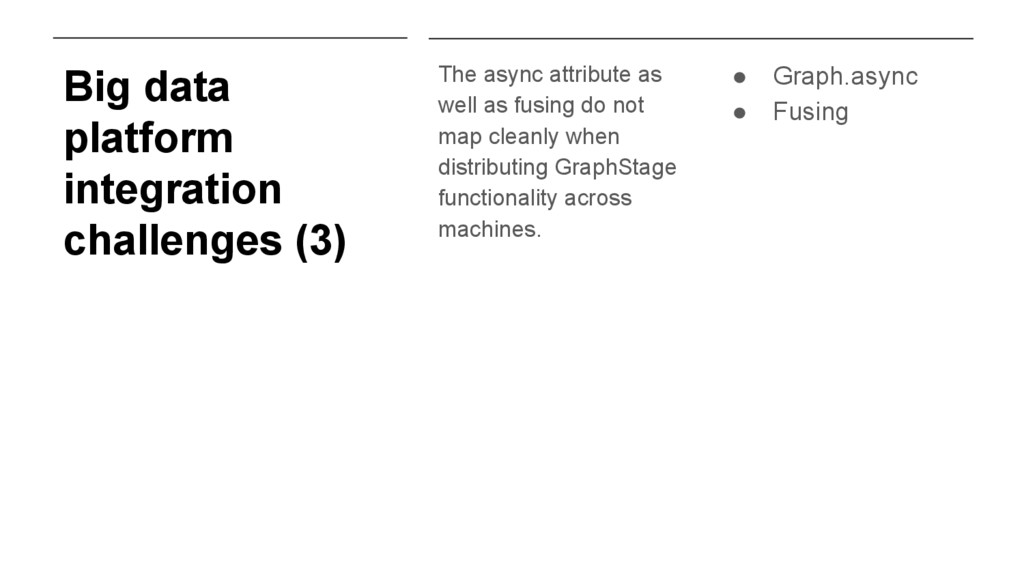
  16. Big data platform integration challenges (3) The async attribute as

    well as fusing do not map cleanly when distributing GraphStage functionality across machines. • Graph.async • Fusing
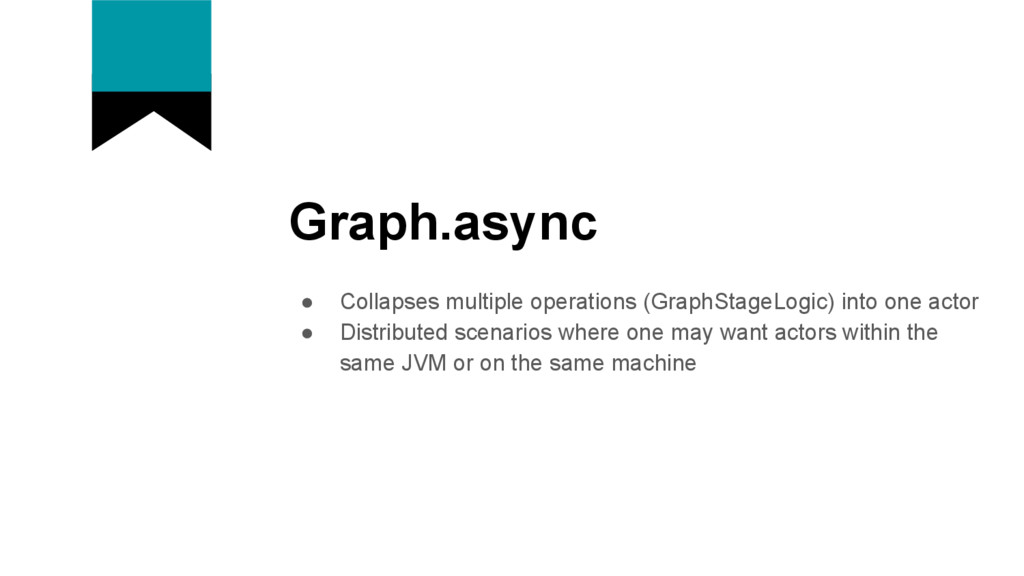
  17. Graph.async • Collapses multiple operations (GraphStageLogic) into one actor •

    Distributed scenarios where one may want actors within the same JVM or on the same machine
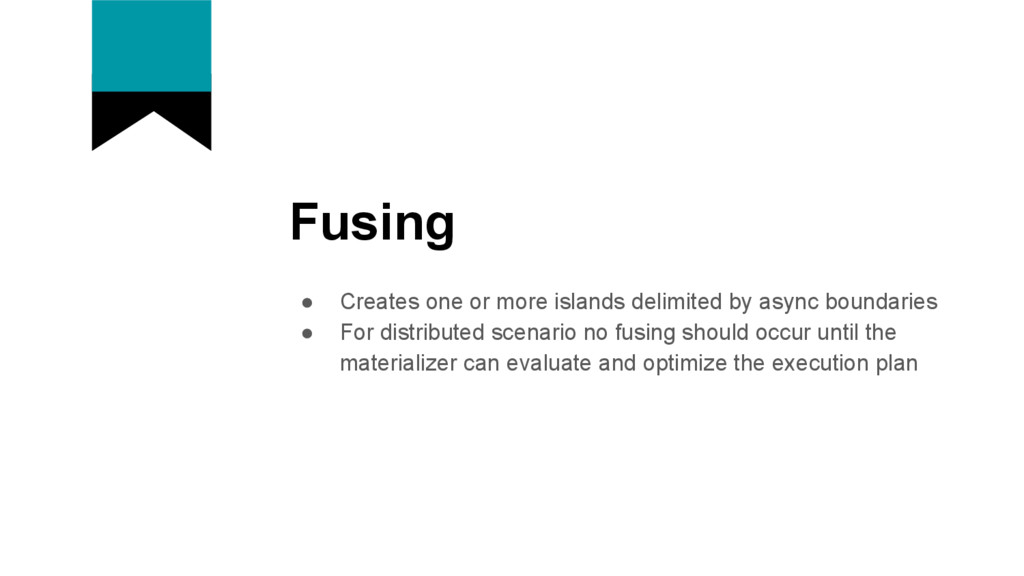
  18. Fusing • Creates one or more islands delimited by async

    boundaries • For distributed scenario no fusing should occur until the materializer can evaluate and optimize the execution plan
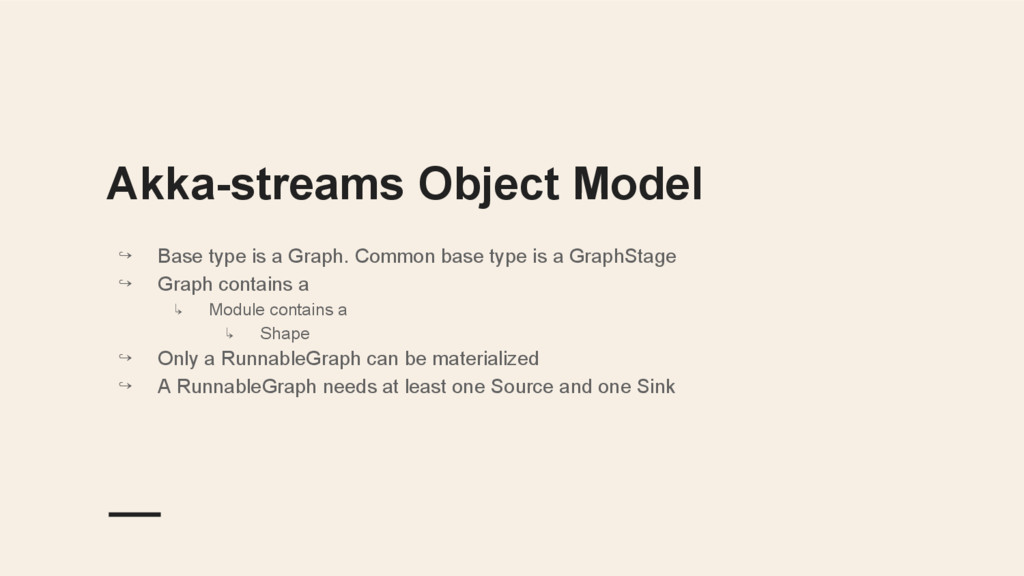
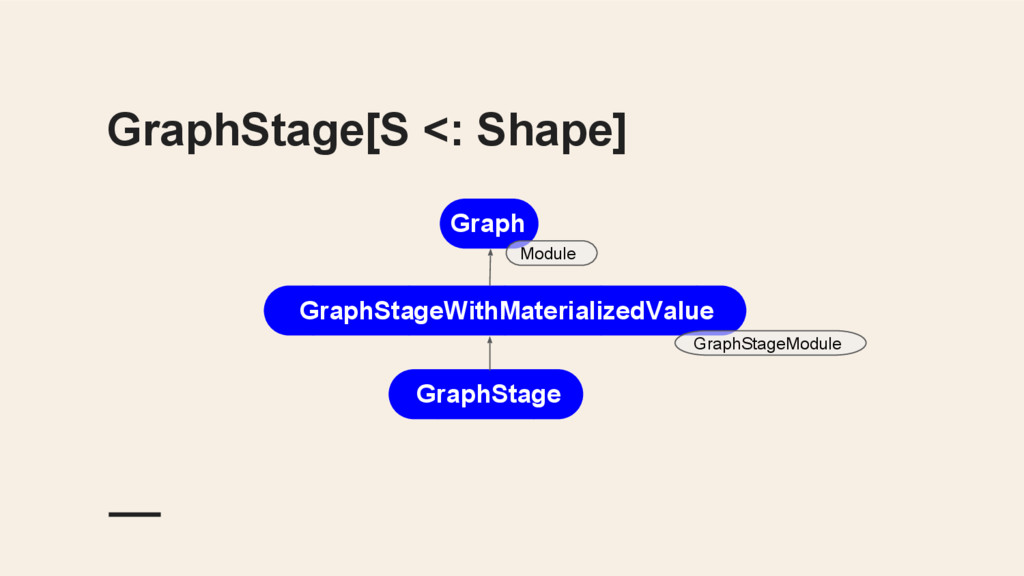
  19. Akka-streams Object Model ↪ Base type is a Graph. Common

    base type is a GraphStage ↪ Graph contains a ↳ Module contains a ↳ Shape ↪ Only a RunnableGraph can be materialized ↪ A RunnableGraph needs at least one Source and one Sink
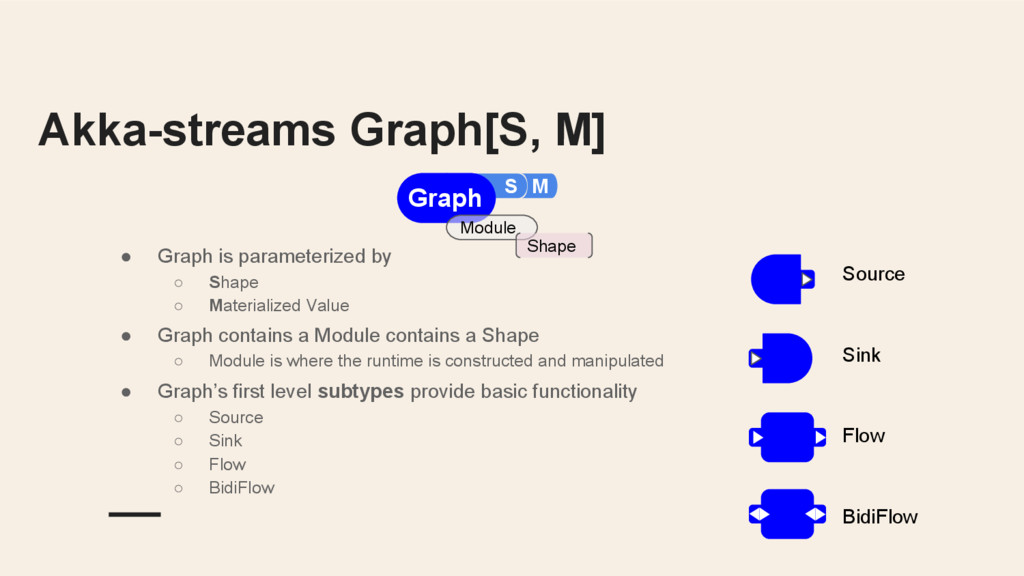
  20. Akka-streams Graph[S, M] • Graph is parameterized by ◦ Shape

    ◦ Materialized Value • Graph contains a Module contains a Shape ◦ Module is where the runtime is constructed and manipulated • Graph’s first level subtypes provide basic functionality ◦ Source ◦ Sink ◦ Flow ◦ BidiFlow S M Graph Source Sink Flow BidiFlow Module Shape
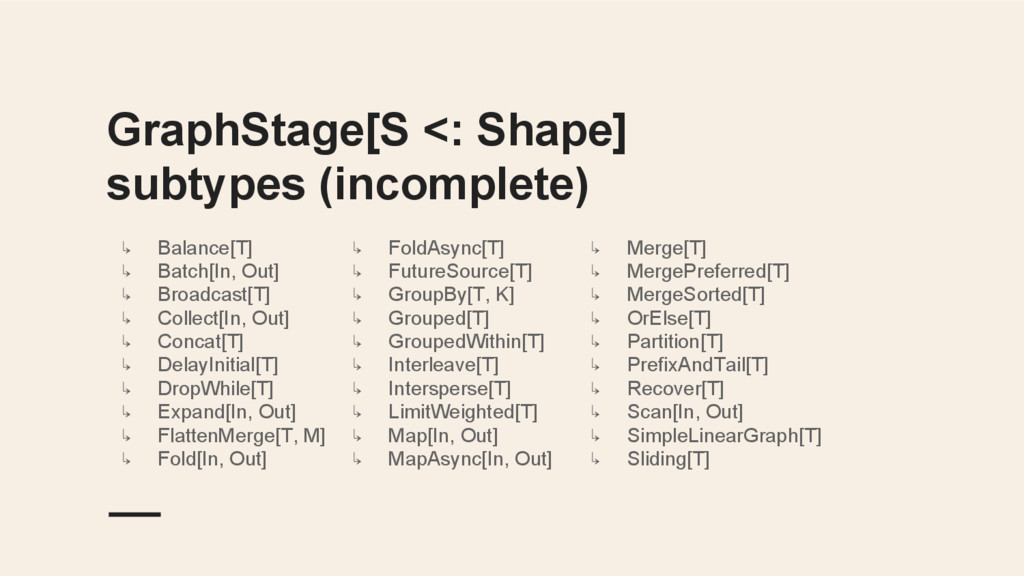
  21. GraphStage[S <: Shape] subtypes (incomplete) ↳ Balance[T] ↳ Batch[In, Out]

    ↳ Broadcast[T] ↳ Collect[In, Out] ↳ Concat[T] ↳ DelayInitial[T] ↳ DropWhile[T] ↳ Expand[In, Out] ↳ FlattenMerge[T, M] ↳ Fold[In, Out] ↳ FoldAsync[T] ↳ FutureSource[T] ↳ GroupBy[T, K] ↳ Grouped[T] ↳ GroupedWithin[T] ↳ Interleave[T] ↳ Intersperse[T] ↳ LimitWeighted[T] ↳ Map[In, Out] ↳ MapAsync[In, Out] ↳ Merge[T] ↳ MergePreferred[T] ↳ MergeSorted[T] ↳ OrElse[T] ↳ Partition[T] ↳ PrefixAndTail[T] ↳ Recover[T] ↳ Scan[In, Out] ↳ SimpleLinearGraph[T] ↳ Sliding[T]
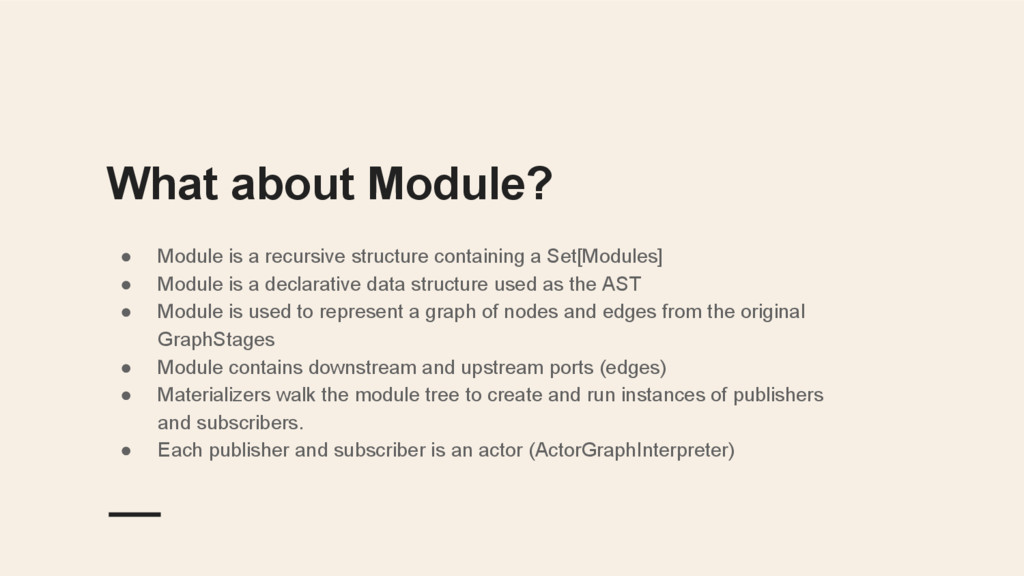
  22. What about Module? • Module is a recursive structure containing

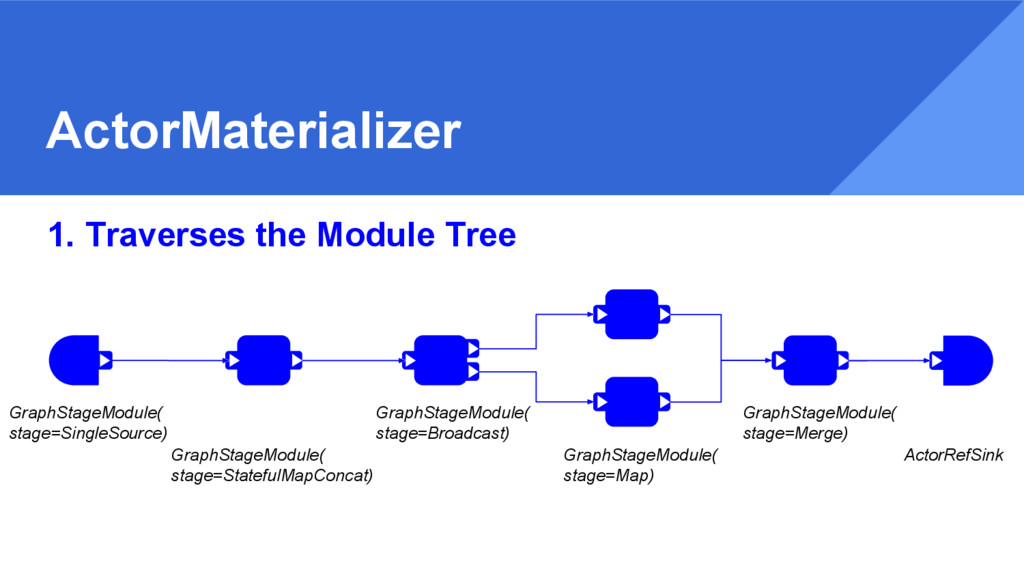
    a Set[Modules] • Module is a declarative data structure used as the AST • Module is used to represent a graph of nodes and edges from the original GraphStages • Module contains downstream and upstream ports (edges) • Materializers walk the module tree to create and run instances of publishers and subscribers. • Each publisher and subscriber is an actor (ActorGraphInterpreter)
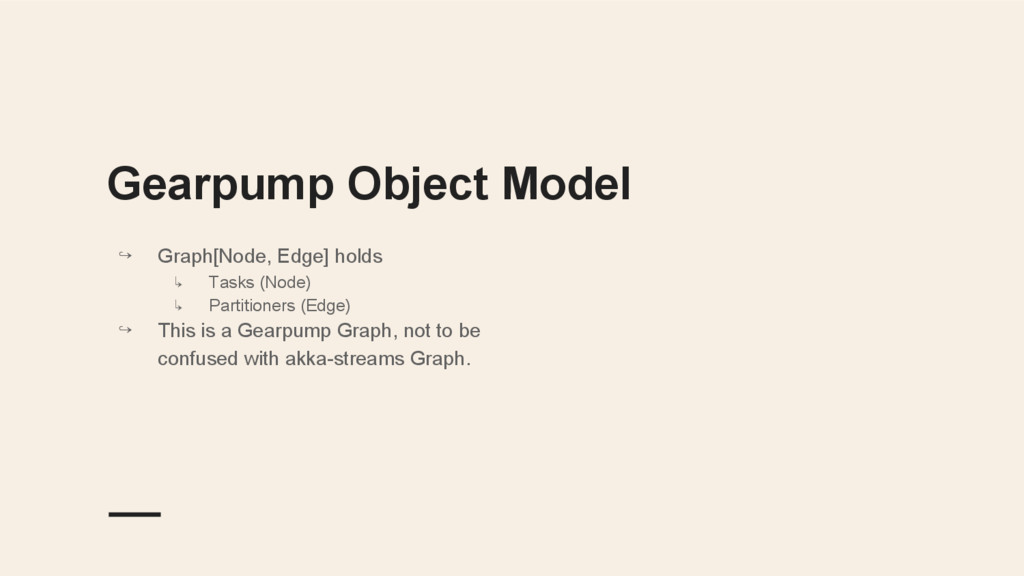
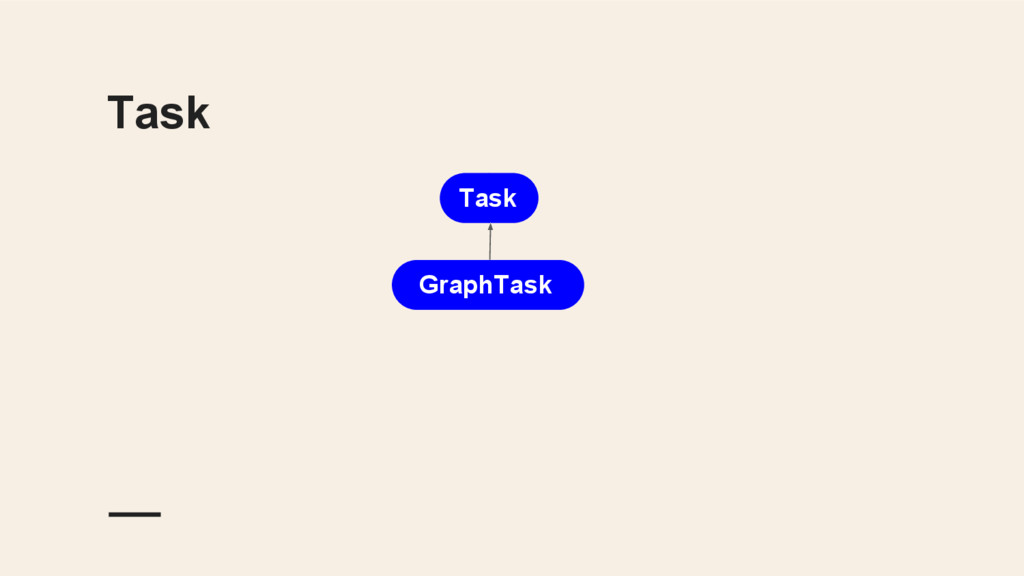
  23. Gearpump Object Model ↪ Graph[Node, Edge] holds ↳ Tasks (Node)

    ↳ Partitioners (Edge) ↪ This is a Gearpump Graph, not to be confused with akka-streams Graph.
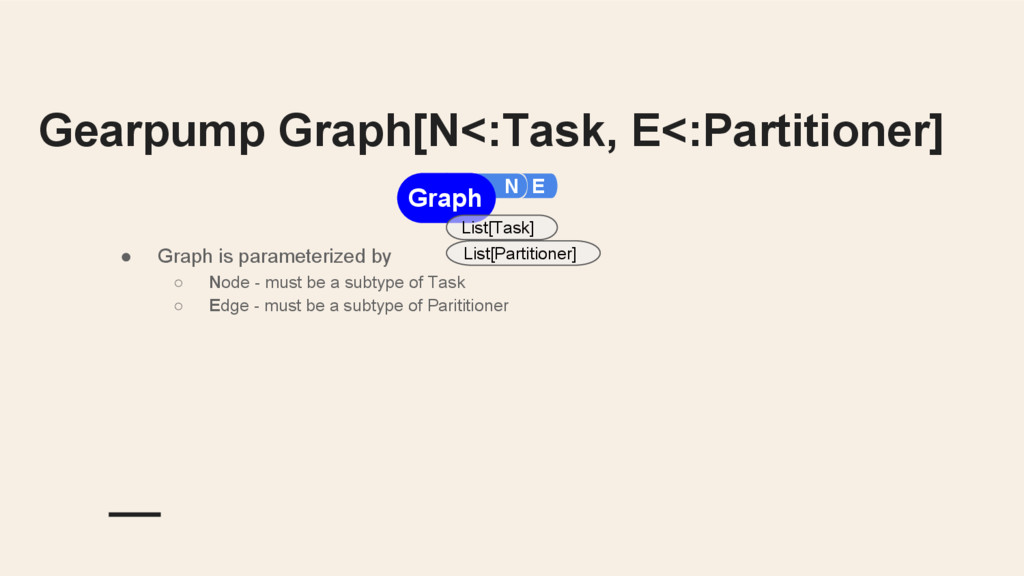
  24. Gearpump Graph[N<:Task, E<:Partitioner] • Graph is parameterized by ◦ Node

    - must be a subtype of Task ◦ Edge - must be a subtype of Parititioner N E Graph List[Task] List[Partitioner]
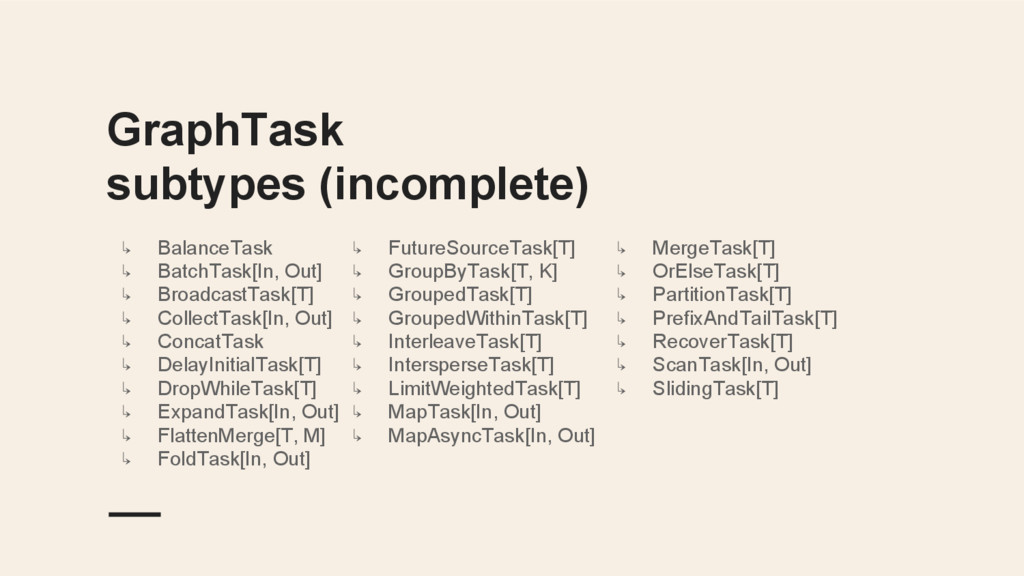
  25. GraphTask subtypes (incomplete) ↳ BalanceTask ↳ BatchTask[In, Out] ↳ BroadcastTask[T]

    ↳ CollectTask[In, Out] ↳ ConcatTask ↳ DelayInitialTask[T] ↳ DropWhileTask[T] ↳ ExpandTask[In, Out] ↳ FlattenMerge[T, M] ↳ FoldTask[In, Out] ↳ FutureSourceTask[T] ↳ GroupByTask[T, K] ↳ GroupedTask[T] ↳ GroupedWithinTask[T] ↳ InterleaveTask[T] ↳ IntersperseTask[T] ↳ LimitWeightedTask[T] ↳ MapTask[In, Out] ↳ MapAsyncTask[In, Out] ↳ MergeTask[T] ↳ OrElseTask[T] ↳ PartitionTask[T] ↳ PrefixAndTailTask[T] ↳ RecoverTask[T] ↳ ScanTask[In, Out] ↳ SlidingTask[T]
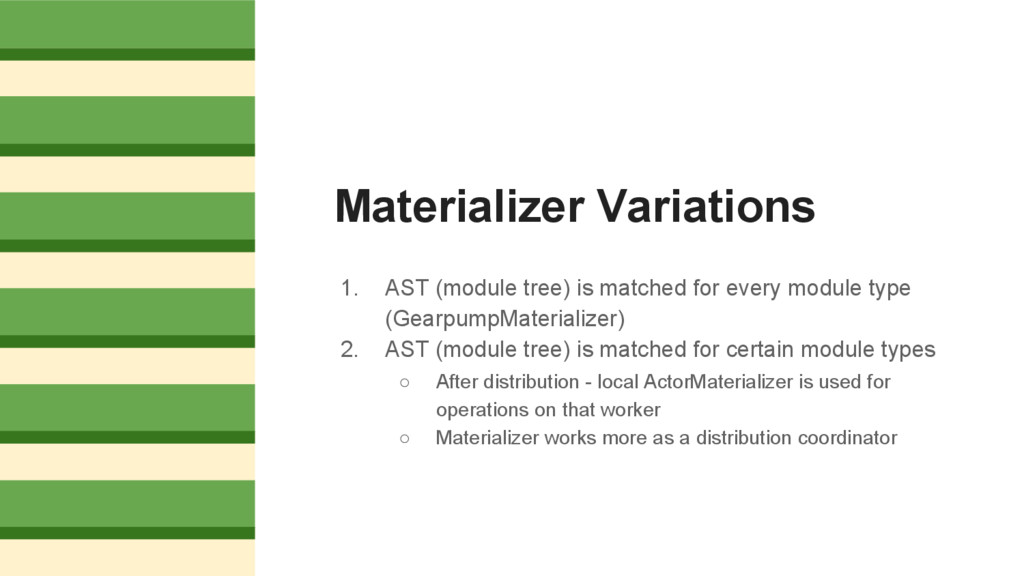
  26. Materializer Variations 1. AST (module tree) is matched for every

    module type (GearpumpMaterializer) 2. AST (module tree) is matched for certain module types ◦ After distribution - local ActorMaterializer is used for operations on that worker ◦ Materializer works more as a distribution coordinator
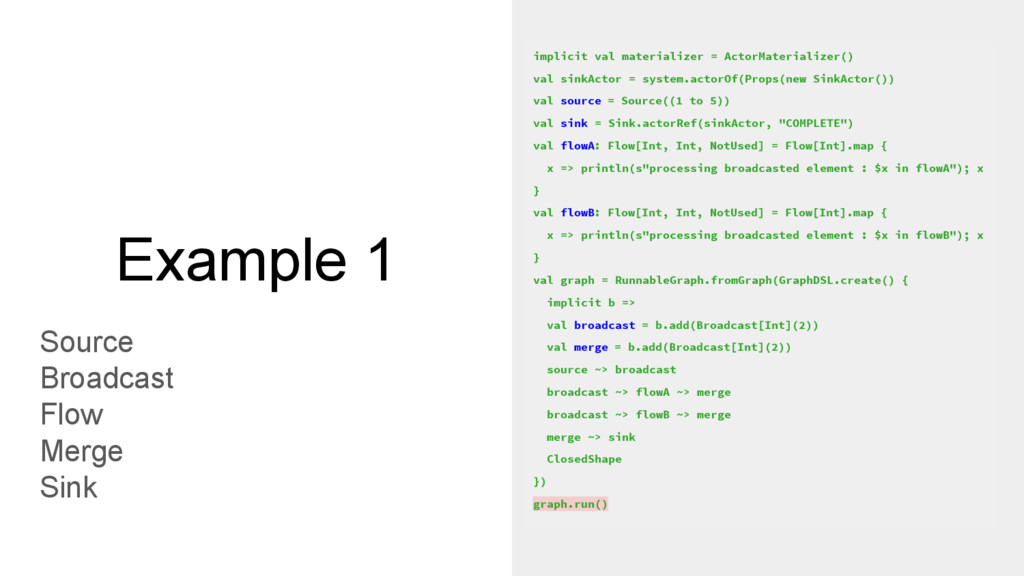
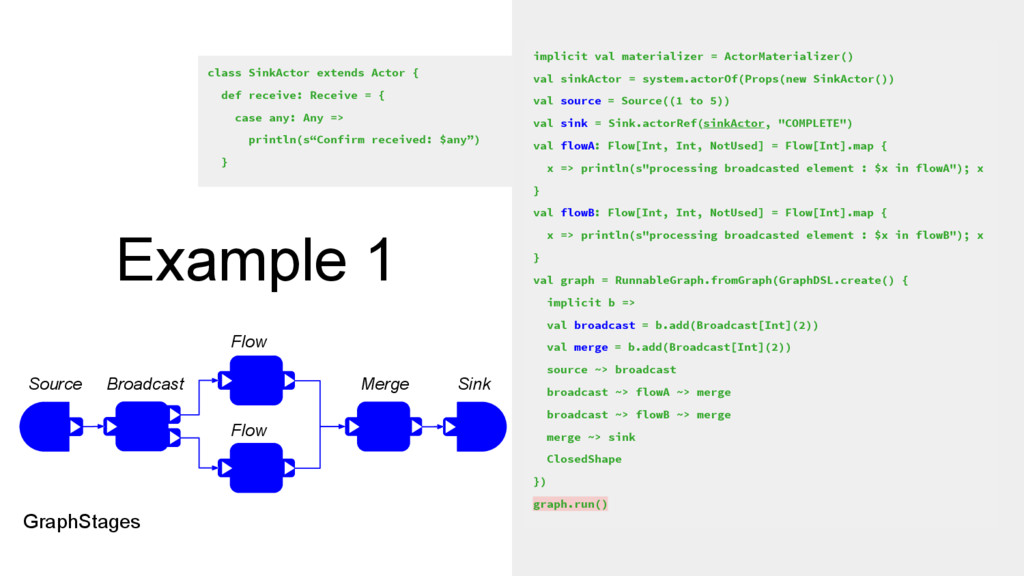
  27. Example 1 Source Broadcast Flow Merge Sink implicit val materializer

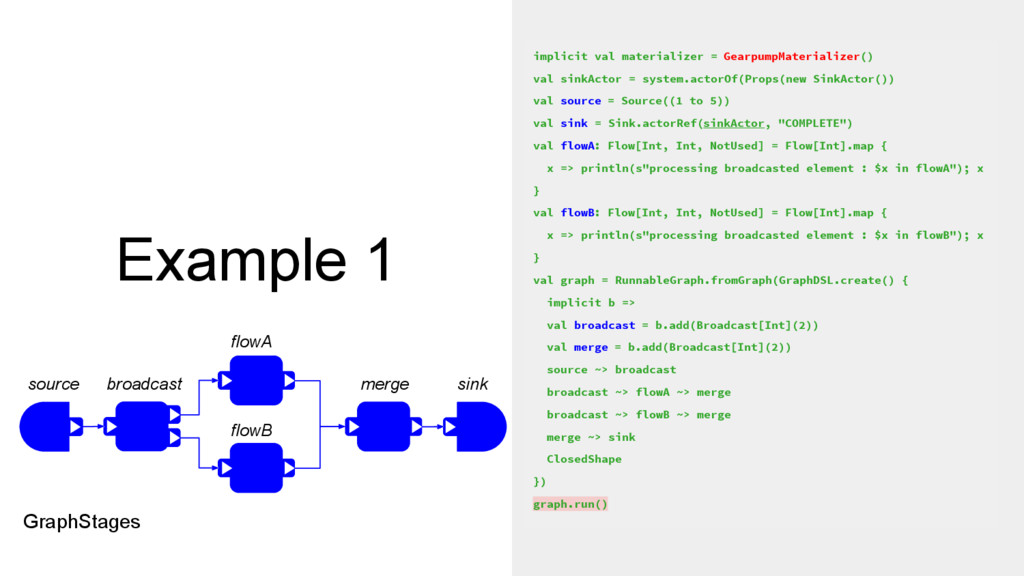
    = ActorMaterializer() val sinkActor = system.actorOf(Props(new SinkActor()) val source = Source((1 to 5)) val sink = Sink.actorRef(sinkActor, "COMPLETE") val flowA: Flow[Int, Int, NotUsed] = Flow[Int].map { x => println(s"processing broadcasted element : $x in flowA"); x } val flowB: Flow[Int, Int, NotUsed] = Flow[Int].map { x => println(s"processing broadcasted element : $x in flowB"); x } val graph = RunnableGraph.fromGraph(GraphDSL.create() { implicit b => val broadcast = b.add(Broadcast[Int](2)) val merge = b.add(Broadcast[Int](2)) source ~> broadcast broadcast ~> flowA ~> merge broadcast ~> flowB ~> merge merge ~> sink ClosedShape }) graph.run()
  28. Example 1 implicit val materializer = ActorMaterializer() val sinkActor =

    system.actorOf(Props(new SinkActor()) val source = Source((1 to 5)) val sink = Sink.actorRef(sinkActor, "COMPLETE") val flowA: Flow[Int, Int, NotUsed] = Flow[Int].map { x => println(s"processing broadcasted element : $x in flowA"); x } val flowB: Flow[Int, Int, NotUsed] = Flow[Int].map { x => println(s"processing broadcasted element : $x in flowB"); x } val graph = RunnableGraph.fromGraph(GraphDSL.create() { implicit b => val broadcast = b.add(Broadcast[Int](2)) val merge = b.add(Broadcast[Int](2)) source ~> broadcast broadcast ~> flowA ~> merge broadcast ~> flowB ~> merge merge ~> sink ClosedShape }) graph.run() Source Broadcast Flow Flow Merge GraphStages Sink class SinkActor extends Actor { def receive: Receive = { case any: Any => println(s“Confirm received: $any”) }
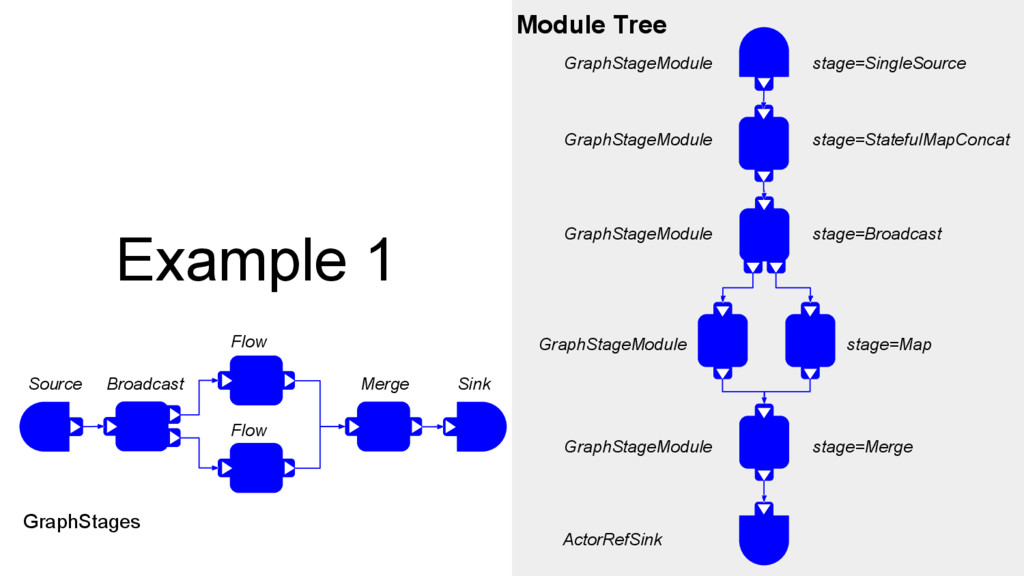
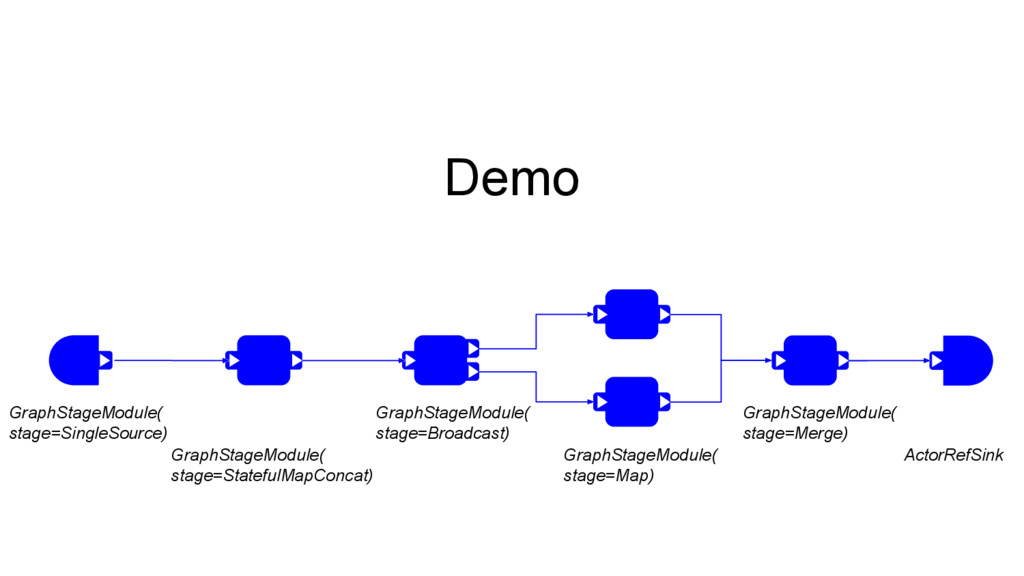
  29. Example 1 Source Broadcast Flow Flow Merge GraphStages Sink Module

    Tree GraphStageModule GraphStageModule stage=SingleSource stage=StatefulMapConcat ActorRefSink stage=Broadcast stage=Map stage=Merge GraphStageModule GraphStageModule GraphStageModule
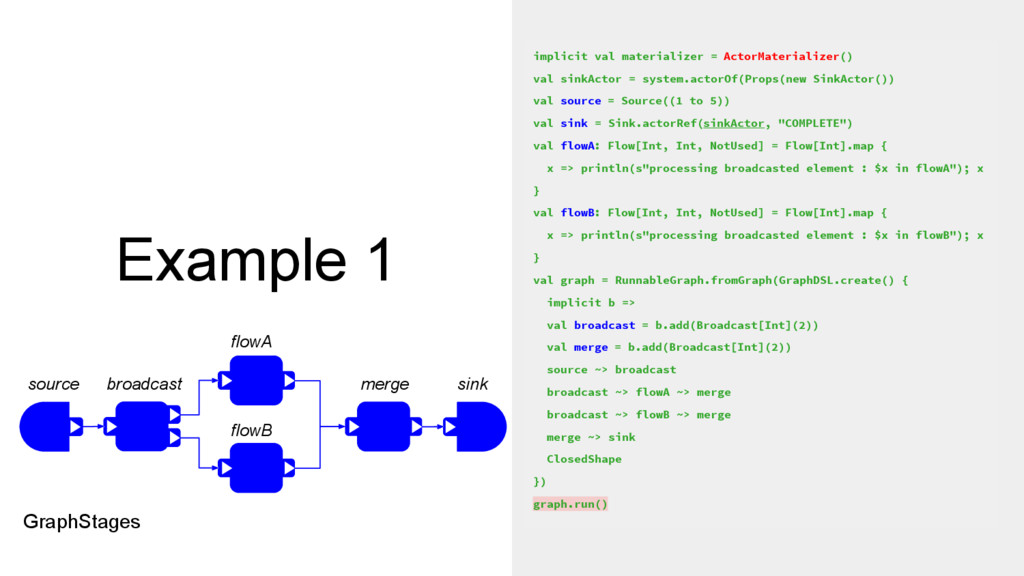
  30. Example 1 implicit val materializer = ActorMaterializer() val sinkActor =

    system.actorOf(Props(new SinkActor()) val source = Source((1 to 5)) val sink = Sink.actorRef(sinkActor, "COMPLETE") val flowA: Flow[Int, Int, NotUsed] = Flow[Int].map { x => println(s"processing broadcasted element : $x in flowA"); x } val flowB: Flow[Int, Int, NotUsed] = Flow[Int].map { x => println(s"processing broadcasted element : $x in flowB"); x } val graph = RunnableGraph.fromGraph(GraphDSL.create() { implicit b => val broadcast = b.add(Broadcast[Int](2)) val merge = b.add(Broadcast[Int](2)) source ~> broadcast broadcast ~> flowA ~> merge broadcast ~> flowB ~> merge merge ~> sink ClosedShape }) graph.run() source broadcast flowA flowB merge GraphStages sink
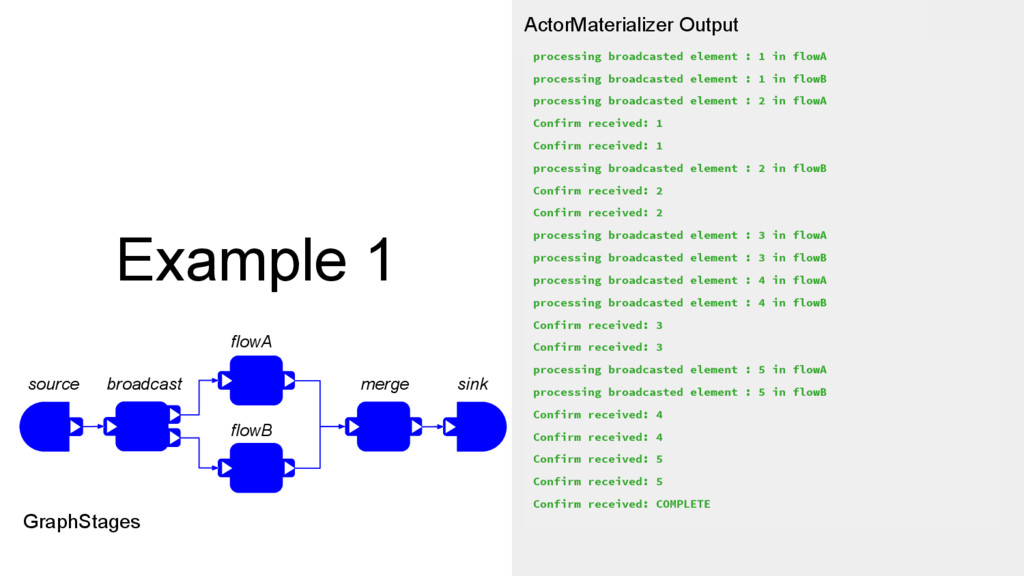
  31. Example 1 processing broadcasted element : 1 in flowA processing

    broadcasted element : 1 in flowB processing broadcasted element : 2 in flowA Confirm received: 1 Confirm received: 1 processing broadcasted element : 2 in flowB Confirm received: 2 Confirm received: 2 processing broadcasted element : 3 in flowA processing broadcasted element : 3 in flowB processing broadcasted element : 4 in flowA processing broadcasted element : 4 in flowB Confirm received: 3 Confirm received: 3 processing broadcasted element : 5 in flowA processing broadcasted element : 5 in flowB Confirm received: 4 Confirm received: 4 Confirm received: 5 Confirm received: 5 Confirm received: COMPLETE source broadcast flowA flowB merge GraphStages sink ActorMaterializer Output
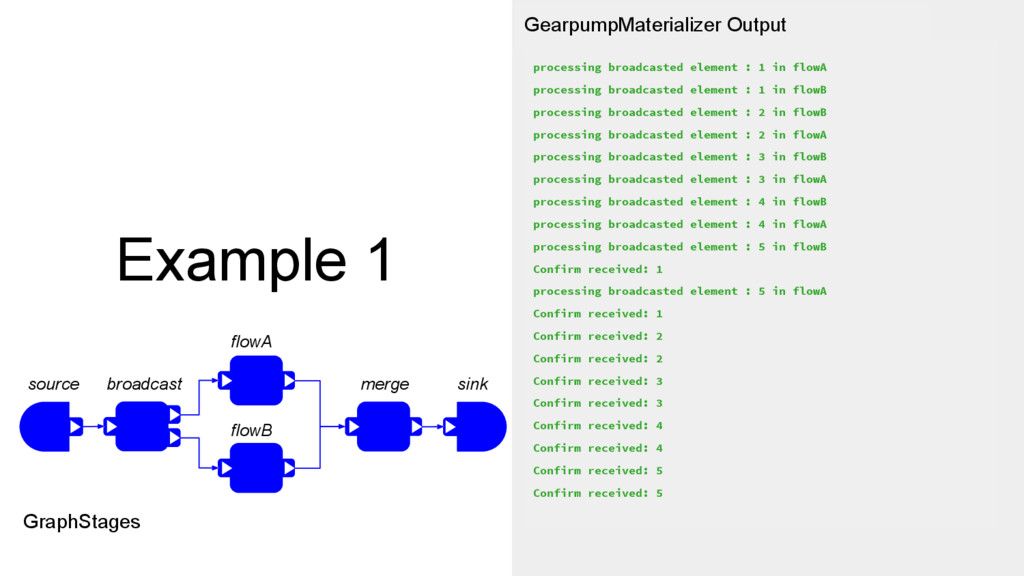
  32. Example 1 implicit val materializer = GearpumpMaterializer() val sinkActor =

    system.actorOf(Props(new SinkActor()) val source = Source((1 to 5)) val sink = Sink.actorRef(sinkActor, "COMPLETE") val flowA: Flow[Int, Int, NotUsed] = Flow[Int].map { x => println(s"processing broadcasted element : $x in flowA"); x } val flowB: Flow[Int, Int, NotUsed] = Flow[Int].map { x => println(s"processing broadcasted element : $x in flowB"); x } val graph = RunnableGraph.fromGraph(GraphDSL.create() { implicit b => val broadcast = b.add(Broadcast[Int](2)) val merge = b.add(Broadcast[Int](2)) source ~> broadcast broadcast ~> flowA ~> merge broadcast ~> flowB ~> merge merge ~> sink ClosedShape }) graph.run() source broadcast flowA flowB merge GraphStages sink
  33. Example 1 processing broadcasted element : 1 in flowA processing

    broadcasted element : 1 in flowB processing broadcasted element : 2 in flowB processing broadcasted element : 2 in flowA processing broadcasted element : 3 in flowB processing broadcasted element : 3 in flowA processing broadcasted element : 4 in flowB processing broadcasted element : 4 in flowA processing broadcasted element : 5 in flowB Confirm received: 1 processing broadcasted element : 5 in flowA Confirm received: 1 Confirm received: 2 Confirm received: 2 Confirm received: 3 Confirm received: 3 Confirm received: 4 Confirm received: 4 Confirm received: 5 Confirm received: 5 source broadcast flowA flowB merge GraphStages sink GearpumpMaterializer Output
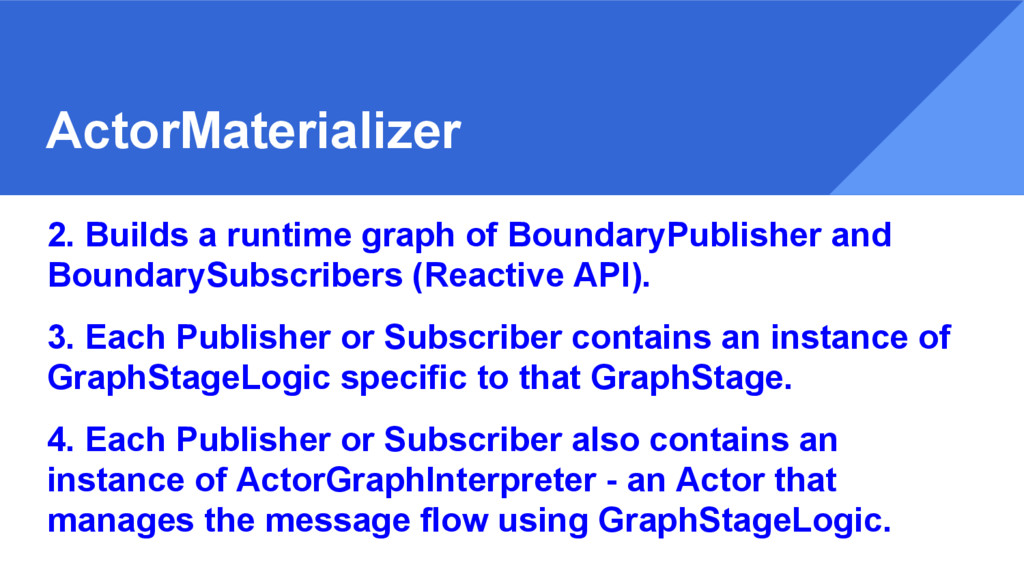
  34. ActorMaterializer 2. Builds a runtime graph of BoundaryPublisher and BoundarySubscribers

    (Reactive API). 3. Each Publisher or Subscriber contains an instance of GraphStageLogic specific to that GraphStage. 4. Each Publisher or Subscriber also contains an instance of ActorGraphInterpreter - an Actor that manages the message flow using GraphStageLogic.
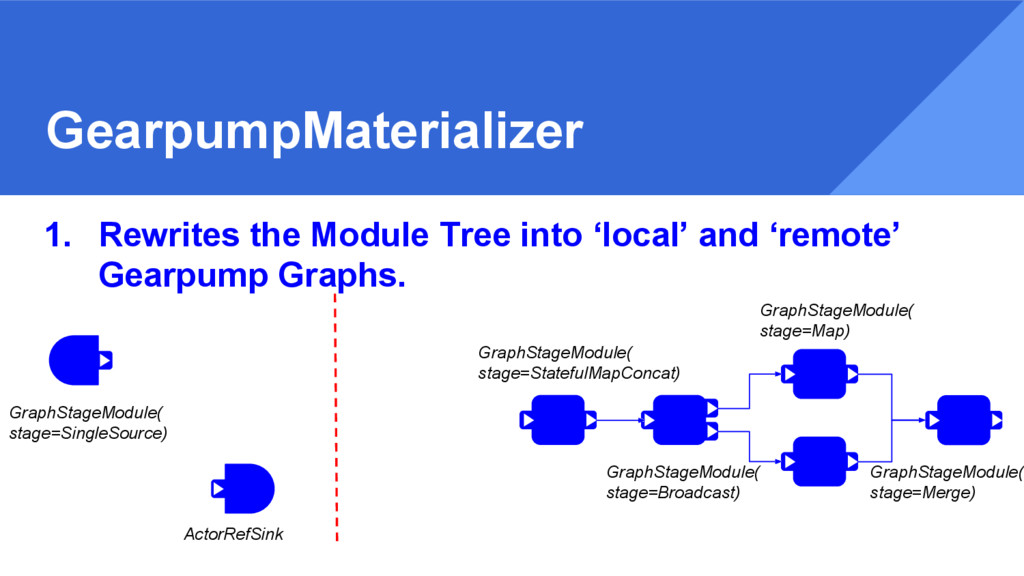
  35. GearpumpMaterializer GraphStageModule( stage=SingleSource) ActorRefSink GraphStageModule( stage=Broadcast) GraphStageModule( stage=Map) GraphStageModule( stage=Merge)

    1. Rewrites the Module Tree into ‘local’ and ‘remote’ Gearpump Graphs. GraphStageModule( stage=StatefulMapConcat)
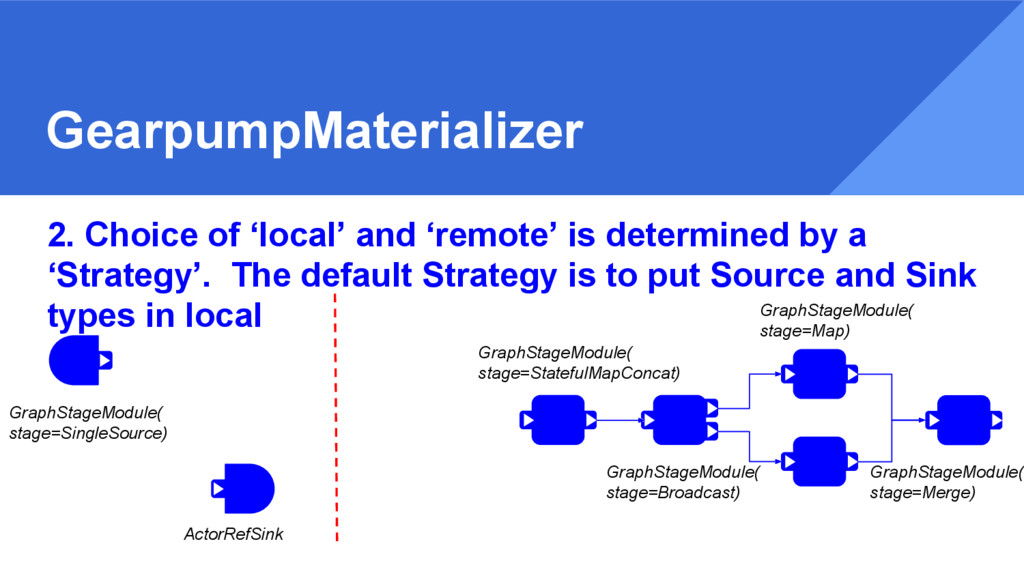
  36. GearpumpMaterializer GraphStageModule( stage=SingleSource) ActorRefSink GraphStageModule( stage=Broadcast) GraphStageModule( stage=Map) GraphStageModule( stage=Merge)

    2. Choice of ‘local’ and ‘remote’ is determined by a ‘Strategy’. The default Strategy is to put Source and Sink types in local GraphStageModule( stage=StatefulMapConcat)
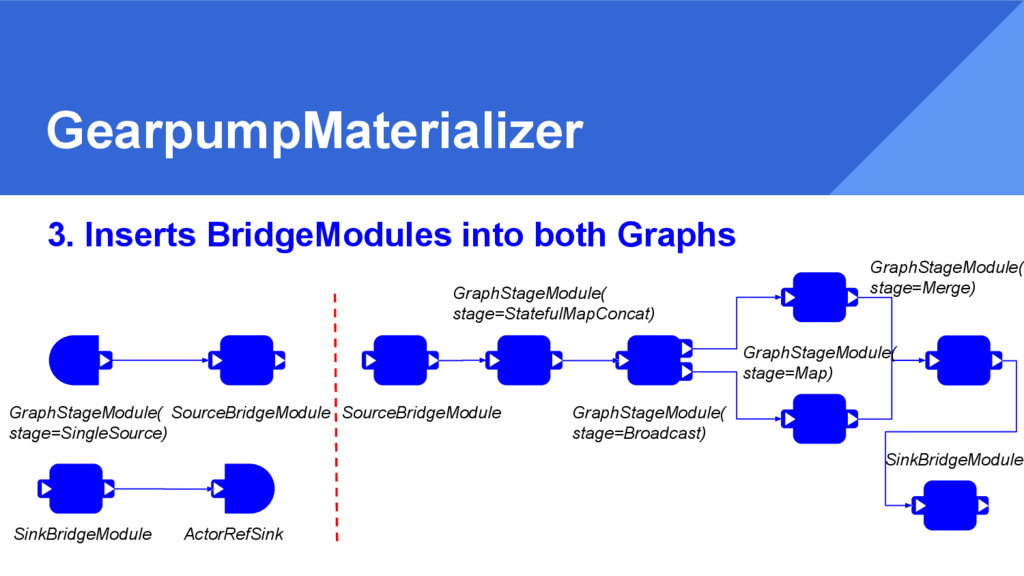
  37. GearpumpMaterializer ActorRefSink 3. Inserts BridgeModules into both Graphs SourceBridgeModule SinkBridgeModule

    SinkBridgeModule GraphStageModule( stage=Broadcast) GraphStageModule( stage=Map) GraphStageModule( stage=Merge) GraphStageModule( stage=StatefulMapConcat) GraphStageModule( stage=SingleSource) SourceBridgeModule
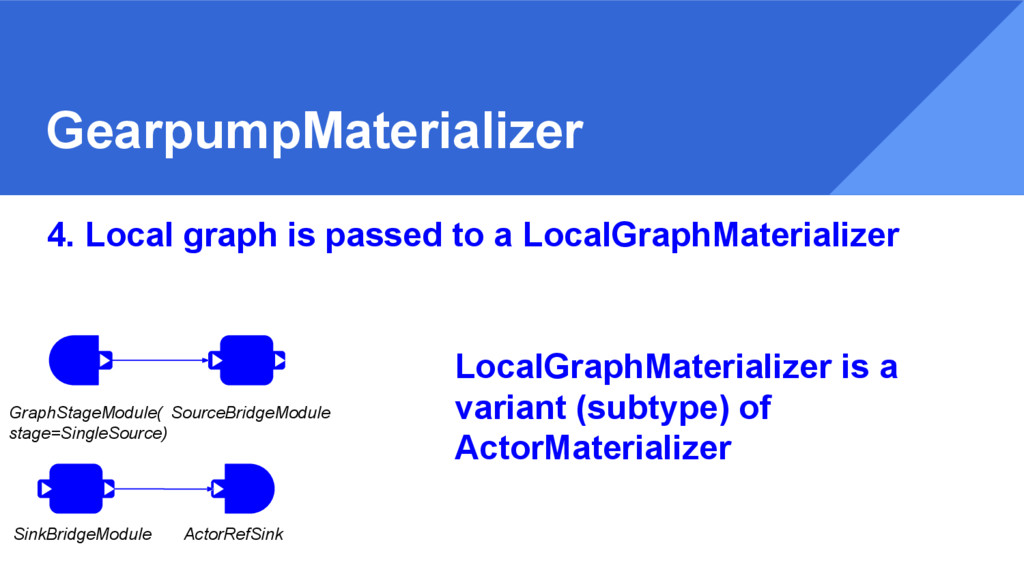
  38. GearpumpMaterializer ActorRefSink 4. Local graph is passed to a LocalGraphMaterializer

    SinkBridgeModule GraphStageModule( stage=SingleSource) SourceBridgeModule LocalGraphMaterializer is a variant (subtype) of ActorMaterializer
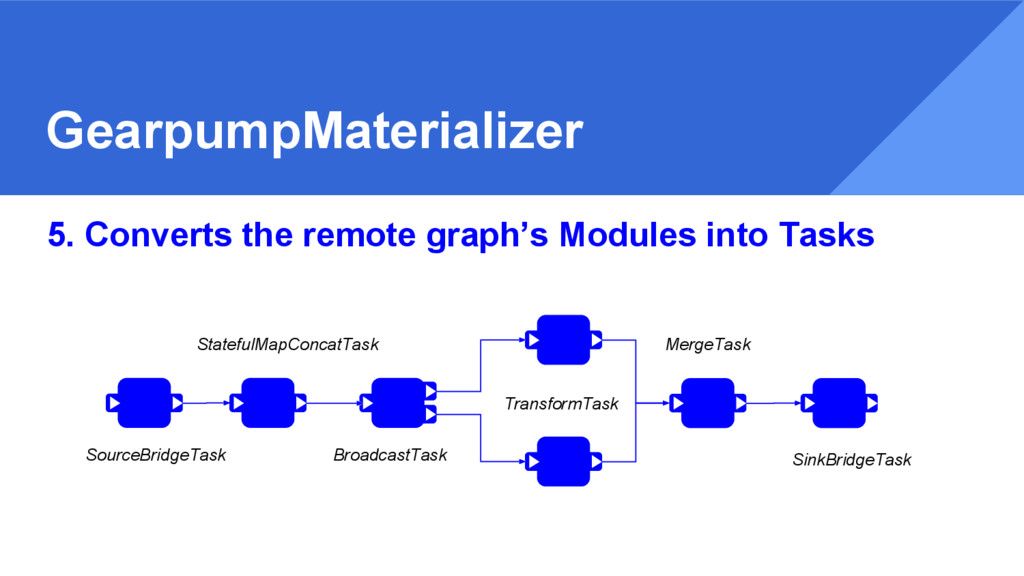
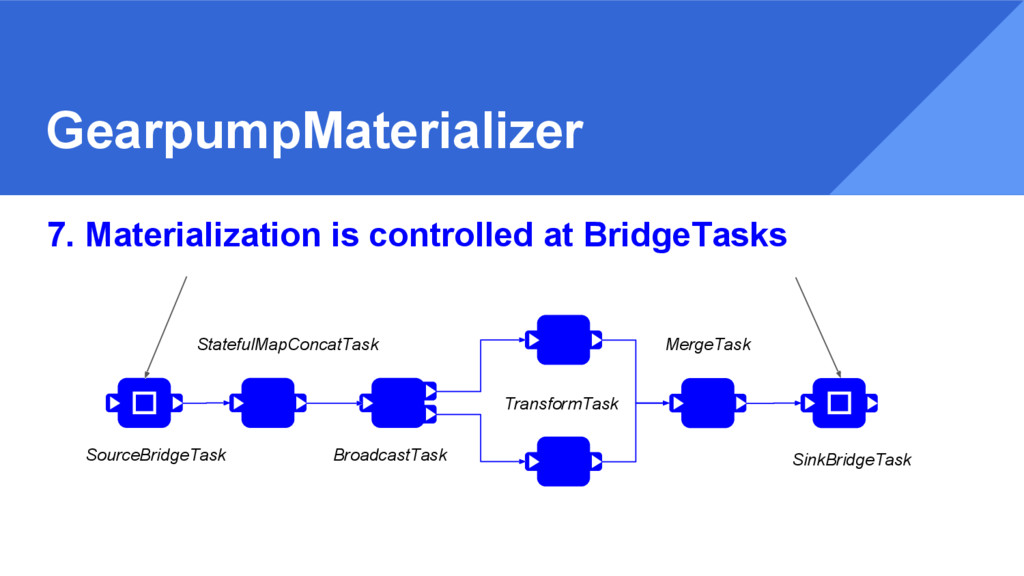
  39. GearpumpMaterializer 5. Converts the remote graph’s Modules into Tasks SourceBridgeTask

    SinkBridgeTask BroadcastTask TransformTask MergeTask StatefulMapConcatTask
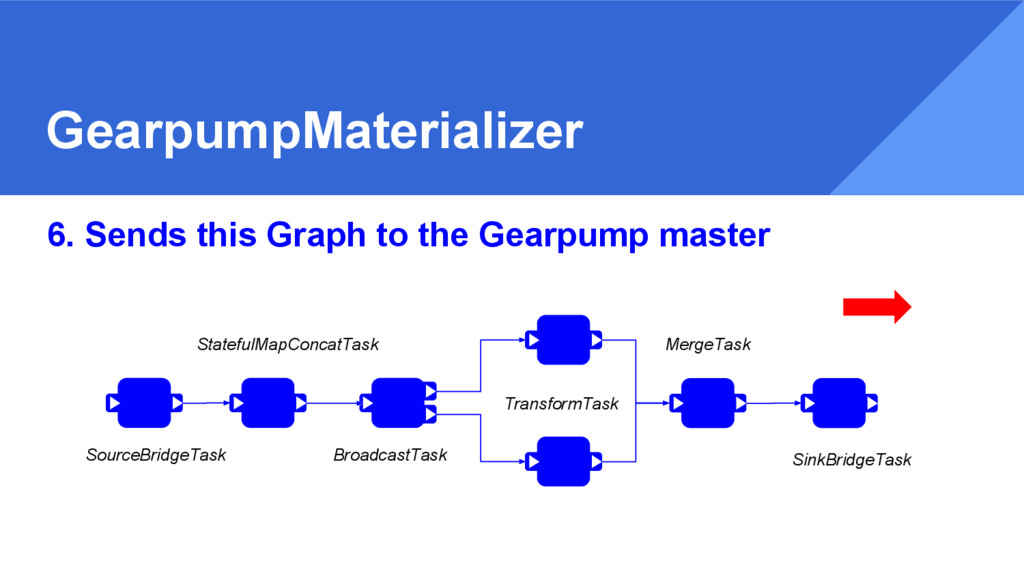
  40. GearpumpMaterializer 6. Sends this Graph to the Gearpump master SourceBridgeTask

    SinkBridgeTask BroadcastTask TransformTask MergeTask StatefulMapConcatTask
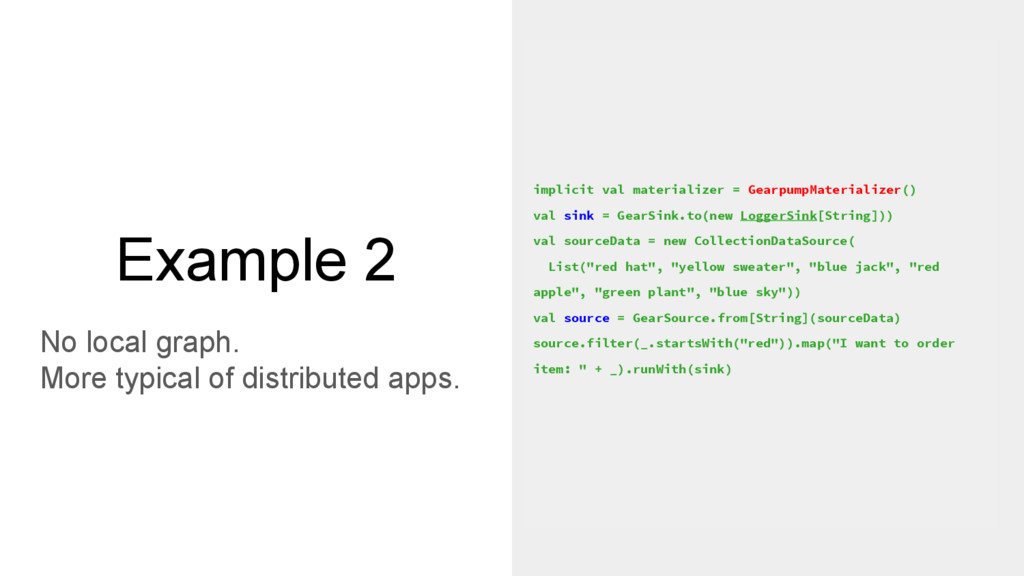
  41. Example 2 No local graph. More typical of distributed apps.

    implicit val materializer = GearpumpMaterializer() val sink = GearSink.to(new LoggerSink[String])) val sourceData = new CollectionDataSource( List("red hat", "yellow sweater", "blue jack", "red apple", "green plant", "blue sky")) val source = GearSource.from[String](sourceData) source.filter(_.startsWith("red")).map("I want to order item: " + _).runWith(sink)
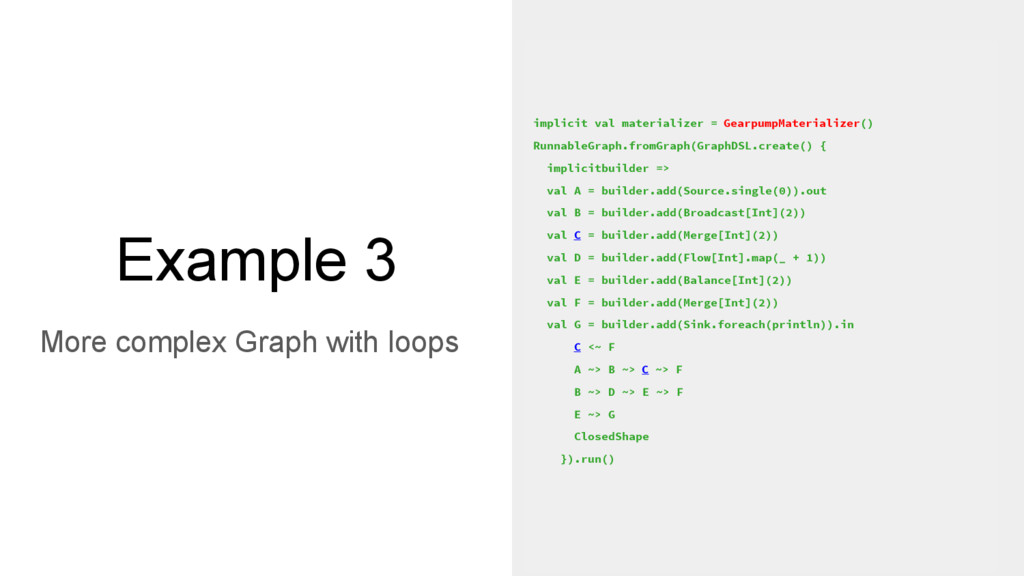
  42. Example 3 More complex Graph with loops implicit val materializer

    = GearpumpMaterializer() RunnableGraph.fromGraph(GraphDSL.create() { implicitbuilder => val A = builder.add(Source.single(0)).out val B = builder.add(Broadcast[Int](2)) val C = builder.add(Merge[Int](2)) val D = builder.add(Flow[Int].map(_ + 1)) val E = builder.add(Balance[Int](2)) val F = builder.add(Merge[Int](2)) val G = builder.add(Sink.foreach(println)).in C <~ F A ~> B ~> C ~> F B ~> D ~> E ~> F E ~> G ClosedShape }).run()
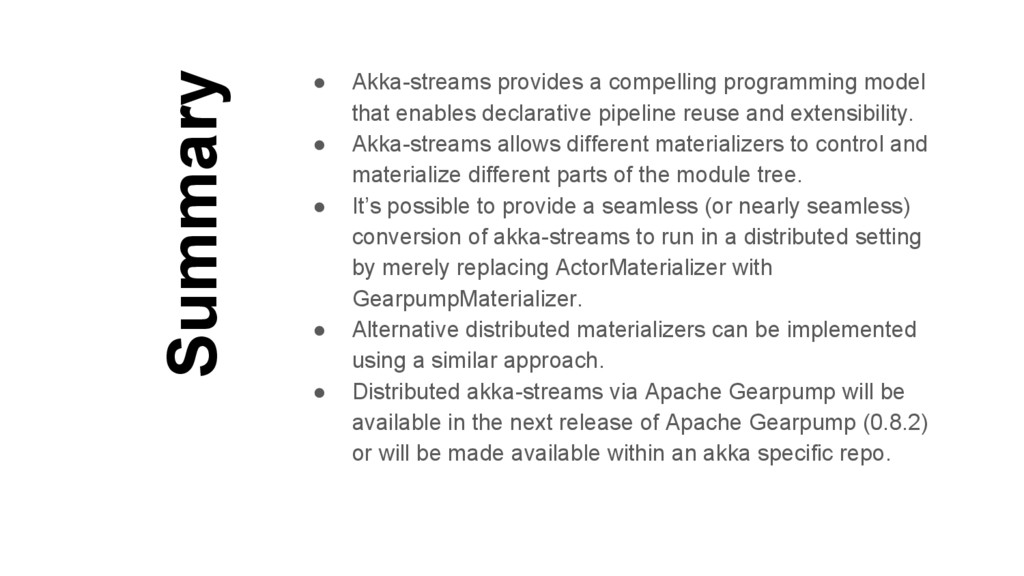
  43. Summary • Akka-streams provides a compelling programming model that enables

    declarative pipeline reuse and extensibility. • Akka-streams allows different materializers to control and materialize different parts of the module tree. • It’s possible to provide a seamless (or nearly seamless) conversion of akka-streams to run in a distributed setting by merely replacing ActorMaterializer with GearpumpMaterializer. • Alternative distributed materializers can be implemented using a similar approach. • Distributed akka-streams via Apache Gearpump will be available in the next release of Apache Gearpump (0.8.2) or will be made available within an akka specific repo.