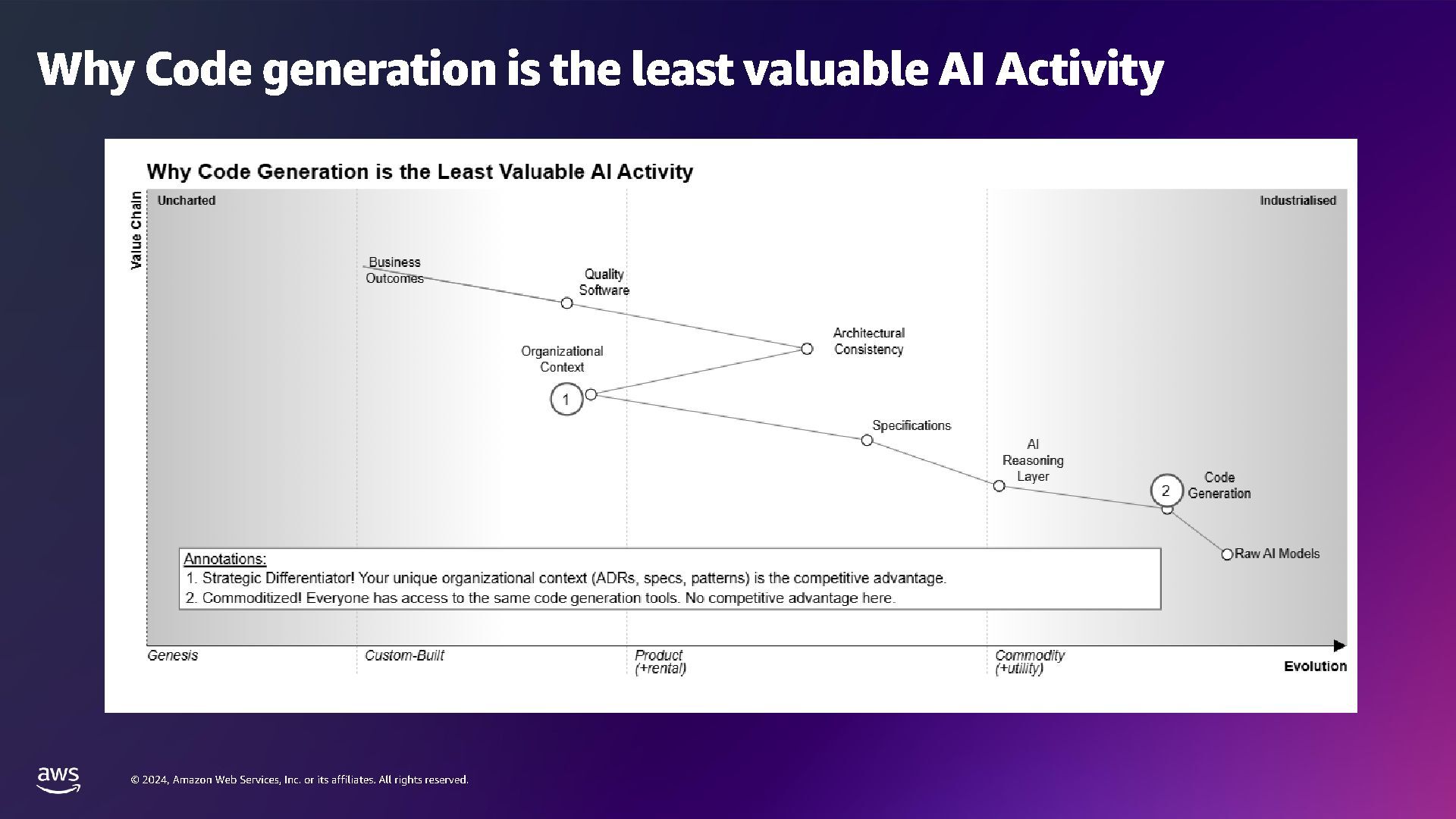
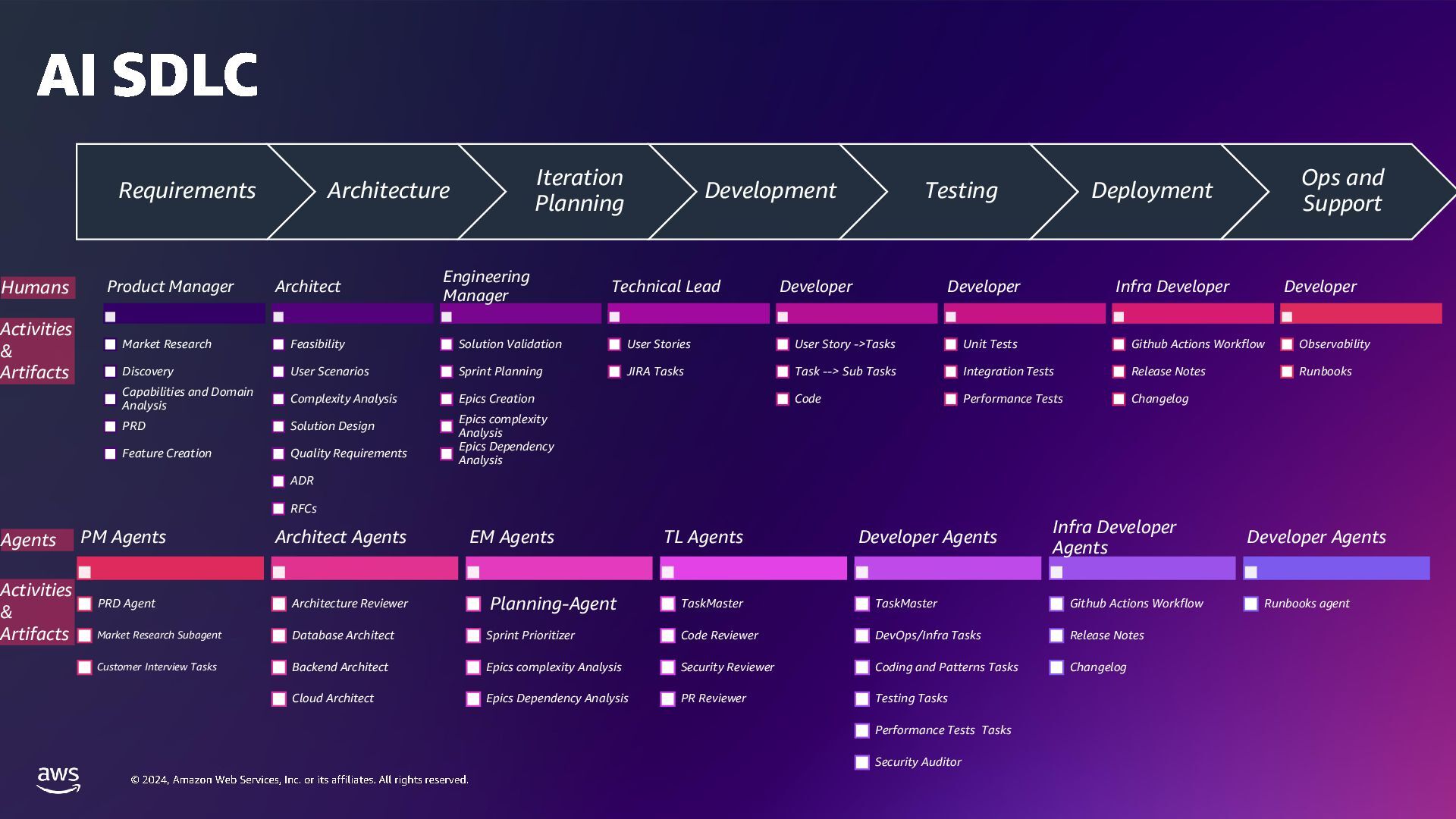
rights reserved. The Rise of the AI SDLC Best Better Practices for Adopting GenAI in Engineering Teams Lalit Kale AWS COMMUNITY DAY DUBLIN - 2025 Software Architect Globalization Partners
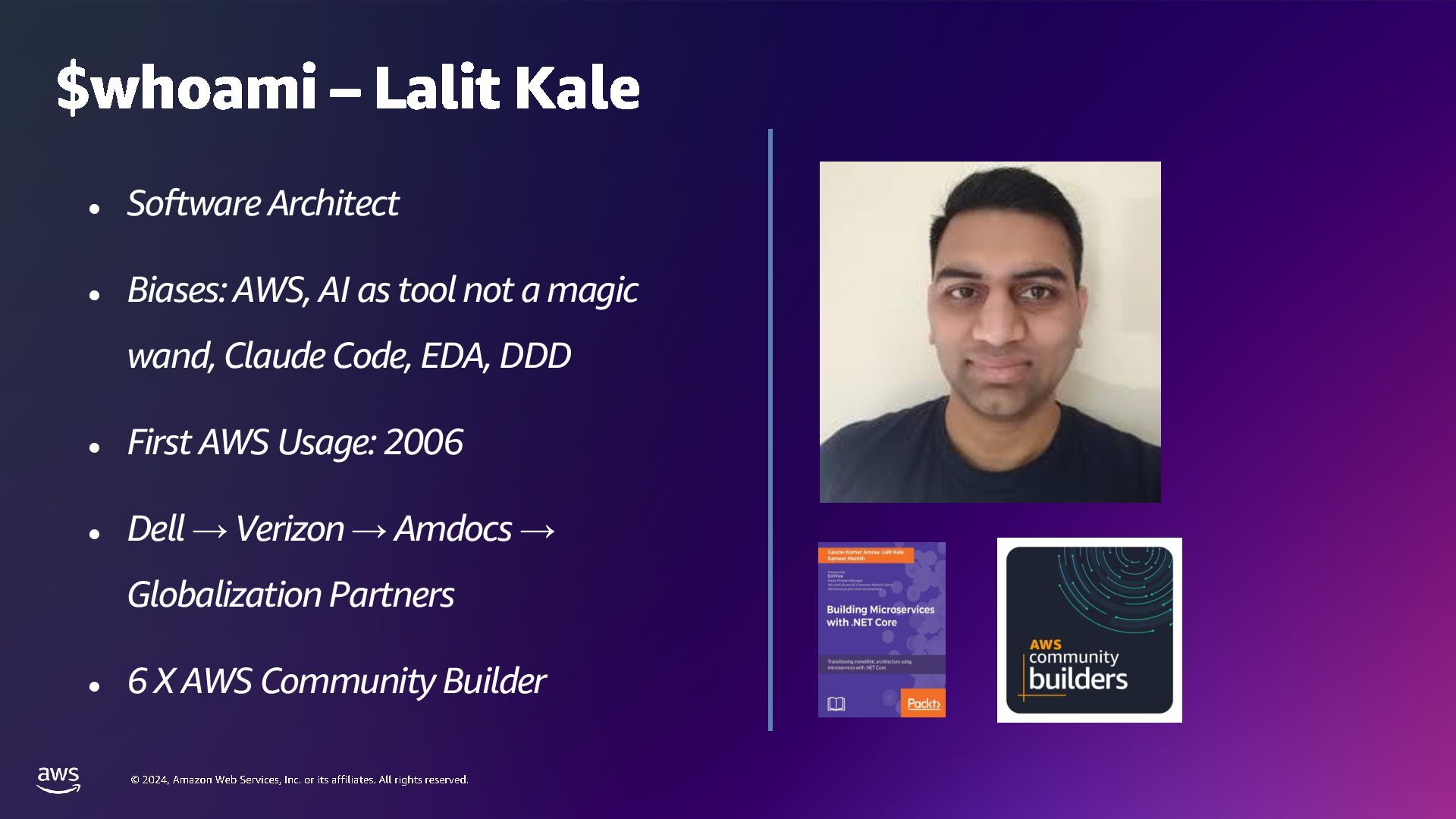
rights reserved. $whoami – Lalit Kale ⚫ Software Architect ⚫ Biases: AWS, AI as tool not a magic wand, Claude Code, EDA, DDD ⚫ First AWS Usage: 2006 ⚫ Dell → Verizon → Amdocs → Globalization Partners ⚫ 6 X AWS Community Builder
rights reserved. What we’ll discuss today • Why code generation > Organizational Context • The AI-SDLC Framework • Making It Real – Adoption Playbook • Measuring Success
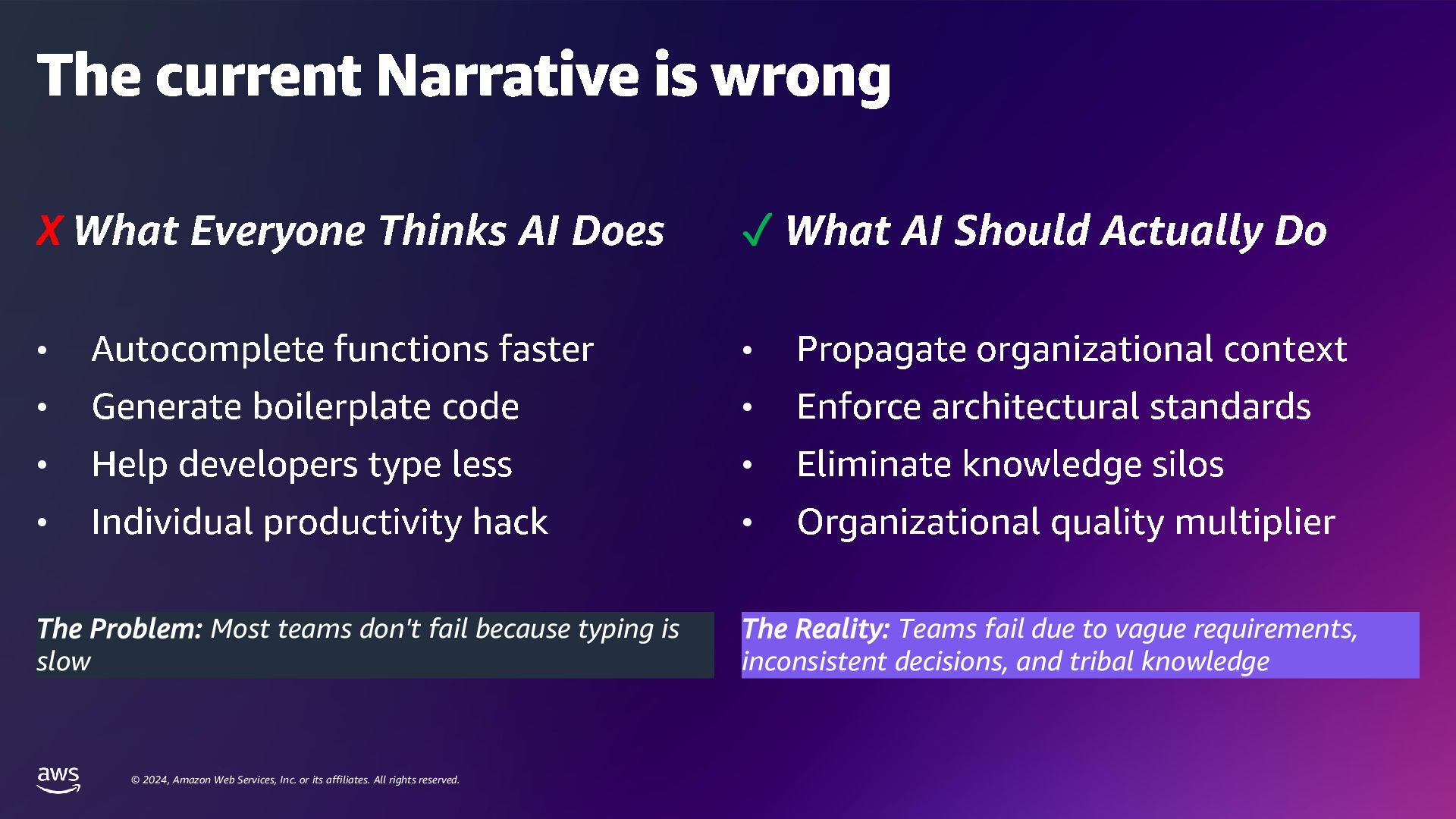
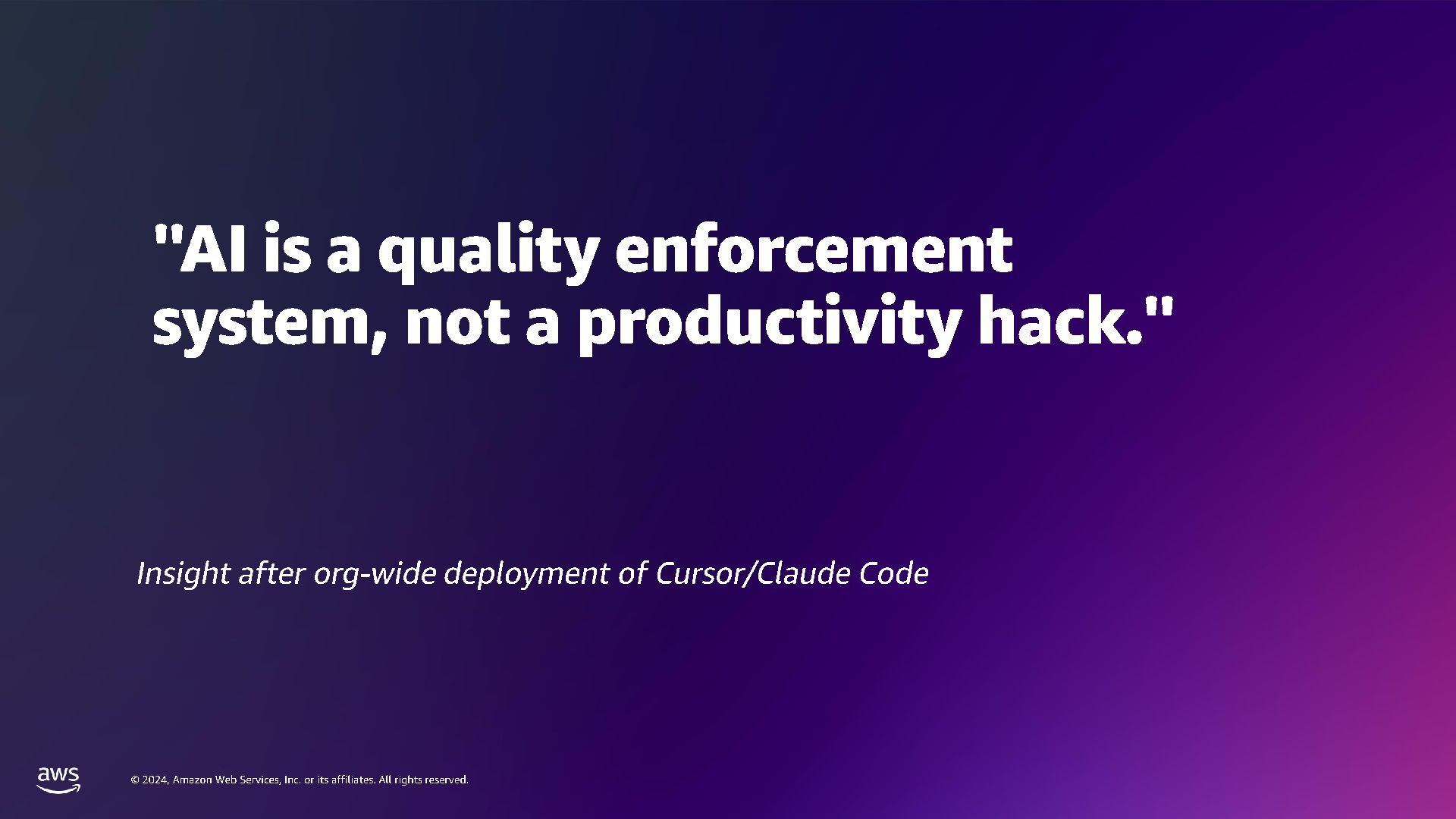
rights reserved. The current Narrative is wrong X What Everyone Thinks AI Does • Autocomplete functions faster • Generate boilerplate code • Help developers type less • Individual productivity hack ✓ What AI Should Actually Do • Propagate organizational context • Enforce architectural standards • Eliminate knowledge silos • Organizational quality multiplier The Problem: Most teams don't fail because typing is slow The Reality: Teams fail due to vague requirements, inconsistent decisions, and tribal knowledge
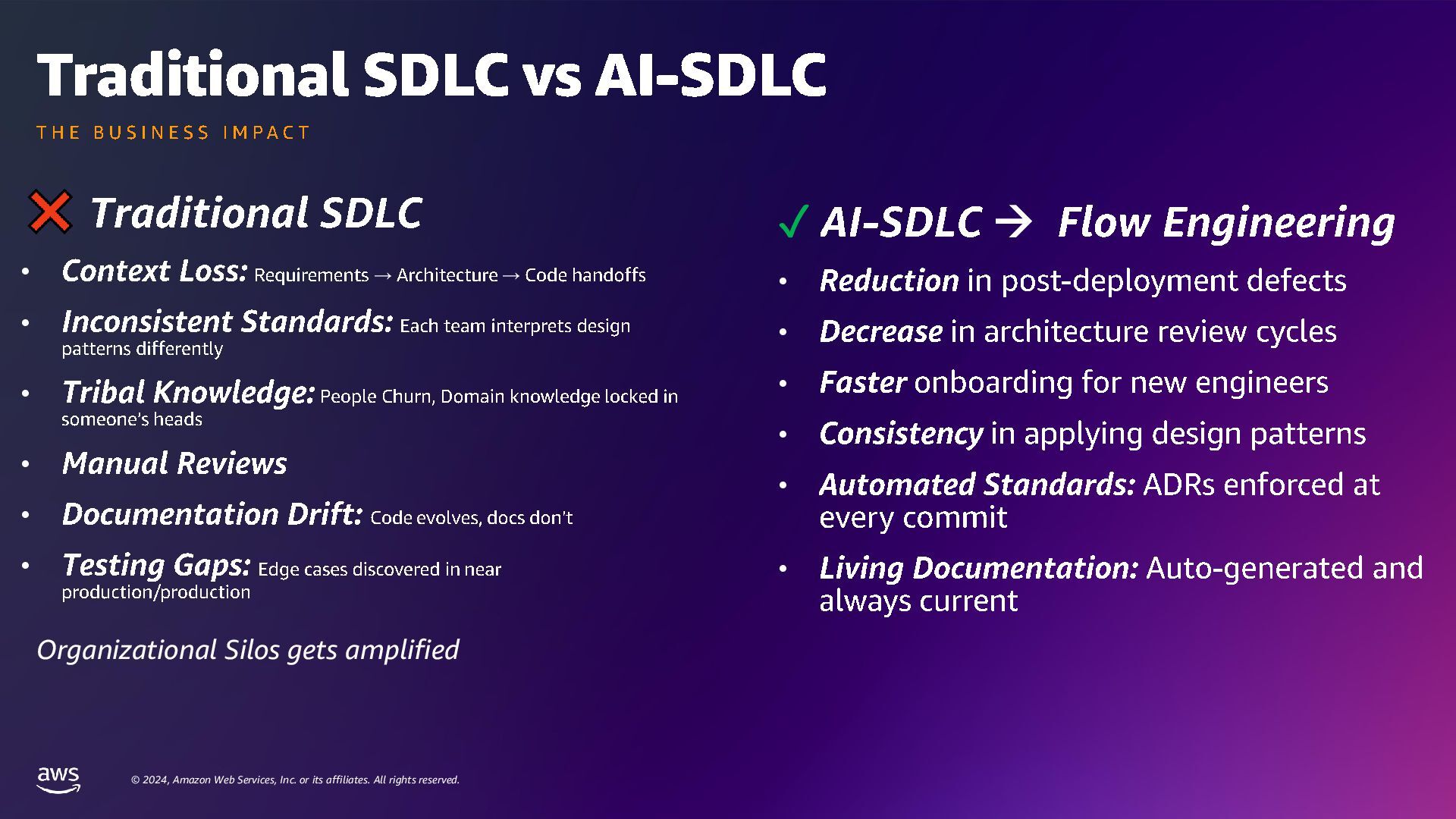
rights reserved. Traditional SDLC vs AI -SDLC Traditional SDLC • Context Loss: Requirements → Architecture → Code handoffs • Inconsistent Standards: Each team interprets design patterns differently • Tribal Knowledge: People Churn, Domain knowledge locked in someone’s heads • Manual Reviews • Documentation Drift: Code evolves, docs don't • Testing Gaps: Edge cases discovered in near production/ production ✓ AI-SDLC → Flow Engineering • Reduction in post -deployment defects • Decrease in architecture review cycles • Faster onboarding for new engineers • Consistency in applying design patterns • Automated Standards: ADRs enforced at every commit • Living Documentation: Auto -generated and always current THE BUSINESS IMPACT Organizational Silos gets amplified
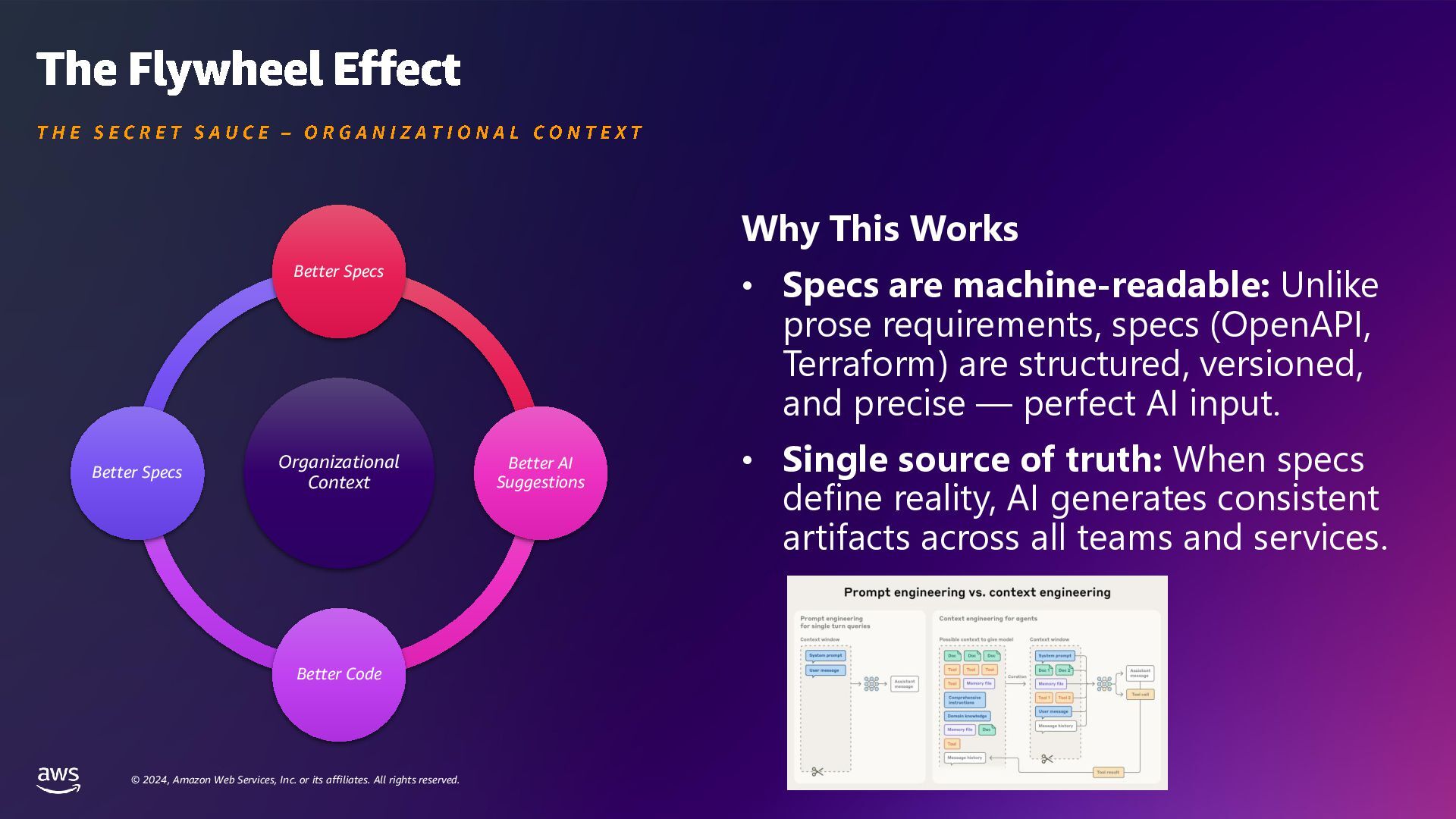
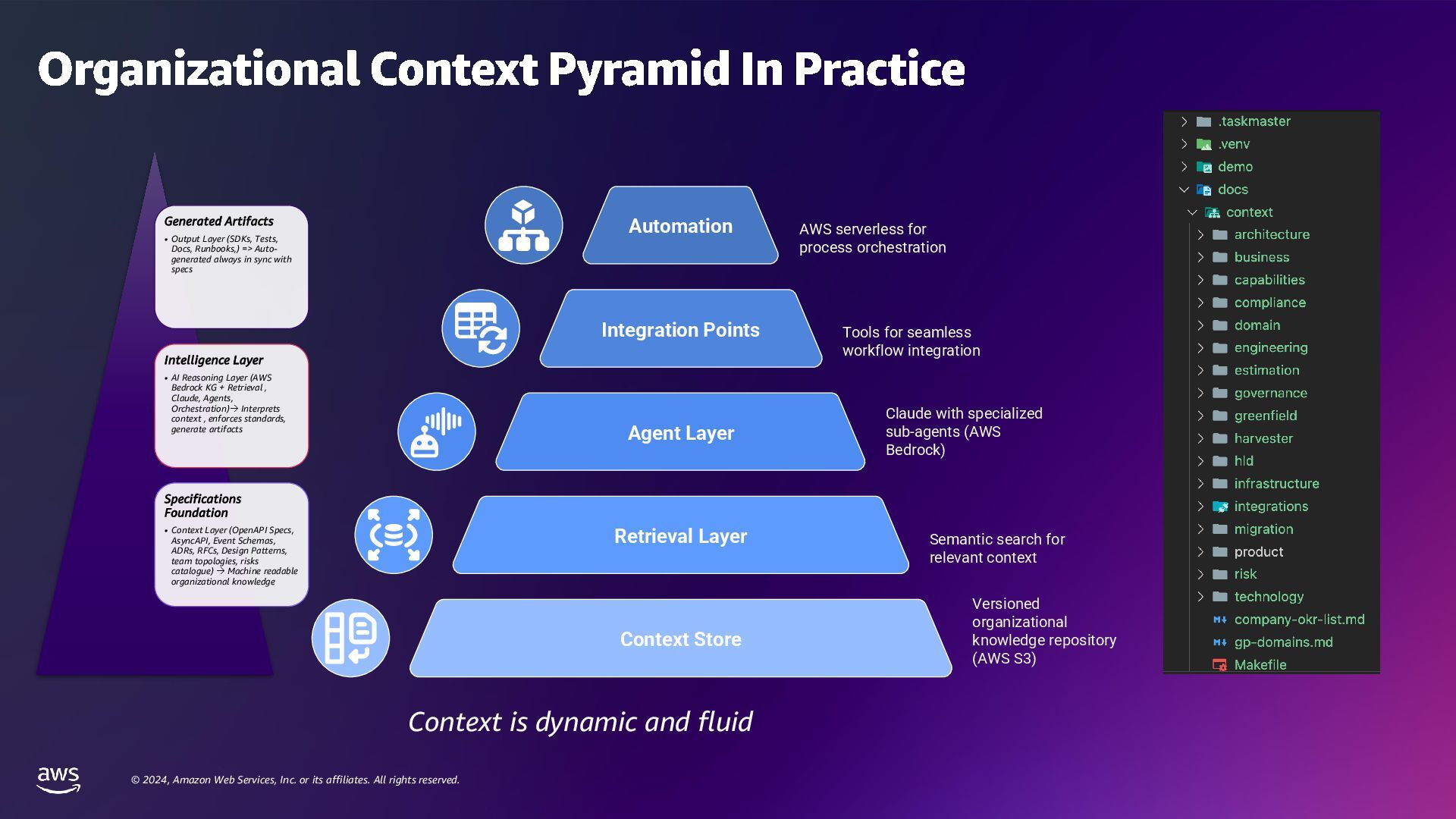
rights reserved. The Flywheel Effect THE SECRET SAUCE – ORGANIZATIONAL CONTEXT Organizational Context Better Specs Better AI Suggestions Better Code Better Specs Why This Works • Specs are machine-readable: Unlike prose requirements, specs (OpenAPI, Terraform) are structured, versioned, and precise — perfect AI input. • Single source of truth: When specs define reality, AI generates consistent artifacts across all teams and services.
rights reserved. "Without the Org Context foundation, AI just autocompletes your existing chaos. Garbage in, garbage out. " Craft you r Organizational Context Layer. Focus on outcomes rather than output.
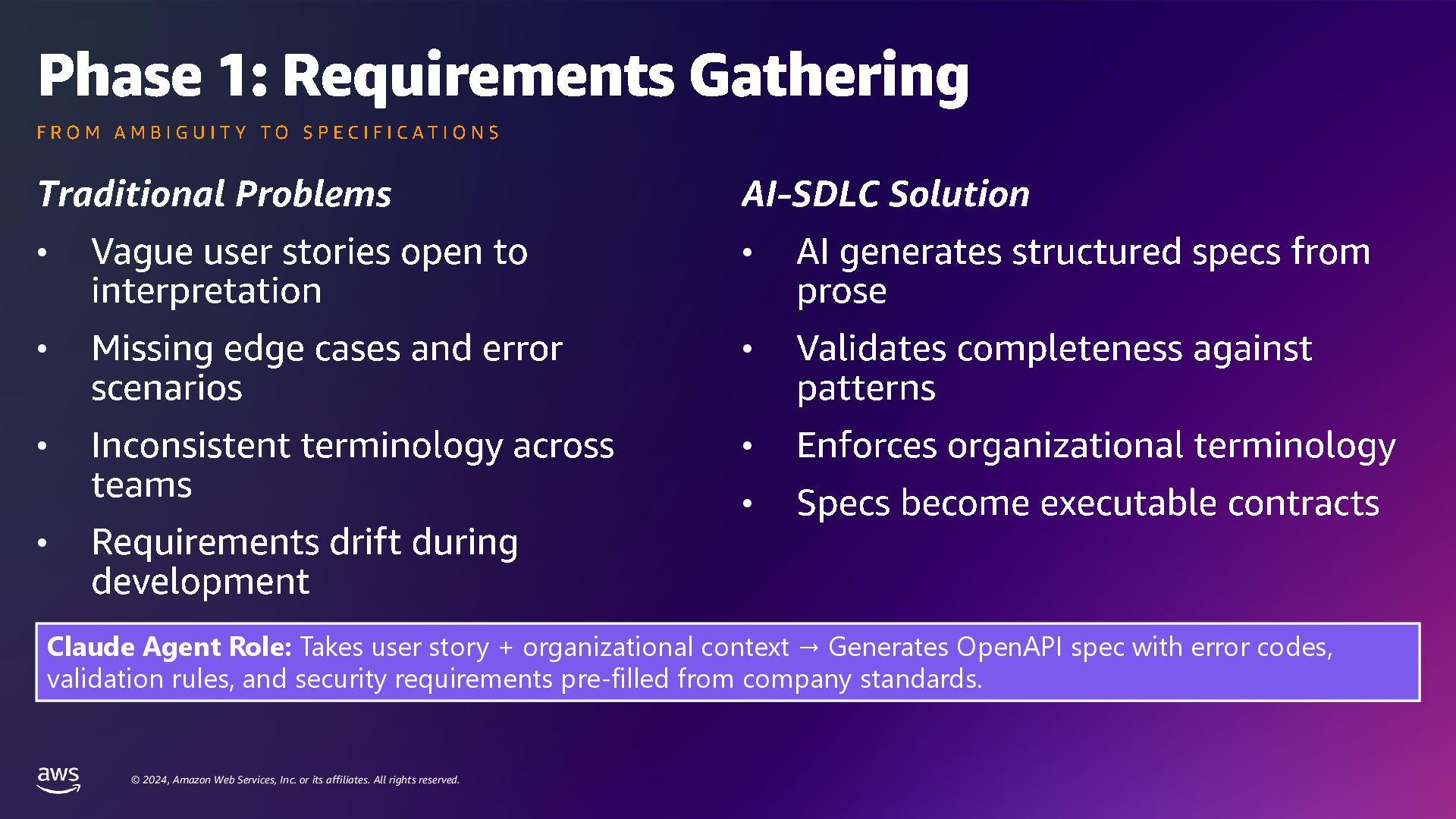
rights reserved. Phase 1: Requirements Gathering Traditional Problems • Vague user stories open to interpretation • Missing edge cases and error scenarios • Inconsistent terminology across teams • Requirements drift during development AI-SDLC Solution • AI generates structured specs from prose • Validates completeness against patterns • Enforces organizational terminology • Specs become executable contracts FROM AMBIGUITY TO SPECIFICATIONS Claude Agent Role: Takes user story + organizational context → Generates OpenAPI spec with error codes, validation rules, and security requirements pre-filled from company standards.
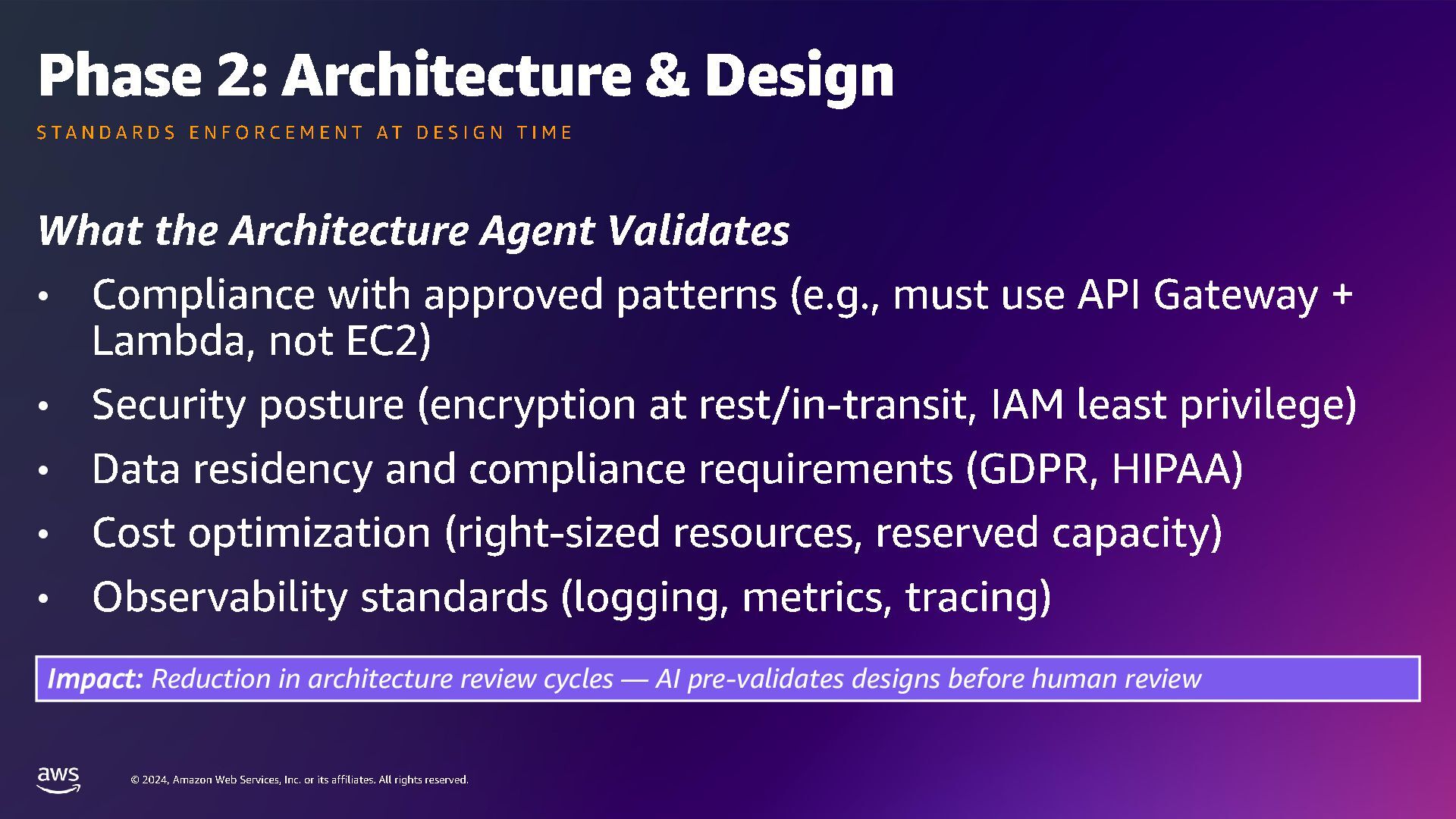
rights reserved. Phase 2: Architecture & Design What the Architecture Agent Validates • Compliance with approved patterns (e.g., must use API Gateway + Lambda, not EC2) • Security posture (encryption at rest/in -transit, IAM least privilege) • Data residency and compliance requirements (GDPR, HIPAA) • Cost optimization (right -sized resources, reserved capacity) • Observability standards (logging, metrics, tracing) STANDARDS ENFORCEMENT AT DESIGN TIME Impact: Reduction in architecture review cycles — AI pre-validates designs before human review
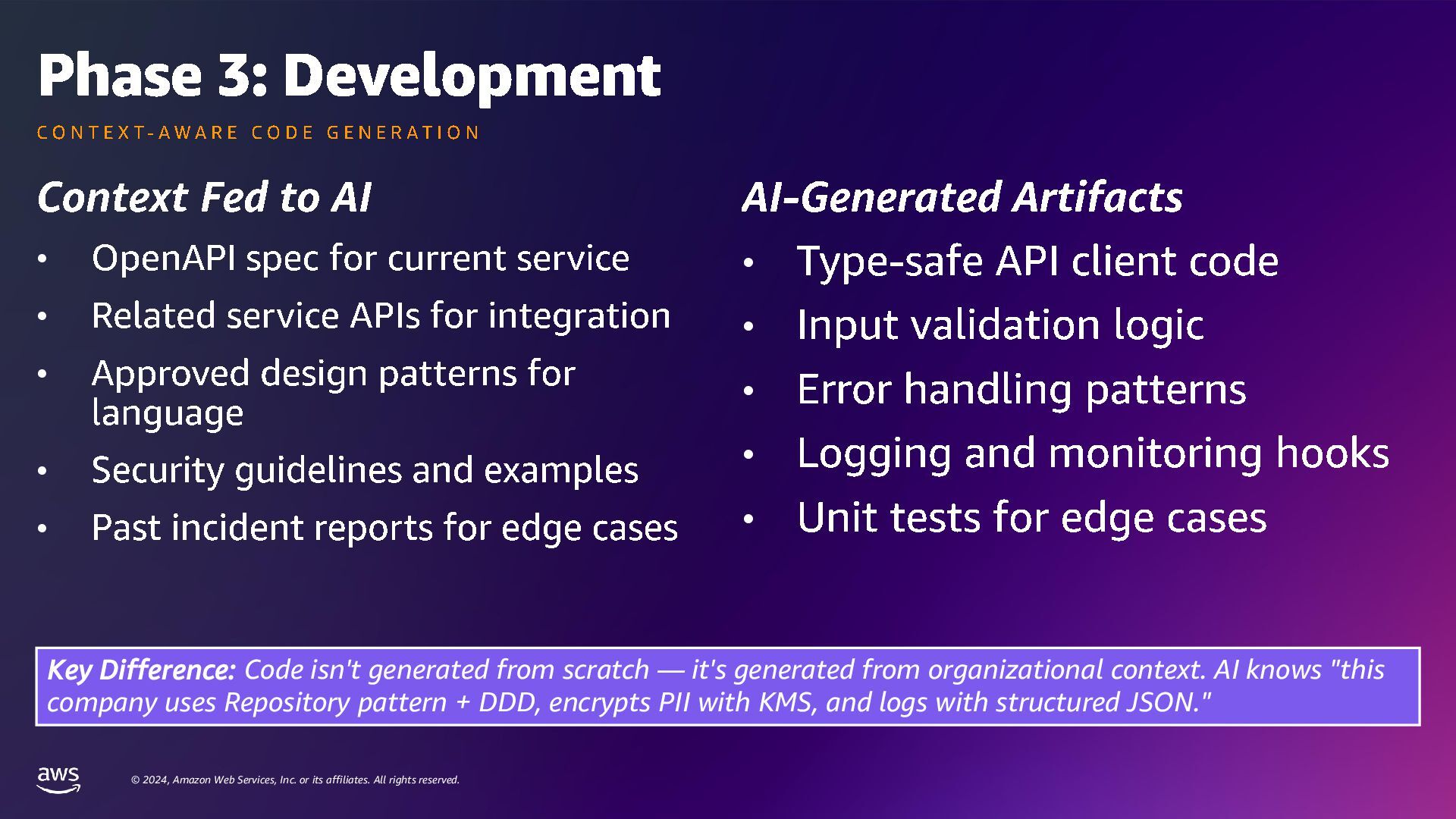
rights reserved. Phase 3: Development Context Fed to AI • OpenAPI spec for current service • Related service APIs for integration • Approved design patterns for language • Security guidelines and examples • Past incident reports for edge cases AI-Generated Artifacts • Type -safe API client code • Input validation logic • Error handling patterns • Logging and monitoring hooks • Unit tests for edge cases CONTEXT - AWARE CODE GENERATION Key Difference: Code isn't generated from scratch — it's generated from organizational context. AI knows "this company uses Repository pattern + DDD, encrypts PII with KMS, and logs with structured JSON."
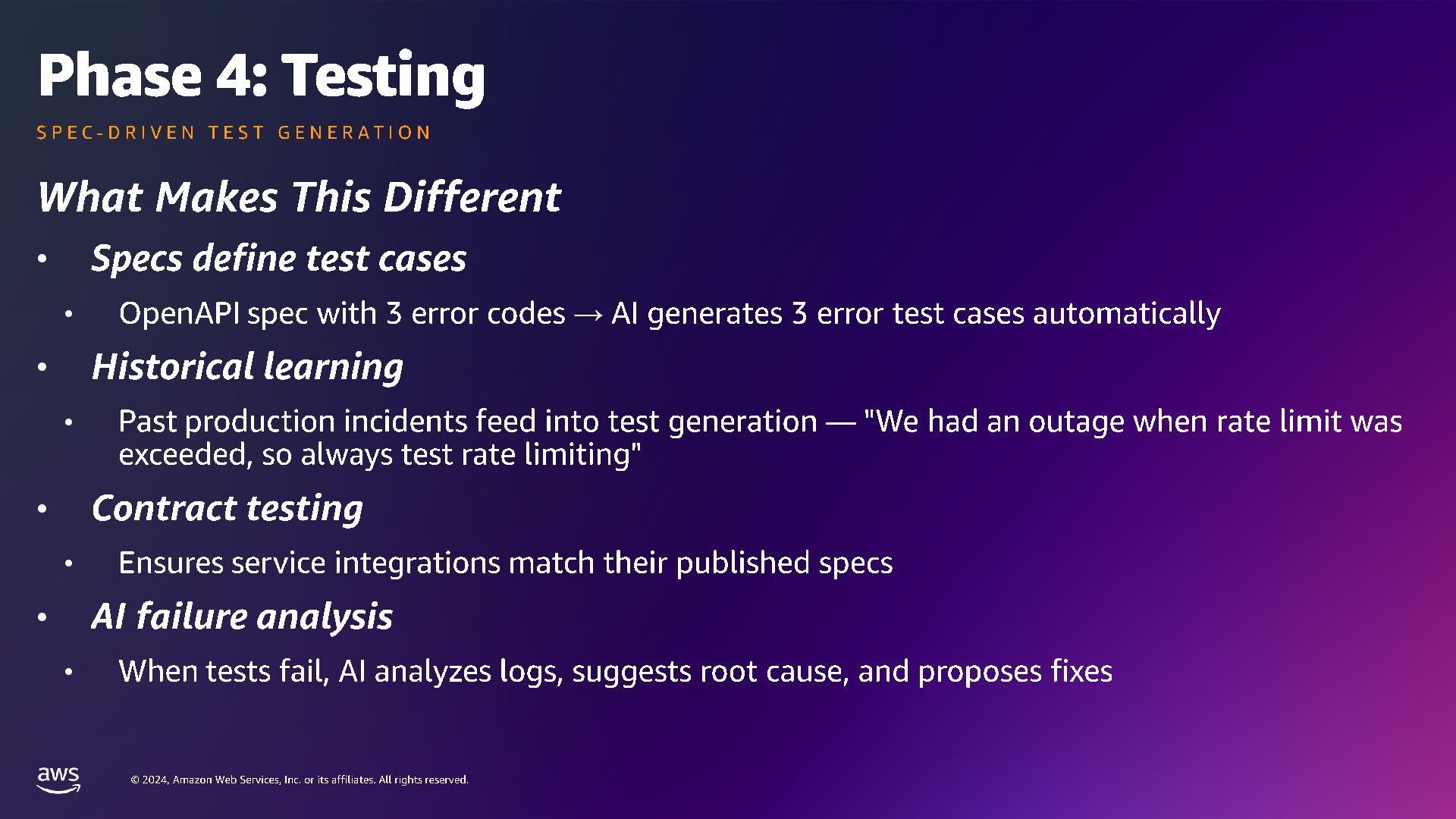
rights reserved. Phase 4: Testing What Makes This Different • Specs define test cases • OpenAPI spec with 3 error codes → AI generates 3 error test cases automatically • Historical learning • Past production incidents feed into test generation — "We had an outage when rate limit was exceeded, so always test rate limiting" • Contract testing • Ensures service integrations match their published specs • AI failure analysis • When tests fail, AI analyzes logs, suggests root cause, and proposes fixes SPEC - DRIVEN TEST GENERATION
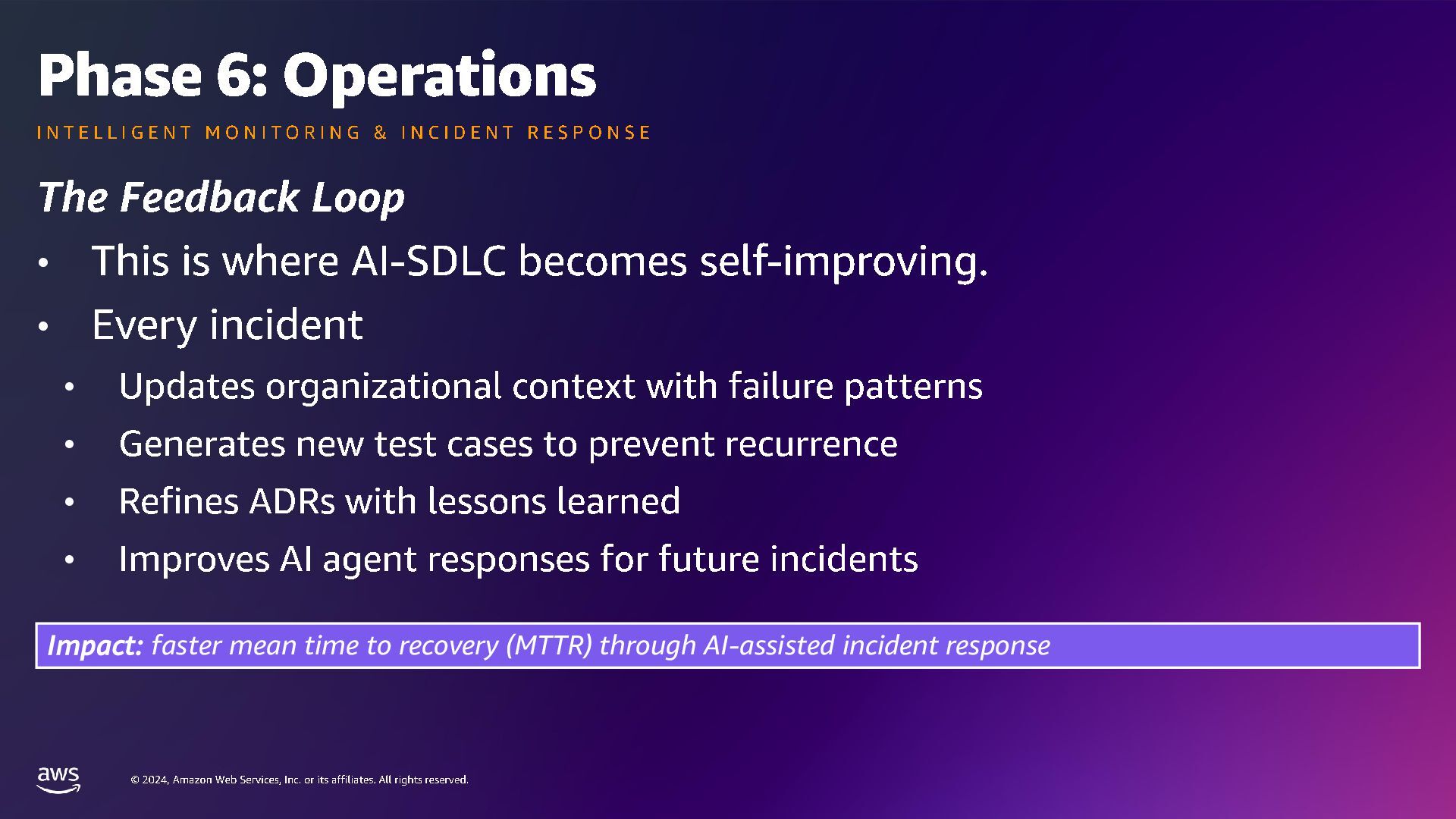
rights reserved. Phase 6: Operations The Feedback Loop • This is where AI -SDLC becomes self -improving. • Every incident • Updates organizational context with failure patterns • Generates new test cases to prevent recurrence • Refines ADRs with lessons learned • Improves AI agent responses for future incidents INTELLIGENT MONITORING & INCIDENT RESPONSE Impact: faster mean time to recovery (MTTR) through AI-assisted incident response
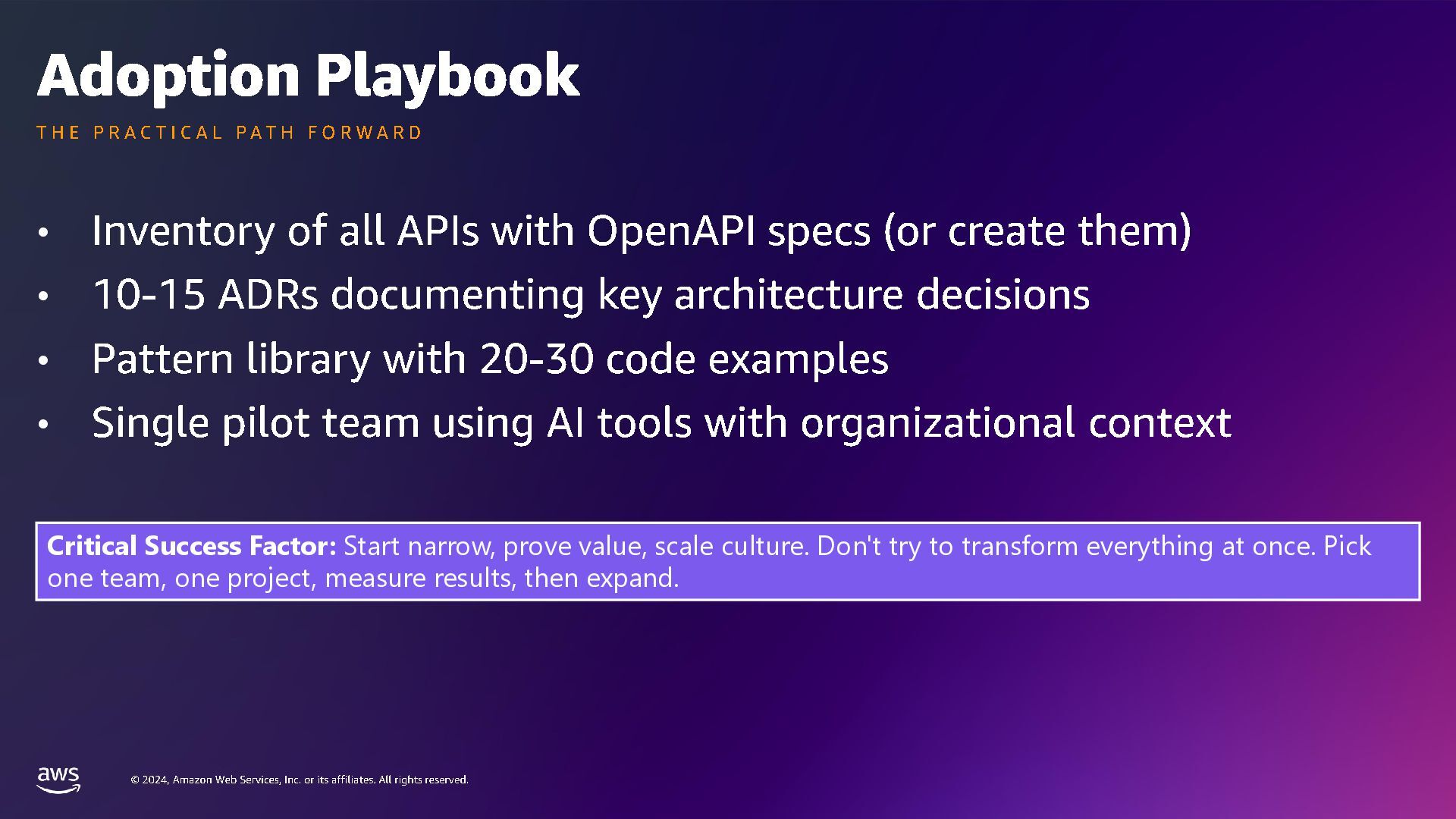
rights reserved. Adoption Playbook • Inventory of all APIs with OpenAPI specs (or create them) • 10 -15 ADRs documenting key architecture decisions • Pattern library with 20 -30 code examples • Single pilot team using AI tools with organizational context THE PRACTICAL PATH FORWARD Critical Success Factor: Start narrow, prove value, scale culture. Don't try to transform everything at once. Pick one team, one project, measure results, then expand.
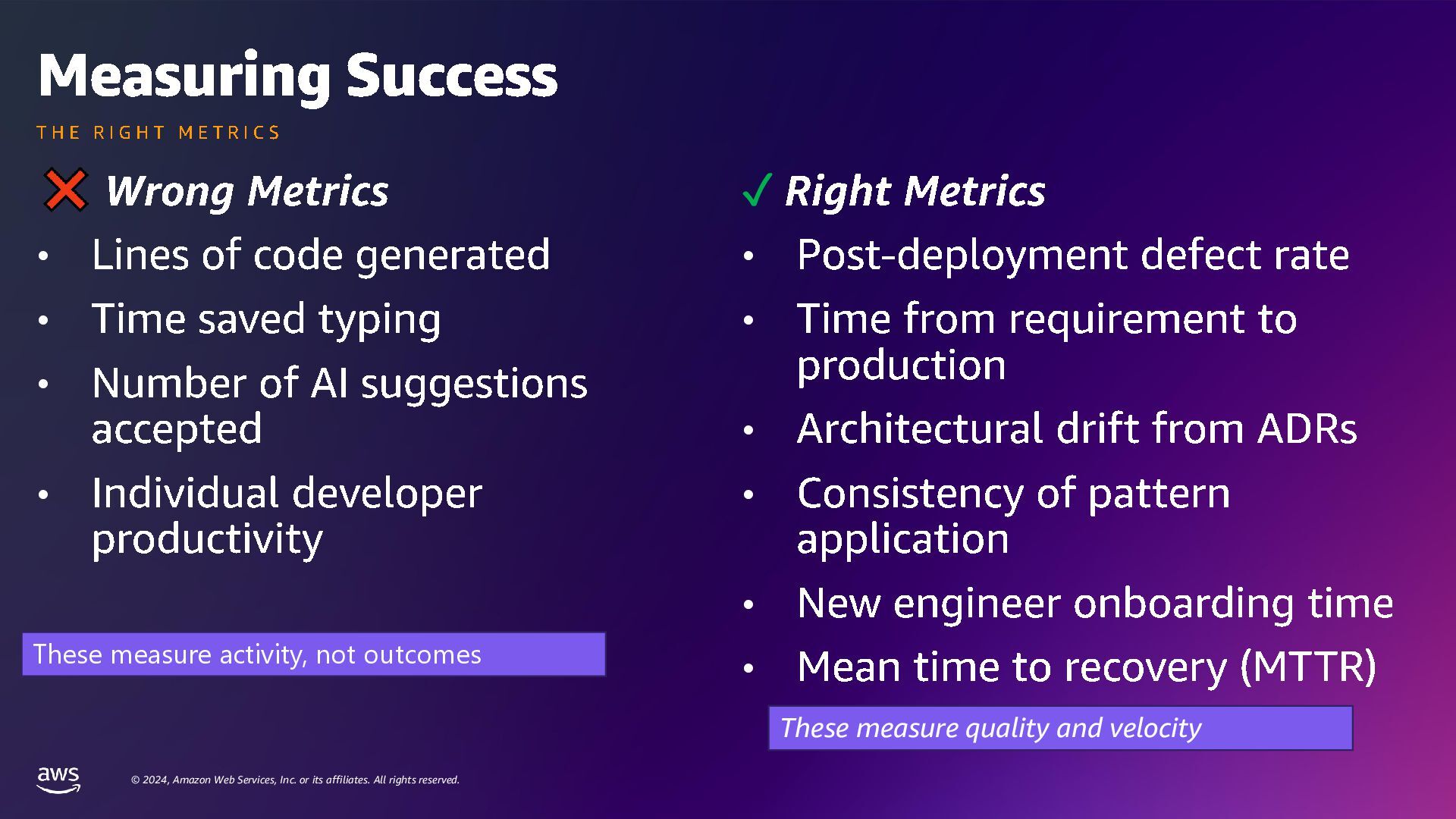
rights reserved. Measuring Success Wrong Metrics • Lines of code generated • Time saved typing • Number of AI suggestions accepted • Individual developer productivity ✓ Right Metrics • Post -deployment defect rate • Time from requirement to production • Architectural drift from ADRs • Consistency of pattern application • New engineer onboarding time • Mean time to recovery (MTTR) THE RIGHT METRICS These measure activity, not outcomes These measure quality and velocity
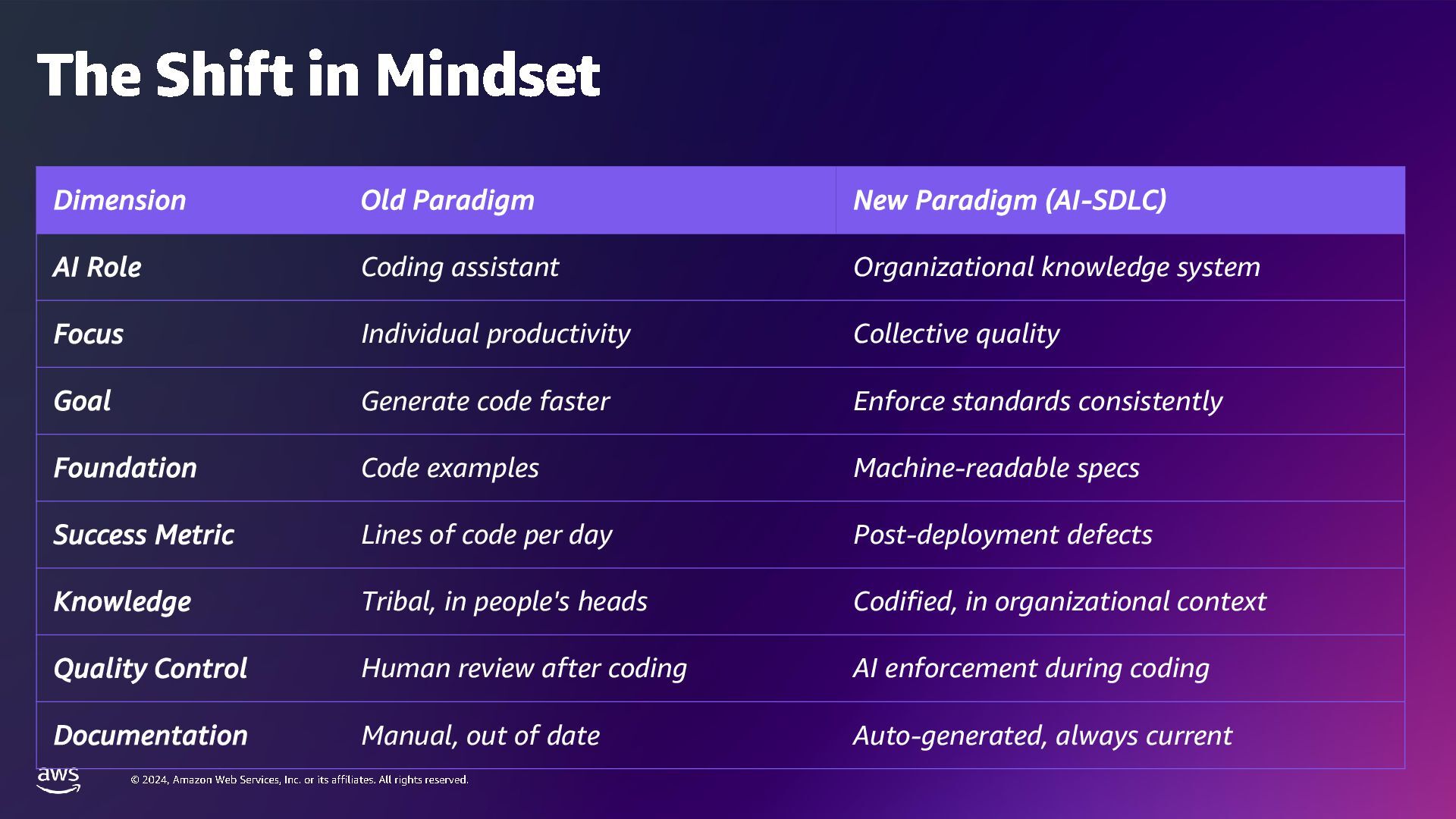
rights reserved. The Shift in Mindset Dimension Old Paradigm New Paradigm (AI-SDLC) AI Role Coding assistant Organizational knowledge system Focus Individual productivity Collective quality Goal Generate code faster Enforce standards consistently Foundation Code examples Machine-readable specs Success Metric Lines of code per day Post-deployment defects Knowledge Tribal, in people's heads Codified, in organizational context Quality Control Human review after coding AI enforcement during coding Documentation Manual, out of date Auto-generated, always current
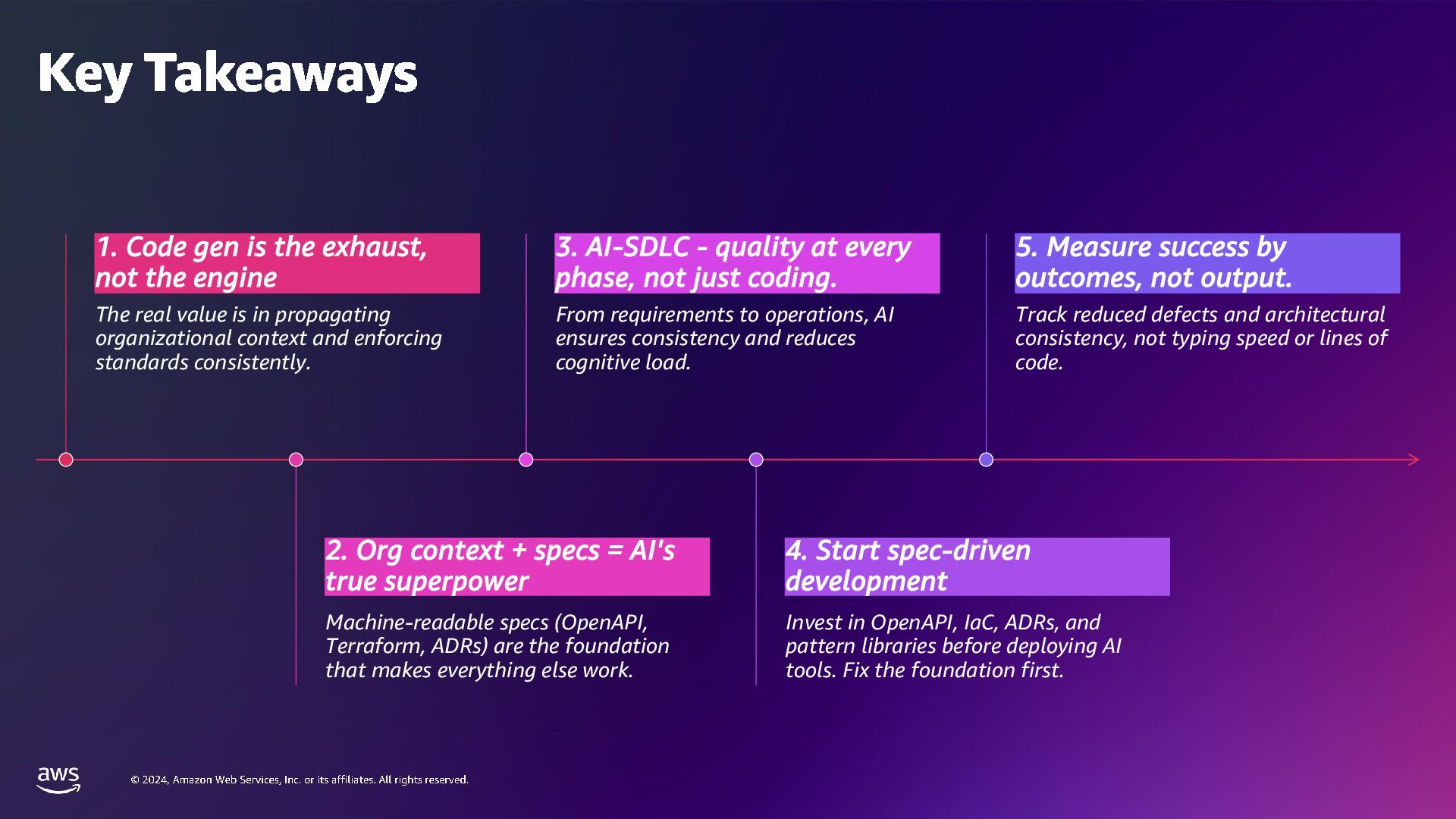
rights reserved. Key Takeaways The real value is in propagating organizational context and enforcing standards consistently. 1. Code gen is the exhaust, not the engine Machine-readable specs (OpenAPI, Terraform, ADRs) are the foundation that makes everything else work. 2. Org context + specs = AI's true superpower From requirements to operations, AI ensures consistency and reduces cognitive load. 3. AI-SDLC - quality at every phase, not just coding. Invest in OpenAPI, IaC, ADRs, and pattern libraries before deploying AI tools. Fix the foundation first. 4. Start spec-driven development Track reduced defects and architectural consistency, not typing speed or lines of code. 5. Measure success by outcomes, not output.
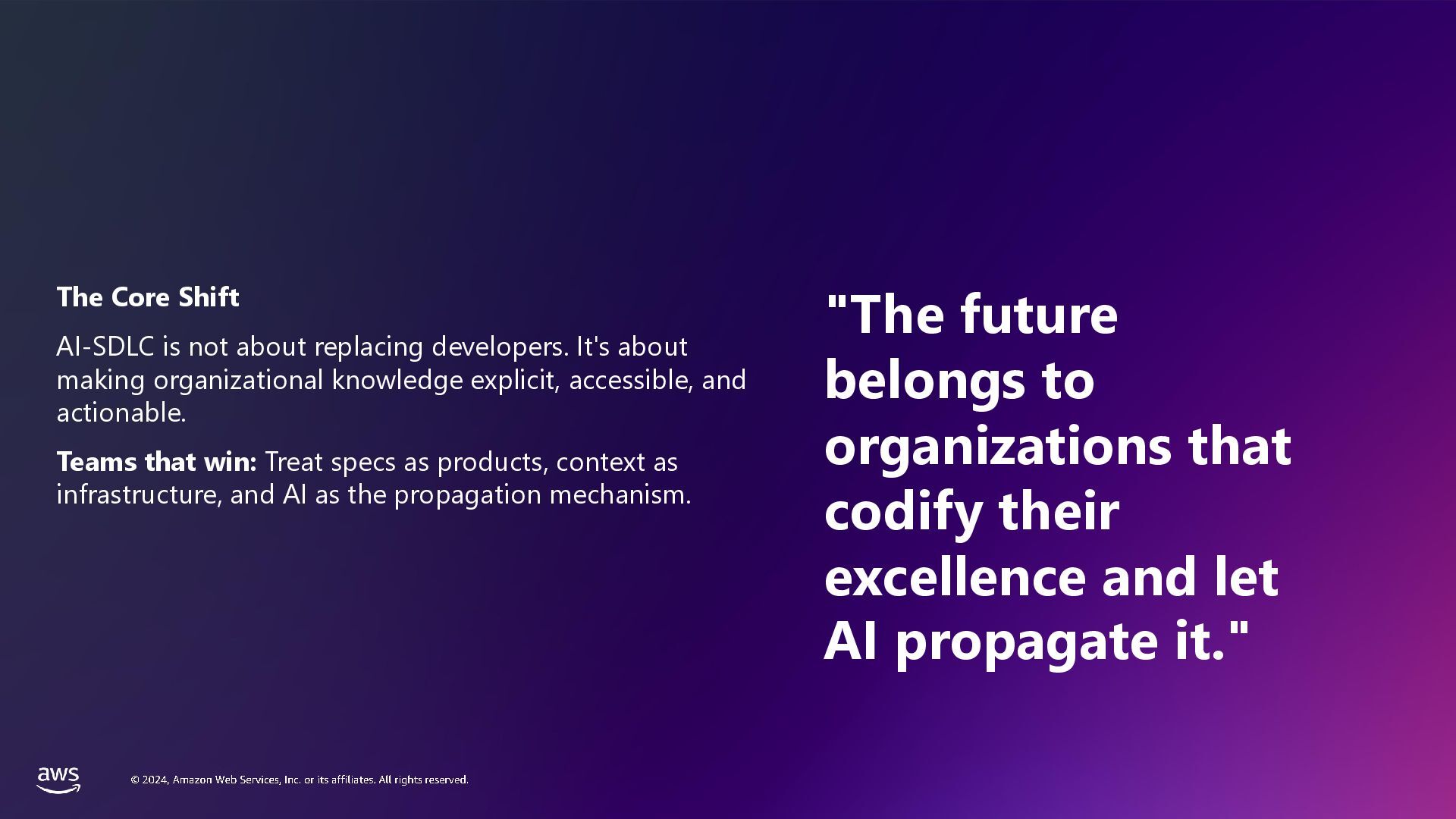
rights reserved. The Core Shift AI-SDLC is not about replacing developers. It's about making organizational knowledge explicit, accessible, and actionable. Teams that win: Treat specs as products, context as infrastructure, and AI as the propagation mechanism. "The future belongs to organizations that codify their excellence and let AI propagate it."


 lalitkale
 takahashim
 techtekt
 stomk
stomk
 glaforge
 odashi
 iktakahiro
 onk
onk
 kash1064
 raspython3
 riyaamemiya
 finengine
 codmoninc
 rkaga
rkaga
 keathley
 michielstock
 csswizardry
 frankvandijk
 davidcarrasco
 cassininazir
 aleyda
 inesmontani
 addyosmani
 nmsamuel
 signer