Upgrade to Pro — share decks privately, control downloads, hide ads and more …

Where LLM API prices actually change: context t...

Where LLM API prices actually change: context thresholds, September 2026

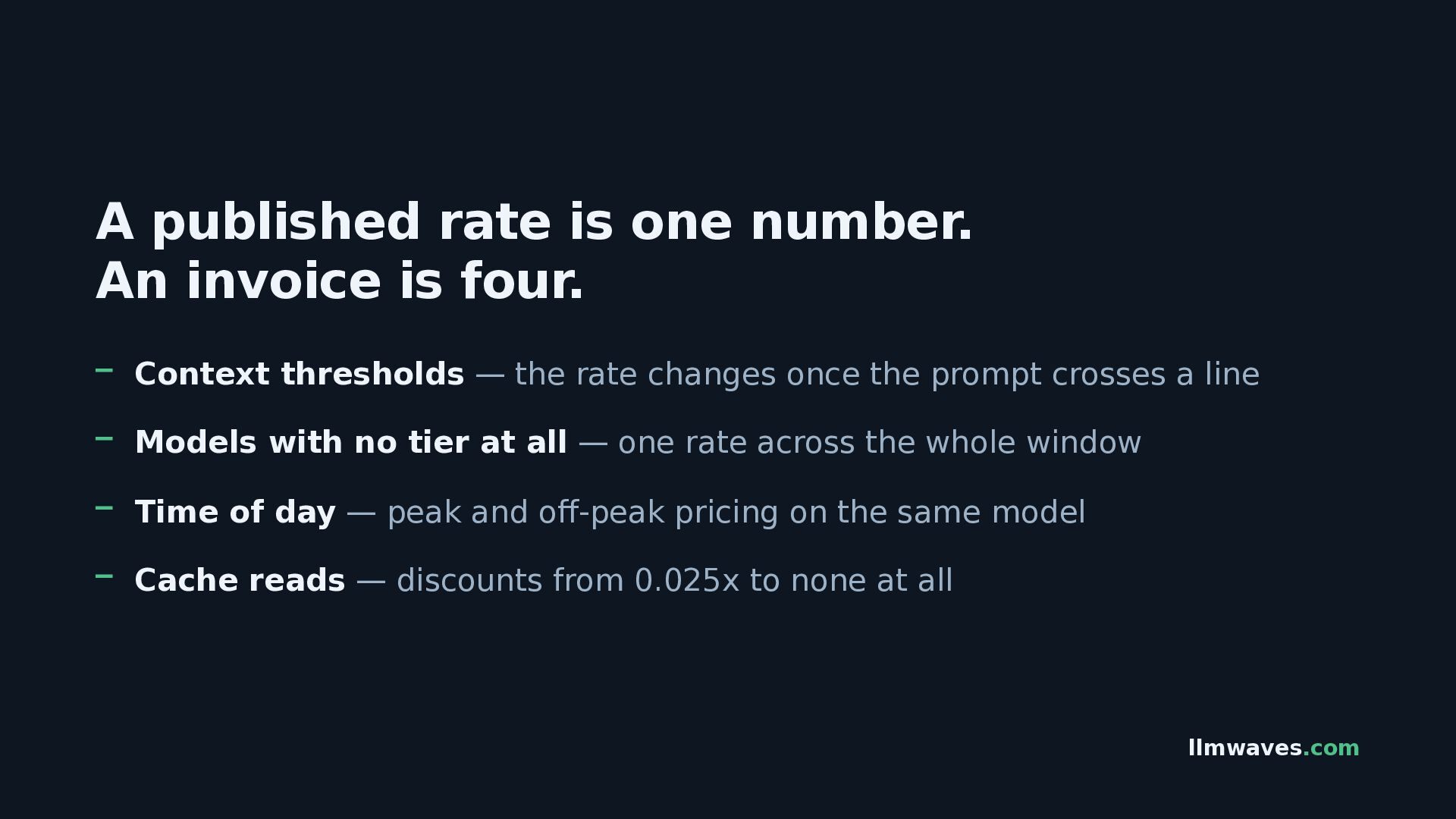
Published price tables give one rate per model. Four mechanics account for most of the gap between that rate and the invoice.

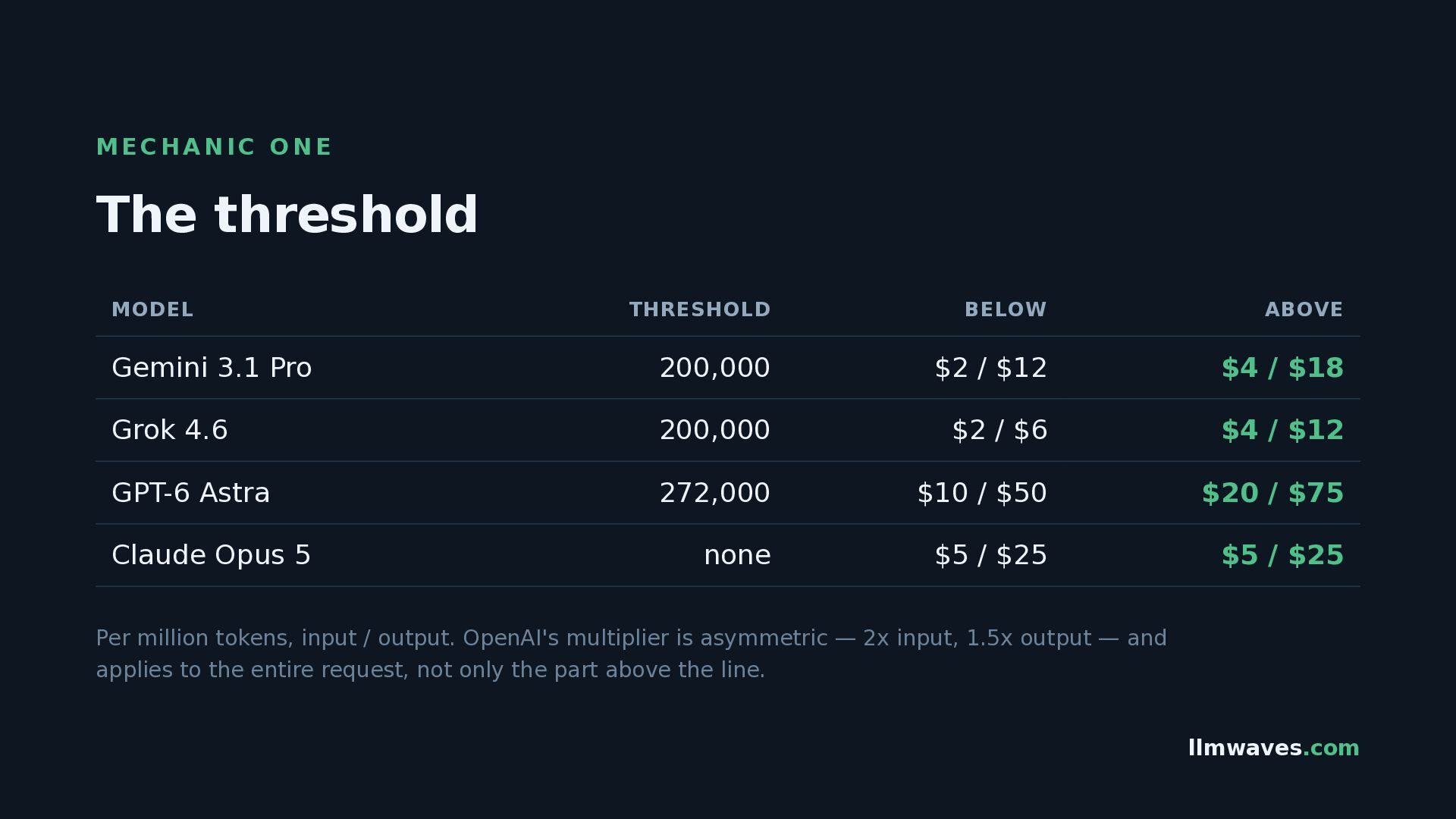
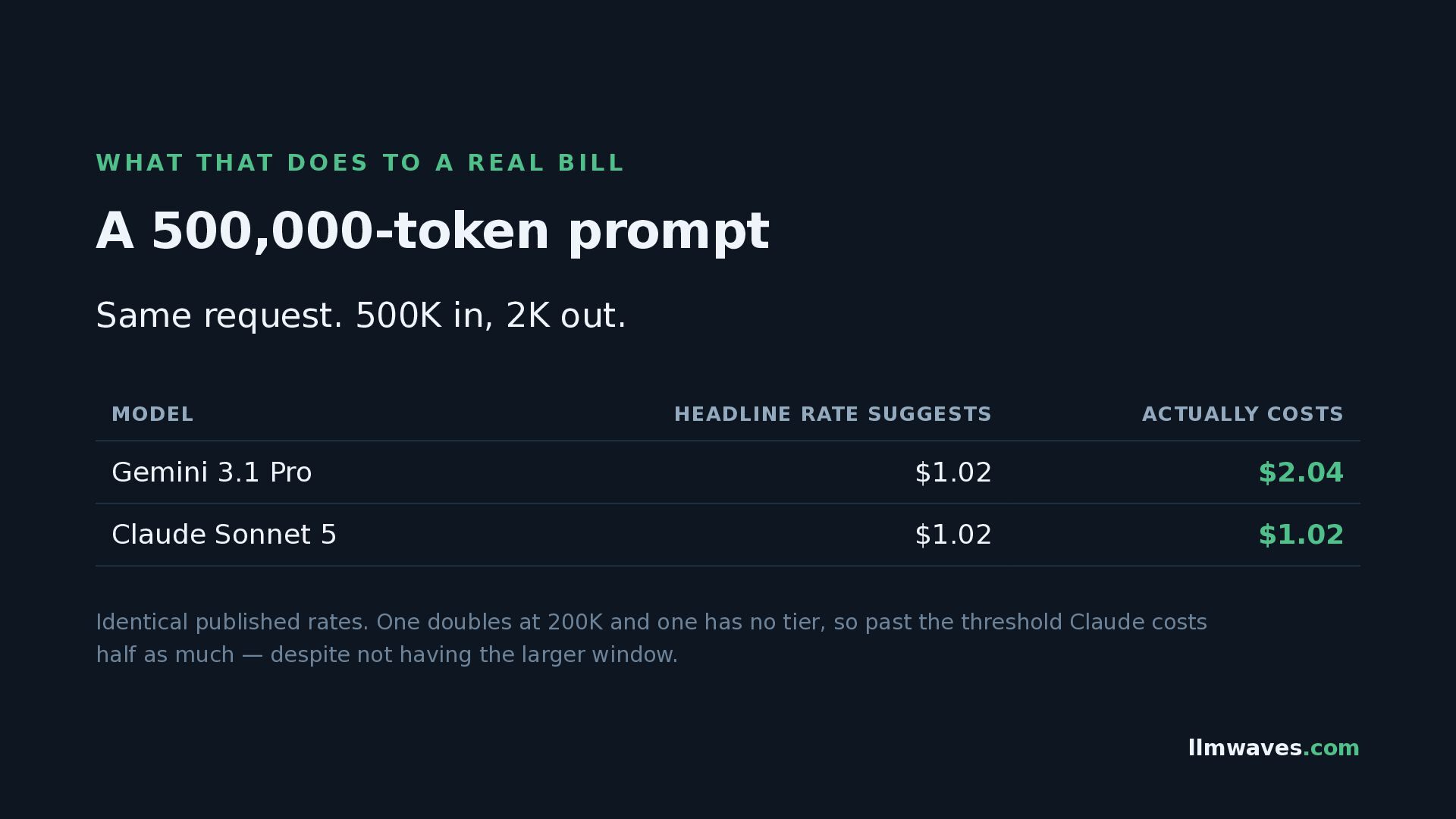
Context thresholds. Gemini 3.1 Pro and Grok 4.6 double above 200,000 prompt tokens. OpenAI's threshold sits at 272,000 and its multiplier is asymmetric, 2x input and 1.5x output, applied to the whole request rather than the part above the line.

No tier at all. Claude from 4.6 onward bills one rate across the full 1M window, which makes it the cheapest place to use a long prompt despite not having the largest one.

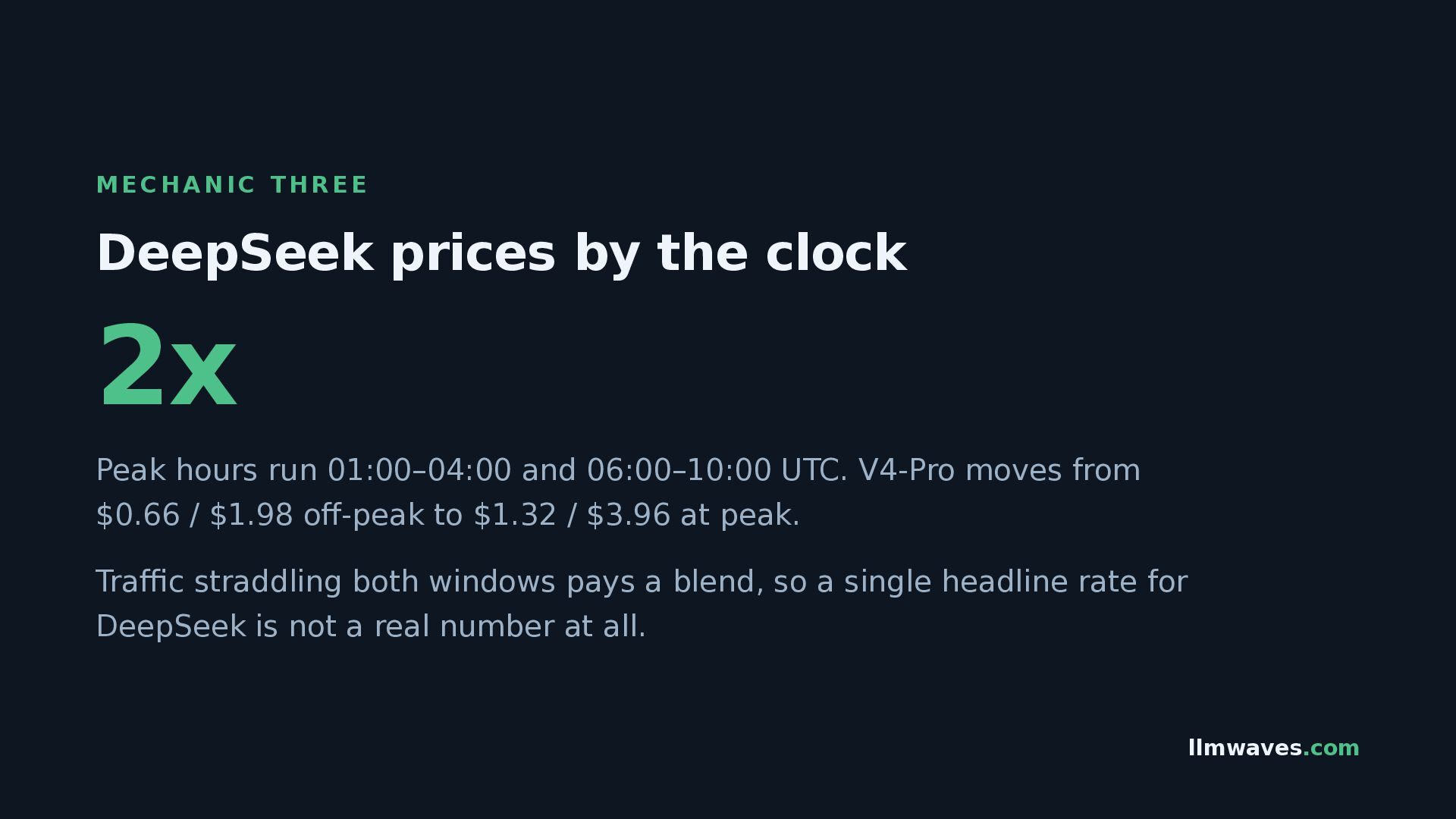
Time of day. DeepSeek prices by the clock, with peak hours 01:00-04:00 and 06:00-10:00 UTC.

Cache reads. Discounts range from 0.025x base to none at all.

Covers 24 models across OpenAI, Anthropic, Google, xAI, DeepSeek and Mistral, every rate read from provider documentation between 10 and 18 September 2026.

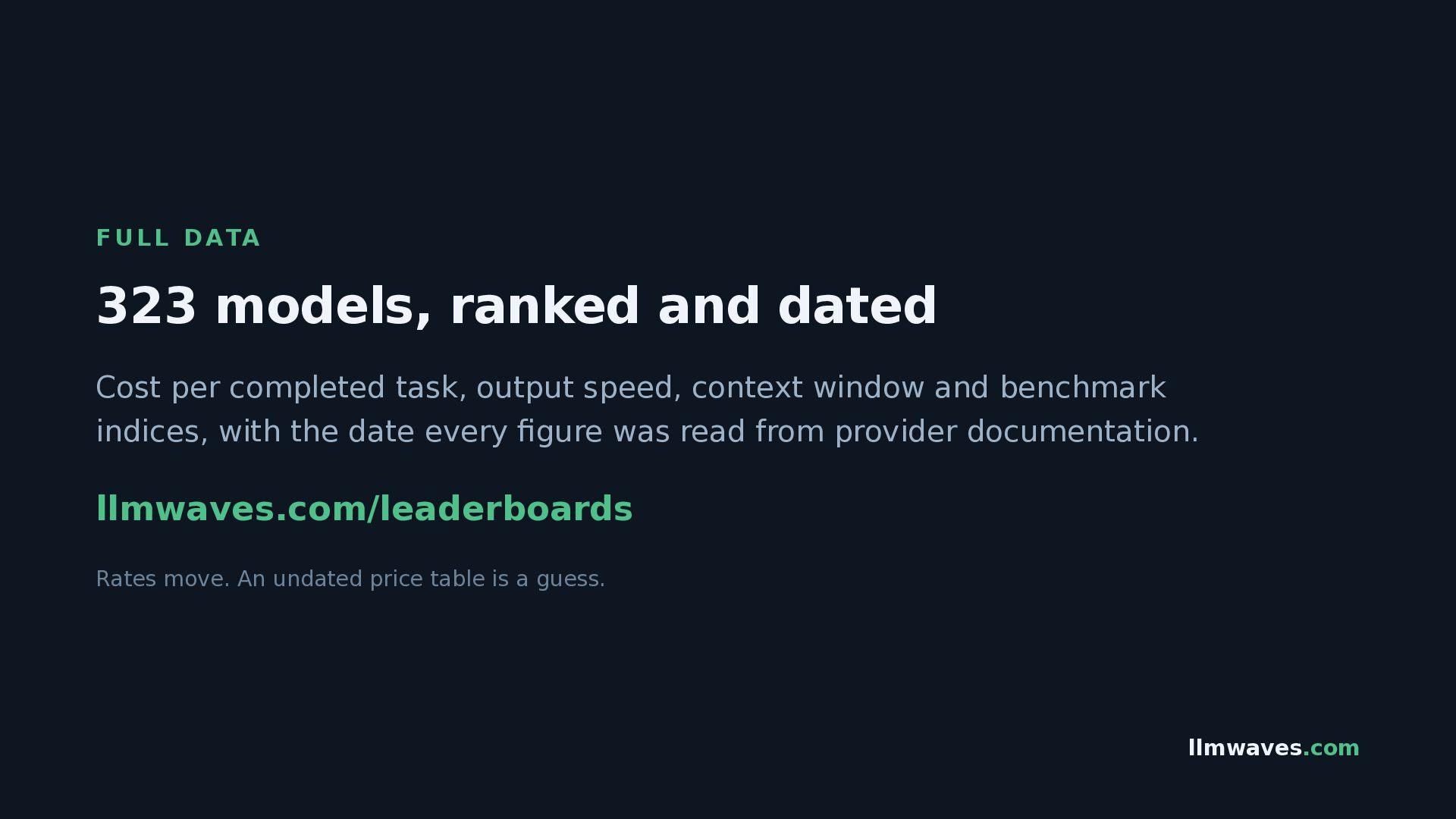
See current rates for 323 models, ranked by cost per completed task.

Avatar for LLM Waves Research

LLM Waves Research

September 20, 2026

Other Decks in Technology

Transcript

  1. L L M W AV E S R E S

    E A R C H · S E P T E M B E R 2 0 2 6 Where LLM API prices actually change The context thresholds, time-of-day rates and cache discounts that published price tables leave out. 24 models, six providers, every rate dated. llmwaves.com
  2. A published rate is one number. An invoice is four.

    Context thresholds — the rate changes once the prompt crosses a line Models with no tier at all — one rate across the whole window Time of day — peak and off-peak pricing on the same model Cache reads — discounts from 0.025x to none at all llmwaves.com
  3. MECHANIC ONE The threshold MODEL THRESHOLD BELOW ABOVE Gemini 3.1

    Pro 200,000 $2 / $12 $4 / $18 Grok 4.6 200,000 $2 / $6 $4 / $12 GPT-6 Astra 272,000 $10 / $50 $20 / $75 none $5 / $25 $5 / $25 Claude Opus 5 Per million tokens, input / output. OpenAI's multiplier is asymmetric — 2x input, 1.5x output — and applies to the entire request, not only the part above the line. llmwaves.com
  4. W H AT T H AT D O E S

    T O A R E A L B I L L A 500,000-token prompt Same request. 500K in, 2K out. MODEL HEADLINE RATE SUGGESTS ACTUALLY COSTS Gemini 3.1 Pro $1.02 $2.04 Claude Sonnet 5 $1.02 $1.02 Identical published rates. One doubles at 200K and one has no tier, so past the threshold Claude costs half as much — despite not having the larger window. llmwaves.com
  5. MECHANIC THREE DeepSeek prices by the clock 2x Peak hours

    run 01:00–04:00 and 06:00–10:00 UTC. V4-Pro moves from $0.66 / $1.98 off-peak to $1.32 / $3.96 at peak. Traffic straddling both windows pays a blend, so a single headline rate for DeepSeek is not a real number at all. llmwaves.com
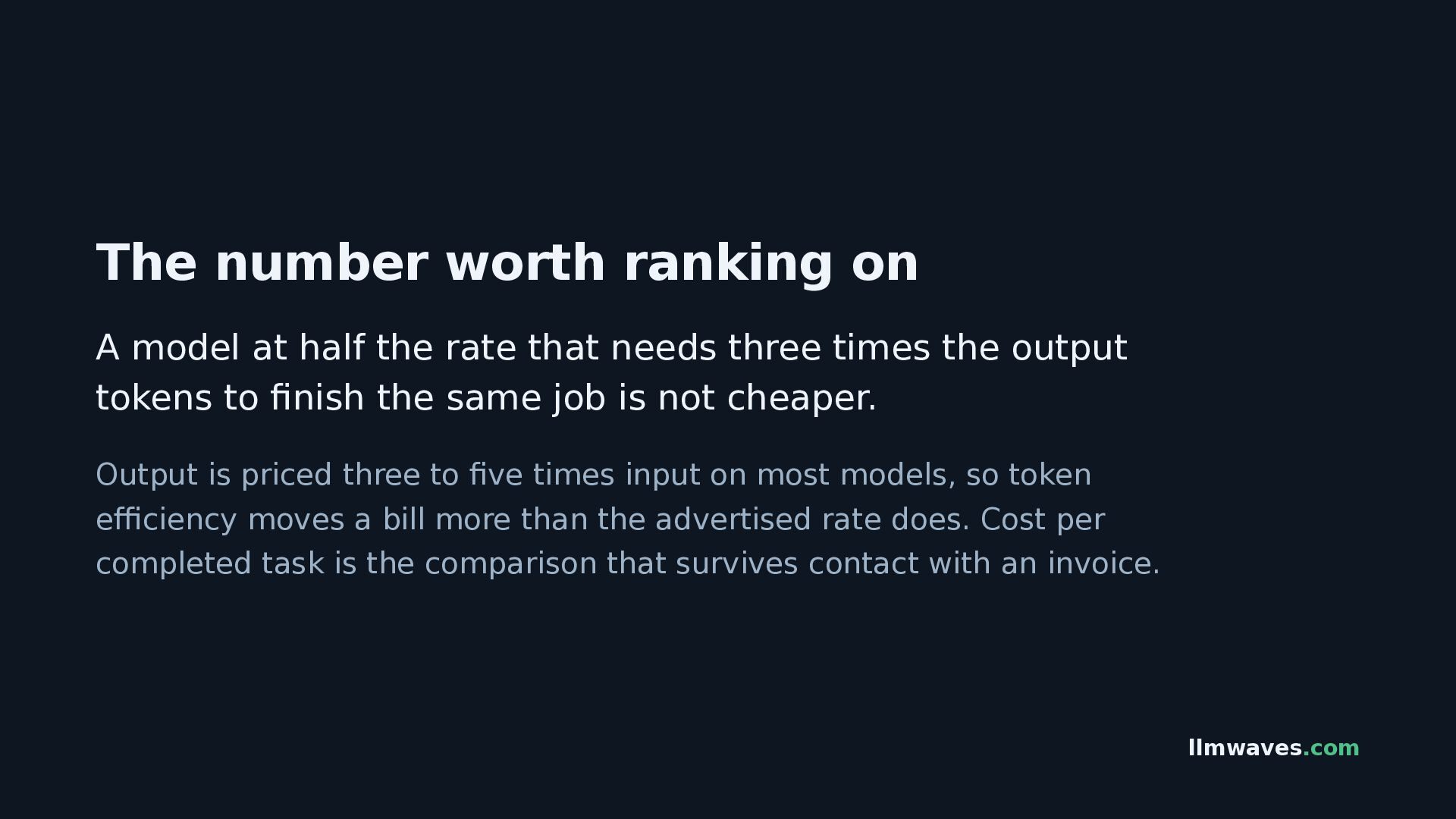
  6. The number worth ranking on A model at half the

    rate that needs three times the output tokens to finish the same job is not cheaper. Output is priced three to five times input on most models, so token efficiency moves a bill more than the advertised rate does. Cost per completed task is the comparison that survives contact with an invoice. llmwaves.com
  7. F U L L D ATA 323 models, ranked and

    dated Cost per completed task, output speed, context window and benchmark indices, with the date every figure was read from provider documentation. llmwaves.com/leaderboards Rates move. An undated price table is a guess. llmwaves.com