Upgrade to Pro — share decks privately, control downloads, hide ads and more …

Digital Marketing Training Institute in Bangalore

Avatar for Charan Cherry Charan Cherry
September 23, 2024
17

Digital Marketing Training Institute in Bangalore

National Institute of Digital Marketing Is One Of The Leading and Best Digital Marketing Institute In Bangalore, India And We Have Brand Value For The Quality Of Education Which We Provide. Our Curriculum and Courses Are Designed with Practical knowledge are Fully For Job Orientation Bases. We have the best curriculum, trainers and unlimited practical hours on live project.

Avatar for Charan Cherry

Charan Cherry

September 23, 2024

Transcript

  1. Table of content ; 1. Introduction to Social Media Marketing

    2. The Role of Social Media in Business Growth 3. Content Creation: The Heart of Social Media Marketing 4. Platform Selection: Where Should You Be? 5. Audience Targeting: Reaching the Right People 6. The Importance of Analytics and Metrics 7. The Rise of Social Commerce 8. Influencer Marketing: Leveraging Trust and Authenticity 9. Paid Advertising on Social Media 10. Future Trends in Social Media Marketing
  2. Social Media Marketing: A Comprehensive Guide for Businesses ; In

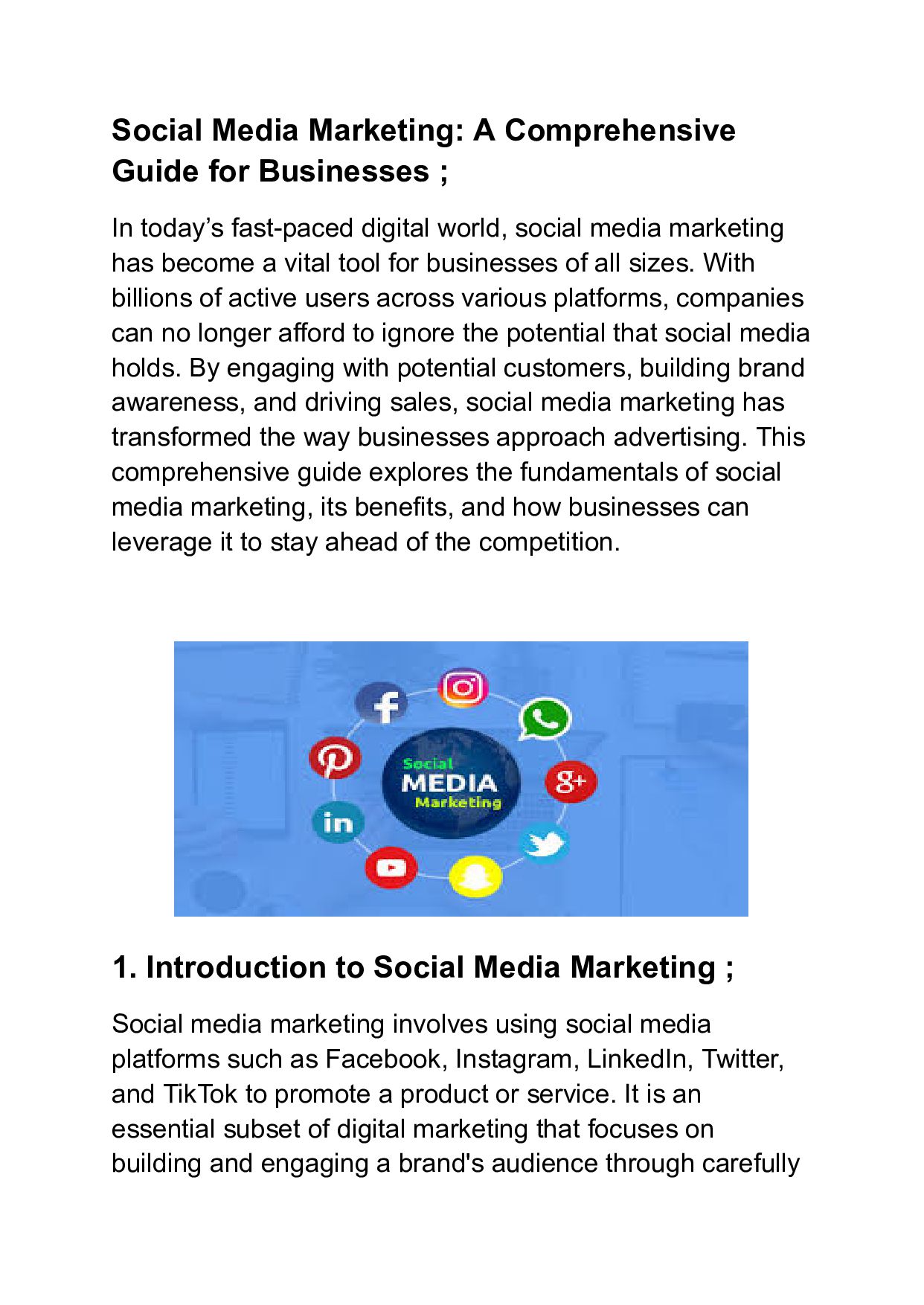
    today’s fast-paced digital world, social media marketing has become a vital tool for businesses of all sizes. With billions of active users across various platforms, companies can no longer afford to ignore the potential that social media holds. By engaging with potential customers, building brand awareness, and driving sales, social media marketing has transformed the way businesses approach advertising. This comprehensive guide explores the fundamentals of social media marketing, its benefits, and how businesses can leverage it to stay ahead of the competition. 1. Introduction to Social Media Marketing ; Social media marketing involves using social media platforms such as Facebook, Instagram, LinkedIn, Twitter, and TikTok to promote a product or service. It is an essential subset of digital marketing that focuses on building and engaging a brand's audience through carefully
  3. curated content. Unlike traditional marketing methods, social media allows businesses

    to interact directly with their customers, fostering relationships and encouraging brand loyalty. Today, businesses must create compelling content that not only informs but also resonates with the target audience. Videos, blogs, images, and infographics are some of the primary tools used to engage users. With social media marketing strategies, businesses can expand their reach, increase website traffic, and convert leads into loyal customers. 2.The Role of Social Media in Business Growth The role of social media in business growth cannot be overstated. It allows brands to: • Build Brand Awareness: Through consistent and engaging content, businesses can increase visibility and awareness of their products or services. • Engage with the Target Audience: Social media provides a unique opportunity for businesses to
  4. interact with their audience on a personal level. Likes, shares,

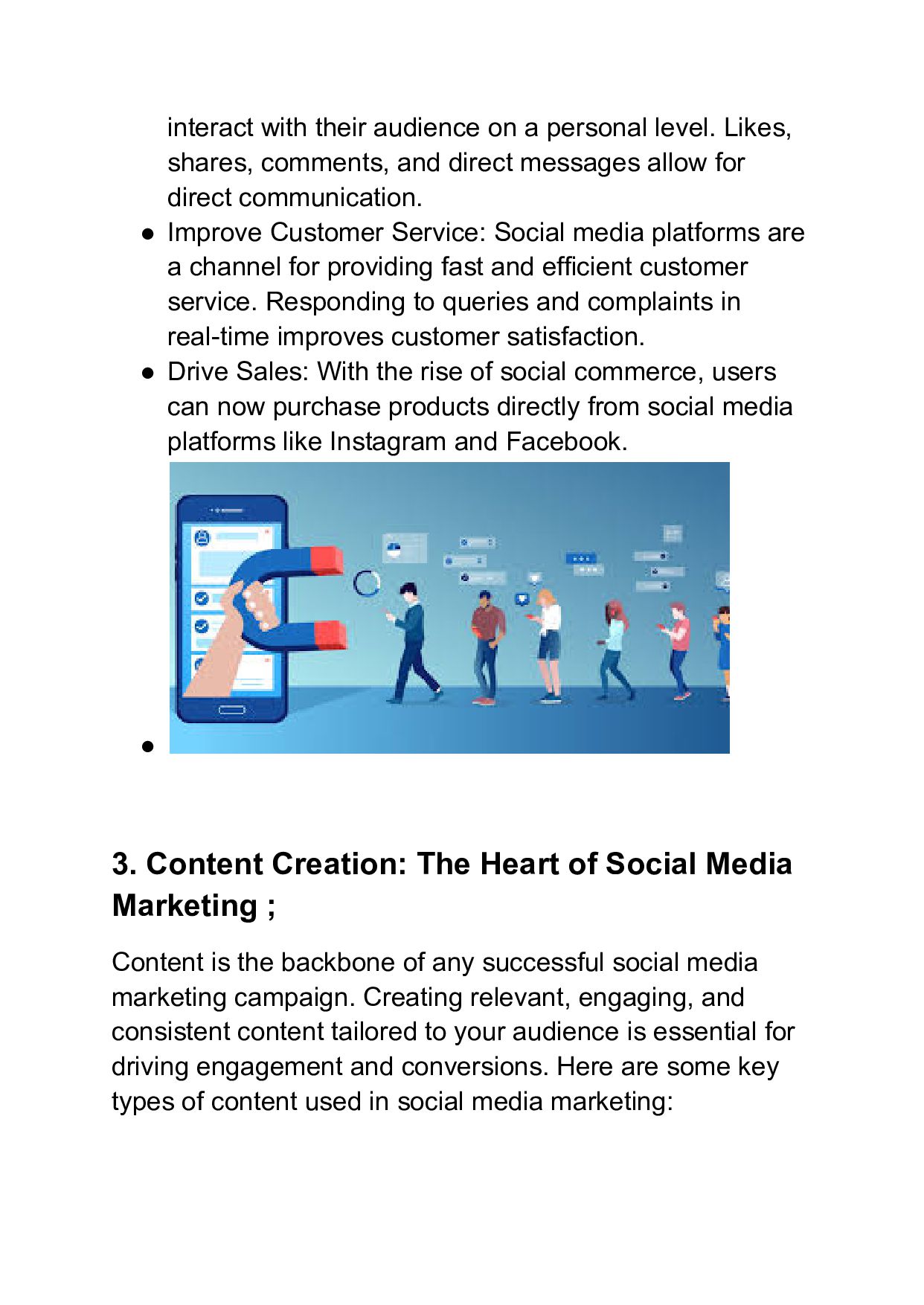
    comments, and direct messages allow for direct communication. • Improve Customer Service: Social media platforms are a channel for providing fast and efficient customer service. Responding to queries and complaints in real-time improves customer satisfaction. • Drive Sales: With the rise of social commerce, users can now purchase products directly from social media platforms like Instagram and Facebook. • 3. Content Creation: The Heart of Social Media Marketing ; Content is the backbone of any successful social media marketing campaign. Creating relevant, engaging, and consistent content tailored to your audience is essential for driving engagement and conversions. Here are some key types of content used in social media marketing:
  5. • Visual Content: High-quality images and graphics attract more attention

    and engagement. • Video Content: Videos, especially short-form ones like TikTok and Instagram Reels, are highly effective in capturing attention and delivering quick, impactful messages. • User-Generated Content (UGC): Encouraging users to create content around your brand adds authenticity and increases trust. • Live Streaming: Platforms like Facebook, Instagram, and YouTube support live streaming, which helps businesses build deeper connections with their audience in real-time. • • When planning content, it’s important to remain consistent with your brand’s voice and values. Tools like content calendars can help in scheduling posts, ensuring your brand stays active without overwhelming the audience.
  6. 4. Platform Selection: Where Should You Be? Choosing the right

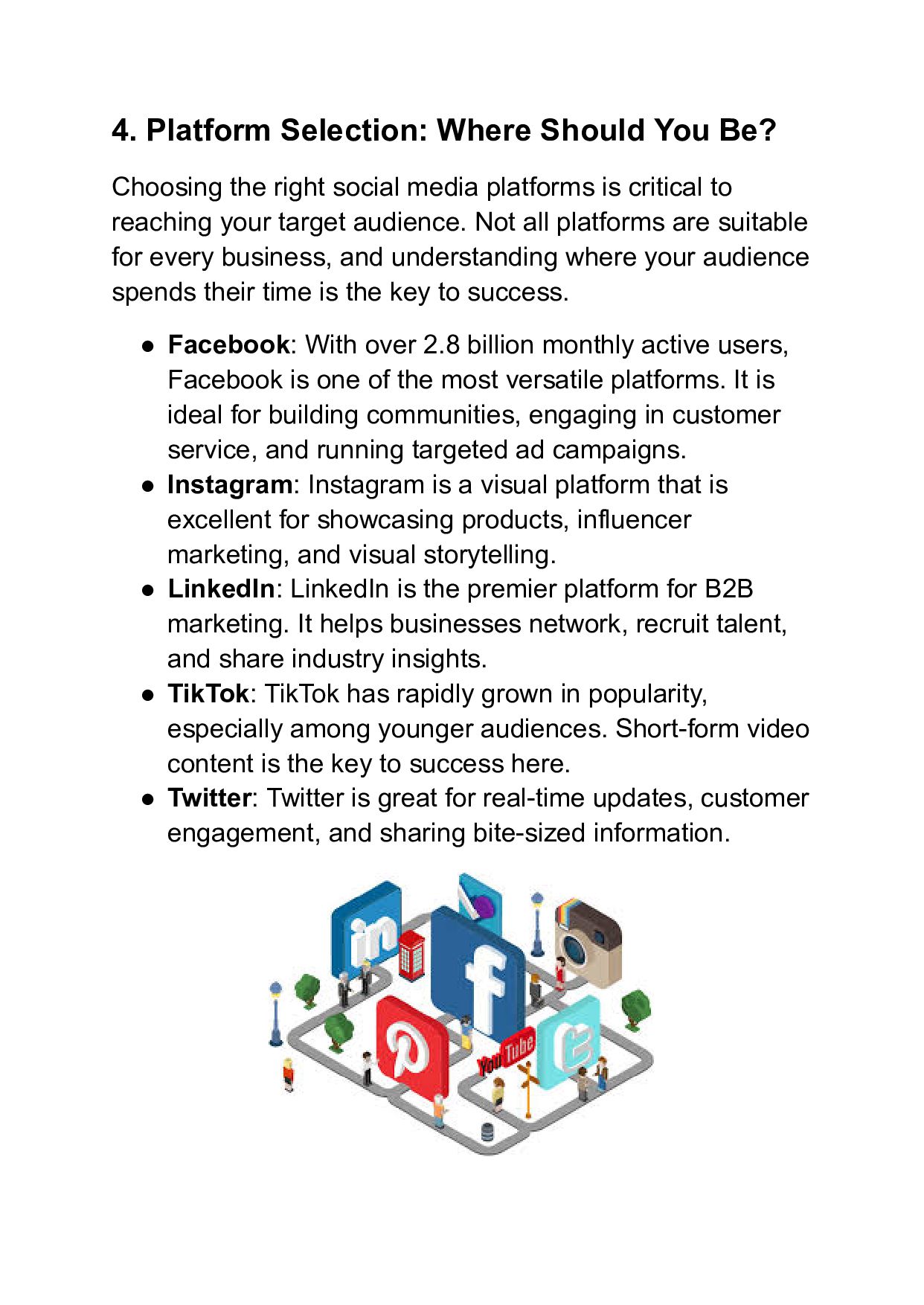
    social media platforms is critical to reaching your target audience. Not all platforms are suitable for every business, and understanding where your audience spends their time is the key to success. • Facebook: With over 2.8 billion monthly active users, Facebook is one of the most versatile platforms. It is ideal for building communities, engaging in customer service, and running targeted ad campaigns. • Instagram: Instagram is a visual platform that is excellent for showcasing products, influencer marketing, and visual storytelling. • LinkedIn: LinkedIn is the premier platform for B2B marketing. It helps businesses network, recruit talent, and share industry insights. • TikTok: TikTok has rapidly grown in popularity, especially among younger audiences. Short-form video content is the key to success here. • Twitter: Twitter is great for real-time updates, customer engagement, and sharing bite-sized information.
  7. 5. Audience Targeting: Reaching the Right People One of the

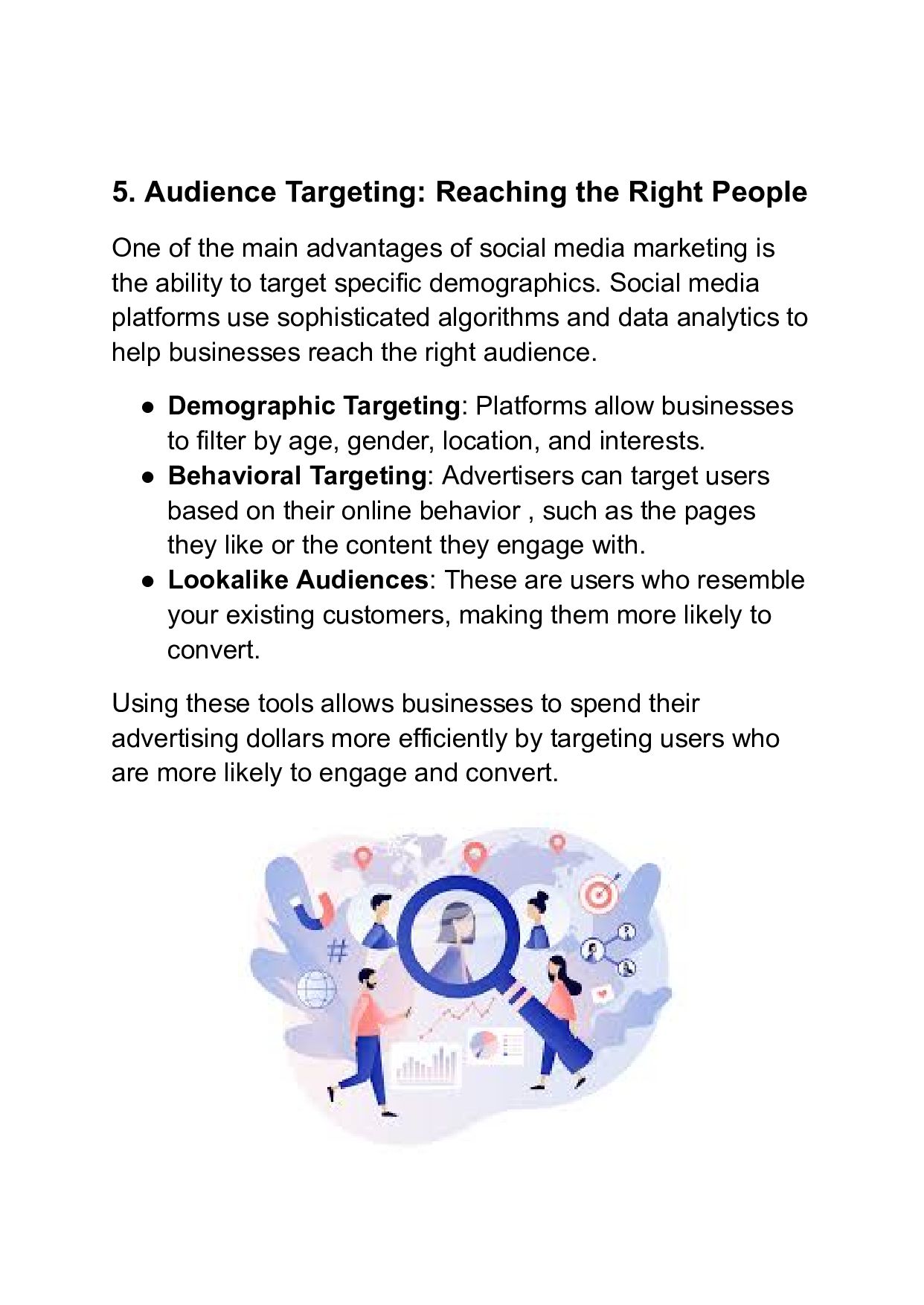
    main advantages of social media marketing is the ability to target specific demographics. Social media platforms use sophisticated algorithms and data analytics to help businesses reach the right audience. • Demographic Targeting: Platforms allow businesses to filter by age, gender, location, and interests. • Behavioral Targeting: Advertisers can target users based on their online behavior , such as the pages they like or the content they engage with. • Lookalike Audiences: These are users who resemble your existing customers, making them more likely to convert. Using these tools allows businesses to spend their advertising dollars more efficiently by targeting users who are more likely to engage and convert.
  8. 6. The Importance of Analytics and Metrics ; Measuring the

    effectiveness of social media marketing campaigns is critical for continued success. Social media platforms offer comprehensive analytics that track: • Engagement (likes, shares, comments) • Reach (how many people see your content) • Impressions (how many times content was displayed) • Click-through rates (how often users clicked on a link) These insights help businesses understand what works and what doesn’t, allowing them to adjust strategies accordingly. Digital marketing institute in India offers specialized courses that teach marketers how to interpret these metrics effectively, helping them make data-driven decisions that enhance their campaign's success.
  9. 7. The Rise of Social Commerce ; Social commerce is

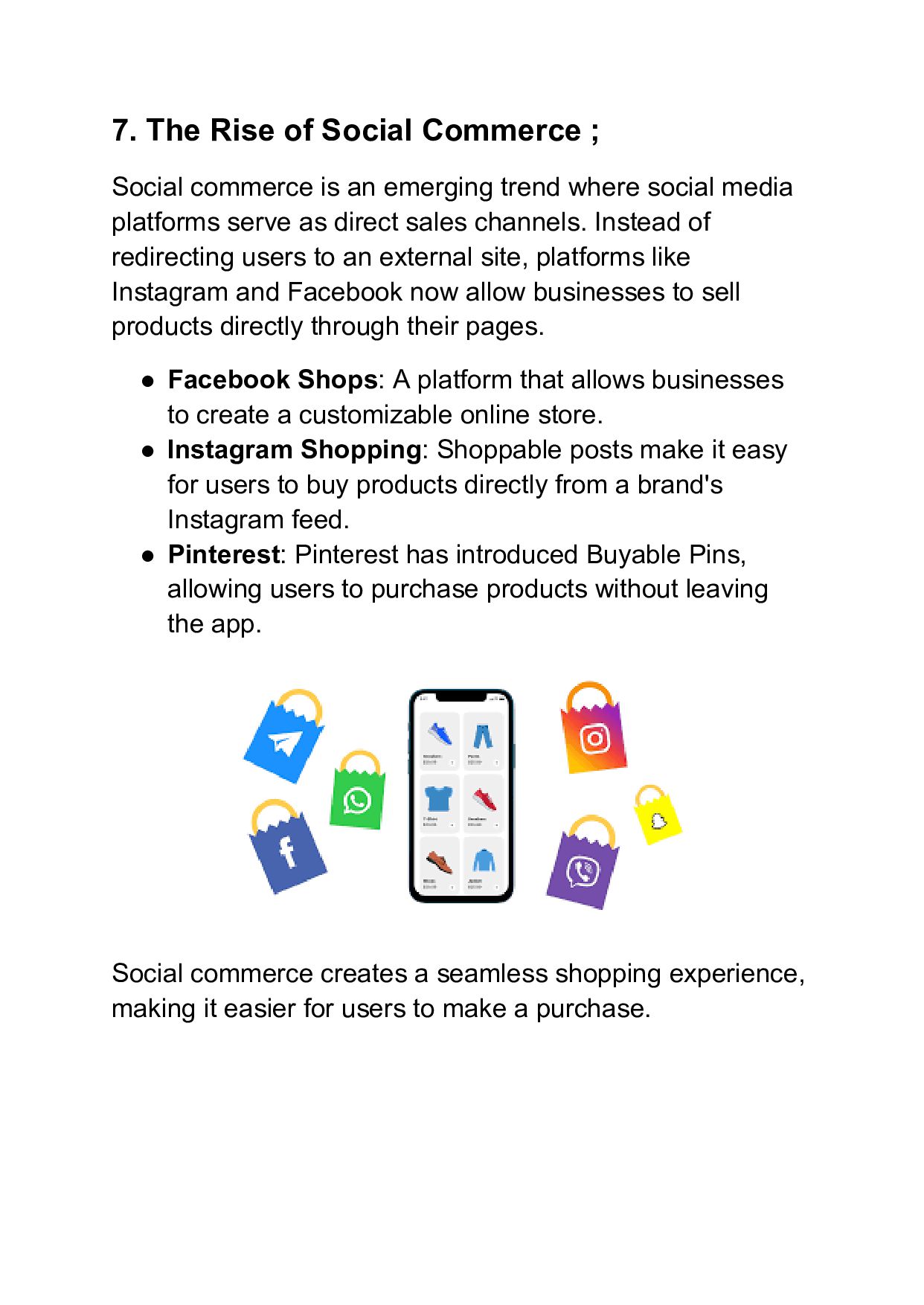
    an emerging trend where social media platforms serve as direct sales channels. Instead of redirecting users to an external site, platforms like Instagram and Facebook now allow businesses to sell products directly through their pages. • Facebook Shops: A platform that allows businesses to create a customizable online store. • Instagram Shopping: Shoppable posts make it easy for users to buy products directly from a brand's Instagram feed. • Pinterest: Pinterest has introduced Buyable Pins, allowing users to purchase products without leaving the app. Social commerce creates a seamless shopping experience, making it easier for users to make a purchase.
  10. 8. Influencer Marketing: Leveraging Trust and Authenticity ; Influencer marketing

    has exploded in recent years. By partnering with influencers who have a loyal following, brands can reach a wider audience in a more authentic way. Influencers are trusted by their followers, and their endorsements can carry significant weight. There are several types of influencers: • Mega-influencers: Celebrities with millions of followers. • Micro-influencers: Individuals with a smaller but highly engaged audience. • Nano-influencers: People with fewer followers but greater niche expertise. • • Choosing the right influencer is key. The Digital marketing institute in India offers courses on identifying and working with influencers to maximize ROI and brand impact.
  11. 9. Paid Advertising on Social Media ; Paid social media

    advertising is another powerful tool for businesses. It allows companies to place ads in front of their target audience through highly targeted campaigns. • Facebook and Instagram Ads: These platforms offer extensive advertising options, including sponsored posts, video ads, and carousel ads. • LinkedIn Ads: Ideal for B2B marketing, LinkedIn ads can target professionals based on job titles, industries, and skills. • TikTok Ads: TikTok’s algorithm helps marketers reach highly engaged audiences through sponsored content and branded challenges. • • Paid ads often deliver faster results compared to organic efforts, and they are especially useful when launching a new product or running a time-sensitive campaign.
  12. 10. Future Trends in Social Media Marketing ; Social media

    marketing is constantly evolving, and staying on top of trends is crucial for continued success. Some future trends to watch include: • Augmented Reality (AR): AR filters and experiences are becoming increasingly popular, allowing users to interact with products virtually. • Chatbots and AI: Automated tools like chatbots can provide customer service and sales support in real-time. • Personalization: Tailoring content to individual users using data and AI will continue to improve user experience and increase engagement. By adapting to these trends, businesses can ensure they remain competitive in the ever-changing digital landscape. Conclusion ; Social media marketing offers an unparalleled opportunity for businesses to grow and engage with their audience. From building brand awareness to driving sales, the possibilities are vast. By using the right platforms, creating engaging content, and leveraging analytics, businesses can turn their social media presence into a powerful marketing tool. For those looking to enhance their social media marketing skills, enrolling in a Digital marketing institute in India can provide the necessary tools and knowledge to stay
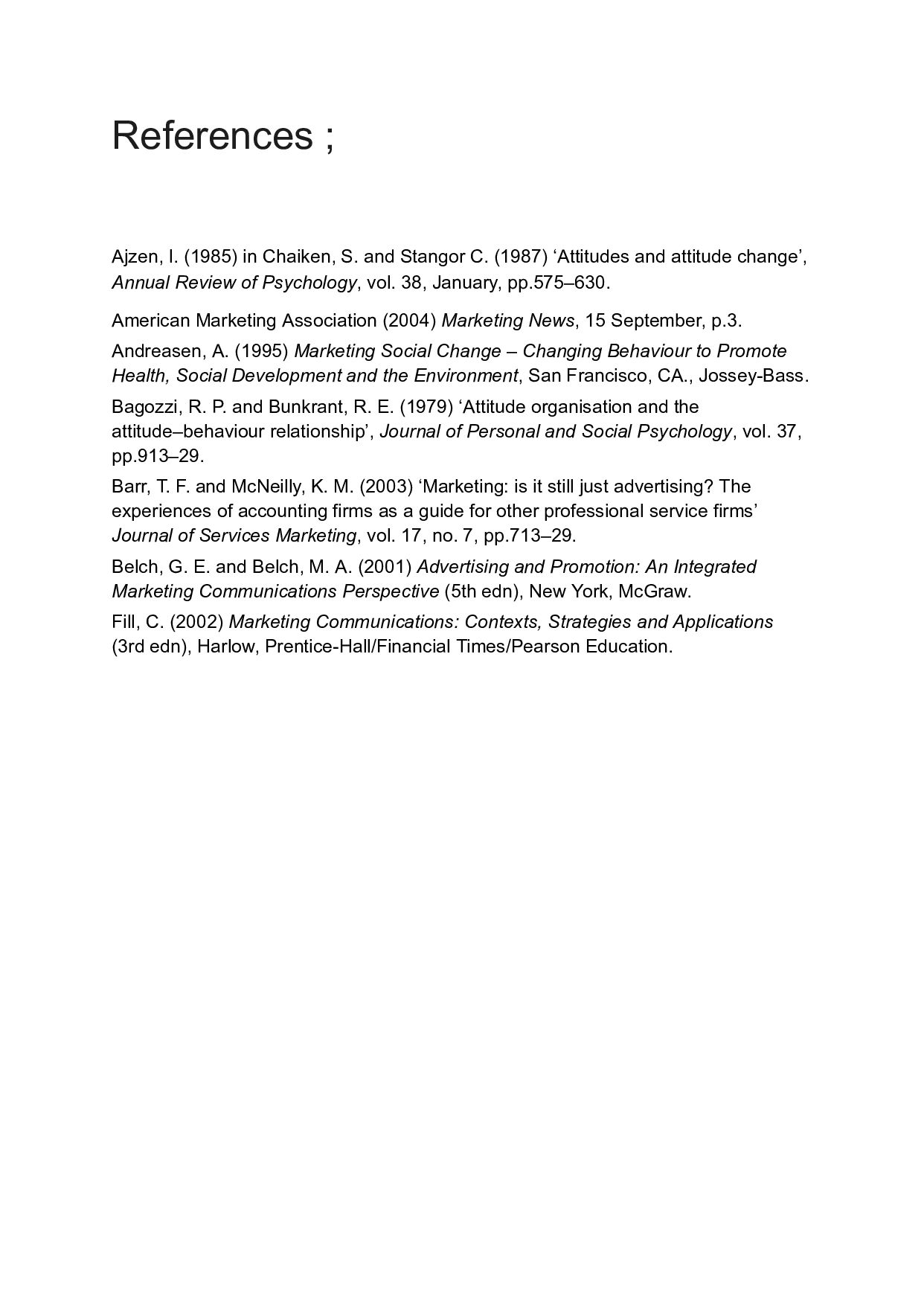
  13. References ; Ajzen, I. (1985) in Chaiken, S. and Stangor

    C. (1987) ‘Attitudes and attitude change’, Annual Review of Psychology, vol. 38, January, pp.575–630. American Marketing Association (2004) Marketing News, 15 September, p.3. Andreasen, A. (1995) Marketing Social Change – Changing Behaviour to Promote Health, Social Development and the Environment, San Francisco, CA., Jossey-Bass. Bagozzi, R. P. and Bunkrant, R. E. (1979) ‘Attitude organisation and the attitude–behaviour relationship’, Journal of Personal and Social Psychology, vol. 37, pp.913–29. Barr, T. F. and McNeilly, K. M. (2003) ‘Marketing: is it still just advertising? The experiences of accounting firms as a guide for other professional service firms’ Journal of Services Marketing, vol. 17, no. 7, pp.713–29. Belch, G. E. and Belch, M. A. (2001) Advertising and Promotion: An Integrated Marketing Communications Perspective (5th edn), New York, McGraw. Fill, C. (2002) Marketing Communications: Contexts, Strategies and Applications (3rd edn), Harlow, Prentice-Hall/Financial Times/Pearson Education.