Upgrade to Pro — share decks privately, control downloads, hide ads and more …

Product UX - Create

Product UX - Create

Full day session 'Create' as part of Berghs Product UX program 2016

Avatar for Christopher McCann

Christopher McCann

May 28, 2016

Transcript

  1. Let’s pick up where we left off… Your evaluation of

    the case - Ski Partner. Based on your Persona and Customer journey. Divide into 2 groups Consider a Product idea.
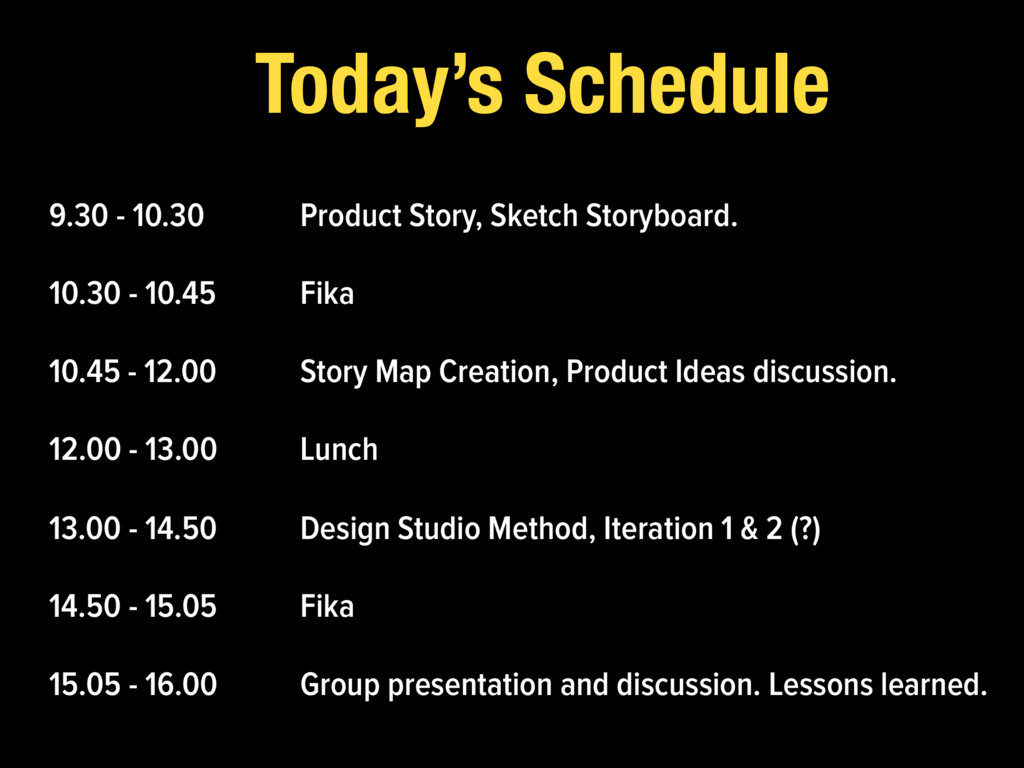
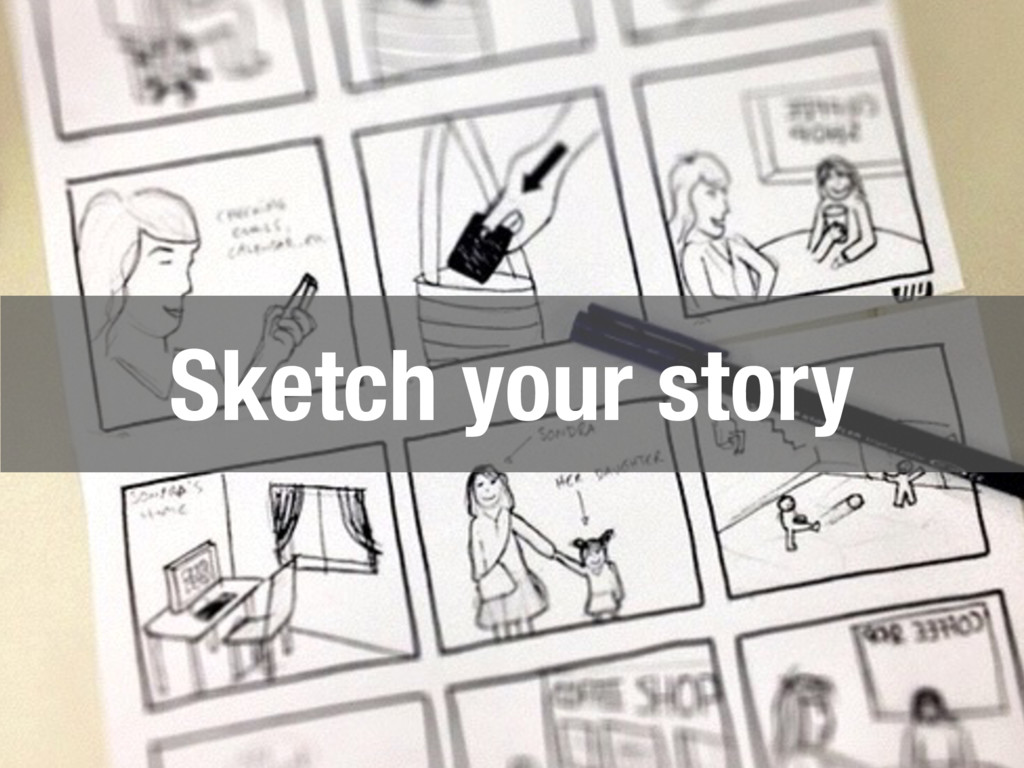
  2. Today’s Schedule 9.30 - 10.30 Product Story, Sketch Storyboard. 10.30

    - 10.45 Fika 10.45 - 12.00 Story Map Creation, Product Ideas discussion. 12.00 - 13.00 Lunch 13.00 - 14.50 Design Studio Method, Iteration 1 & 2 (?) 14.50 - 15.05 Fika 15.05 - 16.00 Group presentation and discussion. Lessons learned.
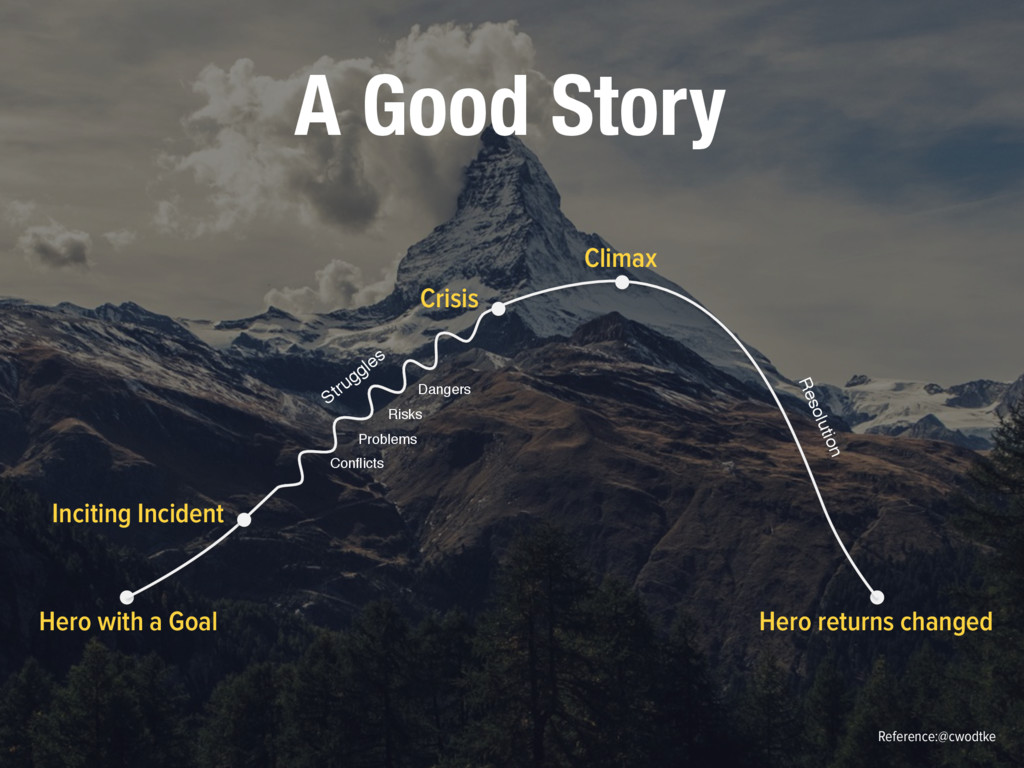
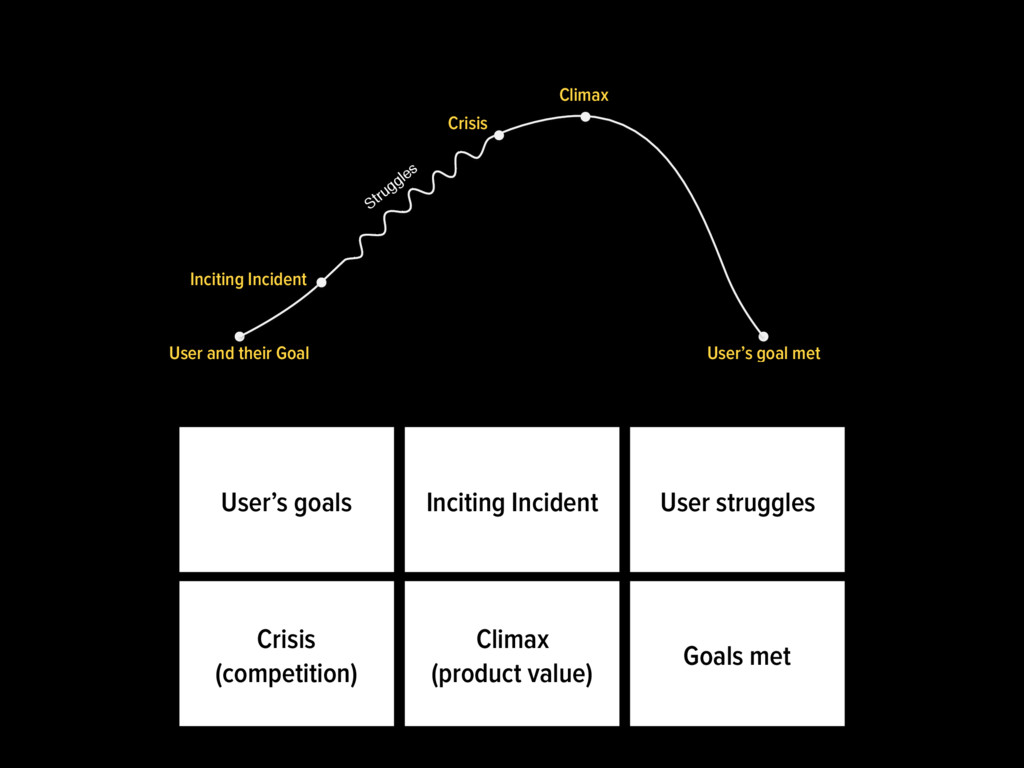
  3. Inciting Incident Crisis Climax Hero returns changed Hero with a

    Goal Struggles Conflicts Problems Risks Dangers Reference:@cwodtke A Good Story Resolution
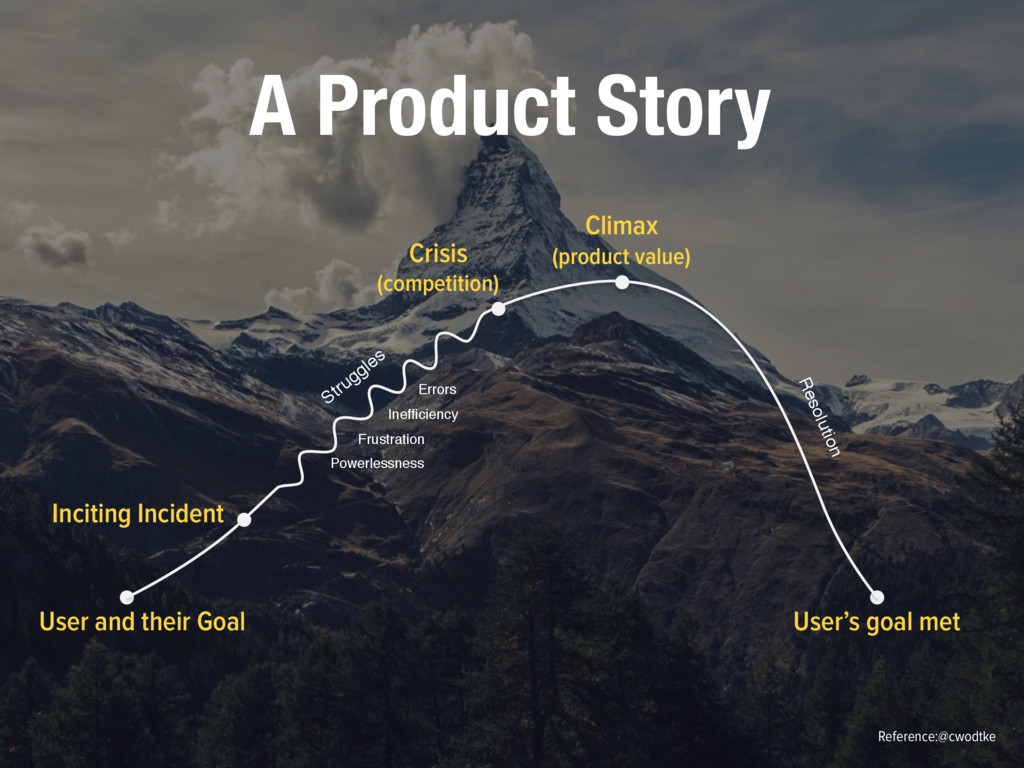
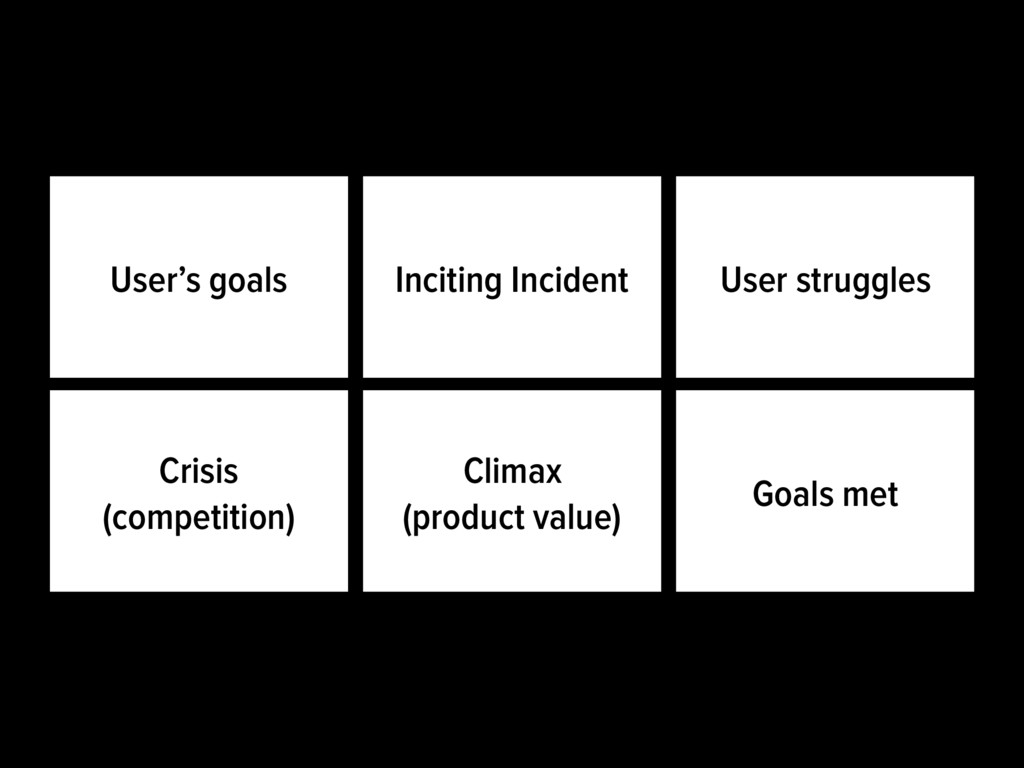
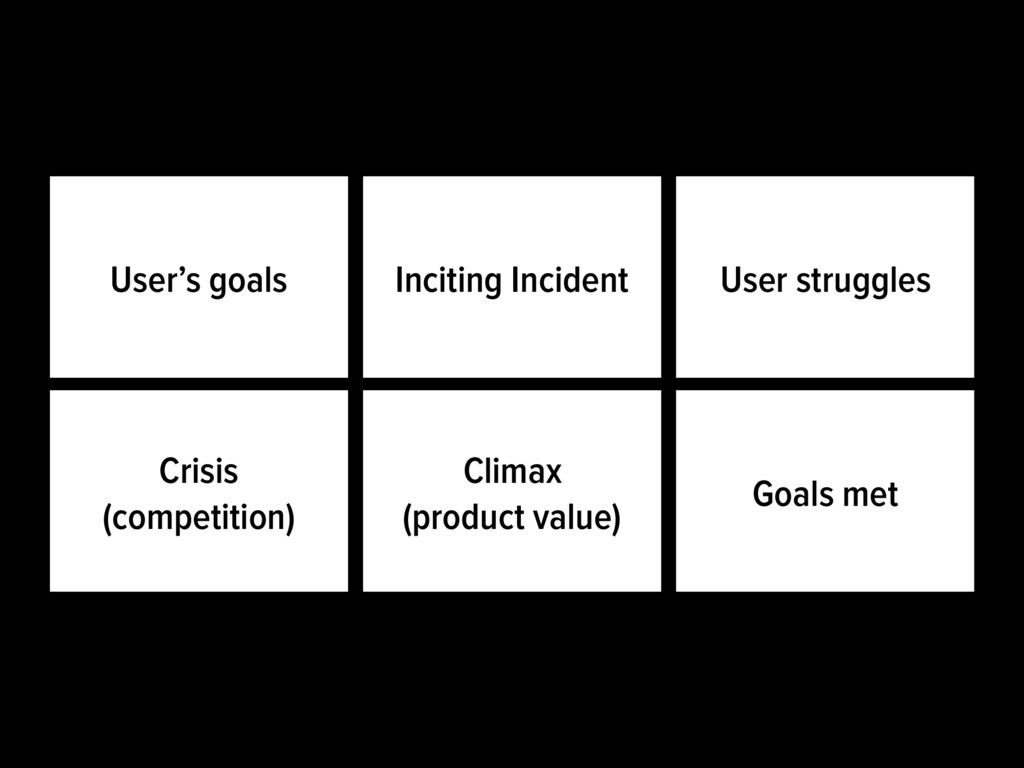
  4. A Product Story Inciting Incident Crisis (competition) Climax (product value)

    User’s goal met User and their Goal Struggles Powerlessness Frustration Inefficiency Errors Reference:@cwodtke Resolution
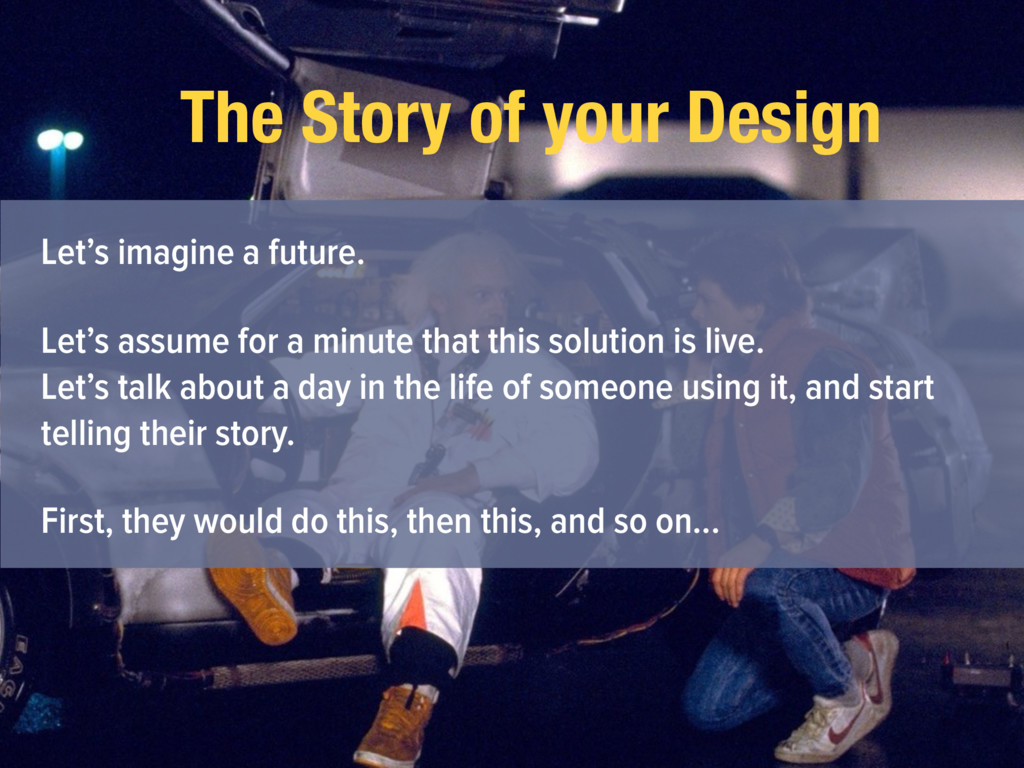
  5. The Story of your Design Let’s imagine a future. Let’s

    assume for a minute that this solution is live. 
 Let’s talk about a day in the life of someone using it, and start telling their story. First, they would do this, then this, and so on...
  6. 1. Context - how the product will be used. 2.

    Consider User Interface. 3. Encourages to thinking Experience Flows. Storyboards
  7. Inciting Incident Crisis Climax User’s goal met User and their

    Goal Struggles User’s goals Inciting Incident User struggles Crisis (competition) Climax (product value) Goals met
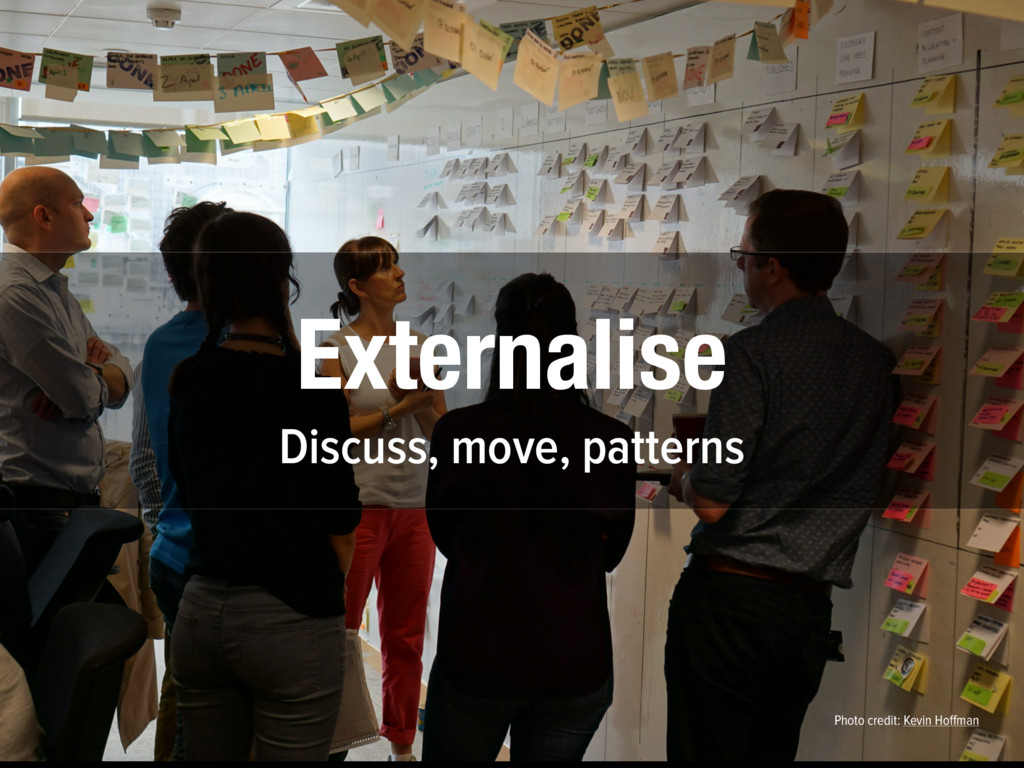
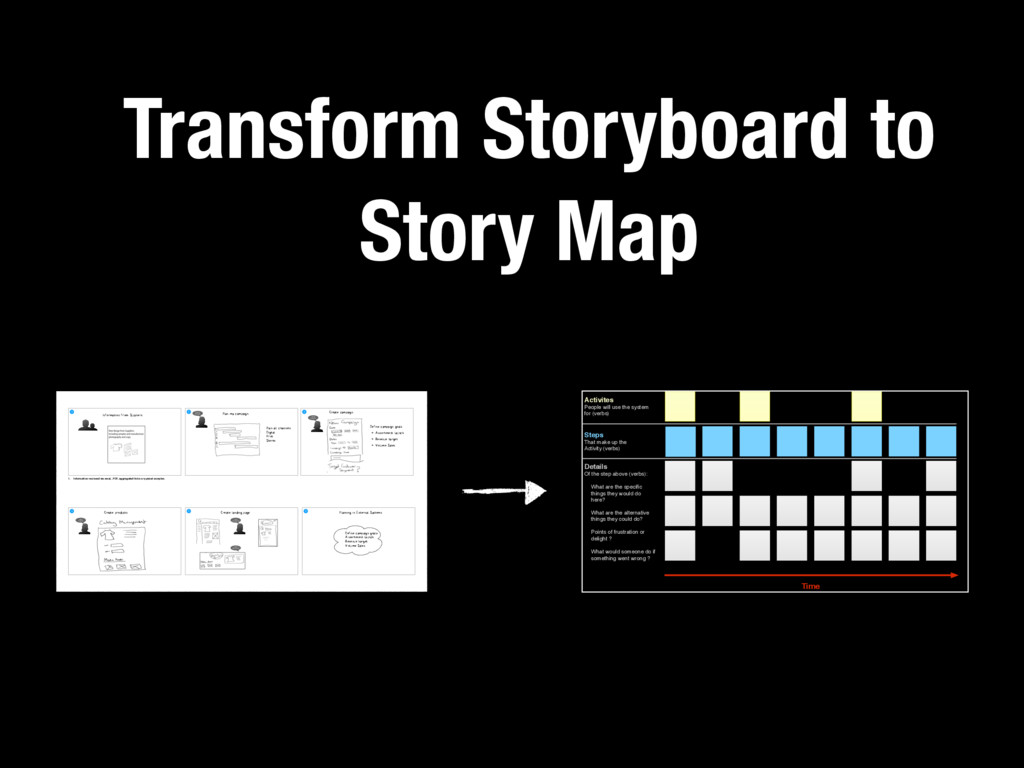
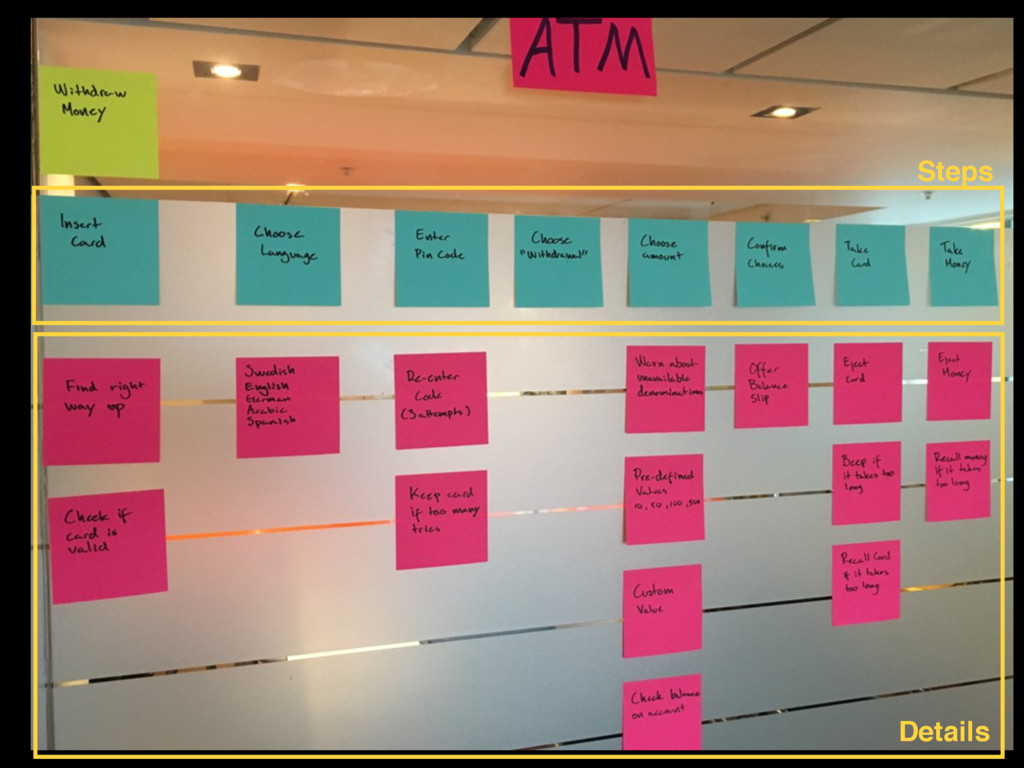
  8. Transform Storyboard to Story Map Activites People will use the

    system for (verbs) Steps That make up the Activity (verbs) Details Of the step above (verbs): What are the specific things they would do here? What are the alternative things they could do? Points of frustration or delight ? What would someone do if something went wrong ? Time 1. Information recieved via emal, .PDF, aggregated links or pysical samples. Plan all channels Digital Print Stores Plan my campaigns Create campaigns Plan my campaign reate campaign reate products reate landing page Planning in External Systems Create Products Create Landing page Create Promo blocks Information from Suppliers Define campaign goals ⁃ Assortment launch ⁃ Revenue target ⁃ Volume Sales Define campaign goals Assortment launch Revenue target Volume Sales 1 2 3 4 5 6
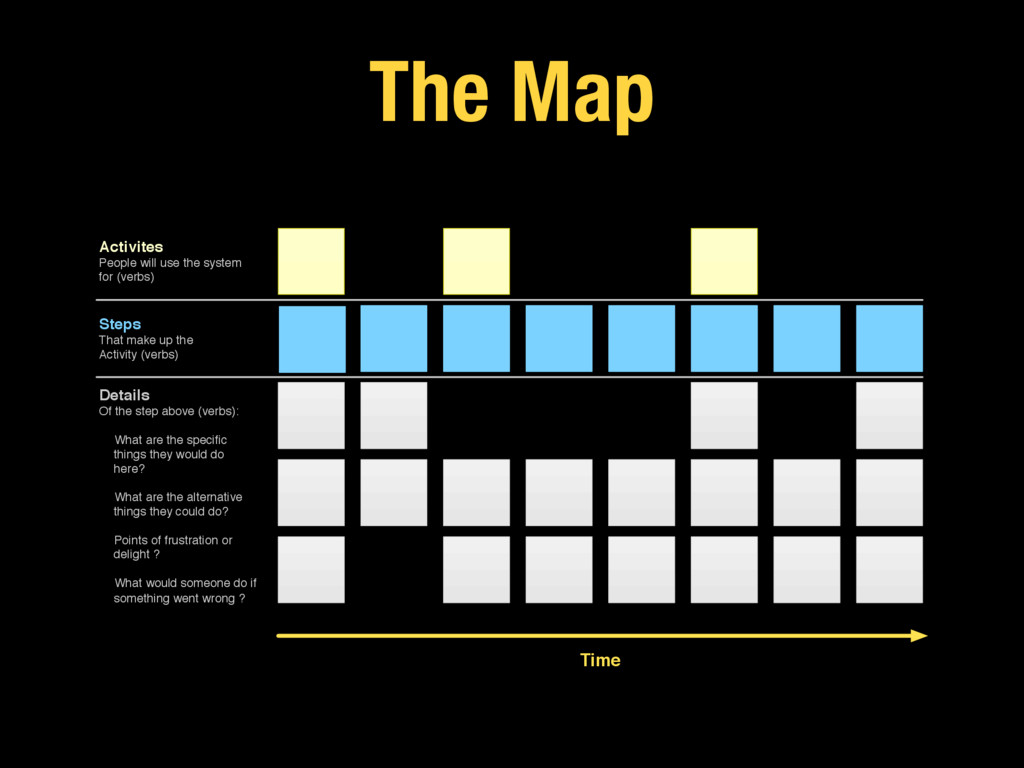
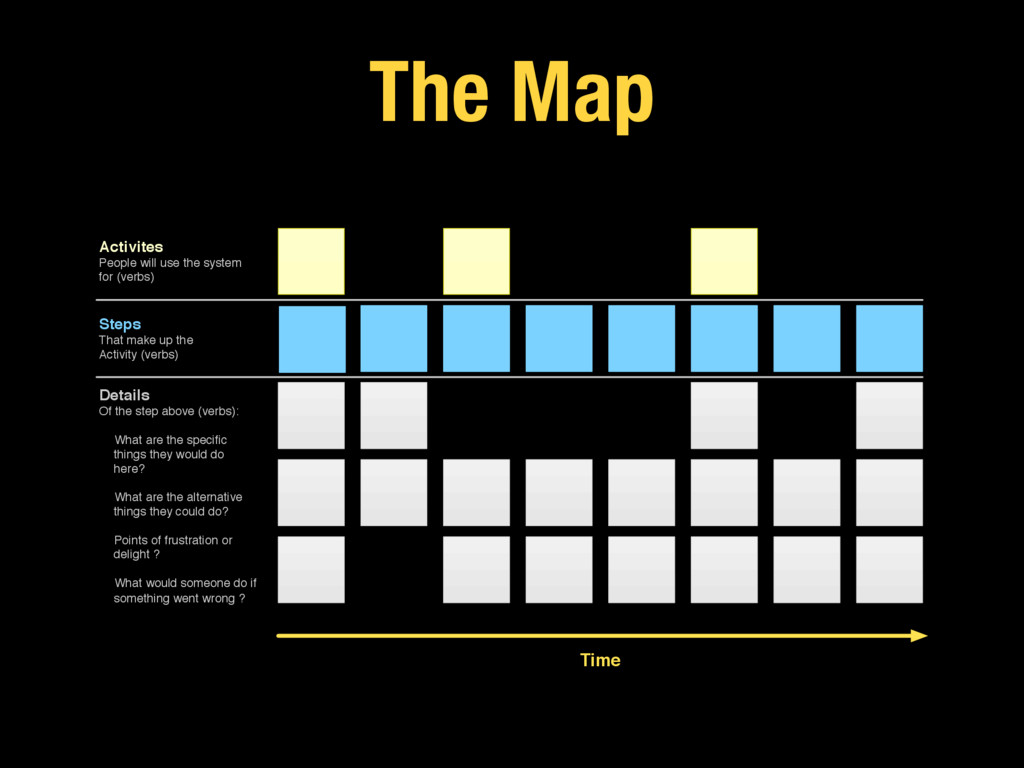
  9. The Map Activites People will use the system for (verbs)

    Steps That make up the Activity (verbs) Details Of the step above (verbs): What are the specific things they would do here? What are the alternative things they could do? Points of frustration or delight ? What would someone do if something went wrong ? Time
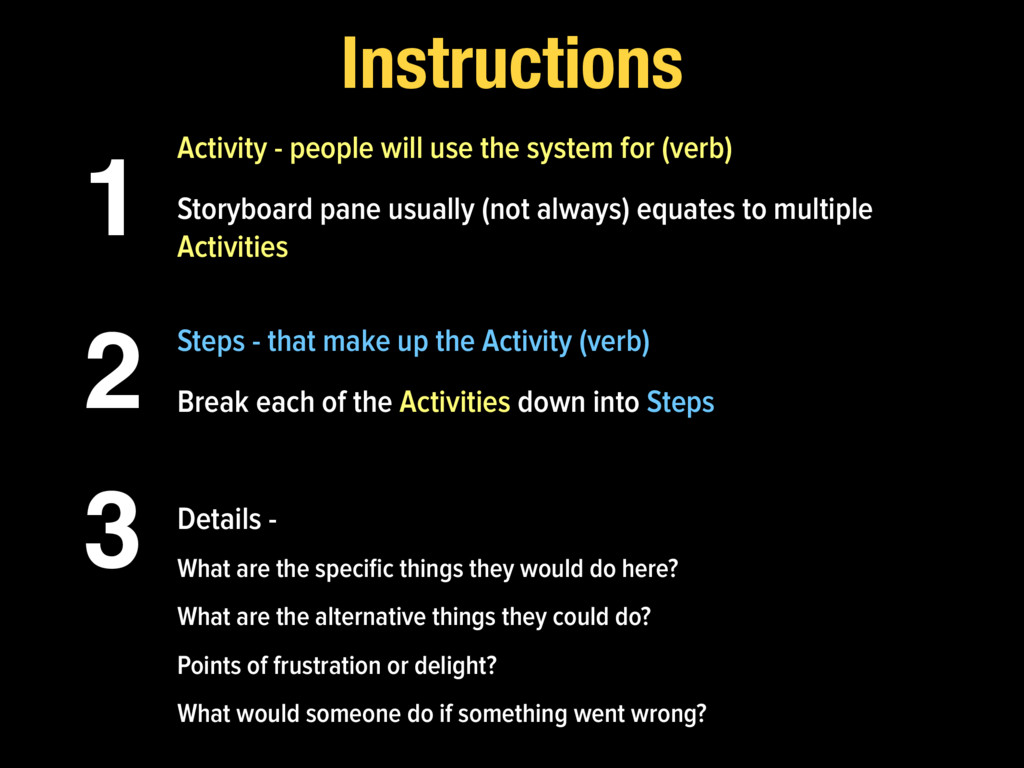
  10. Instructions Activity - people will use the system for (verb)

    Storyboard pane usually (not always) equates to multiple Activities Steps - that make up the Activity (verb) Break each of the Activities down into Steps Details - What are the specific things they would do here? What are the alternative things they could do? Points of frustration or delight? What would someone do if something went wrong? 1 2 3
  11. The Map Activites People will use the system for (verbs)

    Steps That make up the Activity (verbs) Details Of the step above (verbs): What are the specific things they would do here? What are the alternative things they could do? Points of frustration or delight ? What would someone do if something went wrong ? Time
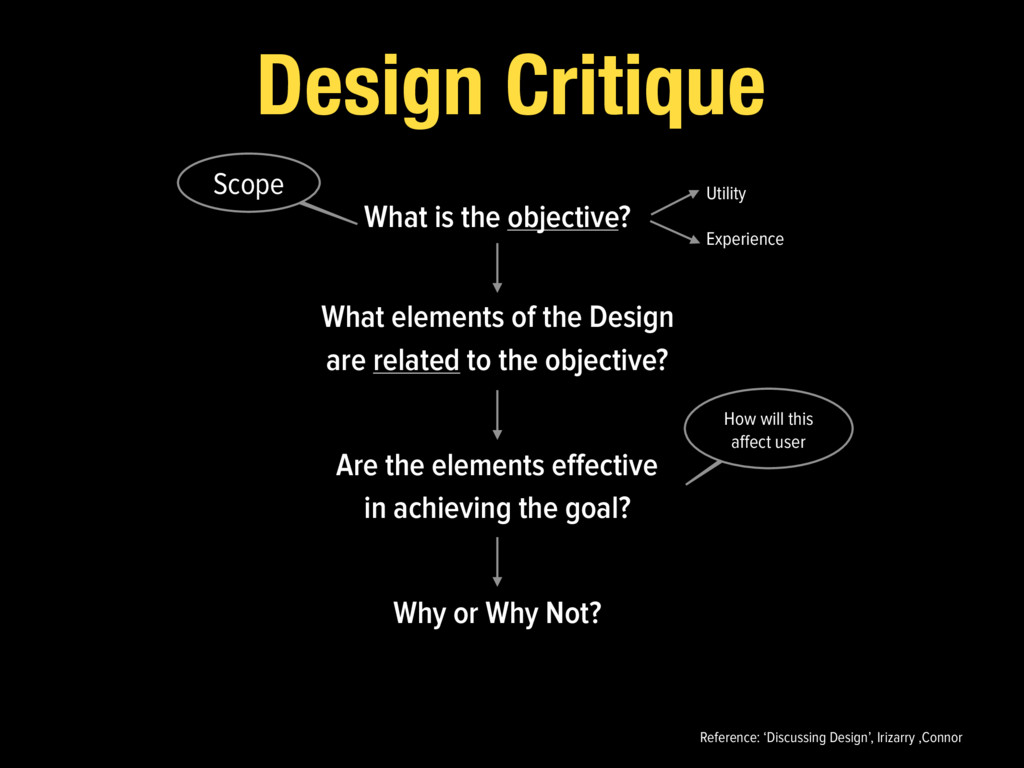
  12. Design Critique What is the objective? What elements of the

    Design are related to the objective? Are the elements effective in achieving the goal? Why or Why Not? Reference: ‘Discussing Design’, Irizarry ,Connor Utility Experience How will this affect user Scope
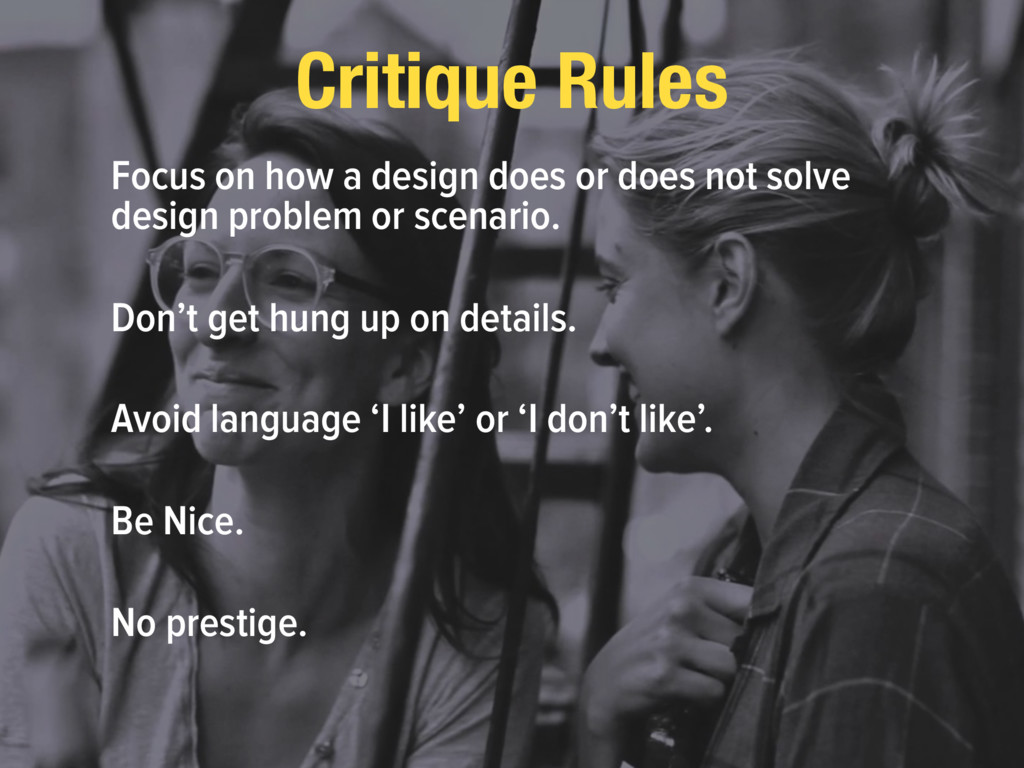
  13. Focus on how a design does or does not solve

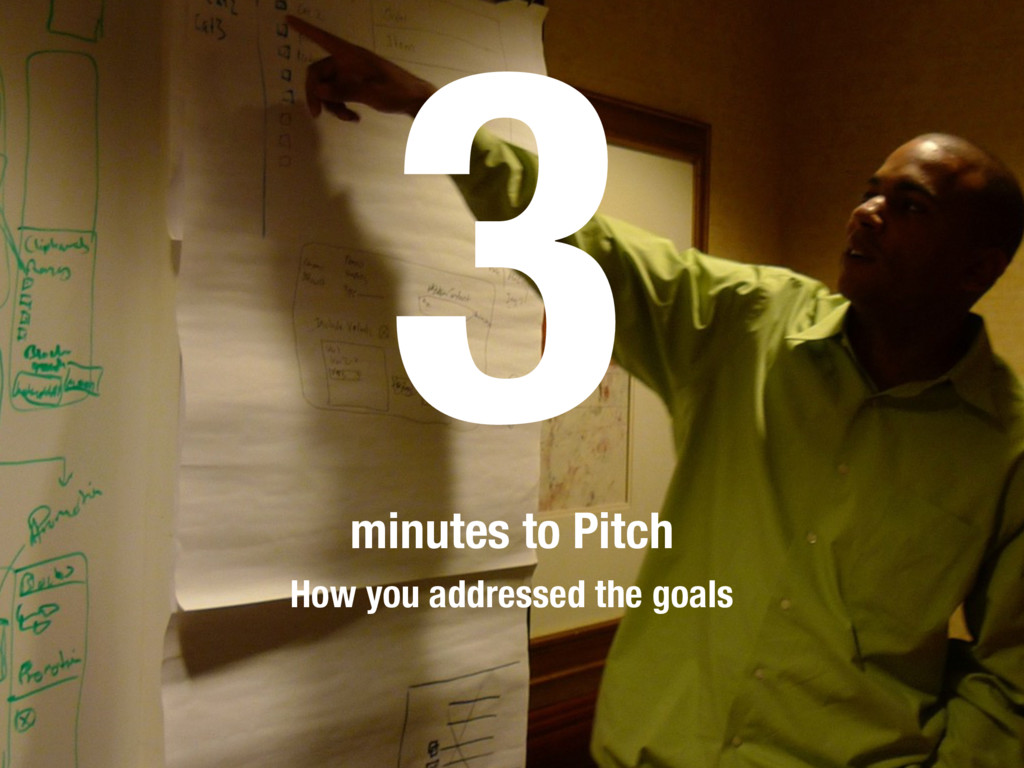
    design problem or scenario. Don’t get hung up on details. Avoid language ‘I like’ or ‘I don’t like’. Be Nice. No prestige. Critique Rules
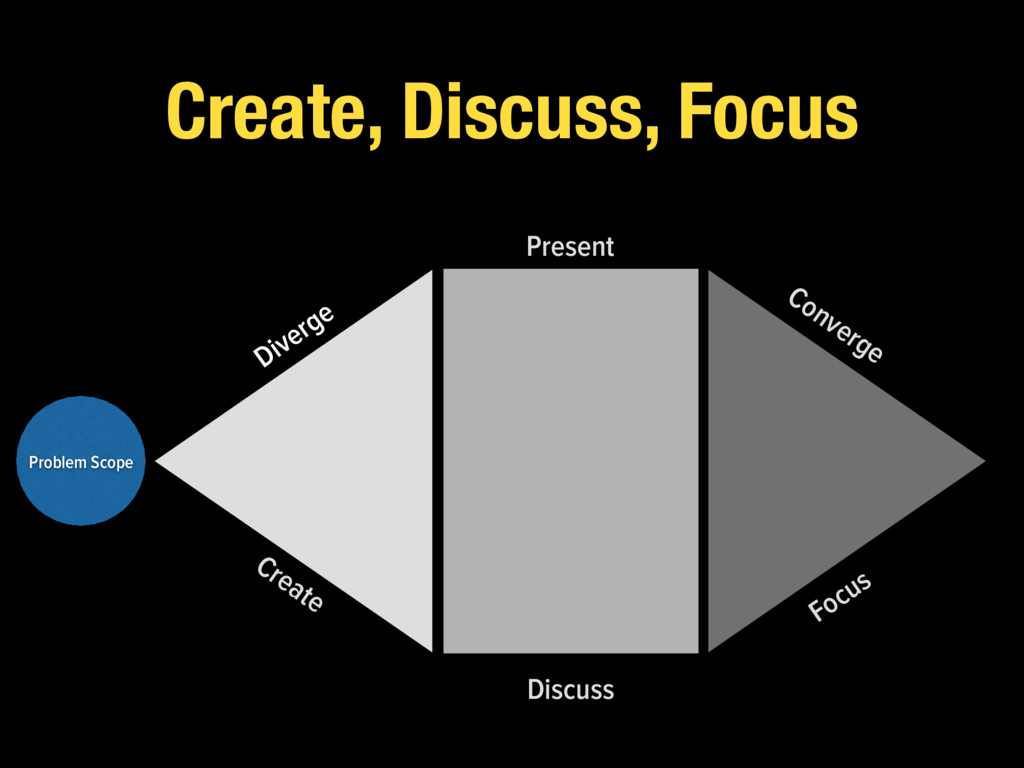
  14. Design Studio A way to generate many ideas and solutions

    to a problem quickly through sketching, iteration, and critique.
  15. Shared understanding and ownership. Speed - many ideas generated in

    a short time. Builds upon other good ideas. Unifies groups - understand other roles perspectives. Advantages
  16. 1. Create your storyboard (or not). 2. Sketch multiple solutions.

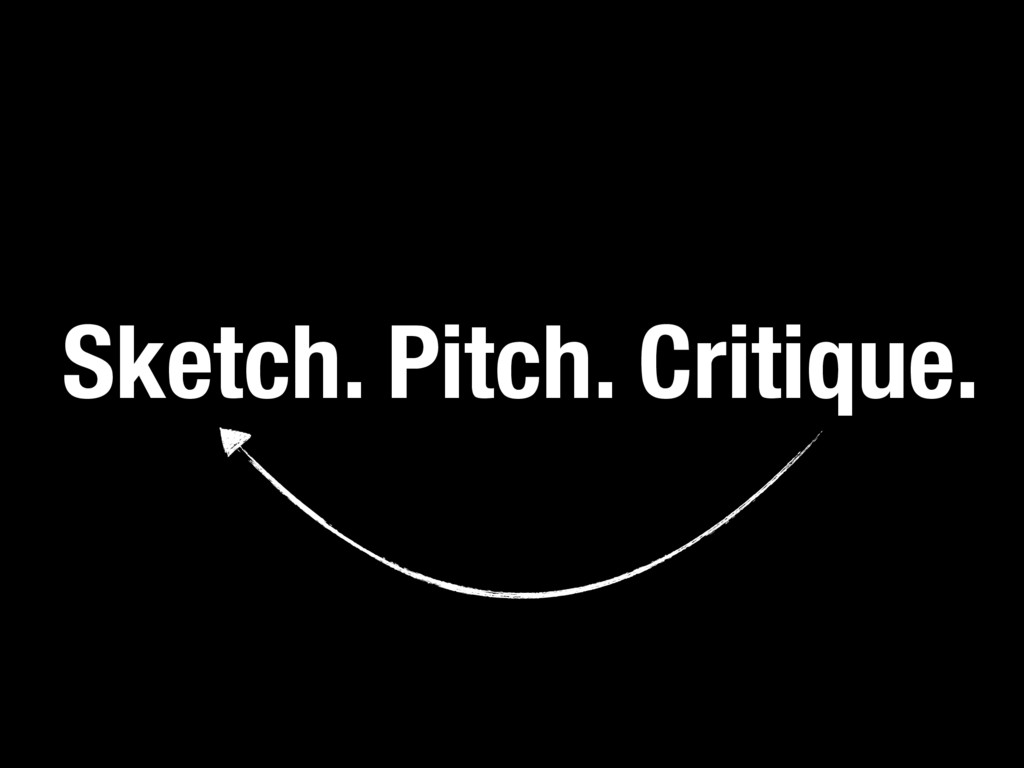
    3. Concentrate on generating ideas in rough form. 4. After sketching, ideas are presented for critique. Iteration One
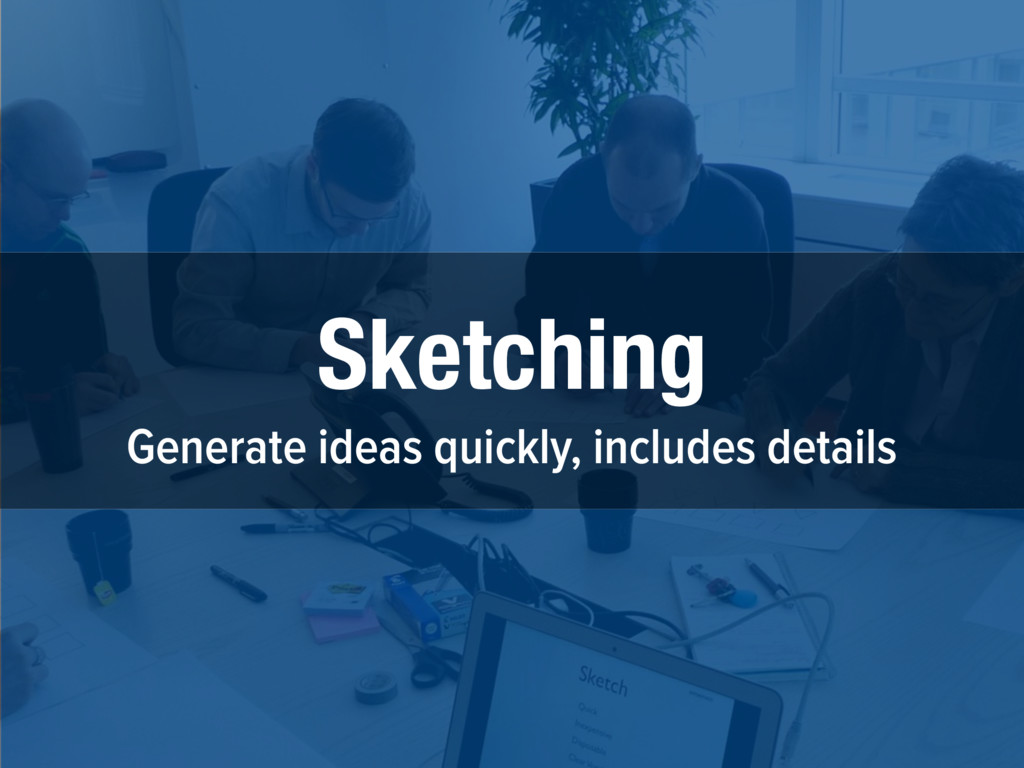
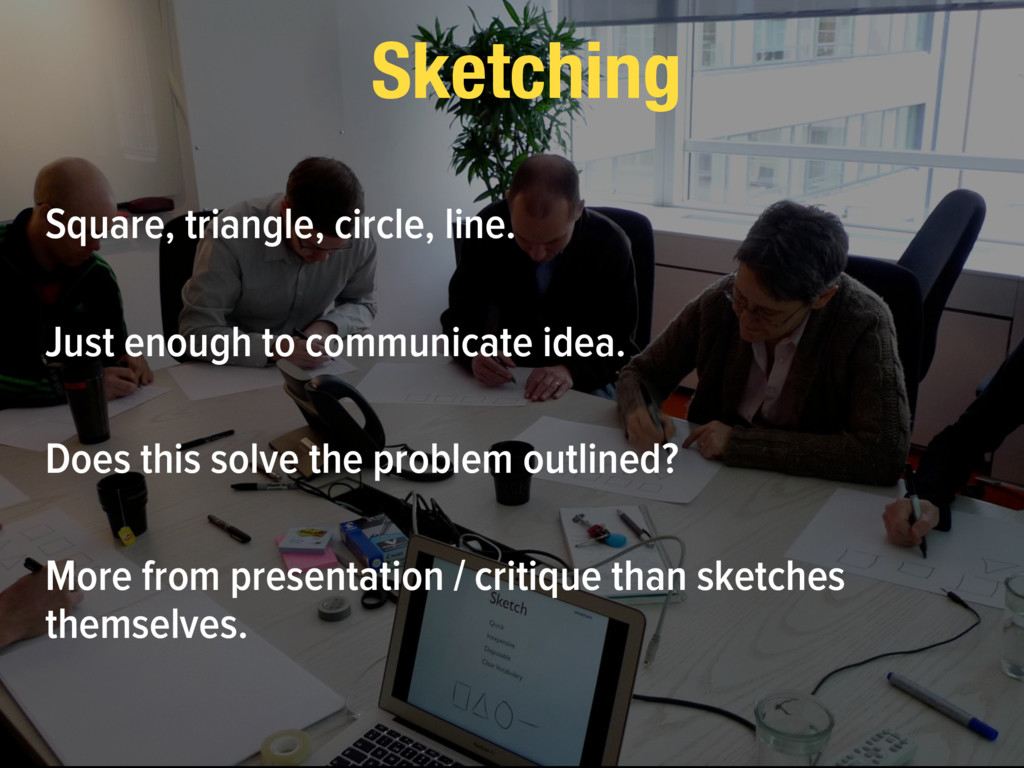
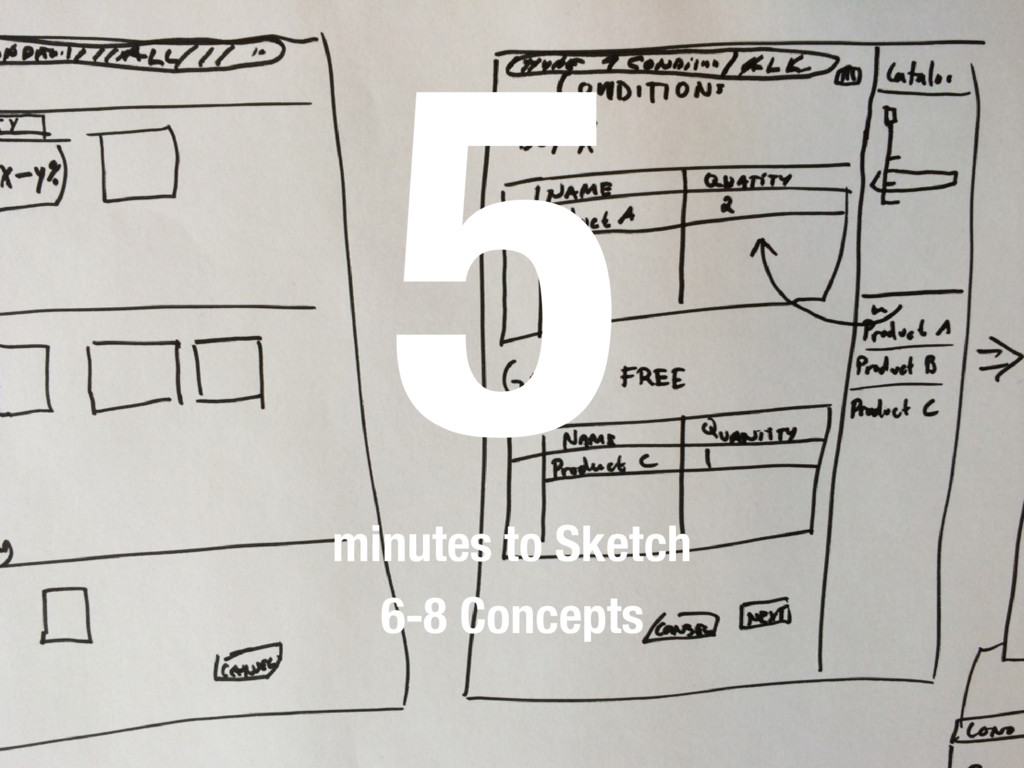
  17. Square, triangle, circle, line. Just enough to communicate idea. Does

    this solve the problem outlined? More from presentation / critique than sketches themselves. Sketching
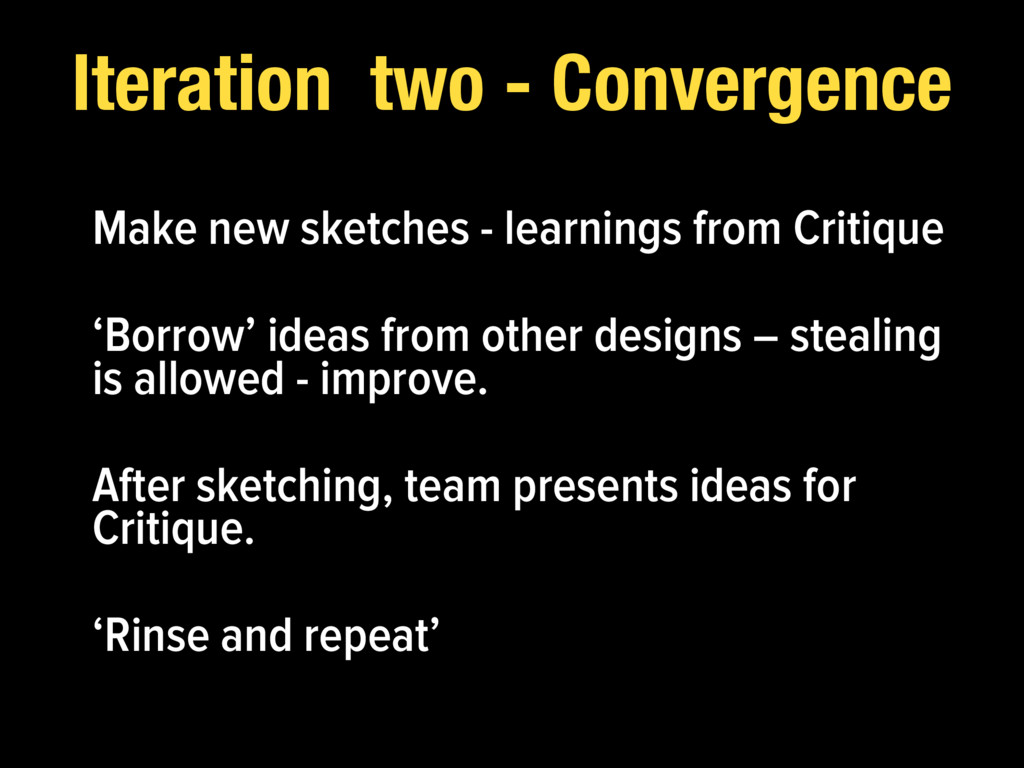
  18. 1. Make new sketches - learnings from Critique 3. ‘Borrow’

    ideas from other designs – stealing is allowed - improve. 4. After sketching, team presents ideas for Critique. 6. ‘Rinse and repeat’ Iteration two - Convergence
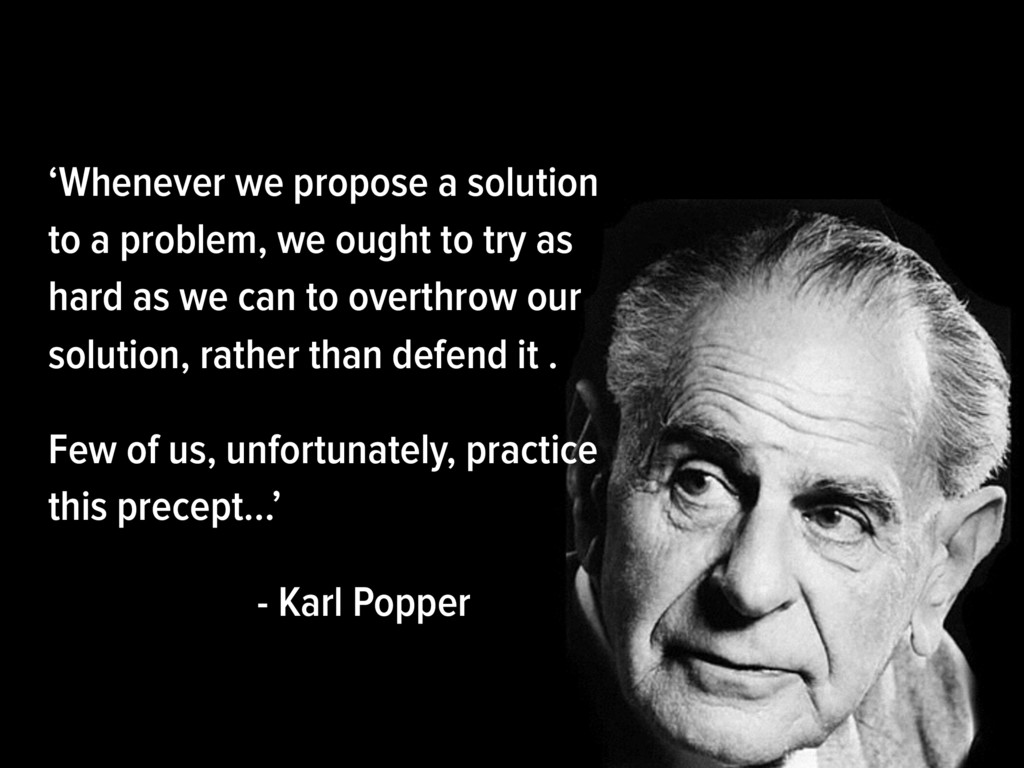
  19. ‘Whenever we propose a solution to a problem, we ought

    to try as hard as we can to overthrow our solution, rather than defend it . Few of us, unfortunately, practice this precept...’ - Karl Popper