Upgrade to Pro — share decks privately, control downloads, hide ads and more …

Organic_Fatming_Method.pdf

Avatar for Andre Lutforovich Andre Lutforovich
July 20, 2019
7

 Organic_Fatming_Method.pdf

The extensive management of livestock, paying full regard to their evolutionary adaptations, behavioral needs and animal welfare issues with respect to nutrition, housing, health, breeding and rearing.
Careful attention to the impact of the farming system on the wider environment and the conservation of wildlife and natural habitats.

Avatar for Andre Lutforovich

Andre Lutforovich

July 20, 2019

Transcript

  1. Content • What is Organic Farming? • Need • Key

    characteristics • Four Principle • Advantages • Disadvantages
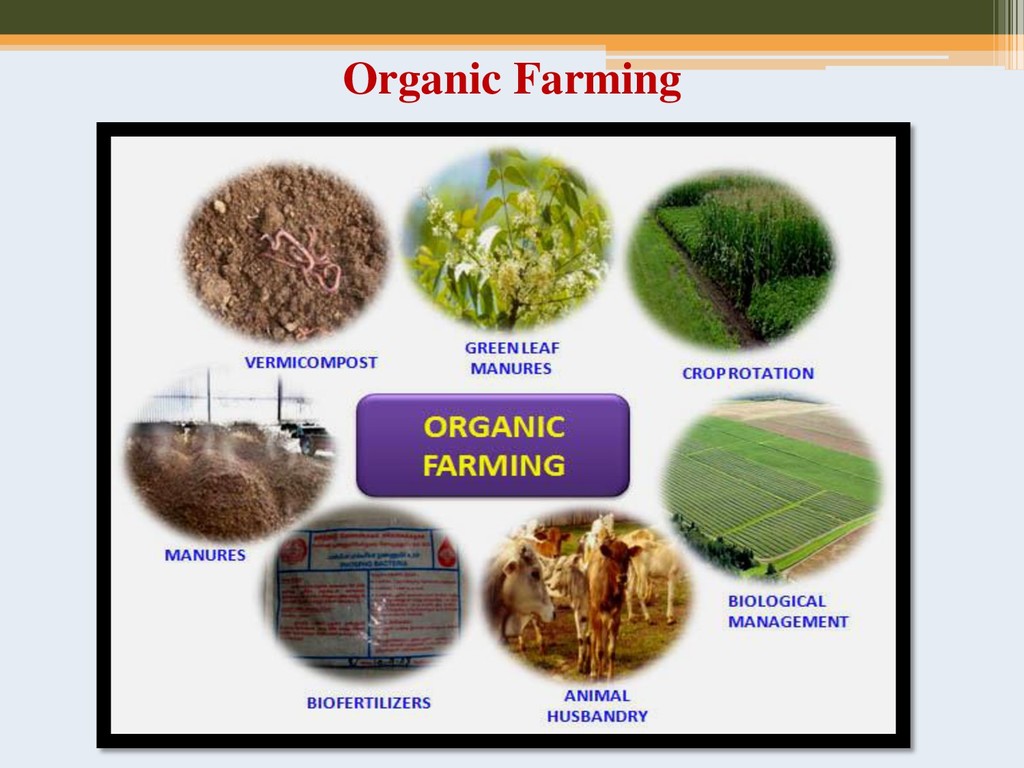
  2. Organic Farming Organic farming is a system which avoids or

    largely excludes the use of synthetic inputs (such as fertilizers, pesticides, hormones, feed additives etc) and to the maximum extent feasible rely upon crop rotations, crop residues, animal manures, off-farm organic waste, mineral grade rock additives and biological system of nutrient mobilization and plant protection.
  3. Need Increase in population make compulsion to stabilize agricultural production,

    but to, increase it further, in sustainable manner. Natural balance needs to be maintained at all cost for existence of life and property. Agrochemicals which are produced from fossil fuel and are not renewable and are diminishing in availability. It may also cost heavily on our foreign exchange in future.
  4. Key Characteristics Protecting the long term fertility of soils by

    maintaining organic matter levels, encouraging soil biological activity and careful mechanical intervention. Providing crop nutrients indirectly using relatively insoluble nutrient sources which are made available to the plant by the action of soil micro-organisms.
  5. Nitrogen self-sufficiency through the use of legumes and biological nitrogen

    fixation, as well as effective recycling of organic materials including crop residues and livestock manures Weed, disease and pest control relying primarily on crop rotations, natural predators, diversity, organic manuring, resistant varieties and limited (preferably minimal) thermal, biological and chemical intervention. Key characteristics
  6. Key characteristics The extensive management of livestock, paying full regard

    to their evolutionary adaptations, behavioral needs and animal welfare issues with respect to nutrition, housing, health, breeding and rearing. Careful attention to the impact of the farming system on the wider environment and the conservation of wildlife and natural habitats.
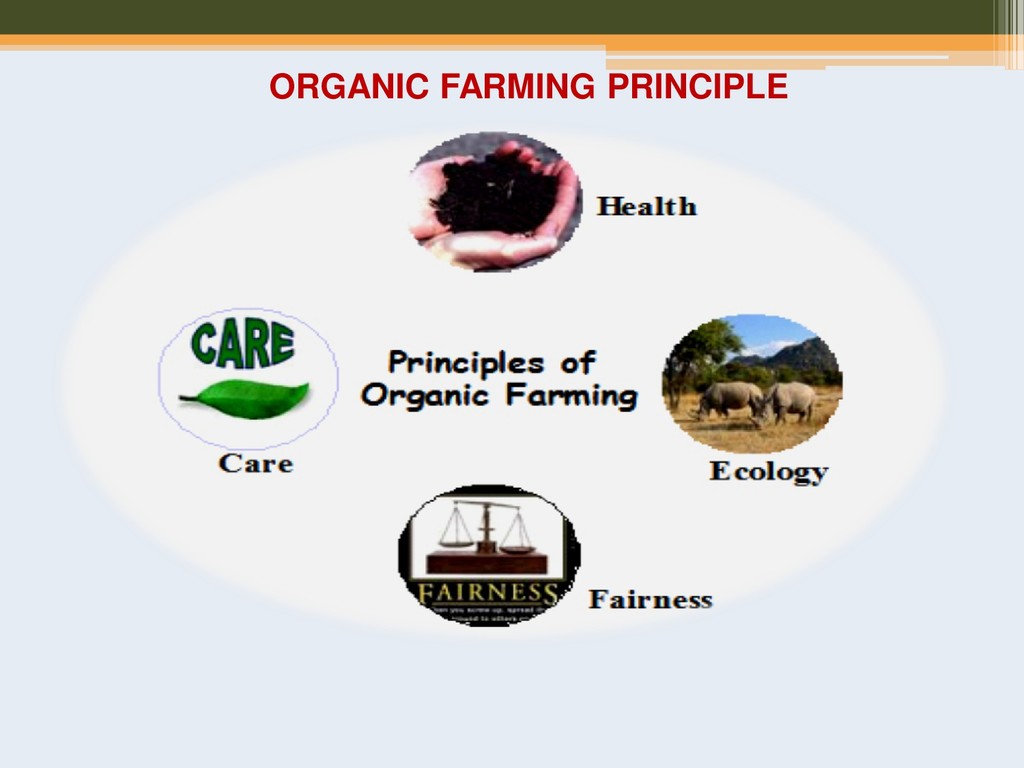
  7. Four Principles 1. Principle of health Organic Agriculture should sustain

    and enhance the health of soil, plant, animal, human and planet as one and indivisible Healthy soils produce healthy crops that foster the health of animals and people. Health is the wholeness and integrity of living systems. The role of organic agriculture, whether in farming, processing, distribution, or consumption, is to sustain and enhance the health of ecosystems and organisms from the smallest in the soil to human beings.
  8. Organic Agriculture should be based on living ecological systems and

    cycles, work with them, emulate them and help sustain them. This principle roots organic agriculture within living ecological systems. It states that production is to be based on ecological processes, and recycling Nourishment and well-being are achieved through the ecology of the specific production environment. Organic management must be adapted to local conditions, ecology, culture and scale. 2. Principle of ecology
  9. Principle of ecology Inputs should be reduced by reuse, recycling

    and efficient management of materials and energy in order to maintain and improve environmental quality and conserve resources Organic agriculture should attain ecological balance through the design of farming systems, establishment of habitats and maintenance of genetic and agricultural diversity.
  10. Previous Next End Organic Agriculture should build on relationships that

    ensure fairness with regard to the common environment and life opportunities. This principle emphasizes that those involved in organic agriculture should conduct human relationships in a manner that ensures fairness at all levels and to all parties - farmers, workers, processors, distributors, traders and consumers. Farming Method 3. Principle of fairness
  11. It aims to produce a sufficient supply of good quality

    food and other products. Natural and environmental resources that are used for production and consumption should be managed in a way that is socially and ecologically just and should be held in trust for future generations Fairness requires systems of production, distribution and trade that are open and equitable and account for real environmental and social costs. Principle of fairness
  12. 4. Principle of care Organic Agriculture should be managed in

    a precautionary and responsible manner to protect the health and well-being of current and future generations and the environment. Organic agriculture is a living and dynamic system that responds to internal and external demands and conditions. This principle states that precaution and responsibility are the key concerns in management, development and technology choices in organic agriculture.
  13. Organic farming approach involves following five principles: 1. Conversion of

    land from conventional management to organic management 2. Management of the entire surrounding system to ensure biodiversity and sustainability of the system 3. Crop production with the use of alternative sources of nutrients such as crop rotation, residue management, organic manures and biological inputs. 4. Management of weeds and pests by better management practices, physical and cultural means and by biological control system 5. Maintenance of live stock in tandem with organic concept and make them an integral part of the entire system Basic Steps of Organic Farming
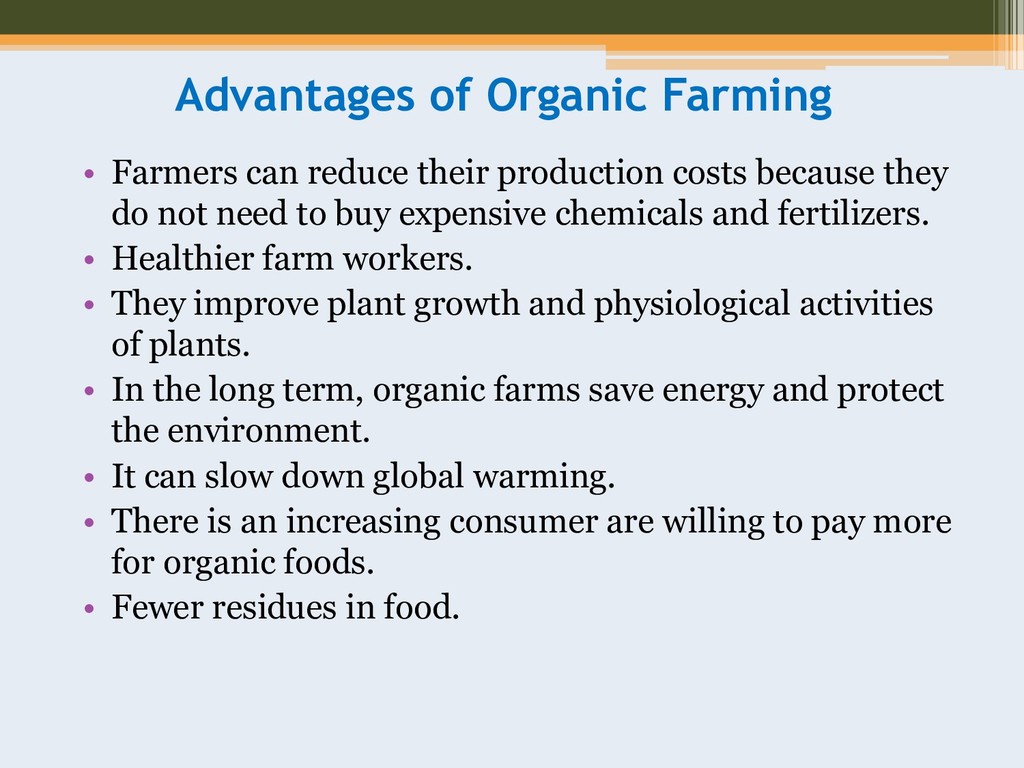
  14. Advantages of Organic Farming • Farmers can reduce their production

    costs because they do not need to buy expensive chemicals and fertilizers. • Healthier farm workers. • They improve plant growth and physiological activities of plants. • In the long term, organic farms save energy and protect the environment. • It can slow down global warming. • There is an increasing consumer are willing to pay more for organic foods. • Fewer residues in food.
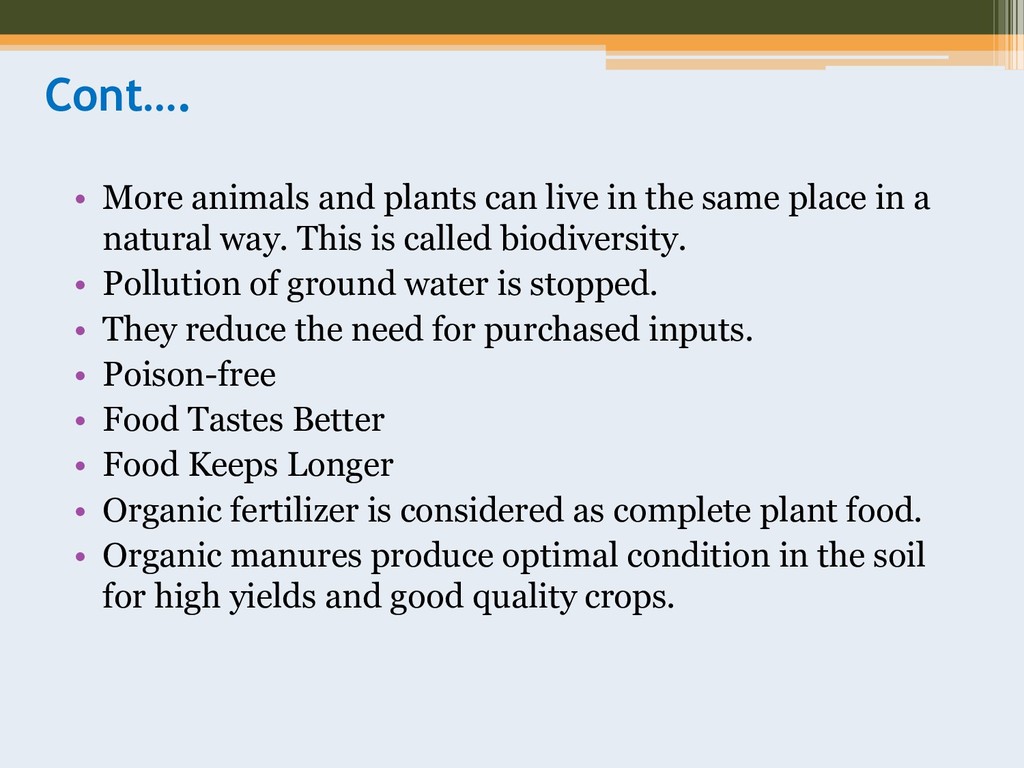
  15. Cont…. • More animals and plants can live in the

    same place in a natural way. This is called biodiversity. • Pollution of ground water is stopped. • They reduce the need for purchased inputs. • Poison-free • Food Tastes Better • Food Keeps Longer • Organic fertilizer is considered as complete plant food. • Organic manures produce optimal condition in the soil for high yields and good quality crops.
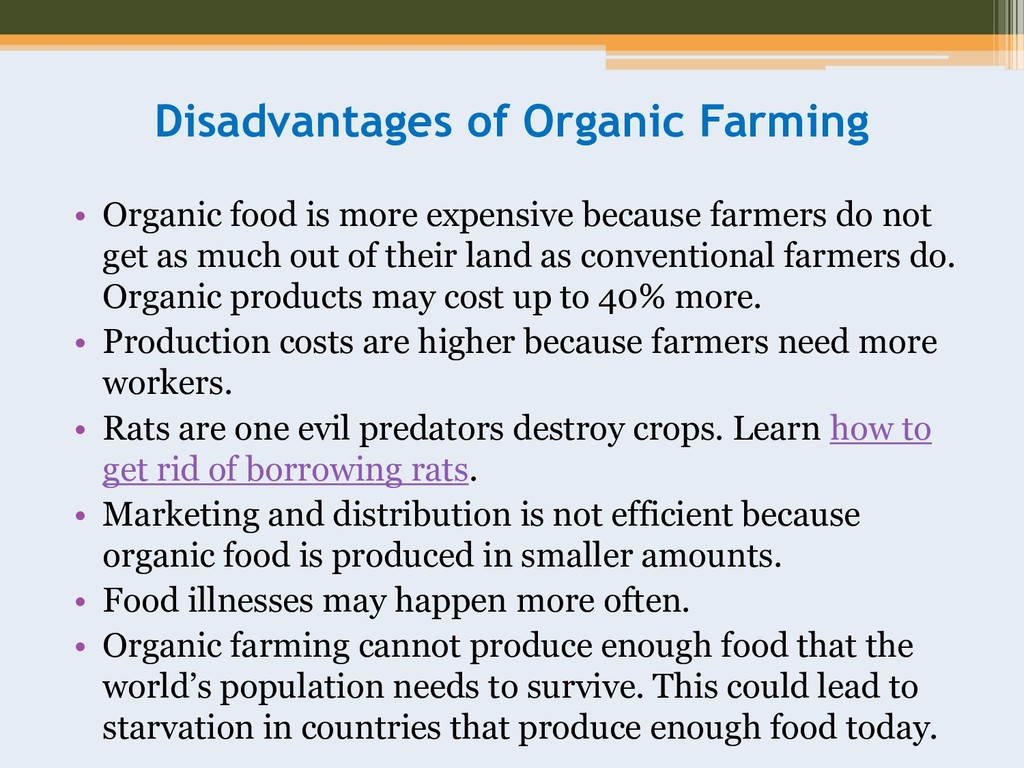
  16. Disadvantages of Organic Farming • Organic food is more expensive

    because farmers do not get as much out of their land as conventional farmers do. Organic products may cost up to 40% more. • Production costs are higher because farmers need more workers. • Rats are one evil predators destroy crops. Learn how to get rid of borrowing rats. • Marketing and distribution is not efficient because organic food is produced in smaller amounts. • Food illnesses may happen more often. • Organic farming cannot produce enough food that the world’s population needs to survive. This could lead to starvation in countries that produce enough food today.