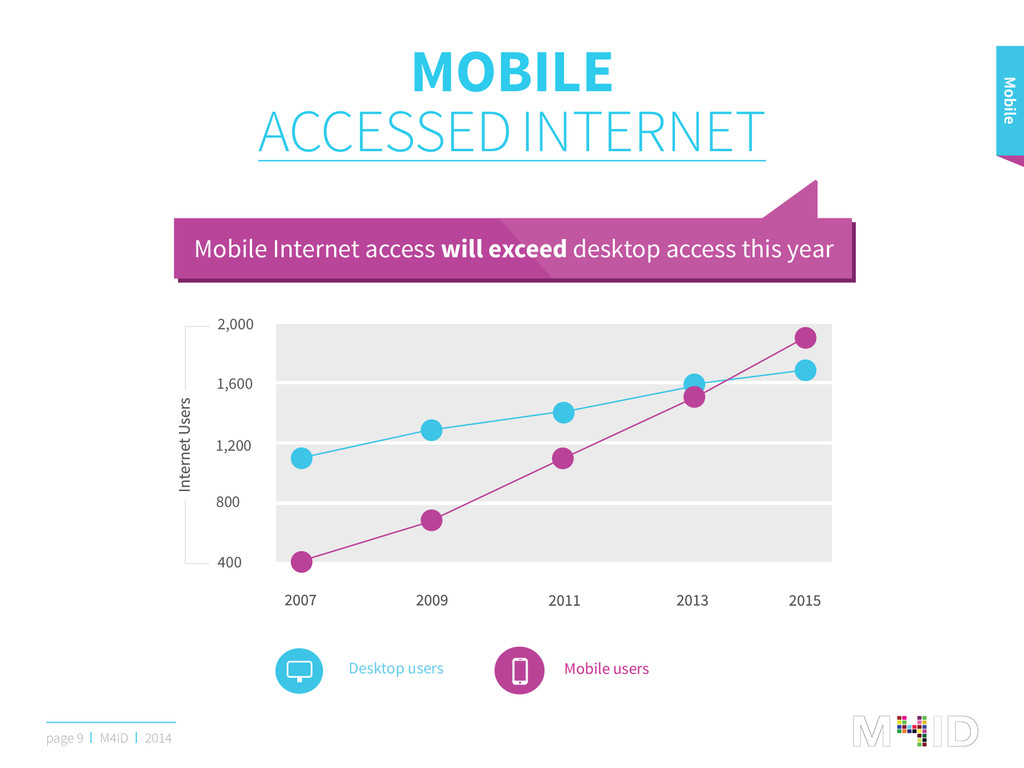
by constant change. These developments bring with them both exciting opportunities and new challenges for social change initiatives worldwide. M4ID has below summarized the key trends that will impact technology supported programmes over the next year.
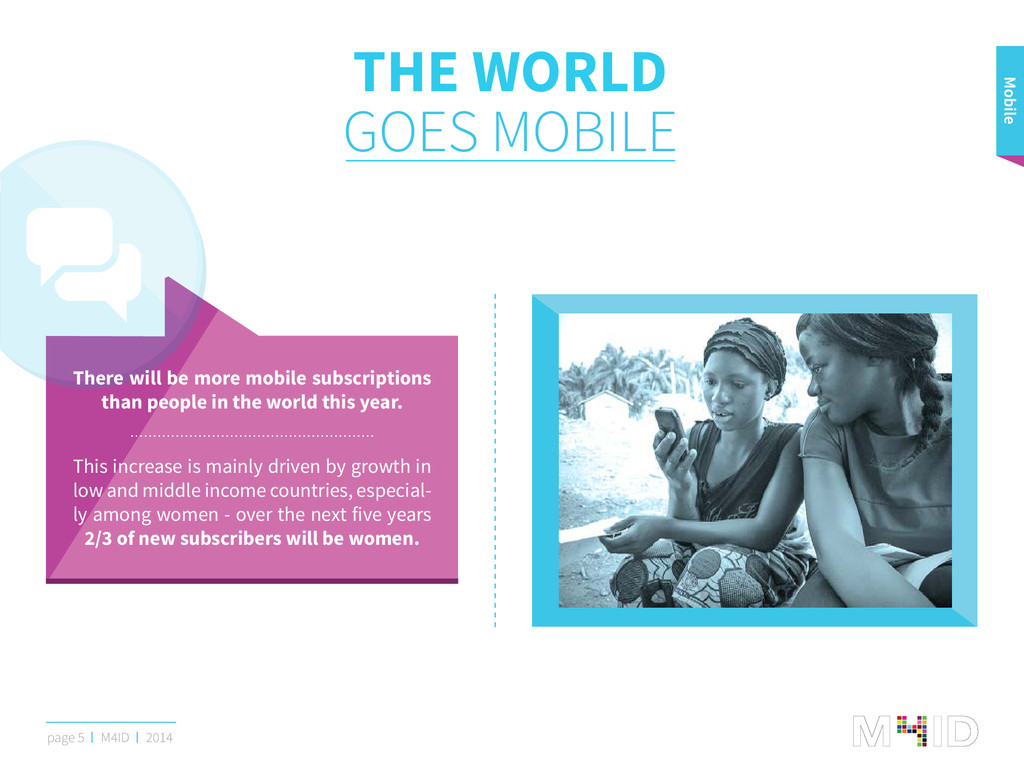
be more mobile subscriptions than people in the world this year. This increase is mainly driven by growth in low and middle income countries, especial- ly among women - over the next five years 2/3 of new subscribers will be women.
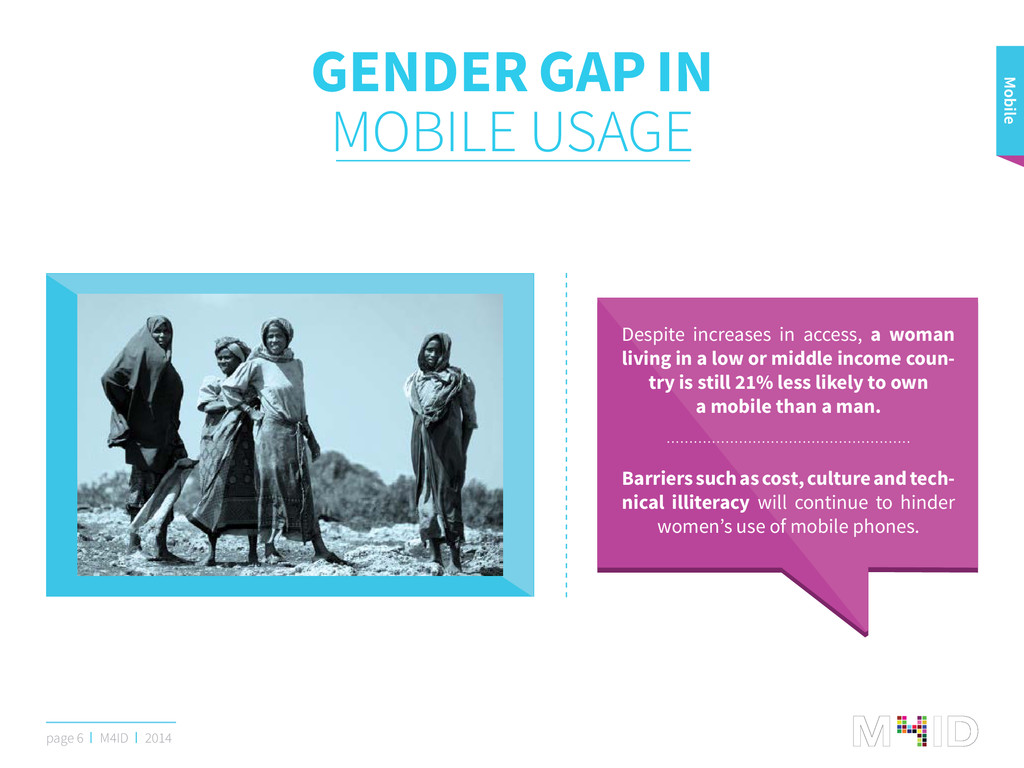
woman living in a low or middle income coun- try is still 21% less likely to own a mobile than a man. Barriers such as cost, culture and tech- nical illiteracy will continue to hinder women’s use of mobile phones. page 6 M4ID 2014
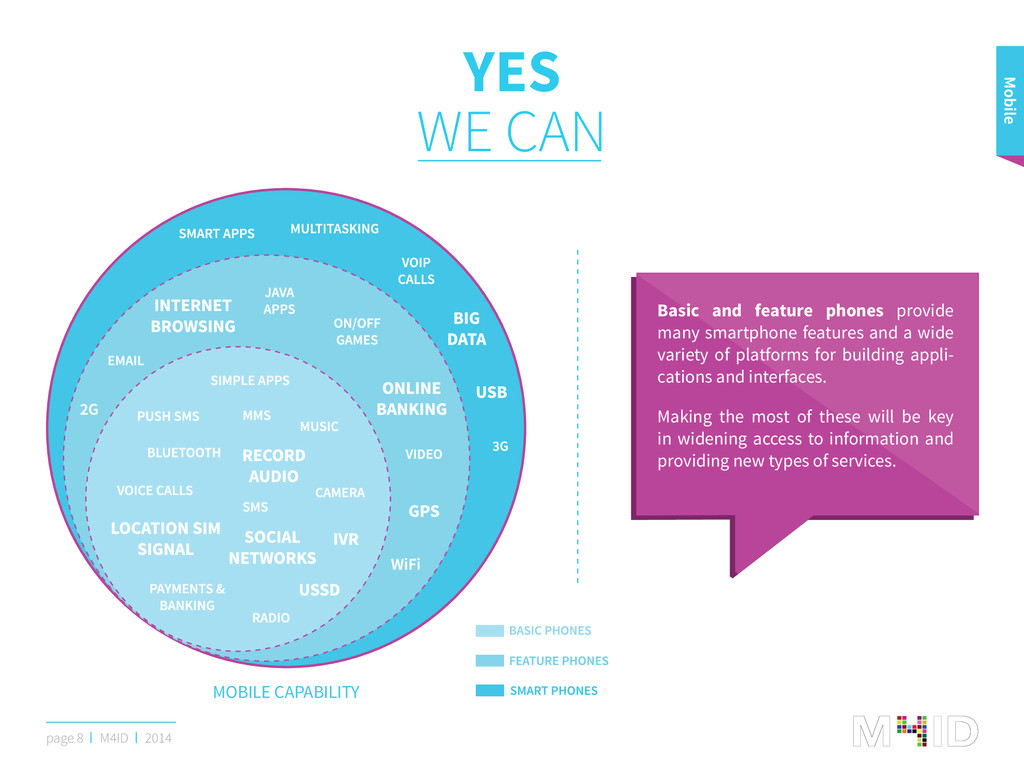
phones provide many smartphone features and a wide variety of platforms for building appli- cations and interfaces. Making the most of these will be key in widening access to information and providing new types of services. MOBILE CAPABILITY
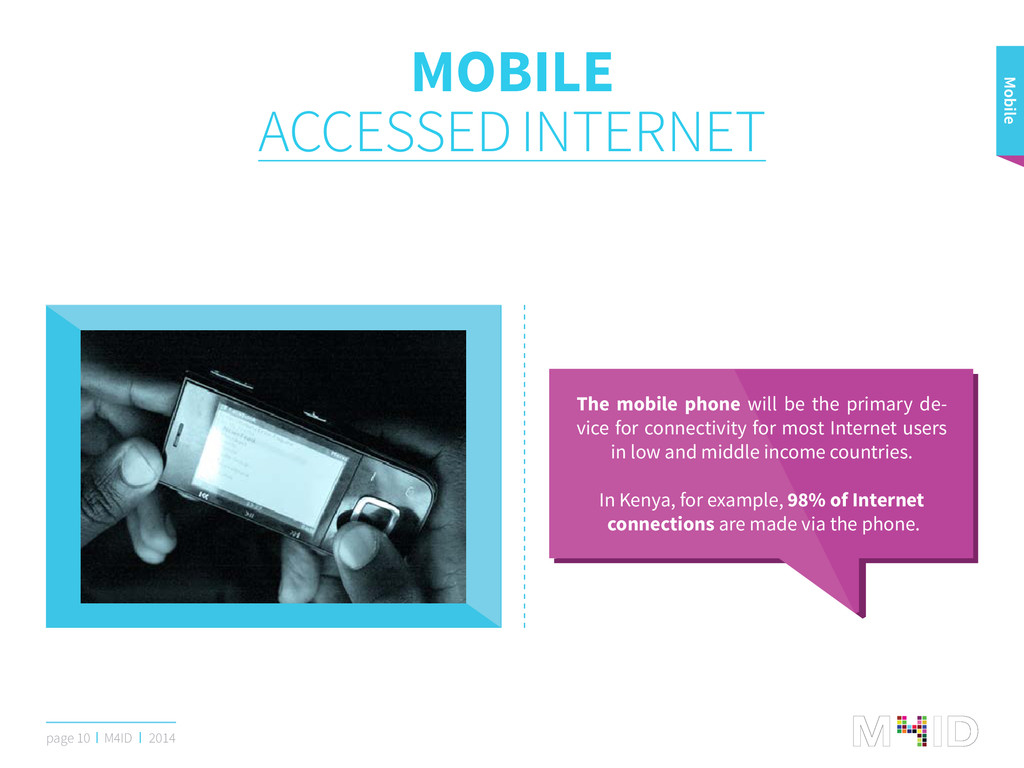
de- vice for connectivity for most Internet users in low and middle income countries. In Kenya, for example, 98% of Internet connections are made via the phone. page 10 M4ID 2014
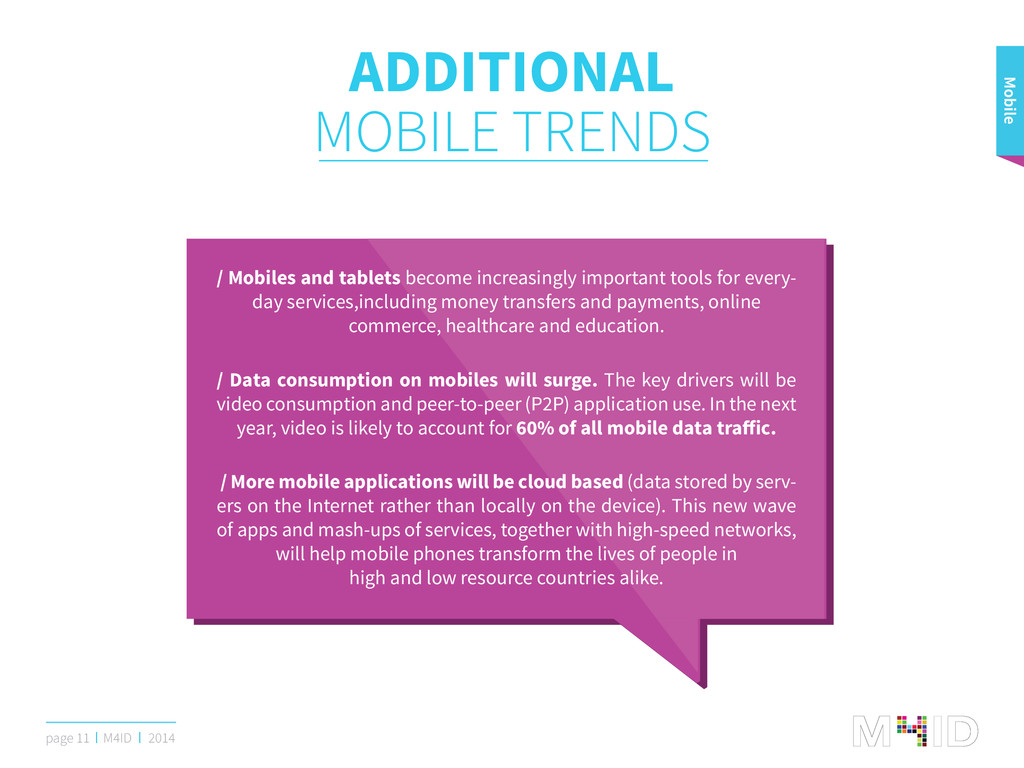
tablets become increasingly important tools for every- day services,including money transfers and payments, online commerce, healthcare and education. / Data consumption on mobiles will surge. The key drivers will be video consumption and peer-to-peer (P2P) application use. In the next year, video is likely to account for 60% of all mobile data traffic. / More mobile applications will be cloud based (data stored by serv- ers on the Internet rather than locally on the device). This new wave of apps and mash-ups of services, together with high-speed networks, will help mobile phones transform the lives of people in high and low resource countries alike.
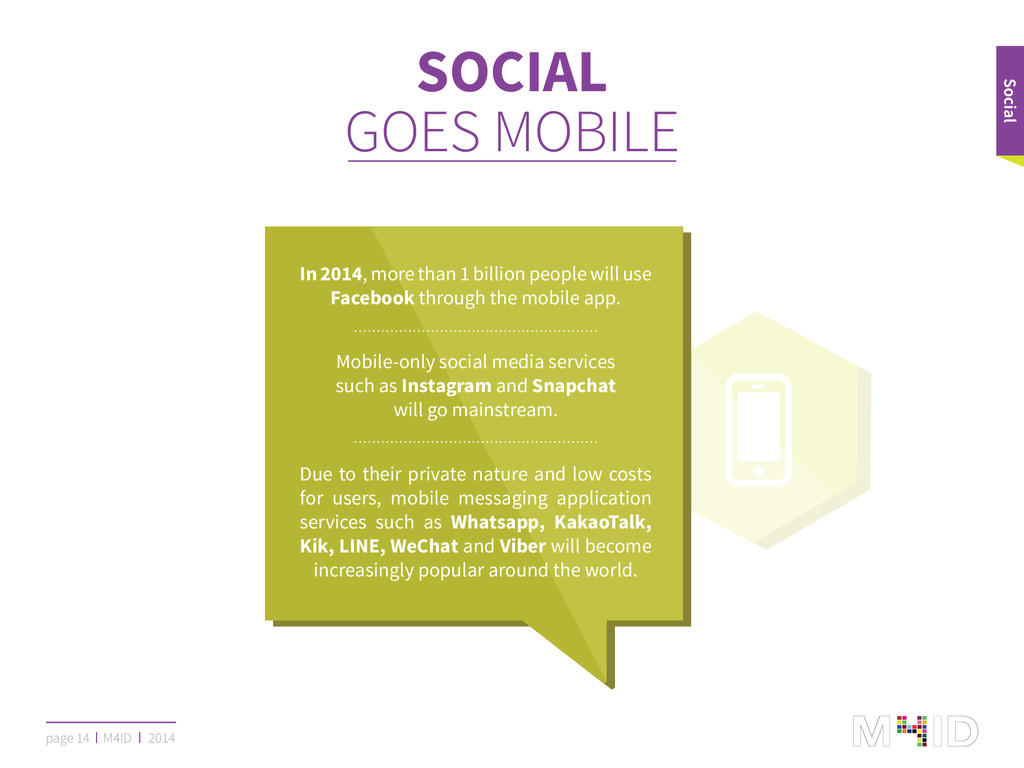
than 1 billion people will use Facebook through the mobile app. Mobile-only social media services such as Instagram and Snapchat will go mainstream. Due to their private nature and low costs for users, mobile messaging application services such as Whatsapp, KakaoTalk, Kik, LINE, WeChat and Viber will become increasingly popular around the world.
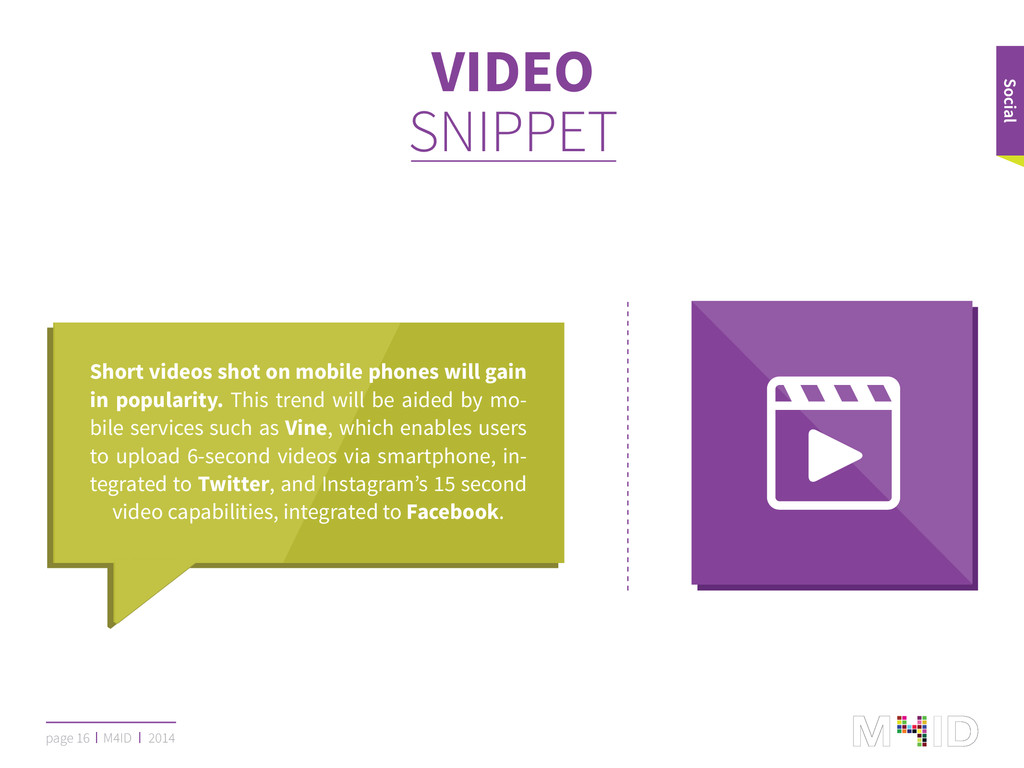
in popularity. This trend will be aided by mo- bile services such as Vine, which enables users to upload 6-second videos via smartphone, in- tegrated to Twitter, and Instagram’s 15 second video capabilities, integrated to Facebook. page 16 M4ID 2014
sharing on social networks is coming to an end. Scrutiny and privacy concerns will play an increasingly important role in social media use. Digital services grounded in anonymity will gain in popularity. People will become more aware of how their digital data is used by governments and businesses alike and begin demand- ing more control over their own online identities and footprint.
By 2020, 50 billion devices - phones, tablets, appliances, ve- hicles, smart meters, etc. - will be connected to the Internet and each other, turning information into actions that create new capabilities, richer experiences, and unprecedented opportunities for social change initiatives. page 20 M4ID 2014
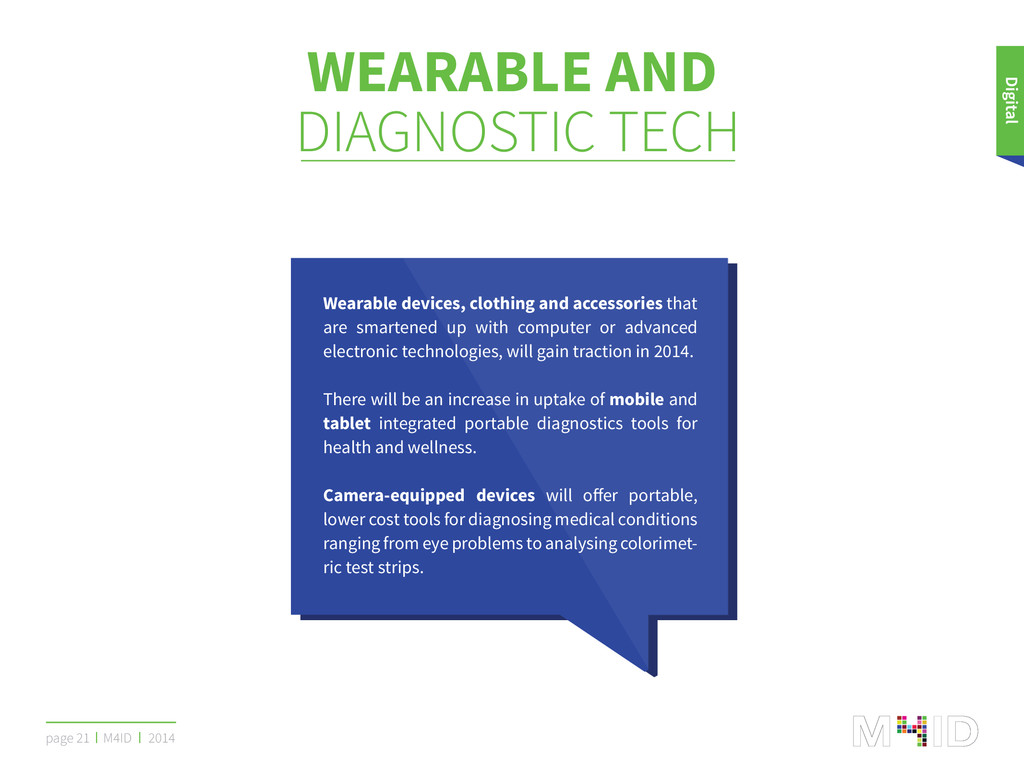
are smartened up with computer or advanced electronic technologies, will gain traction in 2014. There will be an increase in uptake of mobile and tablet integrated portable diagnostics tools for health and wellness. Camera-equipped devices will offer portable, lower cost tools for diagnosing medical conditions ranging from eye problems to analysing colorimet- ric test strips. page 21 M4ID 2014
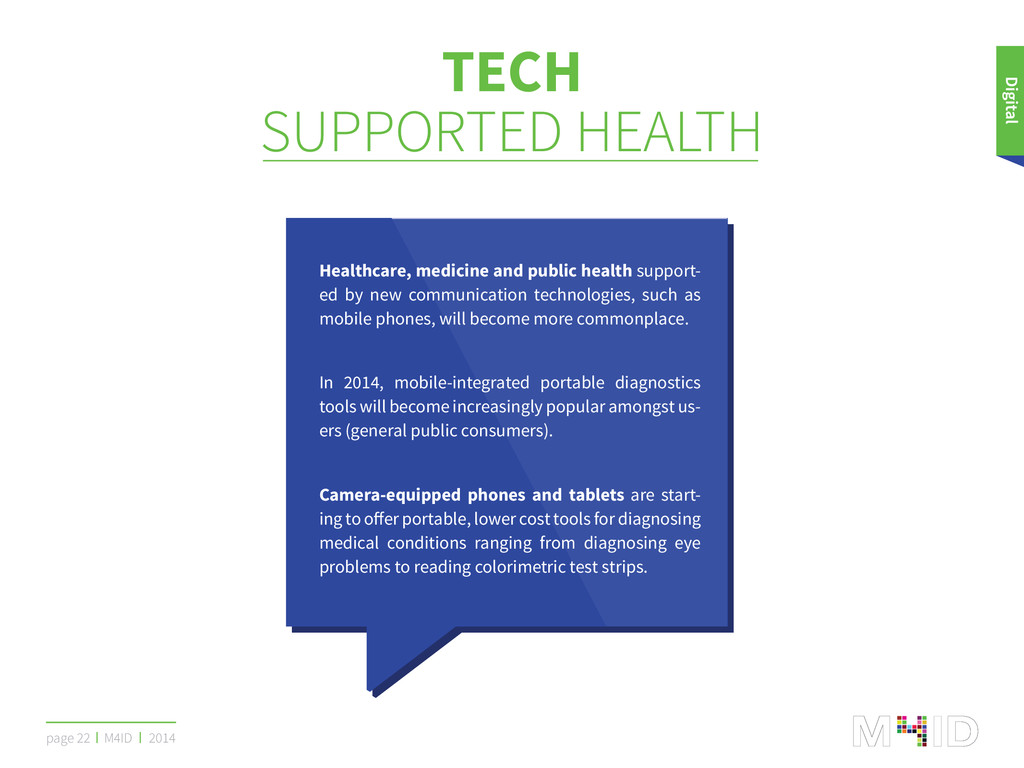
technologies, such as mobile phones, will become more commonplace. In 2014, mobile-integrated portable diagnostics tools will become increasingly popular amongst us- ers (general public consumers). Camera-equipped phones and tablets are start- ing to offer portable, lower cost tools for diagnosing medical conditions ranging from diagnosing eye problems to reading colorimetric test strips. page 22 M4ID 2014 TECH SUPPORTED HEALTH
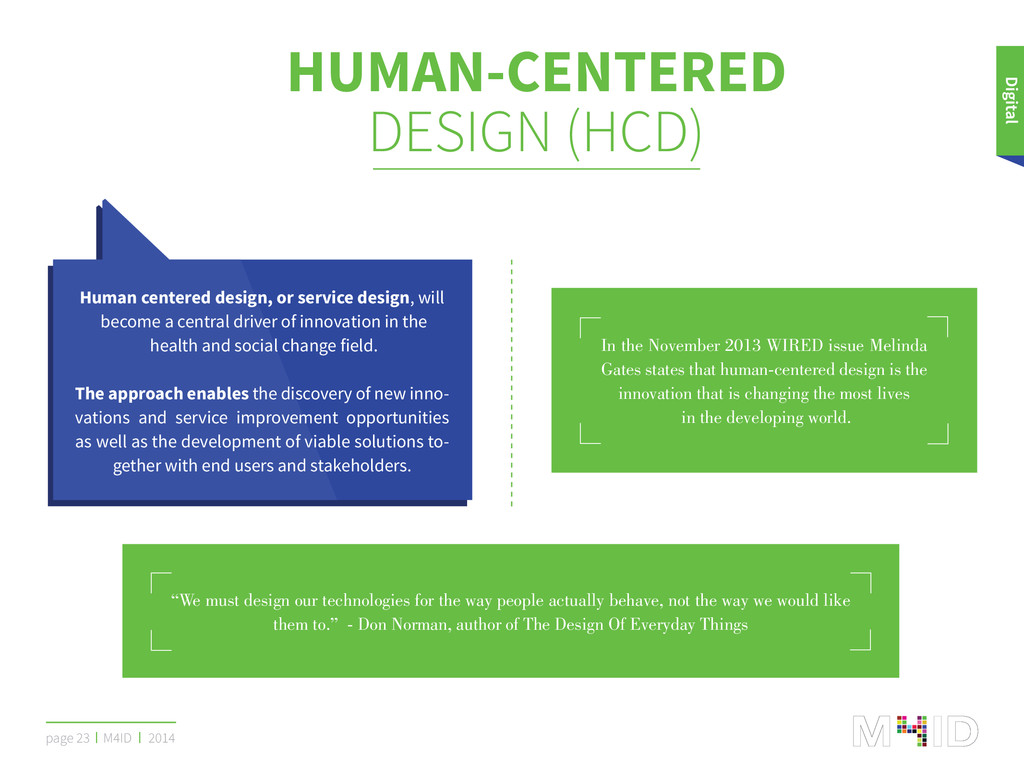
become a central driver of innovation in the health and social change field. The approach enables the discovery of new inno- vations and service improvement opportunities as well as the development of viable solutions to- gether with end users and stakeholders. “We must design our technologies for the way people actually behave, not the way we would like them to.” - Don Norman, author of The Design Of Everyday Things page 23 M4ID 2014 In the November 2013 WIRED issue Melinda Gates states that human-centered design is the innovation that is changing the most lives in the developing world.
technology for development and health. M4ID provides services for not-for-profit organizations and delivers projects across Asia, Africa, the Americas and Europe. The agency also researches and develops new service concepts, filling innovation gaps in the area of reproductive, maternal and newborn child health. To learn more about M4ID visit: www.m4id.fi page 25 M4ID 2014


 gogutan
 kworkdev
 odashi
 teamlab
 iktakahiro
 usanchuu
 codmoninc
 syuchimu
 colopl
 tetsuya28
 willnet
 jtakeda
 joshbly
 samlambert
 thirion
 lauravandoore
 marktimemedia
 sachag
 reverentgeek
 eitanlees
 sarafernandez
 charlesmeaden
 nikkihalliwell
 tapps