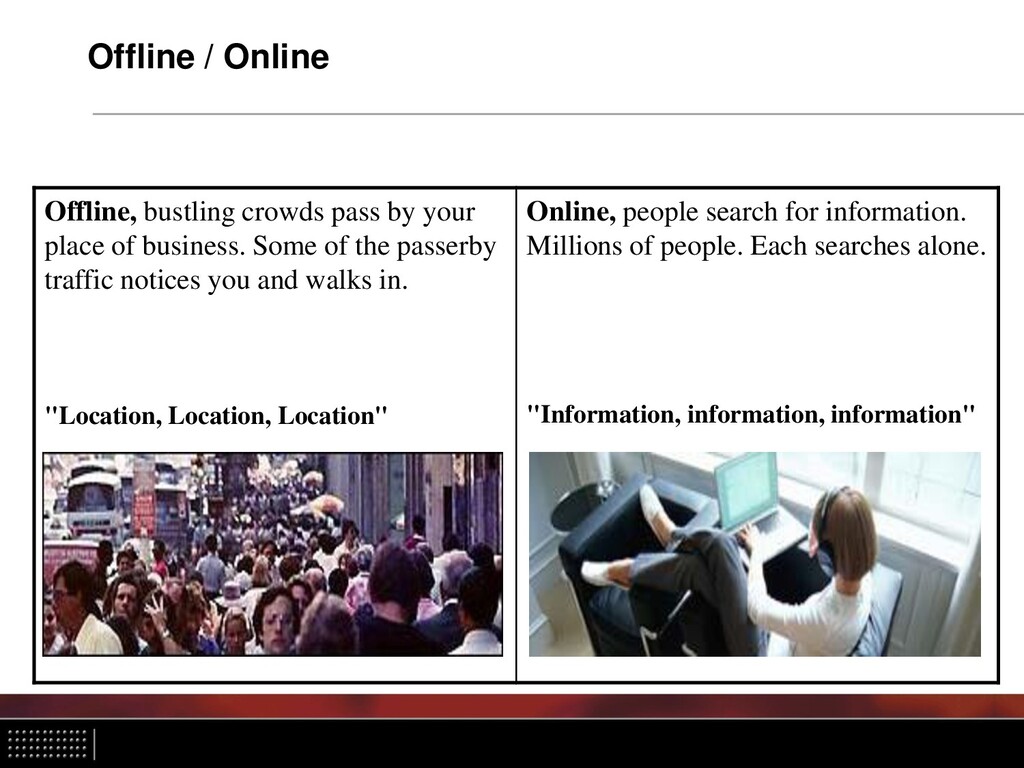
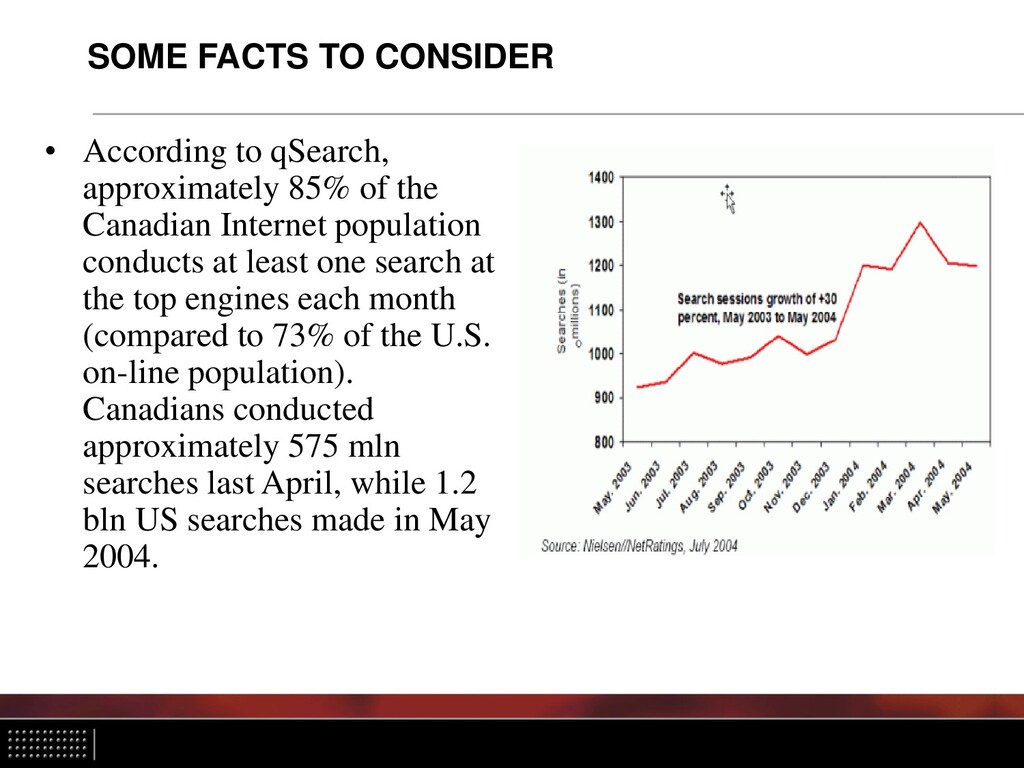
of business. Some of the passerby traffic notices you and walks in. "Location, Location, Location" Online, people search for information. Millions of people. Each searches alone. "Information, information, information"
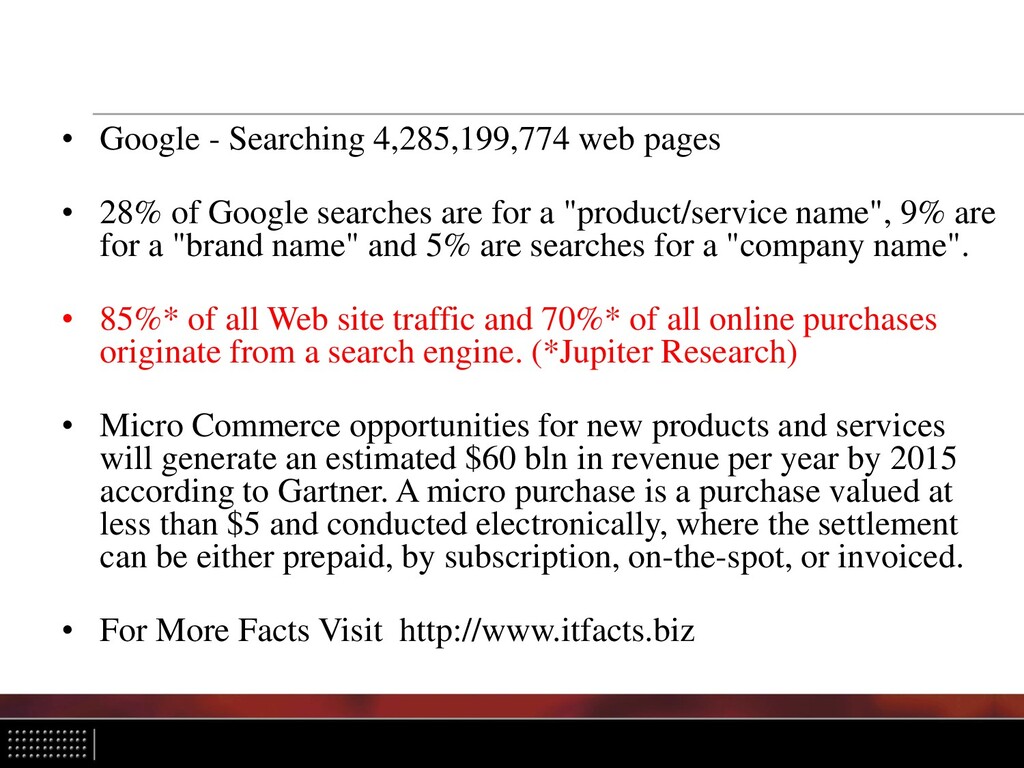
of the Canadian Internet population conducts at least one search at the top engines each month (compared to 73% of the U.S. on-line population). Canadians conducted approximately 575 mln searches last April, while 1.2 bln US searches made in May 2004.
Google searches are for a "product/service name", 9% are for a "brand name" and 5% are searches for a "company name". • 85%* of all Web site traffic and 70%* of all online purchases originate from a search engine. (*Jupiter Research) • Micro Commerce opportunities for new products and services will generate an estimated $60 bln in revenue per year by 2015 according to Gartner. A micro purchase is a purchase valued at less than $5 and conducted electronically, where the settlement can be either prepaid, by subscription, on-the-spot, or invoiced. • For More Facts Visit http://www.itfacts.biz
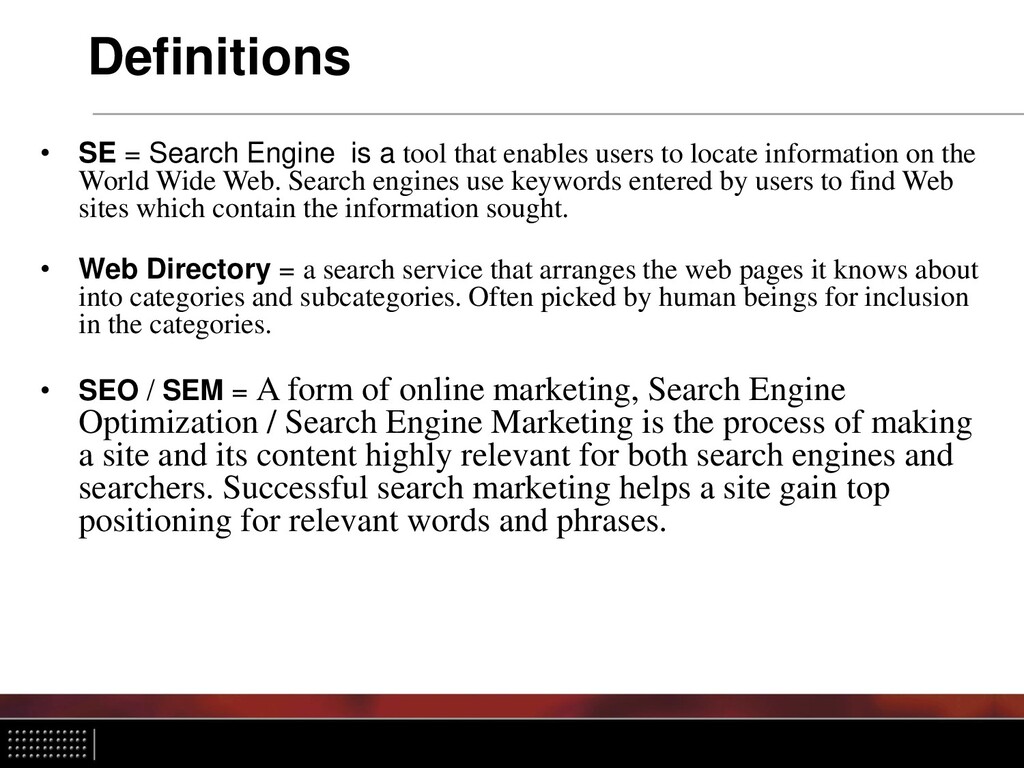
enables users to locate information on the World Wide Web. Search engines use keywords entered by users to find Web sites which contain the information sought. • Web Directory = a search service that arranges the web pages it knows about into categories and subcategories. Often picked by human beings for inclusion in the categories. • SEO / SEM = A form of online marketing, Search Engine Optimization / Search Engine Marketing is the process of making a site and its content highly relevant for both search engines and searchers. Successful search marketing helps a site gain top positioning for relevant words and phrases.
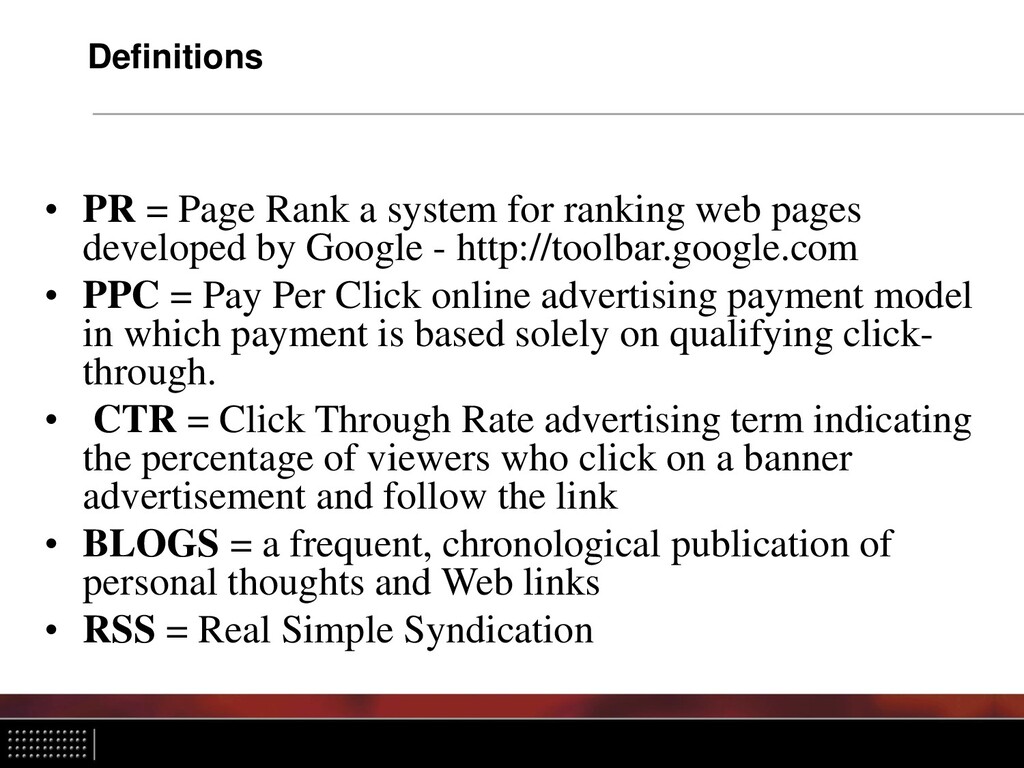
web pages developed by Google - http://toolbar.google.com • PPC = Pay Per Click online advertising payment model in which payment is based solely on qualifying click- through. • CTR = Click Through Rate advertising term indicating the percentage of viewers who click on a banner advertisement and follow the link • BLOGS = a frequent, chronological publication of personal thoughts and Web links • RSS = Real Simple Syndication
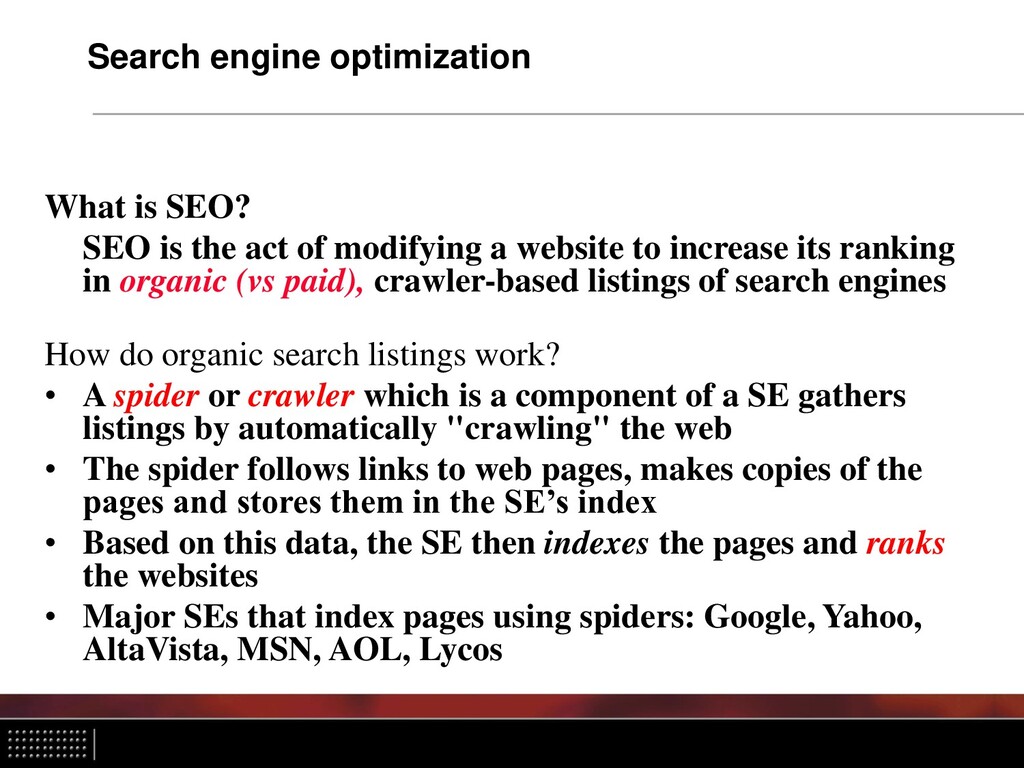
of modifying a website to increase its ranking in organic (vs paid), crawler-based listings of search engines How do organic search listings work? • A spider or crawler which is a component of a SE gathers listings by automatically "crawling" the web • The spider follows links to web pages, makes copies of the pages and stores them in the SE’s index • Based on this data, the SE then indexes the pages and ranks the websites • Major SEs that index pages using spiders: Google, Yahoo, AltaVista, MSN, AOL, Lycos
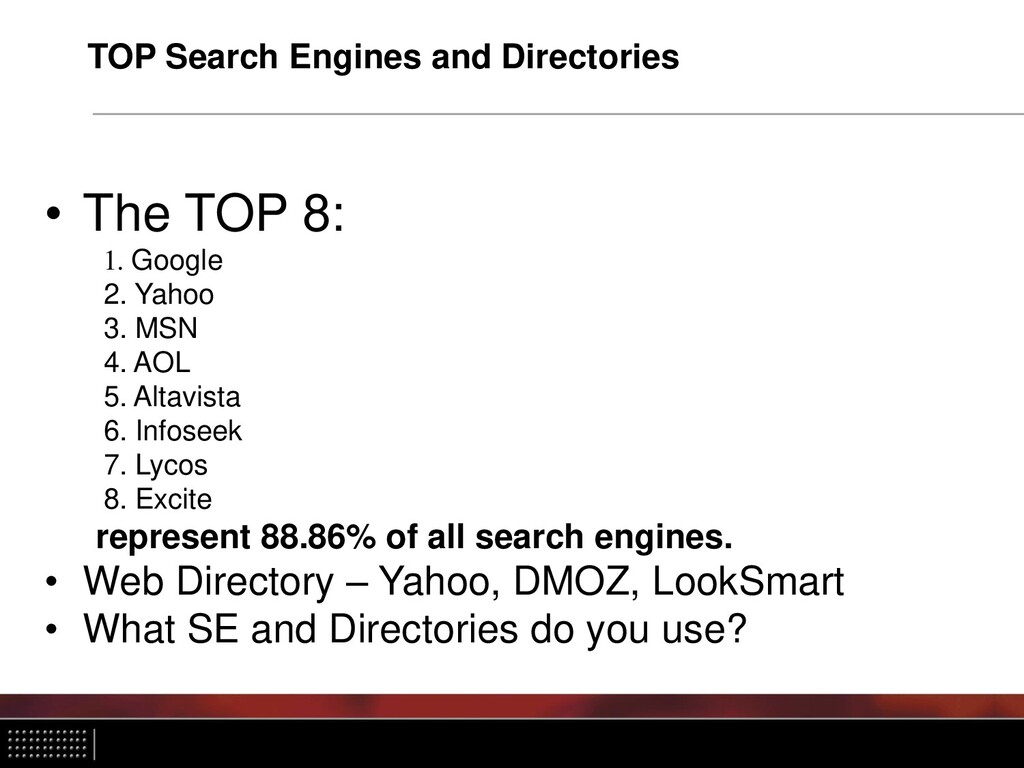
Google 2. Yahoo 3. MSN 4. AOL 5. Altavista 6. Infoseek 7. Lycos 8. Excite represent 88.86% of all search engines. • Web Directory – Yahoo, DMOZ, LookSmart • What SE and Directories do you use?
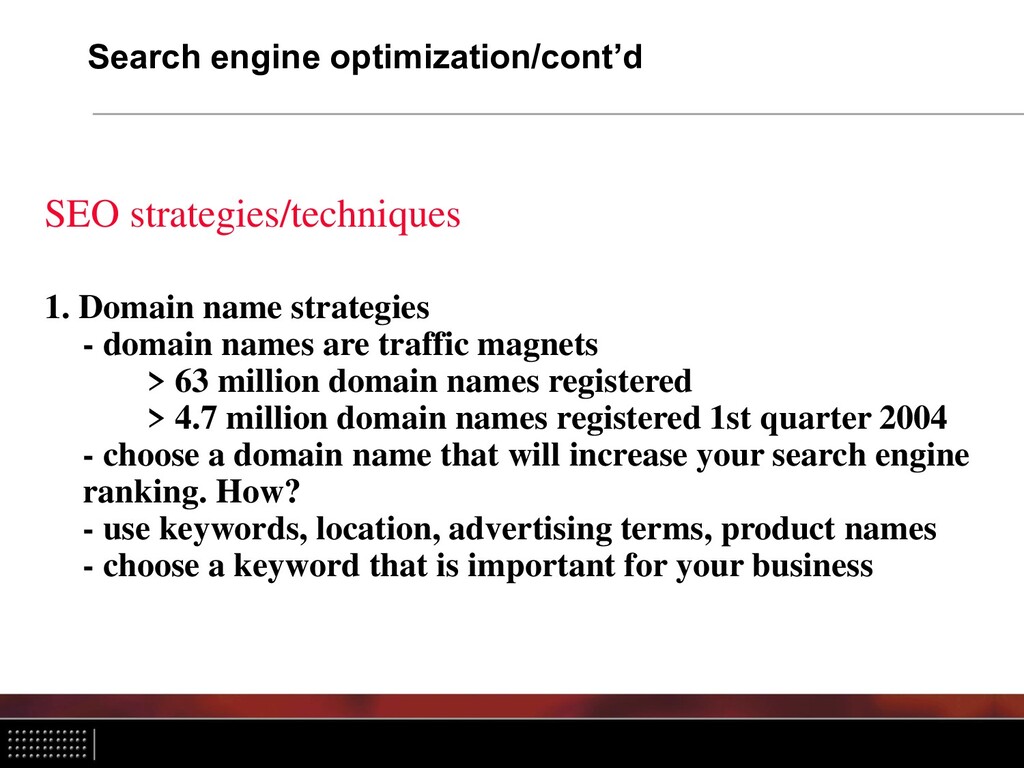
domain names are traffic magnets > 63 million domain names registered > 4.7 million domain names registered 1st quarter 2004 - choose a domain name that will increase your search engine ranking. How? - use keywords, location, advertising terms, product names - choose a keyword that is important for your business
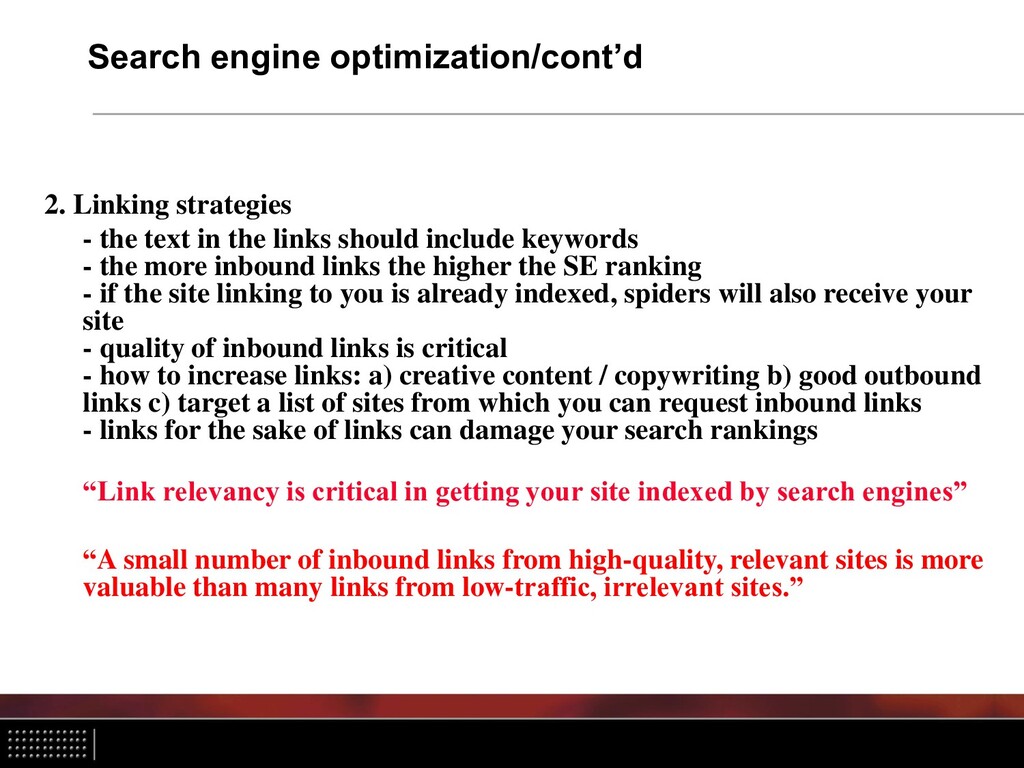
the links should include keywords - the more inbound links the higher the SE ranking - if the site linking to you is already indexed, spiders will also receive your site - quality of inbound links is critical - how to increase links: a) creative content / copywriting b) good outbound links c) target a list of sites from which you can request inbound links - links for the sake of links can damage your search rankings “Link relevancy is critical in getting your site indexed by search engines” “A small number of inbound links from high-quality, relevant sites is more valuable than many links from low-traffic, irrelevant sites.”
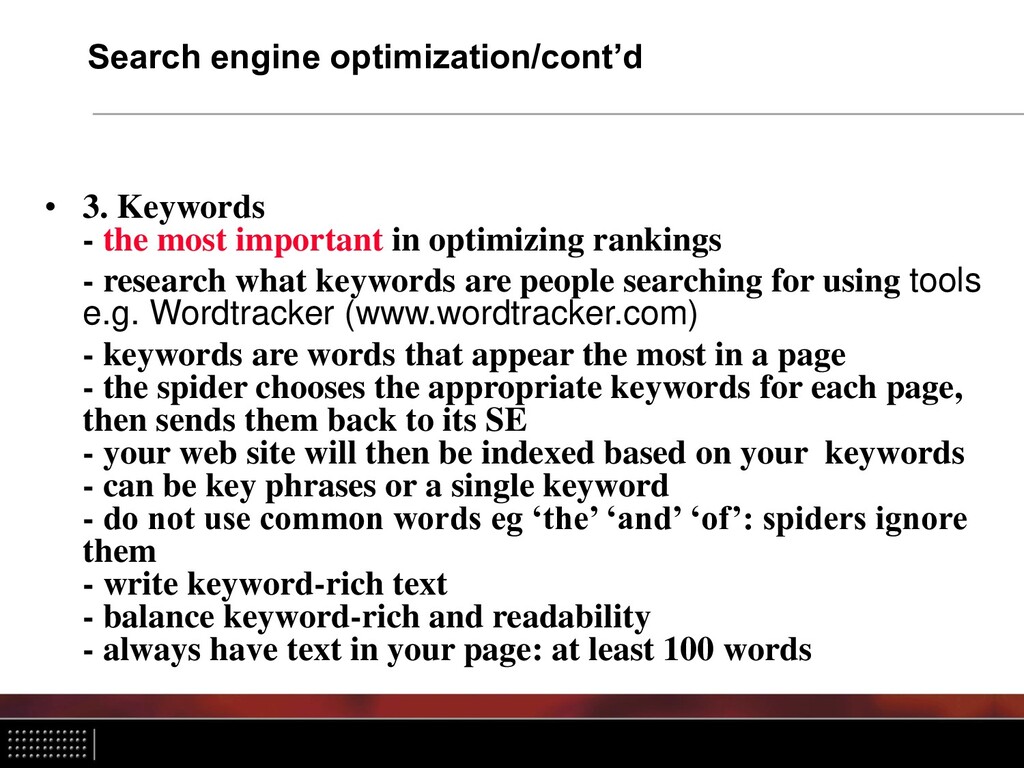
in optimizing rankings - research what keywords are people searching for using tools e.g. Wordtracker (www.wordtracker.com) - keywords are words that appear the most in a page - the spider chooses the appropriate keywords for each page, then sends them back to its SE - your web site will then be indexed based on your keywords - can be key phrases or a single keyword - do not use common words eg ‘the’ ‘and’ ‘of’: spiders ignore them - write keyword-rich text - balance keyword-rich and readability - always have text in your page: at least 100 words
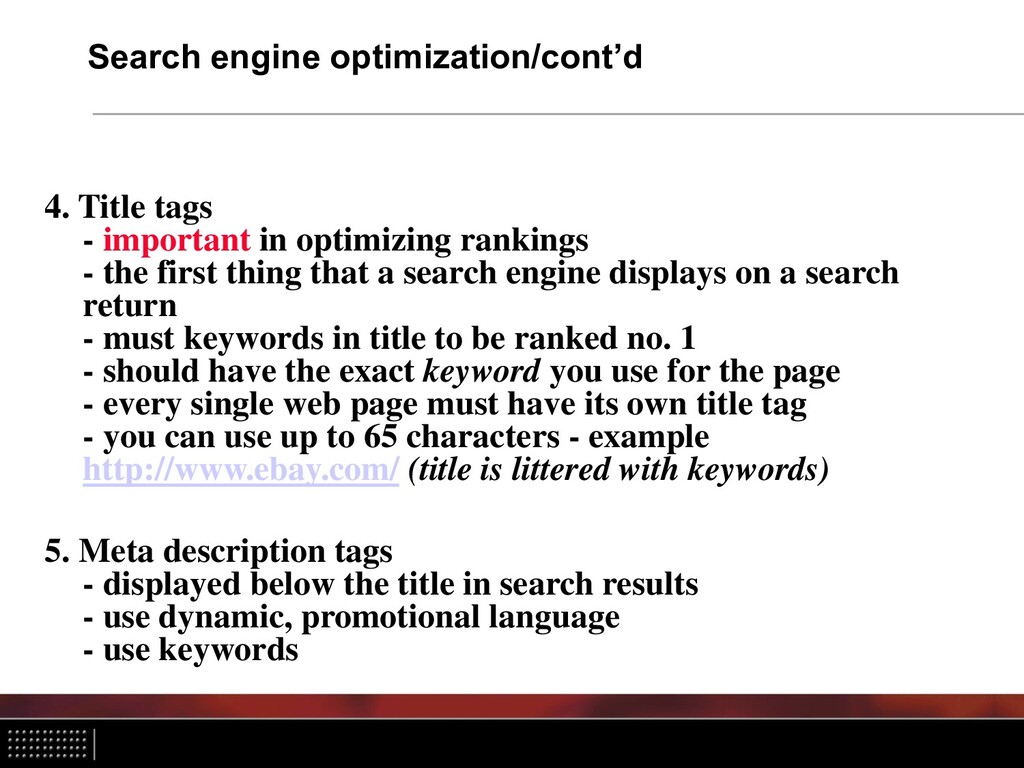
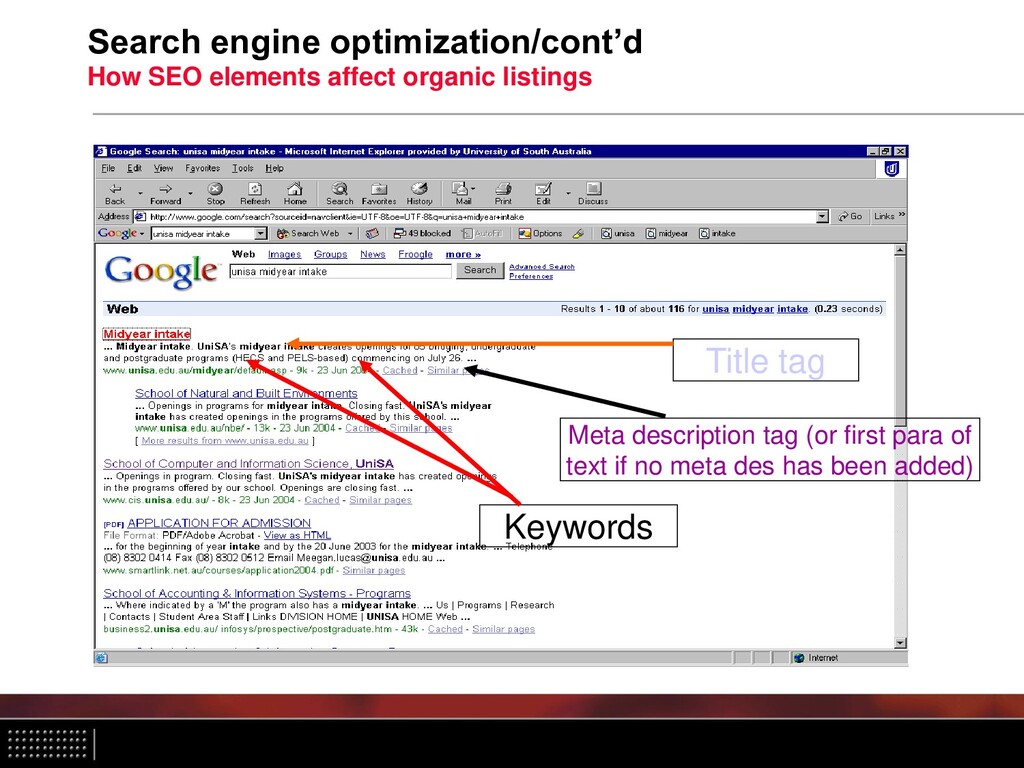
rankings - the first thing that a search engine displays on a search return - must keywords in title to be ranked no. 1 - should have the exact keyword you use for the page - every single web page must have its own title tag - you can use up to 65 characters - example http://www.ebay.com/ (title is littered with keywords) 5. Meta description tags - displayed below the title in search results - use dynamic, promotional language - use keywords
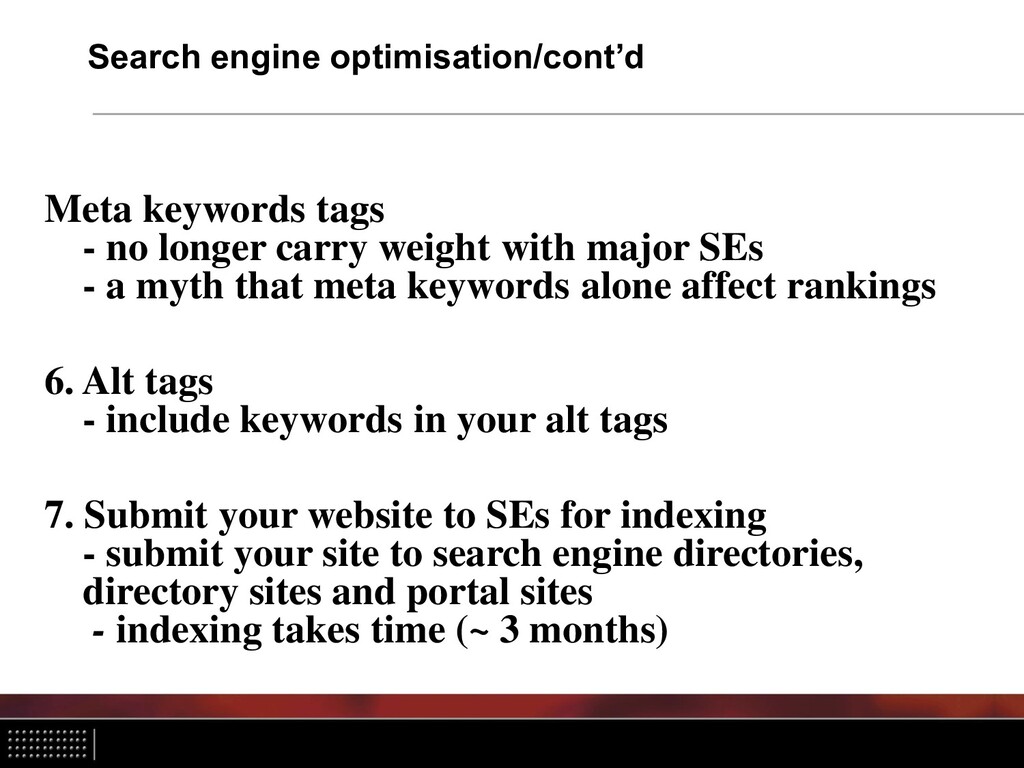
weight with major SEs - a myth that meta keywords alone affect rankings 6. Alt tags - include keywords in your alt tags 7. Submit your website to SEs for indexing - submit your site to search engine directories, directory sites and portal sites - indexing takes time (~ 3 months)
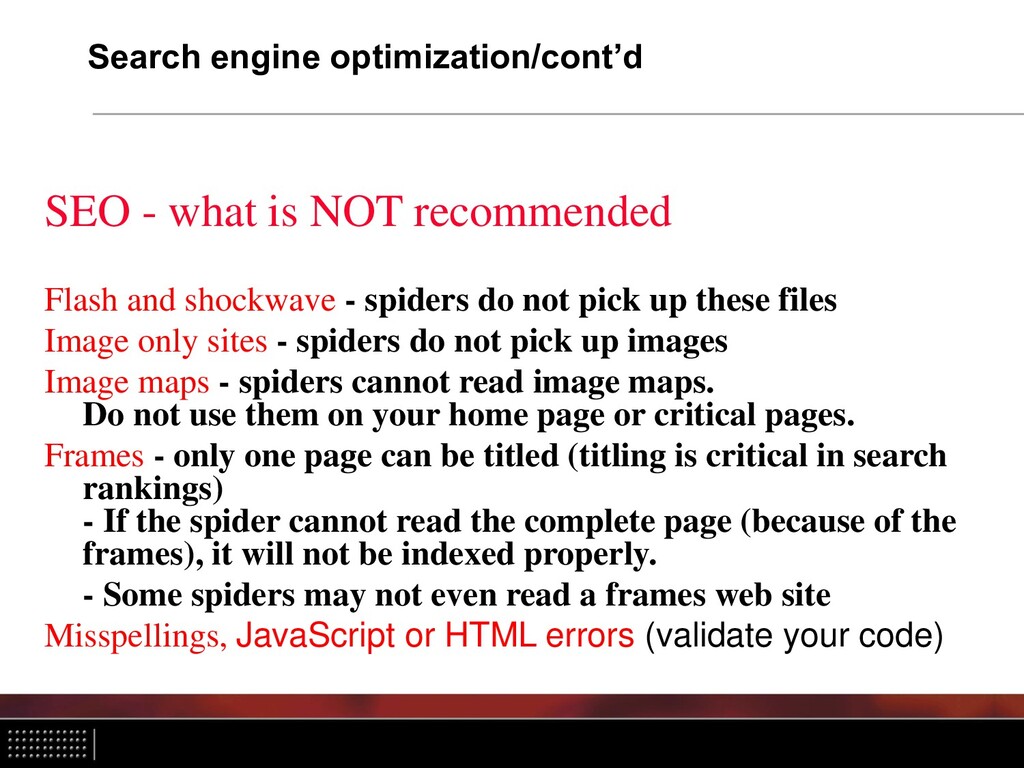
and shockwave - spiders do not pick up these files Image only sites - spiders do not pick up images Image maps - spiders cannot read image maps. Do not use them on your home page or critical pages. Frames - only one page can be titled (titling is critical in search rankings) - If the spider cannot read the complete page (because of the frames), it will not be indexed properly. - Some spiders may not even read a frames web site Misspellings, JavaScript or HTML errors (validate your code)
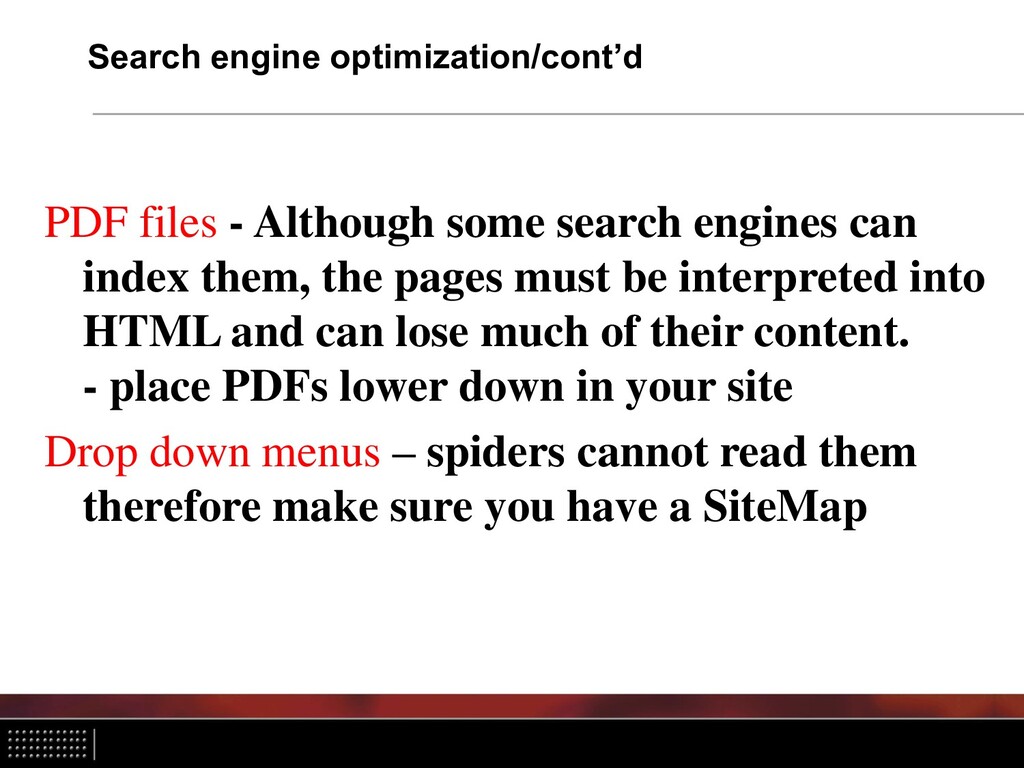
can index them, the pages must be interpreted into HTML and can lose much of their content. - place PDFs lower down in your site Drop down menus – spiders cannot read them therefore make sure you have a SiteMap
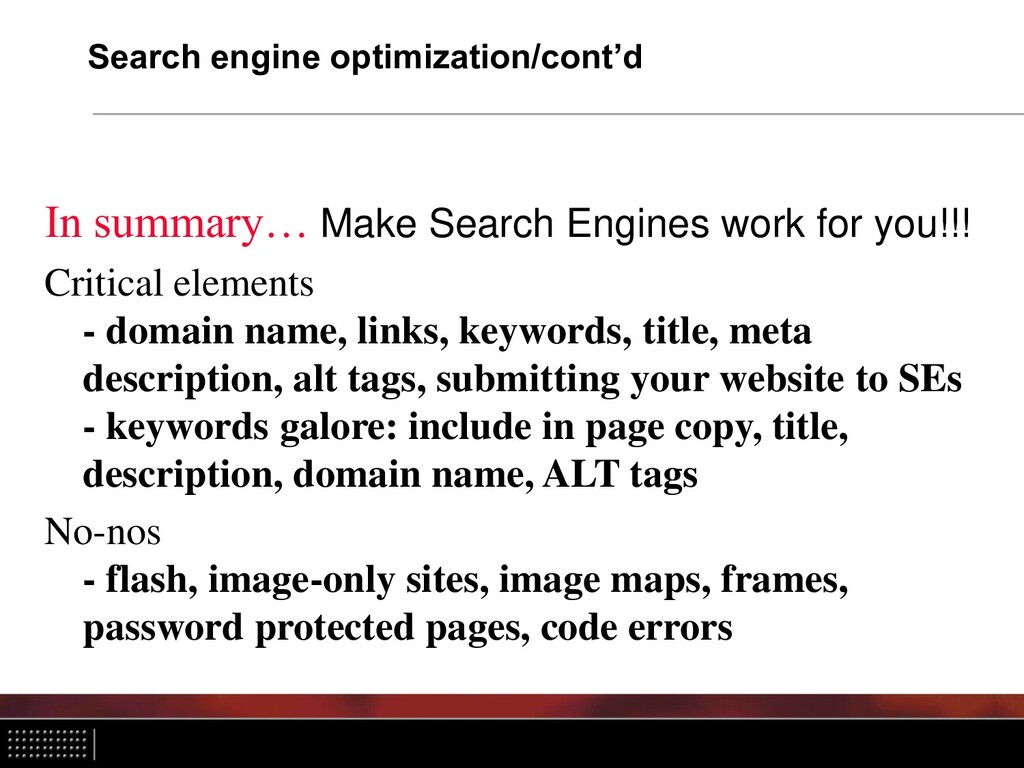
you!!! Critical elements - domain name, links, keywords, title, meta description, alt tags, submitting your website to SEs - keywords galore: include in page copy, title, description, domain name, ALT tags No-nos - flash, image-only sites, image maps, frames, password protected pages, code errors
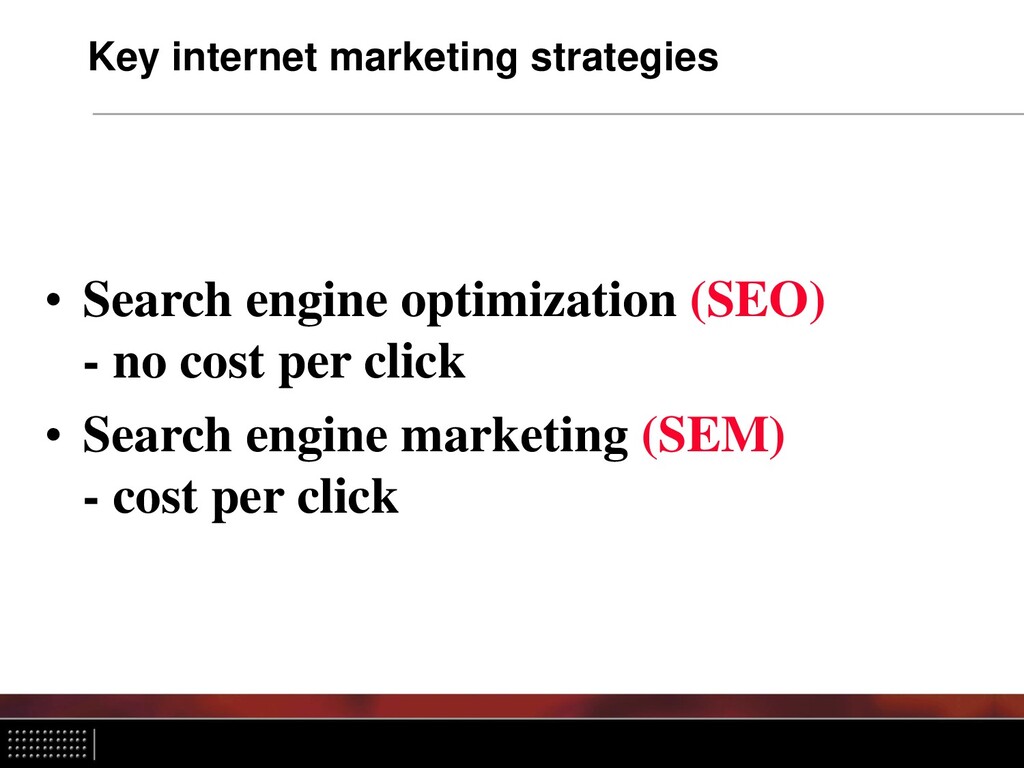
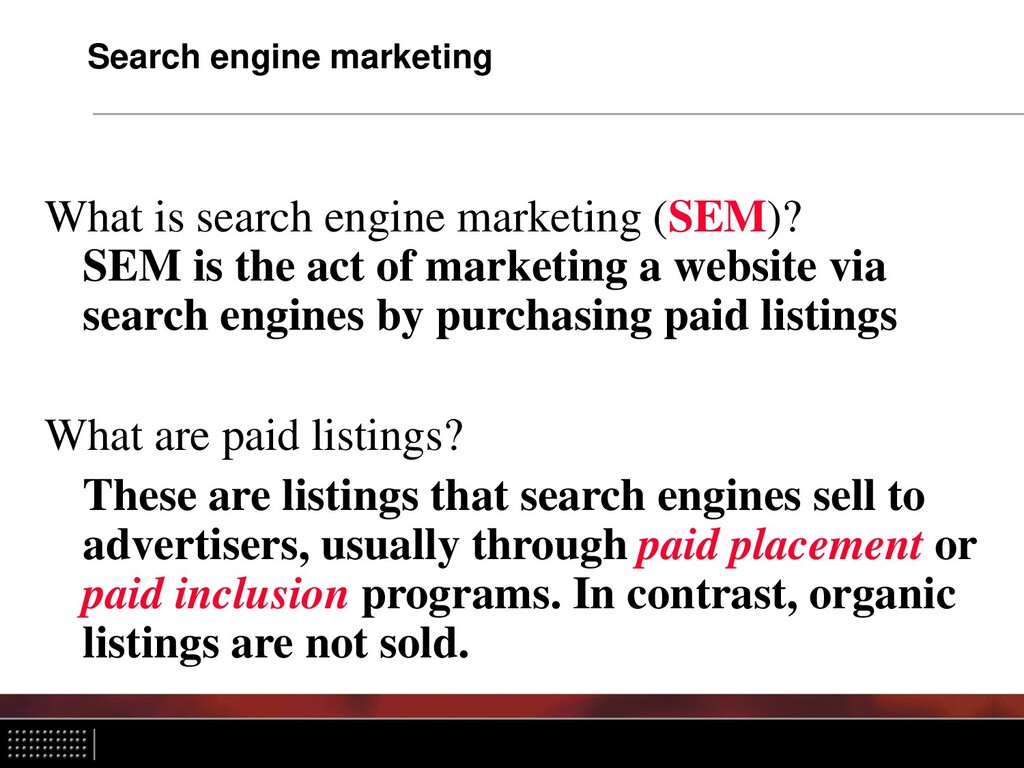
is the act of marketing a website via search engines by purchasing paid listings What are paid listings? These are listings that search engines sell to advertisers, usually through paid placement or paid inclusion programs. In contrast, organic listings are not sold.
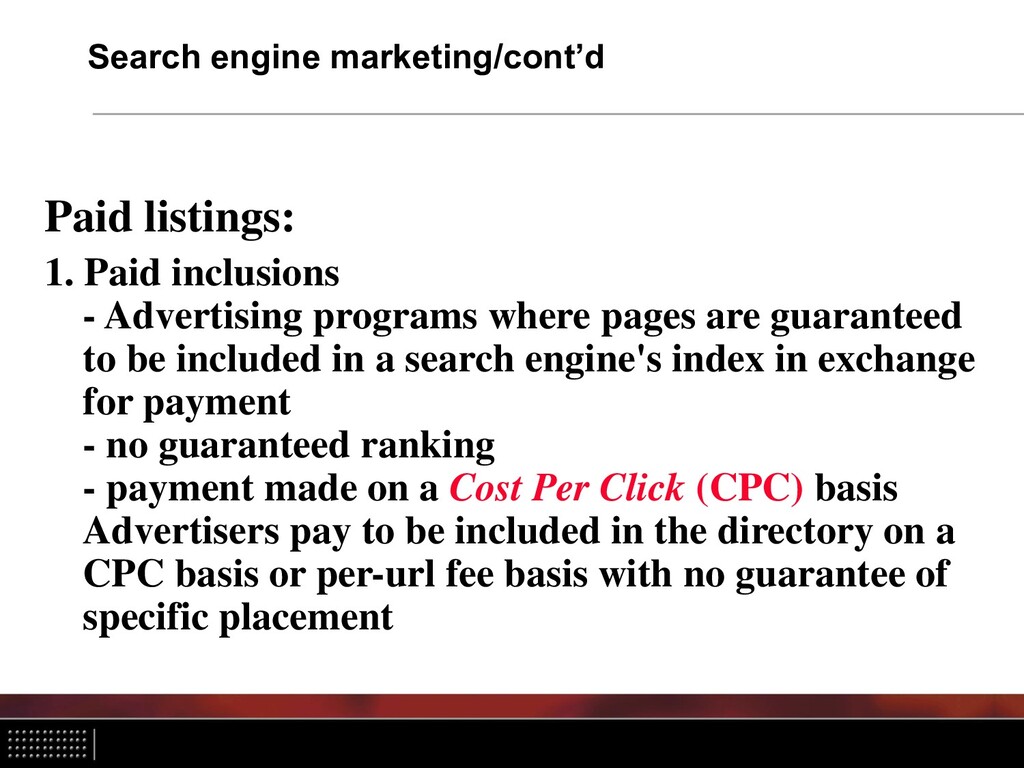
programs where pages are guaranteed to be included in a search engine's index in exchange for payment - no guaranteed ranking - payment made on a Cost Per Click (CPC) basis Advertisers pay to be included in the directory on a CPC basis or per-url fee basis with no guarantee of specific placement
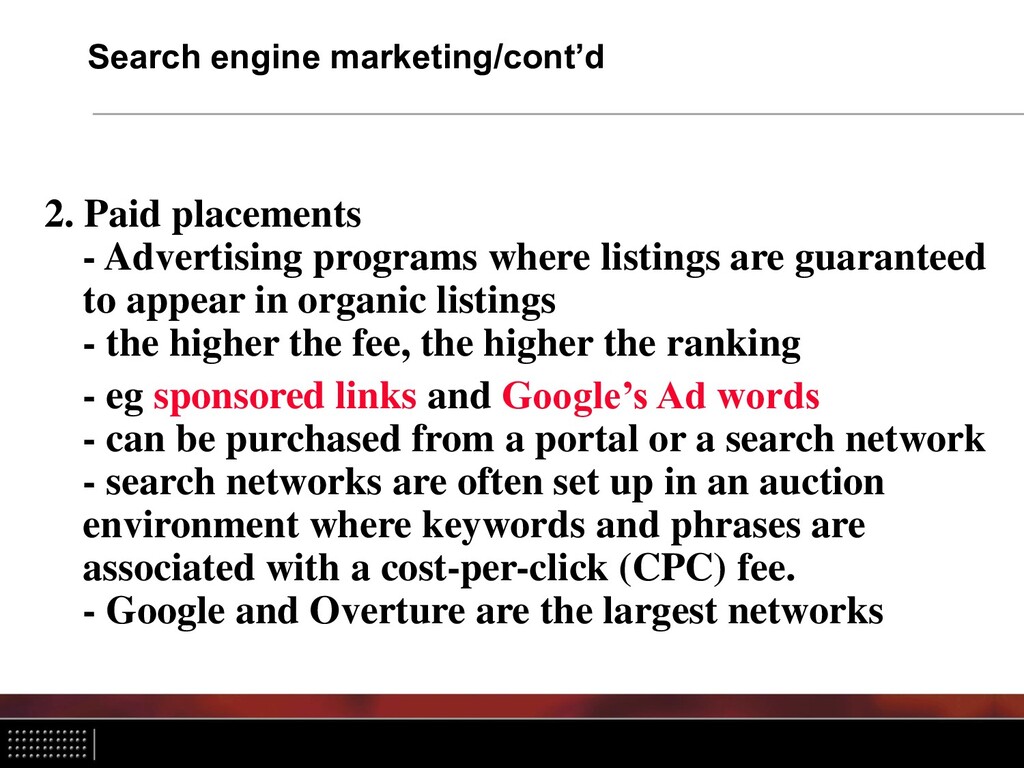
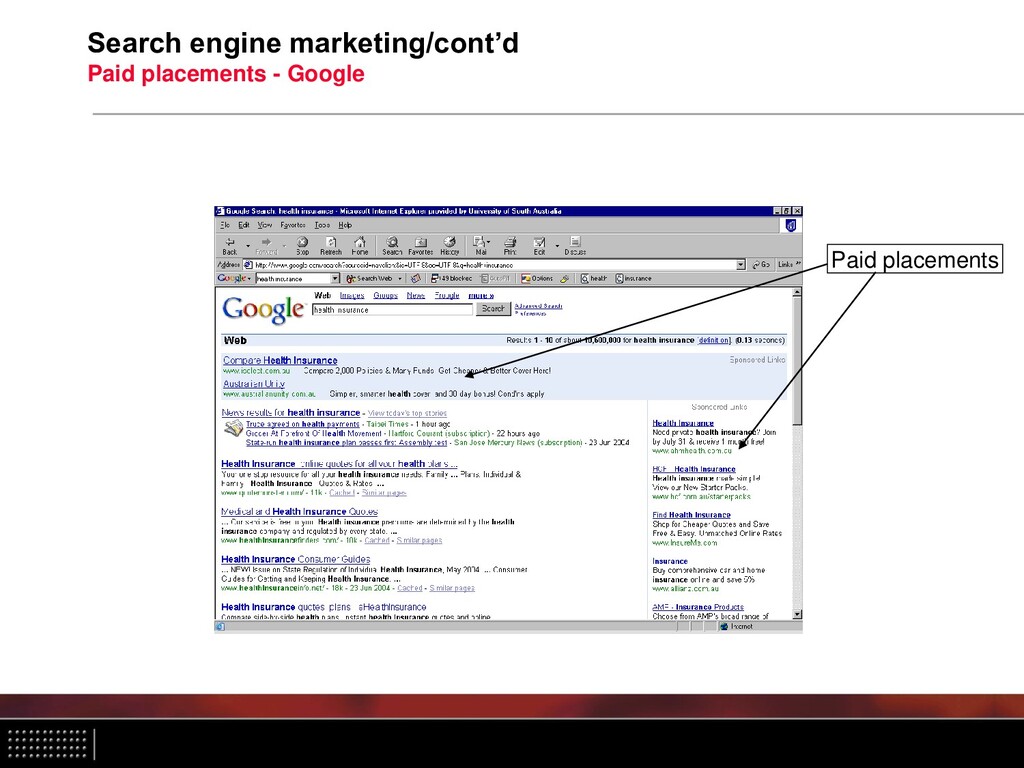
listings are guaranteed to appear in organic listings - the higher the fee, the higher the ranking - eg sponsored links and Google’s Ad words - can be purchased from a portal or a search network - search networks are often set up in an auction environment where keywords and phrases are associated with a cost-per-click (CPC) fee. - Google and Overture are the largest networks
Effective copywriting, dynamic content through SE friendly web portals, BLOGS, RSS • Affiliate programs • Email marketing and online newsletters • Interactive customer relationships • Web traffic analysis and web analytics
both SEO and SEM as SEM enables ROI tracking (leads and conversions) • If budget is lower go for SEO • Recommendation for - SEO for organic promotion - SEM for campaigns and international markets


 tsogo817421
 layerx
 freee
 gatechnologies
 forest8810
 mj6237
 sasukefinanciallab
 kojima1
 iwashi86
 canvasedge
 kuraryu0128
 nakahara
 aleyda
 cassininazir
 inesmontani
 ryanjones
 chriscoyier
 kastner
 csswizardry
 keavy
 panda_program
 sabderemane
 mfonobong