Upgrade to Pro — share decks privately, control downloads, hide ads and more …

NZASH_Presentation.pdf

Sponsored · Your Podcast. Everywhere. Effortlessly. Share. Educate. Inspire. Entertain. You do you. We'll handle the rest. →

 NZASH_Presentation.pdf

Martin Turberville Smith

October 21, 2026

Transcript

33 slides
  1. The Birth of Alisha Alvarado Designing Simulation Scenarios with AI

    – Workflows, context, and Verification Martin Turberville Smith – Simulation Educator – Health NZ Auckland | Te Toka Tumai
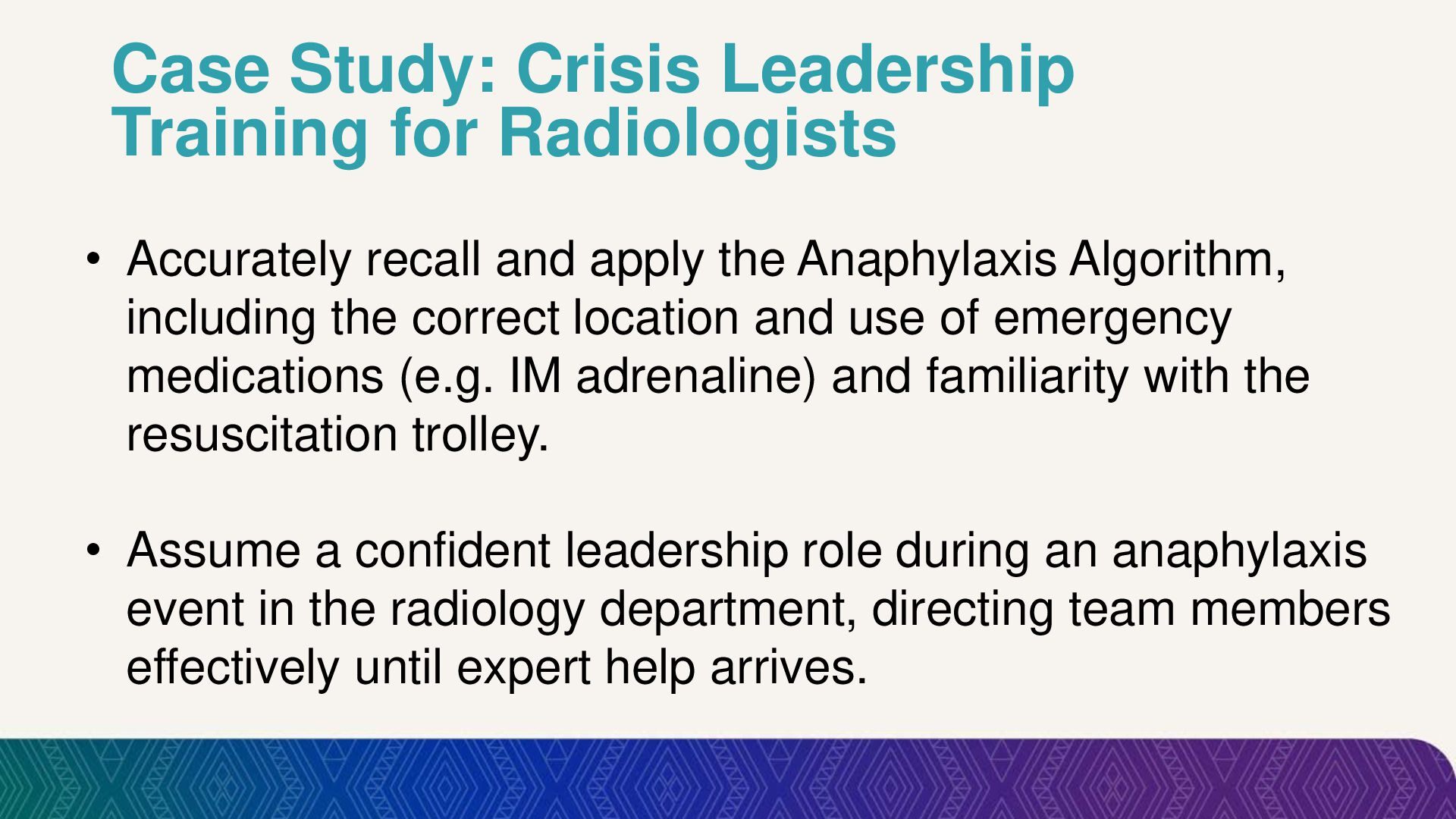
  2. Case Study: Crisis Leadership Training for Radiologists • Accurately recall

    and apply the Anaphylaxis Algorithm, including the correct location and use of emergency medications (e.g. IM adrenaline) and familiarity with the resuscitation trolley. • Assume a confident leadership role during an anaphylaxis event in the radiology department, directing team members effectively until expert help arrives.
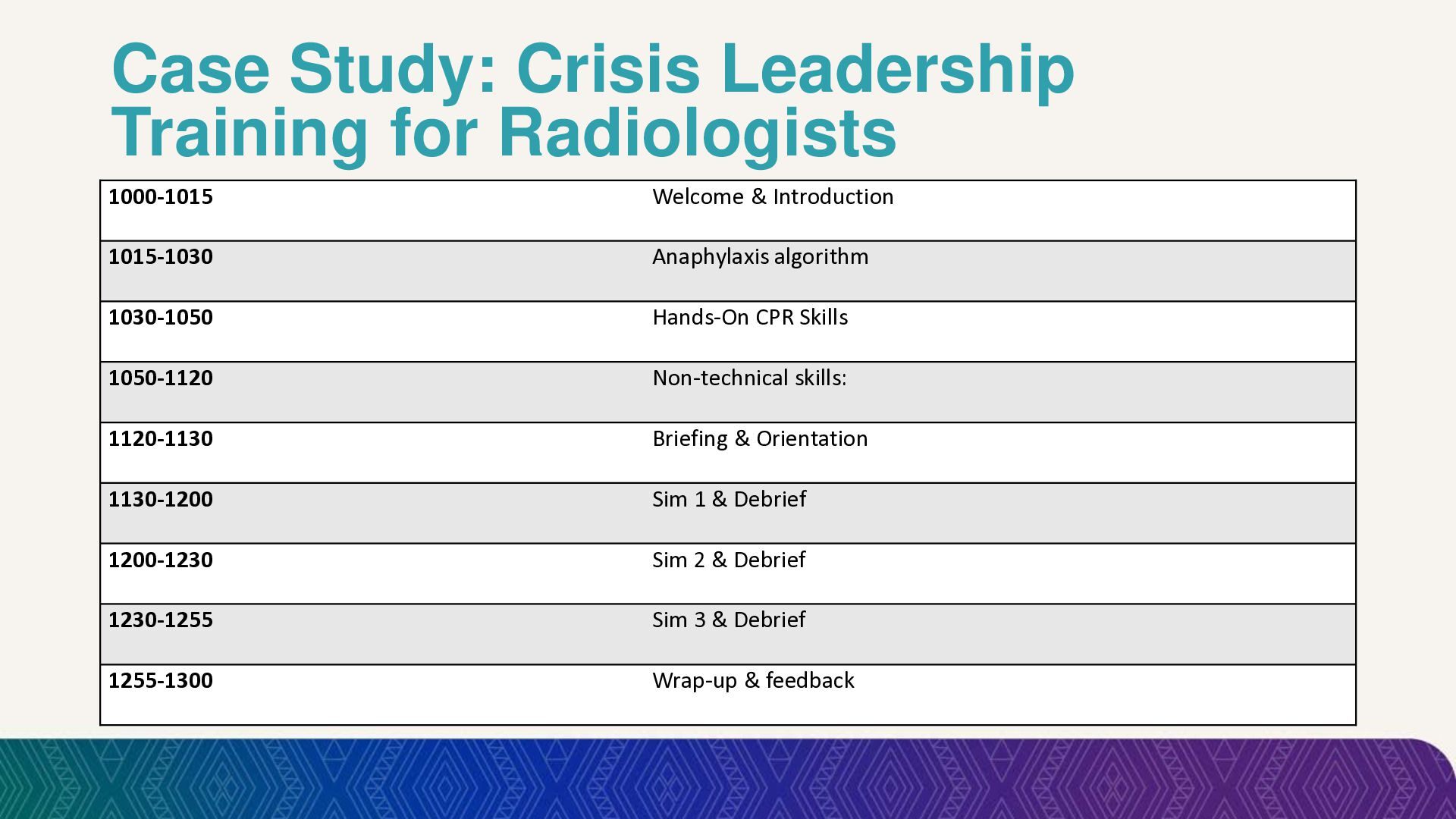
  3. Case Study: Crisis Leadership Training for Radiologists 1000-1015 Welcome &

    Introduction 1015-1030 Anaphylaxis algorithm 1030-1050 Hands-On CPR Skills 1050-1120 Non-technical skills: 1120-1130 Briefing & Orientation 1130-1200 Sim 1 & Debrief 1200-1230 Sim 2 & Debrief 1230-1255 Sim 3 & Debrief 1255-1300 Wrap-up & feedback
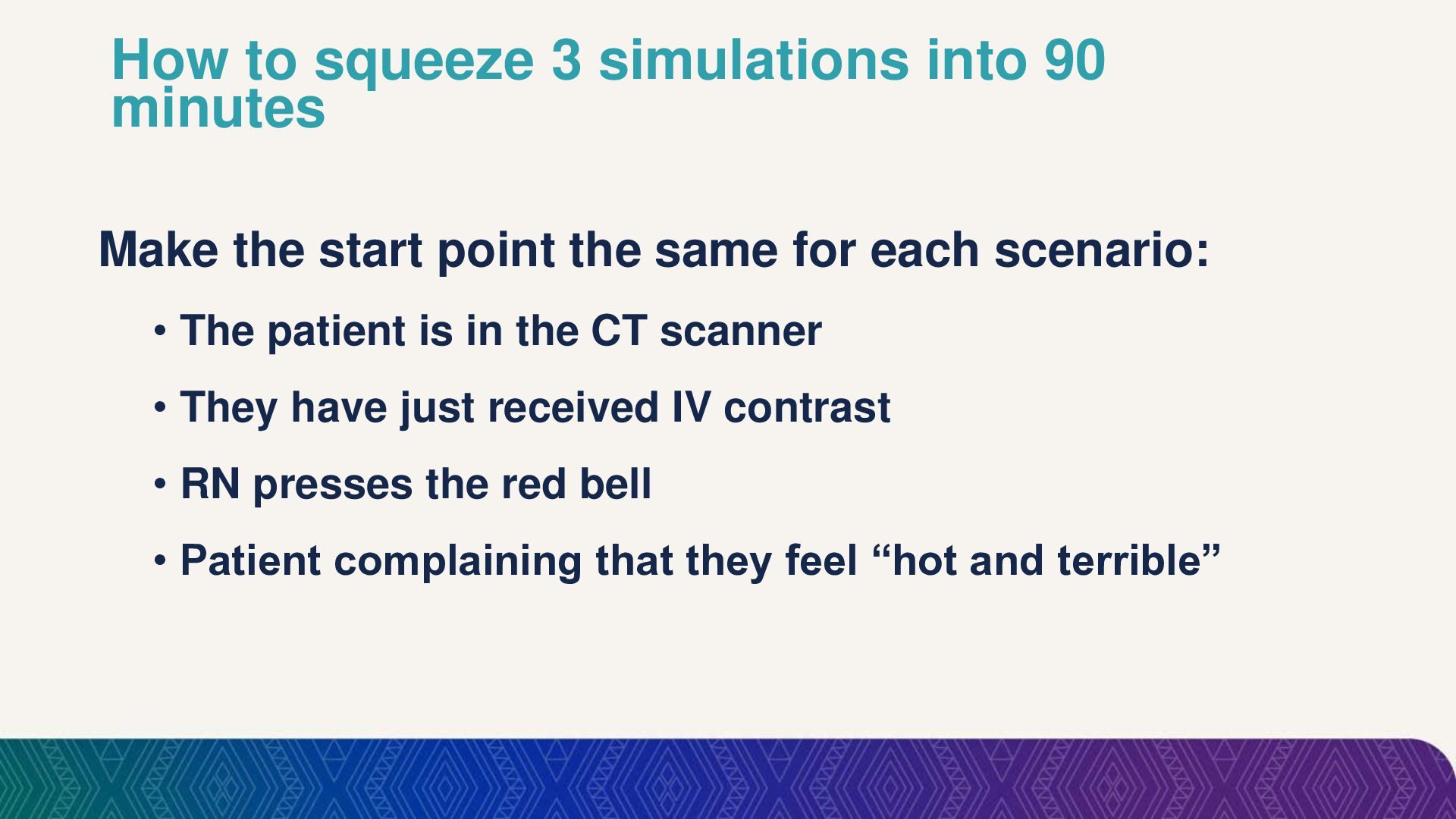
  4. How to squeeze 3 simulations into 90 minutes Make the

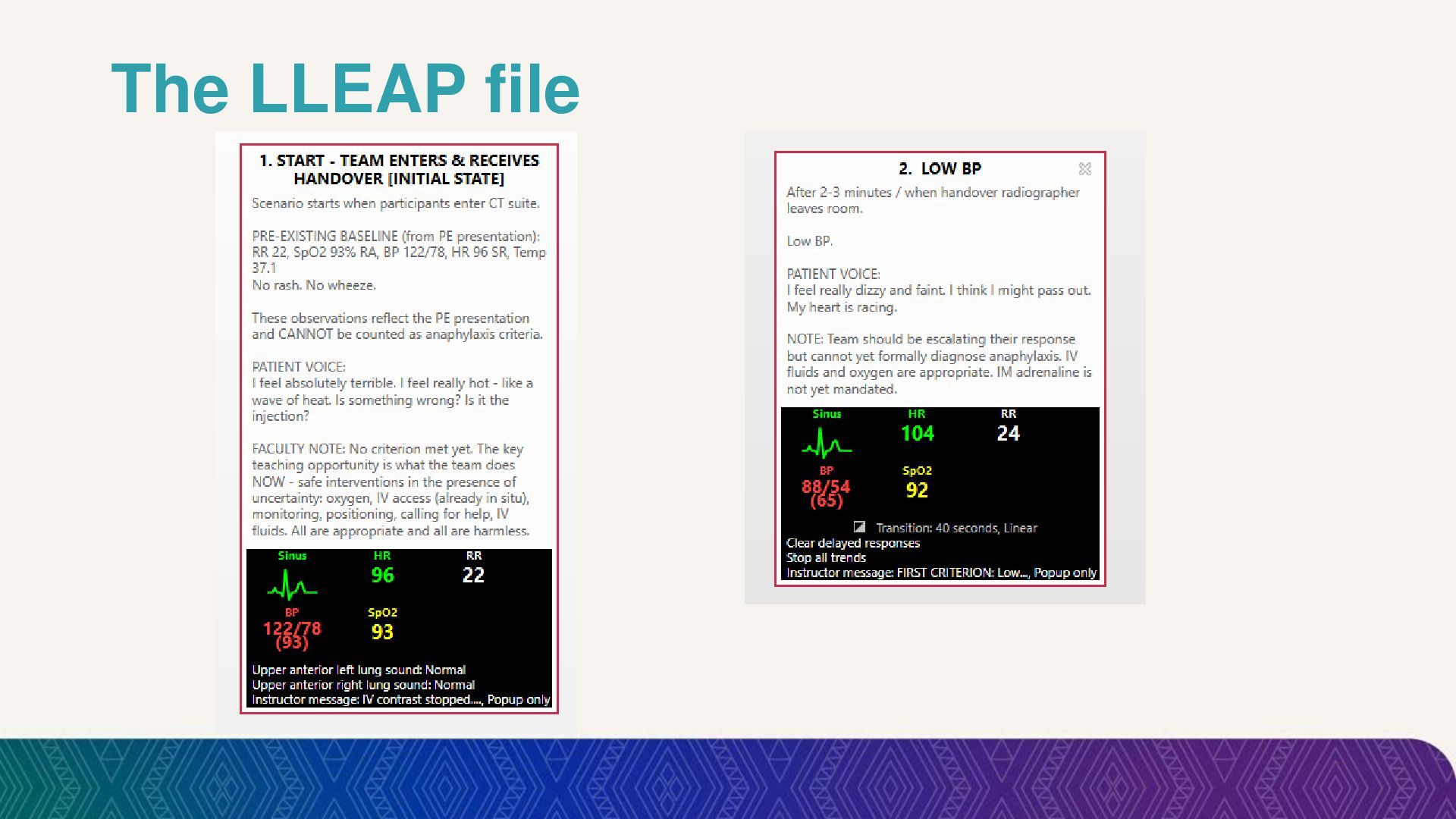
    start point the same for each scenario: • The patient is in the CT scanner • They have just received IV contrast • RN presses the red bell • Patient complaining that they feel “hot and terrible”
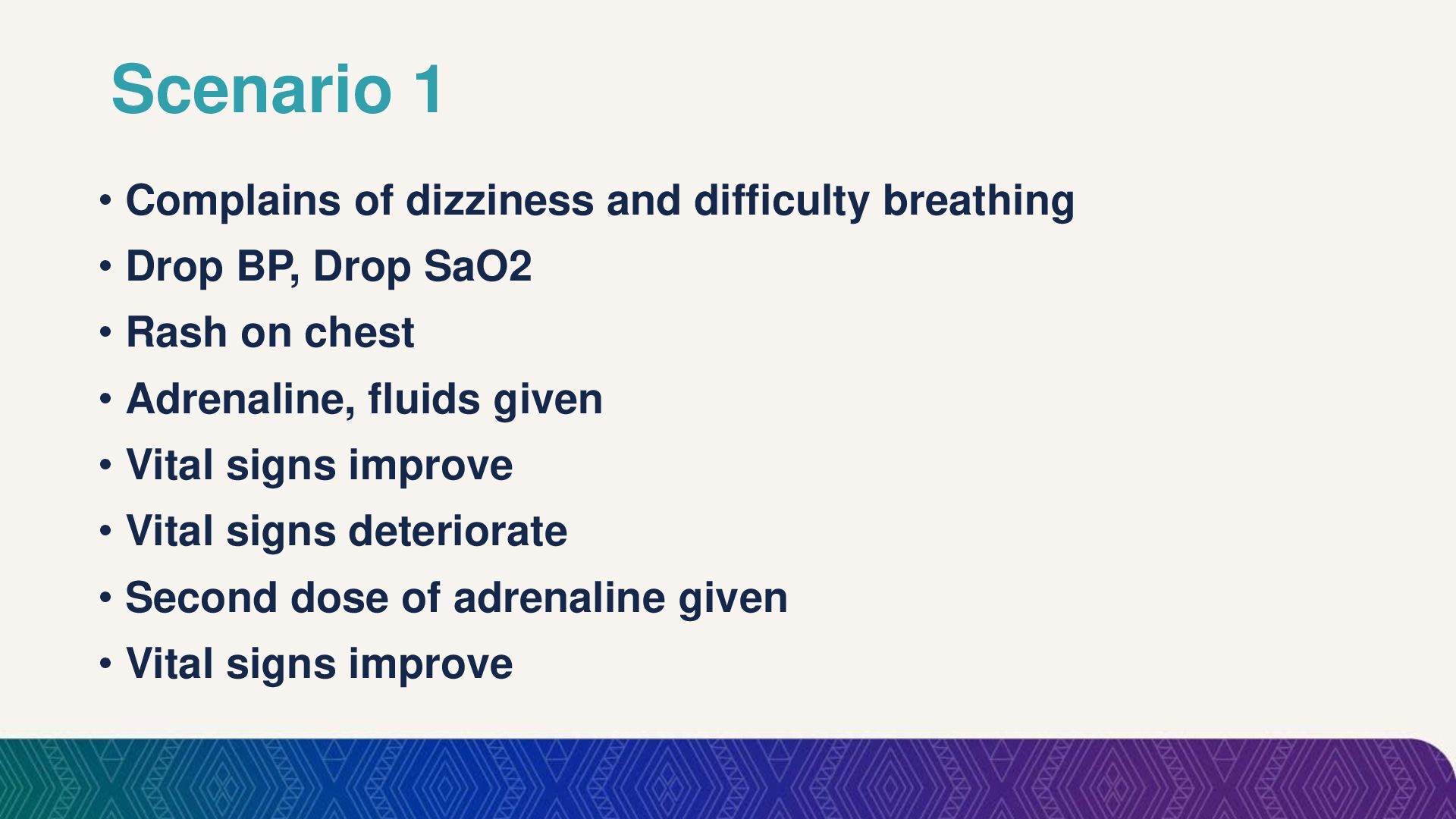
  5. Scenario 1 • Complains of dizziness and difficulty breathing •

    Drop BP, Drop SaO2 • Rash on chest • Adrenaline, fluids given • Vital signs improve • Vital signs deteriorate • Second dose of adrenaline given • Vital signs improve
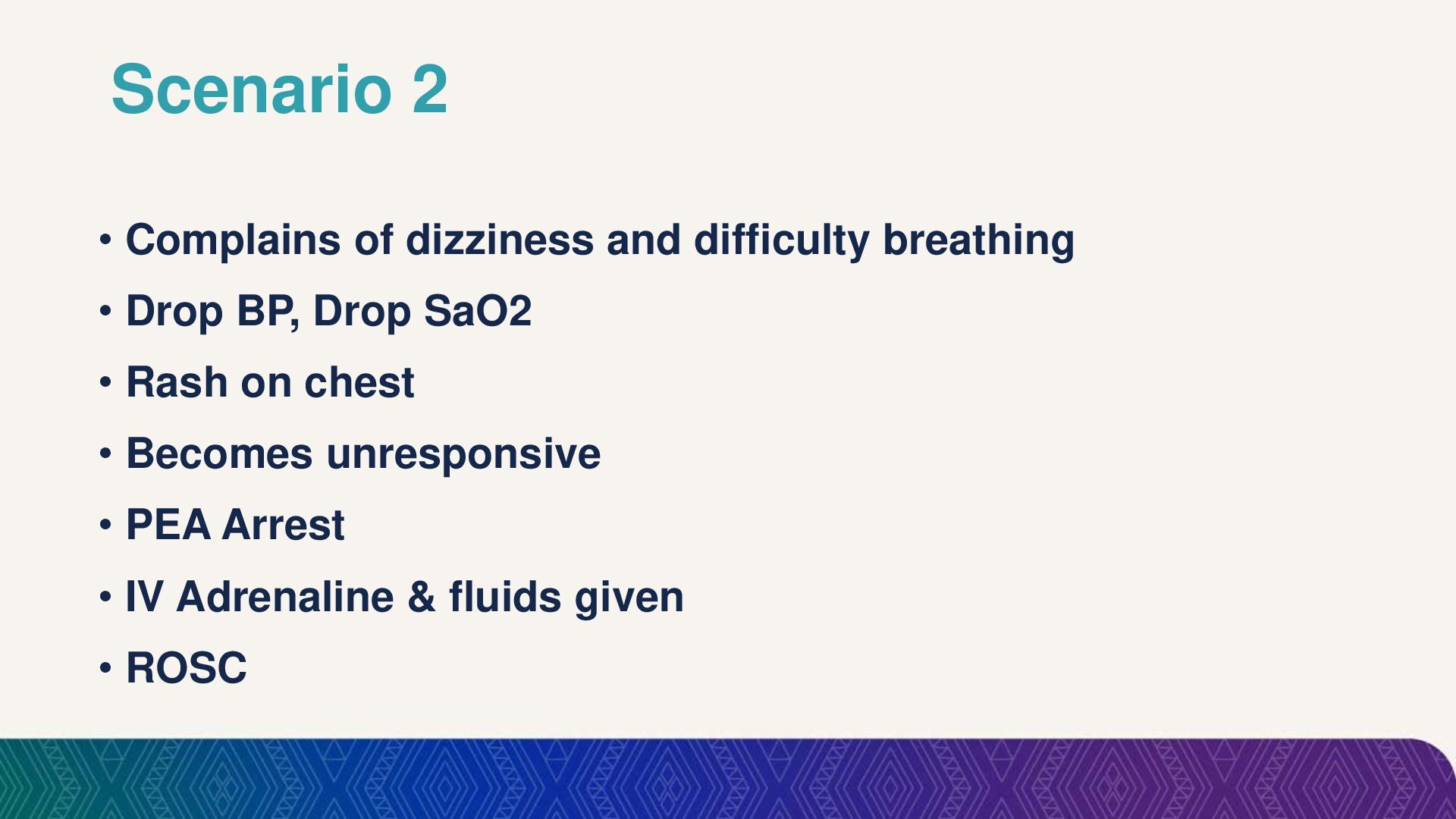
  6. Scenario 2 • Complains of dizziness and difficulty breathing •

    Drop BP, Drop SaO2 • Rash on chest • Becomes unresponsive • PEA Arrest • IV Adrenaline & fluids given • ROSC
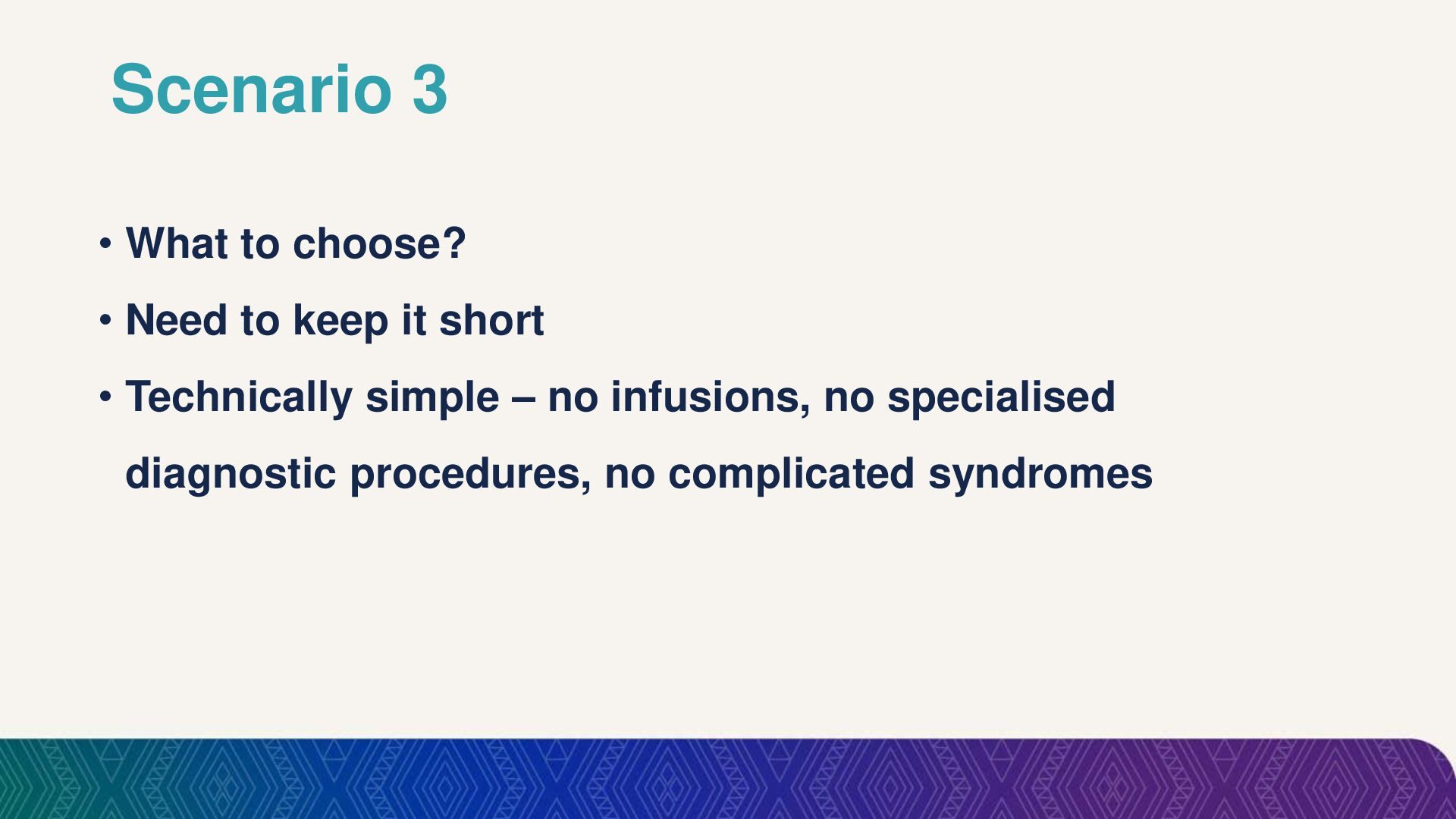
  7. Scenario 3 • What to choose? • Need to keep

    it short • Technically simple – no infusions, no specialised diagnostic procedures, no complicated syndromes
  8. Setting Up the AI Chat • Poor replies are due

    to a lack of context at the start. • Context is everything the AI needs to know about your situation that it can’t work out from the question alone.
  9. Prompt Template for Scenarios – setting the context • Setting,

    learners, objectives, manikin, time, equipment, monitoring, other scenarios. • “Interview me” • “Ask for anything else you need” • “Don’t write anything yet”
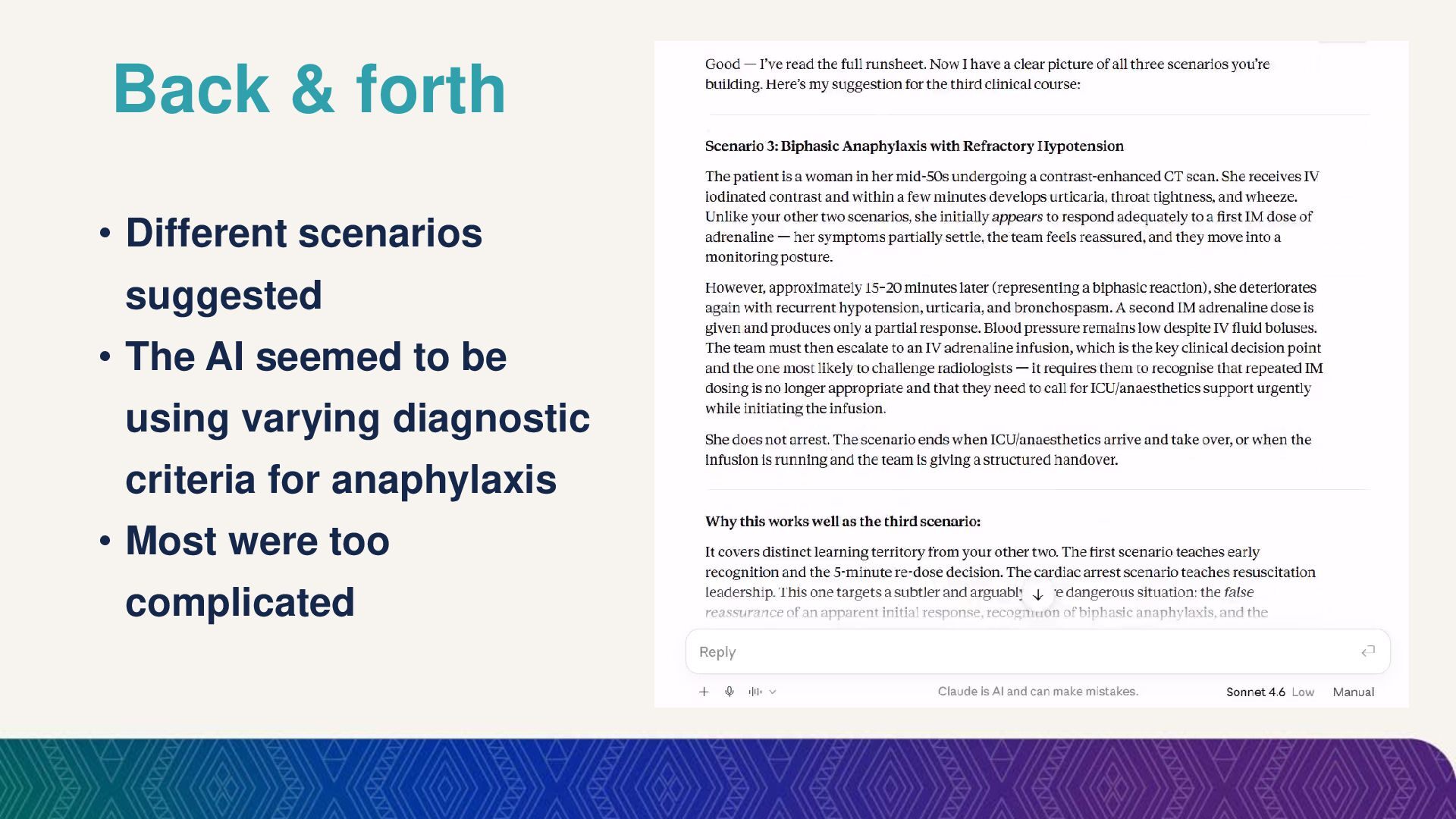
  10. Back & forth • Different scenarios suggested • The AI

    seemed to be using varying diagnostic criteria for anaphylaxis • Most were too complicated
  11. The Curveball “MRI with gadolinium contrast A patient with known

    MS attending for a routine surveillance brain MRI. Gadolinium reactions are rarer than iodinated contrast reactions, which adds a layer of interest — participants may not immediately consider the contrast as the trigger. The patient is in the scanner or just emerging from it when symptoms develop, which introduces a practical element around getting them out and into a position where you can actually manage them. This works well for your cardiac arrest scenario, since the MRI environment (no defibrillator in the room, limited IV access, noise and confined space) creates realistic logistical obstacles that generate good debrief discussion.”
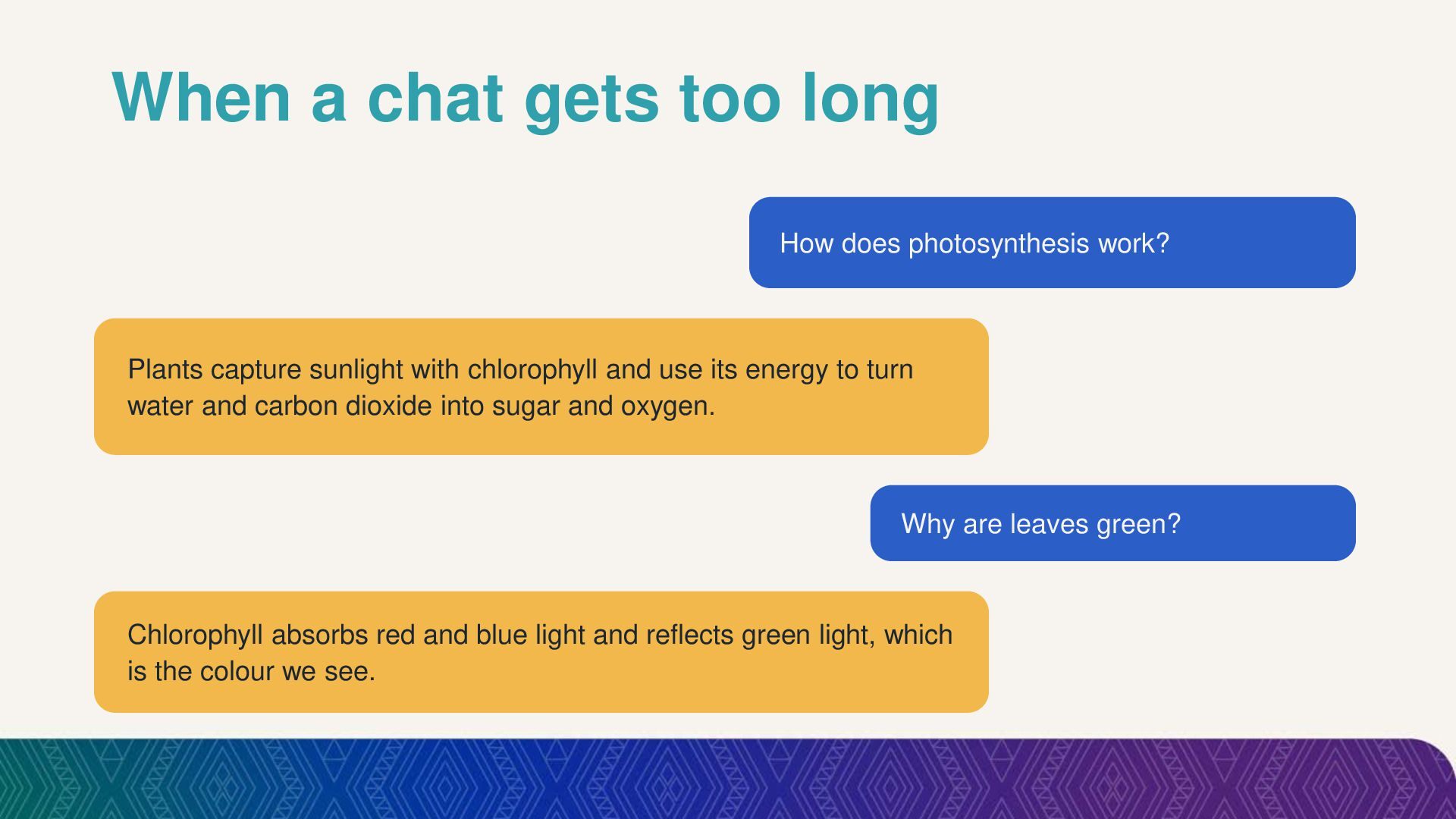
  12. When a chat gets too long How does photosynthesis work?

    Plants capture sunlight with chlorophyll and use its energy to turn water and carbon dioxide into sugar and oxygen. Why are leaves green? Chlorophyll absorbs red and blue light and reflects green light, which is the colour we see.
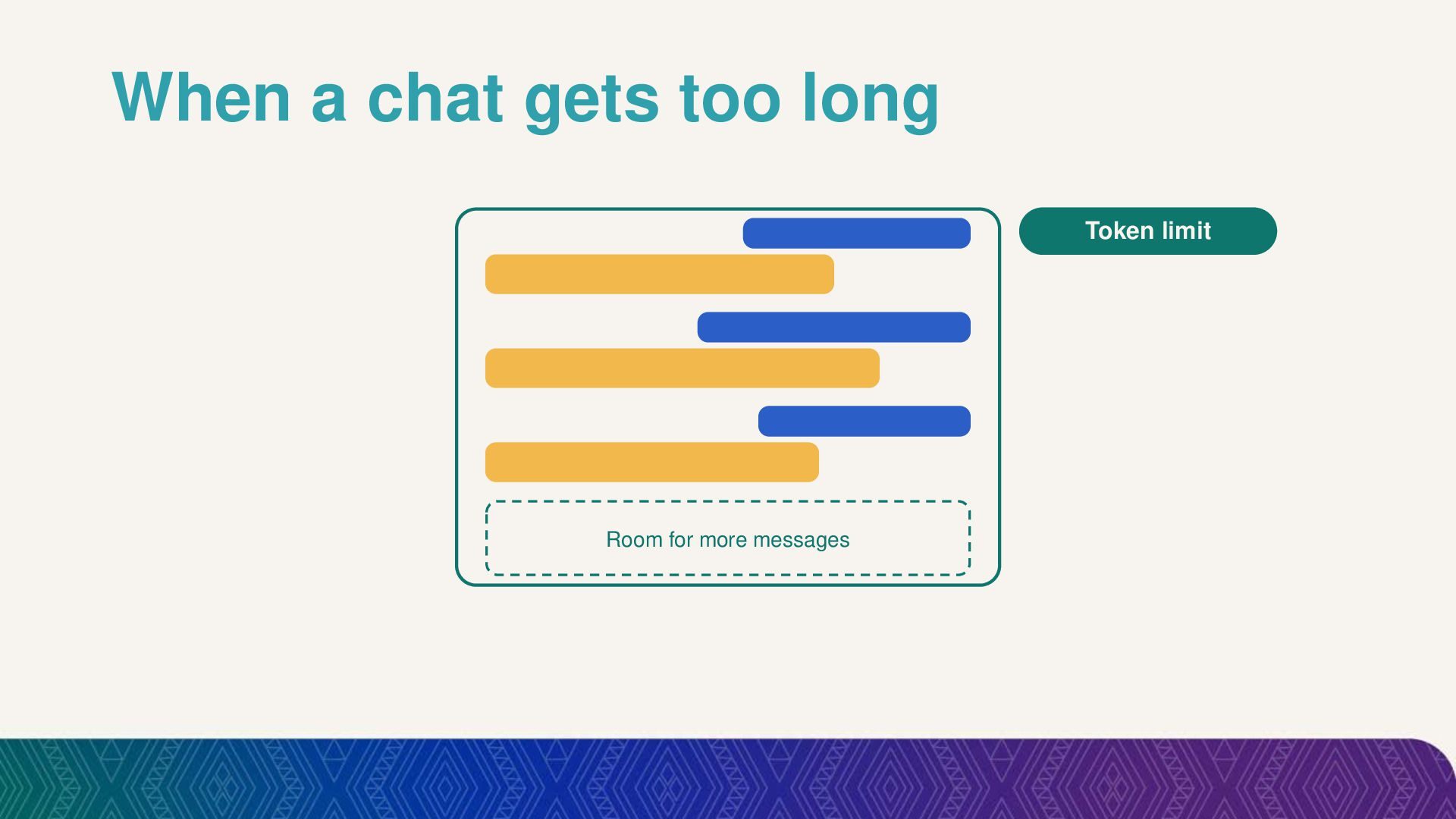
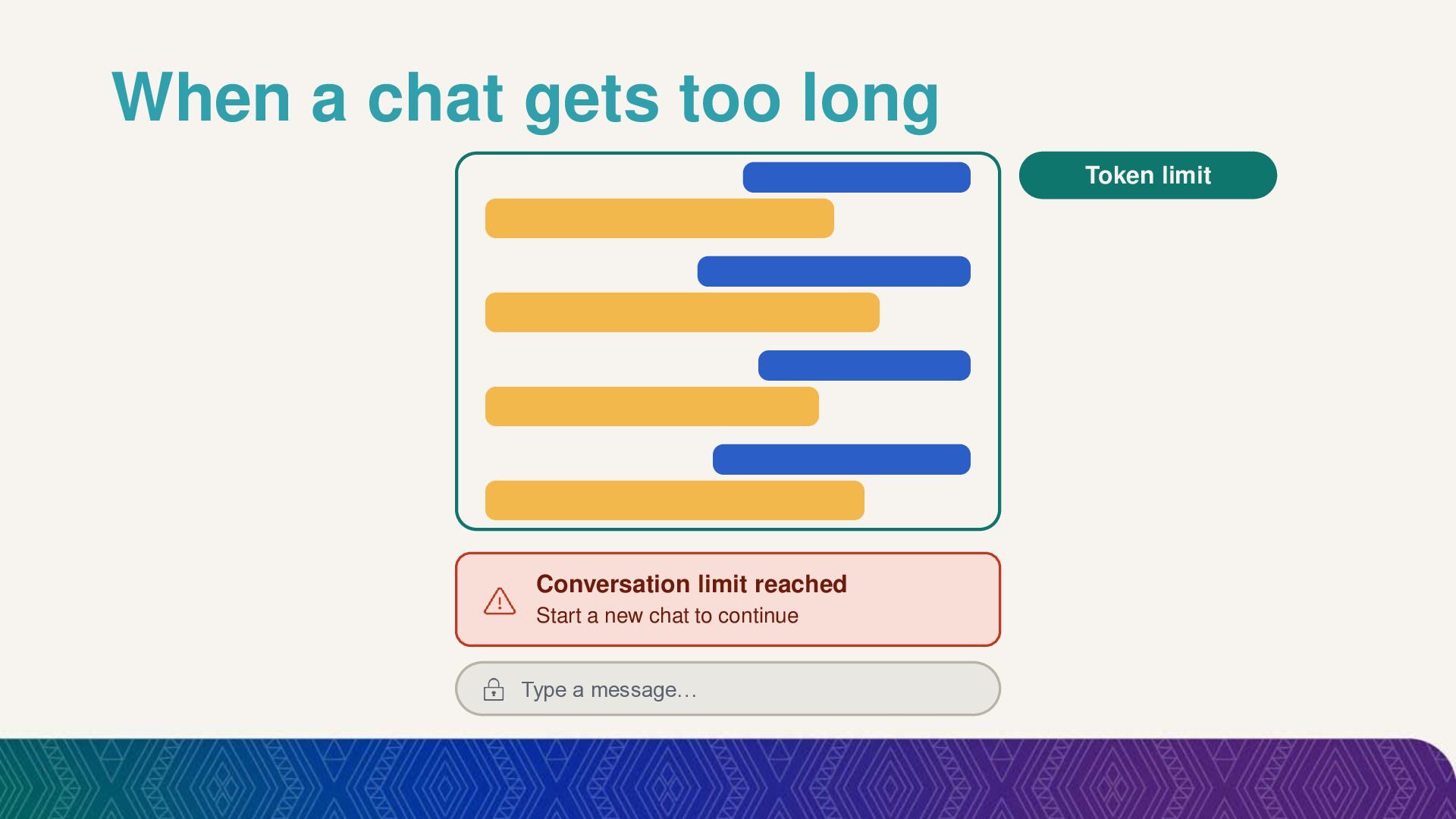
  13. When a chat gets too long Token limit Conversation limit

    reached Start a new chat to continue Type a message…
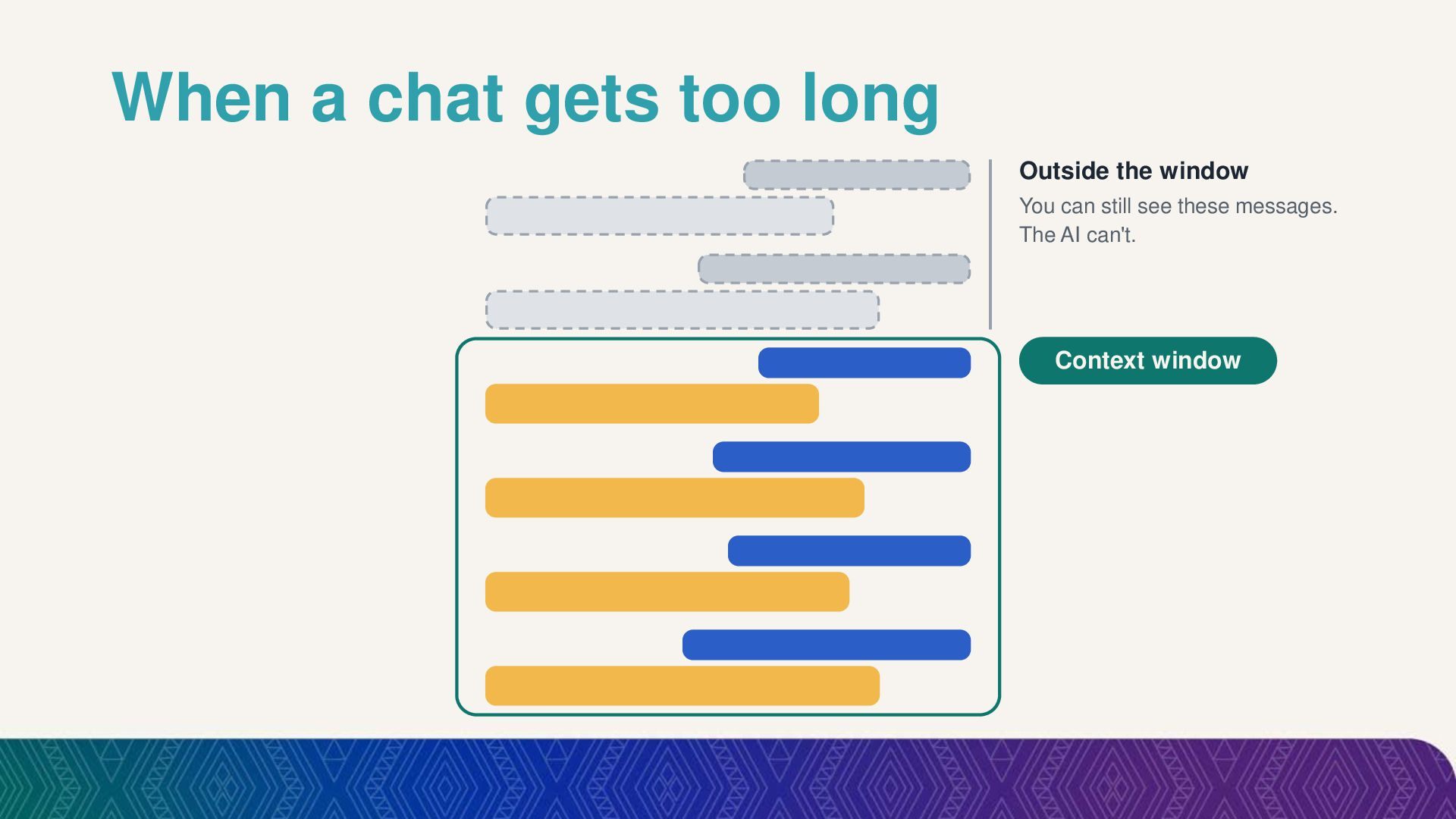
  14. When a chat gets too long Outside the window You

    can still see these messages. The AI can't. Context window
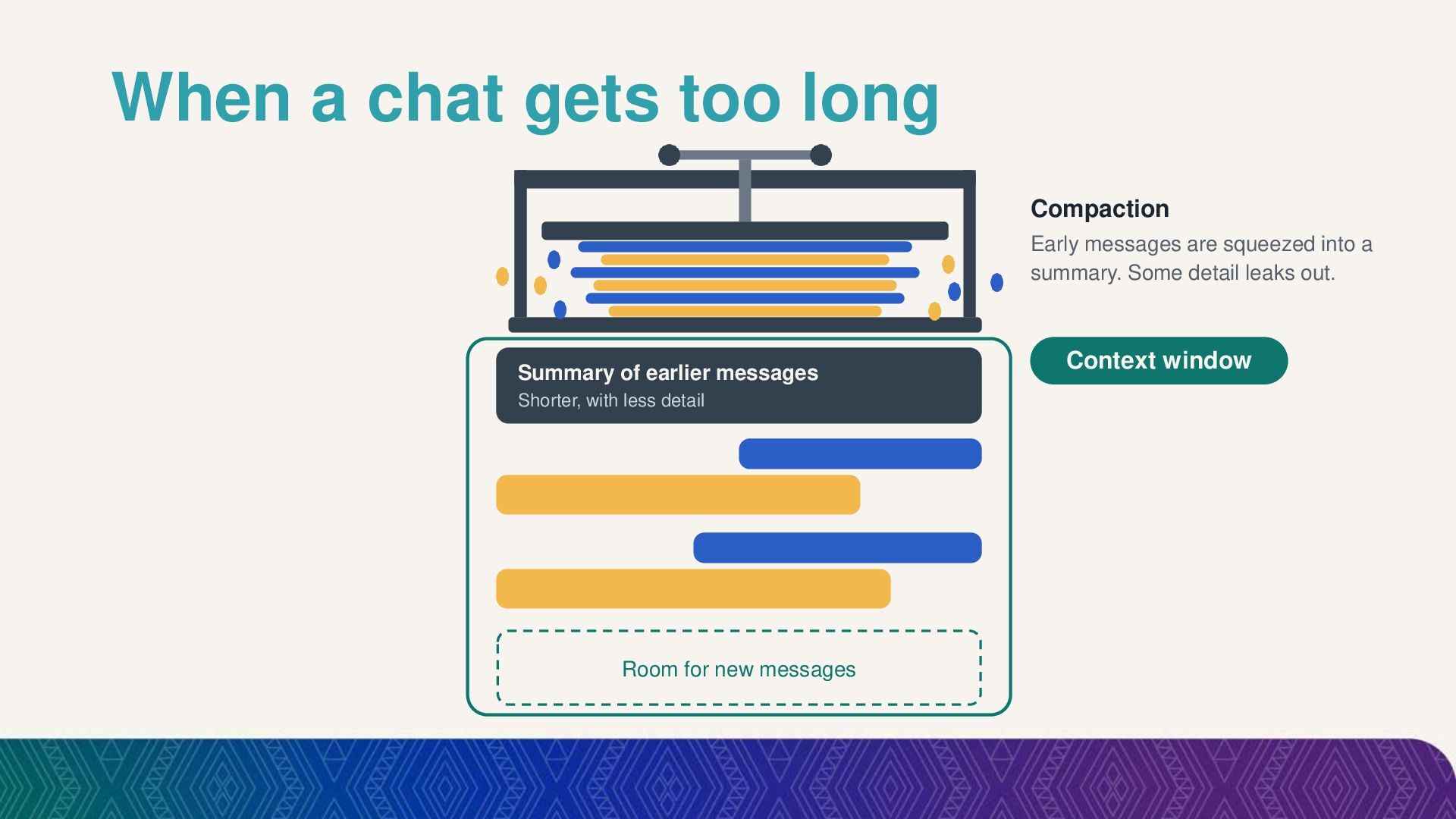
  15. When a chat gets too long Compaction Early messages are

    squeezed into a summary. Some detail leaks out. Summary of earlier messages Shorter, with less detail Room for new messages Context window
  16. Spending your tokens wisely 1. Short chats • At a

    natural break ask the AI to write a handoff document, begin again. 2. Only upload what you need: • Extracts from documents – not the whole thing. • If you need to upload a PDF, convert it to text first.
  17. Alisha is born • Restart the chat • Copy in

    the original context • A request for diagnostic uncertainty
  18. Alisha is born CT Pulmonary Angiogram for suspected PE “As

    you suggested. The pre-existing dyspnoea and tachycardia from possible PE means that when the patient deteriorates after contrast, the team has to disentangle: is this the PE getting worse, a vasovagal, anxiety, or anaphylaxis? No rash is present. Throat tightness gets dismissed as anxiety. The diagnostic criteria discussion becomes genuinely hard because every symptom has an alternative explanation — which is exactly the educational territory you want for the ambiguous scenario.”
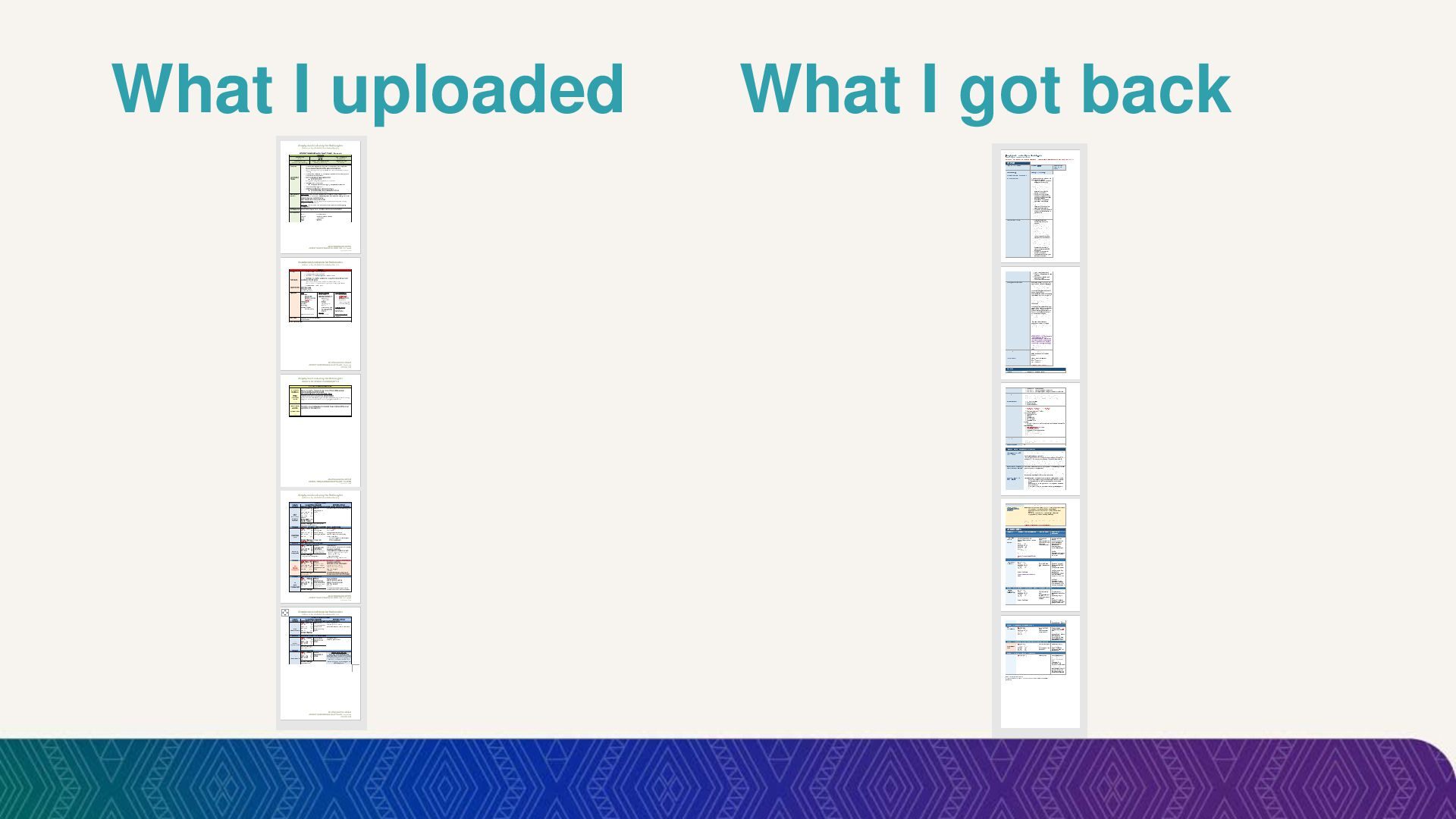
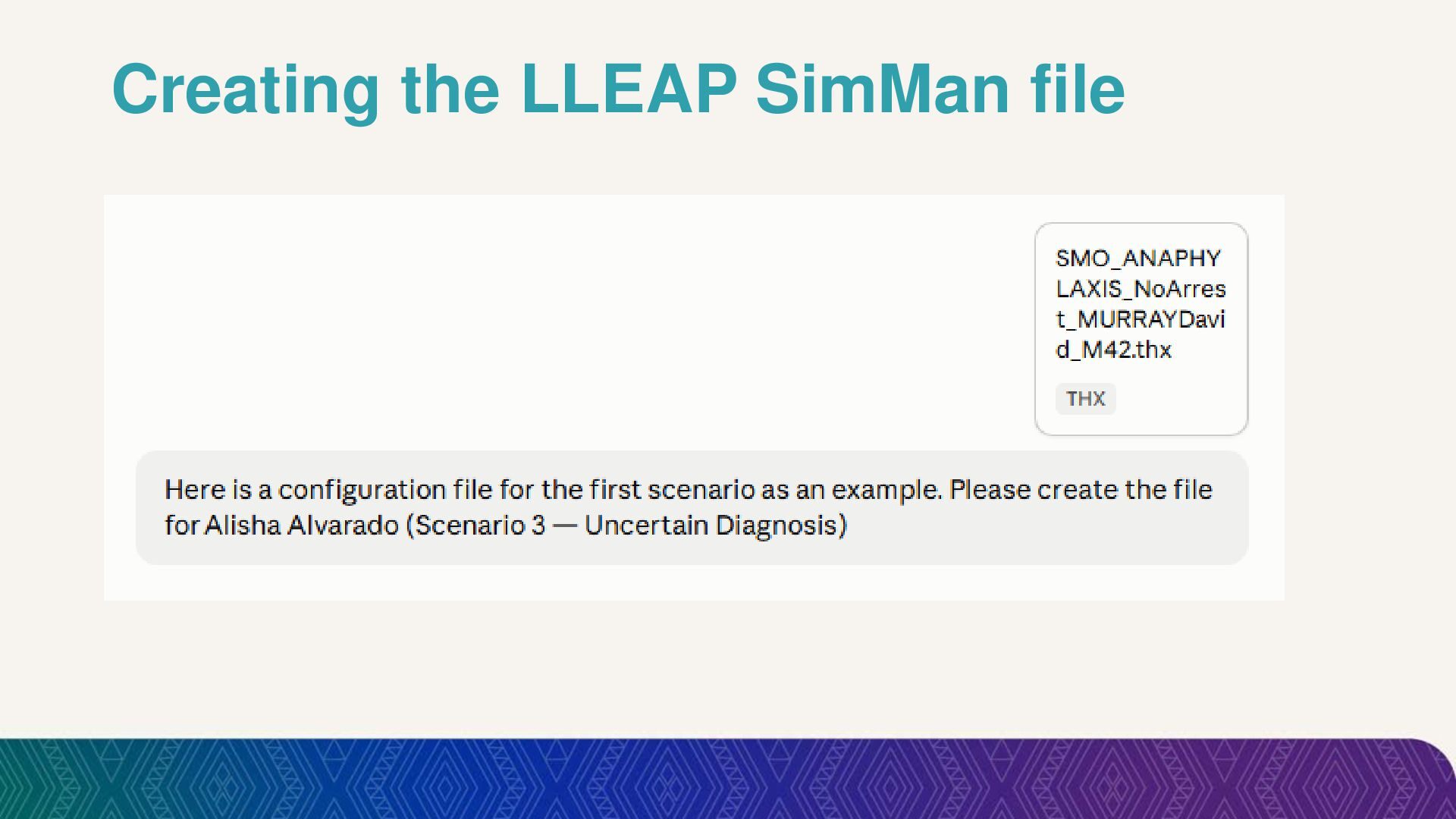
  19. Creating the runsheet “Here is the runsheet for the first

    scenario as an example. Generate a runsheet in the same format for scenario 3. The name for the third patient is Alisha ALVARADO”.
  20. Conclusions • AI can assist as a writing partner in

    all the stages in the production of a simulation scenario. • AI can enable the educator to spend more time on the intellectually interesting aspects of the process, less on the tedious parts.
  21. How Alisha got her name • Beware using AI to

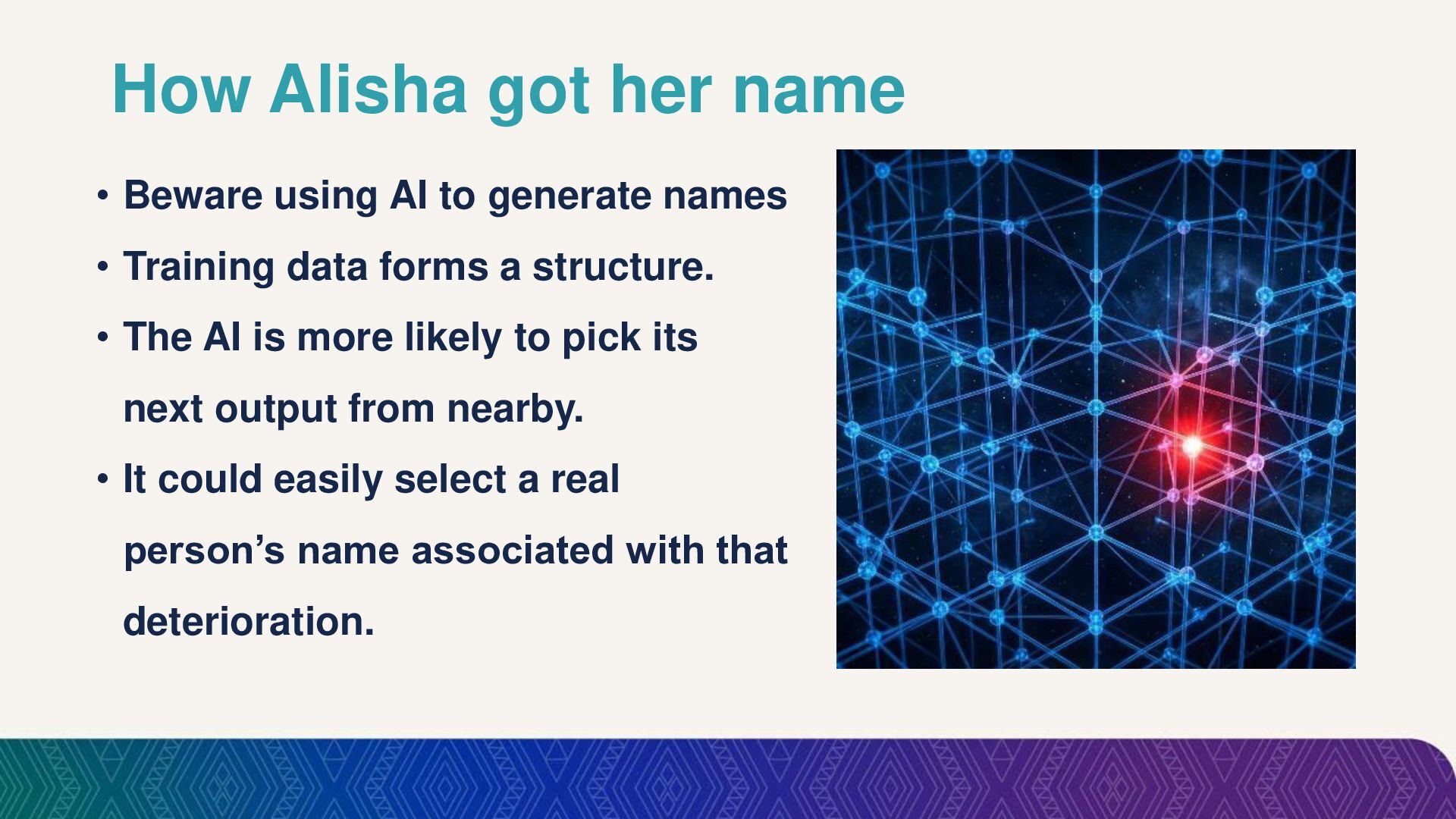
    generate names • Training data forms a structure. • The AI is more likely to pick its next output from nearby. • It could easily select a real person’s name associated with that deterioration.
  22. How Alisha got her name • Random name generator website

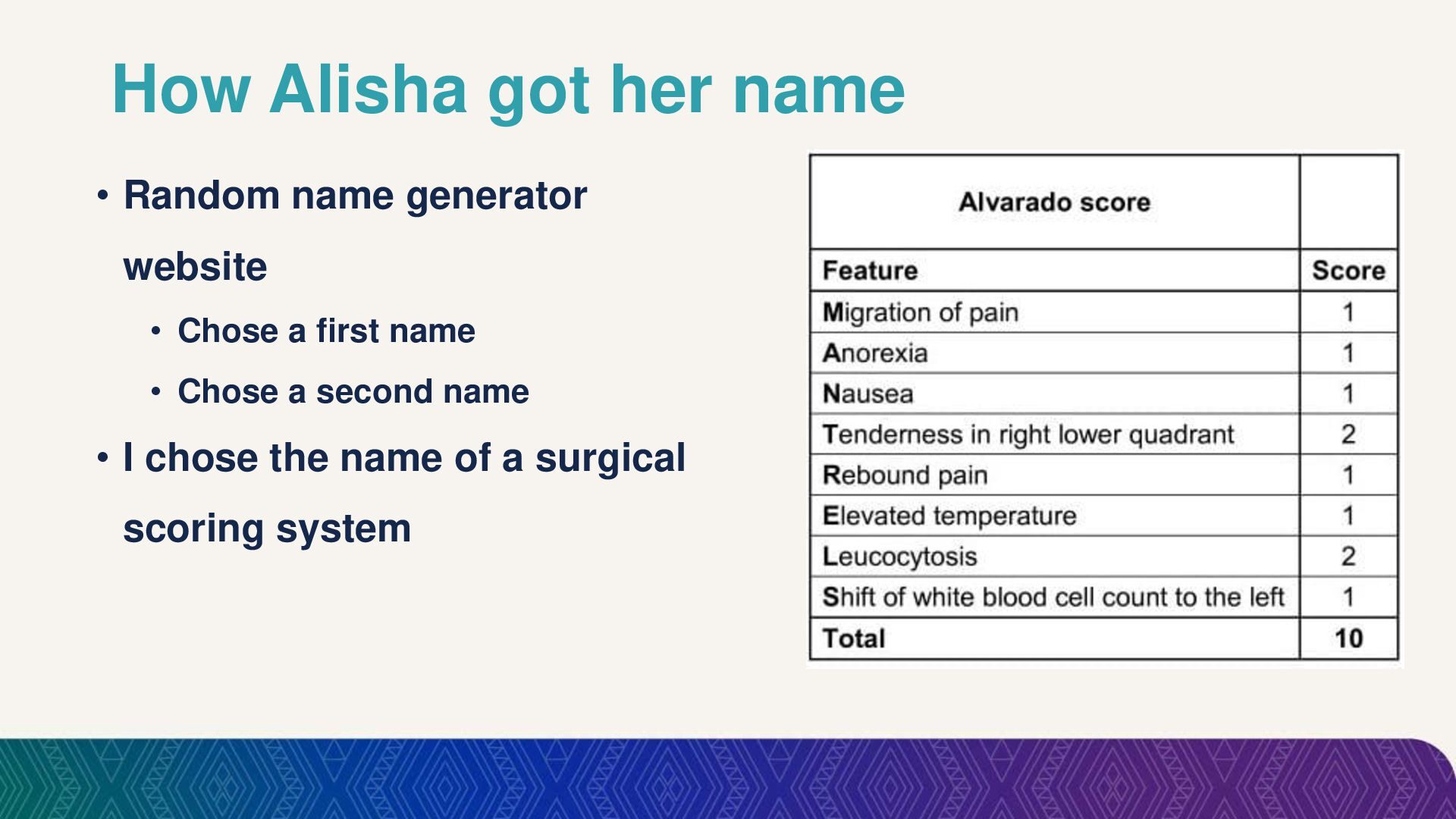
    • Chose a first name • Chose a second name • I chose the name of a surgical scoring system