Logic is Cumulative Weekly Checklist Outline 1 No Experience Necessary 2 Learning a Formal Language 3 Practice Makes Perfect Salvaggio Intro Logic Introduction to the Course
Logic is Cumulative Weekly Checklist Outline 1 No Experience Necessary 2 Learning a Formal Language 3 Practice Makes Perfect 4 Logic is Cumulative Salvaggio Intro Logic Introduction to the Course
Logic is Cumulative Weekly Checklist Outline 1 No Experience Necessary 2 Learning a Formal Language 3 Practice Makes Perfect 4 Logic is Cumulative 5 Weekly Checklist Salvaggio Intro Logic Introduction to the Course
Logic is Cumulative Weekly Checklist No Experience Necessary This is an introductory logic course. No prior experience with logic or philosophy is required. Salvaggio Intro Logic Introduction to the Course
Logic is Cumulative Weekly Checklist No Experience Necessary This is an introductory logic course. No prior experience with logic or philosophy is required. Depending on your educational background, you may find some parts of the class harder or easier than others. Salvaggio Intro Logic Introduction to the Course
Logic is Cumulative Weekly Checklist No Experience Necessary This is an introductory logic course. No prior experience with logic or philosophy is required. Depending on your educational background, you may find some parts of the class harder or easier than others. This is where discussion with your classmates comes in. You will each bring different skills to the class. If you’re having trouble with a topic, don’t be afraid to ask questions. If you feel more confident about a topic, you may find that explaining it to others deepens your own understanding as well. Salvaggio Intro Logic Introduction to the Course
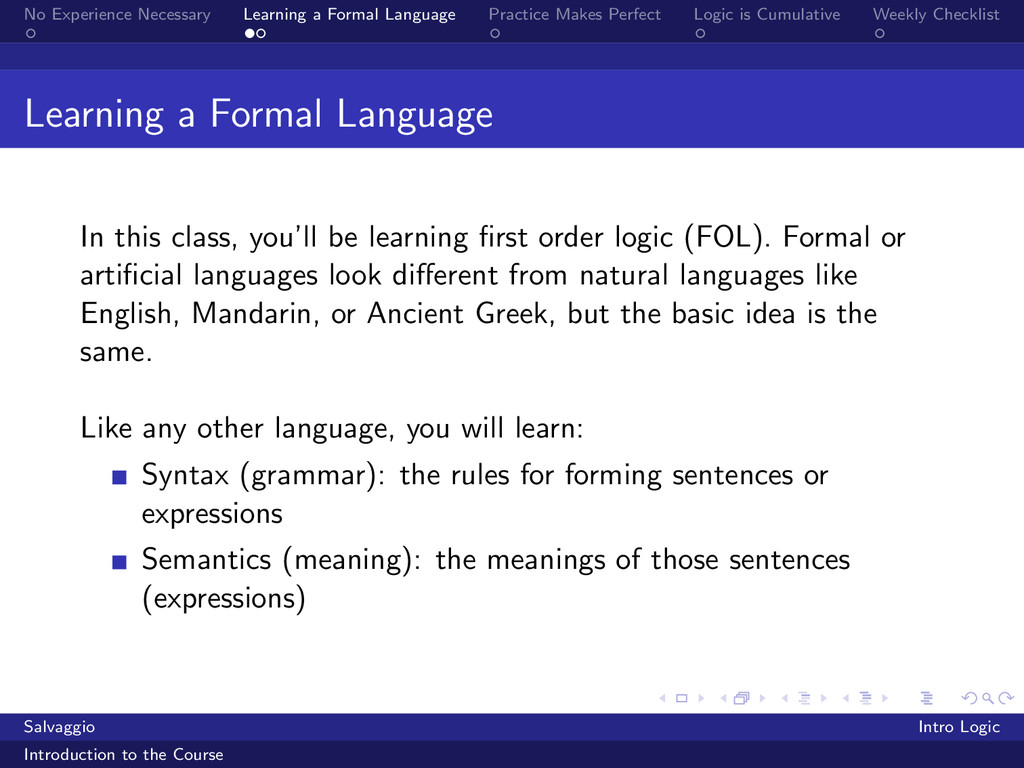
Logic is Cumulative Weekly Checklist Learning a Formal Language In this class, you’ll be learning first order logic (FOL). Formal or artificial languages look different from natural languages like English, Mandarin, or Ancient Greek, but the basic idea is the same. Salvaggio Intro Logic Introduction to the Course
Logic is Cumulative Weekly Checklist Learning a Formal Language In this class, you’ll be learning first order logic (FOL). Formal or artificial languages look different from natural languages like English, Mandarin, or Ancient Greek, but the basic idea is the same. Like any other language, you will learn: Salvaggio Intro Logic Introduction to the Course
Logic is Cumulative Weekly Checklist Learning a Formal Language In this class, you’ll be learning first order logic (FOL). Formal or artificial languages look different from natural languages like English, Mandarin, or Ancient Greek, but the basic idea is the same. Like any other language, you will learn: Syntax (grammar): the rules for forming sentences or expressions Salvaggio Intro Logic Introduction to the Course
Logic is Cumulative Weekly Checklist Learning a Formal Language In this class, you’ll be learning first order logic (FOL). Formal or artificial languages look different from natural languages like English, Mandarin, or Ancient Greek, but the basic idea is the same. Like any other language, you will learn: Syntax (grammar): the rules for forming sentences or expressions Semantics (meaning): the meanings of those sentences (expressions) Salvaggio Intro Logic Introduction to the Course
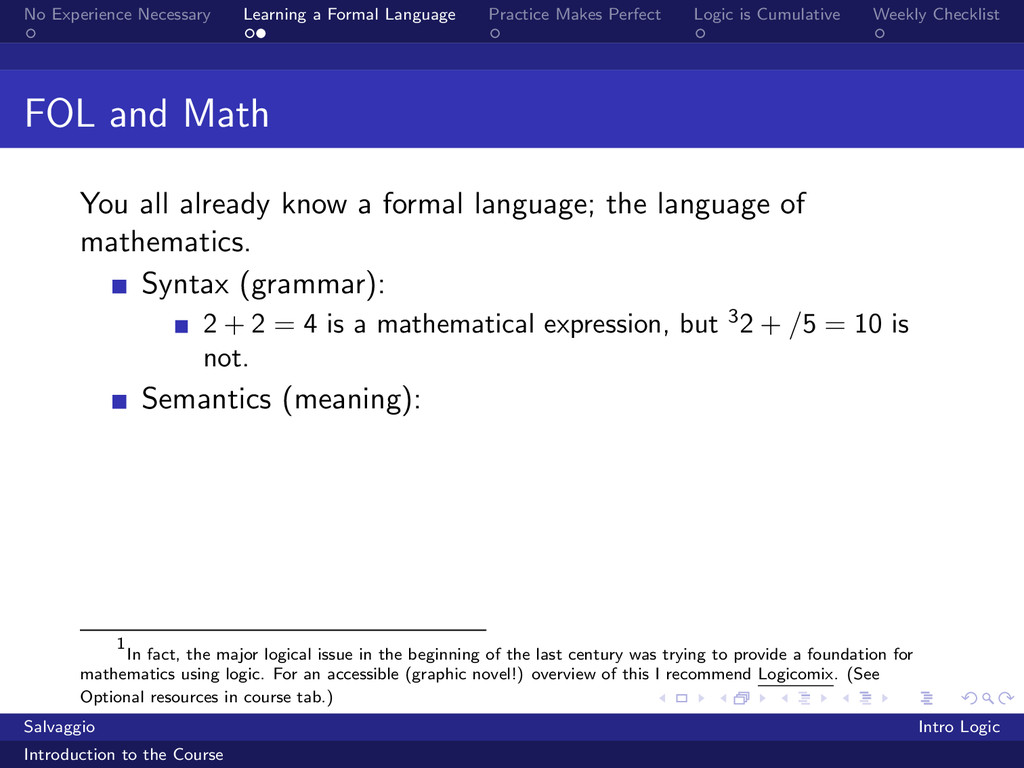
Logic is Cumulative Weekly Checklist FOL and Math You all already know a formal language; the language of mathematics. 1 In fact, the major logical issue in the beginning of the last century was trying to provide a foundation for mathematics using logic. For an accessible (graphic novel!) overview of this I recommend Logicomix. (See Optional resources in course tab.) Salvaggio Intro Logic Introduction to the Course
Logic is Cumulative Weekly Checklist FOL and Math You all already know a formal language; the language of mathematics. Syntax (grammar): 1 In fact, the major logical issue in the beginning of the last century was trying to provide a foundation for mathematics using logic. For an accessible (graphic novel!) overview of this I recommend Logicomix. (See Optional resources in course tab.) Salvaggio Intro Logic Introduction to the Course
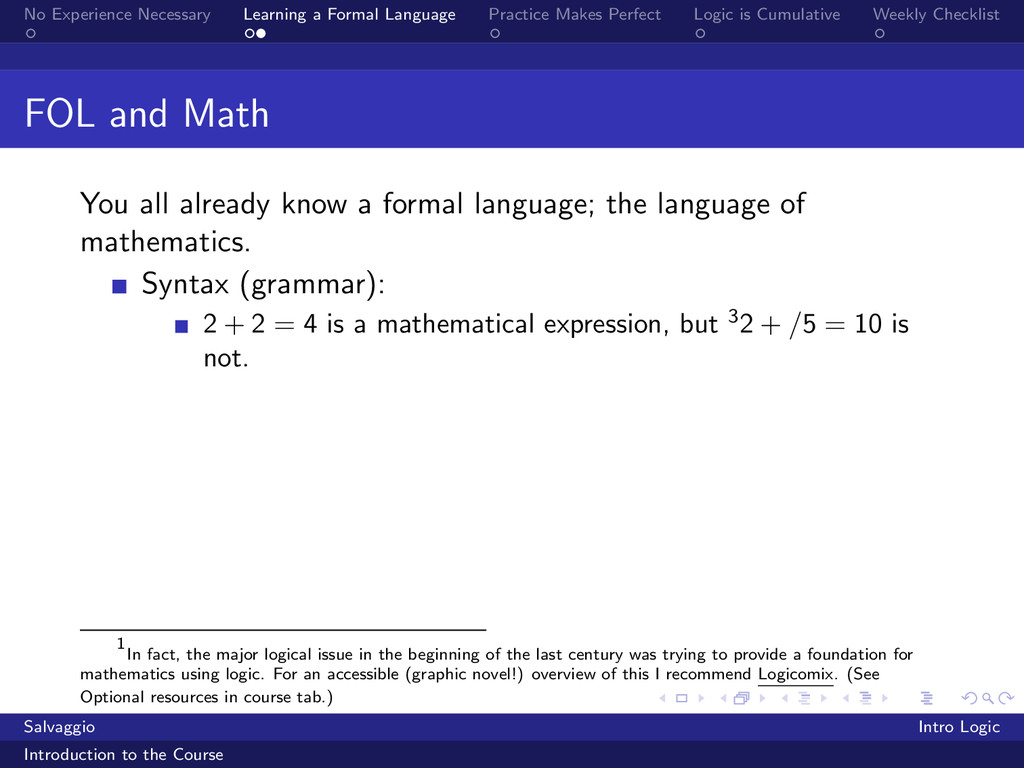
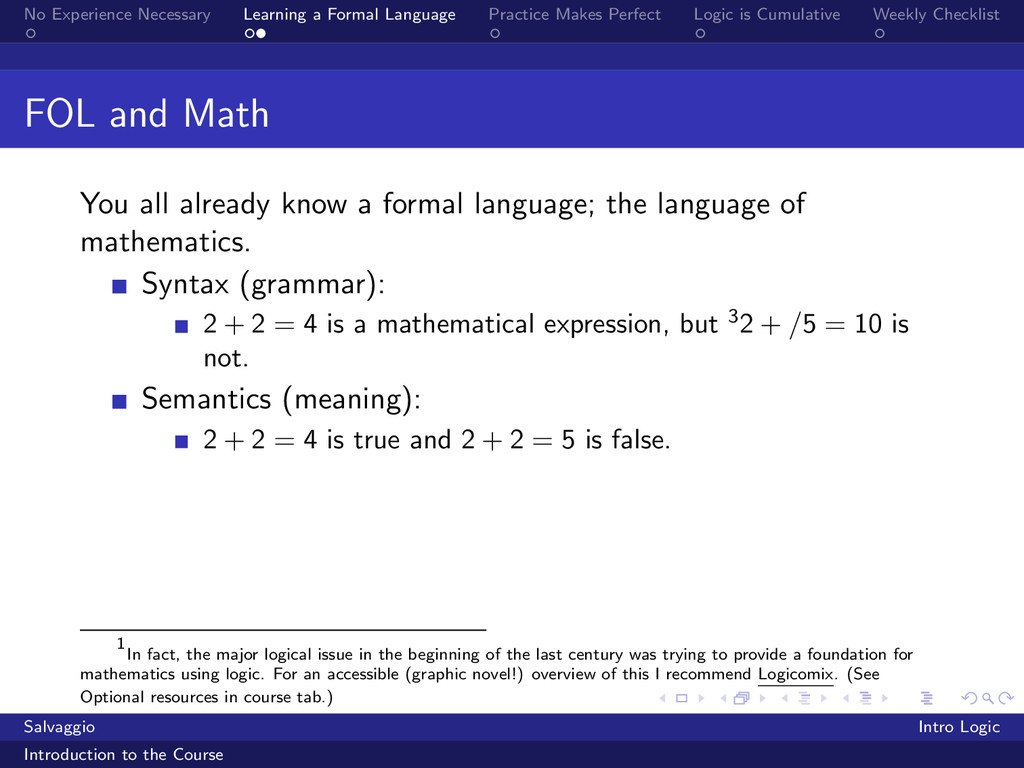
Logic is Cumulative Weekly Checklist FOL and Math You all already know a formal language; the language of mathematics. Syntax (grammar): 2 + 2 = 4 is a mathematical expression, but 32 + /5 = 10 is not. 1 In fact, the major logical issue in the beginning of the last century was trying to provide a foundation for mathematics using logic. For an accessible (graphic novel!) overview of this I recommend Logicomix. (See Optional resources in course tab.) Salvaggio Intro Logic Introduction to the Course
Logic is Cumulative Weekly Checklist FOL and Math You all already know a formal language; the language of mathematics. Syntax (grammar): 2 + 2 = 4 is a mathematical expression, but 32 + /5 = 10 is not. Semantics (meaning): 1 In fact, the major logical issue in the beginning of the last century was trying to provide a foundation for mathematics using logic. For an accessible (graphic novel!) overview of this I recommend Logicomix. (See Optional resources in course tab.) Salvaggio Intro Logic Introduction to the Course
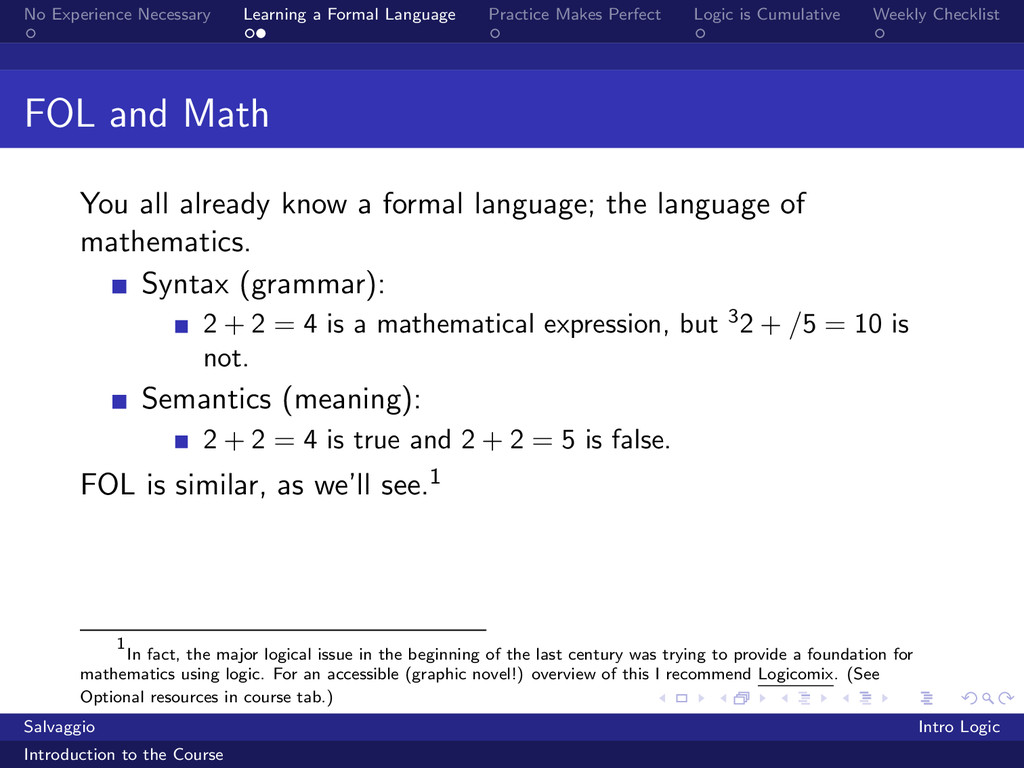
Logic is Cumulative Weekly Checklist FOL and Math You all already know a formal language; the language of mathematics. Syntax (grammar): 2 + 2 = 4 is a mathematical expression, but 32 + /5 = 10 is not. Semantics (meaning): 2 + 2 = 4 is true and 2 + 2 = 5 is false. 1 In fact, the major logical issue in the beginning of the last century was trying to provide a foundation for mathematics using logic. For an accessible (graphic novel!) overview of this I recommend Logicomix. (See Optional resources in course tab.) Salvaggio Intro Logic Introduction to the Course
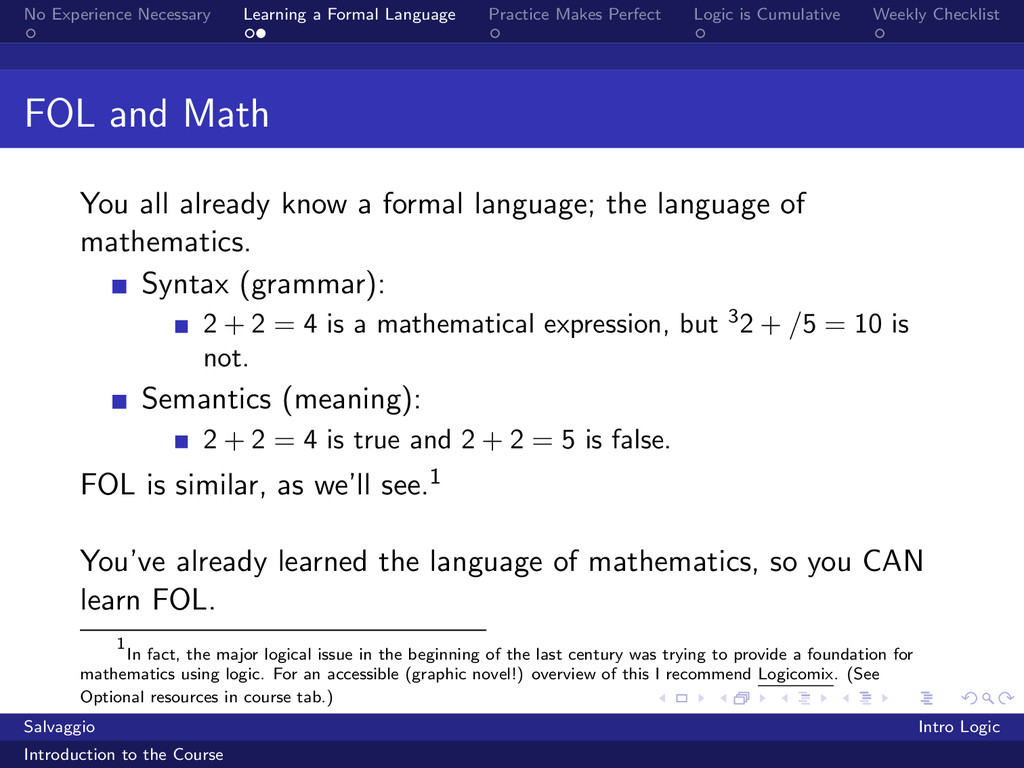
Logic is Cumulative Weekly Checklist FOL and Math You all already know a formal language; the language of mathematics. Syntax (grammar): 2 + 2 = 4 is a mathematical expression, but 32 + /5 = 10 is not. Semantics (meaning): 2 + 2 = 4 is true and 2 + 2 = 5 is false. FOL is similar, as we’ll see.1 1 In fact, the major logical issue in the beginning of the last century was trying to provide a foundation for mathematics using logic. For an accessible (graphic novel!) overview of this I recommend Logicomix. (See Optional resources in course tab.) Salvaggio Intro Logic Introduction to the Course
Logic is Cumulative Weekly Checklist FOL and Math You all already know a formal language; the language of mathematics. Syntax (grammar): 2 + 2 = 4 is a mathematical expression, but 32 + /5 = 10 is not. Semantics (meaning): 2 + 2 = 4 is true and 2 + 2 = 5 is false. FOL is similar, as we’ll see.1 You’ve already learned the language of mathematics, so you CAN learn FOL. 1 In fact, the major logical issue in the beginning of the last century was trying to provide a foundation for mathematics using logic. For an accessible (graphic novel!) overview of this I recommend Logicomix. (See Optional resources in course tab.) Salvaggio Intro Logic Introduction to the Course
Logic is Cumulative Weekly Checklist Practice Makes Perfect Another thing that a logic course has in common with foreign languages and math; it takes a lot of practice to get the hang of it. Salvaggio Intro Logic Introduction to the Course
Logic is Cumulative Weekly Checklist Practice Makes Perfect Another thing that a logic course has in common with foreign languages and math; it takes a lot of practice to get the hang of it. Because of this, I recommend: Salvaggio Intro Logic Introduction to the Course
Logic is Cumulative Weekly Checklist Practice Makes Perfect Another thing that a logic course has in common with foreign languages and math; it takes a lot of practice to get the hang of it. Because of this, I recommend: doing all the “you try it” exercises in the textbook. Salvaggio Intro Logic Introduction to the Course
Logic is Cumulative Weekly Checklist Practice Makes Perfect Another thing that a logic course has in common with foreign languages and math; it takes a lot of practice to get the hang of it. Because of this, I recommend: doing all the “you try it” exercises in the textbook. starting early on the homework. Salvaggio Intro Logic Introduction to the Course
Logic is Cumulative Weekly Checklist Practice Makes Perfect Another thing that a logic course has in common with foreign languages and math; it takes a lot of practice to get the hang of it. Because of this, I recommend: doing all the “you try it” exercises in the textbook. starting early on the homework. checking your work using Grade Grinder until Salvaggio Intro Logic Introduction to the Course
Logic is Cumulative Weekly Checklist Practice Makes Perfect Another thing that a logic course has in common with foreign languages and math; it takes a lot of practice to get the hang of it. Because of this, I recommend: doing all the “you try it” exercises in the textbook. starting early on the homework. checking your work using Grade Grinder until every answer is correct, and Salvaggio Intro Logic Introduction to the Course
Logic is Cumulative Weekly Checklist Practice Makes Perfect Another thing that a logic course has in common with foreign languages and math; it takes a lot of practice to get the hang of it. Because of this, I recommend: doing all the “you try it” exercises in the textbook. starting early on the homework. checking your work using Grade Grinder until every answer is correct, and you understand why it is correct. Salvaggio Intro Logic Introduction to the Course
Logic is Cumulative Weekly Checklist Practice Makes Perfect Another thing that a logic course has in common with foreign languages and math; it takes a lot of practice to get the hang of it. Because of this, I recommend: doing all the “you try it” exercises in the textbook. starting early on the homework. checking your work using Grade Grinder until every answer is correct, and you understand why it is correct. asking for help if you’re stuck. Salvaggio Intro Logic Introduction to the Course
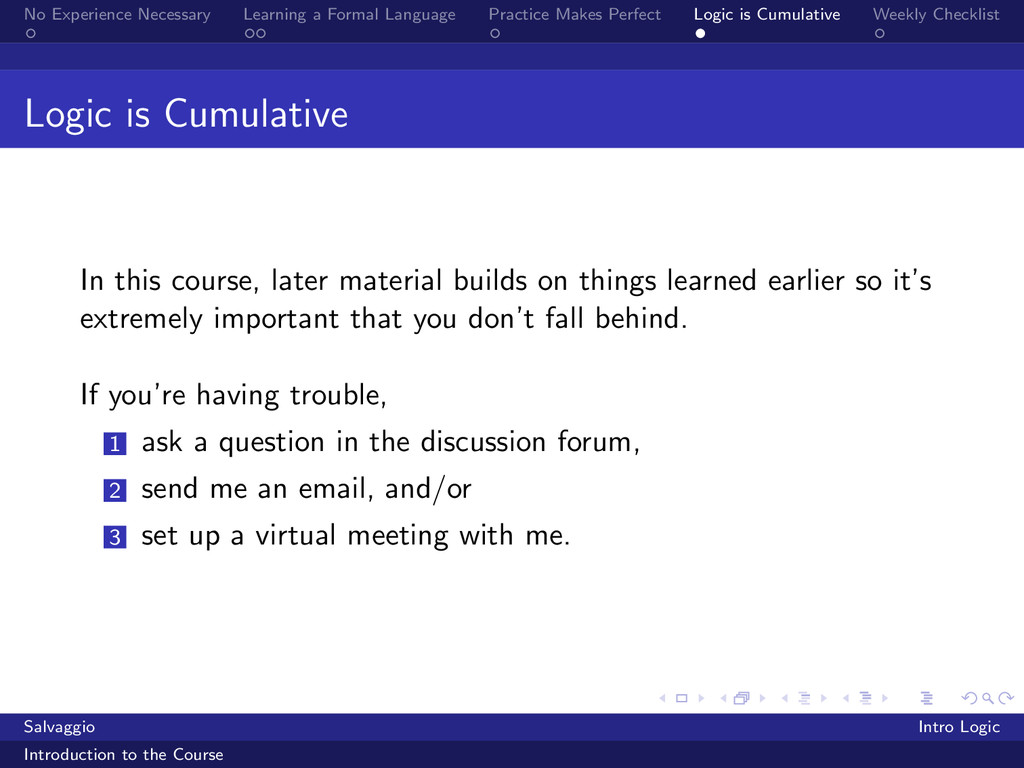
Logic is Cumulative Weekly Checklist Logic is Cumulative In this course, later material builds on things learned earlier so it’s extremely important that you don’t fall behind. Salvaggio Intro Logic Introduction to the Course
Logic is Cumulative Weekly Checklist Logic is Cumulative In this course, later material builds on things learned earlier so it’s extremely important that you don’t fall behind. If you’re having trouble, Salvaggio Intro Logic Introduction to the Course
Logic is Cumulative Weekly Checklist Logic is Cumulative In this course, later material builds on things learned earlier so it’s extremely important that you don’t fall behind. If you’re having trouble, 1 ask a question in the discussion forum, Salvaggio Intro Logic Introduction to the Course
Logic is Cumulative Weekly Checklist Logic is Cumulative In this course, later material builds on things learned earlier so it’s extremely important that you don’t fall behind. If you’re having trouble, 1 ask a question in the discussion forum, 2 send me an email, and/or Salvaggio Intro Logic Introduction to the Course
Logic is Cumulative Weekly Checklist Logic is Cumulative In this course, later material builds on things learned earlier so it’s extremely important that you don’t fall behind. If you’re having trouble, 1 ask a question in the discussion forum, 2 send me an email, and/or 3 set up a virtual meeting with me. Salvaggio Intro Logic Introduction to the Course
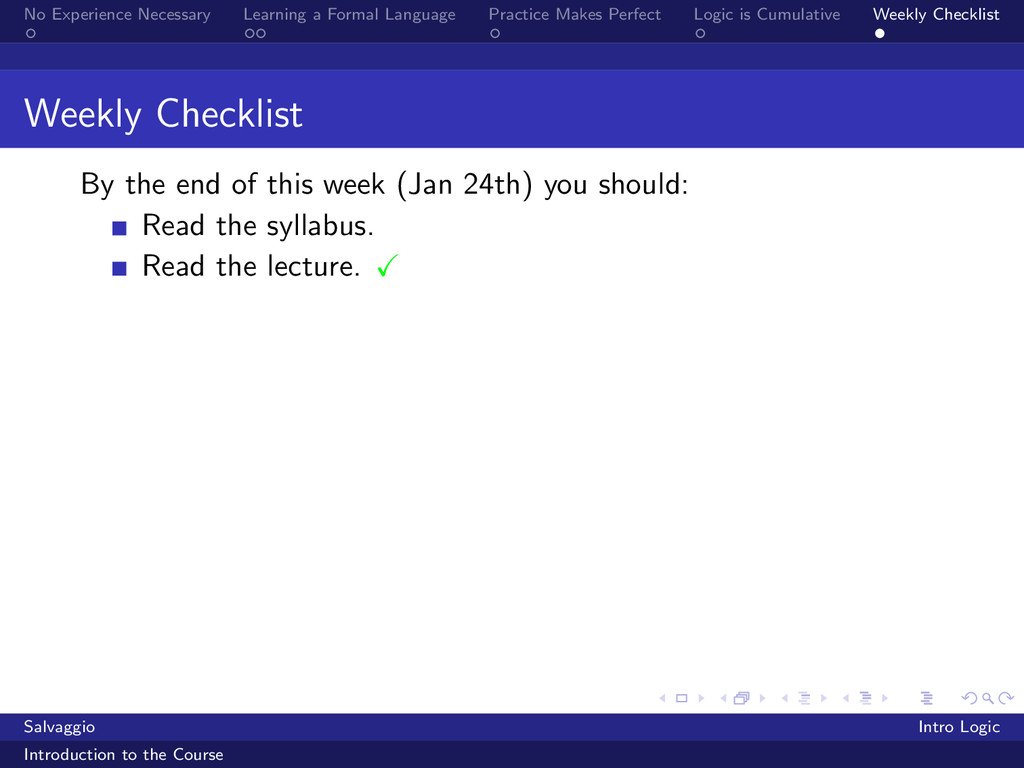
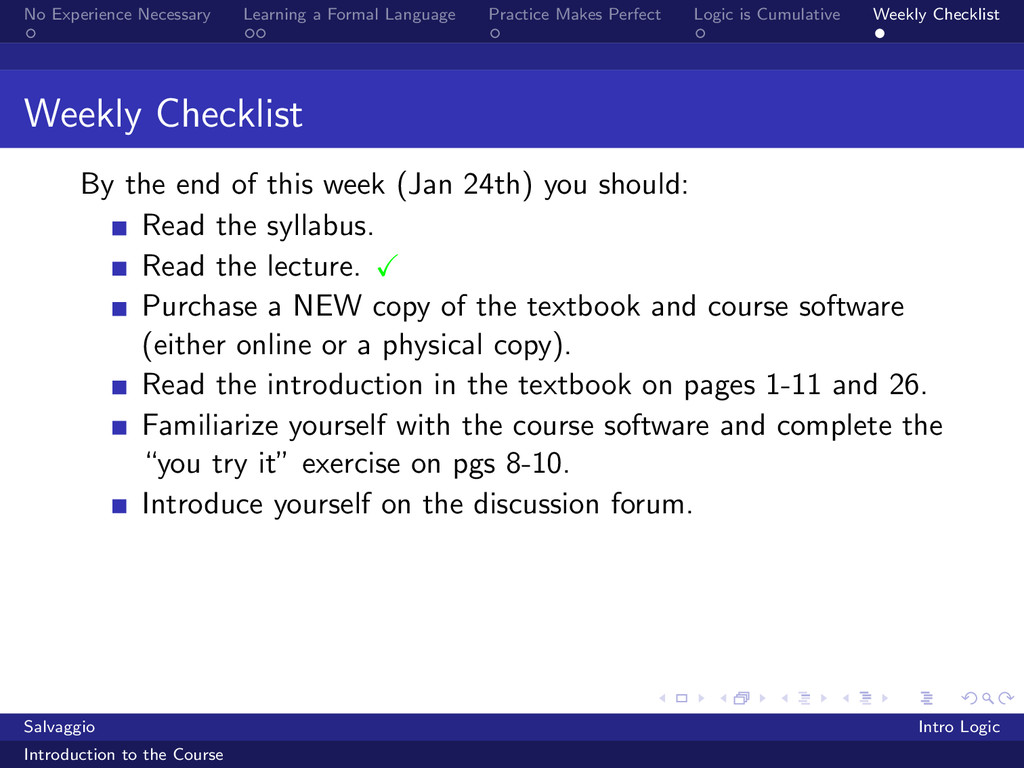
Logic is Cumulative Weekly Checklist Weekly Checklist By the end of this week (Jan 24th) you should: Read the syllabus. Salvaggio Intro Logic Introduction to the Course
Logic is Cumulative Weekly Checklist Weekly Checklist By the end of this week (Jan 24th) you should: Read the syllabus. Read the lecture. Salvaggio Intro Logic Introduction to the Course
Logic is Cumulative Weekly Checklist Weekly Checklist By the end of this week (Jan 24th) you should: Read the syllabus. Read the lecture. Salvaggio Intro Logic Introduction to the Course
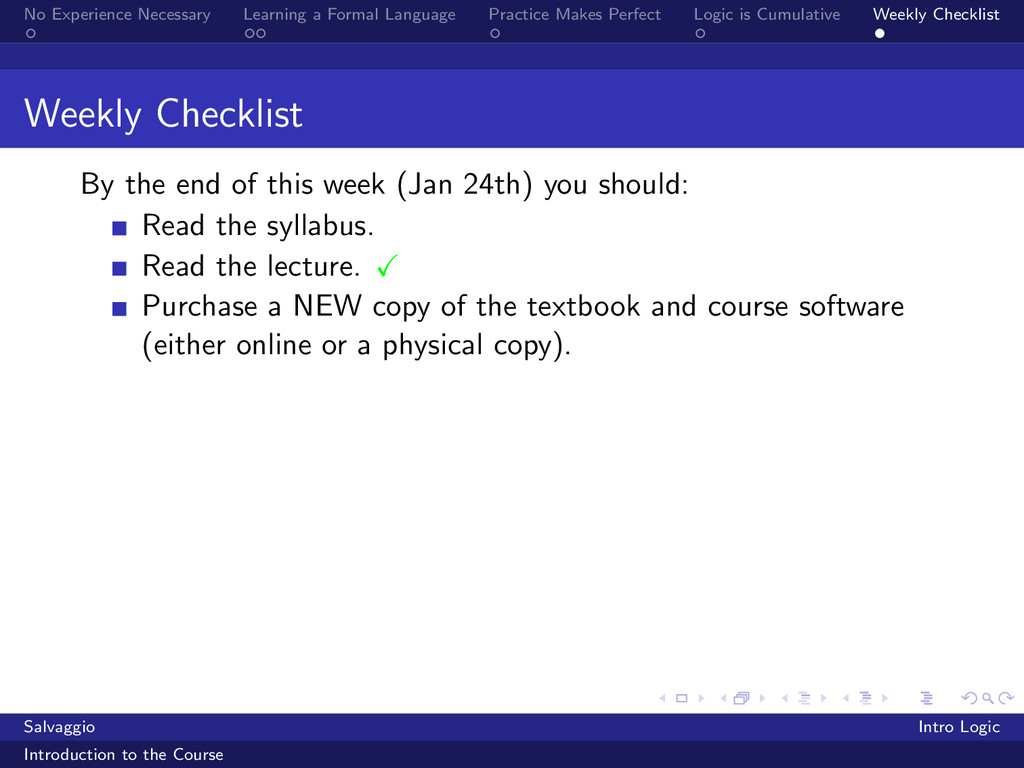
Logic is Cumulative Weekly Checklist Weekly Checklist By the end of this week (Jan 24th) you should: Read the syllabus. Read the lecture. Purchase a NEW copy of the textbook and course software (either online or a physical copy). Salvaggio Intro Logic Introduction to the Course
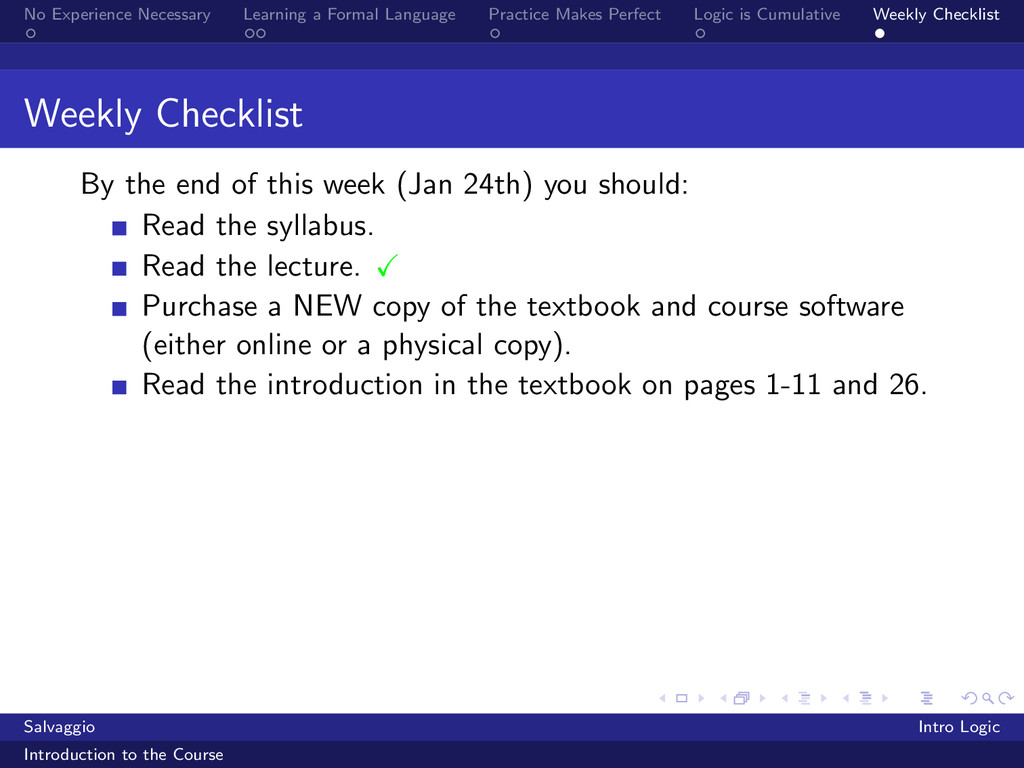
Logic is Cumulative Weekly Checklist Weekly Checklist By the end of this week (Jan 24th) you should: Read the syllabus. Read the lecture. Purchase a NEW copy of the textbook and course software (either online or a physical copy). Read the introduction in the textbook on pages 1-11 and 26. Salvaggio Intro Logic Introduction to the Course
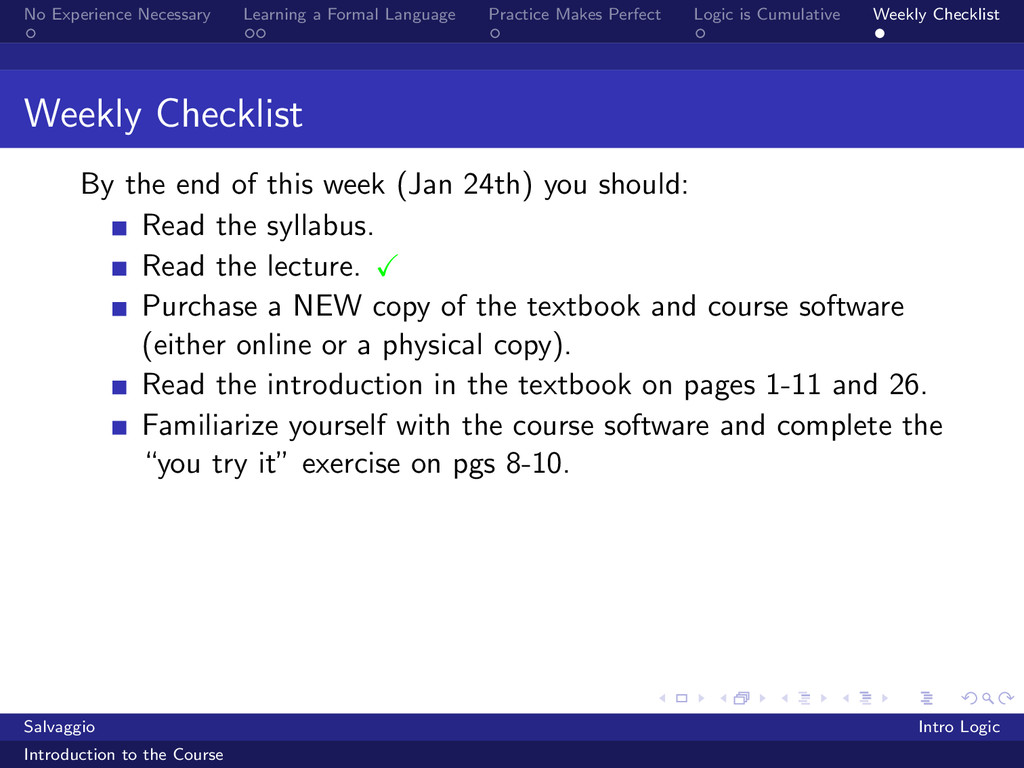
Logic is Cumulative Weekly Checklist Weekly Checklist By the end of this week (Jan 24th) you should: Read the syllabus. Read the lecture. Purchase a NEW copy of the textbook and course software (either online or a physical copy). Read the introduction in the textbook on pages 1-11 and 26. Familiarize yourself with the course software and complete the “you try it” exercise on pgs 8-10. Salvaggio Intro Logic Introduction to the Course
Logic is Cumulative Weekly Checklist Weekly Checklist By the end of this week (Jan 24th) you should: Read the syllabus. Read the lecture. Purchase a NEW copy of the textbook and course software (either online or a physical copy). Read the introduction in the textbook on pages 1-11 and 26. Familiarize yourself with the course software and complete the “you try it” exercise on pgs 8-10. Introduce yourself on the discussion forum. Salvaggio Intro Logic Introduction to the Course
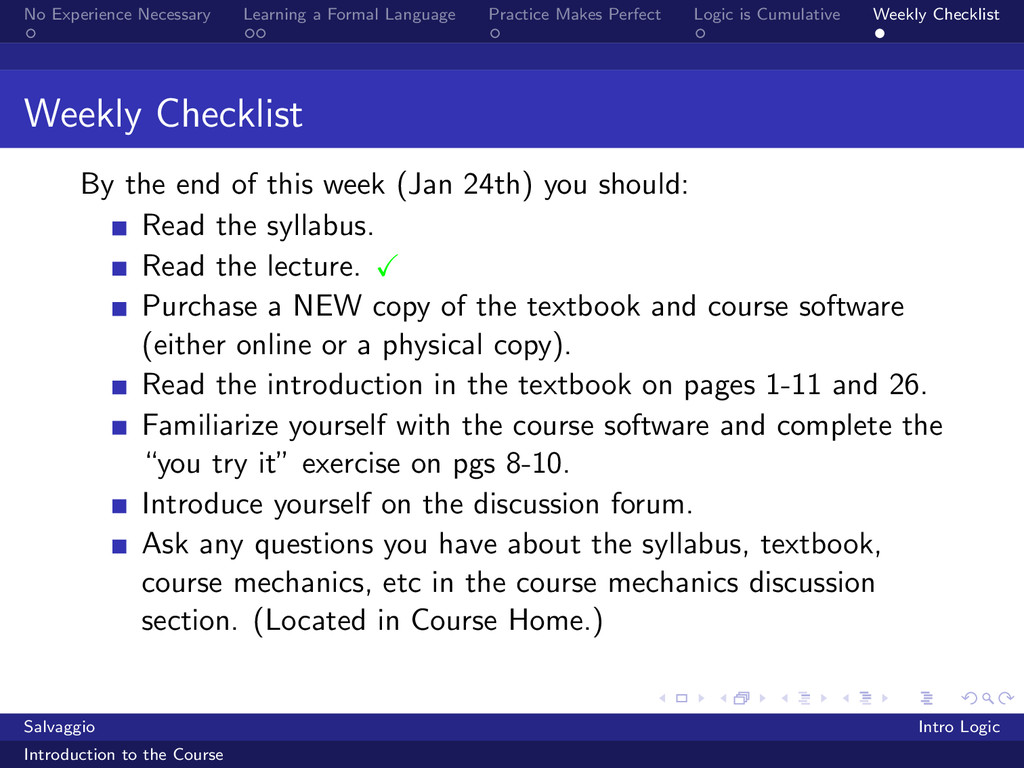
Logic is Cumulative Weekly Checklist Weekly Checklist By the end of this week (Jan 24th) you should: Read the syllabus. Read the lecture. Purchase a NEW copy of the textbook and course software (either online or a physical copy). Read the introduction in the textbook on pages 1-11 and 26. Familiarize yourself with the course software and complete the “you try it” exercise on pgs 8-10. Introduce yourself on the discussion forum. Ask any questions you have about the syllabus, textbook, course mechanics, etc in the course mechanics discussion section. (Located in Course Home.) Salvaggio Intro Logic Introduction to the Course
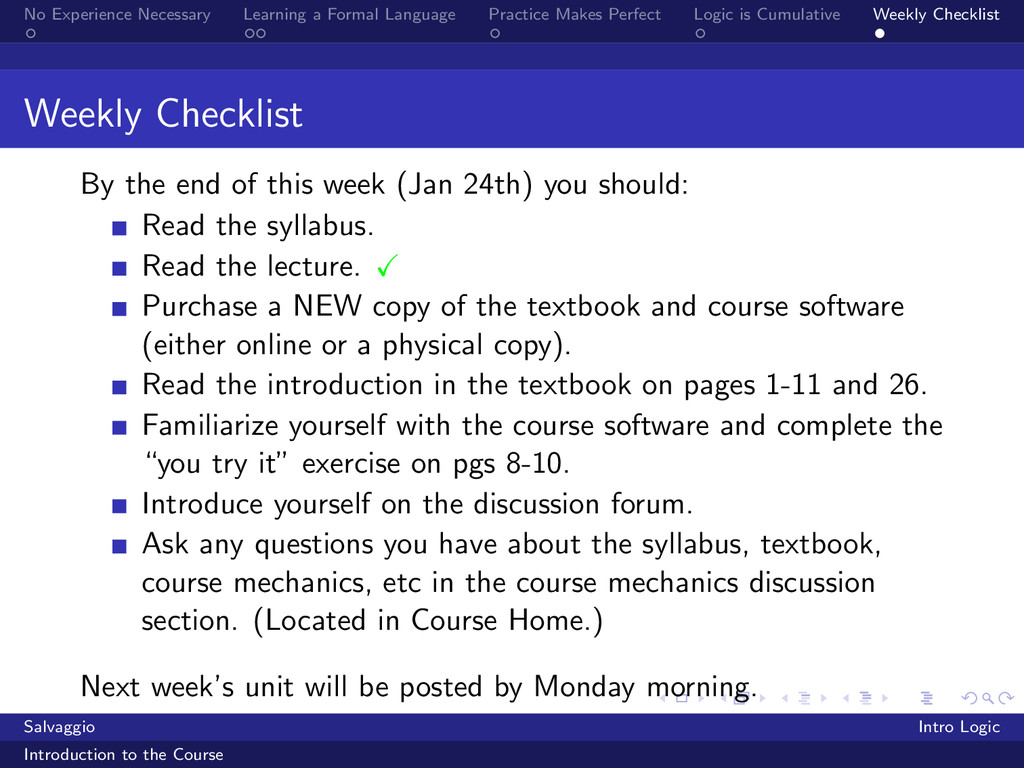
Logic is Cumulative Weekly Checklist Weekly Checklist By the end of this week (Jan 24th) you should: Read the syllabus. Read the lecture. Purchase a NEW copy of the textbook and course software (either online or a physical copy). Read the introduction in the textbook on pages 1-11 and 26. Familiarize yourself with the course software and complete the “you try it” exercise on pgs 8-10. Introduce yourself on the discussion forum. Ask any questions you have about the syllabus, textbook, course mechanics, etc in the course mechanics discussion section. (Located in Course Home.) Next week’s unit will be posted by Monday morning. Salvaggio Intro Logic Introduction to the Course


 juanmartin2026
 matleenalaakso
 hiola
 eller86
 ainischool
 robintux
 cbtlibrary
 ssmedikasda
 arnoknobbe
 2720japanoke
 codingconduct
 chriscoyier
 signer
 philnash
 swwweet
 aleyda
 akademiya2063
 geshan
 techseoconnect
 destraynor
 mayunak
 portentint