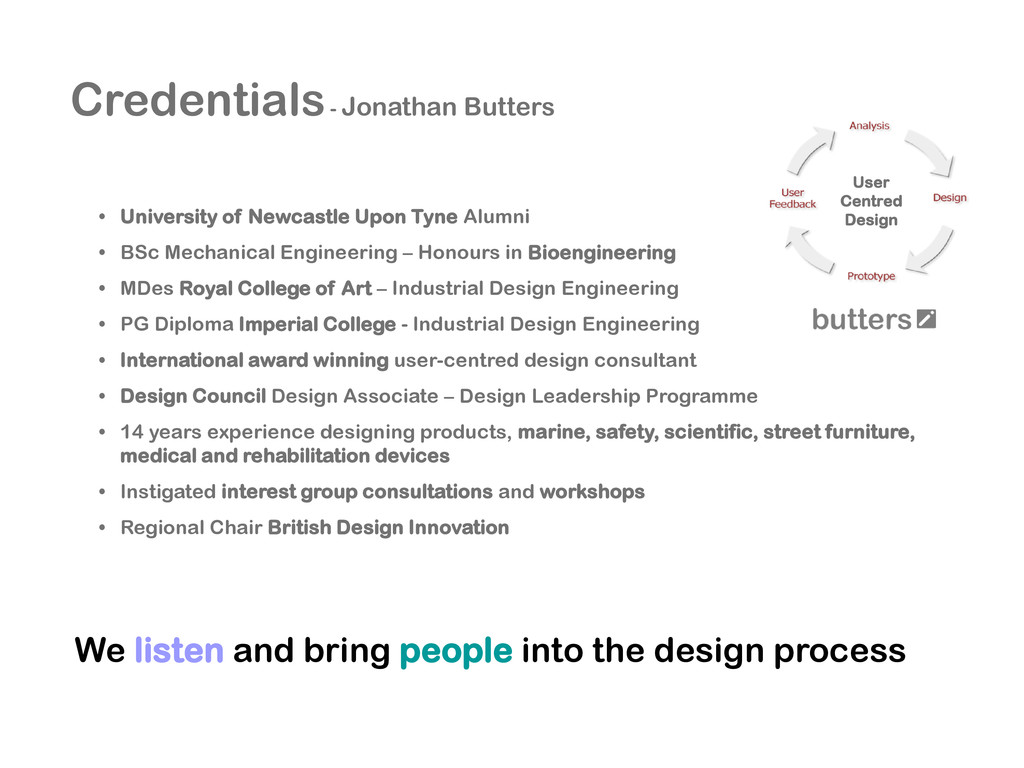
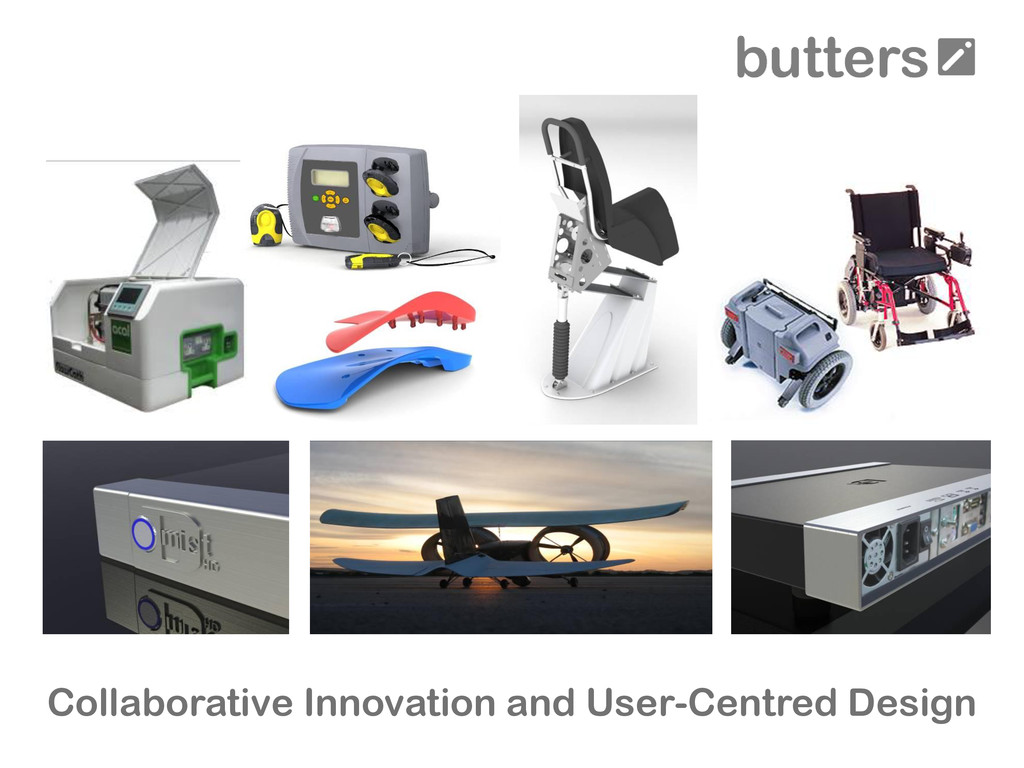
• University of Newcastle Upon Tyne Alumni • BSc Mechanical Engineering – Honours in Bioengineering • MDes Royal College of Art – Industrial Design Engineering • PG Diploma Imperial College - Industrial Design Engineering • International award winning user-centred design consultant • Design Council Design Associate – Design Leadership Programme • 14 years experience designing products, marine, safety, scientific, street furniture, medical and rehabilitation devices • Instigated interest group consultations and workshops • Regional Chair British Design Innovation We listen and bring people into the design process User Centred Design
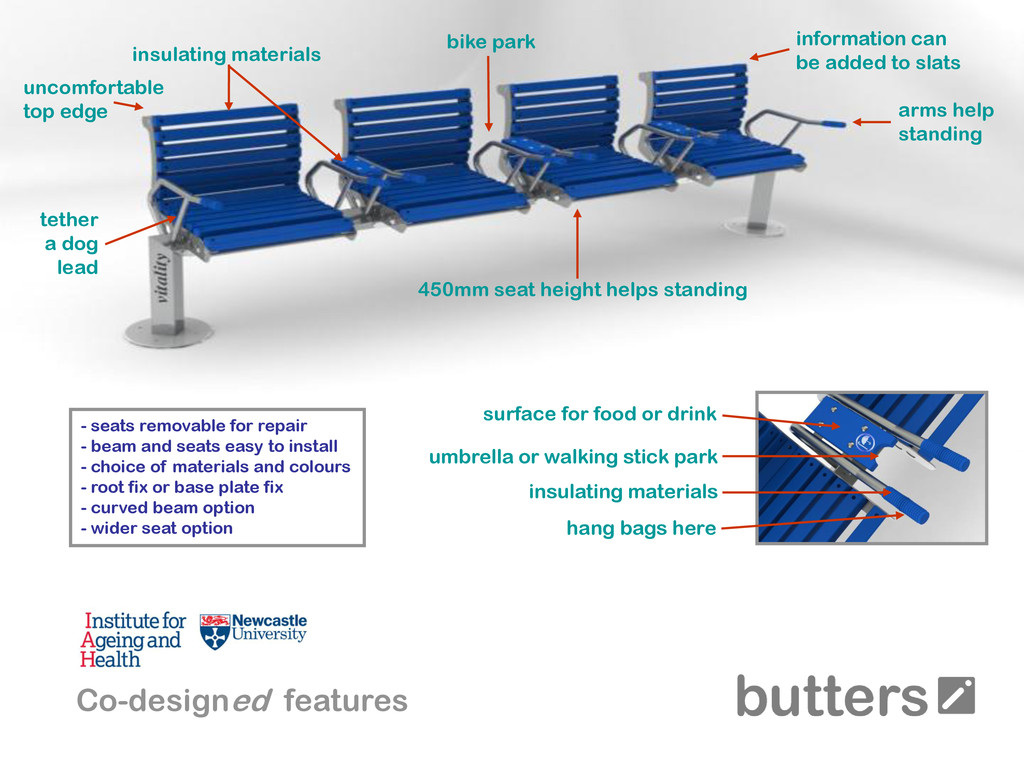
removable for repair - beam and seats easy to install - choice of materials and colours - root fix or base plate fix - curved beam option - wider seat option insulating materials 450mm seat height helps standing tether a dog lead information can be added to slats arms help standing bike park uncomfortable top edge hang bags here umbrella or walking stick park surface for food or drink insulating materials
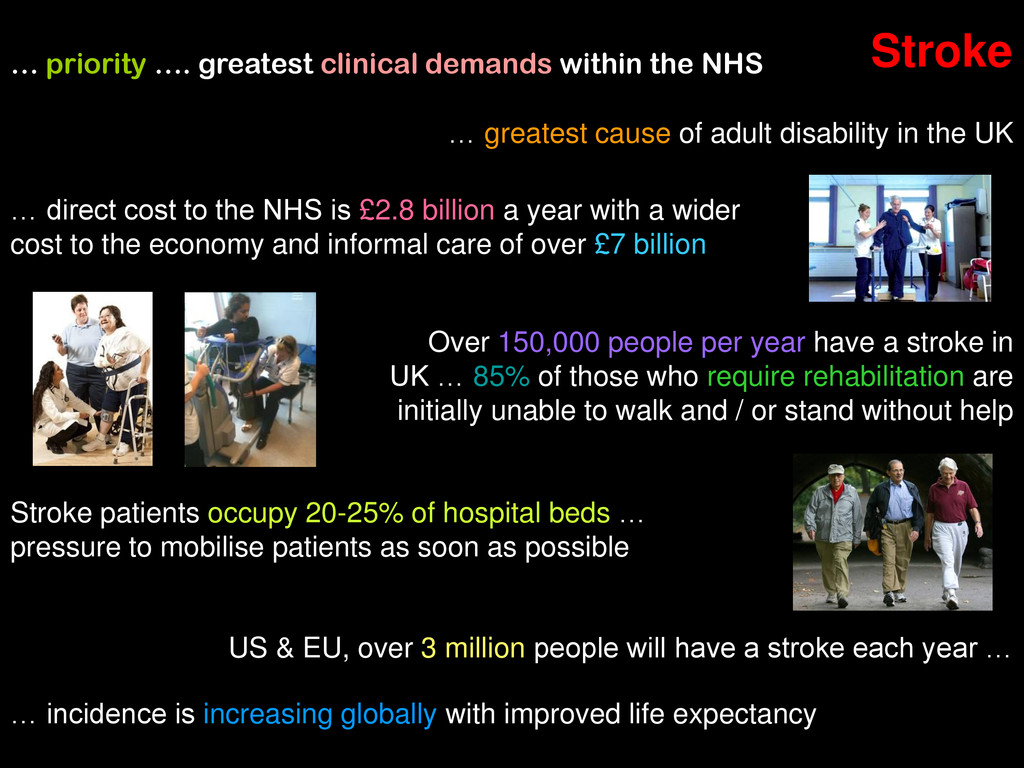
clinical demands within the NHS … greatest cause of adult disability in the UK … direct cost to the NHS is £2.8 billion a year with a wider cost to the economy and informal care of over £7 billion Stroke patients occupy 20-25% of hospital beds … pressure to mobilise patients as soon as possible Over 150,000 people per year have a stroke in UK … 85% of those who require rehabilitation are initially unable to walk and / or stand without help US & EU, over 3 million people will have a stroke each year … … incidence is increasing globally with improved life expectancy Stroke
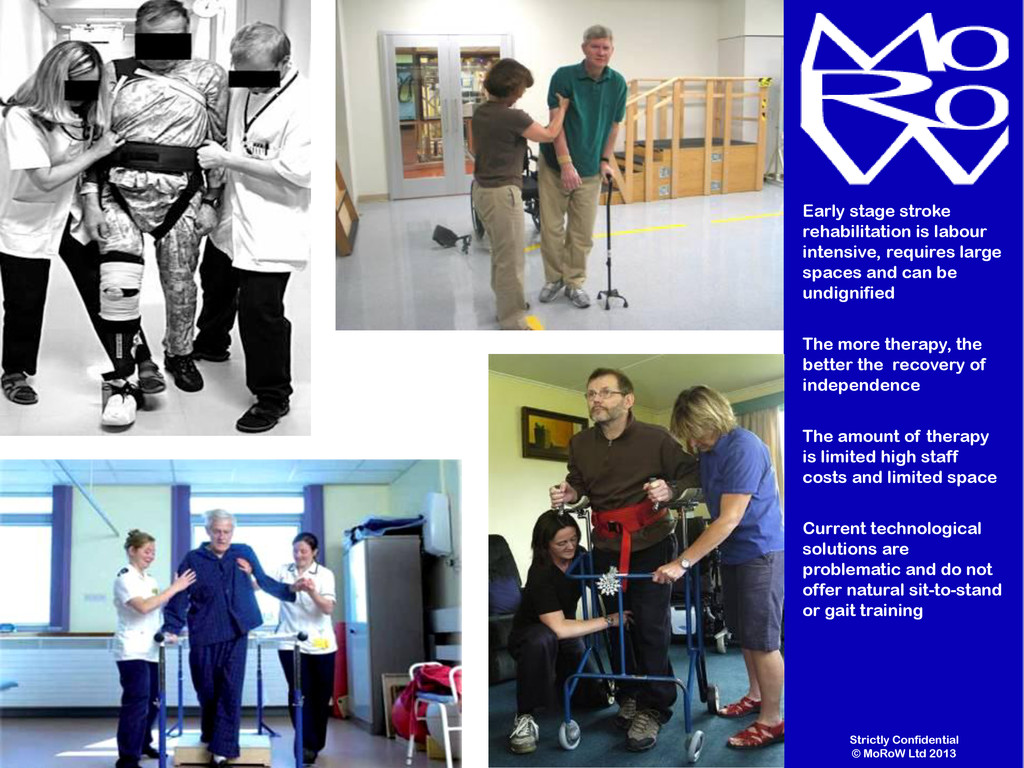
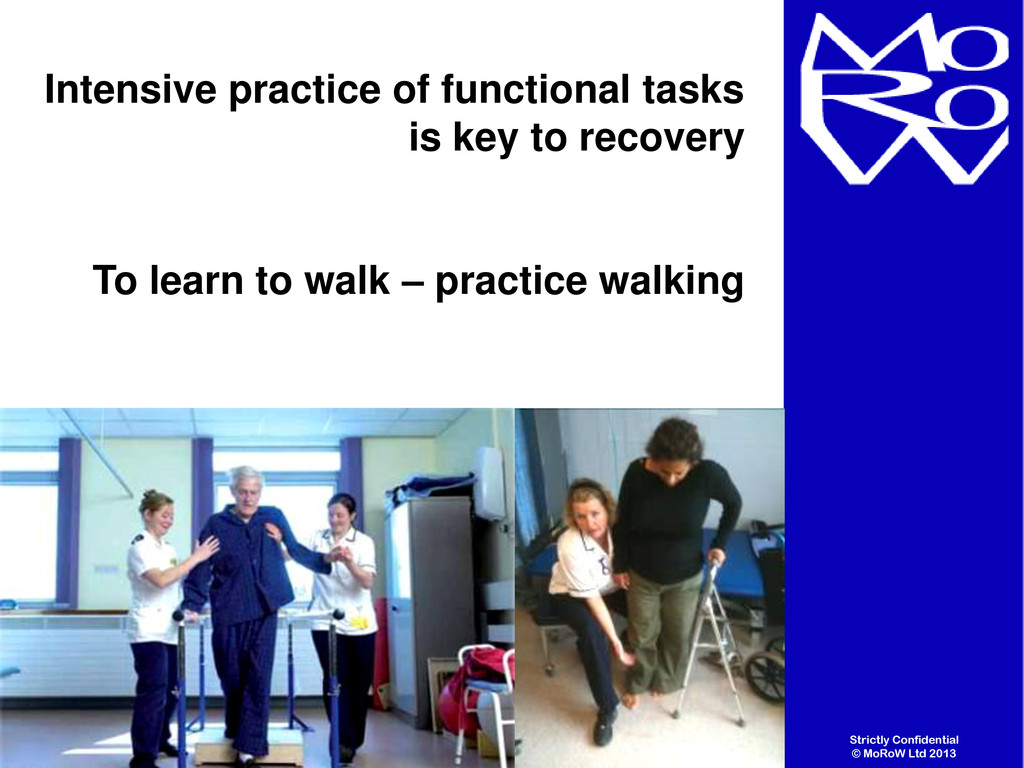
is labour intensive, requires large spaces and can be undignified The more therapy, the better the recovery of independence The amount of therapy is limited high staff costs and limited space Current technological solutions are problematic and do not offer natural sit-to-stand or gait training
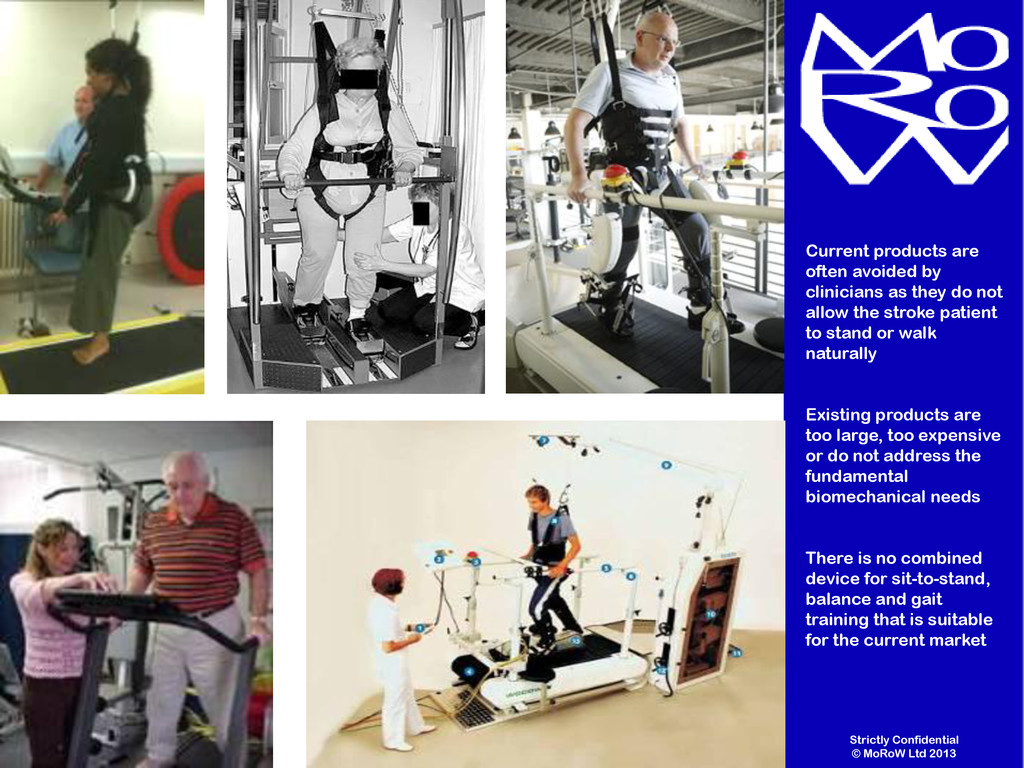
avoided by clinicians as they do not allow the stroke patient to stand or walk naturally Existing products are too large, too expensive or do not address the fundamental biomechanical needs There is no combined device for sit-to-stand, balance and gait training that is suitable for the current market
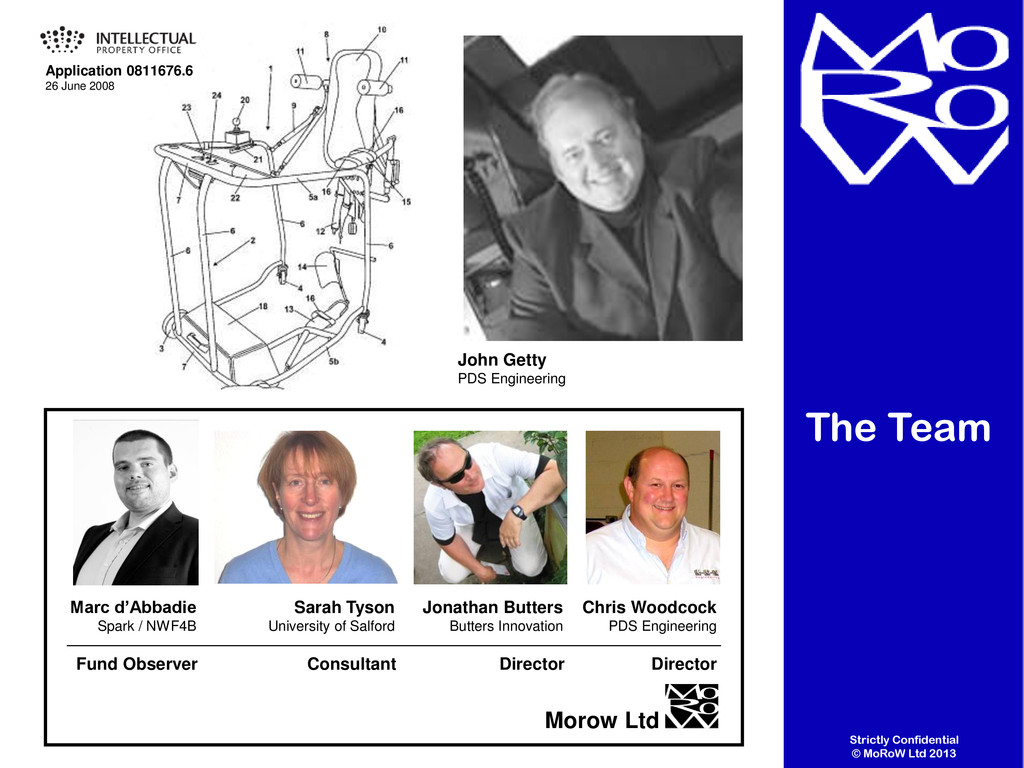
Chris Woodcock PDS Engineering Jonathan Butters Butters Innovation Sarah Tyson University of Salford Marc d’Abbadie Spark / NWF4B Morow Ltd Fund Observer Consultant Director Director Application 0811676.6 26 June 2008 The Team
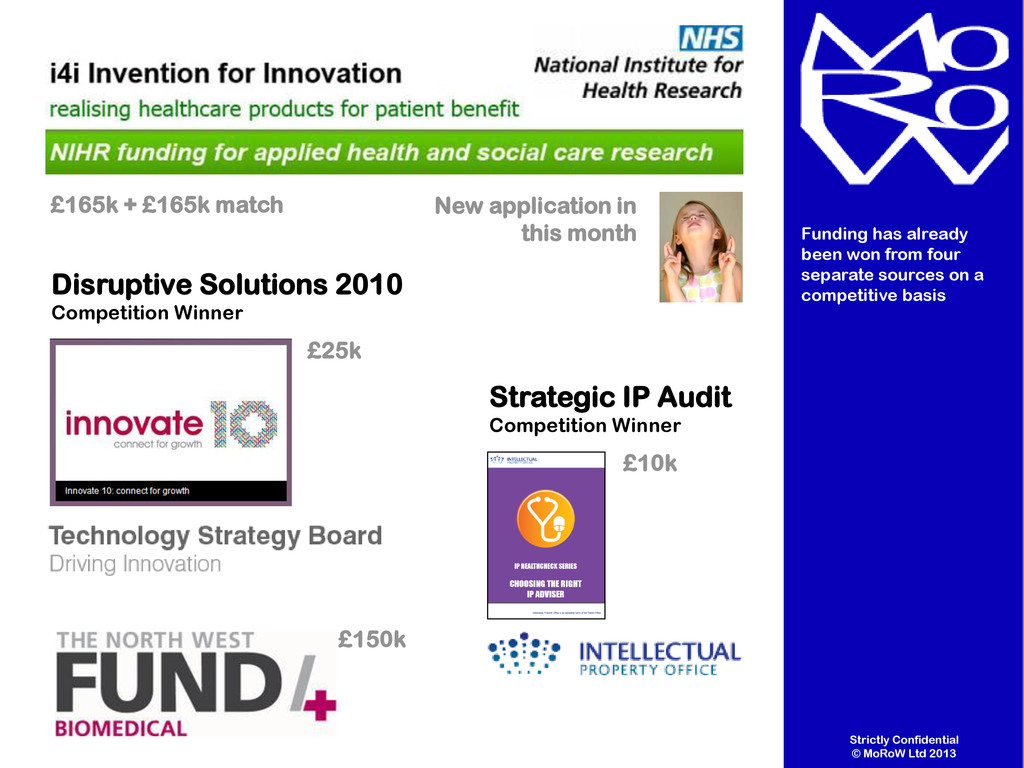
Winner Funding has already been won from four separate sources on a competitive basis Strategic IP Audit Competition Winner £165k + £165k match £25k £10k £150k New application in this month
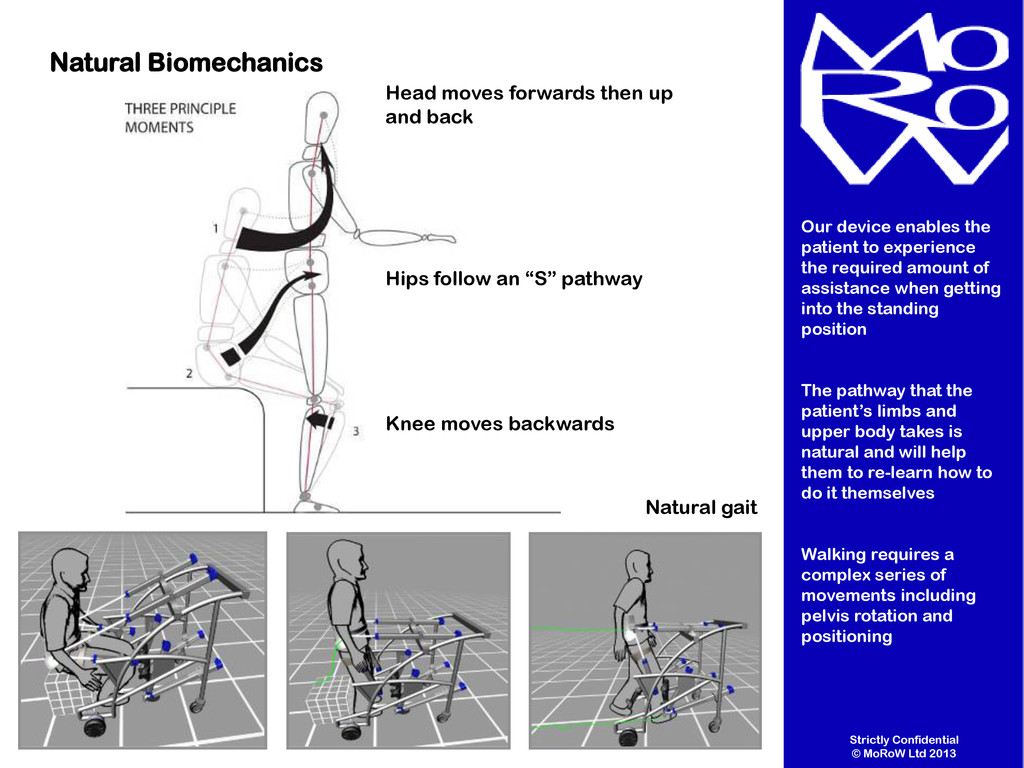
up and back Hips follow an “S” pathway Knee moves backwards Our device enables the patient to experience the required amount of assistance when getting into the standing position The pathway that the patient’s limbs and upper body takes is natural and will help them to re-learn how to do it themselves Walking requires a complex series of movements including pelvis rotation and positioning Natural Biomechanics Natural gait
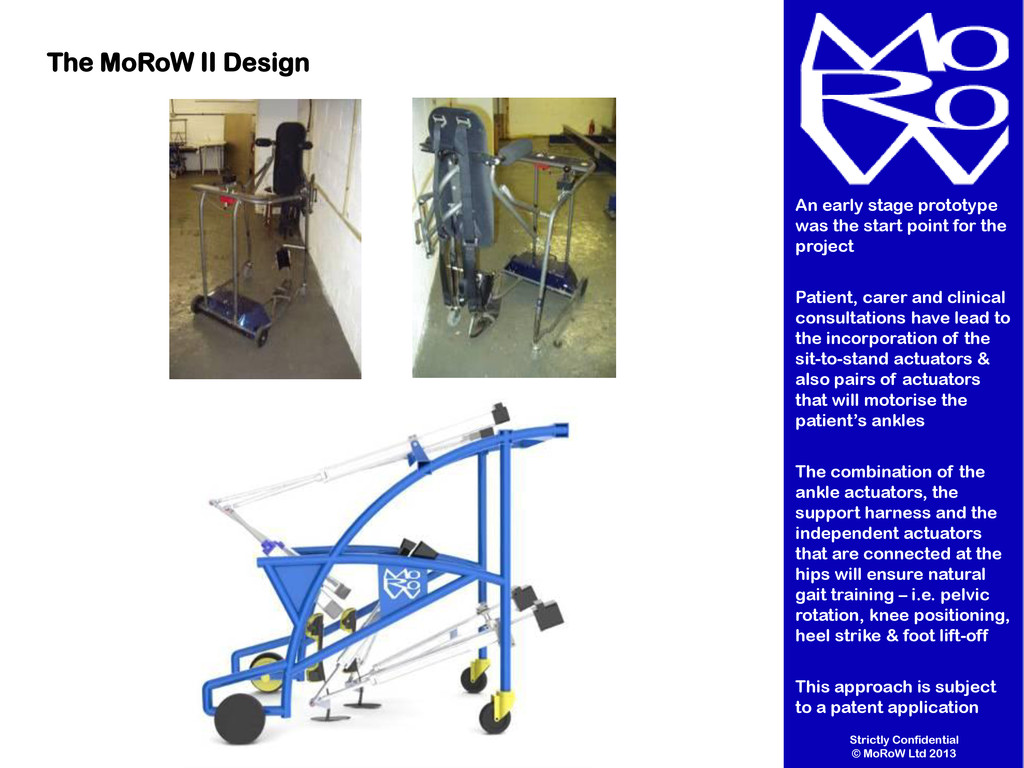
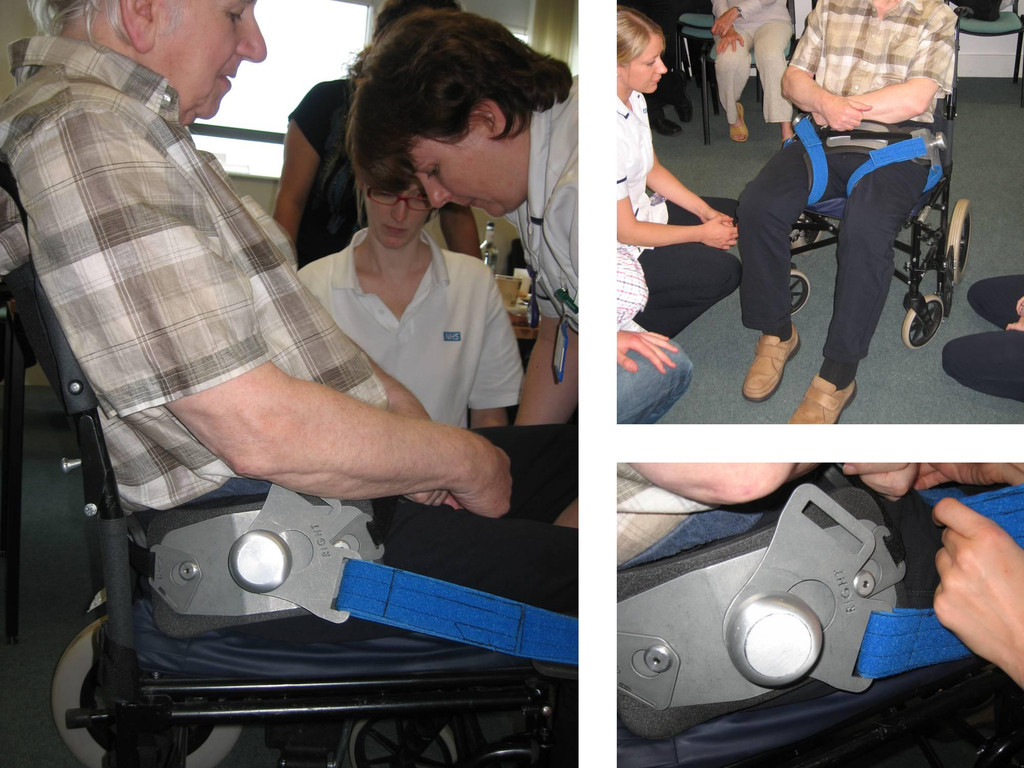
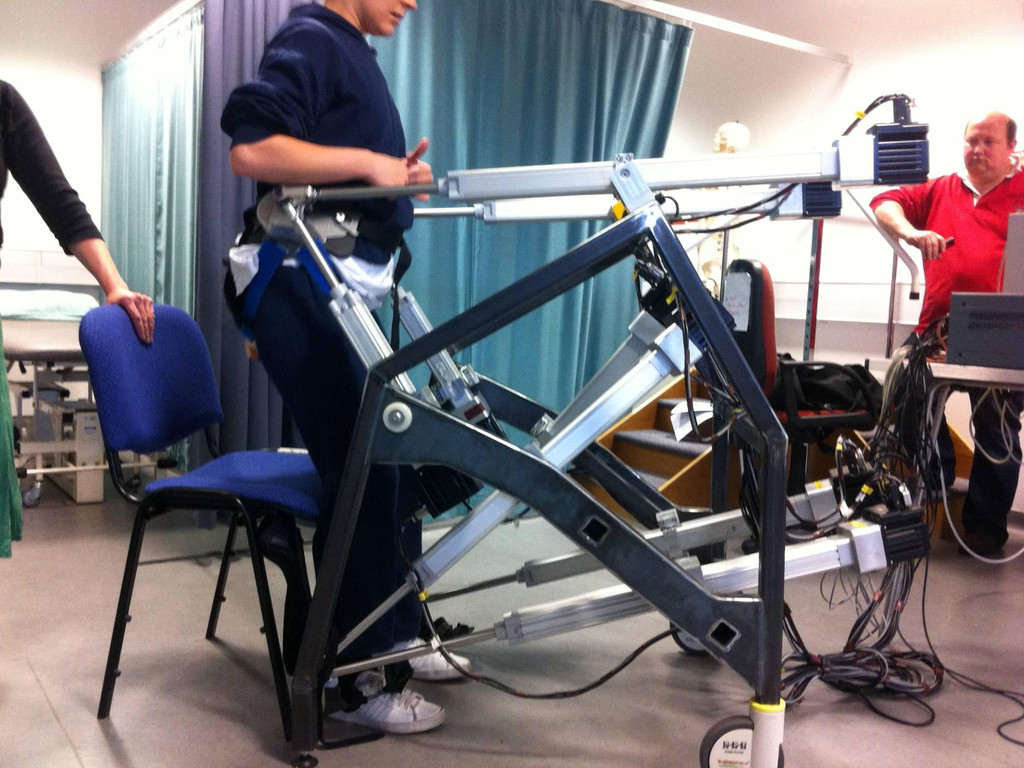
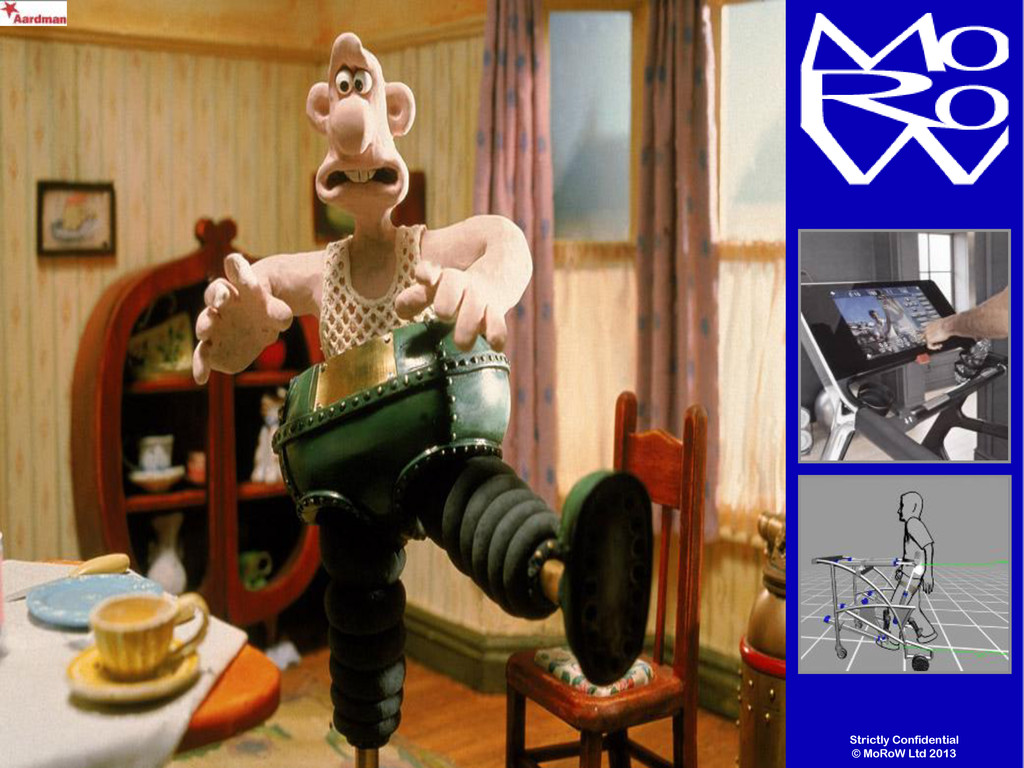
was the start point for the project Patient, carer and clinical consultations have lead to the incorporation of the sit-to-stand actuators & also pairs of actuators that will motorise the patient’s ankles The combination of the ankle actuators, the support harness and the independent actuators that are connected at the hips will ensure natural gait training – i.e. pelvic rotation, knee positioning, heel strike & foot lift-off This approach is subject to a patent application The MoRoW II Design
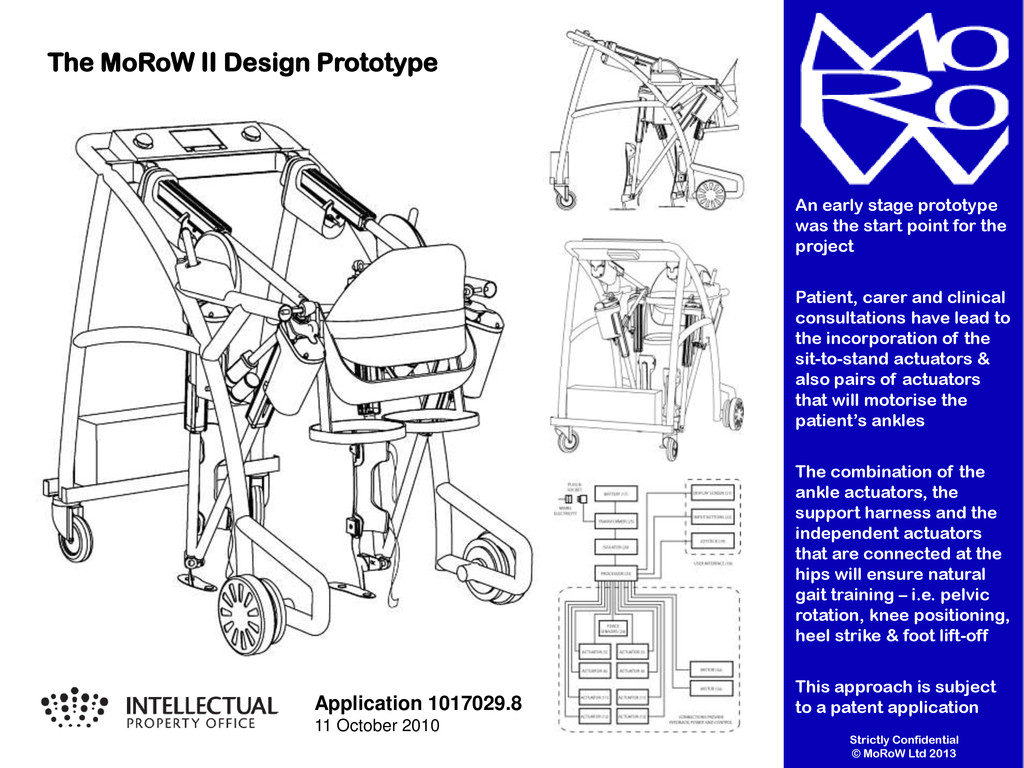
was the start point for the project Patient, carer and clinical consultations have lead to the incorporation of the sit-to-stand actuators & also pairs of actuators that will motorise the patient’s ankles The combination of the ankle actuators, the support harness and the independent actuators that are connected at the hips will ensure natural gait training – i.e. pelvic rotation, knee positioning, heel strike & foot lift-off This approach is subject to a patent application The MoRoW II Design Prototype Application 1017029.8 11 October 2010
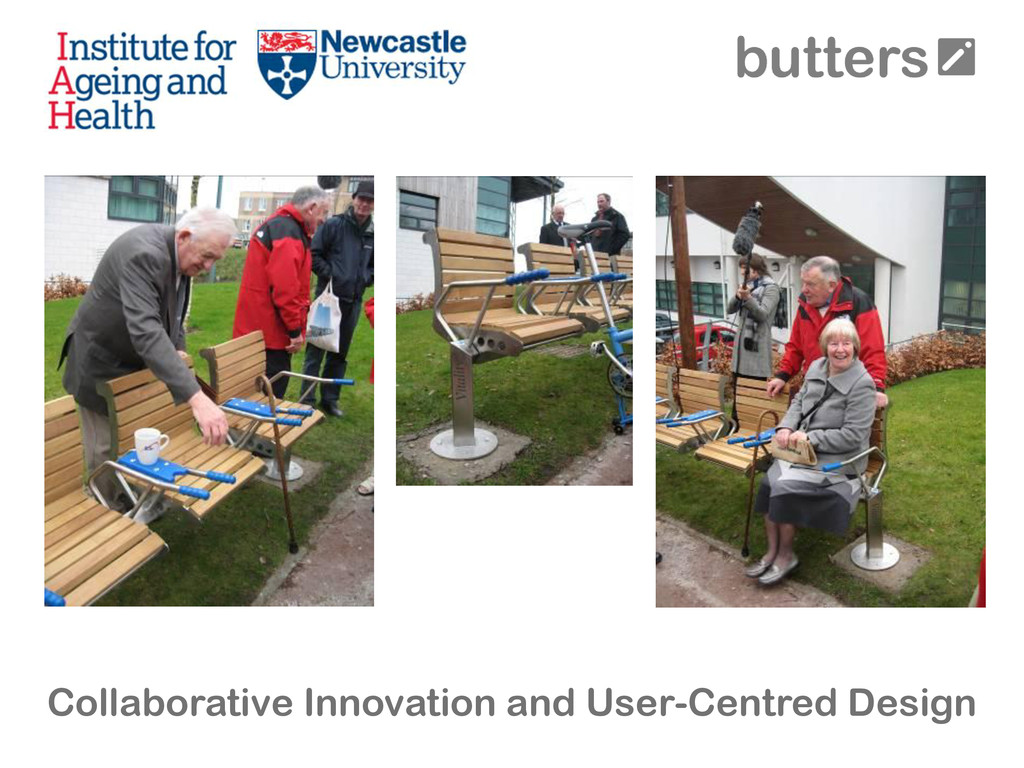
with stakeholders early Encourage and foster stakeholder creativity Ideas come from consultations and workshops no one has the monopoly on good ideas! Close the loop by testing ideas with the stakeholders Tell the story to support market entry and PR Credit the stakeholders Collaborative Innovation and User-Centred Design


 medtech
 signer
 dugsong
 michaelherold
 tammyeverts
 garrettdimon
 auna
auna
 jmmastey
 aleyda
 palkan
 aki_iinuma
 caitiem20
 emna__ayadi