Upgrade to Pro — share decks privately, control downloads, hide ads and more …

Patio Blocks, Bricks & Natural Stone: A Practic...

Sponsored · Your Podcast. Everywhere. Effortlessly. Share. Educate. Inspire. Entertain. You do you. We'll handle the rest. →
Avatar for Miller brick Miller brick
June 25, 2026
7

Patio Blocks, Bricks & Natural Stone: A Practical Guide to Outdoor Hardscaping

This presentation provides an overview of patio blocks, bricks, and natural stone for outdoor living projects. It covers material comparisons, design considerations, installation best practices, drainage and maintenance requirements, and key factors homeowners and contractors should evaluate when planning durable, long-lasting hardscape projects.

Avatar for Miller brick

Miller brick

June 25, 2026

Transcript

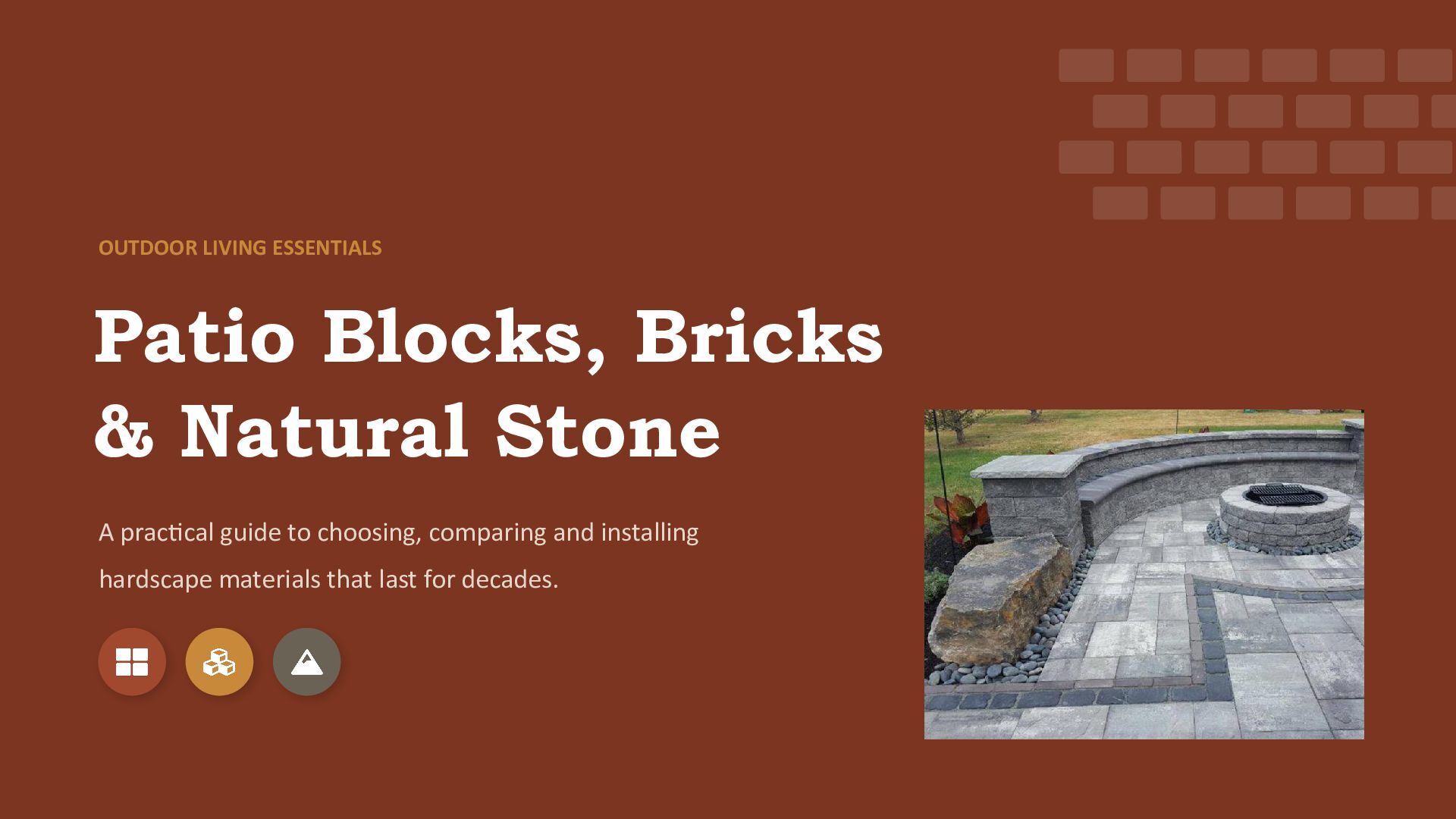
  1. OUTDOOR LIVING ESSENTIALS Patio Blocks, Bricks & Natural Stone A

    practical guide to choosing, comparing and installing hardscape materials that last for decades.
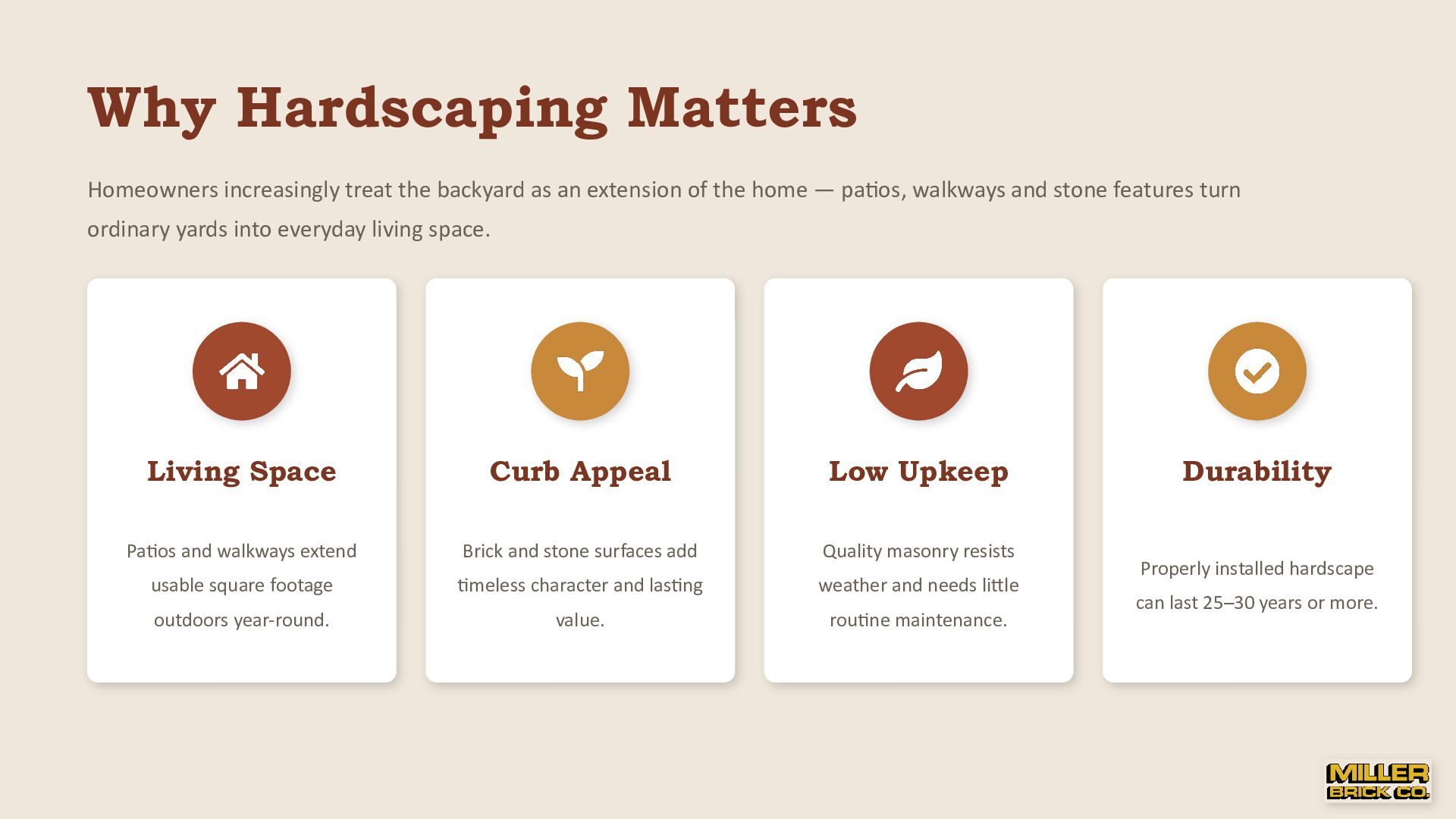
  2. Why Hardscaping Matters Homeowners increasingly treat the backyard as an

    extension of the home — patios, walkways and stone features turn ordinary yards into everyday living space. Living Space Patios and walkways extend usable square footage outdoors year-round. Curb Appeal Brick and stone surfaces add timeless character and lasting value. Low Upkeep Quality masonry resists weather and needs little routine maintenance. Durability Properly installed hardscape can last 25–30 years or more.
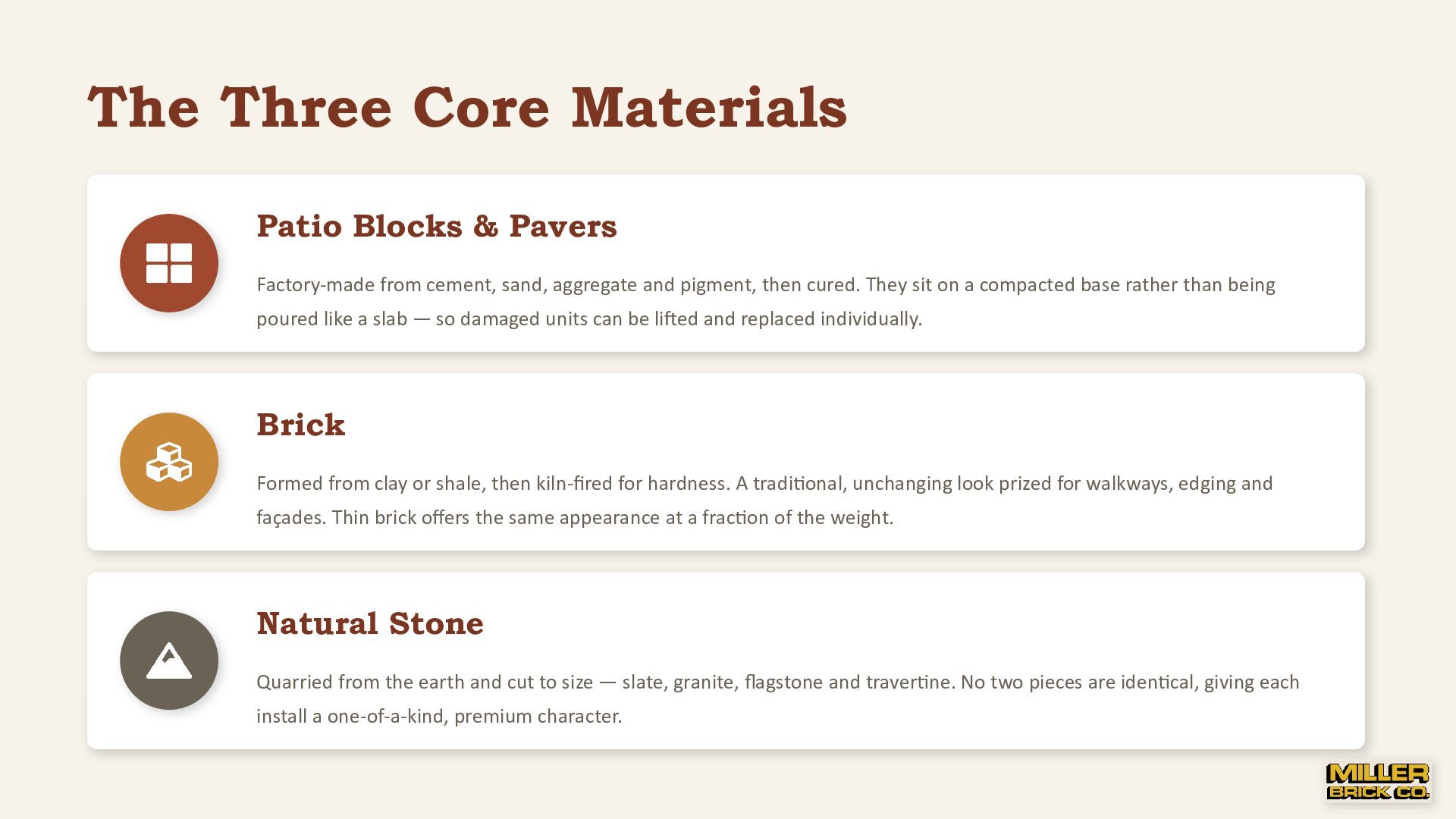
  3. The Three Core Materials Patio Blocks & Pavers Factory-made from

    cement, sand, aggregate and pigment, then cured. They sit on a compacted base rather than being poured like a slab — so damaged units can be lifted and replaced individually. Brick Formed from clay or shale, then kiln-fired for hardness. A traditional, unchanging look prized for walkways, edging and façades. Thin brick offers the same appearance at a fraction of the weight. Natural Stone Quarried from the earth and cut to size — slate, granite, flagstone and travertine. No two pieces are identical, giving each install a one-of-a-kind, premium character.
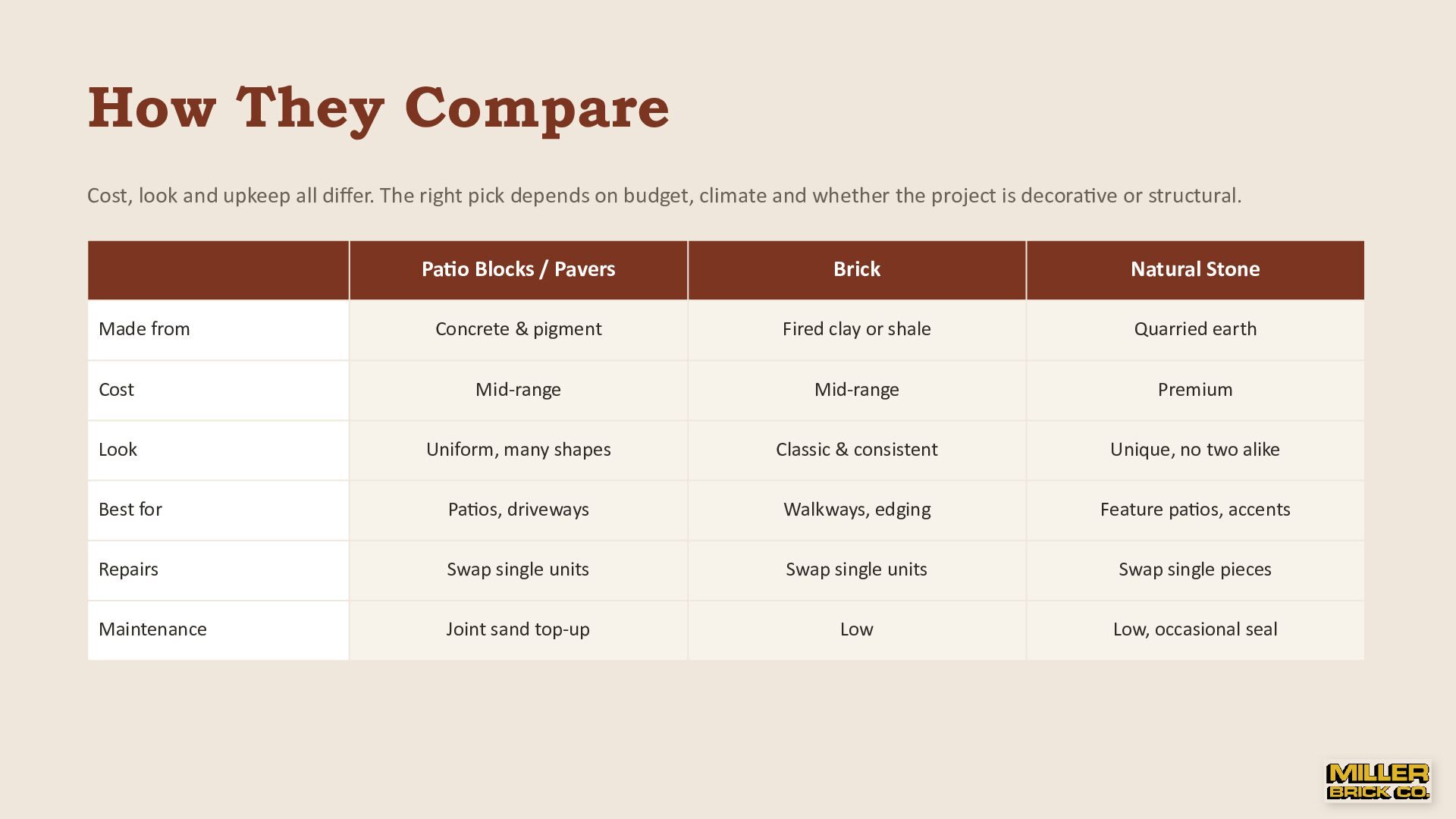
  4. How They Compare Cost, look and upkeep all differ. The

    right pick depends on budget, climate and whether the project is decorative or structural. Patio Blocks / Pavers Brick Natural Stone Made from Concrete & pigment Fired clay or shale Quarried earth Cost Mid-range Mid-range Premium Look Uniform, many shapes Classic & consistent Unique, no two alike Best for Patios, driveways Walkways, edging Feature patios, accents Repairs Swap single units Swap single units Swap single pieces Maintenance Joint sand top-up Low Low, occasional seal
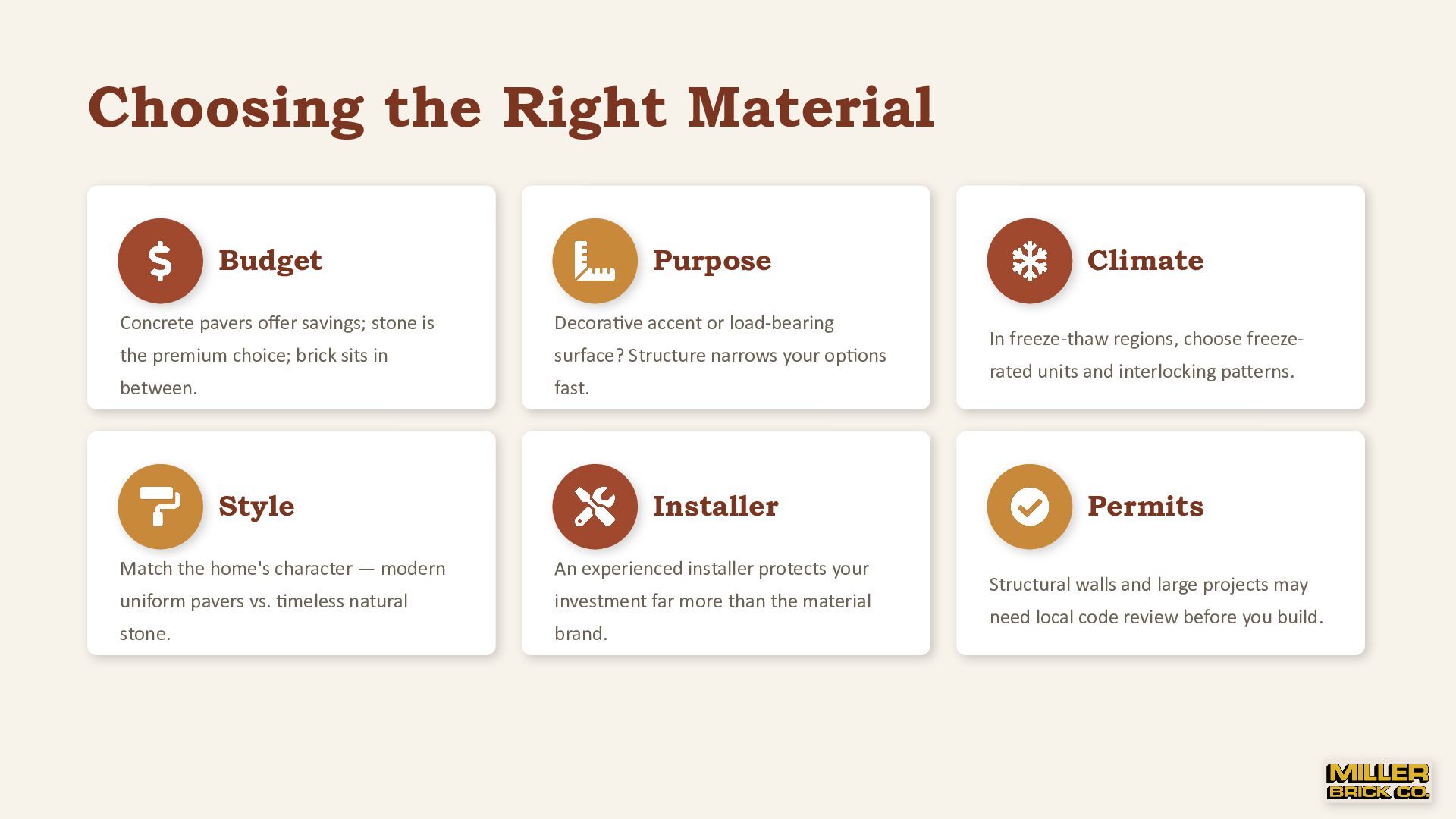
  5. Choosing the Right Material Budget Concrete pavers offer savings; stone

    is the premium choice; brick sits in between. Purpose Decorative accent or load-bearing surface? Structure narrows your options fast. Climate In freeze-thaw regions, choose freeze- rated units and interlocking patterns. Style Match the home's character — modern uniform pavers vs. timeless natural stone. Installer An experienced installer protects your investment far more than the material brand. Permits Structural walls and large projects may need local code review before you build.
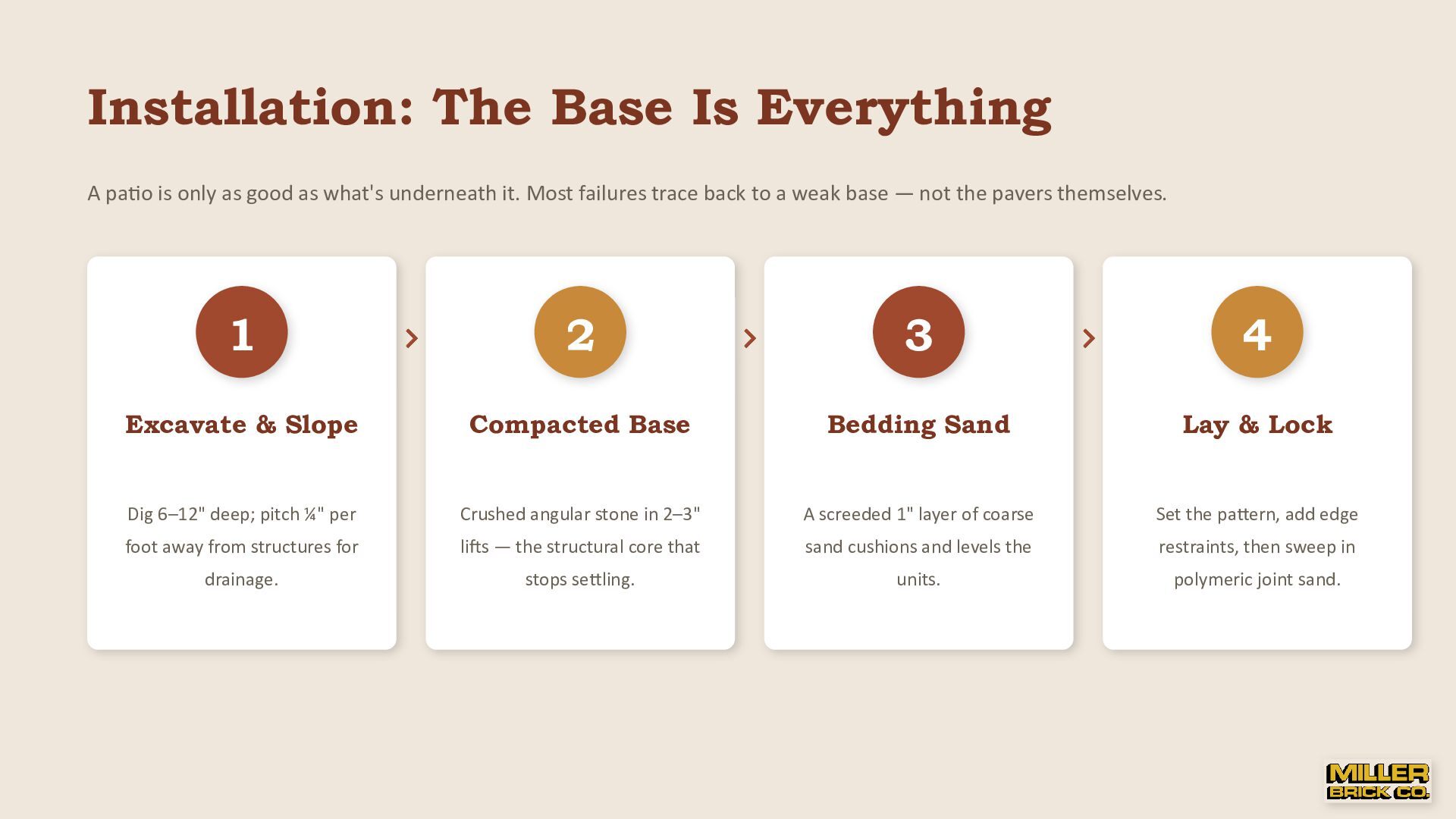
  6. Installation: The Base Is Everything A patio is only as

    good as what's underneath it. Most failures trace back to a weak base — not the pavers themselves. 1 Excavate & Slope Dig 6–12" deep; pitch ¼" per foot away from structures for drainage. 2 Compacted Base Crushed angular stone in 2–3" lifts — the structural core that stops settling. 3 Bedding Sand A screeded 1" layer of coarse sand cushions and levels the units. 4 Lay & Lock Set the pattern, add edge restraints, then sweep in polymeric joint sand.
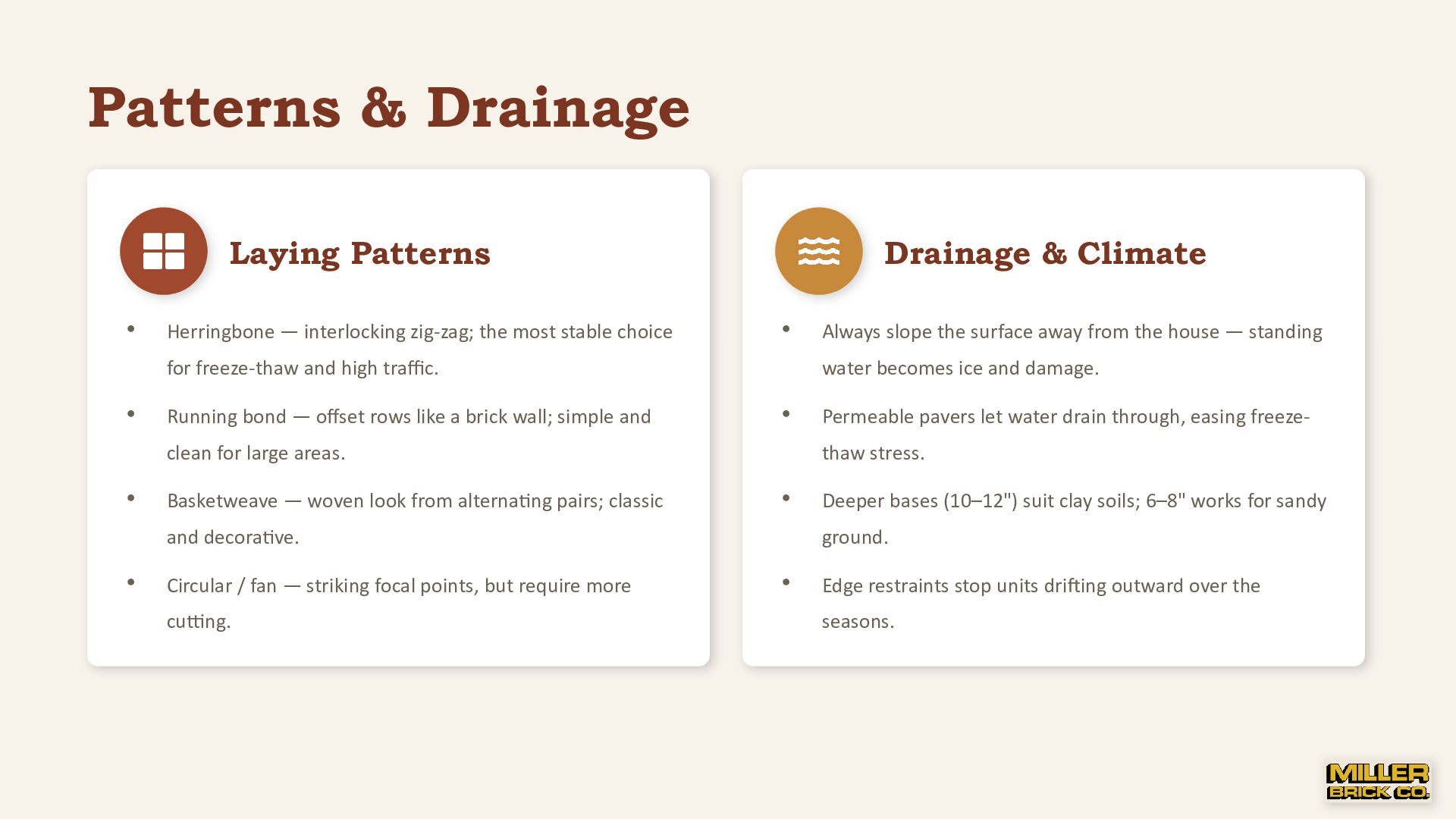
  7. Patterns & Drainage Laying Patterns • Herringbone — interlocking zig-zag;

    the most stable choice for freeze-thaw and high traffic. • Running bond — offset rows like a brick wall; simple and clean for large areas. • Basketweave — woven look from alternating pairs; classic and decorative. • Circular / fan — striking focal points, but require more cutting. Drainage & Climate • Always slope the surface away from the house — standing water becomes ice and damage. • Permeable pavers let water drain through, easing freeze- thaw stress. • Deeper bases (10–12") suit clay soils; 6–8" works for sandy ground. • Edge restraints stop units drifting outward over the seasons.
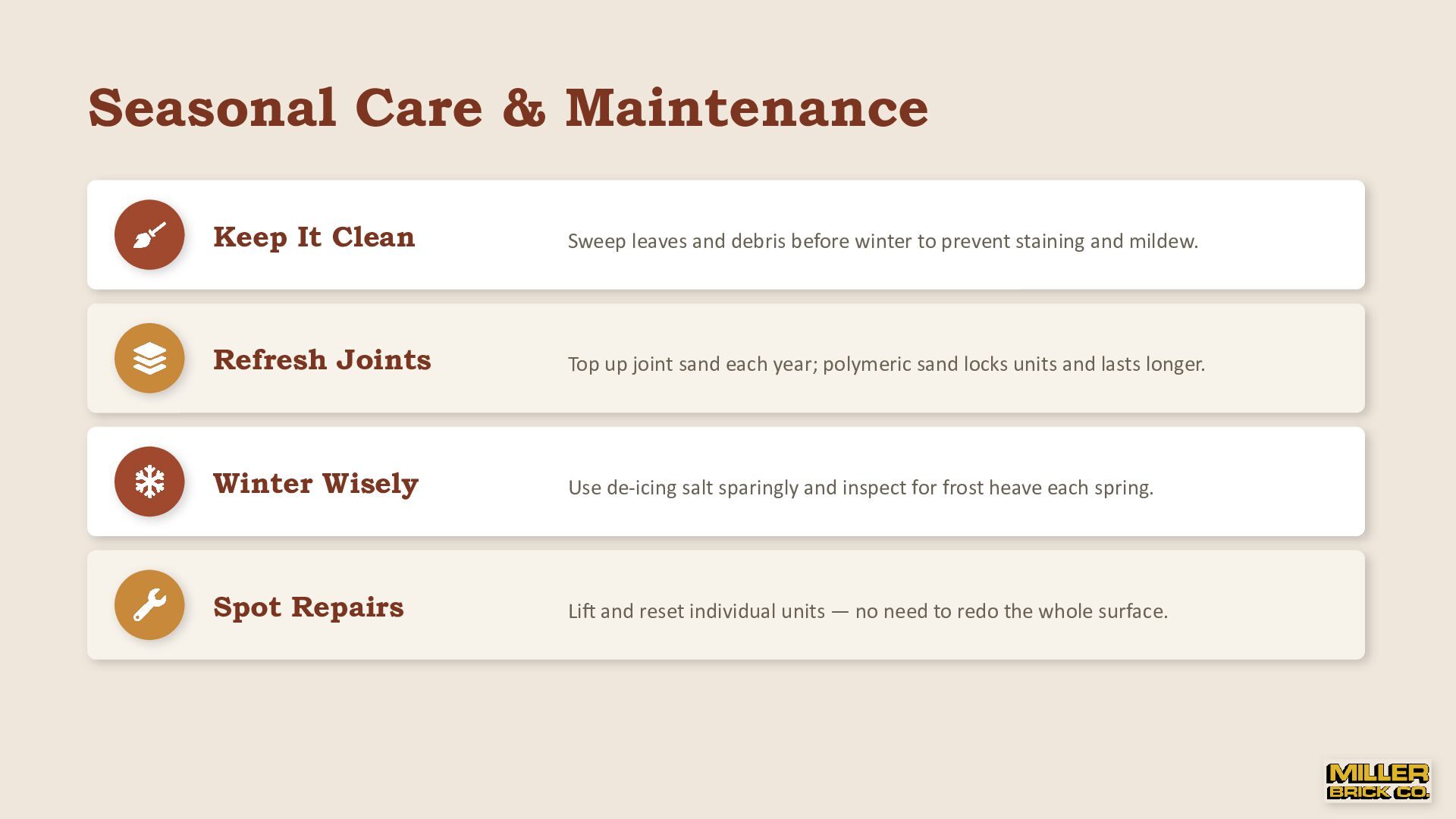
  8. Seasonal Care & Maintenance Keep It Clean Sweep leaves and

    debris before winter to prevent staining and mildew. Refresh Joints Top up joint sand each year; polymeric sand locks units and lasts longer. Winter Wisely Use de-icing salt sparingly and inspect for frost heave each spring. Spot Repairs Lift and reset individual units — no need to redo the whole surface.
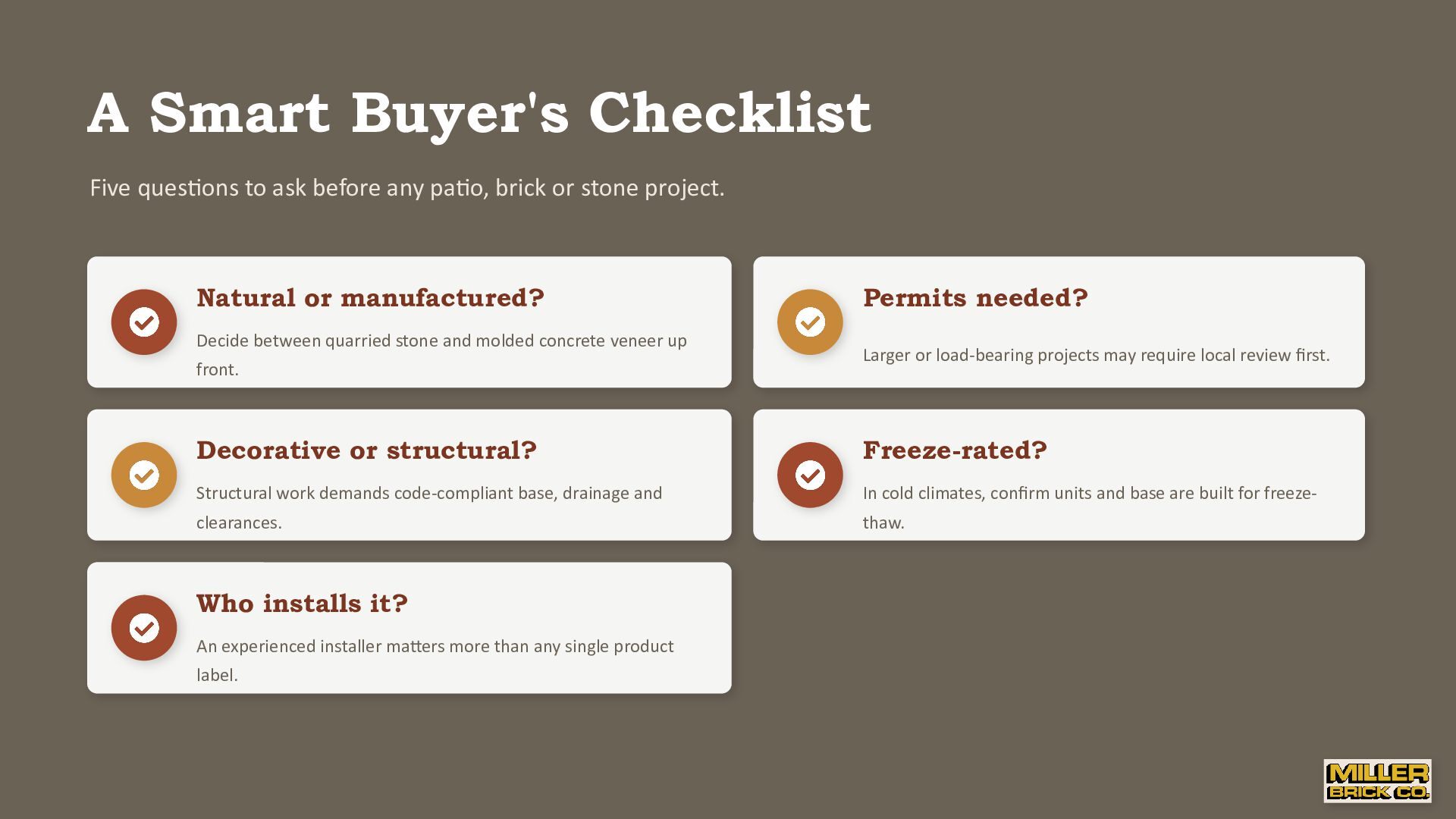
  9. A Smart Buyer's Checklist Five questions to ask before any

    patio, brick or stone project. Natural or manufactured? Decide between quarried stone and molded concrete veneer up front. Decorative or structural? Structural work demands code-compliant base, drainage and clearances. Who installs it? An experienced installer matters more than any single product label. Permits needed? Larger or load-bearing projects may require local review first. Freeze-rated? In cold climates, confirm units and base are built for freeze- thaw.
  10. MILLER BRICK STONE & BRICK SUPPLIER • EST. 1949 Rochester,

    NY Your Rochester source for patio blocks, brick & stone. Homeowner on a budget or contractor on a deadline — our design center, full inventory and door-to-door delivery keep your project moving from start to finish. START YOUR PROJECT TODAY VISIT THE BRICKYARD 734 Ridgeway Ave Rochester, NY 14615 (585) 458-7745 millerbrick.com Mon–Fri 7:30am – 5:00pm Sat 9:00am – 12:00pm