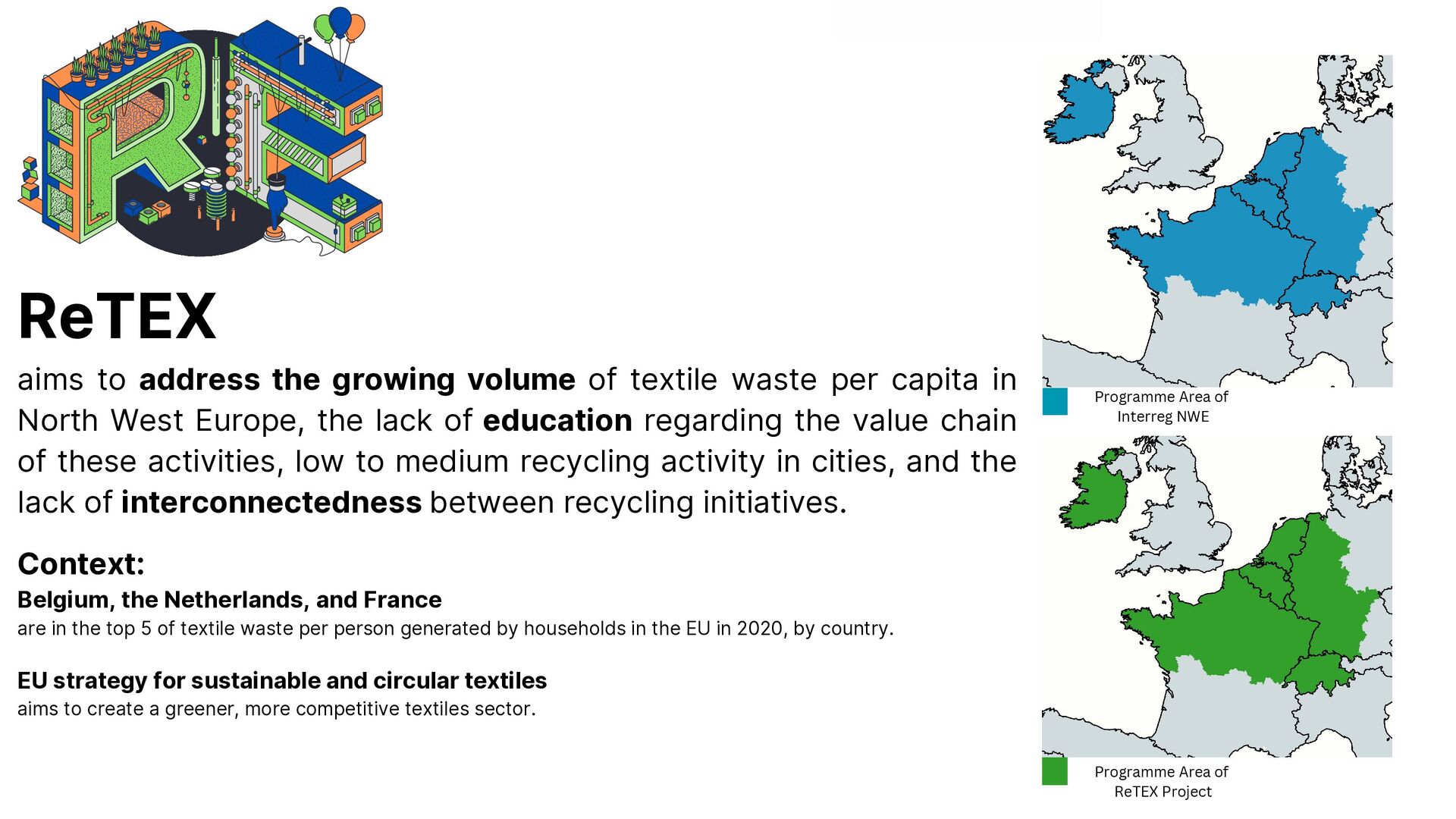
per capita in North West Europe, the lack of education regarding the value chain of these activities, low to medium recycling activity in cities, and the lack of interconnectedness between recycling initiatives. Programme Area of Interreg NWE Programme Area of ReTEX Project Context: Belgium, the Netherlands, and France are in the top 5 of textile waste per person generated by households in the EU in 2020, by country. EU strategy for sustainable and circular textiles aims to create a greener, more competitive textiles sector.
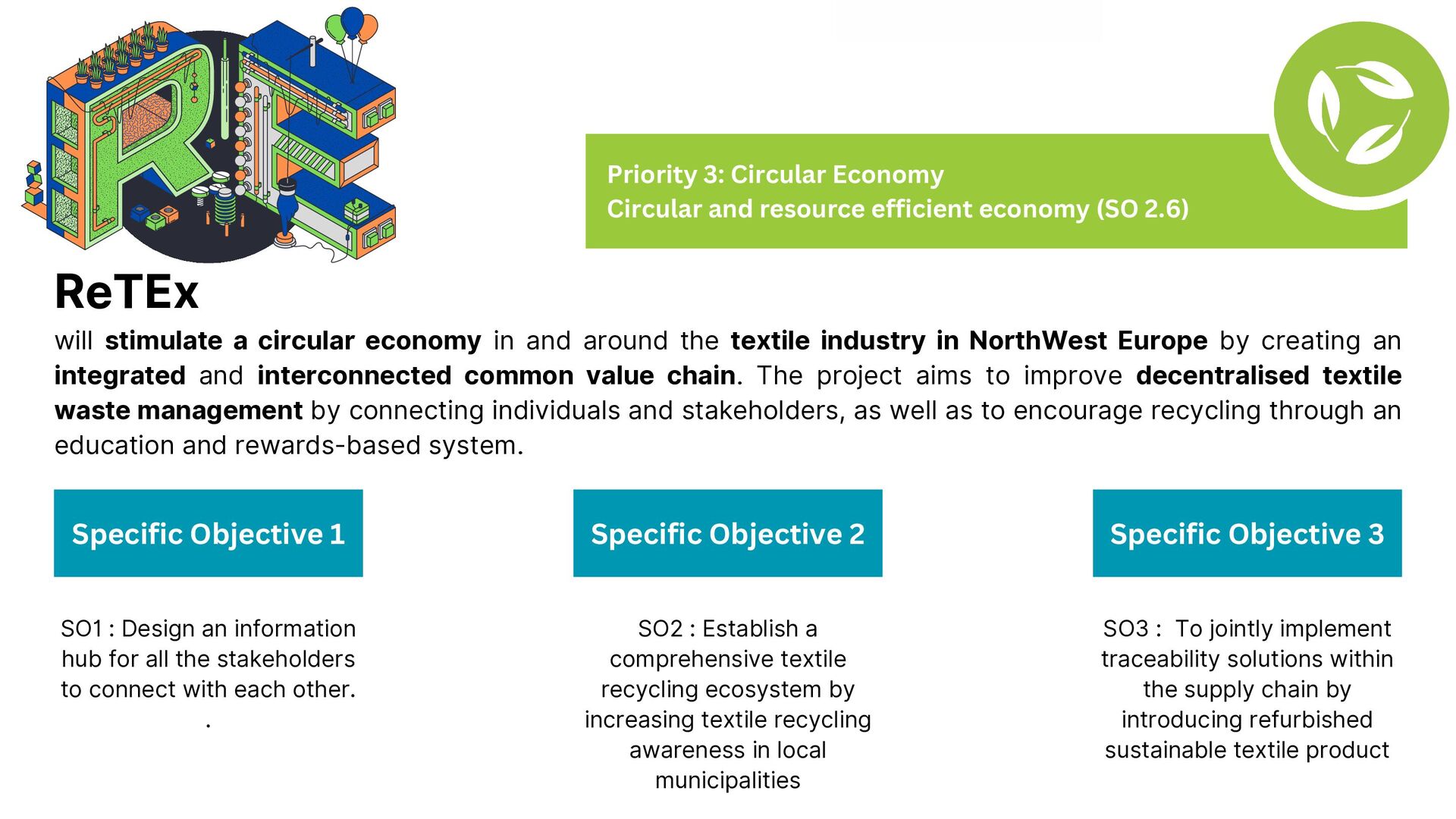
and around the textile industry in NorthWest Europe by creating an integrated and interconnected common value chain. The project aims to improve decentralised textile waste management by connecting individuals and stakeholders, as well as to encourage recycling through an education and rewards-based system. Specific Objective 2 Specific Objective 3 SO1 : Design an information hub for all the stakeholders to connect with each other. . SO2 : Establish a comprehensive textile recycling ecosystem by increasing textile recycling awareness in local municipalities SO3 : To jointly implement traceability solutions within the supply chain by introducing refurbished sustainable textile product Priority 3: Circular Economy Circular and resource efficient economy (SO 2.6)
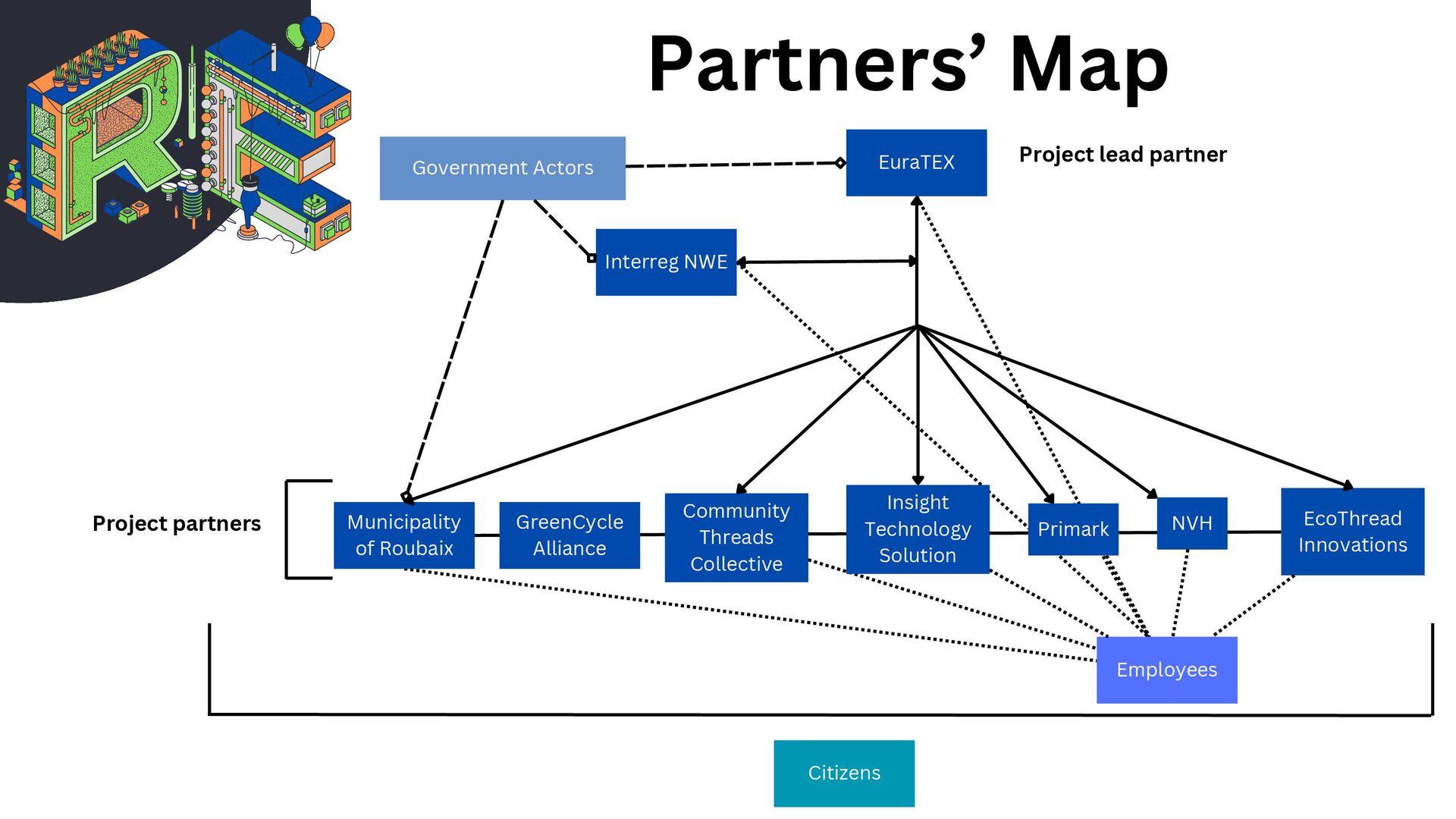
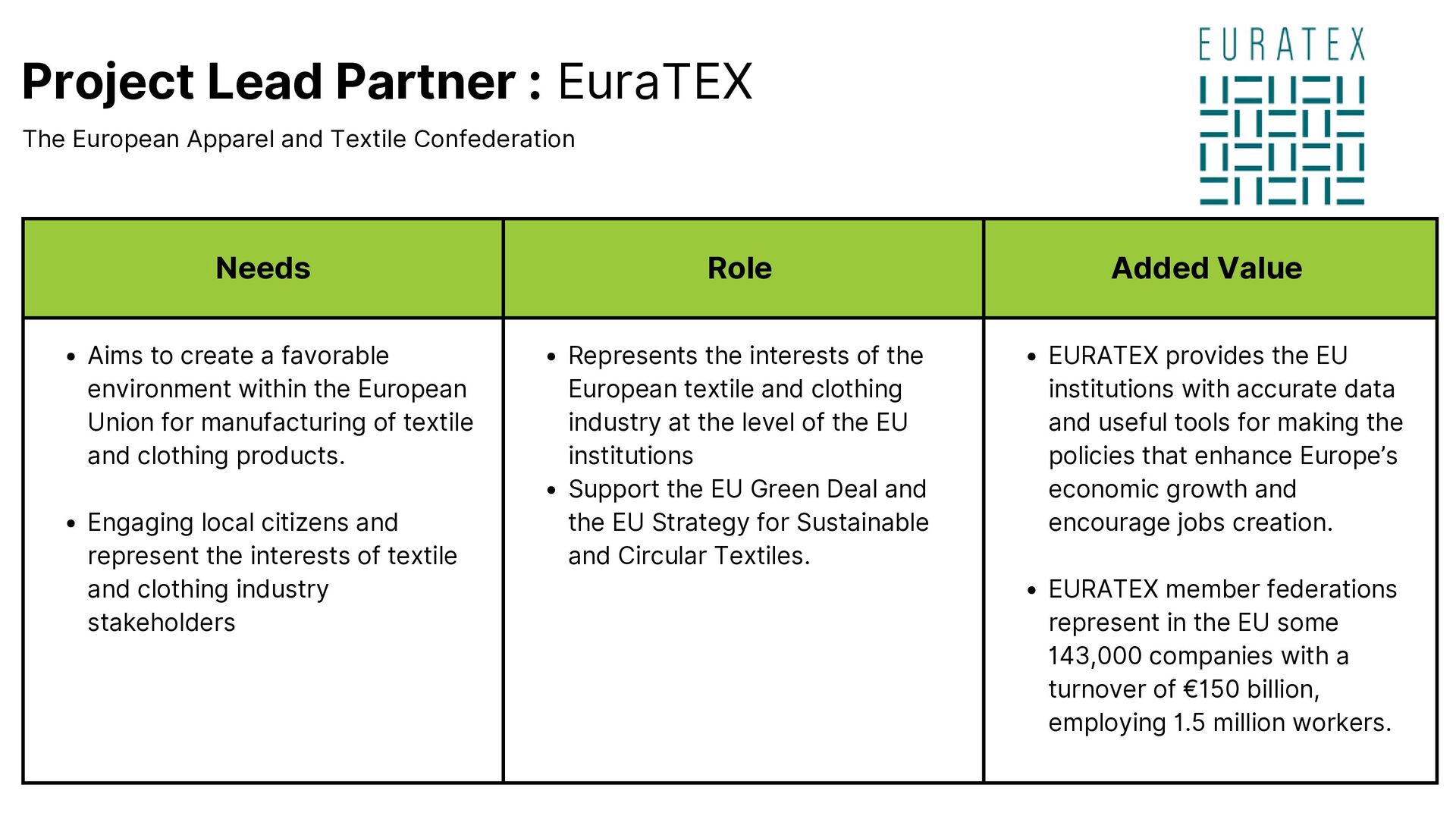
within the European Union for manufacturing of textile and clothing products. Engaging local citizens and represent the interests of textile and clothing industry stakeholders Represents the interests of the European textile and clothing industry at the level of the EU institutions Support the EU Green Deal and the EU Strategy for Sustainable and Circular Textiles. EURATEX provides the EU institutions with accurate data and useful tools for making the policies that enhance Europe’s economic growth and encourage jobs creation. EURATEX member federations represent in the EU some 143,000 companies with a turnover of €150 billion, employing 1.5 million workers. Project Lead Partner : EuraTEX The European Apparel and Textile Confederation
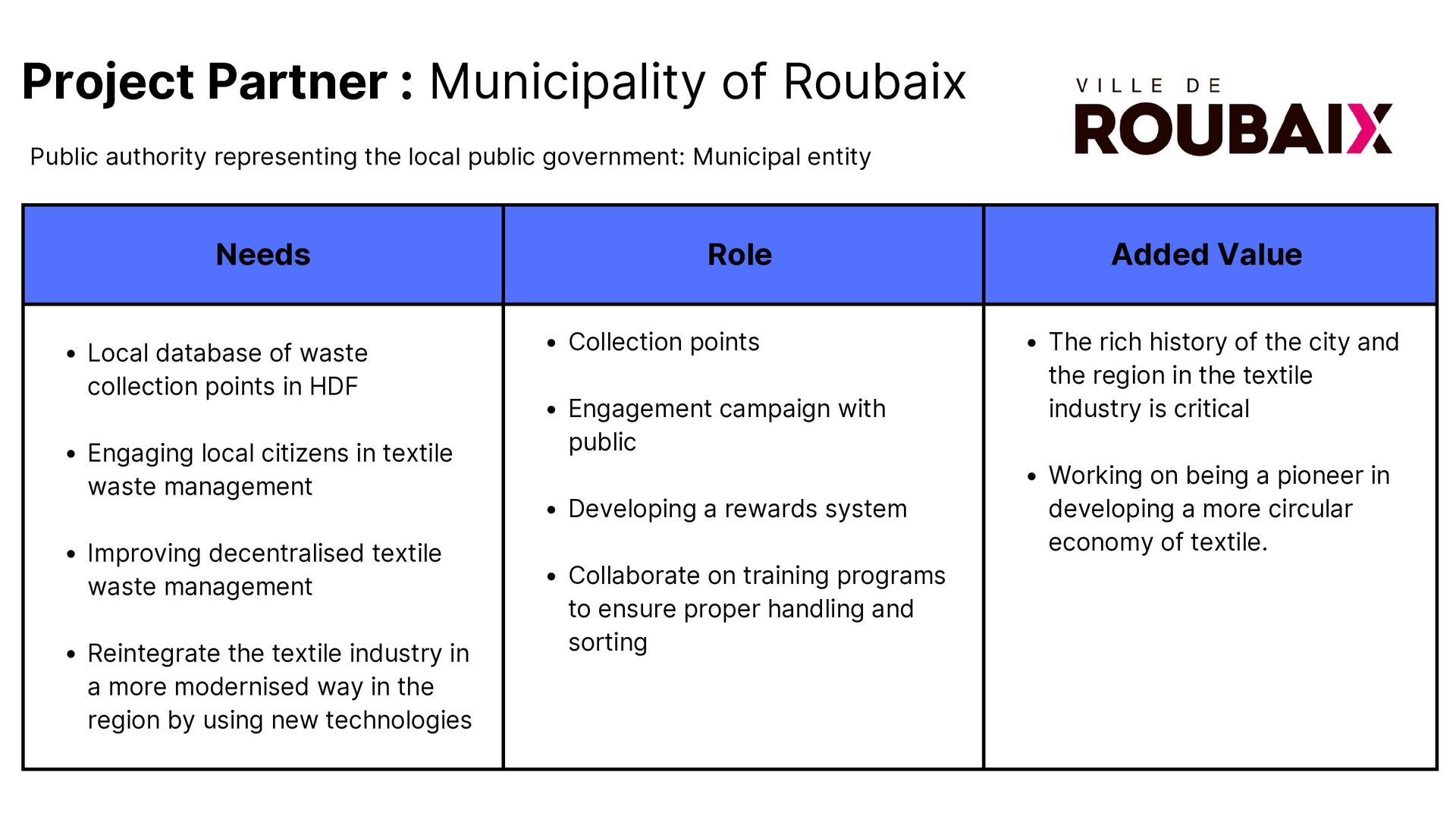
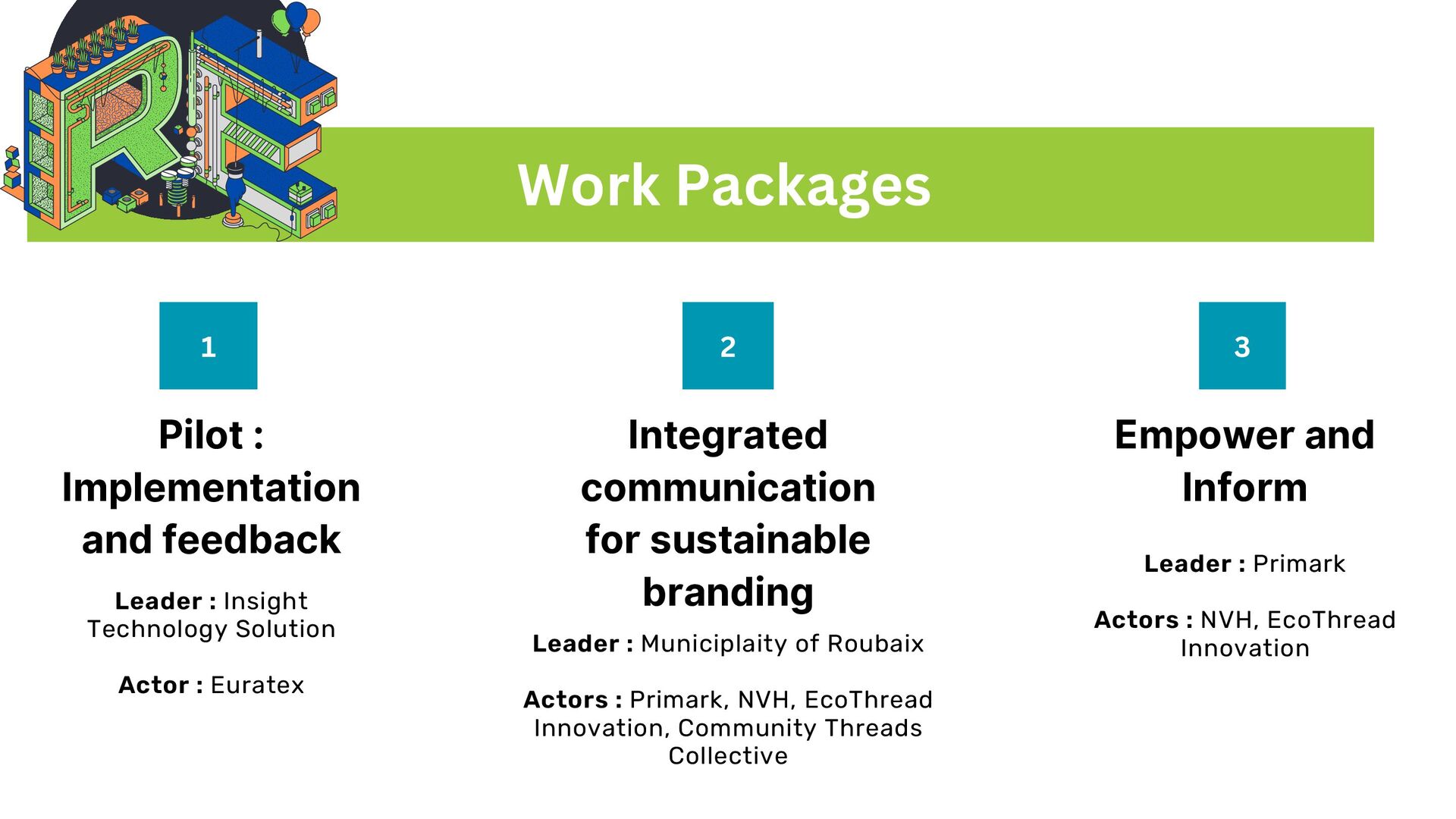
in HDF Engaging local citizens in textile waste management Improving decentralised textile waste management Reintegrate the textile industry in a more modernised way in the region by using new technologies Collection points Engagement campaign with public Developing a rewards system Collaborate on training programs to ensure proper handling and sorting The rich history of the city and the region in the textile industry is critical Working on being a pioneer in developing a more circular economy of textile. Project Partner : Municipality of Roubaix Public authority representing the local public government: Municipal entity
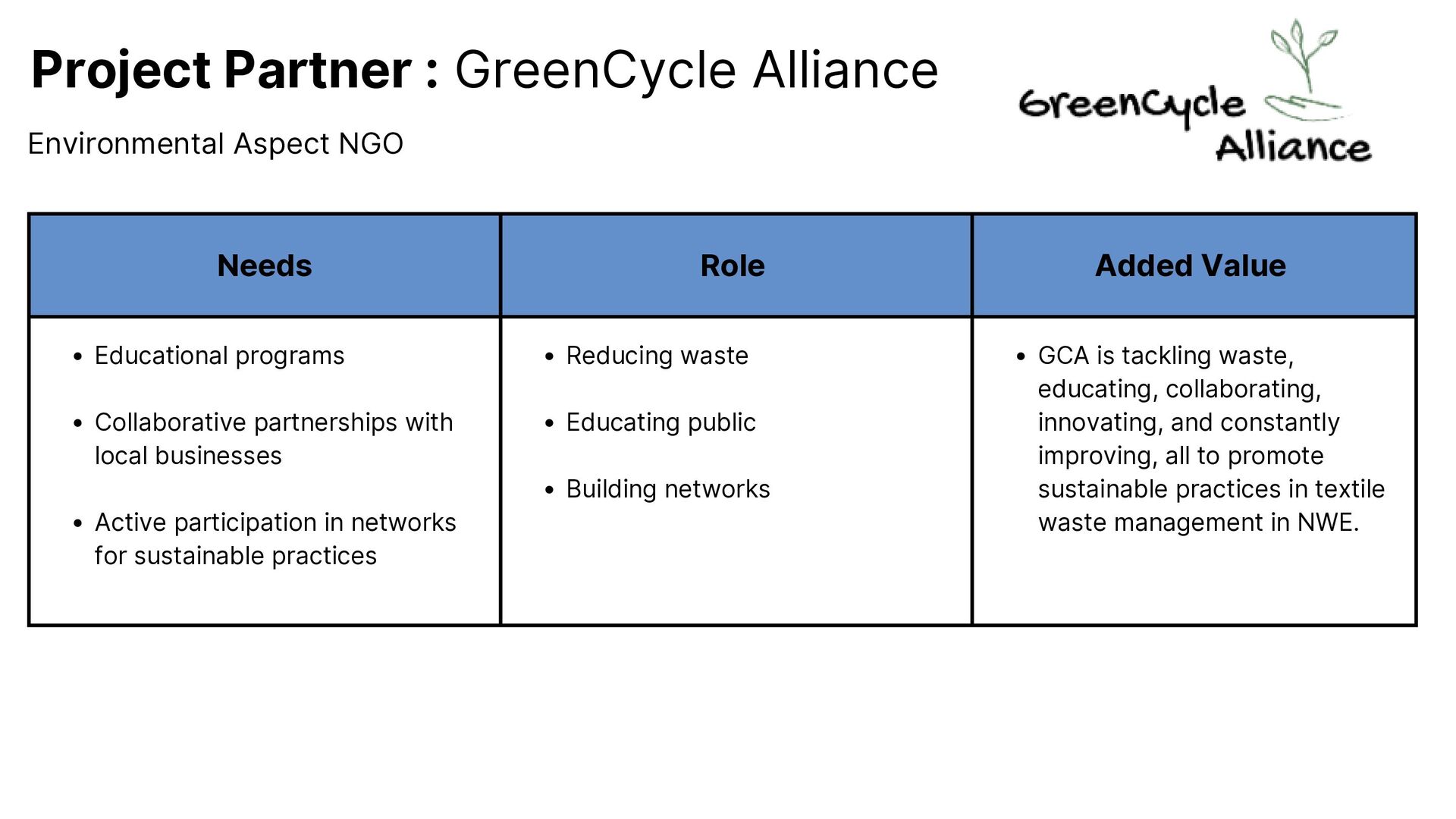
businesses Active participation in networks for sustainable practices Reducing waste Educating public Building networks GCA is tackling waste, educating, collaborating, innovating, and constantly improving, all to promote sustainable practices in textile waste management in NWE. Project Partner : GreenCycle Alliance Environmental Aspect NGO
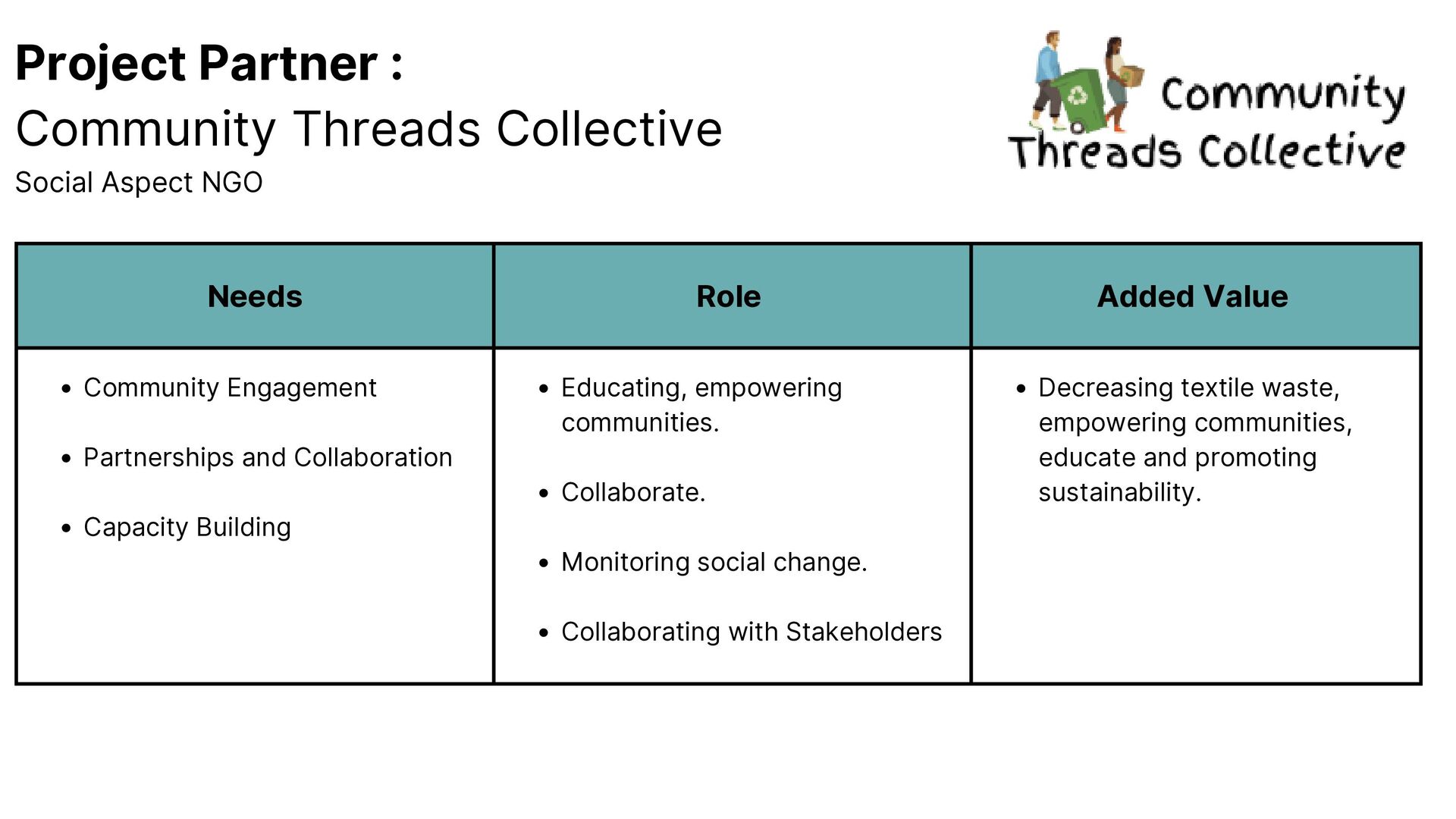
Building Educating, empowering communities. Collaborate. Monitoring social change. Collaborating with Stakeholders Decreasing textile waste, empowering communities, educate and promoting sustainability. Project Partner : Community Threads Collective Social Aspect NGO
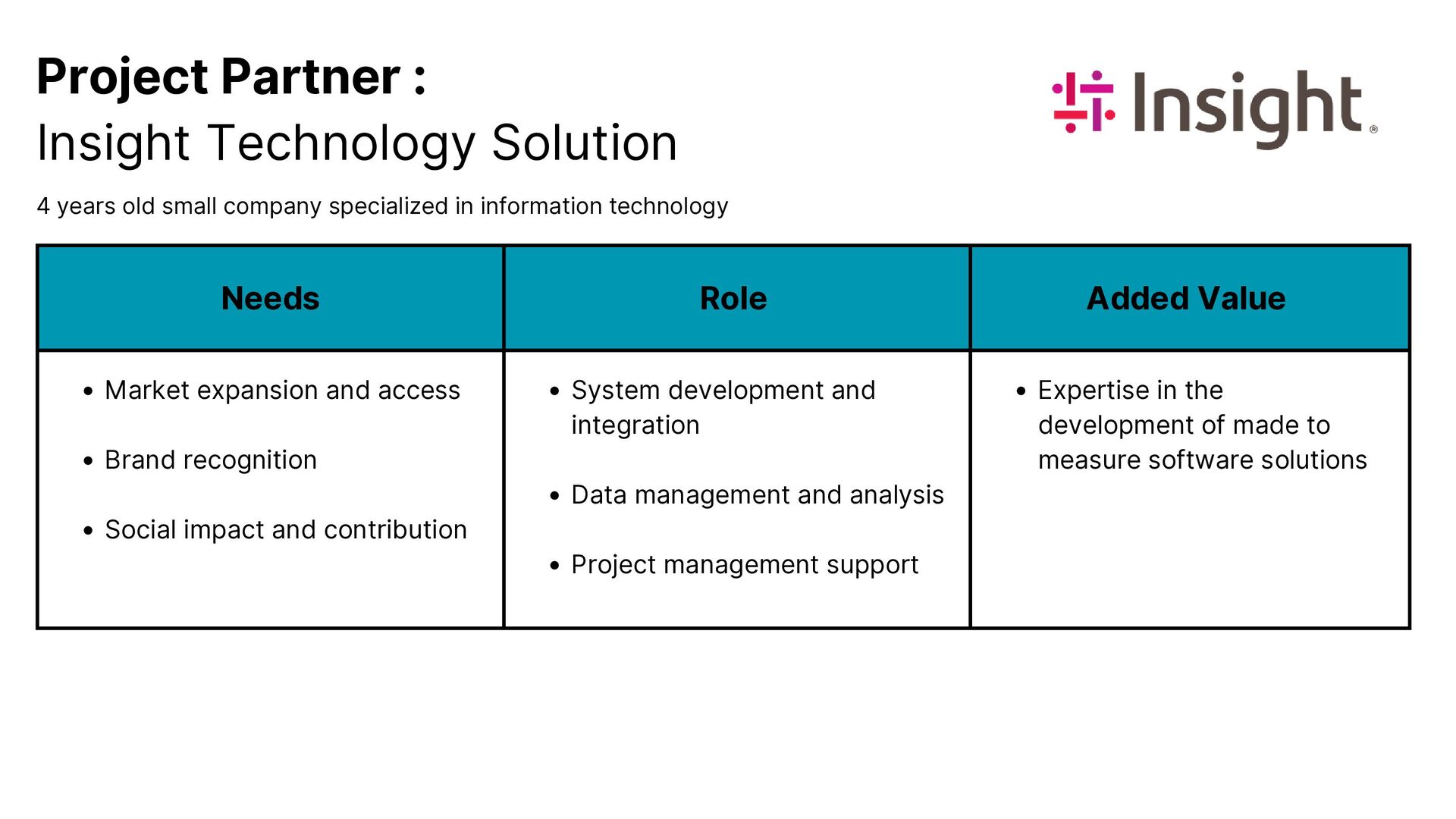
Social impact and contribution System development and integration Data management and analysis Project management support Expertise in the development of made to measure software solutions Project Partner : Insight Technology Solution 4 years old small company specialized in information technology
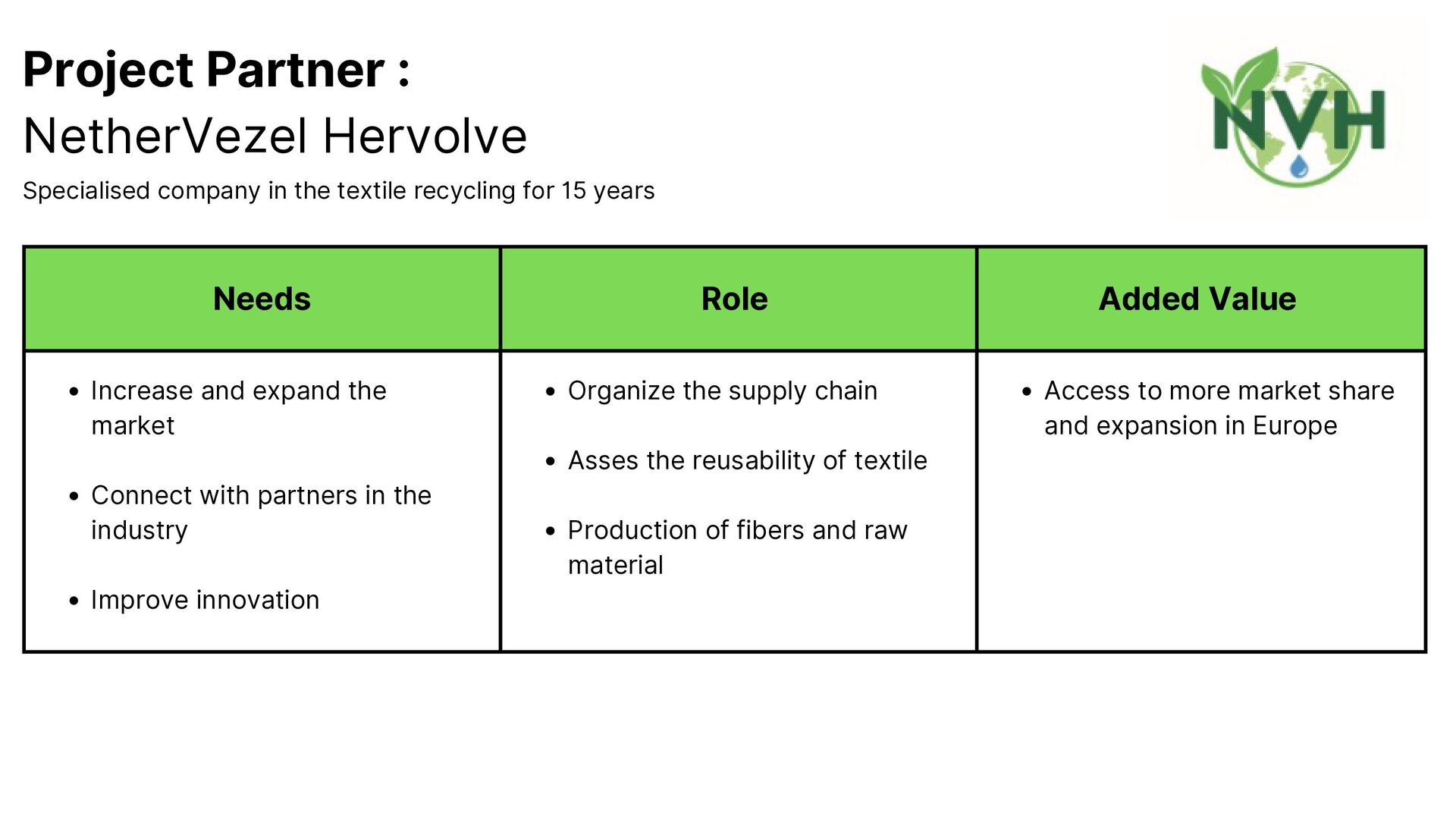
with partners in the industry Improve innovation Organize the supply chain Asses the reusability of textile Production of fibers and raw material Access to more market share and expansion in Europe Project Partner : NetherVezel Hervolve Specialised company in the textile recycling for 15 years
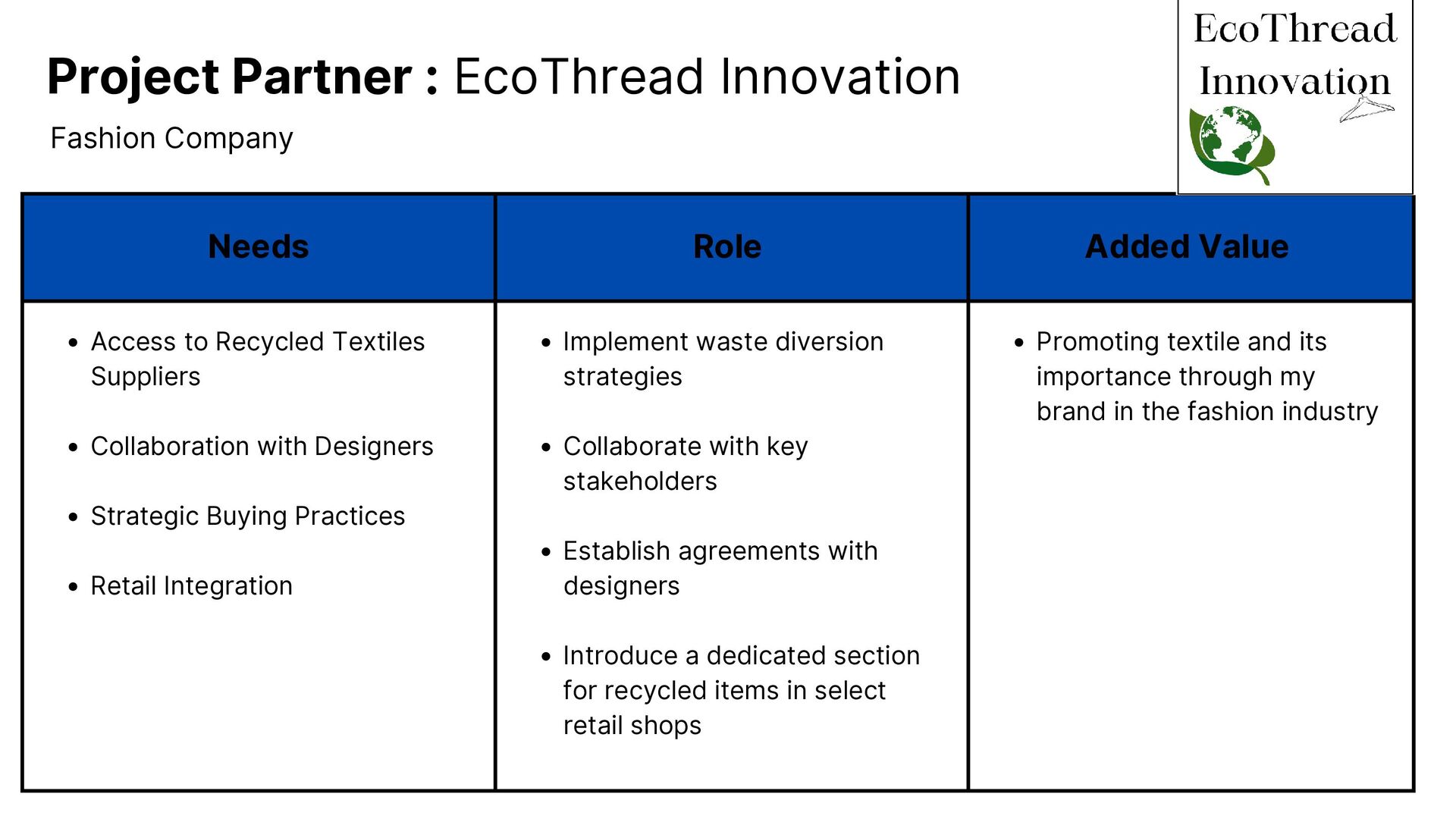
with Designers Strategic Buying Practices Retail Integration Implement waste diversion strategies Collaborate with key stakeholders Establish agreements with designers Introduce a dedicated section for recycled items in select retail shops Promoting textile and its importance through my brand in the fashion industry Project Partner : EcoThread Innovation Fashion Company
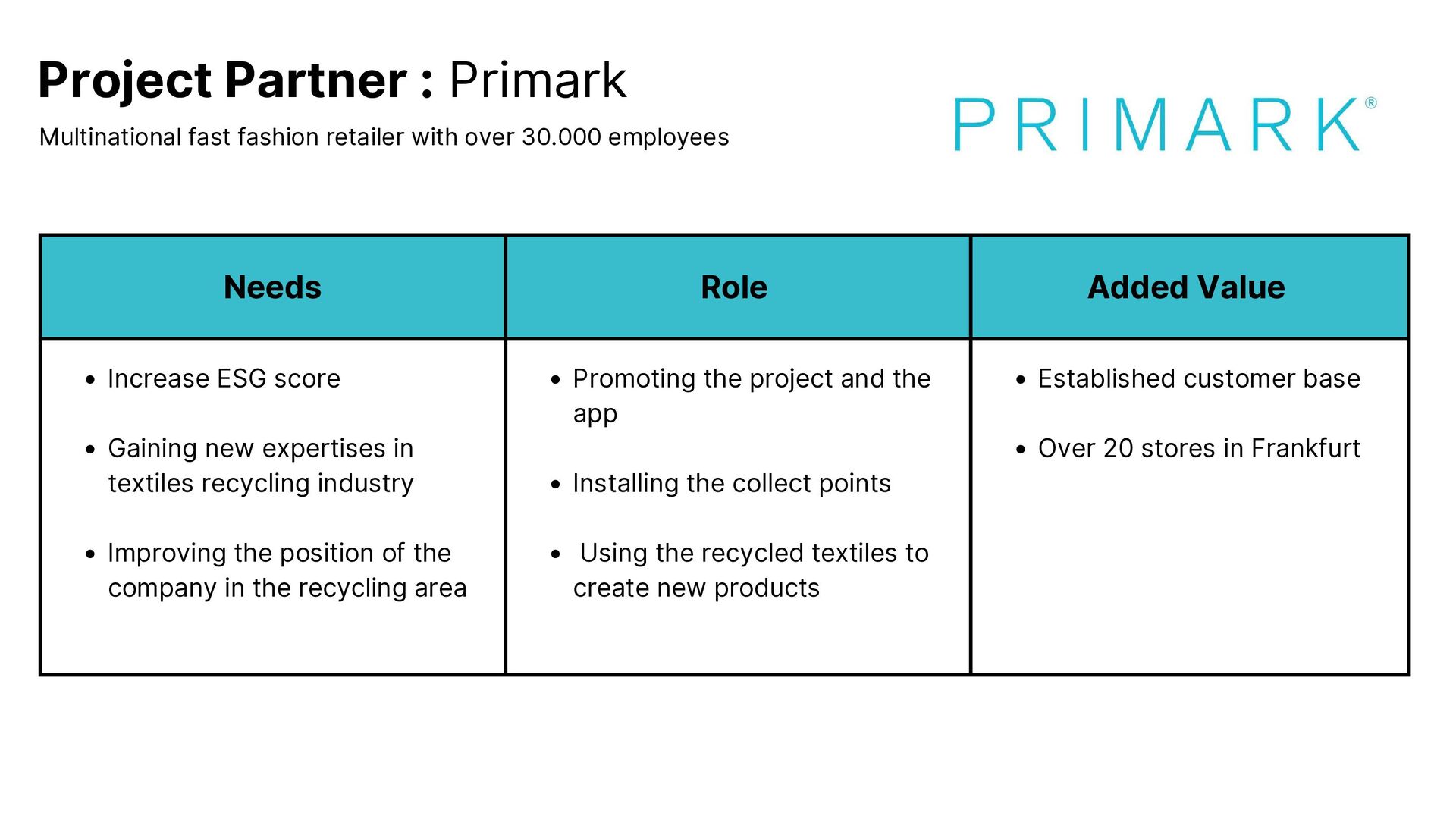
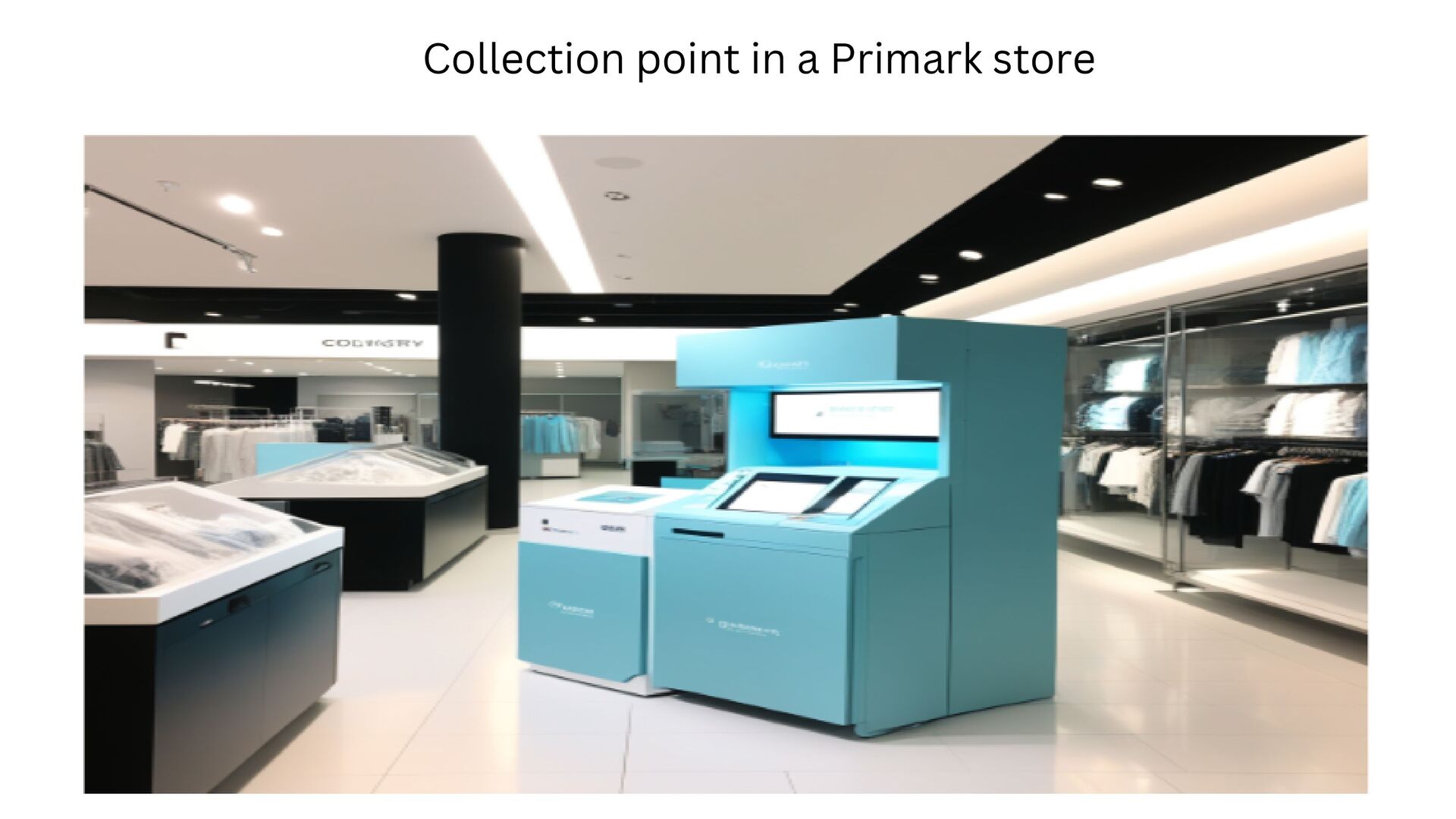
in textiles recycling industry Improving the position of the company in the recycling area Promoting the project and the app Installing the collect points Using the recycled textiles to create new products Established customer base Over 20 stores in Frankfurt Project Partner : Primark Multinational fast fashion retailer with over 30.000 employees
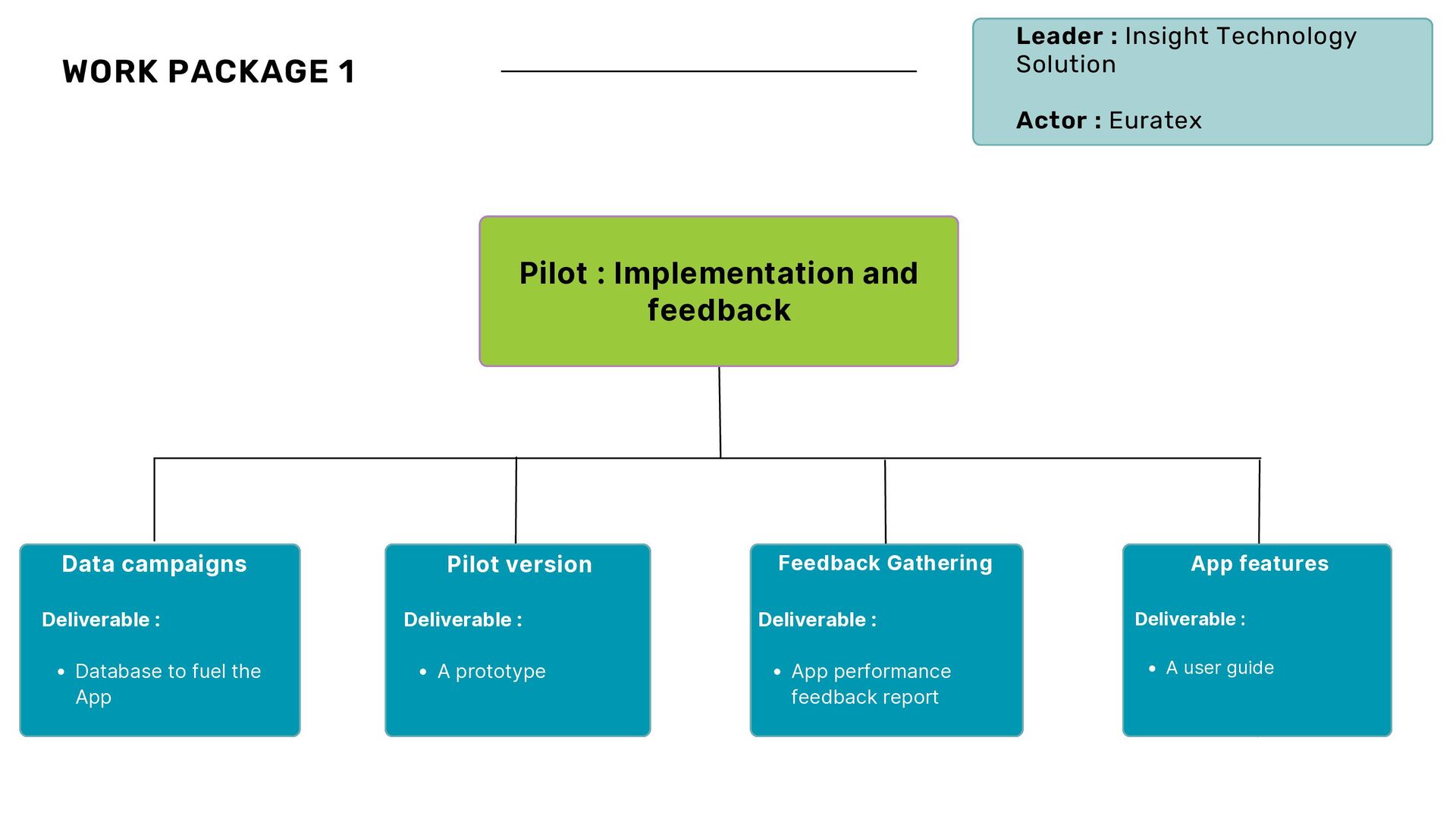
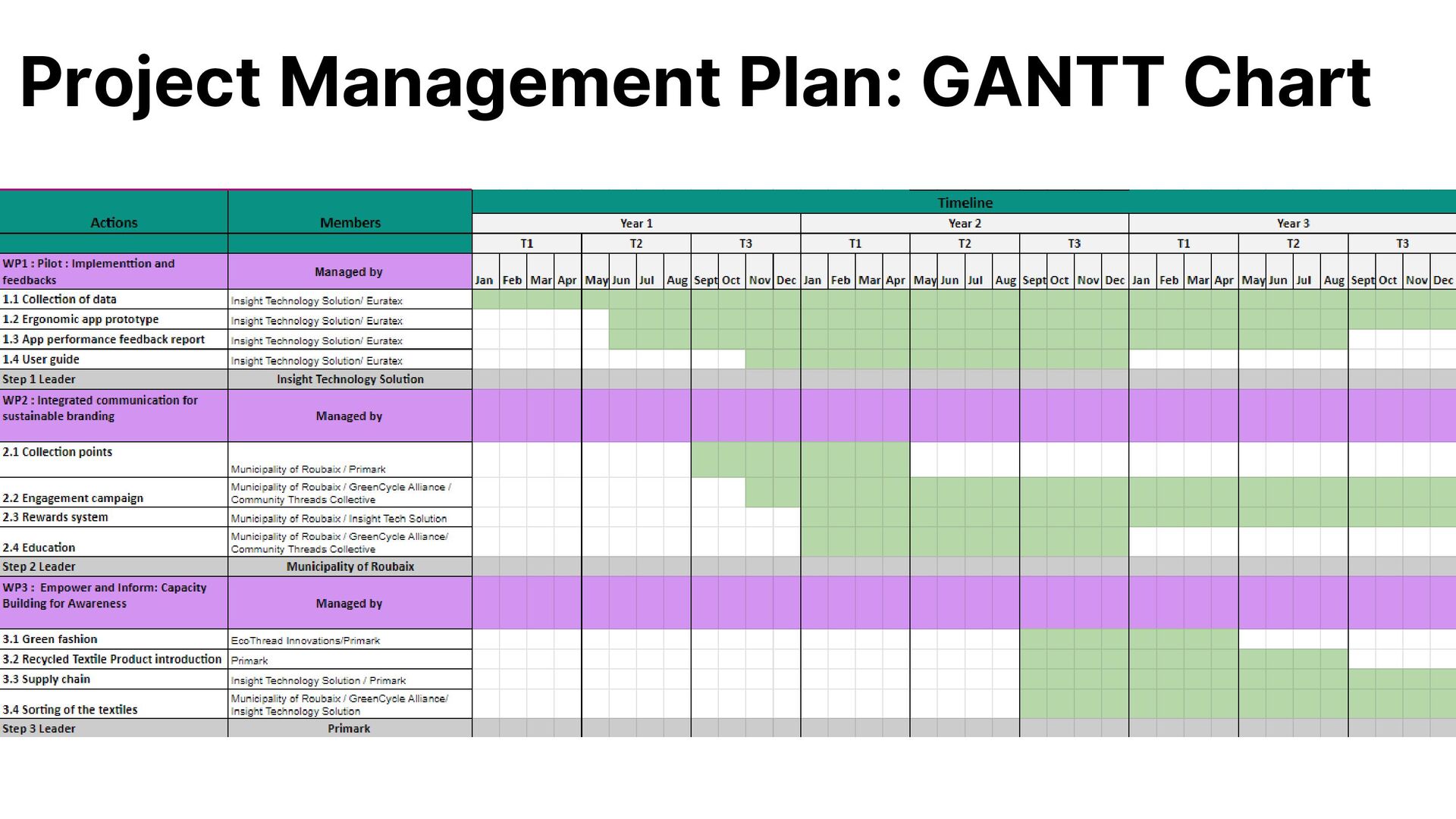
Deliverable : Database to fuel the App Pilot version Deliverable : A prototype Feedback Gathering Deliverable : App performance feedback report Leader : Insight Technology Solution Actor : Euratex App features Deliverable : A user guide
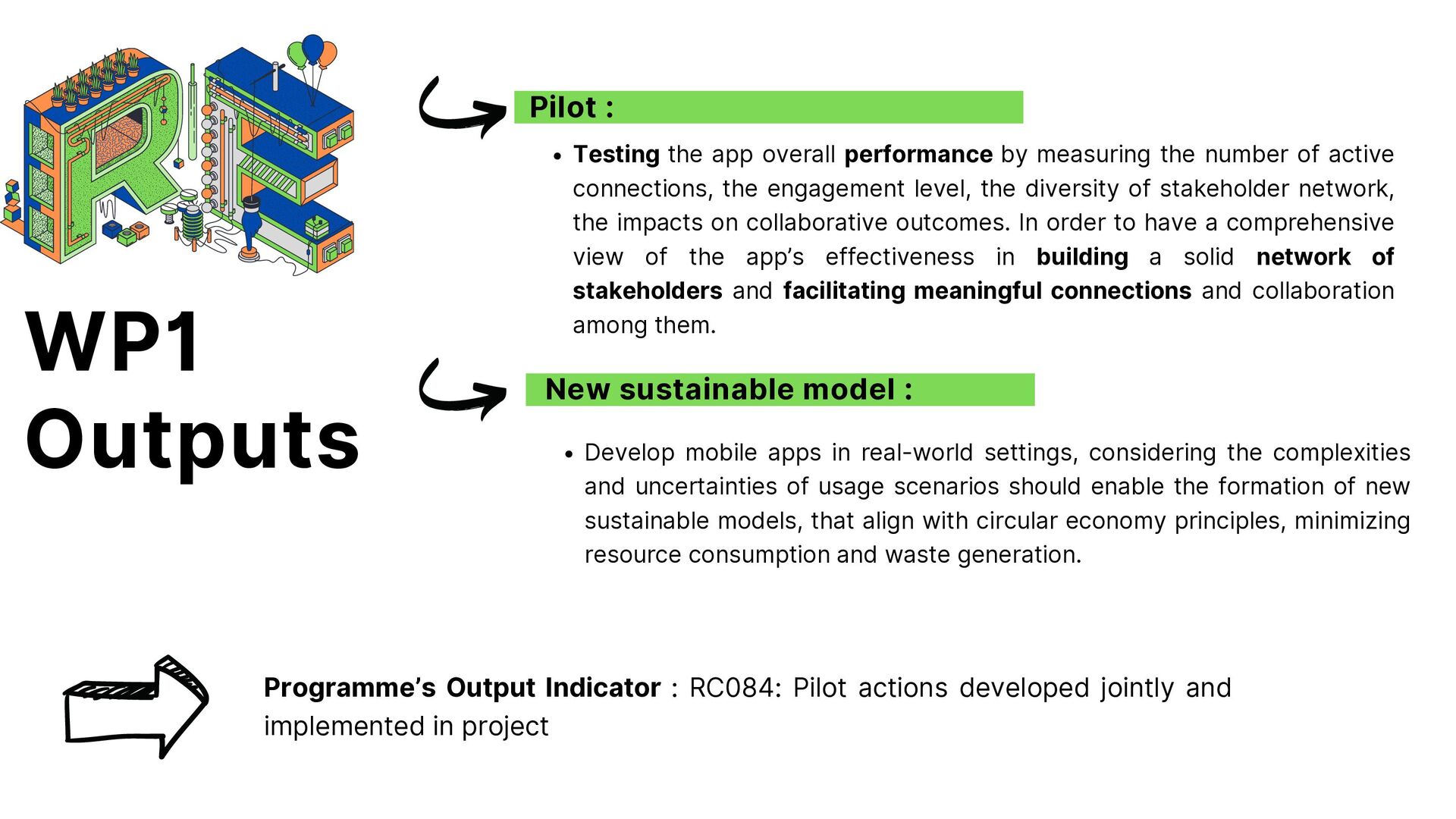
measuring the number of active connections, the engagement level, the diversity of stakeholder network, the impacts on collaborative outcomes. In order to have a comprehensive view of the app’s effectiveness in building a solid network of stakeholders and facilitating meaningful connections and collaboration among them. New sustainable model : Develop mobile apps in real-world settings, considering the complexities and uncertainties of usage scenarios should enable the formation of new sustainable models, that align with circular economy principles, minimizing resource consumption and waste generation. Programme’s Output Indicator : RC084: Pilot actions developed jointly and implemented in project
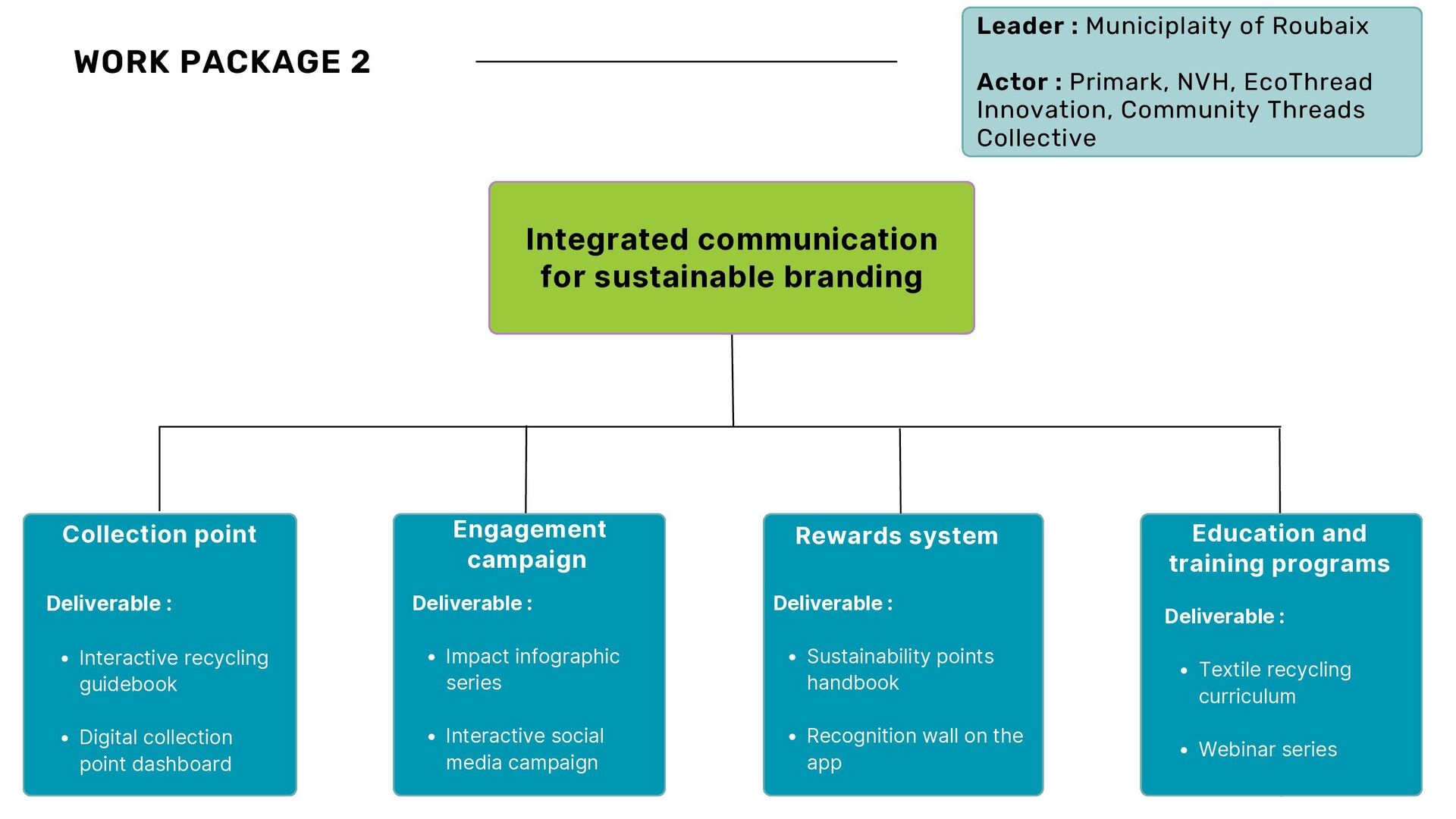
Deliverable : Interactive recycling guidebook Digital collection point dashboard Engagement campaign Deliverable : Impact infographic series Interactive social media campaign Rewards system Deliverable : Sustainability points handbook Recognition wall on the app Leader : Municiplaity of Roubaix Actor : Primark, NVH, EcoThread Innovation, Community Threads Collective Education and training programs Deliverable : Textile recycling curriculum Webinar series
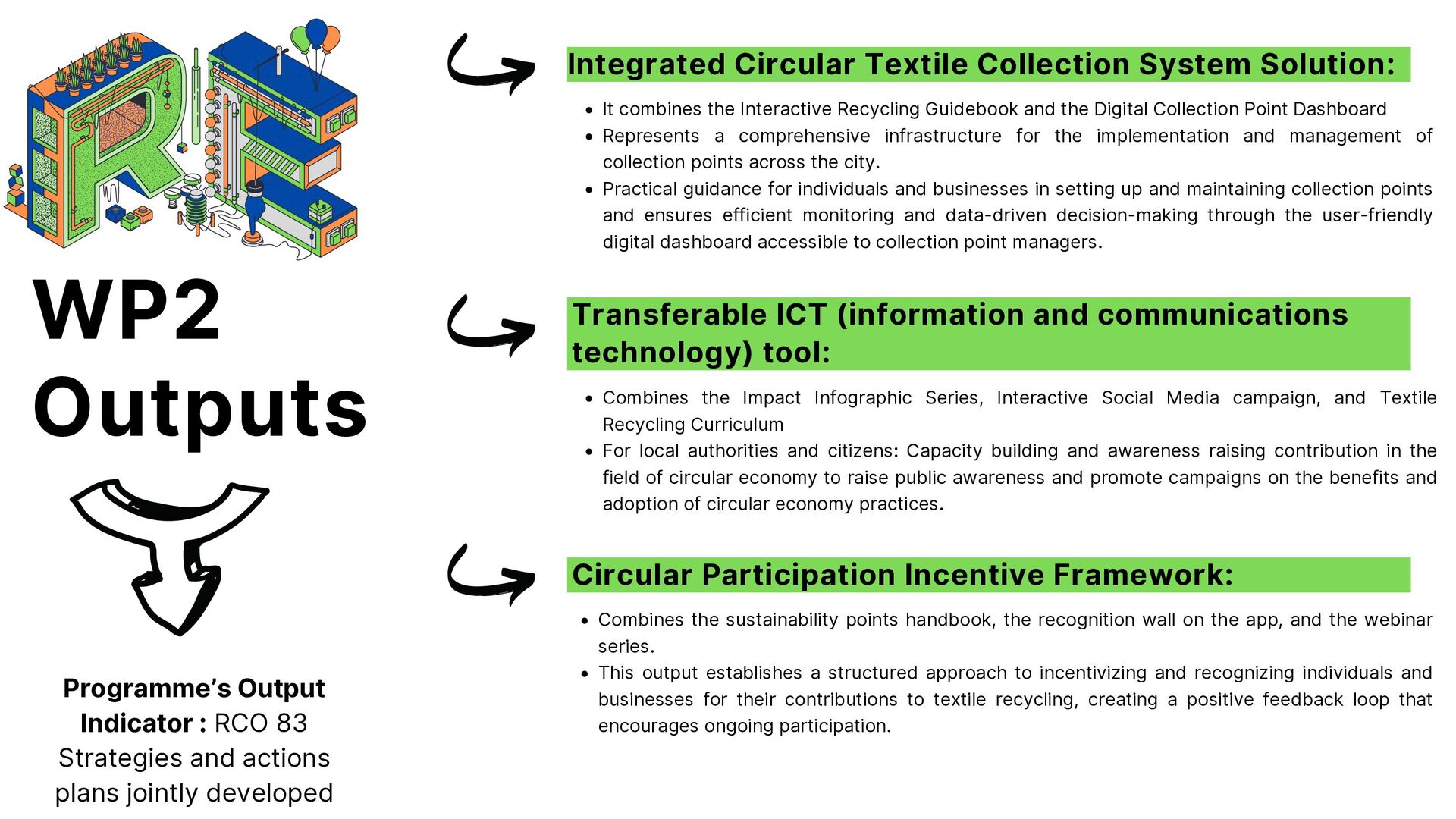
the Interactive Recycling Guidebook and the Digital Collection Point Dashboard Represents a comprehensive infrastructure for the implementation and management of collection points across the city. Practical guidance for individuals and businesses in setting up and maintaining collection points and ensures efficient monitoring and data-driven decision-making through the user-friendly digital dashboard accessible to collection point managers. Transferable ICT (information and communications technology) tool: Combines the Impact Infographic Series, Interactive Social Media campaign, and Textile Recycling Curriculum For local authorities and citizens: Capacity building and awareness raising contribution in the field of circular economy to raise public awareness and promote campaigns on the benefits and adoption of circular economy practices. Circular Participation Incentive Framework: Combines the sustainability points handbook, the recognition wall on the app, and the webinar series. This output establishes a structured approach to incentivizing and recognizing individuals and businesses for their contributions to textile recycling, creating a positive feedback loop that encourages ongoing participation. Programme’s Output Indicator : RCO 83 Strategies and actions plans jointly developed
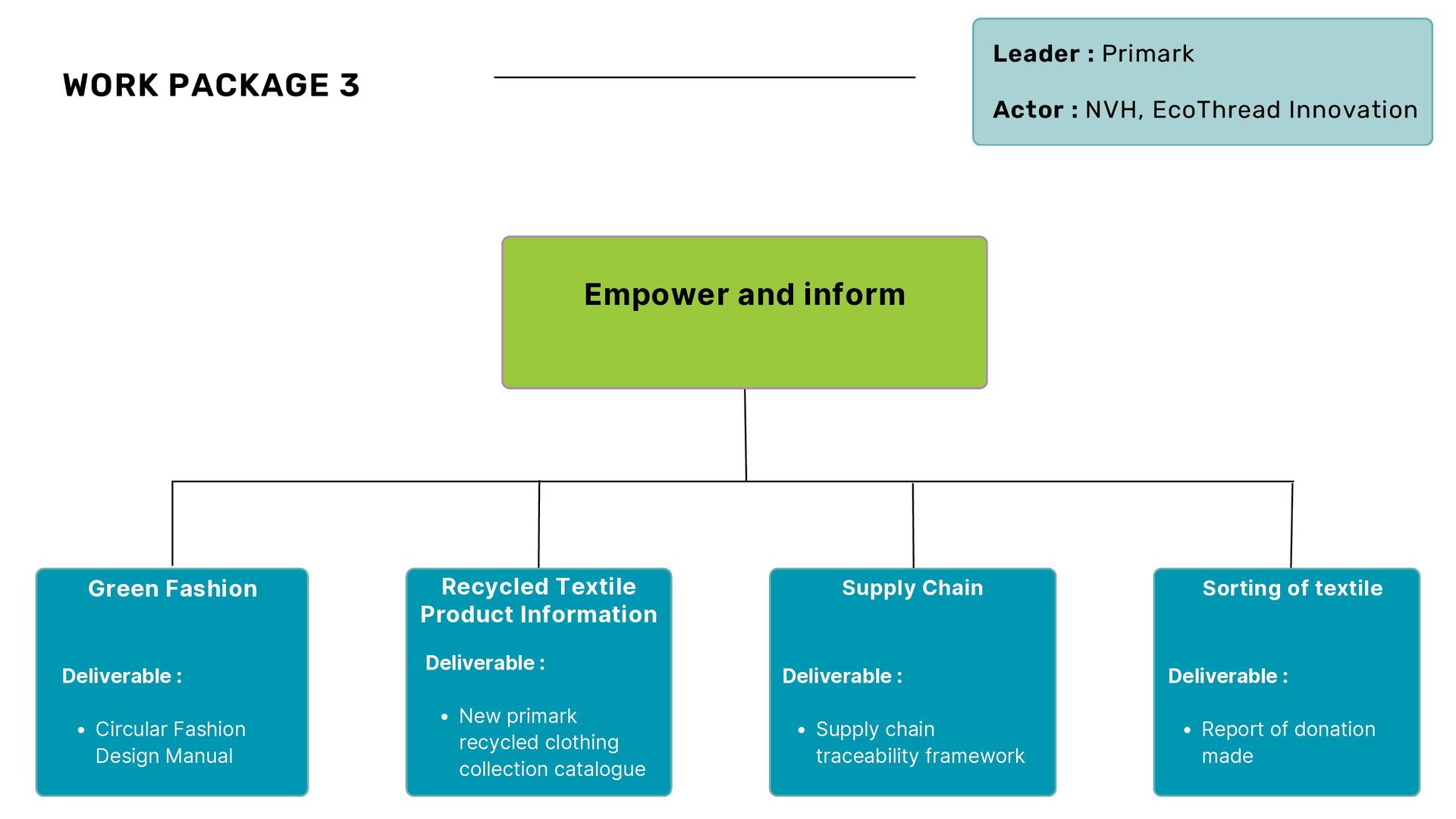
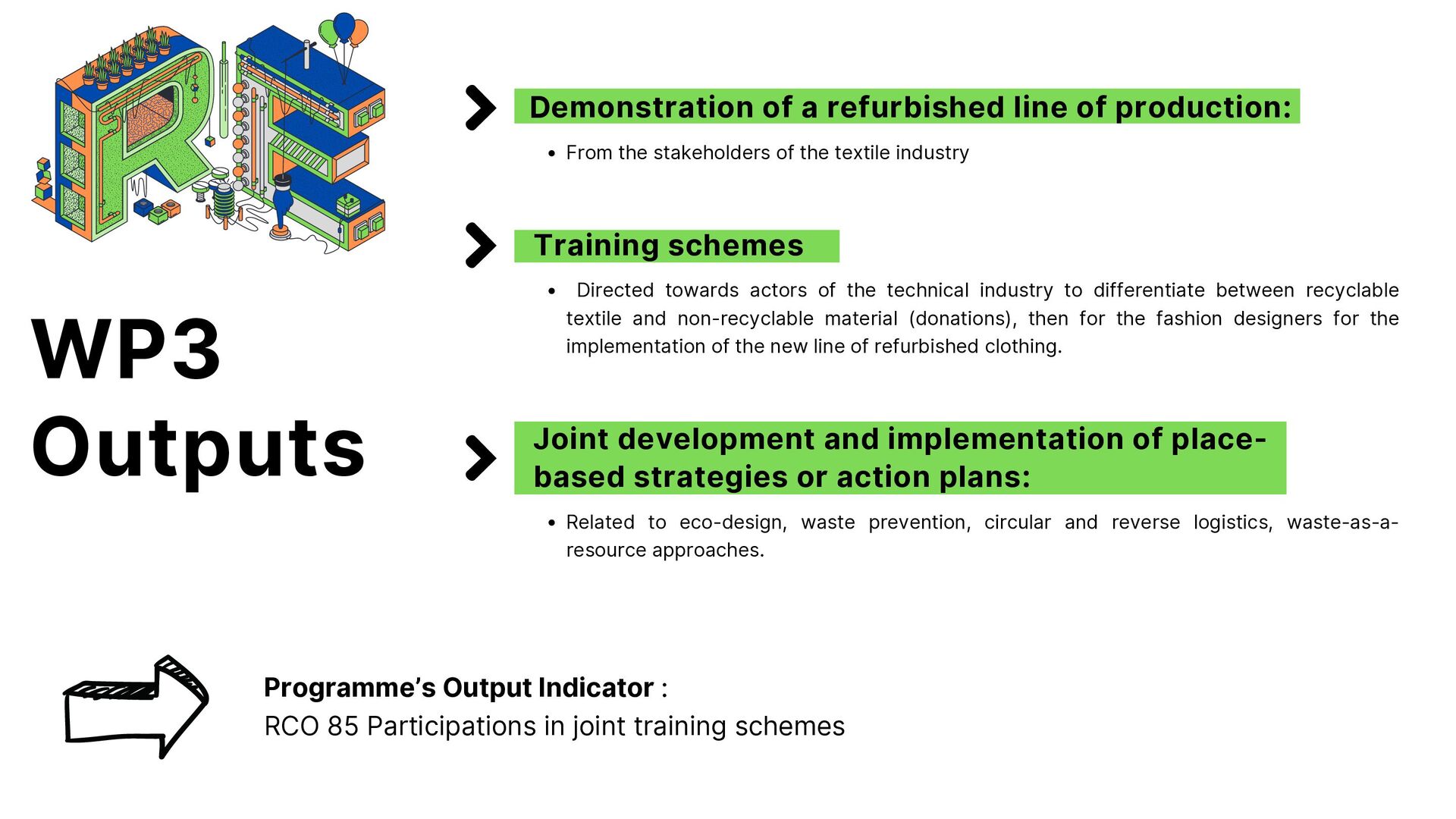
the stakeholders of the textile industry Training schemes Directed towards actors of the technical industry to differentiate between recyclable textile and non-recyclable material (donations), then for the fashion designers for the implementation of the new line of refurbished clothing. Programme’s Output Indicator : RCO 85 Participations in joint training schemes Joint development and implementation of place- based strategies or action plans: Related to eco-design, waste prevention, circular and reverse logistics, waste-as-a- resource approaches.
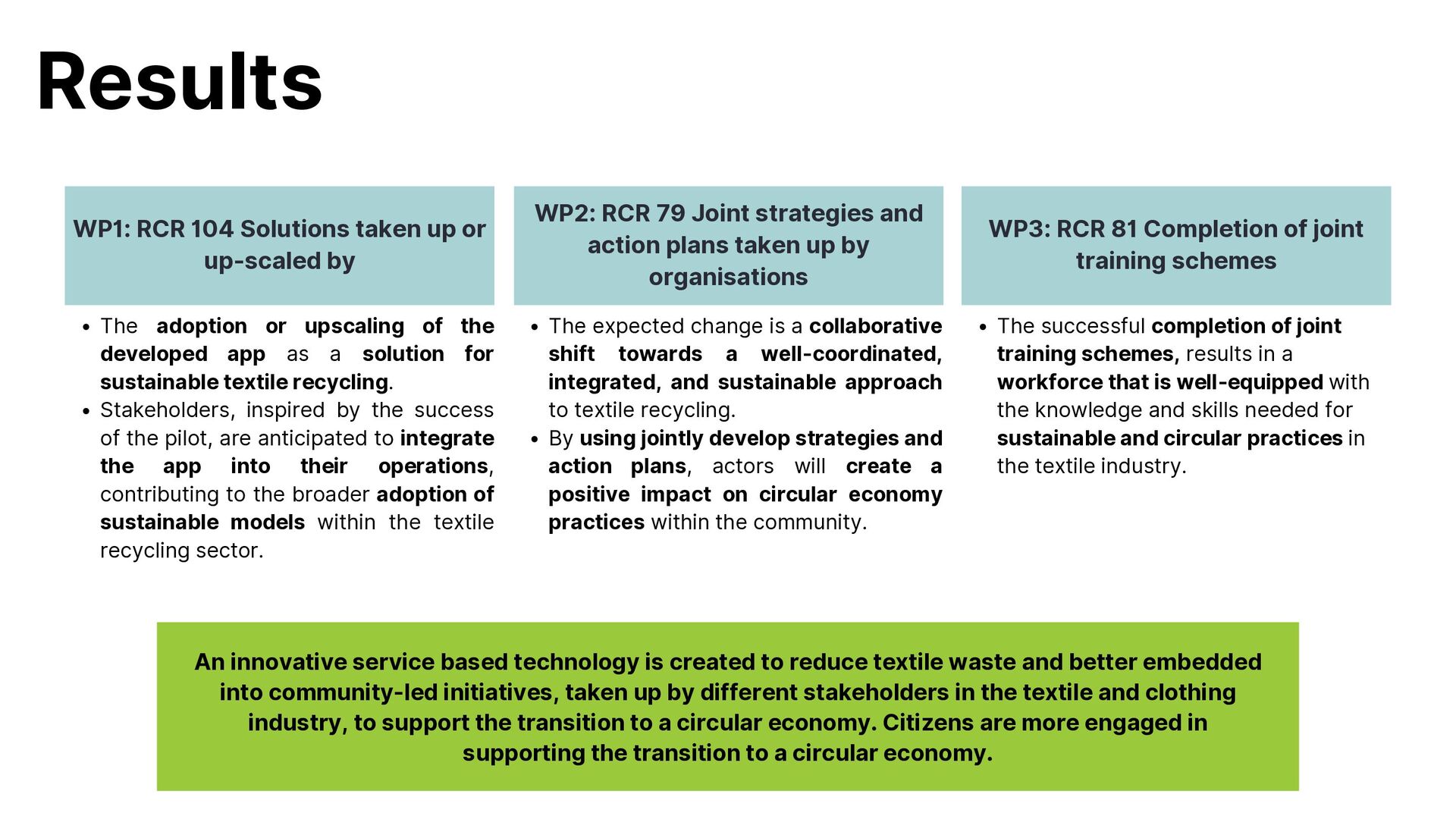
RCR 79 Joint strategies and action plans taken up by organisations WP3: RCR 81 Completion of joint training schemes The successful completion of joint training schemes, results in a workforce that is well-equipped with the knowledge and skills needed for sustainable and circular practices in the textile industry. The expected change is a collaborative shift towards a well-coordinated, integrated, and sustainable approach to textile recycling. By using jointly develop strategies and action plans, actors will create a positive impact on circular economy practices within the community. The adoption or upscaling of the developed app as a solution for sustainable textile recycling. Stakeholders, inspired by the success of the pilot, are anticipated to integrate the app into their operations, contributing to the broader adoption of sustainable models within the textile recycling sector. An innovative service based technology is created to reduce textile waste and better embedded into community-led initiatives, taken up by different stakeholders in the textile and clothing industry, to support the transition to a circular economy. Citizens are more engaged in supporting the transition to a circular economy. Results
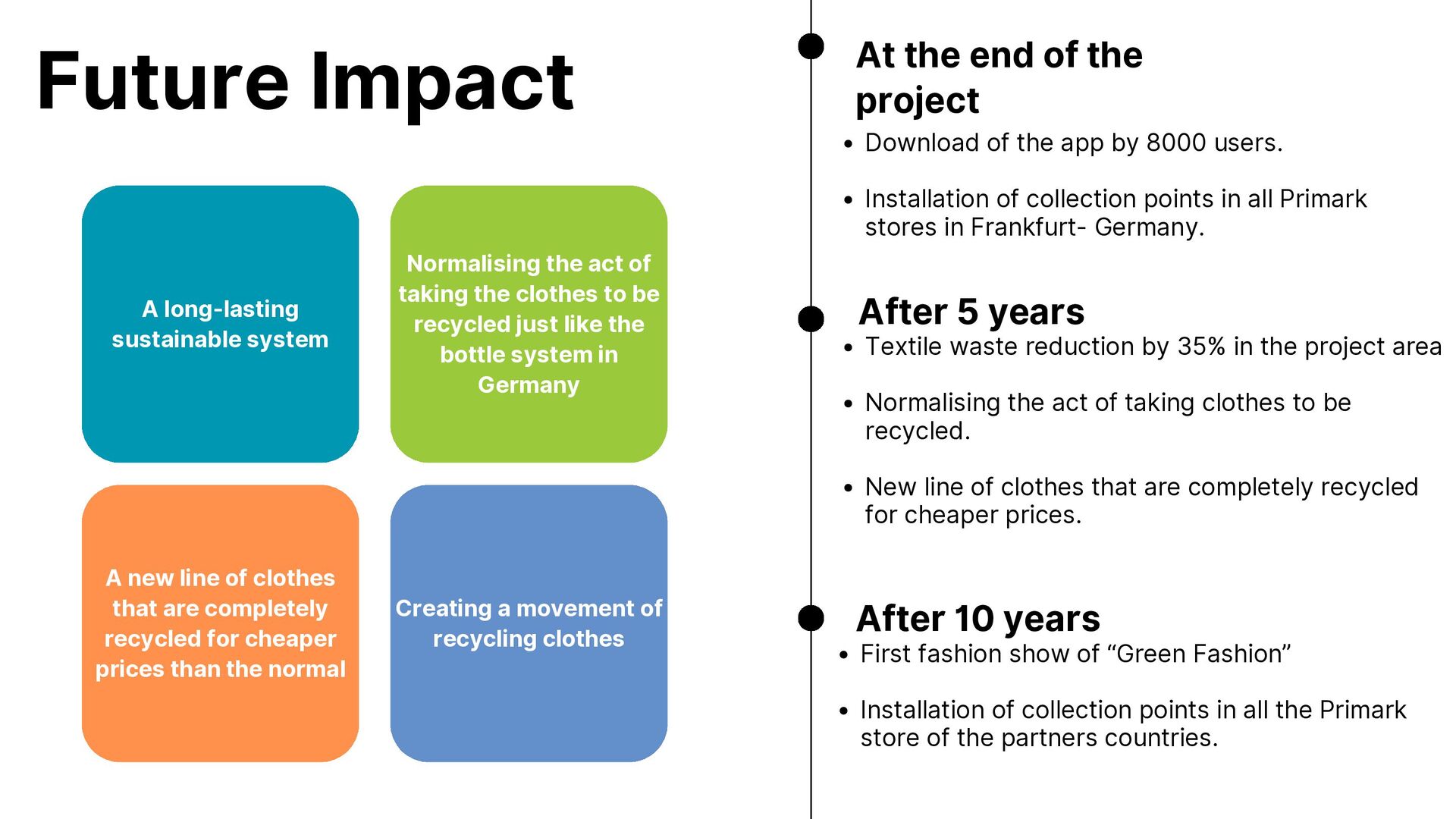
taking the clothes to be recycled just like the bottle system in Germany A new line of clothes that are completely recycled for cheaper prices than the normal Creating a movement of recycling clothes At the end of the project Download of the app by 8000 users. Installation of collection points in all Primark stores in Frankfurt- Germany. After 5 years Textile waste reduction by 35% in the project area Normalising the act of taking clothes to be recycled. New line of clothes that are completely recycled for cheaper prices. After 10 years First fashion show of “Green Fashion” Installation of collection points in all the Primark store of the partners countries.


 cassininazir
 jonoalderson
 mza
 stephaniewalter
 smashingmag
 mraible
 inesmontani
 gurzu
 tanoku
 brettharned
 lauravandoore
 moore