Upgrade to Pro — share decks privately, control downloads, hide ads and more …

Monolith -> Microservices, A Guided Adventure

Monolith -> Microservices, A Guided Adventure

Avatar for Mike Gehard

Mike Gehard

July 27, 2016

More Decks by Mike Gehard

Other Decks in Technology

Transcript

  1. ABOUT ME ▸ Working with clients to migrate legacy monoliths

    -> microservices ▸ Worked on the Spring Cloud Services team ▸ Trying not to be a Chief Principal Senior Consultant Scientist
  2. ABOUT YOU ▸ Have a monolith that needs migrating? ▸

    Actively migrating a monolith? ▸ Building microservices net new? ▸ This talk has a little bit for all of you…
  3. AGENDA ▸ Where did these ideas come from? ▸ Which

    comes first? ▸ What is the path?
  4. IF YOU CAN’T BUILD A WELL STRUCTURED MONOLITH, WHAT MAKES

    YOU THINK YOU CAN BUILD A WELL STRUCTURED SET OF MICROSERVICES? UNKNOWN TEXT
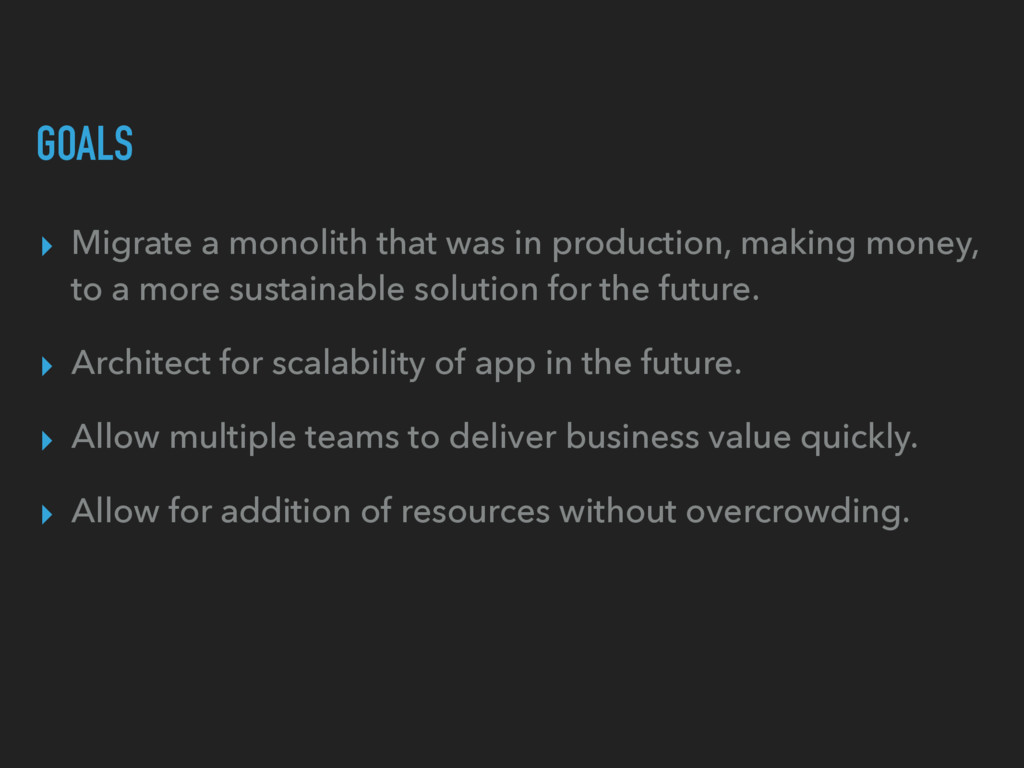
  5. GOALS ▸ Migrate a monolith that was in production, making

    money, to a more sustainable solution for the future. ▸ Architect for scalability of app in the future. ▸ Allow multiple teams to deliver business value quickly. ▸ Allow for addition of resources without overcrowding.
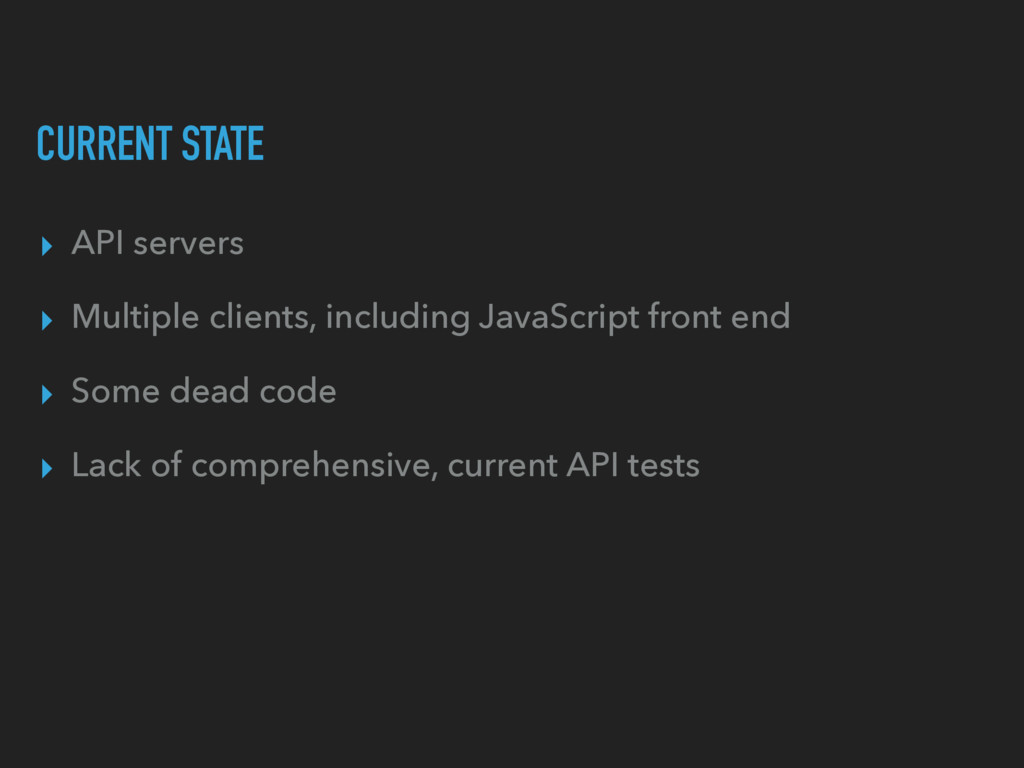
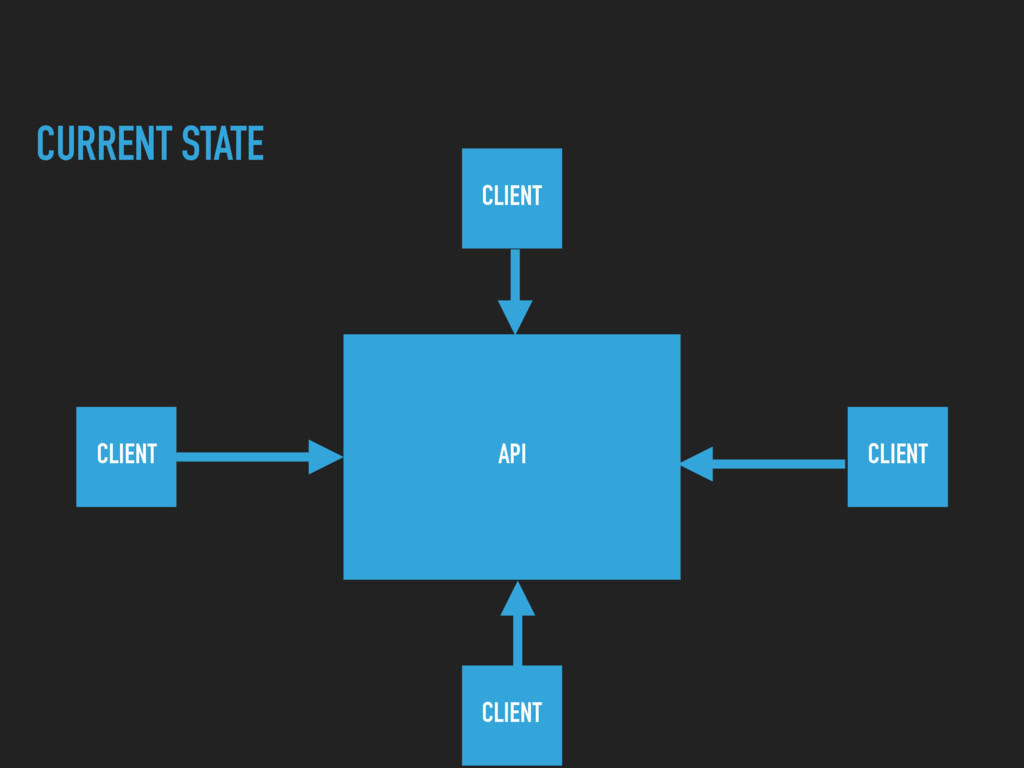
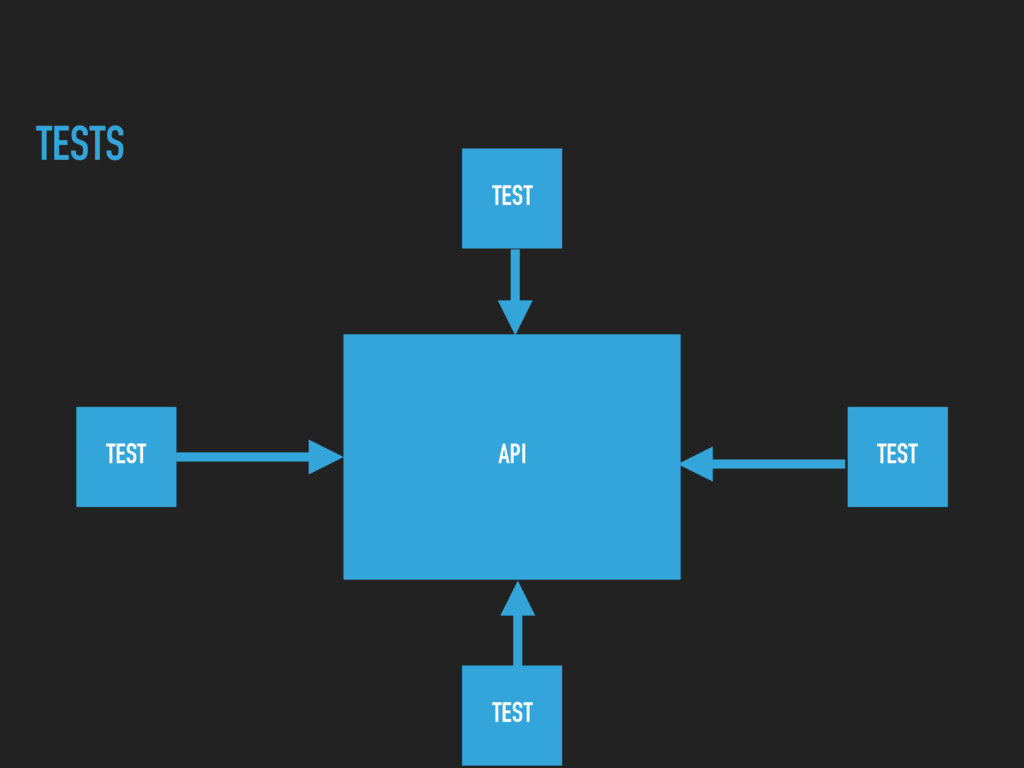
  6. CURRENT STATE ▸ API servers ▸ Multiple clients, including JavaScript

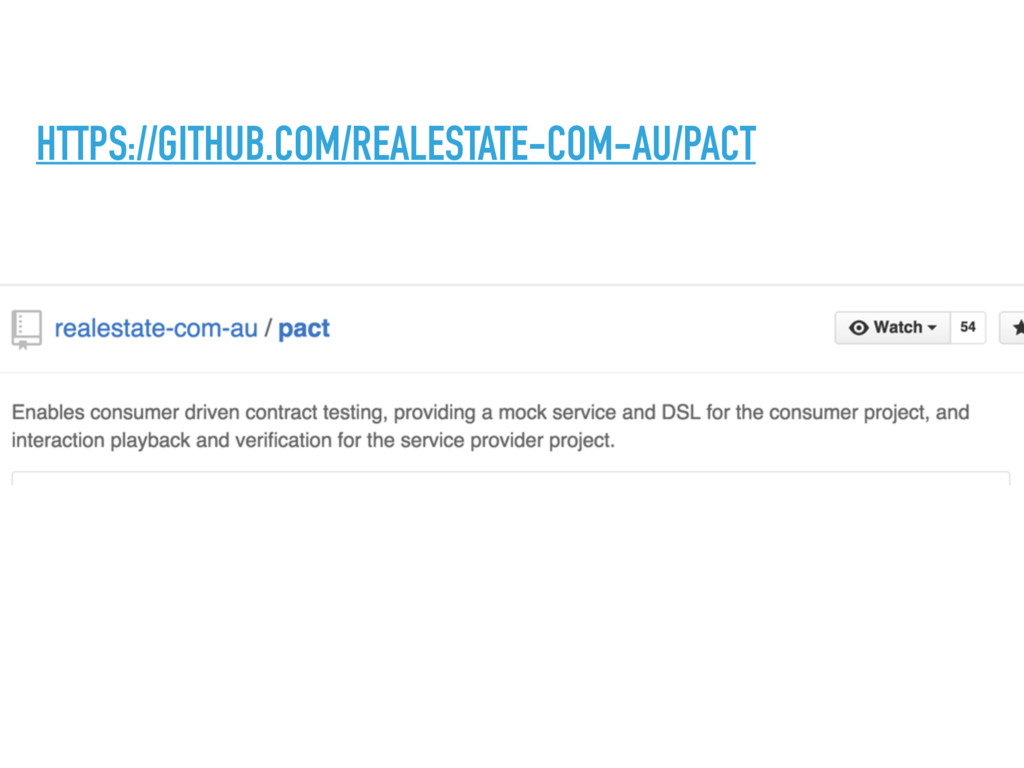
    front end ▸ Some dead code ▸ Lack of comprehensive, current API tests
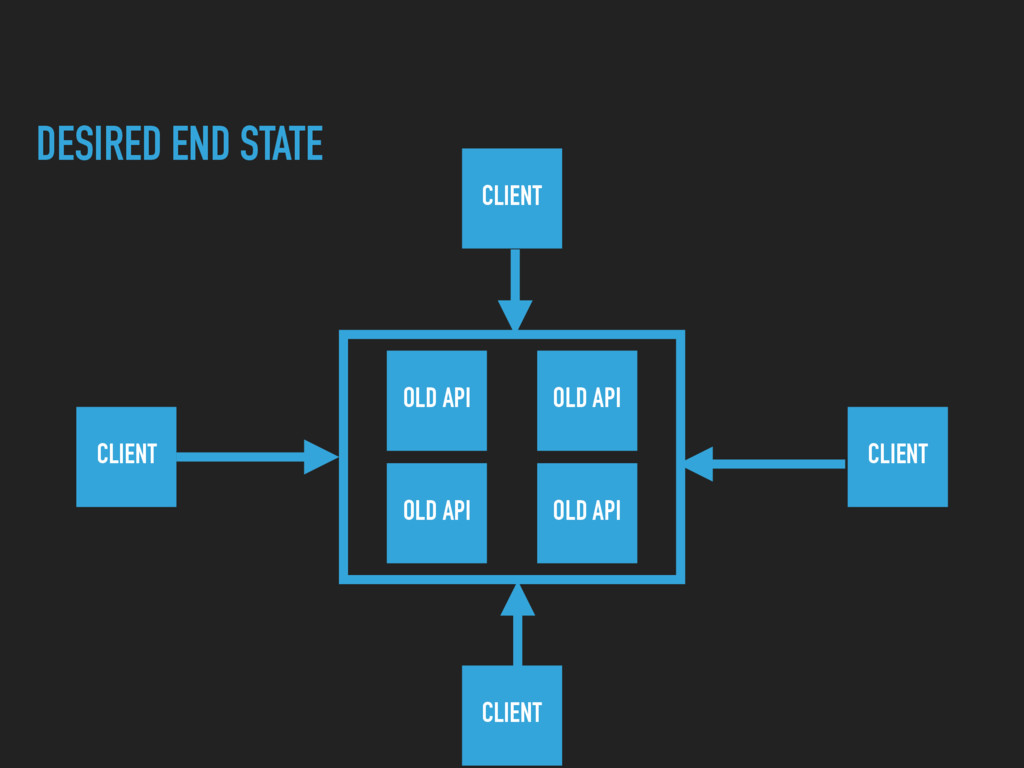
  7. RESULT: YOU NOW KNOW WHEN YOU HAVE BROKEN USER FACING

    BEHAVIOR BEFORE YOU GO INTO PRODUCTION
  8. GOAL: BEGIN TO UNDERSTAND WHAT BOUNDED CONTEXTS EXIST STEP 2:

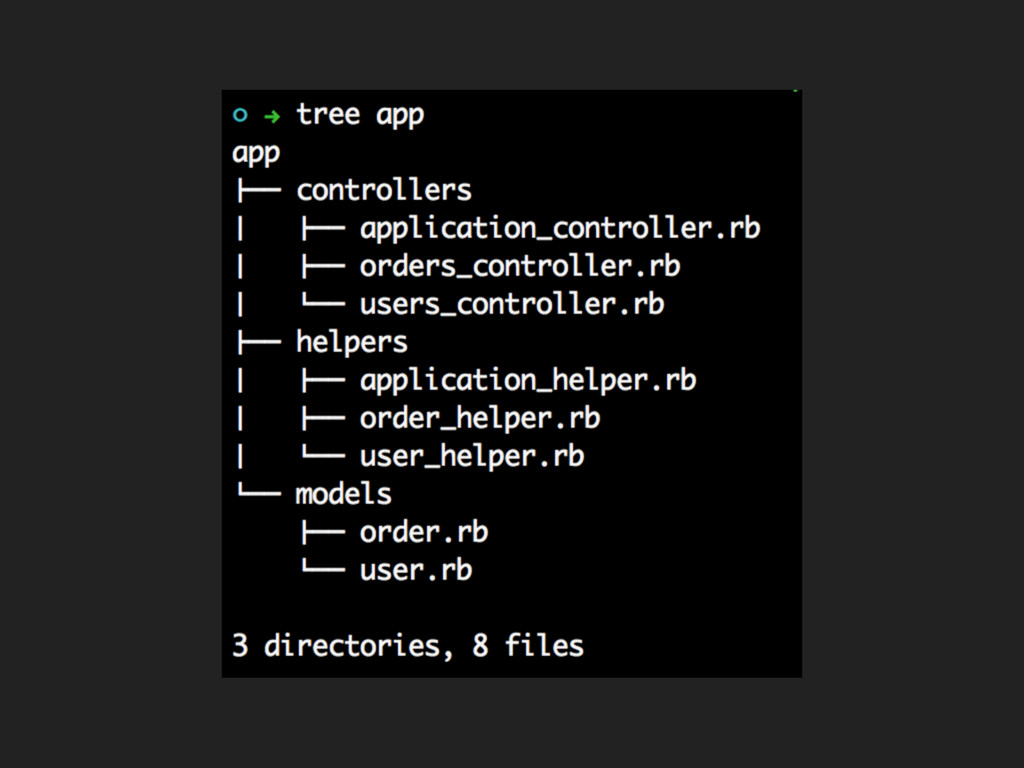
    ARRANGE APPLICATION SO YOU CAN SEE YOUR DOMAIN
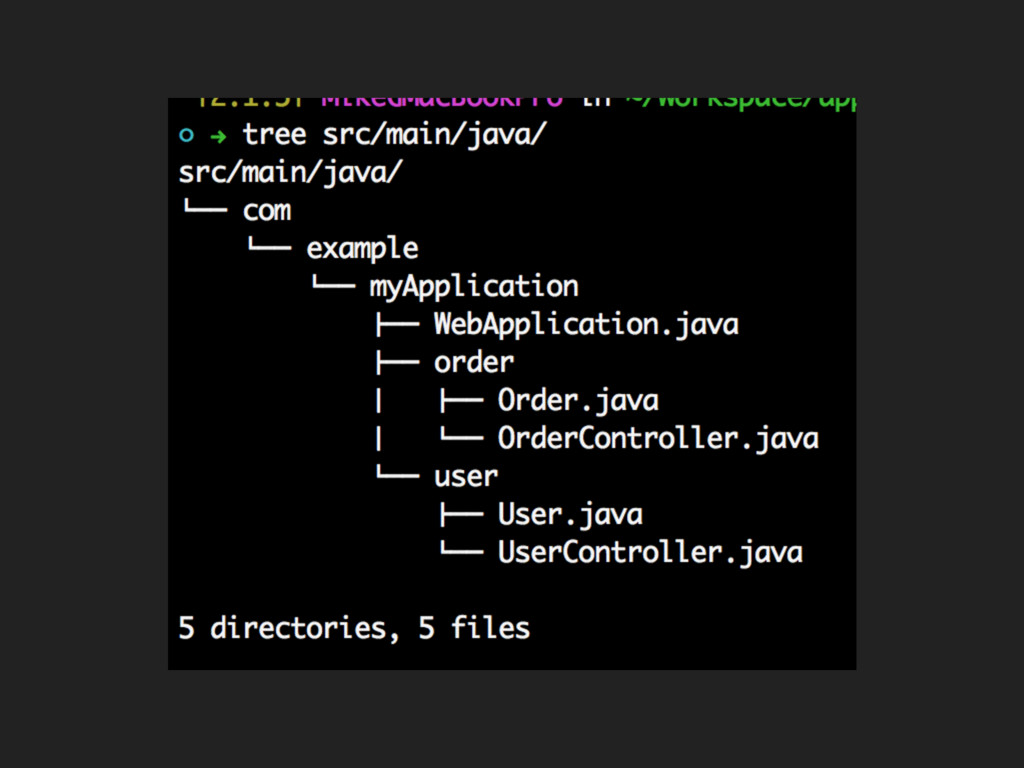
  9. STEP 2: ARRANGE APPLICATION SO YOU CAN SEE YOUR DOMAIN

    ▸ Minimizes the number of directories where changes happen. ▸ Less costly to experiment with/evolve bounded contexts. ▸ Delaying architecture decisions.
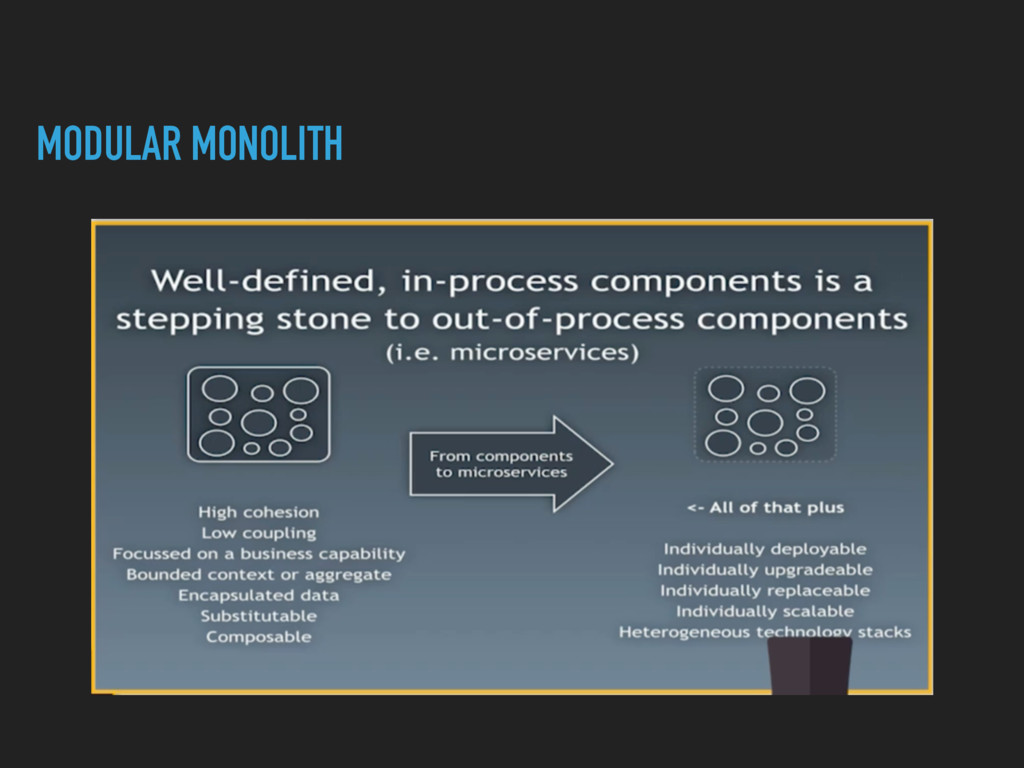
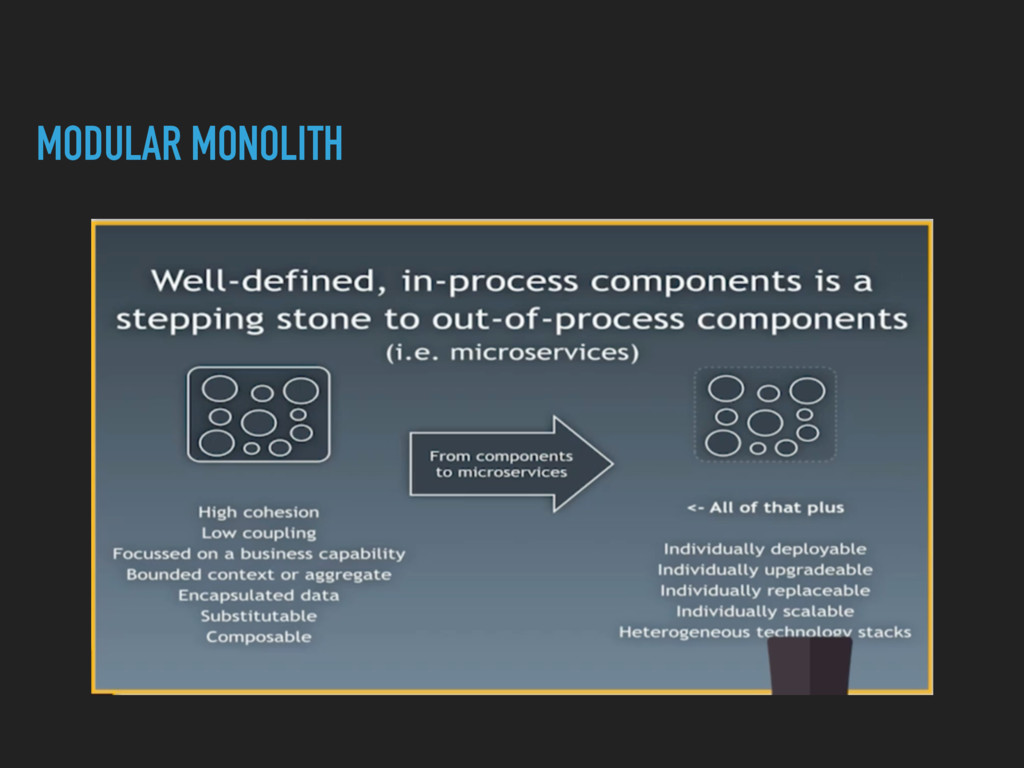
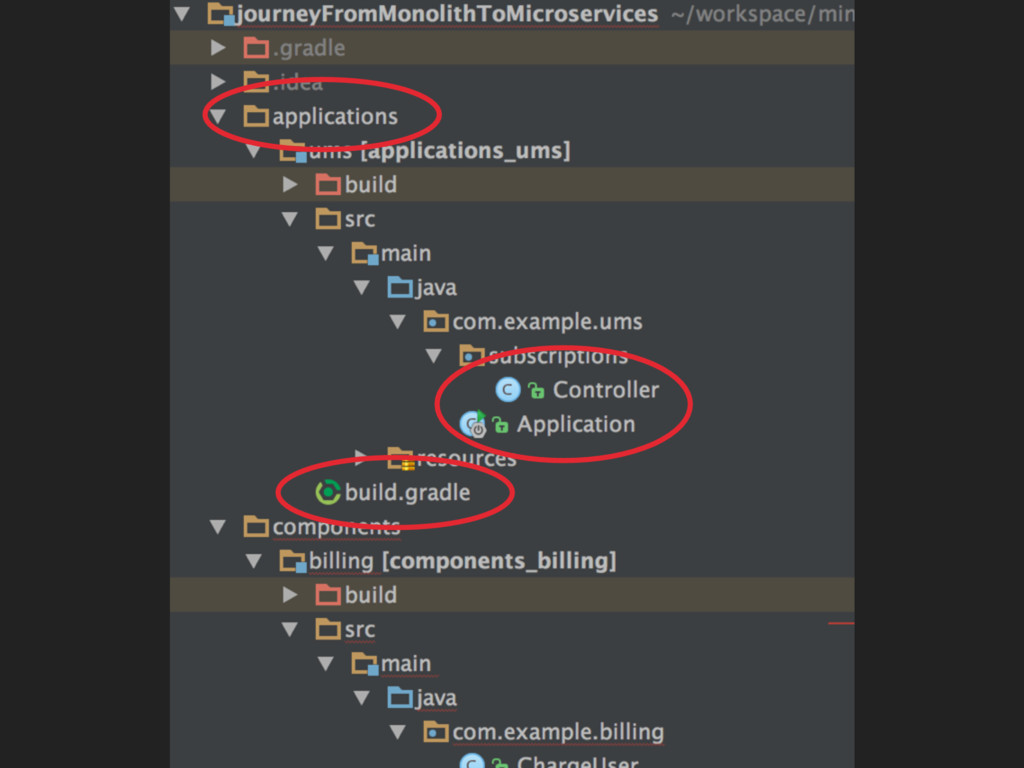
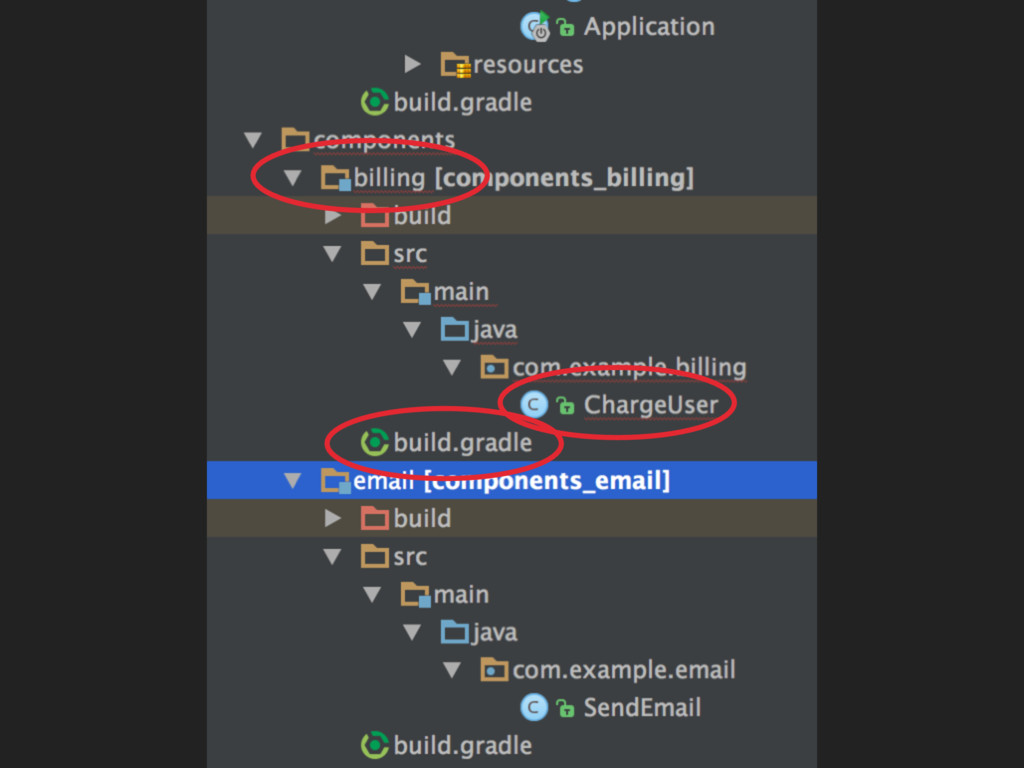
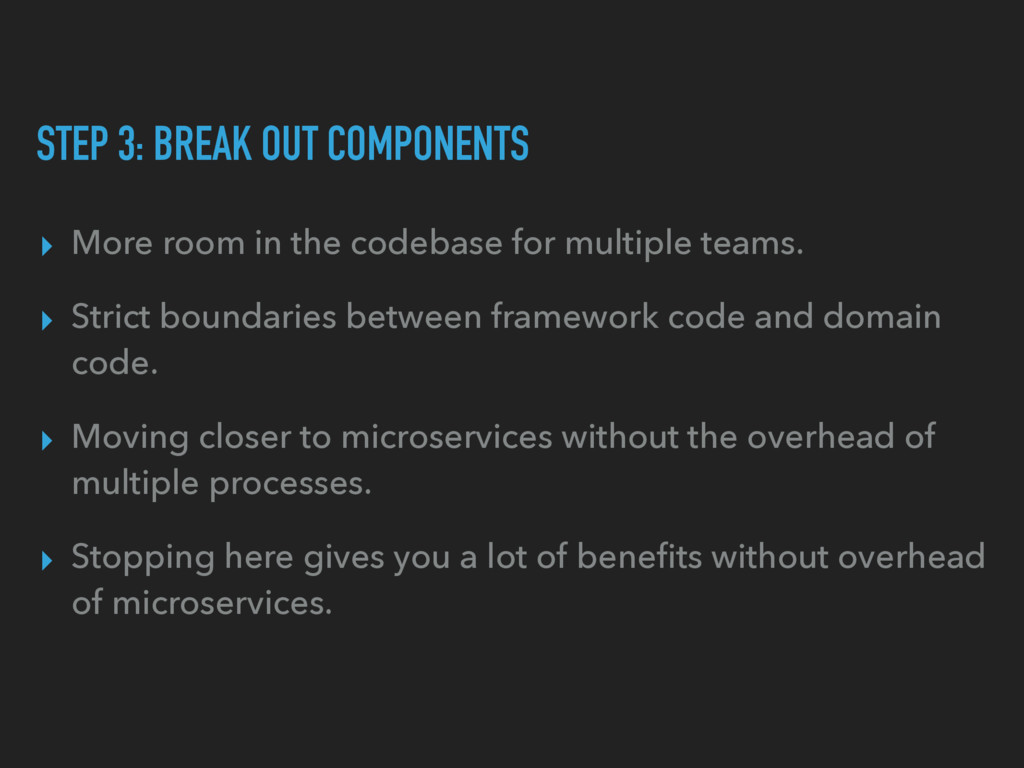
  10. STEP 3: BREAK OUT COMPONENTS ▸ More room in the

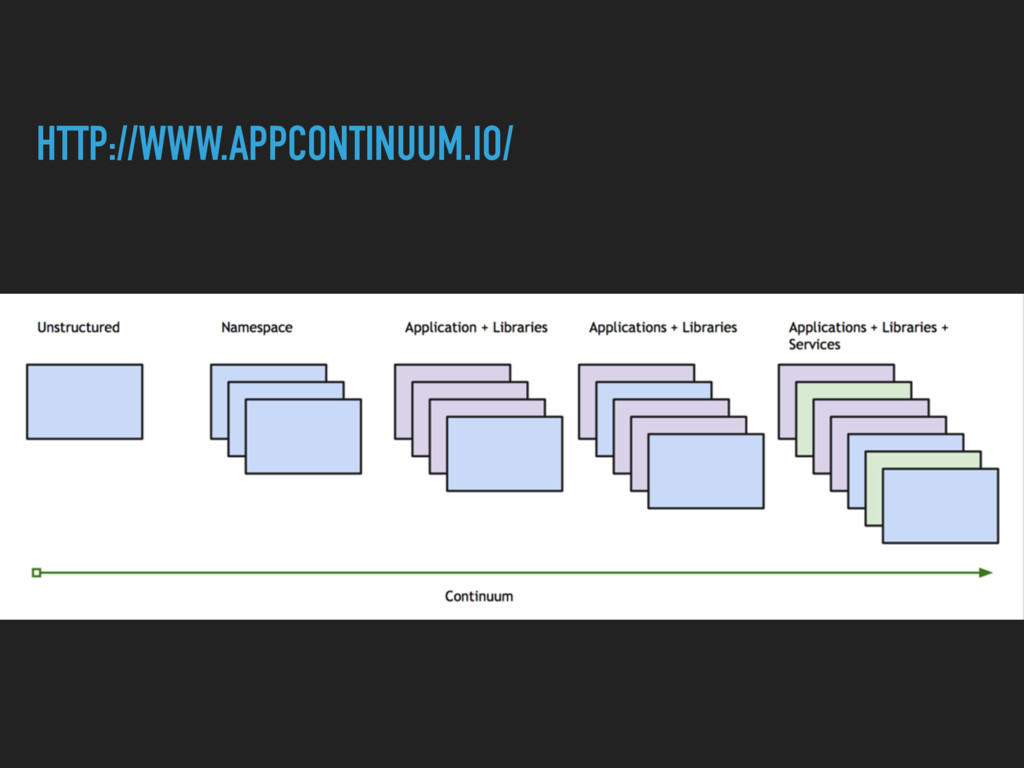
    codebase for multiple teams. ▸ Strict boundaries between framework code and domain code. ▸ Moving closer to microservices without the overhead of multiple processes. ▸ Stopping here gives you a lot of benefits without overhead of microservices.
  11. WHY EXTRACT A MICROSERVICE? ▸ Scaling a certain bounded context

    becomes an issue. ▸ You want to deploy one bounded context more frequently. ▸ Many, many other reasons that I won’t cover here.
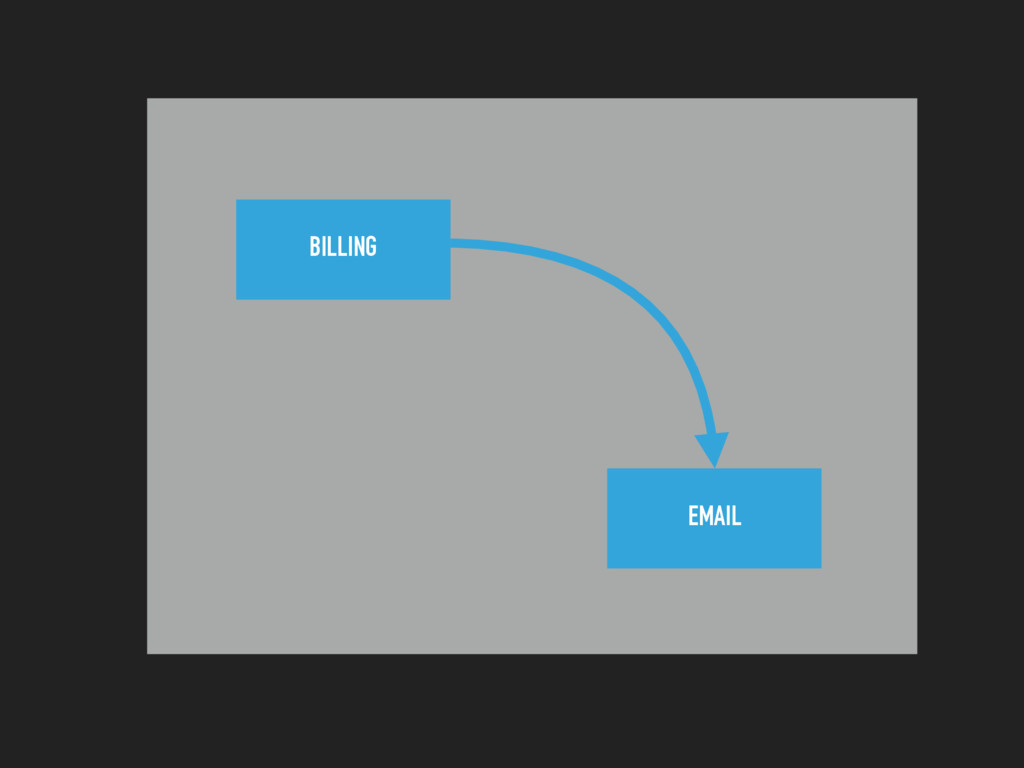
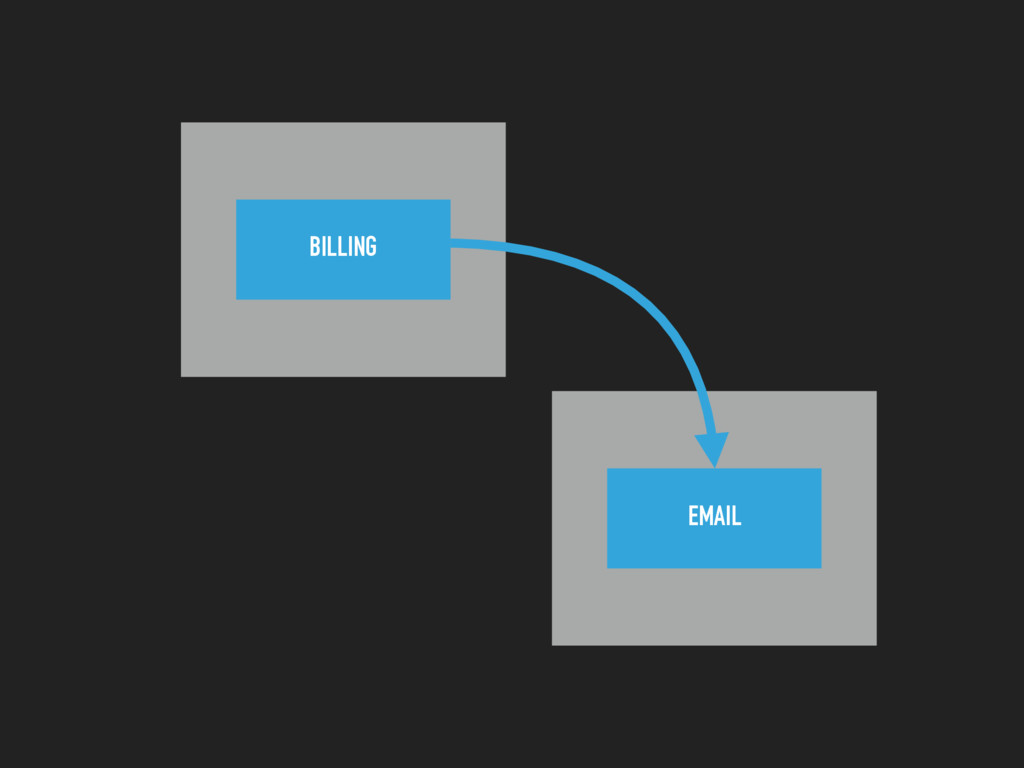
  12. STEP 4: EXTRACT YOUR FIRST MICRO SERVICE ▸ Congratulations you

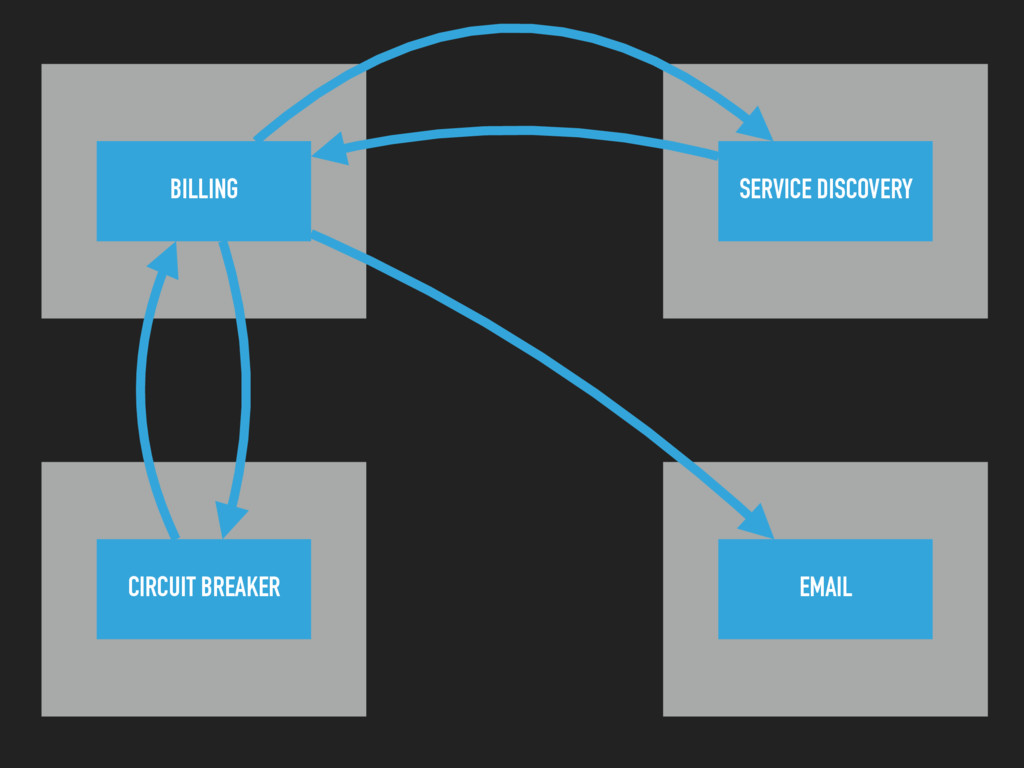
    now have a distributed system!!! ▸ And with that distributed system come new costs: ▸ Billing now needs to know how to contact the email service. ▸ Network communication between billing and email will fail at some point.
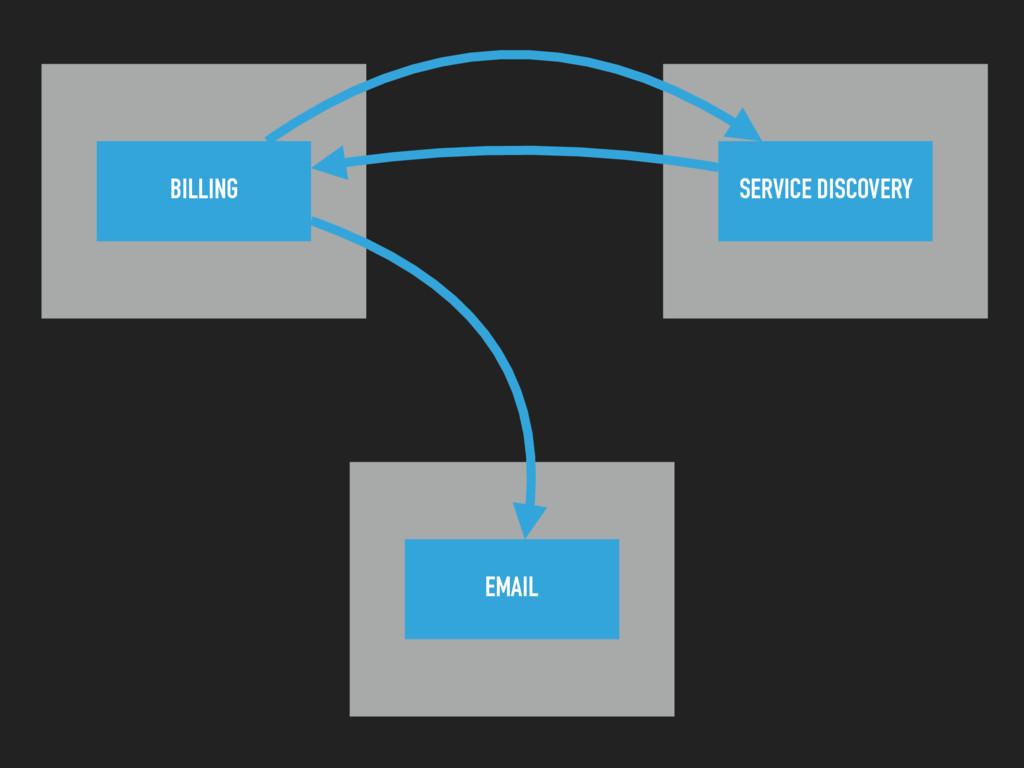
  13. SERVICE DISCOVERY ▸ Service calls are most loosely coupled to

    location and number of instances. ▸ Client side load balancing can reduce number of network calls. ▸ But there is an additional applications to run and monitor.
  14. CIRCUIT BREAKERS ▸ Increased resiliency of system when the network

    or a service fails...because they will. ▸ Increased visibility of health of system as a whole. ▸ But there is an additional applications to run and monitor.
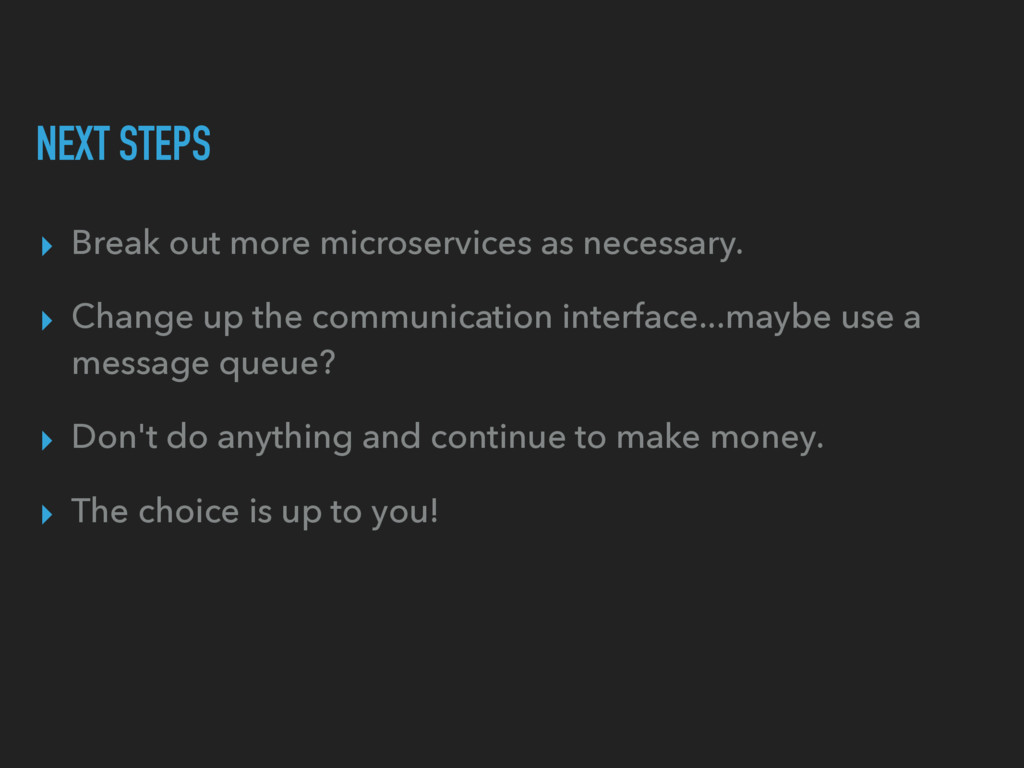
  15. NEXT STEPS ▸ Break out more microservices as necessary. ▸

    Change up the communication interface...maybe use a message queue? ▸ Don't do anything and continue to make money. ▸ The choice is up to you!