Upgrade to Pro
— share decks privately, control downloads, hide ads and more …
Speaker Deck
Sign up for free
Menu
Search
Features
All features
Private URLs
Password Protection
Custom URLS
Scheduled publishing
Remove Branding
Restrict embedding
Deck Collections
Notes
Features
All features
Private URLs
Password Protection
Custom URLS
Scheduled publishing
Remove Branding
Restrict embedding
Deck Collections
Notes
Explore
Featured decks
Featured speakers
Programming
Technology
Storyboards
Explore
Featured decks
Featured speakers
Programming
Technology
Storyboards
Pricing
Search
Sign in
Sign up for free
Copyright
Search
MSW
February 03, 2020
20
0
Share
Embed
Copy iframe code
Copy JS code
Copy link
Start on current slide
Copyright
MSW
February 03, 2020
More Decks by MSW
See All by MSW
Student Engagement
msweatherly
0
19
Demystifying Online Learning
msweatherly
0
30
Media & Accessibility
msweatherly
0
46
Featured
See All Featured
A brief & incomplete history of UX Design for the World Wide Web: 1989–2019
jct
2
530
State of Search Keynote: SEO is Dead Long Live SEO
ryanjones
0
320
AI in Enterprises - Java and Open Source to the Rescue
ivargrimstad
0
1.5k
SEO in 2025: How to Prepare for the Future of Search
ipullrank
3
3.9k
Put a Button on it: Removing Barriers to Going Fast.
kastner
60
4.6k
Intergalactic Javascript Robots from Outer Space
tanoku
273
28k
Skip the Path - Find Your Career Trail
mkilby
1
260
Between Models and Reality
mayunak
4
500
Into the Great Unknown - MozCon
thekraken
41
2.8k
sira's awesome portfolio website redesign presentation
elsirapls
0
460
Measuring & Analyzing Core Web Vitals
bluesmoon
9
1k
SERP Conf. Vienna - Web Accessibility: Optimizing for Inclusivity and SEO
sarafernandez
2
1.6k
Transcript
WELCOME BACK! Sit tight. We’ll get started in just a
bit.
Copyright & Your Course The Who, What, When, and How
of What You Can Use
Objectives Describe the rights afforded to copyright owners. Discuss the
four factors of fair use and apply them in scenarios. List sources of images that you can use in your online courses.
Disclaimer
None
Fundamental Principles of Copyright
Copyright law applies to nearly all creative and intellectual works.
Works are protected automatically, without copyright notice or registration.
The Meaning of Copyright Ownership
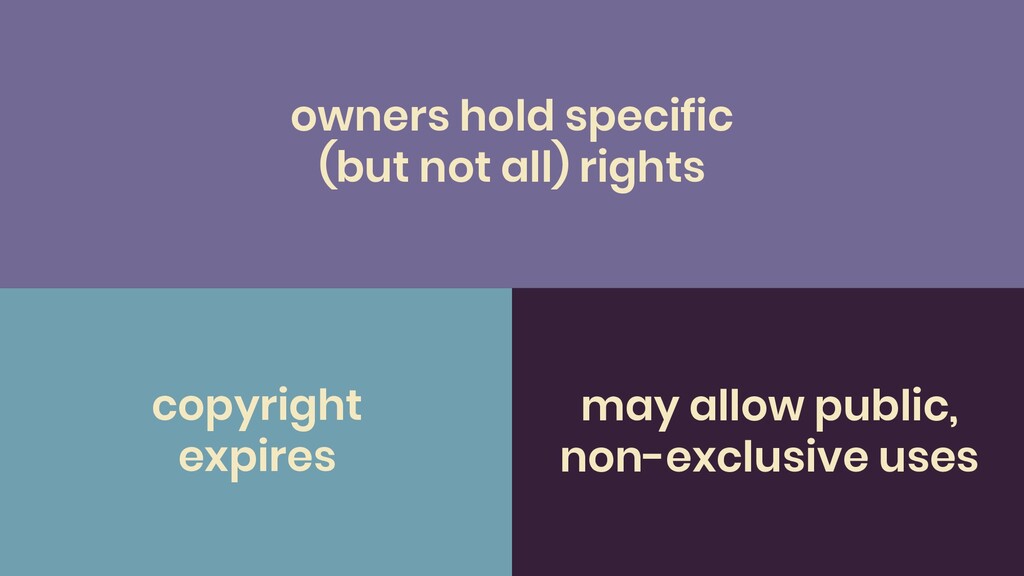
may allow public, non-exclusive uses copyright expires owners hold specific
(but not all) rights
What Copyright Protects
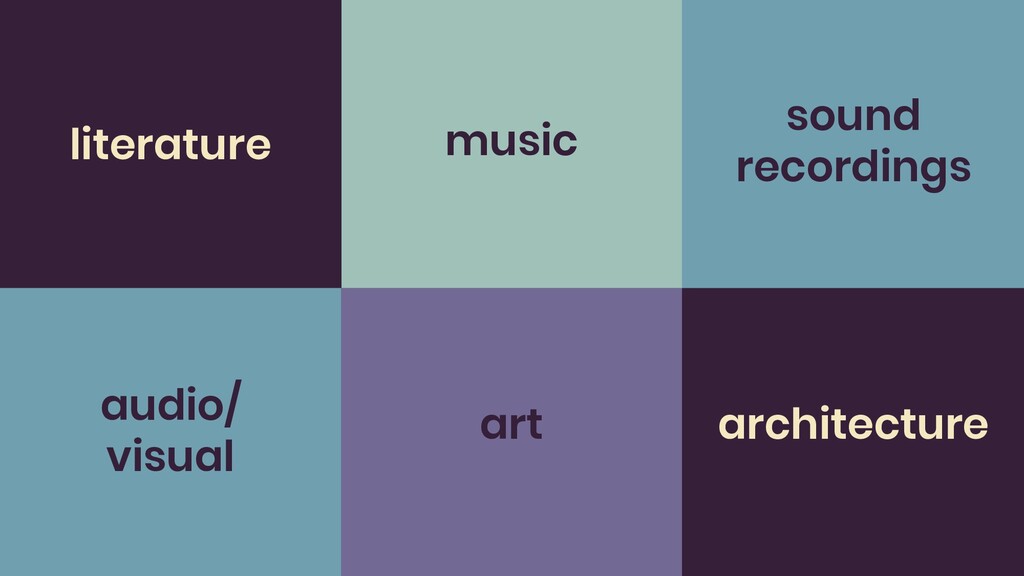
audio/ visual literature music sound recordings art architecture
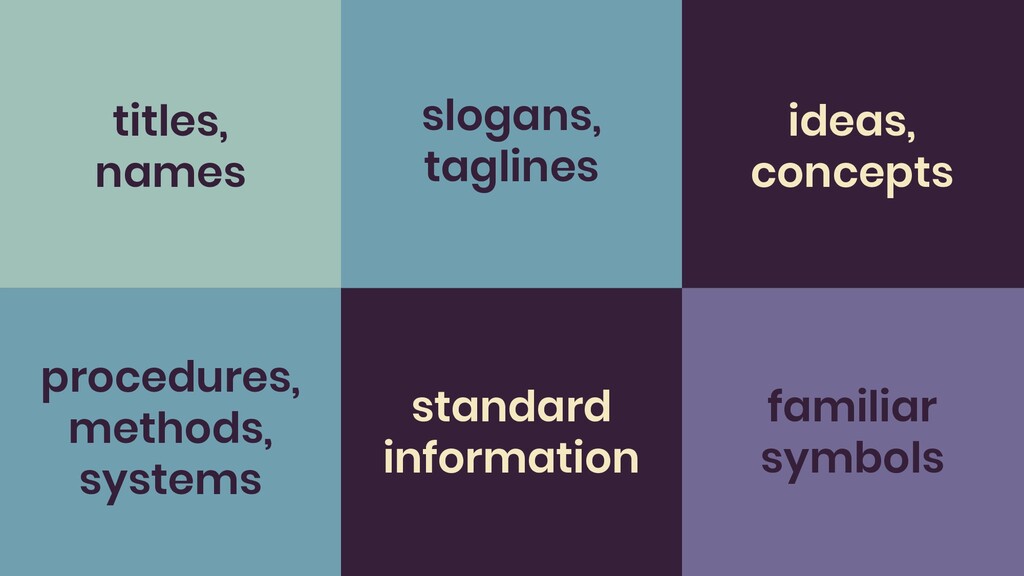
What Copyright Does Not Protect
procedures, methods, systems ideas, concepts titles, names slogans, taglines familiar
symbols standard information
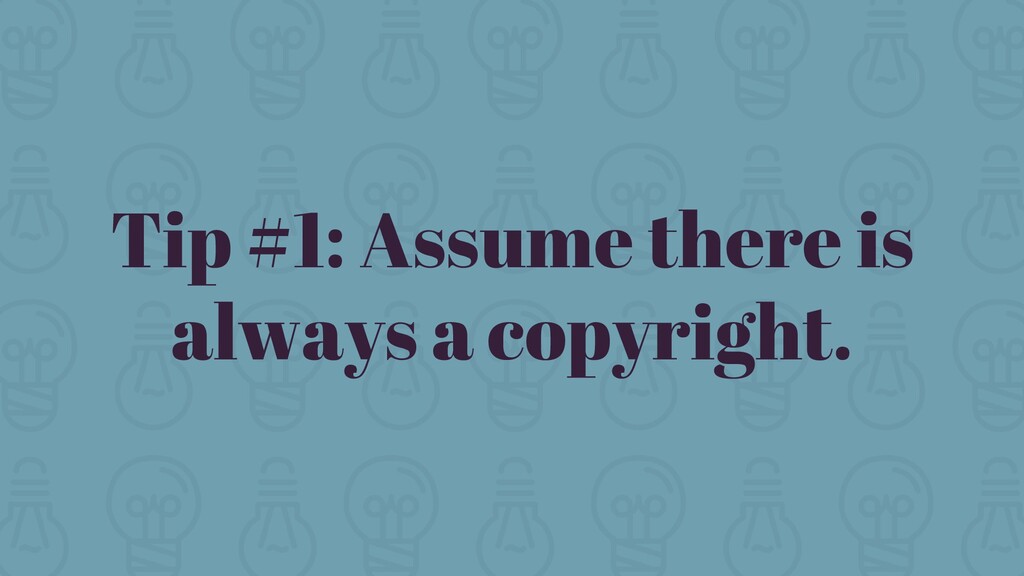
Tip #1: Assume there is always a copyright.
Limitations of Copyright Laws
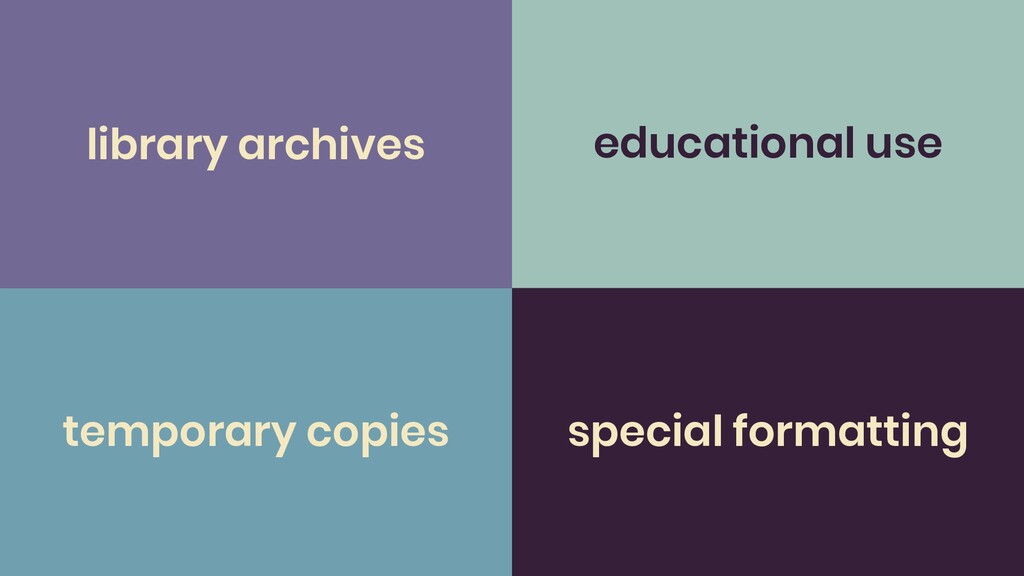
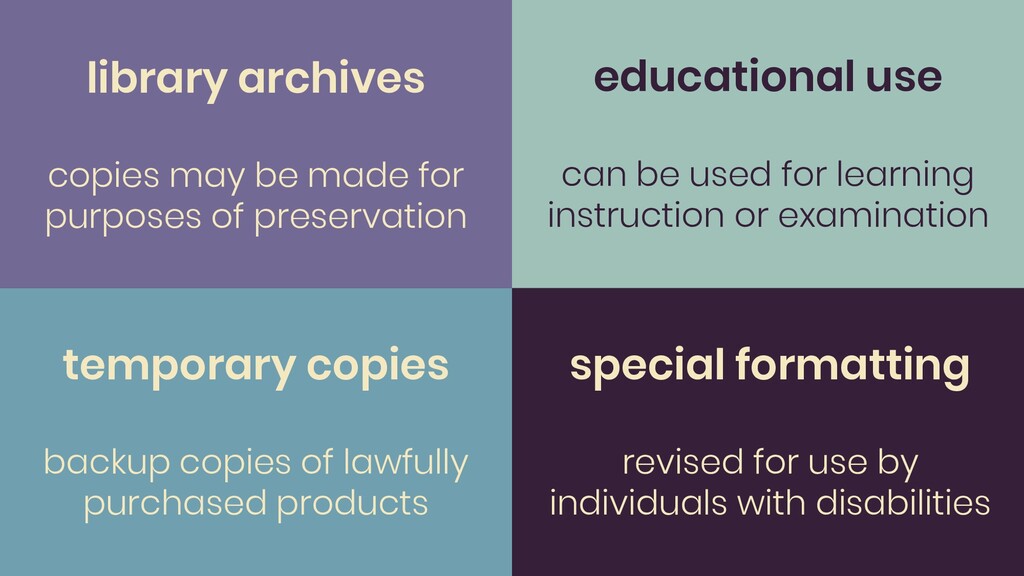
special formatting library archives educational use temporary copies
special formatting revised for use by individuals with disabilities library
archives copies may be made for purposes of preservation educational use can be used for learning instruction or examination temporary copies backup copies of lawfully purchased products
educational use can be used for learning instruction or examination
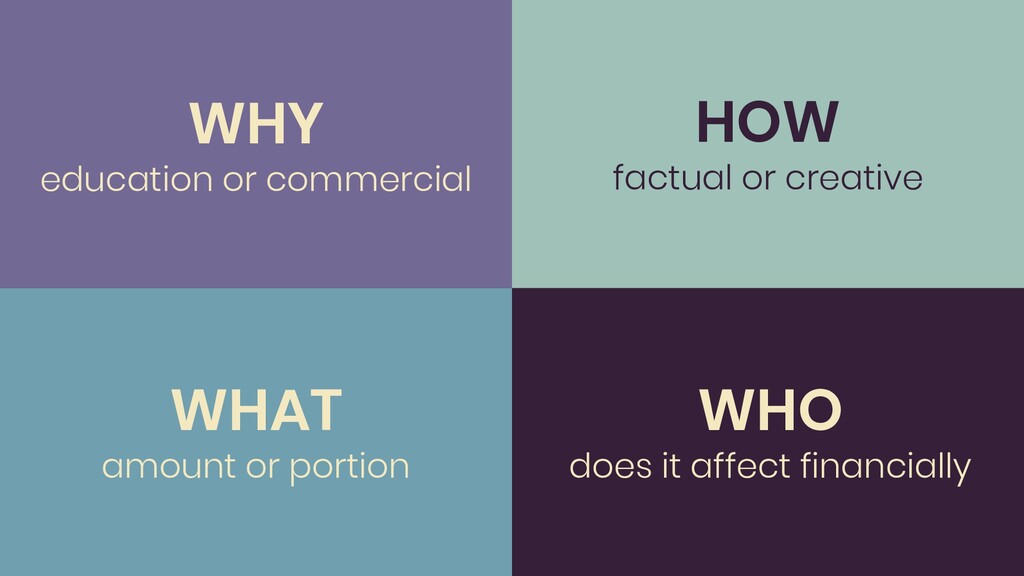
What is fair use?
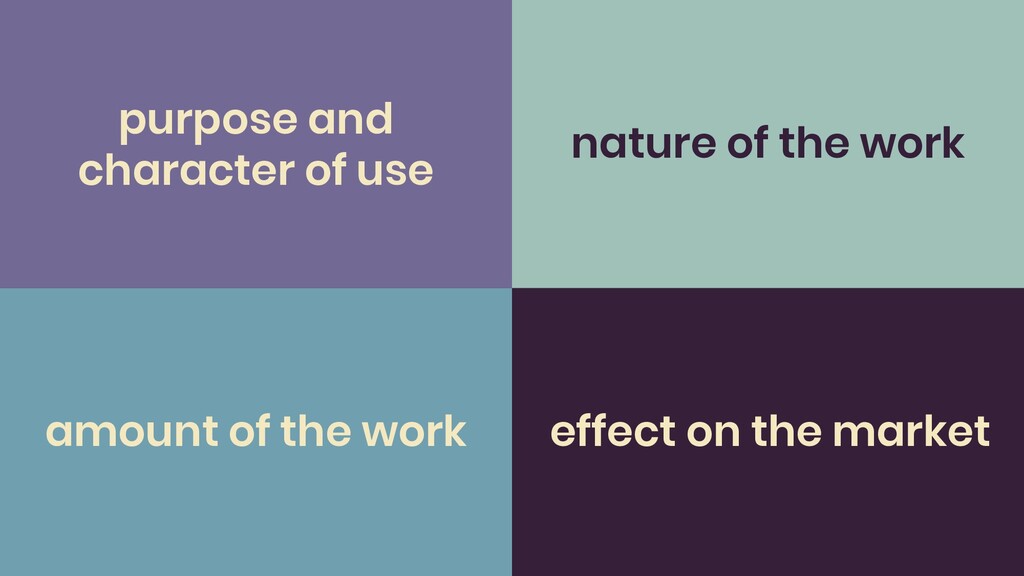
effect on the market purpose and character of use nature
of the work amount of the work
WHO does it affect financially WHY education or commercial HOW
factual or creative WHAT amount or portion
Tip #2: Understand the nuances of fair use.
The Biggies: Images & Videos
The TEACH Act
Tip #3: When in doubt, link or embed.
Tip #4: Do your research. Ask permission.
Time to consolidate!
QUESTION 1 Professor J wants to embed a two-minute clip
on YouTube from the TV show “The Office” on a content page in her online course. Does this fall into the realm of fair use?
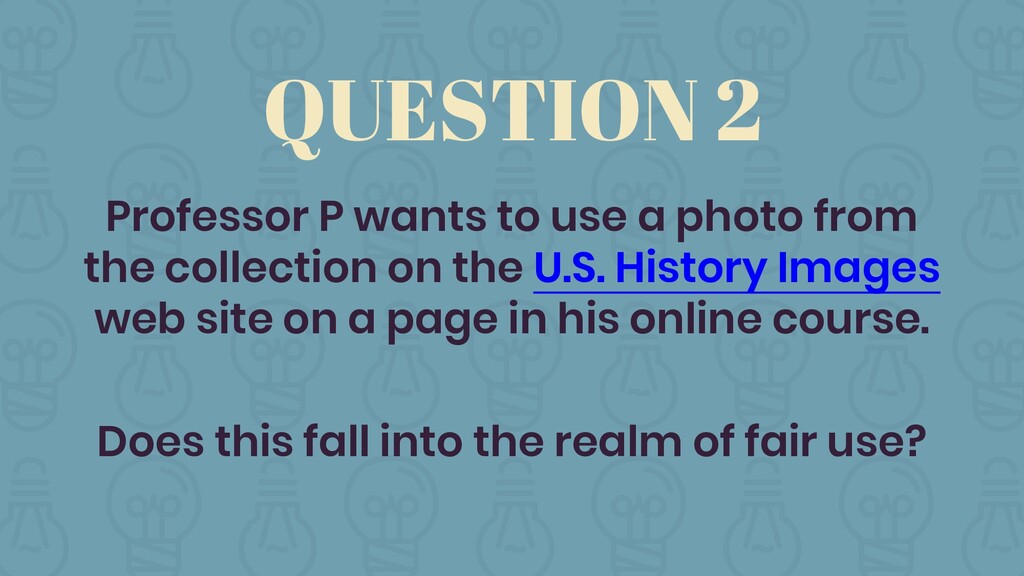
QUESTION 2 Professor P wants to use a photo from
the collection on the U.S. History Images web site on a page in his online course. Does this fall into the realm of fair use?
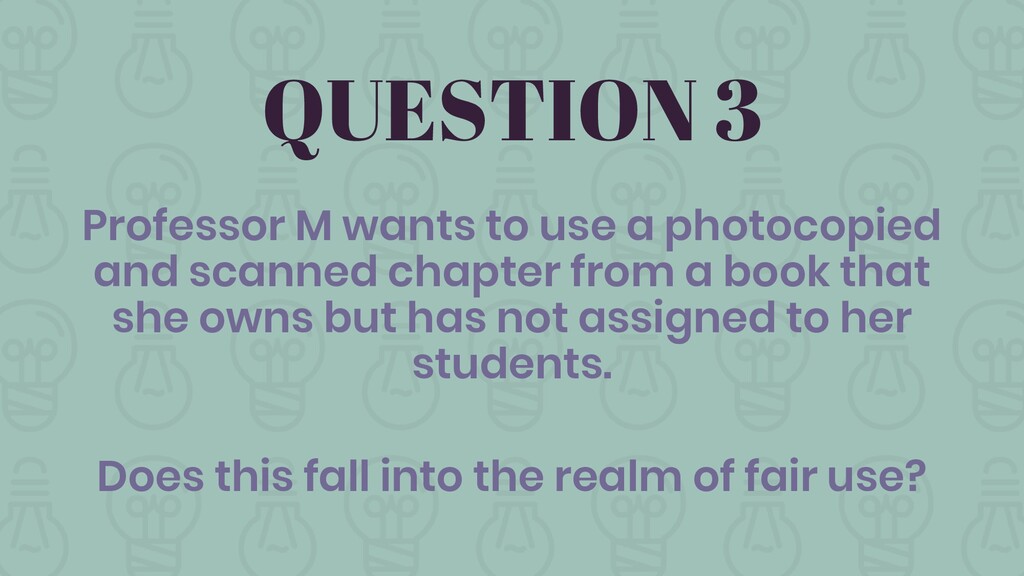
QUESTION 3 Professor M wants to use a photocopied and
scanned chapter from a book that she owns but has not assigned to her students. Does this fall into the realm of fair use?
Grab a pen and paper…
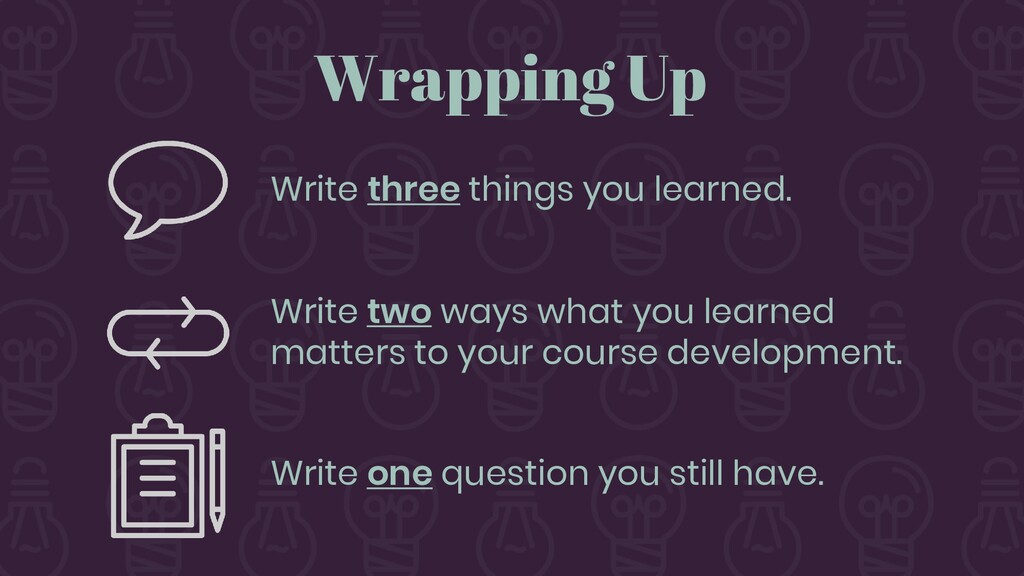
Wrapping Up Write three things you learned. Write two ways
what you learned matters to your course development. Write one question you still have.
Thank You! See you soon!


 msweatherly
 jct
 ryanjones
 ivargrimstad
 ipullrank
 kastner
 tanoku
 mkilby
 mayunak
 thekraken
 elsirapls
 bluesmoon
 sarafernandez