Upgrade to Pro
— share decks privately, control downloads, hide ads and more …
Speaker Deck
Sign up for free
Menu
Search
Features
All features
Private URLs
Password Protection
Custom URLS
Scheduled publishing
Remove Branding
Restrict embedding
Deck Collections
Notes
Features
All features
Private URLs
Password Protection
Custom URLS
Scheduled publishing
Remove Branding
Restrict embedding
Deck Collections
Notes
Explore
Featured decks
Featured speakers
Programming
Technology
Storyboards
Explore
Featured decks
Featured speakers
Programming
Technology
Storyboards
Pricing
Search
Sign in
Sign up for free
Demystifying Online Learning
Search
Sponsored
·
Your Podcast. Everywhere. Effortlessly.
Share. Educate. Inspire. Entertain. You do you. We'll handle the rest.
→
MSW
January 22, 2020
30
0
Share
Embed
Copy iframe code
Copy JS code
Copy link
Start on current slide
Demystifying Online Learning
MSW
January 22, 2020
More Decks by MSW
See All by MSW
Student Engagement
msweatherly
0
19
Copyright
msweatherly
0
20
Media & Accessibility
msweatherly
0
46
Featured
See All Featured
KATA
mclloyd
PRO
35
16k
Test your architecture with Archunit
thirion
2
2.4k
The Straight Up "How To Draw Better" Workshop
denniskardys
239
140k
Paper Plane (Part 1)
katiecoart
PRO
2
12k
Introduction to Domain-Driven Design and Collaborative software design
baasie
1
1k
How to Grow Your eCommerce with AI & Automation
katarinadahlin
PRO
2
330
The Anti-SEO Checklist Checklist. Pubcon Cyber Week
ryanjones
0
270
Everyday Curiosity
cassininazir
0
350
Prompt Engineering for Job Search
mfonobong
0
520
Believing is Seeing
oripsolob
1
240
DBのスキルで生き残る技術 - AI時代におけるテーブル設計の勘所
soudai
PRO
68
58k
How to Think Like a Performance Engineer
csswizardry
28
2.9k
Transcript
WELCOME! Grab a seat, sign in, and create your nametag!
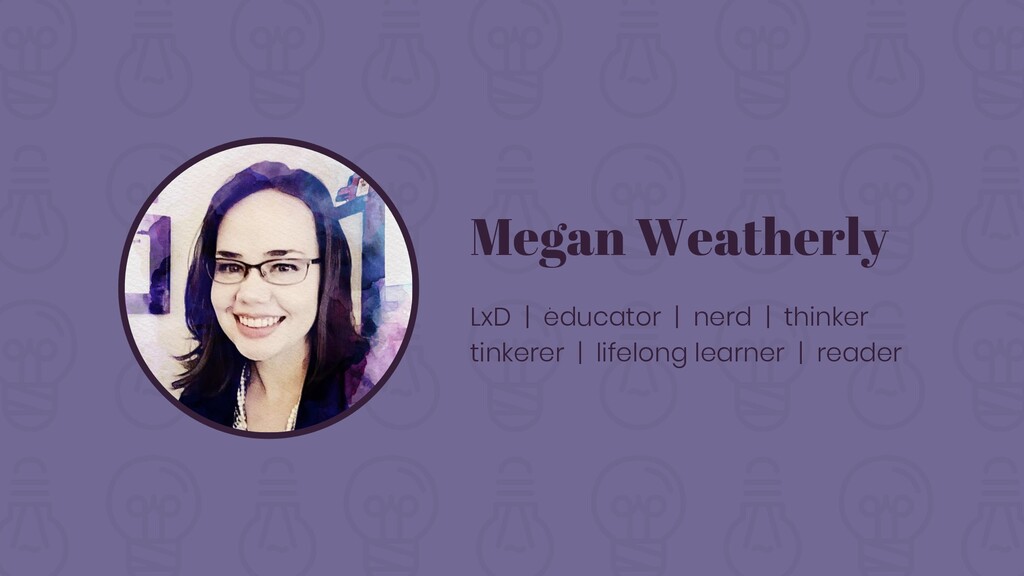
Megan Weatherly LxD | educator | nerd | thinker tinkerer
| lifelong learner | reader
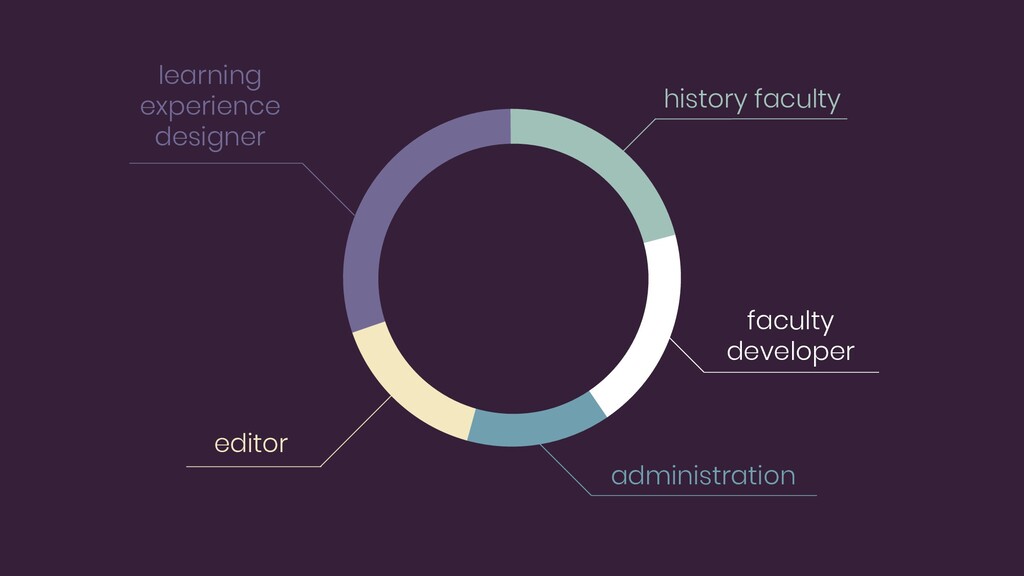
learning experience designer history faculty faculty developer editor administration
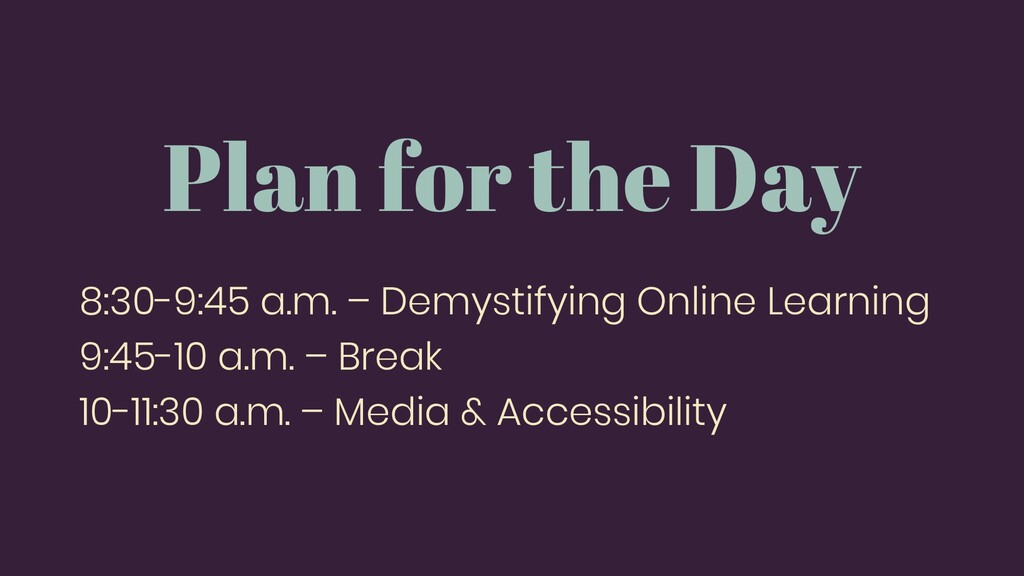
Plan for the Day 8:30-9:45 a.m. – Demystifying Online Learning
9:45-10 a.m. – Break 10-11:30 a.m. – Media & Accessibility
Housekeeping restrooms questions slides
Demystifying Online Learning Megan Weatherly Learning Experience Designer
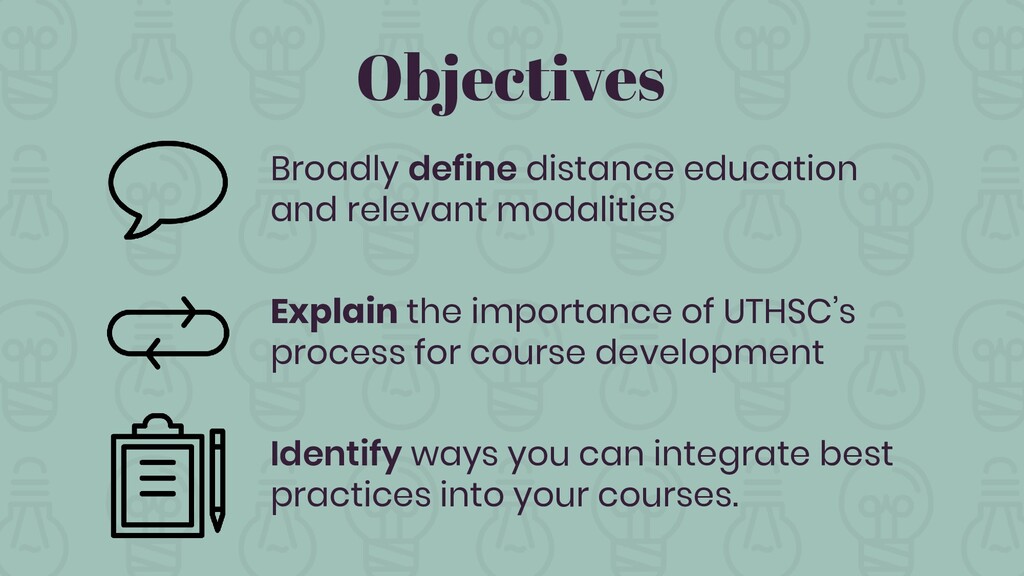
Objectives Broadly define distance education and relevant modalities Explain the
importance of UTHSC’s process for course development Identify ways you can integrate best practices into your courses.
So you’re going to teach online…
None
What is distance education?
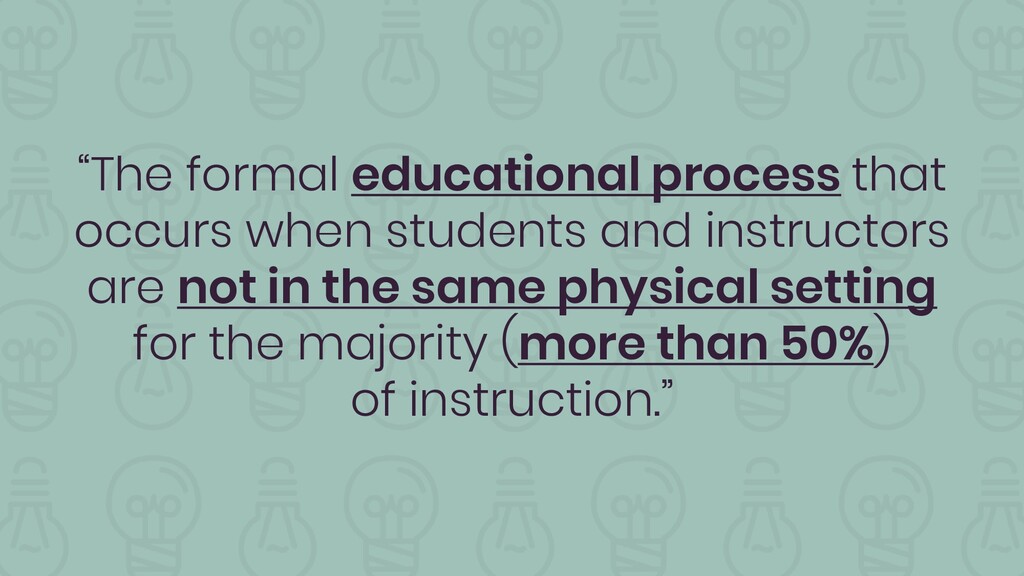
“The formal educational process that occurs when students and instructors
are not in the same physical setting for the majority (more than 50%) of instruction.”
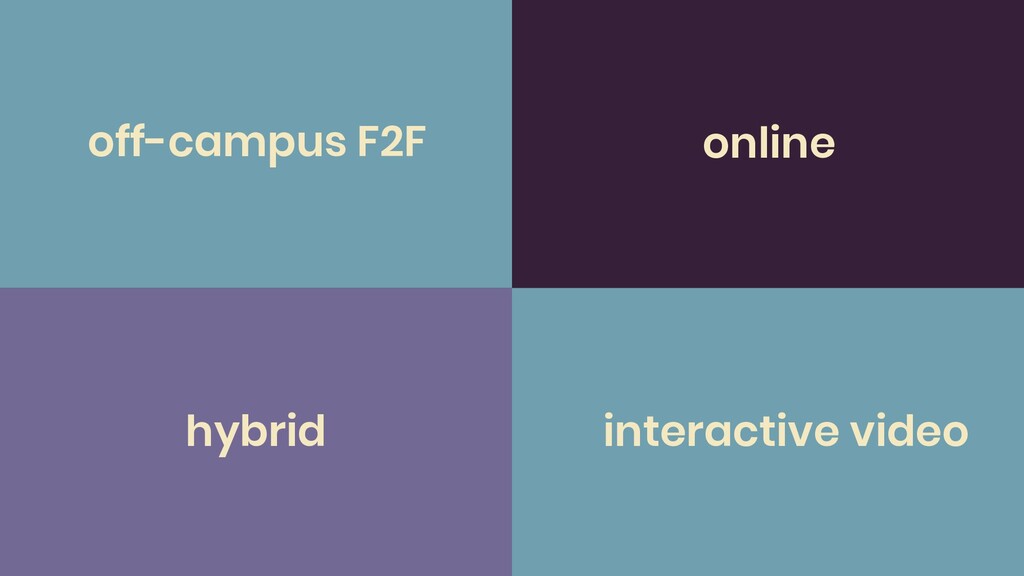
online off-campus F2F hybrid ACTIVE LEARNING interactive video
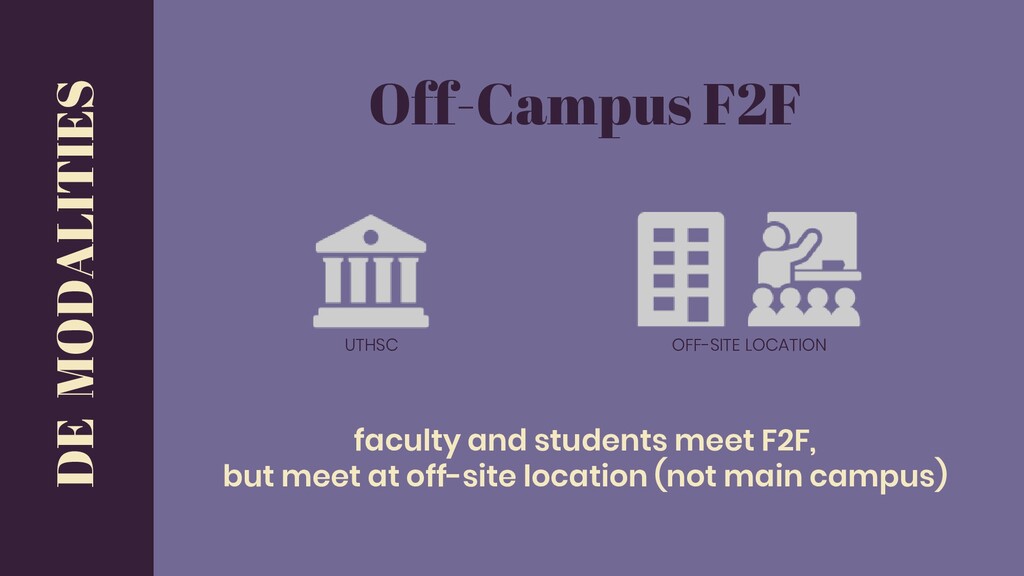
faculty and students meet F2F, but meet at off-site location
(not main campus) DE MODALITIES UTHSC OFF-SITE LOCATION Off-Campus F2F
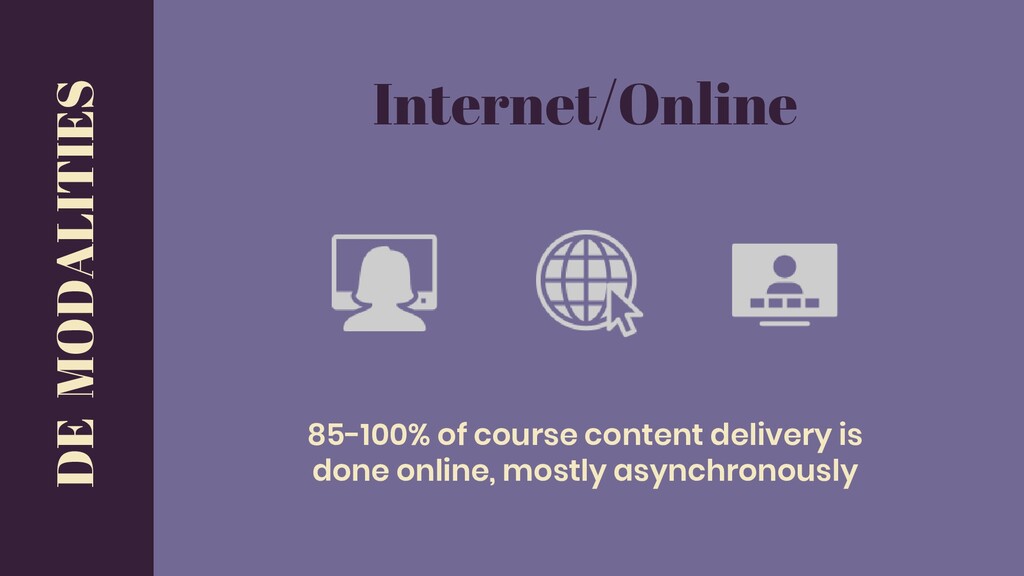
85-100% of course content delivery is done online, mostly asynchronously
DE MODALITIES Internet/Online
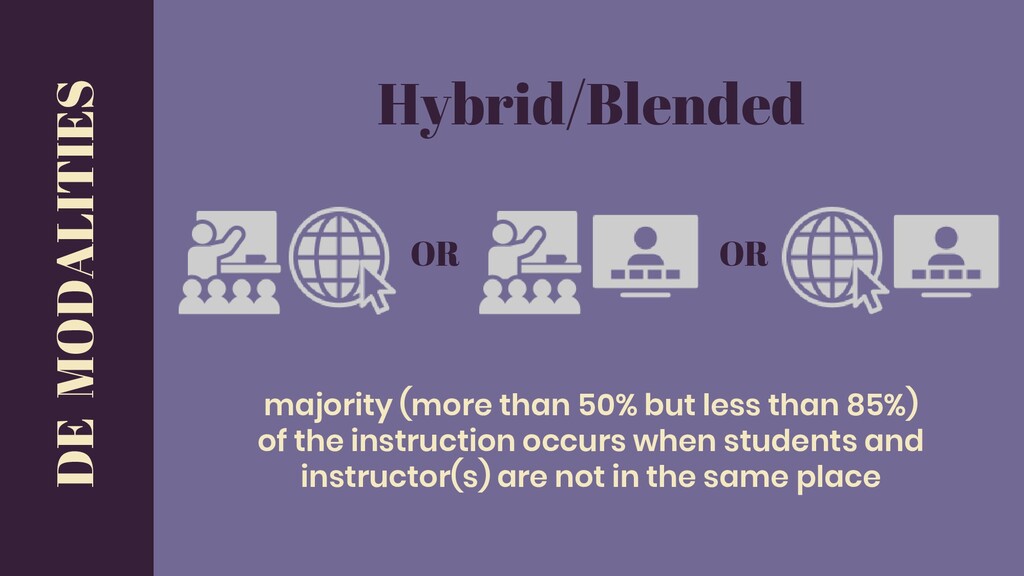
majority (more than 50% but less than 85%) of the
instruction occurs when students and instructor(s) are not in the same place OR OR DE MODALITIES Hybrid/Blended
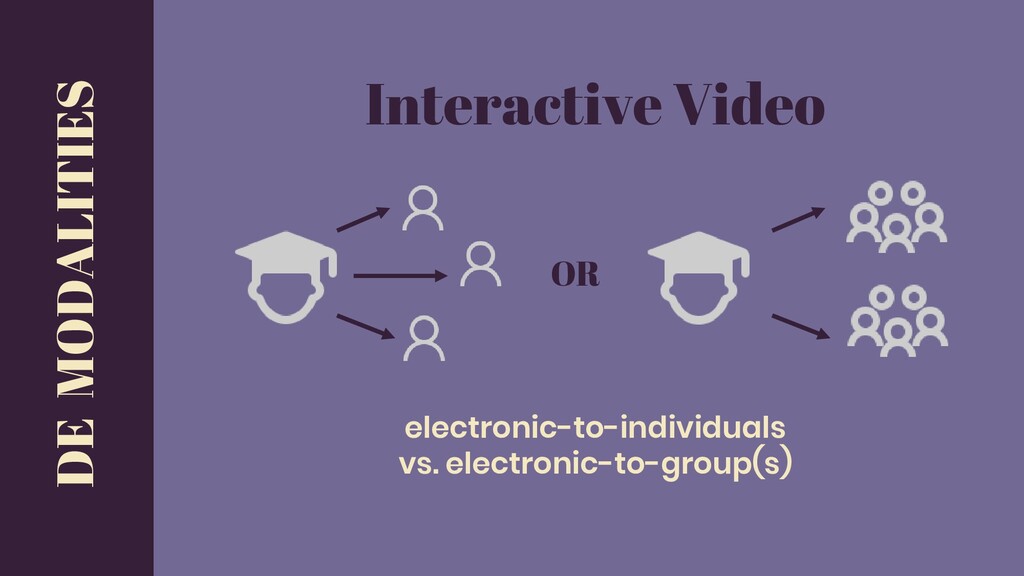
electronic-to-individuals vs. electronic-to-group(s) OR DE MODALITIES Interactive Video
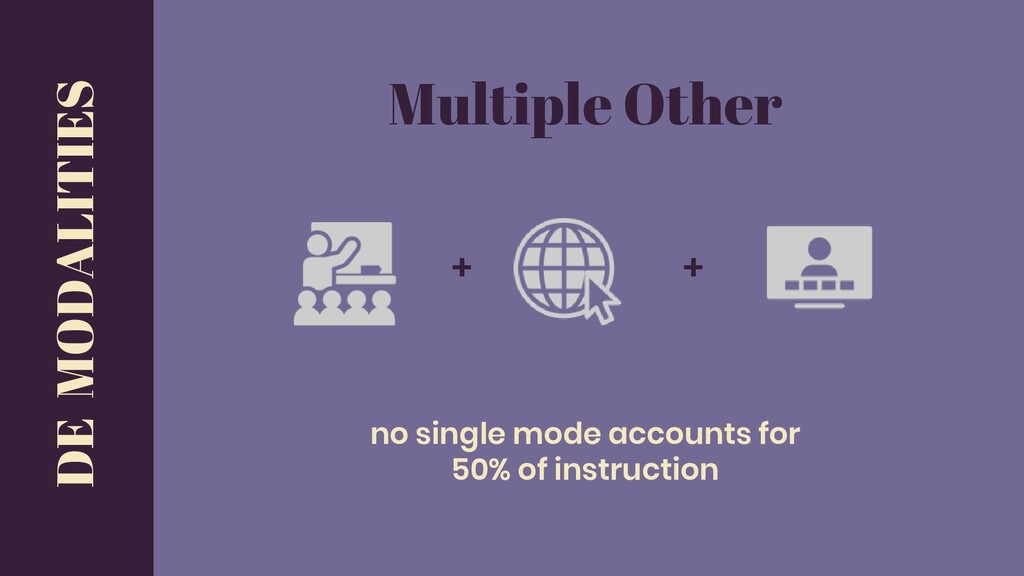
no single mode accounts for 50% of instruction DE MODALITIES
Multiple Other
A course design process. Why bother?
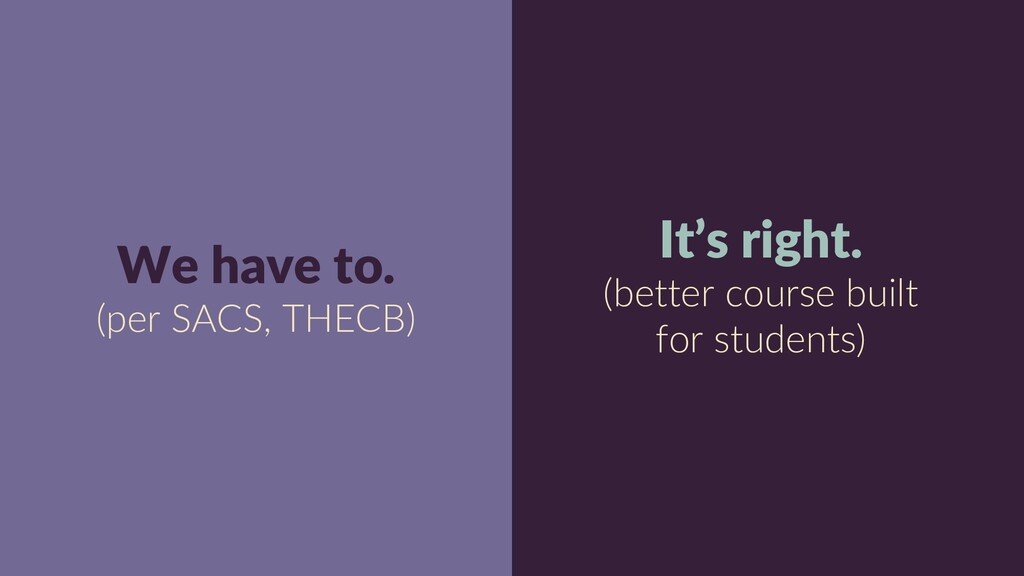
We have to. (per SACS, THECB) It’s right. (better course
built for students)
Time to consolidate!
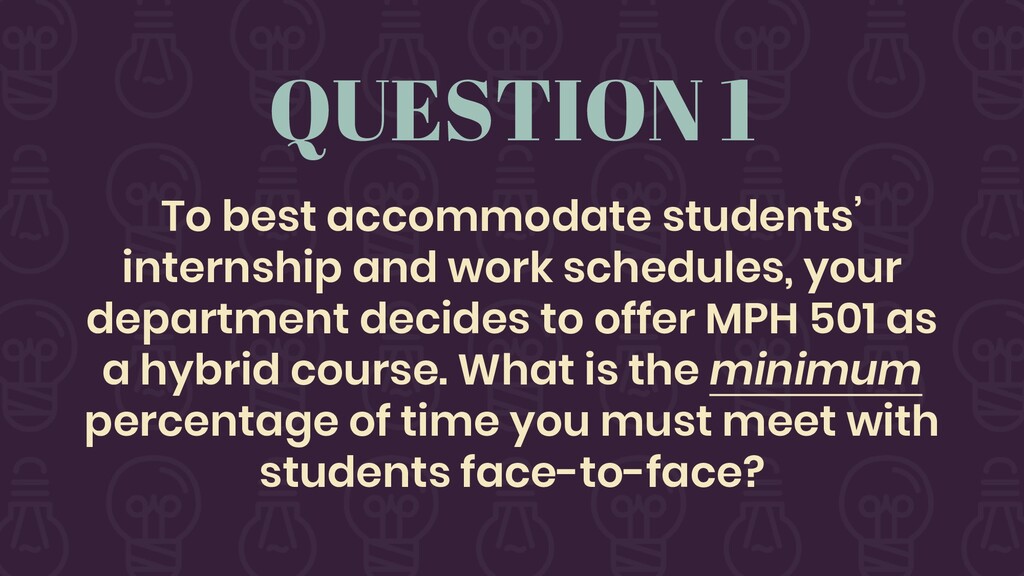
QUESTION 1 To best accommodate students’ internship and work schedules,
your department decides to offer MPH 501 as a hybrid course. What is the minimum percentage of time you must meet with students face-to-face?
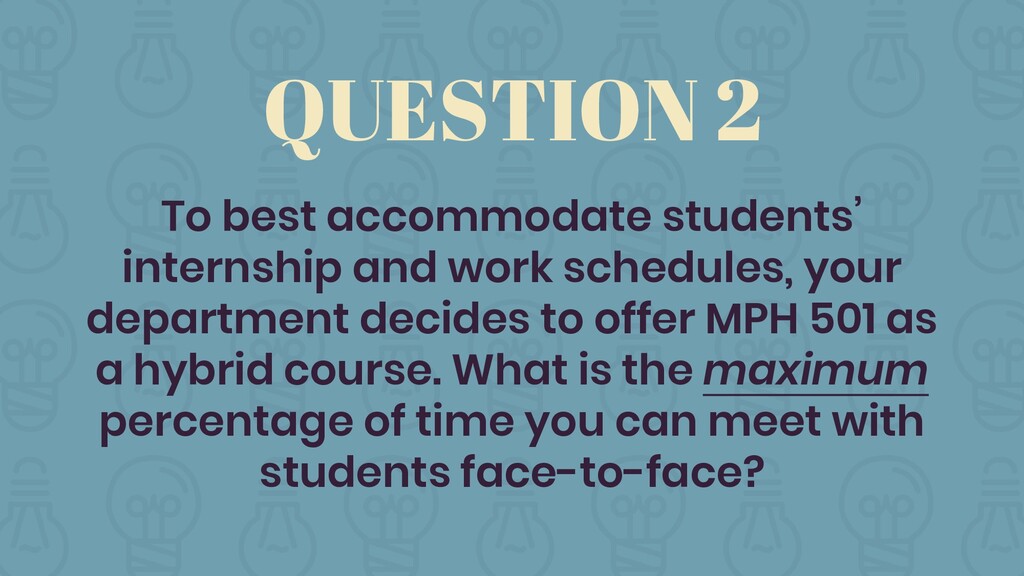
QUESTION 2 To best accommodate students’ internship and work schedules,
your department decides to offer MPH 501 as a hybrid course. What is the maximum percentage of time you can meet with students face-to-face?
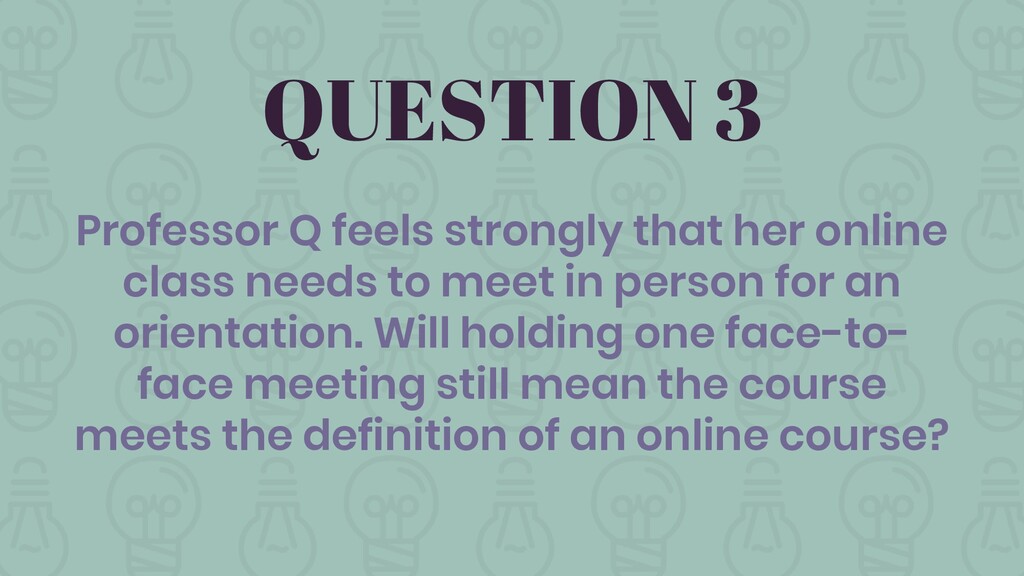
QUESTION 3 Professor Q feels strongly that her online class
needs to meet in person for an orientation. Will holding one face-to- face meeting still mean the course meets the definition of an online course?
Whichever modality… the principles of good learning experience design apply.
Shifting gears…
What does a good DE course look like? (And how
do I build one?)
None
None
STOP
What has been the best learning experience you’ve ever had?
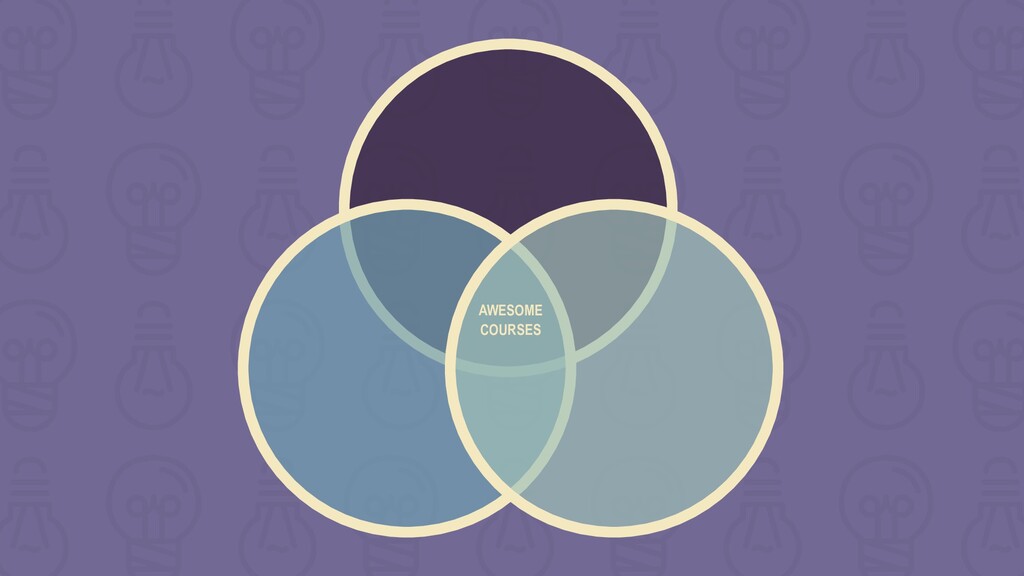
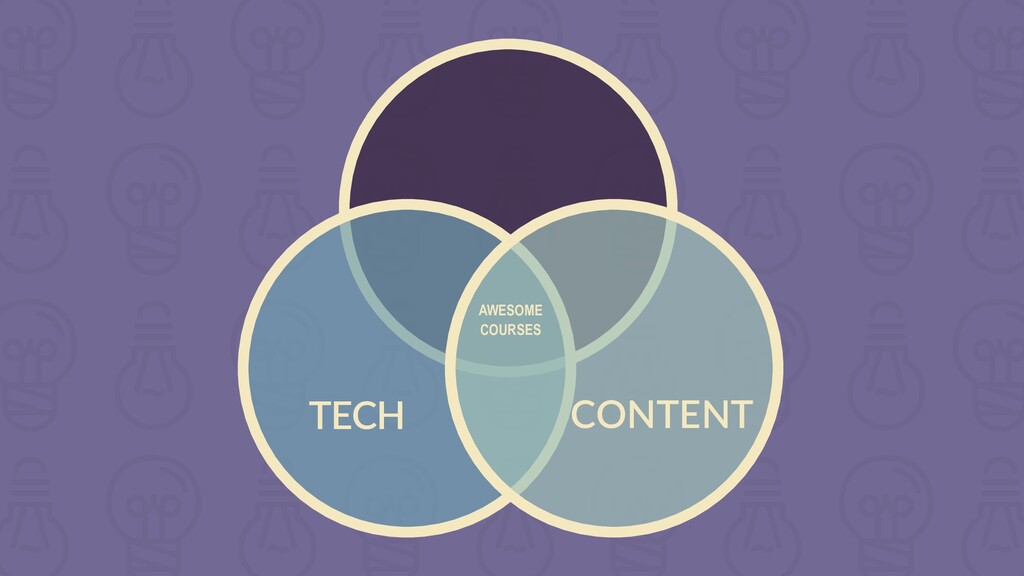
AWESOME COURSES
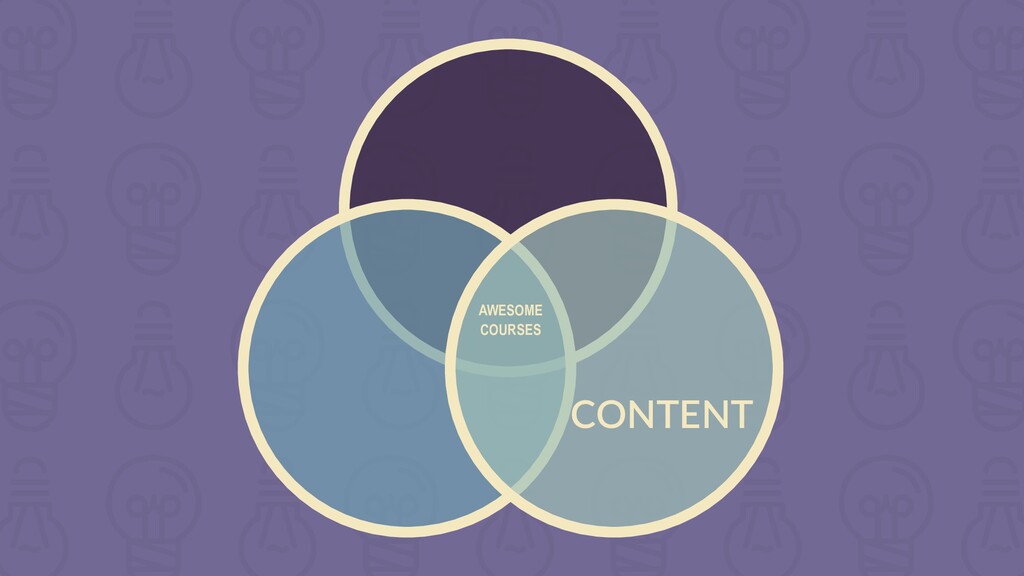
CONTENT AWESOME COURSES
Content: You’ve got this.
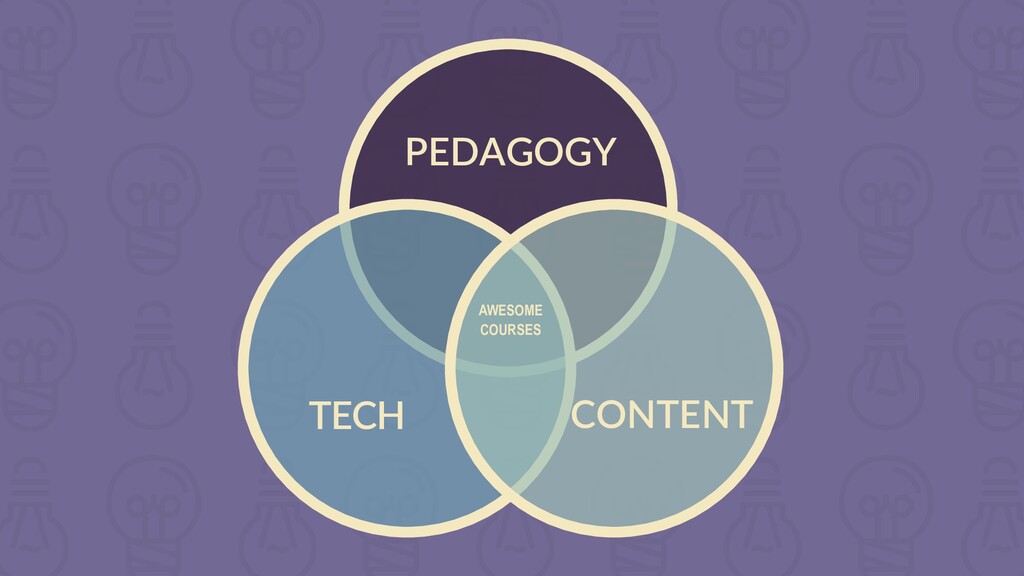
CONTENT TECH AWESOME COURSES
Remember: Tech is just a tool.
CONTENT PEDAGOGY AWESOME COURSES TECH
What has been the worst learning experience you’ve ever had?
Let’s talk pedagogy.
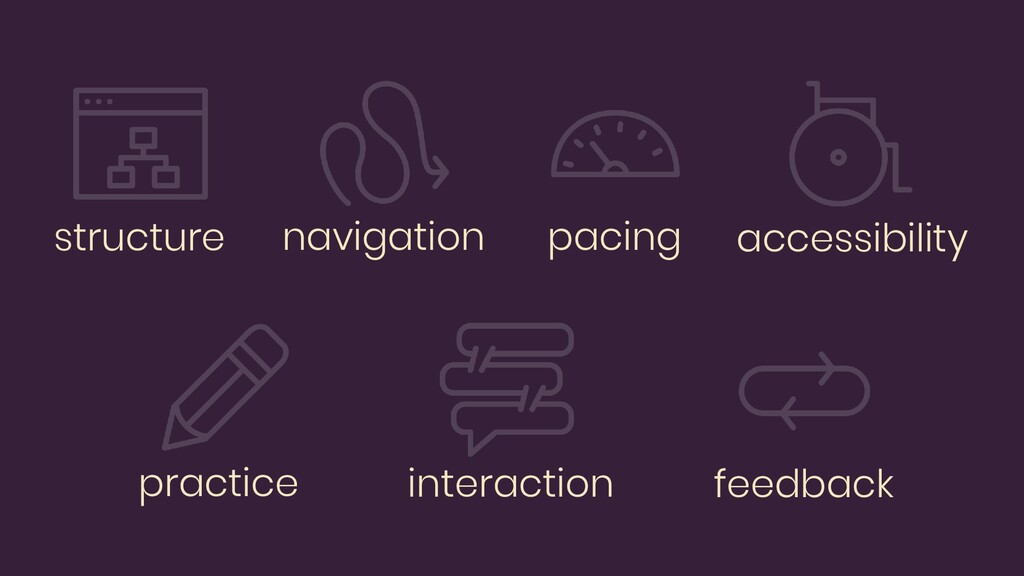
structure navigation pacing accessibility practice feedback interaction
Structure What: consistent, logical arrangement that provides a predictable, clear
pattern. Why: reduces cognitive load, supports student learning
Navigation What: clearly identifiable cues (in text, with graphics) that
facilitate movement between pages and throughout course. Why: reduces cognitive load, supports student learning
Pacing/Chunking What: meaningful segmentation of content into distinct units/modules/pages. Why:
reduces cognitive load, supports student learning
Accessibility What: all documents, images, media, and required materials are
accessible. Why: meets the needs of diverse learners
Practice What: assessments that are authentic, valid (aligned with objectives),
and frequent with clear expectations and criteria. Why: provides opportunity to evaluate student understanding
Interaction What: opportunities for student-faculty, student-content, and student-student engagement. Why:
builds community of learners, provides support for learners
Feedback What: direct, consistent, timely response to student assessment submissions.
Why: provides opportunity to correct misunderstandings, aid further understanding
But what does a good course look like?
Break Time!


 msweatherly
 mclloyd
 thirion
 denniskardys
 katiecoart
 baasie
 katarinadahlin
 ryanjones
 cassininazir
 mfonobong
 oripsolob
 soudai
 csswizardry