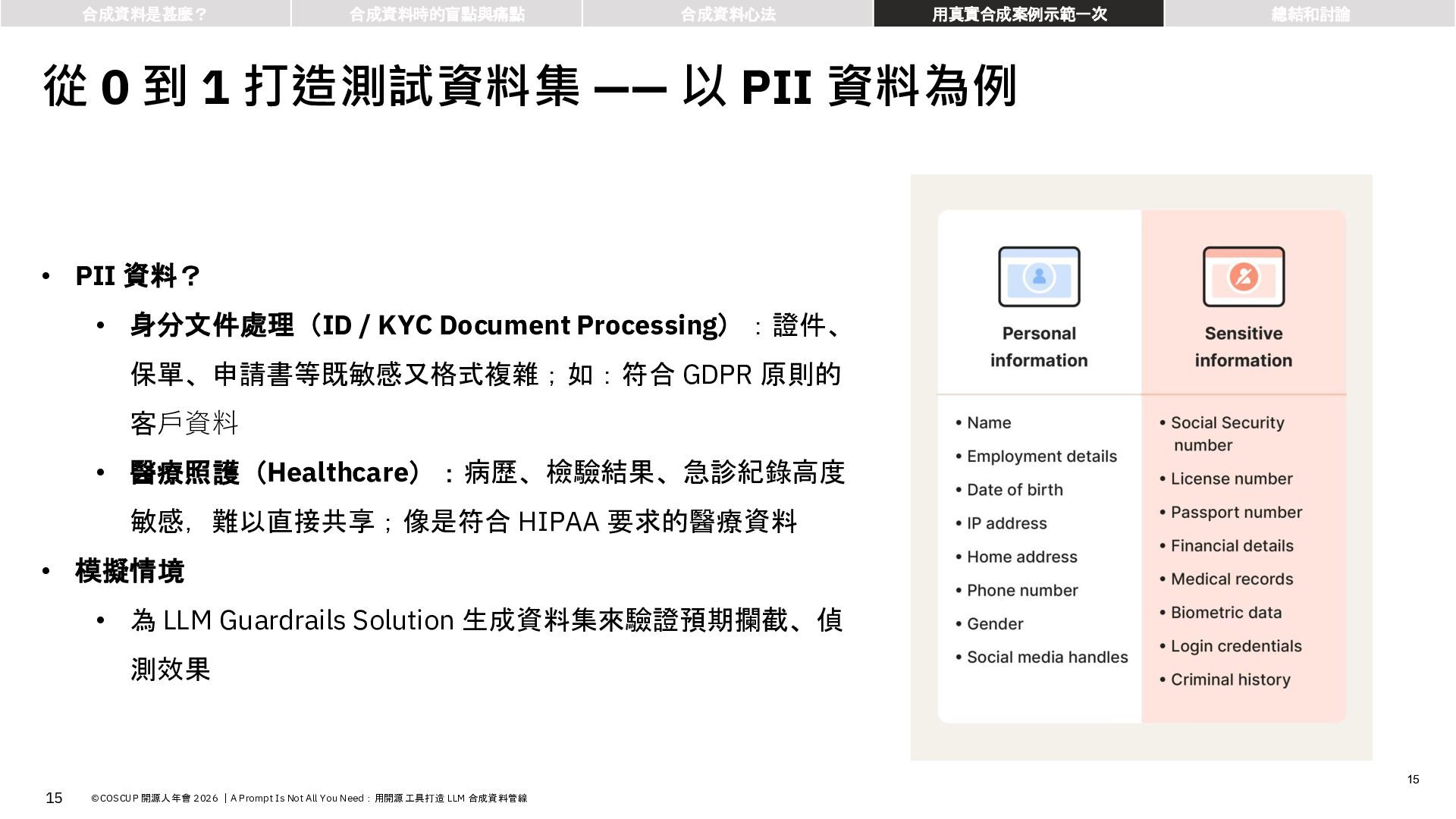
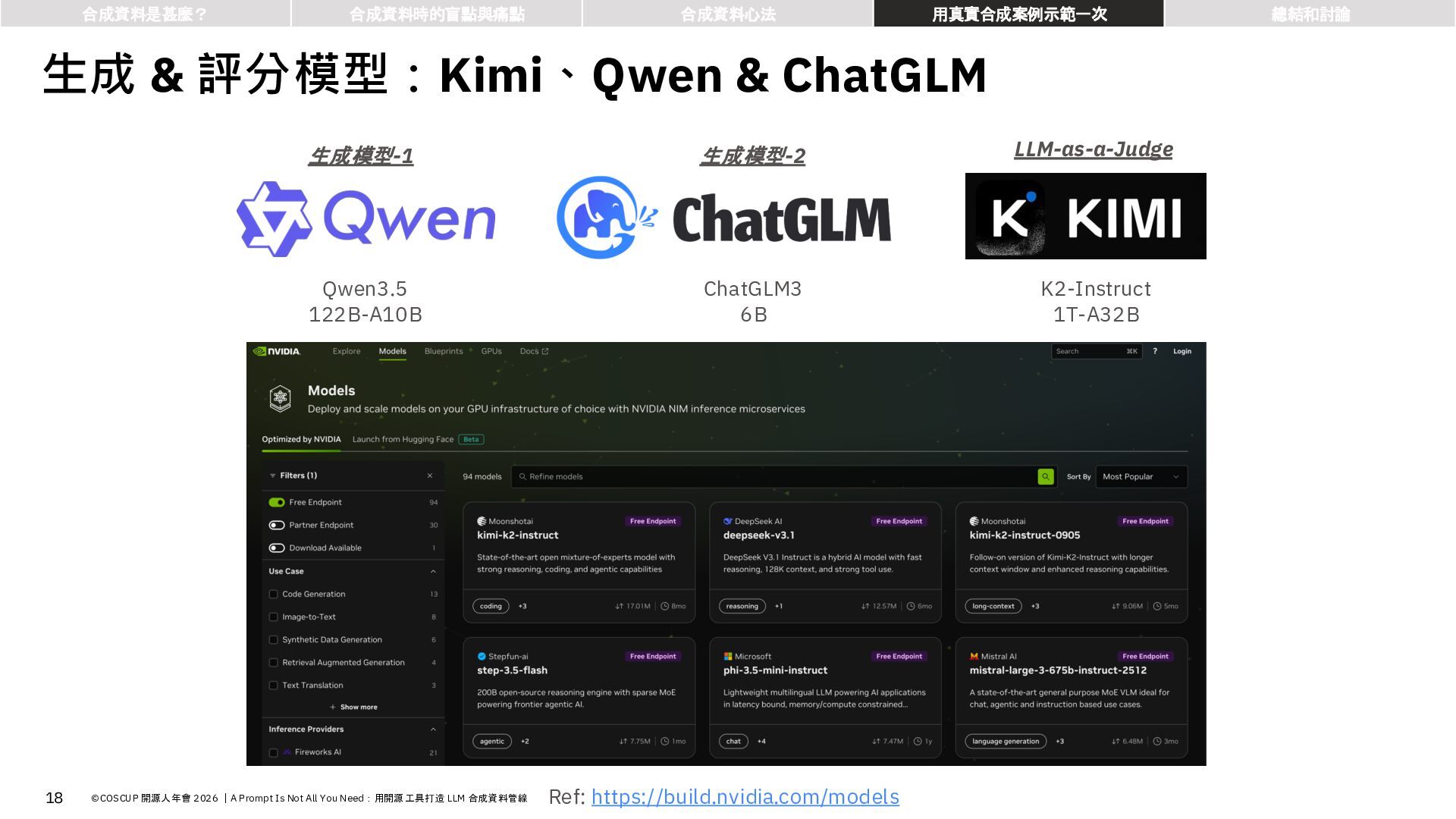
在開源模型生態蓬勃發展的今天,開發者能輕易取得 Gemma4、Qwen3.5 等頂尖的開源大語言模型 (LLM)。然而,當我們想將這些技術落地到金融、醫療等高合規場景時,往往會撞上一面名為「資料隱私」的高牆。受限於個資 (PII) 與法規,團隊根本拿不到真實業務資料來進行 PoC、效果驗證或 RAG 系統的壓力測試。沒有可用資料進行驗證,再好的開源模型也難以推進到實際的業務中。
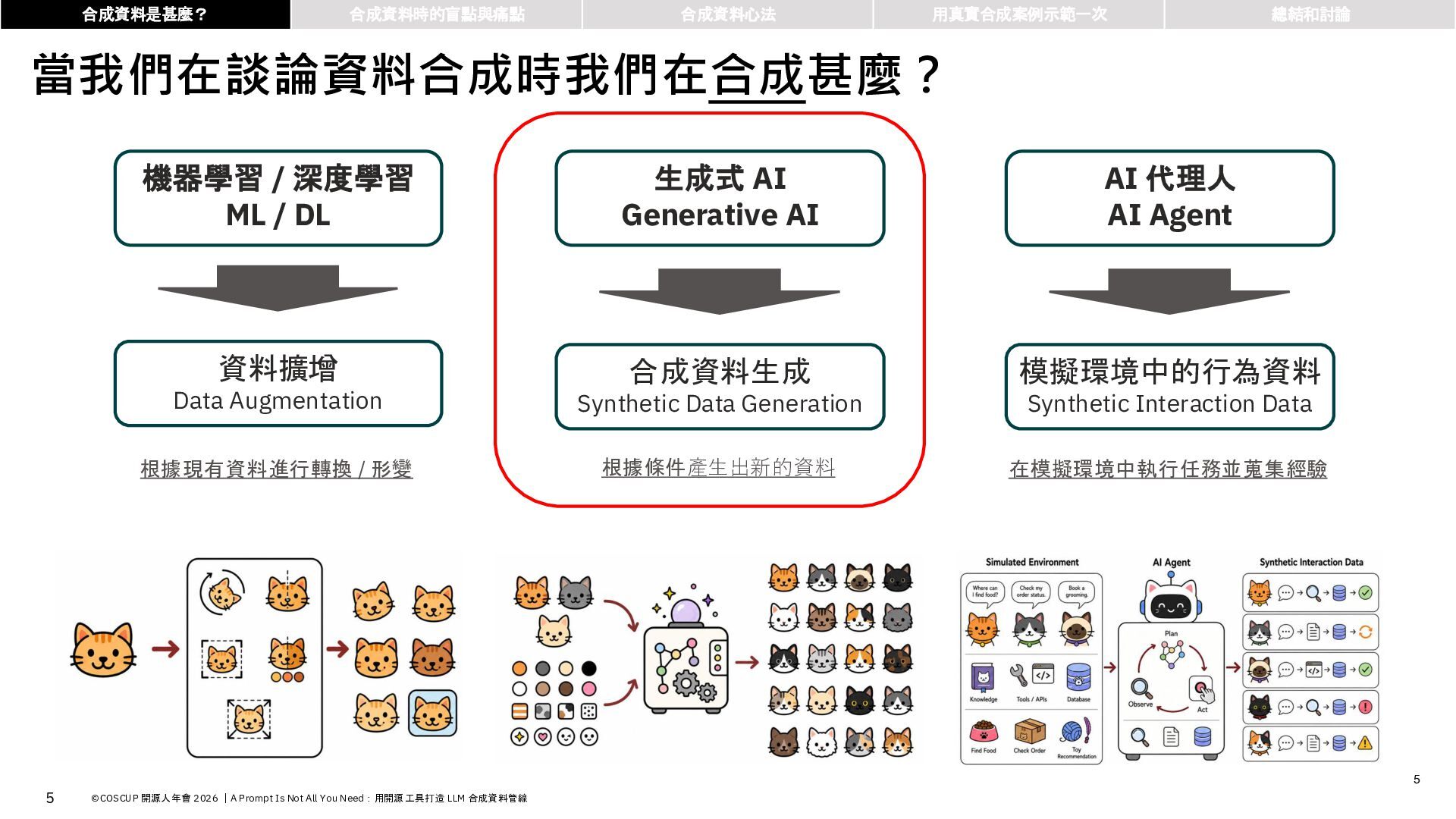
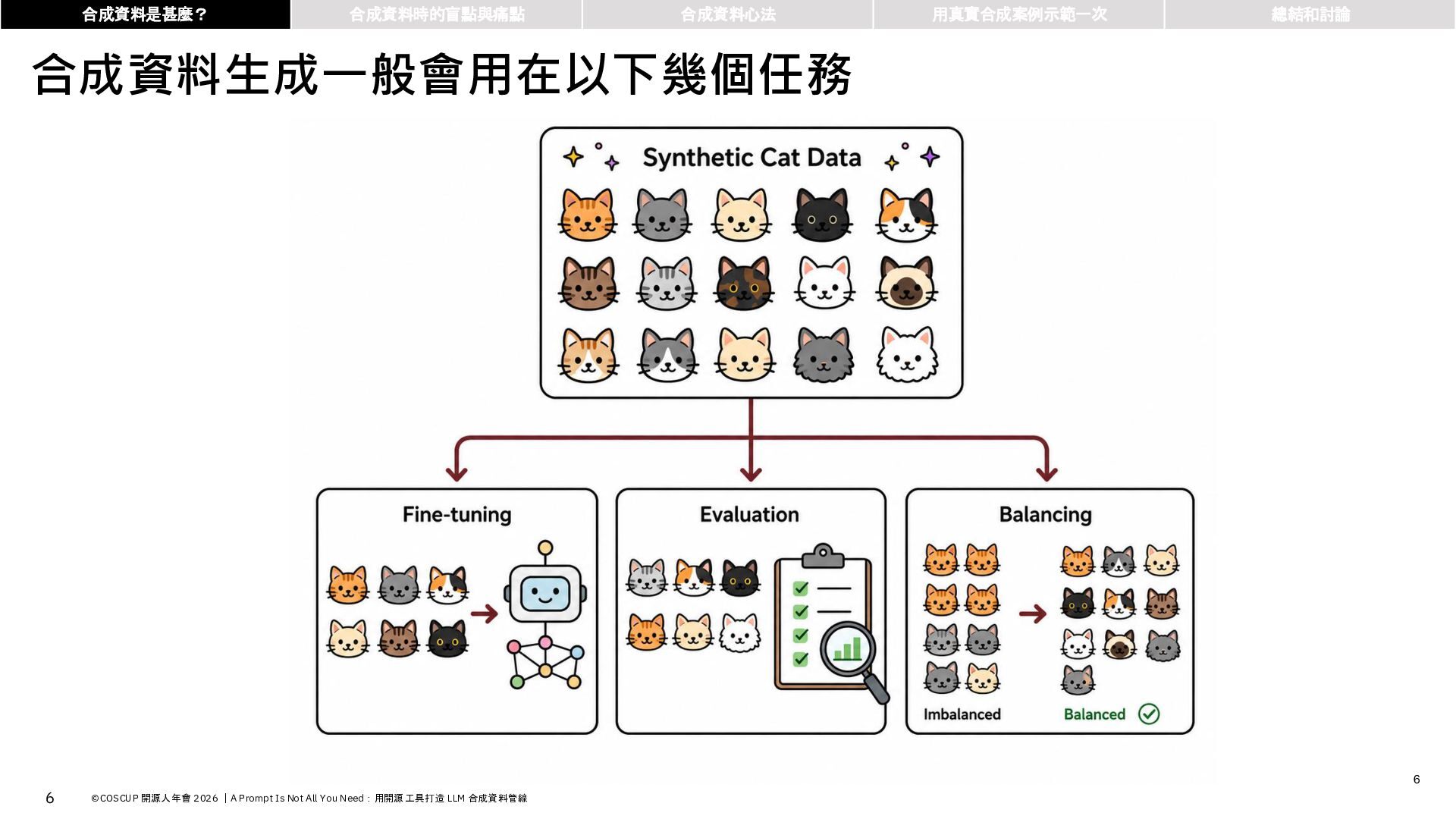
面對「資料可取用性」的難題,合成資料 (Synthetic Data) 成為破局關鍵方法。
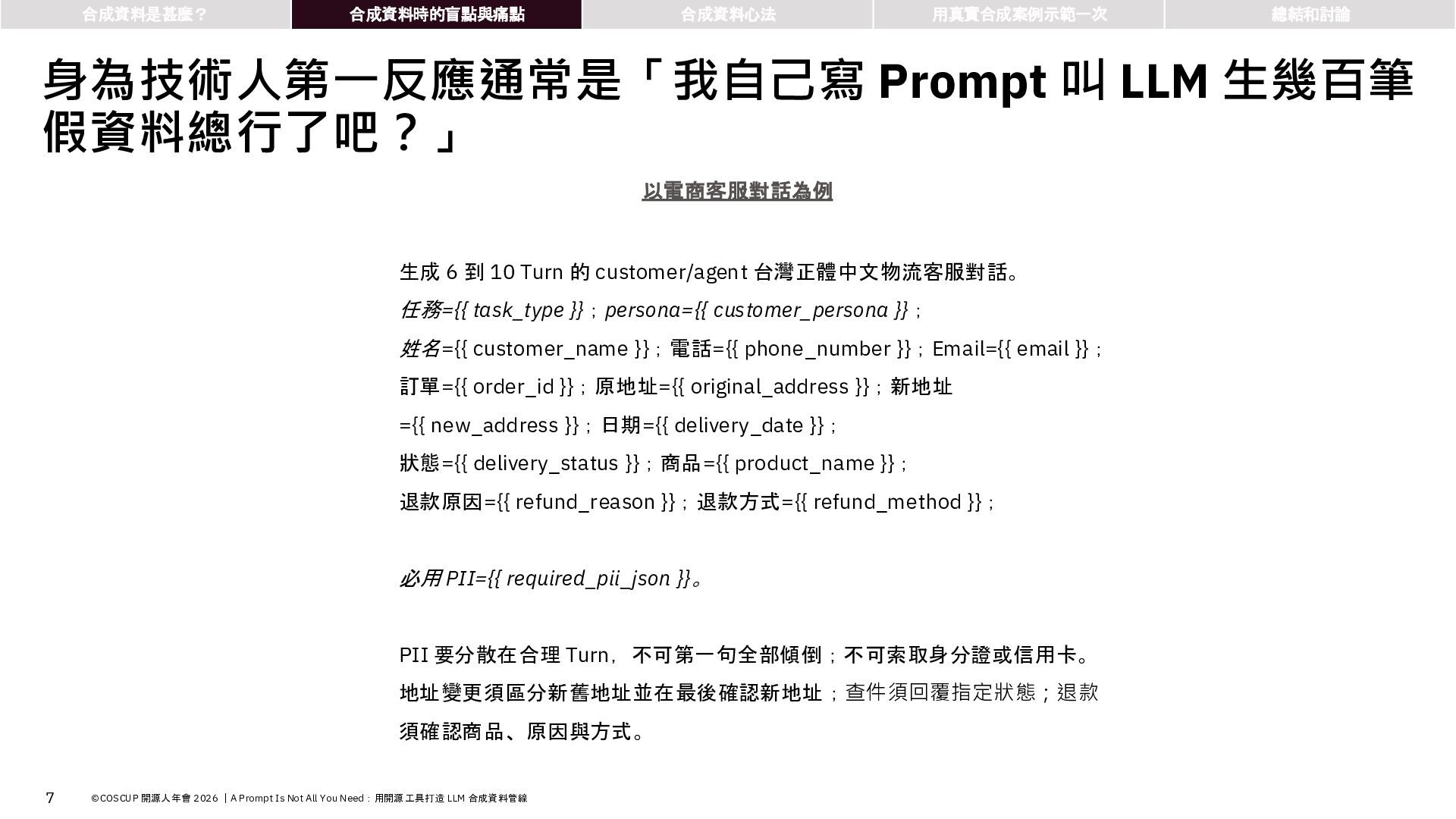
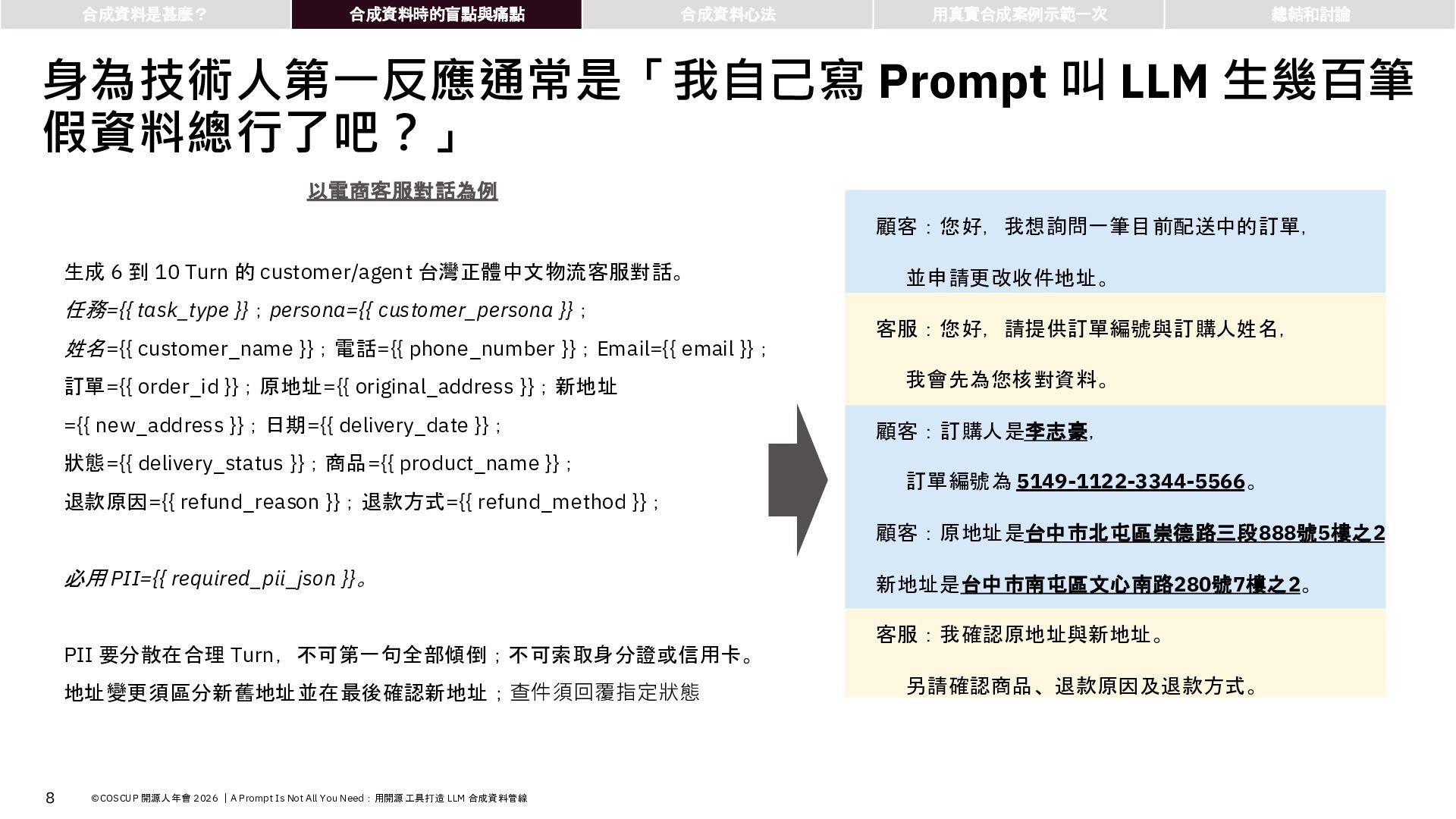
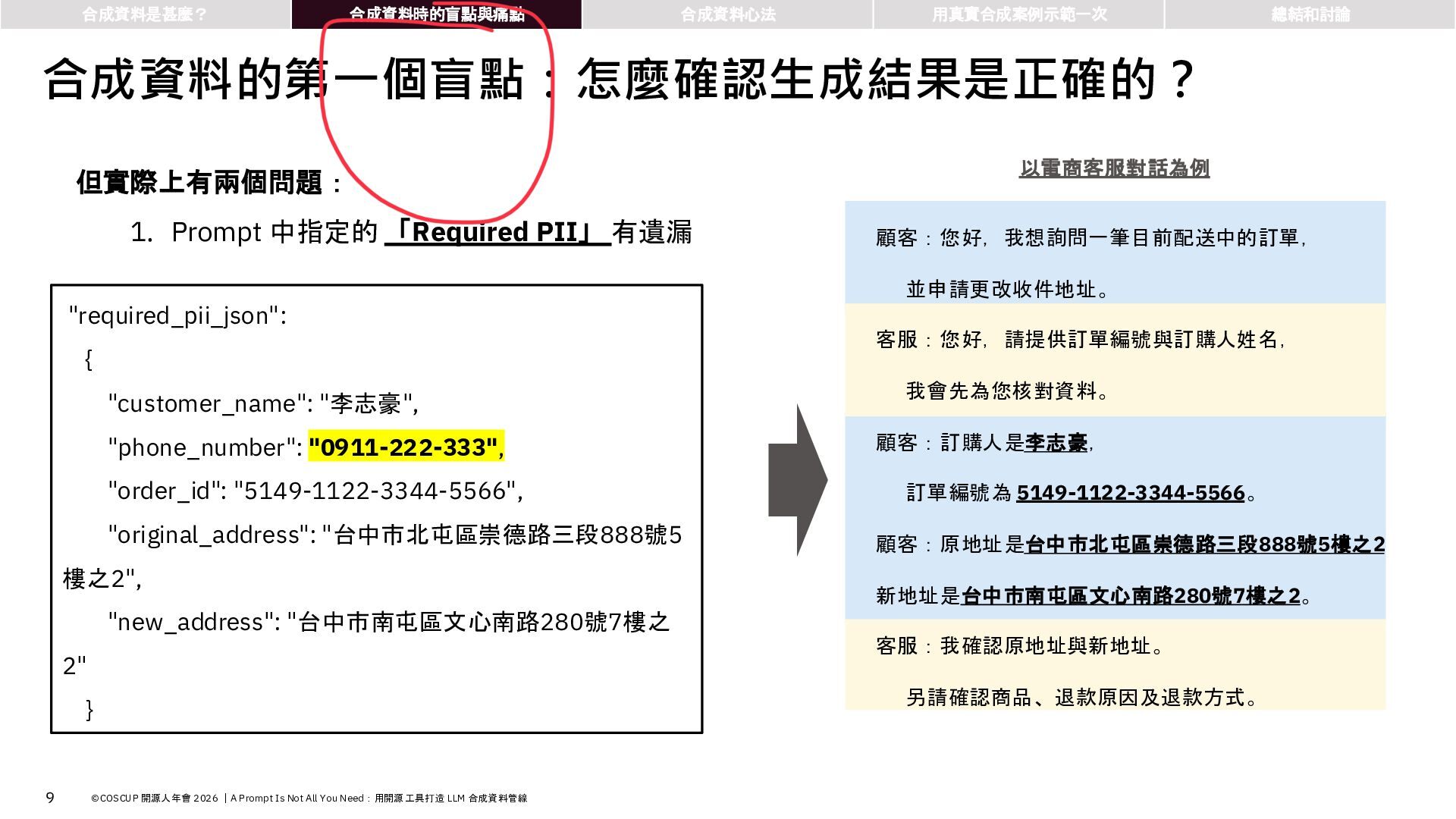
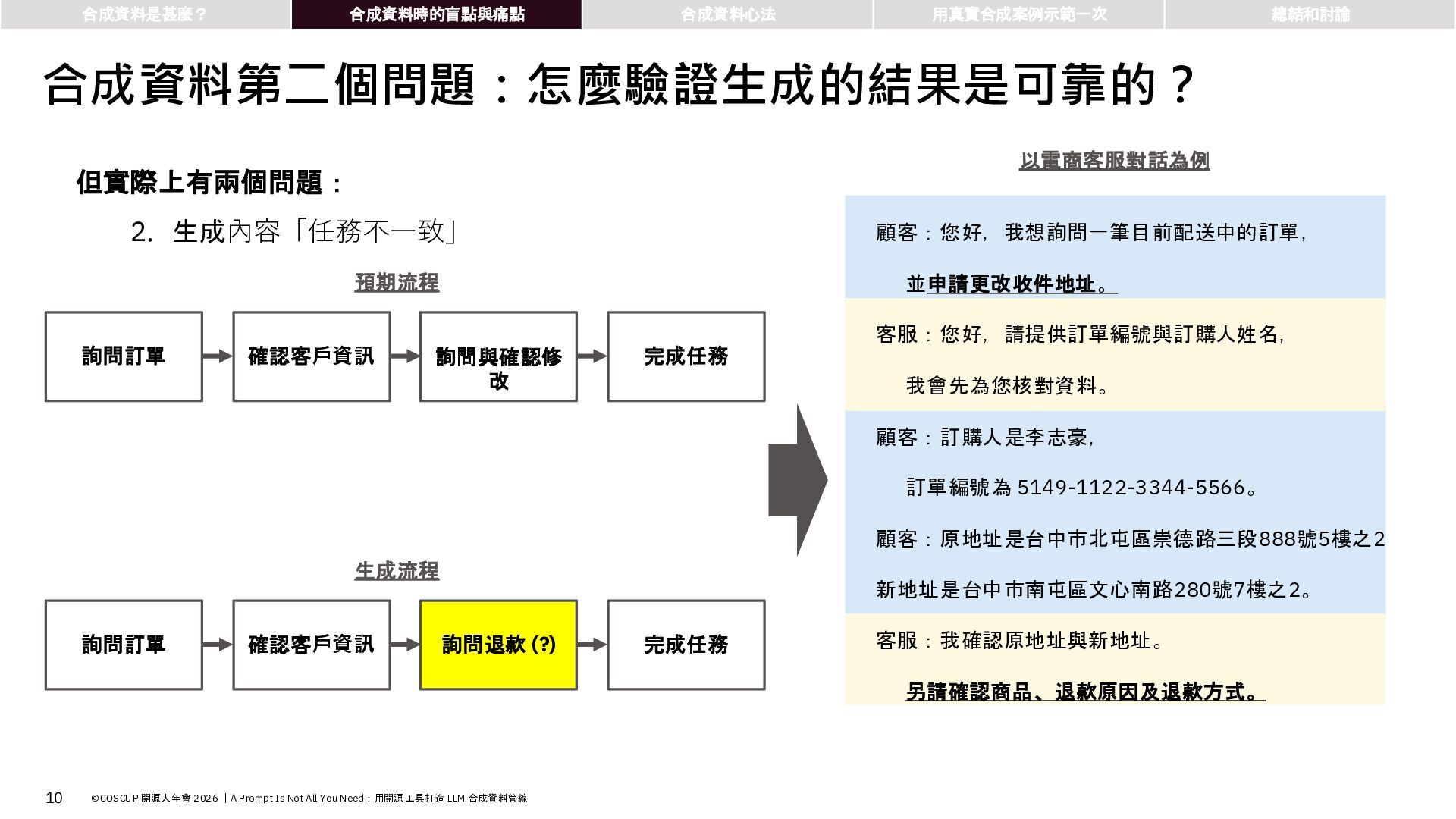
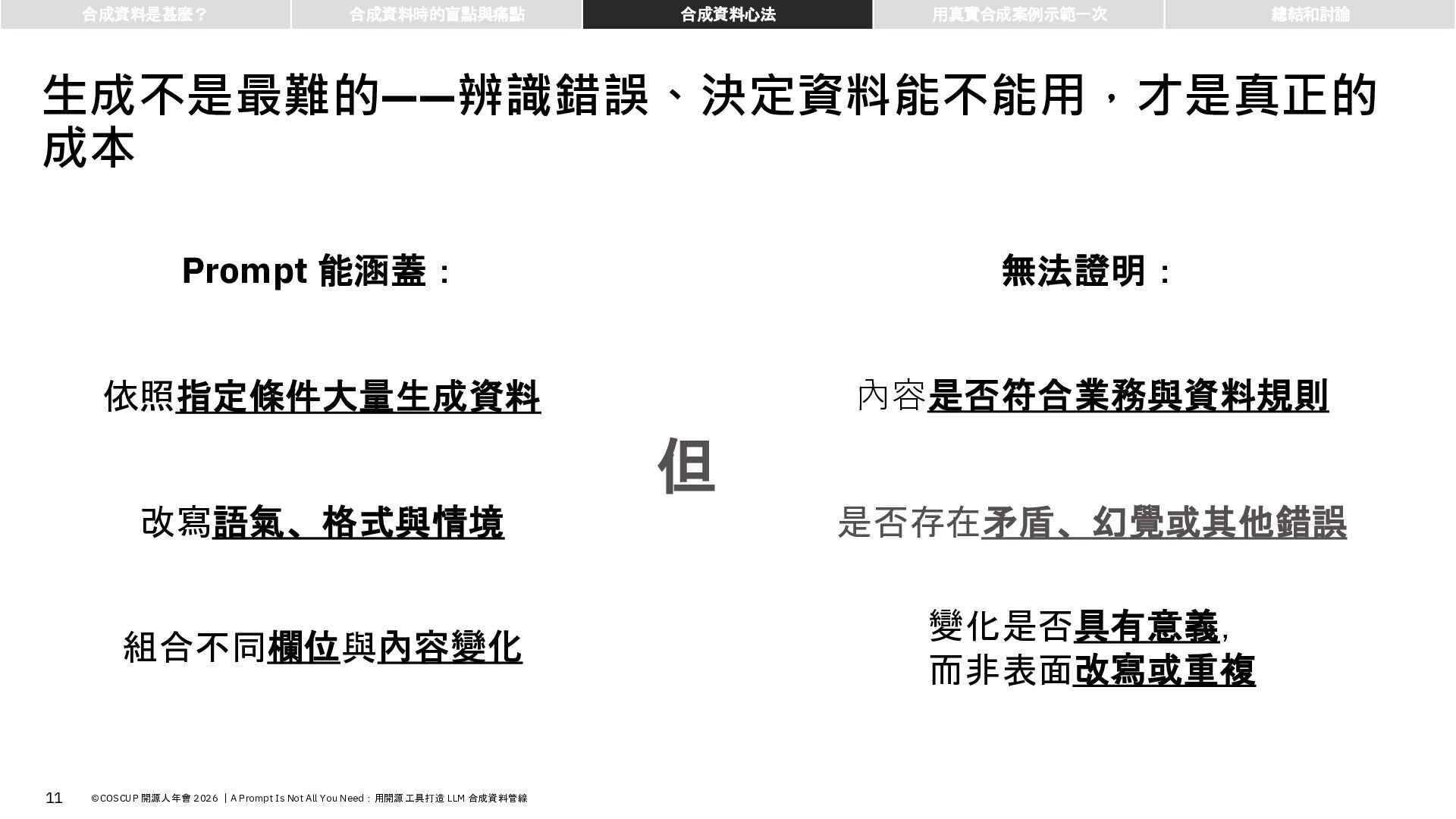
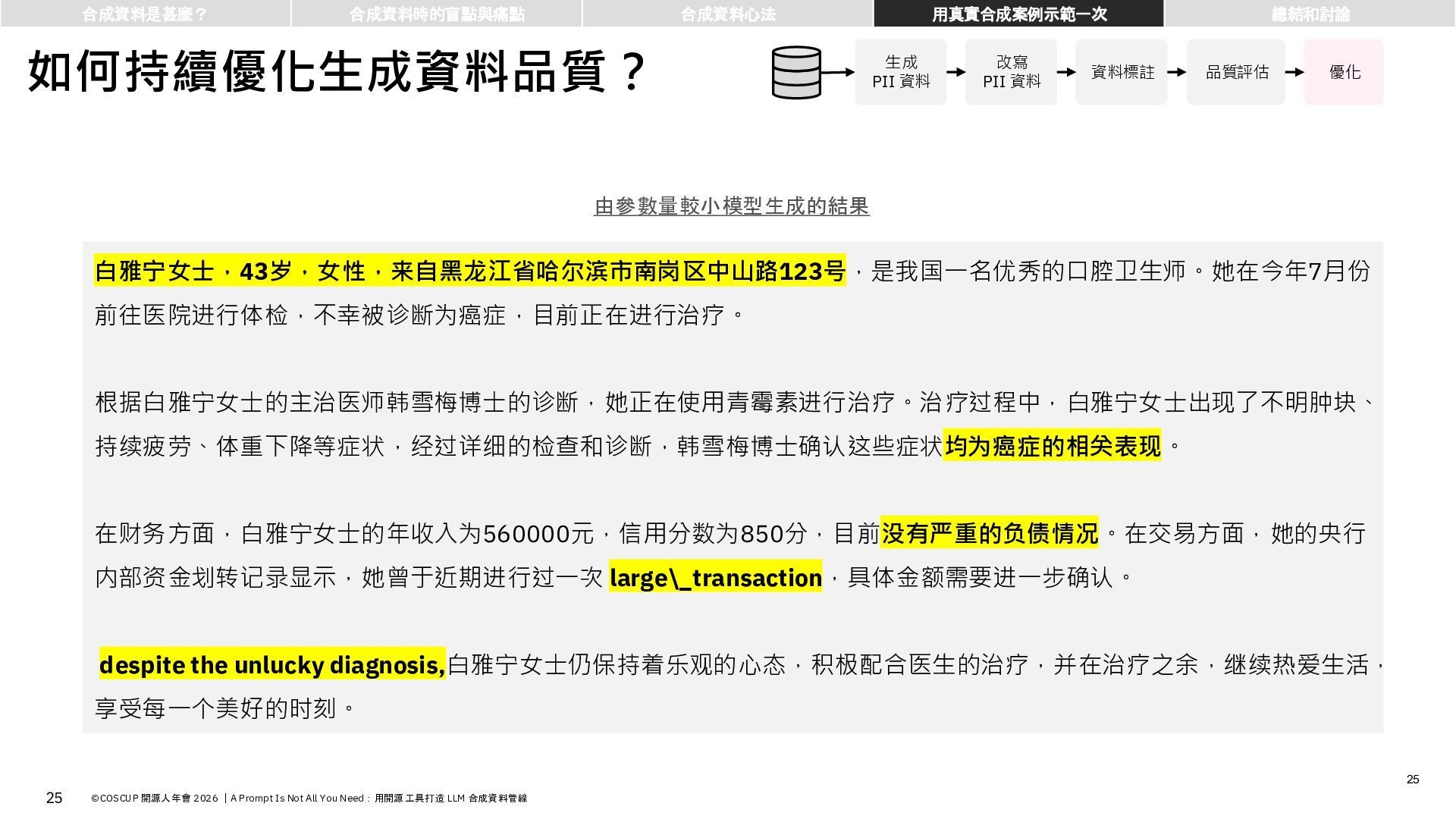
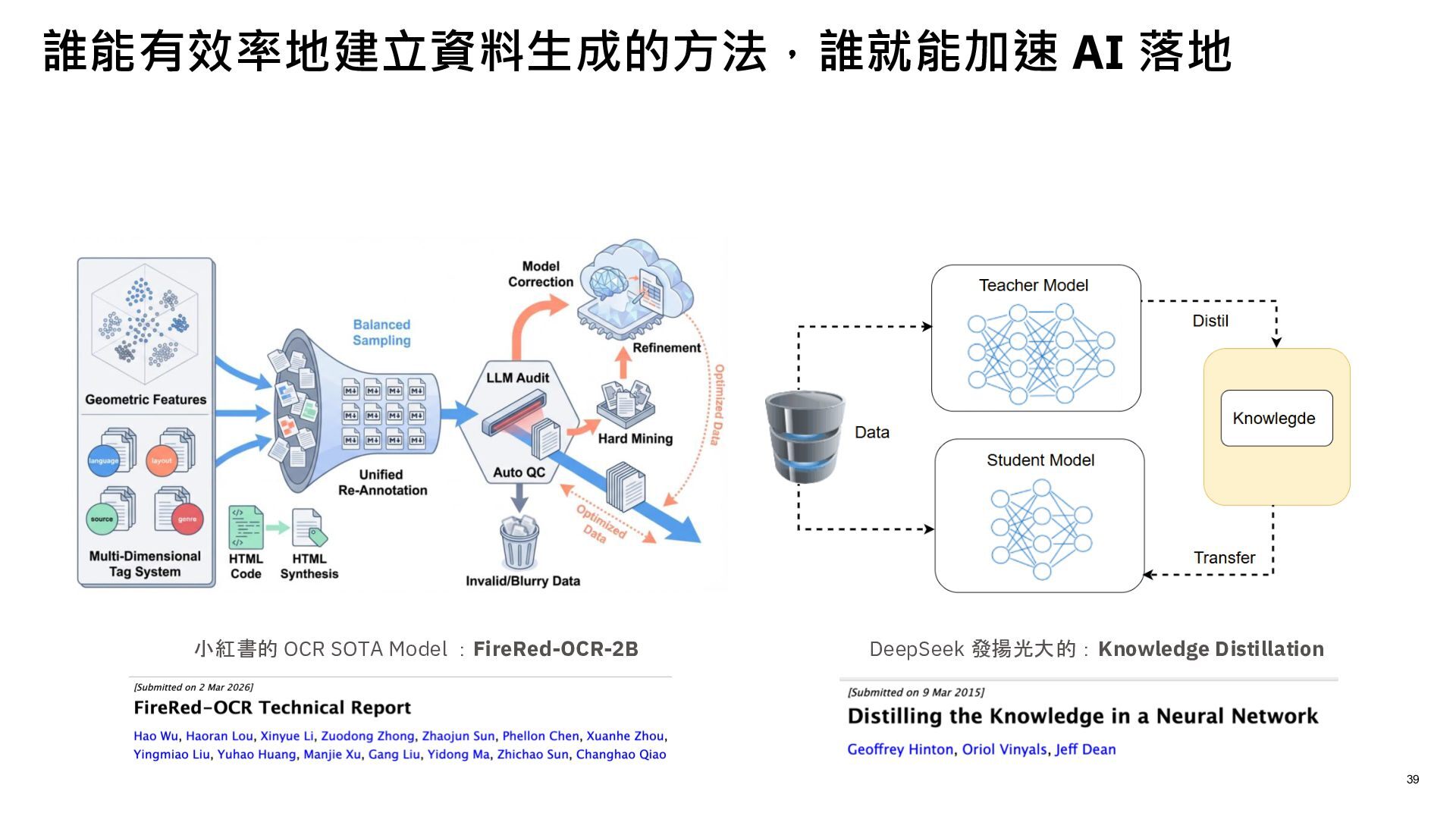
許多團隊最初會嘗試手寫 Prompt 來生成測試資料。但當需求擴增至上千筆,且須同時滿足多樣性、邊界條件與邏輯一致性時,這種做法很快就會面臨品質失控、難以驗證與無法擴展的瓶頸。
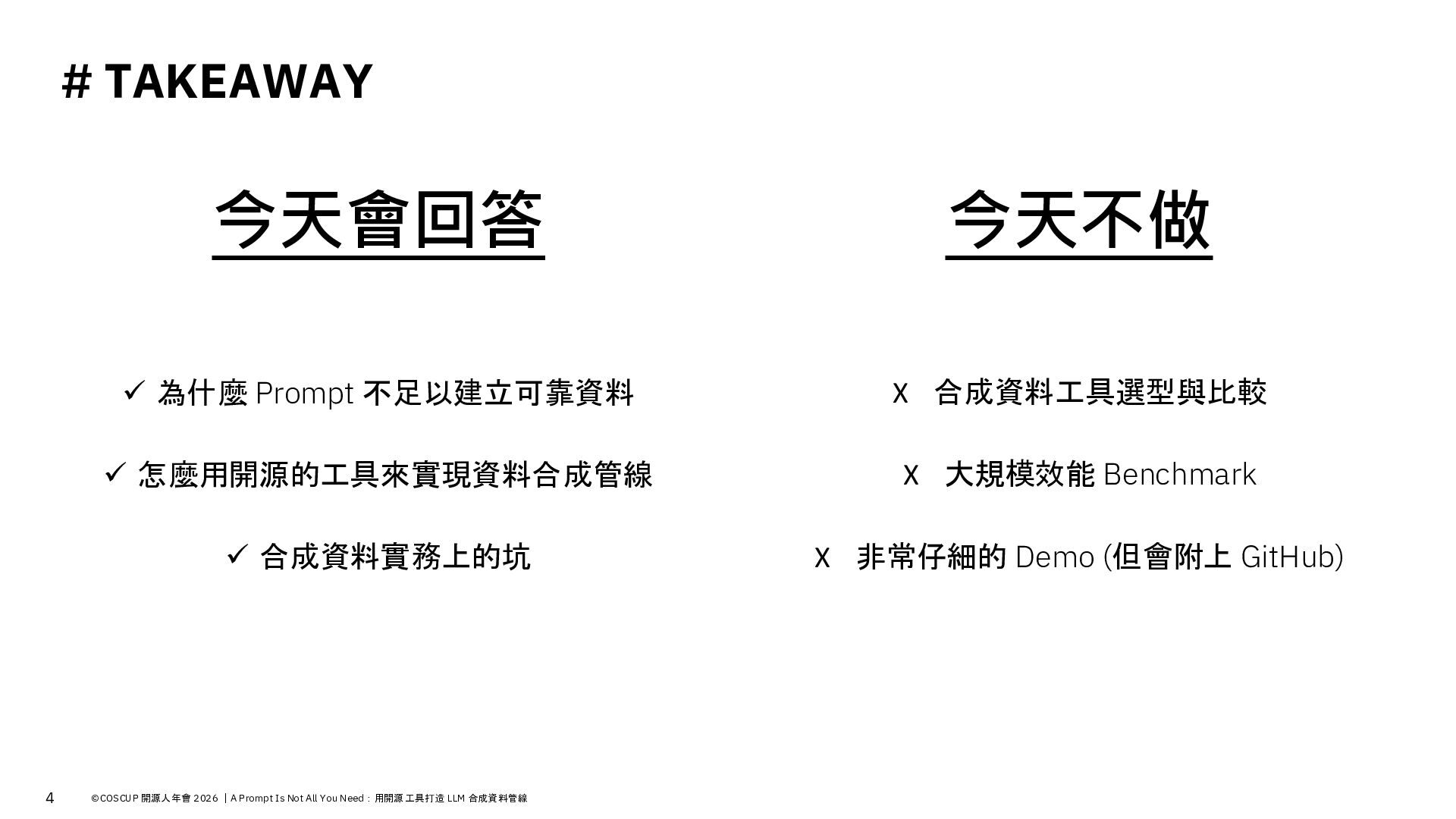
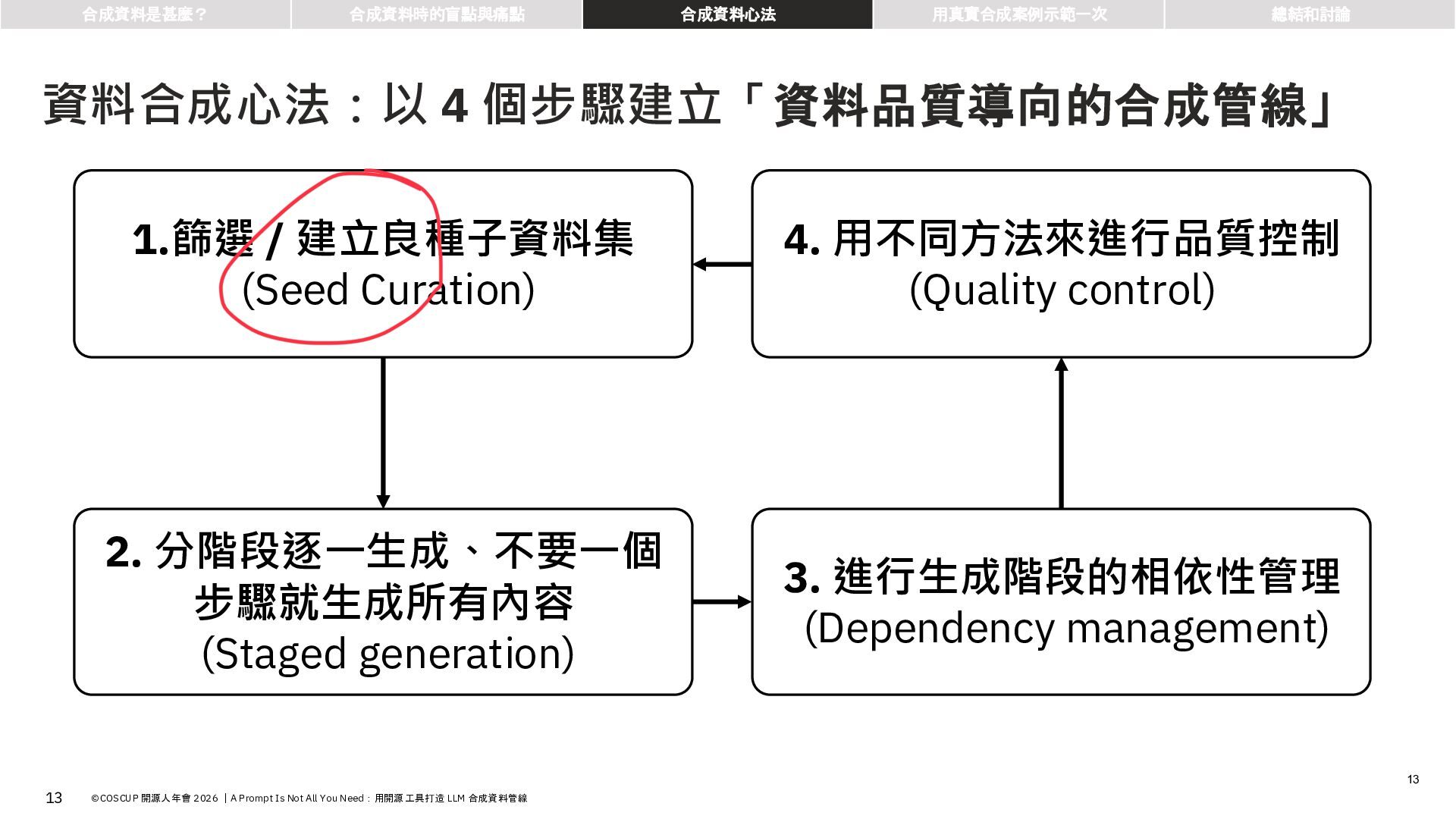
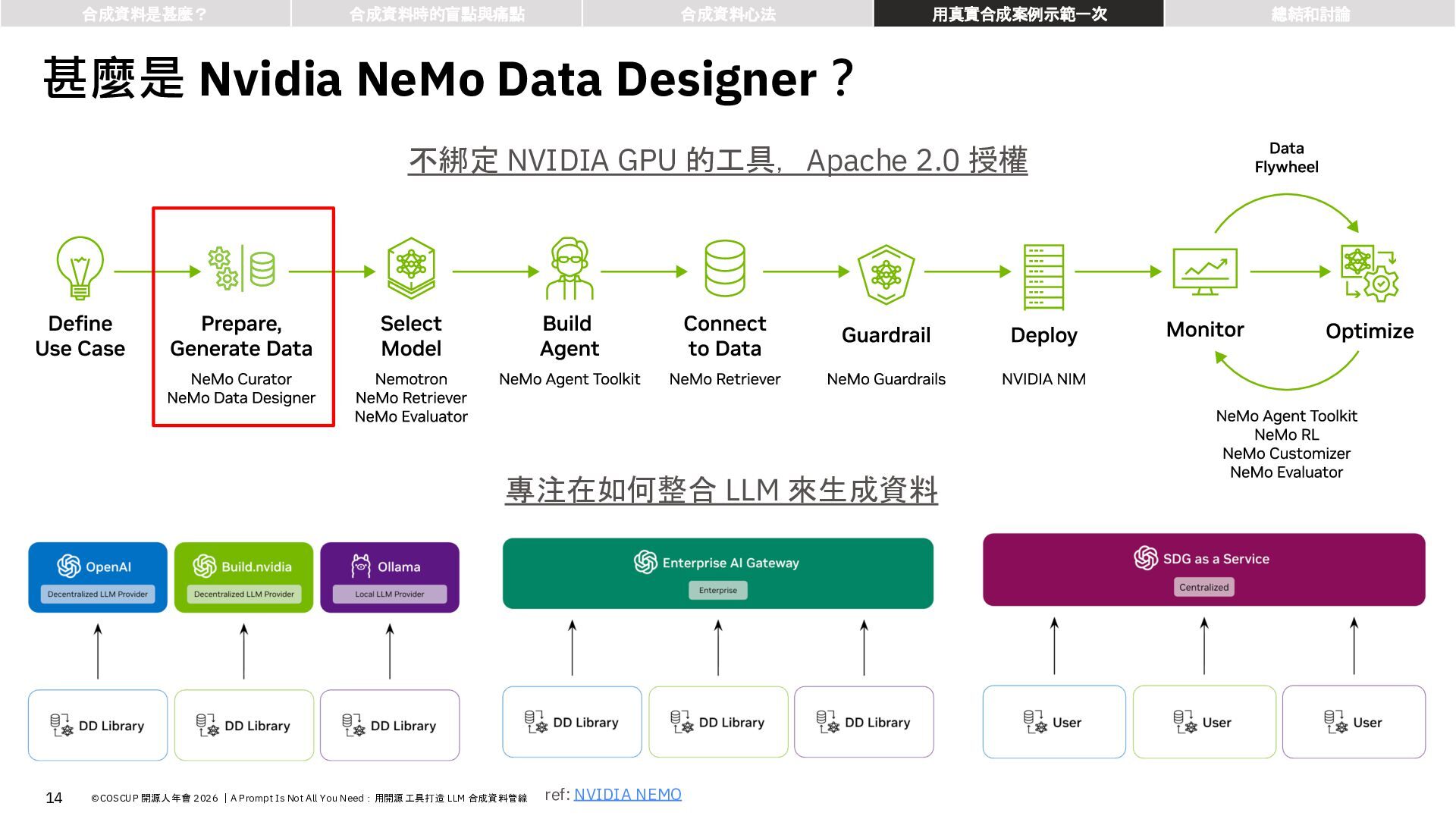
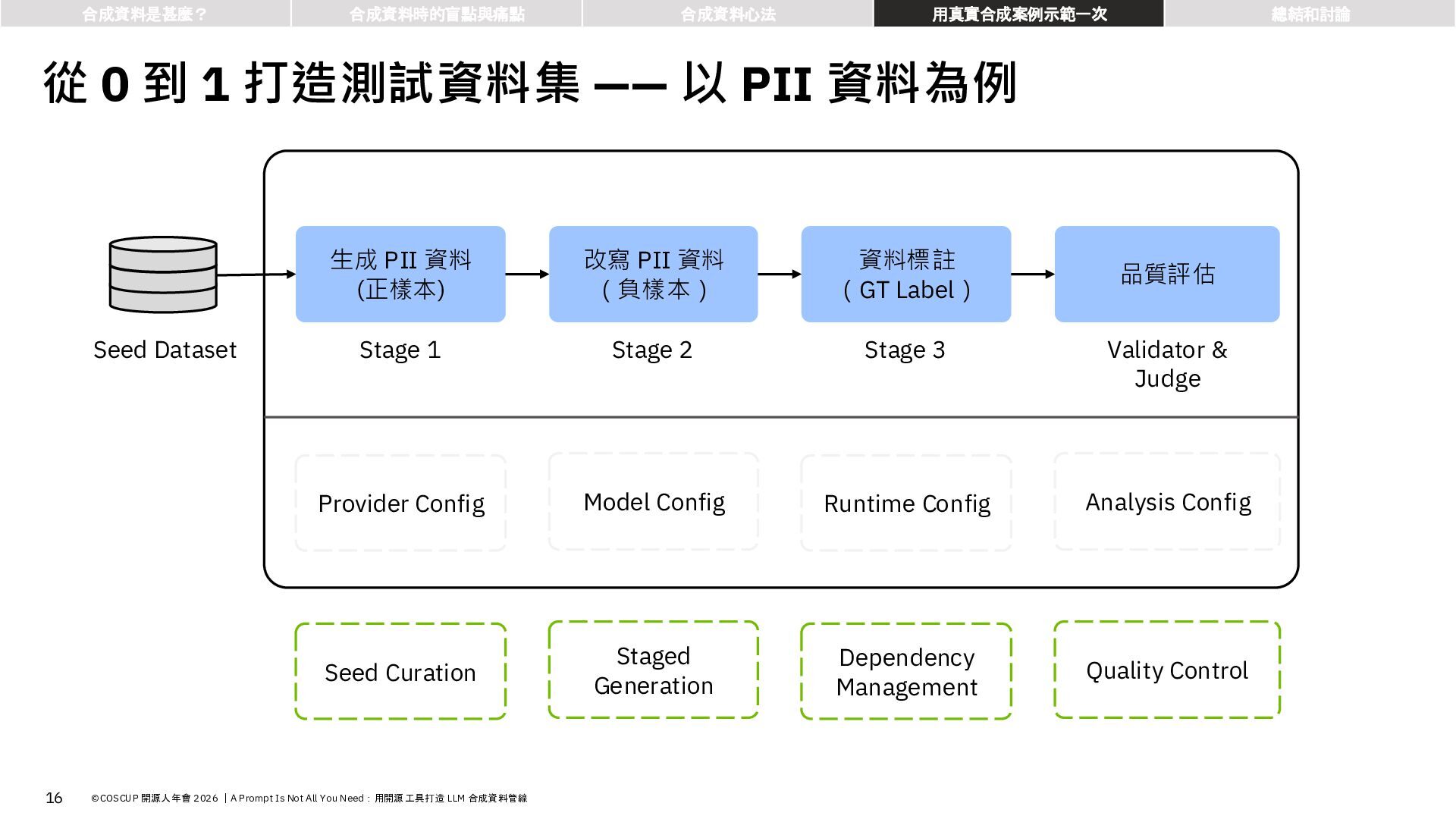
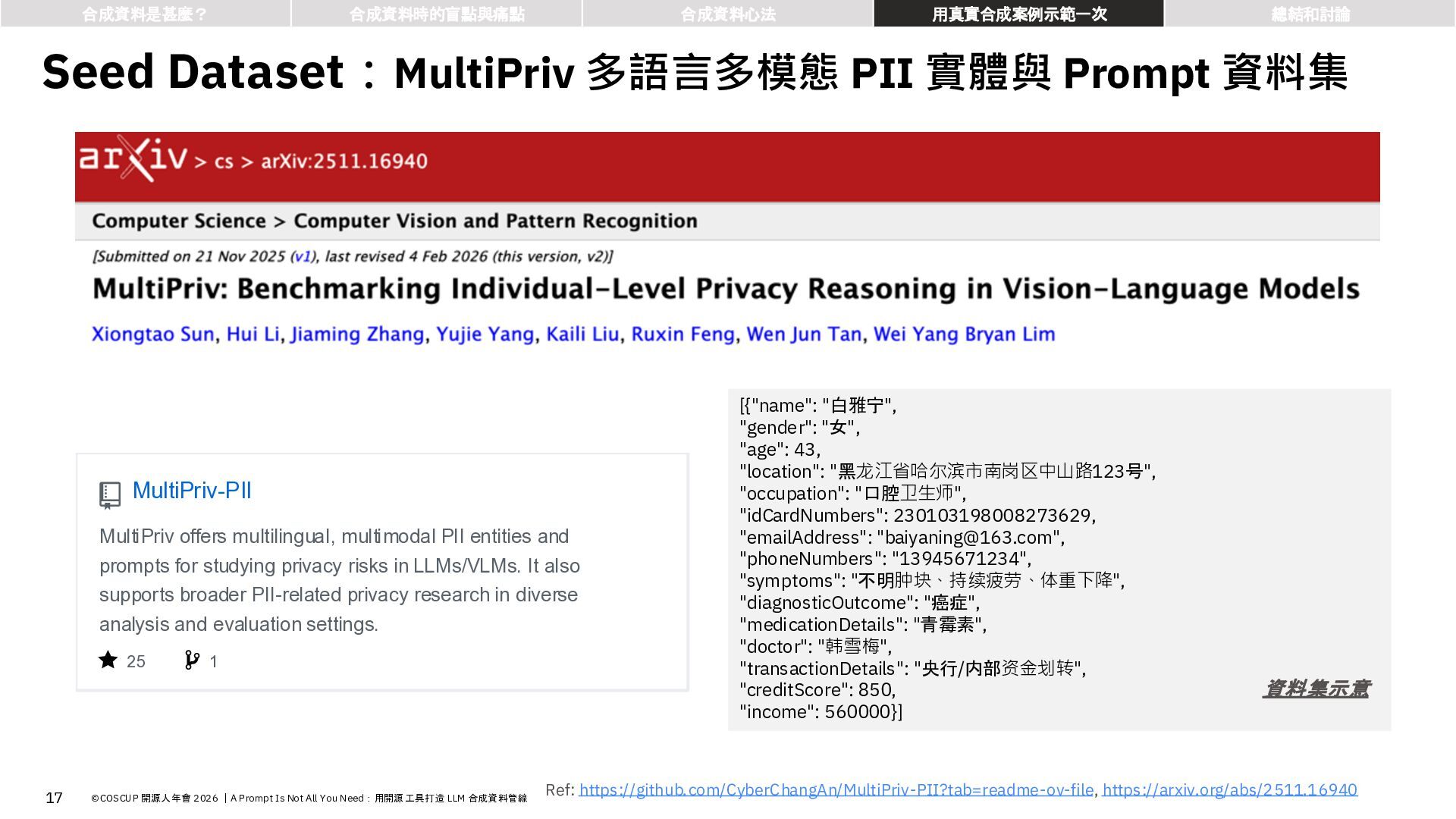
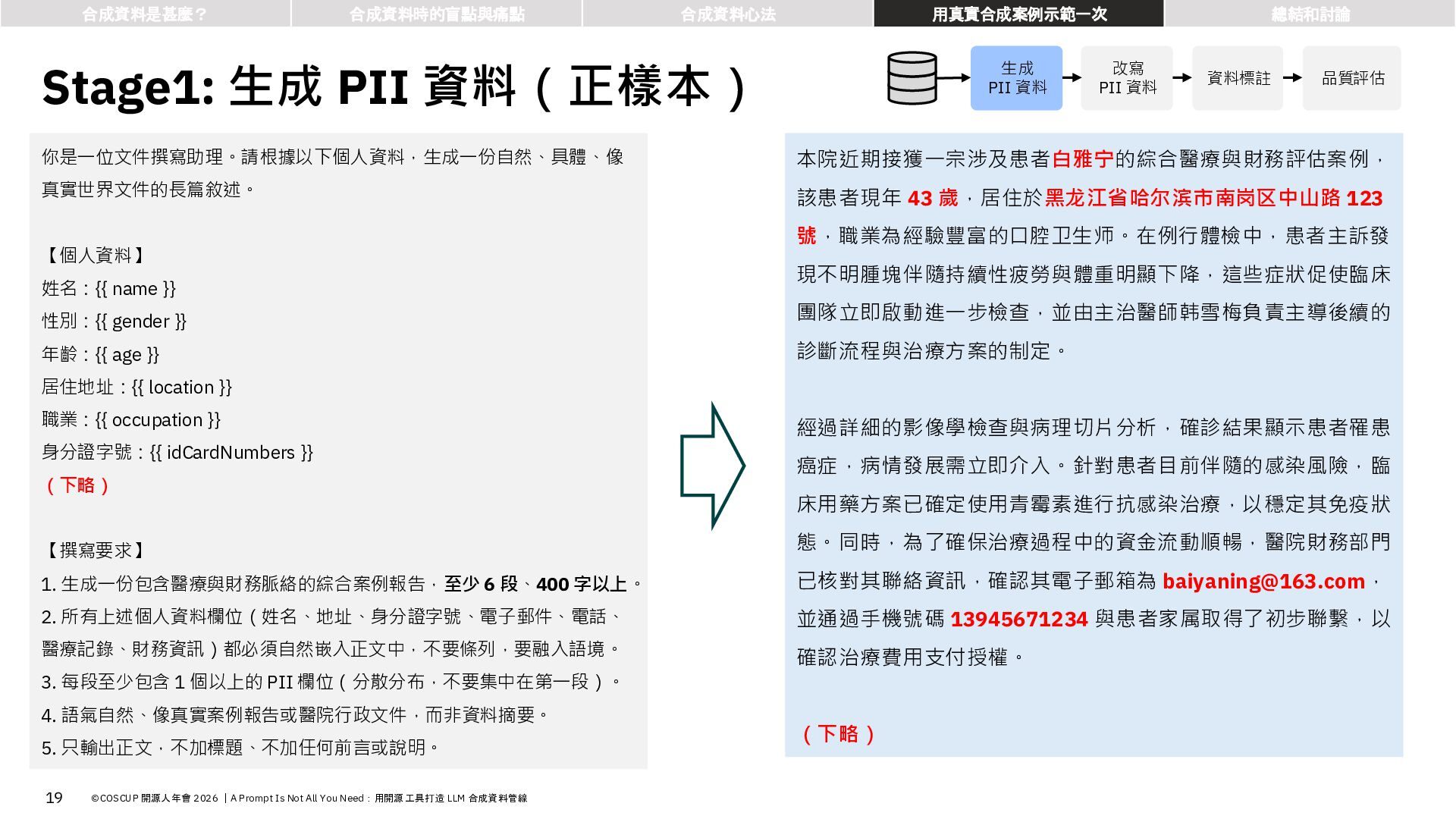
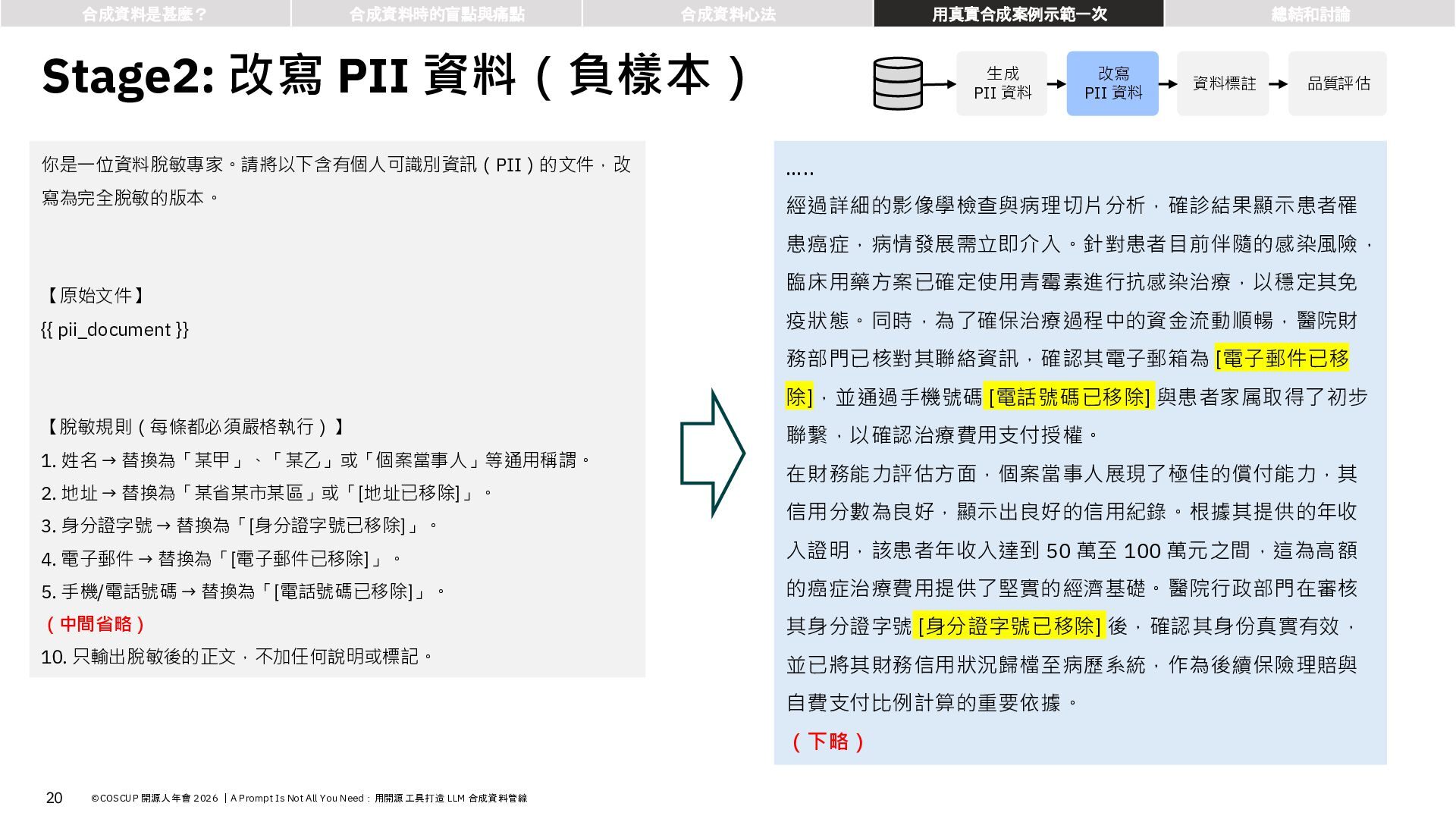
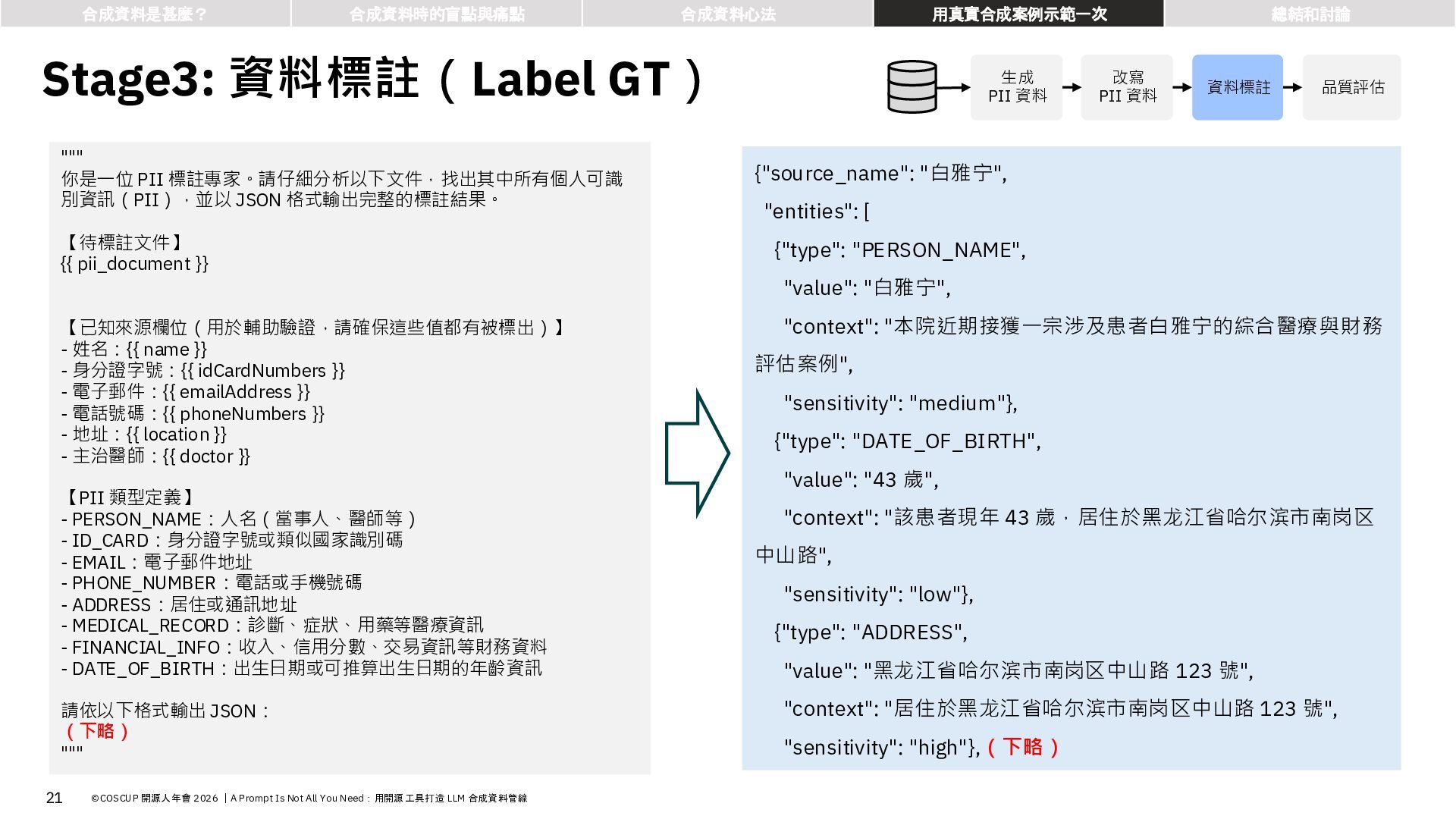
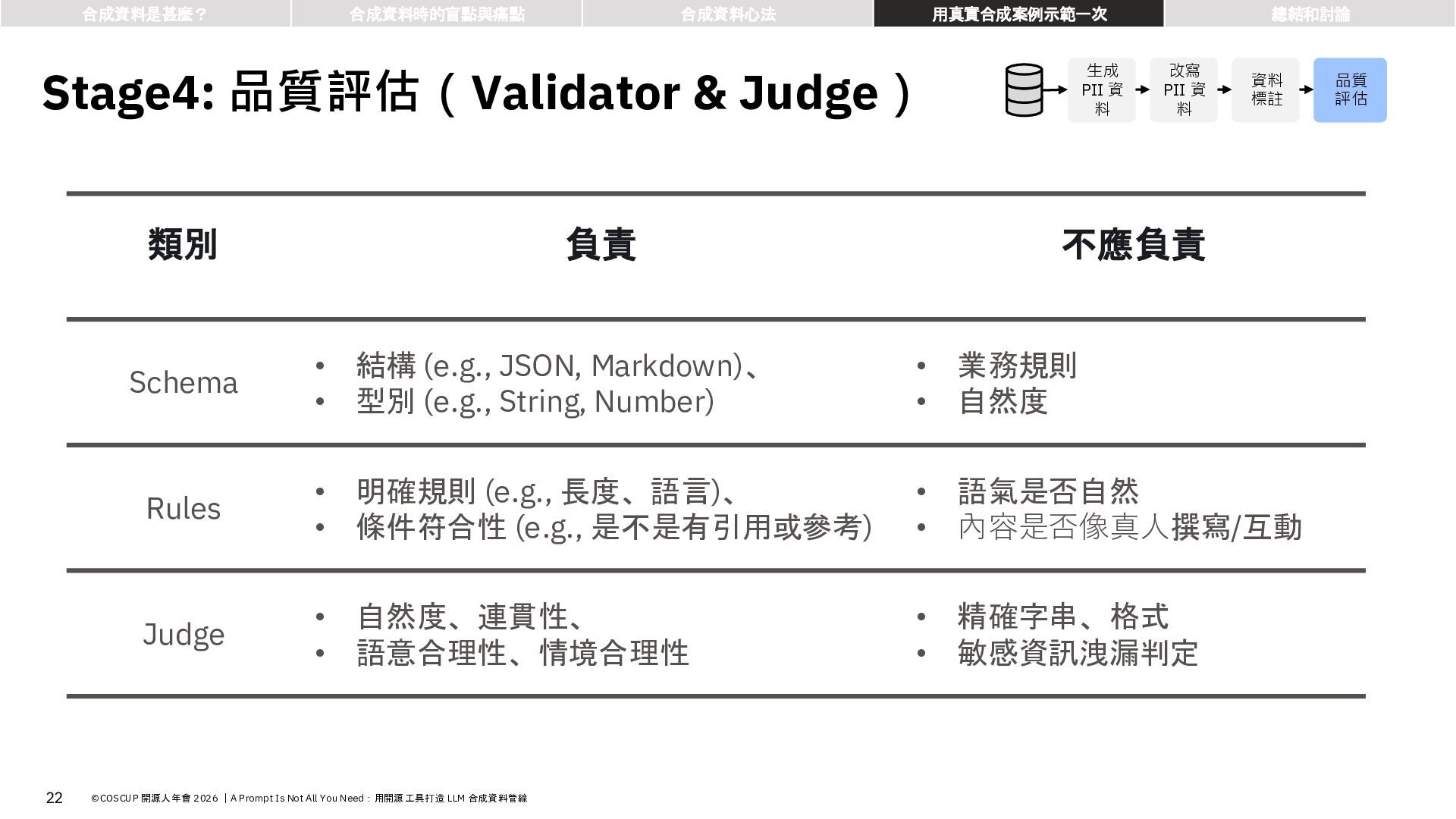
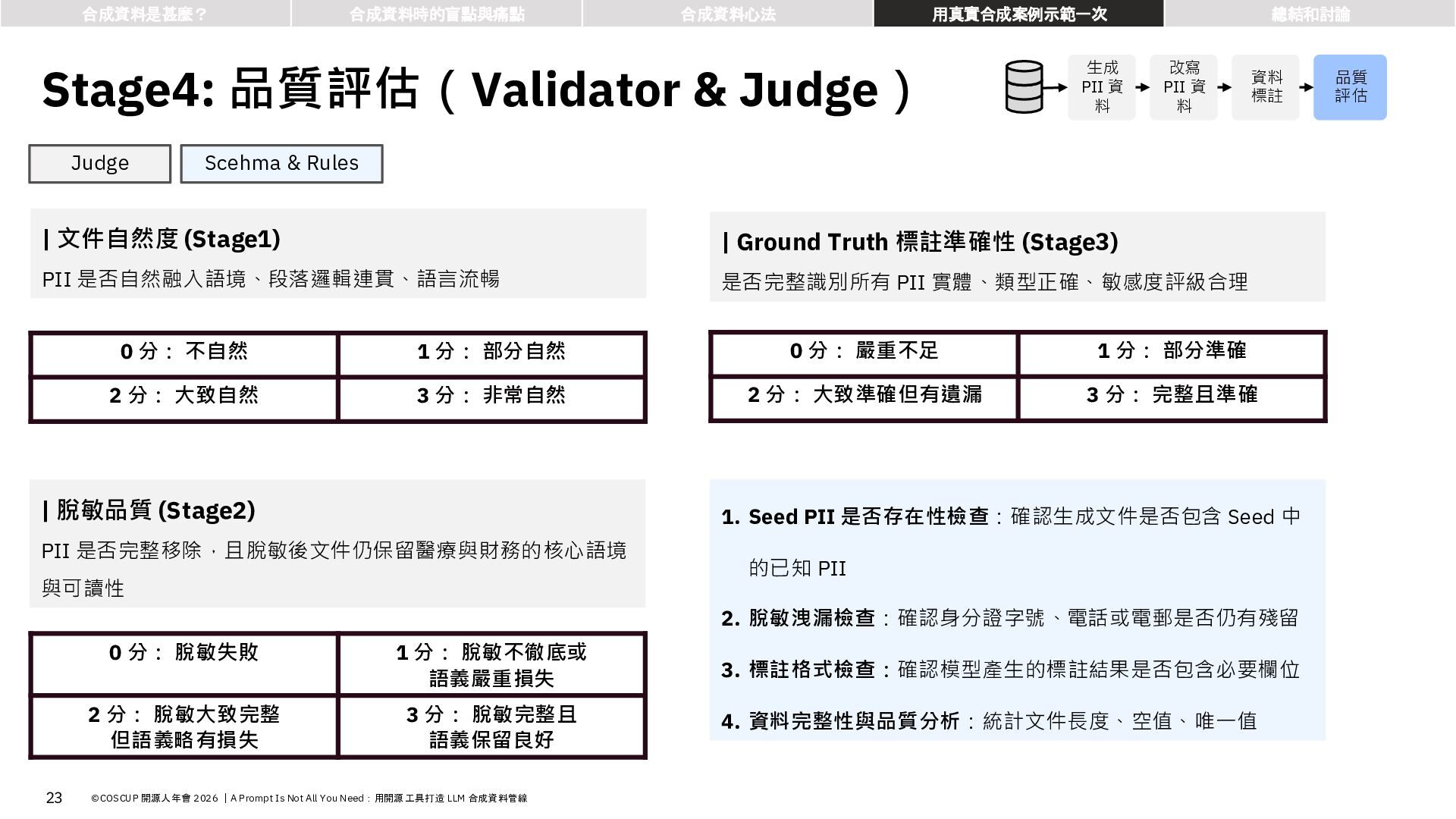
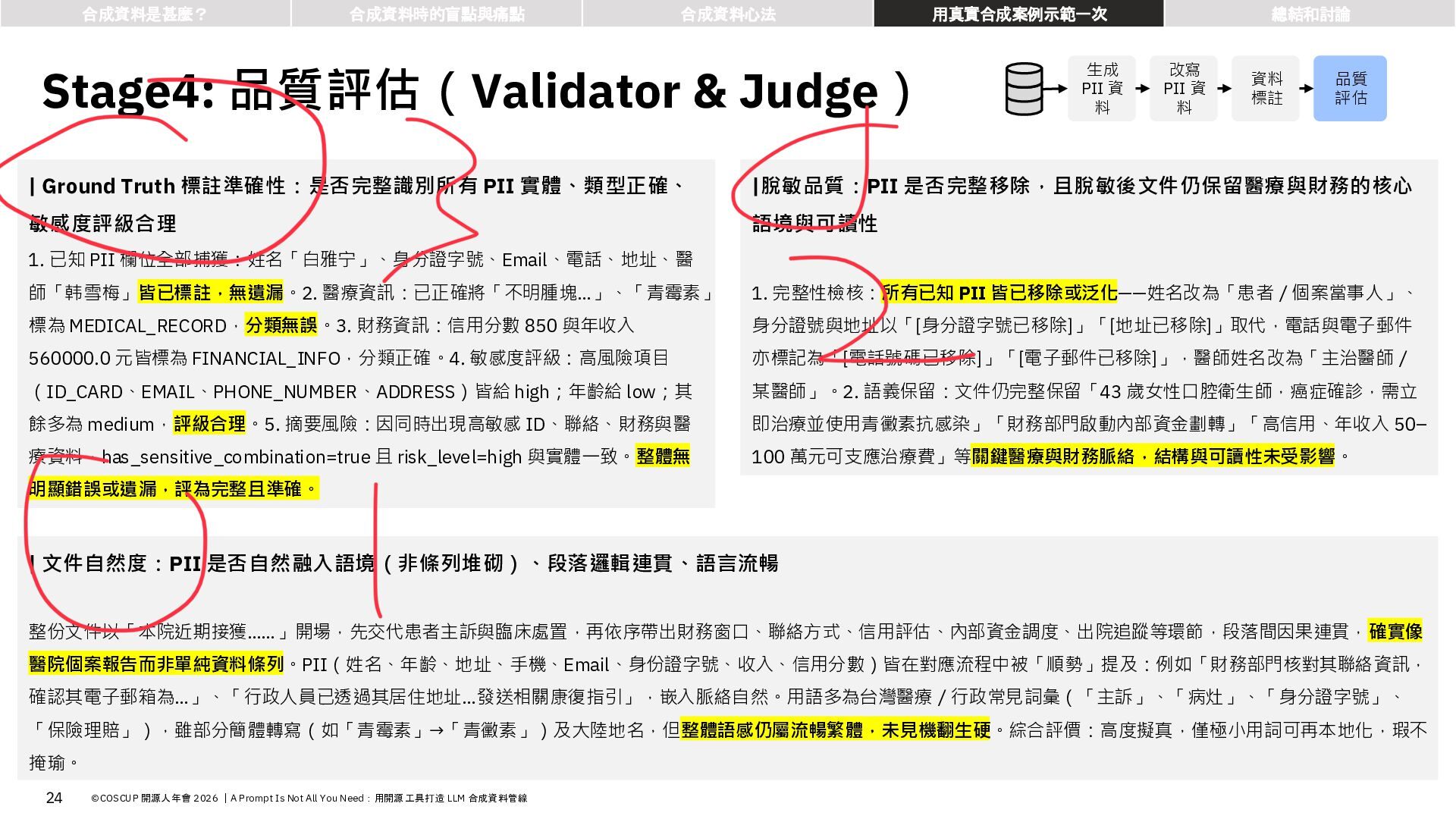
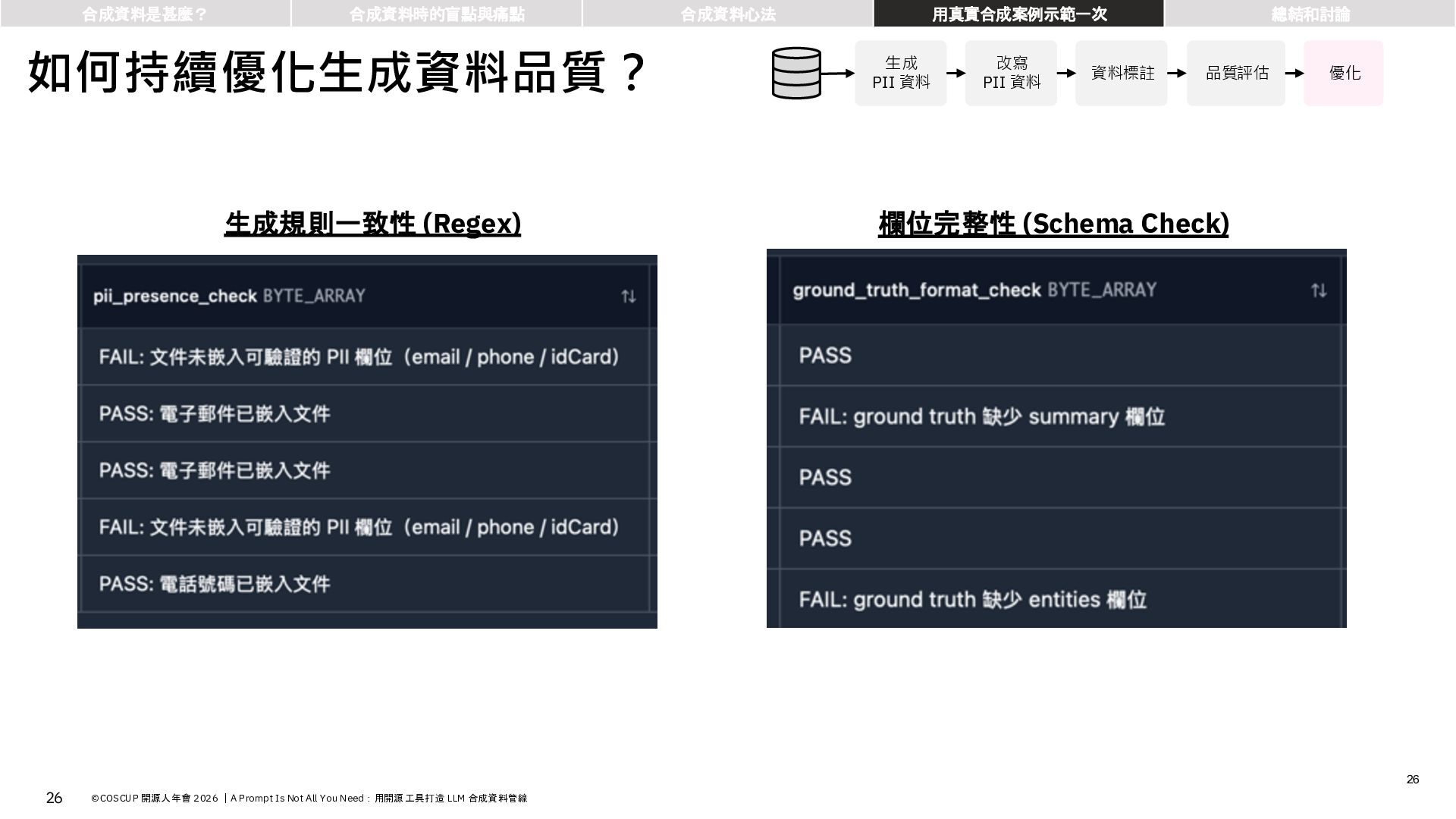
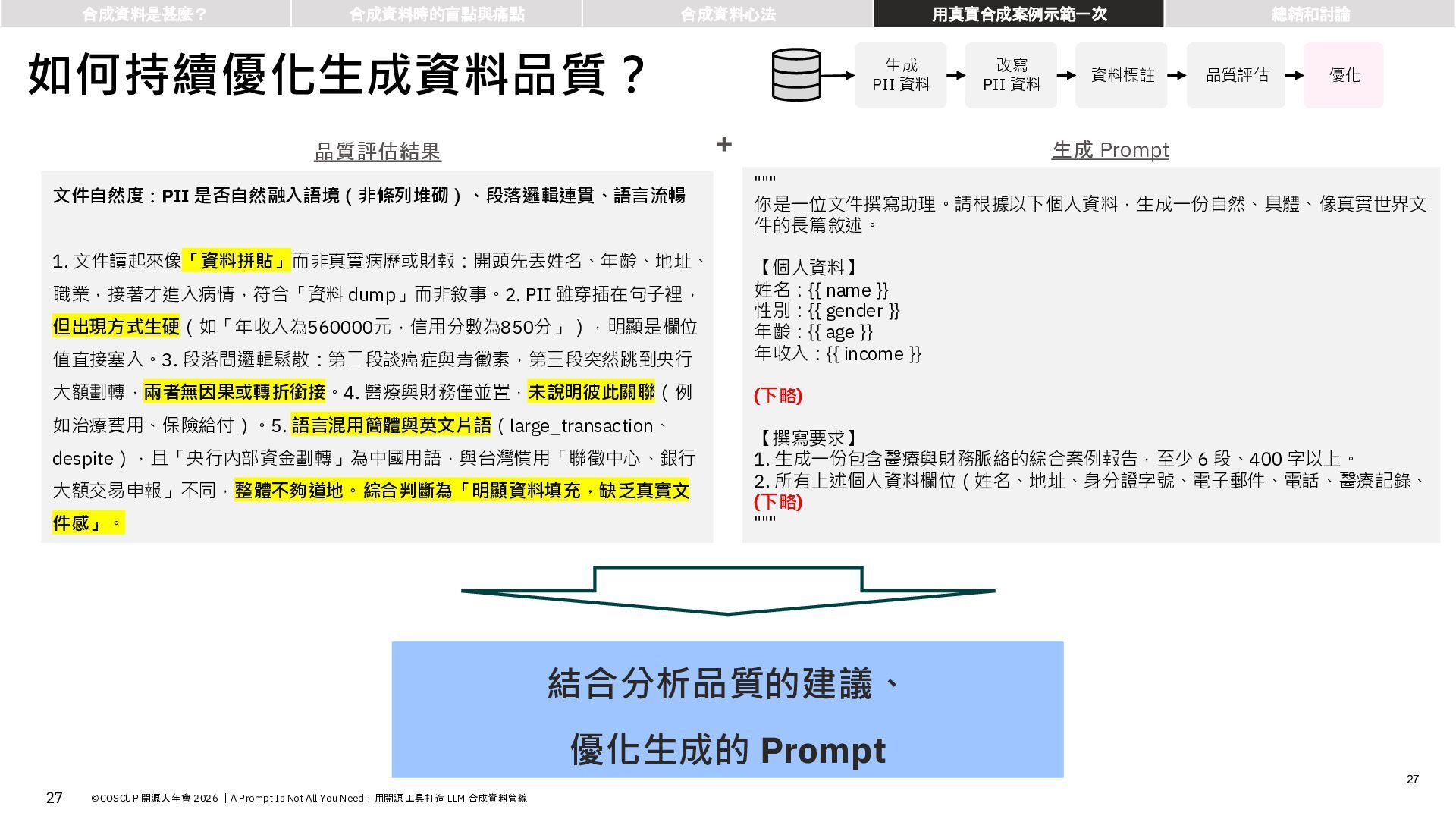
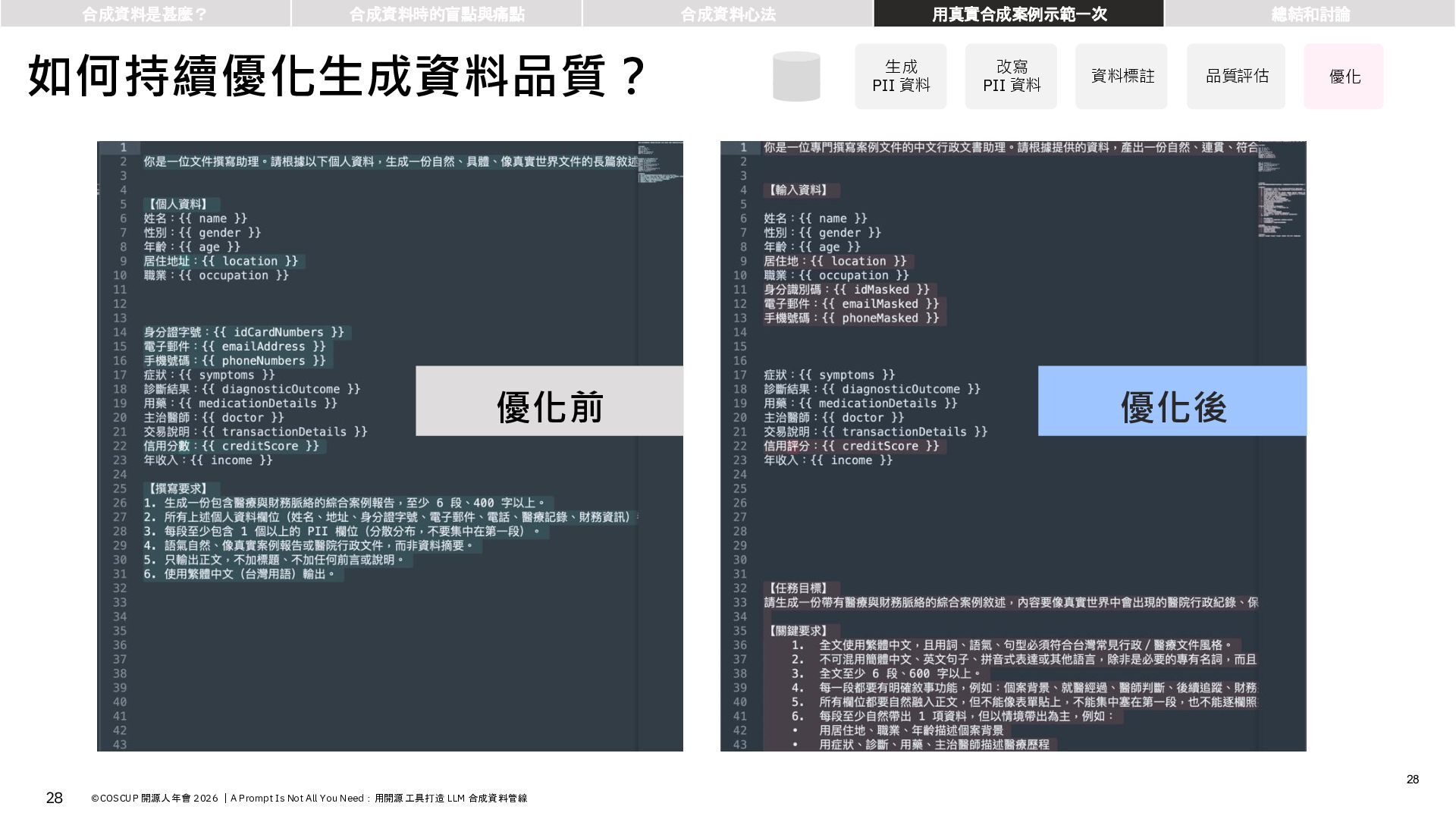
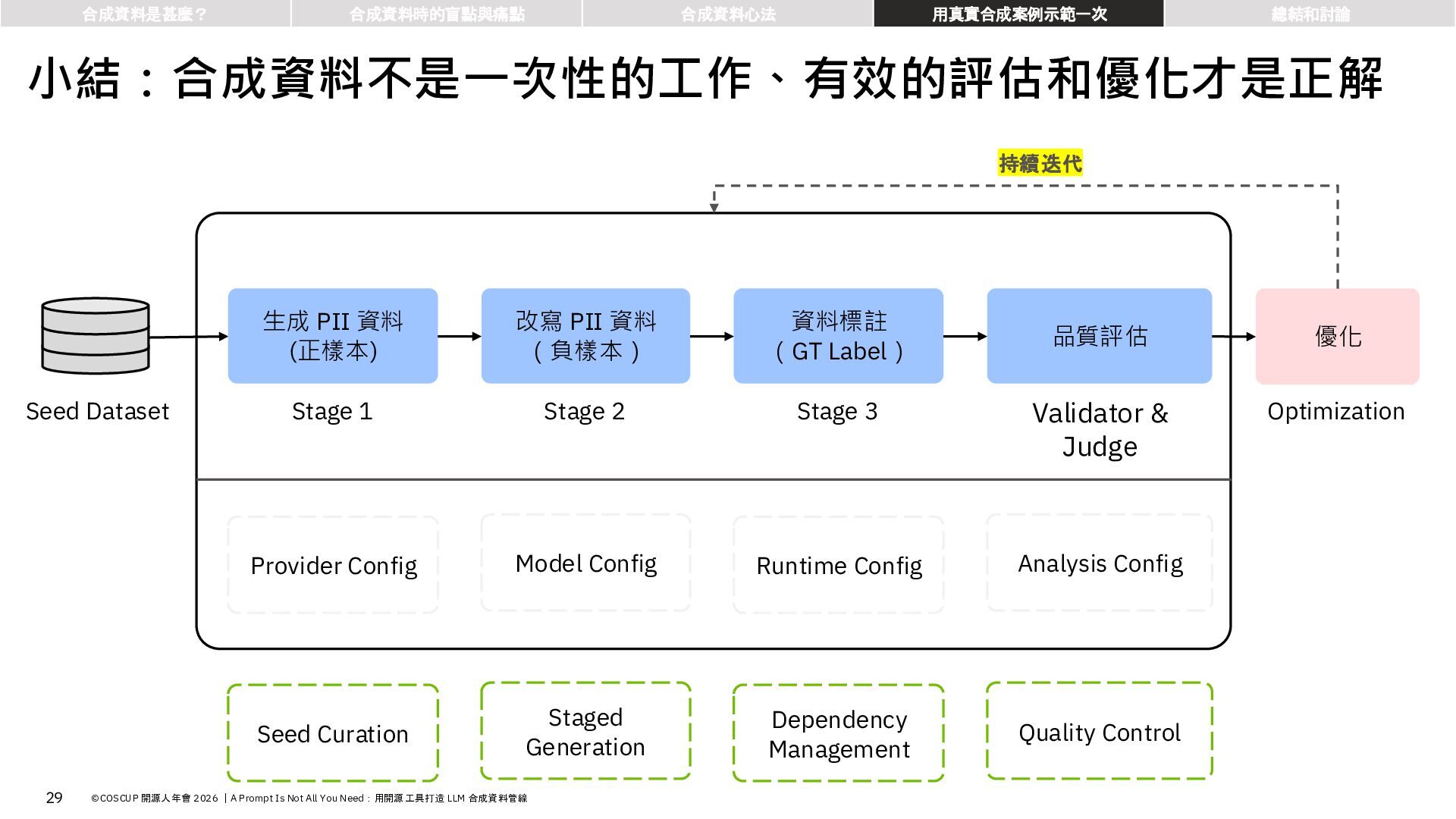
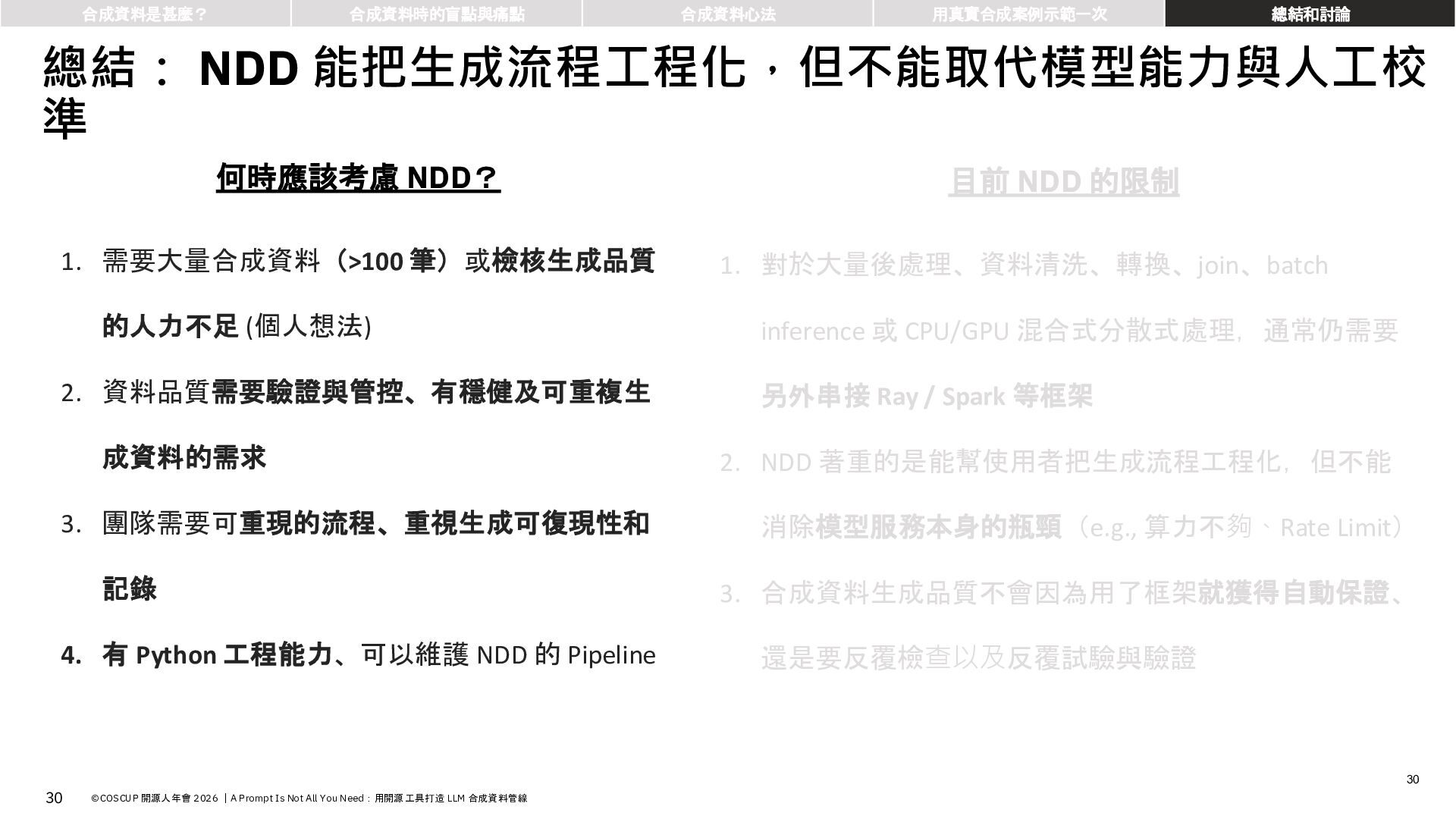
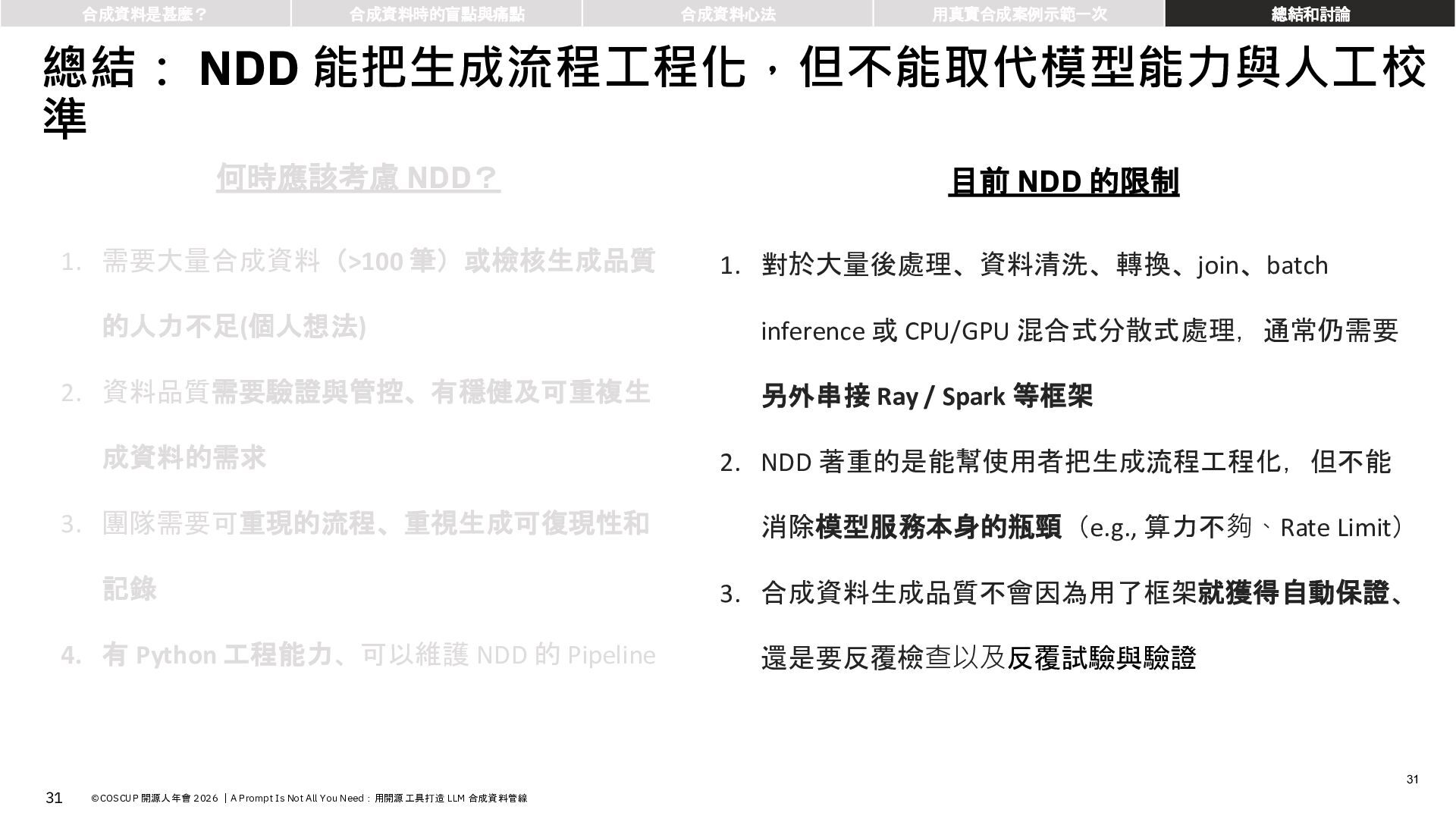
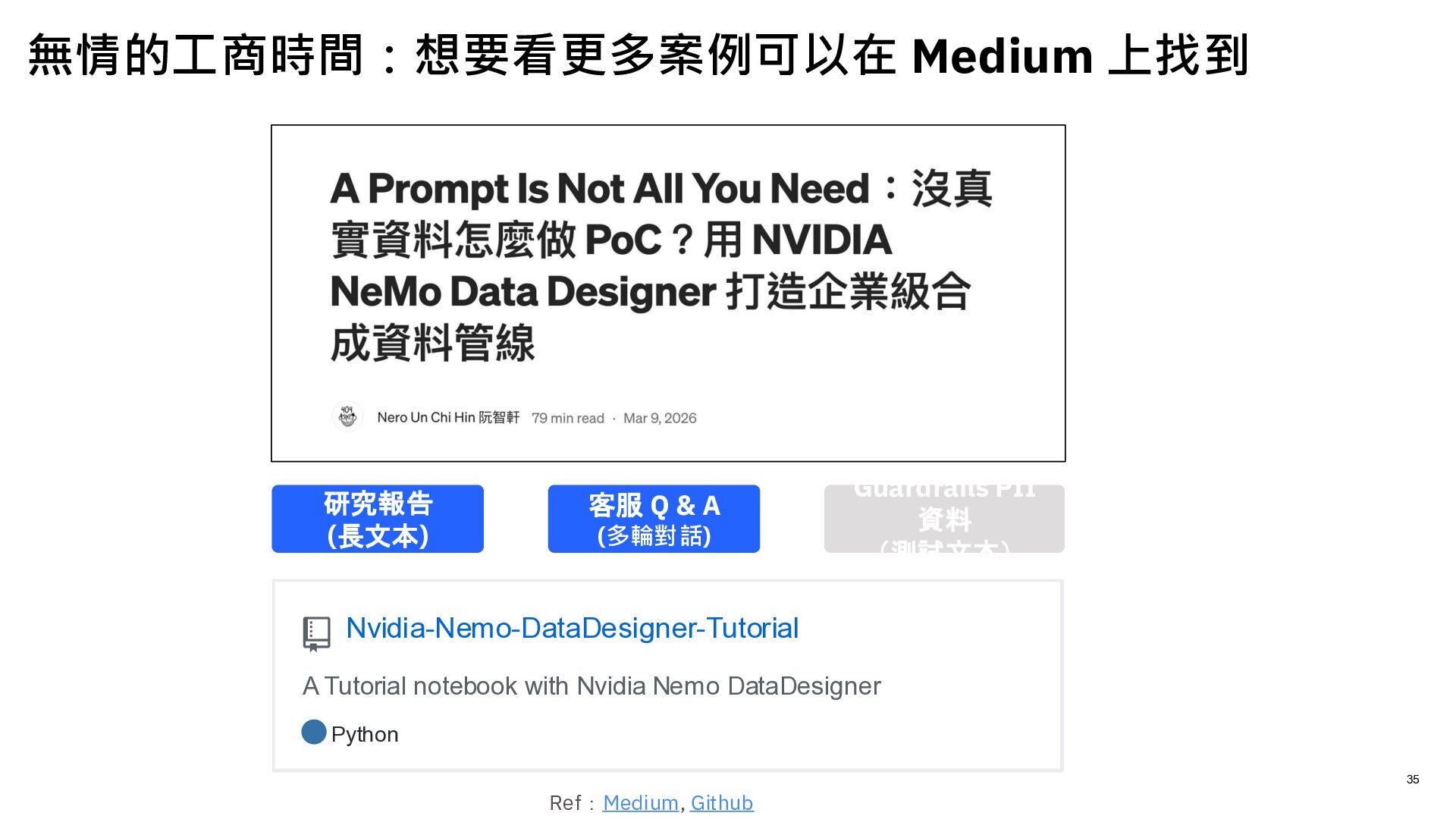
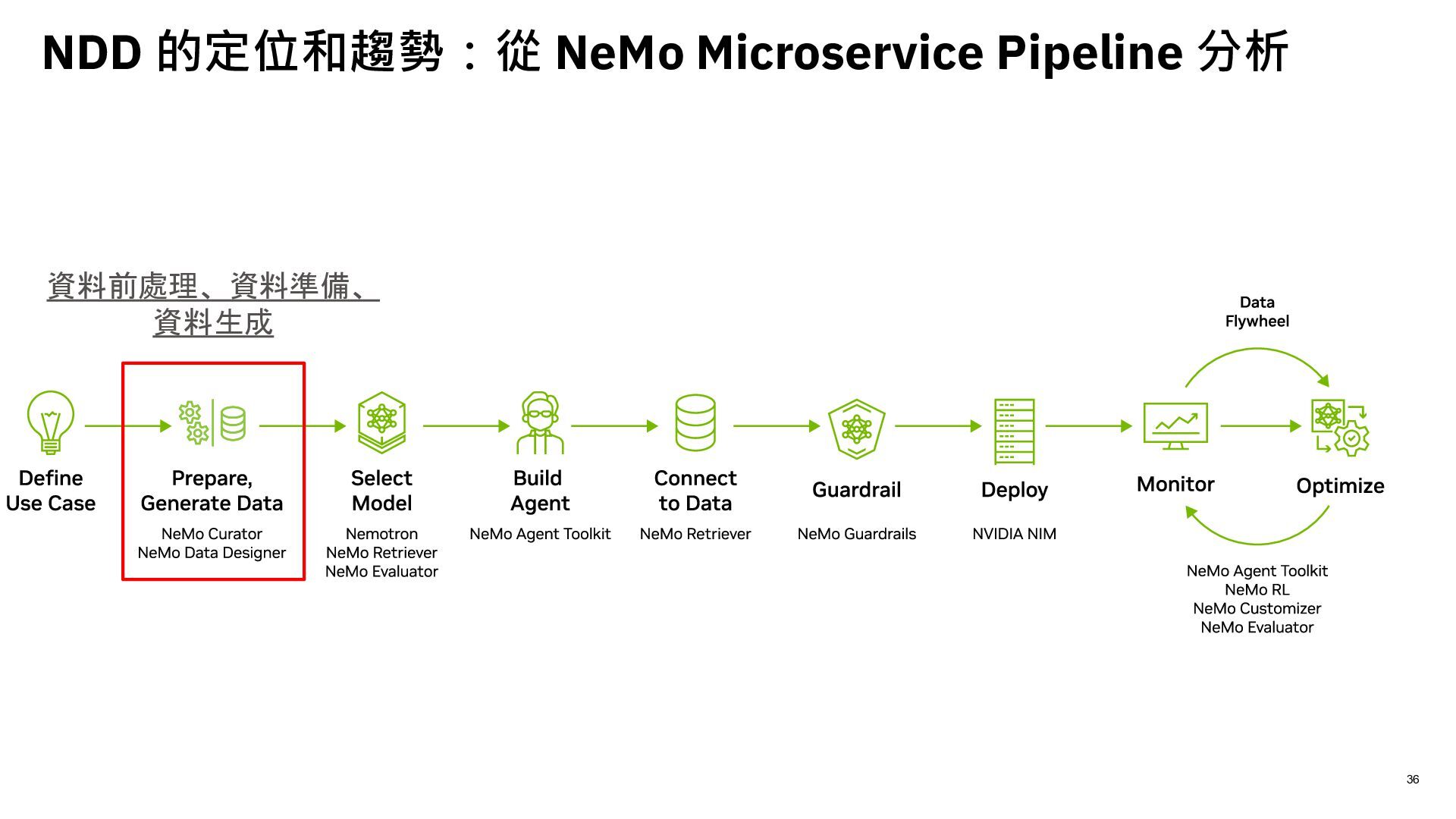
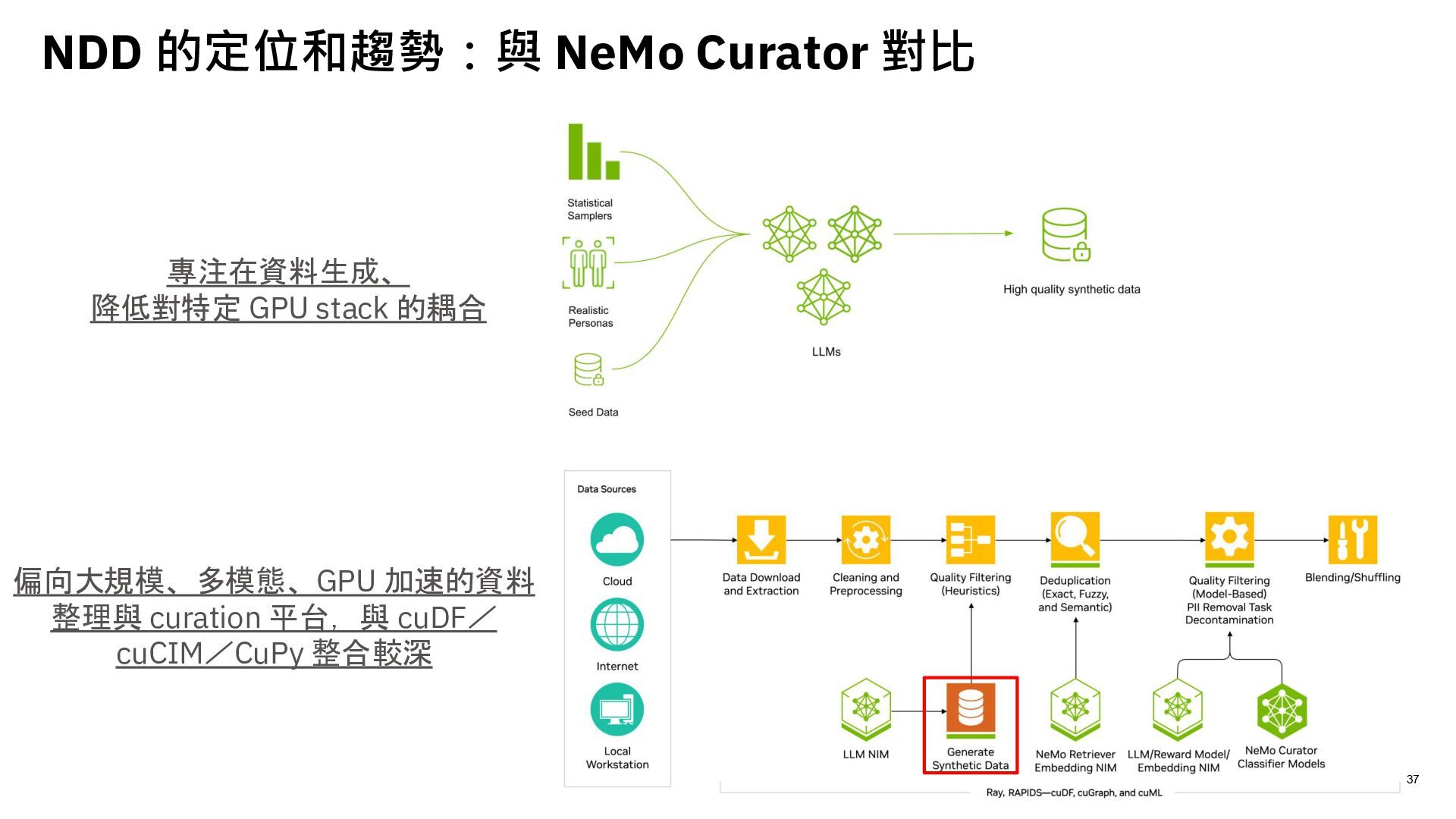
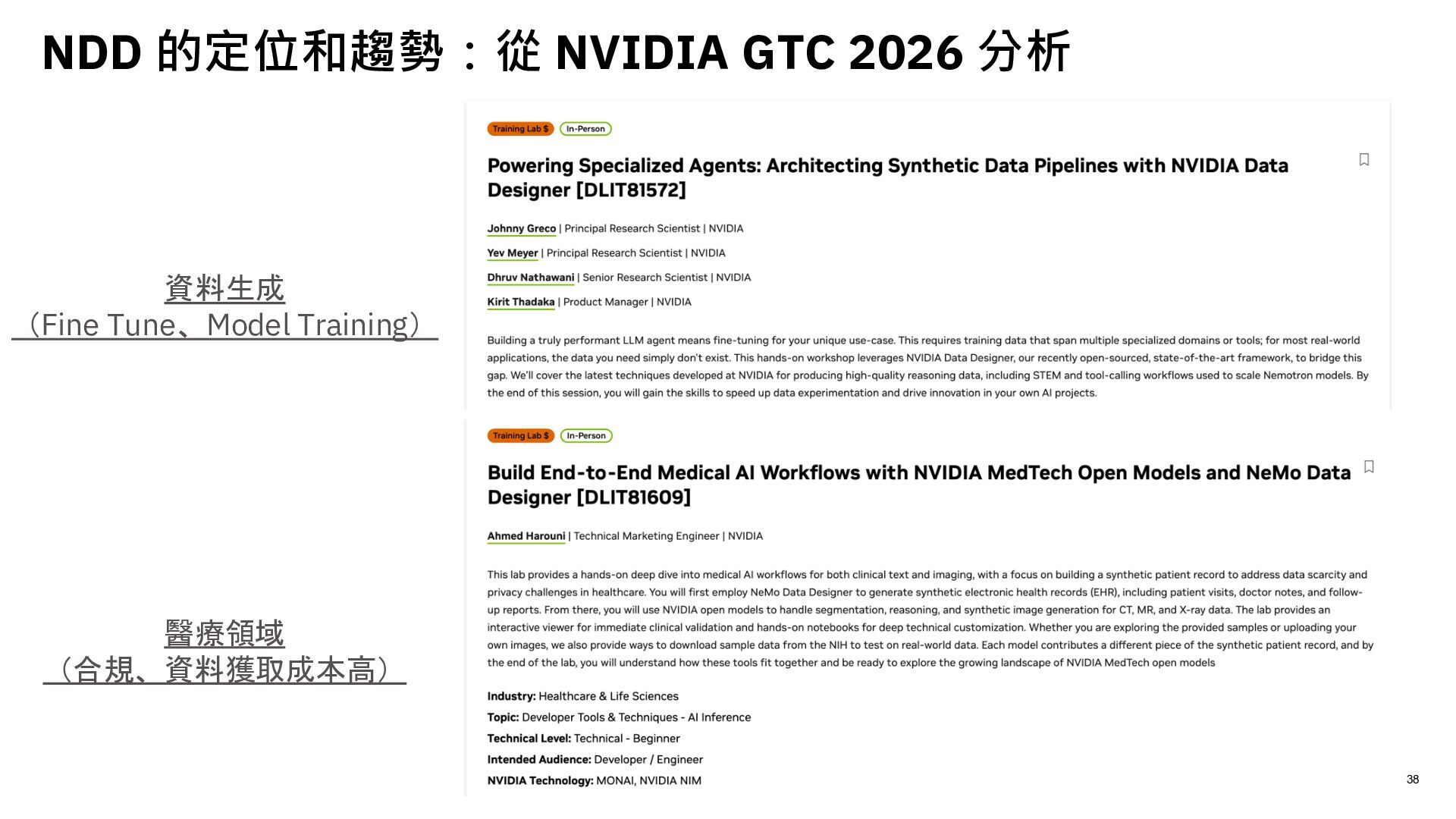
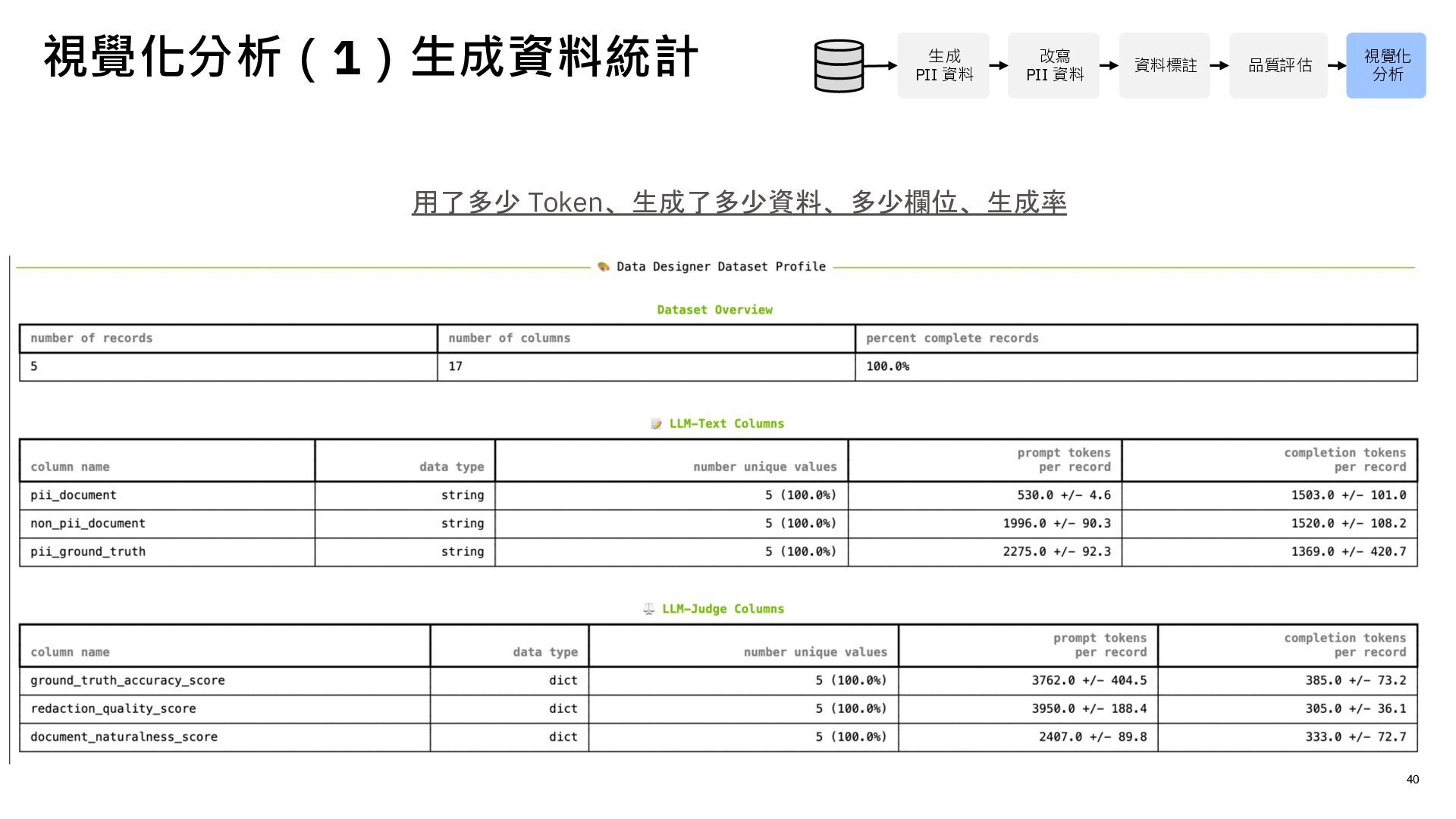
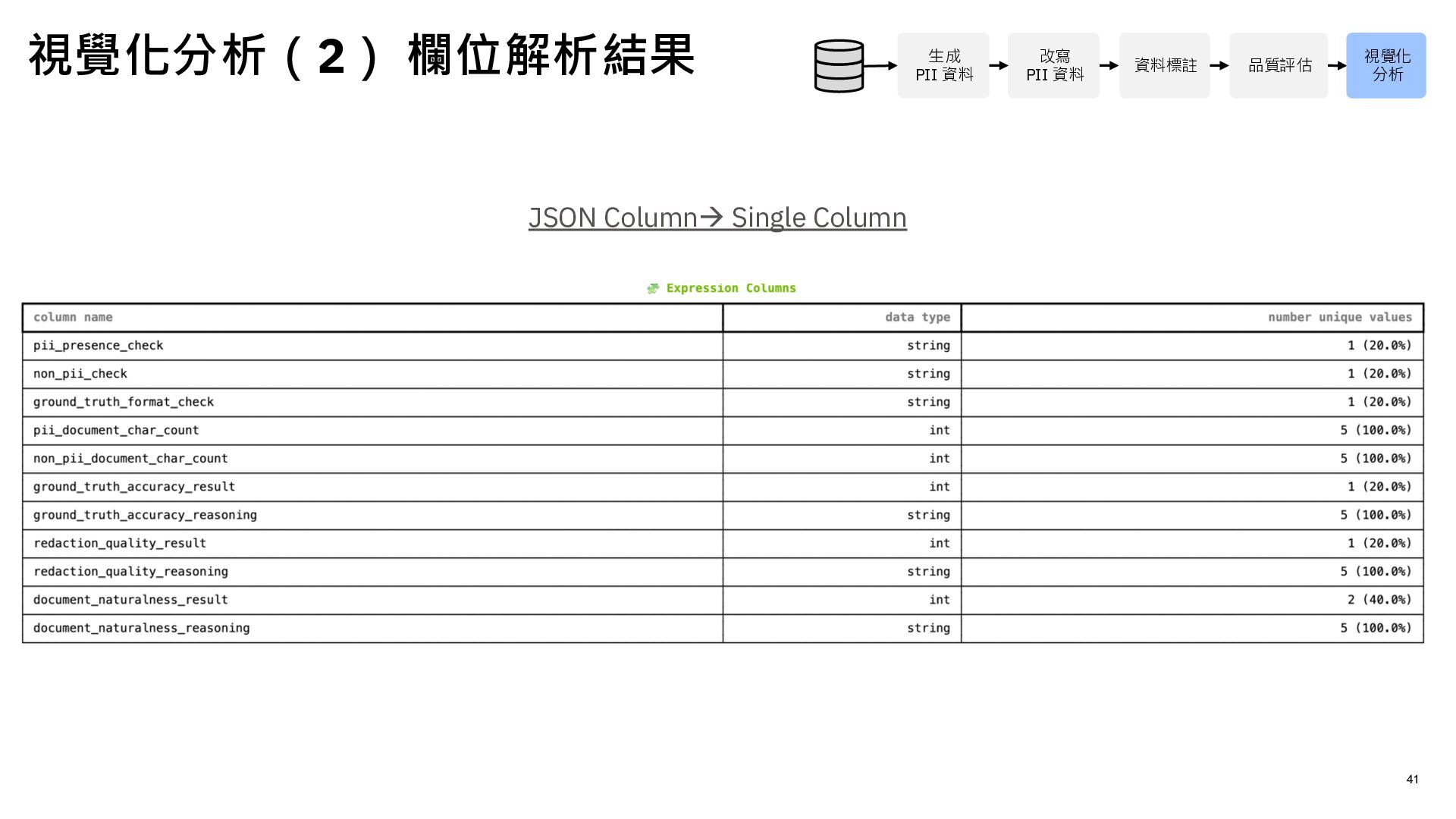
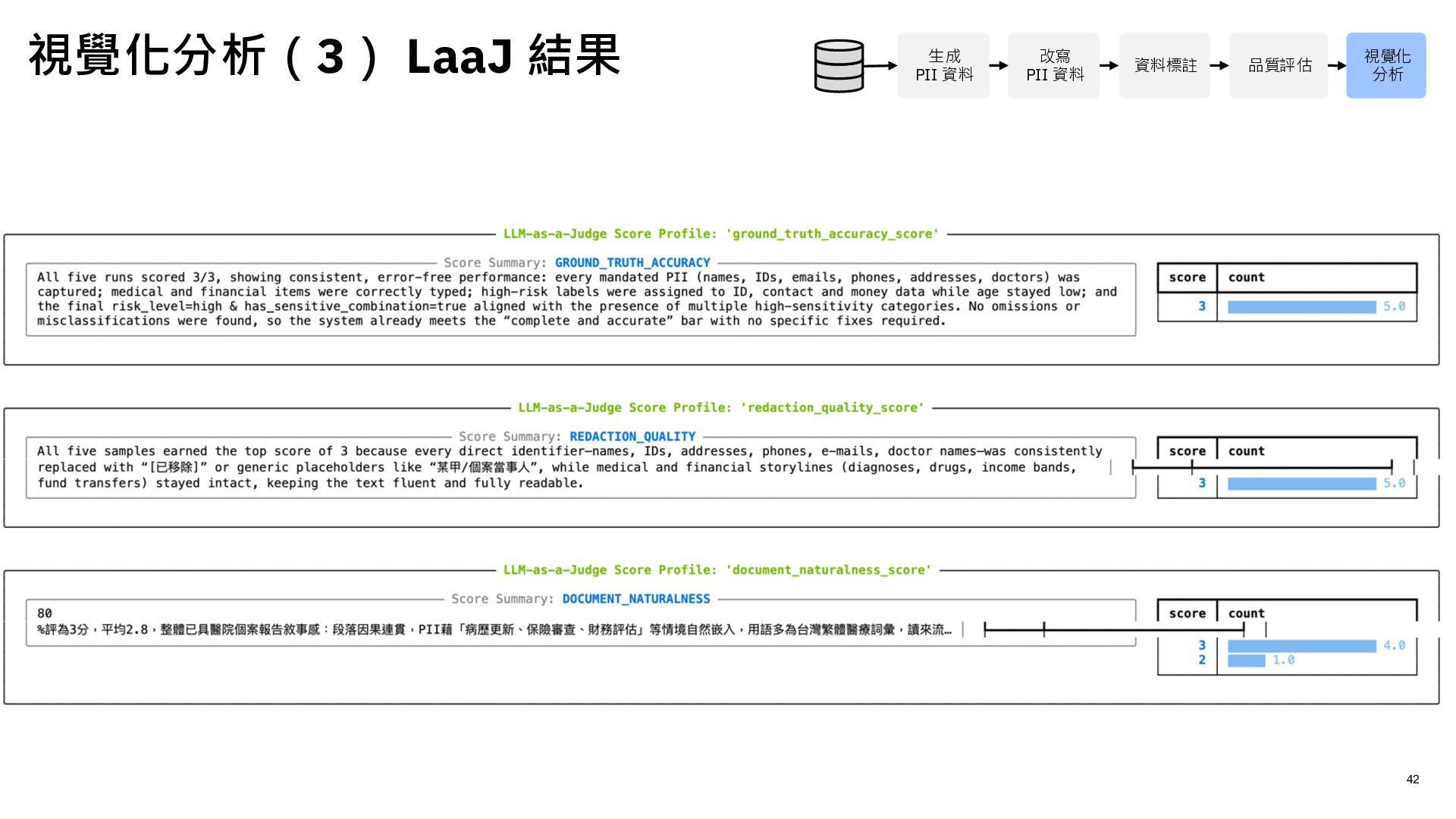
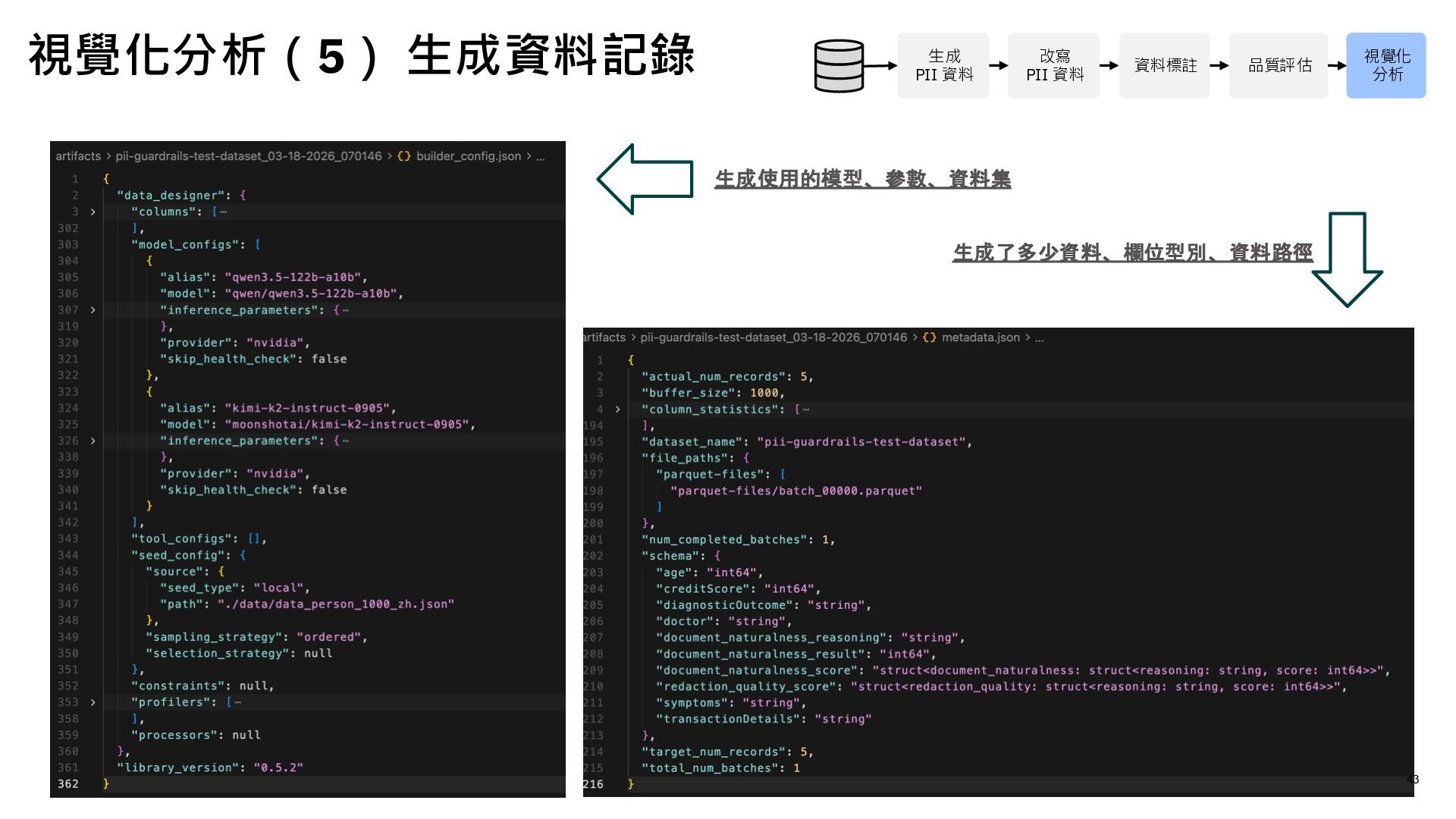
本議程將以 Nvidia Open Source 工具 Data Designer 為例、提供可重現的範例 pipeline,包含 synthetic PII / domain QA seed schema、DAG config、validator 設計、LLM-as-a-Judge rubric,以及生成資料的品質檢查報告。所有範例資料與程式碼將以開源授權釋出,讓聽眾會後可以直接改造成自己的 RAG 測試資料或 PoC dataset。
透過這個實戰案例,希望幫助開源開發者與企業 IT 團隊在缺乏真實資料的困境中,利用開源工具鏈「無中生有」打造高品質的測試資料集,讓 AI 落地的最後一哩路走得更穩健。
---
In the thriving ecosystem of open-source models today, developers can easily access top-tier open-source large language models (LLMs) like Gemma4 and Qwen3.5. However, when we try to apply these technologies to high-compliance fields such as finance and healthcare, we often encounter a high wall called "data privacy." Restricted by personal information (PII) and regulations, teams simply cannot obtain real business data for PoC, performance validation, or stress testing of RAG systems. Without available data for validation, even the best open-source models struggle to be implemented into actual business applications.
Faced with the challenge of "data access," synthetic data becomes a key method to break through.
Many teams initially attempt to generate test data manually using prompts. But as the requirement grows to thousands of records needing diversity, boundary conditions, and logical consistency, this approach quickly encounters quality control issues, validation difficulties, and scalability bottlenecks.
This agenda will use Nvidia’s open-source tool Data Designer as an example, providing a reproducible pipeline—including synthetic PII/domain QA seed schema, DAG configuration, validator design, LLM-as-a-Judge rubric, and quality inspection reports for generated data. All sample data and code will be released under open-source licenses, enabling attendees to directly adapt them into their own RAG testing data or PoC datasets.
Through this practical case study, we hope to assist open-source developers and enterprise IT teams in overcoming the lack of real data by leveraging open-source toolchains to "create from nothing" high-quality test datasets, making the final step towards AI deployment more robust.


 nerohin
 takonda
 yut0naga1_fa
 mkdev10
 kaminashi
 pfn
pfn
 mohab1
 tomokusaba
 knishioka
 ludicmind
 teamlab
 raspython3
 nttcom
 kneath
 hannesfritz
 letsgokoyo
 matthewcrist
 akashhashmi
 lauravandoore
 watany
 soudai
 palkan
 davidcarrasco
 reverentgeek
 bcantrill