Upgrade to Pro — share decks privately, control downloads, hide ads and more …

SEO as a Research Engine: Using Search Data to ...

Sponsored · SiteGround - Reliable hosting with speed, security, and support you can count on. →

SEO as a Research Engine: Using Search Data to Shape Marketing Strategy

Search data can do more than inform keyword targeting. It can reveal customer needs, market opportunities, brand perception, and untapped areas of authority that shape a broader marketing strategy.

In this BrightonSEO San Diego presentation, Nicole Grodesky demonstrates how to combine AI visibility research with traditional keyword research to uncover content gaps, identify strategic themes, and turn research into an actionable content roadmap.

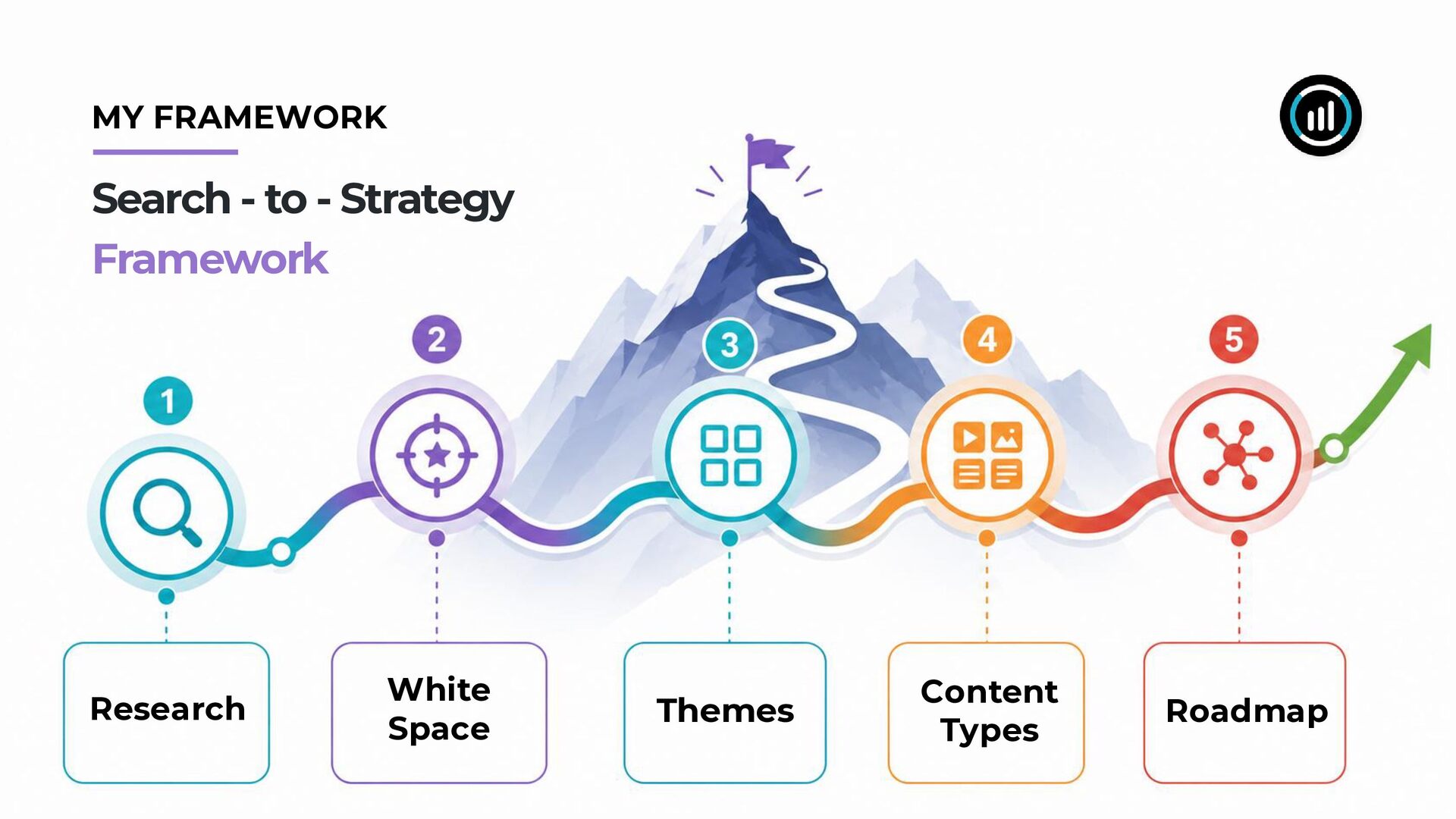
Using Sector 9 as a case study, she walks through a framework of Research → White Space → Themes → Strategy → Roadmap, showing how search intelligence can inform decisions beyond rankings and search volume. The presentation explores how to validate AI-generated insights with search data, distinguish search-led content opportunities from authority-building content, and develop a more intentional approach to content strategy.

The takeaway: SEO isn't just about capturing existing demand. It's also a way to understand the market, identify opportunities, and shape the stories a brand can own.

https://bohoseo.com/

Avatar for Nicole Grodesky

Nicole Grodesky

September 15, 2026

Other Decks in Marketing & SEO

Transcript

  1. Nicole Grodesky BOHO SEO @Nicole Grodesky SEO as a research

    engine: Using search data to shape marketing strategy
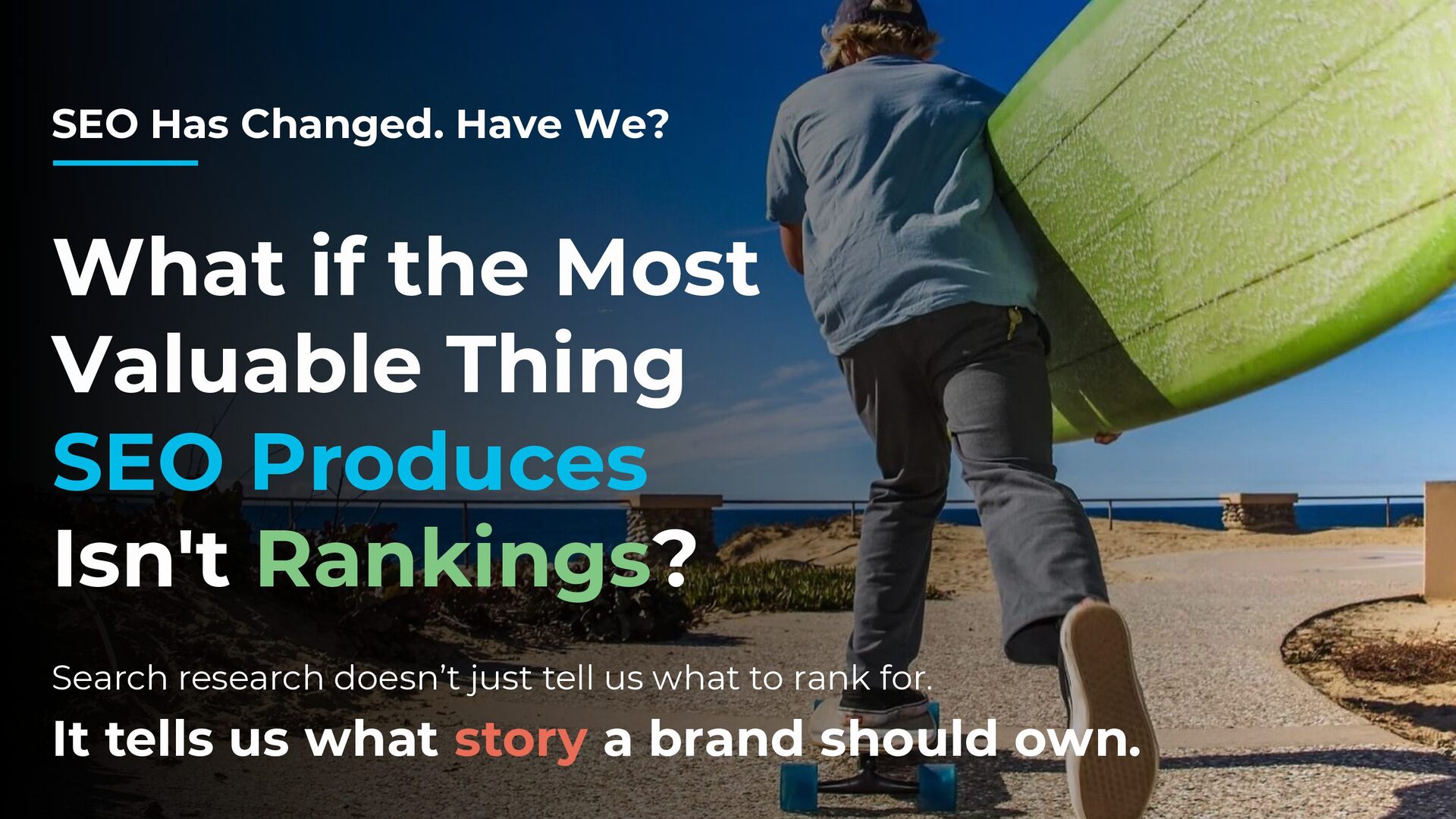
  2. SEO Has Changed. Have We? What if the Most Valuable

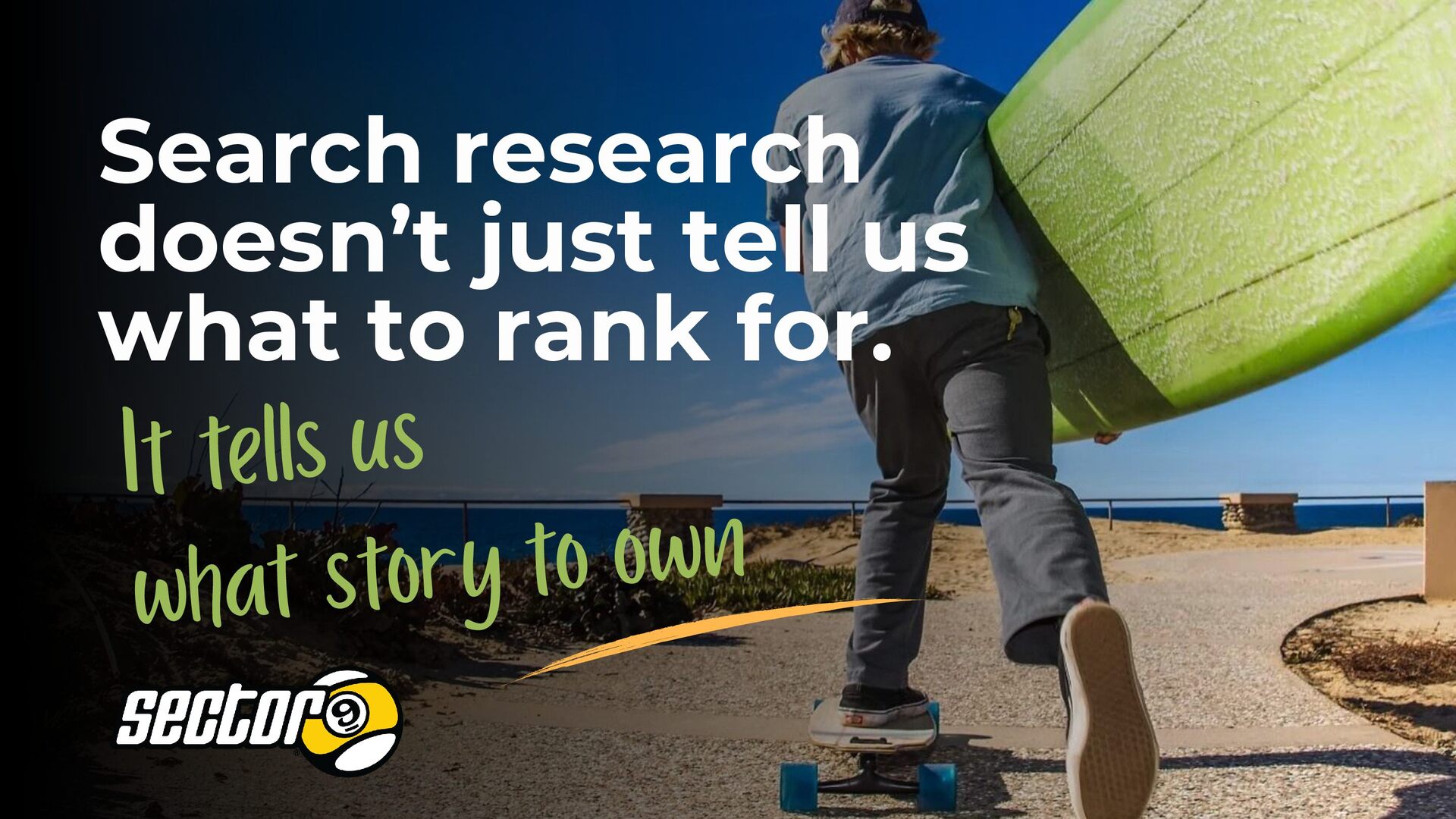
    Thing SEO Produces Isn't Rankings? Search research doesn’t just tell us what to rank for. It tells us what story a brand should own.
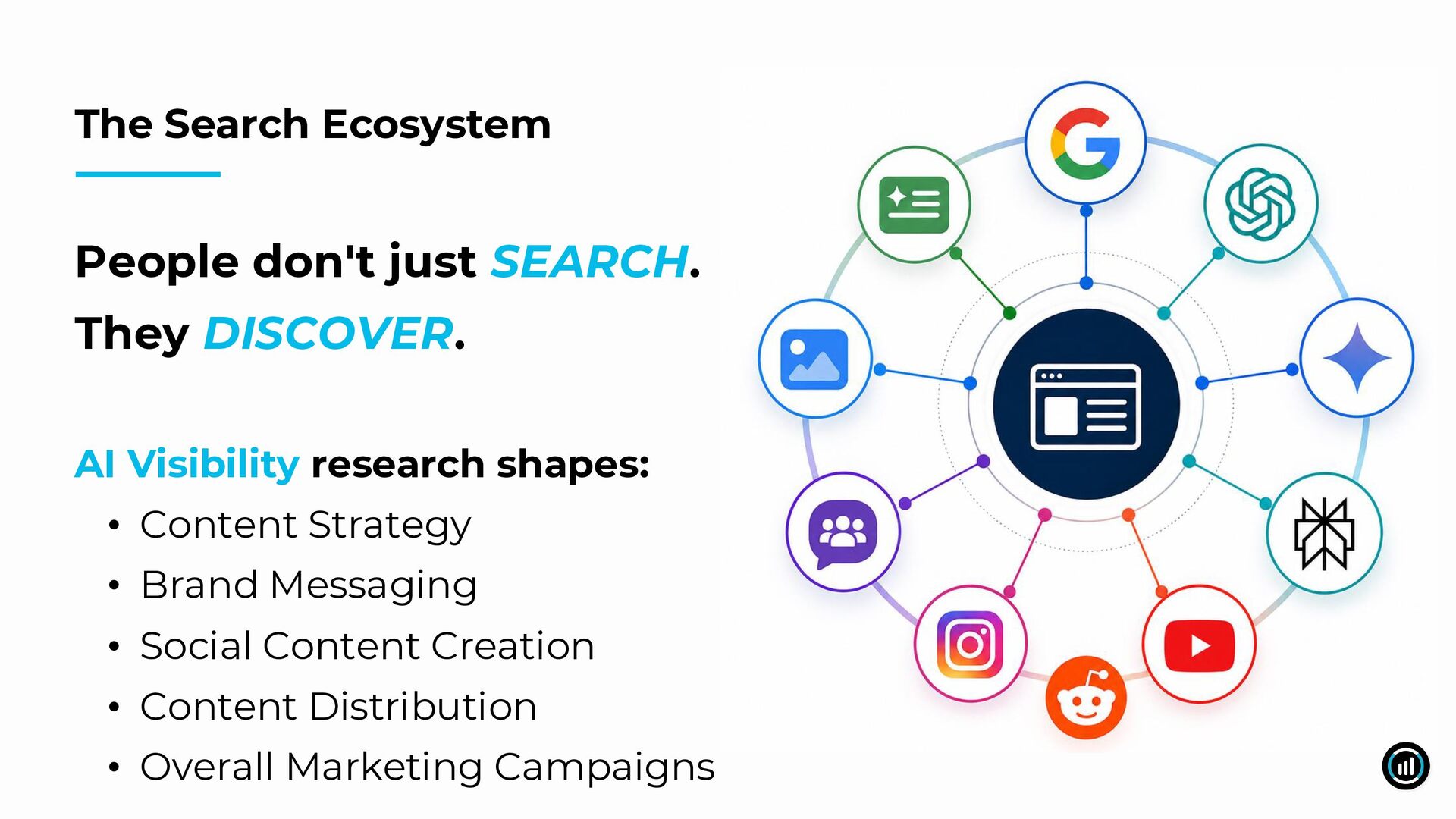
  3. The Search Ecosystem People don't just SEARCH. They DISCOVER. AI

    Visibility research shapes: • Content Strategy • Brand Messaging • Social Content Creation • Content Distribution • Overall Marketing Campaigns
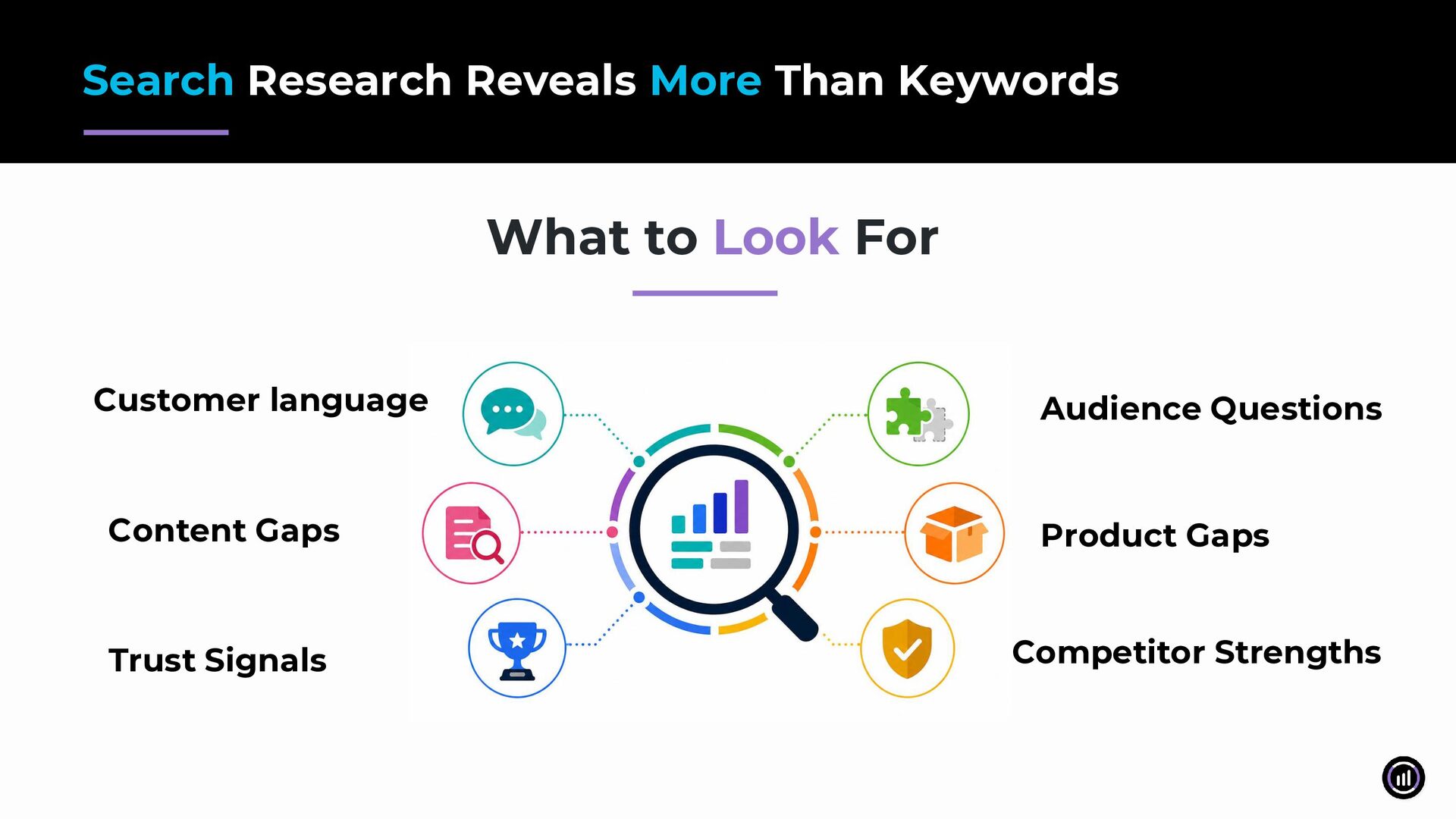
  4. Search Research Reveals More Than Keywords What to Look For

    Customer language Audience Questions Content Gaps Product Gaps Trust Signals Competitor Strengths
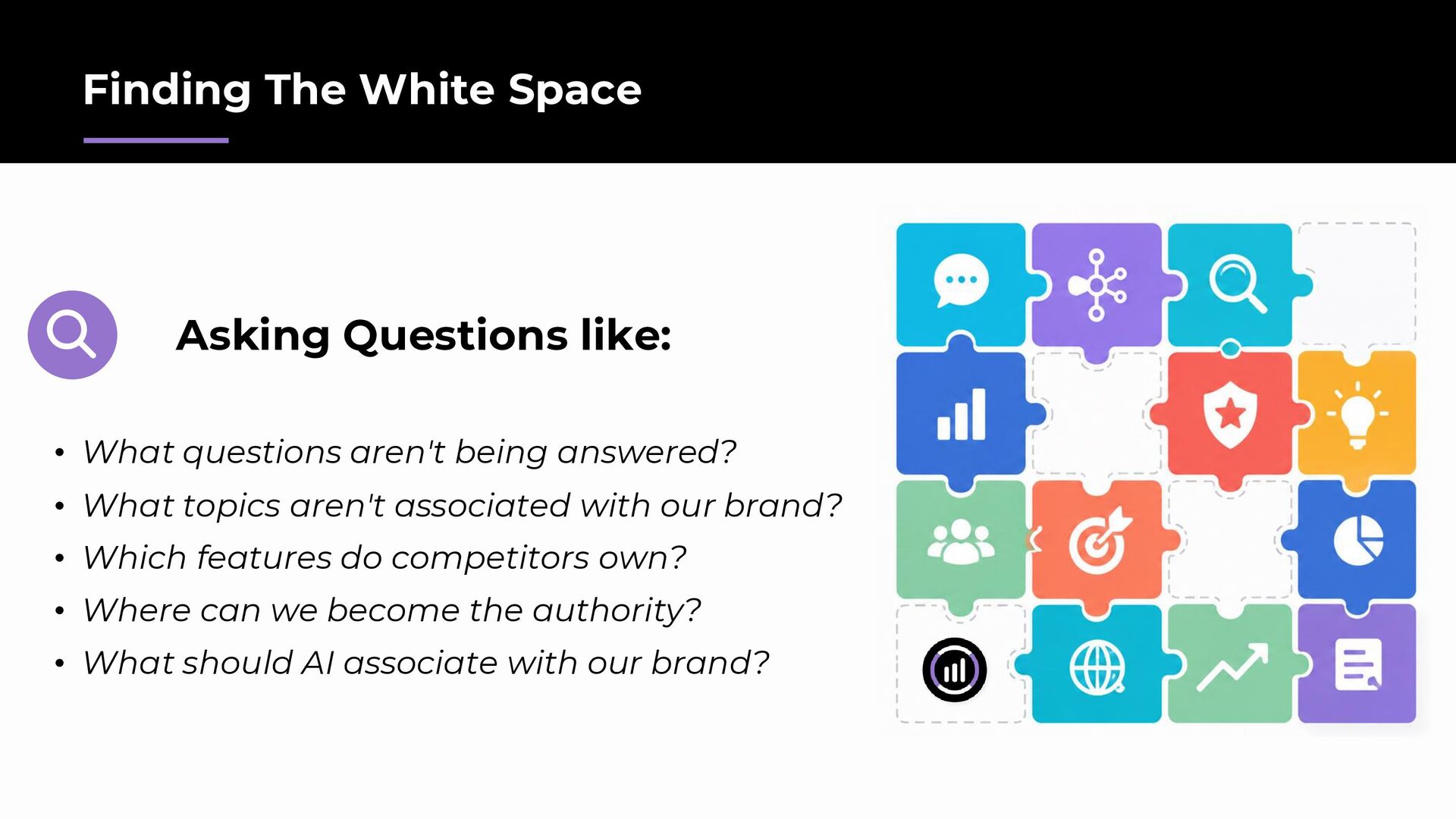
  5. Finding The White Space Asking Questions like: • What questions

    aren't being answered? • What topics aren't associated with our brand? • Which features do competitors own? • Where can we become the authority? • What should AI associate with our brand?
  6. Case Study From Research To Roadmap How AI visibility insights

    shaped a content strategy. Research White Space Themes Strategy Roadmap
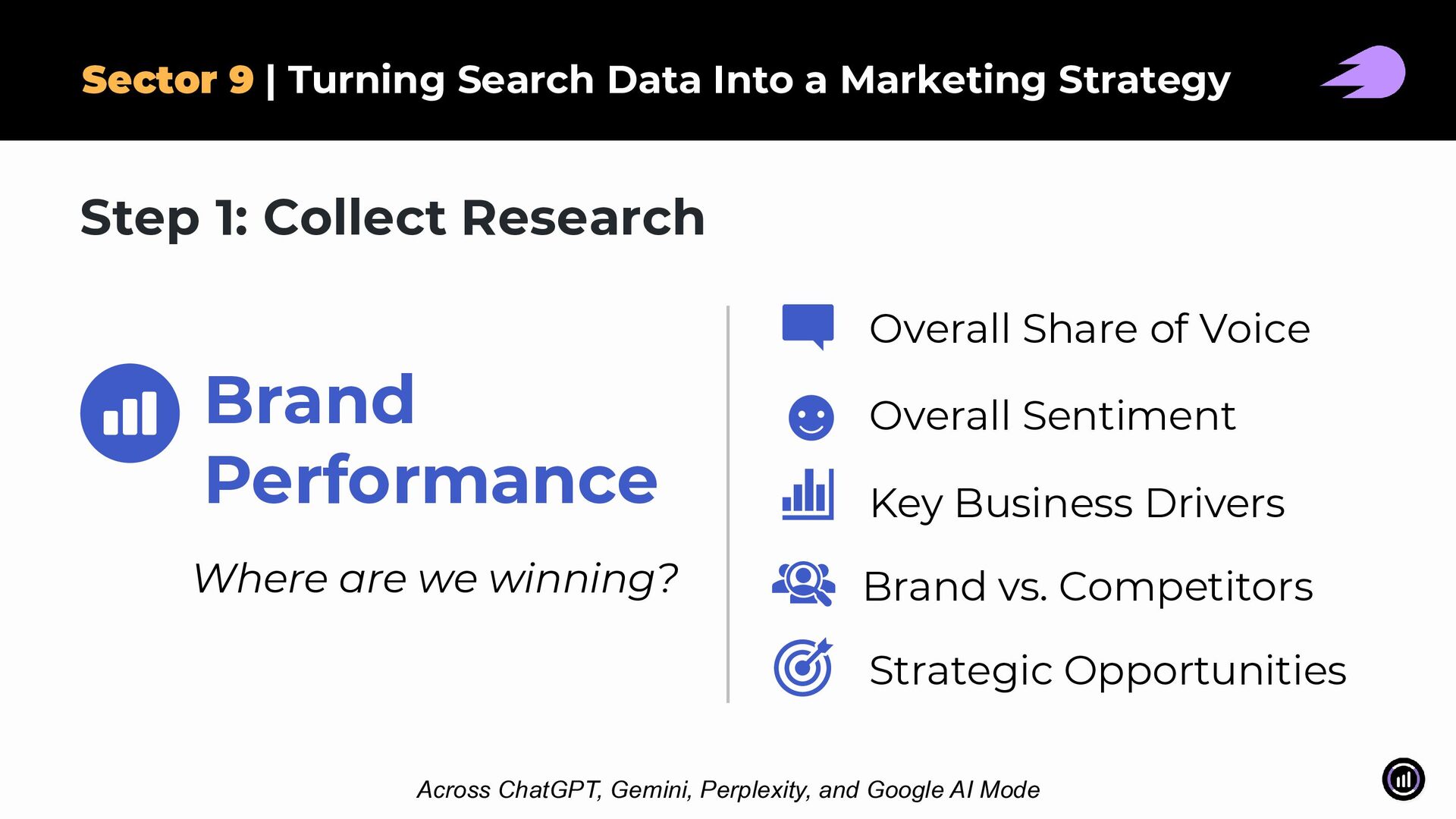
  7. Sector 9 | Turning Search Data Into a Marketing Strategy

    Step 1: Collect Research Overall Share of Voice Brand Performance Where are we winning? Overall Sentiment Key Business Drivers Brand vs. Competitors Strategic Opportunities Across ChatGPT, Gemini, Perplexity, and Google AI Mode
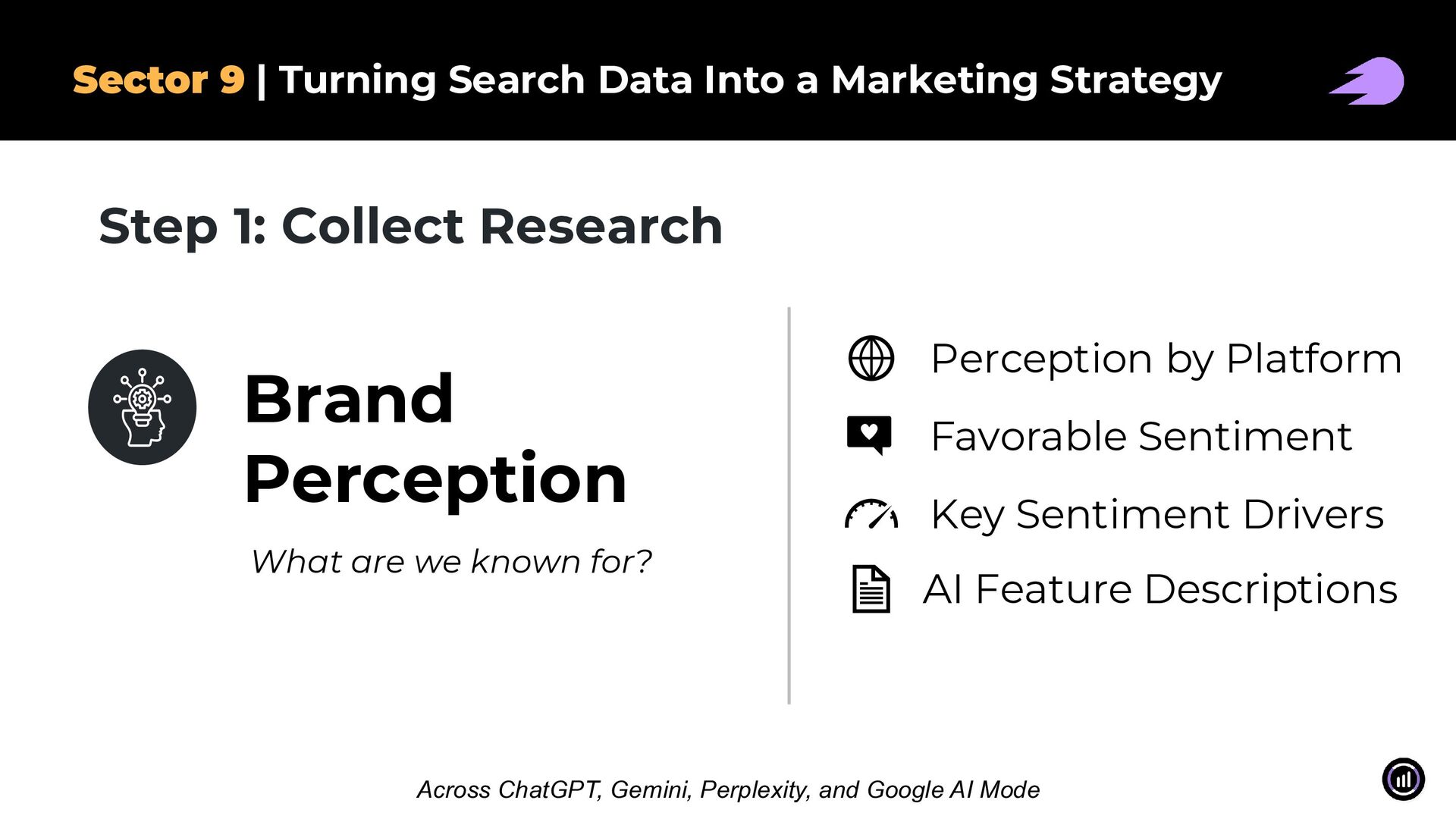
  8. Sector 9 | Turning Search Data Into a Marketing Strategy

    Step 1: Collect Research Brand Perception What are we known for? Perception by Platform Favorable Sentiment Key Sentiment Drivers AI Feature Descriptions Across ChatGPT, Gemini, Perplexity, and Google AI Mode
  9. Sector 9 | Turning Search Data Into a Marketing Strategy

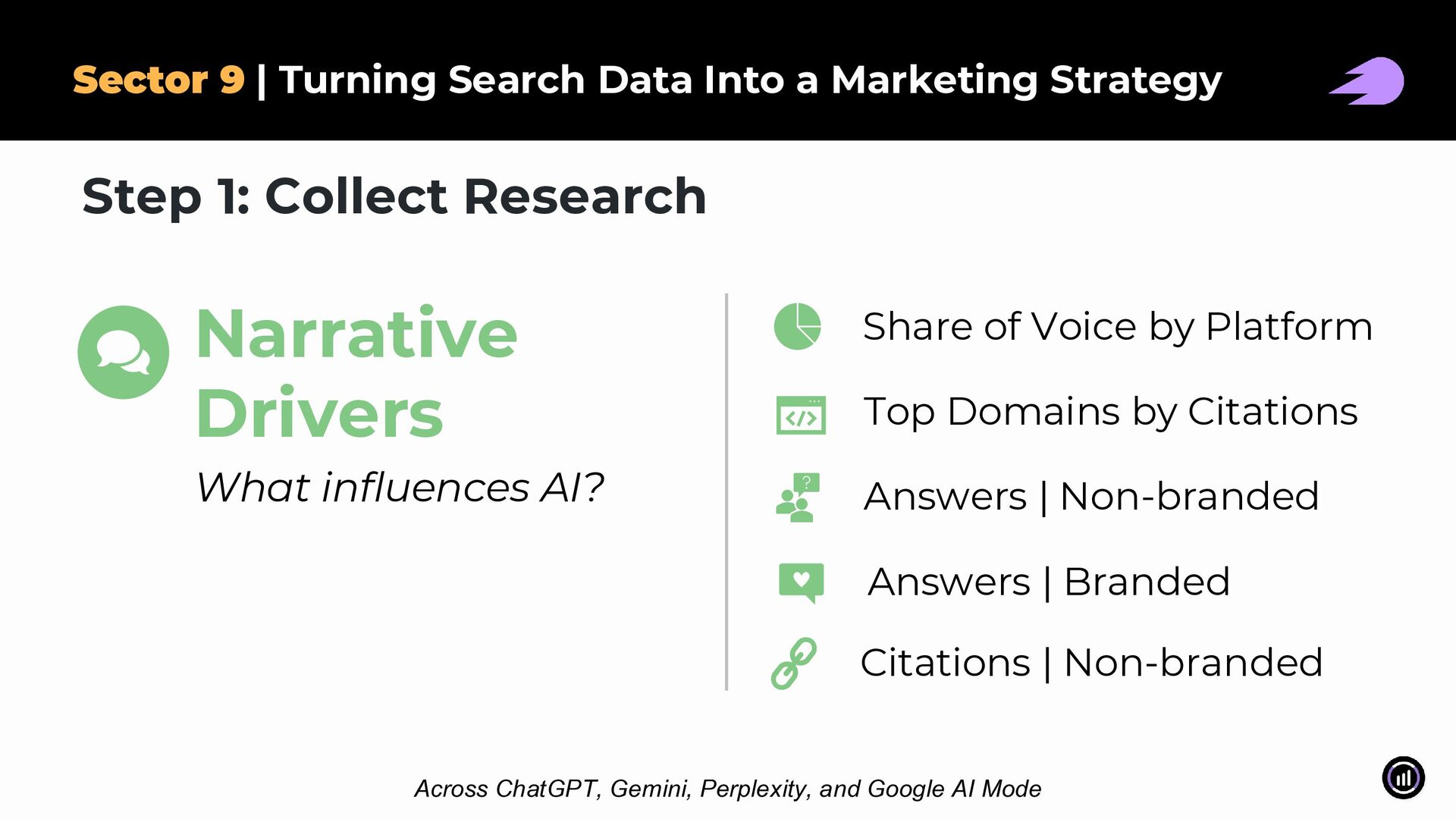
    Step 1: Collect Research Narrative Drivers Share of Voice by Platform What influences AI? Answers | Non-branded Top Domains by Citations Answers | Branded Citations | Non-branded Across ChatGPT, Gemini, Perplexity, and Google AI Mode
  10. Sector 9 | Turning Search Data Into a Marketing Strategy

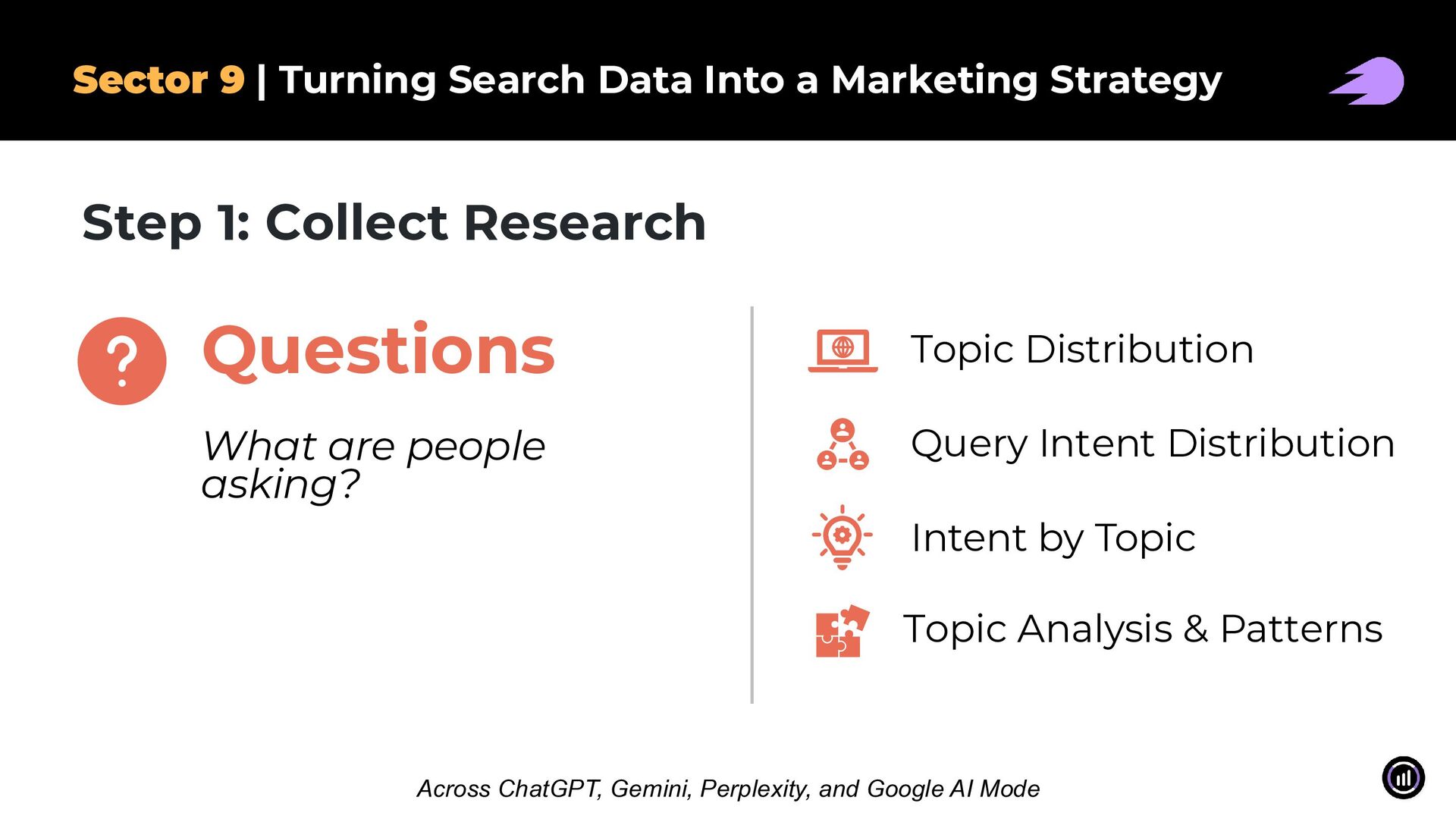
    Step 1: Collect Research Questions Topic Distribution What are people asking? Query Intent Distribution Intent by Topic Topic Analysis & Patterns Across ChatGPT, Gemini, Perplexity, and Google AI Mode
  11. Sector 9 | Turning Search Data Into a Marketing Strategy

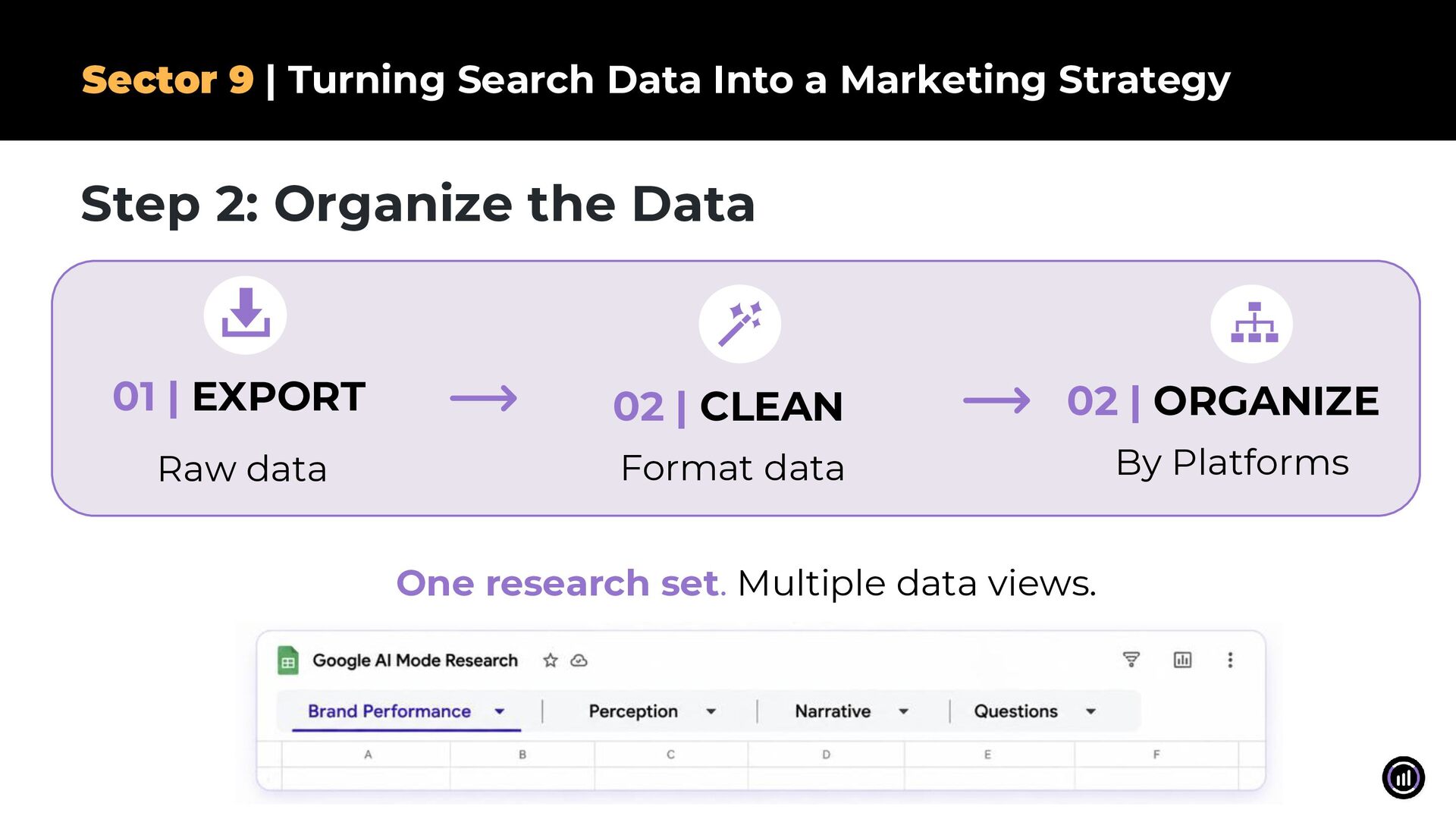
    Step 2: Organize the Data 01 | EXPORT 02 | CLEAN 02 | ORGANIZE Raw data Format data By Platforms One research set. Multiple data views.
  12. Sector 9 | Turning Search Data Into a Marketing Strategy

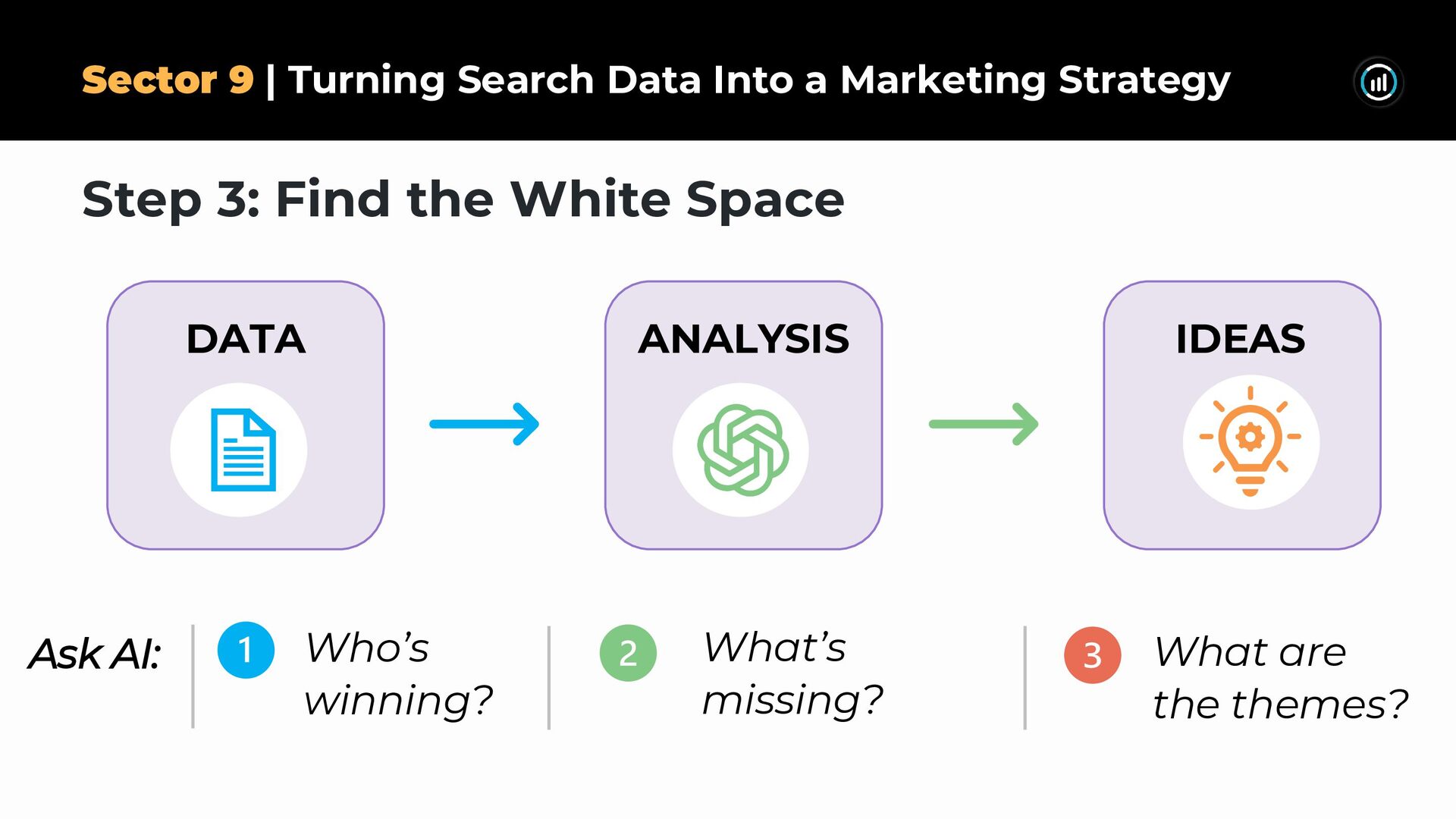
    Step 3: Find the White Space DATA Ask AI: Who’s winning? ANALYSIS What’s missing? IDEAS What are the themes?
  13. Sector 9 | Turning Search Data Into a Marketing Strategy

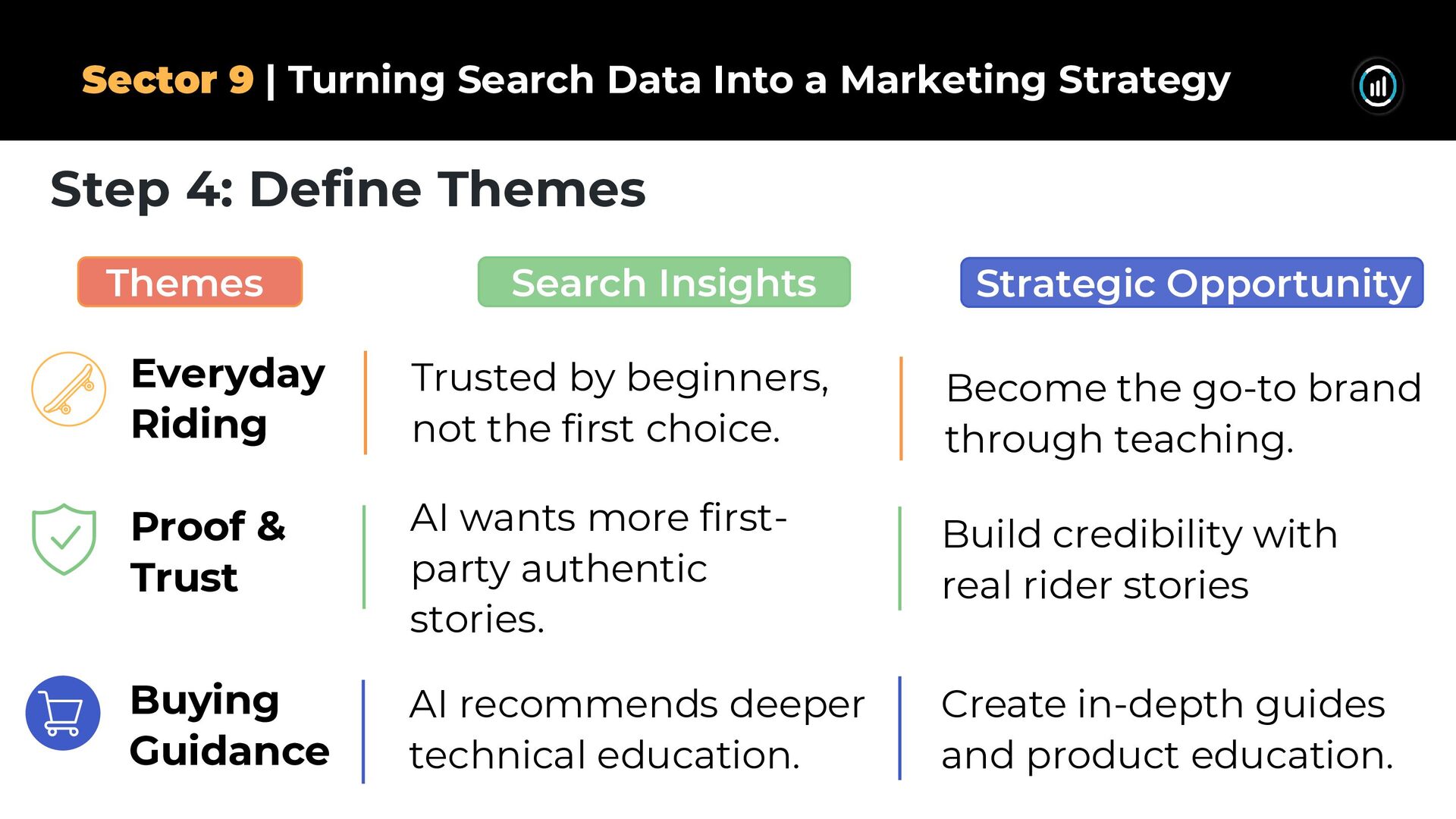
    Step 4: Define Themes Themes Search Insights Strategic Opportunity Everyday Riding Trusted by beginners, not the first choice. Become the go-to brand through teaching. Proof & Trust AI wants more firstparty authentic stories. Build credibility with real rider stories Buying Guidance AI recommends deeper technical education. Create in-depth guides and product education.
  14. Sector 9 | Turning Search Data Into a Marketing Strategy

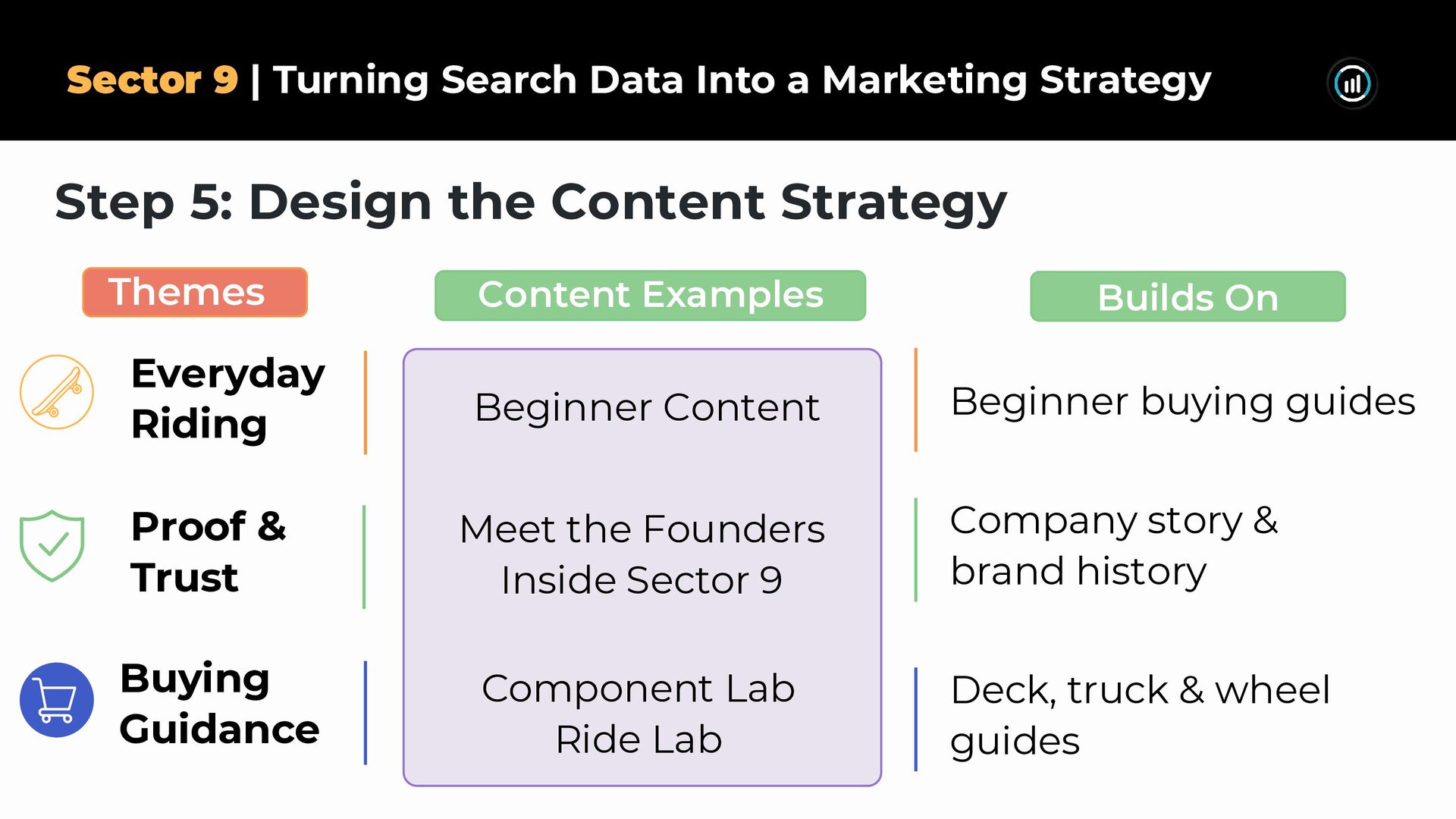
    Step 5: Design the Content Strategy Themes Content Examples Builds On Everyday Riding Beginner Content Beginner buying guides Proof & Trust Meet the Founders Inside Sector 9 Company story & brand history Buying Guidance Component Lab Ride Lab Deck, truck & wheel guides
  15. Sector 9 | Turning Search Data Into a Marketing Strategy

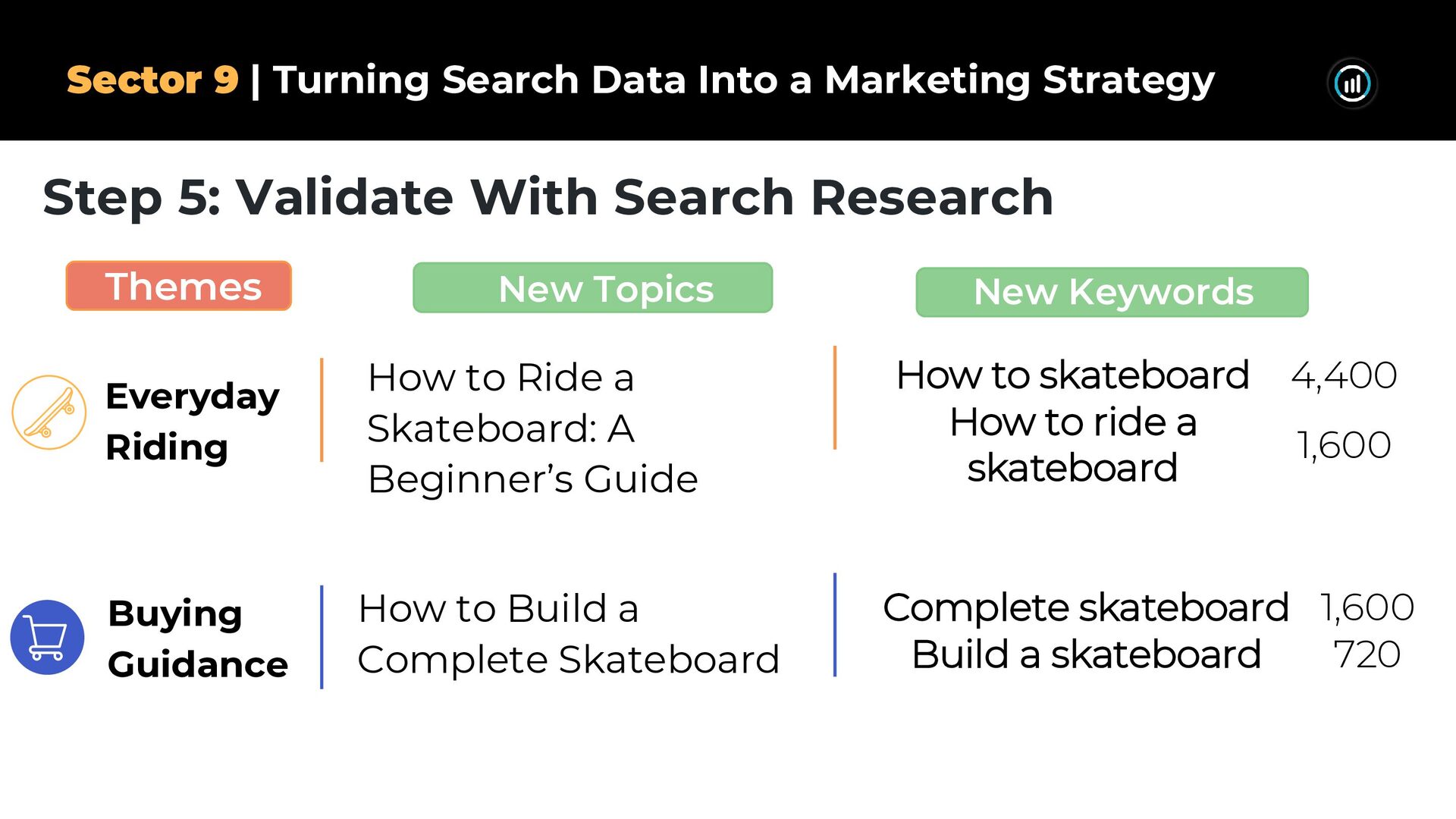
    Step 5: Validate With Search Research Themes New Topics New Keywords Everyday Riding How to Ride a Skateboard: A Beginner’s Guide How to skateboard How to ride a skateboard Buying Guidance How to Build a Complete Skateboard Complete skateboard 1,600 Build a skateboard 720 4,400 1,600
  16. Sector 9 | Turning Search Data Into a Marketing Strategy

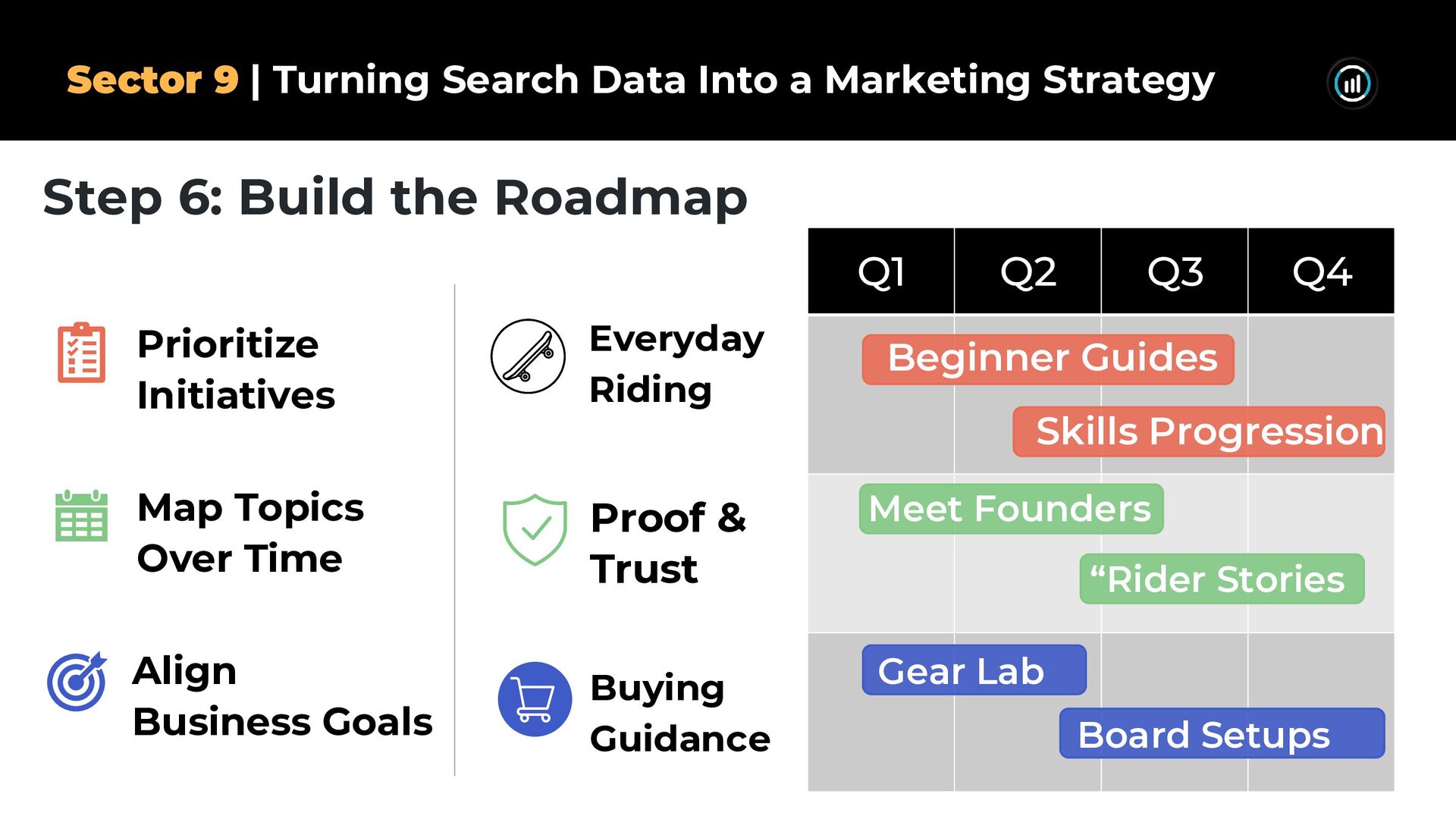
    Step 6: Build the Roadmap Q1 Q2 Q3 Prioritize Initiatives Everyday Riding Beginner Guides Map Topics Over Time Proof & Trust Meet Founders Buying Guidance Gear Lab Align Business Goals Q4 Skills Progression “Rider Stories Board Setups
  17. The Roadmap is Just the Beginning The Goal isn’t more

    content. It’s stronger brand authority across the search ecosystem