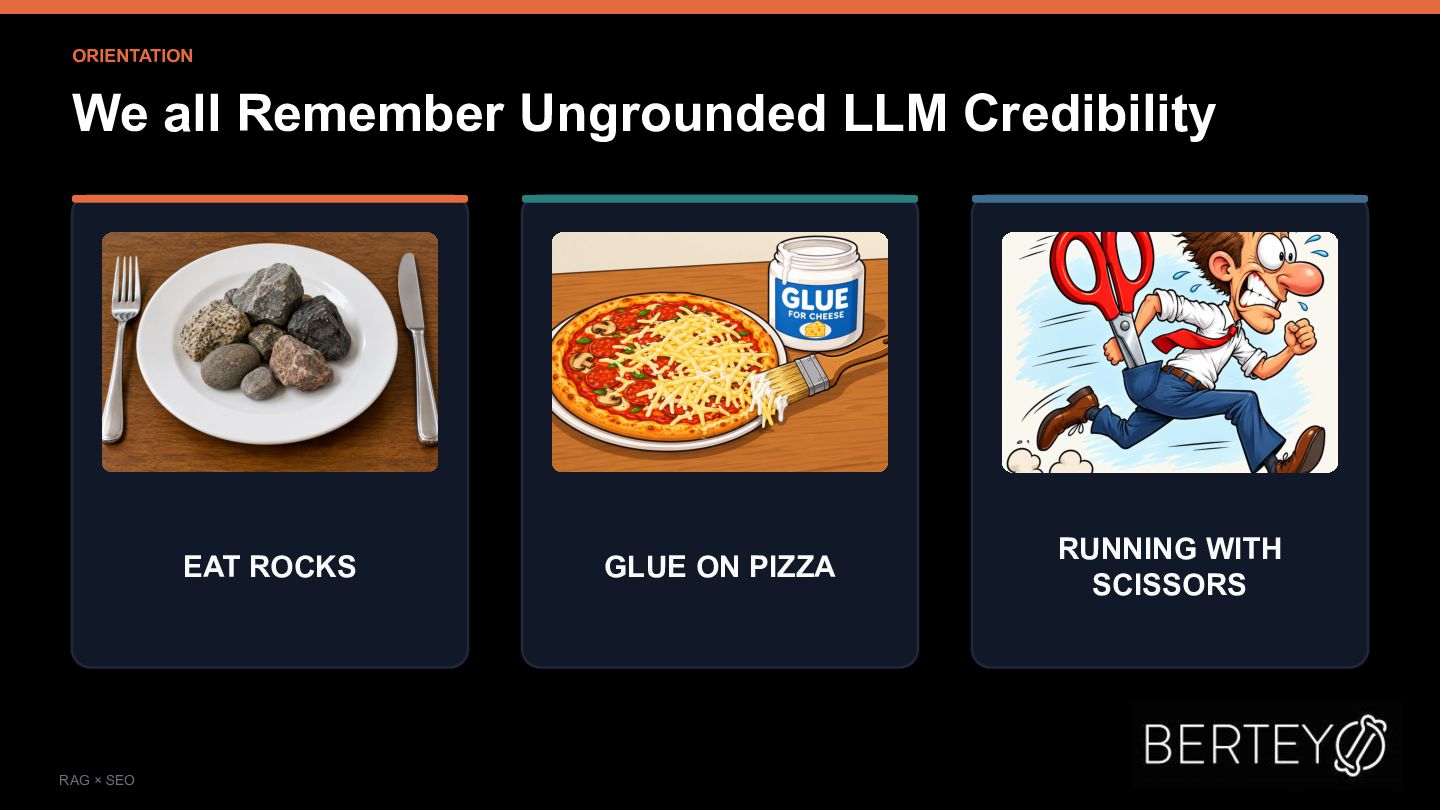
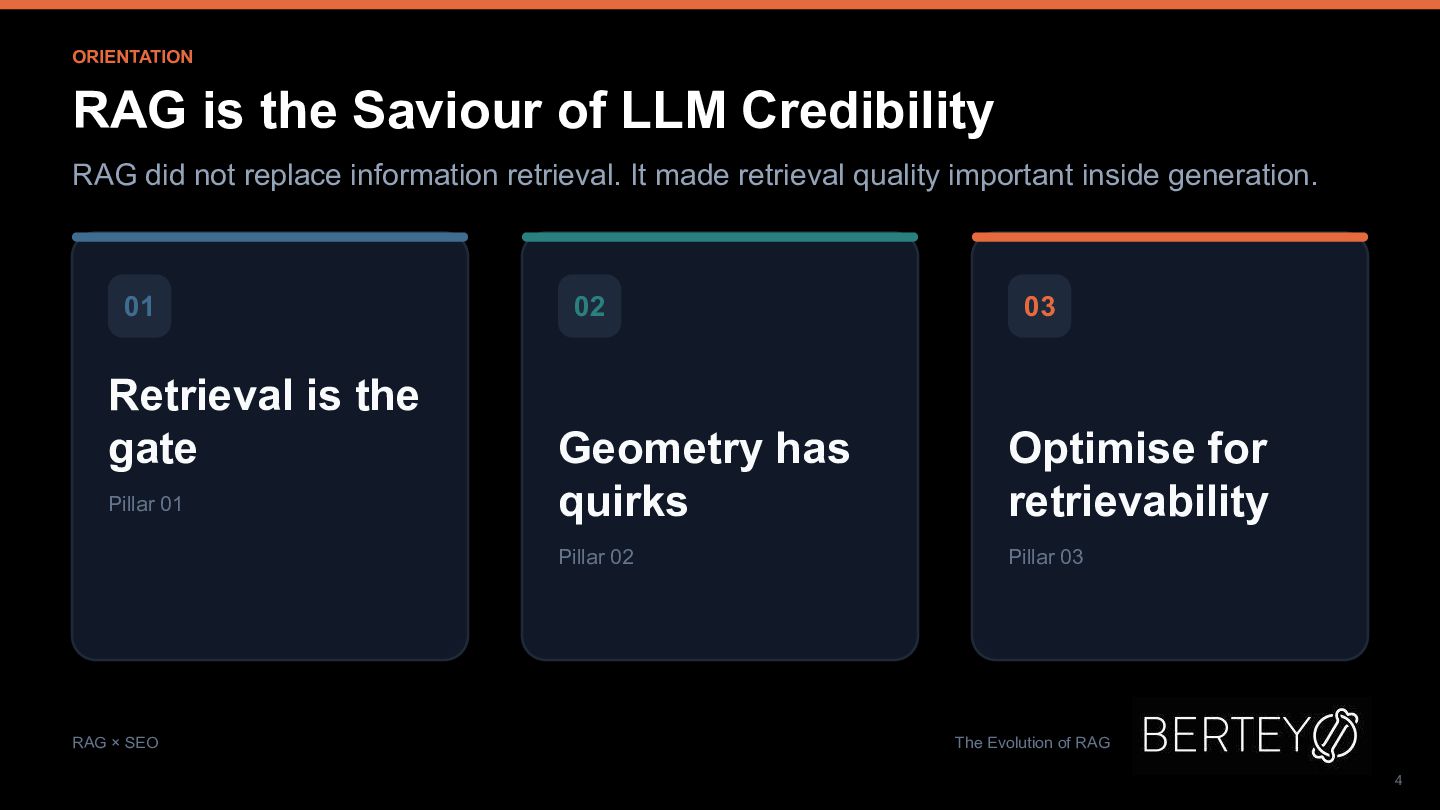
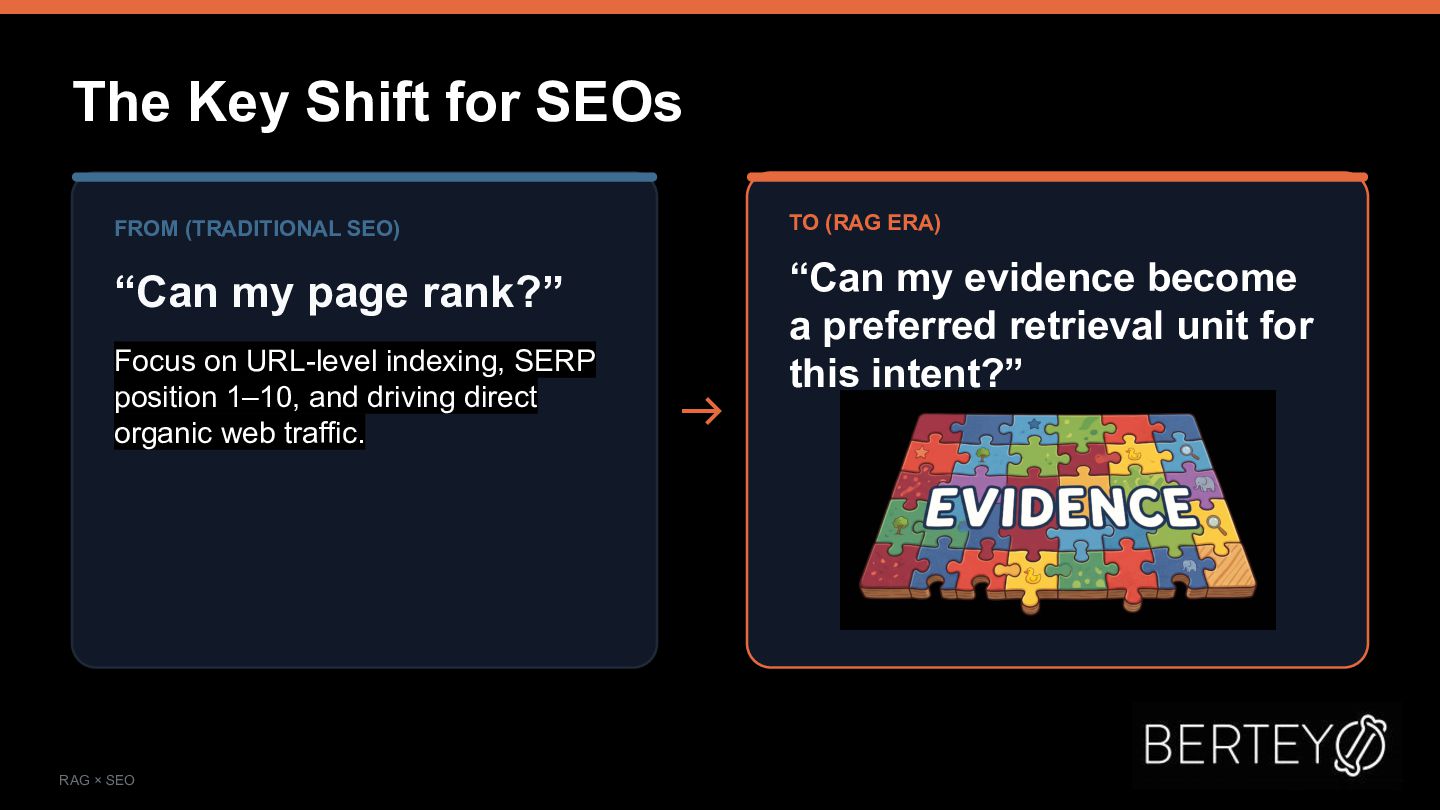
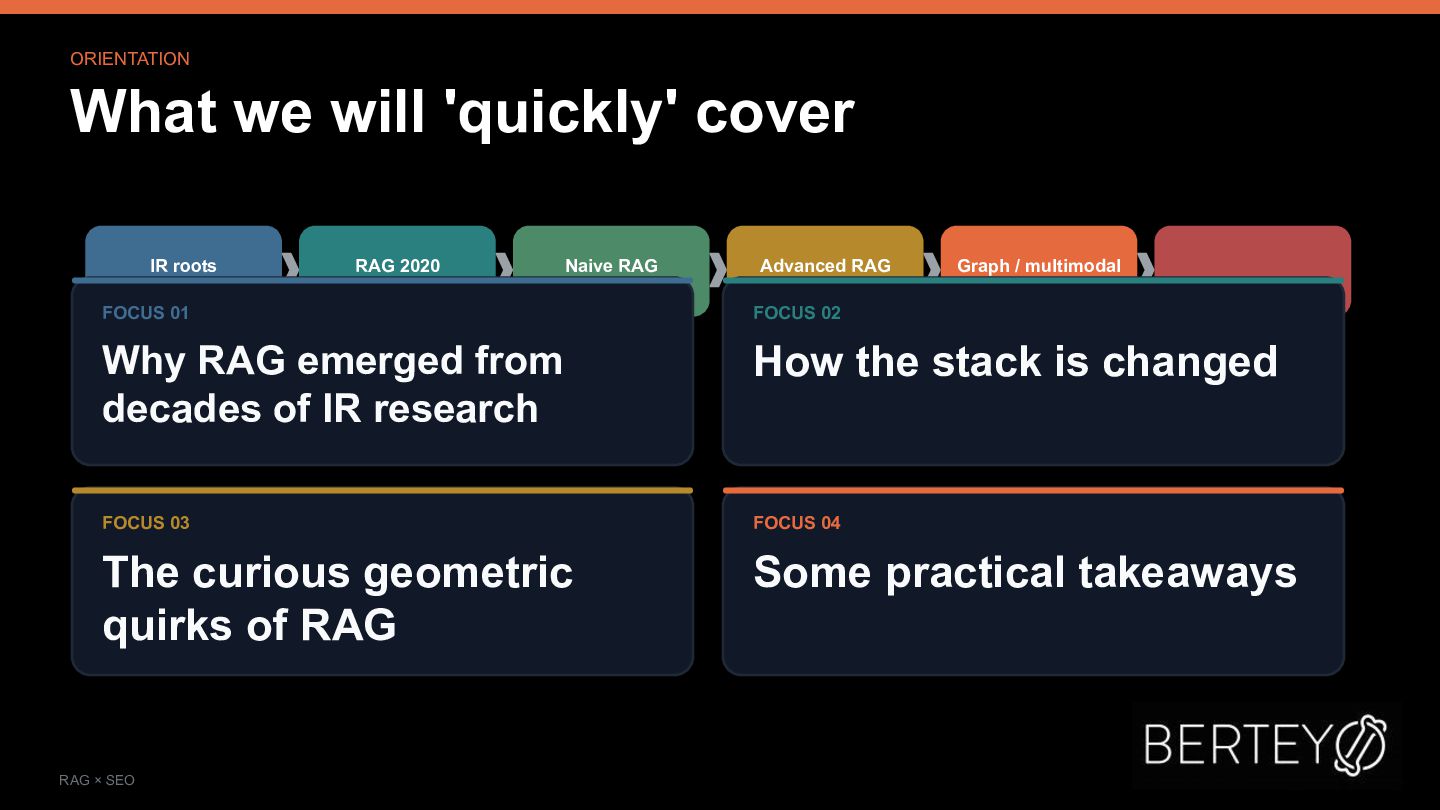
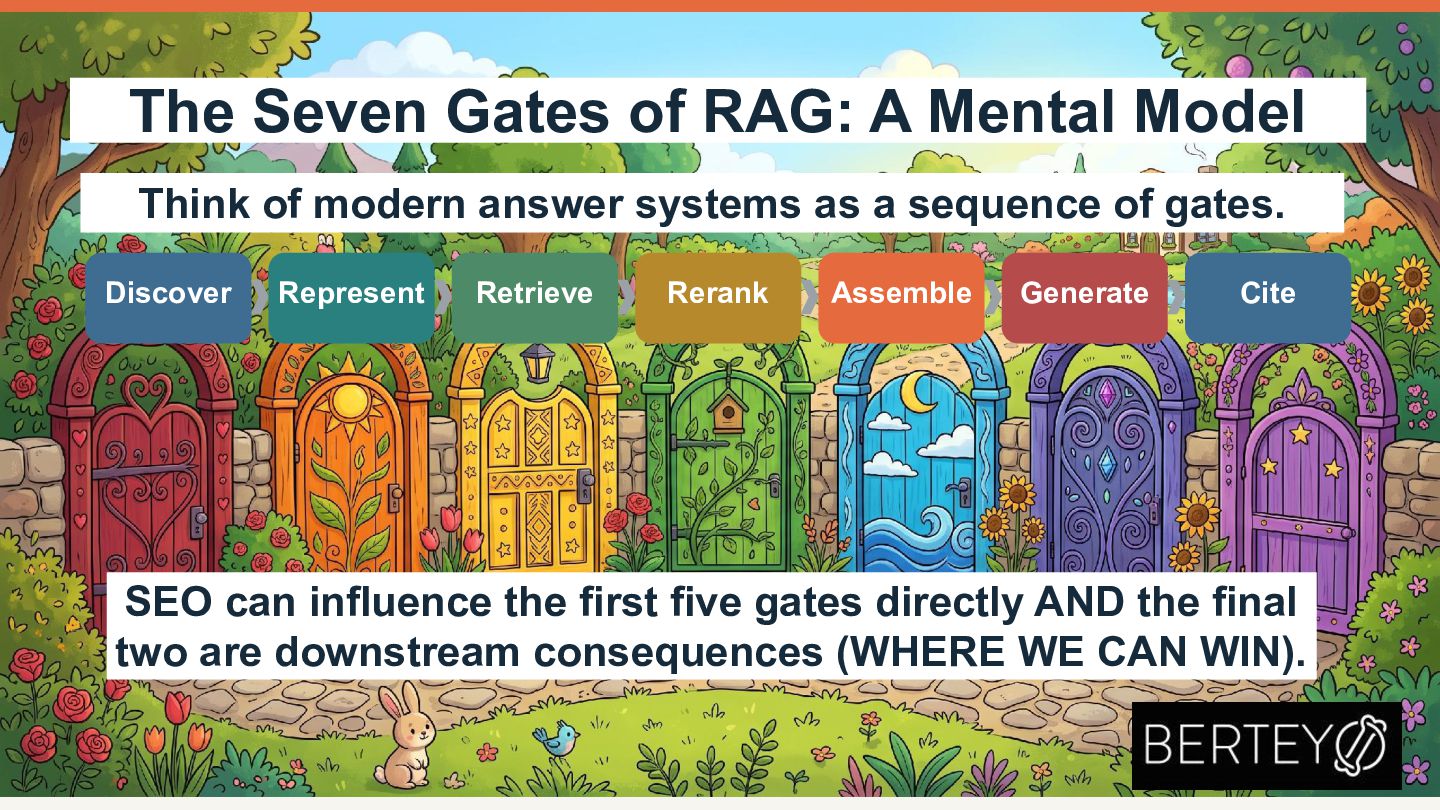
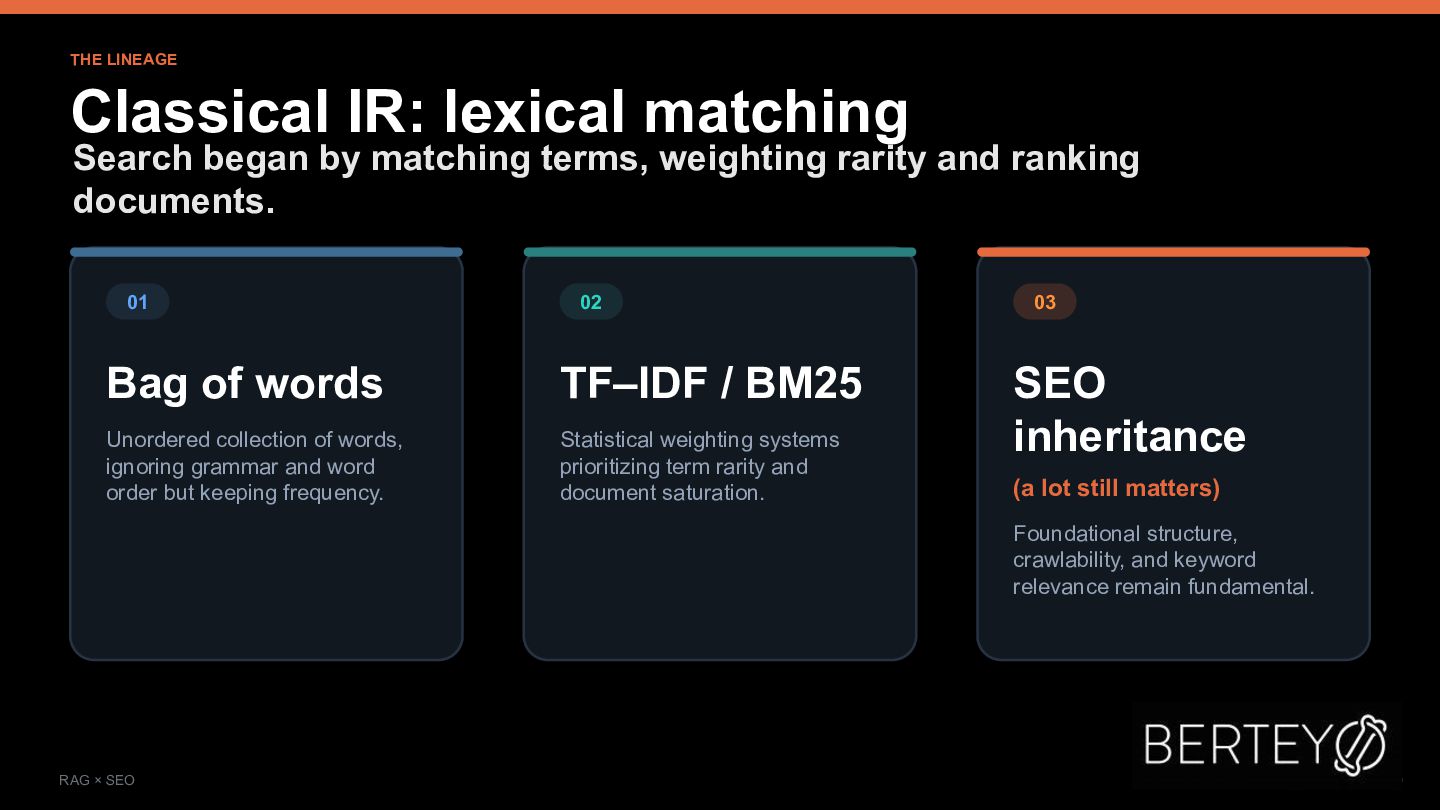
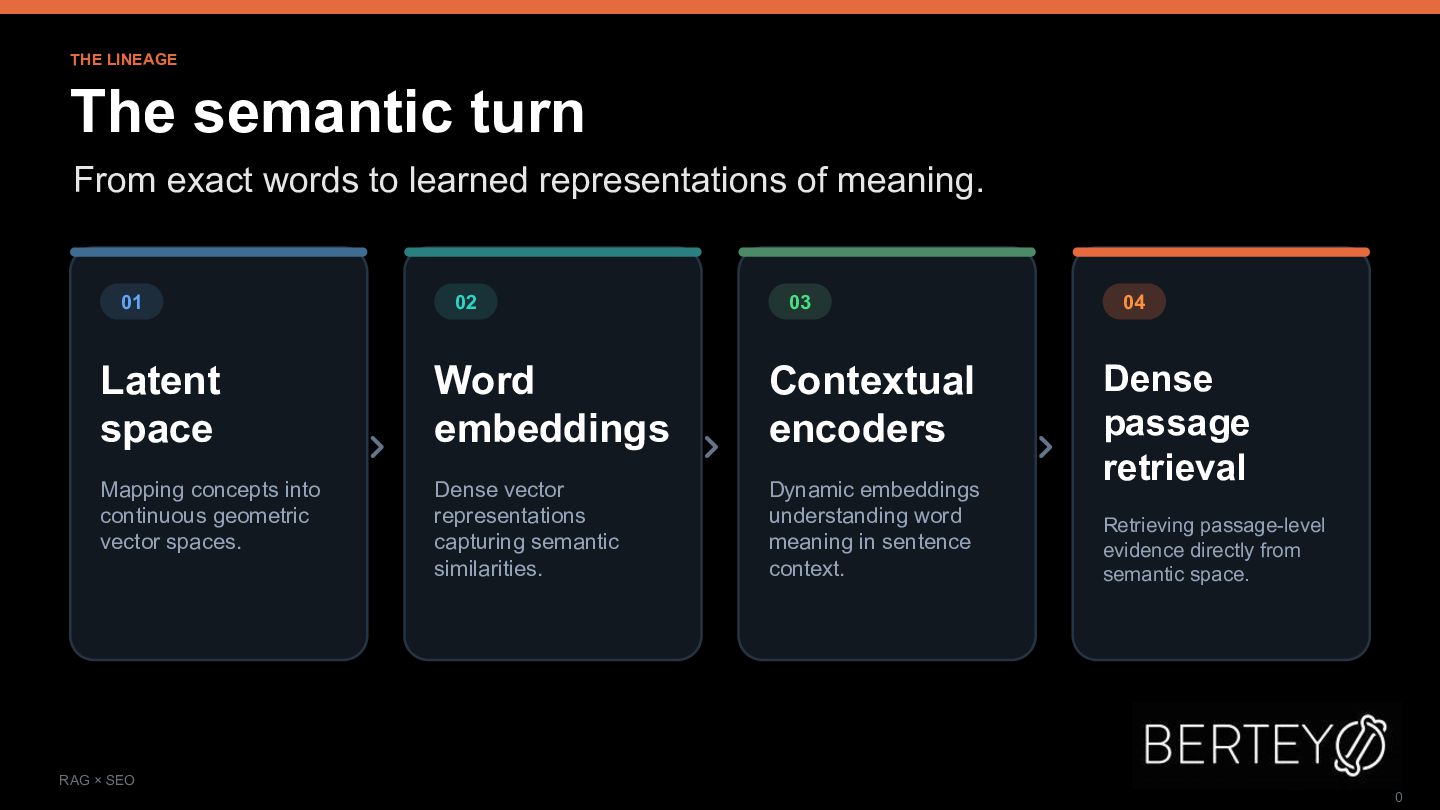
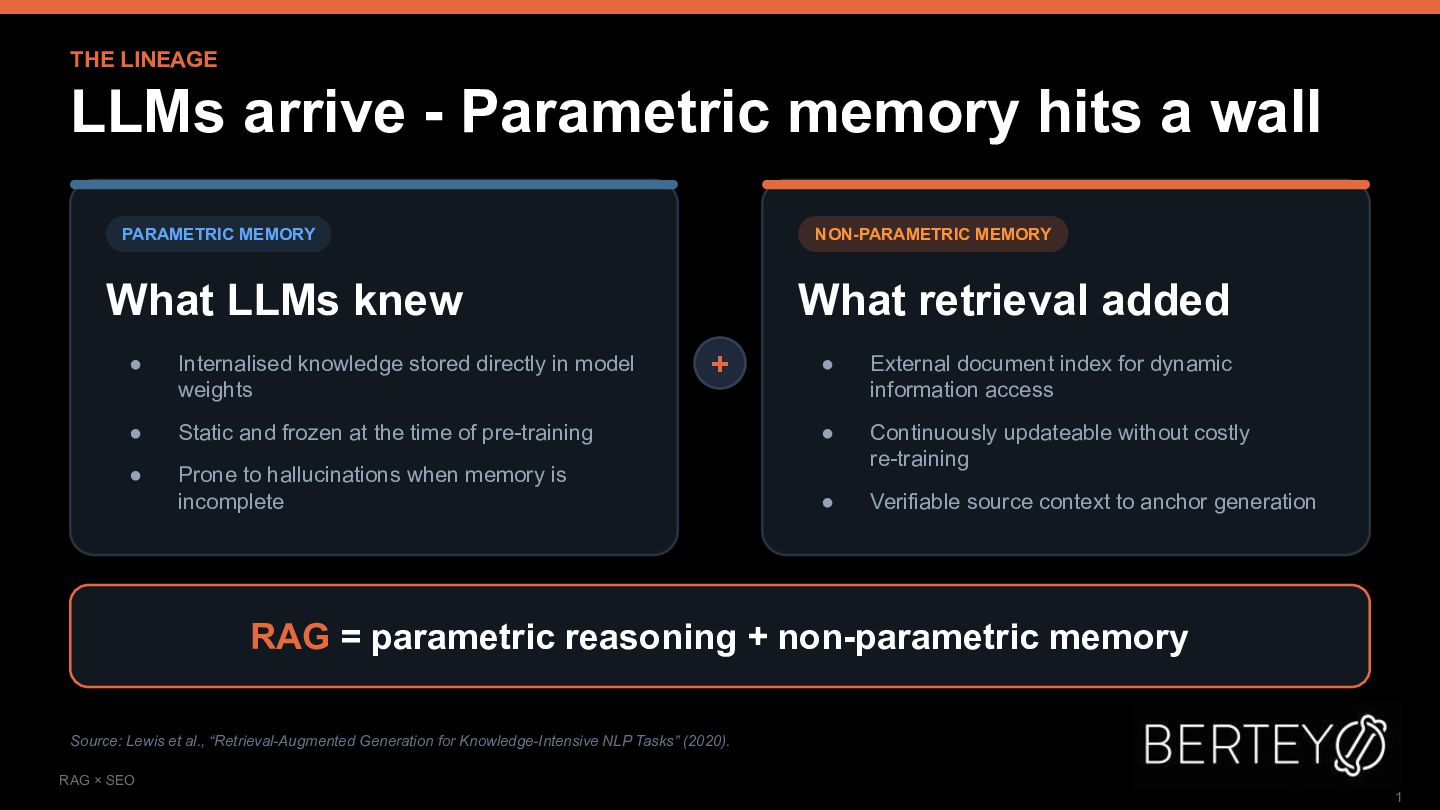
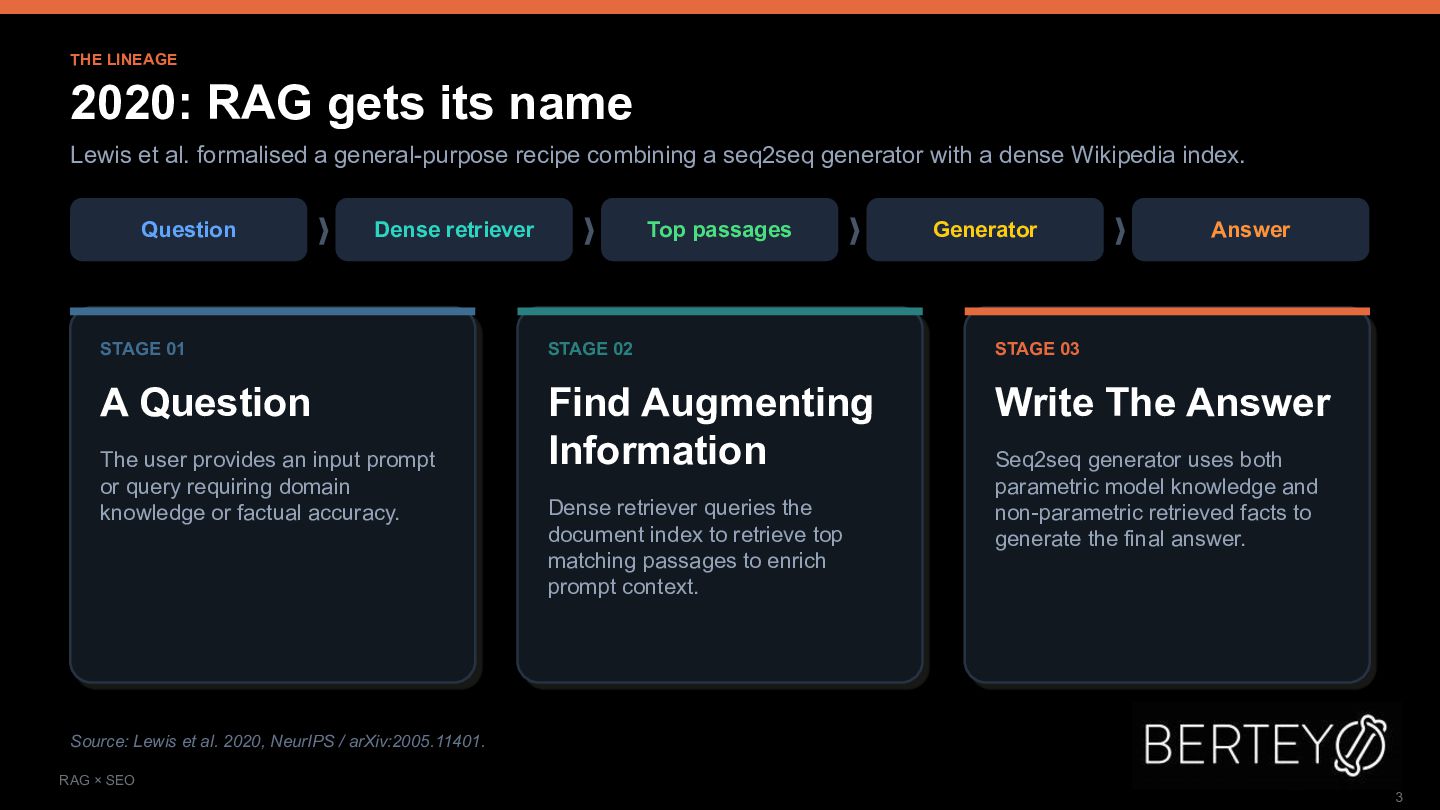
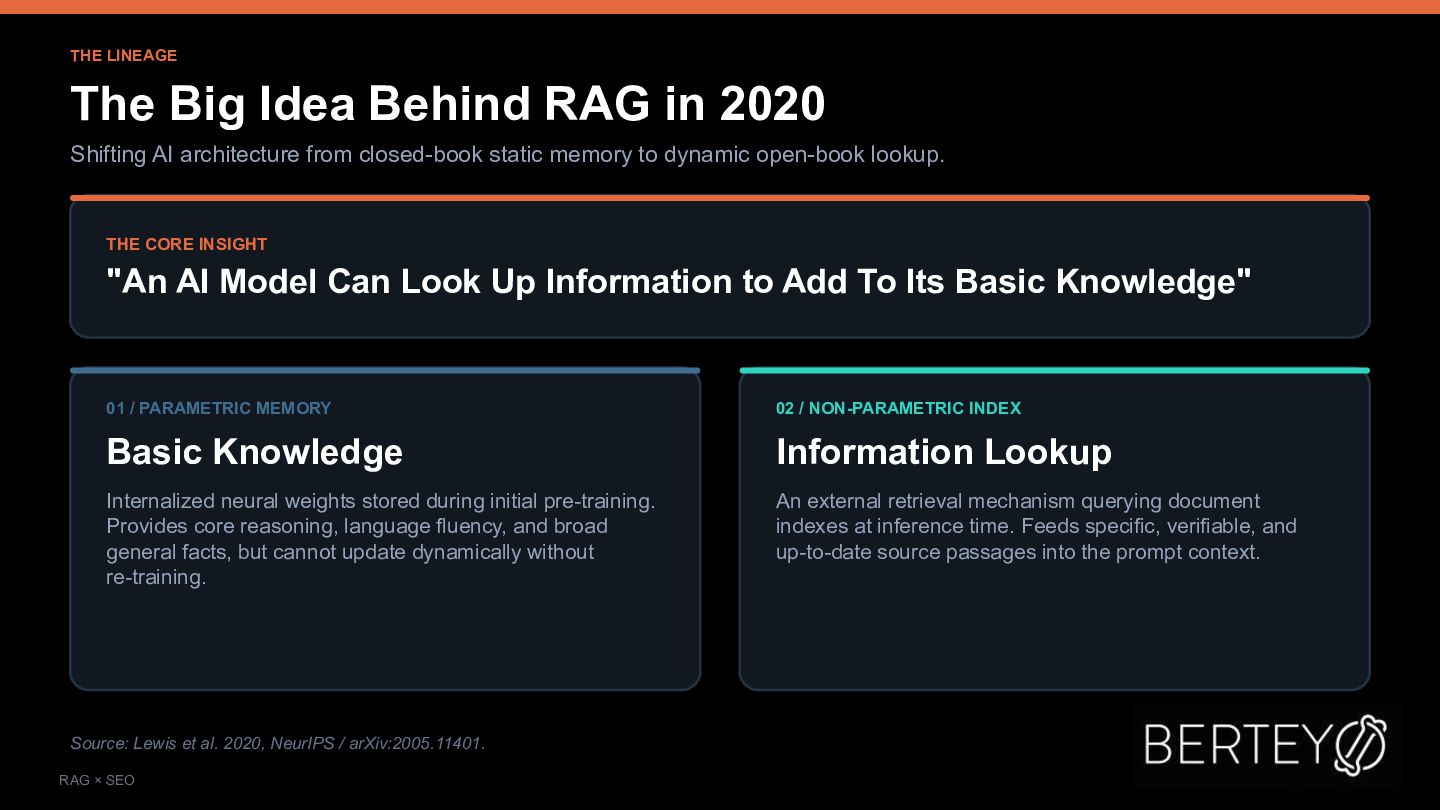
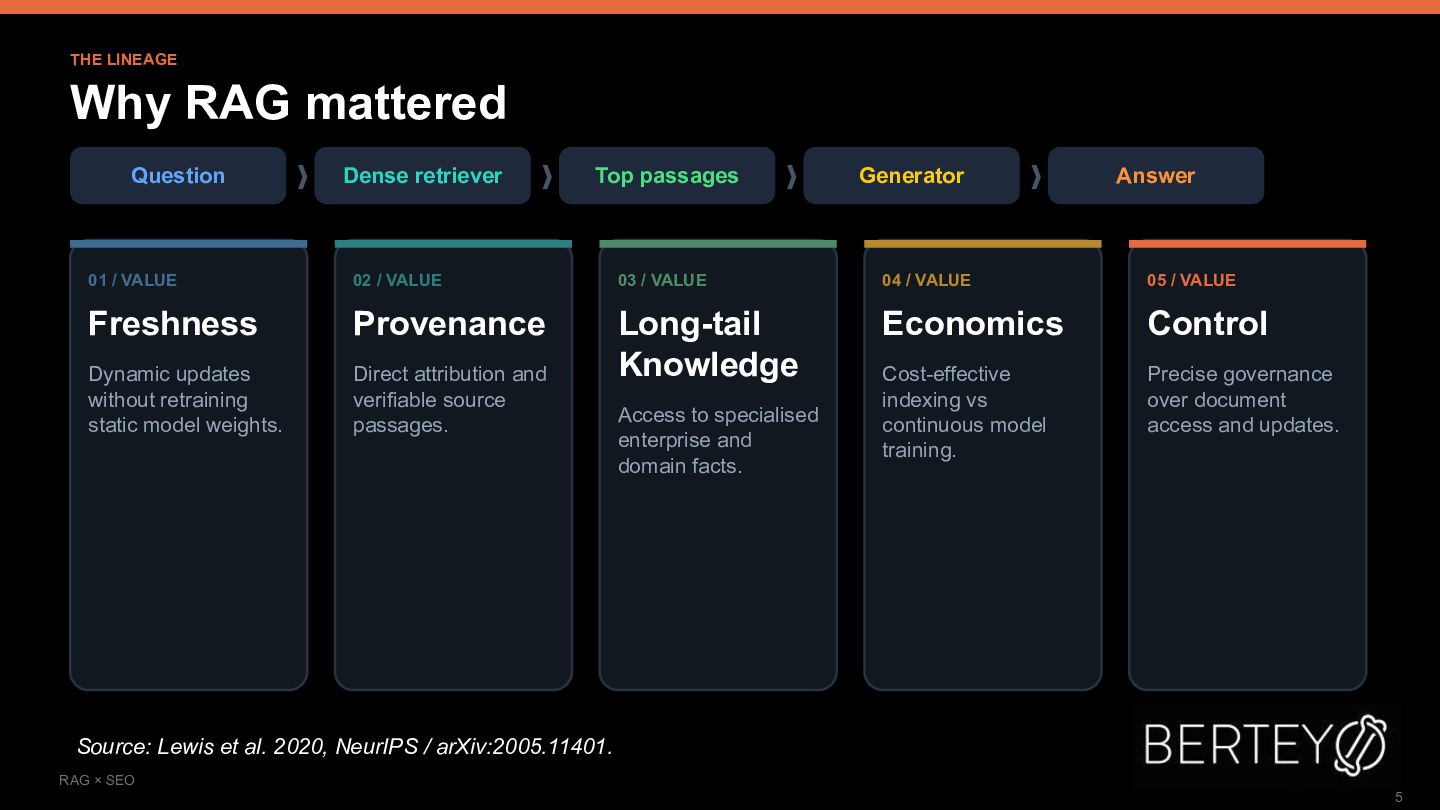
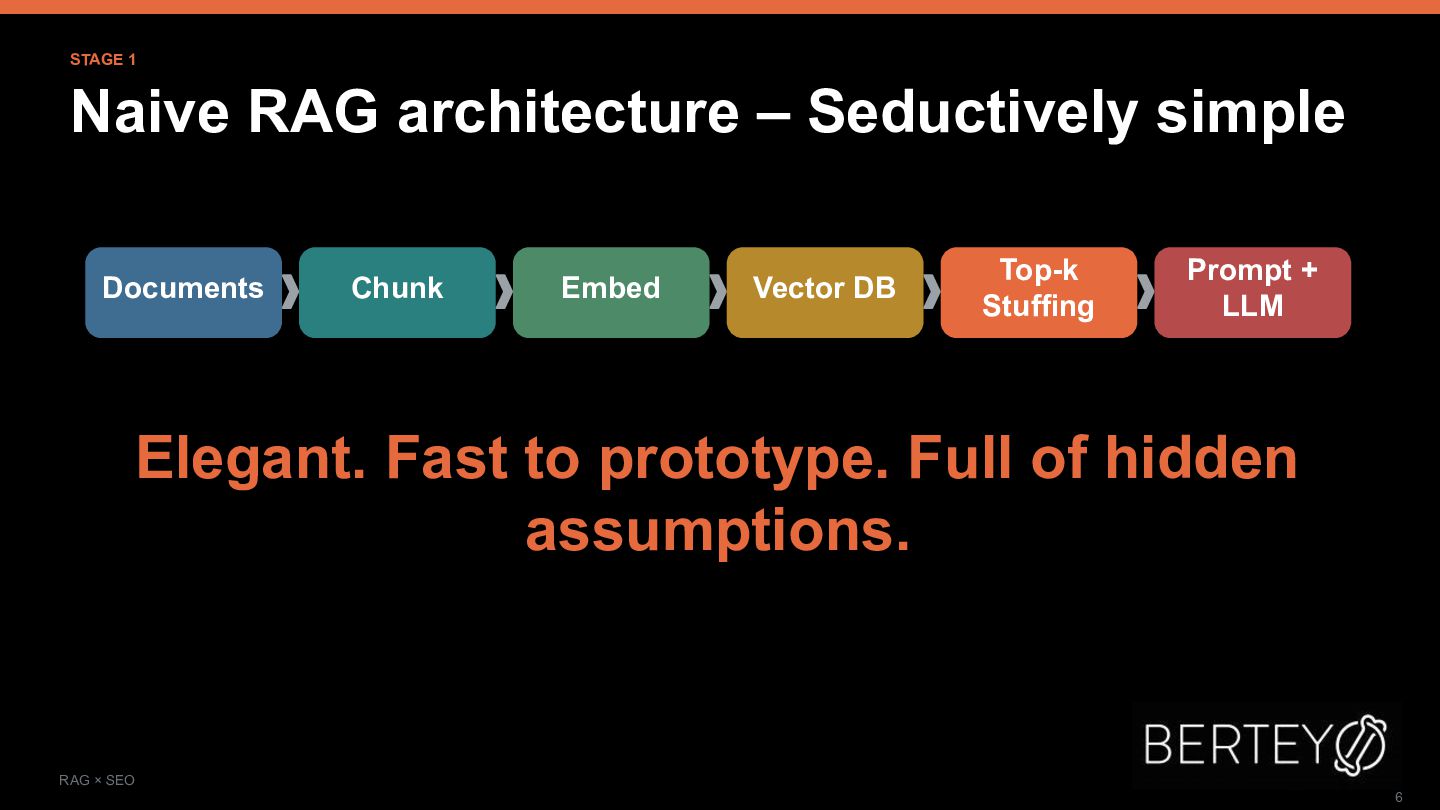
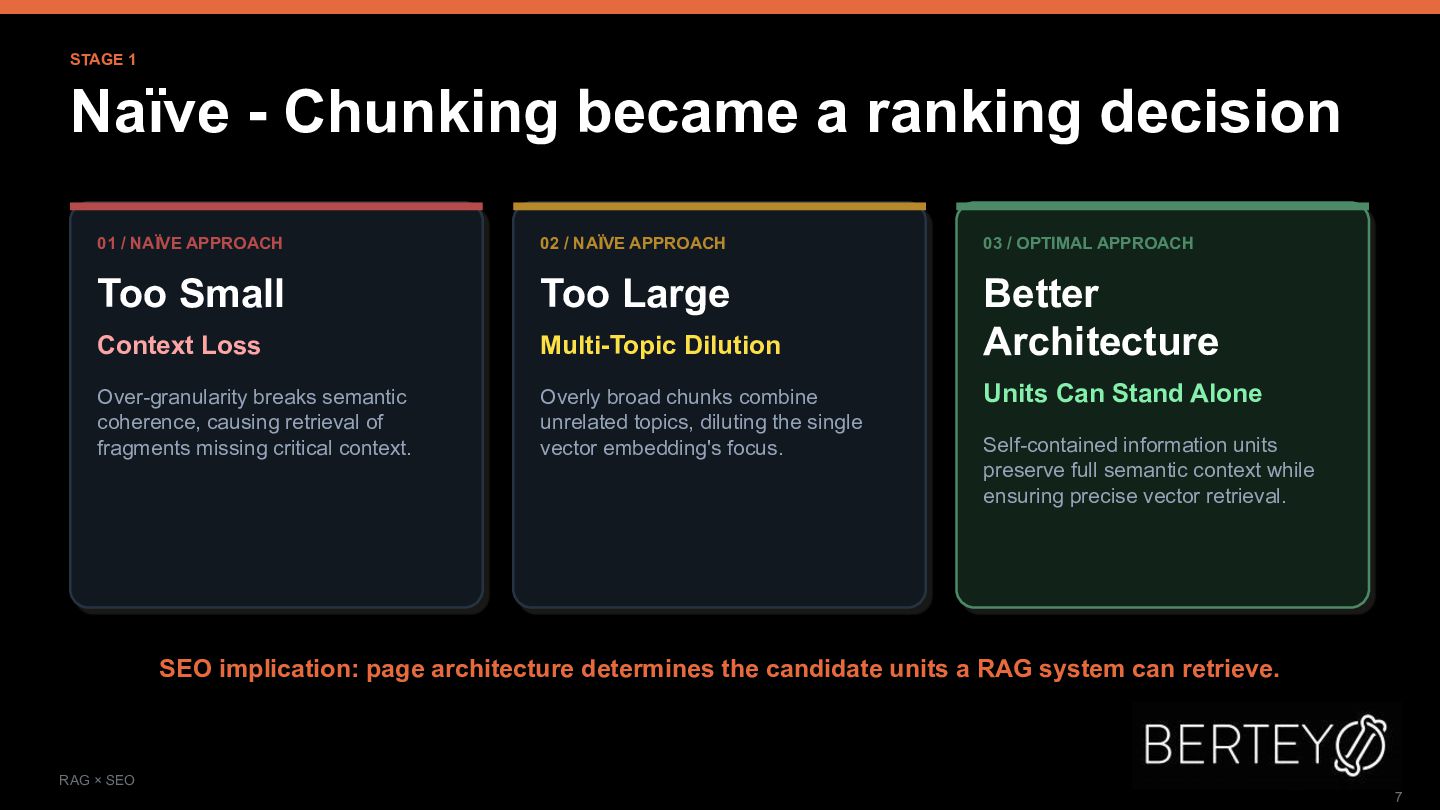
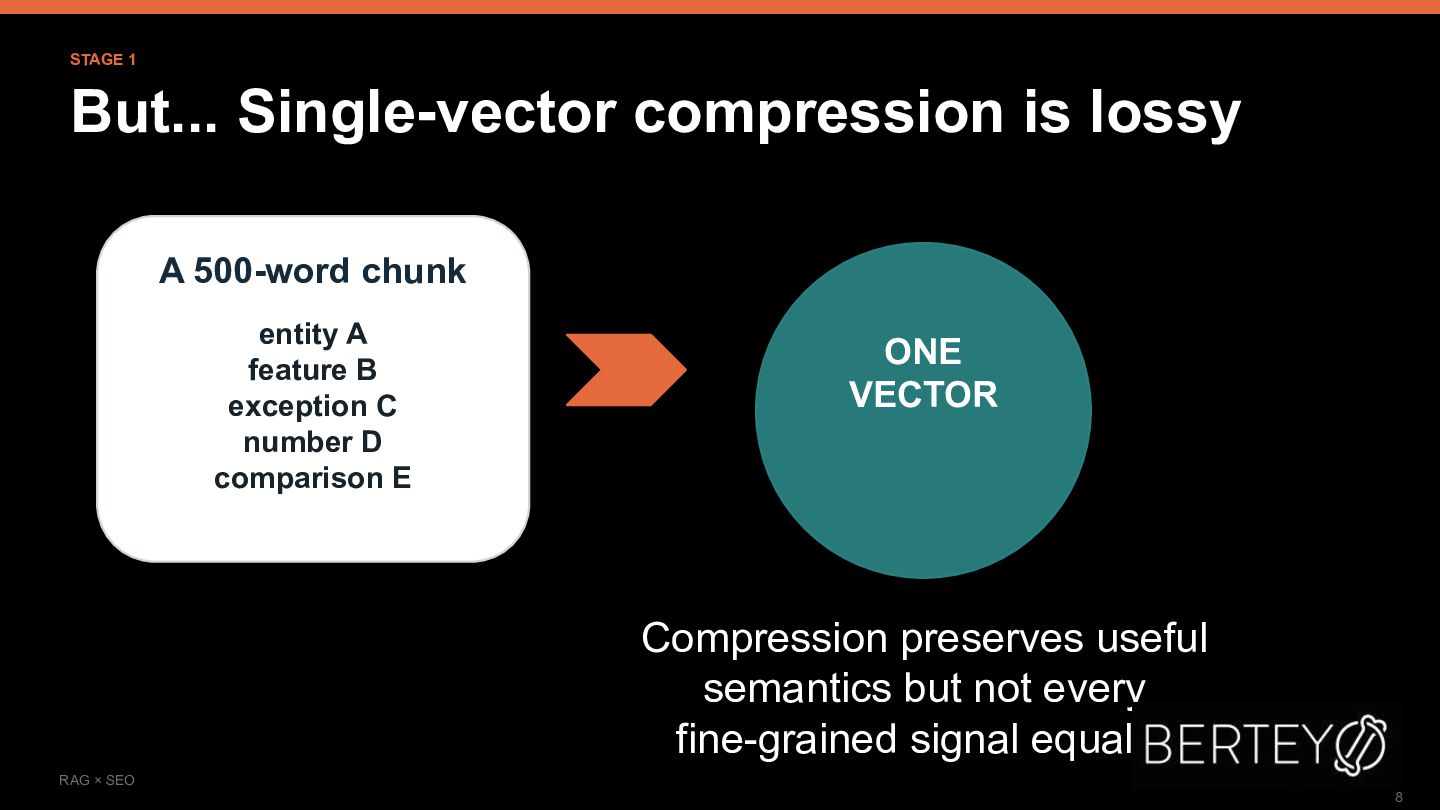
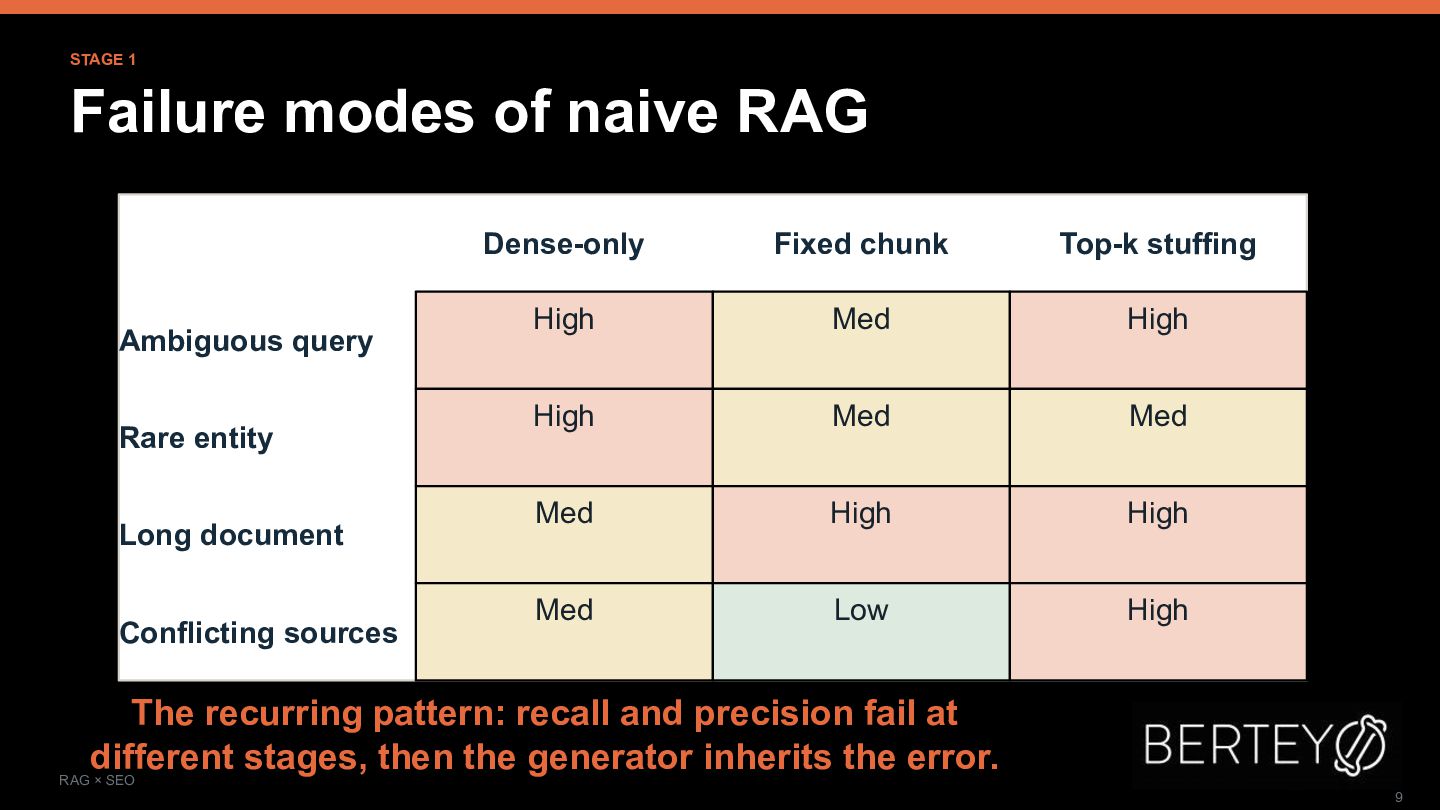
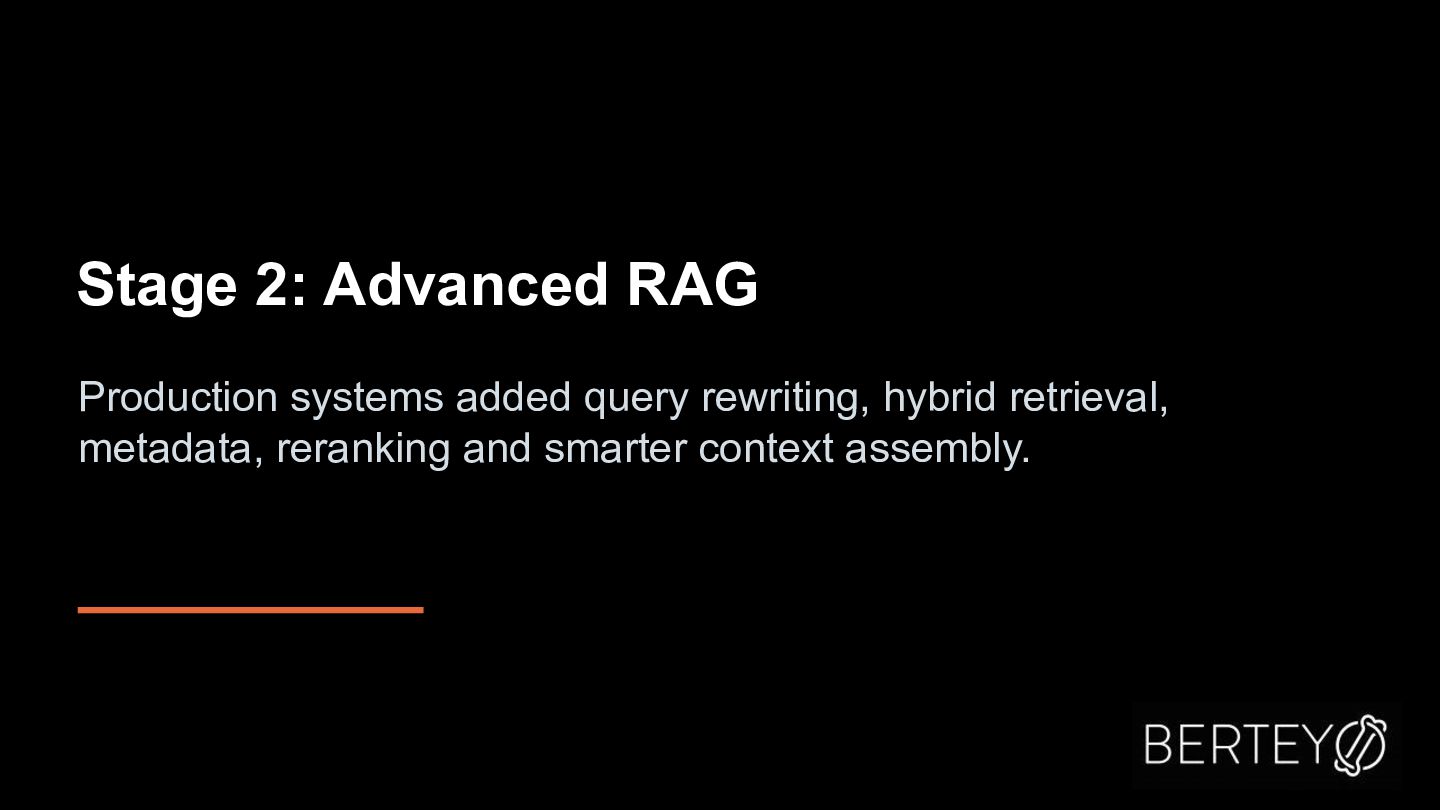
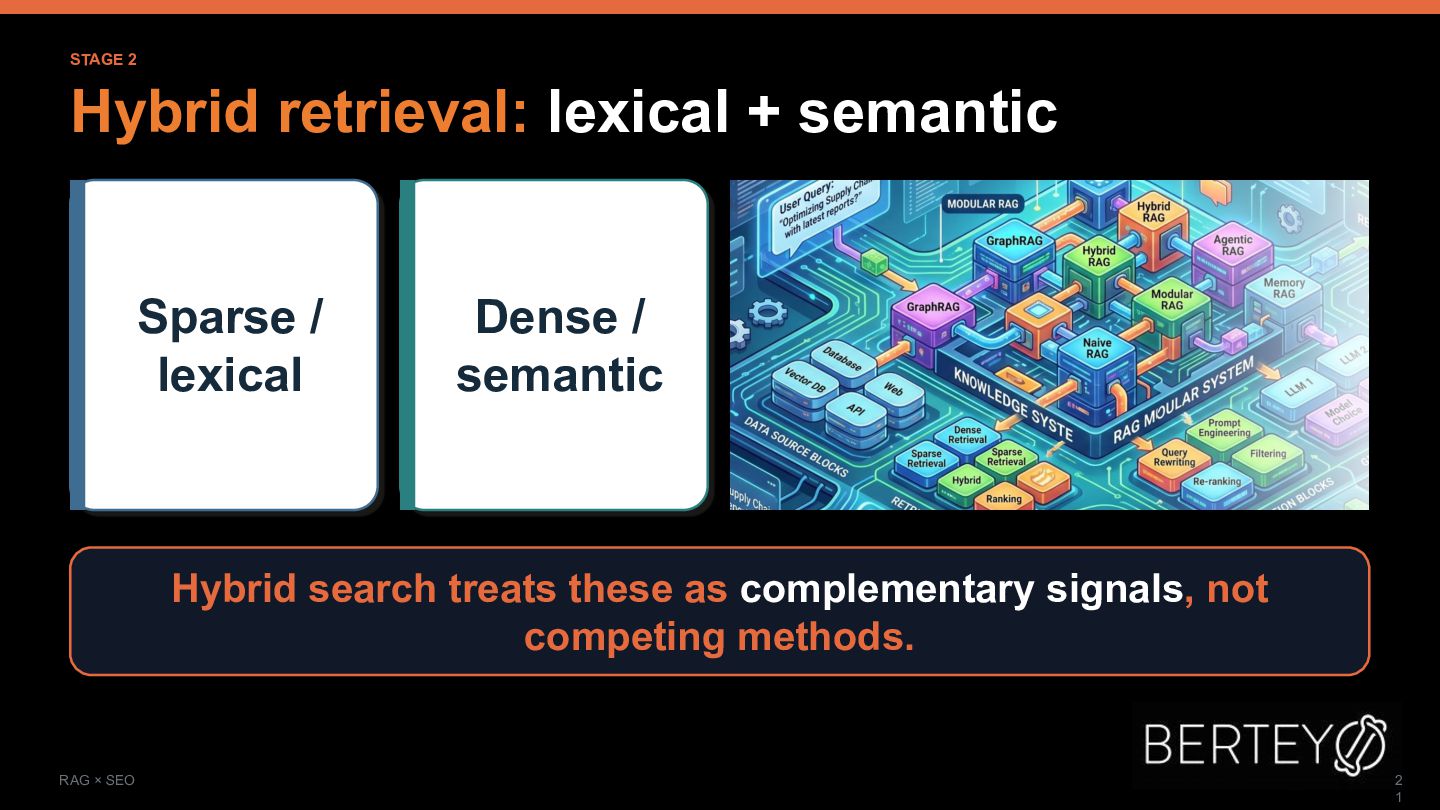
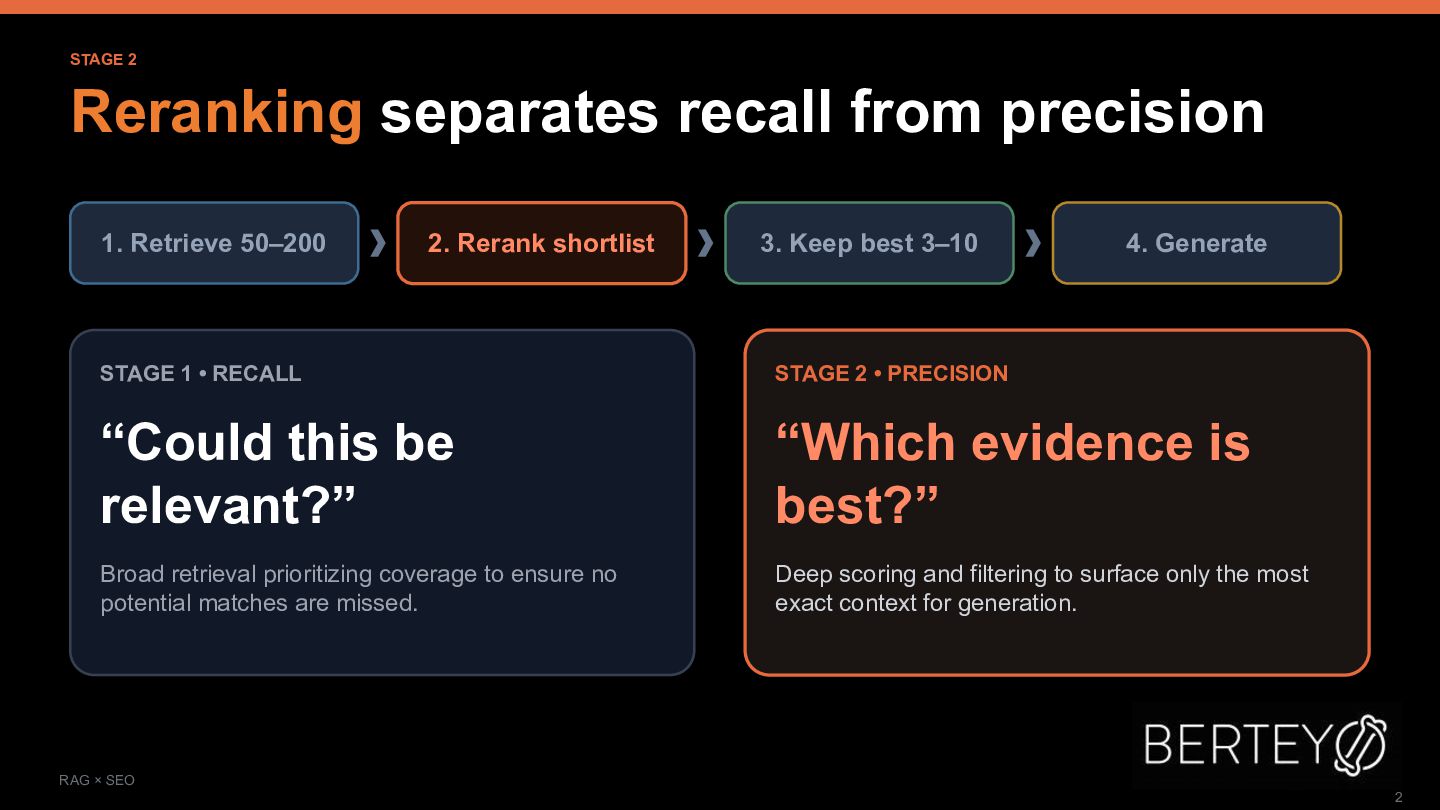
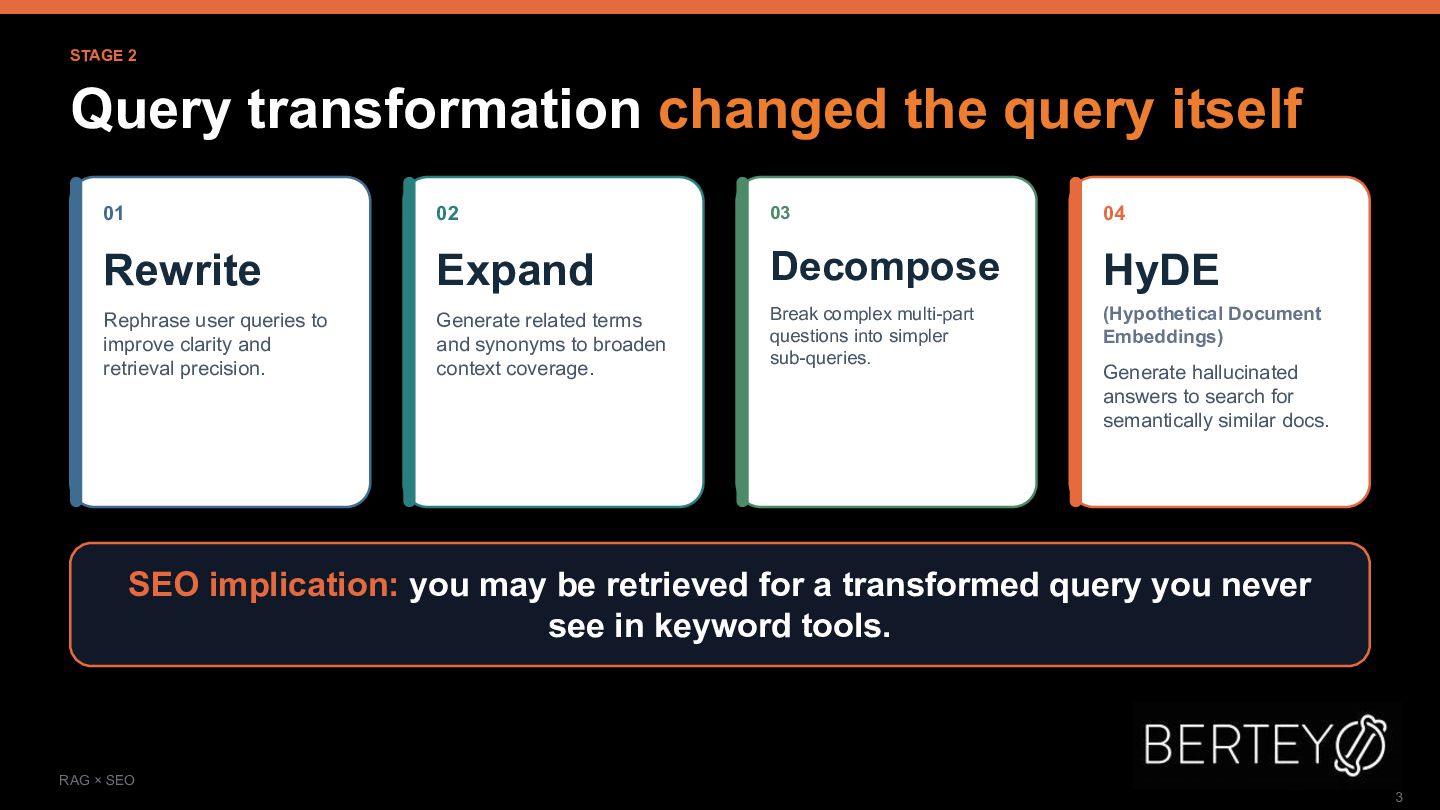
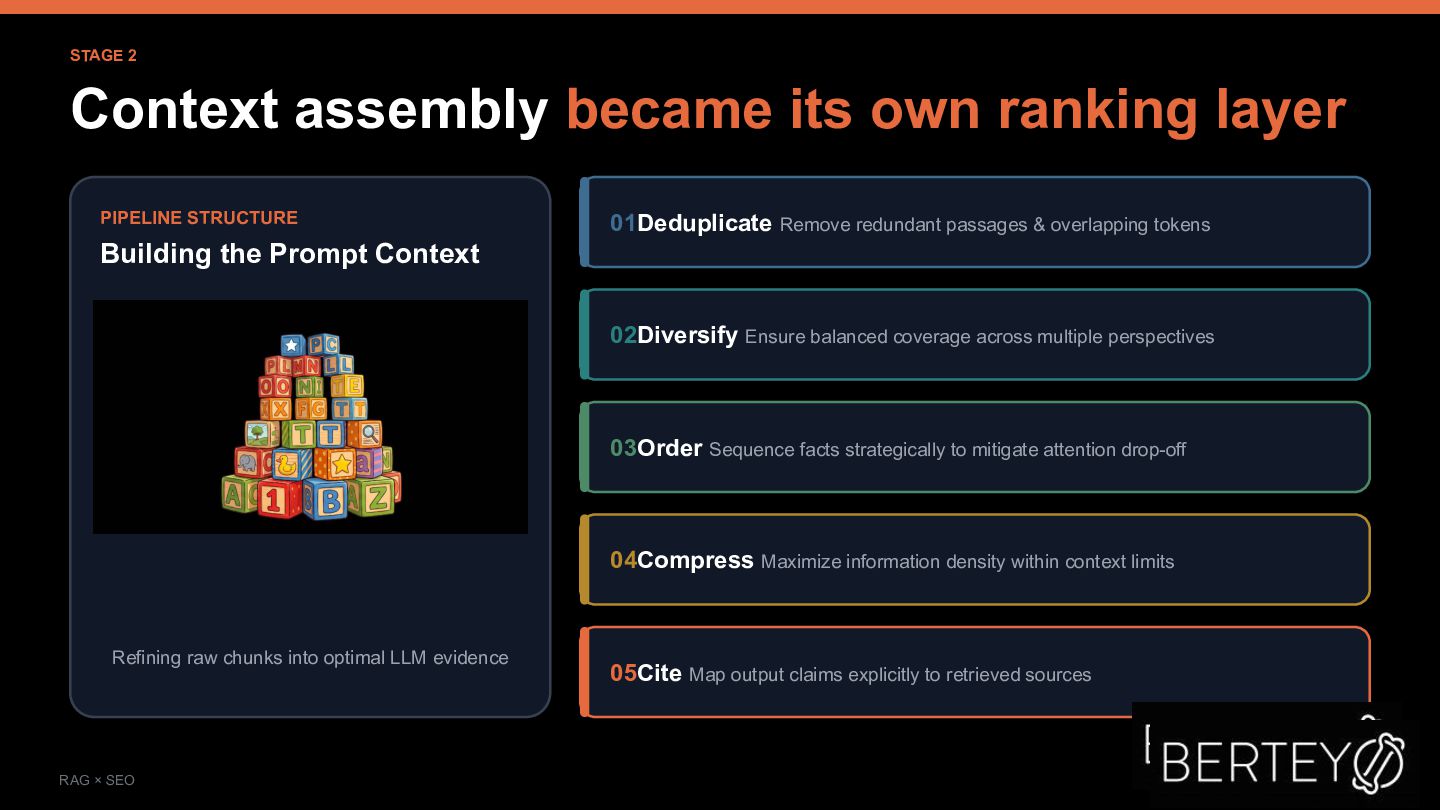
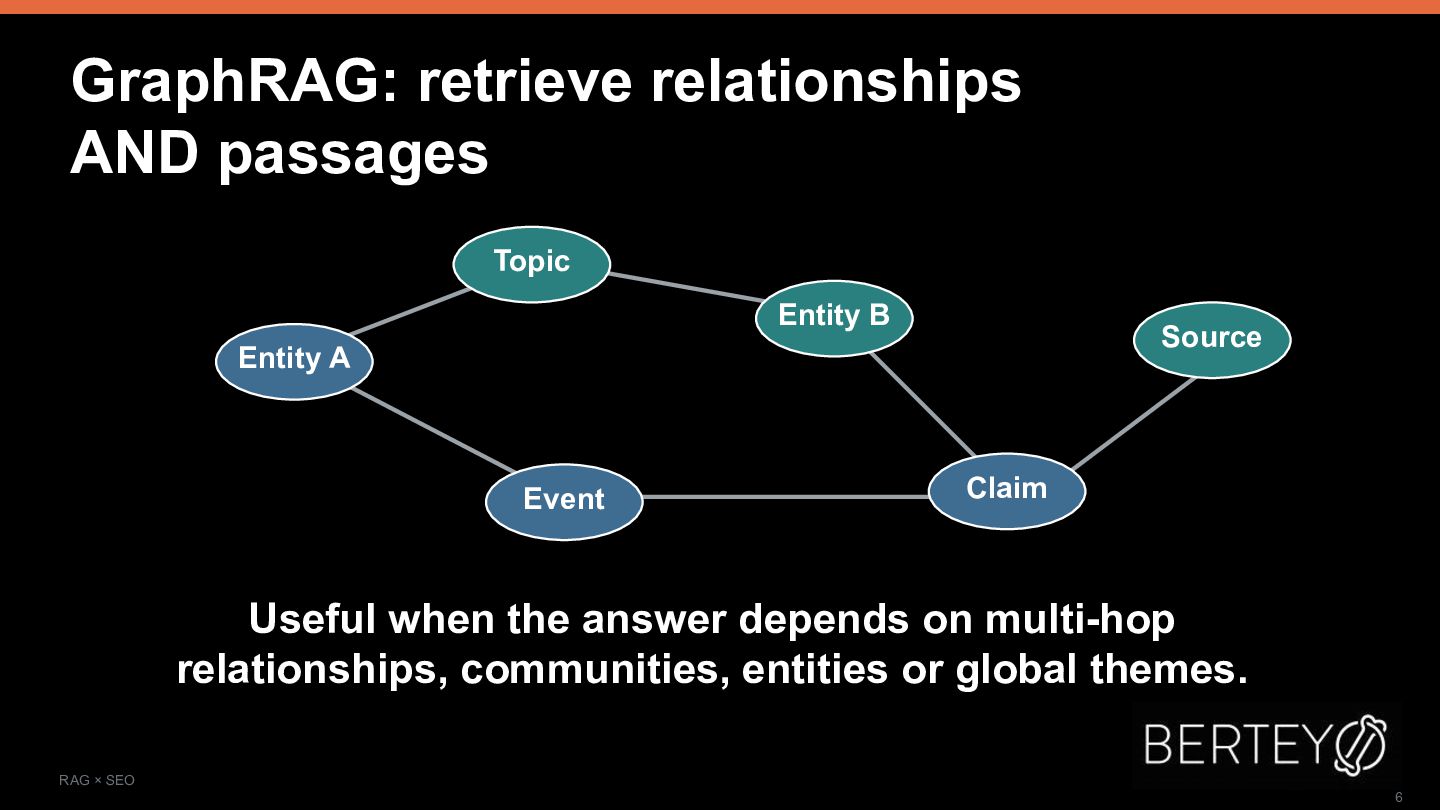
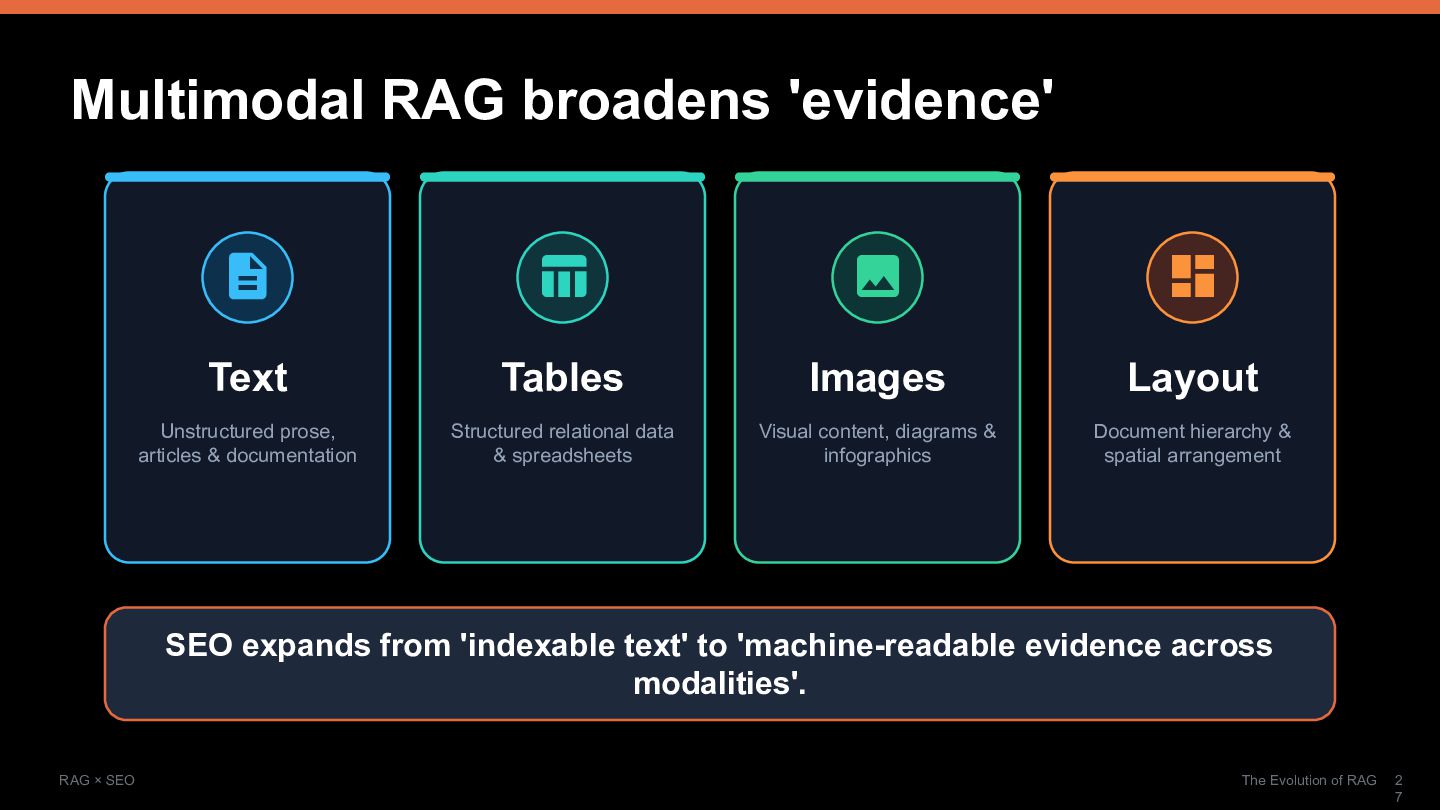
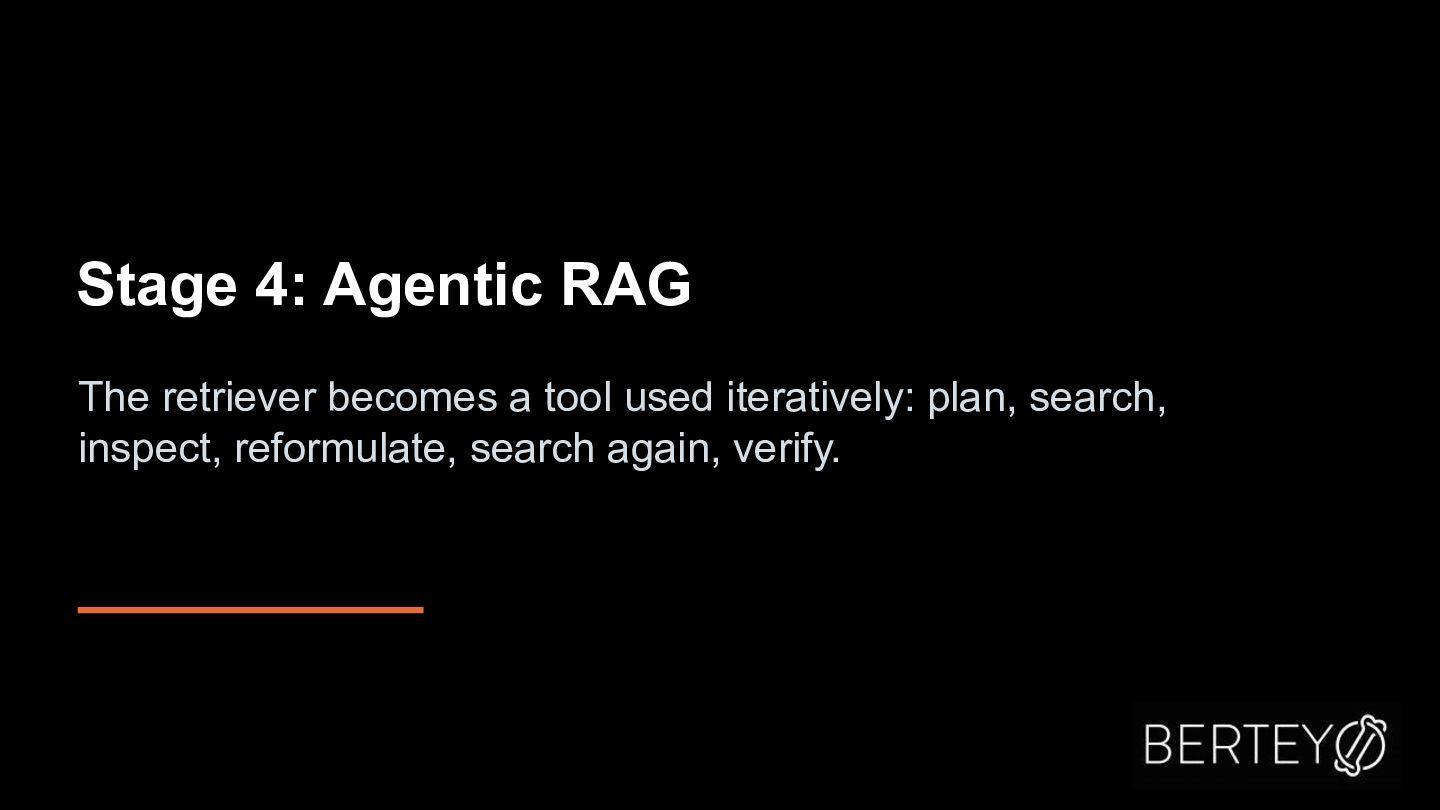
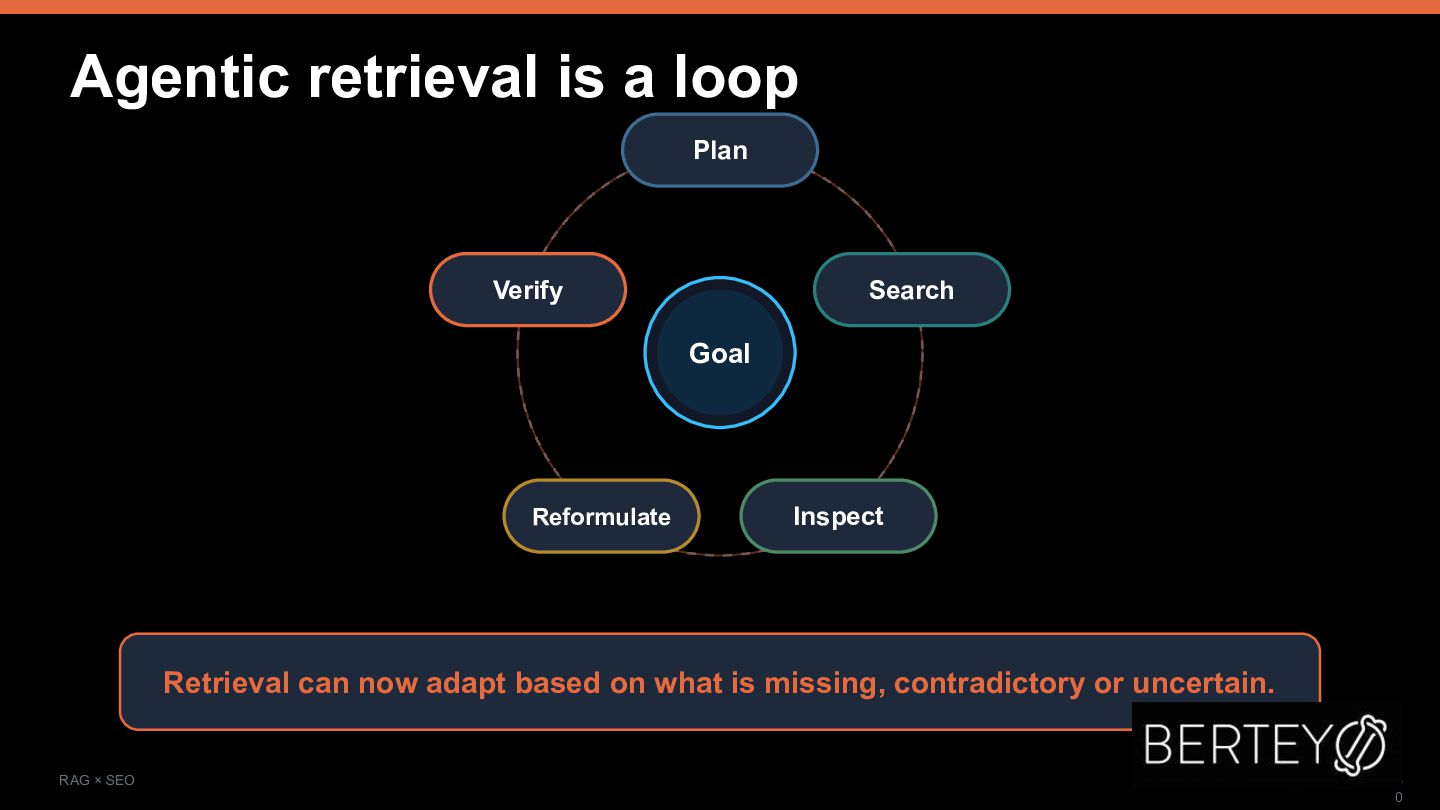
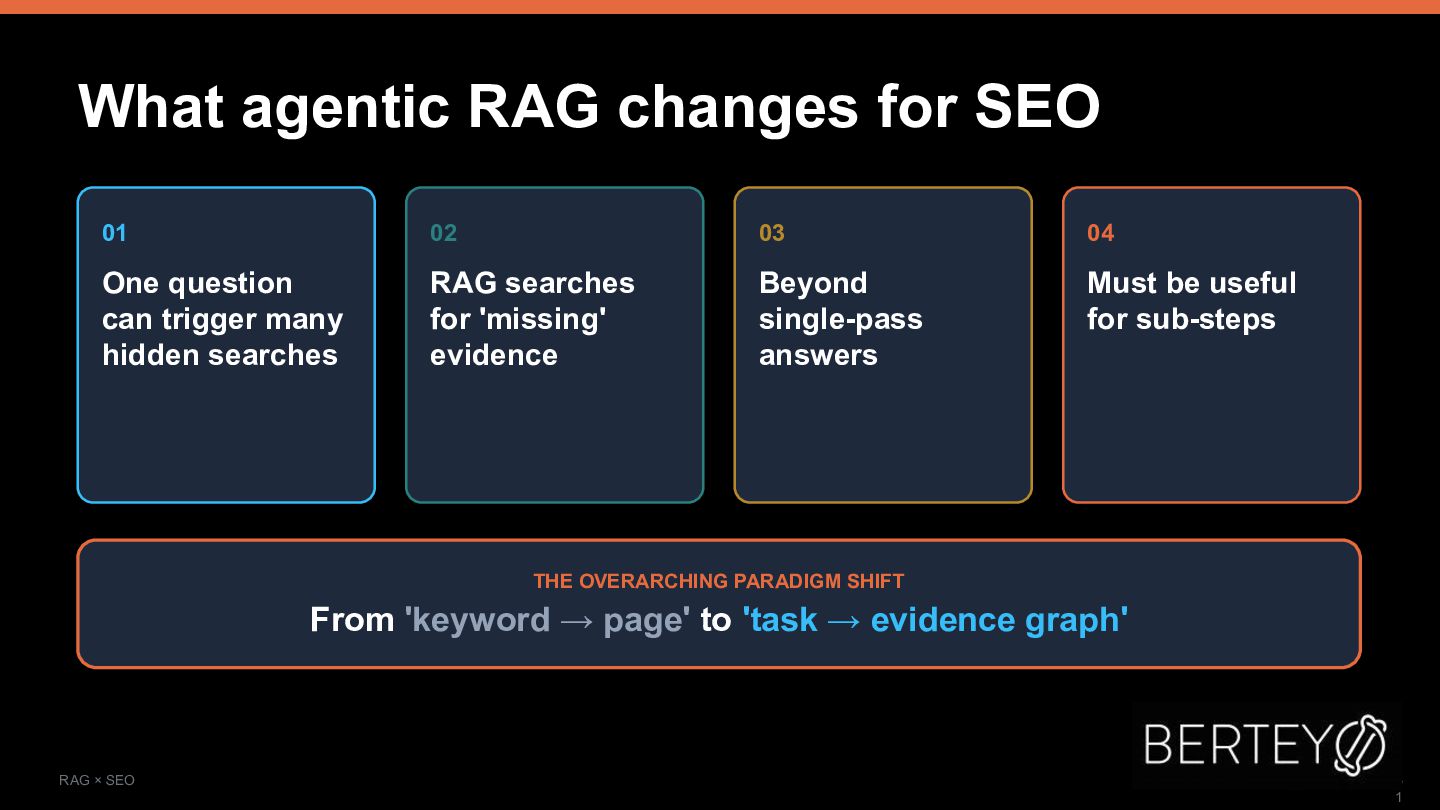
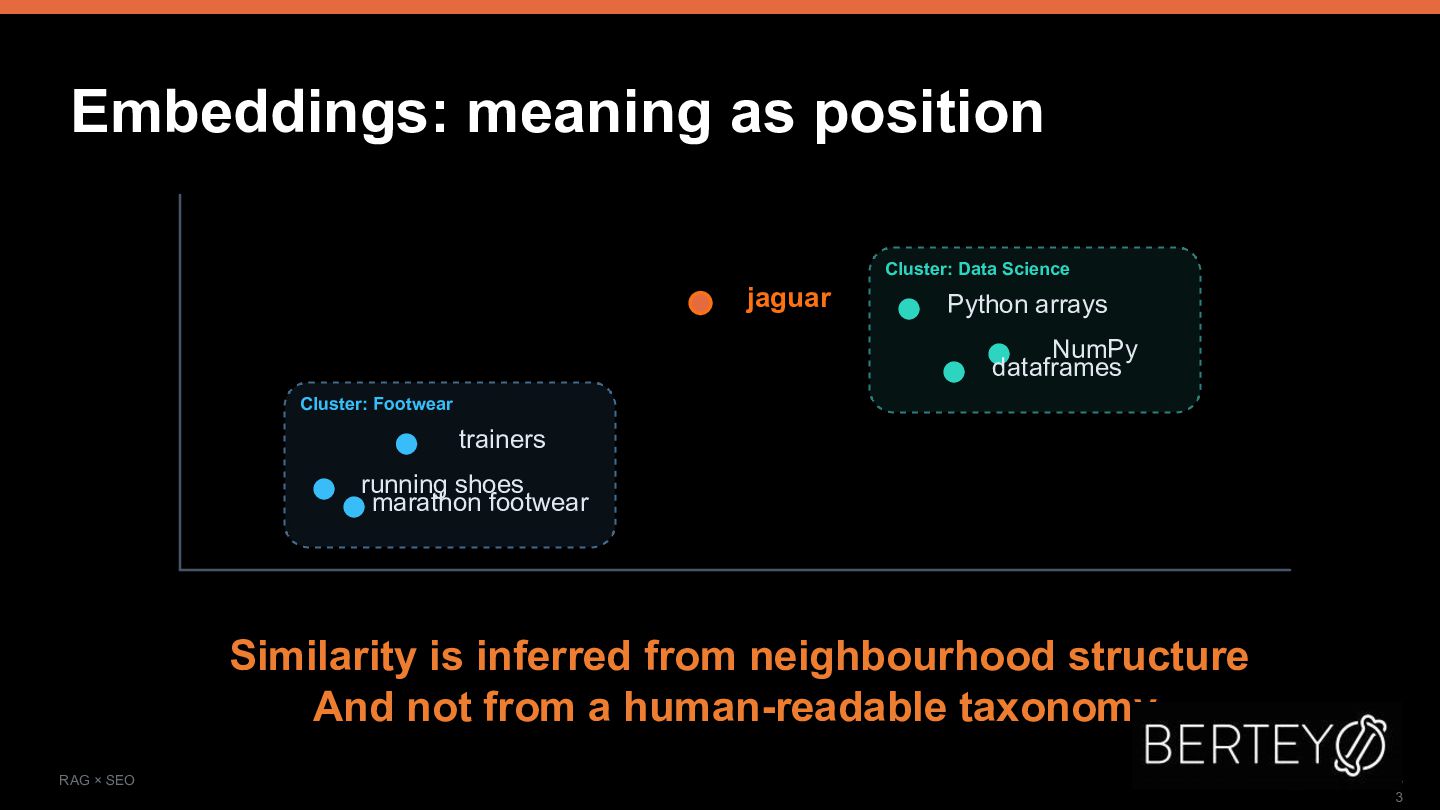
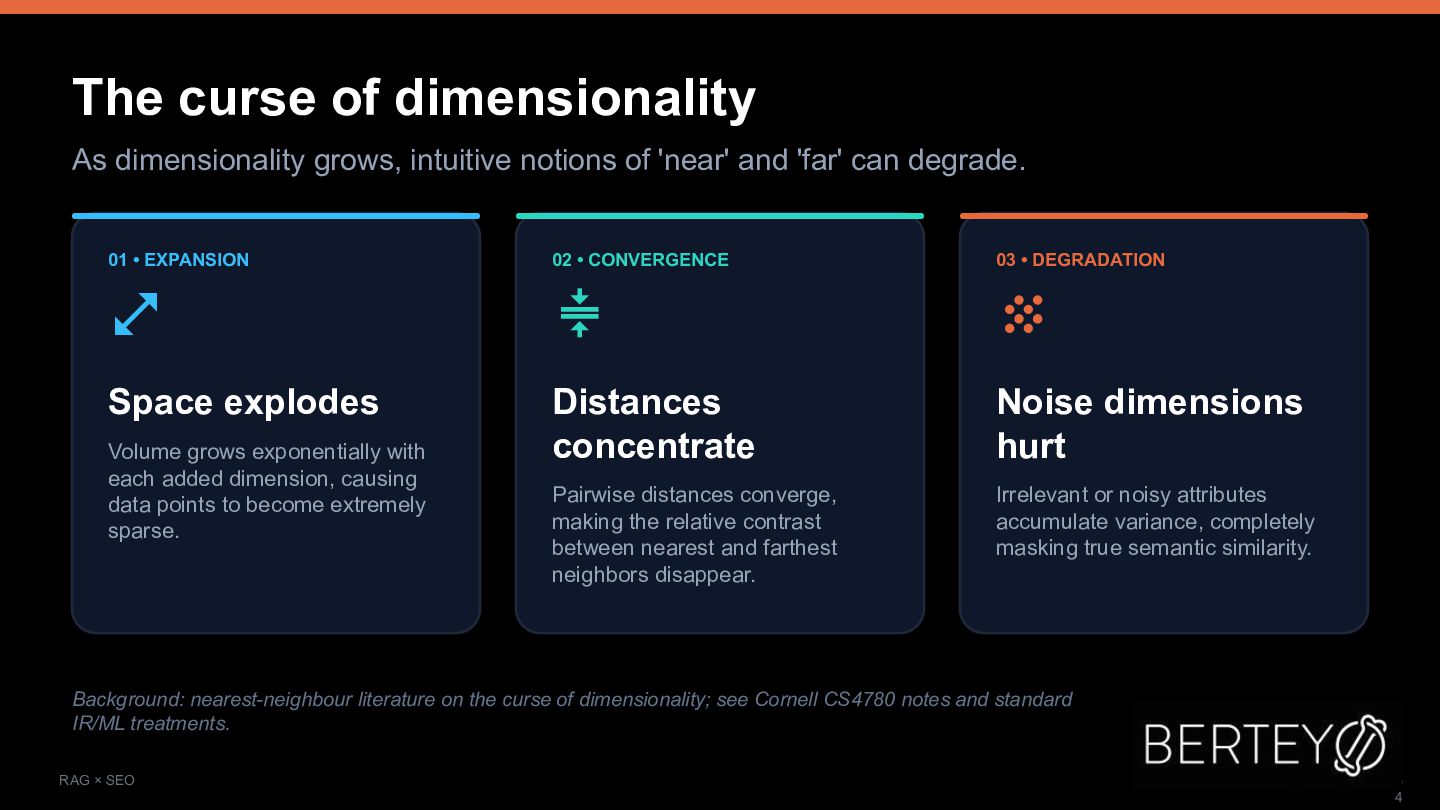
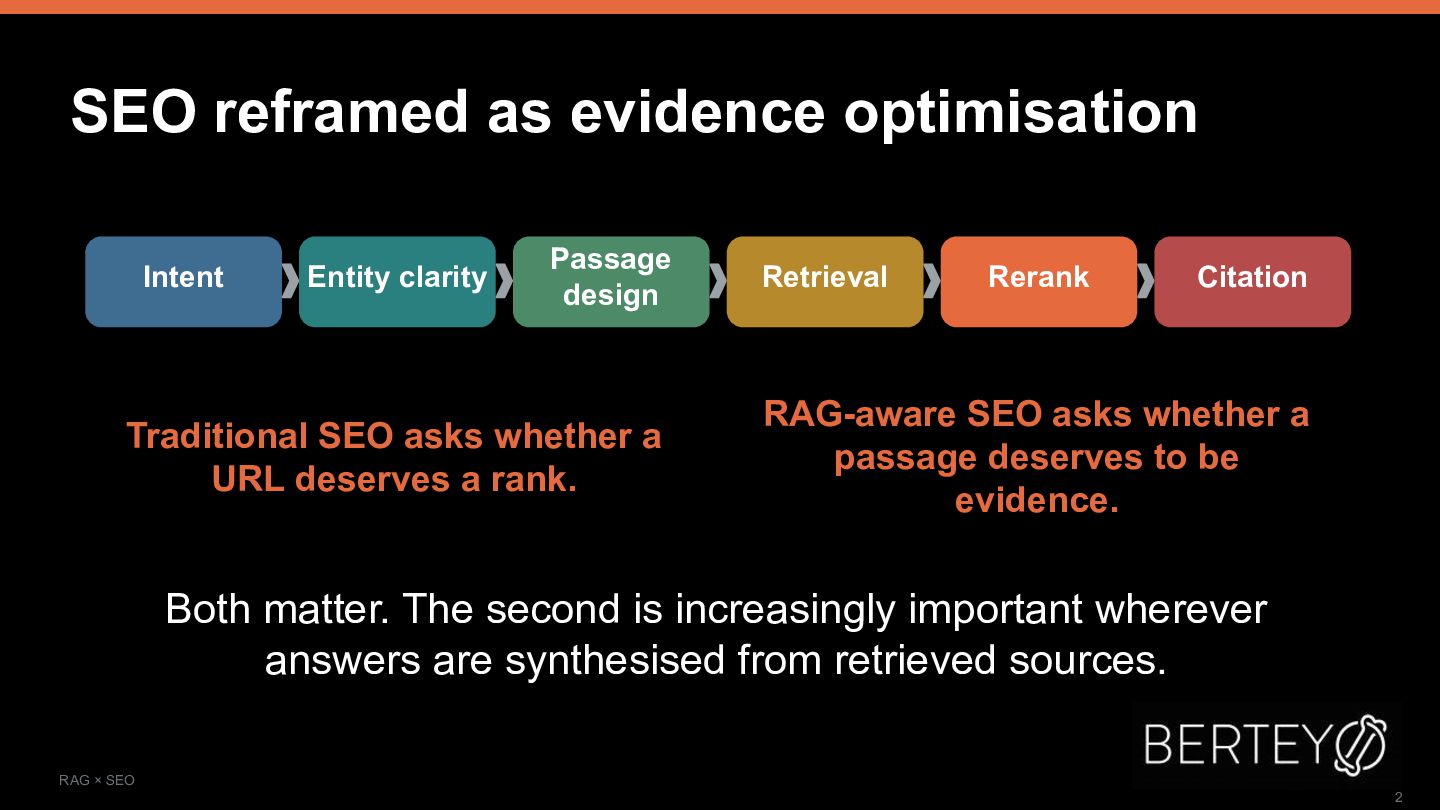
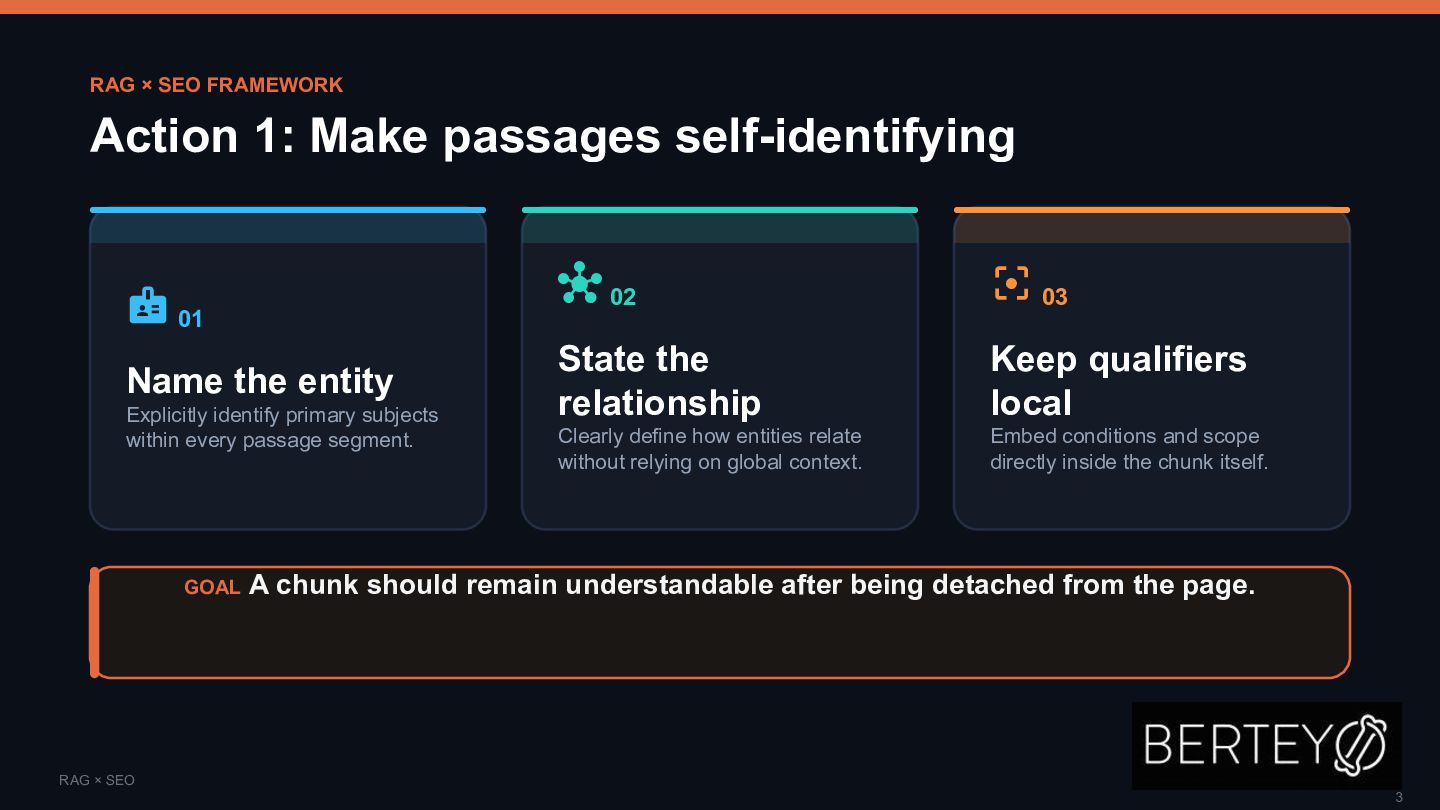
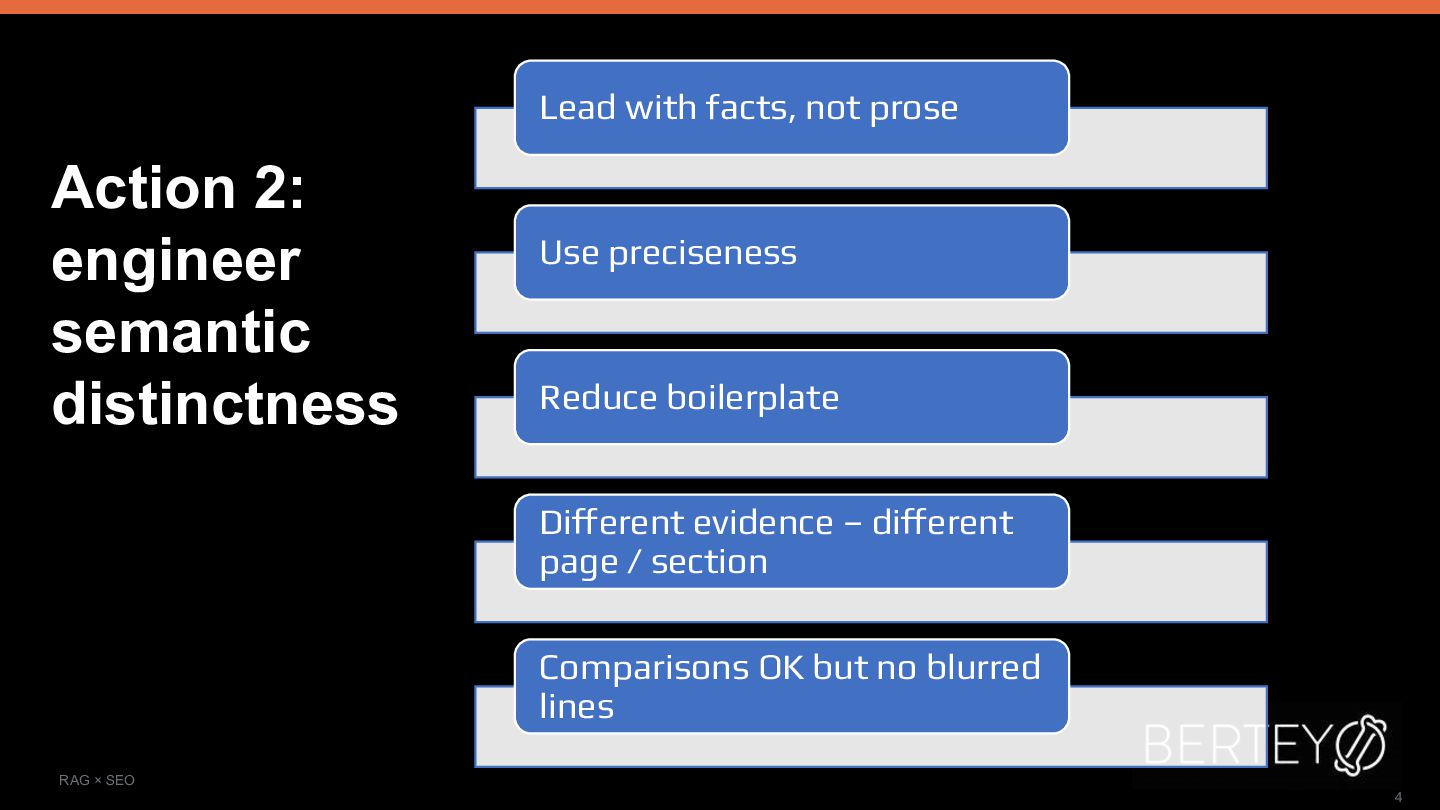
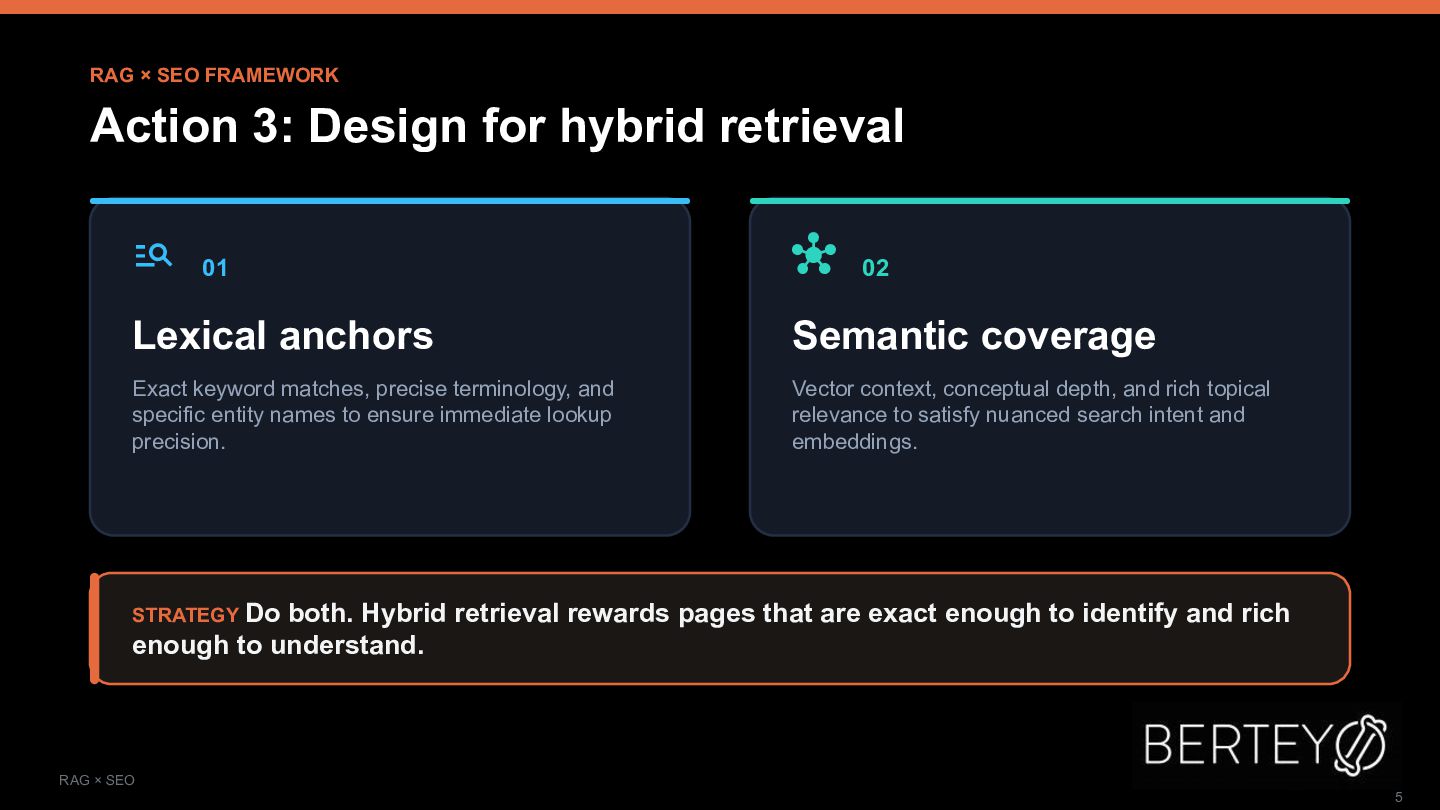
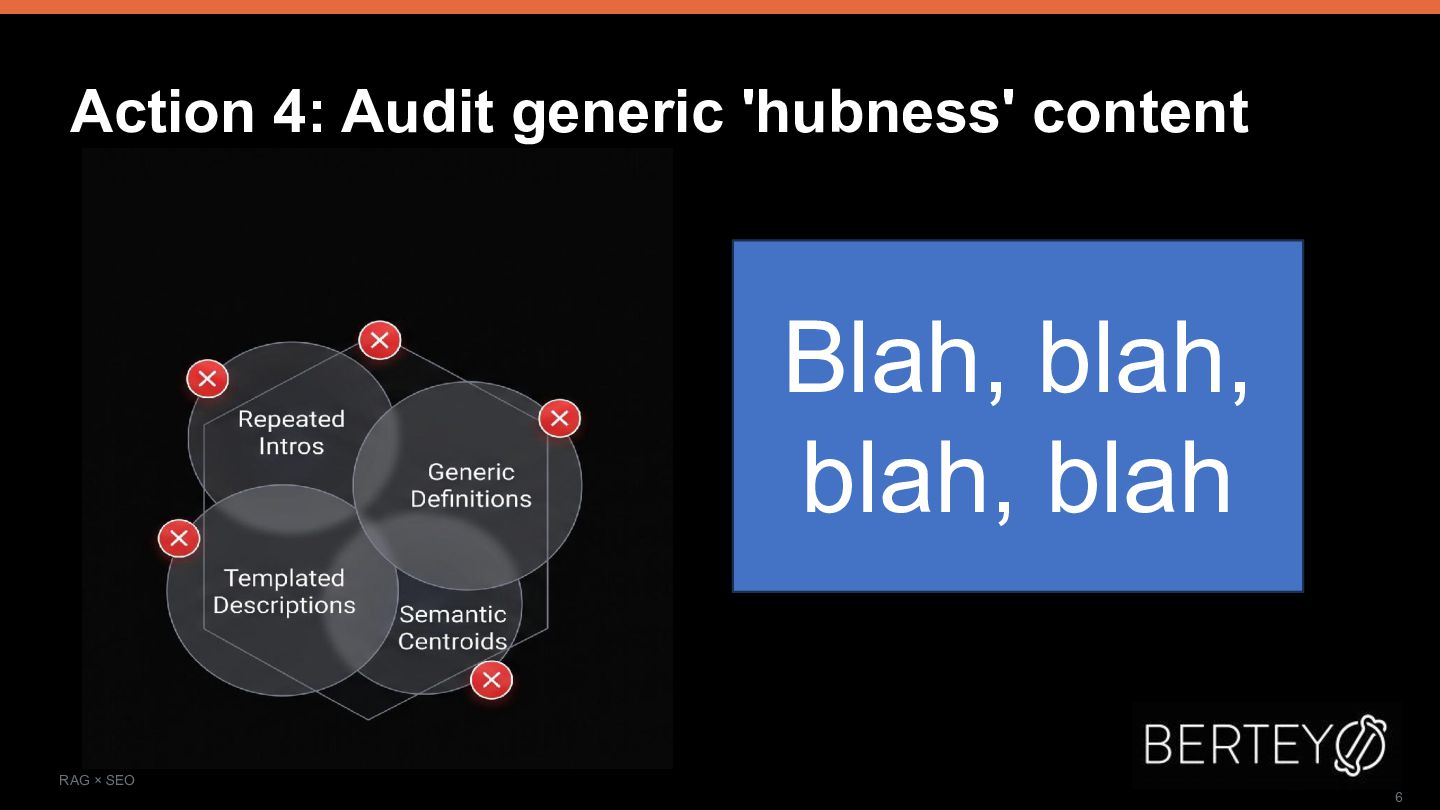
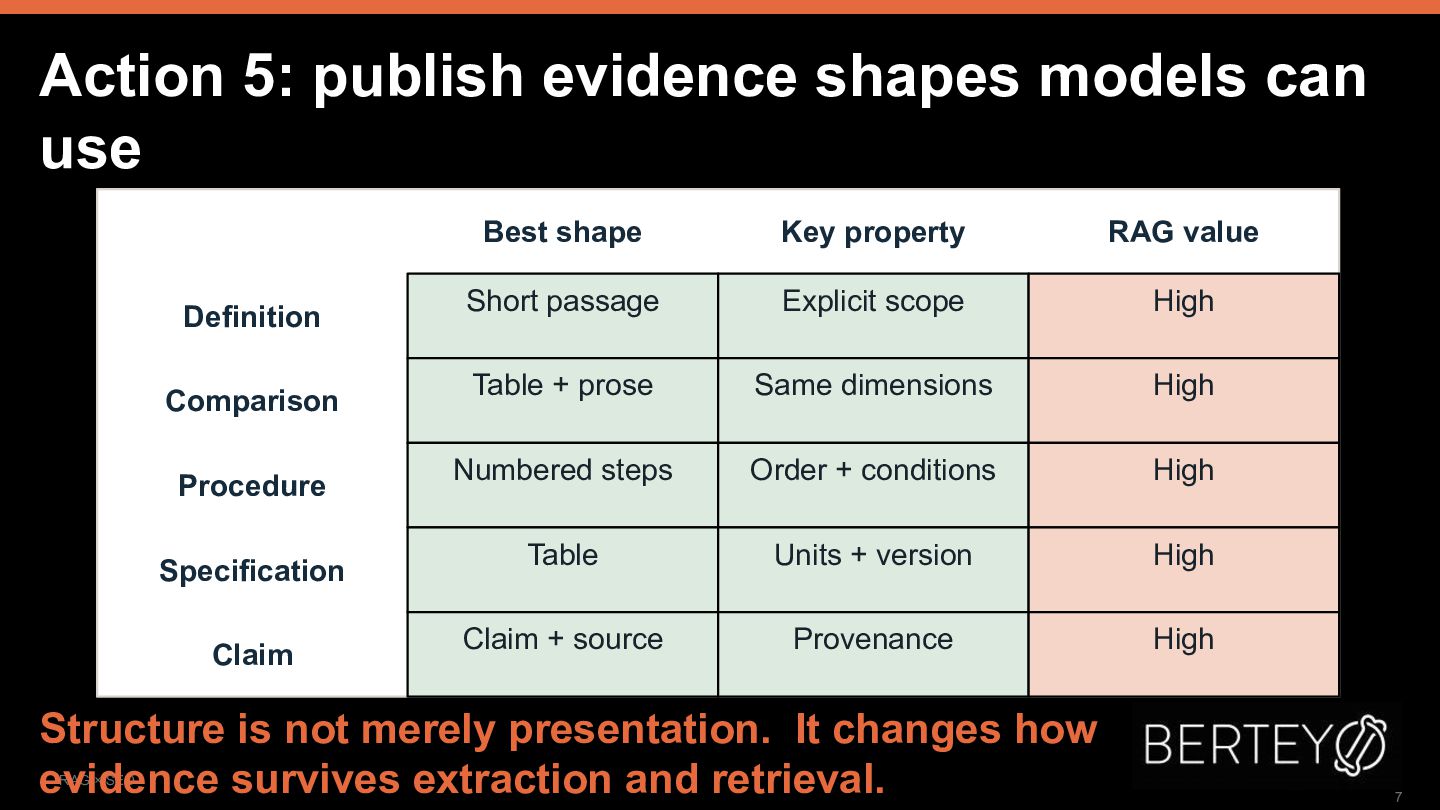
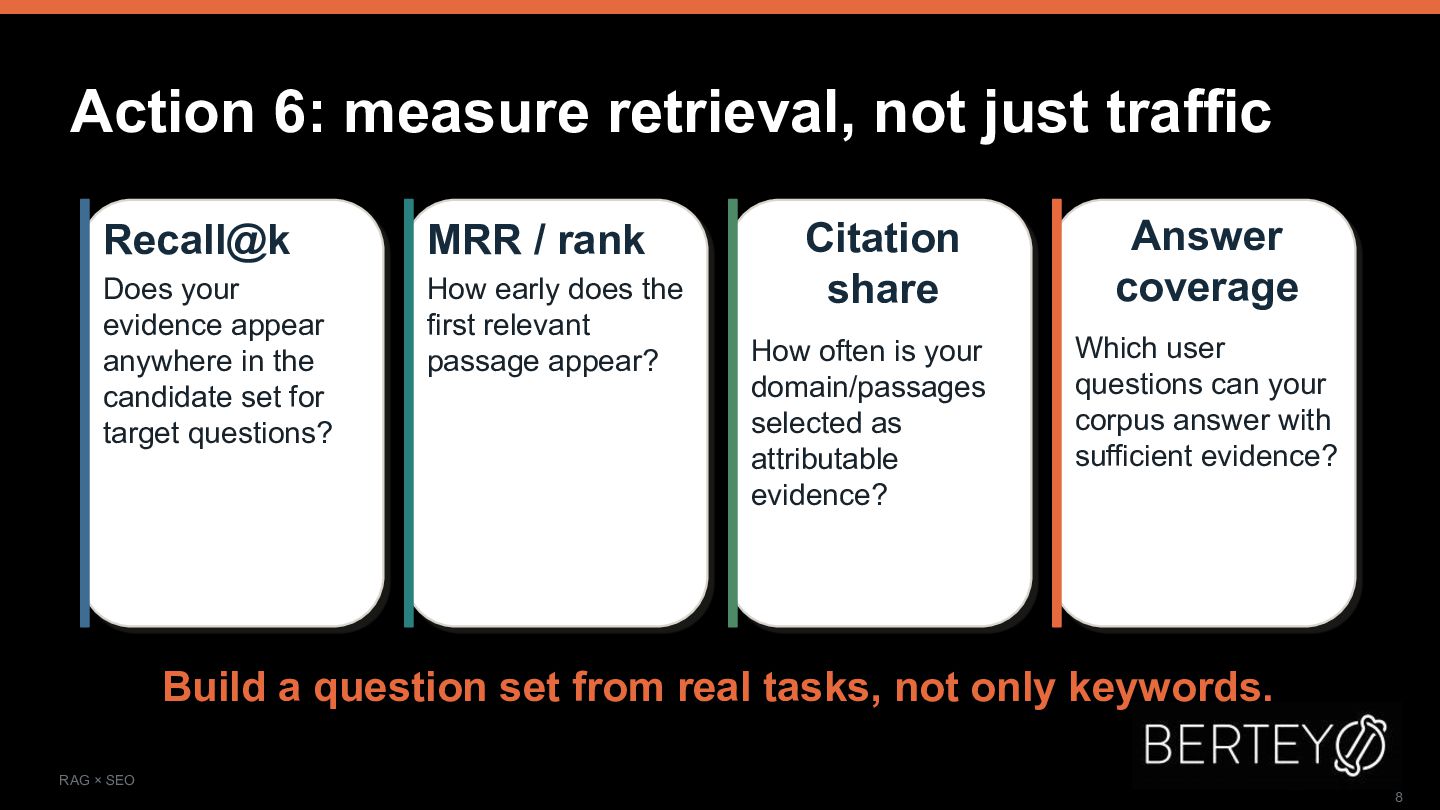
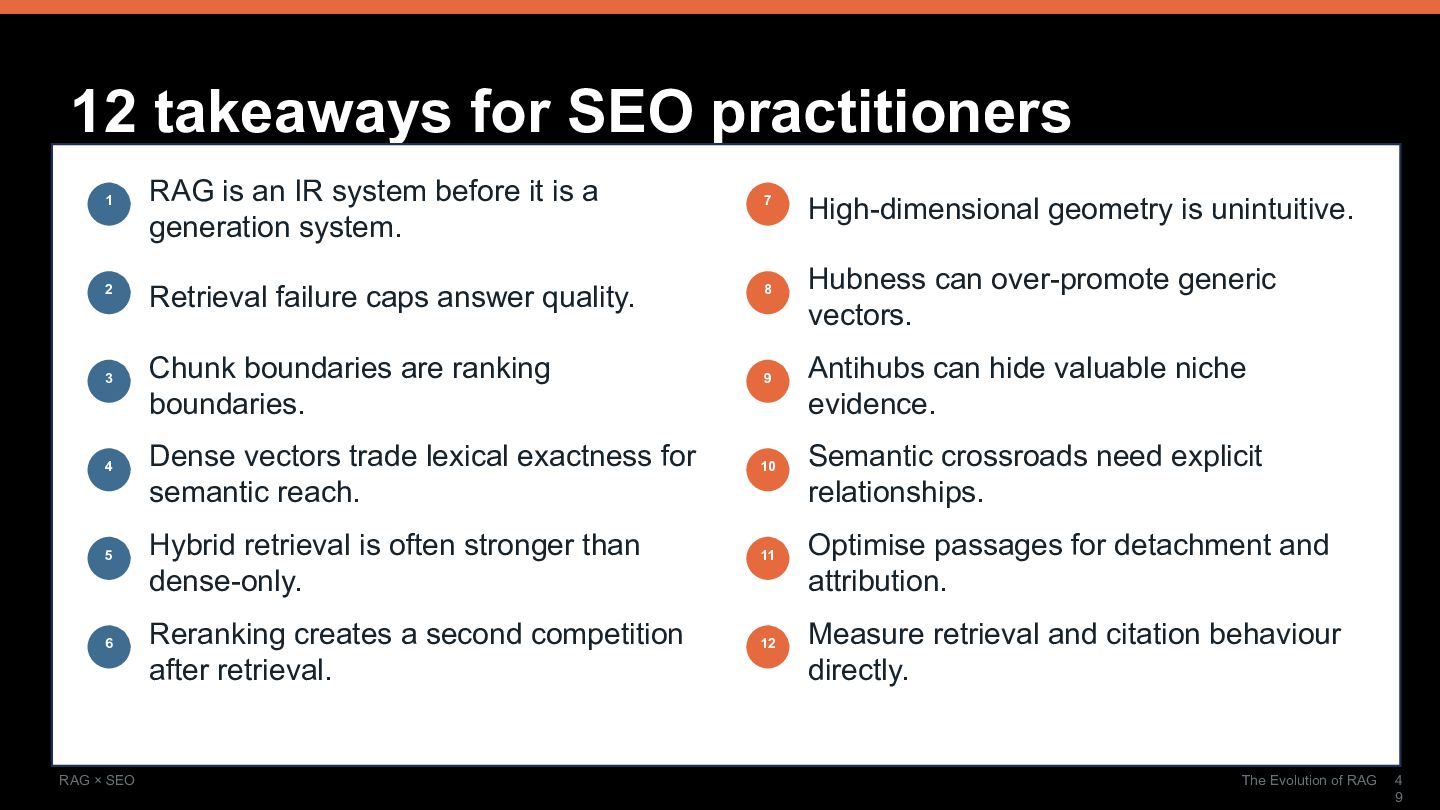
LLMs in AI search rely on Retrieval Augmented Generation (RAG) to ensure there are guardrails and trust around the answers that are provided. Much of RAG comes from search engine index's in the traditional SEO sense, in addition to knowledge bases, data stores and other potential documentation as well as potentially nowadays images and other multi-media types of content. RAG has evolved over time from very basic 'naive RAG' very similar to the very early days of keyword matching in traditional search engines, through to modular, advanced, graph RAG and now Agentic RAG which is able to analyse and review the responses provided and improve upon itself as well as potentially collaborate with other agents. But what has this got to do with SEO and how can SEOs optimise for RAG? Well, there are quirks in the geometric background and landscape of RAG which make some things very different to traditional SEO and search. Exploding spaces mean 'The Curse of Dimensionality' relies on a lean index and the continual need for updated information is dominant too. This deck looks at ways that SEOs can take this into consideration and optimise accordingly.


 dawnieando
 metehanyesilyurt
 aleyda
 clarasoteras
 decabbit
 pmeyers7
 sophiebrannon
 tasky_ai
 yigarashi
 speedyindexteam
 amanaut
 nikkihalliwell
 reverentgeek
 cromwellryan
 cassininazir
 addyosmani
 zakiyama
 jct
jct
 akashhashmi
 codingconduct
 signer
 danielanewman