relations engineer at Morph, leading developer education, infrastructure and tooling. Formerly a devrel engineer at celo, a blockchain engineer at Thorswap and backend lead at groupify. 2
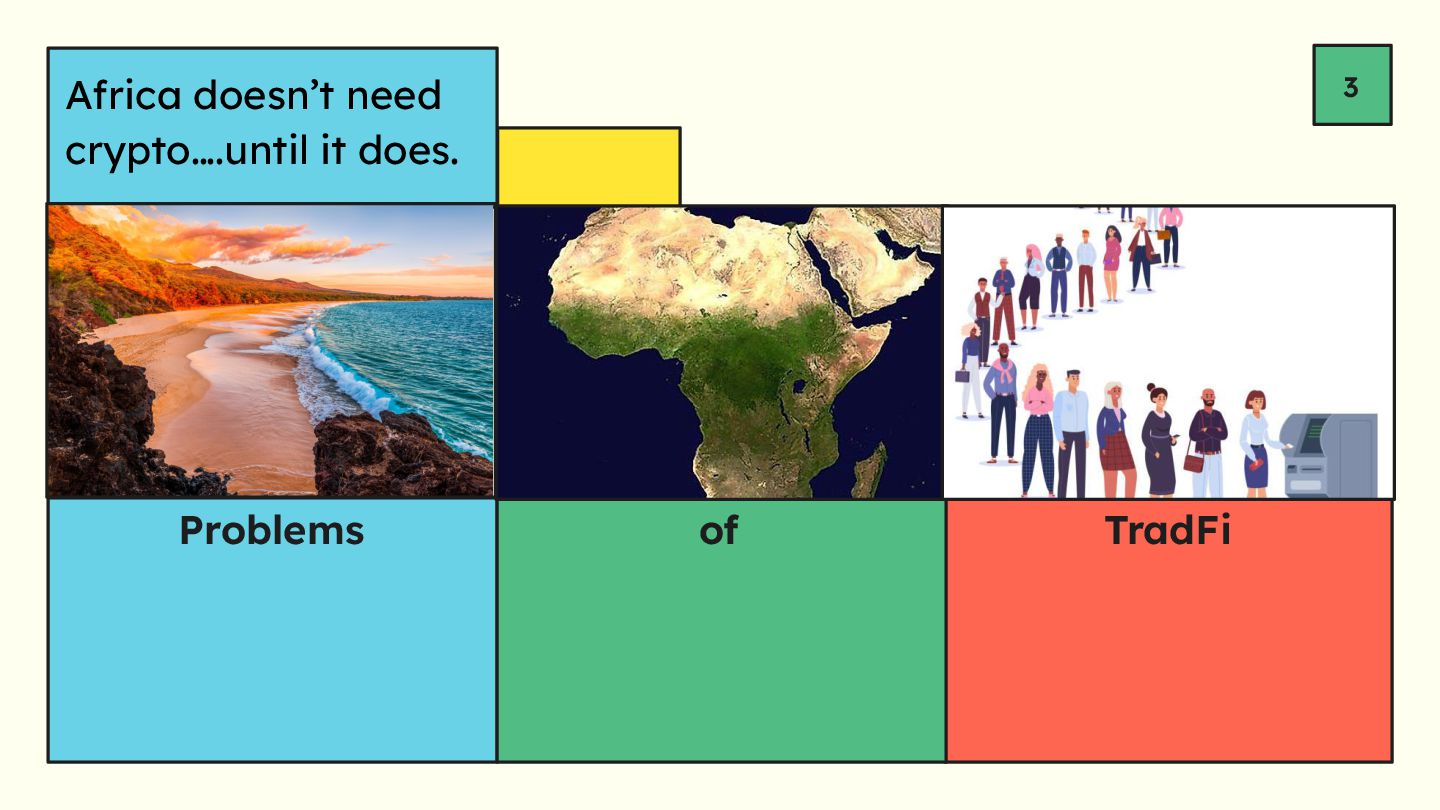
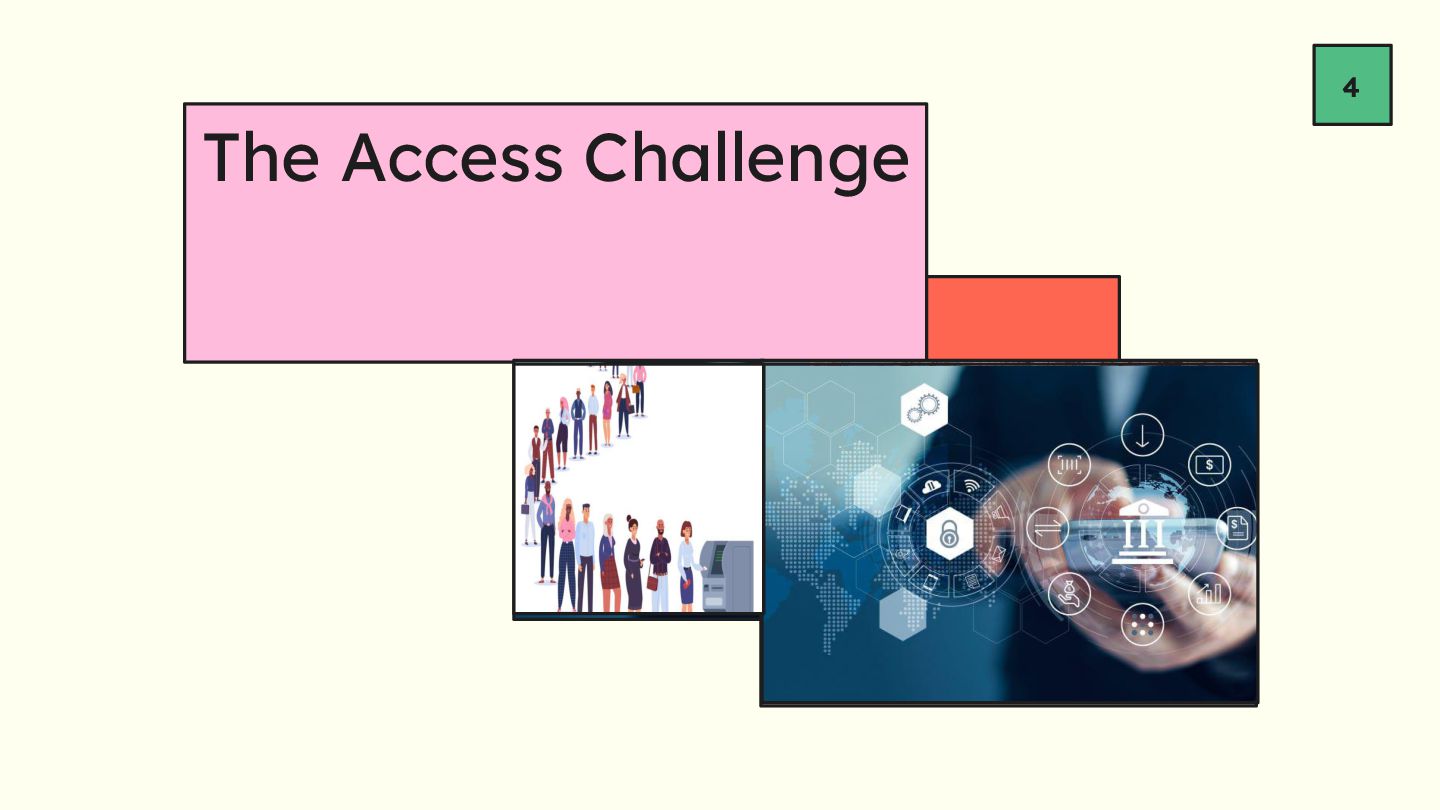
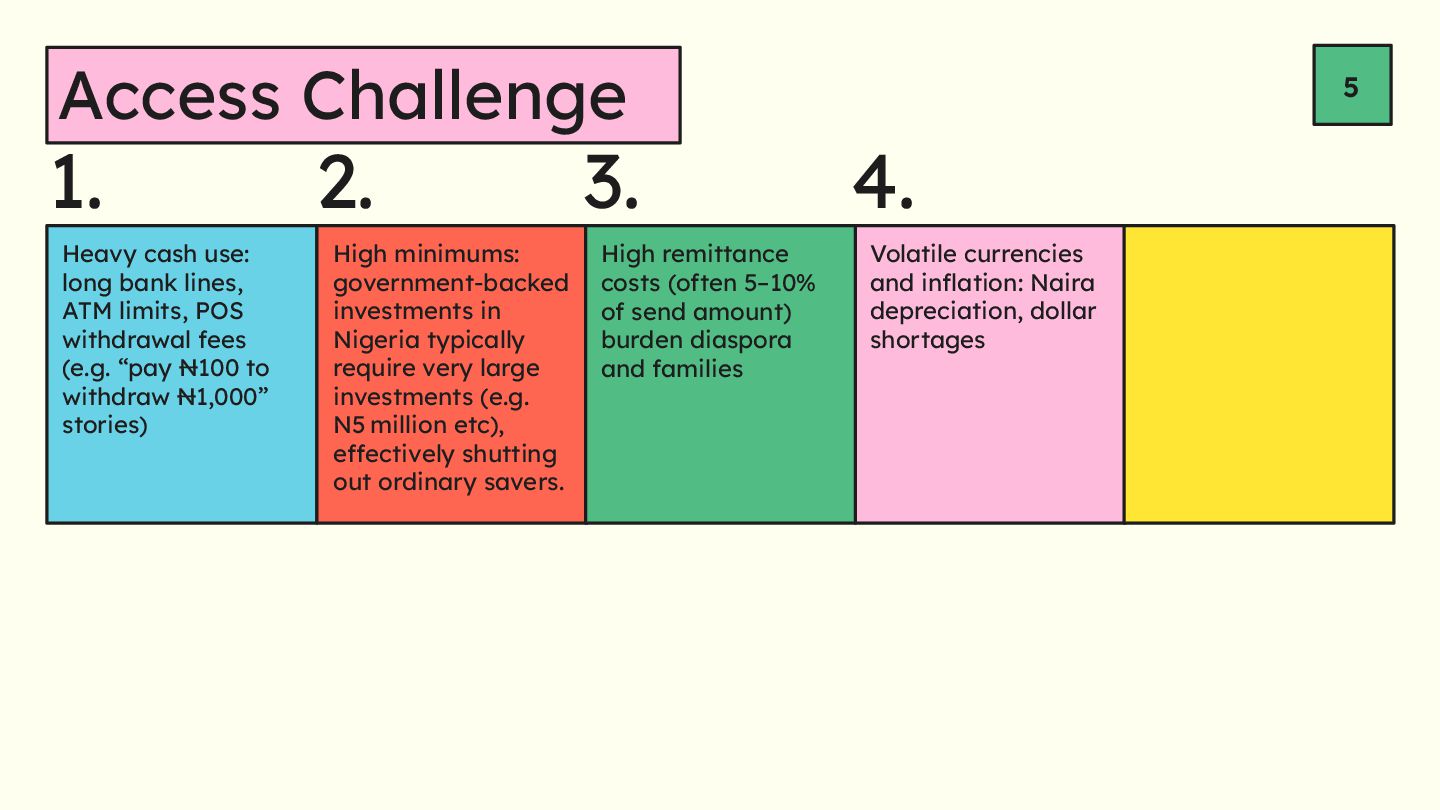
limits, POS withdrawal fees (e.g. “pay ₦100 to withdraw ₦1,000” stories) High minimums: government-backed investments in Nigeria typically require very large investments (e.g. N5 million etc), effectively shutting out ordinary savers. High remittance costs (often 5–10% of send amount) burden diaspora and families Volatile currencies and inflation: Naira depreciation, dollar shortages 1. 2. 3. 4.
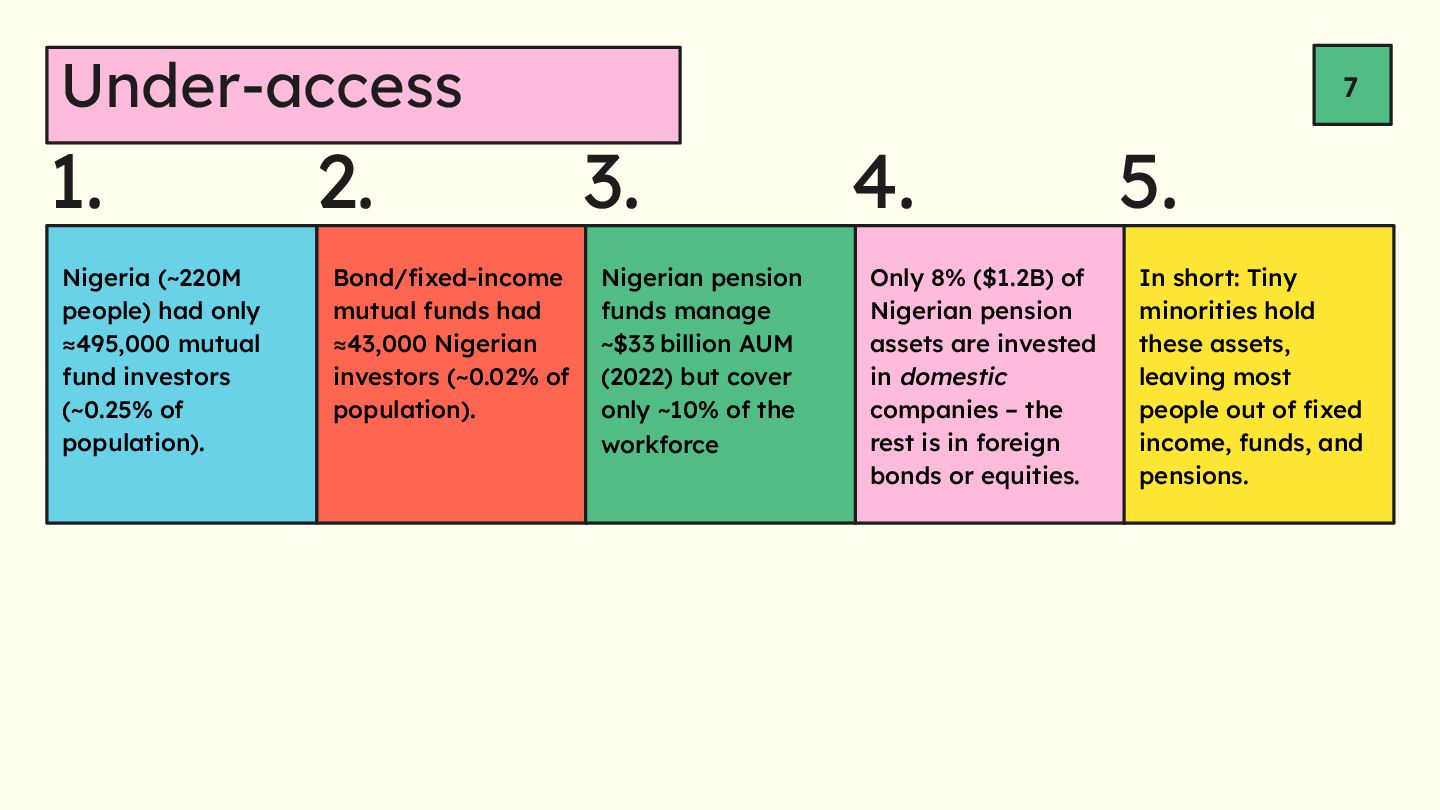
investors (~0.25% of population). Bond/fixed-income mutual funds had ≈43,000 Nigerian investors (~0.02% of population). Nigerian pension funds manage ~$33 billion AUM (2022) but cover only ~10% of the workforce Only 8% ($1.2B) of Nigerian pension assets are invested in domestic companies – the rest is in foreign bonds or equities. In short: Tiny minorities hold these assets, leaving most people out of fixed income, funds, and pensions. 1. 2. 3. 4. 5.
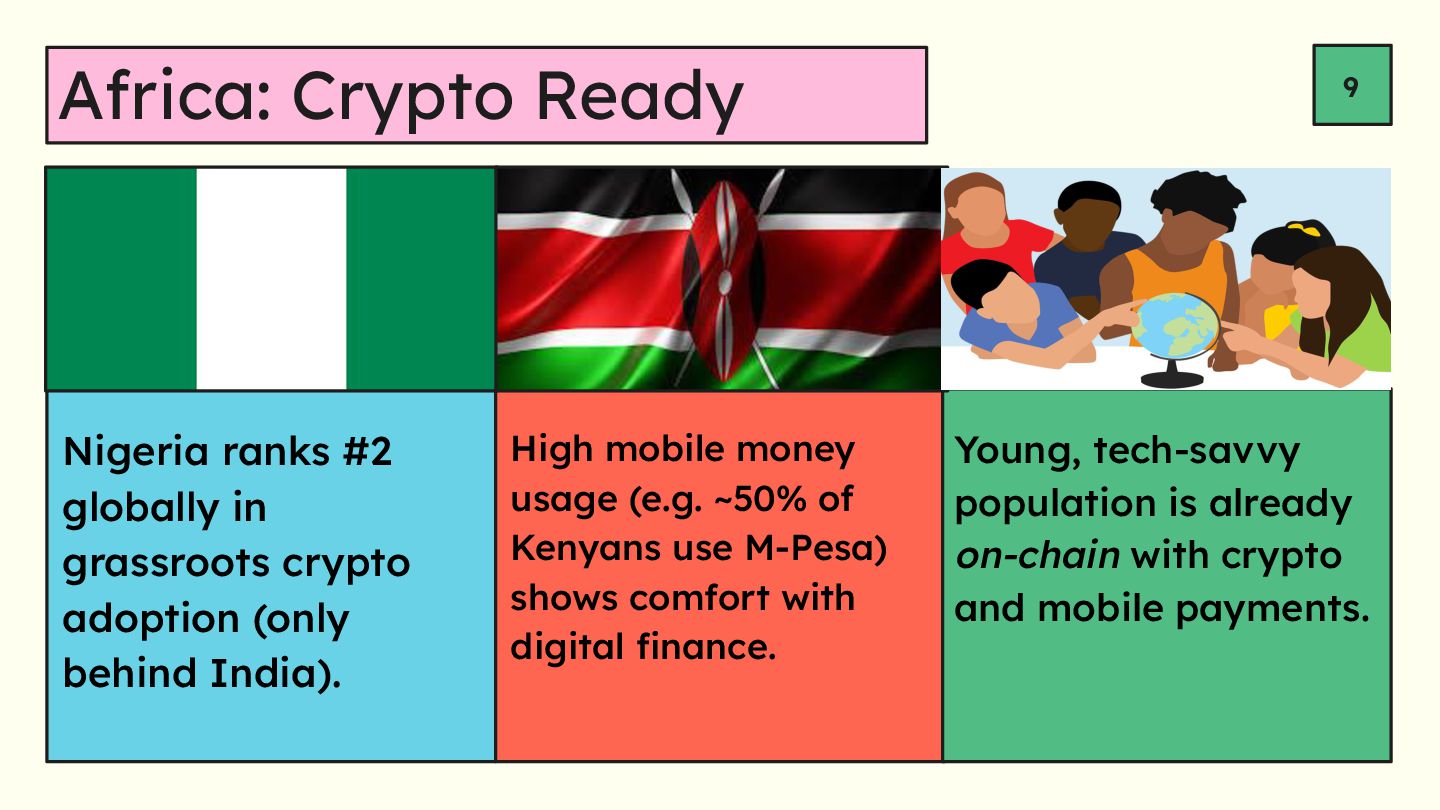
adoption (only behind India). High mobile money usage (e.g. ~50% of Kenyans use M-Pesa) shows comfort with digital finance. Young, tech-savvy population is already on-chain with crypto and mobile payments. 9
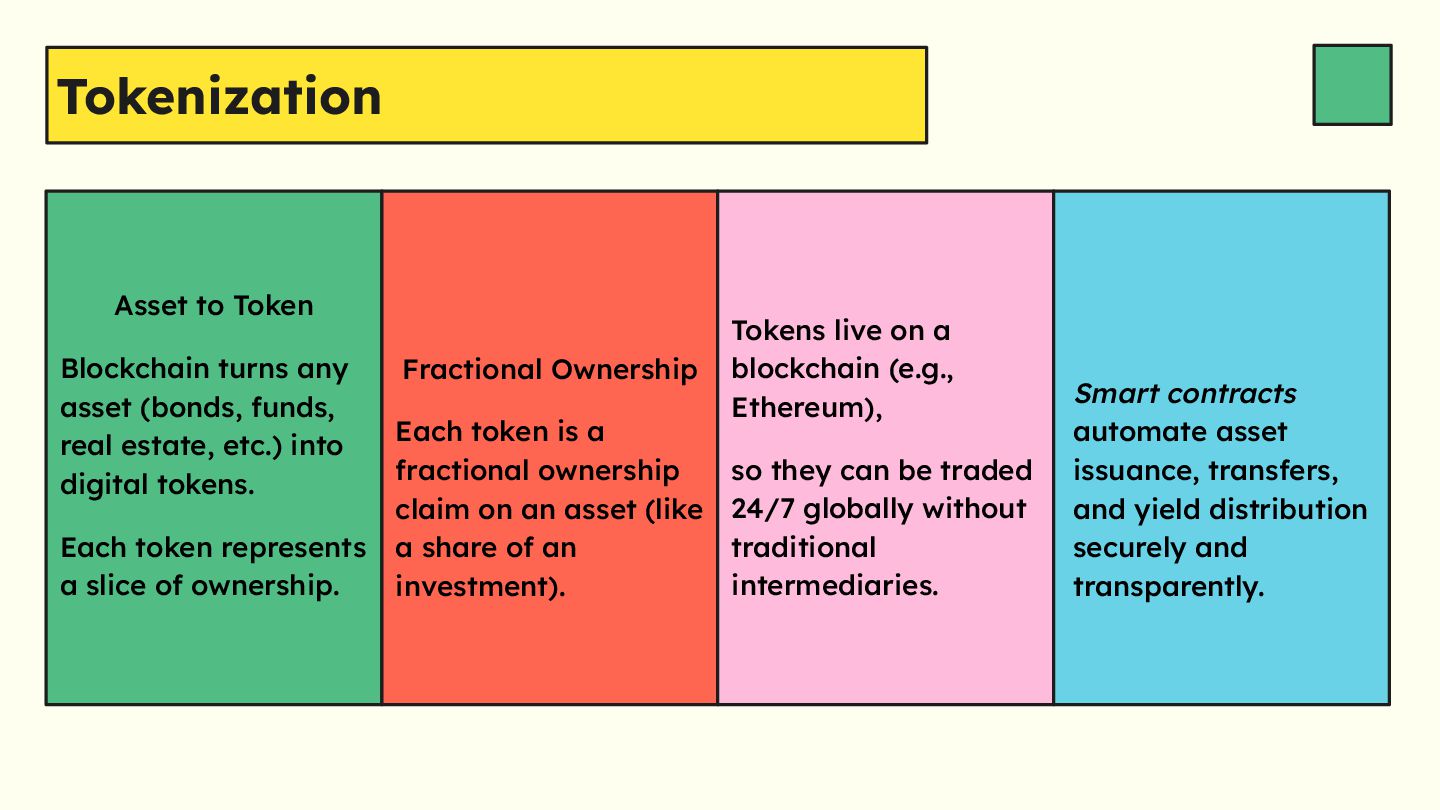
real estate, etc.) into digital tokens. Each token represents a slice of ownership. Fractional Ownership Each token is a fractional ownership claim on an asset (like a share of an investment). Tokens live on a blockchain (e.g., Ethereum), so they can be traded 24/7 globally without traditional intermediaries. Smart contracts automate asset issuance, transfers, and yield distribution securely and transparently.
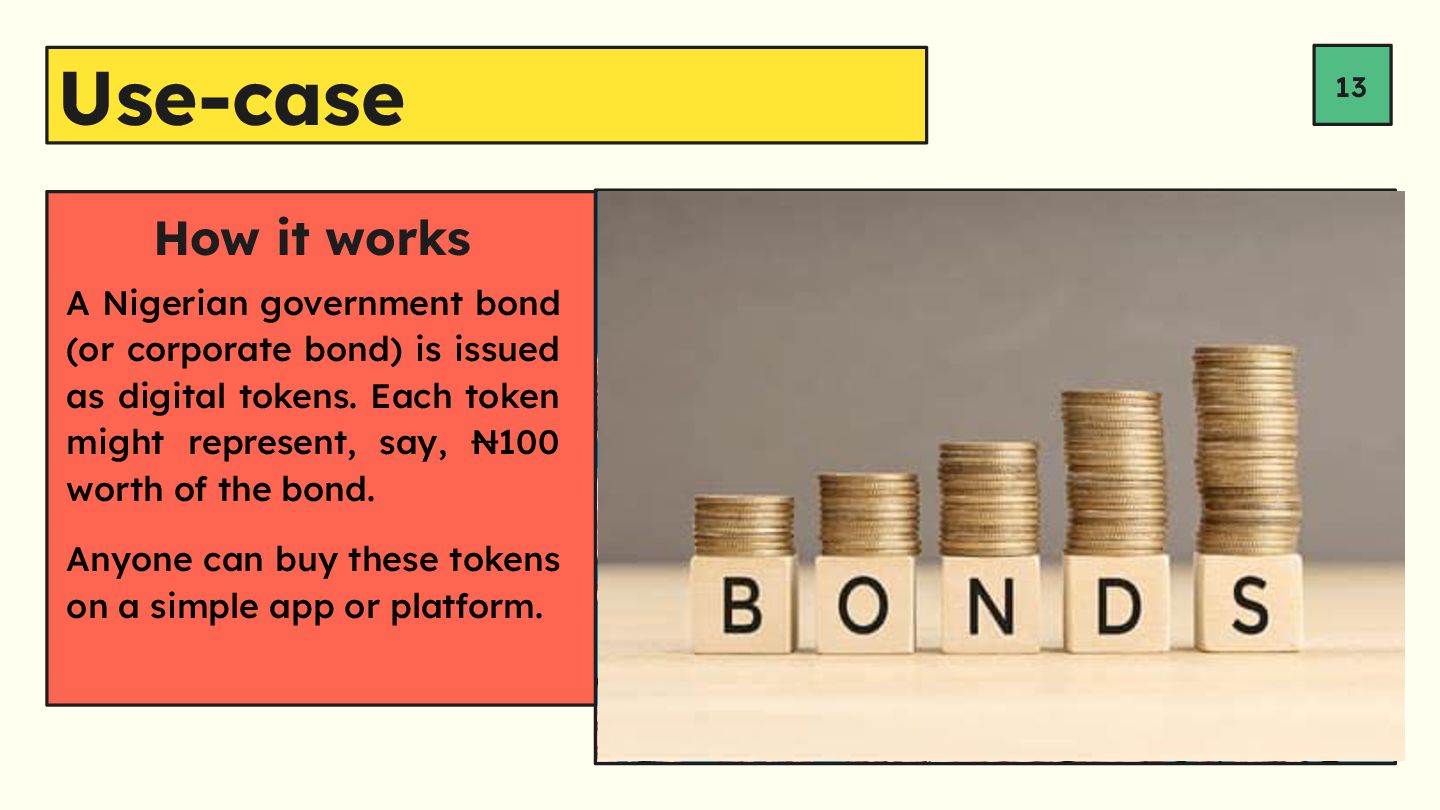
bond) is issued as digital tokens. Each token might represent, say, ₦100 worth of the bond. Anyone can buy these tokens on a simple app or platform. 13
token-holders automatically receive interest payouts in their wallets (in Naira stablecoin or another currency). No manual dividend checks or delays. 15
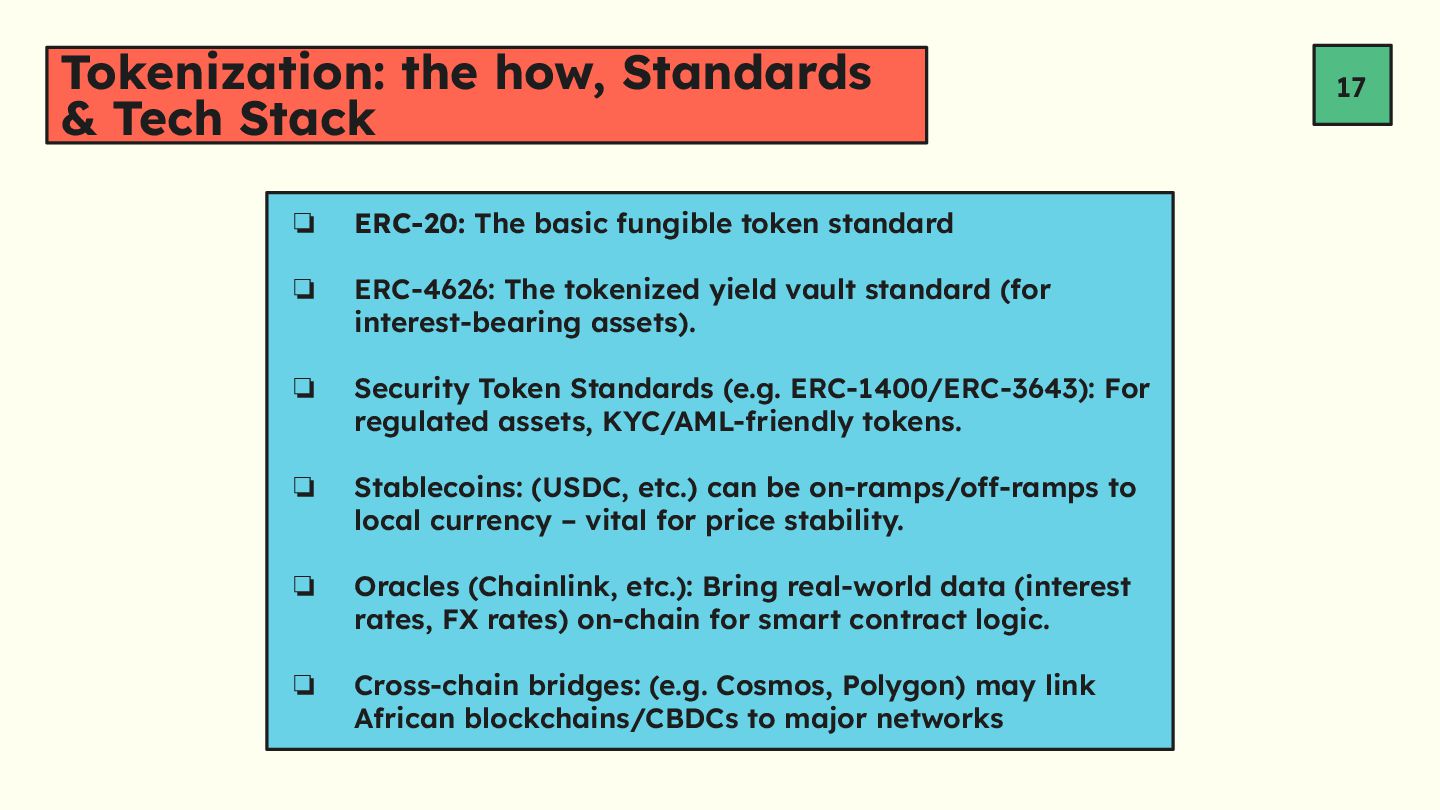
The tokenized yield vault standard (for interest-bearing assets). ❏ Security Token Standards (e.g. ERC-1400/ERC-3643): For regulated assets, KYC/AML-friendly tokens. ❏ Stablecoins: (USDC, etc.) can be on-ramps/off-ramps to local currency – vital for price stability. ❏ Oracles (Chainlink, etc.): Bring real-world data (interest rates, FX rates) on-chain for smart contract logic. ❏ Cross-chain bridges: (e.g. Cosmos, Polygon) may link African blockchains/CBDCs to major networks Tokenization: the how, Standards & Tech Stack 17 17
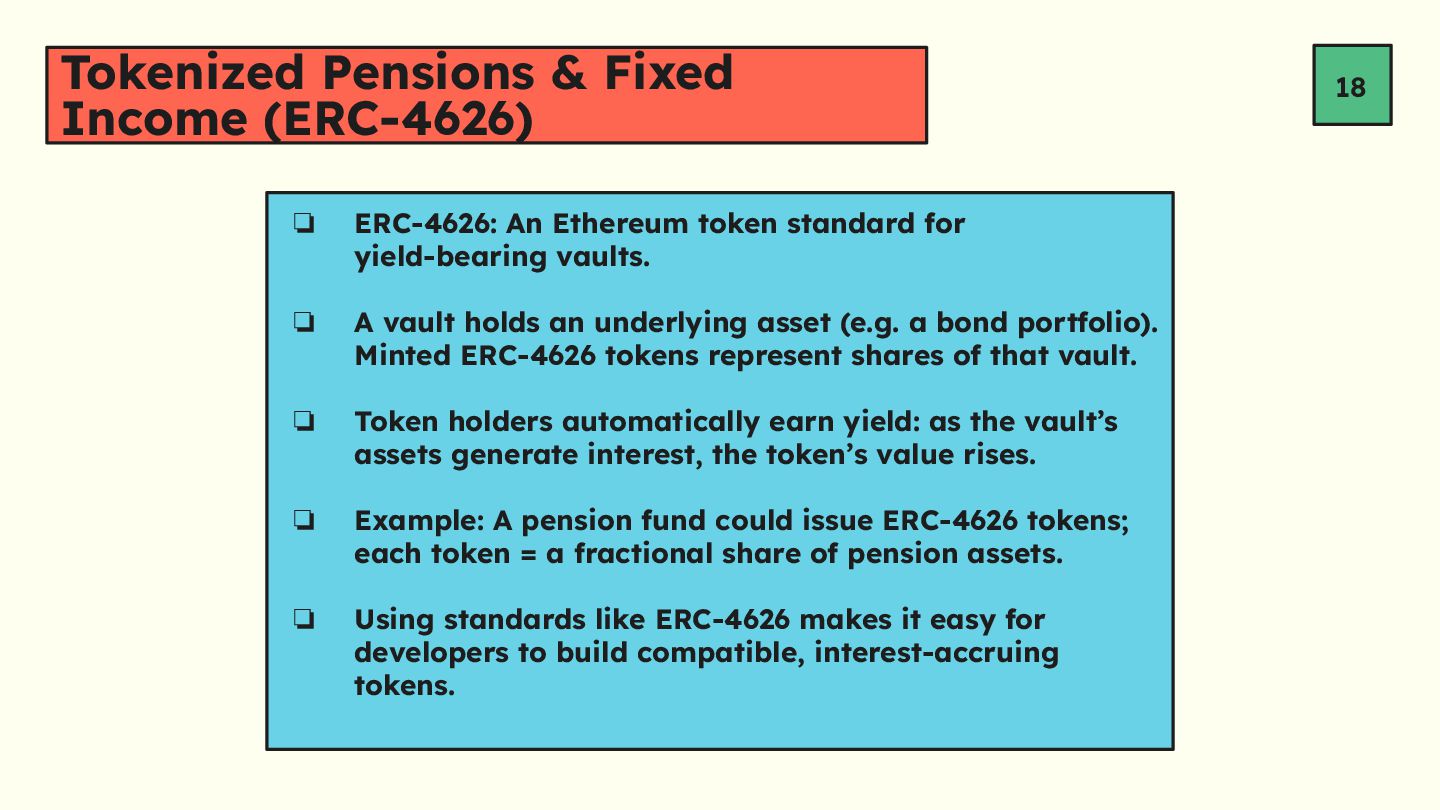
❏ A vault holds an underlying asset (e.g. a bond portfolio). Minted ERC-4626 tokens represent shares of that vault. ❏ Token holders automatically earn yield: as the vault’s assets generate interest, the token’s value rises. ❏ Example: A pension fund could issue ERC-4626 tokens; each token = a fractional share of pension assets. ❏ Using standards like ERC-4626 makes it easy for developers to build compatible, interest-accruing tokens. Tokenized Pensions & Fixed Income (ERC-4626) 18 18
It can open up Africa’s fixed-income, mutual fund, and pension markets to everyone, not just the elite. Boosting inclusion By fractionalizing assets and automating markets, we can deliver on the promise of financial inclusion. Developer opportunity This is your moment to innovate. Build the protocols, wallets, and apps that put Africa’s wealth in the hands of its people. Combine blockchain and finance for shared prosperity – code the change you want to see! Let’s build a brighter future


 nnamdei
 nao_randd
 texmeijin
 yub0n
 artoy
 kaityo256
 satoshi256kbyte
 hschwentner
 optim
 jame2408
 findyinc
 florets1
 ryu1013
 stephaniewalter
 kimpetersen
 chriscoyier
 axbom
 ryanjones
 aleyda
 codingconduct
 jacobian
 lara
 paigeccino