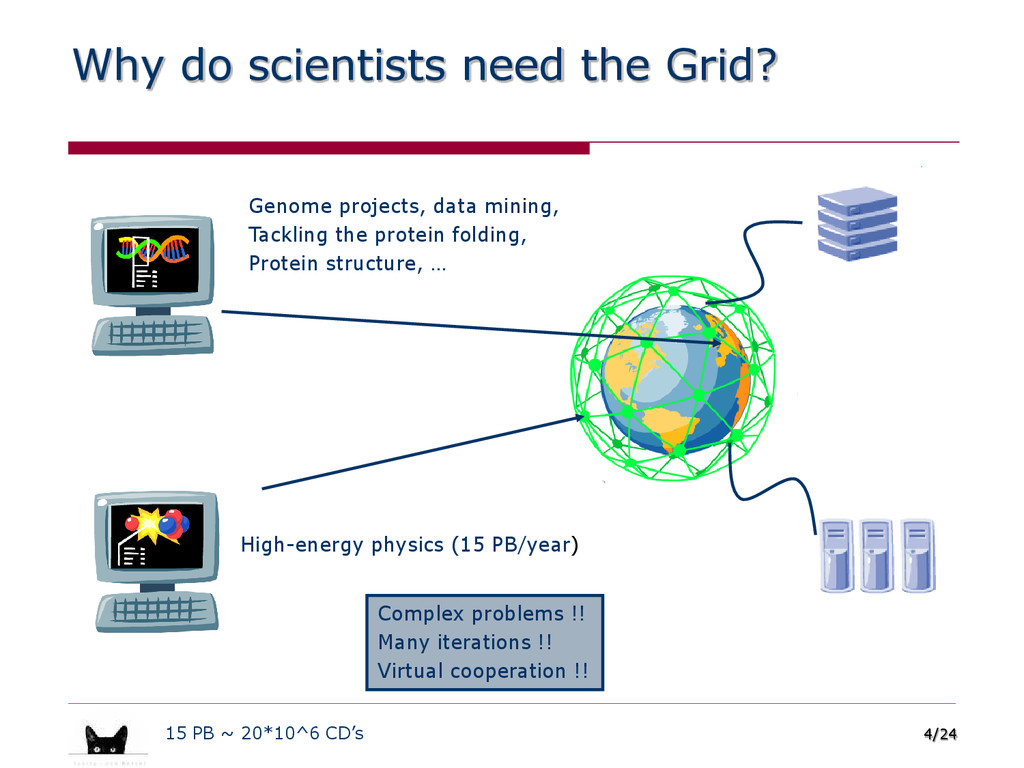
Global Sharing resources ON “Coordinated resource sharing and problem solving in dynamic, multi-institutional virtual organizations”.* Foster, I. et al., Int. J. Superc. Appli. (2000)15:3
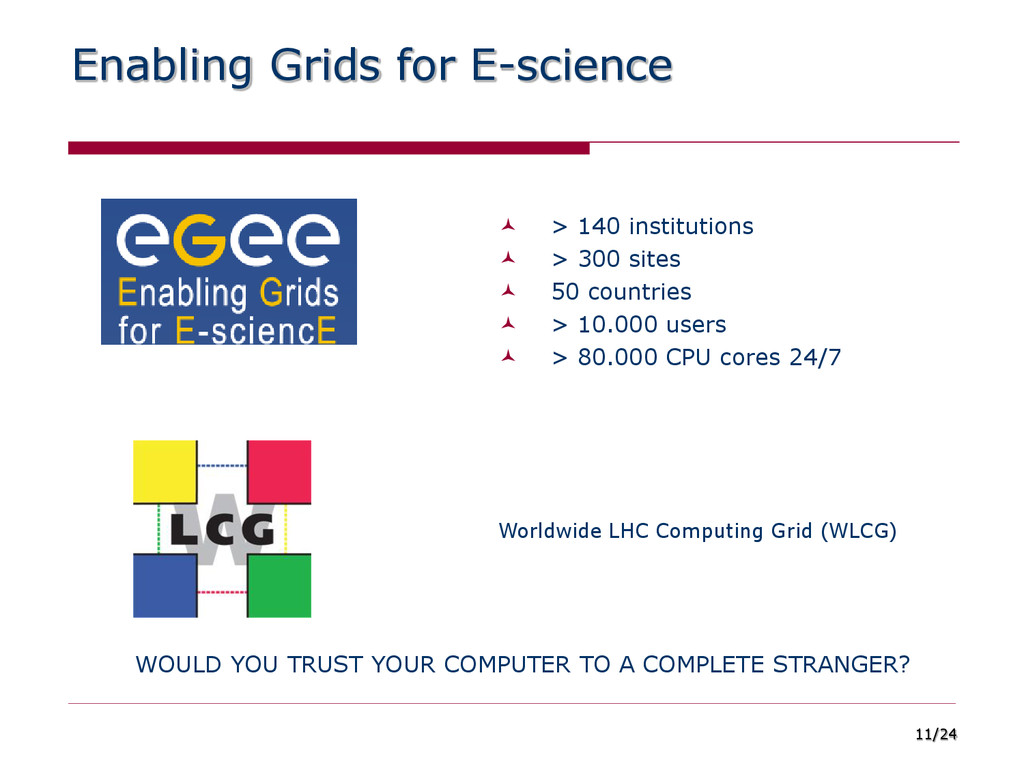
> 300 sites 50 countries > 10.000 users > 80.000 CPU cores 24/7 WOULD YOU TRUST YOUR COMPUTER TO A COMPLETE STRANGER? Worldwide LHC Computing Grid (WLCG)
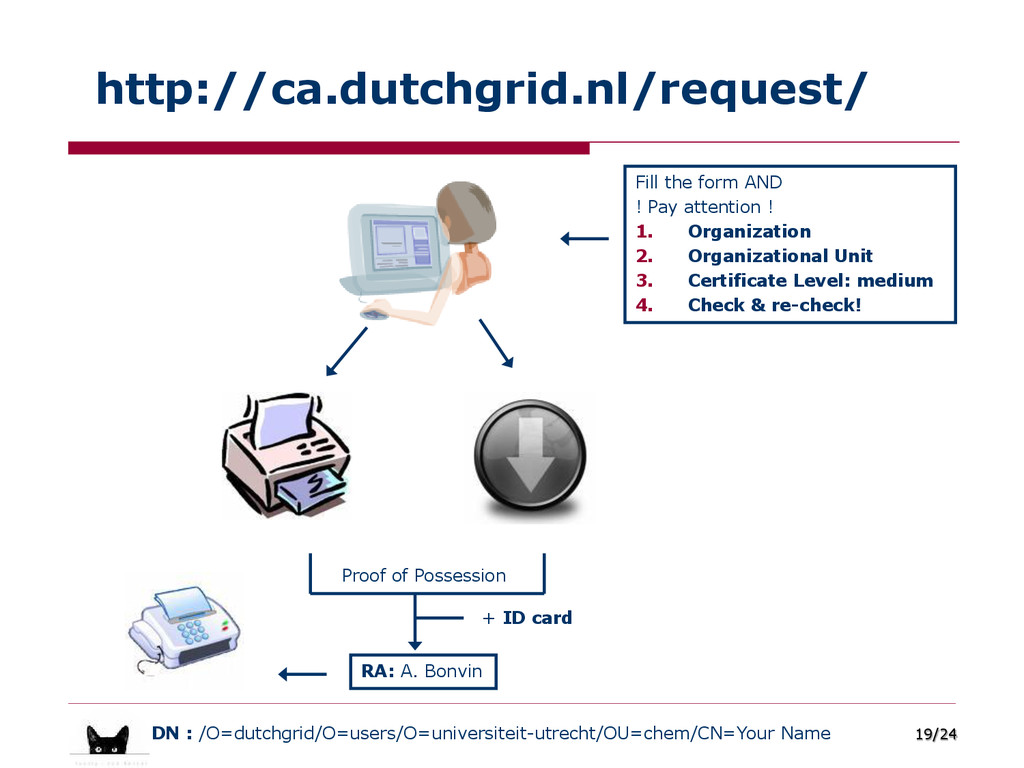
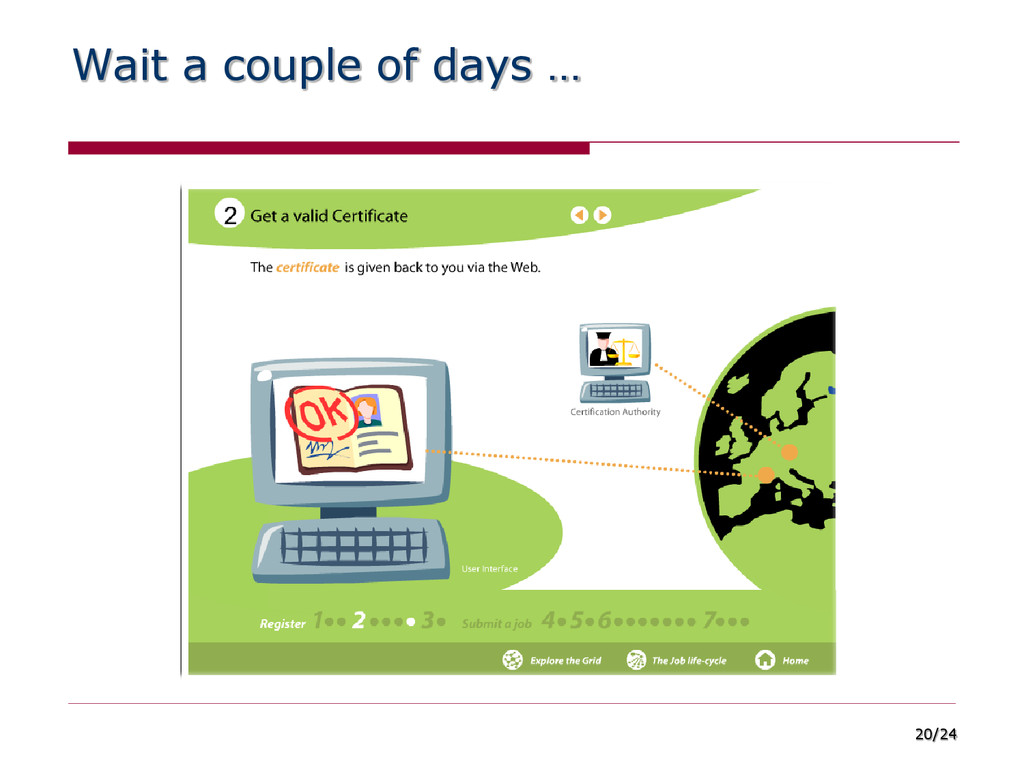
Organization 2. Organizational Unit 3. Certificate Level: medium 4. Check & re-check! RA: A. Bonvin http://ca.dutchgrid.nl/request/ + ID card DN : /O=dutchgrid/O=users/O=universiteit-utrecht/OU=chem/CN=Your Name Proof of Possession
grid running 24/7 Facts: more than 30 middleware updates/year Bugs, bugs, and more bugs … nevertheless grid is running How to deal with: Test b4 putting a service on production Any more ideas? Sandbox: Pre-production: test, destroy, and re-build The art of computer virtualization*: takes 2 min. http://www.xen.org/
/O=dutchgrid/O=users/O=universiteit-utrecht/OU=chem/CN=Marc van Dijk /O=dutchgrid/O=users/O=universiteit-utrecht/OU=chem/CN=Sjoerd De Vries /O=dutchgrid/O=users/O=universiteit-utrecht/OU=chem/CN=Tsjerk Wassenaar User abstraction *.* Middleware layer Acknowlegments
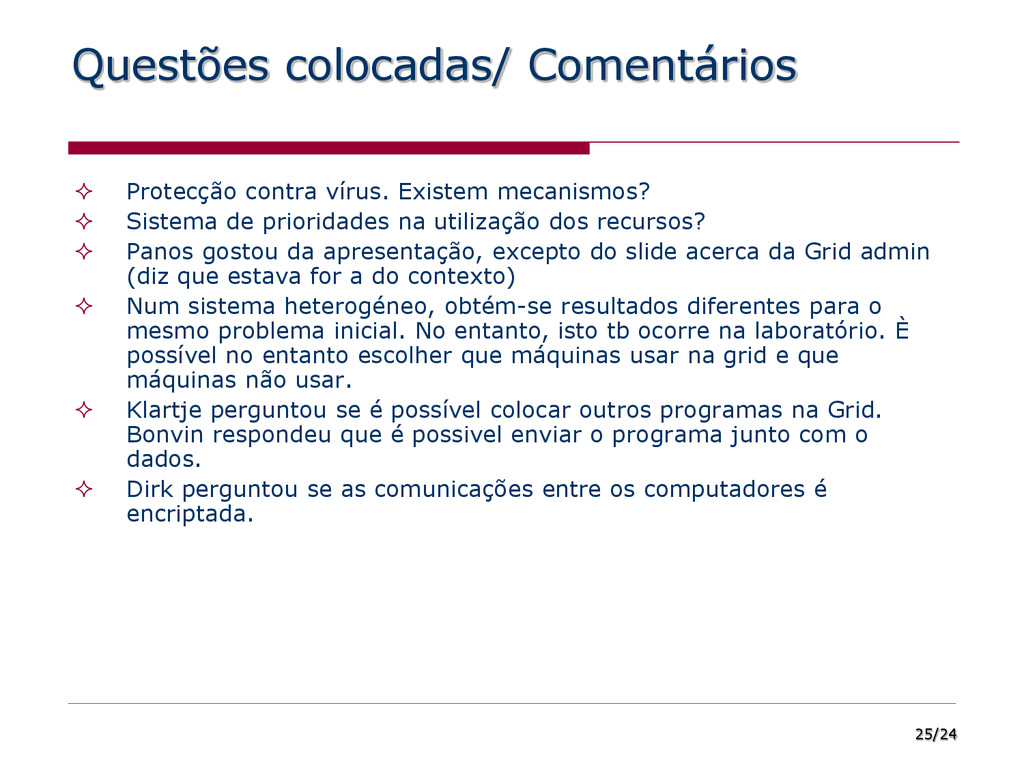
Sistema de prioridades na utilização dos recursos? Panos gostou da apresentação, excepto do slide acerca da Grid admin (diz que estava for a do contexto) Num sistema heterogéneo, obtém-se resultados diferentes para o mesmo problema inicial. No entanto, isto tb ocorre na laboratório. È possível no entanto escolher que máquinas usar na grid e que máquinas não usar. Klartje perguntou se é possível colocar outros programas na Grid. Bonvin respondeu que é possivel enviar o programa junto com o dados. Dirk perguntou se as comunicações entre os computadores é encriptada.
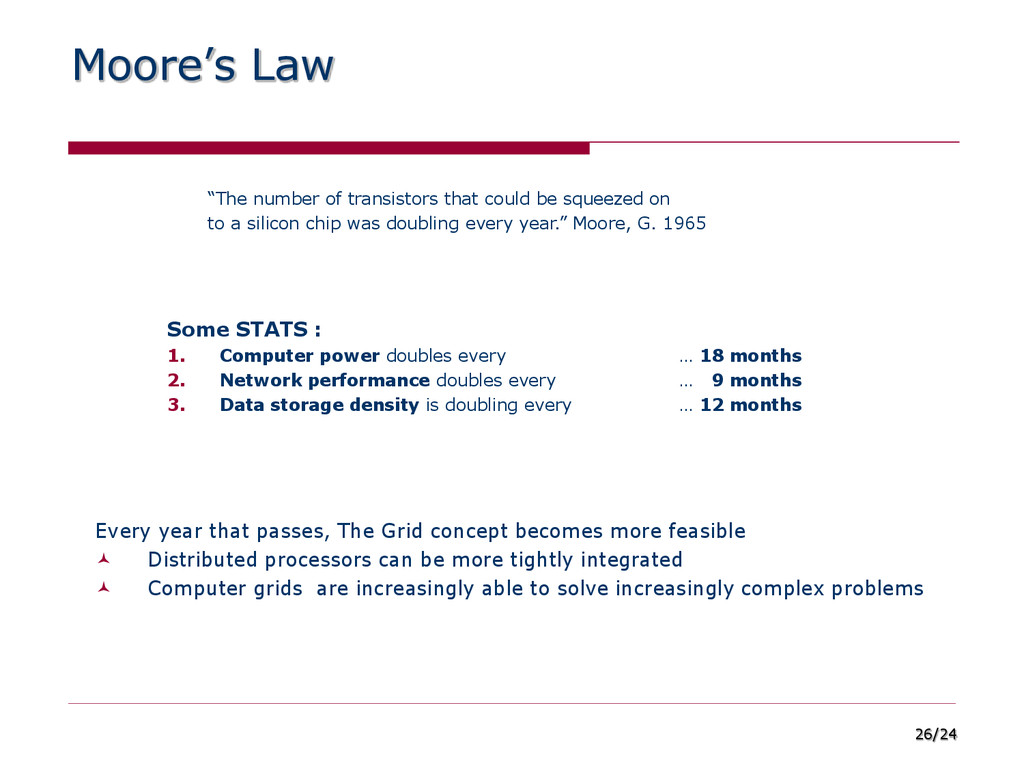
every … 18 months 2. Network performance doubles every … 9 months 3. Data storage density is doubling every … 12 months “The number of transistors that could be squeezed on to a silicon chip was doubling every year.” Moore, G. 1965 Every year that passes, The Grid concept becomes more feasible Distributed processors can be more tightly integrated Computer grids are increasingly able to solve increasingly complex problems
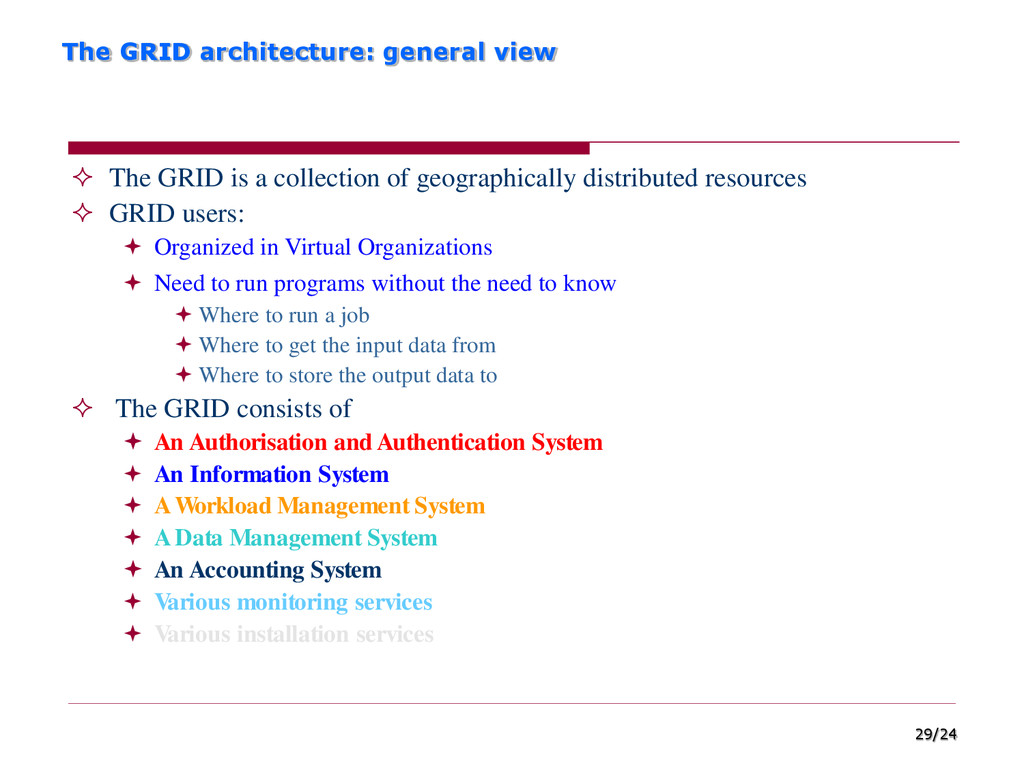
resources GRID users: Organized in Virtual Organizations Need to run programs without the need to know Where to run a job Where to get the input data from Where to store the output data to The GRID consists of An Authorisation and Authentication System An Information System A Workload Management System A Data Management System An Accounting System Various monitoring services Various installation services The GRID architecture: general view
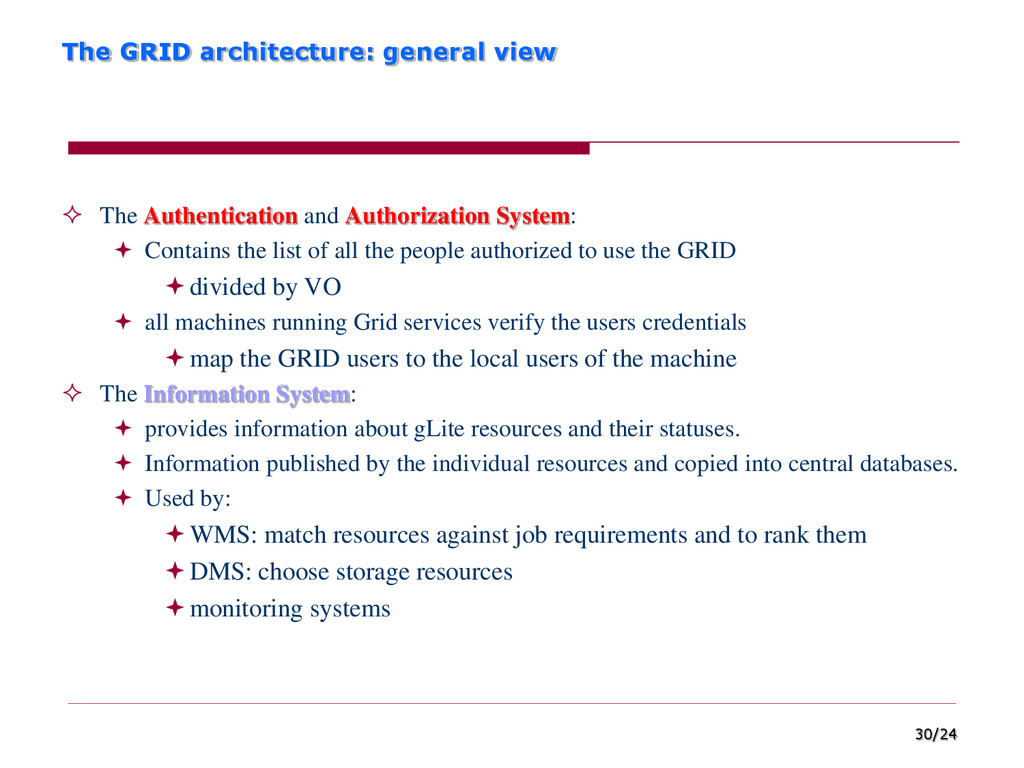
list of all the people authorized to use the GRID divided by VO all machines running Grid services verify the users credentials map the GRID users to the local users of the machine The Information System: provides information about gLite resources and their statuses. Information published by the individual resources and copied into central databases. Used by: WMS: match resources against job requirements and to rank them DMS: choose storage resources monitoring systems The GRID architecture: general view
by users matches the job requirements to the available resources schedules the job for execution on an appropriate computing cluster tracks the job status allows the user to retrieve the job output when ready The Data Management System: Allows users to move files in and out of the Grid replicate files among different locations locate files. This is achieved: transferring data via a number of protocols GridFTP is the most commonly used interacting with a central file catalog The GRID architecture: general view
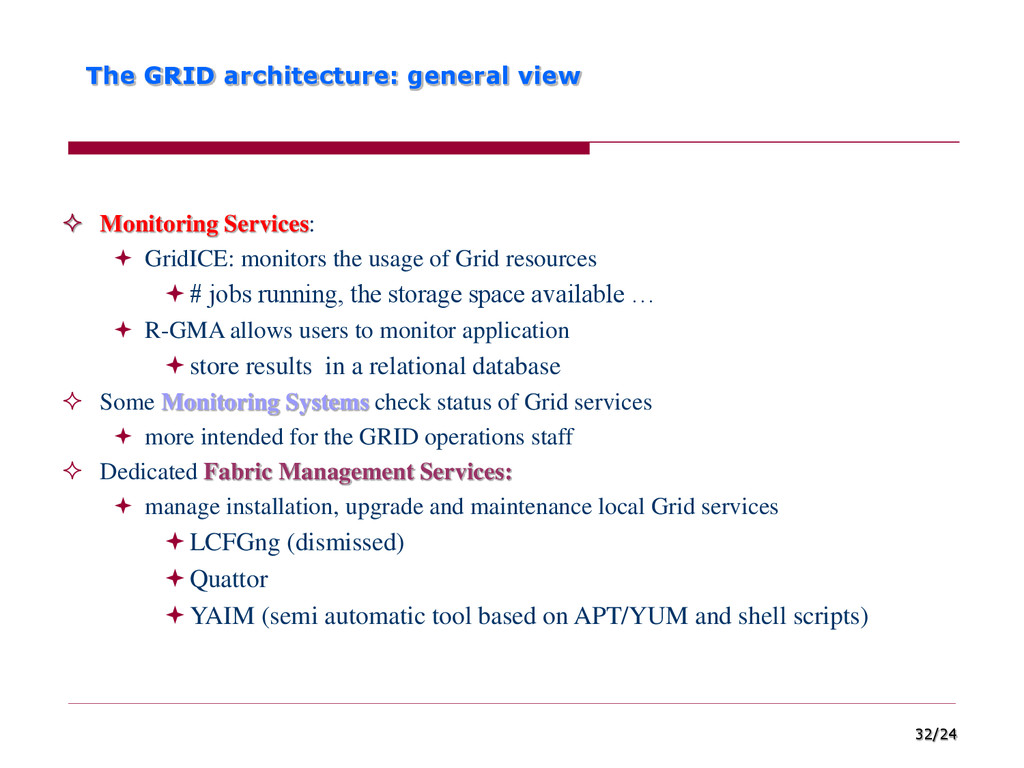
Grid resources # jobs running, the storage space available … R-GMA allows users to monitor application store results in a relational database Some Monitoring Systems check status of Grid services more intended for the GRID operations staff Dedicated Fabric Management Services: manage installation, upgrade and maintenance local Grid services LCFGng (dismissed) Quattor YAIM (semi automatic tool based on APT/YUM and shell scripts) The GRID architecture: general view
about where the electricity you are using comes from. You would never worry about where the computer power you are using comes from The infrastructure that makes this possible is called "the power grid". The infrastructure that makes this possible is called "the Grid". The power grid is pervasive: electricity is available essentially everywhere and you can imply access it through a standard wall socket The Grid is be pervasive: remote computing resources would be accessible from different platforms, and you will simply access the Grid through your web browser. The power grid is a utility: you ask for electricity, and you get it. You also pay for what you get. The Grid is a utility: you ask for computer power or storage capacity and you get it. You also pay for what you get. "The Grid" doesn't yet exist in this form; however, the world already has hundreds of smaller grids...


 nunolf
 ryanjones
 akosma
 addyosmani
 jlugia
 jmmastey
 kneath
 wayneb77
 ivargrimstad
 bcantrill
 gurzu
gurzu
 sachag
 shlominoach
![[email protected] 11 February 2009 The Grid : a primer](https://files.speakerdeck.com/presentations/950ed7402f8c01327e4c42c106afd3ef/slide_0.jpg)