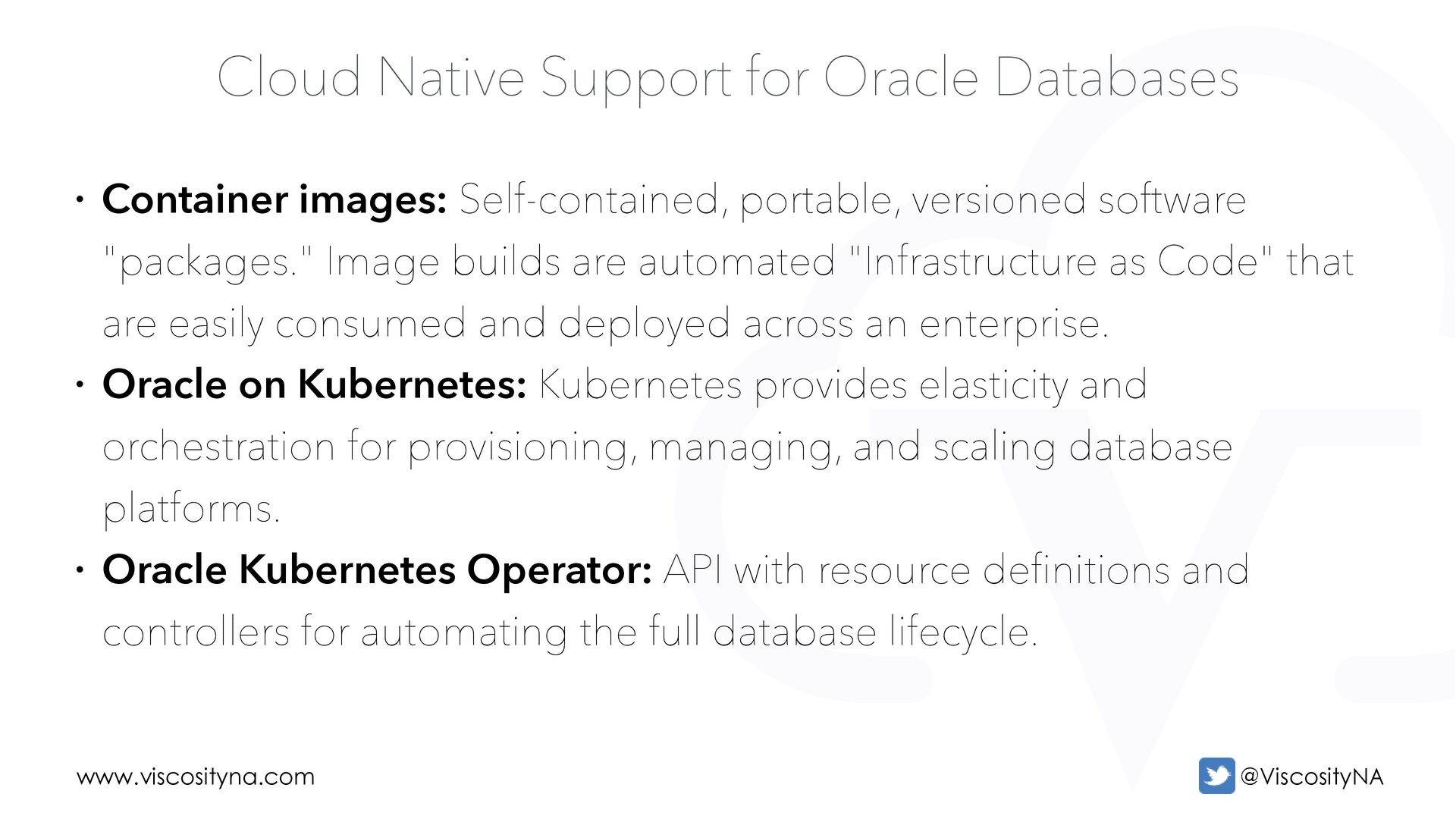
images: Self-contained, portable, versioned software "packages." Image builds are automated "Infrastructure as Code" that are easily consumed and deployed across an enterprise. • Oracle on Kubernetes: Kubernetes provides elasticity and orchestration for provisioning, managing, and scaling database platforms. • Oracle Kubernetes Operator: API with resource definitions and controllers for automating the full database lifecycle.
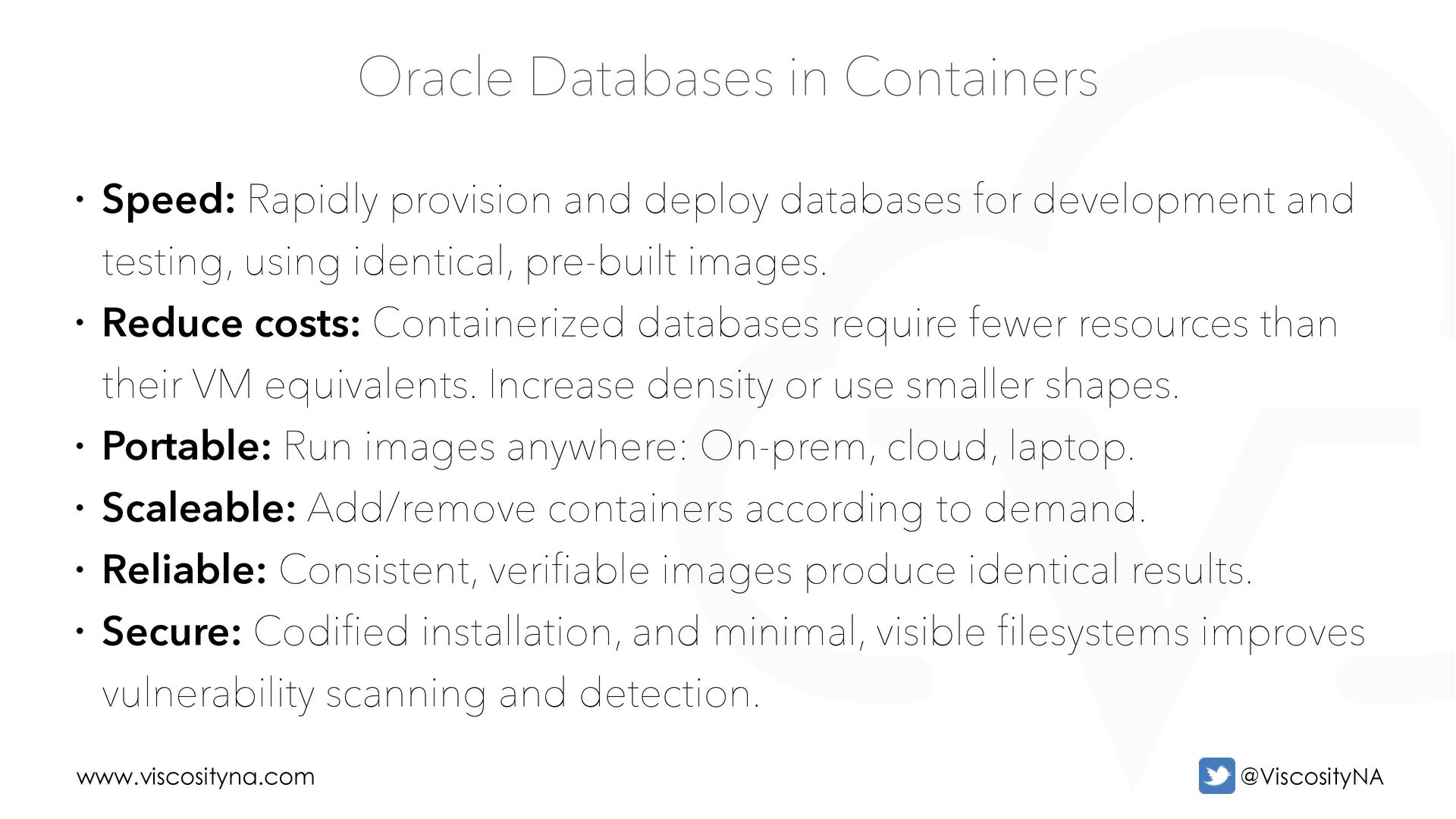
and deploy databases for development and testing, using identical, pre-built images. • Reduce costs: Containerized databases require fewer resources than their VM equivalents. Increase density or use smaller shapes. • Portable: Run images anywhere: On-prem, cloud, laptop. • Scaleable: Add/remove containers according to demand. • Reliable: Consistent, verifiable images produce identical results. • Secure: Codified installation, and minimal, visible filesystems improves vulnerability scanning and detection.
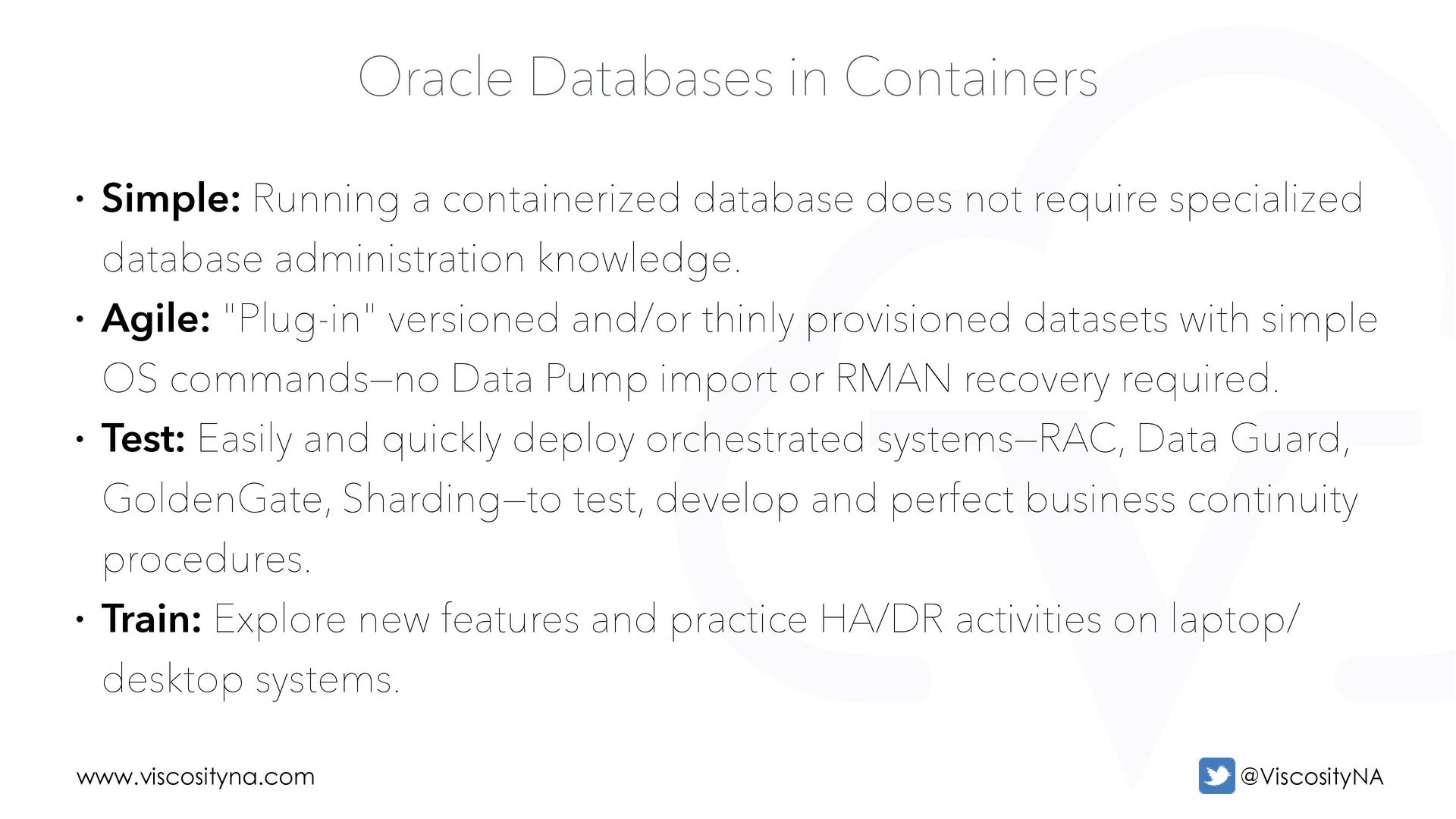
containerized database does not require specialized database administration knowledge. • Agile: "Plug-in" versioned and/or thinly provisioned datasets with simple OS commands—no Data Pump import or RMAN recovery required. • Test: Easily and quickly deploy orchestrated systems—RAC, Data Guard, GoldenGate, Sharding—to test, develop and perfect business continuity procedures. • Train: Explore new features and practice HA/DR activities on laptop/ desktop systems.
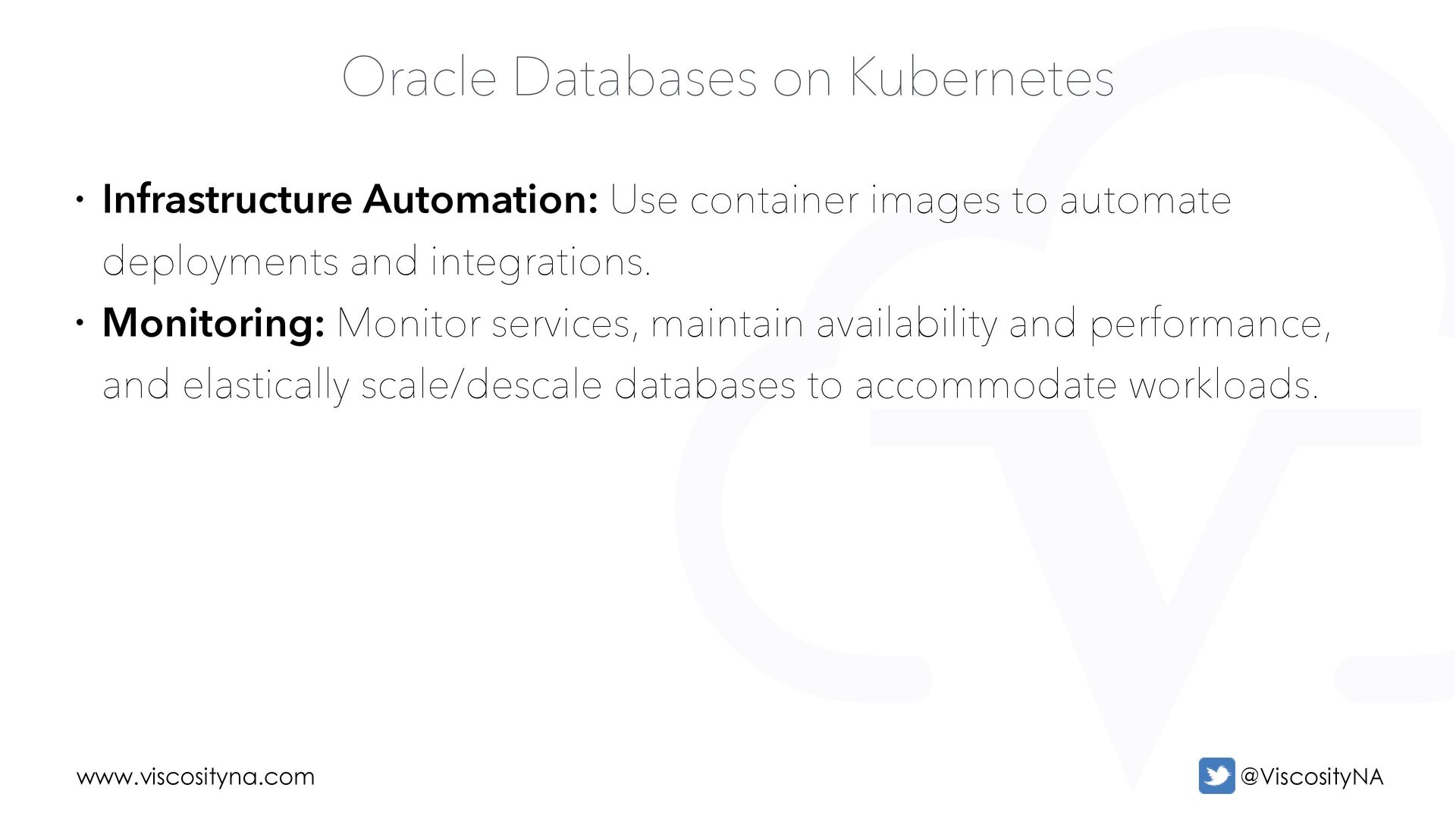
container images to automate deployments and integrations. • Monitoring: Monitor services, maintain availability and performance, and elastically scale/descale databases to accommodate workloads.
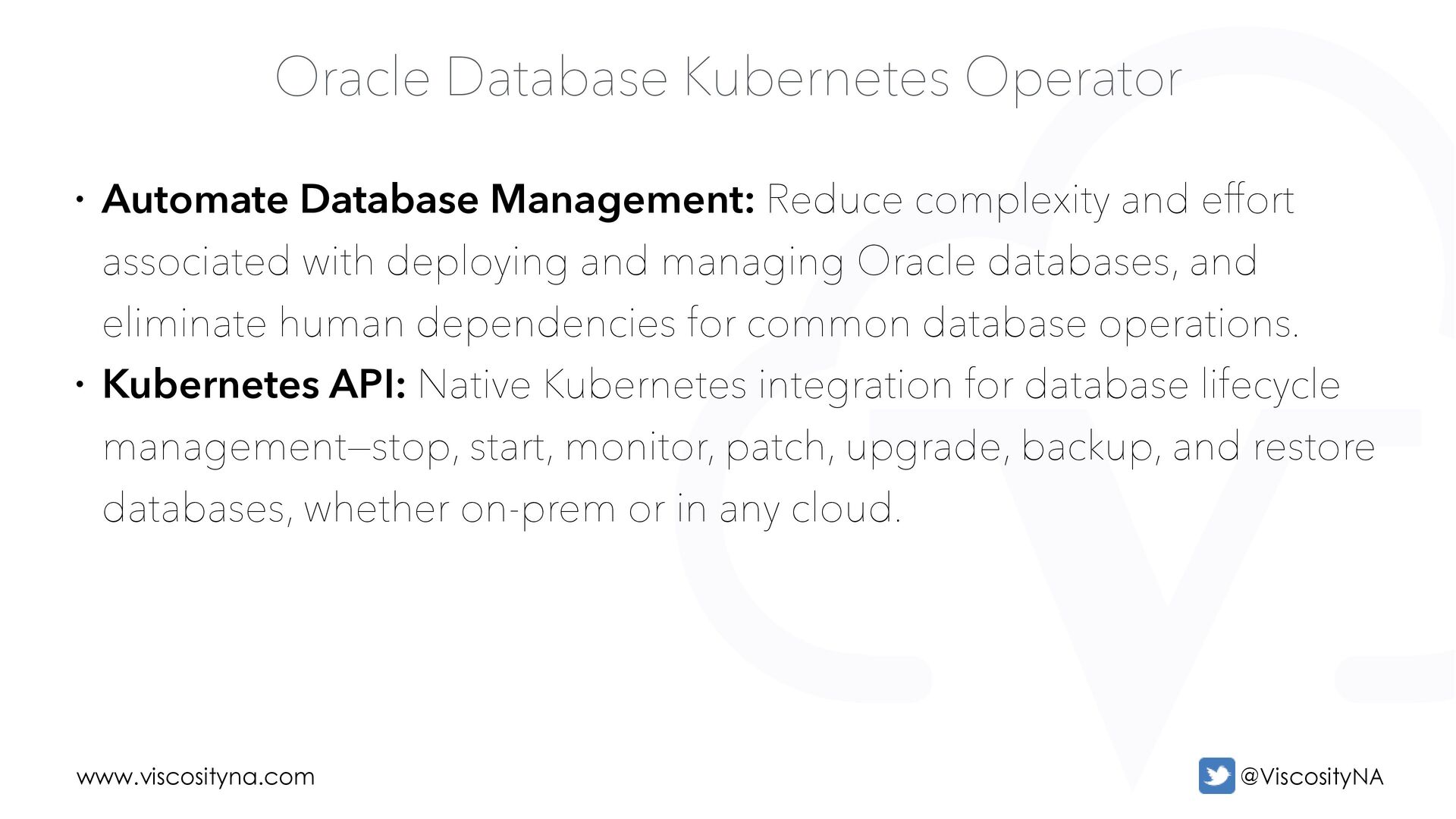
Reduce complexity and effort associated with deploying and managing Oracle databases, and eliminate human dependencies for common database operations. • Kubernetes API: Native Kubernetes integration for database lifecycle management—stop, start, monitor, patch, upgrade, backup, and restore databases, whether on-prem or in any cloud.


 oraclesean
 yut0naga1_fa
 ishikawa_satoru
 ivry_presentationmaterials
 ueponx
 daidaidai
 yuuuuuuu168
 pfn
pfn
 terapyon
 jtakeda
 akhino
 grimoh
 mojombo
 soudai
 dugsong
 mayunak
 akademiya2063
 katarinadahlin
 skipperchong
 jct
jct
 wayneb77
 morganepeng
 inesmontani












![Questions? Contact Me! [email protected] https://linktr.ee/oraclesean www.viscosityna.com](https://files.speakerdeck.com/presentations/c27d5b6f53be45c7af0ae7dcc9072e3b/slide_65.jpg)