estimating additional pay for night, evening, weekend, and other qualifying shifts. PayCalcTools Understand the extra pay that can come from working qualifying shifts.
compensation some employers provide when employees work less desirable shifts, such as overnight, evening, weekend, or holiday shifts. Employers may calculate the differential as a percentage of the regular hourly wage or as a fixed additional amount per hour. Always check the employer's pay policy to determine which hours qualify.
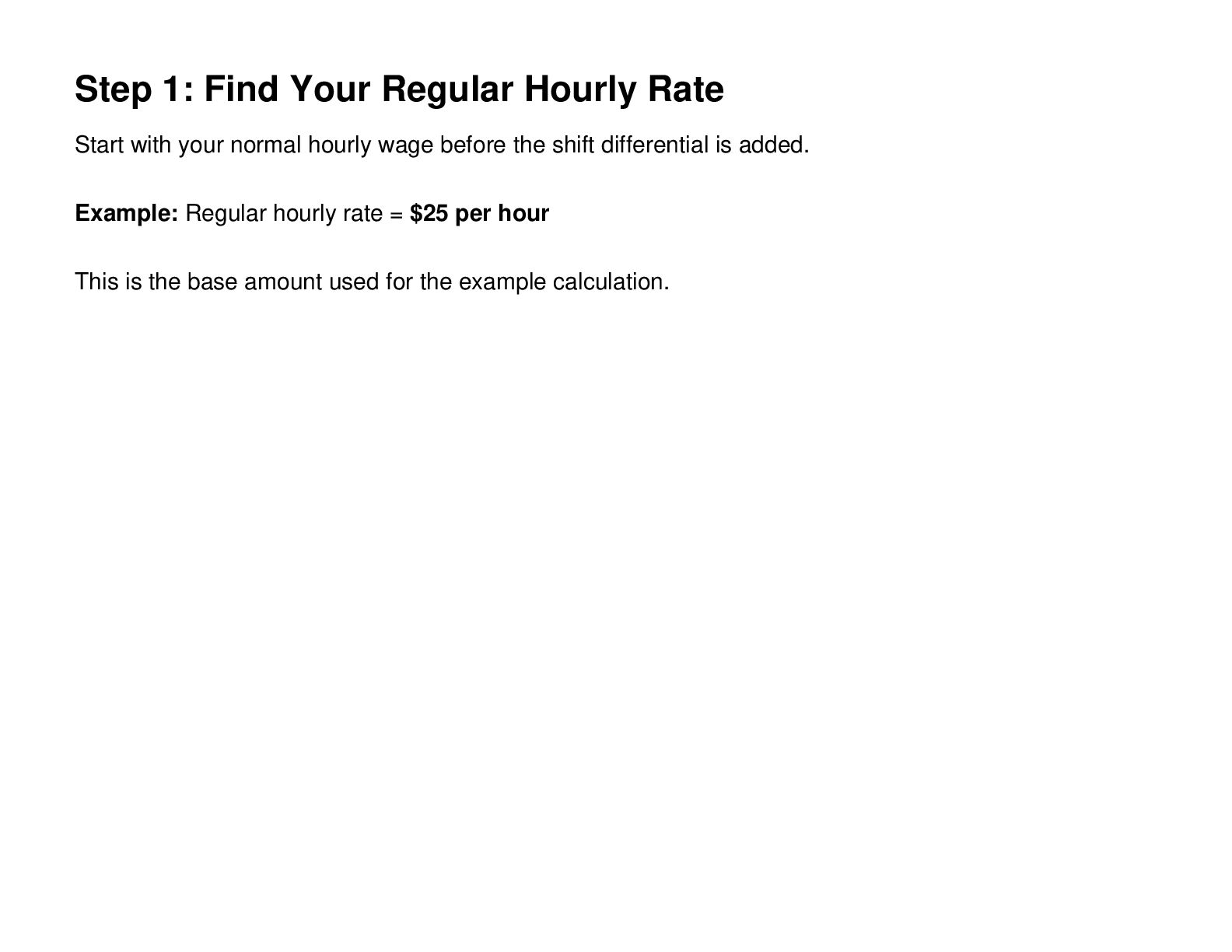
normal hourly wage before the shift differential is added. Example: Regular hourly rate = $25 per hour This is the base amount used for the example calculation.
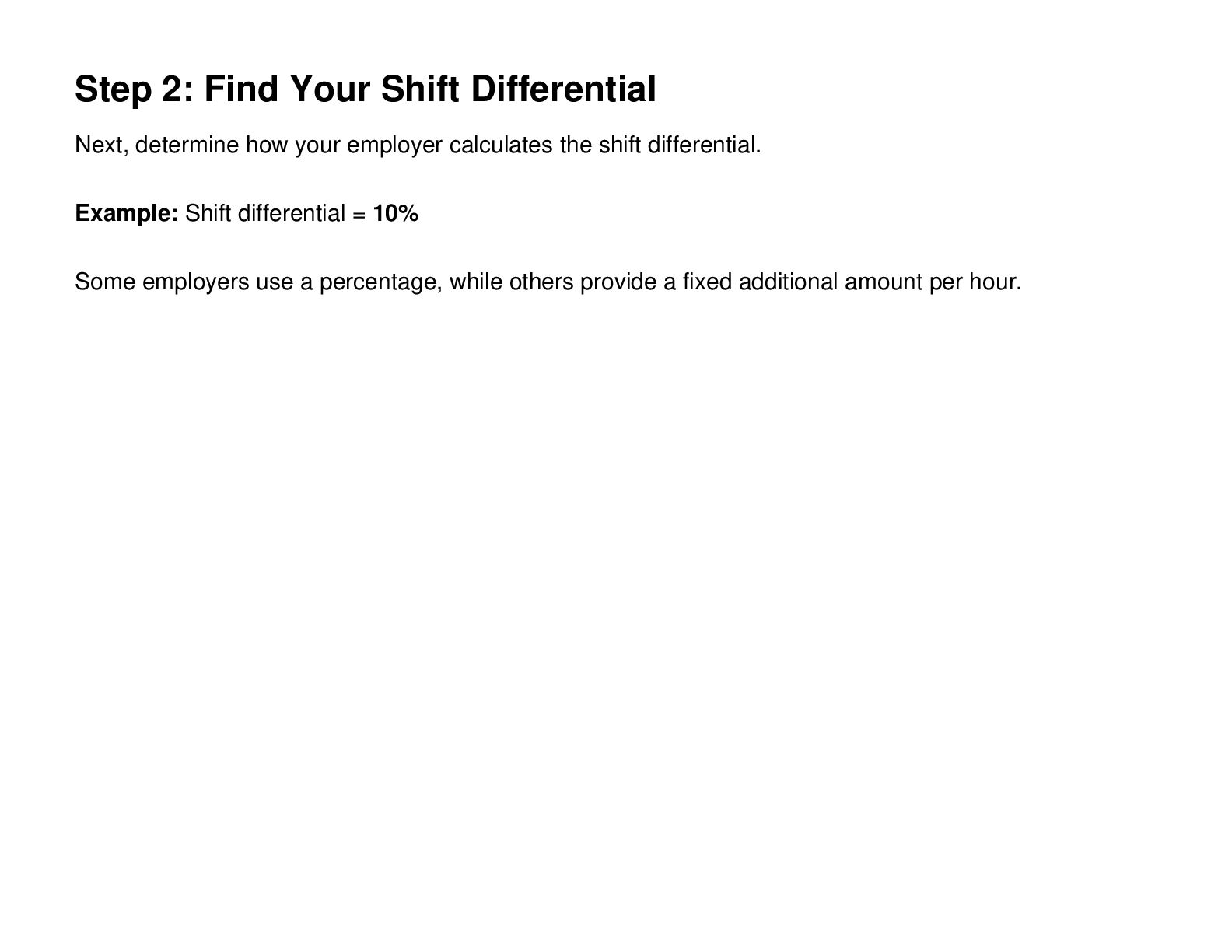
employer calculates the shift differential. Example: Shift differential = 10% Some employers use a percentage, while others provide a fixed additional amount per hour.
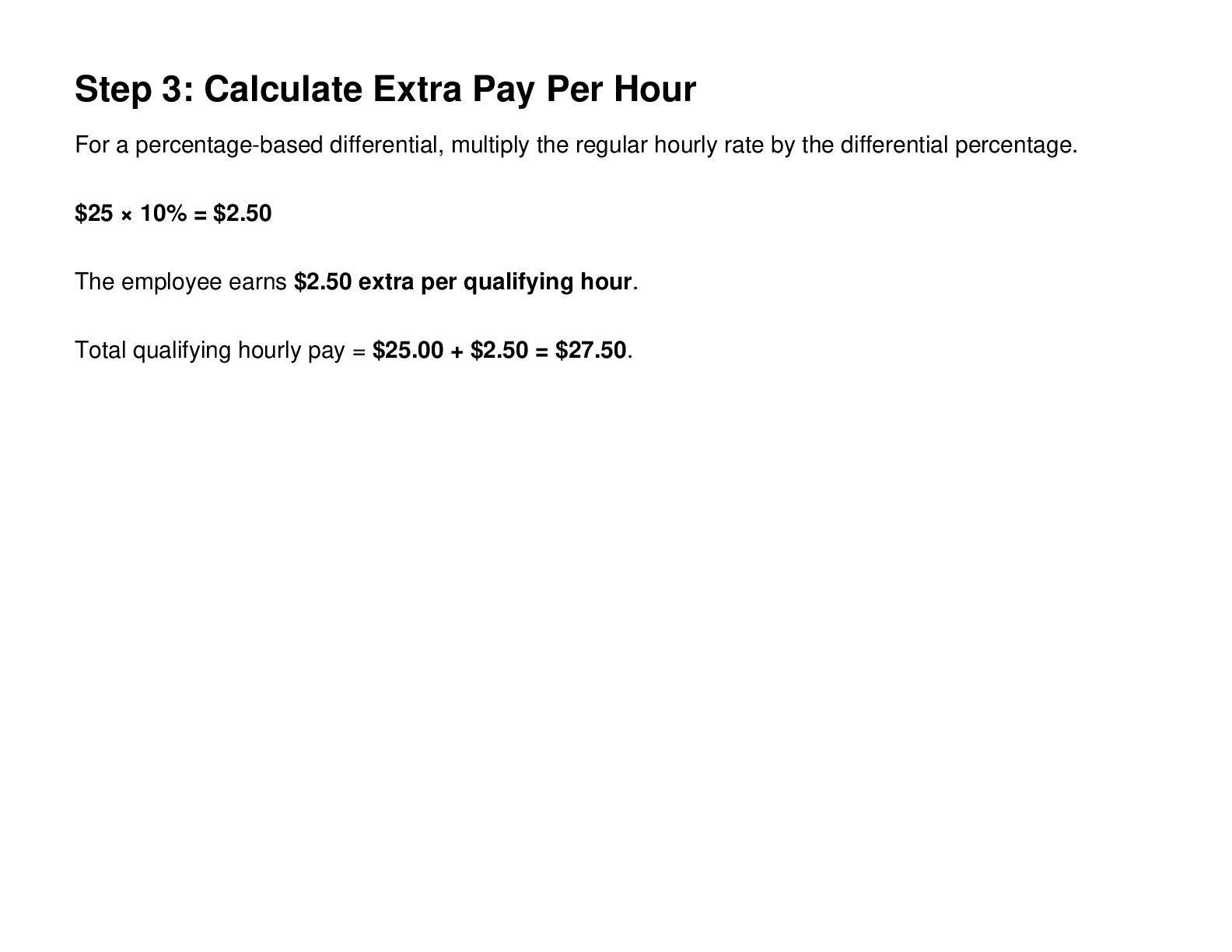
differential, multiply the regular hourly rate by the differential percentage. $25 × 10% = $2.50 The employee earns $2.50 extra per qualifying hour. Total qualifying hourly pay = $25.00 + $2.50 = $27.50.
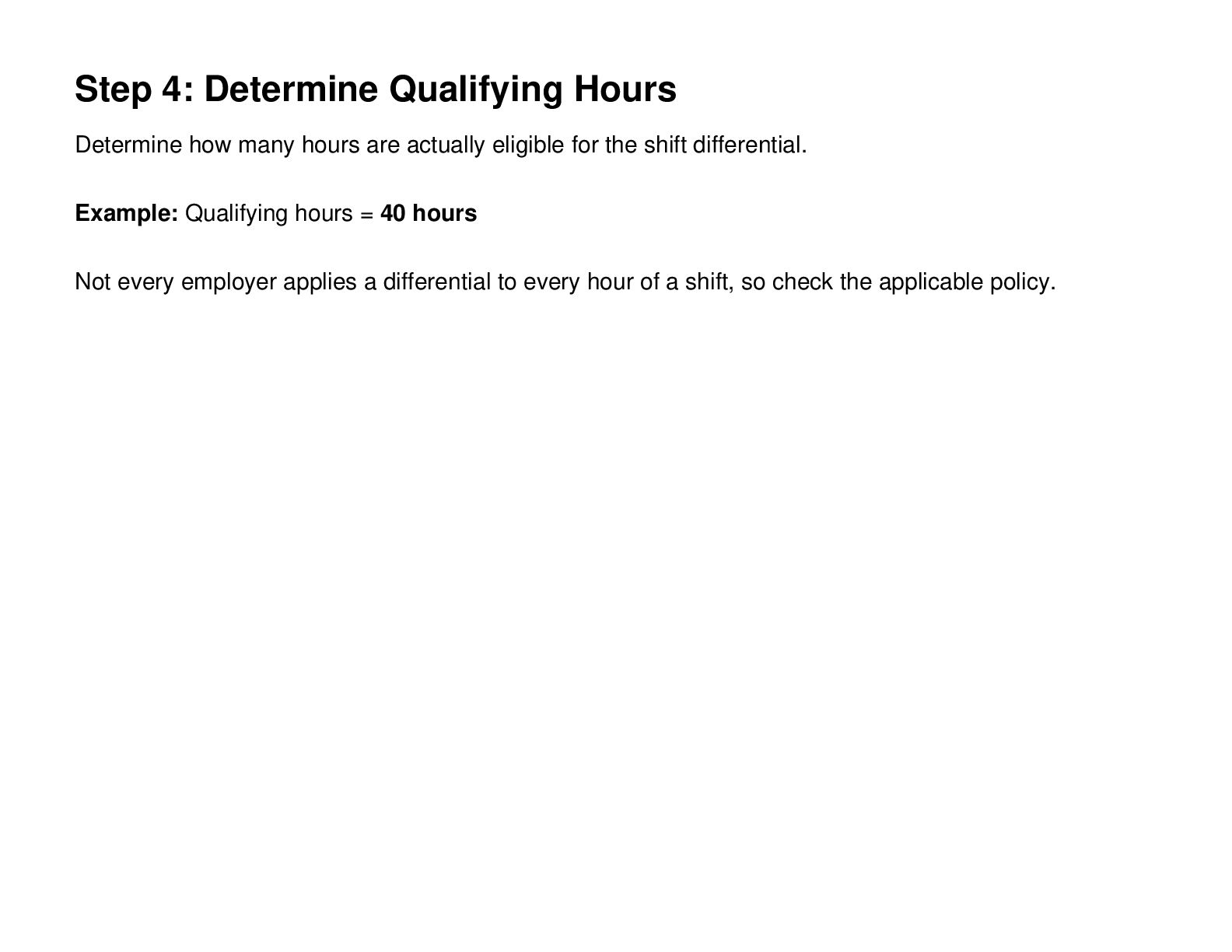
actually eligible for the shift differential. Example: Qualifying hours = 40 hours Not every employer applies a differential to every hour of a shift, so check the applicable policy.
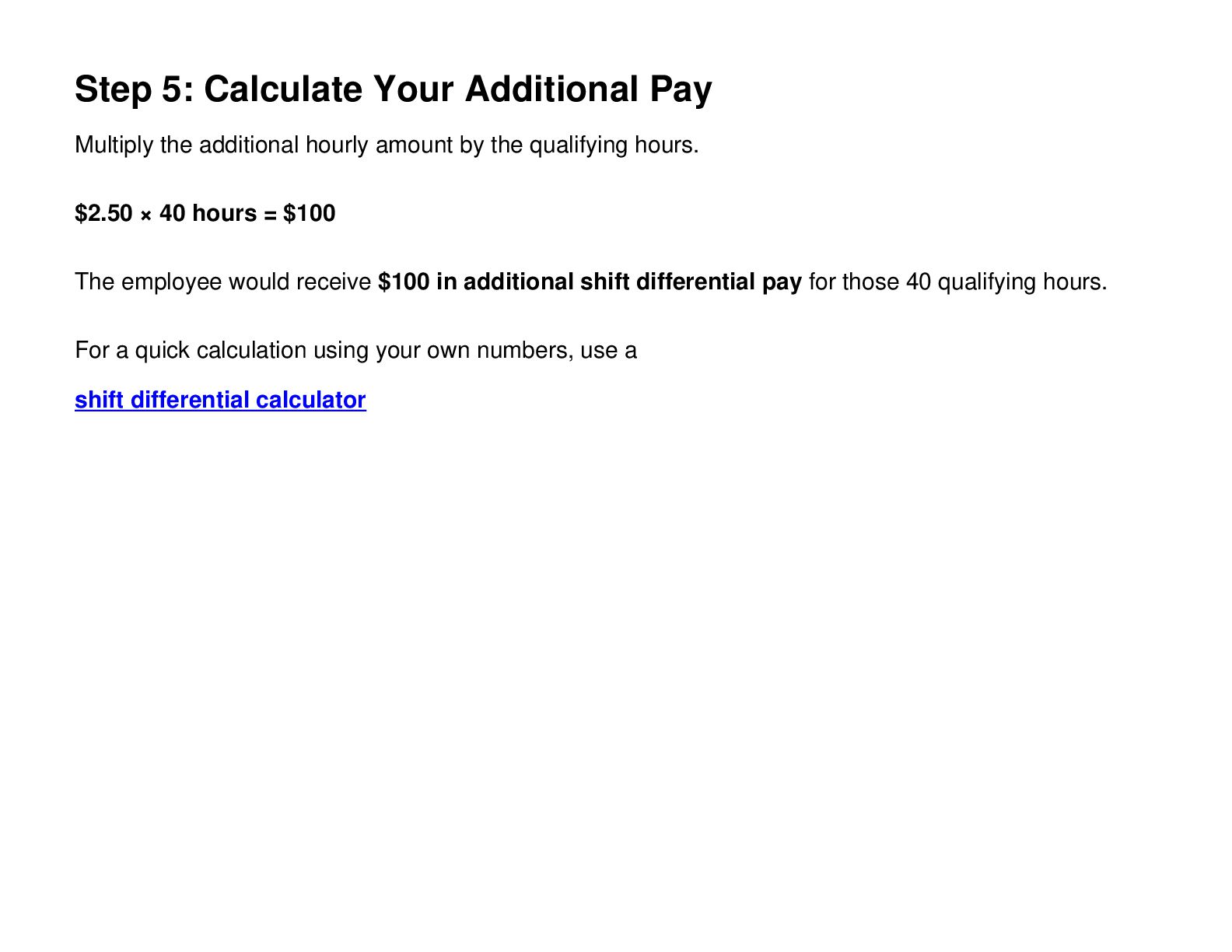
amount by the qualifying hours. $2.50 × 40 hours = $100 The employee would receive $100 in additional shift differential pay for those 40 qualifying hours. For a quick calculation using your own numbers, use a shift differential calculator
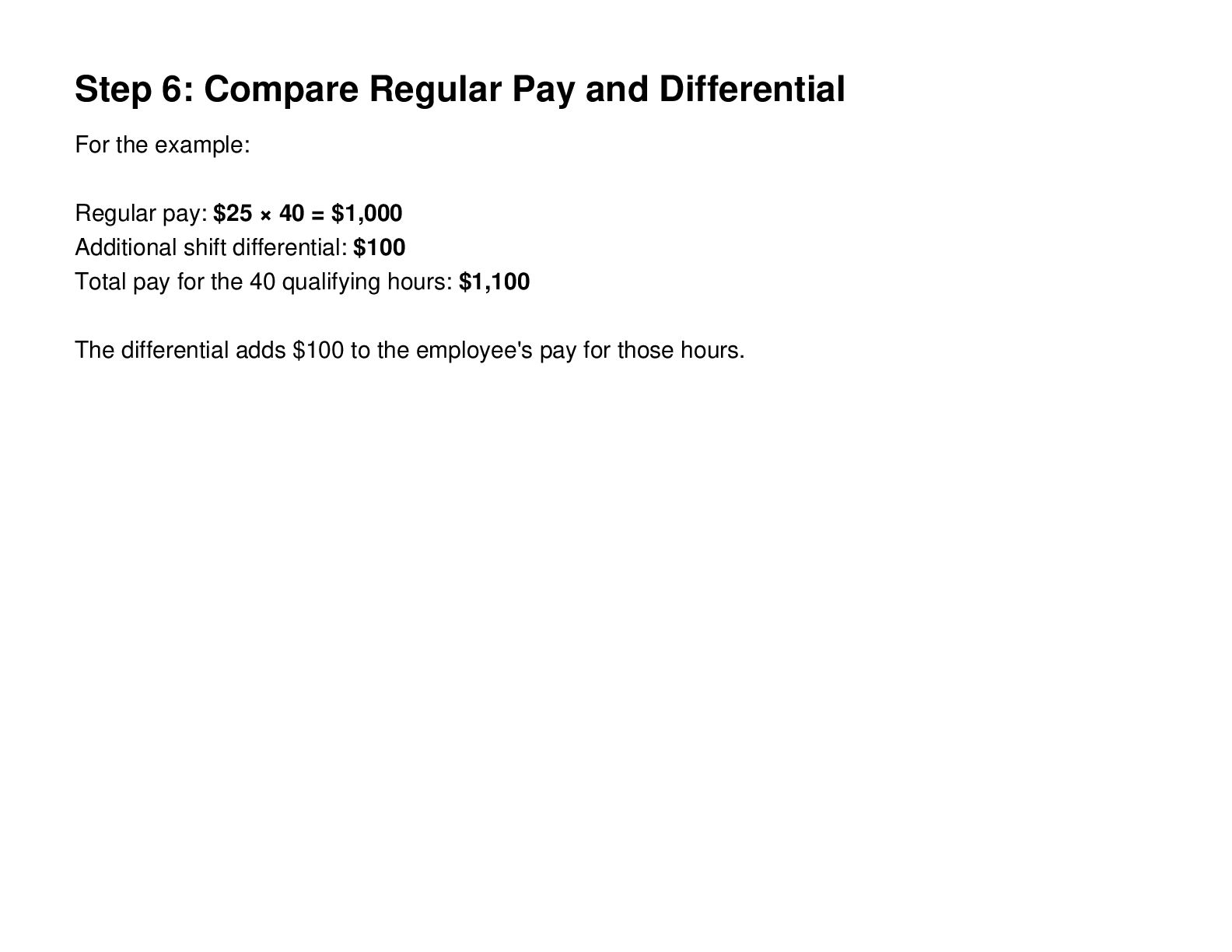
Regular pay: $25 × 40 = $1,000 Additional shift differential: $100 Total pay for the 40 qualifying hours: $1,100 The differential adds $100 to the employee's pay for those hours.
compare it with your paycheck. Look for: • Regular hourly pay • Shift differential or premium pay • Number of qualifying hours • Additional earnings • Overtime or other premiums Employer policies can affect the final amount.
the shift differential. 3. Calculate the additional amount per hour. 4. Determine how many hours qualify. 5. Multiply the additional hourly amount by qualifying hours. 6. Compare the estimate with your paycheck.
your own pay information: Base hourly rate → Differential → Qualifying hours → Additional pay PayCalcTools Practical online calculators for pay and workplace compensation.


 jnunemaker
 samtorres
 varn
 wjessup
 jacobian
 raygrieselhuber
 malarkey
 mkilby
 schroneko
 bryan
 addyosmani
 kristinabergwall1