Upgrade to Pro — share decks privately, control downloads, hide ads and more …

AMP & Furious

Sponsored · SiteGround - Reliable hosting with speed, security, and support you can count on.

AMP & Furious

AMP has made web performance mainstream. This talks goes through the good and bad of AMP, starting from AMP 101 all the way to drifting at high speed.

This talk first appeared at the Turin Web Performance Meetup.

Avatar for Matteo Fogli

Matteo Fogli

April 17, 2018

More Decks by Matteo Fogli

Other Decks in Programming

Transcript

  1. <

  2. <

  3. <

  4. What is AMP Recap • Accelerated Mobile Pages are HTML

    pages designed to be rendered fast • AMP is a web component format + JS library, strictly validated • AMP does not require any server side technology* and works in any browser ̣ Caches
  5. CSS

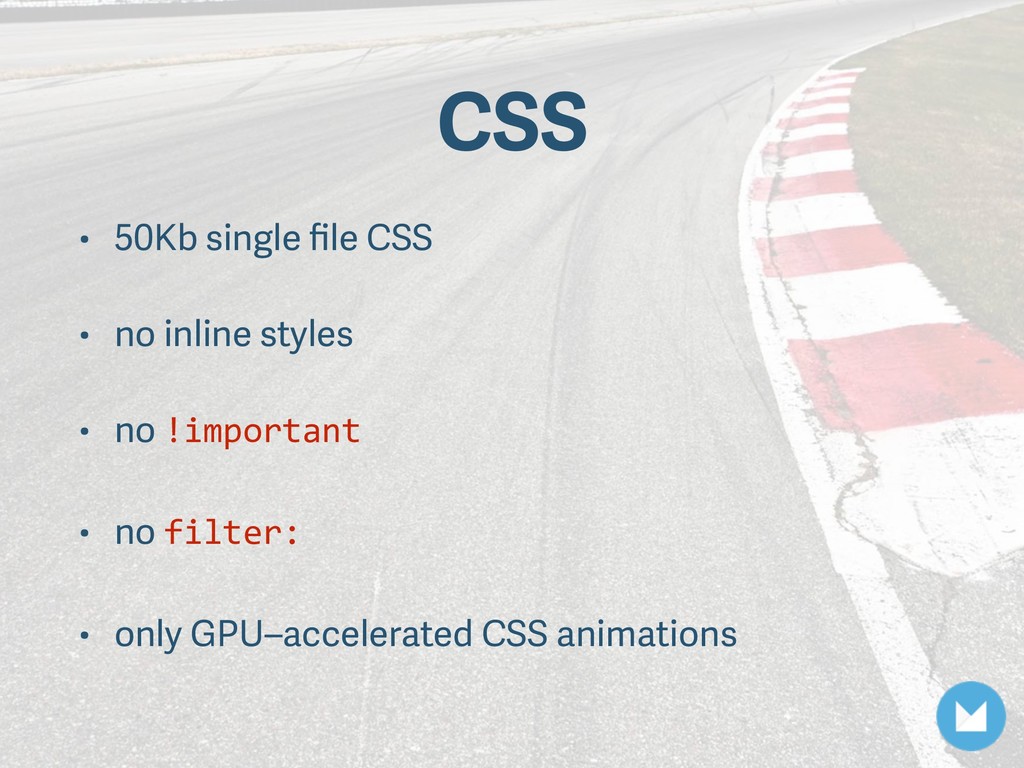
  6. CSS • 50Kb single file CSS • no inline styles

    • no !important • no filter: • only GPU–accelerated CSS animations
  7. SEO

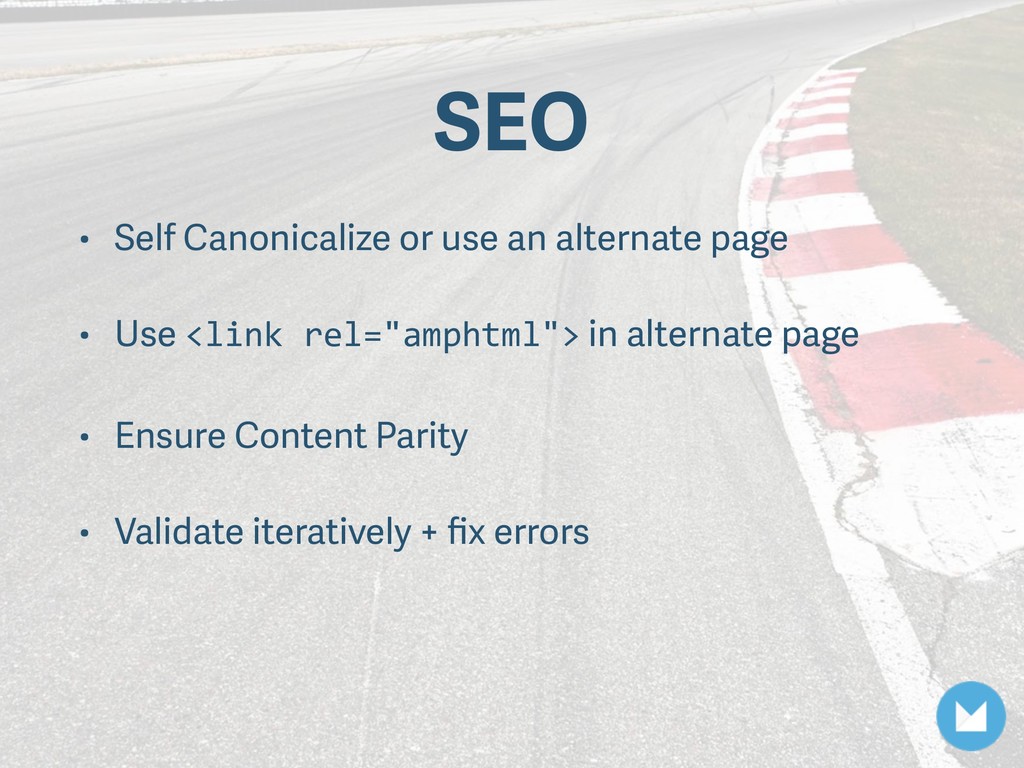
  8. SEO • Self Canonicalize or use an alternate page •

    Use <link rel="amphtml"> in alternate page • Ensure Content Parity • Validate iteratively + fix errors
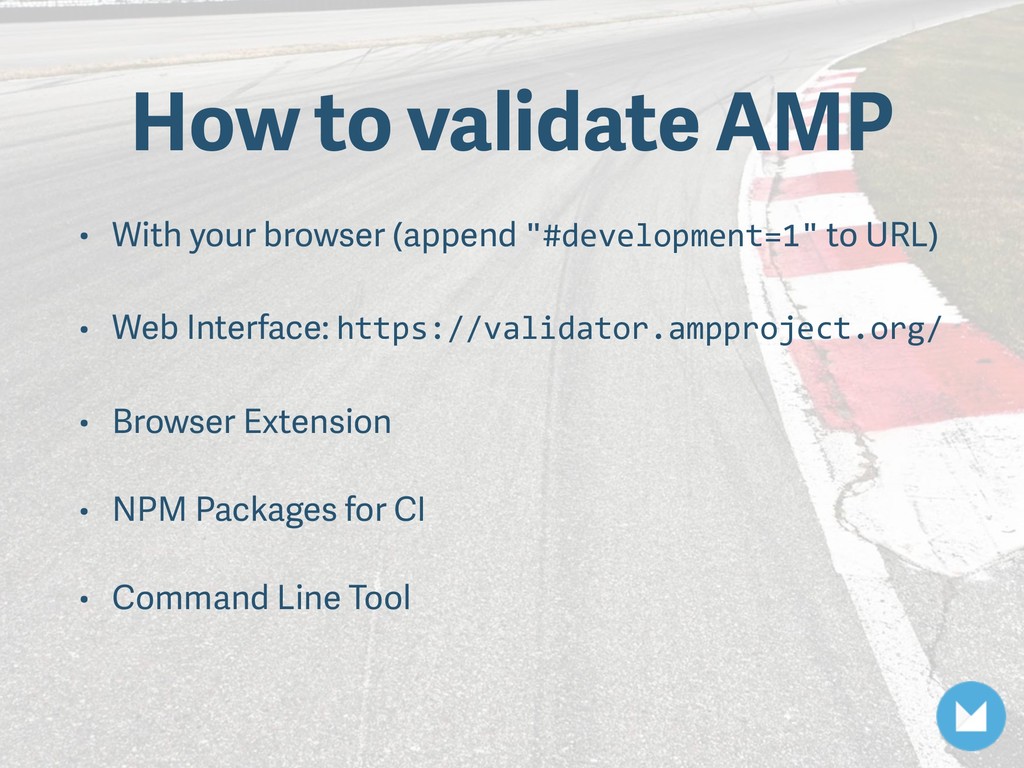
  9. How to validate AMP • With your browser (append "#development=1"

    to URL) • Web Interface: https://validator.ampproject.org/ • Browser Extension • NPM Packages for CI • Command Line Tool
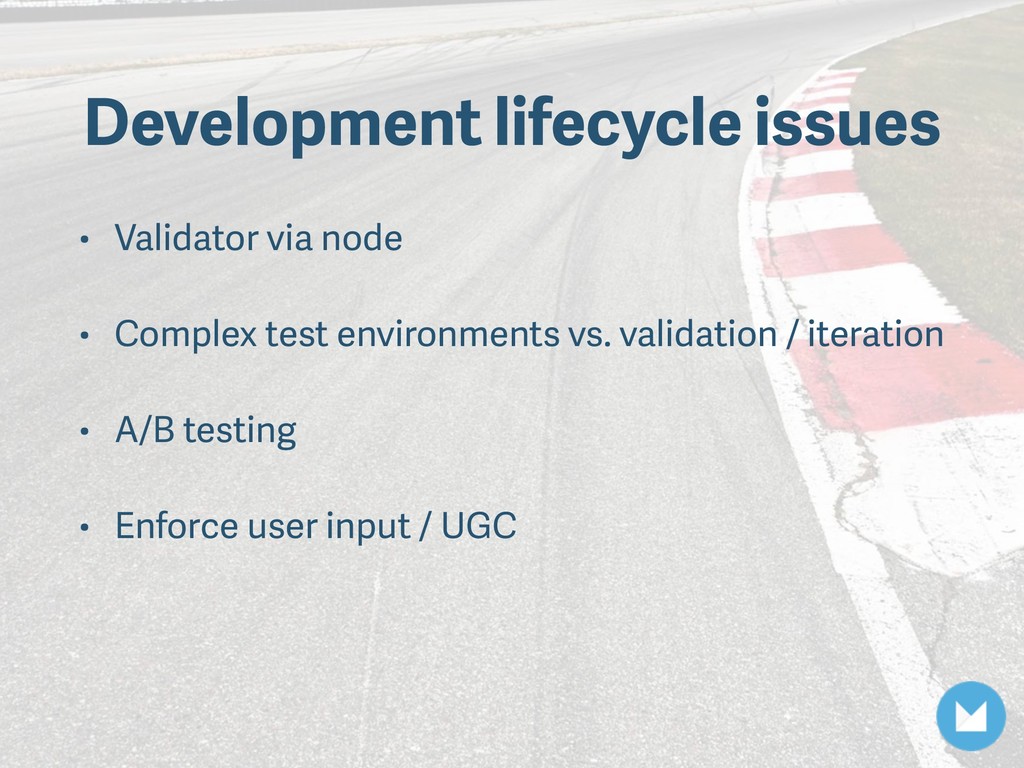
  10. Development lifecycle issues • Validator via node • Complex test

    environments vs. validation / iteration • A/B testing • Enforce user input / UGC
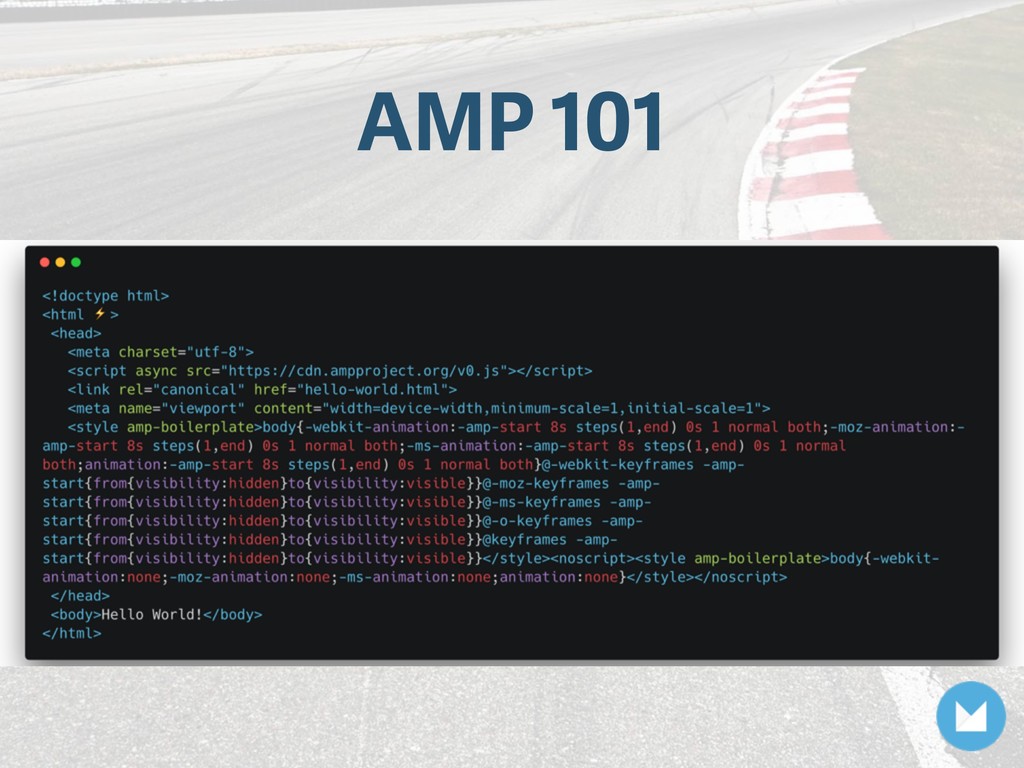
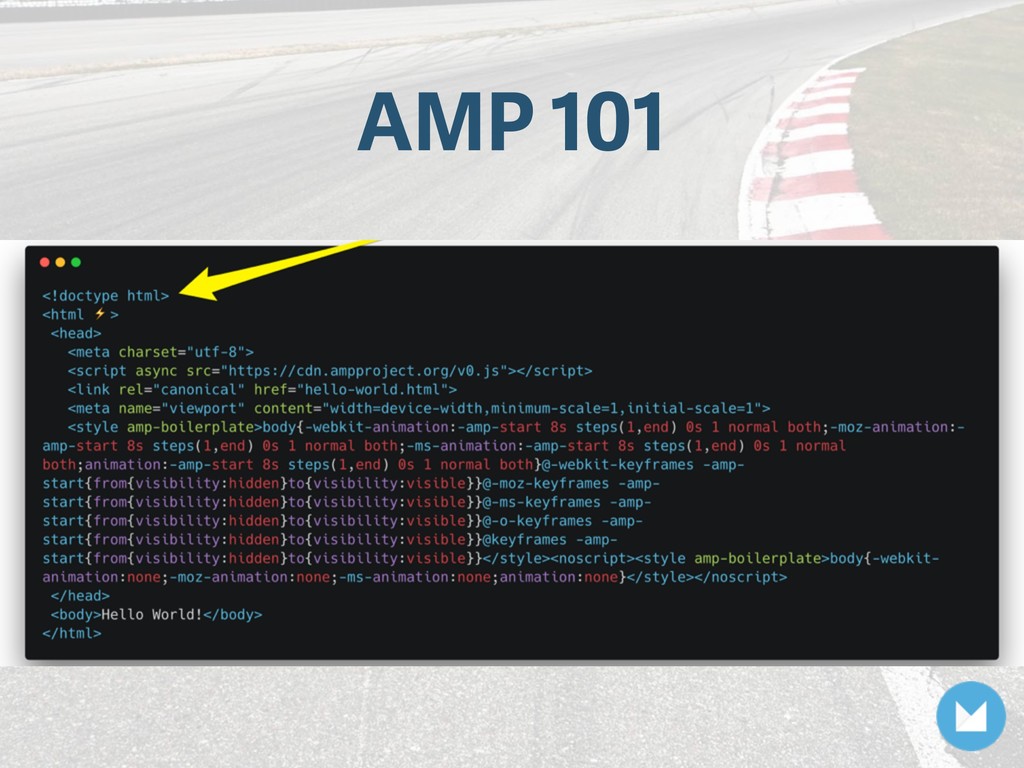
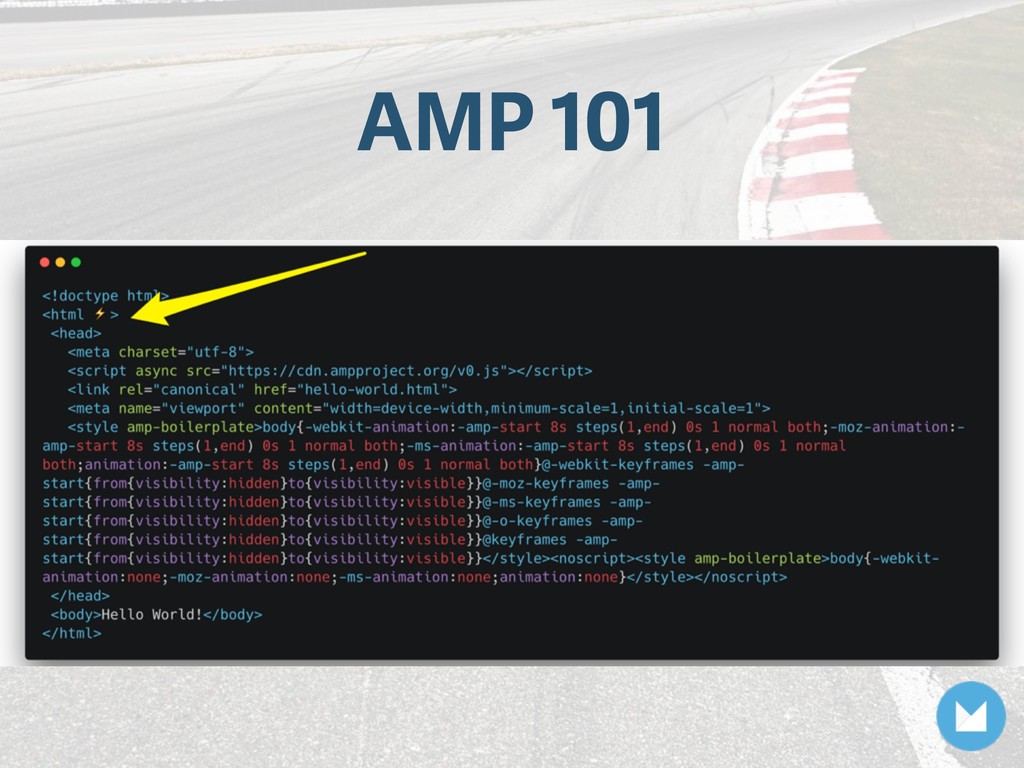
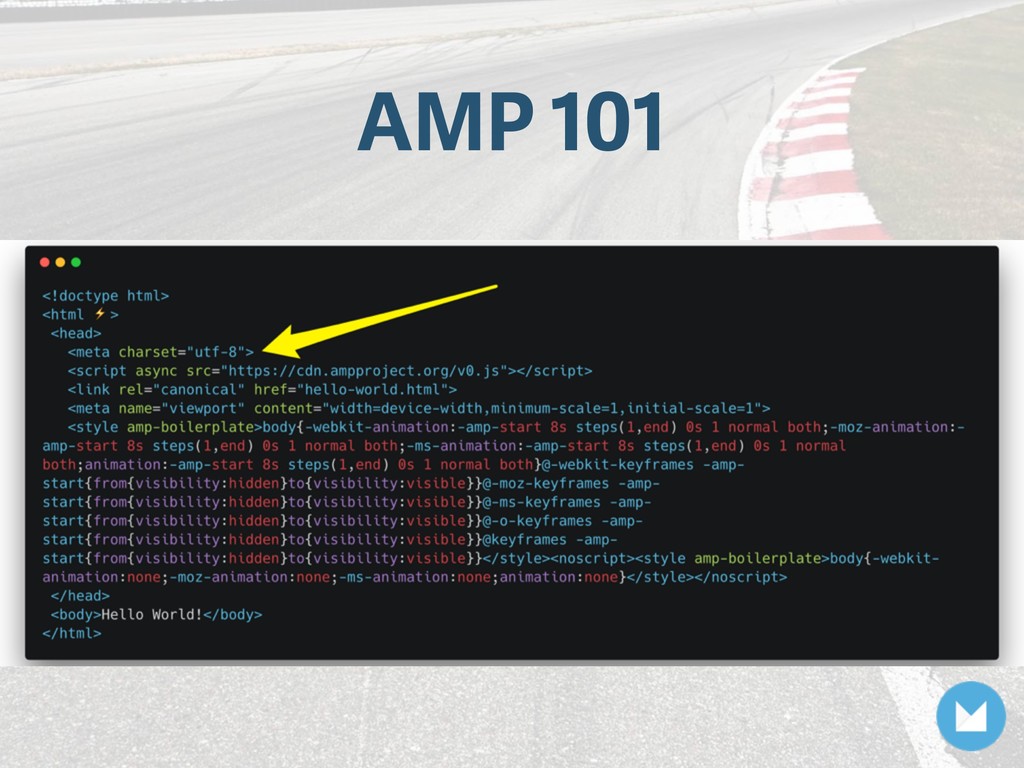
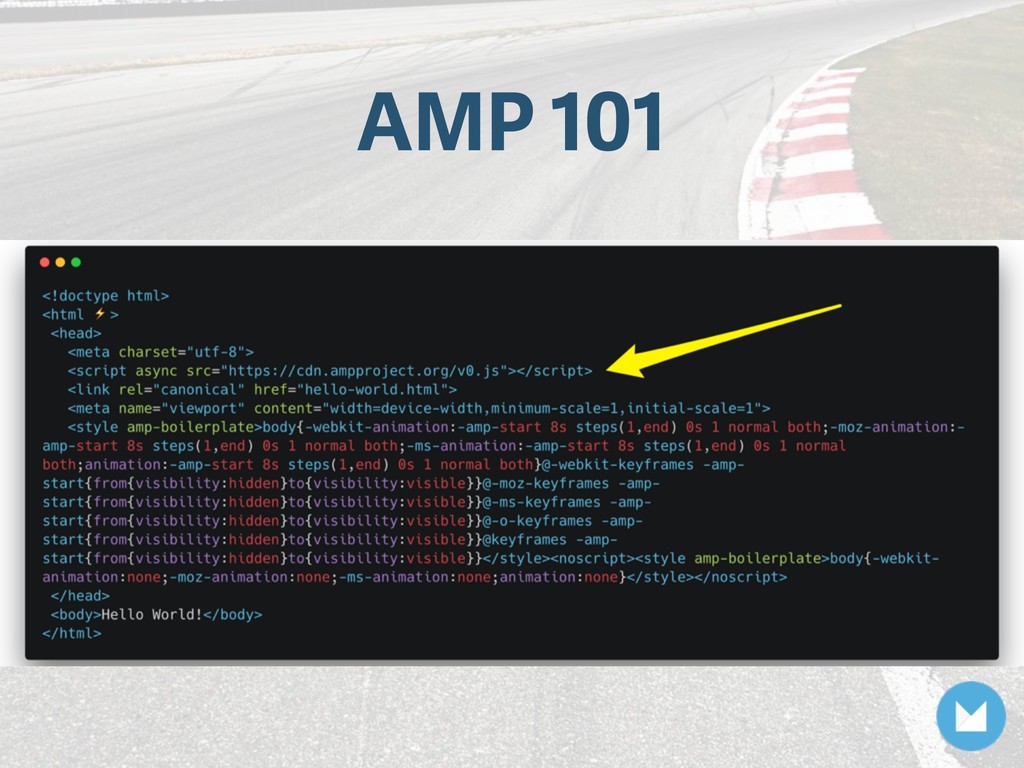
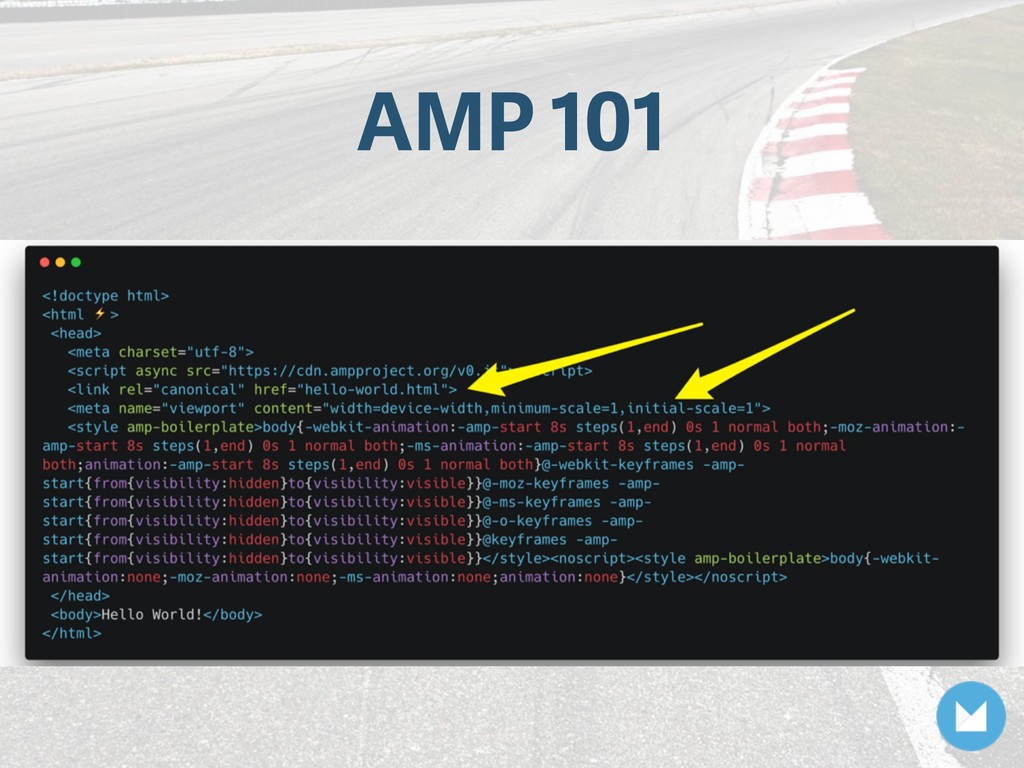
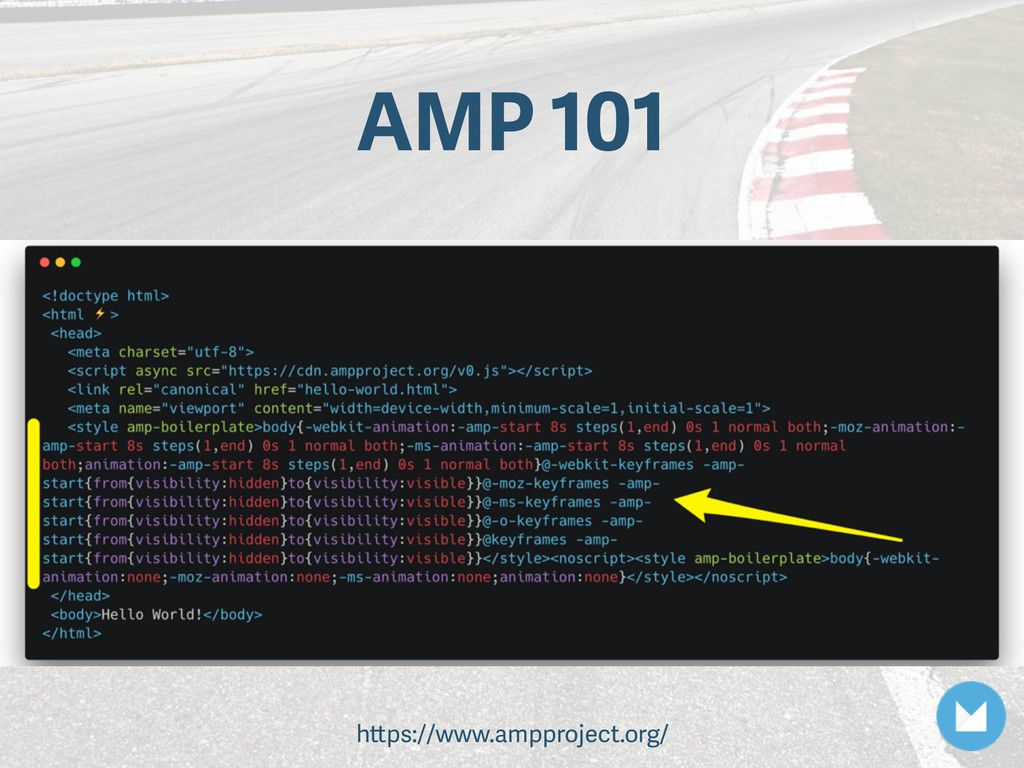
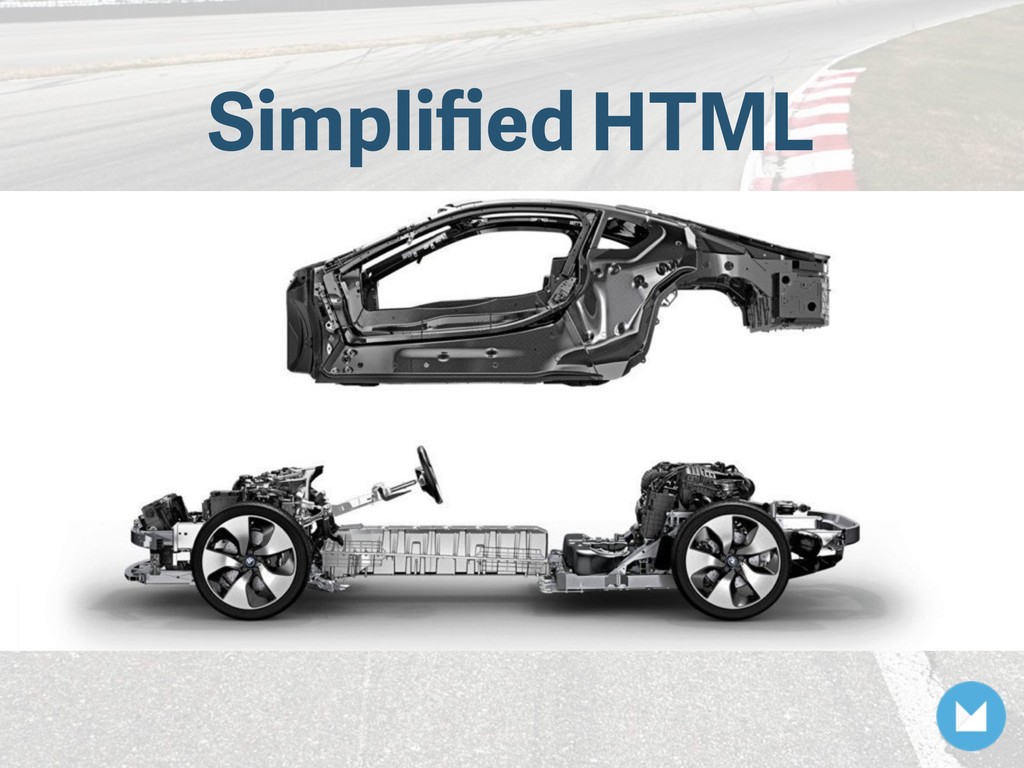
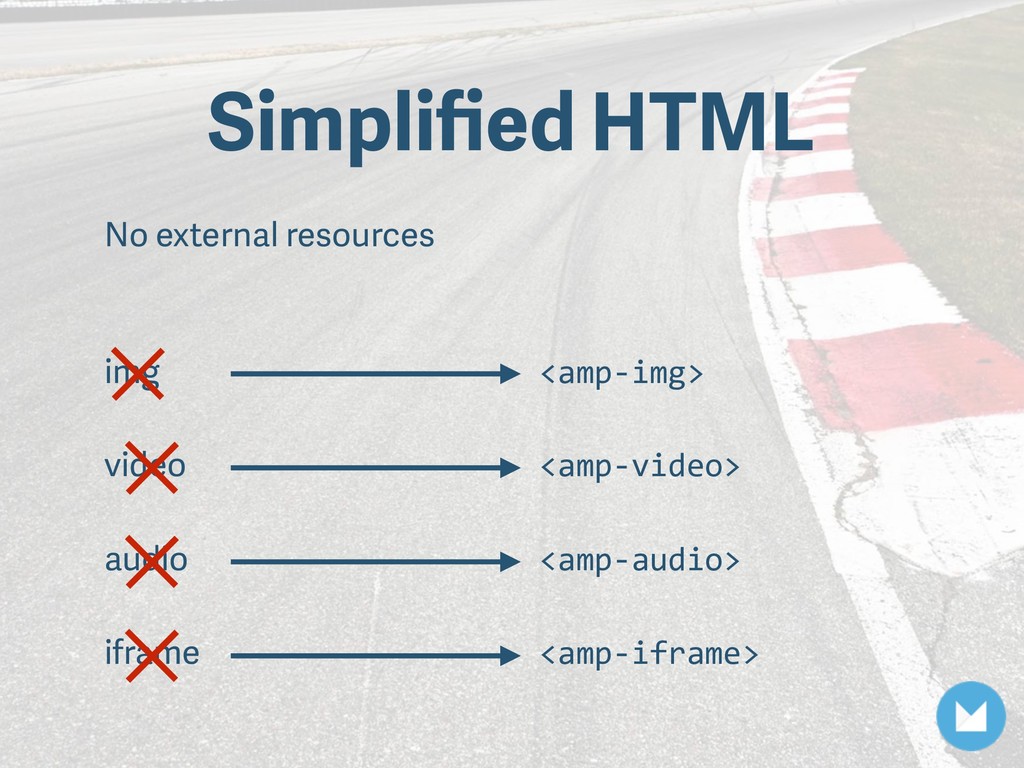
  11. AMP 101 Recap • Subset of HTML + boilerplate •

    No JS (iFrames / AMP Components) • Light CSS (50Kb + fonts) • Must validate (with browser, toolchain or process)
  12. AMP Pros • Fast / Lightweight • Progressively Enhanced •

    Open Source / somewhat standardised • Publisher advantage (reach, higher CT rates, lower bounces)
  13. Common misconceptions • Does AMP replaces websites? Are we back

    to the m-site nightmare of pre-responsive web?
  14. Common misconceptions • Does AMP replaces websites? Are we back

    to the m-site nightmare of pre-responsive web? • Will AMP sites look all the same? 50Kb of CSS is tiny! PurifyCSS
  15. Common misconceptions • Does AMP replaces websites? Are we back

    to the m-site nightmare of pre-responsive web? • Will AMP sites look all the same? 50Kb of CSS is tiny! • Is AMP a static site? no fancy JS stuff (no JS!)?
  16. AMP Cons • Proprietary (despite OSS) • “Breaks” the web

    • breaks URLs, scrolling issues, introduces 3rd party hosting • Competitive advantage in News Carousel • Associated cost (development, testing, maintenance)
  17. How can AMP be so fast? • Critical path is

    clear of blocking obstacles • CSS (inline) • JS (AMPified + async)
  18. How can AMP be so fast? • Critical path is

    clear of blocking obstacles • CSS (inline) • JS (AMPified + async) • Static layouting (elements have known sizes) 1 SINGLE HTTP REQUEST TO DISPLAY CONTENT
  19. How can AMP be so fast? • Critical path is

    clear of blocking obstacles • CSS (inline) • JS (AMPified + async) • Static layouting (elements have known sizes) • Early font loading
  20. How can AMP be so fast? • Critical path is

    clear of blocking obstacles • CSS (inline) • JS (AMPified + async) • Static layouting (elements have known sizes) • Early font loading • Minimized relayouting
  21. How can AMP be so fast? • Critical path is

    clear of blocking obstacles • CSS (inline) • JS (AMPified + async) • Static layouting (elements have known sizes) • Early font loading • Minimized relayouting • Prioritised resource loading (ATF)
  22. NOS: AMP Caches • Caches play a fundamental role in

    AMP • Ensure the document is valid (thus, fast) • Allow embedding • Allow image optimisation, source reordering, AMP post–processing • Allow pre–rendering (partial, prioritised)
  23. NOS: AMP Caches • Ensure no Cross Scripting Issues when

    preloading • Modify JS URLs for better caching • Provide a privacy shield when content is pre- rendered
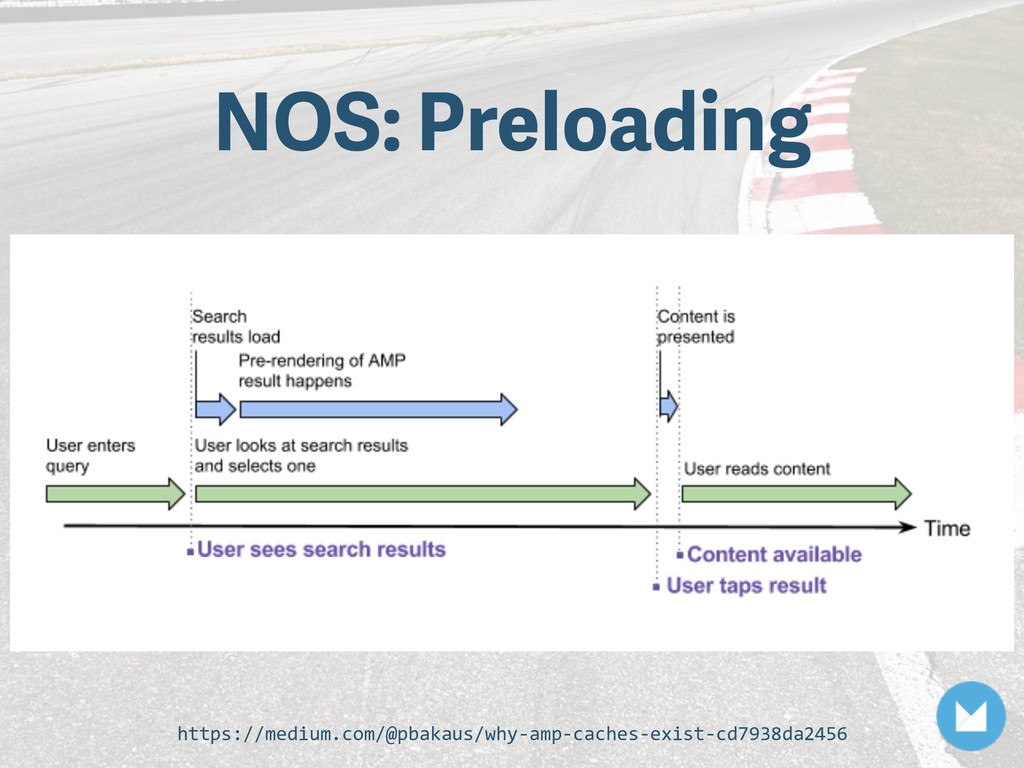
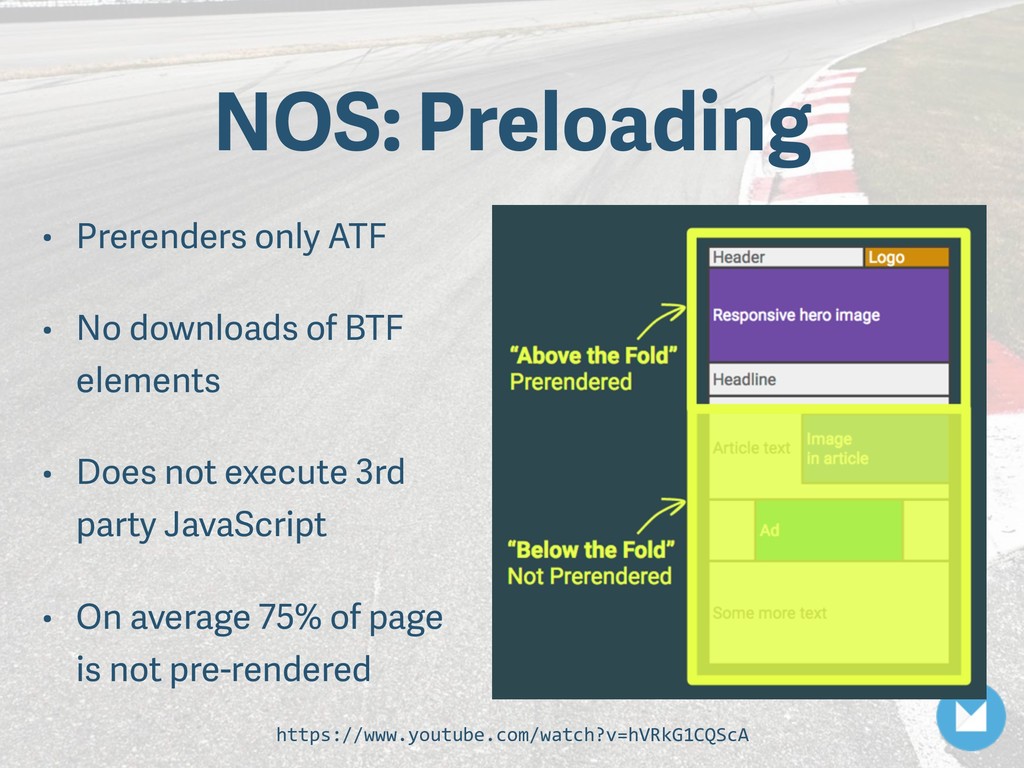
  24. NOS: Preloading • Prerenders only ATF • No downloads of

    BTF elements • Does not execute 3rd party JavaScript • On average 75% of page is not pre-rendered https://www.youtube.com/watch?v=hVRkG1CQScA
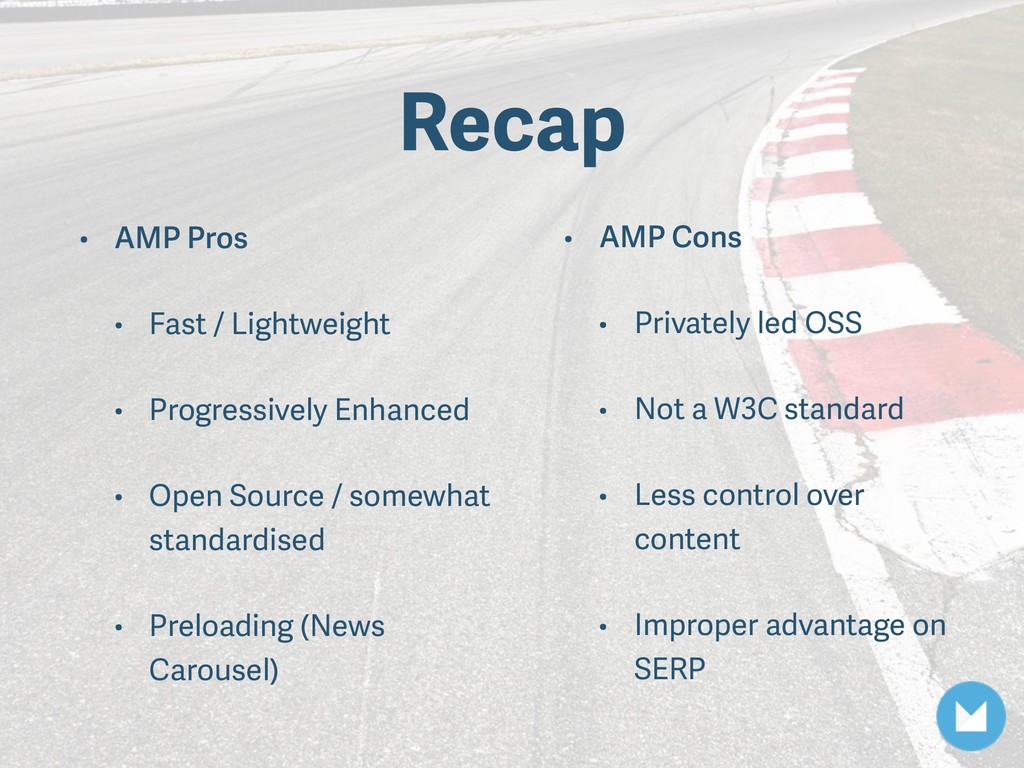
  25. Recap • AMP Pros • Fast / Lightweight • Progressively

    Enhanced • Open Source / somewhat standardised • Preloading (News Carousel) • AMP Cons • Privately led OSS • Not a W3C standard • Less control over content • Improper advantage on SERP
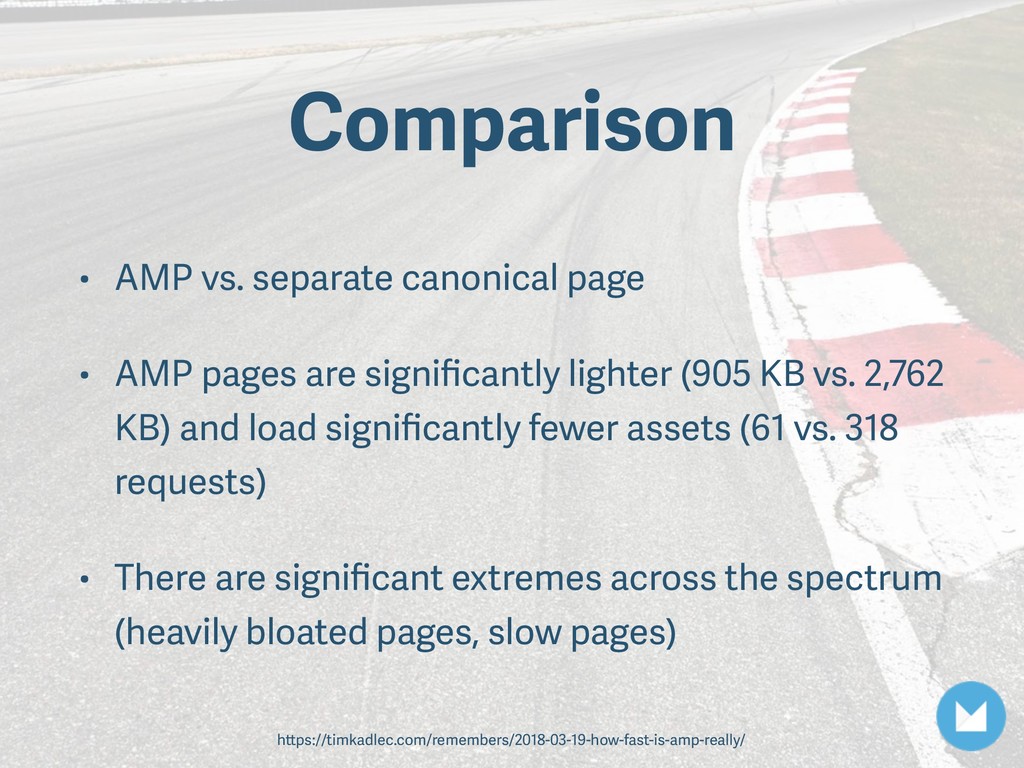
  26. Comparison • AMP vs. separate canonical page • AMP pages

    are significantly lighter (905 KB vs. 2,762 KB) and load significantly fewer assets (61 vs. 318 requests) • There are significant extremes across the spectrum (heavily bloated pages, slow pages) https://timkadlec.com/remembers/2018-03-19-how-fast-is-amp-really/
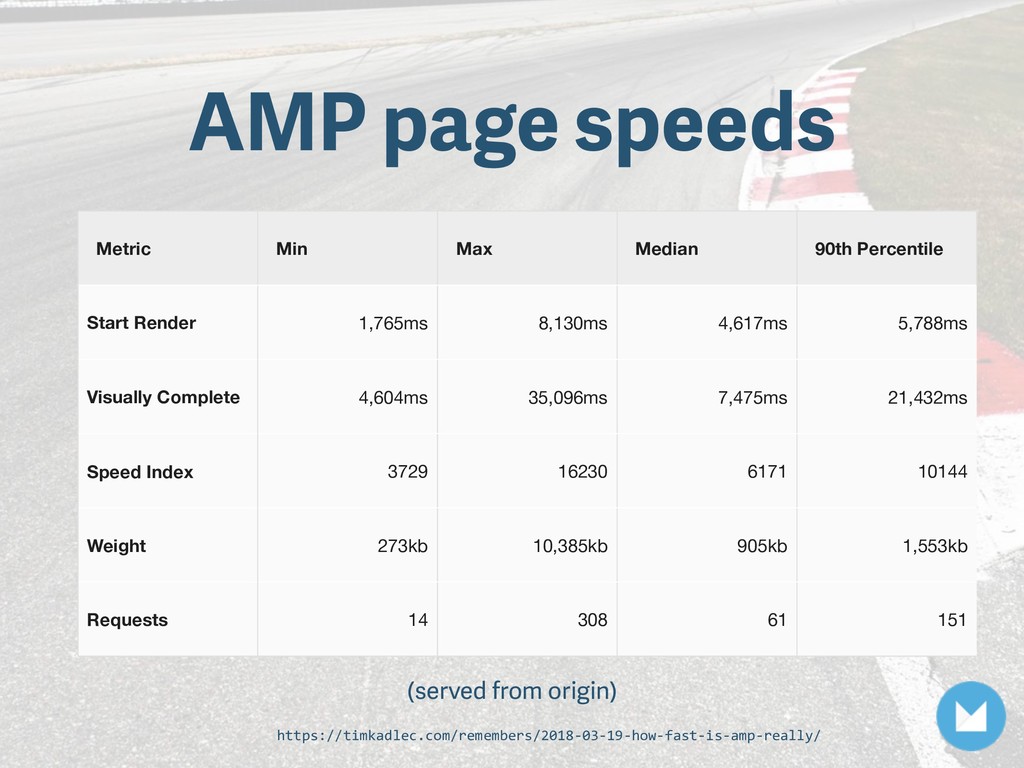
  27. AMP page speeds https://timkadlec.com/remembers/2018-03-19-how-fast-is-amp-really/ Metric Min Max Median 90th Percentile

    Start Render 1,765ms 8,130ms 4,617ms 5,788ms Visually Complete 4,604ms 35,096ms 7,475ms 21,432ms Speed Index 3729 16230 6171 10144 Weight 273kb 10,385kb 905kb 1,553kb Requests 14 308 61 151 (served from origin)
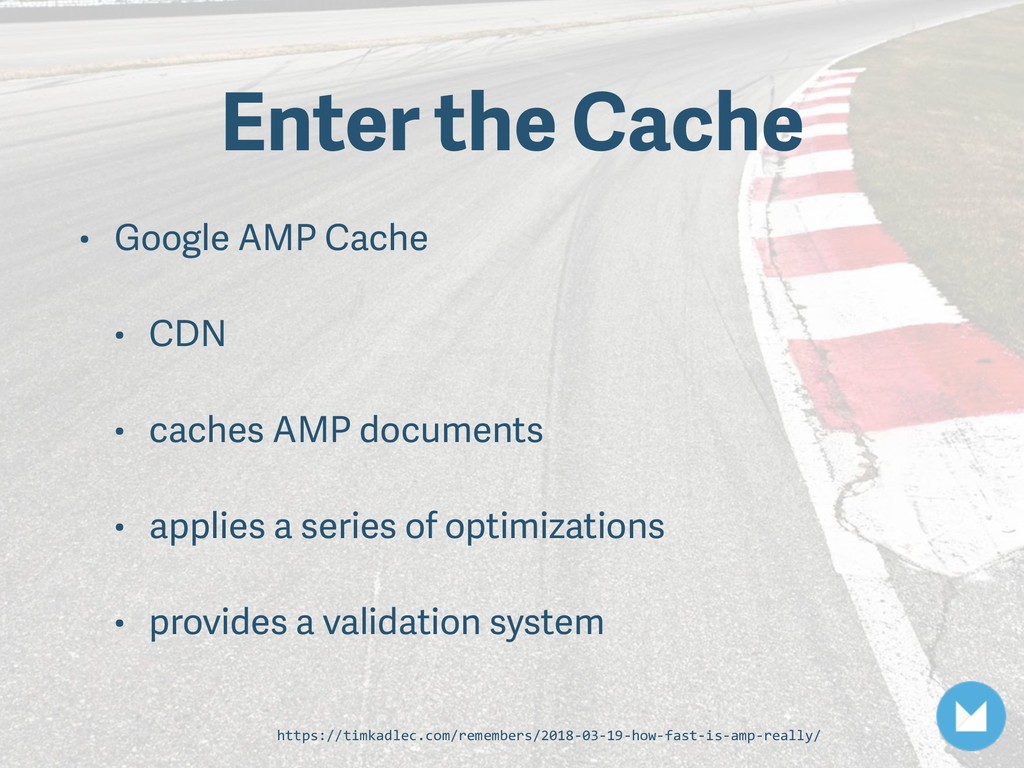
  28. Enter the Cache https://timkadlec.com/remembers/2018-03-19-how-fast-is-amp-really/ • Google AMP Cache • CDN

    • caches AMP documents • applies a series of optimizations • provides a validation system
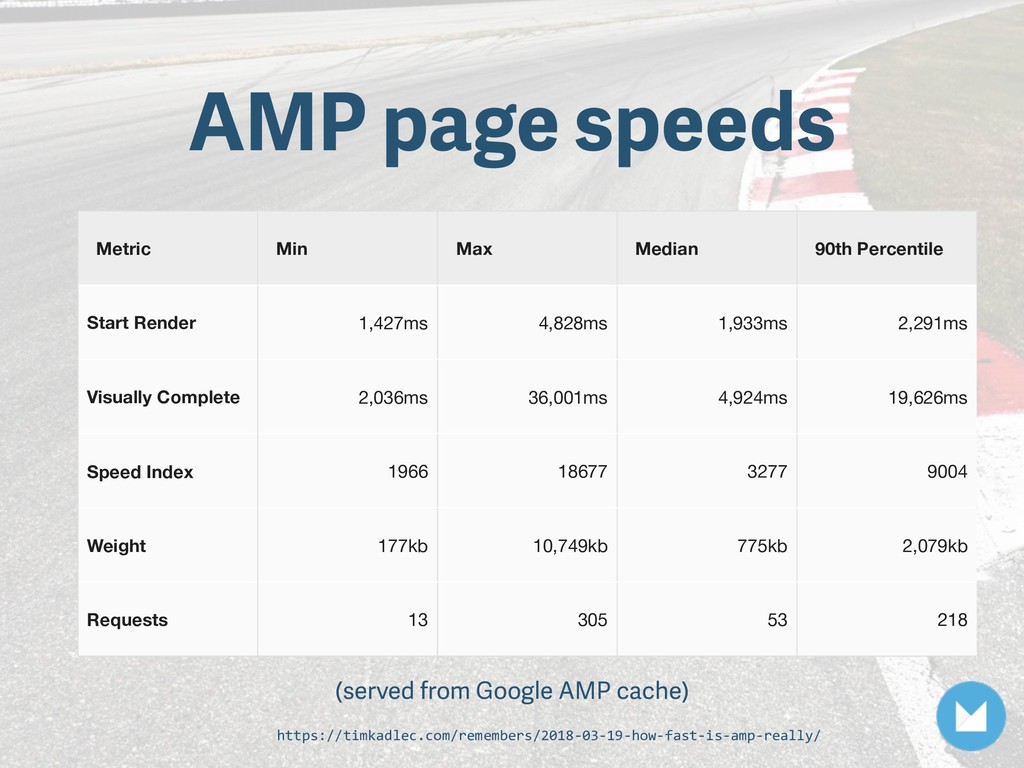
  29. AMP page speeds https://timkadlec.com/remembers/2018-03-19-how-fast-is-amp-really/ Metric Min Max Median 90th Percentile

    Start Render 1,427ms 4,828ms 1,933ms 2,291ms Visually Complete 2,036ms 36,001ms 4,924ms 19,626ms Speed Index 1966 18677 3277 9004 Weight 177kb 10,749kb 775kb 2,079kb Requests 13 305 53 218 (served from Google AMP cache)
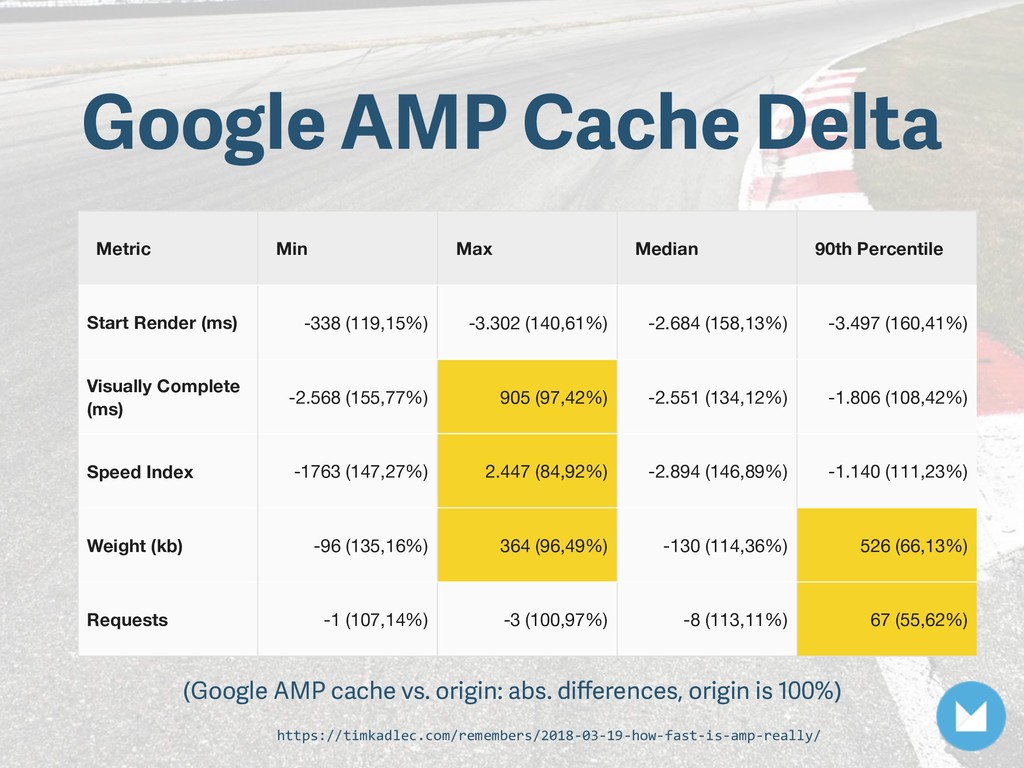
  30. Google AMP Cache Delta https://timkadlec.com/remembers/2018-03-19-how-fast-is-amp-really/ Metric Min Max Median 90th

    Percentile Start Render (ms) -338 (119,15%) -3.302 (140,61%) -2.684 (158,13%) -3.497 (160,41%) Visually Complete (ms) -2.568 (155,77%) 905 (97,42%) -2.551 (134,12%) -1.806 (108,42%) Speed Index -1763 (147,27%) 2.447 (84,92%) -2.894 (146,89%) -1.140 (111,23%) Weight (kb) -96 (135,16%) 364 (96,49%) -130 (114,36%) 526 (66,13%) Requests -1 (107,14%) -3 (100,97%) -8 (113,11%) 67 (55,62%) (Google AMP cache vs. origin: abs. differences, origin is 100%)
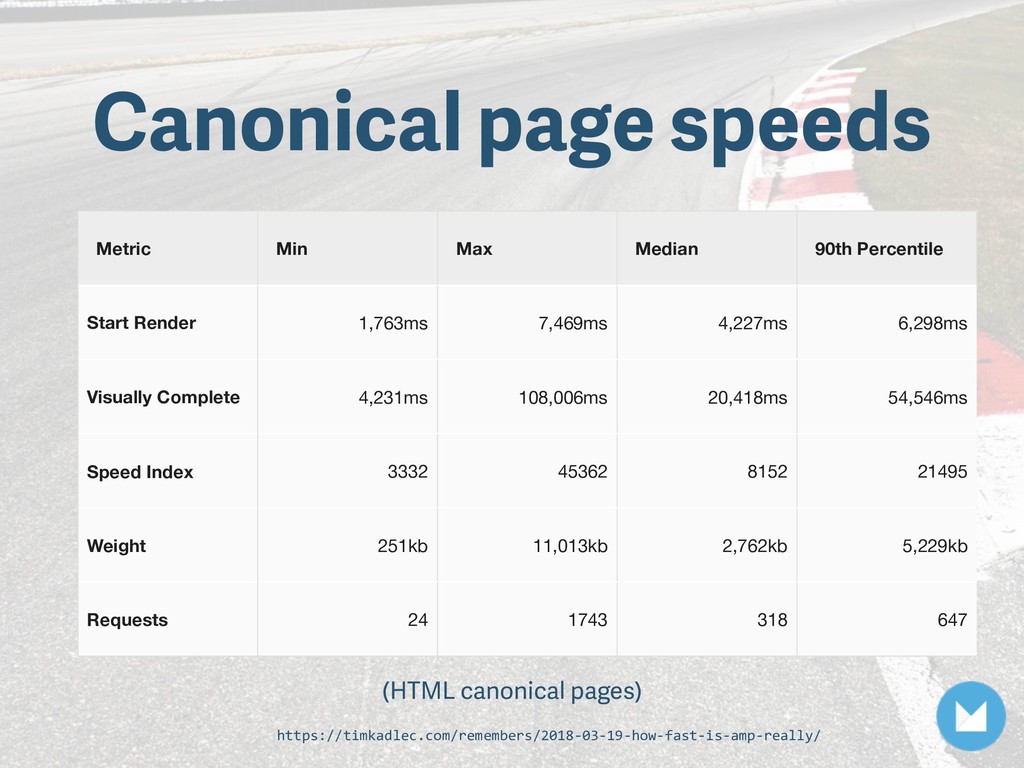
  31. Canonical page speeds https://timkadlec.com/remembers/2018-03-19-how-fast-is-amp-really/ Metric Min Max Median 90th Percentile

    Start Render 1,763ms 7,469ms 4,227ms 6,298ms Visually Complete 4,231ms 108,006ms 20,418ms 54,546ms Speed Index 3332 45362 8152 21495 Weight 251kb 11,013kb 2,762kb 5,229kb Requests 24 1743 318 647 (HTML canonical pages)
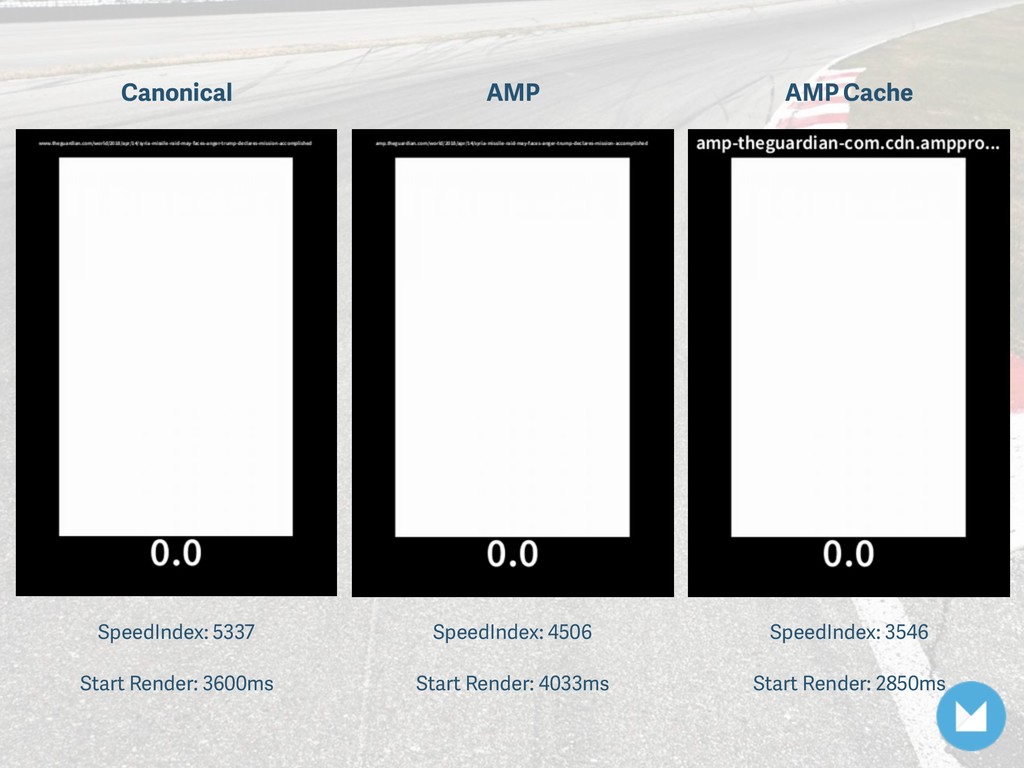
  32. SpeedIndex: 5337 SpeedIndex: 4506 SpeedIndex: 3546 Start Render: 3600ms Start

    Render: 4033ms Start Render: 2850ms AMP Canonical AMP Cache
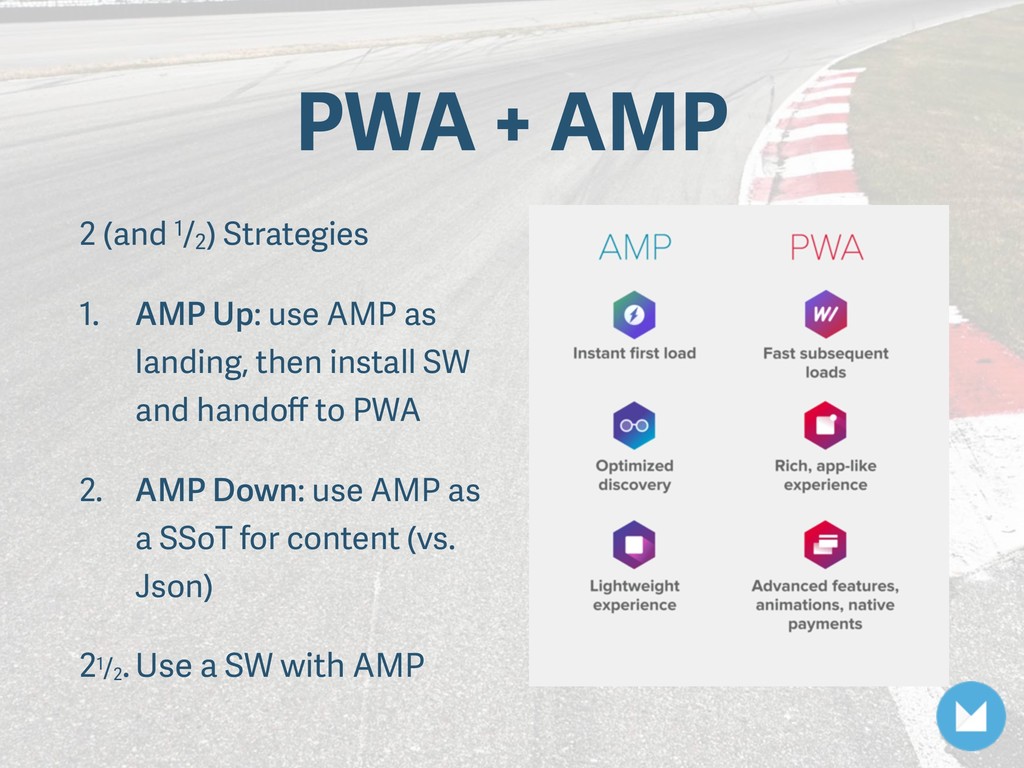
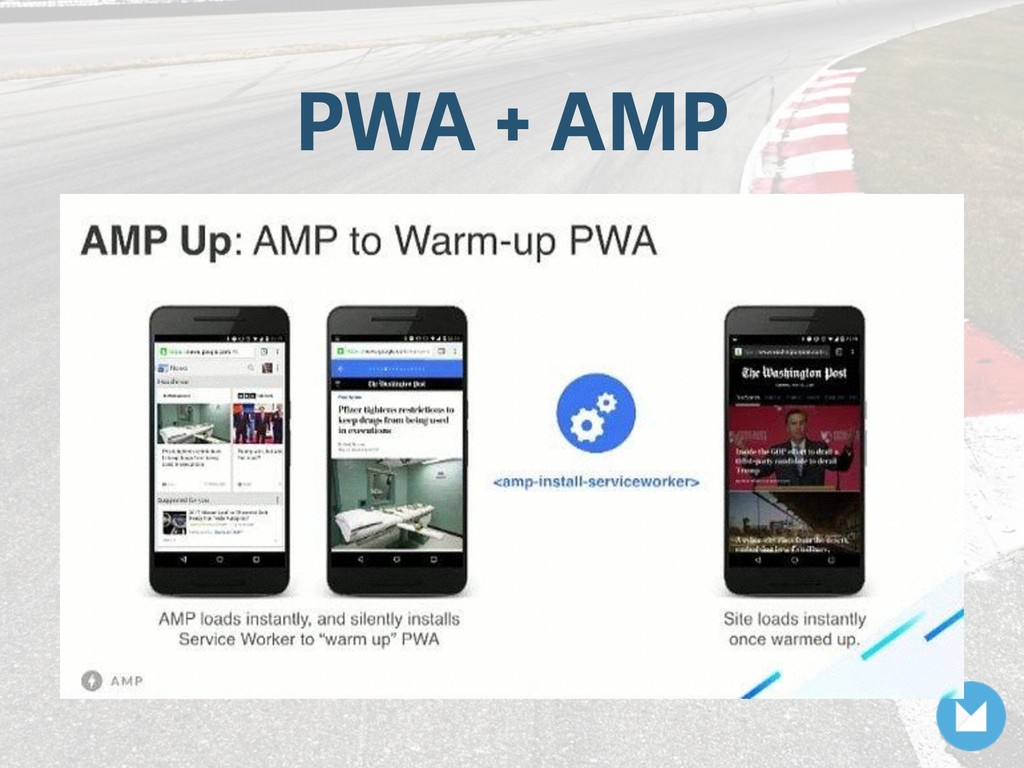
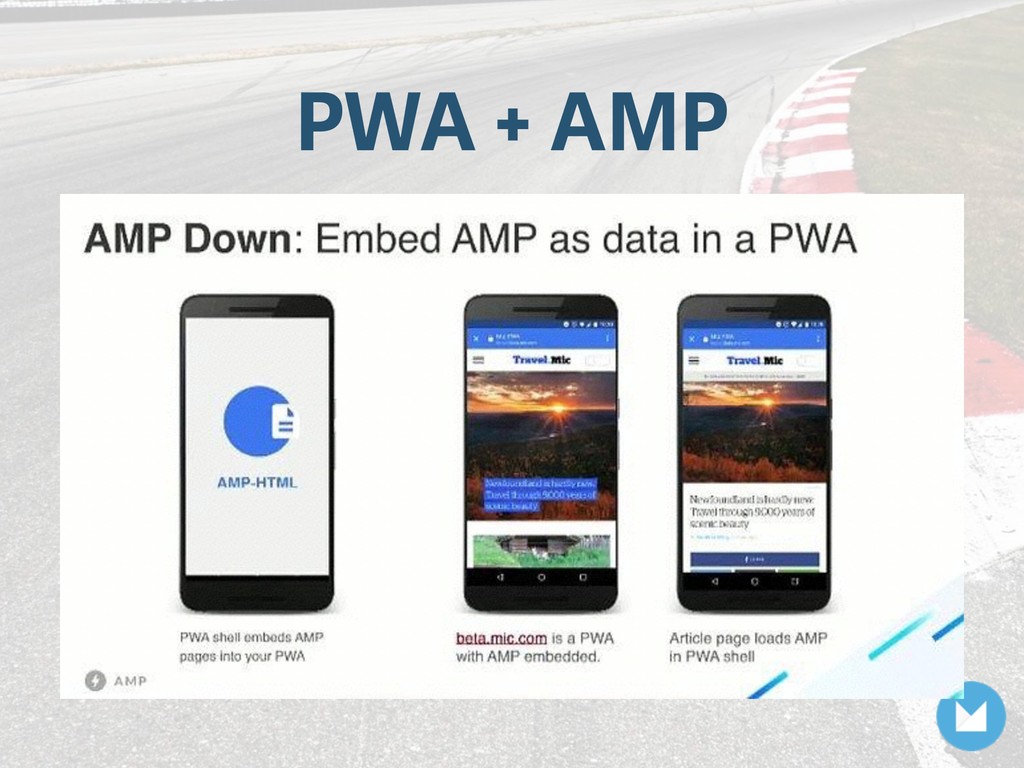
  33. PWA + AMP 2 (and 1/2 ) Strategies 1. AMP

    Up: use AMP as landing, then install SW and handoff to PWA 2. AMP Down: use AMP as a SSoT for content (vs. Json) 21/2 . Use a SW with AMP
  34. AMP future • Standardization: Feature Policy, Web Packaging, iframe promotion,

    Performance Timeline, and Paint Timing. • Web Packaging format for providing privacy preserving pre- loading, no 3rd party caches • Custom JavaScript (Web Workers + Virtual DOM) • Origin URLs • See: https://github.com/ampproject/amphtml/blob/ master/contributing/web-standards-related-to-amp.md
  35. AMP Resources • http://ampbyexample.com • http://ampproject.org • The AMP Channel

    (YouTube) • Malte Ubl @cramforce • Paul Baukaus @pbakaus • https://amphtml.wordpress.com