Upgrade to Pro — share decks privately, control downloads, hide ads and more …

Kotlin & Android

Sponsored · SiteGround - Reliable hosting with speed, security, and support you can count on. →

Kotlin & Android

Presentation for my speak at Mobile Sileasia meetup.

Avatar for Paweł Hajduk

Paweł Hajduk

August 19, 2015

Other Decks in Programming

Transcript

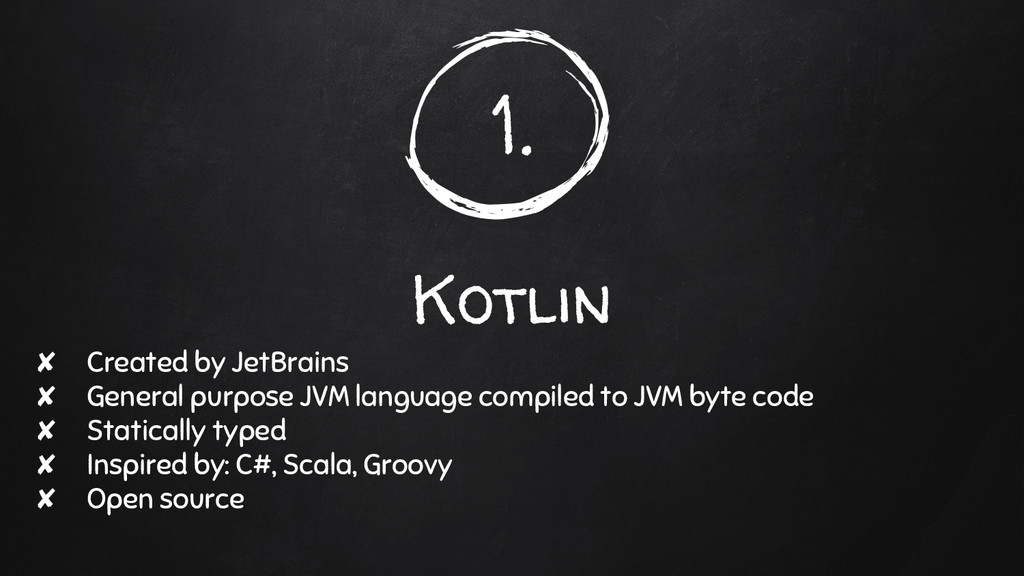
  1. 1. Kotlin ✘ Created by JetBrains ✘ General purpose JVM

    language compiled to JVM byte code ✘ Statically typed ✘ Inspired by: C#, Scala, Groovy ✘ Open source
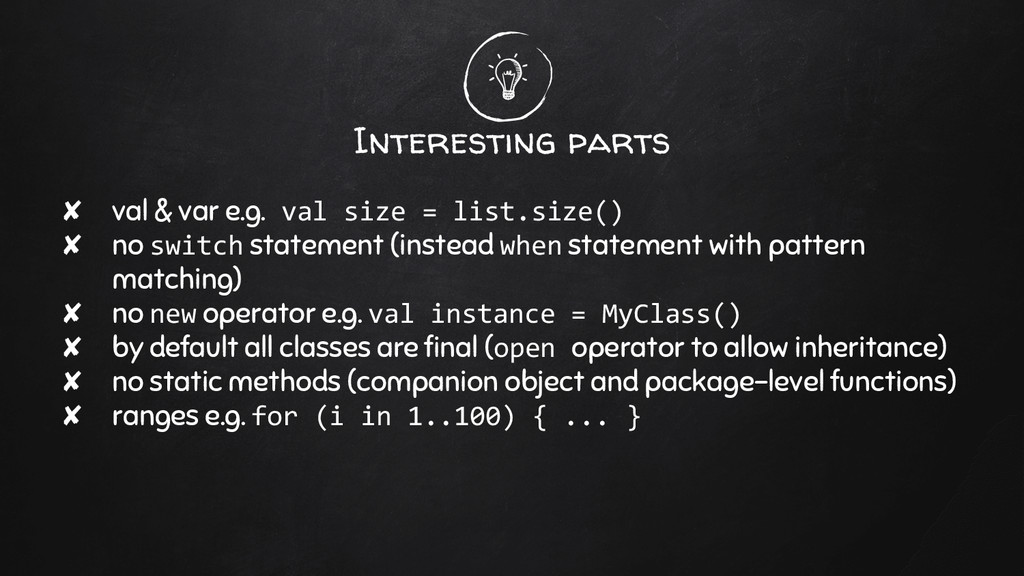
  2. Interesting parts ✘ val & var e.g. val size =

    list.size() ✘ no switch statement (instead when statement with pattern matching) ✘ no new operator e.g. val instance = MyClass() ✘ by default all classes are final (open operator to allow inheritance) ✘ no static methods (companion object and package-level functions) ✘ ranges e.g. for (i in 1..100) { ... }
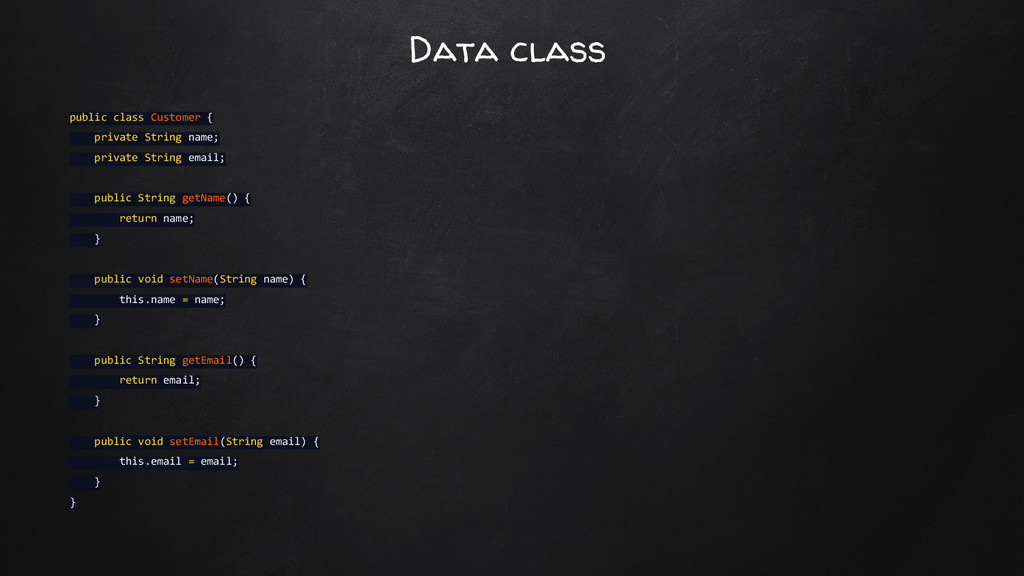
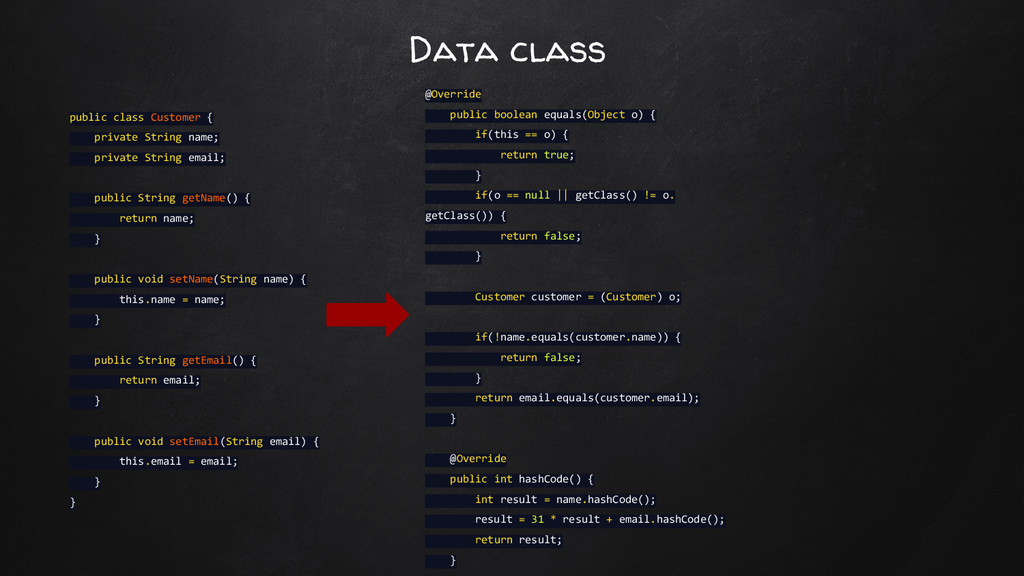
  3. Data class public class Customer { private String name; private

    String email; public String getName() { return name; } public void setName(String name) { this.name = name; } public String getEmail() { return email; } public void setEmail(String email) { this.email = email; } }
  4. Data class public class Customer { private String name; private

    String email; public String getName() { return name; } public void setName(String name) { this.name = name; } public String getEmail() { return email; } public void setEmail(String email) { this.email = email; } } @Override public boolean equals(Object o) { if(this == o) { return true; } if(o == null || getClass() != o. getClass()) { return false; } Customer customer = (Customer) o; if(!name.equals(customer.name)) { return false; } return email.equals(customer.email); } @Override public int hashCode() { int result = name.hashCode(); result = 31 * result + email.hashCode(); return result; }
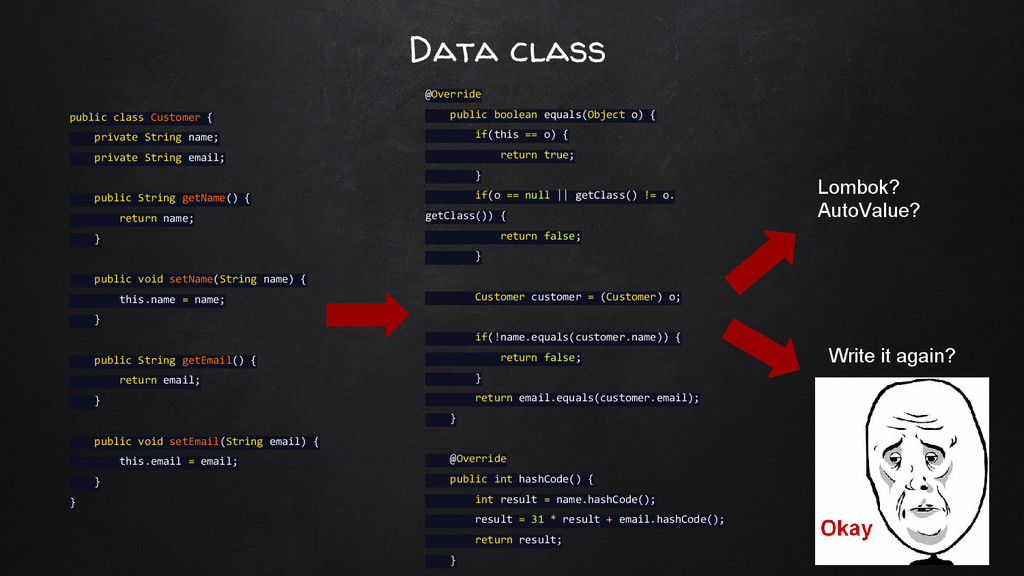
  5. Data class public class Customer { private String name; private

    String email; public String getName() { return name; } public void setName(String name) { this.name = name; } public String getEmail() { return email; } public void setEmail(String email) { this.email = email; } } @Override public boolean equals(Object o) { if(this == o) { return true; } if(o == null || getClass() != o. getClass()) { return false; } Customer customer = (Customer) o; if(!name.equals(customer.name)) { return false; } return email.equals(customer.email); } @Override public int hashCode() { int result = name.hashCode(); result = 31 * result + email.hashCode(); return result; } Lombok? AutoValue? Write it again?
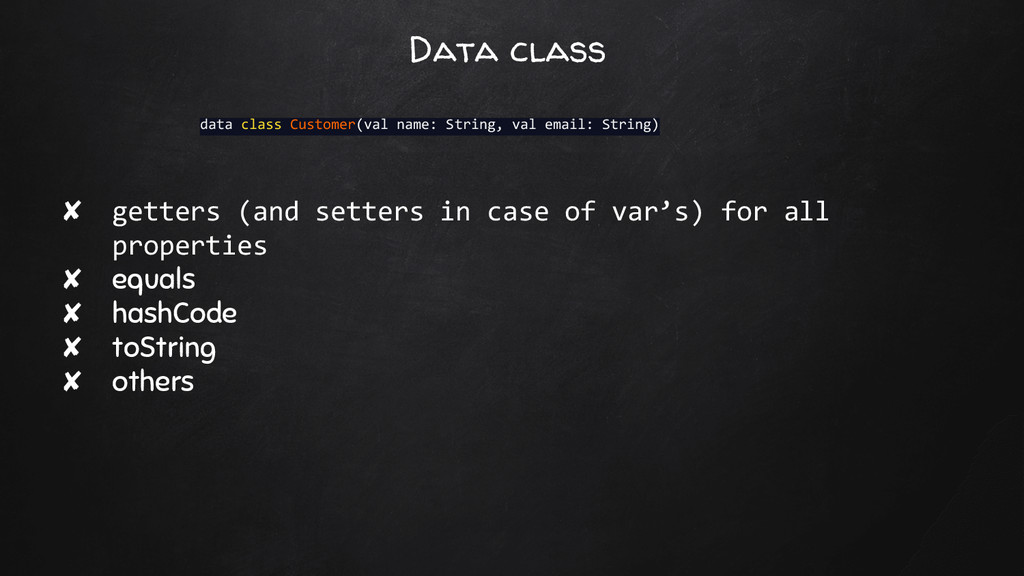
  6. Data class data class Customer(val name: String, val email: String)

    ✘ getters (and setters in case of var’s) for all properties ✘ equals ✘ hashCode ✘ toString ✘ others
  7. “ I call it my billion-dollar mistake. It was the

    invention of the null reference in 1965. Sir Charles Antony Richard Hoare
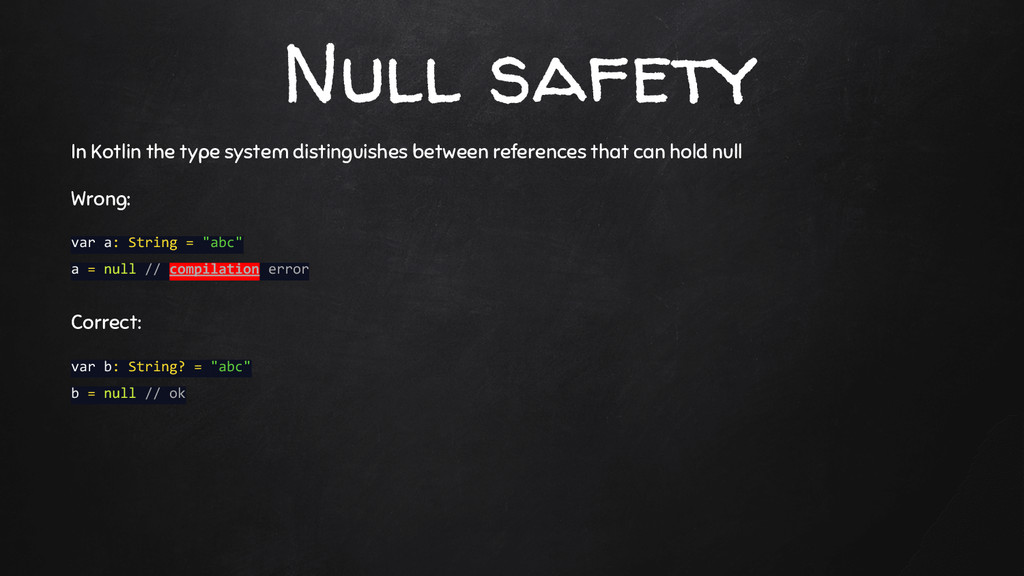
  8. Null safety In Kotlin the type system distinguishes between references

    that can hold null Wrong: var a: String = "abc" a = null // compilation error Correct: var b: String? = "abc" b = null // ok
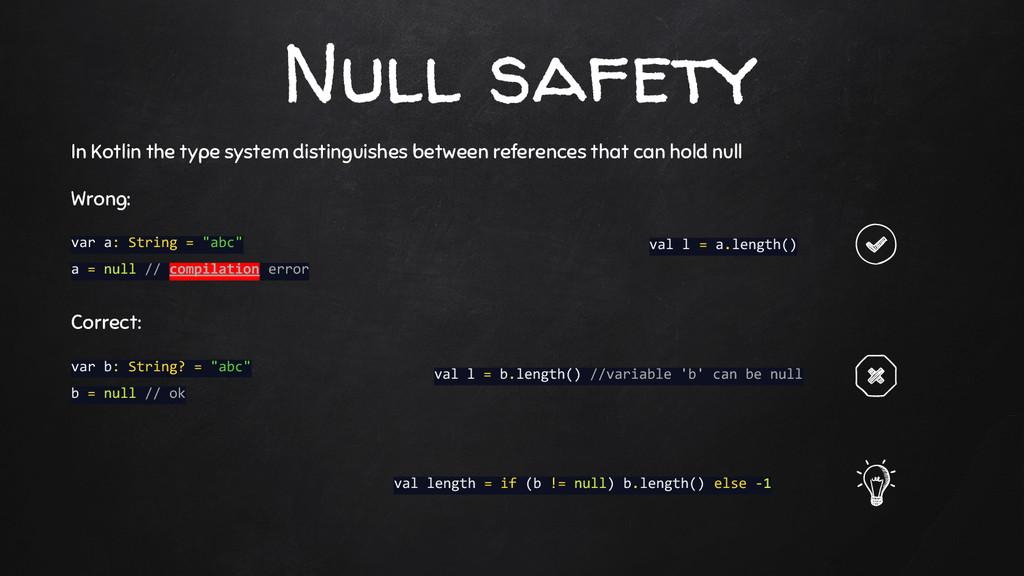
  9. Null safety In Kotlin the type system distinguishes between references

    that can hold null Wrong: var a: String = "abc" a = null // compilation error Correct: var b: String? = "abc" b = null // ok val length = if (b != null) b.length() else -1 val l = a.length() val l = b.length() //variable 'b' can be null
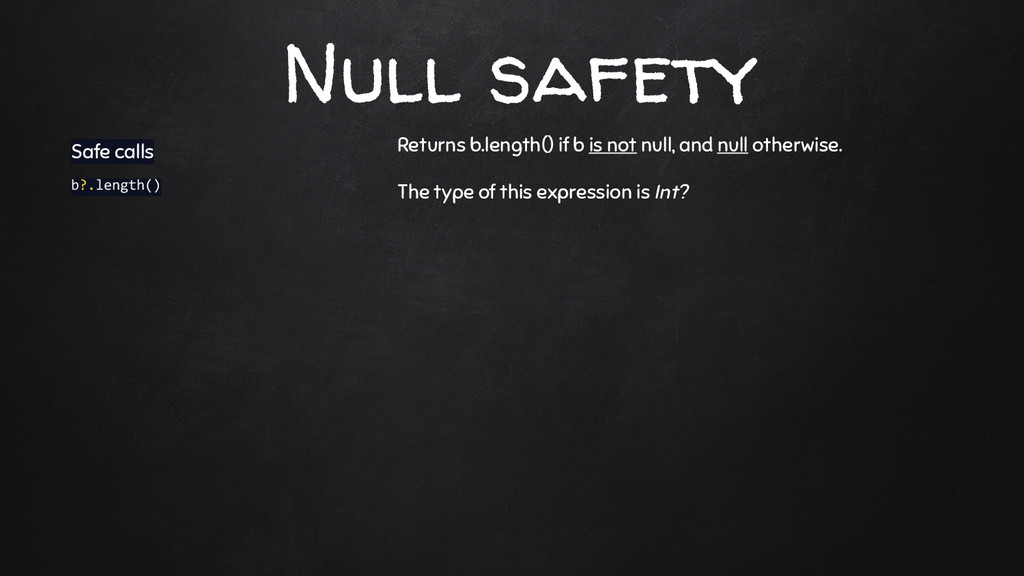
  10. Null safety Safe calls b?.length() Returns b.length() if b is

    not null, and null otherwise. The type of this expression is Int?
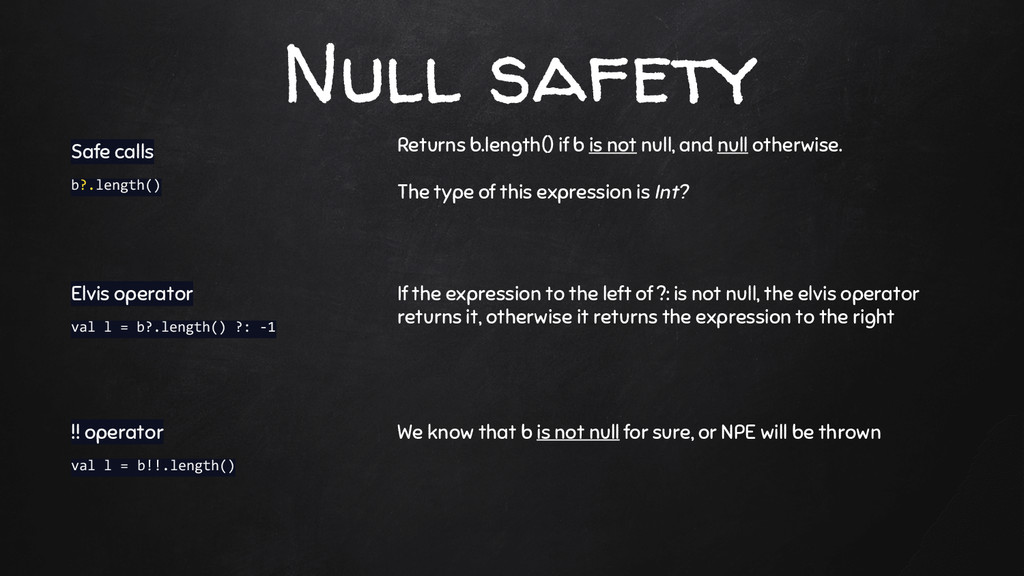
  11. Null safety Safe calls b?.length() Returns b.length() if b is

    not null, and null otherwise. The type of this expression is Int? Elvis operator val l = b?.length() ?: -1 If the expression to the left of ?: is not null, the elvis operator returns it, otherwise it returns the expression to the right !! operator val l = b!!.length() We know that b is not null for sure, or NPE will be thrown
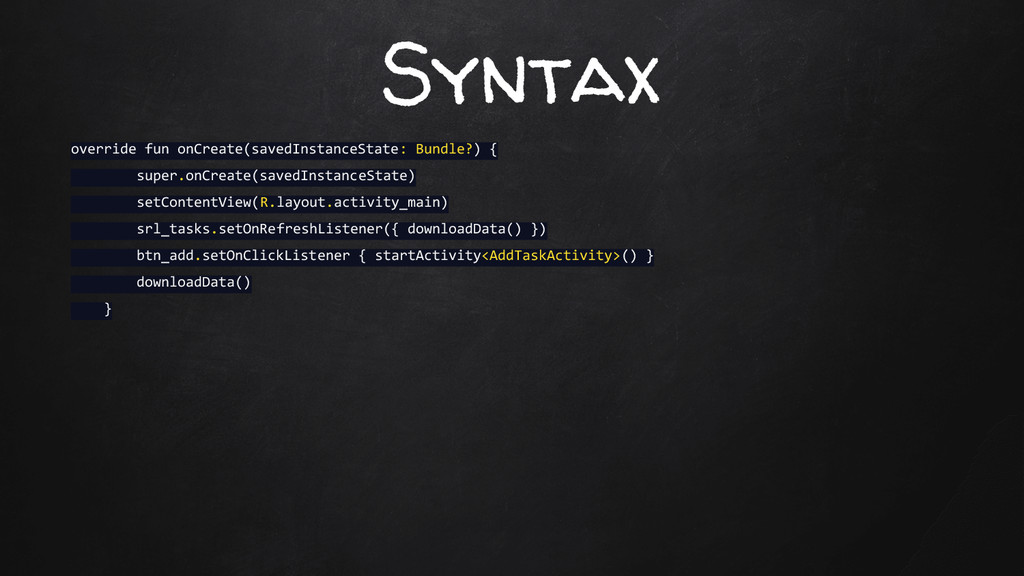
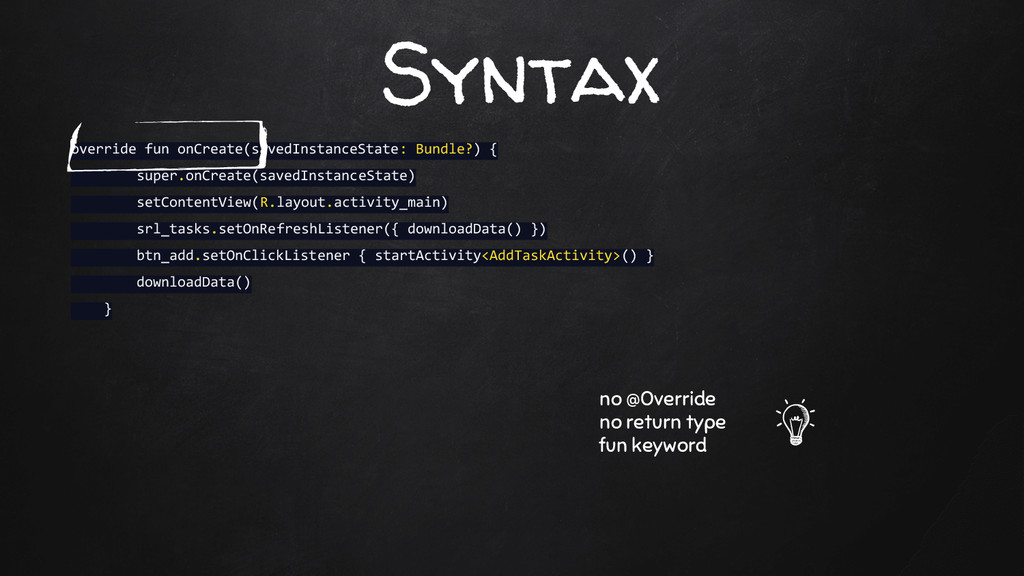
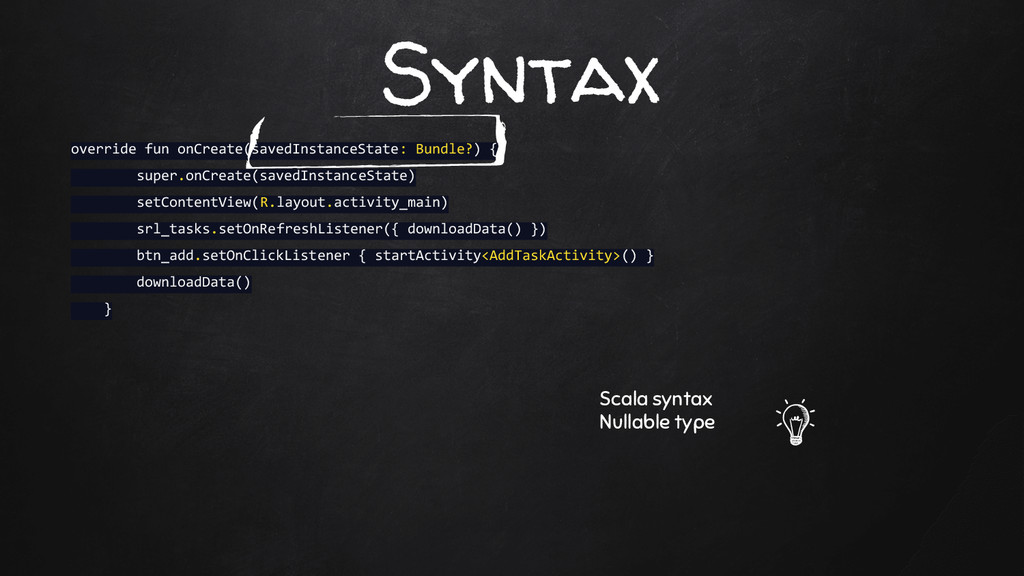
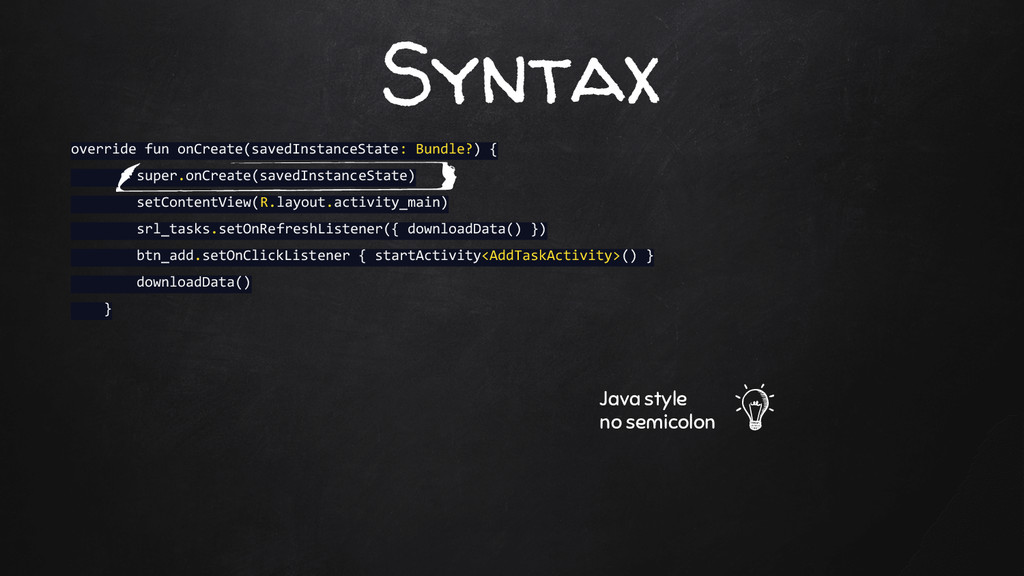
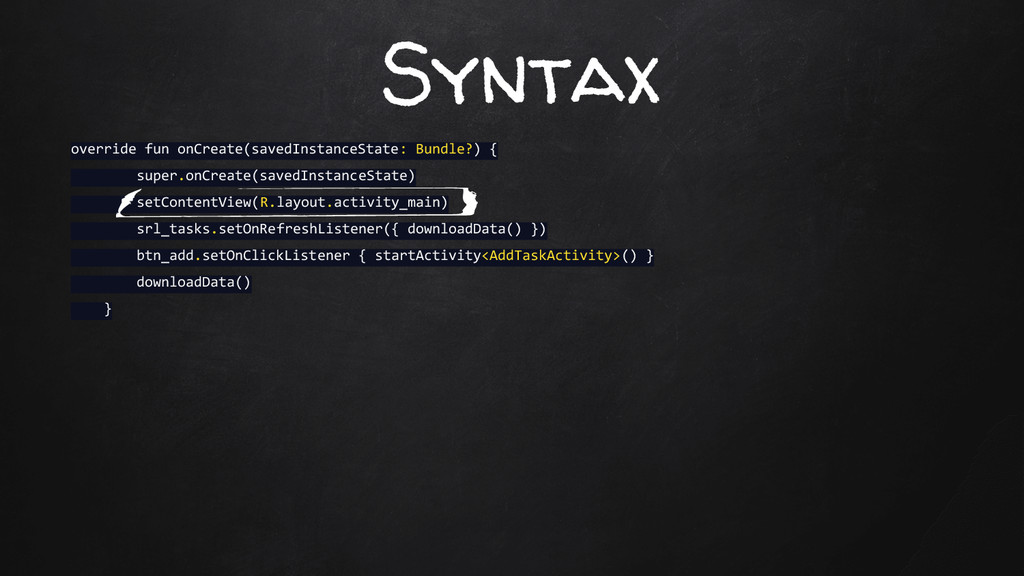
  12. Syntax override fun onCreate(savedInstanceState: Bundle?) { super.onCreate(savedInstanceState) setContentView(R.layout.activity_main) srl_tasks.setOnRefreshListener({ downloadData()

    }) btn_add.setOnClickListener { startActivity<AddTaskActivity>() } downloadData() } no @Override no return type fun keyword
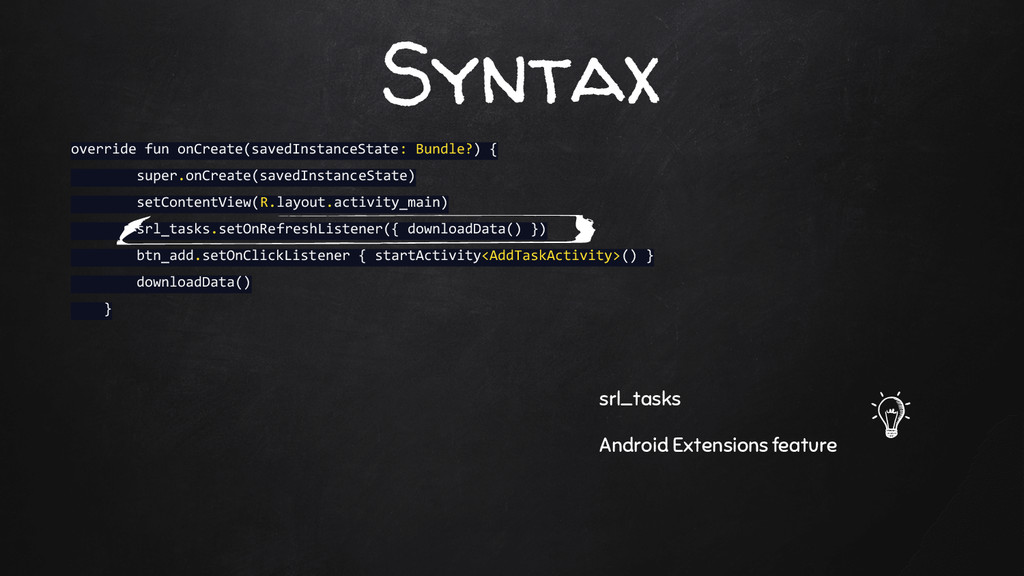
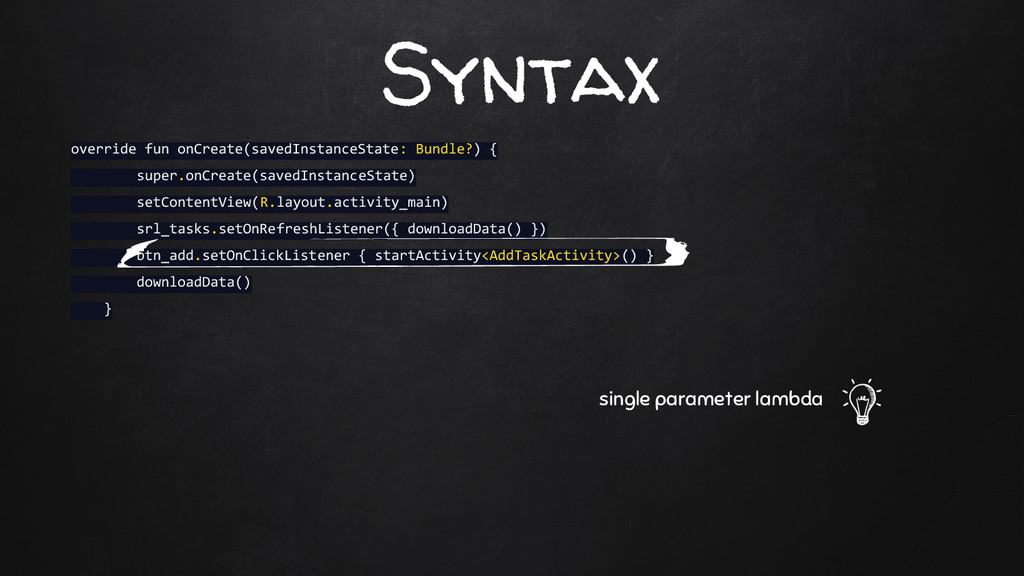
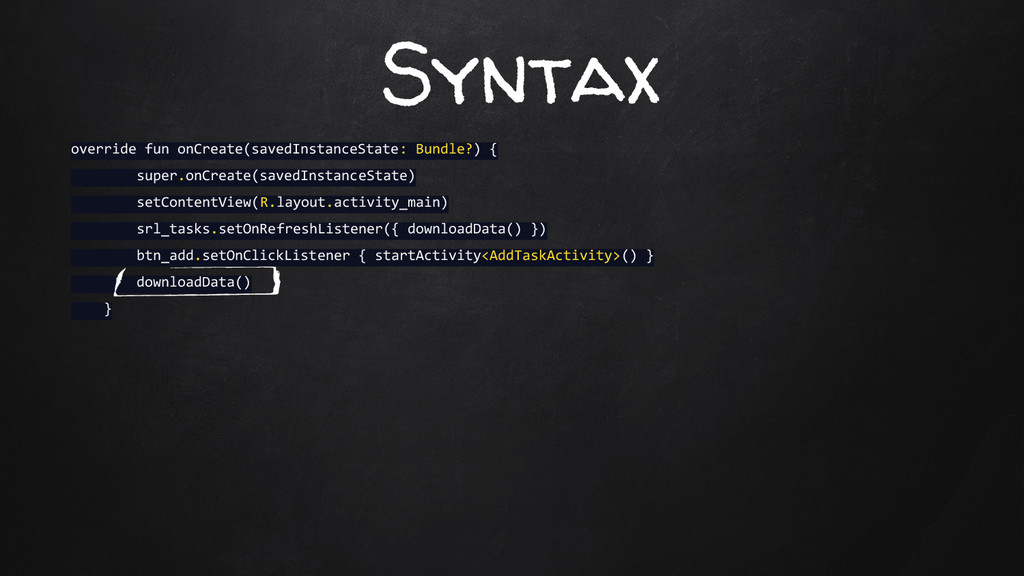
  13. Syntax override fun onCreate(savedInstanceState: Bundle?) { super.onCreate(savedInstanceState) setContentView(R.layout.activity_main) srl_tasks.setOnRefreshListener({ downloadData()

    }) btn_add.setOnClickListener { startActivity<AddTaskActivity>() } downloadData() } srl_tasks Android Extensions feature
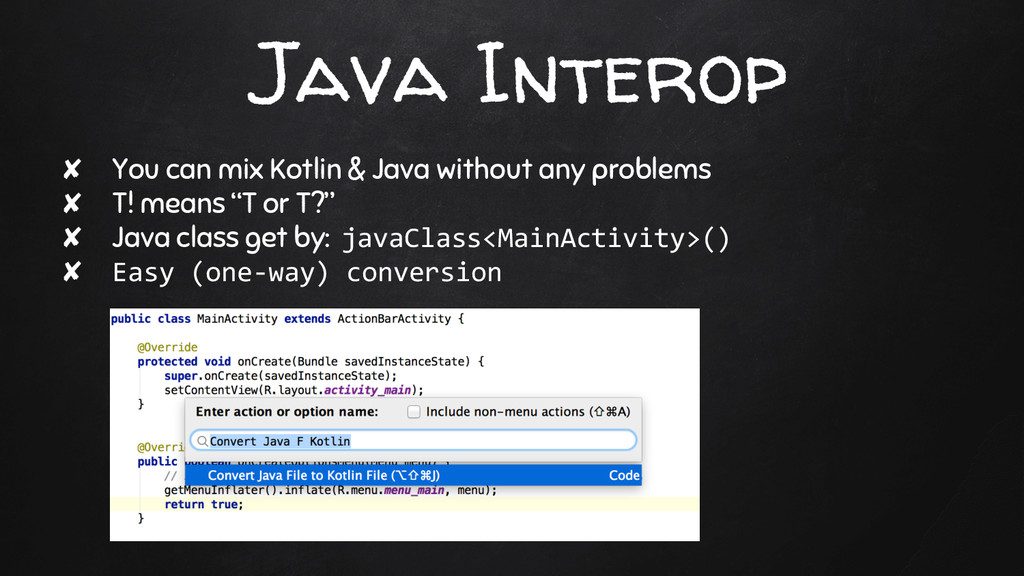
  14. ✘ You can mix Kotlin & Java without any problems

    ✘ T! means “T or T?” ✘ Java class get by: javaClass<MainActivity>() ✘ Easy (one-way) conversion Java Interop
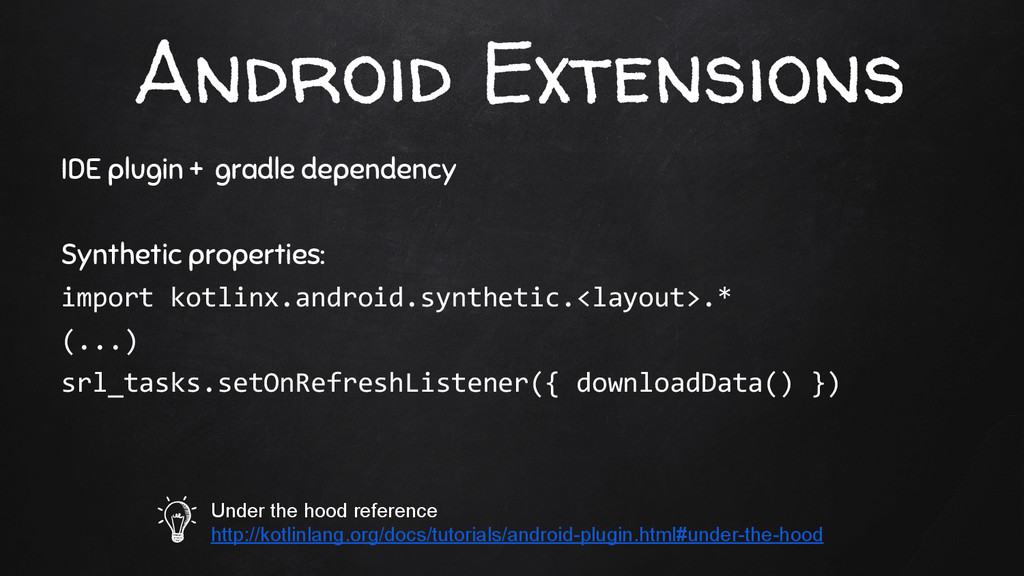
  15. IDE plugin + gradle dependency Synthetic properties: import kotlinx.android.synthetic.<layout>.* (...)

    srl_tasks.setOnRefreshListener({ downloadData() }) Android Extensions Under the hood reference http://kotlinlang.org/docs/tutorials/android-plugin.html#under-the-hood
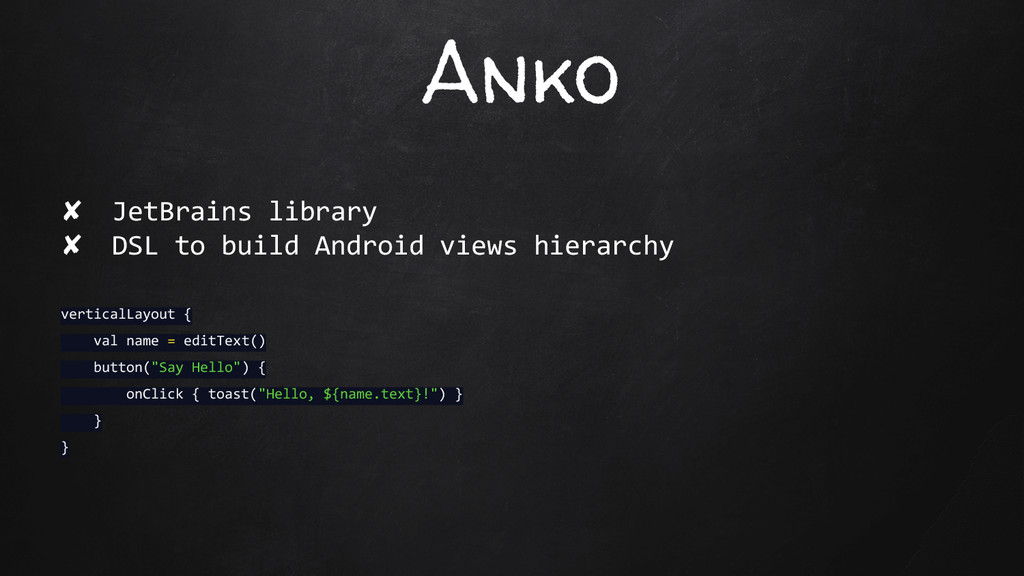
  16. Anko ✘ JetBrains library ✘ DSL to build Android views

    hierarchy verticalLayout { val name = editText() button("Say Hello") { onClick { toast("Hello, ${name.text}!") } } }
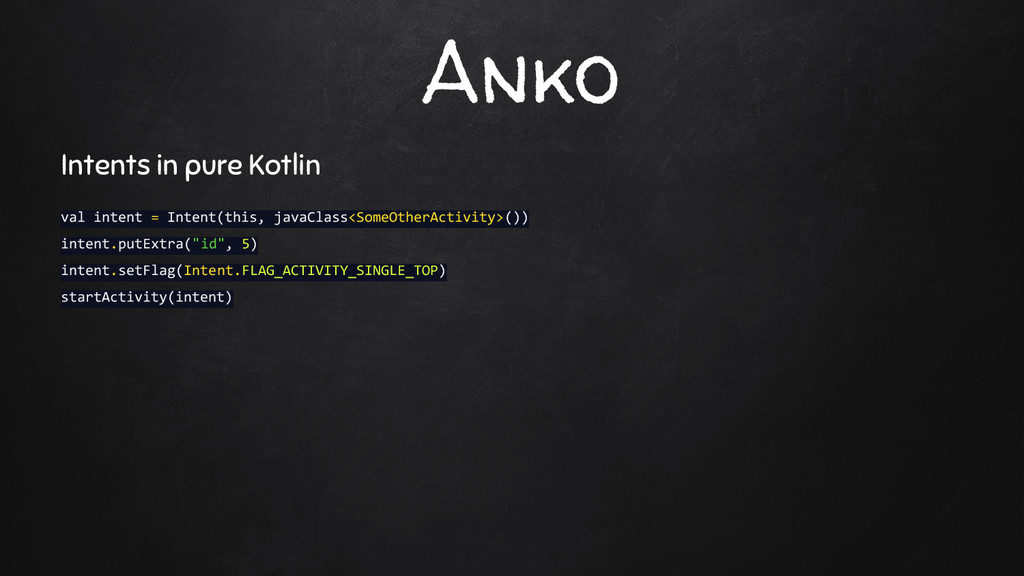
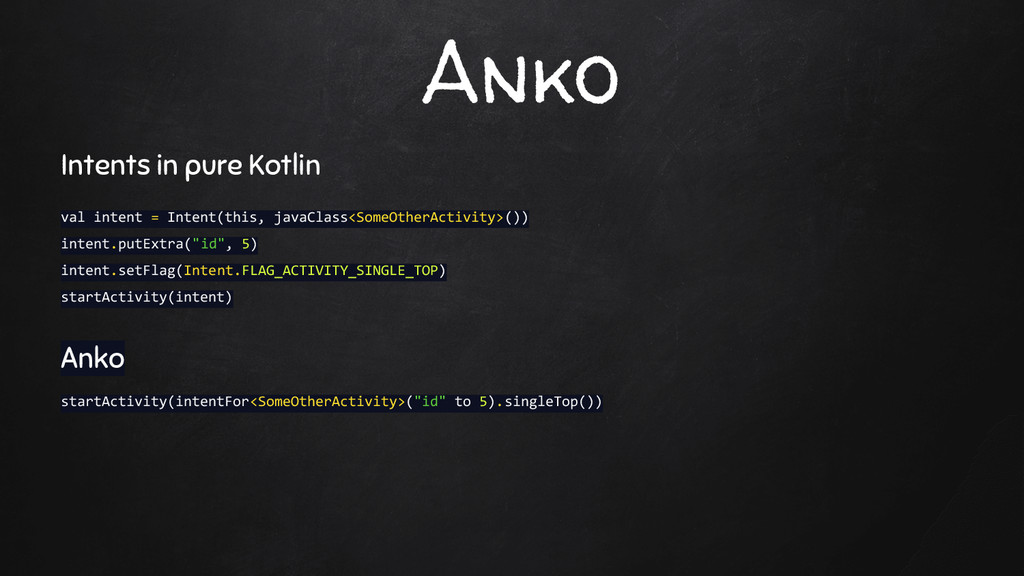
  17. Anko Intents in pure Kotlin val intent = Intent(this, javaClass<SomeOtherActivity>())

    intent.putExtra("id", 5) intent.setFlag(Intent.FLAG_ACTIVITY_SINGLE_TOP) startActivity(intent)
  18. Anko Intents in pure Kotlin val intent = Intent(this, javaClass<SomeOtherActivity>())

    intent.putExtra("id", 5) intent.setFlag(Intent.FLAG_ACTIVITY_SINGLE_TOP) startActivity(intent) Anko startActivity(intentFor<SomeOtherActivity>("id" to 5).singleTop())
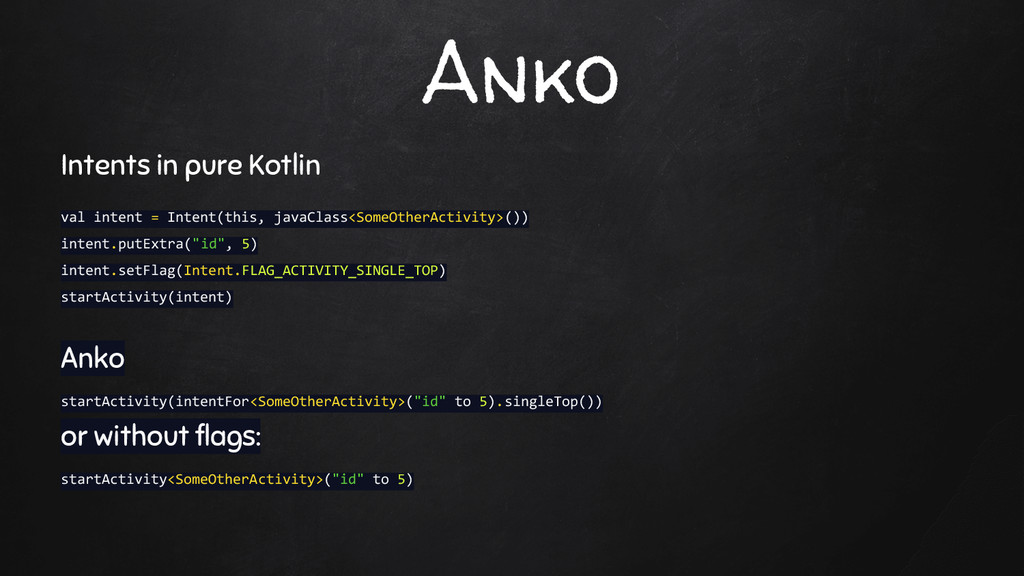
  19. Anko Intents in pure Kotlin val intent = Intent(this, javaClass<SomeOtherActivity>())

    intent.putExtra("id", 5) intent.setFlag(Intent.FLAG_ACTIVITY_SINGLE_TOP) startActivity(intent) Anko startActivity(intentFor<SomeOtherActivity>("id" to 5).singleTop()) or without flags: startActivity<SomeOtherActivity>("id" to 5)