Upgrade to Pro — share decks privately, control downloads, hide ads and more …

Go MeetUp

Sponsored · Your Podcast. Everywhere. Effortlessly. Share. Educate. Inspire. Entertain. You do you. We'll handle the rest. →
Avatar for Pedro J. Ortiz Pedro J. Ortiz
March 24, 2019
22

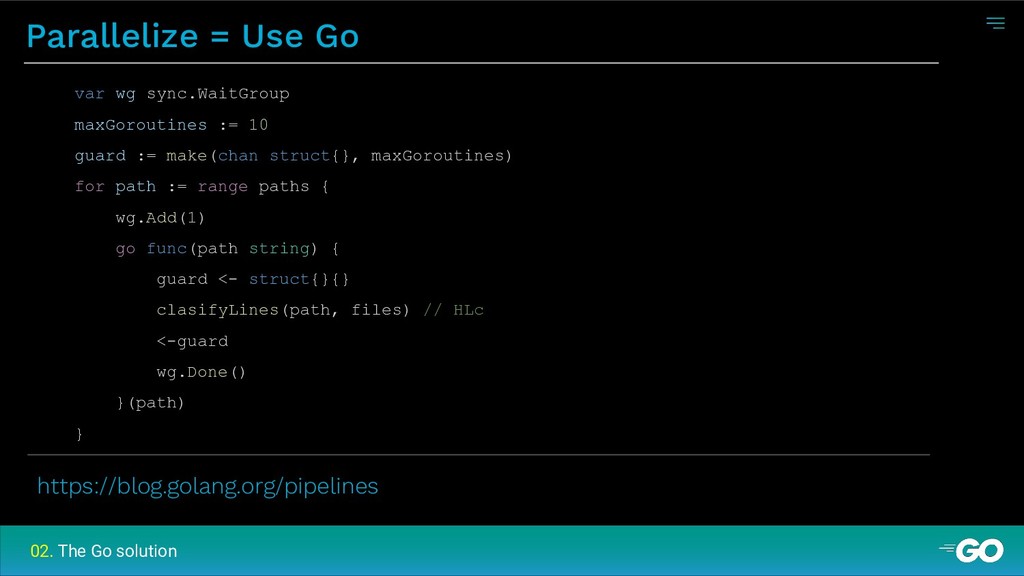
Go MeetUp

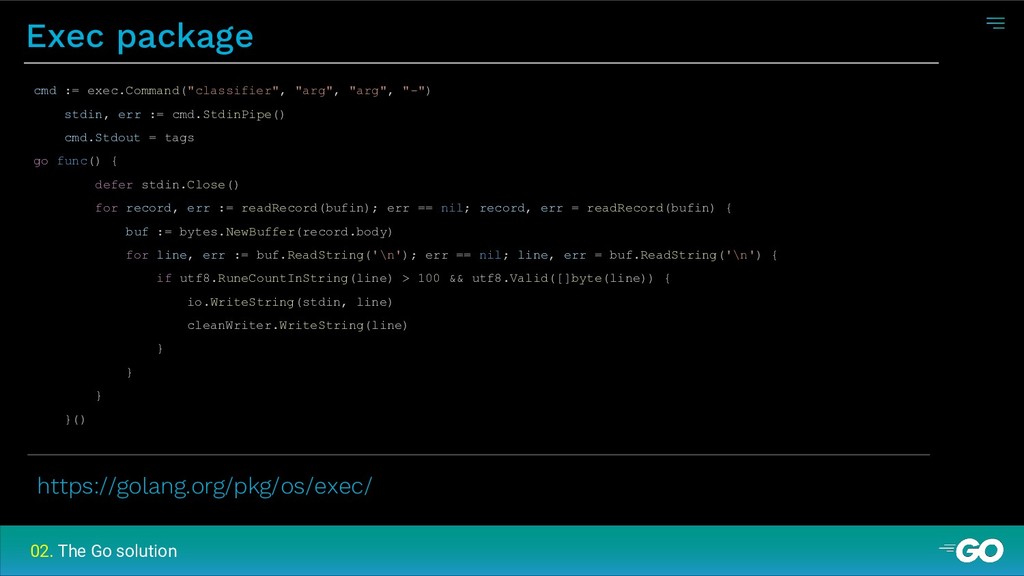
Avatar for Pedro J. Ortiz

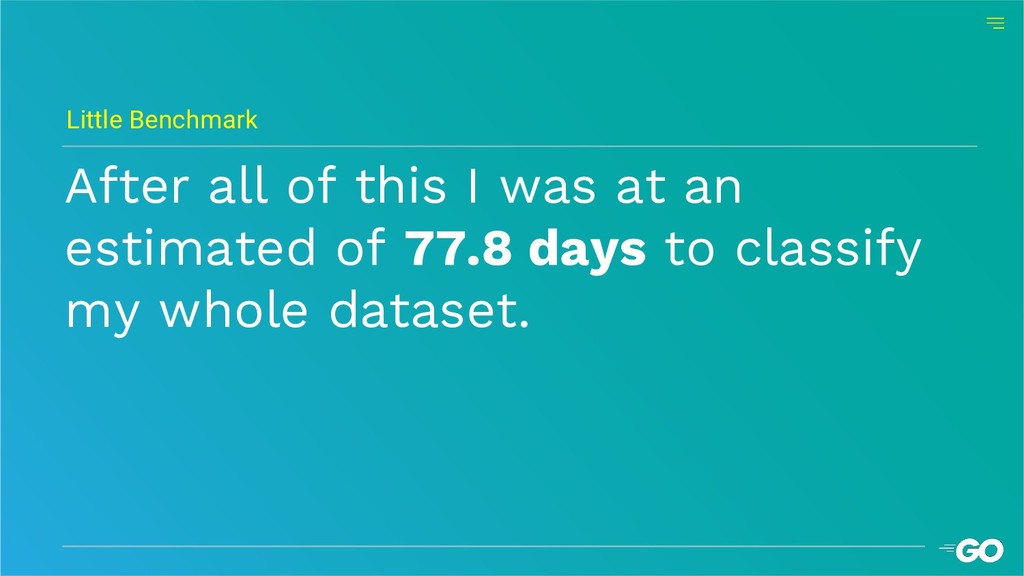
Pedro J. Ortiz

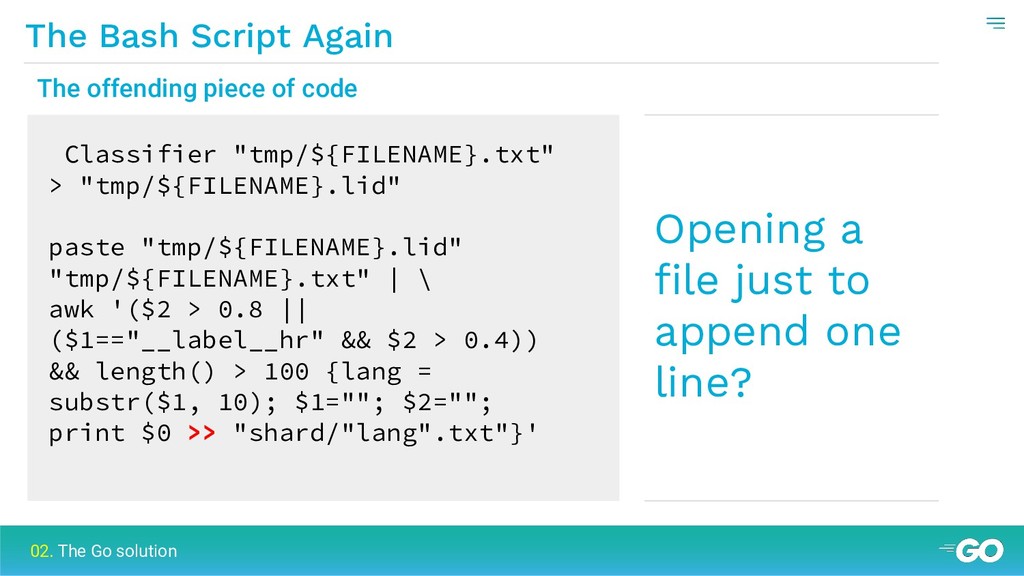
March 24, 2019

Transcript

  1. Reducing computation time by months by rewriting Bash scripts in

    Go Paris, France, MAR 24 2019 Pedro J. Ortiz Inria / Sorbonne Université Your handle
  2. Reducing computation time by months by copy-pasting OpenSource Go code

    from the internet. But honestly it should be called
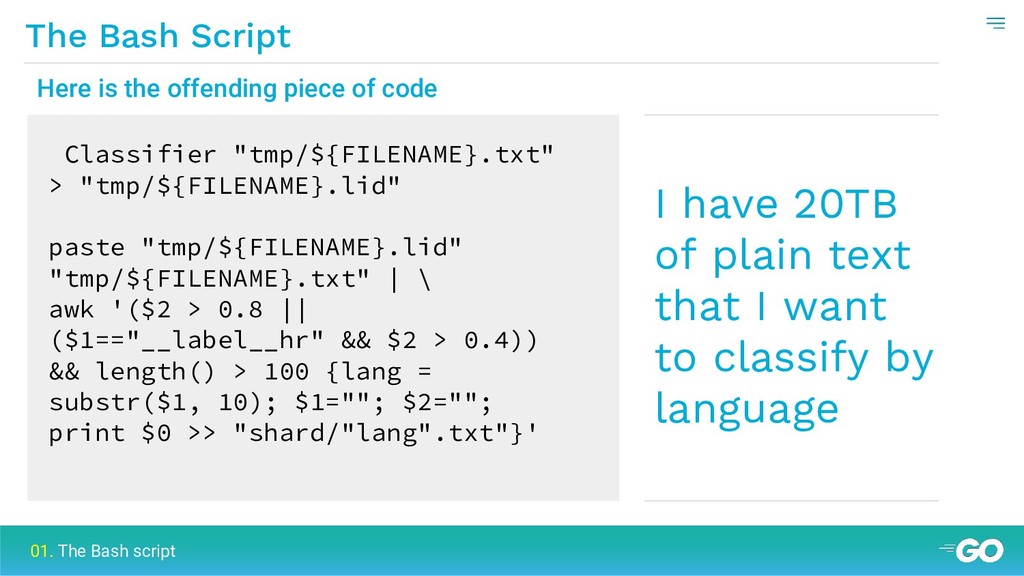
  3. The Bash Script 01. The Bash script Classifier "tmp/${FILENAME}.txt" >

    "tmp/${FILENAME}.lid" paste "tmp/${FILENAME}.lid" "tmp/${FILENAME}.txt" | \ awk '($2 > 0.8 || ($1=="__label__hr" && $2 > 0.4)) && length() > 100 {lang = substr($1, 10); $1=""; $2=""; print $0 >> "shard/"lang".txt"}' Here is the offending piece of code I have 20TB of plain text that I want to classify by language
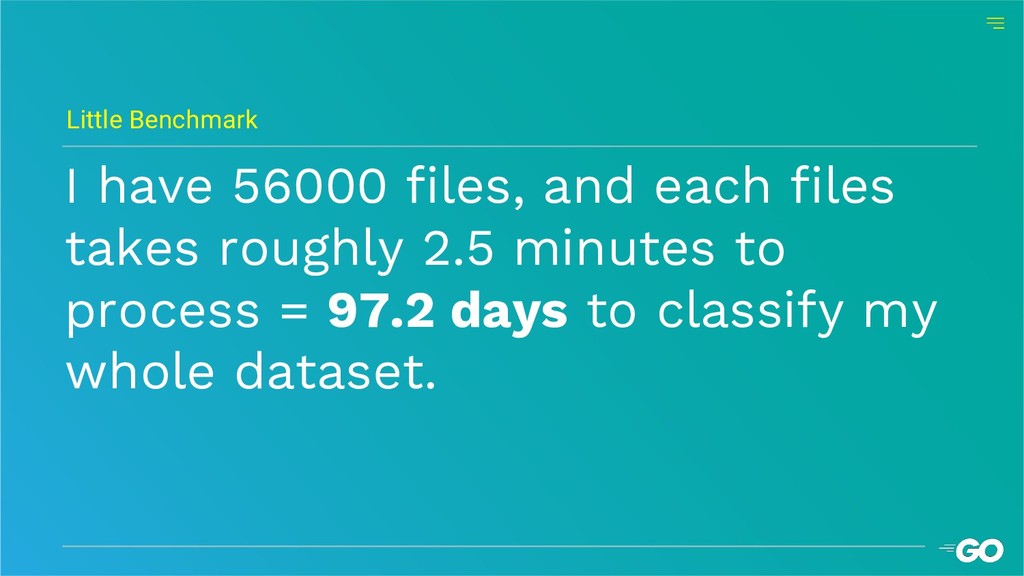
  4. I have 56000 files, and each files takes roughly 2.5

    minutes to process = 97.2 days to classify my whole dataset. Little Benchmark
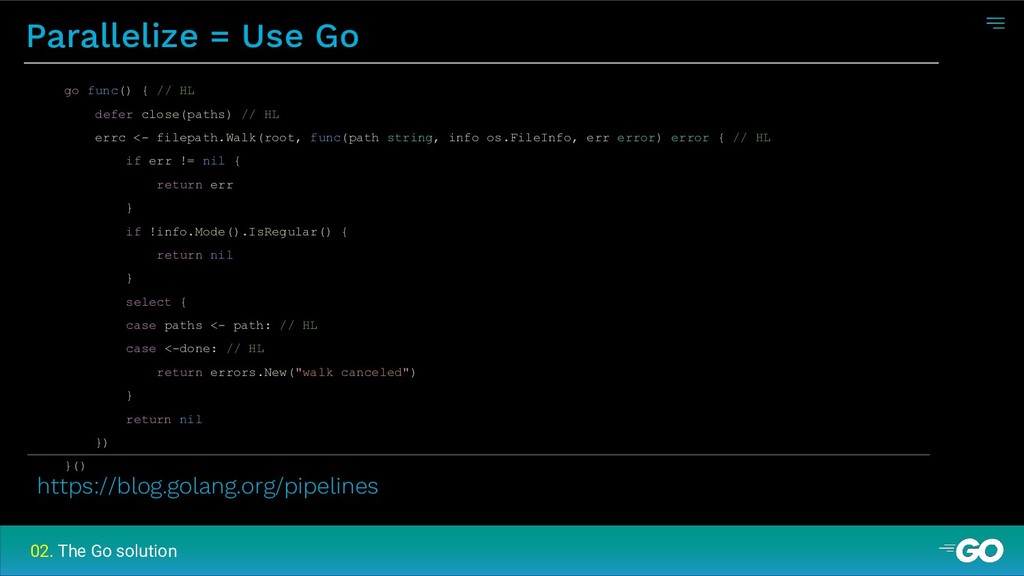
  5. Parallelize = Use Go 02. The Go solution go func()

    { // HL defer close(paths) // HL errc <- filepath.Walk(root, func(path string, info os.FileInfo, err error) error { // HL if err != nil { return err } if !info.Mode().IsRegular() { return nil } select { case paths <- path: // HL case <-done: // HL return errors.New("walk canceled") } return nil }) }() https://blog.golang.org/pipelines
  6. Parallelize = Use Go 02. The Go solution var wg

    sync.WaitGroup maxGoroutines := 10 guard := make(chan struct{}, maxGoroutines) for path := range paths { wg.Add(1) go func(path string) { guard <- struct{}{} clasifyLines(path, files) // HLc <-guard wg.Done() }(path) } https://blog.golang.org/pipelines
  7. Exec package 02. The Go solution cmd := exec.Command("classifier", "arg",

    "arg", "-") stdin, err := cmd.StdinPipe() cmd.Stdout = tags go func() { defer stdin.Close() for record, err := readRecord(bufin); err == nil; record, err = readRecord(bufin) { buf := bytes.NewBuffer(record.body) for line, err := buf.ReadString('\n'); err == nil; line, err = buf.ReadString('\n') { if utf8.RuneCountInString(line) > 100 && utf8.Valid([]byte(line)) { io.WriteString(stdin, line) cleanWriter.WriteString(line) } } } }() https://golang.org/pkg/os/exec/
  8. After all of this I was at an estimated of

    77.8 days to classify my whole dataset. Little Benchmark
  9. The Bash Script Again 02. The Go solution Classifier "tmp/${FILENAME}.txt"

    > "tmp/${FILENAME}.lid" paste "tmp/${FILENAME}.lid" "tmp/${FILENAME}.txt" | \ awk '($2 > 0.8 || ($1=="__label__hr" && $2 > 0.4)) && length() > 100 {lang = substr($1, 10); $1=""; $2=""; print $0 >> "shard/"lang".txt"}' The offending piece of code Opening a file just to append one line?
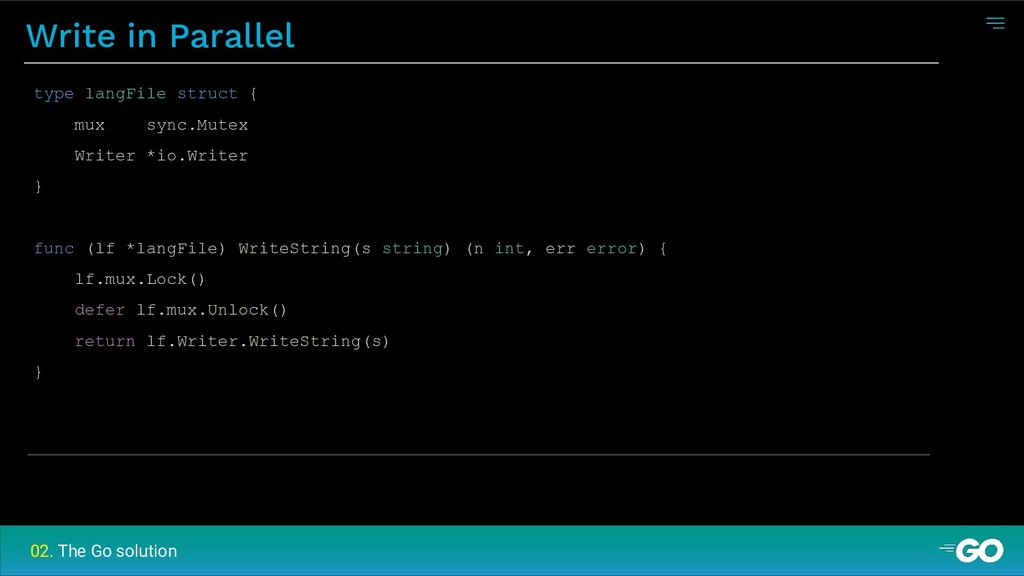
  10. Write in Parallel 02. The Go solution type langFile struct

    { mux sync.Mutex Writer *io.Writer } func (lf *langFile) WriteString(s string) (n int, err error) { lf.mux.Lock() defer lf.mux.Unlock() return lf.Writer.WriteString(s) }
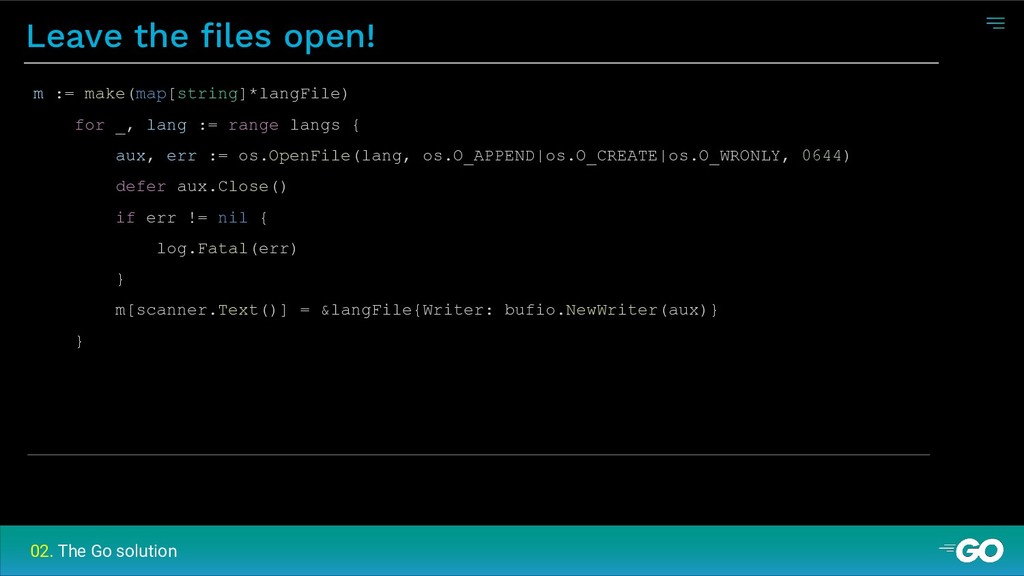
  11. Leave the files open! 02. The Go solution m :=

    make(map[string]*langFile) for _, lang := range langs { aux, err := os.OpenFile(lang, os.O_APPEND|os.O_CREATE|os.O_WRONLY, 0644) defer aux.Close() if err != nil { log.Fatal(err) } m[scanner.Text()] = &langFile{Writer: bufio.NewWriter(aux)} }
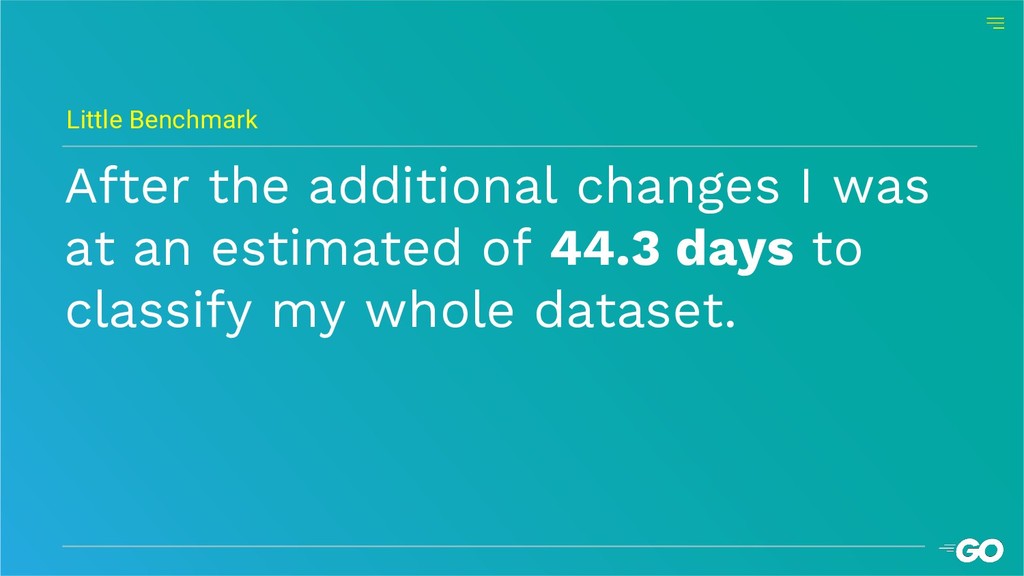
  12. After the additional changes I was at an estimated of

    44.3 days to classify my whole dataset. Little Benchmark
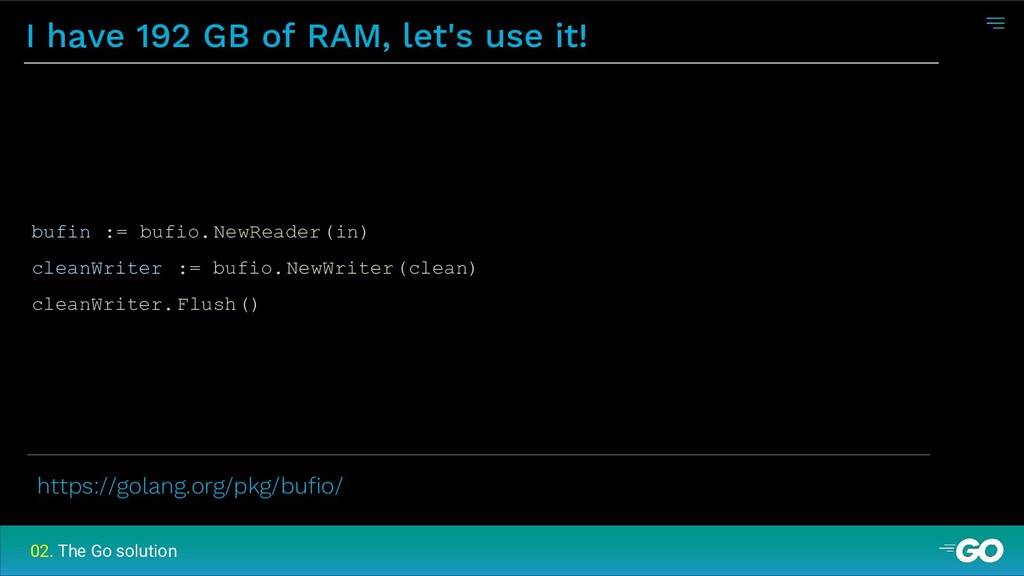
  13. I have 192 GB of RAM, let's use it! 02.

    The Go solution bufin := bufio.NewReader(in) cleanWriter := bufio.NewWriter(clean) cleanWriter.Flush() https://golang.org/pkg/bufio/
  14. After sprinkling buffers everywhere I was at an estimated of

    4.18 days to classify my whole dataset. And 40GB of memory consumption. Little Benchmark